Penélope Cruz, Glenn Close and some of Spain’s most exciting stars come together in the official trailer for La Bola Negra, the acclaimed new film from Javier Calvo and Javier Ambrossi.
Penélope Cruz stars as Nené Romero in the award-winning Spanish-language drama La Bola Negra.
Released on Monday, September 28, the new preview offers a deeper look at the ambitious drama, which spans nearly a century of Spanish history to tell the interconnected stories of three generations of men.
Their experiences unfold in different eras, but their lives are linked through desire, pain, love and the emotional inheritance passed from one generation to the next.
Glenn Close portrays Isabelle Durand in the sweeping film from directors Javier Calvo and Javier Ambrossi.
The international ensemble includes Spanish music sensation Guitarricadelafuente in his feature acting debut, alongside ‘Elite’ star Miguel Bernardeau, Carlos González, Milo Quifes, Lola Dueñas and Julio Torres. Penélope Cruz and eight-time Academy Award nominee Glenn Close complete the star-studded cast.
Known collectively as Los Javis, Calvo and Ambrossi directed and produced the film and co-wrote its screenplay with playwright Alberto Conejero.
WATCH IT HERE:
The story draws inspiration from Federico García Lorca’s unfinished work La bola negra and Conejero’s acclaimed play La piedra oscura. Although Lorca is not the central character, the poet’s life, legacy and absence are felt throughout the film.
Set partly against the upheaval of the Spanish Civil War, the expansive drama examines how queer men experienced love, repression and silence in different periods of Spanish history. It also considers how wounds that were never openly discussed can continue to shape families decades later.
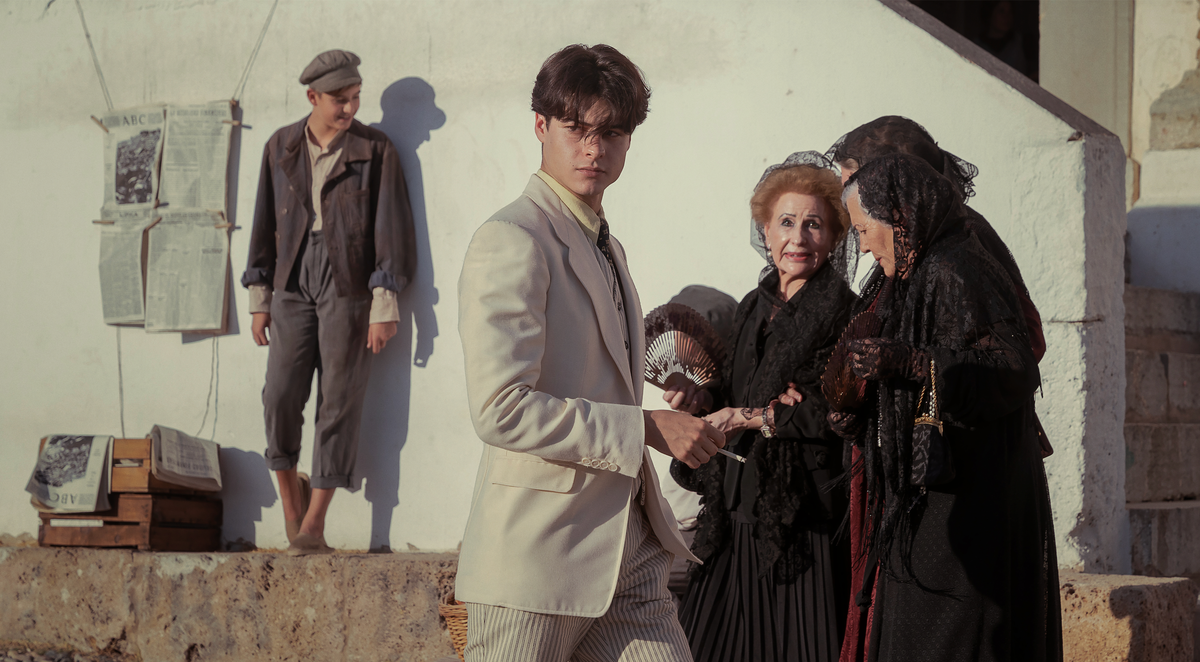
Guitarricadelafuente makes his feature acting debut as Sebastián in La Bola Negra.
From Cannes to Toronto:
The official trailer arrives as ‘La Bola Negra’ continues an extraordinary run on the international festival circuit.
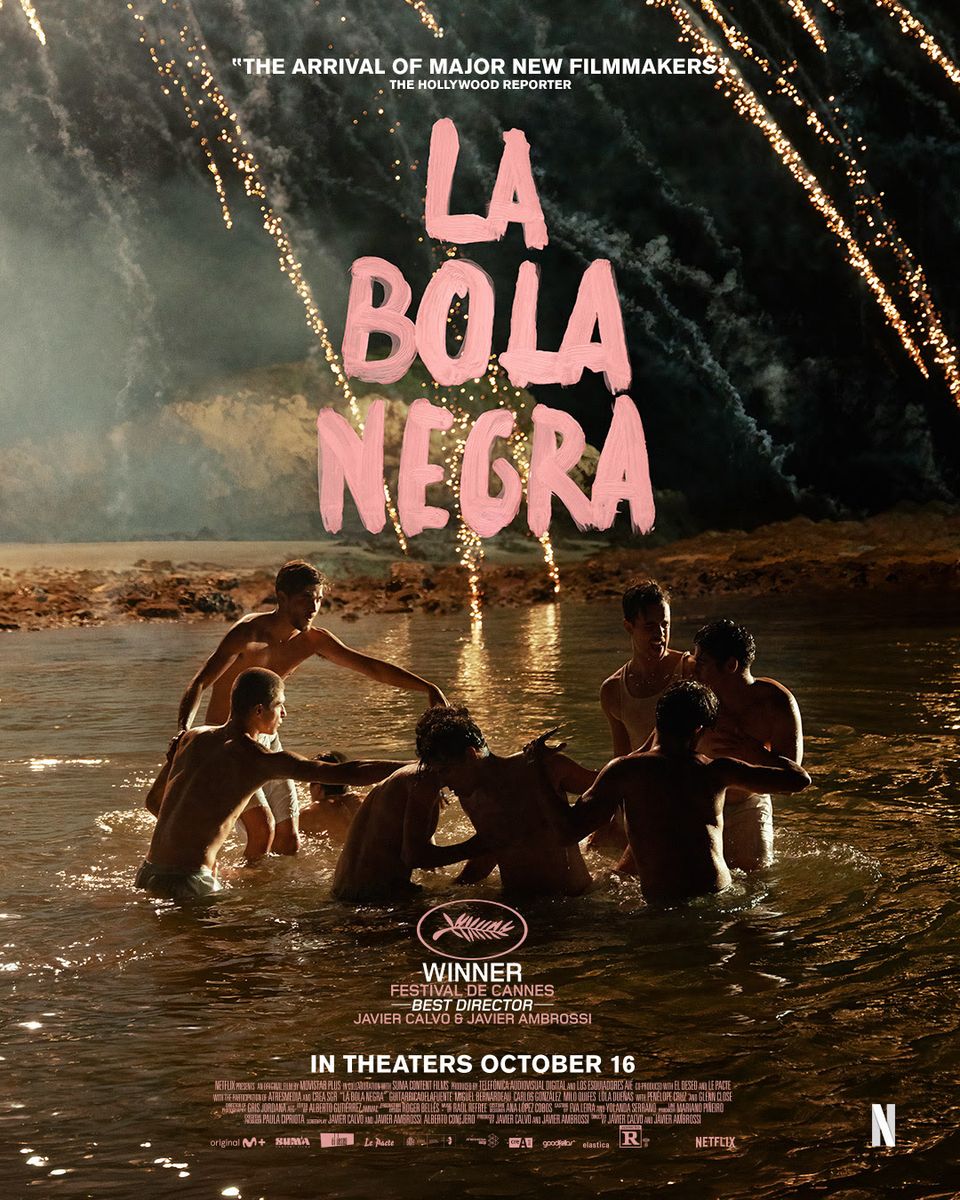
Calvo and Ambrossi received the Best Director Award at the 2026 Cannes Film Festival, sharing the honor with Polish filmmaker Paweł Pawlikowski for Fatherland.
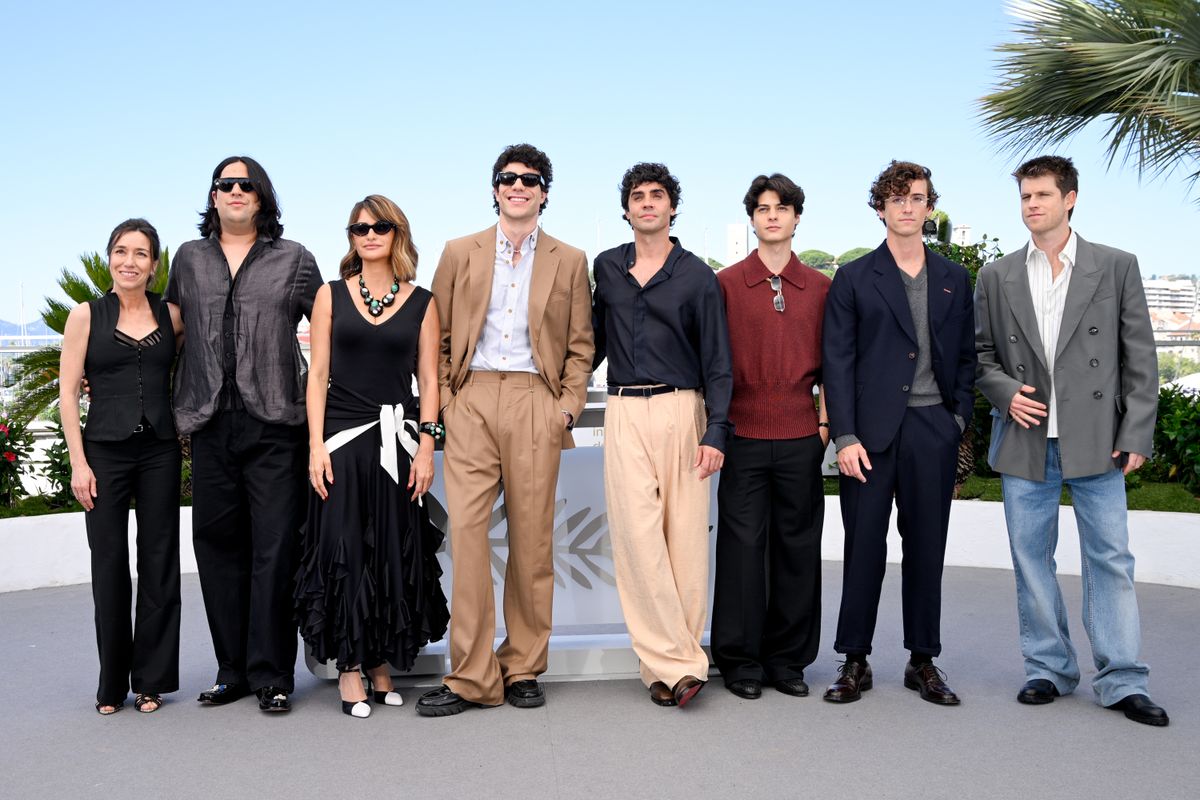
Guitarricadelafuente posed alongside Penélope Cruz, Lola Dueñas, Carlos González, Milo Quifes, Miguel Bernardeau and directors Javier Calvo and Javier Ambrossi at the La Bola Negra photocall during the 2026 Cannes Film Festival.
The recognition marked a significant international achievement for the Spanish filmmakers behind Paquita Salas, Veneno and La Mesías.
The movie subsequently captured the prestigious People’s Choice Award at the Toronto International Film Festival. Selected by festival audiences rather than a jury, the award has historically been considered a major indicator of future awards-season success.
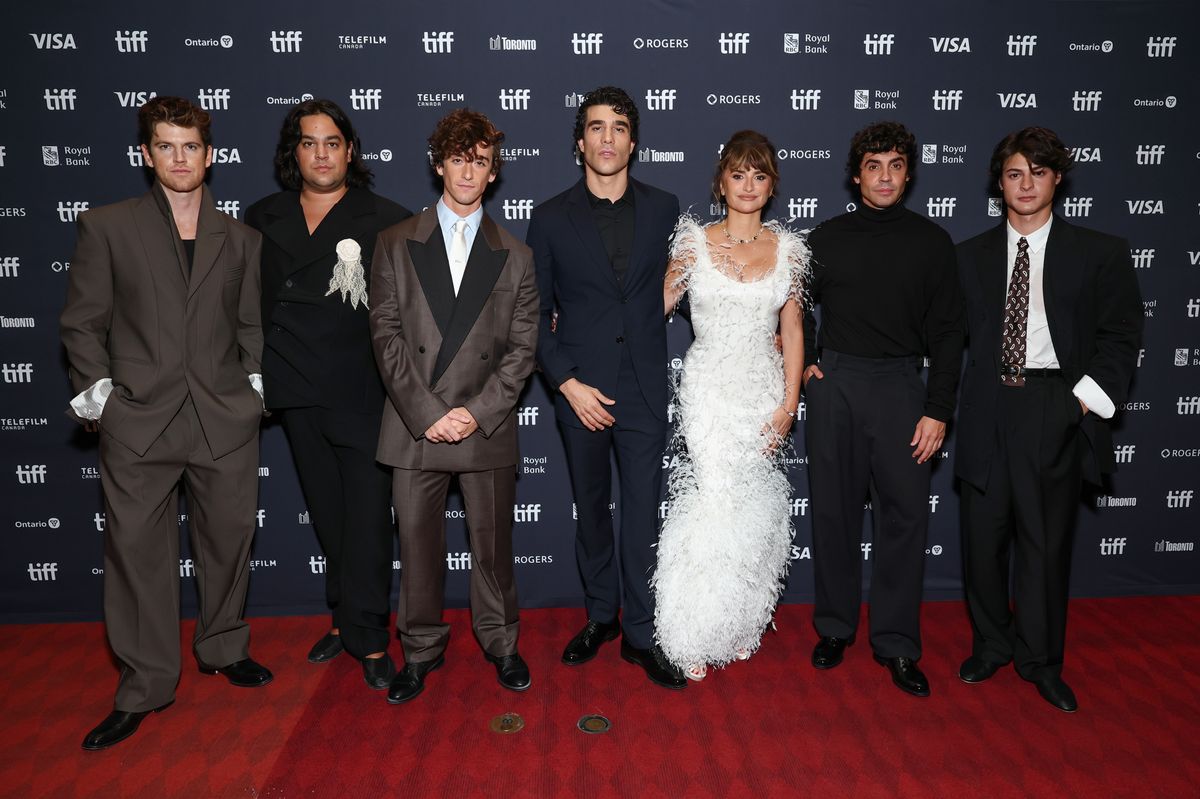
Guitarricadelafuente joined Miguel Bernardeau, Carlos González, directors Javier Calvo and Javier Ambrossi, Penélope Cruz and Milo Quifes at the Canadian premiere of La Bola Negra in Toronto on September 15, 2026.
‘La Bola Negra’ became the first non-English-language film to win Toronto’s top audience prize since the Lebanese drama Where Do We Go Now? in 2011.
Previous recipients of the award include eventual Best Picture Oscar winners 12 Years a Slave, Green Book and Nomadland. The Toronto victory adds to the growing awards buzz surrounding the Spanish-language epic and its filmmakers.
La Bola Negra explores desire, repression, memory and queer identity across three generations.
During its opening weekend, the film will screen at AMC Century City and AMC Burbank in Los Angeles, as well as the Angelika Film Center and the Paris Theater in New York. Tickets are currently available through the film’s official website.
The movie is produced by Movistar Plus and Suma Content Films in co-production with El Deseo and Le Pacte.
The network is 100 years old. The commercials, however, are new.
NBCUniversal is trying to expand the sponsorship model it used for the 50th anniversary of “Saturday Night Live” in 2025 and customize it for its coming celebration of a century of its flagship broadcast network. If sponsors like it, the company will have a tested system of garnering ad support that it can tap as it continues to seek out tentpole events, including, potentially, the Los Angeles Olympics in 2028, and the 75th anniversary of “The Tonight Show” in 2029, to win the big audiences advertisers continue to demand from broadcast, even in the streaming era.
“Clients are not asking for more places to put their messaging,” says Alison Levin, a president at NBCUniversal’s ad sales and partnerships unit, during a recent interview. “They are looking for meaningful ways to show up when audiences are engaged.”
Allstate, Capital One, Purina Dog Chow, Smucker’s, Volkswagen and Xfinity have all signed up to sponsor the event, which will air as a three-hour special on December 10 and feature a litany of celebrities and famous figures, all at the Dolby Theater in Los Angeles.
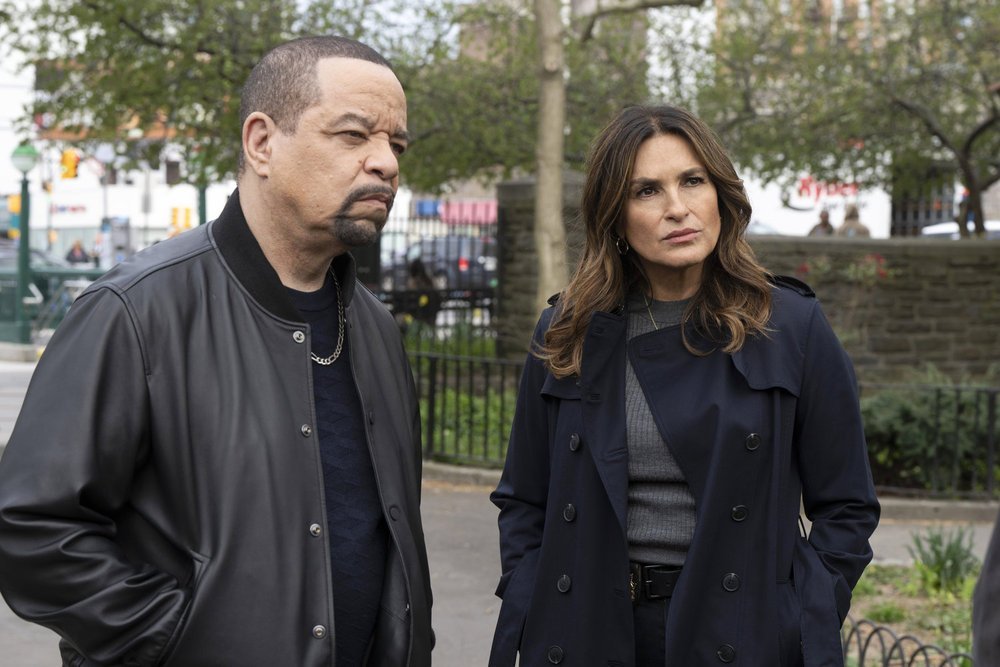
The sponsors don’t have to wait to get noticed. Already, Capital One has launched a commercial that features Mariska Hargitay and Ice-T in their roles as Olivia Benson and Fin Tutuola from “Law & Order: SVU.” Benson even turns to the camera at the end of the spot and utters the financial-services company’s famous slogan, “What’s in your wallet?”
“One of the things that we seek in general is just opportunities to participate in cultural moments that we think people are going to care about,” says Marcy Brye, a senior director at Capital One who works on media partnerships. What’s more, she says, “the opportunity with NBC 100 is so rare.” A case in point: Capital One’s new ad appeared during NBC’s recent Emmys telecast, right after a pre-taped sketch in which Taylor Swift made a cameo during an “SVU” spoof that featured many of the series major cast members. “We knew our ad placement was scheduled right after a special segment, though we didn’t know the specifics in advance,” says Brye.
Indeed, because the 100th anniversary special won’t be duplicated, like an annual awards program, or last for weeks, like a soccer tournament, advertisers likely feel assured their backing of the extravaganza will get noticed. The goal, says Levin, is to create “bespoke, high-touch moments” that can be seeded across top NBCU programing ranging from live sports telecasts to popular programs such as “Love Island” or “The Traitors.”
Some of the sponsors must have liked what they experienced when they supported the “SNL” 50th anniversary. Allstate and Volkswagen took part in the advertising around that program, with Allstate backing a commercial vignette that paired its popular advertising character Mayhem (played by actor Dean Winters) with the Please Don’t Destroy comedy trio that became popular though taped vignettes on “SNL.” Volkswagen, meanwhile, ran a commercial that had “SNL” veterans like Fred Armisen, Bill Hader and Kristen Wiig repirse their characters from the show’s popular “Californians” sketch.
“That work performed so well for us,” says Rachael Zaluzec, chief marketing officer and executive vice president of consumer experience for Volkswagen of American. “It gave us so much visibility.” The automaker will launch a new commercial tying it to the anniversary in November, she says, and recreate sets from NBC programs at the L.A. Auto Show in that same month.
These collaborations often take months to forge, and NBC first announced it would seek bigger sponsorships tied to the anniversary in January of this year. The company may be following the steps it took previously. For the SNL 50th anniversary, NBCU started discussions months ahead of schedule. In March of 2023, “SNL” executive producer Lorne Michaels made a presentation in Studio 8H, the program’s longtime home at NBC’s New York headquarters, to around 100 advertisers about what to expect from the anniversary. At the time, NBC, sketched out plans for a series of retrospectives around “SNL” as well as at least one documentary about the program.
Comcast’s Xfinity service is attaching itself to a countdown clock that shows up during important NBC moments that lead up to the special. Look for the timer to turn up during NBC ‘s coverage of the Thanksgiving Day Parade as well as ahead of the actual extravaganza, says Julie Scelzo, chief creative officer for Xfinity and Comcast, which is also the parent of NBCU. The countdown graphics help to “build the anticipation,” she says. “It gives the audience something to pay attention to.”
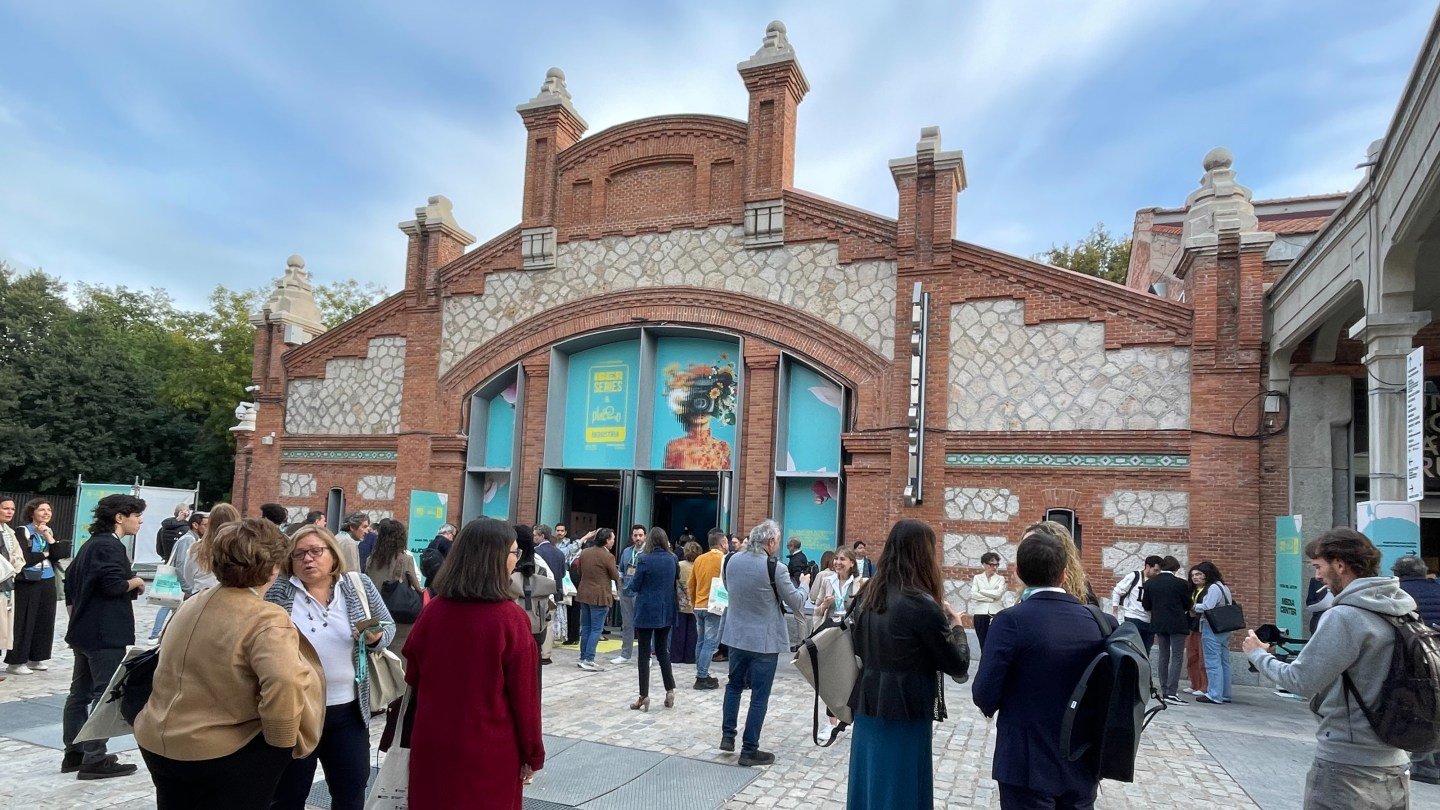
All eyes on Madrid! The Spanish capital and film and TV production hub is bringing together media and entertainment industry folks, including producers, creatives and executives from Europe, Latin America, the U.S. and beyond, to discuss Spanish- and Portuguese-language content opportunities and hot industry topics at the sixth edition of Iberseries & Platino Industria this week.
Organized by the Secuoya Foundation, Spain’s largest rights collection agency EGEDA, and the Ibero-American Federation FIPCA, the big annual event, which runs Tuesday through Friday, will once again feature keynote addresses, panel discussions, screenings, pitching sessions, and social events, along with all sorts of innovations.
AI, microdramas, co-productions, literary adaptations and much more will be in the spotlight during four jam-packed days in Madrid.
Among the many high-profile speakers and panelists at Iberseries are the likes of Katina Medina Mora, who has directed such series as Off Campus, The Summer I Turned Pretty, Emily in Paris and Swagger and such films as LuTo, Luis Fernández, chairman of NBCUniversal Telemundo Enterprises, and Pedro Pina, vp, YouTube EMEA.
THR caught up with Iberseries & Platino Industria co-directors Samuel Castro, head of Iberseries, Juan Alía, head of Platino Industria, and Adriana Castillo, general coordinator of Platino Industria, to preview the 2026 showcase of the Spanish- and Portuguese-language content industry event and what’s different this year.
What’s new for this year’s edition?Could you highlight any new offerings and innovations?
SAMUEL CASTRO This year, we wanted to reinforce our commitment to the industry and further establish Iberseries & Platino Industria as a truly business- and networking-driven event. With this in mind, we have launched two new pitch sessions: Euro Atlantic Series Co-Pro Pitch, focused on European series projects seeking international co-production and financing partners; and the Fundación SGAE Pitch Session, featuring outstanding projects from Spanish-speaking showrunners.
ADRIANA CASTILLO One of the things we have worked on this year is making Iberseries & Platino Industria useful at different stages of a project’s journey. We do not want it to be simply a place where talent comes together; we want it to be a place where talent finds the conditions to grow: financing, partnerships, distribution and real international opportunities.
That has led us to open new doors this year. We created the Literary Works Pitch for Audiovisual Adaptation, strengthened international co-production through the Euro Atlantic Series Co-Pro Pitch and the Co-Production and Financing Forum, and opened spaces to discuss new ways of telling stories, including vertical fiction and microdramas.
For me, the important thing is that these are not isolated activities. We are trying to connect the dots. A creator can arrive with an idea or an IP and meet producers, financiers, platforms, studios, distributors, or potential partners. Ultimately, what we want is to shorten the distance between a good story and the people who can help bring it to life.
JUAN ALÍA I do not think the novelty lies simply in adding more activities. When an edition ends, we sit down to look at what worked, what we can improve and, above all, what the industry is asking of us. This year, we have opened up more avenues for projects to find financing, partners and buyers, and we have broadened the scope with areas such as literary IP and vertical fiction.
For us, the key is usefulness. We want professionals who come to Madrid for four days to have real opportunities to find the content, project, or partner they are looking for. If those meetings lead to synergies, co-productions or new lines of business, then the event is fulfilling its purpose.
Why did it make sense to add the first edition of Euro Atlantic Series Co-Pro Pitch to your already busy program? And Sony Pictures Television’s Elevator Pitch will also return. How successful was that last year?
CASTRO Euro Atlantic Series Co-Pro Pitch was created with the aim of promoting the co-production and international circulation of European fiction, docuseries and animation projects conceived from the outset to travel across territories and connect with global audiences. It is another reflection of the increasingly international scale of Iberseries & Platino Industria, as we continue evolving from an Ibero-American event into a truly global industry platform.
Samuel Castro, co-director Iberseries & Platino Industria
Courtesy of Iberseries & Platino Industria
The selection committee for this first edition also brings together highly respected professionals from the European audiovisual industry, including Laura Miñarro, vp of international business and co-production at Buendía Estudios (Spain), Diego del Pozo, fiction manager at Atresmedia Televisión (Spain), José Fragoso, programming director at RTP1 and RTP Internacional (Portugal), and Georges Huercano, development and co-productions manager at RTL (Belgium).
Can you tell me a bit about why you added the new literary works adaptation pitch event?
CASTILLO It emerged quite naturally from what we had been hearing from the industry. In our conversations with [streaming] platforms, studios and producers, IP comes up again and again. Executives are looking for attractive properties, of course, but above all they are looking for powerful stories, distinctive worlds and characters capable of sustaining an audiovisual life.
At the same time, there is an enormous catalogue of stories in the publishing world, and there is not always a natural space for the publishing and audiovisual sectors to meet, or even to speak the same business language. We saw a clear opportunity to build a bridge between them.
This is not about bringing a book fair to an audiovisual market. It is a curated business space where publishers and literary agencies can present works directly to producers, studios and platforms looking for material to adapt, and then continue those conversations through one-to-one meetings.
Literary IP also brings something extremely valuable to the audiovisual pipeline: narrative development and, in many cases, a story that has already connected with a community of readers. But our interest goes beyond a one-off rights sale. We want to foster longer-term relationships between publishers and producers, help those catalogues circulate internationally and identify stories that can genuinely find a second life on screen.
In that sense, the pitch [event] also reflects something we are seeing across the industry: the search for IP has become much more strategic. It is no longer simply a question of whether a book is well known; it is about whether there is a powerful story there and what can be built from it.
ALÍA In this case, we are not inventing a need; it is something the market has been signalling to us for some time. Platforms and production companies are increasingly looking for IP, while publishers and literary agencies have enormous catalogues of stories. What was missing was a more direct and structured meeting point between the two sectors.
If a publisher or agency leaves Madrid having started a real conversation with a production company, studio or platform, then the pitch has already been useful.
Everybody is talking about AI in the industry. How important a topic will that be at Iberseries? And what other key themes do you expect to be in focus at this year’s edition?
CASTRO AI will have the prominence it deserves, but always from the perspective of understanding it as a regulated tool at the service of creators, technicians and audiovisual production professionals.
Among this year’s activities focused on AI, I would particularly highlight the workshop “Artificial Intelligence for Creators: Enhancing Audiovisual Storytelling,” led by Concepción Díaz, head of AI trainings EMEA at Google, and the conference “AI in Action: New Production Models,” featuring Erik Barmack, founder & CEO of Wild Sheep Content (USA), and Johann Choron, partnerships & Gen AI lead for film & TV at Google EMEA (France).
How is attendance trending this year compared to what I think was a record last year?
CASTRO It is still difficult to give a definitive answer. The industry as a whole is going through a period of some contraction, and companies seem to be taking a more cautious approach. Against this backdrop, we have deliberately chosen to offer a more disruptive and ambitious program this year. I hope that this will encourage even more industry players to join us.
Are there any key new companies or industry sub-sectors coming to the event this year?
CASTILLO Yes, and I think what is particularly interesting this year is not only the arrival of new companies, but also the way different areas of the industry are beginning to connect within Iberseries & Platino Industria.
We are also seeing very interesting models emerging from the meeting point between traditional audiovisual players and digital communities. Disney+ and Luzu TV are a great example. ‘Somos así, la serie de Nadie dice nada’ comes out of an alliance between one of the leading streaming platforms and one of Argentina’s most influential digital communities. A live-streaming phenomenon is being transformed into fiction, and that raises a very interesting question for the industry: how do you take a community with such a strong relationship with its creators and build a fictional universe around it without losing the authenticity that made it successful in the first place?
Adriana Castillo, general coordinator of Platino Industria
Courtesy of Iberseries & Platino Industria
Then there is the increasingly important role of audience intelligence. JustWatch adds another dimension to that conversation with its session on intent-based marketing: how behavioural signals and audience preferences can help us understand not only what people have watched, but what they are looking to watch next, and how that information can be used to make more efficient marketing decisions. Netflix, for example, is participating through different parts of the programme. One of them addresses an increasingly important challenge for the audiovisual industry: how we train the next generation of professionals, how we reduce access gaps in training and how we build a more diverse, equitable talent base with broader territorial reach across Ibero-America.
A panel featuring FORMA, the training initiative promoted by FIPCA [, an intercontinental organization that brings together producer associations and audiovisual companies,] with the support of Netflix, is a good example of the kind of collaboration we want to encourage more and more at Iberseries & Platino Industria: initiatives that not only respond to the needs of today’s productions, but also strengthen the industry over the long term.
The platform is also involved in content presentations, so its presence connects training, industry development and programming.
ALÍA I think what matters is that we are trying to open the scope as widely as possible. Netflix, Disney+, Luzu TV and JustWatch are very different players, but each represents a very specific change taking place in the sector: training and professionalisation, the transition from digital communities to fiction, and the growing importance of audience data in marketing and decision-making.
CASTRO One of our main [goals] this year has been to give the event an even stronger European dimension. We have attracted major companies such as Banijay, Mediawan, Beta, ARTE and RAI, to name just a few. But perhaps even more significant is the growing number of European production companies interested in co-producing with Spain. This is reflected in the participation of leading professionals such as Iris Bucher, Femke Wolting from Submarine and Nathalie Perus from Atlantique Productions, among others.
It is not about adding companies simply for the sake of adding logos. We want the event to be the opportunity the producer or executive has been looking for.
Which Spanish- and Portuguese-language or -produced films and series have highlighted the global appeal of Iberian content?
CASTILLO There are some very clear examples. El Eternauta (series The Eternaut) from Argentina and O Agente Secreto (film The Secret Agent) from Brazil have shown, in very different ways, how stories deeply rooted in a specific place and culture can have an international life and reach new audiences. And I think that is very important: global does not have to mean neutral. Very often, the specificity of a story – its language, its characters, its social context, even its sense of place – is precisely what makes it interesting to other audiences.
This year, we will present Véspera, HBO Max’s new Brazilian original series based on Carla Madeira’s bestselling novel. It is a complex family story, deeply Brazilian in origin, but built around emotions, relationships and moral conflicts that are entirely universal.
For me, Véspera also connects with another conversation we are having this year: the strength of literary IP. It shows how a successful Portuguese-language novel can move into another medium and potentially reach a completely new audience. That circulation between books and screens, between local identity and international audiences, and between Spanish- and Portuguese-speaking territories, is exactly the kind of movement we want to promote through Iberseries & Platino Industria.
ALÍA I think Spanish- and Portuguese-language content no longer has to prove that it can travel. Titles such as El Eternauta and O Agente Secreto make that quite clear: they emerge from very specific cultural realities and yet work internationally.
Juan Alía, co-director of Iberseries & Platino Industria
Courtesy of Iberseries & Platino Industria
That is also why we believe it is important to present titles such as Véspera at Iberseries & Platino Industria. A market should not only look at what has already worked; it should also help upcoming projects find partners, circulate and reach new audiences.
CASTRO Portugal is particularly important to us this year. We have worked closely with APIT and the Portugal Film Commission to bring a delegation of Portuguese producers to the event, including Nicky Correia from SIC, Bruno Lima from Coral Europa, Pandora da Cunha Telles from Ukbar Filmes and Piet-Hein Bakker from Plural Entertainment, among others. Their participation reflects both the strength of Portuguese production and our commitment to strengthening connections between the Portuguese, Spanish and wider international audiovisual industries.
Is there anything else you would like to highlight?
ALÍA Ultimately, what matters to us is that all of this is useful. The number of accredited professionals is important, of course, as is the event’s international character, but the real assessment does not end on 2 October.
What will truly make us happy is to look back in two or three years and see that projects presented here in a pitch, a forum or a meeting have become reality, have reached a cinema, a television channel or a platform and, above all, have reached audiences. If Iberseries & Platino Industria has contributed to that, then we will feel that we have done our job well.
CASTILLO I would certainly highlight Mexico, which is our Country in Focus this year. We were very clear that the objective was to put forward a specific industry proposition.
For several years, the conversation around Mexico has focused on its talent, the size of its market and its production scale. These are already recognised strengths. This year, we want to take the conversation one step further and ask another question: why produce in Mexico today? There are new conditions that make this conversation particularly relevant: incentives, such as [the Tax Incentive for Film and Audiovisual Production] EFICA, production infrastructure, specialised technical services, post-production, film commissions and, of course, a production community with enormous experience in both Mexican and international projects.
That is why there will be a series of activities designed to position Mexico from different angles: its creators and stories, of course, but also its production capacity, its services and its potential to become a partner on international projects.
I think that is the message we want to leave: Mexico has always had stories and talent. What is particularly interesting today is the combination of that creative strength with increasingly competitive conditions for making films and series in the country.
CASTRO There are two highlights I would particularly mention this year. The first is Pedro Pina’s keynote, “YouTube: A Strategic Partner for the Audiovisual Ecosystem,” which will explore YouTube’s increasingly important role within the audiovisual industry.
The second is the Mediawan Spotlight, featuring Elisabeth d’Arvieu, CEO of Mediawan Pictures and chief content officer of Mediawan, which I believe will be another major moment in this year’s program.
Long-running Australian soap opera “Neighbours” is being recut into short-form vertical video by RoseBerry Media for its Epis (stylized as “epis”) platform — and it’s starting with episodes starring Margot Robbie.
Robbie starred as Donna Freedman on the series from 2008 to 2011 before becoming a globally recognized film star. For Epis’ microdrama launch of “Neighbours,” two storylines featuring Robbie as Donna will be edited down into vertical micro-episodes that will add up to around 150 minutes of content.
The transformation of the “Neighbours” series into short-form episodes will be done via RedSnapper, RoseBerry’s proprietary production workflow that utilizes AI to turn TV and film libraries into vertical series.
RoseBerry was set to announce the vertical series edits of “Neighbours” on Monday along with series producer Fremantle. In the case of “Neighbours,” RoseBerry will have plenty of material to work with: The Australian soap, which premiered in 1985 and ended in 2025, ultimately ran for around 9,363 episodes. Besides Robbie, well-known alums of the show include Guy Pearce, Kylie Minogue, Jason Donovan and Jesse Spencer.
“’Neighbours’ is an iconic piece of television history and exactly the kind of premium entertainment IP we believe can thrive in the vertical format,” Guy Hameiri, co-founder and CEO of RoseBerry Media, said in a statement. “This is the first time we’ve had the opportunity to apply RedSnapper to a long-running soap with such a rich library of characters, storylines and cultural moments, and Fremantle has been a fantastic partner in helping bring that vision to life.”
Added Fremantle commercial and international CEO Jens Richter, also in a statement: “’Neighbours’ has an extraordinary legacy, with decades of memorable characters, stories and talent. Working with RoseBerry allows us to explore incredible archive in an entirely new way, bringing much-loved IP to new audiences while demonstrating how established television libraries can continue to evolve, find new relevance and importantly create new commercial opportunities. It’s an exciting example of how technology and creative thinking can unlock new value from our diverse catalog and content library.”
RoseBerry has deals with Banijay Rights, All3Media International, A+E Global Media and Cineflix Rights, along with Fremantle, to explore ways to adapt their IP for mobile and other technology. Hameiri said the “Neighbours” deal is just the beginning of finding ways to reimagine existing programming for different distribution.
“For RoseBerry, this is a powerful proof point for the infrastructure we are building to support the future of premium vertical television,” Hameiri said. “We believe premium vertical television will become a significant new entertainment category, and partnerships like this demonstrate how iconic IP can find new audiences, new relevance and new value in that future ecosystem.”
While much of the focus on the growing vertical video/microseries category has focused on the creation of original, low-budget content, there also has been a marketplace for pre-existing fare that is edited down into micro-sized bites. Other companies in the space include Snips, which has a deal with Banijay Rights and BIG Media to adapt some of their series and movies into minute-long episodes.
Here’s a look at how “Neighbours” with Margot Robbie has been recut for vertical:
And here’s a first look at the key art for the arrival of “Neighbours” on Epis:
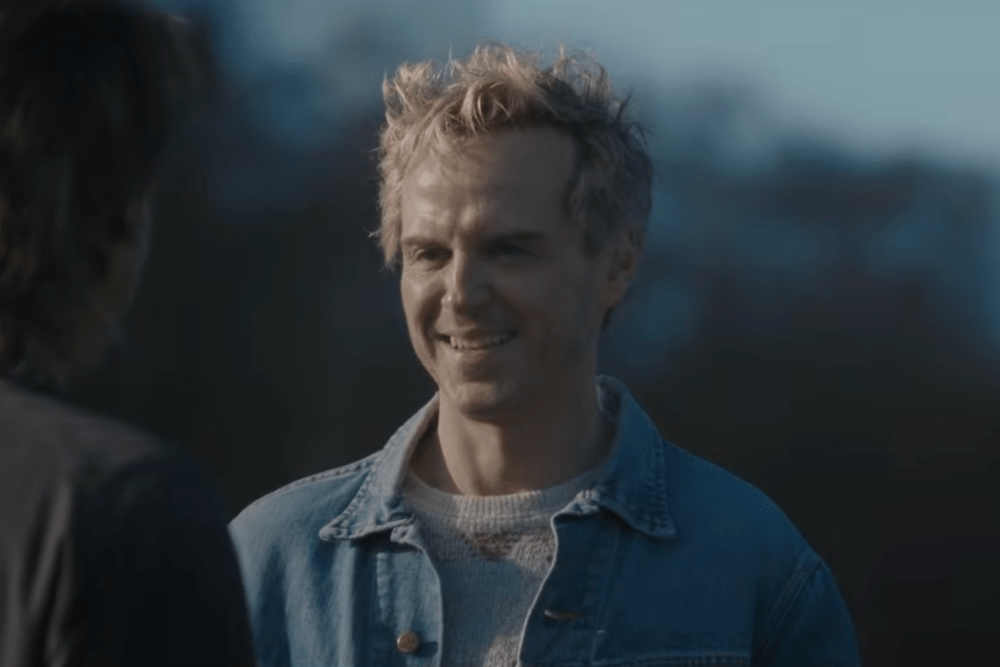
Focus Features has released the trailer for “Elsinore,” the Andrew Scott-led drama from director Simon Stone. The film will be released in theaters on Nov. 20.
Written by Stephen Beresford, “Elsinore” is the “deeply emotional and inspirational true story of Ian Charleson, a gifted actor whose greatest challenge becomes his greatest triumph,” per the official synopsis. “Facing his own mortality with unflinching honesty, wit, and grace, Charleson delivers a courageous performance that becomes a source of healing and inspiration for those around him.”
The star of “Chariots of Fire,” Charleson had the chance of a lifetime to replace Daniel Day-Lewis as Hamlet in the play at London’s National Theatre when Day-Lewis stopped cold during a performance and walked offstage, never to return to the production. At the time, despite receiving rave reviews, the Scottish actor was succumbing to complications from AIDS. He died seven weeks after bowing out.
“Elsinore” first debuted at the Telluride Film Festival before playing at the Toronto International Film Festival earlier this month, where it won the International People’s Choice Award. Variety’s Owen Gleiberman wrote in his review that Scott makes the film “an indelible journey” and “gives an astonishingly layered and moving performance.”
“Make no mistake, this is the role of Scott’s career and it lands him toward the forefront of a best actor conversation he has been circling for years,” added Variety’s Clayton Davis.
In addition to Scott, the cast includes Olivia Colman, Billie Piper, Johnny Flynn, Luke Thompson, David Dawson, Matthew Beard, Joe Locke, Monica Dolan, Georgie Glen, Sadie Soverall, Adeel Akhtar, Dickie Beau, Kadiff Kirwan, Juliet Stevenson and Peter Mullan.
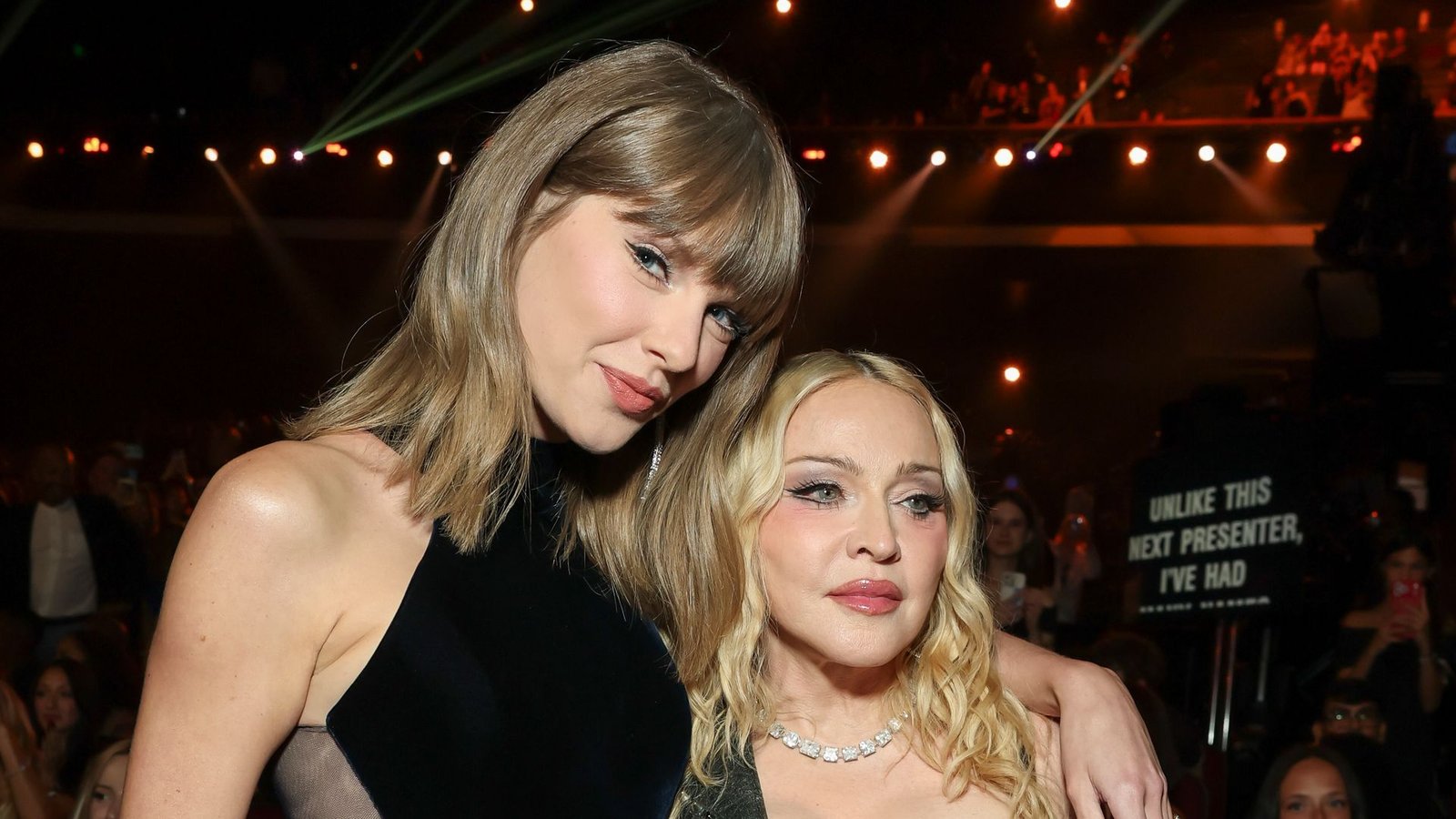
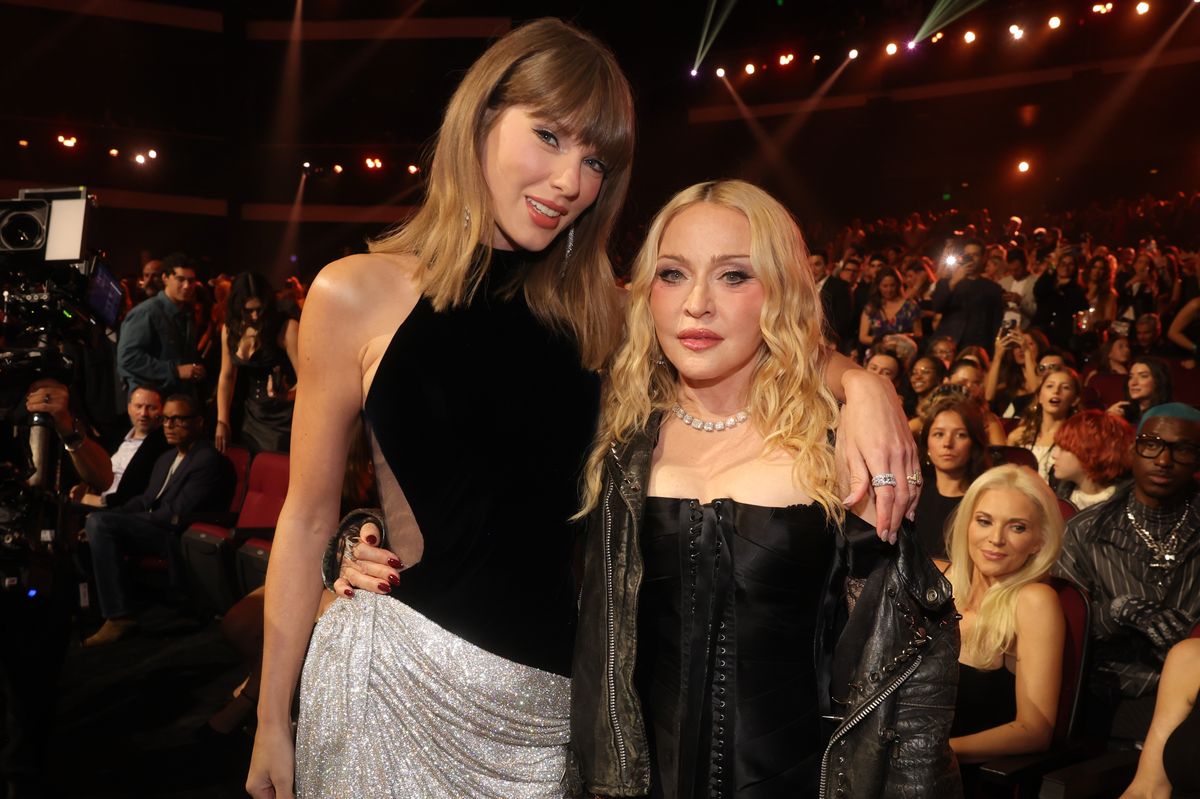
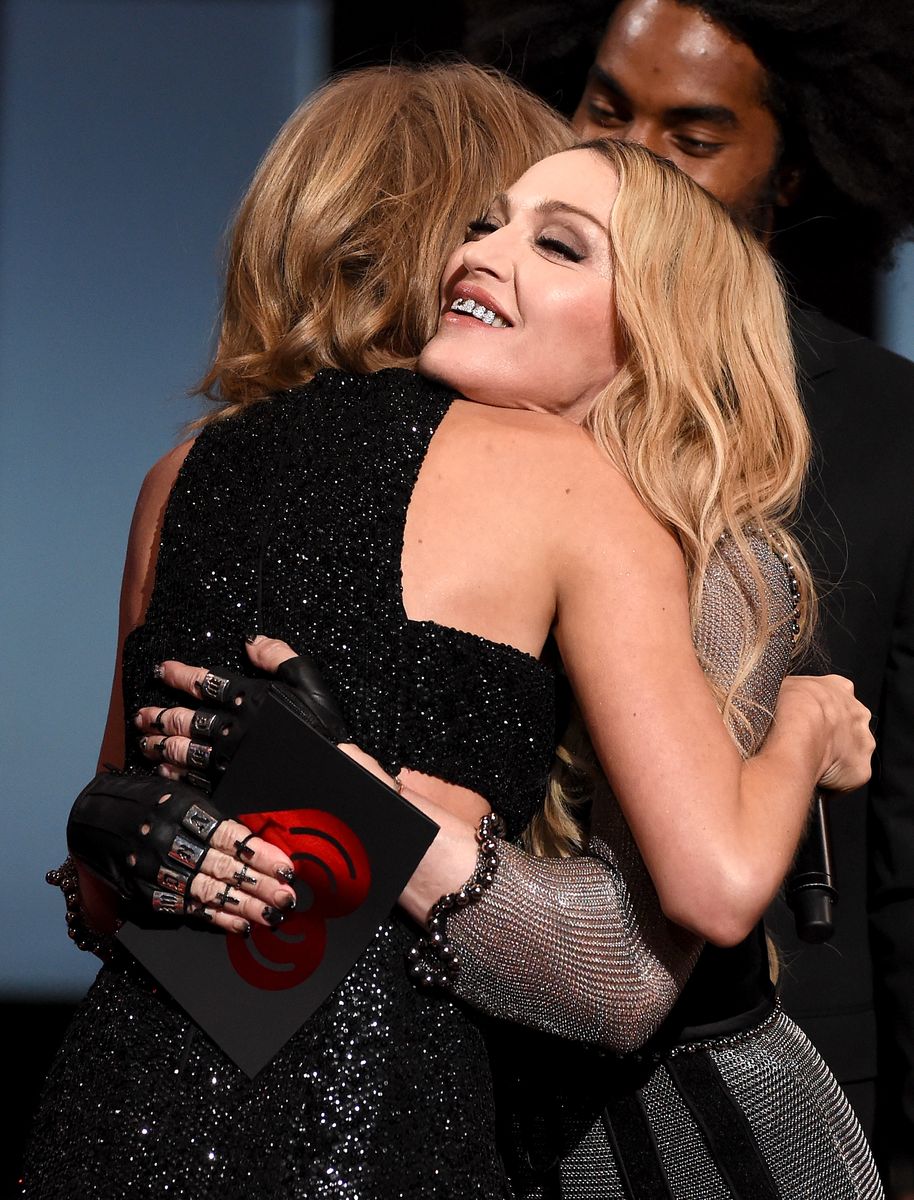
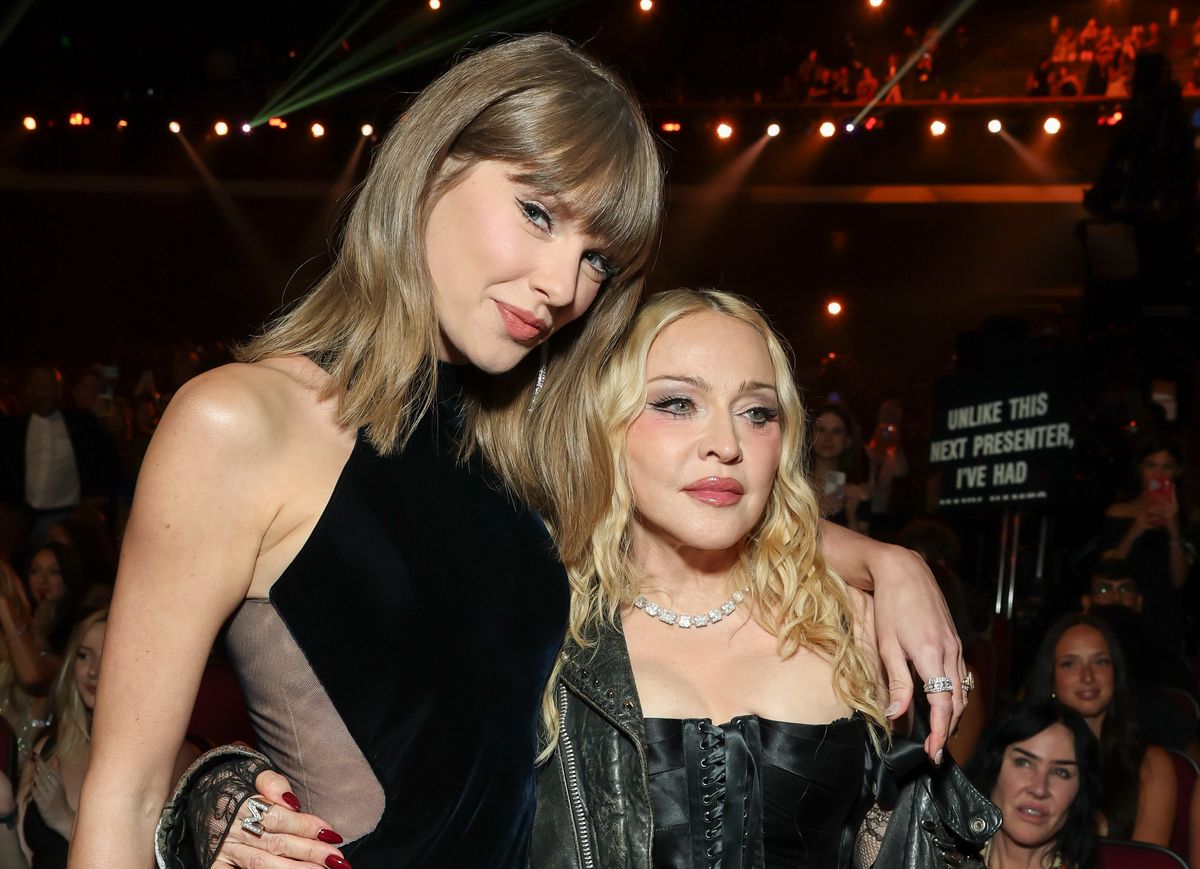
Taylor Swift and Madonna gave pop fans a full-circle moment at the 2026 MTV Video Music Awards. More than 11 years after the two stars memorably shared the stage at the 2015 iHeartRadio Music Awards, Swift and Madonna reunited at the Sept. 27 VMAs at the Peacock Theater in Los Angeles. This time, their interaction happened away from the main stage, with cameras capturing the two music powerhouses embracing and talking during a night when both were collecting major honors.
Madonna and Swift entered the 2026 ceremony as two of the night’s most prominent nominees, and both left with significant additions to their already historic VMA careers.
Taylor Swift and Madonna at The 2026 MTV Video Music Awards (VMAs) on Sunday, September 27, 2026
Taylor Swift and Madonna’s 2026 MTV VMAs Reunion
Madonna, 68, opened the ceremony with her first live VMAs performance in 23 years, marking her return to a stage she helped define, beginning with her famous “Like a Virgin” performance at the inaugural VMAs in 1984. Her 2026 opening number included Sabrina Carpenter and Charli XCX and featured music from her album Confessions II.
You may also like
Continue reading
She also had a huge night in the awards department. Madonna won seven VMAs, including Artist of the Year and Best Dance for Confessions II: The Film.
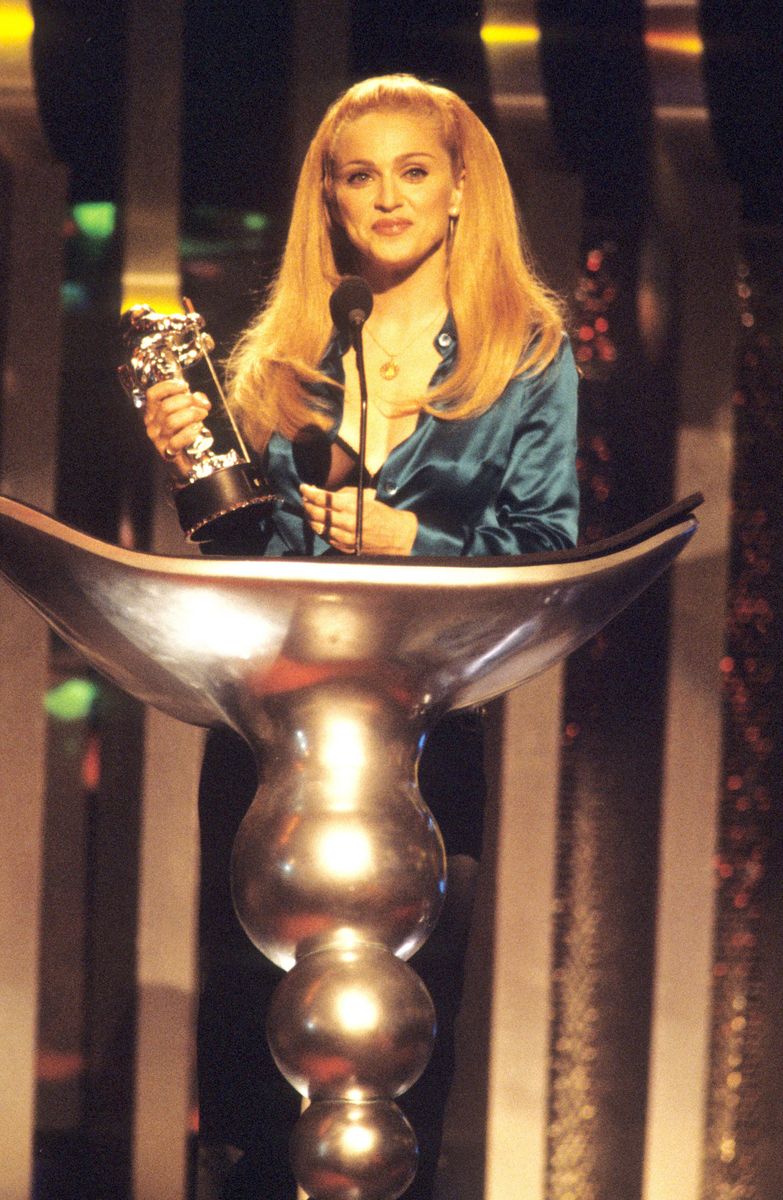
While accepting Artist of the Year, Madonna looked back at the beginning of her MTV history. “I think most of you were probably not yet born,” she told the audience while recalling her 1984 “Like a Virgin” performance.
Madonna also reflected on her recent creative chapter, telling the audience, “I spent the last year and a half finding myself, believing in myself and really making the music that I wanted to make.” She ended with a message encouraging others to “find yourself and believe in yourself.”
Swift, 36, was having her own history-making night.
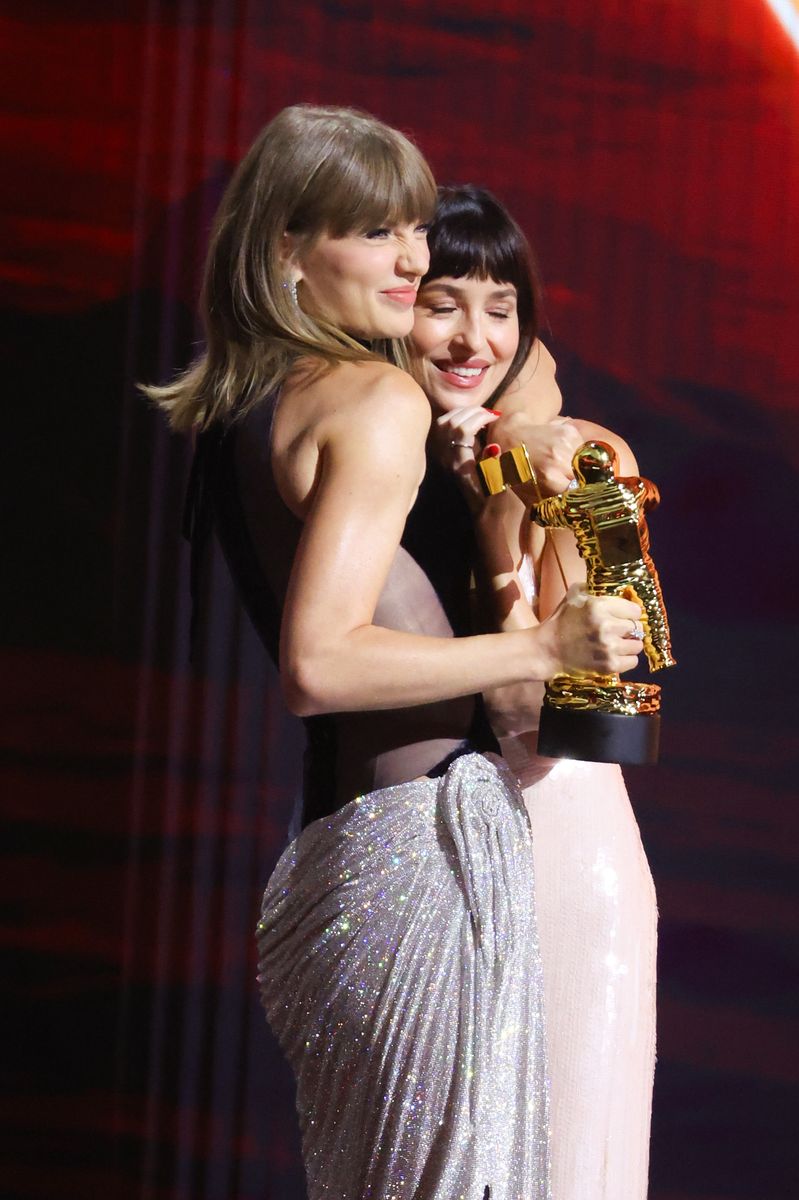
She received the first-ever MTV VMA Artist Director Honors, created to recognize artists whose work behind the camera has advanced music-video storytelling. The award celebrated Swift’s increasingly hands-on role as a filmmaker and director.
Taylor Swift and Dakota Johnson onstage as Swift accepts the Artist Director Honors at 2026 MTV Video Music Awards
“The main reason I love writing and directing music videos so much is because you, the fans, make it so much, so much fun,” Swift said during her acceptance speech. “You actually care about what we’re making.”
Madonna Praised Taylor Swift Long Before Their 2026 Reunion
The connection between the two artists became public in early 2015, when Madonna praised Swift’s songwriting. “I like Taylor Swift. I think she writes some really catchy pop songs. I can’t get them out of my head,” Madonna said at the time. Swift’s response to receiving approval from one of pop’s defining artists was considerably less restrained: “Thanks, now I’m dead.”
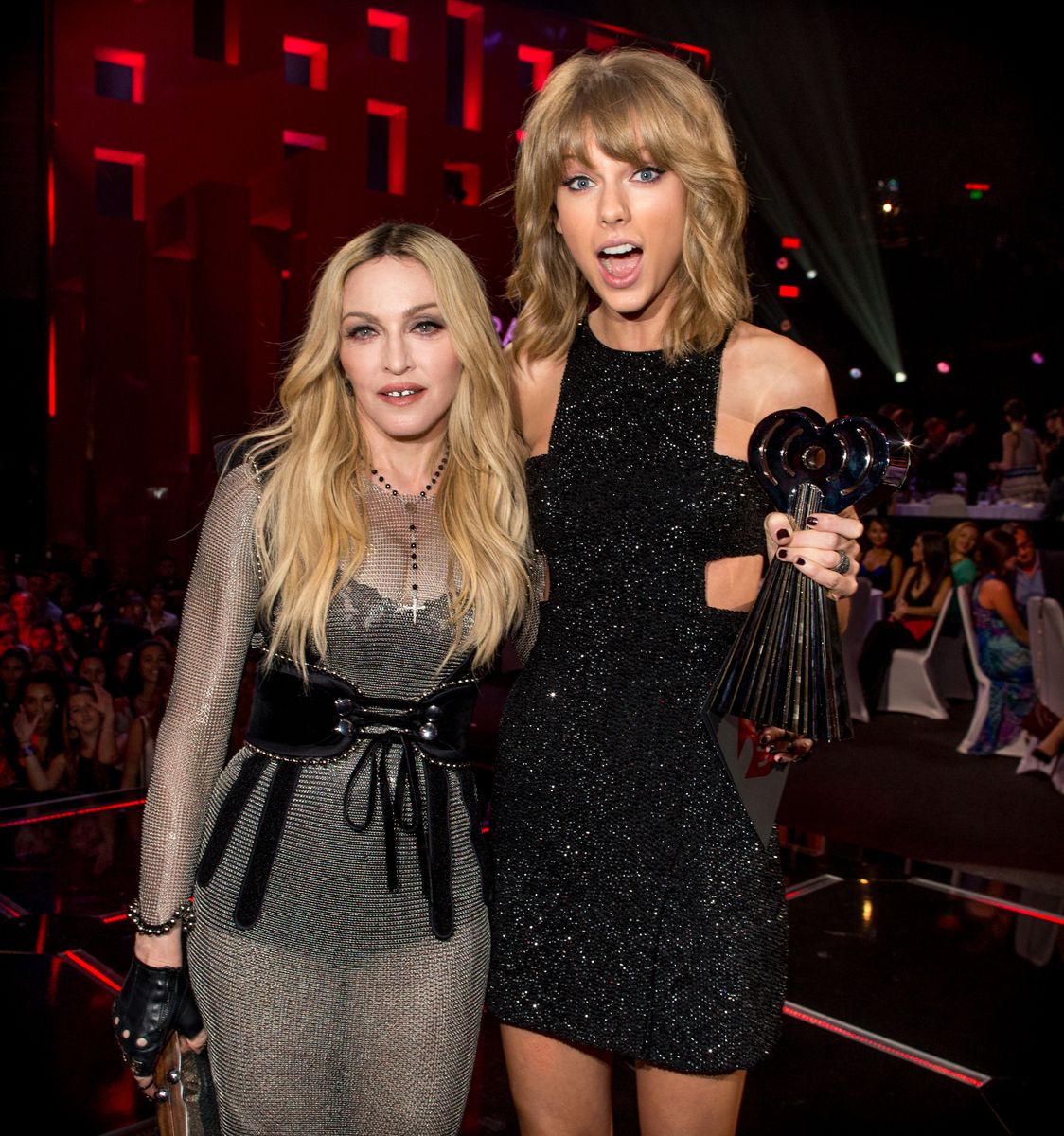
Madonna and Taylor Swift (holding the Song of the Year Award for ‘Shake It Off’) pose at the iHeartRadio Music Awards on March 29, 2015
Swift later explained that she had been nervous about meeting Madonna because of how much the singer meant to her. “Oh my God! I’ve been so scared to meet her because it means so much to me,” Swift said in 2015 after hearing Madonna’s compliments.
Their mutual admiration soon turned into an actual musical collaboration.
Taylor Swift Played Guitar for Madonna’s “Ghosttown”
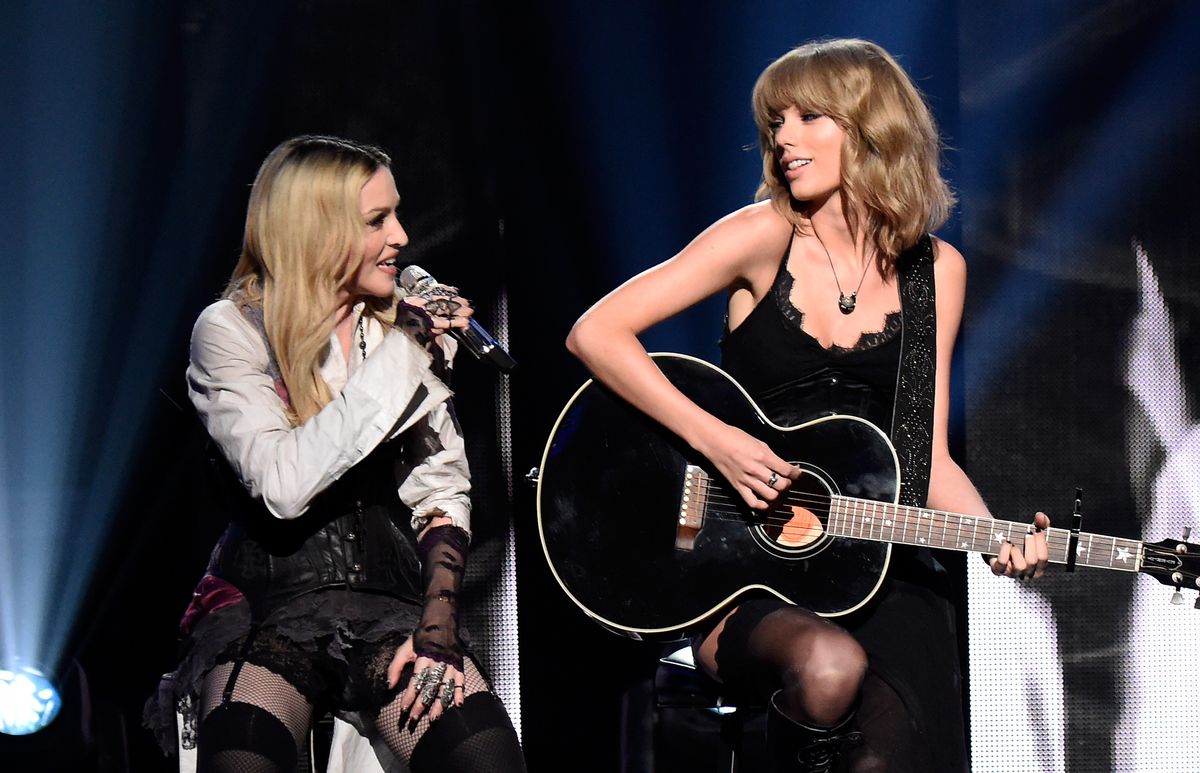
At the March 2015 iHeartRadio Music Awards, Madonna performed “Ghosttown” from her Rebel Heart album with Swift accompanying her on guitar.
Recording artists Madonna and Taylor Swift perform onstage at the iHeartRadio Music Awards
The collaboration was deliberately understated. Swift largely remained on guitar while Madonna handled the vocals. The pair eventually came together toward the end of the performance and embraced before leaving the stage.
Afterward, Madonna called Swift her “new favorite guitar player,” while Swift enthusiastically celebrated the collaboration on social media.
Singer Taylor Swift (L) accepts the Song of the Year award for ‘Shake It Off’ from singer Madonna
Madonna later revealed that they had even discussed another possible collaboration. In a 2015 conversation with Andy Cohen, she said they had planned to “do something together on stage,” but scheduling prevented it from happening. When pressed for details, Madonna declined because, she suggested, the idea could still happen someday.
How Madonna’s Reinvention Connects Her to Taylor Swift
Musically, Madonna and Swift emerged from dramatically different starting points. Madonna’s career was built around dance-pop, club culture, and provocative visual performance, while Swift began as a country singer-songwriter before moving decisively into pop.
But their careers intersect as both have treated musical eras as complete visual identities.
Swift has specifically identified Madonna’s ability to reinvent herself as something she admires. “One element of Madonna’s career that really takes center stage is how many times she’s reinvented herself,” Swift previously told Billboard, adding that she found Madonna’s unpredictability inspiring.
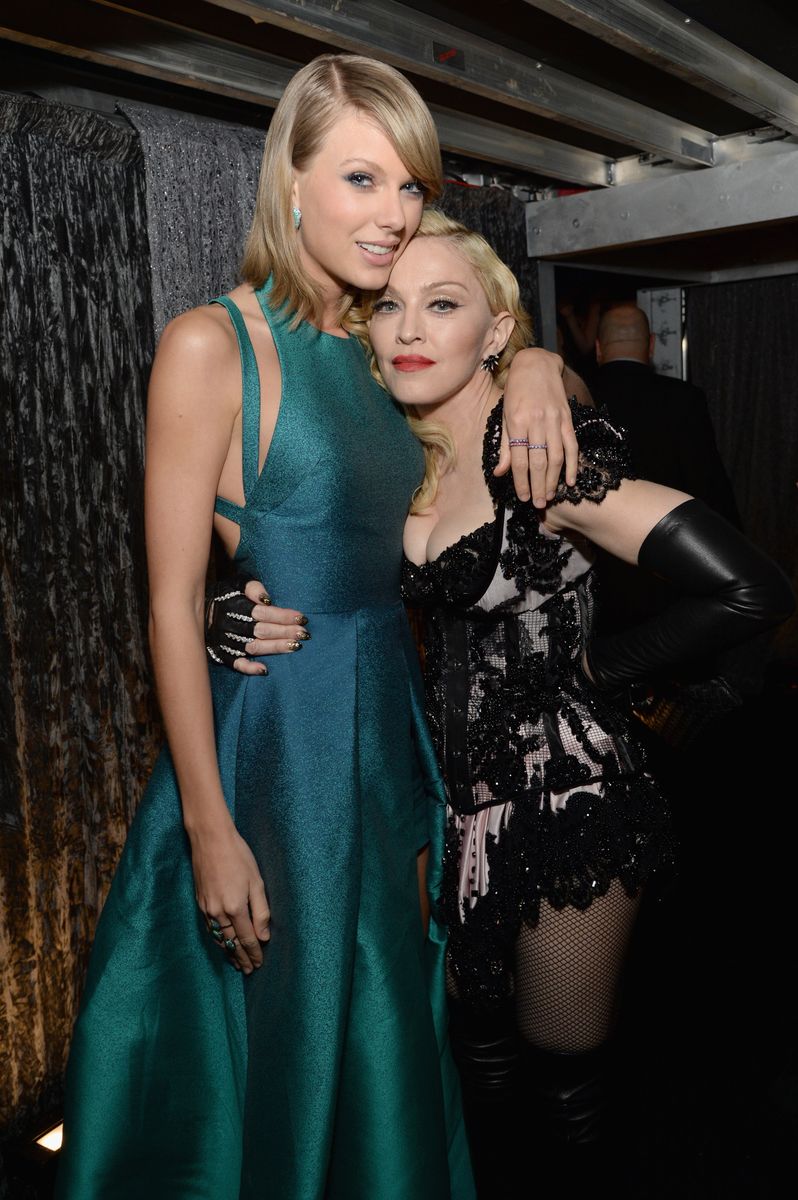
Taylor Swift (L) and Madonna attend The 57th Annual GRAMMY Awards on February 8, 2015 in Los Angeles, California.
Madonna’s career has moved through dramatically different visual and musical periods, from Like a Virgin and True Blue to Ray of Light, Music, Confessions on a Dance Floor and beyond. Swift similarly built her career around distinct album eras, eventually moving from country into mainstream pop and experimenting with alternative, folk-influenced, and highly conceptual pop records.
Both artists have also placed unusual importance on music videos as extensions of their songs. That makes Swift receiving MTV’s first Artist Director Honors on the same night Madonna returned to the VMAs stage especially notable. MTV said the new honor recognizes artists whose directing has expanded music-video storytelling, an area where Madonna’s own career has long been central to pop culture.
Taylor Swift Has Continued Supporting Madonna
Their connection also survived the inevitable attempts to frame major female pop stars as competitors.
When Swift’s “Bad Blood” video and Madonna’s “Bitch I’m Madonna” arrived during the same period in 2015, Swift rejected attempts to turn the releases into a rivalry. “I hated that because Madonna and I have gotten along and been fans of each other and performed together,” Swift said while discussing comparisons between the two women.
Taylor Swift and Madonna at the 2026 MTV Video Music Awards (VMAs), broadcasting live from the Peacock Theater on Sunday, September 27, 2026
Four years later, Swift attended Madonna’s Madame X tour in Brooklyn and publicly praised the production. “Thank you @Madonna for an outstanding show,” Swift wrote, also recognizing Madonna’s dancers, singers, musicians, designers, crew, wardrobe, and glam team before adding that “M” had “gave it EVERYTHING.”
Their 2026 reunion stands out mainly because MTV is central to both artists’ histories. Madonna’s relationship with the VMAs reaches all the way back to the first ceremony in 1984. Her performances, fashion, and music videos helped establish the VMAs as a place where pop stars could turn a television appearance into a cultural event.
Swift’s MTV history came a generation later, but she has similarly used music videos as major pieces of her creative output.
Italy’s Fandango Distribution has acquired Sine Plambech’s Rescue for all rights, including theatrical release, The Hollywood Reporter has learned.
Radio Télévision Suisse (RTS) has come on board as a broadcaster, joining pre-sale partners DR, VPRO, SVT and NRK, in deals negotiated by Vienna-based Autlook Filmsales, which handles worldwide sales on the film.
The agreements land as Plambech, serving as president of the documentary competition jury at the 22nd Zurich Film Festival, presents the European premiere of Rescue in the festival’s Now/Future section this week.
Rescue tells the story of Roro, a Yemeni mother of young children fighting to reunite her family after a Mediterranean rescue operation left her separated from her husband and held in captivity in Libya. Filmed with rare access aboard Doctors Without Borders’ Geo Barents, the documentary examines the fallout of Europe’s “externalization” of migration control to North African countries, tracing one woman’s fight for justice, dignity and the right to be seen amid a broken system.
The film is written by Plambech and Janus Metz, and produced by Elk Film’s Andreas Dalsgaard, Sofie Husum Johannesen, and Tereza Šimíková. Troels N’koya Jensen is the cinematographer, with editing by Per K. Kirkegaard and Marion Tuor and music by Uno Helmersson. Running 80 minutes, the film is in Arabic, English and French with English subtitles.
Rescue had its world premiere at TIFF and screens in Zurich’s Now/Future section, which this year features nine films exploring human rights, social conflict and sustainable development. Presented in collaboration with the EurAsia Heart Foundation and Dementia Research Switzerland, the section highlights figures committed to equality and social justice alongside perspectives on ecological, social and economic questions for the future.
Plambech is currently heading up the doc competition jury in Zurich. She is an award-winning director, anthropologist and senior researcher at the Danish Institute for International Studies (DIIS). Among other things, she directed Mission Trafficking (2010, in collaboration with Judith Lansade) and Becky’s Journey (2014), and provided the research foundation for From Thailand to Thy (2008) and From Thy to Thailand (2008), both directed by Janus Metz.
Her major breakthrough, Heartbound (2018), which built upon the two films from 2008, had its world premiere at TIFF, was selected for IDFA, and won the Golden Eye Award for best international documentary at the Zurich Film Festival that year.
All eyes on Madrid! The Spanish capital and film and TV production hub is bringing together media and entertainment industry folks, including producers, creatives and executives from Europe, Latin America, the U.S. and beyond, to discuss Spanish- and Portuguese-language content opportunities and hot industry topics at the sixth edition of Iberseries & Platino Industria this week.
Organized by the Secuoya Foundation, Spain’s largest rights collection agency EGEDA, and the Ibero-American Federation FIPCA, the big annual event, which runs Tuesday through Friday, will once again feature keynote addresses, panel discussions, screenings, pitching sessions, and social events, along with all sorts of innovations.
AI, microdramas, co-productions, literary adaptations and much more will be in the spotlight during four jam-packed days in Madrid.
Among the many high-profile speakers and panelists at Iberseries are the likes of Katina Medina Mora, who has directed such series as Off Campus, The Summer I Turned Pretty, Emily in Paris and Swagger and such films as LuTo, Luis Fernández, chairman of NBCUniversal Telemundo Enterprises, and Pedro Pina, vp, YouTube EMEA.
THR caught up with Iberseries & Platino Industria co-directors Samuel Castro, head of Iberseries, Juan Alía, head of Platino Industria, and Adriana Castillo, general coordinator of Platino Industria, to preview the 2026 showcase of the Spanish- and Portuguese-language content industry event and what’s different this year.
What’s new for this year’s edition?Could you highlight any new offerings and innovations?
SAMUEL CASTRO This year, we wanted to reinforce our commitment to the industry and further establish Iberseries & Platino Industria as a truly business- and networking-driven event. With this in mind, we have launched two new pitch sessions: Euro Atlantic Series Co-Pro Pitch, focused on European series projects seeking international co-production and financing partners; and the Fundación SGAE Pitch Session, featuring outstanding projects from Spanish-speaking showrunners.
ADRIANA CASTILLO One of the things we have worked on this year is making Iberseries & Platino Industria useful at different stages of a project’s journey. We do not want it to be simply a place where talent comes together; we want it to be a place where talent finds the conditions to grow: financing, partnerships, distribution and real international opportunities.
That has led us to open new doors this year. We created the Literary Works Pitch for Audiovisual Adaptation, strengthened international co-production through the Euro Atlantic Series Co-Pro Pitch and the Co-Production and Financing Forum, and opened spaces to discuss new ways of telling stories, including vertical fiction and microdramas.
For me, the important thing is that these are not isolated activities. We are trying to connect the dots. A creator can arrive with an idea or an IP and meet producers, financiers, platforms, studios, distributors, or potential partners. Ultimately, what we want is to shorten the distance between a good story and the people who can help bring it to life.
JUAN ALÍA I do not think the novelty lies simply in adding more activities. When an edition ends, we sit down to look at what worked, what we can improve and, above all, what the industry is asking of us. This year, we have opened up more avenues for projects to find financing, partners and buyers, and we have broadened the scope with areas such as literary IP and vertical fiction.
For us, the key is usefulness. We want professionals who come to Madrid for four days to have real opportunities to find the content, project, or partner they are looking for. If those meetings lead to synergies, co-productions or new lines of business, then the event is fulfilling its purpose.
Why did it make sense to add the first edition of Euro Atlantic Series Co-Pro Pitch to your already busy program? And Sony Pictures Television’s Elevator Pitch will also return. How successful was that last year?
CASTRO Euro Atlantic Series Co-Pro Pitch was created with the aim of promoting the co-production and international circulation of European fiction, docuseries and animation projects conceived from the outset to travel across territories and connect with global audiences. It is another reflection of the increasingly international scale of Iberseries & Platino Industria, as we continue evolving from an Ibero-American event into a truly global industry platform.
Samuel Castro, co-director Iberseries & Platino Industria
Courtesy of Iberseries & Platino Industria
The selection committee for this first edition also brings together highly respected professionals from the European audiovisual industry, including Laura Miñarro, vp of international business and co-production at Buendía Estudios (Spain), Diego del Pozo, fiction manager at Atresmedia Televisión (Spain), José Fragoso, programming director at RTP1 and RTP Internacional (Portugal), and Georges Huercano, development and co-productions manager at RTL (Belgium).
Can you tell me a bit about why you added the new literary works adaptation pitch event?
CASTILLO It emerged quite naturally from what we had been hearing from the industry. In our conversations with [streaming] platforms, studios and producers, IP comes up again and again. Executives are looking for attractive properties, of course, but above all they are looking for powerful stories, distinctive worlds and characters capable of sustaining an audiovisual life.
At the same time, there is an enormous catalogue of stories in the publishing world, and there is not always a natural space for the publishing and audiovisual sectors to meet, or even to speak the same business language. We saw a clear opportunity to build a bridge between them.
This is not about bringing a book fair to an audiovisual market. It is a curated business space where publishers and literary agencies can present works directly to producers, studios and platforms looking for material to adapt, and then continue those conversations through one-to-one meetings.
Literary IP also brings something extremely valuable to the audiovisual pipeline: narrative development and, in many cases, a story that has already connected with a community of readers. But our interest goes beyond a one-off rights sale. We want to foster longer-term relationships between publishers and producers, help those catalogues circulate internationally and identify stories that can genuinely find a second life on screen.
In that sense, the pitch [event] also reflects something we are seeing across the industry: the search for IP has become much more strategic. It is no longer simply a question of whether a book is well known; it is about whether there is a powerful story there and what can be built from it.
ALÍA In this case, we are not inventing a need; it is something the market has been signalling to us for some time. Platforms and production companies are increasingly looking for IP, while publishers and literary agencies have enormous catalogues of stories. What was missing was a more direct and structured meeting point between the two sectors.
If a publisher or agency leaves Madrid having started a real conversation with a production company, studio or platform, then the pitch has already been useful.
Everybody is talking about AI in the industry. How important a topic will that be at Iberseries? And what other key themes do you expect to be in focus at this year’s edition?
CASTRO AI will have the prominence it deserves, but always from the perspective of understanding it as a regulated tool at the service of creators, technicians and audiovisual production professionals.
Among this year’s activities focused on AI, I would particularly highlight the workshop “Artificial Intelligence for Creators: Enhancing Audiovisual Storytelling,” led by Concepción Díaz, head of AI trainings EMEA at Google, and the conference “AI in Action: New Production Models,” featuring Erik Barmack, founder & CEO of Wild Sheep Content (USA), and Johann Choron, partnerships & Gen AI lead for film & TV at Google EMEA (France).
How is attendance trending this year compared to what I think was a record last year?
CASTRO It is still difficult to give a definitive answer. The industry as a whole is going through a period of some contraction, and companies seem to be taking a more cautious approach. Against this backdrop, we have deliberately chosen to offer a more disruptive and ambitious program this year. I hope that this will encourage even more industry players to join us.
Are there any key new companies or industry sub-sectors coming to the event this year?
CASTILLO Yes, and I think what is particularly interesting this year is not only the arrival of new companies, but also the way different areas of the industry are beginning to connect within Iberseries & Platino Industria.
We are also seeing very interesting models emerging from the meeting point between traditional audiovisual players and digital communities. Disney+ and Luzu TV are a great example. ‘Somos así, la serie de Nadie dice nada’ comes out of an alliance between one of the leading streaming platforms and one of Argentina’s most influential digital communities. A live-streaming phenomenon is being transformed into fiction, and that raises a very interesting question for the industry: how do you take a community with such a strong relationship with its creators and build a fictional universe around it without losing the authenticity that made it successful in the first place?
Adriana Castillo, general coordinator of Platino Industria
Courtesy of Iberseries & Platino Industria
Then there is the increasingly important role of audience intelligence. JustWatch adds another dimension to that conversation with its session on intent-based marketing: how behavioural signals and audience preferences can help us understand not only what people have watched, but what they are looking to watch next, and how that information can be used to make more efficient marketing decisions. Netflix, for example, is participating through different parts of the programme. One of them addresses an increasingly important challenge for the audiovisual industry: how we train the next generation of professionals, how we reduce access gaps in training and how we build a more diverse, equitable talent base with broader territorial reach across Ibero-America.
A panel featuring FORMA, the training initiative promoted by FIPCA [, an intercontinental organization that brings together producer associations and audiovisual companies,] with the support of Netflix, is a good example of the kind of collaboration we want to encourage more and more at Iberseries & Platino Industria: initiatives that not only respond to the needs of today’s productions, but also strengthen the industry over the long term.
The platform is also involved in content presentations, so its presence connects training, industry development and programming.
ALÍA I think what matters is that we are trying to open the scope as widely as possible. Netflix, Disney+, Luzu TV and JustWatch are very different players, but each represents a very specific change taking place in the sector: training and professionalisation, the transition from digital communities to fiction, and the growing importance of audience data in marketing and decision-making.
CASTRO One of our main [goals] this year has been to give the event an even stronger European dimension. We have attracted major companies such as Banijay, Mediawan, Beta, ARTE and RAI, to name just a few. But perhaps even more significant is the growing number of European production companies interested in co-producing with Spain. This is reflected in the participation of leading professionals such as Iris Bucher, Femke Wolting from Submarine and Nathalie Perus from Atlantique Productions, among others.
It is not about adding companies simply for the sake of adding logos. We want the event to be the opportunity the producer or executive has been looking for.
Which Spanish- and Portuguese-language or -produced films and series have highlighted the global appeal of Iberian content?
CASTILLO There are some very clear examples. El Eternauta (series The Eternaut) from Argentina and O Agente Secreto (film The Secret Agent) from Brazil have shown, in very different ways, how stories deeply rooted in a specific place and culture can have an international life and reach new audiences. And I think that is very important: global does not have to mean neutral. Very often, the specificity of a story – its language, its characters, its social context, even its sense of place – is precisely what makes it interesting to other audiences.
This year, we will present Véspera, HBO Max’s new Brazilian original series based on Carla Madeira’s bestselling novel. It is a complex family story, deeply Brazilian in origin, but built around emotions, relationships and moral conflicts that are entirely universal.
For me, Véspera also connects with another conversation we are having this year: the strength of literary IP. It shows how a successful Portuguese-language novel can move into another medium and potentially reach a completely new audience. That circulation between books and screens, between local identity and international audiences, and between Spanish- and Portuguese-speaking territories, is exactly the kind of movement we want to promote through Iberseries & Platino Industria.
ALÍA I think Spanish- and Portuguese-language content no longer has to prove that it can travel. Titles such as El Eternauta and O Agente Secreto make that quite clear: they emerge from very specific cultural realities and yet work internationally.
Juan Alía, co-director of Iberseries & Platino Industria
Courtesy of Iberseries & Platino Industria
That is also why we believe it is important to present titles such as Véspera at Iberseries & Platino Industria. A market should not only look at what has already worked; it should also help upcoming projects find partners, circulate and reach new audiences.
CASTRO Portugal is particularly important to us this year. We have worked closely with APIT and the Portugal Film Commission to bring a delegation of Portuguese producers to the event, including Nicky Correia from SIC, Bruno Lima from Coral Europa, Pandora da Cunha Telles from Ukbar Filmes and Piet-Hein Bakker from Plural Entertainment, among others. Their participation reflects both the strength of Portuguese production and our commitment to strengthening connections between the Portuguese, Spanish and wider international audiovisual industries.
Is there anything else you would like to highlight?
ALÍA Ultimately, what matters to us is that all of this is useful. The number of accredited professionals is important, of course, as is the event’s international character, but the real assessment does not end on 2 October.
What will truly make us happy is to look back in two or three years and see that projects presented here in a pitch, a forum or a meeting have become reality, have reached a cinema, a television channel or a platform and, above all, have reached audiences. If Iberseries & Platino Industria has contributed to that, then we will feel that we have done our job well.
CASTILLO I would certainly highlight Mexico, which is our Country in Focus this year. We were very clear that the objective was to put forward a specific industry proposition.
For several years, the conversation around Mexico has focused on its talent, the size of its market and its production scale. These are already recognised strengths. This year, we want to take the conversation one step further and ask another question: why produce in Mexico today? There are new conditions that make this conversation particularly relevant: incentives, such as [the Tax Incentive for Film and Audiovisual Production] EFICA, production infrastructure, specialised technical services, post-production, film commissions and, of course, a production community with enormous experience in both Mexican and international projects.
That is why there will be a series of activities designed to position Mexico from different angles: its creators and stories, of course, but also its production capacity, its services and its potential to become a partner on international projects.
I think that is the message we want to leave: Mexico has always had stories and talent. What is particularly interesting today is the combination of that creative strength with increasingly competitive conditions for making films and series in the country.
CASTRO There are two highlights I would particularly mention this year. The first is Pedro Pina’s keynote, “YouTube: A Strategic Partner for the Audiovisual Ecosystem,” which will explore YouTube’s increasingly important role within the audiovisual industry.
The second is the Mediawan Spotlight, featuring Elisabeth d’Arvieu, CEO of Mediawan Pictures and chief content officer of Mediawan, which I believe will be another major moment in this year’s program.
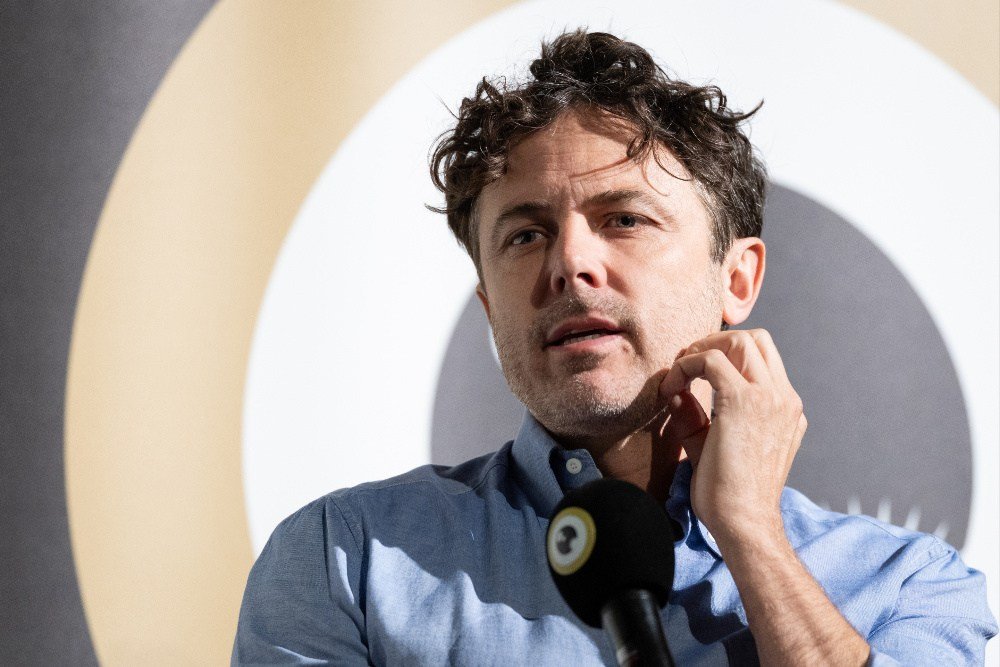
Don’t bother calling Christopher Nolan to ask about his films – Casey Affleck already has, and “it was probably a mistake,” he told the audience during an onstage interview at the Zurich Film Festival on Monday.
“I was driving back from school with my son. We were talking about ‘Tenet’ and disagreeing. I said: ‘Let’s settle that,’” said Affleck. He worked with Nolan on “Oppenheimer” and “Interstellar.”
“We got him on the phone and asked him something that we could have easily looked up on Reddit. Once he said it, it sounded so obvious I felt embarrassed. That was it. I haven’t called him again, and he hasn’t called me.”
“Maybe he will call now and ask me about my movie [‘Company’]: ‘What were you thinking’?!”
Working with Nolan was special, he said. “It was an honor, really. Everyone feels that way. When you are on his set, it’s different from other movies. He’s inclusive, and gives minimal but brilliant directions. He elevates everyone around him.”
Affleck has now directed three films and appreciates Nolan’s approach to work.
“I don’t have a careerist orientation to my thinking, which is not a humble brag. I just wouldn’t know where to start. Nolan is a great example of that. He makes these gigantic, hugely popular, successful movies, but I don’t think he makes things just to please other people. I don’t want to put words in his mouth, but he makes things that interest him.”
“If I can do that, I’d be lucky,” he added.
His brother, Ben Affleck, is another example of “someone who has been very smart about the movies he chooses.”
“Ben’s smart about making his films successful, but he’s not pandering. I know it because I’m there when he says: ‘I have an idea, but I’m not sure if I’m going to like it.’ It’s not: ‘I have an idea, but I am not sure I’ll be able to sell it.’”
It wasn’t the only time Affleck discussed his loved ones during the discussion. His recent anthology, “Company,” stars his mother, partner and sons.
“Neither one of them really wanted to be in it,” he laughed. “Then my son Atticus said: ‘It’s during my spring break, so if you want me to do it, I’ll do it.’ Like he was doing me a favor. Strangely, he took all my directions without arguing, which is not the nature of our relationship.”
Sadly, Affleck’s parents didn’t get to see the film before they passed away. He still dedicated it to them, though.
“I would rather just work with the people I love. I highly recommend it. For many years, I would leave them, shoot the film and miss them. Now, I plan on including my friends and my family as much as possible.”
“Company” also stars Nick Nolte, Ben Mendelsohn, Adelaide Clemens and Scoot McNairy.
“As far as I can tell, Nick is 130 years old. Not because he’s old, but because I don’t remember a time when he wasn’t in movies. He’s still completely committed. We have so many actors in their 20s, 30s and 40s. It’s really nice to see someone portray, so vulnerably, someone at the top end of life.”
Despite its world premiere in Venice, “Company” isn’t finished just yet.
“I thought: Maybe a film festival can be a place where people share their work with the community, get feedback and then finish it? As a director, it’s scary to bring a movie I’m still working on, but there are things I want to change.”
Despite his successes as an actor, Affleck has always been seen as “the outsider.” He was labeled this way in a 2016 Variety cover story as well.
“I remember that. It made me mad,” he said.
“I thought: I will forever be thought of as an outsider, no matter what I do. The public thinks of people one way, and it takes a lot to change that perception. And then I went: Am I crazy? I love that. I don’t want to be ‘an insider’ in Hollywood. It’s not a great culture. I don’t love the films made there or the system.”
He won an Academy Award for Kenneth Lonergan’s “Manchester by the Sea,” but Oscars night itself was a scary experience.
“I was expecting Denzel Washington to win [for ‘Fences’]. It was a terrifying moment to have to stand on that stage. I can’t remember anything I said. But I do remember that I didn’t thank all the people you are supposed to thank. I didn’t thank Kenneth, didn’t thank my kids who encouraged me to make the movie and supported me the whole time. It was mildly traumatic,” he recalled.
“I remember walking off the stage and seeing Leonardo DiCaprio standing in the wings. I was still stuck in a moment of terror and disorientation, and he was just laughing and gave me a big hug. Then I felt better.”
He said: “There’s an illusion of choosing the path you want to be on. The path is choosing you.”
“You have to find your way and make all these mistakes. Make bad movies, take chances and give bad performances, not get the jobs that you wanted and watch other people get jobs that you wanted. The thing about being an actor is that you can take all your hard feelings with you and make something with it. It’s the best part of the job.”
Bigger-is-better studio merger logic goes back in Hollywood nearly as long as the industry has existed. So, too, do eyerolls about such consolidation. In 1933, for instance, comedy troupe the Marx Brothers unveiled the name of their production company, with a characteristic wink, as International Amalgamated Consolidated Affiliated World Wide Film Productions Company Incorporated, of North Dakota.
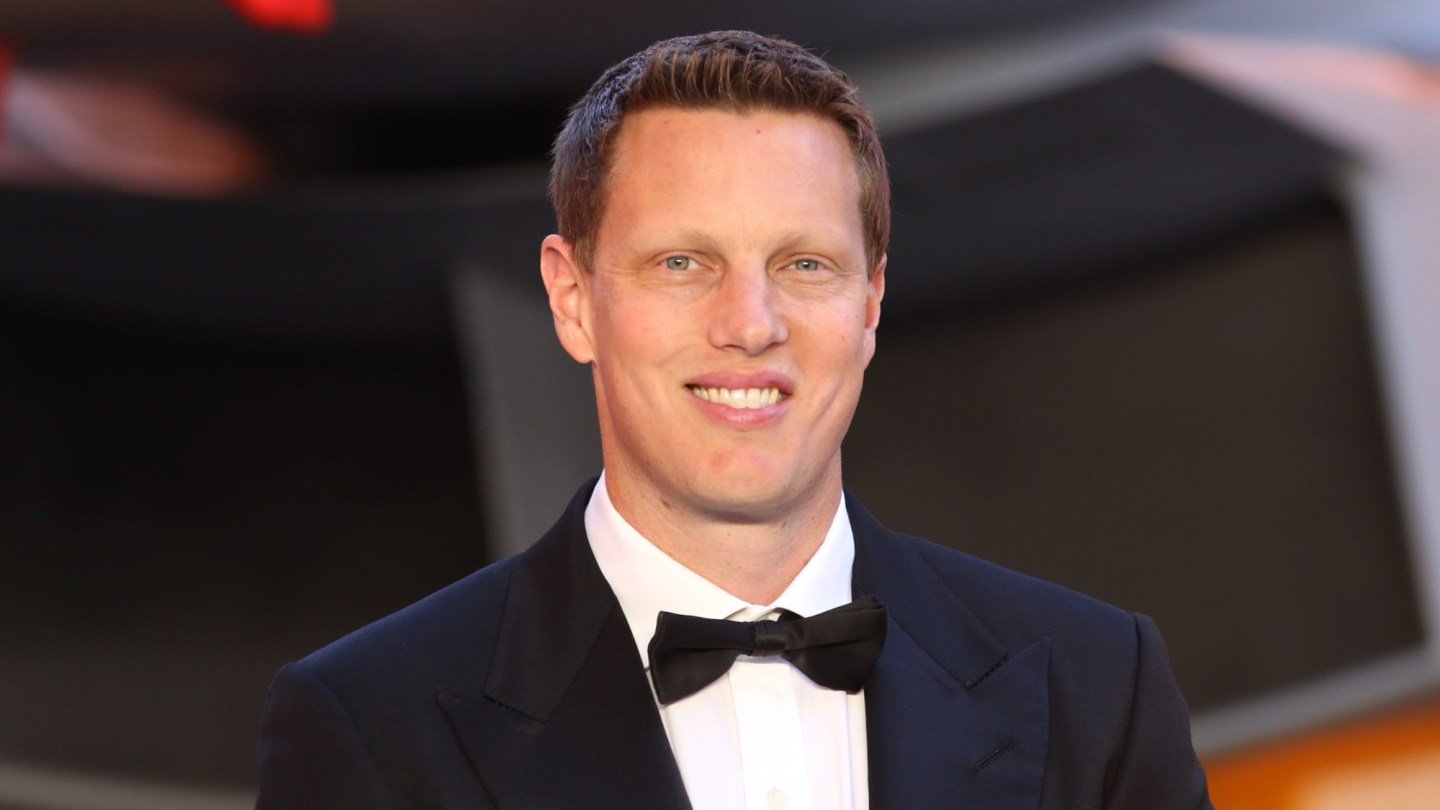
That name makes saying aloud “Paramount SkydanceWarner Bros. Discovery” seem like almost like a breeze after the final ink is dry on David Ellison’s $111 billion merger. But, for this day and age, even five words — a mashup of two century-old studio names on each side of an upstart new media company, with a cable channel tacked on at the end — seem like too much.
That’s the dilemma facing Team Ellison: What does he name a company that just seemingly vacuumed up half of Hollywood? The title for what up until now has been deemed WarnerMount, which tellingly leads with the acquired studio, or ParaBros, which is more of a nod to the optics of the C-suite mix of the buyers, has yet to be unveiled and Paramount is staying mum, declining comment on the angle of this column.
But the name is no small thing. The decision will signal to both the industry and the Wall Street crowd what its new owner prioritizes. On a big picture scale, you could say it sets the strategic direction. Does Ellison want to look forward, rather than backward, given all of his talk about taking on tech giants in the attention economy? Or does his love of the entertainment industry, and big-budget moviemaking, nod to a nostalgic side?
And now, with a rules-of-the-road consent decree to abide by thanks to California attorney general Rob Bonta, he’s got to keep in mind the optics for that crew as well (You can’t look like a monopoly right after closing a deal where the primary complaint from critics is that the merger vaporizes another buyer from the landscape). And the titling will also tip to how Ellison’s own ego plays in to the process, too.
The Paramount Pictures logo, circa 1989 when Gulf and Western Inc. changed its name to Paramount Communications.
Everett
The Warner Bros. logo during its Time Warner days.
Everett
There’s tradition to think of. The Paramount Pictures name and script typeface conjures up Oscars’ best picture winners like The Godfather or Forrest Gump or Top Gun. That’s the reason why, after Shari Redstone re-merged her father Sumner’s Viacom and CBS empires, she rebranded the robotic and clunkily named ViacomCBS as Paramount Global, alongside christening its flagship streamer Paramount+ (and ditching that CBS All Access name). The Paramount name, Redstone believed, signaled quality and Classic Hollywood, and was a known commodity worldwide.
The same could be said about Warner Bros., home of Casablanca and Rebel Without a Cause and countless other classics (many of which we associate with Warners but are actually MGM features, like Wizard of Oz, thanks to Warners buying much of that library and playing those movies on rotation on the Turner Classic Movies channel). It’s the reason why the Warner name has stuck around despite countless mergers and acquisitions. It weathered a merger with then-publishing giant Time Inc and suffered the indignity having AOL take it over in what’s now regarded as the most disastrous media megadeal of all-time. In what probably should’ve been a tell, when AT&T acquired it in 2018, the telecom swallowed Time Warner whole and there was no trace of the Warner name.
Deemed immaterial to AT&T, a few years later it was spun out to David Zaslav’s cable giant, who — in arguably a nod to his ego — made sure that Discovery was represented in the Warner Bros. Discovery merger. That framing made it seem like Warner Bros. and Discovery were equals, when in reality the assets that were sought after (like the movie studio and HBO) were mostly all on the WB side. Zaslav’s team tried to nod to that Golden Age of Hollywood quality when nevertheless revealing a truly hideous logo in 2021 alongside a quote from The Maltese Falcon (“The stuff that dreams are made of”).
Yes, this was a real logo, circa 2021, for Warner Bros. Discovery. But by the time the company closed in 2022 it was consigned to the trash bin.
One clue as to how Ellison may look to go about the naming is what he did when his far-smaller Skydance Media (Est. 2006) merged with Paramount (Est. 1912). Remember, when Skydance first inked a deal nearly a year before closing on Paramount in August 2025 it initially redesigned the Paramount logo to look like the Skydance one.
In an investor deck, Skydance’s team initially redesigned the Paramount logo with the Skydance font.
Paramount Skydance
That change ultimately didn’t take when the deal closed — why mess with a font synonymous with Hollywood? The Paramount script has been around nearly as long as the company existed. It’s been replicated on venues far from Los Angeles and has been the first thing that audiences have seen on countless titles in theaters (the Indiana Jones movies come to mind as far as how each first scene finds a way to play off the Paramount mountain). There’s an authenticity test here. That Skydance-ified Paramount logo looks just a bit off. Here’s the Paramount Pictures logo adorning the front gate of the Hollywood studio lot in 1920:
The front gate to Paramount Studios in 1920. If you squint, it could be 2026 except for that car driving through the gate.
Getty Images
While formally the company is now titled Paramount Skydance (i.e. framed as a marriage of equals even though it’s really not), just take a look at the water tower on the lot to see how Ellison is really playing it. The tower has the iconic Paramount mountain, stars and script font with just a small disclaimer underneath that says “A Skydance Corporation.” Should we expect that for the Warner Bros. water tower in Burbank soon as well? It seems like a decent bet.
Is “A Skydance Corporation” the biggest hint to how Ellison is approaching these names?
Mario Tama/Getty Images
In that case, when the deal formally closes, presumably in early October, is Ellison ultimately going to unveil Skydance Corporation as the new name for his entire holding company that houses dozens of cable channels along with two movie studios and two major news brands? HBO, a Skydance Corporation. CNN, a Skydance Corporation. Paramount has been there before, too, when it was snapped up by manufacturing conglomerate Gulf and Western Industries in 1966 and got labeled “A Gulf + Western Company” underneath its logo. There’s some organizing logic there for synergy when labeling a far-flung empire of assets.
There’s a few problems with that. First, Skydance is the least iconic of all the names that Ellison has collected so far. Yes, it’s his own company that he boot-strapped and built himself (well, boot-strapped and built with financial help from his father, Oracle mogul Larry Ellison, who’s worth around $200 billion). But, optically, nothing says “I bought and ingested iconic studios and now they’re just tiles on a screen in my holding company” like wiping out the studio names from the parent company’s business card.
Second, this new company isn’t AT&T, which ultimately cared far more about the telecom side of things and was fine jettisoning Warner because it wasn’t a core part of its business. Movies and television shows are the name of the game for this merged company. So you’d guess, then, that you should put your best foot forward by leading with the most recognizable, blue-chip names.
Think back to all the handwringing and embarrassing reversals during the AT&T and Warner Bros. Discovery years as to whether the flagship streamer should be named Max or HBO Max. (It started off as HBO Max before turning in to Max and then going back to its original name HBO Max.) Ultimately, the C-suite led with the name that signaled quality to the widest set of possible consumers (even if execs privately fretted about diluting the good name of HBO with a streaming service featuring thousands of shows of varying quality).
In this instance, if Ellison does indeed name his holding company Skydance Corporation it may be the Max of all the options, even if it doesn’t tip his hat in favor of any particular studio aside from the one that he started himself. Right now, the company trades as PSKY on the Nasdaq, though it’s set to move to the New York Stock Exchange in early October. (The symbol, SKY, it should be noted, is already taken on the NYSE by a modular home manufacturing company.)
If including Skydance Corporation in the main part of the name is indeed the plan, maybe going the Marx Bros.’ “Amalgamated Consolidated Affiliated…” approach with the studio names would’ve been the better call, after all, to keep a piece of Hollywood history preserved.
The Hollywood Reporter‘s front page on March 11, 1933, which included an item about the Marx Bros. naming their company the International Amalgamated Consolidated Affiliated World Wide Film Productions Company Incorporated, of North Dakota.

 © Netflix
 © Carla Oset/Netflix
 © Carla Oset/Netflix
 © Stephane Cardinale – Corbis
 © Cindy Ord
 © Netflix
 © Netflix