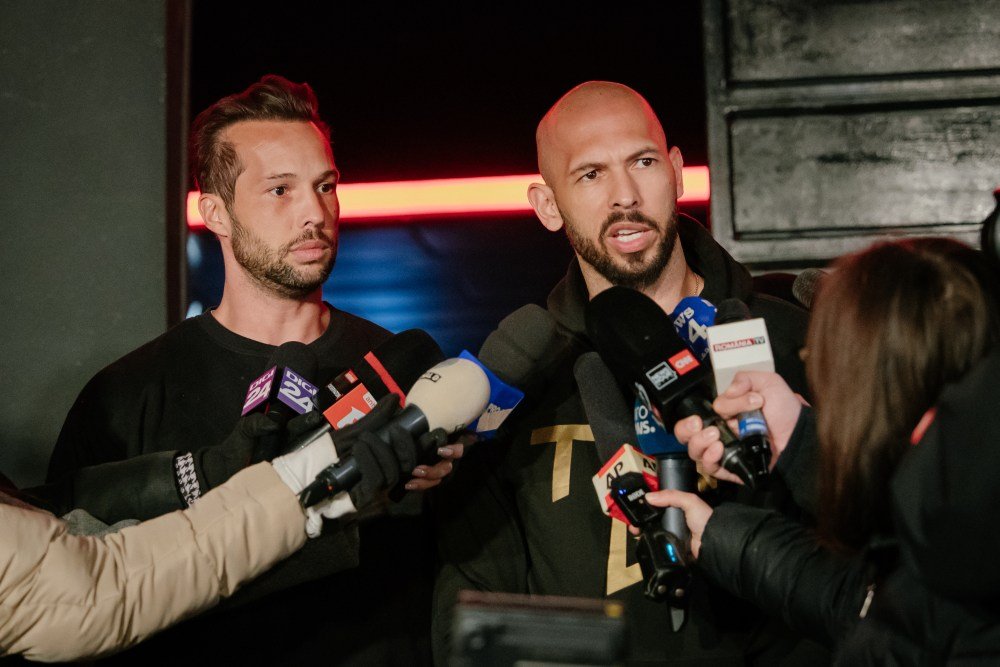
Manosphere influencers Andrew and Tristan Tate were arrested by federal officers Saturday afternoon in Miami, according to AP. The charges against the brothers were not immediately made public.
This isn’t the first time the Tate brothers have found themselves in cuffs. Back in 2022, the controversial media figures were arrested in Romania by anti-terrorism authorities for human trafficking and rape charges. In 2023, Andrew and Tristan were officially charged with those offenses by the Romanian government, according to the BBC.
Andrew Tate has continuously denied all wrongdoing. He told the media in 2023 after he was released from house arrest, “We’ve been completely innocent since the beginning of this, and I have to give absolute faith to the Romanian judicial system for finally making the right decision and letting us free.”
According to Reuters, a Romanian court recently lifted all preventative judicial control measures against the Tates while authorities conduct further investigations into their charges.
In May of 2025, the BBC reported that British prosecutors authorized 21 charges against Andrew and Tristian Tate, including rape, actual bodily harm and human trafficking. Andrew Tate faces 10 charges connected to three alleged victims, while Tristan Tate faces 11 charges tied to one alleged victim.
Andrew Tate first came into the public eye as a guest on the U.K.’s “Big Brother” in 2016. He was later removed from the show after a video surfaced in which he appeared to be hitting a woman with a belt. Andrew Tate and the women later claimed the actions were consensual. Since then, he’s risen to internet stardom as a controversial, hyper-masculine influencer.
If you purchase an independently reviewed product or service through a link on our website, The Hollywood Reporter may receive an affiliate commission.
Just ahead of the 2026 World Cup final between Spain and Argentina, France and England must go toe-to-toe to determine who will take third place. Broadcast live on Saturday, July 18 at 2 p.m. PT/5 p.m. ET on Fox, the match can be livestreamed on any streaming service that carries said network, namely DirecTV (with a five-day free trial), Fubo, Sling and Hulu + Live TV. And since the World Cup concludes with the July 19 final, DirecTV’s five-day trial will provide free coverage through the remainder of the tournament and beyond.
Like every match in this year’s tournament, the France vs. England matchup will also stream live on Fox One, the official 2026 World Cup streamer. Following the service’s three-day free trial, a Fox One subscription costs $19.99 per month. For Spanish-language coverage, Peacock is the official World Cup streamer.
At a Glance: How to Watch France vs. England World Cup Third-Place Playoff
Where to Watch France vs. England World Cup Match: Air Date, Time
The tournament’s third-place game will be broadcast live on Saturday, July 18 at 2 p.m. PT/5 p.m. ET on Fox. It will also air live on Telemundo in Spanish.
Where to Stream France vs. England World Cup Match Online Free
Since the FIFA World Cup bronze match airs on Fox, it will also be available to watch live on any streaming service that carries the network, including DirecTV (with a five-day free trial), Fubo, Sling and Hulu + Live TV. By opting for DirecTV’s five-day trial, fans can also tune in to the July 19 final at no cost.
All matches also stream live on Fox One, the official World Cup streamer. Following Fox One’s three-day free trial, the service costs $19.99 per month. For Spanish-language coverage, Peacock is the official World Cup streamer.
More on each option — and their new subscriber discounts — below.
DirecTV
Five-day free trial; packages from $19.99 per month
Fox is included in any of DirecTV’s signature packages: Entertainment, Choice, Ultimate or Premier. Plus, DirecTV offers a five-day free trial for its streaming service, meaning new subscribers can tune in to the World Cup at no cost.
Learn more about each plan option, including how to build your own channel lineup (starting at just $19.99 per month), at directv.com.
Fubo
Fubo
Up to $30 off first month; packages from $64.99 per month ($54.99 for first month)
Fox is available to stream with a subscription to Fubo, which offers between $10 and $30 off for the first month. Plans start at $54.99 during the first month and $64.99 monthly thereafter.
Sling
Plans from $4.99 per day or $19.99 per month
Fox is included in Sling’s Blue Plan, from $45.99 per month, and Sling’s Orange & Blue plan, from $60.99 per month. That said, local channel availability depends on your TV market. Visit Sling.com to check station availability and package options, starting as low as $4.99 per day or $19.99 per month.
Hulu + Live TV
Three-day free trial; packages from $89.99 per month
Watch Fox for free with a three-day trial to Hulu + Live TV. Subscriptions come bundled with Disney+ and ESPN+, and start at $89.99 per month.
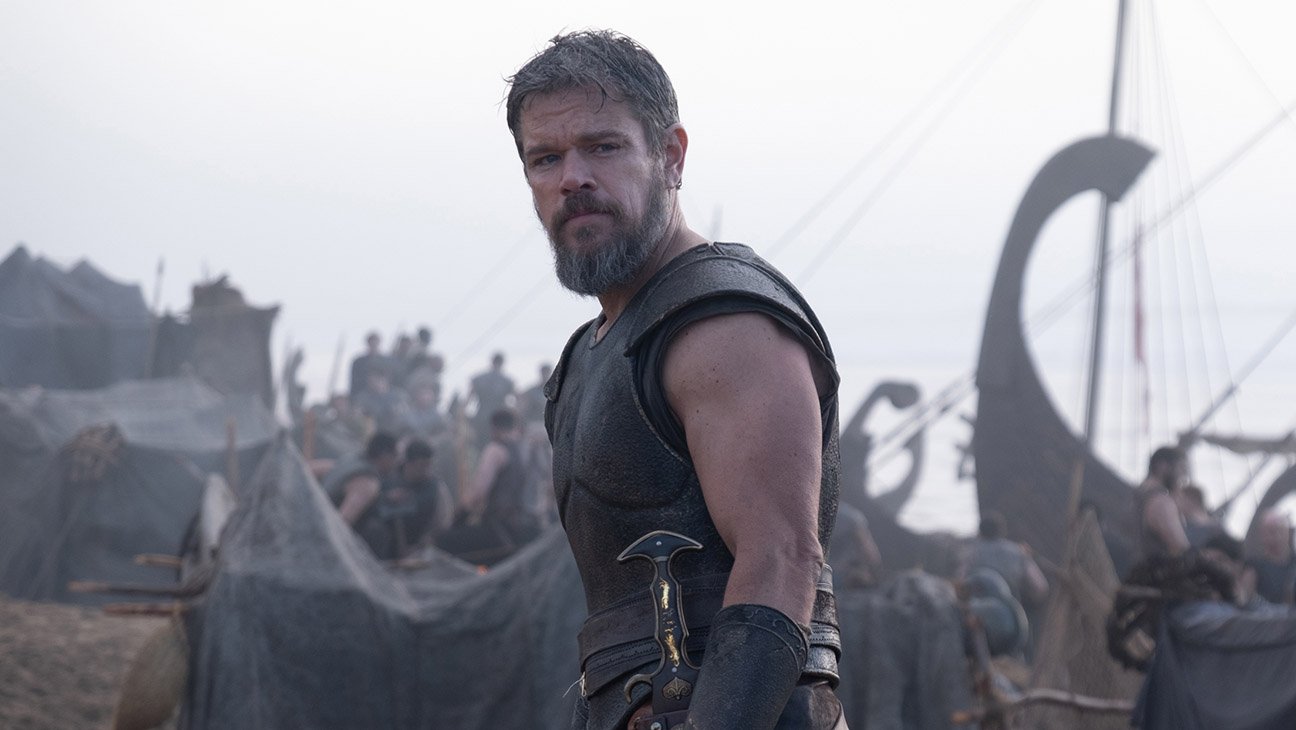
Starring Matt Damon as the heroic Odysseus, the epic feature is fending off competition with $51.2 million on Friday from 3,900 North American screens, including Thursday previews. Earning an A CinemaScore from audiences, the film is eyeing a $120 million-plus frame, which would make it 2026’s biggest live-action opening, with only Toy Story 5 ($159 million) and The Super Mario Galaxy Movie ($131 million) debuting above it. The Odyssey is also set to claim the top R-rated opening of the year and Universal’s highest weekend launch ever for an R-rated movie.
Globally, The Odyssey appears headed for $257.8 million for the summer weekend, with $137.3 million from 73 international markets.
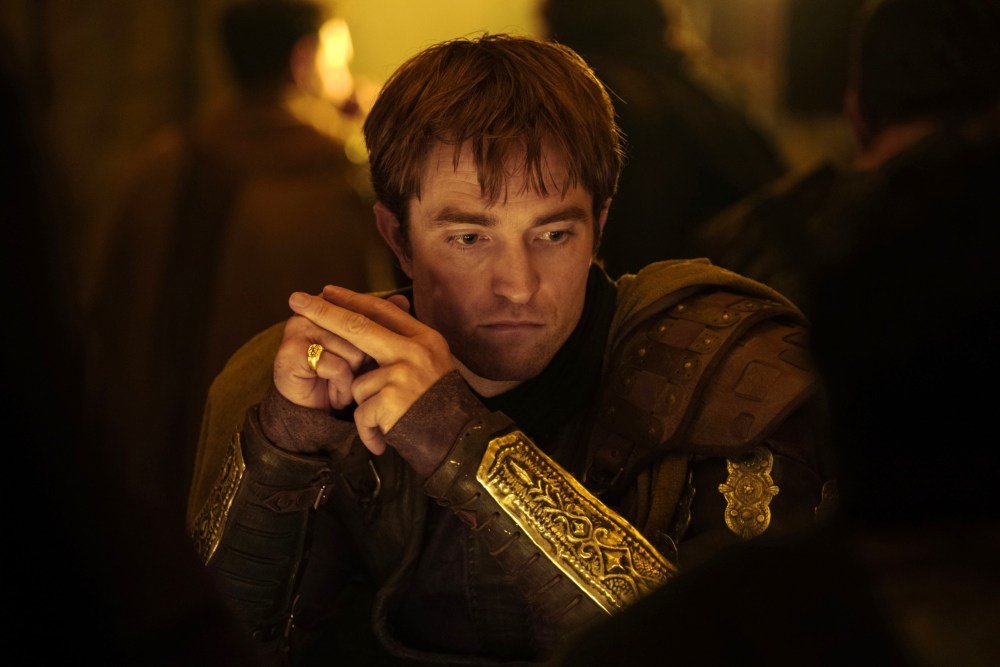
This marks an even stronger start than initially projected for the film, which has a production budget of $250 million, as the studio was targeting a domestic opening in the mid-$80 million to $100 million range. Tom Holland, Anne Hathaway, Robert Pattinson, Lupita Nyong’o, Zendaya and Charlize Theron star in the story of Odysseus (Damon) on his tumultuous trip home after the Trojan War to reclaim his throne as the king of Ithaca and reunite with his wife Penelope (Hathaway). Nolan and Emma Thomas produce for Syncopy.
With The Odyssey marking the first feature to be shot entirely on IMAX cameras, premium large formats have been a priority for many moviegoers, and cinephiles have flocked to the 25 U.S. theaters that screen IMAX 70mm film. The title is eyeing an estimated $30 million from IMAX screens domestically for 25 percent of its North American haul, with an additional $22 million expected from IMAX showings internationally.
This movie looks to notch the third-biggest opening weekend domestically of Nolan’s impressive career and the best outside of the Batman franchise, behind 2012’s The Dark Knight Rises with $160 million and 2008’s The Dark Knight at $158 million. The Odyssey is also set to become Nolan’s biggest global opening, topping The Dark Knight Rises’ $249 million worldwide launch.
The Odyssey is the weekend’s sole new offering in wide release, unlike the filmmaker’s most recent title, Oppenheimer, which opened in July 2023 alongside Barbie as part of the sensation known as Barbenheimer. The film about the physicist who led development of the atomic bomb opened to $82.4 million domestically and ultimately collected $975 million worldwide, and it won seven Academy Awards, including best picture and Nolan’s first best director Oscar.
Nolan’s successful ride with The Odyssey includes sterling reviews, as its 95 percent approval rating from critics on Rotten Tomatoes is currently the best tally of his career, just ahead of The Dark Knight and Memento at 94 percent. The Odyssey is also “verified hot,” with a 97 percent Rotten Tomatoes score from audiences. In his review for The Hollywood Reporter, chief film critic David Rooney deemed it “a meditative action movie both immense and intimate, albeit one whose flow is impeded by the inherently episodic nature of the nonlinear source material and some questionable casting choices.” Additionally, THR’s list ranking Nolan’s movies places The Odyssey in second place, behind only The Dark Knight.
The sophomore frame for Disney’s live-action Moana is set to dock in second place. After a disappointing opening, the Dwayne Johnson-led feature is heading to roughly $19 million domestically for the weekend, declining around 56 percent for a two-week run of $82 million in North America.
Illumination’s Minions & Monsters and Disney’s Toy Story 5 are in close competition for No. 3 on the chart. As the latest title in Universal’s Despicable Me franchise, Minions & Monsters looks to pick up $4.2 million Friday for a third weekend of $14 million, bringing its domestic haul to $136 million. Meanwhile, the latest installment in the popular Toy Story series is also lassoing roughly $4.2 million Friday for around $13.8 million in its fifth frame for a domestic sum of $429 million.
Closing out the top five is Warner Bros.’ Evil Dead Burn, the latest entry in the Evil Dead horror franchise. After its opening sum last weekend was well behind the debut of 2023’s Evil Dead Rise, Evil Dead Burn is expected to gross around $4.7 million this weekend, declining 66 percent for a two-week domestic total at $23.8 million.
Sunday’s World Cup final between Spain and Argentina presents potential competition for moviegoing, particularly among international audiences. In a rare summer occurrence, next weekend is devoid of new wide releases, as studios appear reticent to date any titles between The Odyssey and Sony’s July 31 release of Spider-Man: Brand New Day, starring Holland and Zendaya.
So, a Homerist, an archaeologist and a dentist walk into a bar.
Fresh from a Thursday night showing of Christopher Nolan‘s “The Odyssey,” a group of 17 spent the evening doing what scholars have done with Homer’s epic for nearly 3,000 years: arguing about it.
“We had a really robust debate,” says Joel P. Christensen, editor of “The Oxford Critical Guide to Homer’s Odyssey.” Christensen was accompanied by retired Homer scholars (often referred to as Homerists), editors, professors, historians and various public intellectuals. “And my wife is a dentist,” he adds, “so she was the red herring in the crowd.”
The conversation ranged from Nolan’s decision to make Polyphemus (the Cyclops that Matt Damon’s Odysseus stabs in the eye) nonverbal to the film’s depiction of language itself. Each intellectual was fervently dedicated to a different academic discipline, yet Homer’s “The Odyssey” is one of the few works that transcends any single field of literature or history.
“I was surprised by how many academics liked it,” Christensen says. “I had to be restrained a few times by my wife. Everybody knows that I’m the worst audience for the film.” After a long pause, he continues, “I’ve been saying to myself: ‘This is not Homer’s “Odyssey.” This is Nolan’s “Odyssey.” And it needs to be judged on different terms.’”
“I’ve been in this business for a long time, and I don’t think I’ve seen anything like this,” says Monica Cyrino, a classics professor at the University of New Mexico who has spent decades studying ancient worlds on screen. “It’s had the impact of the OG ‘Gladiator,’ but even that didn’t have the same run-up. There’s already been hundreds of published academic articles — and the movie hasn’t even come out yet. It’s crazy!”
In the months leading up to its release, Nolan’s film has become a flashpoint for online culture-war debates. Critics have argued that the “woke” castings of Lupita Nyong’o and Elliot Page, along with certain production design choices, are historically inconsistent with the Mycenaean world traditionally associated with “The Odyssey.” But after Variety spoke with leading classicists and historians, it became clear those weren’t the issues driving the conversation in academic circles.
“I’m really disturbed that so much of the conversation has been about how ‘woke’ or progressive this film was going to be,” Christensen says. “I actually think it’s a very conservative film. The roles for women are constrained. The interracial casting is women of color who just get to be married to white men, which is not progressive.”
From a filmmaking perspective, literature and film experts alike will argue that no Hollywood epic portraying the ancient world has ever achieved complete historical accuracy, instead reflecting the cultural assumptions and audience preferences of the time.
“These are fictional characters,” film critic Alonso Duralde notes in his review of “The Odyssey” on the “Breakfast All Day” podcast. “There probably wasn’t actually a Helen of Troy. There probably weren’t actually a lot of these folks. And if there were, the ancient world was a lot more mixed than we think from all the Italian sword-and-sandal epics we were given in the ‘50s and ‘60s. You had people from Africa, Asia and Europe. They had boats, y’all!”
As for critiques of the film’s production design, whether it’s the polished Trojan Horse or the costumes (many fans online argued Benny Safdie’s Agamemnon looked more like a Batsuit than Bronze Age armor), Nolan has described his philosophy as: “What is the best speculation and how can I use that to create a world?” That approach didn’t seem to ruffle the feathers of classicists, many of whom have tempered their expectations for what a Hollywood blockbuster is designed for: entertainment.
“Nobody cared,” Christensen laughs, speaking for his academic cohort. “Even the head archaeologist didn’t care. Because here’s the thing: ‘The Odyssey’ is filled with anachronisms. Homeric poetry contains different historical layers. What’s important is that the depiction functions as a vehicle for the audience’s fantasy about the past.”
While the majority of classicists are embracing the spectacle of Nolan’s blockbuster, opinions start to diverge when discussing his adaptation of Homer’s language for the screenplay. As Harvard classics professor Gregory Nagy puts it, there is no single “original” version of “The Odyssey” in a modern sense — that’s because the poem emerged from an oral tradition.
“‘Homer’s Odyssey’ was already historical fiction, reimagining an ancient past when it was first composed,” says Richard P. Martin, a professor of Greek and Latin literature at Stanford. “Fellow classicists are happy with Nolan’s version because we all recognize it is a version. There is no ‘correct’ treatment, because every generation makes its own version of the poem, either by retranslation or revisualization in various media. All publicity about Homer is good publicity.”
Just as Odysseus assumes different identities to survive his arduous homecoming trek, there’s a long-standing debate over whether “Homer” was a single author — or, as Friedrich August Wolf first argued in 1795, that the poems were the product of “the whole Greek people” and were edited several times to suit changing contemporary tastes.
Famously, Alexander Pope’s 18th-century translation made “The Odyssey” into a text about polite manners and tact, while Richmond Lattimore’s 1960s translation sought to preserve the rhythms and formulas of the original Greek language. Laura Slatkin, one of the leading Homer scholars, says Lattimore’s translation often feels “archaic” for her students at New York University because the diction is too quaint and formal.
“None of them are definitive,” Slatkin says. “That tells you something about the problem of translation, but it also tells you something about ‘The Odyssey’ because it’s not simple enough for a definitive translation. You’re building on existing resources from previous songs, from previous poetic traditions, but you’re not simply repeating them or recapitulating them. You’re … assimilating them.”
More recently, Emily Wilson’s translation suggests “The Odyssey” was socially progressive for its time and “meditates on what women [and other suppressed groups, broken down by race or economic status] might be capable of.” She argues that “Homer is, and is not, our contemporary,” and that her translations (along with all the others) should be contextualized as a “text that exists in two different temporal and spatial moments at once.”
Slatkin described Nolan’s screenplay, which Variety’s chief awards editor Clayton Davis predicts will compete for best screenplay at next year’s Academy Awards, as “the newest song” in a lineage of adaptations. “The Odyssey” has always been a tale that contains multitudes — balancing realism and fantasy, moral certainty and reconciliation, strangeness and familiarity. Just as the ancient Greeks (and every civilization that followed them) used “The Odyssey” to express their own ideas about morality, Nolan is doing the same.
“The consensus I’ve heard so far is that it’s going to generate a lot of discussion in the classroom,” says Justin Arft, a fellow Homerist and associate professor at the University of Tennessee, Knoxville. “Even with all the omissions and changes, no one’s too upset about that. Honestly, we’re all curious — maybe confused, at times — but really interested in this as a piece of art. Nolan’s film is a piece of art, and Homer is a piece of art.”
Once that classroom discussion begins, academics will surely have some more words for all the creative liberties Nolan’s movie takes. Martin, Christensen and several other classicists knocked Nolan for watering down the “sophisticated” morality of Homer’s poem and devoting more narrative time to spectacle, such as the fall of Troy.
“I understand where the critics are coming from because I can speak in both registers,” Cyrino said. “What they don’t understand is the near-term and long-term benefit this has for us as a discipline. Humanities programs are being cut everywhere, especially classics programs. I’m a department chair, and I guarantee my Greek classes are going to be fuller this year!”
She concludes, “You know what Hollywood does: one thing succeeds, and 10 more follow. This is going to be great. As my husband always says, business is booming!”
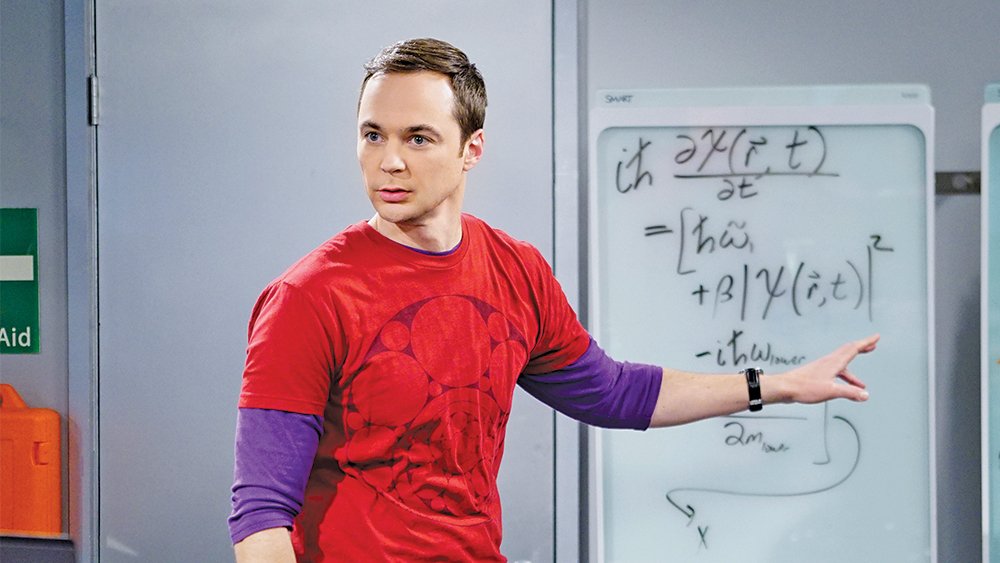
Jim Parsons recently told the “All Out with Jon Dean” podcast (via People) that he was “miserable” during the height of his long-running TBS sitcom “The Big Bang Theory.”
“I look back now and realize that there were many ways, at some of the best moments of my life, I was miserable,” Parsons said. “I was not happy. I was stressed.”
He added, “I felt that there was so many plates I was supposed to be keeping in the air and that the success and the good things of life that were happening were only due to this overworking… discipline and whatever. Maybe to a degree that was true. I don’t know. I can’t say because that’s how I was.”
Despite the overwhelming success of “The Big Bang Theory,” Parsons said he wouldn’t relive it “for any amount of money.” He went on to acknowledge that the role “is not going away,” but since the show wrapped in 2019, he’s been “changing my relationship to it.”
“It’s evolving, and it gets better all the time. What I feel is better, what I feel is healthier. It’s not something that I think probably anybody, but I was certainly not equipped to, looking back,” Parsons explained.
“The Big Bang Theory” ran for 279 episodes from 2007 to 2019, and followed the misadventures of a group of socially awkward science geeks and their much cooler female neighbors. Parsons starred alongside Johnny Galecki, Kaley Cuoco, Simon Helberg, Kunal Nayyar, Melissa Rauch and Mayim Bialik. The show earned 10 Emmys during its run, including four best lead actor in a comedy wins for Parsons.
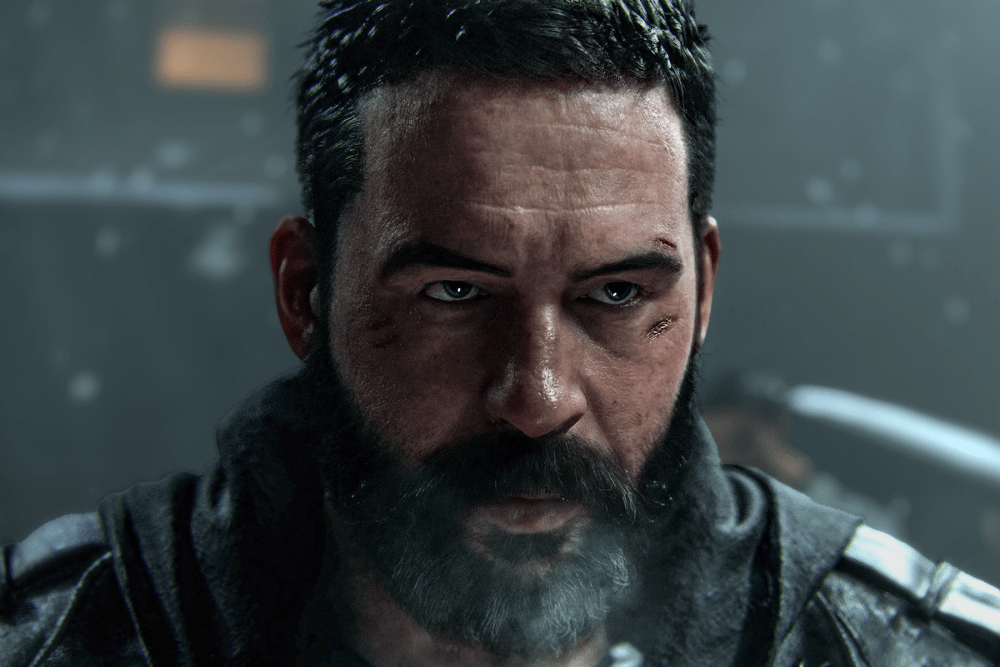
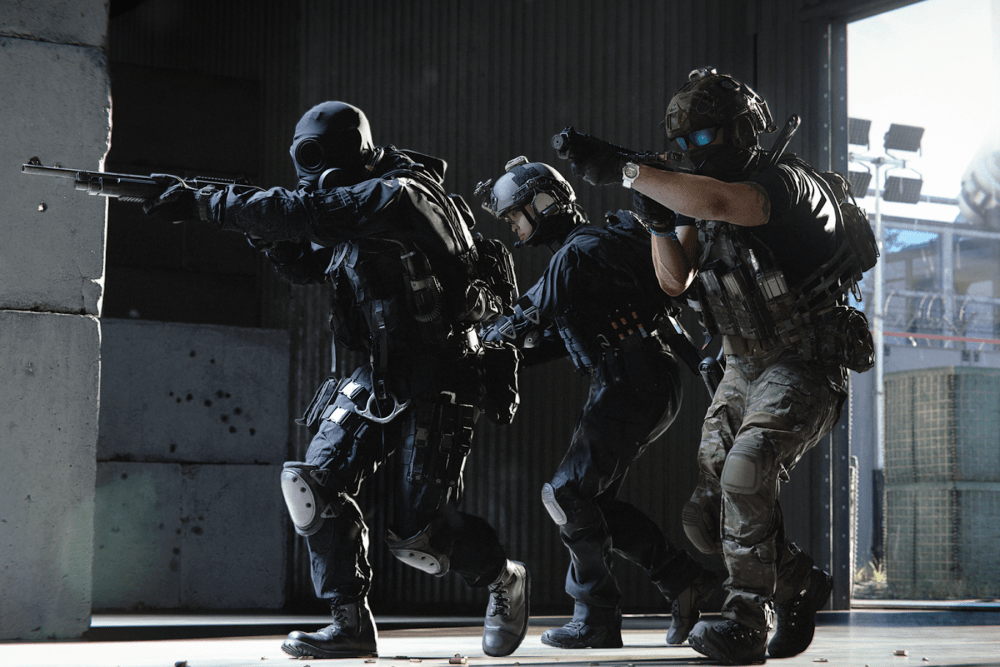
Plot details about the movie have been kept under wraps since it was first announced in September 2025. But during a “Call of Duty in Culture Panel” promoting the October release of “Modern Warfare 4,” which took place at Fanatics Fest in NYC Saturday, “Call of Duty” movie director and co-writer Peter Berg took the stage to reveal to fans that the film will be set in the “Modern Warfare” universe.
Since the original game’s release in 2003, the “Call of Duty” franchise has grown to include more than 30 mainline games. Among the dozens of titles, which have hailed from different developers over the years but are now all under Xbox via its purchase of publisher Activision, are the “Modern Warfare” games. Beginning with “Call of Duty 4: Modern Warfare” in 2007, the “Modern Warfare” storyline marked the first “CoD” games to break from the franchise’s original World War II setting.
The “Modern Warfare” games have largely been set in the Middle East and followed Captain John Price and his Task Force 141 team’s mission to defeat terrorist Vladimir Makarov. This story will continue with the fall launch of “Modern Warfare 4,” which features a war that breaks out between North and South Korea.
Last month, Paramount Pictures set a June 30, 2028 release date for the currently untitled “CoD” film, which is being produced in collaboration with publisher Activision.
When the deal to make a “CoD” movie was first announced last year by new Paramount owner Skydance, sources told Variety that while the focus was to make the one “Call of Duty” movie from writer Taylor Sheridan, the multiyear pact includes the potential for Paramount to expand the “Call of Duty” universe across film and TV.
If you purchase an independently reviewed product or service through a link on our website, The Hollywood Reporter may receive an affiliate commission.
A great handbag can instantly elevate any wardrobe, but finding a designer style on sale is a rare opportunity. Nordstrom’s Anniversary Sale is giving shoppers the chance to save on luxury handbags, with limited-time discounts on coveted styles that rarely receive markdowns throughout the year.
The annual shopping event is back with some of the retailer’s biggest savings across fashion, beauty and accessories. Early access for Nordstrom’s Anniversary Sale began Tuesday, July 14, while the sale opens to all shoppers on Saturday, July 18 and runs through Sunday, Aug. 9.
This year, the sale features some of its steepest discounts yet on sought-after designer handbags from luxury labels like Tory Burch, Marc Jacobs, Coach and Tory Burch. With select styles marked down by more than $500 and many luxury bags reaching nearly $1,500 off in total, shoppers have a rare opportunity to add coveted pieces to their collections before the best deals sell out.
Nordstrom’s Anniversary Sale 2026 Dates
Nordstrom’s Anniversary Sale opens to the public on Saturday, July 18 and ends Sunday, Aug. 9. Since designer handbags are among the most popular categories during the annual savings event, shopping early is a major advantage for those looking to secure their favorite styles.
Why Nordstrom’s Anniversary Sale Is the Best Time to Buy a Designer Handbag
A designer handbag is more than just an accessory — it’s a wardrobe investment, which makes finding one on sale even more exciting. Nordstrom’s Anniversary Sale offers a rare chance to save on current-season styles and elevated designs that don’t typically receive major discounts.
Whether you’ve been eyeing an everyday crossbody, a polished work tote or a statement handbag, the annual sale brings together some of the most sought-after styles at a lower price point. For anyone looking to add a luxury accessory to their collection, it’s one shopping event worth watching before prices go back to normal on Aug.10.
Nordstrom Anniversary Sale 2026: Best Designer Handbag Deals
Limited Edition
Tory Burch Convertible Crossbody Bag
Clean lines and a convertible design make this minimalist bag an easy pick for everyday wear and nights out alike.
a nordstrom Exclusive
Coach Pebbled Crossbody Bag
If you haven’t already, it’s time to snag a sleek Coach bag made from richly pebbled leather.
Vince Medium Vivian Raffia Hobo Bag
The woven raffia and smooth leather trim give this slouchy hobo bag an effortless summer look, while the removable zip pouch keeps your essentials organized.
AllSaints Alba Shine Leather Shoulder Bag
Channeling a sleek aesthetic with a hint of rocker influence, this shiny leather tote features another slouchy east-west silhouette that feels both timeless and trendy.
Longchamp Le Foulonné Leather Crossbody Bag
Crafted from supple cowhide leather, Longchamp’s Le Foulonné crossbody has been a wardrobe staple since its 1978 debut.
Major Savings
Stella McCartney Raffia Trim Crossbody Bag
With its woven raffia finish and handcrafted Italian design, this crossbody is made for warm-weather outings. The nearly 50 percent discount is just the icing on the cake.
Kurt Geiger London Medium Chelsea Slouch Hobo Bag
With eagle-head hardware and a slouchy silhouette, this hobo bag make the ’70s design look sleek and elegant.
Marc Jacobs The Leather Snapshot Shoulder Bag
Looking for an everyday shoulder bag? This compact Marc Jacobs style combines a modern barrel silhouette with understated logo hardware.
On May 1, the Academy of Motion Picture Arts and Sciences announced a major change to the eligibility rules for the best international feature film. No longer would a film have to be nominated by the country of origin; henceforth, it could land in the pool of nominees by winning an award from a list of high-profile international film festivals. Moreover, in recognition of the fact that a person not a nation actually directs the film, the director’s name and not the country’s will be engraved for posterity on the statuette plaque.
The new protocols for the best international film category, née best foreign language film, are the latest rejiggering in what has historically been one of the more contentious and confusing Oscar categories. Of course, under whatever rules, Oscar validation can mean the difference between multi-platform distribution and oblivion in the American marketplace.
So, despite the provincialism of allotting a mere five slots to the output of the rest of the planet, foreign filmmakers have been eager to perform due obeisance before the Academy, which since 1957 has granted offshore films a regular seat at the festivities. (The first winner was Federico Fellini’s La Strada.) Before that, the Academy doled out an Honorary Oscar when the impact and excellence of a foreign film became too conspicuous to ignore, as with Italy’s The Bicycle Thief in 1949 or Japan’s Rashomon in 1952. The honor was voted on by the Board of Governors, to save the full Academy membership from reading subtitles. (Today the nominees are chosen by an Academy-approved Select Committee). Costa-Gavras’s Z (1969), nominated for best picture and best foreign language Film (it won the latter), was a landmark border crossing and, in 2020, Bong Joon Ho’s Parasite broke the language barrier by becoming the first non-English language film to win best picture.
However, of all the foreign-born incursions into top-tier Oscar territory, the first breakthrough is the most curious. At a time when subtitled films were a species of exotica, and with no major studio backing, Jean Renoir’s antiwar classic La Grande Illusion (1937) — easily translated as Grand Illusion — landed a nomination in the best picture slot, which was then called outstanding production and included ten candidates. (The other nominees were Boys Town, The Citadel, Pygmalion, Test Pilot [all MGM], Four Daughters, The Adventures of Robin Hood, Jezebel [Warner Bros.], Alexander’s Ragtime Band [20th Century-Fox] and You Can’t Take It with You [Columbia]. The last, directed by Frank Capra, won.) To be sure, in 1949 a British invader, Laurence Olivier’s Hamlet, won best picture, but it was at least in English and credited to an A-list screenwriter. But how did Grand Illusion manage to crash the exclusive party?
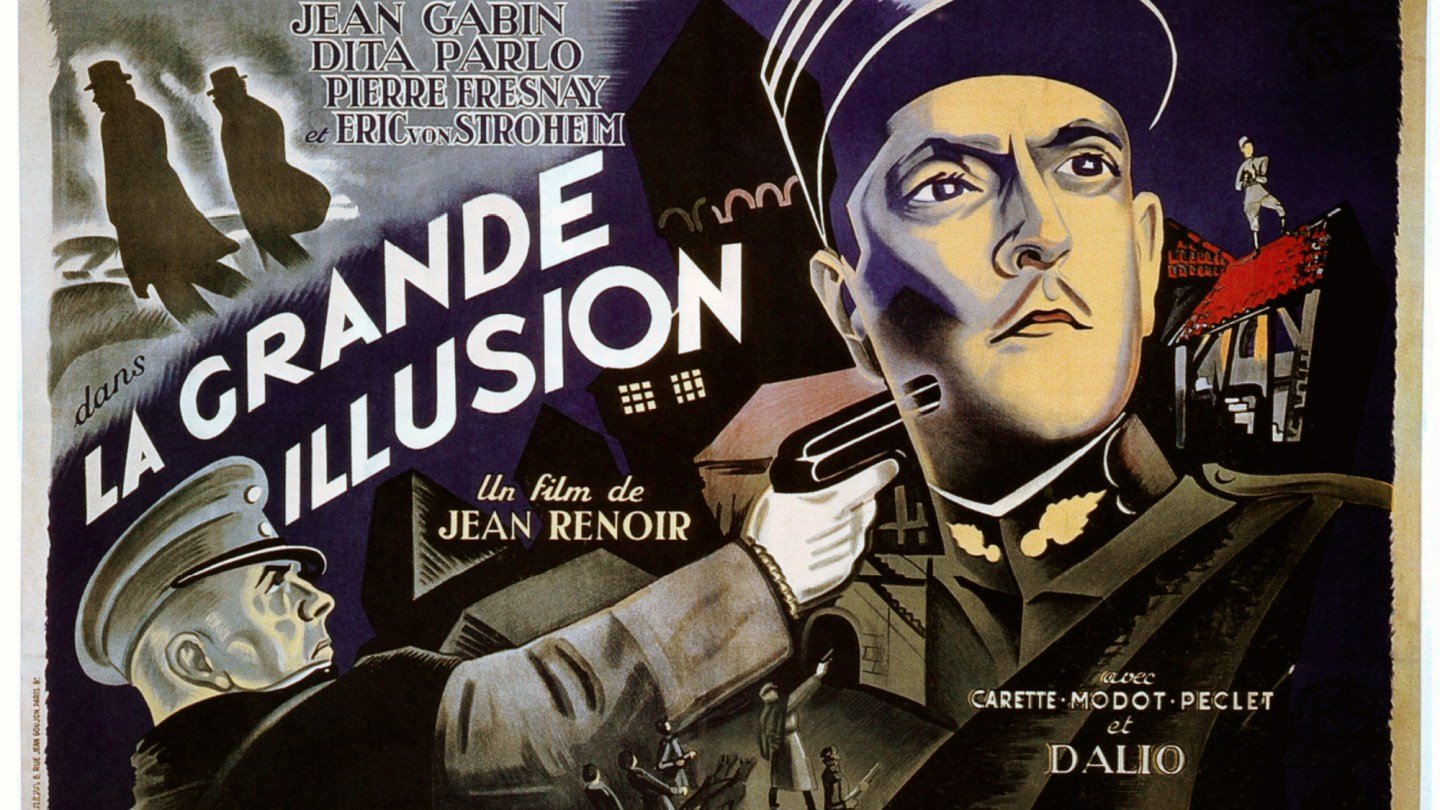
Poster art for ‘La Grande Illusion’ circa 1937.
In 1938, Jean Renoir was not a known name in the US, much less a world-famous auteur. It seems unbelievable that two of his early masterpieces — Boudu Saved from Drowning (1932) and The Crime of Monsieur Lange (1936) were not released in the US until 1967 and 1964 respectively. Renoir’s version of Maxim Gorky’s The Lower Depths (1936) and his Popular Front documentary The People of France (1936) got only modest arthouse circulation and critical attention, with reviewers sure to identify the director as “the son of the famous French impressionist Auguste Renoir.” Only after Grand Illusion was Renoir acknowledged in his own right as a French master in another medium.
Made in Paris by Les Realisation d’Art Cinematographyque, Grand Illusion was distributed stateside by World Pictures Corp., operated by the legendary foreign film magnate Irvin Shapiro, who began his career importing The Cabinet of Dr. Caligari (1920) and capped it by exporting The Evil Dead (1985). Like almost all films about the Great War made in its aftermath but before its sequel, it is somber in tone and pacificist in sentiment. There are no scenes of thrilling aerial combat or over-the-top attacks in no man’s land. “A War Story without War Scenes!” warned the advertising. Renoir knew the material first hand, having served as both a cavalry officer and a pilot in the Great War and been wounded twice.
Two French pilots — Captain de Boeldieu (Pierre Fresnay), a white-gloved aristocrat, and Lieutenant Maréchal (Jean Gabin), a gruff former machinist — are shot down over German lines by the ramrod-straight Prussian aviator Captain von Rauffenstein (Erich von Stroheim). A chivalric knight of the air, von Rauffenstein plays the gracious host to his prisoner-guests before they must depart for a prison camp. The accommodations in the German POW camp are not half bad and the company is great. De Boeldieu and Marechal encounter a diverse crew of colorful countrymen — a comedian, a literary scholar, and the son of a wealthy Jewish family, Lieutenant Rosenthal (Marcel Dalio), a stalwart solider who generously shares his bountiful food parcels. (The affirmative portrait of Rosenthal was certainly by way of apology for the treatment of the most famous Jew in French military history, Captain Alfred Dreyfus, who had just died in 1935.)
Of course, the prisoners are digging a tunnel to escape. “A golf course is for golf, a tennis court for tennis, a prison camp for escape,” observes de Boeldieu. When not excavating and eating Rosenthal’s bread and cheese, the men rehearse for a musical comedy performance featuring a chorus line of men in drag. The shenanigans are interrupted by news that the French have retaken Fort Douaumont, marking the end of the carnage at Verdun. In an outburst of patriotism, the prisoners rise to sing “La Marseillaise,” a scene that ranks as the second most stirring rendition of the French National anthem in motion picture history.
As recidivist would-be escapees, de Boeldieu, Marechal, and Rosenthal are transferred to an impregnable medieval fortress, commanded by Captain von Rauffenstein, now burnt, broken in body, and wearing a neck brace. Knowing their days of bloodline privilege are numbered, the German and the French aristocrat bond, their class affinities binding them more tightly than the uniforms that separate them. Renoir told film historian Arthur Knight that if a French farmer and a French financier dined together, they would sit in uncomfortable silence, but if a French farmer and a Chinese farmer dined together, they would find plenty to talk about.
Still, a French prisoner must do his duty: de Boeldieu gallantly stages a diversion so Maréchal and Rosenthal can escape, during which a reluctant von Rauffenstein is forced to shoot his class comrade. On his death bed, de Boeldieu accepts the fortunes of war as Von Ruffenstein grieves.
The third act finds Maréchal and Rosenthal scurrying through the woods and fields, squabbling and miserable, until they come upon a farmhouse run by a fetching German war widow (Dita Parlo) with an adorable daughter. She takes them in, gives them shelter and food, and falls hard for Marechal, 1937 being the year of peak Jean Gabin. In too short a time, though, the pair must leave the idyll. Against odds, they escape into Switzerland. The guards on the German side see no point in firing as, in the distance, the men plod through the snow to freedom. In Great War territory, this counts as a happy ending.
Marcel Dalio, Jean Gabin and Pierre Fresnay in ‘La Grande Illusion.’
Everett
On June 8, 1937, LaGrande Illusion premiered at the 1250-seat Marivaux Theater in Paris, to a packed house made up of “members of Paris society, Paris cinema and theater circles, writers and press representatives” who, at the end, “gave long and loud applause.” The French critics, then as now a surly and hard-to-please lot, were unanimous in praise: “an important and extremely happy event in French cinema history” (Le Temps); “a masterpiece of cinema”; (Mariane); and “a very fine film, a beautiful human work” (Oeuvre). In the theater that night was Pierre Autre, Motion Picture Herald’s man in Paris, who first sent word back to American readers, a rave that has stood the test of time. “La Grande Illusion is, by far, the best French film of the year, up to date — in fact, it is one of the best French films ever made.” The Hollywood Reporter also predicted that “the smash hit” should “go well in the States.”
It did better than well. In America, Grand Illusion became the most widely circulated and highly praised foreign film of the 1930s.
On Sept. 12, 1938, Grand Illusion opened at the newly refurbished Filmarte Theater in New York with columnist Dorothy Thompson, novelist Fannie Hurst, playwright Clifford Odets, and actress Aline MacMahon in attendance. The Filmarte was run by a pioneering importer of foreign film, Jean H. Lenauer, whose arthouse was emblematic of what were called “sure seaters” in the trade because a small but devoted clientele was sure to buy a ticket to whatever foreign film happened to be booked. Grand Illusion played the Filmarte for a record-breaking 27 weeks. The lobby was decorated with reproductions of Impressionist paintings by Auguste Renoir.
Meanwhile, the word on Grand Illusion was getting out beyond the insular arthouse crowd. Samuel Goldwyn called it “the most brilliantly directed film I have seen in years — a challenge to Hollywood.” Producer Walter Wanger, director Mervyn LeRoy, and the actresses Lillian Gish and Helen Hayes also offered endorsements. The New York Film Critics named Grand Illusion the year’s best foreign film. The National Board of Review dispensed with qualifiers and named it “the best film of the year from any country.” The Film Daily ran out of superlatives and finally just said, “you owe it to yourself to see this picture — it will send you out thinking.”
Some of the best notices went to von Stroheim, basically radioactive in Hollywood since Joseph P. Kennedy booted him off the set of Queen Kelly in 1929. In TheNew York Times, Frank Nugent chided Hollywood for its “folly in permitting so fine an actor to remain idle and unwanted.” Von Stroheim responded in character. “You can’t expect a director to enjoy acting when directing is the nearest thing to being God,” he said. “I have enjoyed acting in pictures directed by a director called Eric von Stroheim, and written by a writer called Eric von Stroheim.”
To break out of the arthouse ghetto, however, Grand Illusion needed a transit visa into the mainstream exhibition market, namely a Production Code seal. On July 29, 1938, Irvin Shapiro duly applied for the imprimatur from Hollywood’s censorship regime. Unsurprisingly, the Code guardians asked for a few “slight deletions” — a shot of a prisoner rubbing a pair of silk underwear, the use of the word “damn,” and a reference to a prisoner who tries to escape dressed as a woman (“Quite amusing,” comments a friend. ”Not so amusing when a sergeant mistook me for one,” he replies.). Also concerning was “the racial angle in reference to Rosenthal” — that is, an antisemitic insult aimed at him once in anger, once in jest, by Maréchal. But this was a matter left “solely for [Shapiro] to decide.” Shapiro decided to keep the insults. On Nov. 23, 1938, after the requested cuts were made, the PCA issued Grand Illusion a Code seal. The Roman Catholic Legion of Decency also gave it clean bill of health, rating it “AI: unobjectionable for adults.”
With the Code imprimatur, Grand Illusion spread out beyond the arthouses and played the RKO, Warner, and Publix circuits. Reviews and ads were careful to explain to the first-time foreign filmgoers that “English titles translate the dialogue.” The box office thrived on word of mouth, repeat business, and high school French teachers dragging their classes to screenings.
Grand Illusion was also fortunate to hit the crest of an antiwar zeitgeist. Another great war, with less chivalric Germans, was looming on the horizon: in March 1938, the Nazis annexed Austria; October saw the invasion of the Sudetenland, and on Nov. 9-10 the Reich-wide pogrom now known as Kristallnacht was launched. For many Americans, a film about what Variety called “the futility of mankind’s armed conflict” had ominous relevance.
Not that the antiwar message was universally embraced. Though Grand Illusion won “the most artistic ensemble” award at the Venice Film Festival in 1937, it was banned by the Italians under pressure from Nazi Germany on the grounds that the film “has an anti-German tendency and offends Germany’s honor.” Actually, what offended the Nazis was the sympathetic portrayal of Rosenthal. The Nazis also took more active measures to suppress the film. In 1938, film historian Herman G. Weinberg reported that on the very day that the Nazis moved in to Vienna [March 13, 1938], “Grand Illusion was taken off the screen in the middle of a reel by the storm troopers.” Renoir regarded the shut-down “as a signal honor — and a decoration.”
Jean Gabin, (left), Pierre Fresnay, (center), Marcel Dalio, (right) in ‘La Grande Illusion.’
In America, the reception of Grand Illusion was less violent but still passionate: isolationists and anti-Nazis alike adopted the film for their cause. On Jan. 12, 1939, a special “Congressional Night” screening of Grand Illusion at the Belasco Theater in Washington, DC was arranged for senators and congressmen because, said the management, “the picture’s indictment of warfare will be a message of interest to not only the Committees of Foreign Affairs and Foreign Relations, but to legislators generally.” The ardent isolationist Congressman Hamilton Fish (R-NY) blurbed the film as “an antidote to war hysteria.” From the other side of the ideological spectrum, anti-Nazis interpreted the tolerant and pacifist spirit of the film as a rebuke to Nazi eugenics and militarism. “It will give you hope for humanity and patience and inspiration in the fight against the Nazi syphilis,” said Mike Gold in the Daily Worker. In Los Angeles, the Hollywood Anti-Nazi League sponsored screenings of Grand Illusion.
Ultimately, the critical buzz and cultural impact of Grand Illusion reached into the ranks of the Academy voting pool. The timing was fortuitous. In accord with newly agreed to protocols adopted by the Academy Rules Committee on Dec. 20, 1937, selection of the nominees for Outstanding Production was now open to all eligible voters (whereas only directors selected the best director nominees and actors the Best Actor and Actress nominees and so on).
On Jan. 23, 1939, the nomination ballots were sent out to 4,000 Academy members; they had to be returned by February 3. By then Grand Illusion had been playing in New York since its premiere in July and in Los Angeles since November 1938. When the voting went down, every savvy person in the motion picture industry had certainly seen it. Its resonant timeliness and manifest excellence (everyone knew it was a work of genius on sight) catapulted Grand Illusion into the top ten. For Jean Renoir and Irvin Shapiro, the cliché was true: it was an honor just to be nominated.
Jean Gabin and Marcel Dalio in ‘La Grande Illusion.’
The recognition from the Academy kept Grand Illusion circulating. In New York, after ending its run at the Filmarte, it moved over to the 68th Street Playhouse, another landmark arthouse.
In September 1939, upon the outbreak of the war in Europe, World Pictures Corp. re-released Grand Illusion with a new publicity campaign tailored to the moment. “Never so timely!” exclaimed the ads. “They said the Europe of 1914-1918 would never happen again—but!” Renoir’s response — you can picture him giving a resigned Gallic shrug — was laconic. “In 1936, I made a picture in which I tried to express all my deep feelings for the cause of peace. It was very successful. Three years later the war broke out.”
By then, von Stroheim had offered his services to the French army, which thanked him politely but declined. Back in Hollywood, he played sinister Nazis in Five Graves to Cairo (1943) and The North Star (1944). In 1941, Renoir also came to Hollywood. Darryl F. Zanuck, a great admirer of Grand Illusion, signed him to a deal at 20th Century-Fox, but after an unhappy experience with the Tobacco Road-ish Swamp Water (1942), Renoir moved to RKO for This Land Is Mine (1943), about French resistance under the Nazi occupation, and United Artists for The Southerner (1945), a social realist drama about sharecroppers that was a genuine hit. After TheWoman on the Beach (RKO, 1947), a moody noir with Joan Bennett as the woman, he returned to Europe for a postwar blossoming in Technicolor that included The Golden Couch (1952), which exposed Americans to the Commedia dell Arte, and French Can Can (1955), set during the Belle Epoque. He later made his home in Los Angeles, where he died in 1979, still tormented by a leg wound from the Great War.
The story of Grand Illusion has a coda that Captain de Boeldieu and Captain Von Ruffenstein might have appreciated.
In June 1940, when the Nazis barreled in to Paris, Henri Langlois, the archivist-programmer of the Cinematheque Francaise, was desperate to protect his collection of French cinema — including the original 35mm negative of Grand Illusion which Nazi Propaganda Minister Joseph Goebbels ordered seized and destroyed. Before the war, however, at the first meeting of the International Federation of Film Archives, held at the Museum of Modern Art in 1939, Langlois had made friends with Franz Hensel, head archivist for the Reichsfilmkammer, the motion picture branch of Goebbels’s propaganda ministry. Hensel was now a Nazi major stationed in Paris during the Occupation. Going seriously rogue, he collaborated with Langlois to safeguard the treasures of the Cinémathèque Française, which Langlois had hidden in the basement of the Palais de Chaillot Hotel. Described by TheHollywood Reporter as “a Nazi who apparently cared more for cinema than party allegiance,” Hensel rescued the negative of Grand Illusion despite the film being deemed “cinematic public enemy No. 1” by Goebbels. When the Nazis confiscated the negative and shipped it back to Berlin, Hensel safeguarded it in the Reichsfilmarchiv vaults in Berlin until the Allied victory.
Berlin was in the Soviet sector. In 1945, according to an account by Stuart Klawans in TheNation, the Russians transported the negative back to Moscow and deposited it at Gosfilmofund, the Soviet film archive, unaware of its value. Eventually, Soviet and French film archivists realized what they had. In 1999, a clean print of Grand Illusion was struck from the original negative and released by Rialto Pictures. This is the definitive version currently in circulation.
It probably never happened but I like to think it is just possible that in 1939 Langlois and Hensel cut out from the film conference at MoMA and wandered up to the 68th Street Playhouse to catch a screening of Grand Illusion.
*** Author’s note: I want to thank the indispensable Louise Hilton, archivist at the Margaret Herrick Library, for facilitating access to the Production Code files on Grand Illusion.
Activision wants “Call of Duty: Modern Warfare 4” to be your new obsession. Its first big step in that plan involves a sports fan convention and “Obsession” star Inde Navarrette.
Taking place at the Javits Center in New York City this weekend, Fanatics Fest 2026 will welcome 150,000 attendees between its kick-off Thursday through Sunday’s closing day. During that time, sports from Formula One to FIFA to the NBA will be showcased through panels, events and athlete meet-and-greets. And featured right alongside those top brands will be the Xbox-produced “Call of Duty: Modern Warfare 4,” the first-ever video game to take a headlining spot at Fanatics Fest.
While “CoD” players may not be the first group you think of attending a sports fan convention (with all due respect to the massive esports industry), Activision chief marketing officer Tyler Bahl says there’s a clear logic to the choice.
“It started with an insight: A lot of people that buy our game, they usually buy one or two games a year; us and maybe a sports game,” Bahl tells Variety. “And the overlap between us and sports is really powerful. It’s always been there. We see the players shouting us out in interviews, on podcasts. We see them talking about the communication. That when they play together, it actually helps their communication on the field. We saw that with the Chiefs. We heard that with the Knicks players.”
Following two years of back-to-back “Black Ops” releases, Bahl and the Activision team wanted to approach the marketing for this year’s new “Call of Duty” installment — a “Modern Warfare” game from Xbox’s Infinity Ward studio — differently by getting as many fans to demo the game as possible before its Oct. 23 release.
“We were thinking about how one thing we really wanted to do this year that was different is we haven’t put the game in people’s hands before it came out,” Bahl says. “We have betas and things like that. But I think getting back to those days of going to events, going to experiences, and allowing people to play — we knew we wanted to do that.”
Because the “Venn diagram is so strong” between “Call of Duty” gamers and sports fans, Bahl and co. thought of Fanatics Fest as one option that would give them easy access to thousands of players. But the Activision CMO says even the event organizers weren’t anticipating what the “Modern Warfare 4″ team had in mind.
“I don’t think they were thinking that we’d come as big as we’re coming,” Bahl says. “I can remember the first conversation, and I think they thought we’re just gonna have a small little booth someplace, and maybe somebody playing some video games. But I think in a lot of ways, we made it very clear that we wanted to be there and really have a presence. It’s F1, FIFA and us as you walk in.”
For “CoD,” going “big” at Fanatics Fest includes activations with Aston Martin and Polaris, celebrity grudge matches between Knicks, Yankees and WWE stars, tons of swag and a live panel featuring Bahl, NBA star and “Call of Duty: Mobile” actor Kevin Durant, Infinity Ward director Mark Grigsby and “Obsession” star Inde Navarrette.
Yes, Navarrette, who was asked to join Saturday’s panel about the impact “Call of Duty” has had on pop culture because the actress is a hard core “Call of Duty” player who has spent years streaming her gameplay.
“We just want to celebrate her and the amazing success of ‘Obsession’ and to see her blow up,” Bahl says. “We’ve been following her, we’ve seen her streams and she’s super competitive. So what’s been fascinating for me to watch is, as we’ve made the announcement, you look in the comments, and some people might not know that she was a ‘CoD’ streamer, and all of her fans are coming out and kind of defending her and going, ‘She’s legit. Go back, watch the streams. She was super competitive.’”
That’s not to say a formal partnership or project between Navarrette and the “CoD” franchise is “off the table,” per Bahl, but this event is about having the star “come back and connect with the ‘Call of Duty’ community, given that that’s how she got her start.”
“My older brother started playing ‘CoD’ when I was seven or eight years old, I believe,” Navarrette tells Variety in an email interview. “He started me on ‘Modern Warfare 2.’ We would play Local Party and duo each other. My favorite map was Rust, with my primary being the SCAR and my secondary being the THUMPER … He would usually win.”
Navarrette adds: “For me, ‘Call of Duty’ completely overtakes my mind. There are so many moving parts that you constantly have to keep your head on a swivel. It almost turns off my brain in a way and I don’t think about anything else. It’s also such a nostalgic part of my childhood that I love to return to.”
Along with drawing a connection between sports, pop culture and “CoD,” Activision’s mission this weekend is to capitalize heavily on Fanatics Fest’s location in New York City — a setting in “Modern Warfare 4.” Bahl wants to highlight how much NYC culture, including the Wu-Tang Clan’s music, will be included in the game that’s primarily about a war that breaks out between North and South Korea.
“This game is two stories: One is the South Korean/North Korean narrative, but the other one is our iconic characters of Task Force 141. And [‘Modern Warfare’ character Captain John] Price starts the whole story in New York City, and he’s in a nightclub and he’s on the run but he’s also chasing [‘Warfare’ villain Vladimir] Makarov,” Bahl says. (Don’t worry, he’s not giving anything away ahead of Saturday’s “Modern Warfare 4″ panel — that was featured in previously released footage.)
“So to have that scene in our trailer to be in New York City, with so much going on, it was really serendipitous,” Bahl says. “You have the World Cup final. You have the Knicks winning the championship. We have Yankees-Dodgers going on. We have Jay-Z doing Yankee Stadium. You have Price in New York in [‘Modern Warfare 4’]. I think all of those connections — you have the Wu-Tang connection and stuff — it just made sense for us.”
It’s a bold new strategy for the “Call of Duty” franchise, which has seen lackluster sales over the past few years but appears to have a renewed energy leading into the release of “Modern Warfare 4″ and amid buzz for Taylor Sheridan’s “Call of Duty” movie. Bahl is remaining tight-lipped about any news regarding that Paramount Pictures project, directed by Peter Berg, that might be revealed this weekend.
“There might be a small announcement or association with the film,” Bahl says. “Well, it’s a big announcement for us. I think the fans will be really excited. But I think we’re saving that for Saturday.”
When asked if she’s interested in becoming involved with the “CoD” movie, Navarrette said: “I am excited to see what direction they decide to go. Especially since there are so many stories already inside the game with the campaign aspect. I would love to join as a computer voice for sure!”
If you purchase an independently reviewed product or service through a link on our website, The Hollywood Reporter may receive an affiliate commission.
Timed to coincide with one of the busiest shopping seasons of the year, the latest in Disney’s extensive collection of merch and brand partnerships takes off as families juggle back-to-school preparations with the final stretch of summer vacation. Those are also the moments when backpacks, luggage, wallets, passports, strollers and other must-have items are most likely to be misplaced.
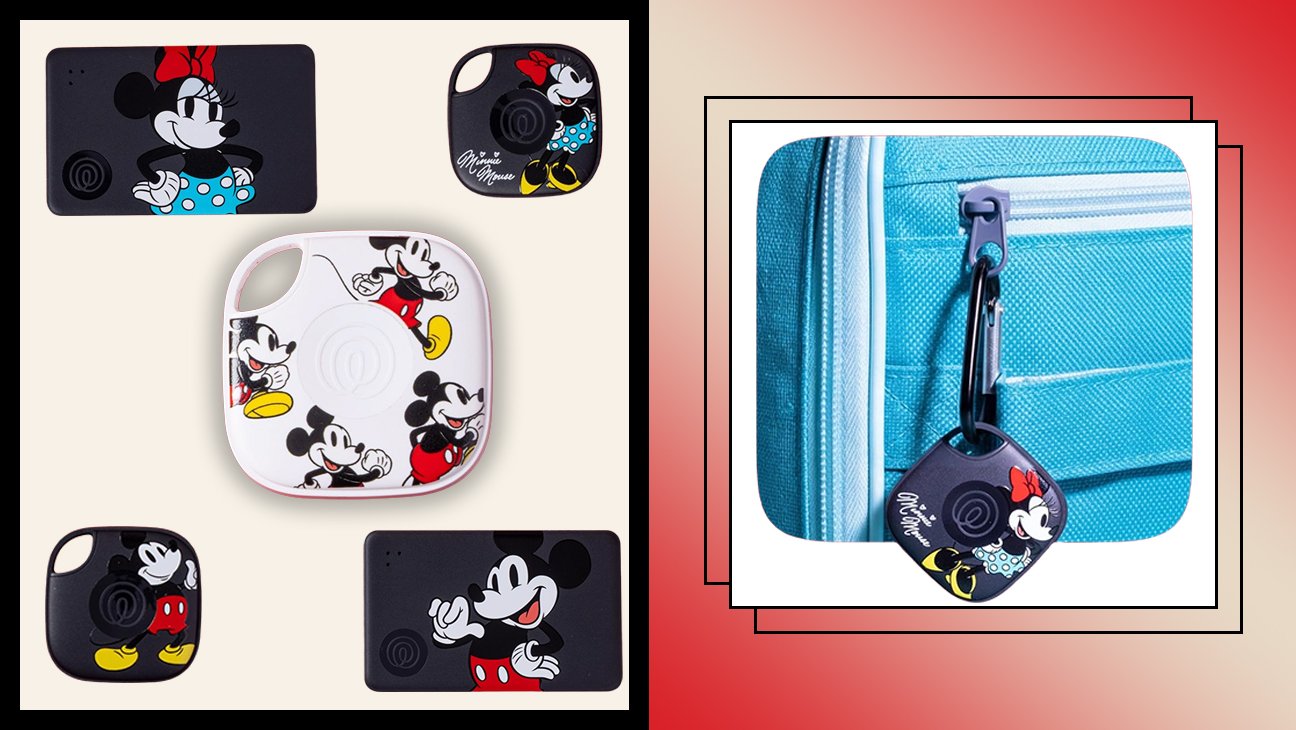
With the Starter Pack, fans get two trackers for keeping tabs on everyday essentials. The Tile Slim’s credit card-thin design makes it the thinnest Bluetooth tracker on the market. It can fit into wallets and passport covers, while the standard Tile can be used on bags, keys or a belt loop.
The Mickey Mouse Tile features a 350-foot Bluetooth range, a long-lasting three-year battery and a built-in ring function. Setup on the Life360 app takes just minutes on a phone of tablet, where you can view family, pets and Tile-tracked items together on one map. The app includes 24/7 emergency dispatch, and a silent SOS button sends your location to first responders and family.
Amazon
Minnie Mouse Tile Starter Pack
Complete with a Tile Slim for wallets and a standard Tile featuring Minnie Mouse’s autograph.
Designed for everyday convenience, these Minnie Mouse trackers similarly offer up to 350 feet of Bluetooth coverage and a battery that lasts for three years. They’re also fully compatible with Apple and Android phones and tablets through the Life360 app. Whether you’re organizing school supplies for the new semester, packing for a family vacation or spending the day at a Disney Resort, the two-tracker bundle helps track multiple items.
Amazon
Just the tile
Mickey Mouse Tile
A compact Tile in white with extensive safety features.
Tracked via the Life360 app on a phone or tablet, the Mickey Mouse Tile tracker keeps your belongings on the same map as your Circle, while unlocking features like real-time location sharing, crash detection and emergency support. Unlike its direct competitor, Apple AirTag, each Tile comes with a ring for attaching to a keyring, or carabiner and belt loop, so parents have ease of mind when kids are running wild at a Disney Resort.