Category: Entertainment

  • Javier Bardem Politely Warned ‘Cape Fear’ Co-Star About Grabbing Her Hair During Attack Scene and Apologized in Advance: ‘I’m So Sorry, My Love’

    Javier Bardem Politely Warned ‘Cape Fear’ Co-Star About Grabbing Her Hair During Attack Scene and Apologized in Advance: ‘I’m So Sorry, My Love’

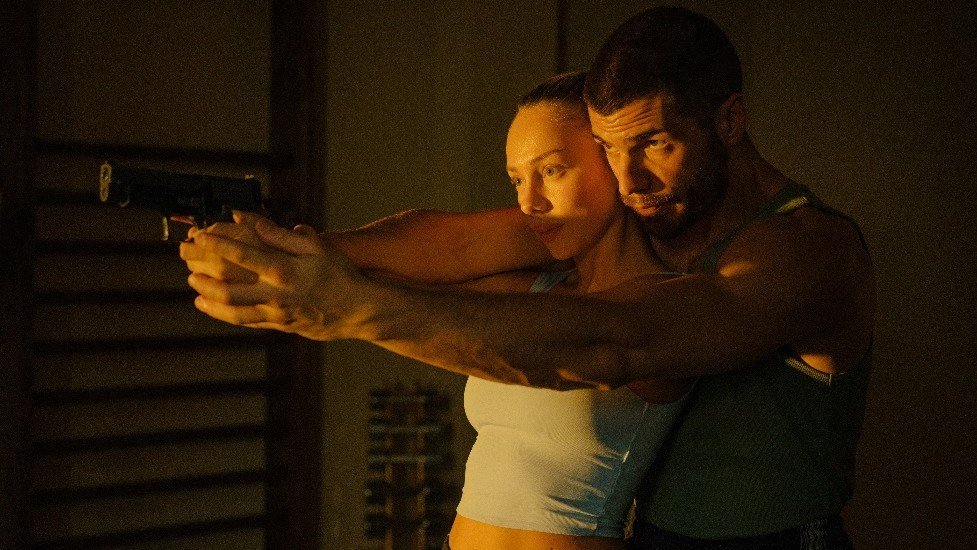
    In 2007, Javier Bardem delivered one of the century’s most chilling performances as Anton Chigurh in “No Country for Old Men.” Nearly two decades later, he’s proved once again he could convincingly play a sociopath, reimagining the vengeful murderer Max Cady on Apple TV+’s hit summer series “Cape Fear.”

    Cady was previously played by Robert Mitchum in 1962 and Robert De Niro in 1991, but the brilliance of Bardem’s performance lies in the long stretches of perceived stillness, heightening the tension of the cat-and-mouse game he plays with the Bowden family, which star Lily Collias described as “a lot of fun” but “sometimes very jarring.”

    “We’re playing cat and mouse, and then the cameras turn off, and I still feel like a mouse,” Collias told Variety at the “Cape Fear” finale screening in New York. “And he still feels like Tom from ‘Tom and Jerry.’”

    Collias plays Natalie Bowden, the daughter of Anna (Amy Adams) and Tom (Patrick Wilson), two lawyers who Bardem’s Cady blames for his incarceration. After 10 episodes of buildup, the series finale depicts an epic battle in which Cady invades the Bowden’s home, placing Anna and Tom on “trial” for colluding against him and threatening their children.

    “[Episode] 10 felt almost like a play,” Collias said. “It was just the family and him in the house, and we were doing the most insane things and laughing so hard off camera. It felt like such a joy that it was actually a beautiful time.”

    Before filming one violent sequence in which Cady grabs Natalie by the hair, Collias says Bardem politely apologized in advance and made sure she felt comfortable with the physicality.

    “We would go through such weird circumstances, it’s little things that make me still giggle to this day,” Collias said. “In Episode 10, there’s one point where he has to grab me by my hair, and before the scene, he’s like, ‘I’m so sorry, my love. Is it OK if I just — I’m going to grab you like that?’ I’m like, ‘Yeah, that’s fine.’ Then we start rolling and I see this thing coming up to me and I’m like, ‘What the fuck?! Well, OK, that’s your job!’”

    When asked about filming the intense finale scenes, Bardem smirked, explaining how he’s learned to lean into the “play” involved with acting as he’s gotten older.

    “For me, it’s more about a game,” Bardem said. “You use your imagination to jump in and step out of it. I respect everybody’s process, as long as those processes respect other people’s processes. For me, the fun part is to really be part of a group of people that imagine things that don’t exist, and they create it together based on the fact that it’s all a big lie.”

  • Sheriff in Nancy Guthrie Case Releases Ransom Notes: “She Perished Shortly After She Was Taken”

    Sheriff in Nancy Guthrie Case Releases Ransom Notes: “She Perished Shortly After She Was Taken”

    Chris Nanos, the sheriff in the Nancy Guthrie kidnapping case, has released a pair of ransom notes initially sent to the CBS affiliate in her home city of Tucson, Arizona. The second of the two notes states that Nancy has “perished.”

    The notes “purport to have been written by kidnappers,” the Pima County Sheriff’s Department wrote in a press release timed to the six-month anniversary of Nancy’s disappearance. The first note was sent to KOLD-TV 13 News on Feb. 2; Nancy was last seen alive on Jan. 31.

    Addressed directly to Savannah Guthrie, the first ransom note demands $4 million-$6 million (depending on date of deposit) in Bitcoin for her safe release. It says Nancy is “safe but scared.”

    “Her life is in your hands,” the first note states. The note’s final line offers two details as proof of its legitimacy: “She had a white smart watch on the floor of the foot of her bed and the white flood light in the backyard was destroyed.”

    Nancy Guthrie is the mother of Today show co-anchor Savannah Guthrie. She was 84 years old at the time of her disappearance.

    On Feb. 6, a second email sent to the same news outlet’s Tips line states that Nancy has died and “is buried in nature.” The initial deadline for the ransom deposit ($4 million) was Feb. 5; the second deadline ($6 million) was Feb. 9.

    The second note reads, in full: “Guthrie Family, We did not fully grasp the seriousness of her physical condition. We never intended to hurt her, that was not our intention. She perished shortly after she was taken. We believe it was heart related. She is buried in nature now. Nothing you could have done could have changed the outcome. We want your family to know this and hope you can all find peace. We are truly sorry.”

    Nancy had a serious heart condition and was without her medication. The ransom notes are posted below.

    The first Nancy Guthrie ransom note.

    Pima County Sheriff’s Office

    The second Nancy Guthrie ransom note.

    Pima County Sheriff’s Office

    The Pima County Sheriff’s Department says it is sharing the ransom notes now for the first time publicly in hopes that someone in the public recognizes “distinctive patterns of word choice, syntax and phraseology that reflect the writer’s unique linguistic style.”

    “They also provide valuable insight into the person’s mindset, motives and the evolution of their tone over time,” the press release continues. “As with the unidentified male depicted in the video, we believe these distinctive linguistic characteristics may be recognizable to someone who knows or has interacted with the notes’ writer. A friend, family member, coworker, classmate or acquaintance may recognize these patterns of expression and possess information that could help identify the individual responsible.”

    Doorbell videos of the suspected kidnapper were released to the public on Feb. 10.

  • Olivia Wilde and Cooper Hoffman Used Pain Scale Ratings to Prep BDSM Scenes in ‘I Want Your Sex’: She ‘Hit Him Really Hard and’ It Was ‘Only a Seven or Eight’

    Olivia Wilde and Cooper Hoffman Used Pain Scale Ratings to Prep BDSM Scenes in ‘I Want Your Sex’: She ‘Hit Him Really Hard and’ It Was ‘Only a Seven or Eight’

    Cooper Hoffman had never filmed a sex scene before signing on to Gregg Araki’s erotic thriller “I Want Your Sex.” So when he arrived on set for the first time and found himself surrounded by ball gags, stilettos, whips, chains, dildos and strap-ons, a few first-day jitters were understandable.

    “Even if you’re nervous to do it, you’re gonna do it,” Hoffman told Variety at the film’s Los Angeles premiere on Tuesday night. “Because there’s no reason to not do anything in this life just because you’re scared.”

    Still, how does an actor prepare to strip naked, slip into a maid’s outfit and get spanked with a leather whip? This is just one of many, many kinky situations Hoffman encounters as Elliot, a meek, wide-eyed college graduate who enters into a sadomasochistic relationship with gallery owner Erika Tracey (Olivia Wilde).

    Increasingly, the answer comes in the form of an intimacy coordinator — a role that Araki, long known for embracing provocative themes, employed for the first time on this project. The profession, which officially unionized with SAG-AFTRA in 2024, has become an increasingly standard presence on film and television sets.

    Intimacy coordinator Yehuda Duenyas likens the job to that of a choreographer or stunt coordinator. “If someone is going to get their head blown off, people are like, ‘Go grab the goo gun, get the exploding head with the squibs in it, press the button and boom.’ No one really bats an eye about violence,” he says. “But when it comes to intimacy, everyone gets kind of squishy and weird.”

    “There are so many things to look after with intimacy scenes that no one really sees,” he continues. “It’s the same way that, with a stunt, you’re not seeing the padding or the fake hits. It just looks real, but you know there’s a lot of movie magic happening behind the scenes.”

    That movie magic is put to work throughout the film, which uses high-intensity montages to establish the pair’s dom-sub dynamic: Elliot crawling across the floor in pink silk lingerie, taking a spanking in a maid’s outfit, standing fully nude as a hot-pink dildo is lubed up overhead and, during a threesome-gone-wrong, getting handcuffed to a St. Andrew’s cross with a towel stuffed in his mouth.

    “He might have been terrified, but it wasn’t, ‘I’m terrified, I don’t want to do this.’ It was, ‘I’m terrified, and I do want to do this,’” Duenyas says of Hoffman. “He was more like, ‘Yeah, yeah, it’s the scariest thing I’ve ever done. Let’s do it.’”

    Below, Duenyas talks about how he prepared Wilde and Hoffman for their most intense on-screen moments, the most challenging scenes to shoot and the film’s overall messaging on sex and experimentation:

    There are multiple high-intensity montages that establish the nature of Olivia and Cooper’s dom-sub sexual relationship. What would surprise people about what goes into shooting scenes like that?

    With those montages specifically, we had moments where we would say, “Okay, I’m hitting you this hard. What is that on a scale of one to 10?” Cooper would say, “That’s a zero.” She’d say, “Really?” Then she would go harder, and he’d say, “Okay, that’s a two. That’s a three. That’s a five.”

    Olivia realized, “I can hit you really hard, and it’s only registering as a seven or an eight.” We had a bunch of little things like that so they could, number one, have a language for communicating about the physicality and, number two, feel like they could talk about what was happening while also making it look good.

    ©Magnolia Pictures/Courtesy Everett Collection

    Gregg told Variety that Olivia came onto the set with much more experience doing nude scenes, while Cooper was “terrified.” What was your process for making him more comfortable from the beginning? 

    If you’ve ever gone skydiving, you might be terrified, but you really want to go skydiving. You’re there to do it. Or, if you’ve ever jumped off a cliff into water or stood on a high diving board, you’re on top of that thing to do it, even though you’re scared. So, yeah, he might have been terrified, but it wasn’t, “I’m terrified, I don’t want to do this.” It was, “I’m terrified, and I do want to do this.”

    Is someone terrified because they’re thinking, “This is a no for me. This is a hard boundary, but I’m involved in this thing and I already said yes, so what am I going to do?” Are they biting their nails or is it, “I’m fucking terrified. Let’s do this really well. How are we going to do this?”

    That was Cooper’s stance. I wouldn’t say he was terrified. If you’ve ever talked to him, he’s super cool and very together. He was more like, “Yeah, yeah, it’s the scariest thing I’ve ever done. Let’s do it.” It was very matter-of-fact. He approaches almost everything he does by diving headfirst into it in this really beautiful way. He’s an incredible performer.

    How did the dom-sub type of sex scenes differ from the more traditional sex scenes you’re used to working on? 

    Sure, there are differences, but in terms of the way we approach intimacy coordination as a craft, it’s not that different. Olivia had also done a lot of research. Everyone brought what they knew and the type of story they wanted to tell. Gregg obviously did as well.

    In this particular film, we’re dealing with these very specific, blurry and complicated power dynamics. That’s the story. The story shows up in their relationship, their work lives and their sexual lives together. What was so fun was finding the character of their intimacy together.

    Every intimate scene we work on has a different type of character, and that was the character for this one. Is it different? Yes. BDSM and these kinds of lifestyle scenes, if you want to call them that, are different from something like a “Heated Rivalry” scene. It’s a different type of intimacy, but we approach it the way we would approach anything else.

    ©Magnolia Pictures/Courtesy Everett Collection

    I’m guessing one of the main differences is how many props are involved. What was the most challenging scene to work on? 

    The threesome scene, from a blocking and camera-angle perspective, took a minute to figure out. When I say “a minute,” we had a really compressed shooting schedule. We shot all the intimacy within the first five days. We did all of that stuff upfront.

    Also from an intensity perspective, that scene required a lot. There was a lot to work out. It wasn’t, “Oh my God, this is so hard.” It was a puzzle to put together in terms of the traffic patterns, the handcuffing and how to get out of the handcuffs quickly. Are we fiddling with keys, or are we just getting out of them? There are a lot of little details. Which details are you going to skip for the sake of the story, and which details are you going to keep in to maintain the flavor and the vibe of the story?

    All of the restraint scenes needed a little more care. Getting an actor into restraints on the St. Andrew’s cross wasn’t that complicated of a scene. But when you have to shoot it from three angles in three different ways, and an actor is strapped to a St. Andrew’s cross, can they get out easily if they need to pee?

    Gregg recently talked to Variety about Gen Z’s attitude towards sex and what he hoped to accomplish with this film. What are your thoughts on this mission statement?

    Gregg wants people to go out and argue. He really wants people to argue about it and say, “Well, I thought it was this,” or, “I thought it was that,” or, “I think that’s bullshit,” or, “I think that’s true.” He wants those conversations. 

    I love Gregg, and I’ve loved his work over the years. He has contributed so much. I learned about intimacy through watching Gregg Araki films as a young person. I feel like we owe him for his contribution to intimacy in cinema. He has contributed so much to the film canon. Where would we be without those pieces he has made and the work he has put in?

    I can’t speak for Gen Z, and I don’t know whether Gen Z is having less or more sex. But I hope people see this film and want to take a chance on love, take a chance on experimentation, take a chance on feeling something and allow themselves to be taken to a place they haven’t been before. 

  • Tom Corson Promoted at Warner Music After Latest C-Suite Shake Up

    Tom Corson Promoted at Warner Music After Latest C-Suite Shake Up

    Warner Music Group COO and CFO Armin Zerza is stepping down from his role, the company announced on Friday, noting that the executive has decided to leave for “personal reasons.” Warner Records COO Tom Corson will replace Zerza WMG’s as COO, and the company is starting a search for its next CFO.

    Zerza “will remain available to the company through the end of the fiscal year to ensure a seamless transition,” WMG said.

    Louis Dickler, WMG’s SVP, Global Controller and Chief Accounting Officer will serve as interim CFO while the company looks for a replacement.

    It’s a sudden departure for Zerza given that he joined the record company just over a year ago in April of 2025, and he was given the joint role as COO as well just over two months ago. Zerza’s successor will be WMG’s fourth CEO since 2023. Longtime CFO Eric Levin retired in 2023, succeeded by former ESPN and Disney executive Bryan Castellani before Zerza’s appointment in 2025.

    “Armin has been an instrumental leader and member of the executive team during a crucial period of growth and transformation,” WMG CEO Robert Kyncl said in a statement. “We thank Armin for his outstanding business and financial leadership and enduring contributions to WMG, and we wish him all the best.”

    Corson, meanwhile, is one of the most respected record executives in the music industry. Before joining Warner, he was the president and COO of RCA Music Group. With Warner Records CEO Aaron Bay-Schuck, the duo led a respected turnaround for the storied label, garnering a reputation in the record business for a strong artist development system with stars like Zach Bryan, Benson Boone and Sombr. With Corson moving to the corporate posting, following the transitional period, Bay-Schuck will helm Warner Records alone.

    “It’s an honor to step into this role during such a transformative era for both our company and the industry at large,” Corson said in a statement. “A huge thanks to Robert for the opportunity, as well as to Aaron and the Warner Records team for the unforgettable run. I’m looking forward to building on our momentum, turbocharging operations, and creating even more impactful opportunities for our incredible artists and songwriters worldwide.”

    As Kyncl said of Corson’s appointment: Tom is one of the most dynamic, respected, and effective executives in the music business, and a fierce champion of talent. Together with Aaron, he’s helped architect Warner Records’ resurgence, and we’ll leverage his vision, disciplined execution, and deep experience across the entire company as we continue to deliver for our artists and songwriters while achieving our top and bottom line goals.”

  • ‘Cape Fear’ Creator Nick Antosca on That Shocking Final Sequence and Making Big Changes From Scorsese’s Version

    ‘Cape Fear’ Creator Nick Antosca on That Shocking Final Sequence and Making Big Changes From Scorsese’s Version

    SPOILER ALERT: This story contains spoilers for “The Executioners,” the finale of “Cape Fear,” now streaming on Apple TV.

    In the final moments of “Cape Fear,” Anna Bowden realizes that she’ll never truly be free of the man who’s been stalking her family. 

    The Bowden family has defeated Max Cady (Javier Bardem), the ex-convict who blames Anna (Amy Adams) and her husband Tom (Patrick Wilson) for his incarceration, in an epic battle during which he invaded their home, placed Anna and Tom on “trial” for colluding against him and threatened their children Natalie and Zack (Lily Collias and Joe Anders). 

    During that intense confrontation, Anna stunned Max with evidence she obtained at his family’s houseboat that his sister Crystal (Juliette Lewis, who also starred as a different character in the 1991 film version of this story) actually committed the murder for which Max was convicted, having killed Max’s pregnant wife, ripping the unborn fetus from her body. Max’s child actually lived, growing nearly into adulthood while Max spent his life mourning him; in a bitter irony, Max killed him in the chaos that ensued at the Cady family boat at the start of the finale. It’s our definitive proof, too, that Max never did what Tom, as prosecutor, put him away for, and Anna, as defense attorney, didn’t block. For all his crimes against the Bowdens, Max began his legal journey as an innocent man.

    Javier Bardem in ‘Cape Fear.’ (Apple TV)

    By the time he’s defeated, Max seems utterly broken; the last we see of this seemingly invulnerable agent of chaos is his sputtering out water on the Bowdens’ deck, ready to be apprehended by the authorities. But the family’s victory is only conditional. After Anna declares, “Let him die in a cage,” sparing Max’s life, we jump ahead in time to a backyard barbecue, echoing the one that, in happier times, opened the series. Back then, the Bowdens were surrounded by friends, but here, it’s only the four family members, trapped in their fortress. We see Natalie watching a true-crime influencer’s video shot just outside their front door before she joins the rest.

    As Tom prepares their meal, he glances nervously over his shoulder, toward the pool where he nearly died; Zack sits in eerie silence while his parents force bonhomie, joking about keeping the secret of how good his cheeseburgers are. After Tom refers to Anna as a “psychopath” for ordering her burger without cheese, lettuce, or bun, she declares, “Guilty” — and the verbal reminder of just what they’ve suffered through, and how similar they may be to the guilty psychopath they defeated, overcomes Anna’s defenses. She looks over her shoulder, her face beginning to twist in agony and fear, as the film suddenly shifts to a bright-red filter: End of series, though not of Anna’s psychological journey.

    Nick Antosca created this version of “Cape Fear” — the third onscreen adaptation of John D. MacDonald’s novel “The Executioners,” following big-screen takes in 1962 and 1991 — and co-wrote the finale. He spoke to Variety via Zoom about that shocking final sequence, the revelation of Max’s innocence and what lies ahead for all the Bowdens, including the daughter who may very well be the product of Anna and Max’s years-ago coupling when they were lawyer and client.

    I was genuinely struck by the final scene of the series, in which the family is speaking in a sort of coded language that they understand implicitly — and we see just how haunted Anna is. Will the family always be haunted, do you think? 

    The Bowden family will always be haunted by Max Cady and the memory of what happened during this story. The 1991 movie has always struck me in terms of its ending narration, where Juliette’s [Lewis’ character] goes, “And then we never spoke of it again,” basically. You’re just like, Yeah, but I bet you thought about it — still thinking about it today. I wanted our version of that energy. That moment when Tom looks over his shoulder — there’s no sound in the mix motivating that. They’re just going to be looking; they’re going to be hearing things. 

    Lily Collias in ‘Cape Fear.’ (Apple TV)

    Before Natalie joins the family, she’s fiddling with an envelope from a DNA-testing service that she hasn’t opened yet. One wonders, will she ever open it? 

    One does wonder that. She’s also — very intentionally, it’s barely seen, there’s no close-up of it — wearing an ankle bracelet, too. They’re all going to be dealing with the aftermath of stuff that’s gone on, and they’re probably going to have to sell that house, because I don’t know that they’re going to be allowed to practice law in Georgia in the immediate future. I always imagined that coda — that they would be trying to recreate the first scene, where they’re by their pool and having a barbecue, and things are safe and good.

    The fact that the series ends with Natalie’s parentage still unresolved feels like a real conversation-starter. Do you have in your mind an answer to the question of who Natalie’s father is?

    Yes, I do.

    And you wrote with that in mind. 

    Yes.

    As a viewer I could go either way!

    I’m glad.

    It’s interesting that the finale takes place in the Bowden family home, as opposed to, as in the films, on the boat. In a way, Cady’s intrusion into the home feels even more charged.

    A lot of people asked as we were getting the last scripts in, or even before, “Is the climax of the show going to be a fight on the storm in the houseboat?” I always felt that we needed to go to the houseboat. But it felt like the conclusion of this version of the Bowden story belonged in the domestic space, so we were to bring the storm to them, and put the trial in their own home. That’s what it felt like it needed to be — and that fight in the pool should feel elemental and primal. We’re in the middle of a hurricane, but it’s their home. 

    Amy Adams in ‘Cape Fear.’ (Apple TV)

    The violence is really gnarly in the final confrontation. I think of myself as pretty strong-stomached, and I really couldn’t watch the scene where Max convinces a drugged Zack to almost bite his own tongue off. 

    That was one of many shots where we spent a lot of time in the editing room being like, “How many frames of this should we show? How much is too much?” That and the head-smash within the prison in Episode 2. One of the more fun experiences I’ve had in the editing room was being in the edit on that with Martin Scorsese on FaceTime with me, going over it, saying, “Yeah, roll the cut a couple frames, right before the head starts to explode.” Just calibrating, you know, to the exact frame, like how we were going to smash that skinhead’s head.

    I’m curious about the decision to have the Bowden family spare Max’s life. It’s a departure from the 1991 version.

    In the 1962 version, he lets him live. We were deciding between those two potential endings. In that moment, the Bowdens are clinging to a last shred of social order and moral order that they believe themselves to be part of. They don’t want to kill a man in front of their children. You could argue that, of all the terrible decisions the Bowdens make throughout this season of television, not killing Max is one of the worst decisions that they could make. 

    From a sheerly pragmatic point of view, they will, of course, always wonder if he’s found his way out of prison and is just around the corner!

    He’s almost certainly going to prison for a long, long time; he has done a lot of verifiably bad stuff. But if somebody else made the show and I’m watching it, I’m going, “Kill him! Please!” 

    Amy Adams and Patrick Wilson in ‘Cape Fear.’ (Apple TV)

    The previous versions depicted a Max who maybe should not have been found guilty of their crimes due to mitigating circumstances, but were not literally innocent. This Max, we realize, simply did not do the crime for which he was convicted. It flips the story on its head.

    So he was wrongly convicted of this murder, but he was a really bad guy in general, and prison narrowed and sharpened that darkness within him. It’s all directed right toward the people he blames. It’s interesting that you talk about the evolution of previous Maxes. In the book, he’s not even the client. He’s just a guy Sam saw committing a crime and testified against him — that’s it. Once you get to the ‘91 version, he was his actual client. That was [screenwriter] Wesley Strick’s innovation, which I think is really brilliant. Each innovation takes the moral complexity to a different level. 

    Early in the episode, Anna provokes Max into choking her in public by declaring that he killed his wife and showing compromising videos of his communications with a past mistress. He’s giving a press conference, and she says just the right things to enrage him. It felt in that moment as if she had an intuitive sense of what buttons to push to get him to drop the facade of control. Can you talk about odd bond and mutual understanding they share?

    They had a bond, to some degree, in the past, and she’s had to hold herself back for most of the series. Once all is lost for her — at the end of Episode 8, where all of her family is scattered to the winds and locked away, and she’s started drinking again, there is a kind of freedom in that. She goes on her adventure in Episode 9, she gets the information, and then she’s able to use that as ammunition at the beginning of Episode 10. It’s because she has nothing to lose anymore, so she’s able to let loose and press all of his buttons. Before that, she still has the veneer of civility holding her back. 

    Having known my share of attorneys, I also recognized in her a desire to use logic and reason to puzzle her way out of Max stalking her. It seemed to me she triumphed when she started playing according to Max’s own terms.

    The Bowdens are frustrating for a while, because they want to believe that they’ve got it under control. But I think it’s the case that — like, in your own life, you don’t want to believe things are as bad as they are. Would you move right away? Would you uproot your family and get out? I don’t think you would do that instantly. It’s hard to make big moves in life, sometimes, until it’s too late.

    Moving is really hard!

    At the beginning of Episode 3, there’s a scene where random people come into their backyard, and Tom just goes out to talk to them. When we were writing that episode, we were thinking “What are the things that make it feel like your space is permeable? Like you’re under threat?” Around that time, I was at my house, and I walked out into my backyard, and there were some people there. It was just like the show, although I don’t have a castle in Georgia. I was like, “What are you doing here?” and we had this crazy conversation. 

    Later, when the police came, they were like, “Why did you just go up and talk to people who were in your yard hanging out? When that happens, call the police.” But I don’t know. You don’t necessarily think about your own life in the way you would if you were watching characters on TV. You don’t take action that way sometimes until you’re like, Oh, yeah, I guess that really was a threat.

    I think among the most powerful elements of the series is that the Bowdens are slow to take action in part because they think of themselves as fundamentally good, despite some lapses in the past. Max thrusting his perspective at them forces them to consider how different they really are from Max — that’s very potent. 

    There’s an energy of collective guilt and “No, no, I’m a good person” that feels like part of the culture of modern-day America. That came by osmosis into the show. 

    Do you think the Bowdens are bad people? 

    I think they’re complicated people. They’re very flawed people. 

    This interview has been edited and condensed.

  • ‘The Devil’s Mouth’ Director Breaks Down His Bloody, One-Location Shark Movie, Those ‘Demanding’ Stunts and Why Kathryn Newton and Lana Condor Wanted to Switch Roles

    When “The Devil’s Mouth” director Jeff Wadlow met the cast of his bloody shark movie, he made one thing clear.

    “‘Listen, this is going to be the most physically demanding job you’ve ever had. Not just because of the stunt work and all the underwater work, but the fact that when you have a simple dialogue scene, you’re going to be treading water,’” Wadlow recalls telling Kathryn Newton, Lana Condor and the rest of the ensemble.

    Written by Aja Gabel and Myung Joh Wesner, “The Devil’s Mouth” was named to the Black List back in 2019. Newton and Condor lead the cast as Sara and Max, two best friends whose friendship is tested after they get trapped in a freshwater cave — along with the rest of their college buddies, played by Gavin Casalegno and Tommi Rose — while taking a trip to Thailand.

    Of course, things get complicated when a bull shark enters the scene. In order to prep for the intensive shoot, the actors spent two weeks treading water, doing breath holds and training with real kayaks. Besides one stunt where Newton’s character had to hop off a 35-foot cliff into a shallow pool of water, all the actors were game to do their own stunts — safely, of course.

    “All the rock climbing, diving, underwater work, breath holds, getting dragged around on winches, that was all them,” Wadlow says.

    Known for helming lower-budget horror films for Blumhouse like “Imaginary,” “Fantasy Island” and “Truth or Dare,” Wadlow was first approached about directing the film during a meeting in which he was laser-focused on pitching his dream “G.I. Joe” trilogy.

    He had some hesitations when, instead, the words “shark movie” were mentioned.

    “I said, ‘I really don’t want to just do a shark movie unless there’s something new,’” Wadlow recalls. Then when he heard about the one-location aspect of the film, his creative juices began flowing, and he did a rewrite on the script.

    “Now we’re talking about an intersection between the shark movie genre and the claustrophobic horror movie,” he says. “I was blown away by how good it was because the character dynamics were complex and interesting. There’s a really nuanced investigation of female friendship.”

    Below, Wadlow breaks down casting Newton and Condor against usual type, how his team built 13 sets on two soundstages to pull off the illusion of an endless cave in Thailand, and why “The Devil’s Mouth” is “the hardest movie” he’s made to date.

    Talking about casting this friend group, what made Kathryn and Lana perfect for this central dynamic?

    What’s funny about casting this film is both Kathryn and Lana thought they should be playing the other part. And you can kind of see it! Having made the movie, I only see Kathryn as Sara, and I only see Lana as Max. But on the page, the characters were sort of similar to characters that they had played before. I ultimately think that made the movie so much more interesting because it forced Kathryn to stretch and grow and define a quieter character to play. She normally plays really out-there dynamic characters, and Sara’s got an internal journey; Lana usually plays like the good girl, this was a chance for her to play someone with a little more bite. They both really rose to the challenge and did it together. They became best friends while we were making the movie. We shot this whole thing in Thailand. Thailand is so far away from America that if you leave from the East Coast, you go through the Middle East, and if you leave from the West Coast, you go through Japan. It’s literally on the opposite side of the planet, and so there were no long weekends going home. Once we were there, we were all there, and it was a Thai movie. There were about less than a dozen Westerners working on it.

    How did you go about finding the cave? What were the biggest logistical challenges to filming inside?

    It’s the hardest movie I’ve ever had to make. I mean, in 85% of the movie, the characters are swimming in water. Movie cameras in water do not get along, as we all know! And just like casting this movie, I had this crazy curveball at the last minute where it was written for Mexico and we were going to shoot in the Dominican Republic. I was 10 days away from leaving and the studio calls me up and says, “Hey, some sound stages and a crew just became available in Bangkok. Can you shoot Thailand for Mexico?” And I was like, “Well, that’s bonkers. What are you guys talking about? That would be so challenging and I don’t really see the point.” And on top of that, I’m allergic to peanuts! I can’t go and spend six months in Thailand, I will probably die. I’m being serious, I go into anaphylactic shock, and they’re like, “We’ll get you a second assistant whose only job will be to feed you, make you dinner reservations, keep you alive and get your driver, in addition to your U.S. assistant!”

    I started thinking about the soccer team that got lost in the flooded cave system in Thailand, and how that was in our collective consciousness at the time in the zeitgeist. And I started doing some more research on freshwater cave systems in Thailand, and it started to feel a little bit more dangerous — a little bit more off the beaten path, a little bit more exotic, and I thought that would increase the credibility of what transpired. If it was just a system that tourists went to all the time in Mexico, for them to have gotten into this kind of trouble seemed a little less plausible. It also seemed like help would be there a lot sooner. But suddenly, you start setting it in a remote part of Thailand, it just feels further, more out the realm of these characters’ normal worlds.

    How did you approach filming the caves and meet the challenge of this one location?

    I wanted there to be this increasing sense of claustrophobia, so I started really wide and big. I wanted to make the trip look awesome and fun, and the location seem beautiful and appealing. I didn’t want the audience to ever go like, “Why are these people on this trip? This seems like a bad idea.” I wanted it to be obvious why they’re on the trip. It’s an amazing place to visit. Then I wanted to go into real caves that were mysterious and beautiful and not foreboding at all. I wanted the audience on the adventure, so I found real freshwater caves where rescue divers train. And then once they go around the corner, I went on a soundstage because shooting this movie in a real cave would be impossible. Forget just the lighting — the stunt work and safety issues would be massive. So once they’re in the cave system, we’re on a soundstage. We built a 120-foot long, 70-foot wide cave set and flooded it with five feet of water. We had one other set that was like 60-by-70 feet that had 15 feet of water. Between those two sets, I shot every cave. So we had 13 sets on two stages.

    It was just about turning them over and being really creative. Alec Hammond, my production designer, is just a mad scientist. We figured out how to shoot every square foot of every rock and make it look like it’s a different cave just by using lighting tricks and key set-pieces that we would turn or rotate. It was really difficult. There are multiple scenes where they swim off the set and they just swim back onto the same set.

    What were some of the biggest considerations for filming and lighting the underwater sequences?

    The lighting was really challenging because you want it to feel dark, but it can’t be darkness, right? We wanted to use the headlamps to motivate light, but you couldn’t really use them because if you tilted them down or got them anywhere near the lens, the lens would just flare out. We did a lot of experimentation with the headlamps. James Kniest, my director of photography, is also very good at his job. We ended up building these custom headlamps where we can control the luminance. But also we could angle them. And we would often yell from monitor like, “Hey, Lana, two clicks up!” And the cast knew that meant tilt it up, two clicks. And if you really study the movie, most of the time their headlamps are not pointed anywhere useful. But you see the light glowing, and in your mind it kind of motivates a general fill — that allowed us to come in with movie lights and get an exposure. I do think it works. I mean, if you study it, it falls apart pretty quickly.

    Ultimately, it was a digital system. It was much more about all the stuff that went around the cameras — the underwater housing, the HydroFlex, all those systems that we were using. That was another massive challenge with this film because I couldn’t use a dolly, couldn’t use a steadicam. I couldn’t even do handheld shots because when the camera is in water, even at water level, it has to be in the HydroFlex underwater housing. That weighs 120 pounds alone. You’re not doing a handheld shot, you got to use buoyancy to keep it up. I basically had to learn an entirely new cinematic language. I couldn’t use long lenses.

    I brought in Pete McCaffrey, who’s this legendary New Zealand camera operator, and he was just on the technocrane all day everyday. That was the only way I could really get the camera in and do some more traditional moves. But even those are impossible because you can’t drop marks in the water! How do the actors know where to go?

    In addition to getting to work with the local crew, what were some of the biggest benefits of filming in Thailand?

    As far as the actual economic incentives, the cost of living is much lower over there. We got a lot more bang for our buck. At a certain point, the cost of living can price a movie out of an area. If you’re having to pay a certain wage so people can live in that area, the studios only want to invest a certain amount of money in a movie. You can’t just physically make the movie there. And so sometimes, I thought a little bit about, “Alright, well we’re paying less than we would elsewhere. How do I feel about that?” And it was explained to me that this was a film industry hungry for projects. These were outstanding wages given the cost of living in that area and they were thrilled to have the work. So that’s how I wrapped my head around it.

    I really embraced Thailand as a character in the film and tried to make it feel like we couldn’t have shot the movie anywhere else. It wasn’t just about economic incentives or labor costs or equipment costs.

    The industry is really excited right now about the success of films like “Obsession” and “Backrooms” from younger directors. What do you make of these conversations happening in horror spaces?

    I mean, it’s just hard. It’s always going to be hard to get movies made. It’s not like Disney made “Obsession,” or Netflix made “Backrooms.” It’s not like major studios are embracing this kind of filmmaking. These are filmmakers that fought like hell to get their movies made, and I’m so happy that they’re enjoying this kind of success. I don’t think it’s going to make it any easier, though, to make movies. It might make it a little bit easier for Curry Barker to make his movie, obviously. But that’s the exception. That’s not the rule. I don’t think you’re going to see major studios chasing down young filmmakers who have had success with a couple YouTube shorts to make wide releases. Maybe I’m cynical, but I just don’t see that happening. I think it’s still going to be hard. It’s almost always going to be hard, and it’s hard for a reason because it tests you, and for that reason, only people who can really do it are able to keep doing it.

    “The Devil’s Mouth” is now streaming on Prime Video.

    This interview has been edited and condensed.

  • FIFA Boss Infantino Under Fire Over World Cup Sell Off Plans

    FIFA Boss Infantino Under Fire Over World Cup Sell Off Plans

    Less than a month after celebrating the most commercially successful World Cup in history, the boss of FIFA is in the hot seat.

    Gianni Infantino, president of the global soccer governing body, is under fire from in and outside FIFA over his controversial plan to sell off a stake in the World Cup to private investors.

    Soccer governing bodies in Europe and the Americas have come out against the proposal, which would see FIFA transfer its commercial operations to a new entity, FIFA Forward Enterprise (FFE), and sell 20 percent of the company to Thrive Capital, an invest group run by Joshua Kushner, the brother of Donald Trump’s son-in-law, Jared Kushner.

    European soccer body UEFA on Thursday said it would boycott FIFA events, including the World Cup, if the plan went through. Concacaf, the association which represents national soccer associations across the Americans and the Caribbean, including the United States, has also voted to reject the deal.

    On Friday, the Asian Football Confederation (AFC), without directly rejecting the FIFA proposal, issued a statement of solidarity with UEFA and Concacaf. The plan has provoked “unprecedented divisions” between FIFA members, the AFC said in a statement, and “cannot realistically” achieve “the necessary broad consensus and unity” needed to go forward.

    The united opposition should mean the end of Infantino’s deal. Together, the UEFA, Concacaf and the AFC account for 143 of FIFA’s 211 members, more than enough to sink the proposal.

    For the first time since he was elected president of FIFA in 2016, Infantino himself looks under threat.

    In its statement, the Asian Football Confederation called on FIFA to undertake “an urgent review of its governance and decision-making framework.”

    On Friday Carlos Cordeiro, one of Infantino’s senior advisors, resigned in protest over the controversial plan, calling it “a bad deal” that would “mortgage football’s future.”

    U.K. Prime Minister Andy Burnham, a passionate soccer fan, has called out Infantino directly, saying Friday he was “the wrong man” to lead FIFA.

    Before this scandal, Infantino looked certain to win a fourth term as FIFA president. He was running unopposed in elections, to be held in March, 2027. Now, North American soccer chief Victor Montagliani is looking to challenge him, according to media reports.

  • ‘Spider-Man’: THR’s 1977 Review

    ‘Spider-Man’: THR’s 1977 Review

    On Sept. 14, 1977, during the 8-9:30 p.m. time slot, Spider-Man swung to screens across America in CBS’ special presentation before launching a 14-episode run on the network. The TV movie bowed to a 17.9 rating and 30 share but ABC’s Charlie’s Angels led the way on that Wednesday with a 32.6 rating and 50 share. Notably, weeks after the Nicholas Hammond-starring web-slinger show debuted, Columbia Pictures snapped up distribution rights to air the title as a feature film overseas. The Hollywood Reporter’s original review is below.

    Spider-Man is the most popular manifestation of the Marvel Comics mystique, and the celebrated character is introduced accurately in this 90-minute presentation. Some liberties have been taken, but the basic mold remains as we watch grad student Peter Parker gain super human powers after being bitten by a radioactive spider. He then discovers he can clamber up the sides of buildings and possesses strength proportionate with his other heightened senses. He needs them all as he takes on a sophisticated brainwashing extortion plan which will send a group of people to their suicidal deaths unless ransom demands are met.

    The film is played absolutely straight, as it should be, and, while there’s a certain incongruity in seeing superheroes in real-life elements, the overall spirit is maintained and captured. Nicholas Hammond is a physically perfect specimen as Parker, in addition to being a sensitive actor, whether it’s sneezing on his way to beat the bad guy or trying to think of ways to effectively utilize and capitalize on the opportunities fate has handed him. David White’s J. Jonah Jameson is as ornery as the character calls for, and Thayer David’s villainous blackmailer is decent. Lisa Eilbacher brightens the scenery with charm as Parker’s companion.

    E. W. Swackhamer’s direction doesn’t mock his situations, and he handles the superbly believable wall- crawling sequences with style. Alvin Boretz’ script is faithful to its Marvel Comics source, and his additions or deletions are properly employed. Johnnie Spence’s music is lively, Frank Novak’s costumes complimentary and Aaron Stell’s editing shrewd. Edward J. Ontagne produced for executive producers Charles Fries and Daniel Goodman for CBS. — Earl Davis, originally published on Sept. 13, 1977.

    Nicholas Hammond as Spider-Man.

    Everett Collection

    Nicholas Hammond as Peter Parker.

    U.S. poster art for 1977’s ‘Spider-Man.’

    ©Columbia Pictures/courtesy Everett Collection

    A 1977 trade advertisement for ‘Spider-Man’ that appeared in The Hollywood Reporter.

  • ‘The Odyssey’ Is Luring Tourists to the Sicilian Island That Stands In for Ithaca — and Could Generate $500 Million in Revenue

    ‘The Odyssey’ Is Luring Tourists to the Sicilian Island That Stands In for Ithaca — and Could Generate $500 Million in Revenue

    Christopher Nolan’s “The Odyssey” and Italy have special ties that are generating rich returns.

    The Greek epic was partly shot on the island of Favignana off the west coast of Sicily — which stood in for Ithaca, home to Penelope, her son Telemachus and its legendary, long-lost king Odysseus. The largest of the three Egadi Islands, Favignana is where Nolan and set designer Ruth De Jong found Ithaca’s perfect palace: the 15th century Castello di Santa Caterina, perched atop Monte Santa Caterina, a tall, craggy hill with a stunning view of the countryside and the Mediterranean Sea. 

    “It was just the most epic landscape, where you could see the water everywhere you were and the ships [used for filming] could pull up,” De Jong says in the film’s press notes.

    View of Castello di Santa Caterina from below Monte Santa Caterina.

    LightRocket via Getty Images

    It’s also where De Jong and her team built the secluded pig farm and humble hut inhabited by the loyal swineherd Eumaeus (played by John Leguizamo), where Odysseus first goes when he finally comes home, disguised as a beggar to plot against Penelope’s suitors. Nolan also shot in the coves and beaches surrounding Favignana’s coastline and in the nearby tiny islet of Preveto.

    After “The Odyssey” trailer dropped in May — two months before the epic hit theaters — Favignana started being heavily promoted and targeted as a tourist destination, including in Airbnb ads offering accommodations well-positioned “to explore the locations that inspired the film’s atmosphere,” as one listing puts it.

    A photo from an Airbnb listing in Favignana.

    Courtesy Noesis

    “I’m expecting a significant increase in international tourism, especially from the U.S.,” Sicilia Film Commission chief Nicola Tarantino tells Variety, noting that this also happened recently with HBO’s “The White Lotus” Season 2, shot in 2022 in the Sicilian resort town of Taormina.

    But the “Nolan effect,” as it’s being dubbed by the Italian press, is expected to have a much greater impact.

    While, according to estimates cited by newspaper La Repubblica, “White Lotus” has so far resulted in a €138 million ($158 million) tourism revenue windfall for Taormina, “The Odyssey” could generate more than twice that amount in Favignana. There, tourists inspired by the blockbuster are now expected to bring in a roughly $287 million haul over the next three years, according to initial estimates, and more than $500 million in the long run.

    Incidentally, Dua Lipa and Callum Turner’s June wedding in Palermo, which went viral worldwide, generated an immediate economic return of $17 million for the Sicilian capital and an estimated roughly $300 million in total revenue stemming from visibility and valuation of the Palermo brand, according to tourism consultancy JFC.

    According to scholars, Sicily was a location for Odysseus’ wanderings in the epic composed by Homer around 8th century BCE. And the fact that Nolan chose to shoot in “authentic locations that, in and of themselves, told the story, is hugely important,” Tarantino underlined.

    The Sicily Film Commission chief added: “We are very proud that Sicily is a real protagonist of this film,” pointing out that “through Nolan’s vision, these locations are entering the imagination of millions of spectators around the world, giving new value to a unique landscape and cultural heritage.”

    Speaking of cultural heritage, an unusually high portion of “The Odyssey” spectators are Italian.

    Italy currently ranks as the fourth top grossing territory in the world for “The Odyssey,” having scored a $35.6 million intake in Italian cinemas to date, according to figures from NBCUniversal. That box office result is preceded only by France ($37.9 million), U.K./Ireland ($56 million) and U.S./Canada ($334 million).

    “It’s an extraordinary film that is part of our life and our culture, even though we may not realize it. It’s been part of the canon that we grew up with,” Massimo Proietti, general manager, Italy, for Universal Pictures International, told the “Cineguru” podcast.

    Now, “The Odyssey” is also turning into a driver for the Italian economy.

  • ‘Spider-Man: Brand New Day’ Delivers Record $72M in Previews, Besting ‘Avengers: Endgame’

    ‘Spider-Man: Brand New Day’ Delivers Record $72M in Previews, Besting ‘Avengers: Endgame’

    After a rare mid-summer weekend at the box office without a new wide release, moviegoers are gobbling up the chance to see Tom Holland and Zendaya return to the big screen for Sony PicturesSpider-Man: Brand New Day.

    Marvel Studios‘ latest offering caught a staggering $72 million from Thursday previews on 4,300 North American screens. This sets the record for a previews sum, topping the $60 million that Avengers: Endgame took in 2019 before it scored the top marks for its opening weekend with $357.1 million domestically and an unbelievable $1.2 billion globally.

    Needless to say, Thursday’s tally gives the web-slinger by far the year’s biggest previews total. Universal’s The Odyssey had previously led the way in 2026 previews with $17.6 million, followed by Toy Story 5 at $17.5 million and Michael with $12.6 million. Both Toy Story 5 and Michael have surpassed the billion-dollar mark globally, while The Odyssey is well on its way to hitting that milestone, having crossed $700 million earlier this week.

    The last Spidey movie to hit the big screen was Spider-Man: No Way Home, which collected $50 million in Thursday previews when it opened in December 2021. Its opening weekend notched $260.1 million domestically and $587.2 million worldwide. At the time, No Way Home’s commercial success — culminating with its $1.9 billion global total for No. 8 all-time — appeared to be anomalous, given the surprise appearance of previous Peter Parkers in Tobey Maguire and Andrew Garfield, along with the lack of major theatrical competition coming out of COVID.

    Spider-Man: Brand New Day

    Jay Maidment/Sony Pictures

    This blistering start for Spider-Man: Brand New Day suggests an opening weekend far beyond the $195 million domestic and $465 million global that the studio had been projecting. Even a domestic opening at $195 million would have put the film among the top 10 all-time debuts, and now the only question is how high it might climb on the chart. It carries a $225 million production budget.

    Sadie Sink, Jacob Batalon, Jon Bernthal and Mark Ruffalo also star in Destin Daniel Cretton‘s feature. It centers on the eponymous hero living a lonely existence without his loved ones before an invisible enemy tracks him down.

    Moviegoers have been impressed, as Brand New Day holds a 90 percent approval rating from reviewers on Rotten Tomatoes, along with a 98 percent audience score. In his review for The Hollywood Reporter, chief film critic David Rooney heralded “a never-better Tom Holland.”

    Also opening in wide release this weekend is filmmaker Gregg Araki‘s I Want Your Sex, starring Olivia Wilde and Cooper Hoffman. Magnolia Pictures releases the comedic thriller in 700 North American theaters after acquiring the movie in a reported seven-figure deal following its Sundance premiere.