Charlie Sheen and Martin Sheen are set to star as father and son in the comedy series “Happy Jack” at AMC and AMC+, Variety has learned.
The multi-cam comedy will start production on a six-episode first season in Los Angeles early next year for a 2027 launch on AMC. It will be shot in front of a live studio audience at Warner Bros. Studios in the same studio where “Friends” was filmed. AMC Global Media will be showcasing the series for international buyers at MIPCOM in October.
The logline for the show states:
“Charlie Sheen plays Jack, a bit of a lifelong ne’er-do-well. He’s got two great daughters (though his Dad, played by Martin Sheen, deserves more credit for how they turned out). Kate runs Jack’s company and keeps him on the rails while Sam is a wild child who is more like her Dad. When Sam comes home to introduce everyone to her new boyfriend, Jack’s shocked to learn Paul, a former investment banker turned van life guru, is the same age as he is. Shocked at first (hypocrisy be damned), Jack soon realizes he’s got a choice to make. Will he keep looking out for number one, or embrace this last chance to be a real part of his daughters’ lives?”
Jim Patterson and Matt Ross serve as writers, executive producers, and co-showrunners. Charlie is an executive producer in addition to starring. Todd Christopher, Eric Tannenbaum, Kim Tannenbaum and Jason Wang of The Tannenbaum Company, and 20th Television also executive produce. AMC Studios produces.
“What a thrill to welcome Charlie Sheen and Martin Sheen to AMC and AMC+, playing a father and son in this original family comedy, ‘Happy Jack,’” said Dan McDermott, chief content officer of AMC Global Media and president of AMC Studios. “I worked with Charlie years ago on ‘Spin City’ and he is a singular talent who has owned the screen in some of the most unforgettable films and television series ever made. We love this show from a great creative team, led by Jim Patterson and Matt Ross, and the Tannenbaums. This is definitely something new for AMC, and we can’t wait to bring it to viewers next year.”
“Happy Jack” is the latest collaboration between Charlie and Martin. Martin earned one of his Emmy nominations for guest starring on “Two and a Half Men,” while he played the father to Charlie’s character in “Anger Management.” The two also played father and son in “Wall Street” and “No Code of Coduct,” and have appeared together in films like “Cadence” (which Martin also directed), “Free Money,” and “Hot Shots Part Deux” in perhaps the greatest cameo appearance of all time by Martin.
“I’ve always heard the moments that truly matter happen when they’re supposed to,” Charie said. “The good folks at AMC have played a huge hand in deciding that moment is now. It’s no secret that it’s been a minute, and I’m thrilled to be going back on television in such a meaningful way in an equally wonderful show. The crew has reassembled – suffice it to say, it’s time to give the people what they want.”
Charlie starred in “Two and a Half Men” for eight seasons, earning four Emmy nominations for his work on the show. Following his very public departure from that series, he went on to star in the multi-cam “Anger Management.” Sheen previously starred in “Spin City,” taking over the lead role in the show from Michael J. Fox. Most recently, he appeared in the HBO Max series “Bookie,” which reunited him with “Two and a Half Men” co-creator Chuck Lorre. In film, Charlie is known for his roles in “Wall Street,” “Platoon,” the “Hot Shots” films, and “Major League.”
Martin Sheen is one of the most celebrated actors of modern times. He is a ten-time Emmy nominee, including six nods for his starring role in Aaron Sorkin’s “The West Wing.” He won an Emmy for guest starring in “Murphy Brown” in 1994. He is primarily known for his roles in films, which include critically-acclaimed features like “Apocalypse Now,” “Gandhi,” “Gettysburg,” “The American President,” and “The Departed.”
Patterson previously worked with Sheen on “Two and a Half Men,” with Patterson rising to the rank of showrunner on the popular CBS series after Charlie’s departure. Ross was also a writer and producer on the show in the post-Charlie years. The duo also previously collaborated on the Netflix multi-cam comedy “The Ranch.”
Charlie is repped by WME and Goodman Genow. Martin is repped by Paradigm. Patterson is repped by UTA and Hansen Jacobson. Ross is repped by UTA and TFC.
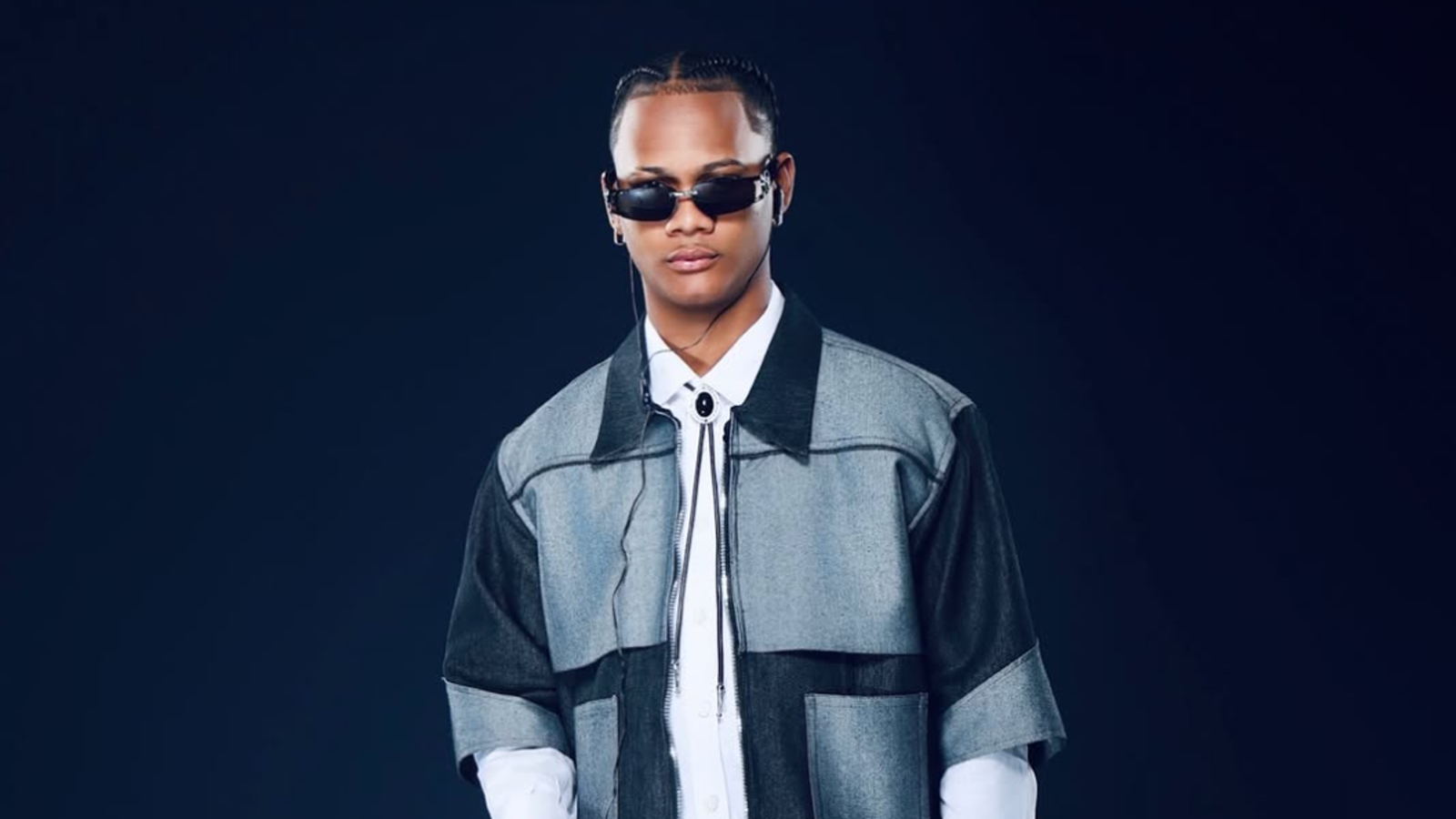
If the name Dalvin La Melodía suddenly seems to be everywhere in Puerto Rico, there is a reason. The 23-year-old Dominican bachata singer has gone from a rising artist with a growing digital following to one of the most talked-about new names in Latin music.
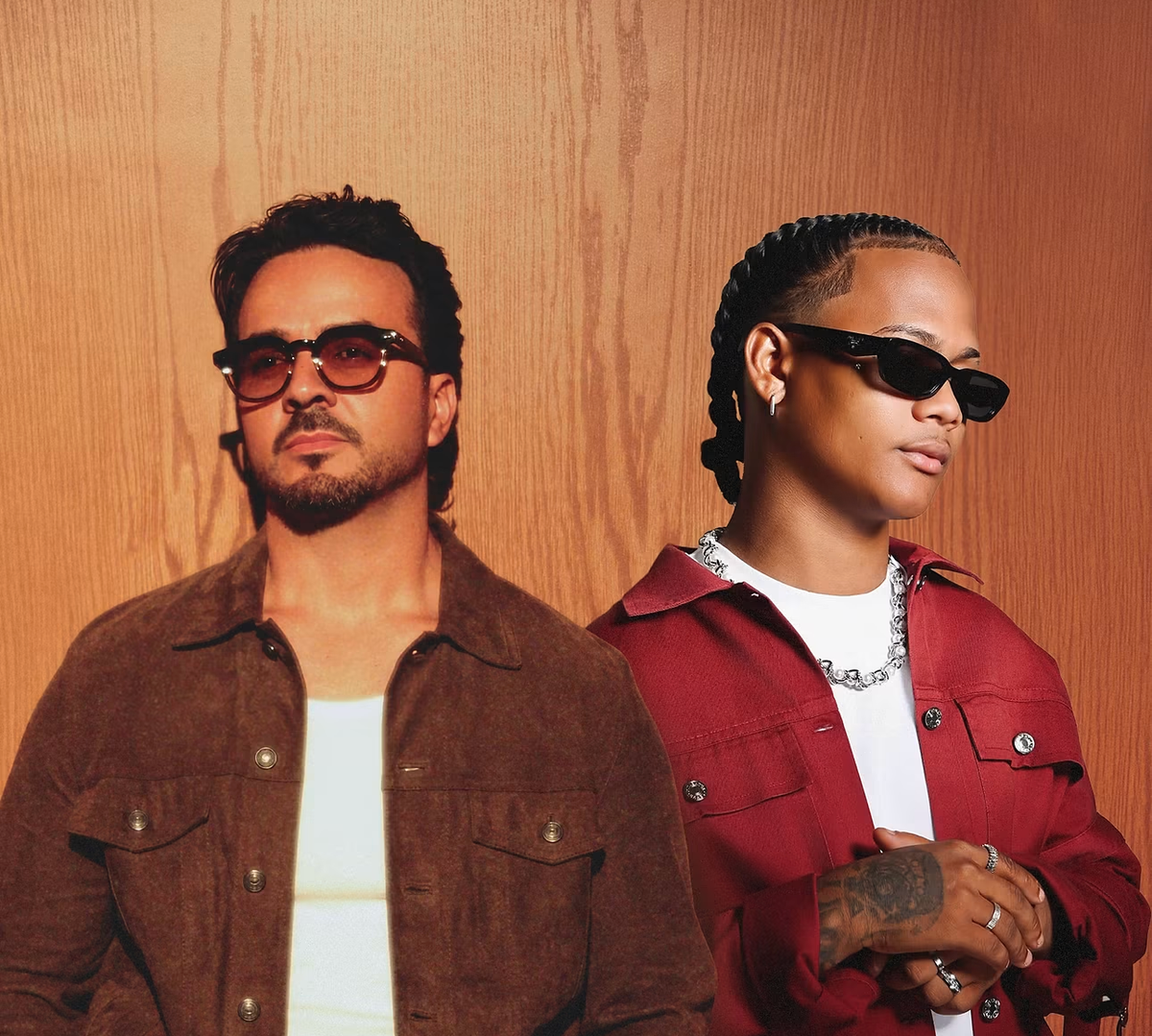
His recent run in Puerto Rico has been particularly striking. After selling out six shows at San Juan’s Coca-Cola Music Hall in September 2026, Dalvin quickly graduated to the much larger Coliseo de Puerto Rico, better known as the Choliseo. Meanwhile, he has joined Puerto Rican superstar Luis Fonsi for a new bachata remix of “Me Despido.”
Who is Dalvin La Melodía? Meet the Dominican bachata star going viral in Puerto Rico, breaking concert records and collaborating with Luis Fonsi in 2026.
So, who exactly is Dalvin La Melodía, and how did his career take off so quickly?
Who is Dalvin La Melodía?
Dalvin La Melodía’s full name is Dalvin Antonio Núñez Vargas. Born in Santo Domingo, Dominican Republic, in 2003, the singer grew up in areas including Los Alcarrizos and had a decidedly non-glamorous road into the music business.
You may also like
Continue reading
Before becoming a professional singer, Dalvin worked jobs including delivering groceries, shining shoes, and working as a motoconcho driver. Music, however, had been part of his life since childhood. He began singing at church alongside his father, an experience that helped develop the voice he would eventually bring to contemporary bachata.
His professional career accelerated in early 2024 after connecting with guitarist and producer Michael Quevedo, known as Mikey Touch. That relationship helped Dalvin record his early material and expand his reach on digital platforms.
Songs including “Mi Reina,” “Tesoro Perdido,” “Chiquilla Bonita,” “Duele,” “Amnesia,” and “Alma Rota” have since helped establish him as part of bachata’s younger generation. His version of “Chiquilla Bonita,” originally associated with Marco Antonio Solís, became an especially important song in his rise. By September 2026, its music video had surpassed 49 million YouTube views.
Dalvin’s breakthrough was also recognized in his home country when he won Revelación del Año at Premios Soberano 2026.
Why is Dalvin La Melodía viral in Puerto Rico?
Puerto Rico has become one of the biggest chapters of Dalvin’s career so far. Before his September concerts, the singer said he began realizing how strongly his music was connecting on the island when people sent him videos showing Puerto Ricans playing his songs in cars and on motorcycles. What followed went far beyond a viral song.
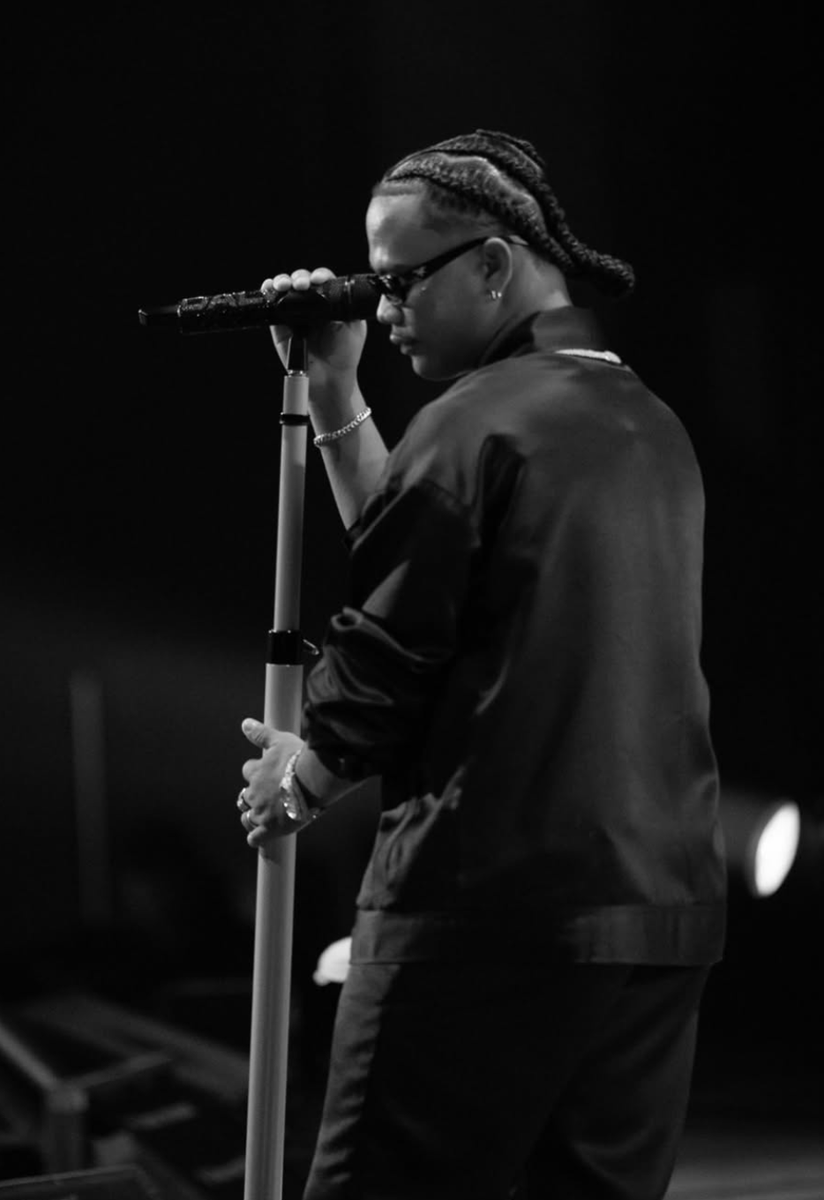
Dalvin originally expected his Puerto Rico debut might take place in a nightclub. Instead, demand expanded his engagement at the Coca-Cola Music Hall to six concerts on September 10, 11, 13, 14, 15, and 19, 2026. All six ultimately sold out, setting a record at the venue.
Approximately 60% to 70% of the audience was young, according to one of the show’s producers, suggesting Dalvin is reaching listeners who may normally gravitate toward reggaeton and other urban genres rather than traditional bachata.
That crossover appeal may help explain why his rise in Puerto Rico has moved so quickly.
His Coca-Cola Music Hall shows also included appearances by familiar Puerto Rican music names. Farruko and Melina León joined Dalvin during his second performance, while Gisselle, Randy “Nota Loca” and iZaak appeared during the sixth.
Dalvin La Melodía and Luis Fonsi release “Me Despido” remix
Dalvin’s Puerto Rico momentum now includes a major collaboration with Luis Fonsi.
On September 25, 2026, Fonsi and Dalvin released “Me Despido (Remix),” transforming Fonsi’s song through a collaboration with the young Dominican bachatero.
Dalvin La Melodía and Luis Fonsi release “Me Despido” remix
The timing is significant for both artists. Fonsi is approaching three decades in Latin pop, while Dalvin is still in the early stages of his professional career. The collaboration places a newcomer enjoying a rapid breakthrough alongside one of Puerto Rico’s most internationally recognized singers.
The original “Me Despido” had already gained radio traction in multiple Latin American markets before the remix arrived.
Dalvin La Melodía’s upcoming concerts in 2026
Puerto Rico isn’t his only destination.
Among Dalvin’s upcoming U.S. dates listed by Ticketmaster are New York’s United Palace on October 2, Foxwoods Resort Casino in Connecticut on October 8, Santander Arena in Reading, Pennsylvania, on October 9, Atlanta on October 10, Orlando’s Kia Center on October 15 and Hard Rock Live in Hollywood, Florida, on October 16. Canadian performances are listed for Montreal on October 30 and Toronto on October 31. A Charlotte concert is scheduled for December 5.
Dalvin La Melodía’s Puerto Rico concerts at the Choliseo
The biggest development, however, is back in Puerto Rico.
After the six sold-out Coca-Cola Music Hall concerts, Dalvin announced “La Otra” at the Coliseo de Puerto Rico for January 2027. Demand quickly multiplied the original date into a multi-night run.
As of September 29, Ticketera lists performances on January 14, 15, 16, 17, 21, 22, 23 and 24, 2027, all at 8 p.m. The ticketing page currently marks January 14, 15, 16, 17, 22, 23 and 24 as sold out, while January 21 is listed with tickets.
That is an extraordinary jump for an artist whose first major Puerto Rico concert run happened only months earlier.
Victoria Beckham may have swapped pop stardom for fashion and beauty, but Posh Spice just made an unexpected return to a very familiar place. A new photo shared by her son Cruz Beckham has sparked speculation that Victoria could be recording music again.
The image shows the former Spice Girls star standing in front of a studio microphone, apparently reading from her phone as Cruz looks toward the camera. Cruz added a teasing caption to the September 28 Instagram post: “yeah we got posh back in the studio.”
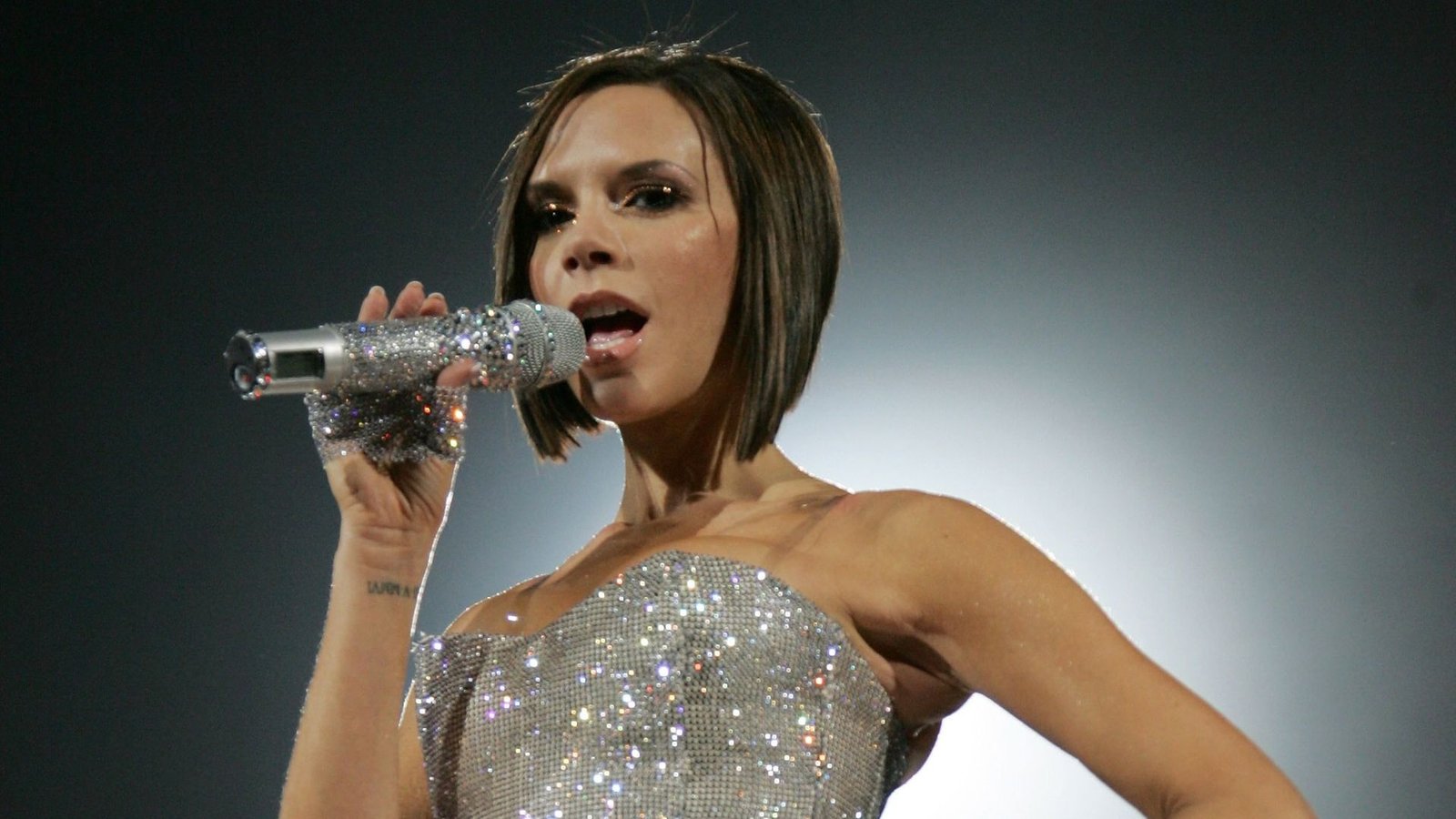
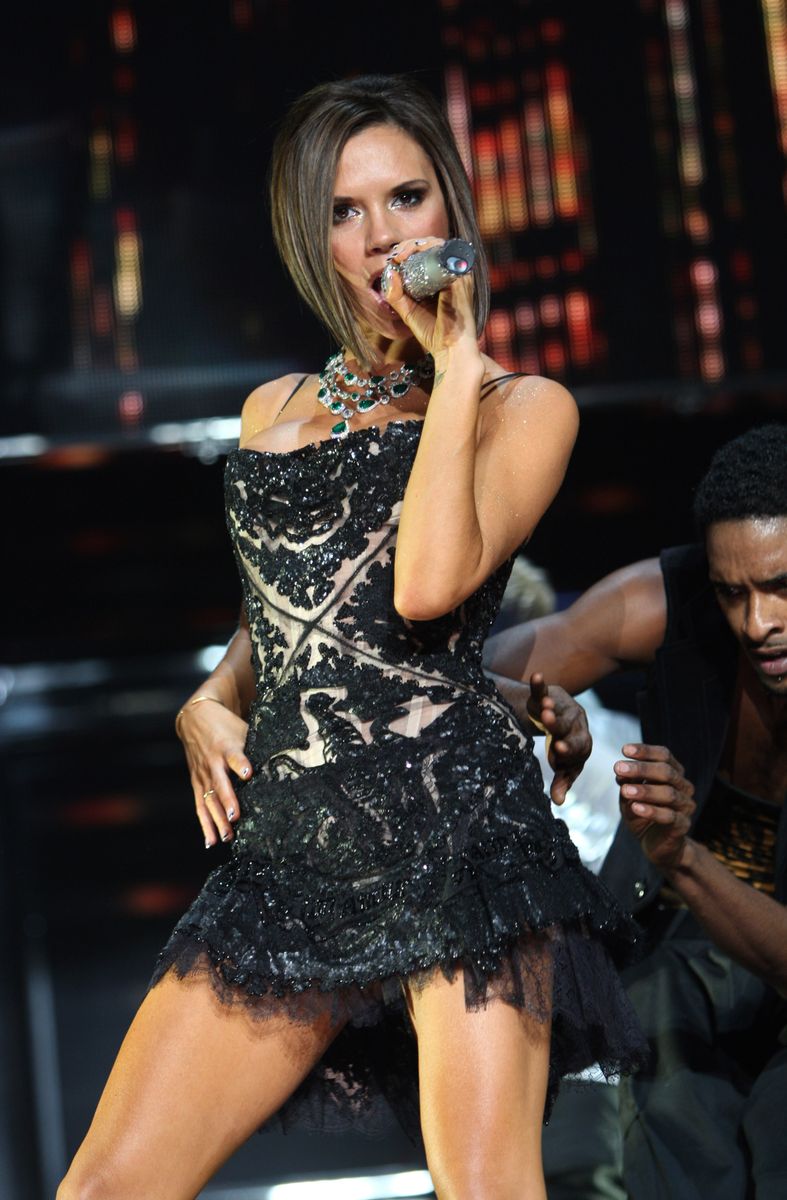
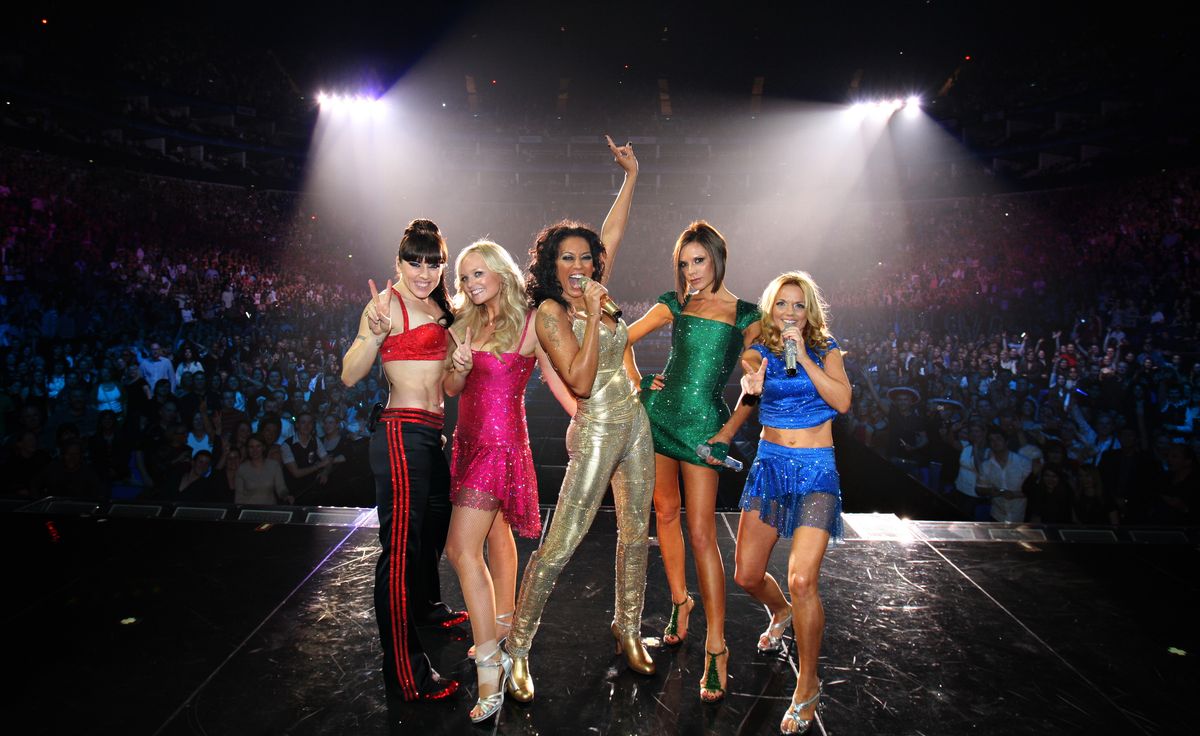
Victoria Beckham of the Spice Girls performs on stage during The Return of Spice Girls World Tour at Staples Center on December 5, 2007
That was more than enough to get fans asking the obvious question: Is Victoria Beckham making new music? For now, there is no confirmation of a Victoria Beckham single, solo album, or full-scale return to music.
Victoria Beckham Returns to the Recording Studio With Cruz
The photo shared by Cruz shows Victoria wearing headphones and positioned at a microphone inside the studio. She appears to be looking at lyrics or other material on her phone while recording.
Victoria joined in on the fun rather than explaining exactly what was happening. She responded to Cruz’s Instagram post with laughing emojis, leaving the mystery intact. One possibility is that she was simply contributing vocals to something Cruz is working on.
Cruz, 21, has been developing his own career as a musician and performs with his band The Breakers. He released his six-track debut EP, Wear & Tear, in August 2026 after building momentum through live performances and earlier releases.
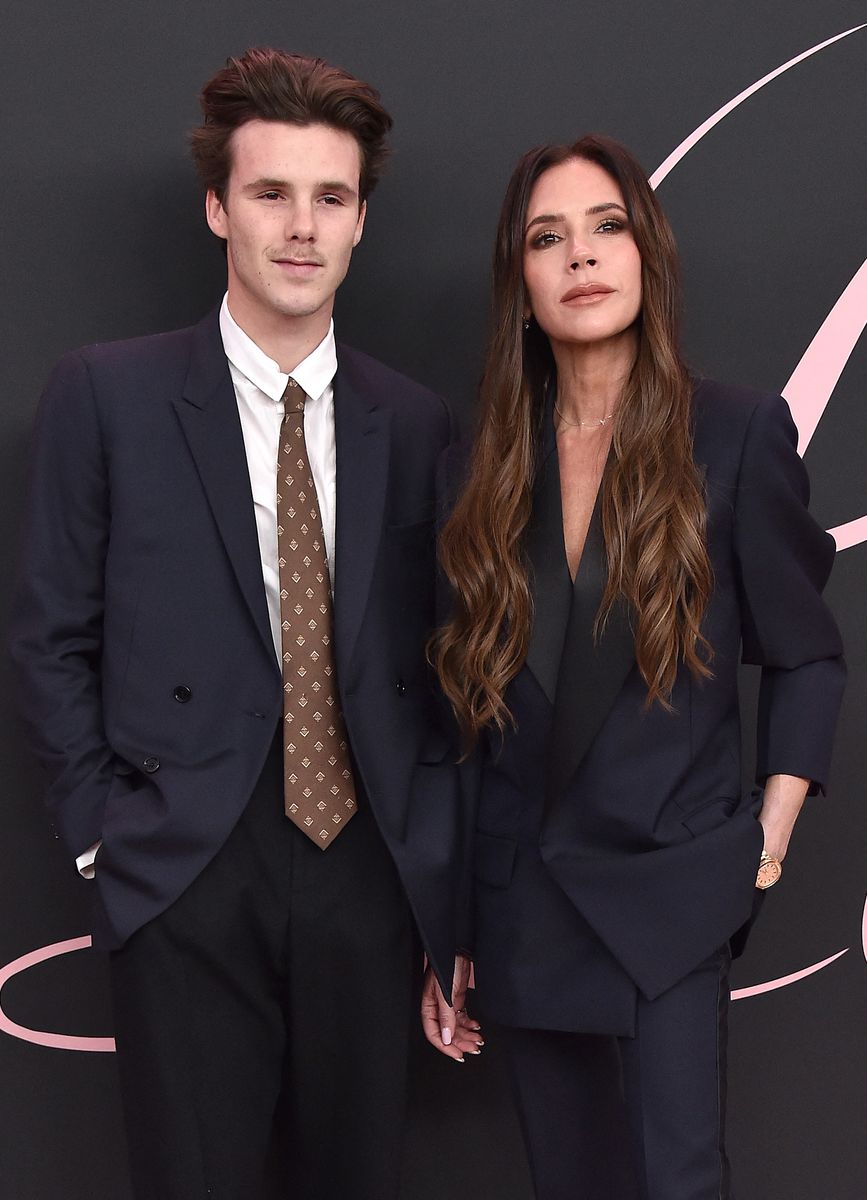
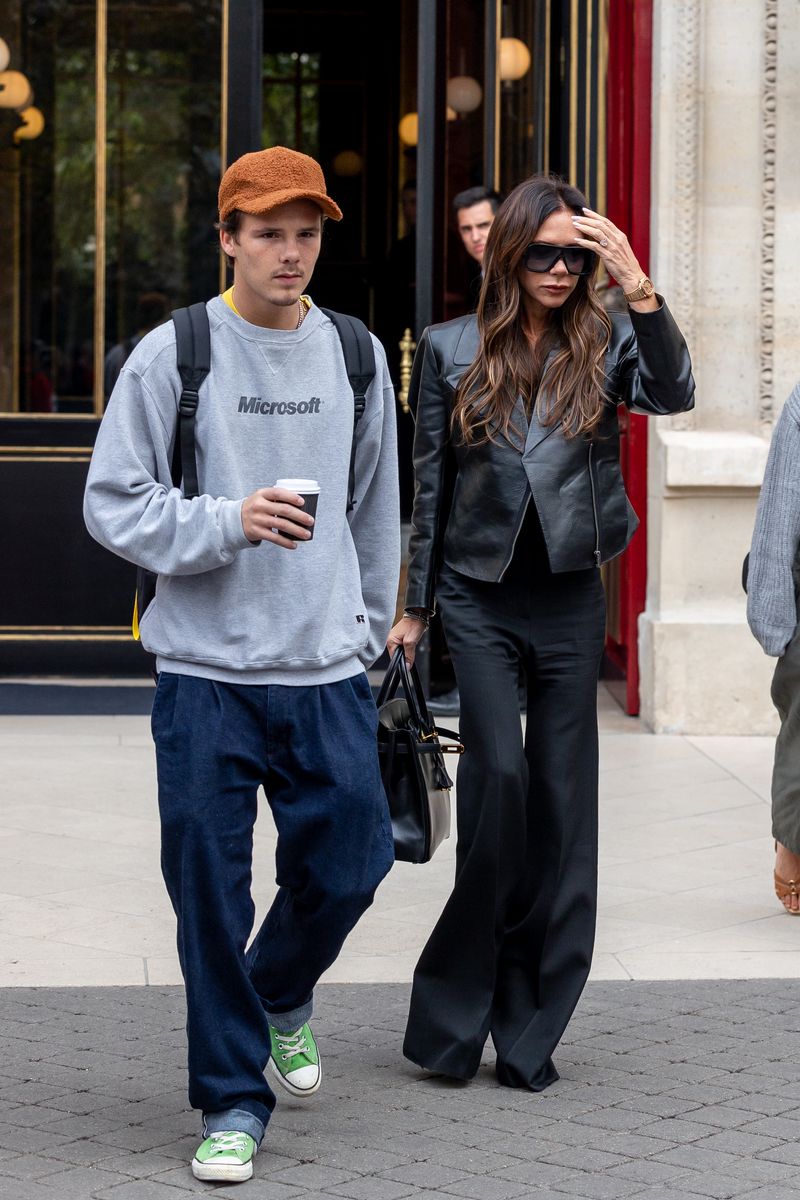
English fashion designer and singer Victoria Beckham and her son singer Cruz Beckham
That makes a mother-and-son collaboration a plausible explanation for the studio photo, although neither Victoria nor Cruz has confirmed what they recorded.
Could Victoria Beckham Release New Music?
The big question is whether this is simply a fun studio appearance or the first hint of something bigger.
Victoria’s music career has largely been on hold for more than two decades. After achieving global fame as Posh Spice in the Spice Girls, she pursued a solo career and released her self-titled debut album in 2001. She later shifted her professional focus toward fashion and beauty.
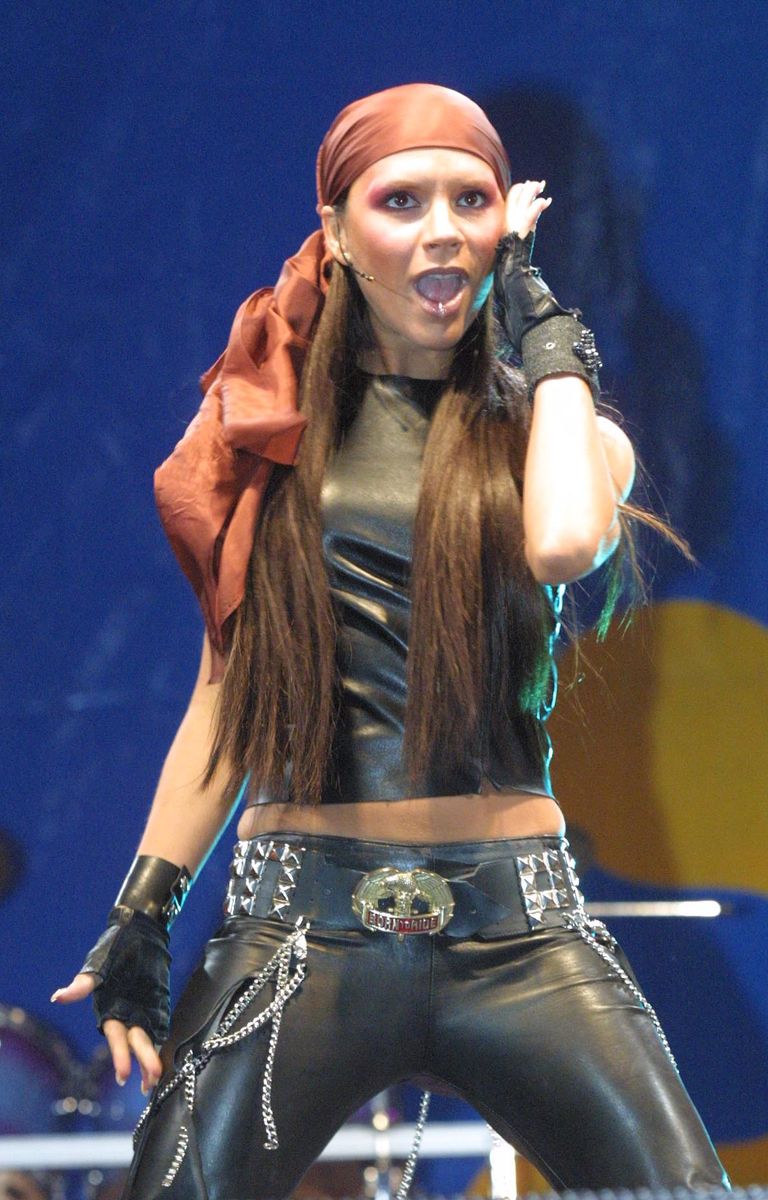
Former Spice Girl Victoria Beckham performs on stage at Radio Station BRMB’s Party
She has occasionally returned to the stage with the Spice Girls. Victoria participated in the group’s 2007-2008 reunion tour and joined Mel B, Melanie C, Emma Bunton and Geri Halliwell-Horner for their performance at the closing ceremony of the 2012 London Olympics. She did not participate in the Spice Girls’ 2019 reunion tour.
So seeing her in front of a studio microphone in 2026 is unusual enough to attract attention.
Victoria Beckham Has Not Completely Ruled Out Singing Again
Interestingly, Victoria has previously left the door slightly open to performing again.
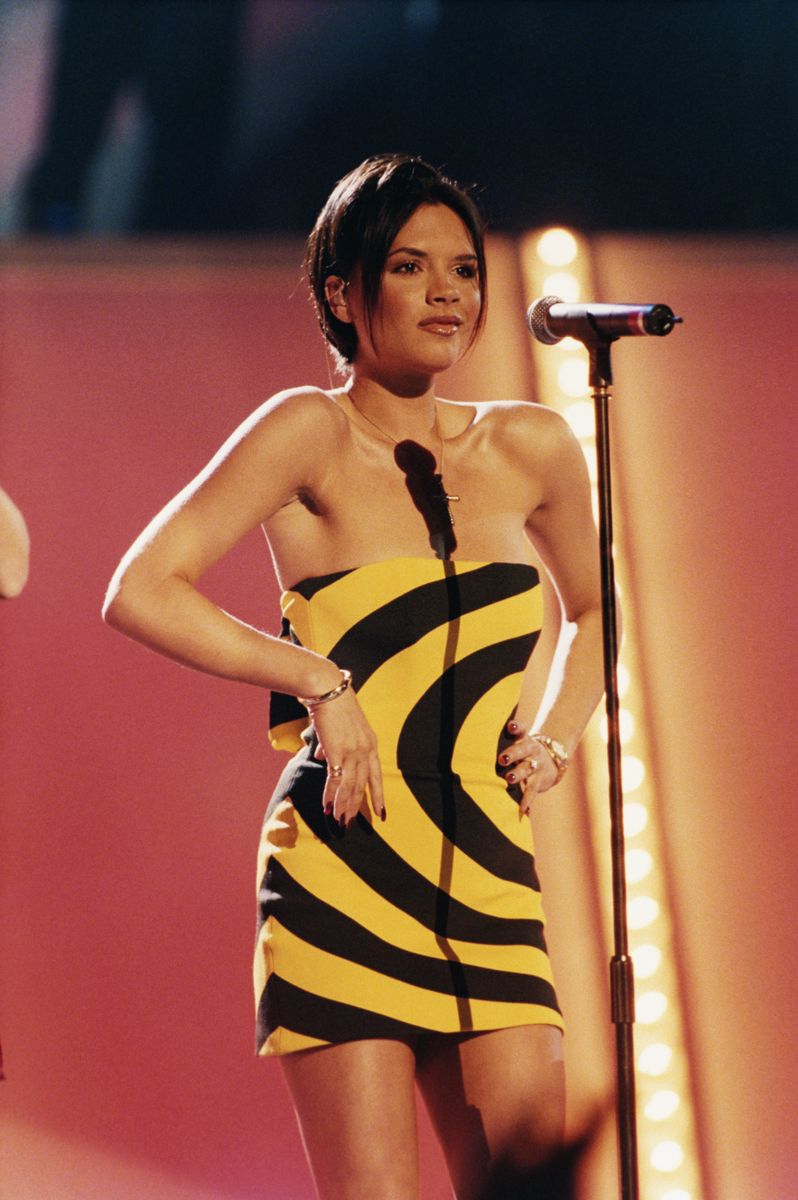
Victoria Adams, aka Posh Spice, later Victoria Beckham, of English pop group the Spice Girls in London, 10th February 1998.
During an October 2025 appearance on SiriusXM’s Andy Cohen Live, she discussed the possibility of appearing with the Spice Girls again. Victoria said the idea was tempting but explained that committing to a world tour would be difficult because of her work commitments. She also expressed affection for the idea of returning to the stage with her former bandmates.
Those comments did not amount to a comeback announcement, but they showed that Victoria was not entirely dismissing the possibility of singing with the group again.
The latest recording-studio appearance adds a new detail to that conversation.
The Timing Comes 30 Years After “Wannabe”
There is another reason the photo feels significant. In 2026, the Spice Girls marked 30 years since the release of their breakthrough single “Wannabe,” which arrived in 1996 and helped turn Victoria, Mel B, Melanie C, Emma Bunton and Geri Halliwell-Horner into global pop stars.
Melanie Chisholm, Emma Bunton, Melanie Brown, Victoria Beckham, and Geri Halliwell of the Spice Girls
The anniversary has naturally renewed attention around the group and questions about whether all five members could reunite again.
Cruz Beckham Is Building His Own Music Career
The studio appearance also highlights an interesting role reversal within the Beckham family. Victoria was once the internationally famous musician. Now Cruz is the Beckham actively establishing himself as a recording artist.
His debut EP Wear & Tear arrived in August, and he has spent 2026 performing live with The Breakers. Reports say his recent schedule has included appearances at Reading and Leeds festivals as well as shows in the U.S.
The EP also contains a particularly fitting family connection: a cover of the Spice Girls’ “Wannabe.”
Directing a microdrama and directing a feature-length film are very different tasks, typically diverging in budgets, schedules and expectations for a viewer’s attention span.
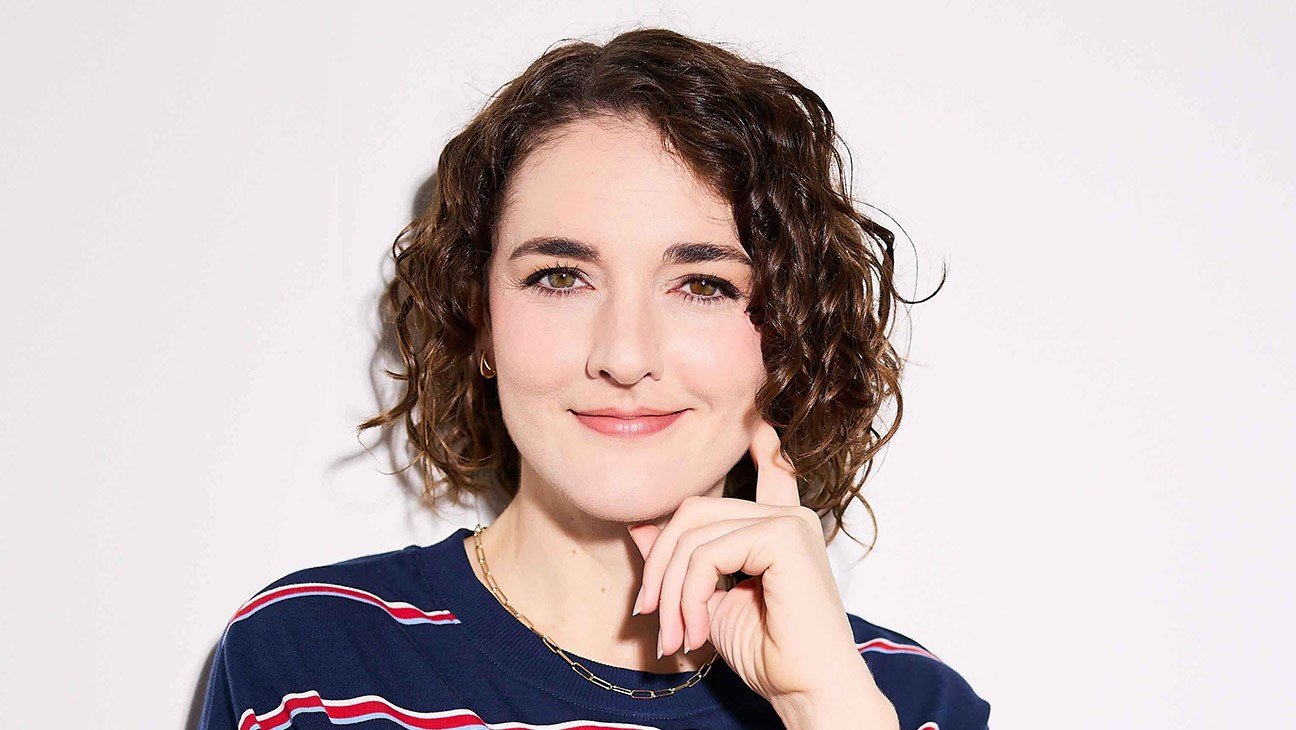
But in an era when more up-and-comers and film school grads are going straight into the verticals business, it’s possible that some of Hollywood’s next big feature directors could emerge from the world of bite-sized entertainment. What exactly would that transition look like? Kristen Brancaccio, who The Hollywood Reporter has learned was just tapped by Graviteur Studios to helm its first feature film Crush Party, has a pretty good idea.
Brancaccio has an impressive resume in the microdrama world. She’s directed 21 verticals, including one bona fide hit in Screen Time, the first microdrama from Issa Rae’s company Hoorae Media, which earned nearly 75 million views in its first week on TikTok and PineDrama. She also directed one of aTwist’s first projects, Hollywood Starlet, produced by The Bold and the Beautiful producer Bradley Bell, and the Audible vertical Southern Belle Insults starring Keke Palmer.
That’s not to mention her work on YouTube, which is how Brancaccio broke into the business, working on the comedy channel The Key of Awesome and then as an independent contractor directly for the platform. Crush Party, beginning principal photography in 2027, will be her first-ever feature.
For Graviteur Studios development and production head Emerson Davis, Brancaccio’s non-traditional background was a big draw. The indie studio, which launched earlier this year as a joint venture between Dolphin Entertainment and KYNETIC Media Ventures, is focused on creator-driven storytelling at a moment when next-gen directors like Curry Parker and Kane Parsons are burning up the box office. The Graviteur team found Brancaccio through Screen Time, which they enjoyed, later to be impressed by her range as a director.
“With Kristen, she’s shown how exceptional of a storyteller she is across formats and genres,” Davis said in an interview. “Some of our early conversations were both about story but a lot about connecting with an audience and what audience are we trying to reach. She brings that natural ability to think like that.”
As her journey may — or may not — be a bellwether for promising verticals directors in the future, Brancaccio was game to discuss how it happened. In an interview, she talked about the evolution of the microdrama industry, transferable skills and staying audience-focused in traditional moviemaking.
Let’s start with how you got into microdramas in the first place. What led you to the verticals industry?
I have a background in the digital space. I started my career on YouTube and over the years have worked on a ton of projects that met where digital and traditional industry converged. And one of the projects that I did was I wrote and directed a pilot for SyFy that was meant to be a digital show. SyFy never ended up going that route, but that pilot ended up with some producers at ReelShort in very early 2024. And it had a very strong romance element and that’s what they were looking for. I got a phone call and they just sort of explained, “Hey, there’s a new format in town. We’re shooting this movie vertically. Are you interested in directing it?” And the rest is history.
Do you have any idea how they got their hands on the SyFy pilot?
Yes. The production designer from that pilot is friends with a producer from a microdrama production company that was working with ReelShort. So it was just one of those projects that I had written off as a bummer that it never went further than it did, but then ended up totally changing the trajectory of my career path. And I think there were a few reasons they resonated with it. Obviously, the fact that there was romance in this pilot. The budget level was, I would say, comparable to what a lot of microdrama budgets are. And again, it was made for digital, so it moved pretty quickly.
I very quickly understood this [microdrama] format. I was like, “Oh, this is for the people. This is what the audience loves. The audience that is reading Wattpad, the audience that is consuming romance, people that just want certain plot points to be hit at a certain speed, people that are addicted to TikTok, they’re expecting a certain cadence and that’s what these shows deliver.”
How have you noticed the microdrama industry changing or evolving in particular ways over the last few years?
We’re starting to see different lanes emerge. At first, these apps were interchangeable. Now they’re starting to realize the value in building their brand. That’s something that traditional Hollywood players understand very well. And so the people coming into the space like Issa Rae, she knows her audience inside and out, so she’s going to deliver a really compelling, well-told story, perfectly suited for digital, that is going to be high production value. She’s not going to follow the same cadence or rules that ReelShort follows. It’s just a totally different approach, but it’s very, very successful. The one I did for her has at least 250 million views, if not more.
And then we’re also seeing a lot of very talented people [that] really understand the audience they’re going for. They’re not ignoring the work that has been done so far in the microdrama space. I think they’re doing a very good job actually of analyzing that, what has worked so far? Why has it worked? What can we do differently?
As you’ve been working on all these microdramas, how did the chance to direct this feature come up for you?
This is what I was hoping and praying that this corner of the industry would lead to. For a long time, verticals were in this… almost a silo. It was just shoved to the corner. I don’t know if “stigma” is maybe too strong a word, but there wasn’t an understanding that there was value in what we were doing and in the skills that we were developing. I have a background in producing and I was just consistently blown away by frankly what I could accomplish myself, but also what everyone in this corner of the industry is doing. We’re doing so much in such a fast timeline. We’re doing it consistently. We’re turning out a movie a month, essentially. I was like, man, I hope other industry players notice this.
It all starts with a phone call coming out of the blue and [I] found out that David and Bill at Graviteur were…. I think it was Screen Time that had caught their eye. They had this movie script that they developed in-house, they were looking for a director and they really saw the value in somebody with vertical experience, somebody that had all those skills that I mentioned, both the technical and the creative, that comes from just working in digital and specifically working in verticals. I was so excited to get that call because I was like, “Oh my gosh, this is everything. This is what I hoped would happen. People are recognizing the value in these skills.”
What are some of the lessons that you’ve learned in the microdrama industry that you’re planning on bringing to your work on Crush Party?
I’ve met some very, very talented, skilled people who can accomplish a lot on a limited budget, both in front of the camera and behind the camera, [and I’m] actually wanting to bring some people with me.
Aside from that, I think the aspect that I’m going to bring with me to Crush Party and other projects is I feel like I keep the audience in mind in a different way and meet the audience where they are. And what’s nice about this script in particular is it’s targeting an audience that is thriller and horror. Those are emerging genres in the microdrama space and fans are starting to really respond to them. When you’re thinking about the audience, it causes you to think about the whole project in a different way. So many filmmakers forget that you’re making your movie for an audience and you can make the best movie in the world, but if it doesn’t reach the audience, no one’s going to see it and that’s such a shame. So who is your audience? What is it they’re looking for? What matters to them? That needs to matter to you too.
On the flip side, are there any elements when it comes to working on a feature that you feel will really stretch you as a director?
When you make a lot of microdramas, you understand the time you have and the decisions you make are usually to meet those demands on time and budget. Unfortunately, time, budget, creative is the order in which you have to think about things. It’s a necessity; thinking the opposite way will make you crazy in the microdrama space. But I think it’s going to be a little bit of a brain rearrangement, a very lovely one, to maybe be able to say, okay, obviously this is not a massive budget studio feature, right? So I’m aware of what this budget is and what it can get me, but it does allow me to think creatively first, and then assess, okay, does this work with the time and budget that we have?
In general, what kind of preparation do you think microdramas offer early-career directors for working in other formats like features?
I think the value in directing microdramas is learning the skill of shooting for the edit. You don’t have time to find the movie in post. So even if you have time on set, which you never do, at the end of the day, these post timelines are so tight, you don’t have time to try and shape it into anything else. And obviously your scripty [script supervisor] is hopefully there to help you, but as a director, you also need to learn that skill.
Working with actors, you don’t have time for a ton of takes. So learning very quickly how to communicate to an actor, how to quickly understand maybe why isn’t a scene working or what could we adjust in this scene to make it better or to change the energy of the scene. You get very quick. So I think overall it’s getting your reps in all these different areas. You’re shooting multi-cam, you have to be able to hold in your head what multiple cameras are doing. I think there’s just so much value in the technical, practical skills of directing when you’re directing microdramas.
What are your ultimate aspirations as a director and where do you want to go from here?
I’m going to sound like a cliché, but I love telling stories. And so I think I’m very interested in telling stories in lots of different mediums, lots of different ways. I don’t know what the future of my career looks like, but I’m pretty confident that it will involve somehow combining my digital experience with narrative experience. And whether that’s in more digitally focused projects or more films or streaming projects, I don’t know. But that seems to be what my career has flirted [with] consistently, at that meeting point.
And I think Graviteur has the right idea in that they’re creating a movie that is a very traditional format, but just the fact that they even hired me, they’re thinking about it also with the eye towards what matters in digital, what skills do people coming from digital bring to the table, which is very cool. I think they’re a little ahead of the curve on that. I mean, we’ve obviously also seen many examples of YouTube creators doing this very successfully, but I think that will stop being an outlier and that will start being a more established pipeline.
This interview has been edited for length and clarity.
The story of Olive Smith and Adam Carlsen will continue in a book sequel.
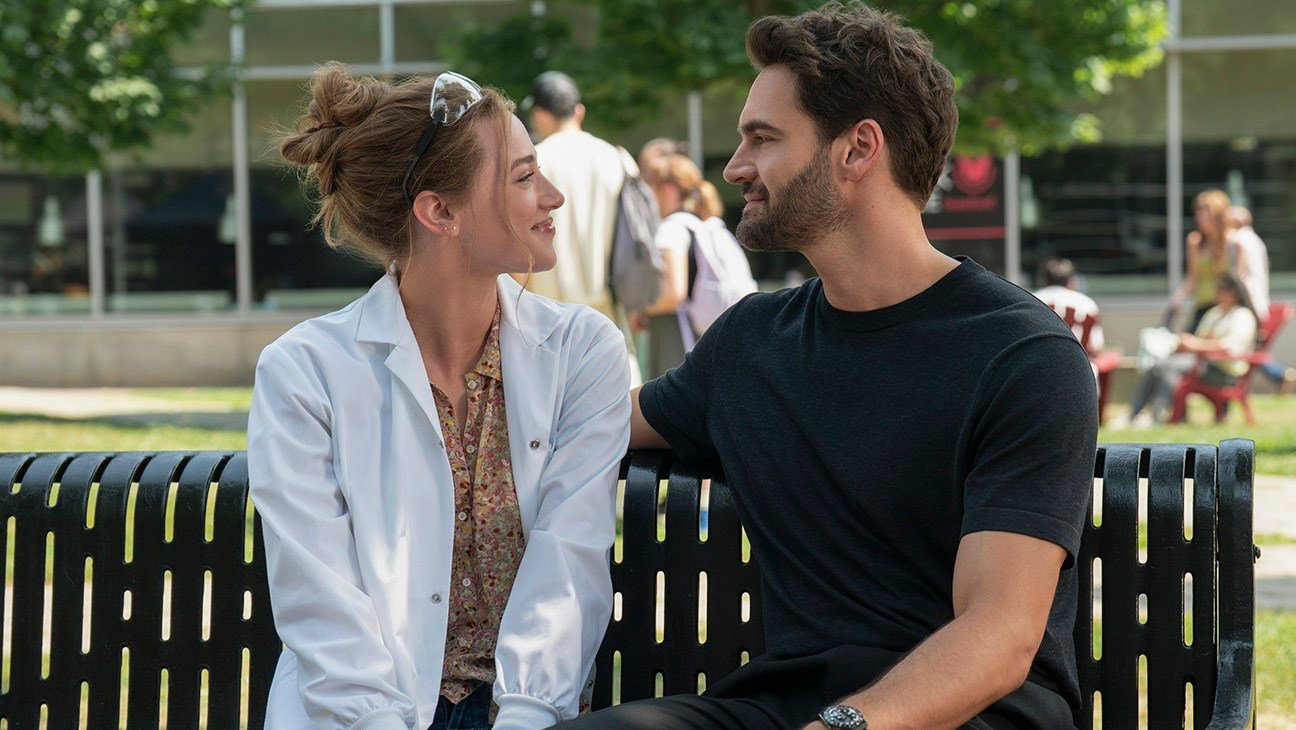
Author Ali Hazelwood announced Tuesday that she will release a sequel, The Two-Body Problem next February. The sequel is in early development and comes amid the recent release of Prime Video‘s adaptation of Hazelwood‘s bestseller The Love Hypothesis, starring Lili Reinhart and Tom Bateman.
Sharing the cover on her social media Hazelwood wrote, “‘I wrote a sequel to The Love Hypothesis‘ is not a sentence I thought I’d say a year or so ago, but now I weirdly can’t imagine a world in which The Two-Body Problem doesn’t exist. I’m really eager to talk more about this book and how it came about in the next few months. For now let me just say that the TLH movie and its cast made me fall for Adam and Olive all over again, that revisiting them was an absolute pleasure.“
She continued, “As someone who gets VERY attached to stories and characters, I know that unannounced sequels can be blindsiding, so feel free to skip this book and overwrite it with whatever headcanon you prefer, and I’ll see you on the next one! But if you want to read more about Adam and Olive, The Two-Body Problem spans a couple of years, and it’s a mix of slice of life, postdoctoral turmoil, and unflinching exploration of the hardest challenge one will face in a long-term relationship: deciding what to have for dinner. If you pick it up, I really hope you enjoy.“
Though she prefaced that “nothing is guaranteed,“ Hazelwood also announced, “MRC is developing a film based on the The Two-Body Problem for Amazon MGM Studios.“ Further details were not shared.
Since its publication in 2021, The Love Hypothesis has since become a full-blown phenomenon — a New York Times bestseller, a BookTok obsession and a career launchpad, turning Hazelwood into a household name. Her books have sold more than 10 million copies worldwide, several already in the book-to-screen pipeline.
The film adaptation, which premiered on Sept. 23 on Prime Video, was directed by Claire Scanlon and produced by Elizabeth Cantillon.
The romance, which began as Star Wars’ Reylo fan fiction (featuring Daisy Ridley’s Rey and Adam Driver’s Kylo Ren), follows Olive Smith (Reinhart), a graduate student and Stanford Ph.D. candidate who embarks on a fake romance with the notoriously stern Adam Carlsen (Bateman), known as “Dr. Evil” to his students. The move is solely to reassure her friend Anh (Rachel Marsh) that Olive’s feelings for her bestie’s current love interest are entirely behind her.
The Two-Body Problem book will be published on Feb. 2, 2027.
Jia Zhangke‘s Unknown Pleasures Pictures has acquired China rights to Apichatpong Weerasethakul‘s “Jenjira’s Magnificent Dream,” co-founder Tian Qi has confirmed to Variety.
The Chinese art-house distributor is also negotiating to acquire two titles from this year’s Cannes Film Festival. In June, it added Andrey Zvyagintsev’s “Minotaur” and Marine Atlan’s “La Gradiva,” and in January it took Greater China rights to Rafael Manuel’s Sundance title “Filipiñana,” which Jia executive produced and which had its Asian premiere at Pingyao this week.
Named after Jia’s 2002 feature, Unknown Pleasures is run by Jia and distributor Tian, who also founded Hero Films, the distributor of Gu You’s Busan title “The First Taste of Loneliness.” The label focuses on niche international art films, and alongside festival titles, it looks for hidden gems that lack strong international sales backing.
Before the label launched, Tian’s previous company released Weerasethakul’s “Memoria” in China, where it grossed $360,000, a third of the film’s total box office. Jia and Tian say that early success gave them confidence.
Unknown Pleasures launched in 2025, with Italian director Paola Cortellesi’s “There’s Still Tomorrow,” one of Italy’s biggest box office hits of 2023. Acquired in 2024, the film screened at the Pingyao International Film Festival and opened in Chinese cinemas on March 8 for International Women’s Day. It grossed $6 million on the back of strong reviews.
Later that year, the company picked up four Cannes titles: Joachim Trier’s “Sentimental Value,” Kleber Mendonça Filho’s “The Secret Agent,” Fukada Koji’s “Love on Trial” and the restoration of Charlie Chaplin’s “The Gold Rush.”
“The founding ethos was that the world is full of wondrous movies, and among the 1.4 billion Chinese population, these films are bound to find their audience,” Tian says. He adds that not every acquisition has to turn a profit. “Once we acquire a title, we definitely aim to release it with the fastest speed.”
Jia says he and Tian agree on keeping the company’s finances stable, but the main mission remains “to distribute films we truly like. If we stand purely from a business point, we wouldn’t start this business anyways.”
He wants the company to help grow China’s art-film market.
“We operate with a long-term library strategy: these titles should remain evergreen in the coming years. By building our own catalog and taking a long-term financial view, we keep the revenue sustainable,” Jia says.
For Jia, movies “that are genuinely interesting, deserve to be shared, and people might easily pass over – those are the ones that really need to be seen in a cinema.”
“We can’t help but sigh over some films that were released online – they actually belong to cinema,” he says.
If you purchase an independently reviewed product or service through a link on our website, The Hollywood Reporter may receive an affiliate commission.
Ahead of a two-night season 39 premiere, The Amazing Raceis celebrating its 25th anniversary with an Entertainment Tonight special filled with new interviews, behind-the-scenes footage and never-before-seen content from the Emmy-winning competition show.
Five-day free trial; packages from $19.99 per month
CBS is included in any of DirecTV’s signature packages: Entertainment, Choice, Ultimate or Premier. Plus, DirecTV offers a five-day free trial for its streaming service, meaning new subscribers can tune in to Entertainment Tonight‘s Amazing Race special at no cost.
Learn more about each plan option, including how to build your own channel lineup (starting at just $19.99 per month), at directv.com.
Fubo
Fubo
One-day free trial; packages from $64.99 per month ($54.99 for first month)
CBS is available to stream with a subscription to Fubo, which offers a one-day free trial for new subscribers. After the trial, plans start at $54.99 for the first month and $64.99 monthly thereafter.
Hulu
Hulu + Live TV
Three-day free trial; packages from $89.99 per month
Watch CBS with Hulu + Live TV, which offers a three-day free trial. Subscriptions come bundled with Disney+ and ESPN+, and start at $89.99 per month.
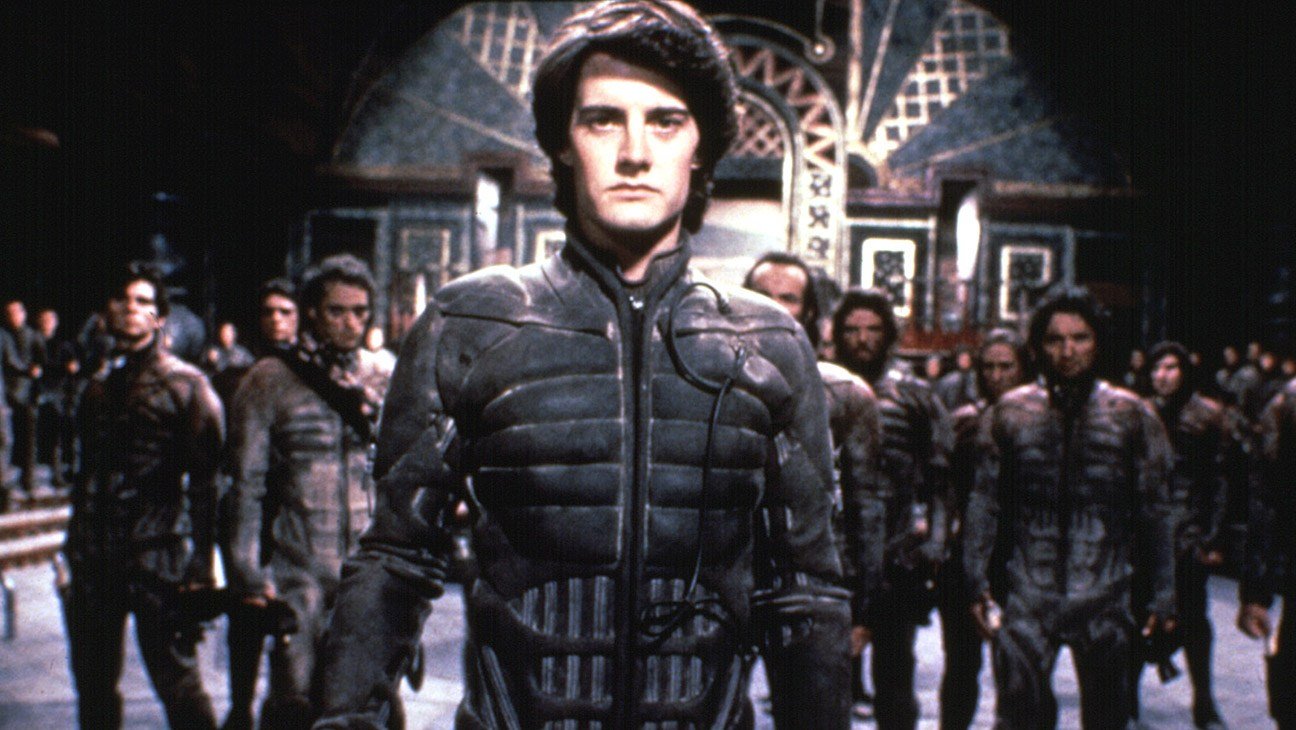
Filming out in the Chihuahuan Desert is actually chilly in the morning, but when the sun comes up, the heat is unreal. Just biblical. With the camera crew setting up in the distance and the wind not cooperating, Patrick Stewart and I sweat in our “stillsuits” and wait. In the world of Dune, the suit transforms the sweat into drinking water; but in the Mexican desert, the sweat just pools, sticks to my skin and runs down my arms. The custom-fit suit is a near-torture device of costuming that severely limits my ability to move. It’s like fighting against a giant rubber band wrapped around my body. When the suit is zipped all the way up, I can’t even raise my arms. Not ideal. The key, I’m learning, is to limit unnecessary movement. Or, really, any.
Wondering how much longer before we roll, I turn to see David Lynch, the film’s director, up on a desert dune in a yellow hat, white collared shirt, the shortest shorts on earth, and brown loafers with white socks pulled up to his knees. (He has a particular distaste for sand in his shoes.) He’s talking to cinematographer Freddie Francis, shirtless in a boater hat, and to the assistant director, José “Kuki” López Rodero, in a white panama hat. They are huddled together around the camera, looking like a bizarre collection of bandits.
Freddie’s crew is setting up big silver reflectors to light the actors’ faces, which bounce the sunlight right into our eyeballs. Brutal. (Now I understand why Clint Eastwood characters are always squinting.)
In the distance, across the Samalayuca Dune Fields, men are burning old tires to get the right color and intensity of black smoke. As a key point of the plot, the planet Arrakis, aka Dune, doesn’t have water; thus, it has no blue sky. But of course, Mexico does. Can’t get around that. So, our intrepid director, the 37-year-old former Eagle Scout from Montana, the Oscar-nominated visionary behind Eraserhead and The Elephant Man, Lynch has taken on the not-inconsiderable task of blotting out the sky.
Those tires are still burning in the distance, but now the black smoke is moving in the wrong direction, away from us. So, we wait. We can blot out the sky, rip up the desert, but we can’t control which way the wind blows.
Assuming it’ll be some time, I unzip my stillsuit to down around my torso and tie the arms around my waist, my black T-shirt comically drenched: I’m now half Paul, half Kyle. Both of us carrying a lot on our minds — and shoulders.
Dune is populated by an impressive list of international talent on and off camera: acclaimed actors like Max von Sydow, Francesca Annis, Jürgen Prochnow; up-and-comers like Blade Runner’s Sean Young and gigantic stars like Sting; top craftsmen like Oscar-winning cinematographer Freddie Francis, Tony Masters (Stanley Kubrick’s production designer), effects wizard Kit West (Raiders of the Lost Ark), creature creator Carlo Rambaldi (who also designed E.T.), and famed costume designer Bob Ringwood, whose Batman suit five years later will be modeled on the “fetish industrial” look of Dune’s rubber stillsuits.
In Mexico for budgetary reasons, the day-to-day production has customs issues, technology issues, communication issues, construction issues, electricity issues, on top of the typical challenges that come with a movie of this size and complexity. The power goes out regularly — our home base, Mexico City, has brownouts — and the crew on the soundstages often have to switch to generators. It’s a real roll-with-the-punches situation, an adventure in the grandest sense of the word. When I first arrive, I am wide-eyed, viewing the project as a throwback to the “sword and sandal” movies of the 1950s and early ’60s that I used to watch on TV. Go off somewhere impossible and exotic and come back and hope you have a movie.
During the scene Patrick Stewart and I are shooting that day, Paul Atreides, the character I play, has been in the desert for a couple of years. I had petitioned for my hair to go past my shoulders, Jesus style — a sexier and messiah-like Paul — but was overruled. The final decision is a compromise that serves neither side: hair extensions glued to my scalp with a latex adhesive. Taking them off at the end of each day is a painful process that involves rubbing alcohol and a light scalping that leaves behind stubborn balls of latex in my hair. Currently, I am wearing a white hairnet over my perm, to keep it in place before we shoot. Patrick, mostly bald on top, has longer hair extensions, too, given that his character, Paul’s adviser and friend Gurney Halleck, has been in exile as well. We stare off into the distance, catching our breath, saving our energy.
The first thing I noticed when I met Patrick was his voice. I went to school for three years to learn how to speak onstage, but I’ll never sound like him. Coming from the prestigious Royal Shakespeare Company, Patrick has the most mellifluous tones, regal and elegant. No one can make the line “Behold, as a wild ass in the desert go I forth to my work” sound correct except for him. He is Gurney Halleck, master swordsman and troubadour. And because he’s also Patrick Stewart, he’s suave and debonair about it. When he puts on the Atreides battle jacket or the Fremen stillsuit, it’s like he’s lived in it all his life. He also has the most marvelously shaped head of any human I’ve ever seen, and I tell him so. He gives me a “thank you, I think” kind of look.
Patrick is in his early 40s at the time, but this is only his third film, and he’s a neophyte when it comes to the complicated world of Dune. Because he’s a last-minute replacement — for Aldo Ray, whose struggles with alcoholism have rendered him out of commission — I try to offer assistance. Patrick simply hasn’t had time to soak up the extensive Dune lore I have spent a lifetime accumulating. Still, we are both newcomers to film, so we share a certain awe about the hectic and bizarre world spinning around us.
MacLachlan (left), Patrick Stewart (center) and Sting (knife), in Dune.
Universal/Courtesy Everett Collection
Patrick is a mix of stately confidence and thoughtful inquiry. He regularly leans over and, sotto voce, asks me questions about what’s going on. Though he presents a very cool and collected mien, he is just trying to figure shit out like me. We connect on our theater background — I did Shakespeare the previous summer — and laugh at the exponential difference between simple theater productions and … whatever this is. The size and scope of the film often leave us speechless, and I feel less alone with him beside me.
On his first day of shooting, he and I took our seats in a half-built “ornithopter,” which is like a giant, multifaceted bee that flies over the desert. We were seated in front of a gigantic blue screen, where the landscape would be matted in later. I could feel Patrick’s nervousness as we prepared to “fly” over the shield wall and the Great Desert of Arrakis. He leaned forward and quietly asked, “Kyle, what are we looking at here?”
I leaned back and spoke in an undertone: “There’s a sandworm down there bigger than a tractor trailer.”
“Aha. And there?” he asked, pointing lower down. “It’s swallowing one of the harvesters.”
“Harvester?” he asked.
“It’s like a large metal factory on wheels.”
“Seems like a risky mission,” he said, a trace of somber gravitas. “Tremendous risk,” I said quietly.
Patrick’s key line in the scene is “The worm is eight minutes away, sire.” After the first take, he had a question. “Pardon, David?”
“YES, PATRICK,” David said in his distinctive honk.
“How exactly would I know how far out the worm is?” I’m impressed that Patrick exists deeply enough within his character to ask such a thing.
David stopped, re-calculating in his mind. “EXCELLENT QUESTION, PATRICK,” he said, like a supportive teacher. “THANK YOU.” He then dispatched a propman to construct a gauge, with analog hands to be inserted later.
Having carried the world of Dune in my head for years, I, too, arrived on set with such inquiries. Carefully and diplomatically, I at first pushed back on some production details. I know the book inside and out — I am likely the only one on set who does — so I feel I carry a responsibility to the story.
When I was fitted for the stillsuit, I felt some things were missing: “How come these suits don’t have hoods?” “Where are the capes?” “Will there be a headpiece?” “Wait, where’s the mouthpiece so you don’t lose moisture when you breathe?”
I wasn’t trying to be difficult; it’s just that I had absorbed the reality of Frank Herbert’s story so completely. If Paul had to survive in that desert climate, in those bleak conditions, with only this protection, he would die. And if being stranded on Dune wasn’t a life-or-death situation, then that would change a whole series of things that affected the characters’ decisions. There was an internal logic that needed to remain intact. My concerns were never about my ego or vanity, but about the truth of that world.
“Kale,” said producer Dino De Laurentiis, still struggling to pronounce my name. “We don’t hire famous actors to cover their faces where no one can see them.”
This did have an unavoidable logic to it. He had plenty to worry about already, and often he and his daughter Raffaella De Laurentiis, also a producer on the film, and David were managing a hundred things at once on a scale I couldn’t even conceive.
After my third degree about the costume, I made a point to choose my battles more carefully.
Still standing around in the broiling desert with Patrick, waiting for the smoke to change direction, we walk over to where Everett McGill is sitting on a chair beneath umbrellas, out of the sun. Everett, who plays Stilgar, a tribal leader of the indigenous “Fremen,” has the calm but commanding presence of an Old West sheriff. He’s got classic movie-star features, a strong jaw and penetrating eyes, but he remains offbeat enough to stay interesting.
“Hey, young buck,” Everett says, his nickname for me. “Surviving?”
I part my hands, like Take a look, making a dramatic flourish of my current state — hairnet, half-removed stillsuit, sweat-drenched T-shirt.
Everett is a different breed of actor, and I’m instantly drawn to him. He’s a taciturn guy who grew up in Kansas, and he has that cowboy feel about him, even down to his badass boots, which I make sure to find a pair of for myself. To protect his vocal cords, he carries a converted soda bottle from which he regularly inhales. It is lined with damp cotton, to hold moisture. He wants Stilgar’s voice to have the deep timbre of a respected elder. Everett is meticulous and thorough, if eccentric, carefully considering all kinds of little details for his character.
Patrick, Everett, and I stare at the thick black smoke coming off the burning tires, the most toxic cloud I’ve ever seen. “You think that’s why we couldn’t shoot this in the States?” I ask, and Patrick and Everett laugh.
Everett seems more sanguine about our current conditions. He’s been around. “This is child’s play,” he says, “compared to what we went through on Quest.”
He has been entertaining us with tales from Quest for Fire, the historical fantasy film directed by Jean-Jacques Annaud that he recently made with Ron Perlman and Rae Dawn Chong. The film had a legendary shoot, nearly a year long: actors sitting for five hours of makeup a day, learning a completely invented language, dealing with the elements in freezing Scotland and blistering Kenya.
“It was grueling,” Everett says, carefully inhaling from his bottle and regaling us like a chieftain before a campfire. He starts enumerating on his fingers. “Ron and I both got frostbite, they had real bears and elephants on set, a volcano eruption we had to plan around, and a set designer got anthrax from animal skins.” He says it all matter-of-factly, a little pride in his resonant voice.
“Jesus,” I say. I glance over at Patrick, and he looks mystified. But as a Hollywood veteran, Everett takes things in stride.
Assuming the Dune pictures will keep me in the space-fantasy business for a while — after all, I had signed an enormous book of a contract for five Dune (and three non-Dune) films for Dino’s company — I listen to his stories in a little bit of awe. I’m excited, even gung ho about clawing my way through those kinds of challenges. The exuberance and stupidity of youth have me embracing the idea of testing myself on a film set. I can’t wait to come back with stories.
“Yeah, we kept it light, though,” Everett says. “You gotta. Or you’d go insane. Ron and I were always pulling shit on each other. One time, I had to traverse this sandhill barefoot where the ground temperature was nearly a hundred fifty degrees. When it was Ron’s turn, I waved him up without saying a word, and boy he nearly killed me. The bottoms of his feet were bright red! Nearly scorched them off!” Everett laughs aloud in his rich tenor. Between him and Patrick, I’m surrounded by the most melodious sounds.
The three of us are becoming fast friends, and though I’m over a decade younger, I feel comfortable with the relaxed camaraderie in the midst of the madness. I’m discovering that friends on a shoot can become a type of family. We few, we happy few, we band of brothers. Everett is playfully envious of my youth — that’s what the whole “young buck” thing is about. “You gotta get out there and graze,” he tells me. “Everything is out there for you. You can go all night, come to set without sleeping.”
I find his words equally inspiring and demoralizing. I’m not great at embracing the moment and a little gun-shy about real-life adventure. But I have always wanted to traverse the country on a motorcycle; for some reason, after time with Everett, I will make a plan to do exactly that when the shoot ends. It goes against all my natural caution, so it is perfect.
Suddenly, the wind shifts. Now the black smoke is blowing right across our faces; it is pure poison, lethal in our throats and lungs, a shock to breathe in. It’s like a neck punch, freezing my vocal cords, stopping me from speaking. Again, not ideal. Everett puts his head down and inhales from his bottle. The rest of us just have to breathe as little as possible.
“OKAY, EVERYONE.” David’s distinctive honk comes through nearby walkie-talkies. “GET IN POSITION, PLEASE.”
Extras spread out across the dunes. Crew members scurry over to the actors with a gardening-type tool, opening the nozzle and blowing a cloud of yellow and red dust onto us. I close my eyes as it covers my hair and face, hold my breath as it gets up my nose and the grit lodges in my teeth.
“BOBBY,” David says over the walkie. “WILL YOU HIT KYLE ONE MORE TIME?”
Someone from wardrobe runs over and shoots me with the dirt gun again for good measure. Now I’m completely covered in it. When I turn around and face the camera, I notice that every single crew member is wearing a nose mask, face covering, and giant black-framed goggles. I have to keep from laughing.
The “dirt” is actually a calcium-based clay called fuller’s earth, a powder that gives images texture and a sense of depth. The effects team has set giant airplane propeller–type fans right off camera. During the shot, they feed fuller’s earth into the fan blades to be blown onto the actors. When I get home that night, I’ll have to rinse out my teeth, spitting red-dirt saliva into the sink. The epitome of Hollywood glamour, just like Cary Grant.
I get into position, the fans blowing dirt and smoke across my face. We spent hours waiting for the wind and then create our own. This is madness. This is Dune.
Paul’s costume includes a “weirding module” attached to his throat; it sticks out like a giant door hinge. In the scene, he and Gurney recognize each other in the desert after years apart, a heartwarming moment. But as he hugs me, Patrick accidentally jabs the module back into my Adam’s apple. I am stunned as my breath and voice stop sharply. My eyes fill with tears from the pain, and I make a slight grunting sound. I don’t speak because I can’t.
The wind shifts again right as we finish, so that’s the take that goes into the film.
Warner Bros. Studio Tour Hollywood brings Stars Hollow to Burbank with Gilmore Girls Holidays, a new feature of its annual holiday event.
While the series was set in a fictional Connecticut small town, the beloved series was filmed on the WB lot and the holiday offering features new sets, exclusive shopping opportunities and series-inspired food.
Fans can expect such treats as Luke’s Apartment, re-created inside its original Stage 13 filming location; the Chilton School Graduation Courtyard, which allows fans to relive a pivotal chapter in Rory Gilmore’s journey; an expanded walk-through of the Gilmore Estate; and Rory’s Basket Auction, inspired by the town’s tradition and brought to life as an interactive holiday experience.
Fans can also enjoy special appearances from Scott Patterson, who portrayed Luke Danes, including live podcast events and photo opportunities available for an additional purchase.
The event also features special food inspired by the show and characters. Themed milk shakes, cocktails and popcorn — in a premium new collectible Gazebo popcorn bucket that celebrates the heart of Stars Hollow’s town square — will be available for fans to purchase. And of course, coffee. An exclusive new collaboration with Her Universe, featuring apparel and accessories inspired by the beloved series and two new Department 56 collectible miniatures will be joining Lorelai’s House and Luke’s Diner in celebrating two iconic Stars Hollow locations — Kim’s Antiques and Miss Patty’s School of Ballet.
Gilmore Girls Holiday runs Dec. 12-Jan. 3 (closed Christmas Day). Tickets are on sale now on the Warner Bros. Studio Tour web site.
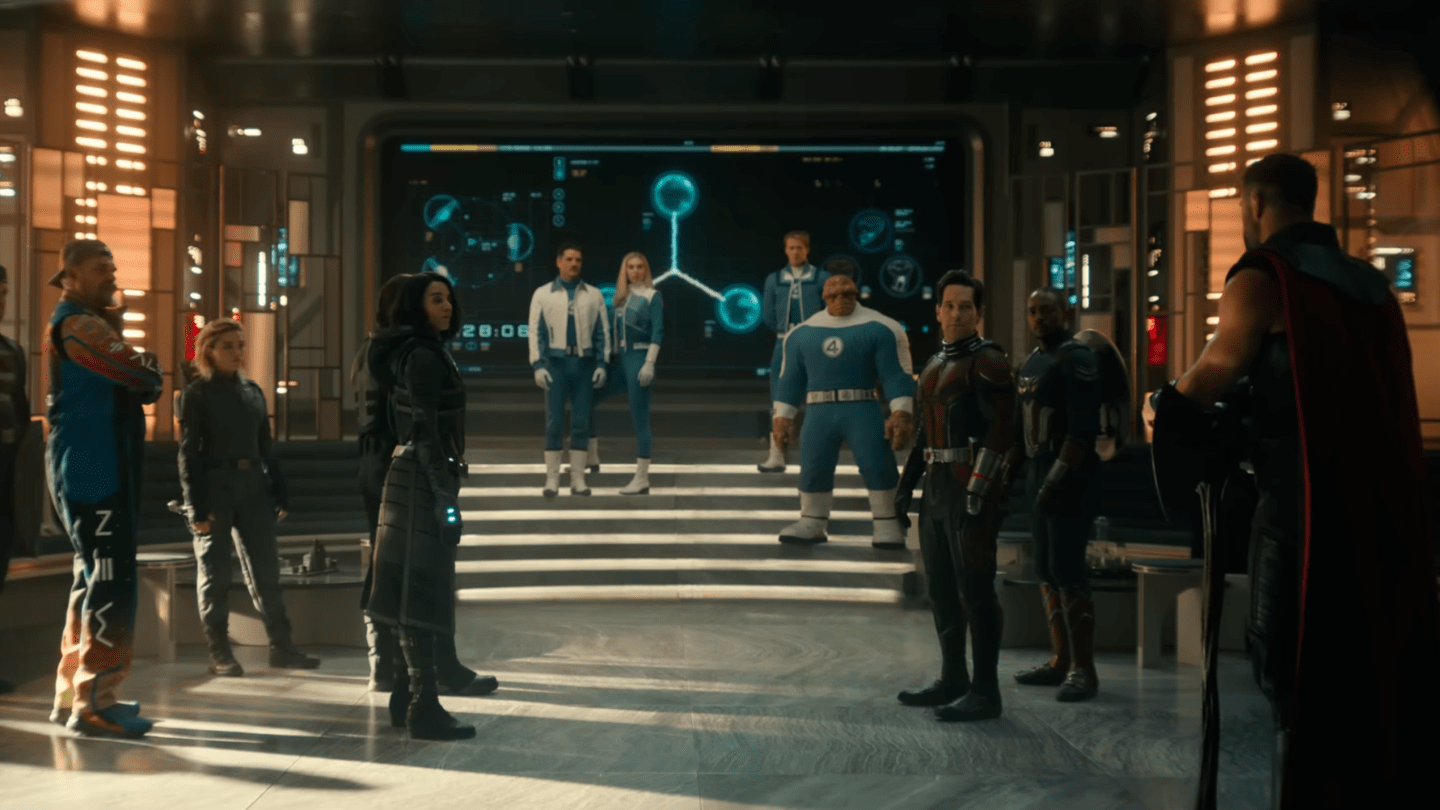
Despite containing 31 announced Marvel characters (full list below), Doomsday directors Joe and Anthony Russo say even more characters are appearing in the team-up superhero film — including, quite possibly, the Hulk (Mark Ruffalo).
Speaking to Empire Online, Russo said, “[Bruce Banner] is certainly involved in the story that revolves around Doom. We will not confirm nor deny his appearance in Doomsday.” (So that sounds like a yes).
Anthony Russo then added, “The farthest we can go is to say, there are characters and actors who have not been announced, who are a part of Doomsday.”
Anthony recently told The AP: “The MCU is this massive experiment in how vast, how much scope can an ensemble really have?” The duo also confirmed they started shooting Doomsday without a completed script: “We always view the script as a living organism,” Joe said. “We’re improvisation-based, rehearsal-based directors. We like to see what the actors bring to the characters, and sometimes you don’t get the actors until a few days or a few weeks before you shoot them. And a lot of the time, that’s when the magic happens.”
The duo are currently promoting the re-release of Avengers: Endgame, which has racked up another $86 million over the weekend. The film grossed $2.8 billion back in 2019 and now includes four new end-credits scenes to help set up Doomsday. Joe Russo has previously called Endgame “required viewing for following the story in Doomsday.”
Here’s the full list of confirmed characters appearing in Doomsday:
MCU veterans: Steve Rogers/Captain America (Chris Evans), Thor (Chris Hemsworth), Sam Wilson/Captain America (Anthony Mackie), Bucky Barnes/Winter Soldier (Sebastian Stan), Ant-Man/Scott Lang (Paul Rudd), Loki (Tom Hiddleston), Shang-Chi (Simu Liu), Shuri/Black Panther (Letitia Wright), M’Baku (Winston Duke), Namor (Tenoch Huerta Mejía), Falcon/Joaquin Torres (Danny Ramirez).
The Fantastic Four: Reed Richards/Mister Fantastic (Pedro Pascal), Sue Storm/Invisible Woman (Vanessa Kirby), Johnny Storm/Human Torch (Joseph Quinn), Ben Grimm/The Thing (Ebon Moss-Bachrach).