Category: Entertainment

  • In ‘Demons,’ Love and Betrayal Become a Metaphor for the Relationship Between Russia and Ukraine (Exclusive Trailer)

    In ‘Demons,’ Love and Betrayal Become a Metaphor for the Relationship Between Russia and Ukraine (Exclusive Trailer)

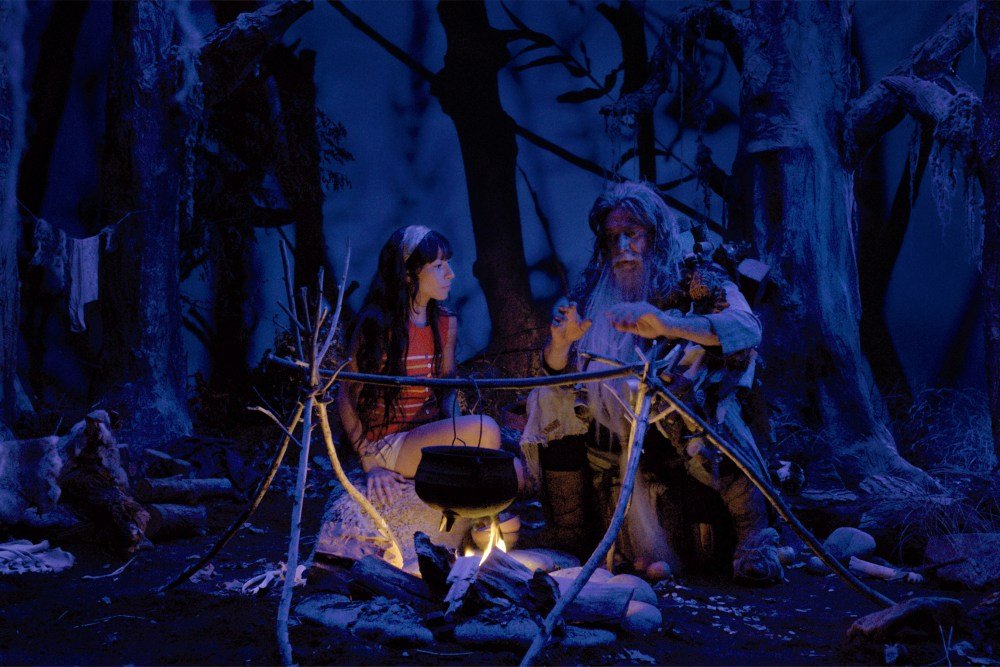
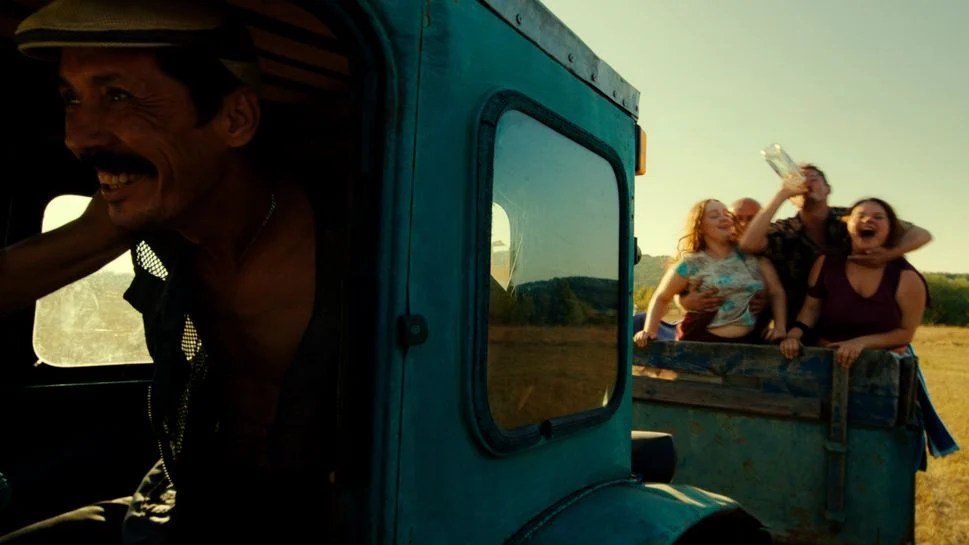
    Writer-director Natalka Vorozhbyt (Bad Roads) decided to face the Demons to explore the roots of the war between Russia and Ukraine. Now, she is unleashing the Demons at the 79th edition of the Locarno Film Festival, where the film will world-premiere in the Filmmakers of the Present competition program on Aug. 13.

    Here is how a synopsis describes the movie: “In the 1990s, Slavik, a homeless drifter from Russia with a blurred past who claims to be a writer, wanders into a remote village in central Ukraine. Nina, a strong and independent woman much older than Slavik, takes the stranger into her home. At first, their strange companionship resembles an unlikely love story. But as their relationship unfolds, love turns into betrayal, and the village begins to reveal its hidden rules — a place where witches may live next door, and the dead sometimes speak with the living.”

    The creator of the film highlights that it unfolds on three interconnected levels. “The first is the relationship between a man and a woman within a traditional society,” Vorozhbyt explains in a director’s statement. “The second is socio-political, where this relationship becomes a metaphor for the relationship between Russia and Ukraine. The third is mystical, exploring the connection between the living, the dead, and the otherworld.”

    In case you wonder: Nina seems to be the embodiment of post-Soviet Ukraine and the country’s independence. So, you’ll want to look out for any danger to her.

    Ruslana Pysanka, Aleksey Mitin, Tatiana Stepanova, Ruslan Garmash and Mykola Ponomarenko feature in the cast. Demons was filmed by cinematographer Volodymyr Ivanov, with editing by Milenia Fiedler and Andriy Gulyanych. Celluloid Dreams is handling international sales.

    THR can now exclusively premiere the trailer for Demons. Don’t expect any exorcizing of demons here! Instead, it is time for a drink and “fire in the belly.” You look confused! To change that, watch the trailer for Demons right here.

  • Mahesh Babu’s Look in S.S. Rajamouli’s ‘Varanasi’ Unveiled

    Mahesh Babu’s Look in S.S. Rajamouli’s ‘Varanasi’ Unveiled

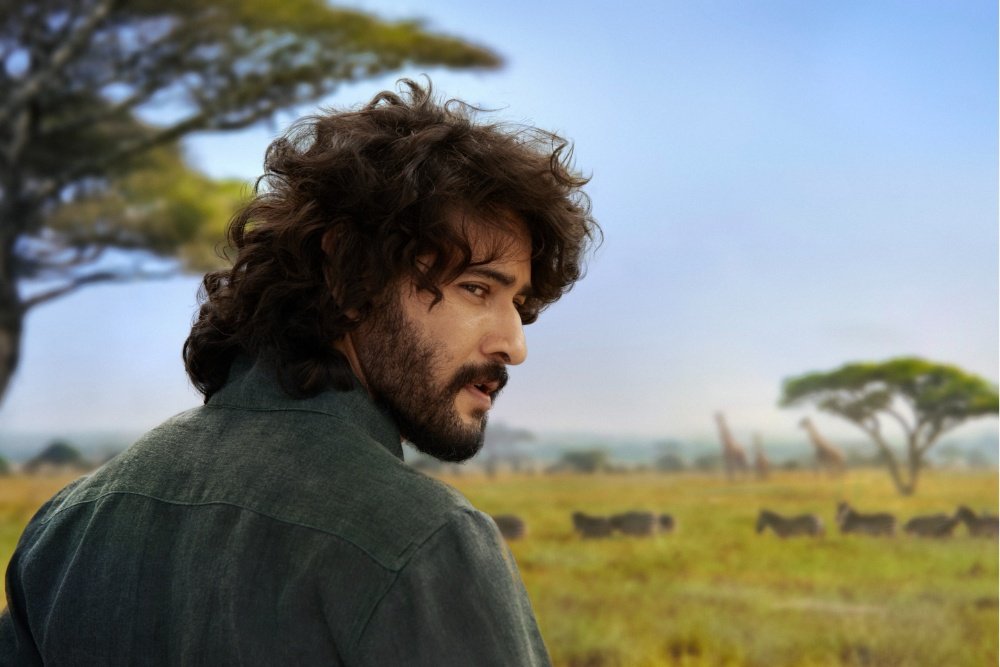
    Two new character stills of Mahesh Babu from S.S. Rajamouli‘s “Varanasi” were released Sunday to mark the actor’s birthday, showing his character Rudhra on location in Africa.

    The film’s story spans thousands of years and traverses multiple continents, with locations ranging from Antarctica to Africa to the titular Indian city. Babu plays the dual roles of the protagonist Rudhra and Hindu God Rama, Priyanka Chopra Jonas plays a character named Mandakini and the main antagonist Kumbha is played by Prithviraj Sukumaran.

    The images were shot at the Kilimanjaro and Maasai Mara locations, two of the African settings featured in the film. In one still, Mahesh Babu reclines on a bamboo raft in a jungle setting, dressed in a loose olive-toned shirt and dark cargo trousers, with tousled curly hair and a full beard. The other image shows him in profile against the African savannah, with giraffes and zebras visible in the background.

    Mahesh Babu – “Varanasi”

    Sri Durga Arts/Showing Business

    Rajamouli described the character’s dual nature in a note accompanying the stills. “Rudhra was born to fulfil a purpose much larger than himself. He carries a destiny he did not ask for. He is witty, he is vulnerable, and he is fierce. That is what Mahesh brought to him. Anyone can play fierce. Very few can play fierce and fragile in the same breath,” he said in an Instagram post.

    The director also reflected on the Africa shoot itself. “These frames are from our Africa schedule, and the land gave us something no set could. Shooting around Kilimanjaro and in the Masai Mara, I was stunned. There were mornings I felt even the 1.43:1 Imax frame could not hold what was in front of us,” he said.

    The stills mark the latest in a series of character reveals from the production, following images of Priyanka Chopra Jonas released for her birthday.

    Babu, who spent a year preparing for the role, underwent three months of Kalari martial arts training solely to adjust his posture for the character’s period-appropriate bearing. “I’m playing Lord Rama’s character, it required posture… you can’t stand like modern characters,” he has said to Variety.

    He also trained with a track and field team for several months to modify his running style. “When I saw the shot, I was really happy. It was worth it, because that six months of training for that one shot was really worth it,” he said. “The way I walked changed, the way I stood changed, everything changed.”

    “Varanasi” is Rajamouli’s follow-up to the Academy Award-winning “RRR.” M.M. Keeravani, who won the Oscar for “RRR’s” “Naatu Naatu,” is returning to score the new film.

    “Varanasi” opens in theaters worldwide on April 7, 2027.

  • Luca Guadagnino Explains Why He Just Had to Produce Giovanni Tortorici’s Coming-of-Age Drama ‘Ketticè’ in a “Sterile” Italian Film Landscape

    Luca Guadagnino Explains Why He Just Had to Produce Giovanni Tortorici’s Coming-of-Age Drama ‘Ketticè’ in a “Sterile” Italian Film Landscape

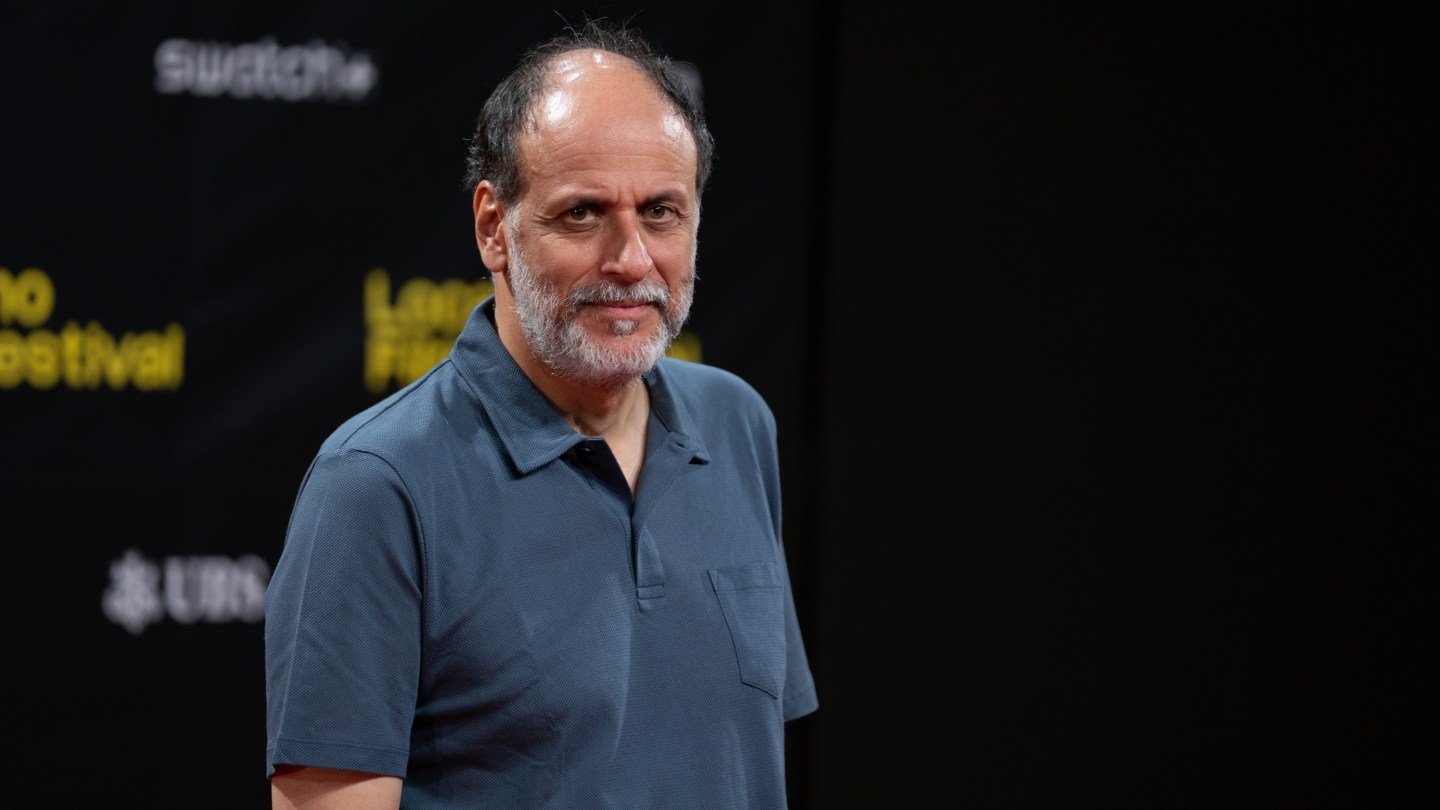
    Luca Guadagnino didn’t come to Switzerland to share updates on the drama surrounding his OpenAI movie, Artificial, during a meeting with reporters at the 79th edition of the Locarno Film Festival. No, he was in town to sing the praises of a protégé.

    To be precise, Guadagnino came to Locarno, in Italian-speaking Switzerland, to discuss Ketticè, the sophomore feature of his former assistant, writer-director Giovanni Tortorici (Diciannove). The coming-of-age drama stars Salvatore Gallina, Rachele Testagrossa and Monica Bellucci. And yes, the movie’s list of producers includes Guadagnino.

    Set in Palermo, Sicily in 2012, the era of media mogul-turned-politician Silvio Berlusconi, the movie revolves around Giulio, a listless and dissatisfied 16-year-old who drifts through his days without any enthusiasm for school and no real future prospects. But his encounter with Ketty, a more self-assured peer, offers him an escape from the monotony. The two form a close friendship, which a synopsis describes as “a shared refuge in their search for freedom, far from the judgmental gaze of the adult world.”

    The film’s title refers to Ketty’s nickname in the Sicilian dialect. Bellucci plays Giulio’s mother in an aristocratic Sicilian family that leaves her feeling oppressed. The cinematography is by Camilla Cattabriga, with editing by Marco Costa. PiperPlay is handling international sales.

    Guadagnino was asked by reporters about Italy’s rich cinematic history and if his decision to produce Tortorici’s movie was his way of keeping that tradition alive. “Most definitely,” he replied. “I think that we can agree that historically, Italian cinema, from the silent times until the ’70s, generated some of the most important personalities in the history of cinema, but also as an industry, had created a system that was the envy of many other countries. There were many different kind of films being made.”

    ‘Ketticè’

    Courtesy of Locarno Film Festival

    But then, something happened with “the advent of private TV and the Berlusconi empire,” Guadagnino offered. “It dried [up], and most of what was produced for cinema became TV. Genre was killed. A pretension on authorship became such that the great idea of cinema as authorship became basically people writing scripts and shooting their own scripts so that they could define themselves as authors.” In the end, “the movie industry shrunk and the perspective shrunk and the cinema of Italy became sterile and totally devoid of an idea of language and of an idea of life.”

    That’s where Tortorici comes in. “So when you meet a personality like Giovanni, who, of course, is an Italian filmmaker working in Italy, but I like to think that he’s a filmmaker, period, when you meet someone that is a complete rarity in the landscape of Italian cinema, you must protect it,” Guadagnino concluded. “You must make sure that every stone is not left unturned in order to give him the means to express himself. For me, introducing films such as Giovanni’s movies is a way to … set up a pavement into the future.”

    And he emphasized: “It’s about the mindset. The mindset means how you do your stuff, what stories you want to tell, how you understand reality, how you interpret reality. How you run away from falseness is intoxicating for all its truth, all its incredible, vivid reality.”

    As a producer, Guadagnino shared that he likes to watch a movie and experience it like anyone else in a movie theater. His audience take on Ketticè: “As an audience member, I feel the movie really speaks in a very universal way.”

    ‘Ketticè’

    Courtesy of Locarno Film Festival

    Tortorici said his film explores how institutions, such as school, family and the state, fail kids. “I think the guilty ones are the adults,” he told reporters. “I think they just live in a cultural context of the ultra-capitalist contest and a mediatic world.”

    Does Tortorici have any vision for his cinematic future after two autobiographically inspired films? “In my next movie, I’m going to explore something that is very far from me,” he offered. “Shooting this movie, I met a lot of people in Palermo, even coming from difficult neighborhoods with difficult life experiences. I find in these stories the possibility to continuing to explore this struggle of young people with authorities.”

    Continued Tortorici: “I think the big problem of society is the structure of, for example, the family. I think family is the structure that [creates] the next repressed person. So I would very much like to explore these different experiences in all parts of society, family in particular.”

  • Naseeruddin Shah, Gurvinder Singh Turn a Village’s Real Grief Into Locarno Competition Title ‘Rehmat’: ‘It’s Important That These Films Get Made’

    Naseeruddin Shah, Gurvinder Singh Turn a Village’s Real Grief Into Locarno Competition Title ‘Rehmat’: ‘It’s Important That These Films Get Made’

    The family living in the house that “Rehmat” uses as Rashid Ali’s ancestral home lost a son to a drug overdose shortly after Indian filmmaker Gurvinder Singh and his crew first met them.

    Singh tells Variety, “The actual family that lives there lost their 19-year-old son after we met them for the first time. When I looked at him, the first thought that ran in my mind was that he was on drugs. And he died of an overdose within two months. What else do I need to say? How can that not affect you as a filmmaker planning a film in that scenario. How can you avoid depicting such a state of affairs?”

    “Rehmat” has its world premiere in the Concorso Internazionale, the main competition of the 79th Locarno Film Festival. It is the only Indian feature in the section this year and will compete for the festival’s top honor, the Pardo d’Oro.

    Adapted from short stories by the Punjabi writer Ajeet Cour, “Rehmat” weaves three narratives set in present-day Punjab around themes of displacement and inherited grief. Singh says the material resonated with him directly through family history. “She has written about many themes, uprootedness being one of them, and she belongs to my grandparents’ generation that migrated from Lahore or other parts of west Punjab to Delhi,” he says. “That was the sort of affinity I had with her stories.”

    Three decades after he began documenting Punjab’s folk ballads and oral histories, and 15 years after his debut feature “Anhey Ghorhey Da Daan” premiered in Venice, Singh says the film has given him something he didn’t expect. “I never experienced the Partition, but did feel a sense of trauma during the years of militancy and the anti-Sikh carnage in Delhi in 1984,” he says. “Frankly speaking, this film offers me a closure. I feel it has brought out all that I needed to express about the divided land and its people.”

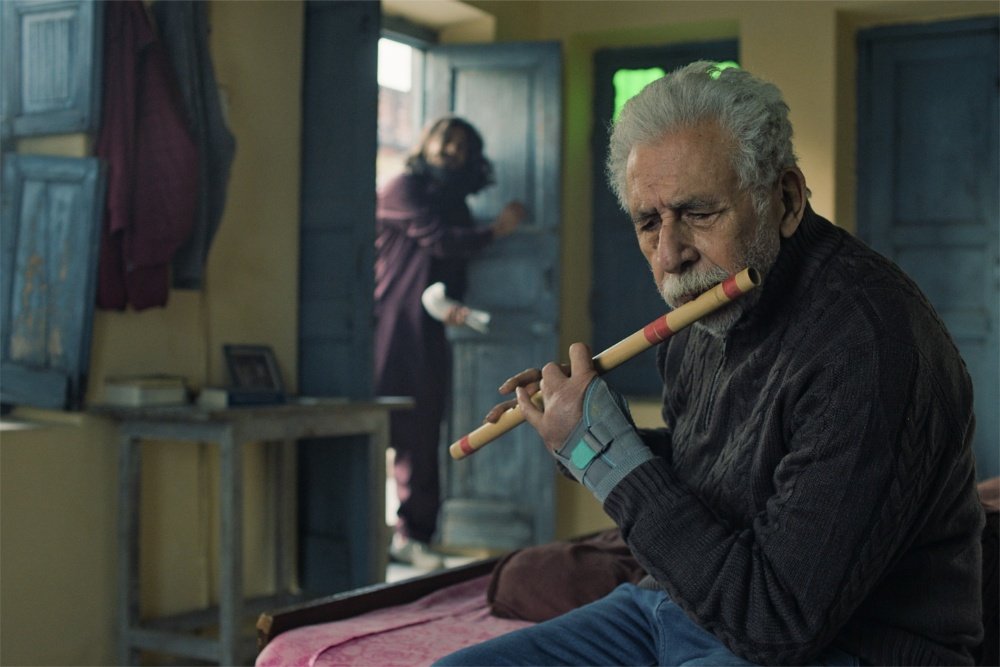
    The film stars revered Indian thespian Naseeruddin Shah as Rashid Ali, a Punjabi Muslim man whose family left before Partition and who returns to his birthplace after a lifetime in England. Shah says he committed to the role before knowing any of its specifics. “I’d seen and been deeply moved by Gurvinder’s films,” Shah tells Variety. “His cinematic sensibility and his take on the turmoil in his home state made profound statements. I just thought I’d like to be part of such films.”

    That leap of faith went both ways. Singh says, “I approached Naseer without having written the script, only having a vague outline of the character of Rashid in my mind. His acceptance gave me the possibilities to expand and flesh it, knowing the kind of conviction, intellect and charisma he will bring into it. The responsibility became a flight of imagination. It was a new territory for me.”

    Of working with Shah on set, Singh says, “I had decided that I would initially observe him in front of the camera and then figure out my approach. But I kept doing that and hardly needed to direct him,” describing how the actor’s “use of the body, gestures, handling of objects” turned Rashid “into his own personal expression.”

    Shah, who is not Punjabi and does not speak the language fluently, says, “I agree I don’t have the Punjabi heartiness and I don’t look Punjabi. But I think that helped to identify Rashid as an outsider. I don’t speak Punjabi fluently but practice helped.” On the ambiguity of a character who initially introduces himself to the village as God, Shah adds: “A character doesn’t have to be understood by the actor playing him. Actors aren’t psychoanalysts. One must be able to empathize with the character’s situation.”

    Singh’s preference for long, unbroken takes runs through the film, including the opening shot that establishes Seema’s world. Singh says, “The sense of uninterrupted time that the long take affords, both with the static and the mobile camera, is highly involving for me as a spectator, and my first instinct is to attempt that. But there are scenes where you know it will not be practical or even desirable, hence the montage has to be employed. Both create a different quality of attention and being. And perhaps life is also like that. Our ways of seeing and engaging keep altering.”

    Shah adds, “I love long takes. It fits beautifully with my stage work. Frankly I don’t believe there’s a great difference between stage and film acting if truth is what you’re looking to find.”

    Beyond the ancestral house, Singh says the village itself, with its crumbling 19th-century school building and untended lanes, reshaped the narrative during location scouting. Asked how he views Punjab today, Singh says, “Bleak from the perspective of lack of imagination among the youth or those of my generation, not because of any lack of compassion. People are sticking to the glory of ownership of land and the caste they belong to. It has given them a false sense of bravado and entitlement. And the gender discourse is abysmal, especially in the villages. No wonder so many young girls are escaping to the West.”

    Alongside Shah, the cast includes Suvinder Vicky, Mita Vashisht, Navjot Randhawa and Diya Kamboj, plus the celebrated Punjabi poet Jaswant Zafar, making his screen acting debut at 60 as Harjap. Of casting Zafar, Singh says, “Whenever I have cast a non-actor in a major role, it is fully knowing that the person will play himself or herself on screen. So Zafar became Harjap for me. He has all the natural qualities I had imagined in Harjap and a profound sense of the feelings that he carries, both as a common man and as an intellectual.”

    “Rehmat” is produced by Singh and Arpana Caur, with Andrei Cosmin Illes and Némésis Srour serving as co-producers. The film is a co-production between India’s Vahao Studio and Paris-based Pavo Films, the outfit Illes and Srour launched earlier this year, with “Rehmat” as its debut project.

    Shah, whose career stretches back to the parallel cinema movement of the 1970s, says, “My early work prepared me for a film like this. I think Gurvinder has surpassed other contemporary filmmakers in India.” Of the film’s Partition-era subject matter, he says, “I believe it’s important that these films get made. Even if not widely seen now, they will remain as a testament.”

    Asked what he’s working on next, Singh says, “I am not sure what I want to do after this. I came to the cinema through some conspiracy of the universe. I grew up painting and writing. I am painting again these days.”
  • ‘Donkey Princess’ Review: A Princess Escapes the Kingdom, but Not the Patriarchy, in an Inventive, Shape-Shifting Fairytale

    ‘Donkey Princess’ Review: A Princess Escapes the Kingdom, but Not the Patriarchy, in an Inventive, Shape-Shifting Fairytale

    Chilean duo Cristobal León and Joaquín Cociña made a dream nightmare debut with “The Wolf House,” a stop-motion fantasy that turned heads both with its wholly original design — incorporating claymation, puppetry and papier-mâché to palpably handmade but immersively surreal effect — and its trajectory from a seemingly juvenile storybook premise to very grownup recesses of horror and trauma. Their 2024 follow-up “The Hyperboreans” captured fewer imaginations with its dense, narratively abstruse melange of history, psychology and political theory, but still dazzled with technique, adding live-action cinematography to the filmmakers’ varied visual quiltwork. In their beguiling third feature, “Donkey Princess,” León and Cociña split the difference between their first two, continuing their singular exploration of hybrid live-action cinema, but fruitfully returning to adult fairytale terrain.

    Premiering in the international competition at Locarno, this is distinctive, aesthetically rich filmmaking that consolidates its helmers’ auteur status, and has the right balance of accessible and avant-garde components to ensure a life beyond the festival circuit — though the substance of its story lingers slightly less in the mind than its remarkable presentation. “Donkey Princess” doesn’t quite match “The Wolf House” for darkly enveloping atmosphere and gnawing emotional impact, but not much does; still, its portrayal of a mythic princess, whose tortured daddy issues follow her even after she’s spirited into the real world, builds to a climax both touching and disquieting.

    As suggested by the title, the script (written, like “The Wolf House,” by the directors in collaboration with novelist Alejandra Moffat) riffs on the 17th-century Charles Perrault tale “Donkeyskin” — not one that Disney ever dared touch, giving its discomfiting incest-themed premise, though Jacques Demy gave it delightfully offbeat film treatment in 1970. More downbeat in its whimsy, “Donkey Princess” centers on Princess Diana (“Hyperboreans” star Antonia Giesen), who doesn’t bear any resemblance to her famous British namesake, save for the fact that she’s suffocated by the demands of her very patriarchal kingdom.

    Said kingdom is realized in a mixture of animated imagery and winningly ramshackle production design by Natalia Geisse: toadstool-shaped castle turrets rendered in what looks like cake frosting, fiberglass mountain formations and forests forged from stray, dry branches, accessorized with the odd flurry of 2D cartoon butterflies and birds. (Fans of the directors’ stop-motion interlude in Ari Aster’s “Beau is Afraid” will spot some familiar landscape textures here.) Tinted in queasy shades of turquoise and puce, it does not look like a world made to last, and for Diana, it isn’t. Guarded obsessively by her father (Francisco Melo) since her mother’s untimely death, she yearns for escape from his clutches; when she meets charming commoner Lalo (Andrew Bargsted), she falls swiftly in love, both with him and the prospect of life outside the royal court.

    For the King — who really has taken very badly to widowed life, having outlawed love throughout the land — this will not do. Lalo is swiftly banished to an orange-skied hellscape strewn with thorns and vultures: a witty fusion of silhouette animation and tactile set construction. Before he goes, however, he gives Diana a bracelet said to grant wishes across space and time; in short order, she’s transported to the urban bustle of contemporary Chile. There, she and Lalo live together as parallel versions of themselves, also working alongside each other in the pest control business. If this seems a pretty compromised happily-ever-after, there’s also the fact that her father, too, has been teleported to this new realm: an aging invalid stripped of his powers, but still plenty burdensome.

    That’s not the last dimensional shift in “Donkey Princess,” as Dina is shuffled through various lives and personae, but is never quite free or happy in any of them: The naïve yet despairing time-travel mechanics of Bertrand Bonello’s recent “The Beast” come to mind here, as its various temporal paths do eventually converge into a single, climactic tragedy, with the open-ended possibility of freedom. León and Cociña’s storytelling style can be opaque — the film’s opening salvo, in particular, feels hurried and scrambled — but it gains in grace and clarity, with a concluding shift in register toward near-total realism. That’s the biggest surprise from these most feverishly world-building of filmmakers, even if their most satisfying feature to date remains their most animated one. “Donkey Princess” might lack “The Wolf House’s” intensity of vision and purpose, but it feels an intriguingly transitional work in an oeuvre that could go anywhere from here.

  • ‘Heated Rivalry’ Author Rachel Reid Pushes Back Against Season 2 Casting Criticism

    ‘Heated Rivalry’ Author Rachel Reid Pushes Back Against Season 2 Casting Criticism

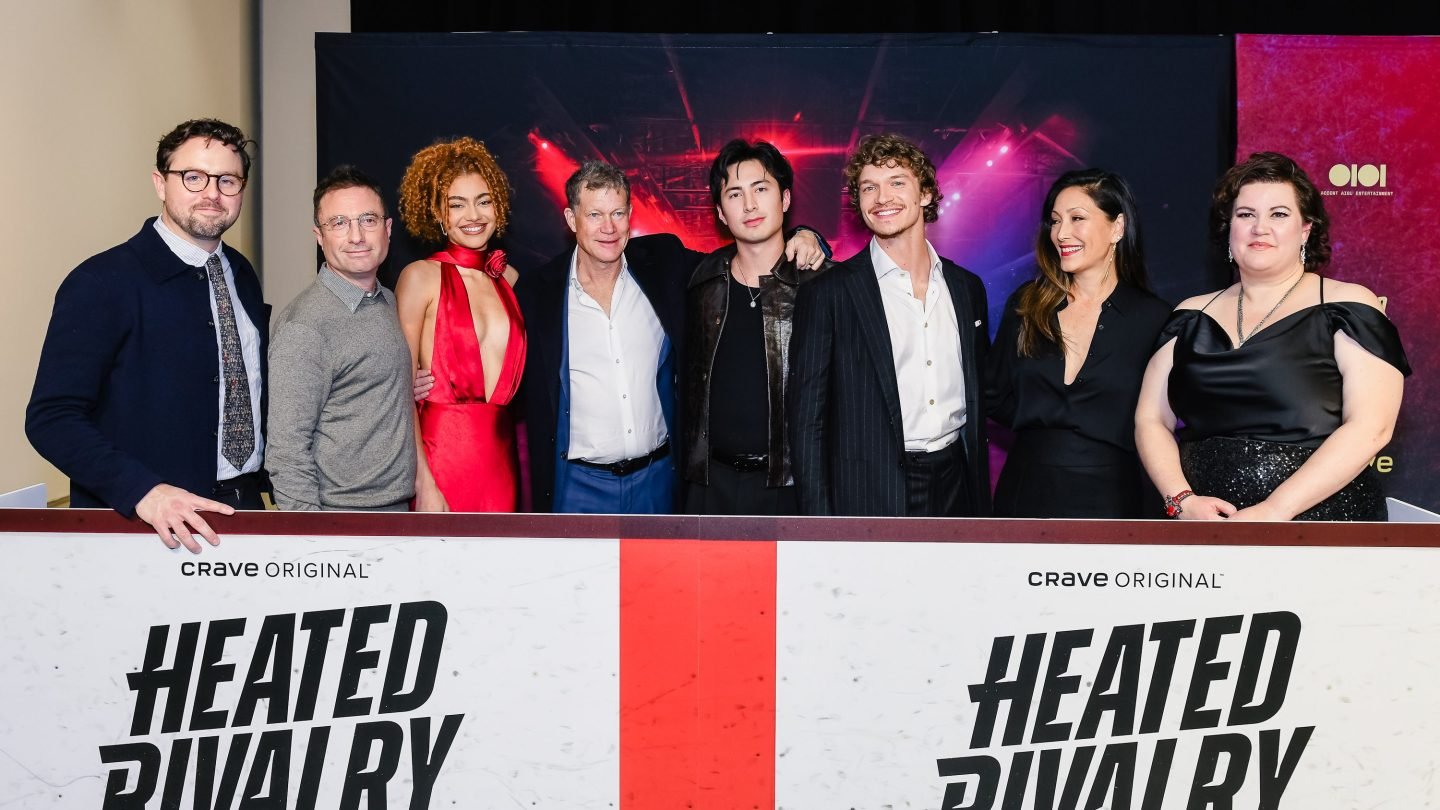
    Rachel Reid is pushing back against negative comments about Heated Rivalry‘s latest season two casting.

    The author, who wrote the novels that the show is based upon, took to Instagram Friday to weigh into online debate about the casting of the characters Troy Barrett and Harris Drover in the upcoming season. It was announced Friday that Charlie Gillespie was cast as Troy, a professional hockey player who is traded to the Ottawa Centaurs in Reid’s source material, while Justice Smith was cast as Harris, the team’s social media manager.

    “Thinking about all the people last summer who told me the casting for Ilya and Shane was wrong and bad…” she wrote on an Instagram story.

    Some fans online were criticizing the decision to cast a “skinny” actor to play the character of Harris, who was described as chubbier than the hockey players of the book.

    Harris and Troy’s budding relationship drives Reid’s novel Role Model, the fifth installment of her Game Changers series, which Heated Rivalry the series is based on. “Rachel Reid has given us two beautifully layered characters in Harris and Troy who you can’t help but root for,” showrunner Jacob Tierney and executive producer Brendan Brady said in a release about the casting.

    “From the start of the casting process, we knew we were looking for actors who could create something truly special together and bring that same depth and heart to the screen. Justice and Charlie do exactly that,” the statement continued. “They immediately connected with the vulnerability and resilience at the core of these characters, bringing an instinctive understanding of who Harris and Troy are.”

    Ottawa is expected to be the season two home for main character Ilya Rozanov, played by Connor Storrie, who moves to the low-ranking Canadian team. The Russian hockey player made the decision to move to the team in the finale of the show’s first season to be closer to Heated Rivalry’s other main character and his now-boyfriend, Shane Hollander, played by Hudson Williams.

    Crave renewed Heated Rivalry for a second season early into the show’s first season run. HBO Max has confirmed it will continue to air the series. The show will begin shooting its second season this month and is aiming for a spring 2027 release.

    Tierney serves as writer, director and executive producer on the series. Brady and Jayme Alter Wilson serve as executive producers, alongside Lori Fischburg and Liane Cunje as producers. Reid serves as a consulting producer. Mike Goldbach joins season two as co-writer alongside Tierney.

  • The ‘One Night Only’ Writer and Producer Have Seen Your Questions and Have (Some of) the Answers

    The ‘One Night Only’ Writer and Producer Have Seen Your Questions and Have (Some of) the Answers

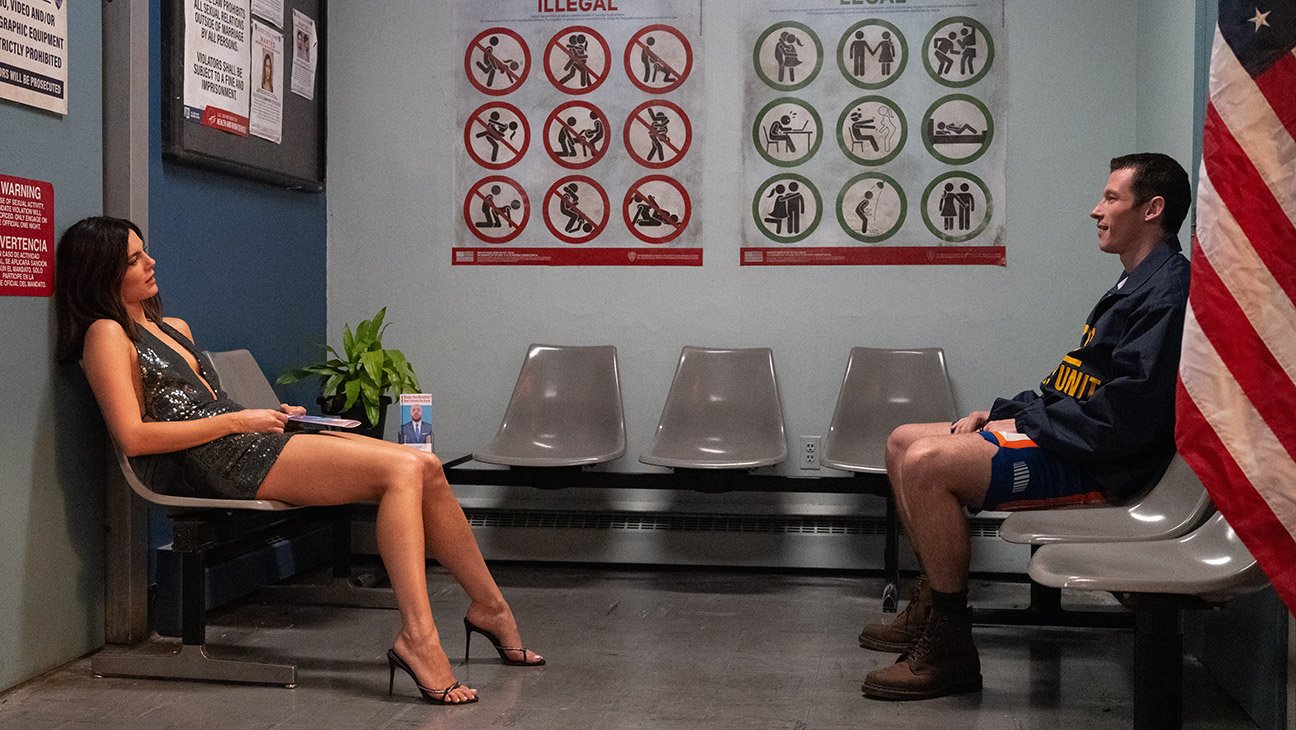
    Ever since the official trailer dropped for the Callum Turner–Monica Barbaro rom-com One Night Only, quickly racking up millions of views on its way to its nearly 40 million total, internet commentators have had a lot of questions about the film’s central premise in which premarital sex is illegal apart from one 12-hour period a year.

    How is this law enforced? Are people breaking the law? How did this legislation pass? What counts as “sex” under this new mandate? Are marriage (and divorce) rates skyrocketing? What about affairs?

    Rest assured: Some of those questions are answered in the movie, and explanations are starting to trickle out online for those unconcerned about spoilers. Beyond that, One Night Only writer, Travis Braun, who saw his screenplay top the 2024 Black List, has answers, but they’re not all in the Will Gluck-directed Universal movie now in theaters.

    “I set out to write a movie about the circus that is modern dating, and I thought how fun if we could set that all in one night, and I have answers to those questions, and some of them are in the movie,” Braun told The Hollywood Reporter at the One Night Only premiere earlier this week in New York.

    Braun said he definitely thought about the specific rules of the film’s alternate reality, framed as three years on from the no-sex act being passed, but didn’t want to get too deep into the politics of the world of the movie.

    “There’s a big mythology that I’ve built out and then as you develop a movie you start to pare down and you go: What does an audience really care about, and what are they showing up to see? For me the answer is always a love story, romance,” he told THR. “I hope they can come in and we’ll show them how this world functions, and then they can just enjoy the movie and have fun. The whole focus of this was love story and romance first, and the world-building obviously has to make sense and has to be there, but ultimately we weren’t interested in getting into the politics of it. We wanted to tell a story about these two incredible people trying to find love on this crazy night.”

    Producer Jacqueline Monetta, who brought Braun’s script to Gluck, said they didn’t want moviegoers to have all of the answers.

    “I had a million questions. I was like, ‘What does this mean? What does this world look like? How do people communicate? What’s different?’ And that’s I think what’s so smart about it,” she said of One Night Only‘s “big idea, high-concept” premise. “We don’t answer every question in the movie, purposefully, because we want those questions to be had on the car ride home. We want people to keep talking about it and really think about what would this mean for our world, what does it mean for our world now. But I think Will and I were really specific on what questions we wanted to answer.”

    In a recent Reddit AMA, Gluck also detailed how he and his team approached the world building of the movie while not wanting it to be all about the mandate and offered prospective moviegoers hints for where to find the answers to their questions.

    “We spent a lot of time talking about the rules of the world, and if you’ve seen the movie, or when you see the movie, you’ll see that the rules of the world and the world building are all in the background,” he said. “It’s on TVs, signage, in thrown-away lines, because we didn’t want to give the world short shrift, but we didn’t want the movie to be about that. It’s another way I want people to see this. If they see it more than once, they’ll pick up so many more rules of the world in the background. A lot of the questions that I’ve been getting after people have seen the movie are actually answered in the movie, which is by design because I want people maybe not to know them. So, yes, it was a tricky tightrope to have them there, but not for the movie to be about it.”

    Turner meanwhile echoes Braun’s advice for curious prospective moviegoers: “Go see the film!”

    “You’ll realize pretty quickly what the realm is that you’re working within and it’s a comedy,” Turner says of what inquisitive filmgoers will find. “There are no great political undertones, I don’t think. This is just a place where you can escape for an hour and a half, two hours and enjoy and laugh your head off.”

    One Night Only is now in theaters.

    Callum Turner and Monica Barbaro at the One Night Only premiere on Monday.

    Roy Rochlin/Getty Images for Universal Pictures

  • Whitney Houston’s Sister-in-Law Pat Houston Personally Approved Singer’s New Barbie Doll

    Whitney Houston’s Sister-in-Law Pat Houston Personally Approved Singer’s New Barbie Doll

    If you purchase an independently reviewed product or service through a link on our website, The Hollywood Reporter may receive an affiliate commission.

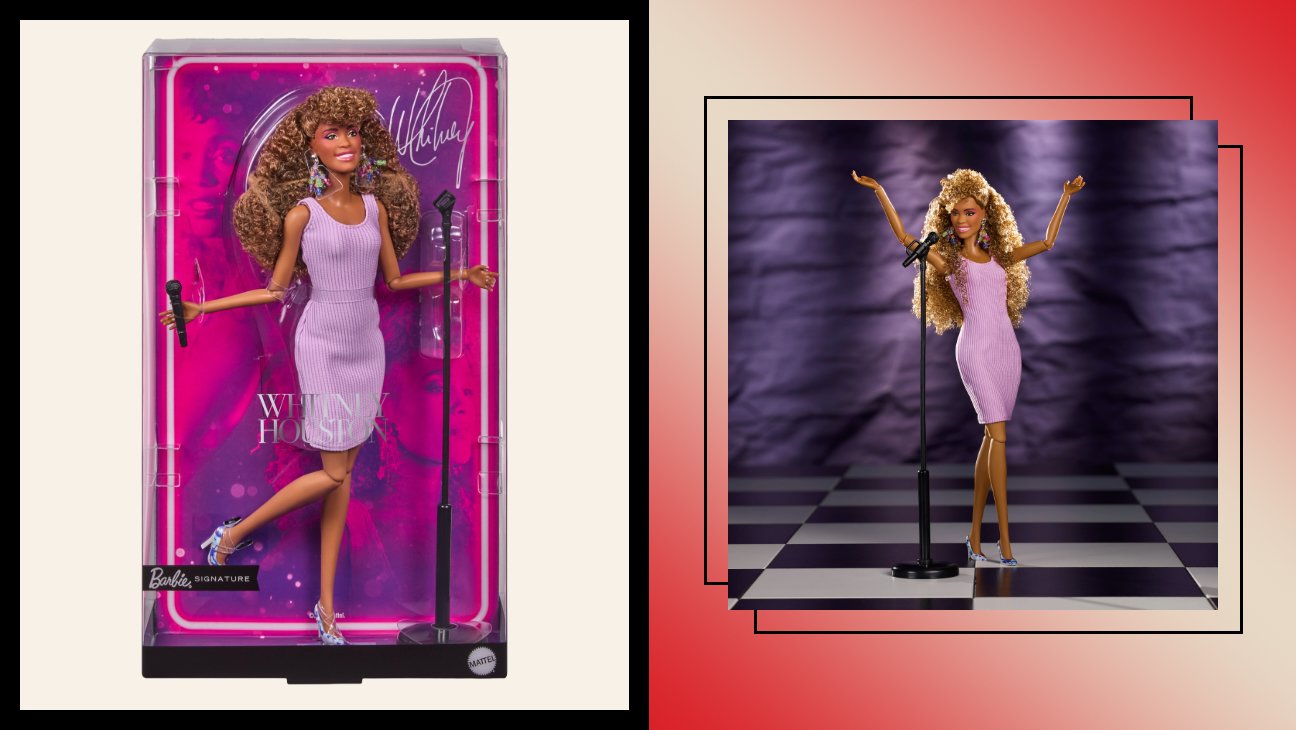
    One of the greatest artists of all time is adding another honor to her legacy, as Barbie unveils an official Whitney Houston doll, available to buy online now.

    The Whitney Houston Barbie Signature Doll captures the singer’s memorable look from her “I Wanna Dance with Somebody (Who Loves Me)” music video, complete with a purple tank dress, iridescent heels and colorful beaded drop earrings. The singer’s big hair is an instant nod to the 80s era (the song was released in 1987), as is her purple and gold eye makeup. The collectible doll comes with a black microphone and mic stand.

    Mattel

    OFFICIAL COLLECTIBLE

    The Whitney Houston Barbie is an officially-licensed release from Mattel and the late singer’s estate. The doll comes in a collectible window pane display box, with images of the singer and her signature in the background. The MSRP is $60.

    Mattel says it worked closely with Pat Houston, the singer’s sister-in-law, throughout the creative process, adding that she helped to “shape the doll’s design” and gave “thoughtful details” into what the finished Barbie doll should look like (Pat Houston is married to Whitney’s brother Gary, and she is the executor of The Estate of Whitney E. Houston, and president of the Whitney E. Houston Legacy Foundation).

    In a press release, Pat Houston thanked Mattel “for making one of Whitney’s dreams come true,” adding that “we celebrate more than the release of a doll, we celebrate the enduring legacy of an icon.”

    “The new Whitney Houston Barbie honors a woman whose voice, grace, beauty, and spirit inspired generations around the world,” she says. “May this doll remind every child and every collector that dreams have no limits, excellence leaves a lasting imprint, and true greatness never goes out of style.”

    Amazon

    GET THE ALBUM

    It’s been more than four decades since Houston burst onto the music scene with her self-titled album in 1985. “I Wanna Dance With Somebody,” meantime, was taken from her 1987 album, Whitney, and quickly became one of the singer’s signature anthems. The music video was also an instant hit on MTV and BET. The song went on to win the Grammy Award for Best Pop Vocal Performance, and its legacy has continued to this day, with “I Wanna Dance With Somebody” topping Billboard’s list of the 500 Best Pop Songs of All Time, among other accolades.

    “I Wanna Dance With Somebody” was also the name of the well-received 2022 Houston biopic, which starred Naomi Ackie as the music legend.

    Amazon

    WATCH THE FILM

    The film is streaming free on Prime Video, though you can also rent it or purchase the movie on Blu-ray (the Blu-ray disc includes a digital code that you can redeem for a download of the film online).

    The Whitney Houston Barbie doll was officially unveiled on August 8 at the 5th Legacy of Love Gala, an annual charity event hosted by the Whitney E. Houston Legacy Foundation in Atlanta. The doll is sure to be an instant collectible for Houston fans and pop culture fans alike. You can find it on sale online through Amazon and Walmart.

    Houston’s Barbie doll comes on the heels of other musician Barbie releases, including a Miley Cyrus edition and a Kylie Minogue doll, both of which were released this year. Other musicians who have been honored with a Barbie doll in the past include Diana Ross, Tina Turner and Elton John.

  • Andrew Lloyd Webber Is ‘Gutted’ on ‘Cats: The Jellicle Ball’ Closing Night: Producing on Broadway Is ‘Unsustainable’

    Andrew Lloyd Webber Is ‘Gutted’ on ‘Cats: The Jellicle Ball’ Closing Night: Producing on Broadway Is ‘Unsustainable’

    Ahead of tonight’s final “Cats: The Jellicle Ball” show, composer Andrew Lloyd Webber is speaking out about how producing on Broadway has become “unsustainable.”

    “I’m gutted that the wonderful Broadway production of ‘Cats: The Jellicle Ball’ is closing today,” Lloyd Webber wrote on Instagram. “I’m immensely proud to have been a part of an incredibly daring production whose cast and creative team broke new ground on Broadway and gave 17 actors their Broadway debut.”

    He also took the opportunity to call out the larger issues affecting the industry: “Maybe the show’s closing just might be remembered as the moment that caused everyone involved with Broadway to come to their senses and address the unsustainable cost of producing and running any new show now on The Great White Way, let alone doing new work.”

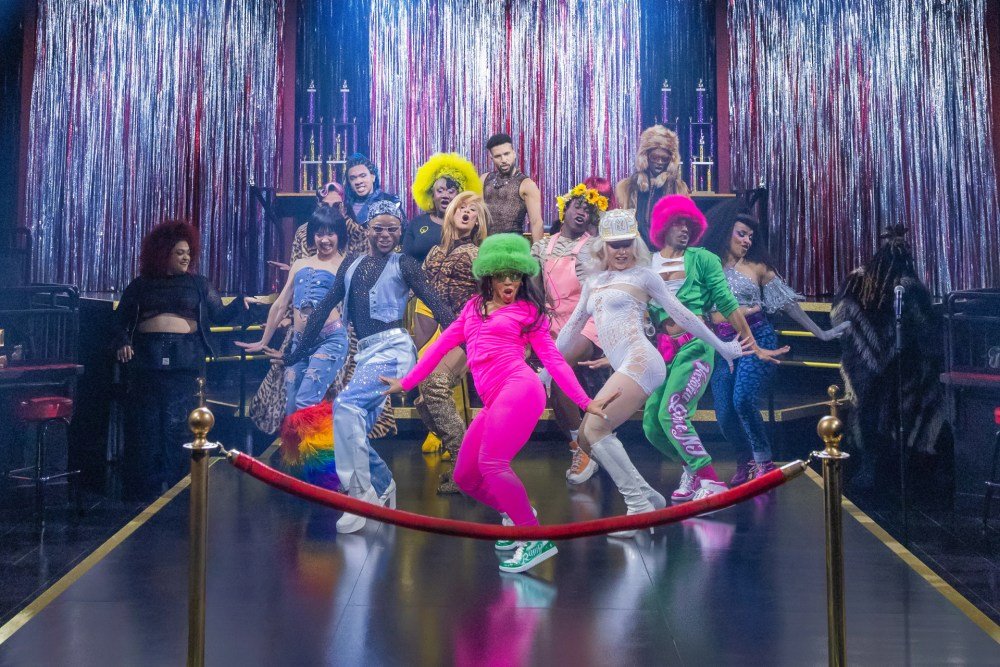
    “The Jellicle Ball” breathed new life into “Cats” by restaging the popular show as a fierce competition between drag performers. Webber’s original show premiered on Broadway back in 1982 and ran through 2000, winning seven Tony awards. In 2019, it was infamously turned into a critically panned film from “The King’s Speech” director Tom Hooper.

    But despite the Tonys awarding “The Jellicle Ball” three awards for best costume design, best direction of a musical and best choreography, strong reviews and online buzz didn’t stop the show from closing five months before planned at the Broadhurst Theatre.

    “The Jellicle Ball” started as an off-Broadway production in June 2024. When it premiered on Broadway back in April, the show was initially earning between $900,000 to $1 million a week. But those numbers dropped sharply after “The Jellicle Ball” lost the best revival of a musical Tony Award to “Ragtime.”

    This isn’t the first time Lloyd Webber has spoken out about the show’s premature end. In July, he wrote on Instagram: “Without action, Broadway risks rivaling Hollywood’s empty soundstages: increasingly dark theatres where bold new work once lived.”

    “The painful truth is that, with things as they are, bringing almost any new show to Broadway makes little financial sense,” Lloyd Webber continued. “The costs are immense. Creators, writers and directors are often forced to accept minimal royalties simply to get work staged.”

    Next up, Lloyd Webber and “Sunset Blvd.” director Jamie Lloyd are working on bringing “Evita” with Rachel Zegler to Broadway after its successful West End run.

  • Gina Prince-Bythewood Discusses the Worldbuilding of ‘Children of Blood and Bone’ and Praises Author Tomi Adeyemi as a ‘Genius’

    Gina Prince-Bythewood Discusses the Worldbuilding of ‘Children of Blood and Bone’ and Praises Author Tomi Adeyemi as a ‘Genius’

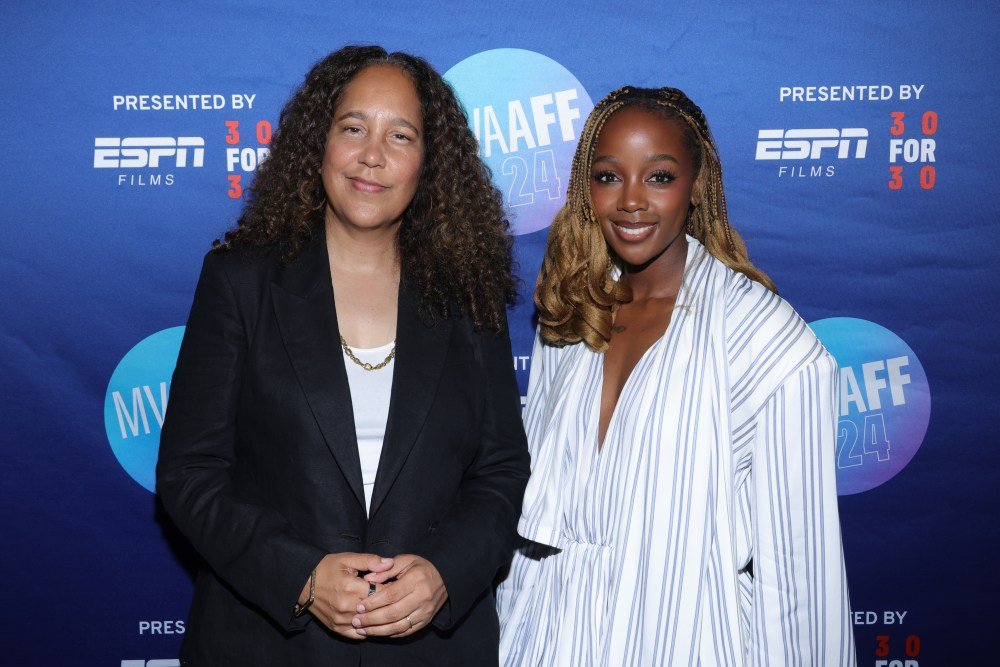
    For the opening night of the 24th annual Martha’s Vineyard African American Film Festival (MVAAFF), “Children of Blood and Bone” director Gina Prince-Bythewood and star Thuso Mbedu shared never-before-seen clips of the forthcoming African fantasy film and dished about making the movie.

    “Obviously films like this don’t get made very often,” Prince-Bythewood told “The View’s” Sunny Hostin during the Q&A. “They say 70% of directing is casting, and that’s what this was. To be able to put together a cast like this. There are no skips. Everybody is amazing. … And as I was working on the script, I started to envision people that I wanted.”

    Based on Tomi Adeyemi’s acclaimed 2018 novel of the same name, Paramount’s “Children of Blood and Bone” was shot on location in South Africa, which subbed in for the fictional kingdom of Orïsha, where magic has been prohibited. There, the logline explains, “a young woman goes on a quest to reclaim the magic that was violently stolen from her people. She and her brother ally with the daughter and son of the king to fight back against his brutal rule.”

    Mbedu (“The Underground Railroad,” “The Woman King”) stars as Zélie Adebola, the young woman in question, who has the power to command the undead. Starring alongside her are Damson Idris as Prince Inan, Amandla Stenberg as Princess Amari, Tosin Cole as Zélie’s brother Tzain and Regina King as Queen Nehanda. Lashana Lynch, Idris Elba, Cynthia Erivo and Viola Davis round out the A-list cast.

    Mbedu was thrilled to return to her native South Africa to work, and she began preparing for the role — including her stunt training — nearly one year before filming began. “I leaned into the source material a lot,” she said. “I don’t know how many times I read and reread the book, putting it next to the screenplay.” (Prince-Bythewood and Adeyemi share screenplay credit.)

    “Tomi created a massive world, a huge world,” Mbedu continued. “We don’t have enough hours to put everything on screen. So finding the moments where, even if we’re not seeing it on screen, how am I bringing the reality of the history or the backstory of what we might have meant into the next moment.”

    Thuso Mbedu, Gina Prince-Bythewood and Sunny Hostin attend the “Children of Blood and Bone” clips and conversations event during the Martha’s Vineyard African American Film Festival in Oak Bluffs, Mass.

    Arnold Turner/Getty Images for Paramount Pictures

    Though the film does not debut until Jan.15, 2027, Adeyemi, who also served as an executive producer on the film, recently announced that she will not watch the finished product. On social media, Adeyemi shared that she left the “Children of Blood and Bone” set “hyperventilating and sobbing” and that she is “still being antagonized behind the scenes.” Neither Prince-Bythewood nor Mbedu directly addressed Adeyemi’s claims at MVAAFF, but the director of “The Woman King” did speak positively about the novelist and the world she crafted.

    “Tomi’s a genius,” Prince-Bythewood said. “It’s a beautiful book, incredible characters. And this time when I read it, I was so connected to Lali’s character. And this young woman who was fighting to bring magic back- and we know what magic means for us. And her resilience, her fight and her search for purpose just spoke to me.”
    ​
    The “Love and Basketball” director also spoke about casting Stenberg as Princess Amari. When the actress’ hiring was announced, there was an outcry over allegations of colorism due to Stenberg’s mixed-race status and lighter skin tone. Additionally, in a now-deleted TikTok video [via the L.A. Times], Adeyemi posted what appeared to be a group chat that included Stenberg. The author wrote, “Do not ever use my name in an interview or video again. Do not text me. Do not call me” and appeared to block the actor. Prince-Bythewood did not address the drama onstage.

    “I’ve admired [Amandla’s] work since ‘Colombiana,’” Prince-Bythewood told Hostin and the MVAAFF audience. “But I auditioned every young actor for that role of Amari, and Amandla took it, grabbed it.”
    ​
    Though the “Children of Blood and Bone” premiere is still several months away, “The Old Guard” director is content to let the work speak for itself until then.

    “You’re going to feel every human emotion in this,” she said. “You’re going to be angry, you’re going to laugh, you’re going to cry, you’re going to dance, you’re going to cheer, you’re going to feel hope at the end. And that’s why I hope we go to movies, to feel something, to be moved. So I’m so excited about that. And as we know, these films are rare. I’m so proud of this movie, so excited about this movie and the thing that it can do for us when we see ourselves in this way.”