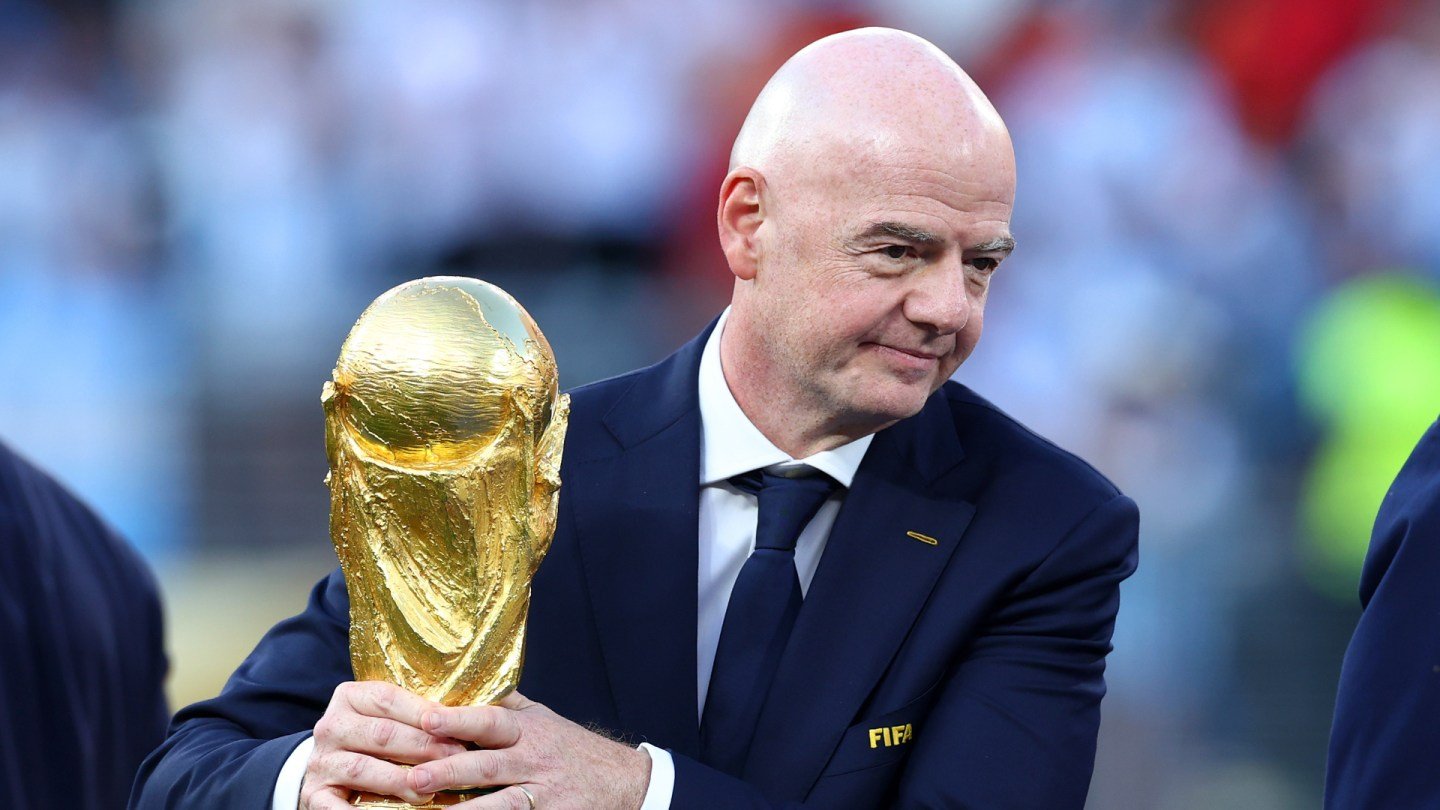
FIFA president Gianni Infantino appears to have snatched defeat from the jaws of victory.
A month after the final of 2026 World Cup, which earned FIFA a record $15 billion in revenues, Infantino is fighting to keep his job. His controversial plan to sell off a stake in the World Cup to a group of private investors led by Joshua Kushner, the brother of President Trump’s son-in-law Jared Kushner, sparked a global backlash that shows no signs of abetting. The past week, soccer legends, sports authorities and even world leaders have called for Infantino to resign.
“Infantino must go,” wrote Portuguese soccer legend Luis Figo in an op-ed for the Daily Mail. “The Infantino era is over,” added Javier Tebas, president of Italy’s La Liga, an interview with French newspaper Le Monde. “It should be fatal,” said Canadian Prime Minister Mark Carney, on Infantino’s misstep with the sell-off plans. “Certainly I don’t have confidence in Mr. Infantino.”
The pile on has continued despite Infantino dropping his plan, officially ditching the proposal on July 31. The deal would have seen FIFA, a 96-year-old nonprofit, spin off its commercial interests into a new division, FIFA Forward Enterprise (FFE). Kushner’s private equity group Thrive Capital would then buy a 21 percent stake in FFE for $4.2 billion. FIFA had argued the arrangement would raise billions to fund global sports development.
European soccer body UEFA called it an attempt to sell “the soul” of soccer and threatened to boycott future FIFA tournaments if the deal went through. The Asian Football Confederation and CONCACAF, which represents national organizations in North America, Central America and the Caribbean. also rejected the proposal.
FIFA quickly backed down. UEFA has not. Last week it said its boycott is still in place. The group reiterated its position that it has “lost confidence in Gianni Infantino’s presidency.” UEFA’s boycott will be tested at FIFA’s Under-20 Women’s World Cup, which kicks off in Poland Sept. 5.
On Friday, Norwegian soccer association directly called for Infantino to resign. “The trust is now gone for us,” Norwegian Football Federation president, Lise Klaveness, told The Guardian. “There is no way back for Infantino.”
Adding to the pile on was a report on Friday that a female employee alleged to have been in a relationship with Infantino when he was general secretary at UEFA, received a six-figure “departure payment.” UEFA confirmed the payment but FIFA said the allegations of inappropriate conduct by Infantino are “categorically untrue” and “defamatory,” adding that “no employee at UEFA and FIFA has ever raised a complaint regarding Mr Infantino’s behavior because there never was an incident where he was involved.”
FIFA on Saturday fired back at Infantino’s critics, accusing them of trying, “through allegation, insinuation or misinformation” to undermine “FIFA’s established democratic processes” by trying to oust Infantino before presidential elections next March.
UEFA is reportedly seeking support from other soccer confederations to call an emergency FIFA Congress to trigger a vote of no confidence in the president. UEFA, with 55 members, easily meets the threshold of 43 votes to call an emergency meeting. To topple Infantino, however, would require a majority of FIFA members, or 106 of the 211 national associations. The Confederation of African Football and South American confederation CONMEBOL have both publicly announced their backing for Infantino. Last week, Mexico broke with North American confederation CONCACAF to support FIFA’s beleaguered president.
The pressure is mounting on Gianni Infantino, but there is still time on the clock for him to turn this defeat back into a win.
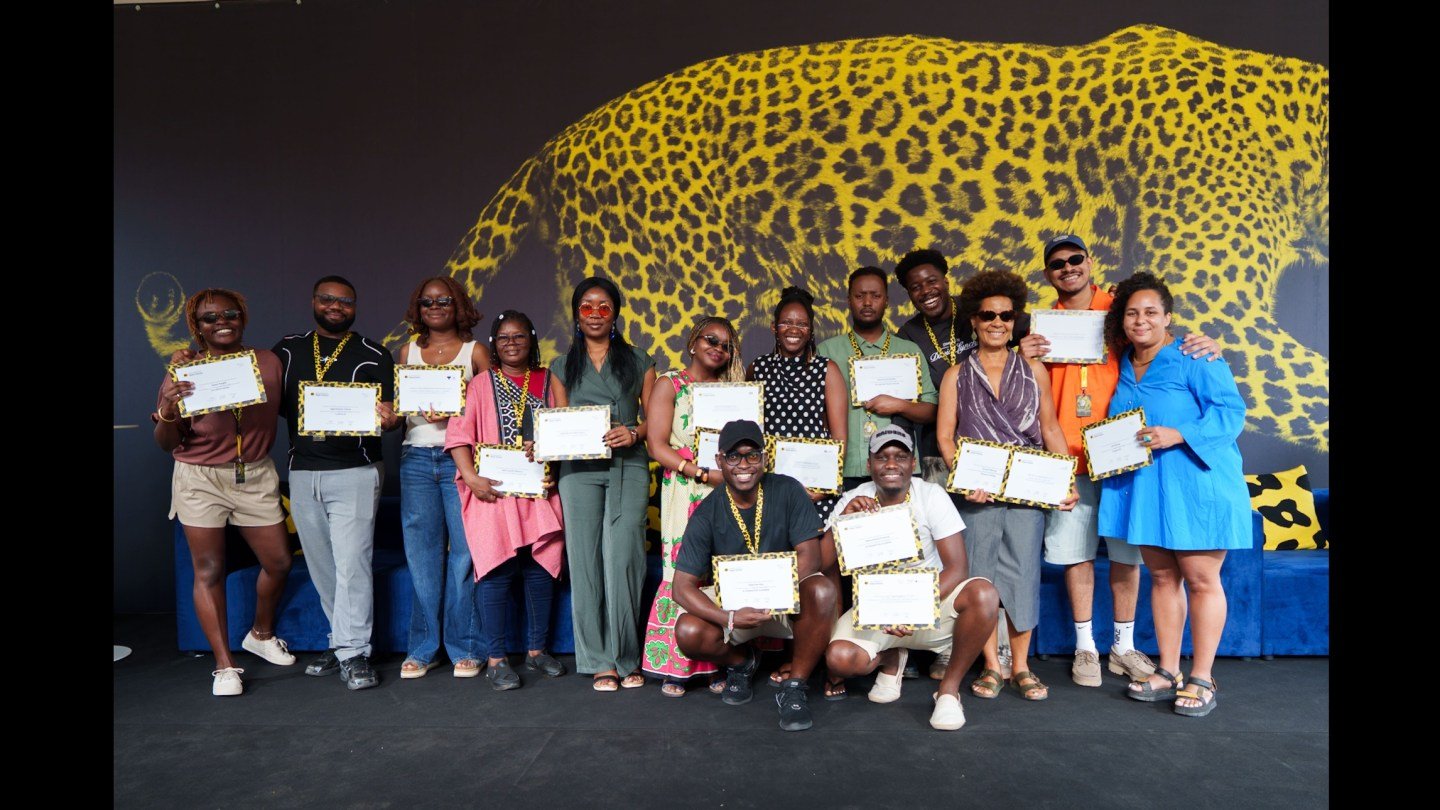
Open Doors, the Locarno Film Festival’s Locarno Pro-organized co-production platform and talent development program for filmmakers from regions where artistic expression is at risk, has wrapped up its 24th edition, its second with a focus on the African continent. And on Monday, its winners were unveiled.
Following a three-year cycle dedicated to Latin America and the Caribbean, the program’s current focus is on voices from Africa through its Projects, Producers, and Directors programs. It provides training, mentoring, and networking opportunities.
Open Doors Grant A total of CHF 50,000 sponsored by visions sud est (with the support of the Swiss Agency for Development and Cooperation), the City of Bellinzona, and the Open Doors initiative.
CHF 20’000 to A Vineyard for A Lobster by Talemwa Pius, produced by Emmanuel Gashumba (Gripmagic Uganda Limited), Uganda.
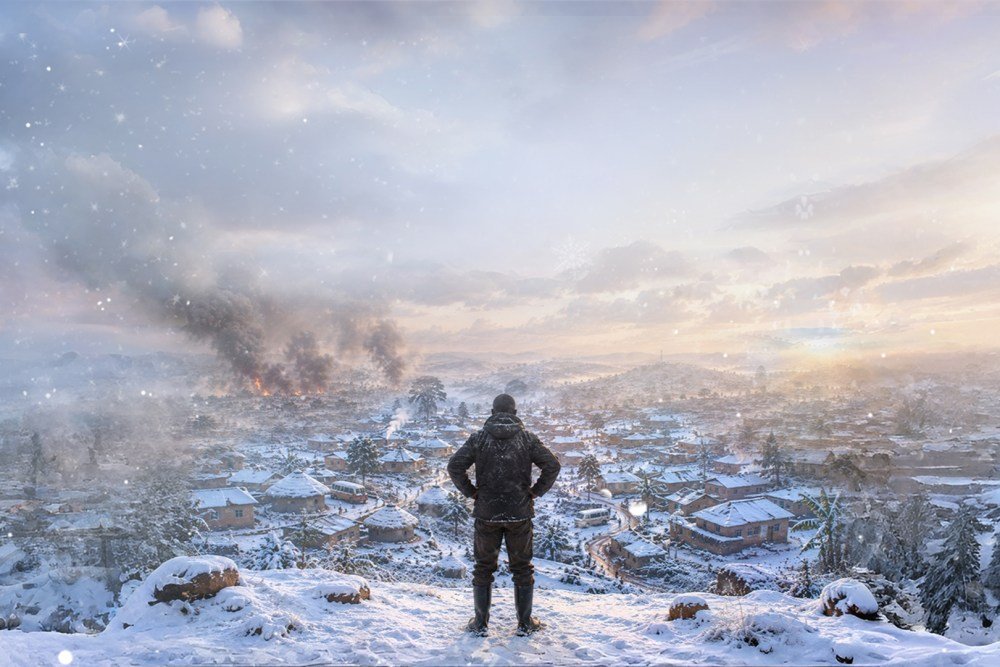
Synopsis: “The equatorial village of Rukumba has endured months of drought when suddenly snow falls overnight, an impossible event blanketing the land in white. Kamuturaki (48), a failed trader once mocked for selling winter jackets under the blazing sun, becomes an overnight success. Byeitaka (40), a disgraced preacher, declares the snow divine and sells melted snowflakes as holy water to frightened followers. Kagoro (38), the timid chairman, watches his authority erode as the village reorganizes itself around the miracle. When British envoys arrive promising support for Rukumba’s independence from Uganda in exchange for access to the snow for scientific research, the village committee embraces the deal as progress. As competing ambitions take hold across the village, tensions rise and unrest erupts, forcing Ugandan military forces to intervene. By the time the snowfall melts, Rukumba is no longer a community but a collection of competing interests, each convinced the miracle belongs to them.”
CHF 20’000 Accept My Plea for Burial by Mohammed Sheikh, produced by Kadir Harbi (Aleel Films), Somalia/Djibouti .
Synopsis: “In a remote Somali pastoral village, two 12-year-old boys, Waasuge and Warmooge, spend their days herding goats and playing games. Their playful rivalry turns tragic when Warmooge dies after falling into a steep dry riverbed during a game. No one sees exactly what happened, and the only witness, a mentally unstable man, gives conflicting accounts that deepen the uncertainty. As the village gathers, grief hardens into accusation. Warmooge’s mother, Saluugla, refuses to bury her son without justice, believing burial without accountability would erase his death. The elder, Alamagan, attempts to resolve the conflict through customary law and religious counsel, but the absence of truth fractures the community. Rituals are performed, oaths proposed and broken, and tensions escalate as the unburied body decays. Despite Waasuge’s age and the lack of evidence, the village demands resolution. Understanding what the adults cannot admit, Waasuge makes a choice that ends the conflict.”
CHF10’000 Too Much Music by Aseye Fiagbe, produced by Aseye Fiagbe (Aseye Fiagbe Creative Studio), Ghana.
Synopsis: “Too Much Music is a feature documentary about Kiki Gyan, a Ghanaian keyboard prodigy who rose to international fame as a teenager with Afro-rock pioneers Osibisa. As his musical contributions expanded without recognition, tensions around credit and ownership led him to leave the band and pursue a solo career across London, Lagos and New York, shaping African disco and funk in the process. Over time, the same system that profited from his brilliance proved indifferent to his vulnerability, and his life became reduced to a singular narrative of addiction and demise. Through archival material and testimonies from family and collaborators, the film reconstructs the forces that shaped his journey and asks how artists are remembered, who controls their stories, and what is lost when brilliance is reframed as failure.”
CNC Development Grant The CNC development prize is an incentive for the development of a project for the value of 8,000 euros.
Chapa 100 by Ique Langa, produced by Lara Sousa (Kulunga Filmes), Mozambique.
Synopsis: “In the busy streets of Maputo, 80-year-old flower vendor Sitóe offers brief moments of beauty to strangers passing through the city’s crowded “chapas”, the local minibuses that carry thousands of people every day. One morning, he meets Valentina, a vegetable seller in her seventies, and a simple flower sparks a quiet romance. Together, they dream of owning a small piece of land where flowers and vegetables can grow side by side. When a thief steals Valentina’s rented wig, Sitóe runs after him and is struck by a speeding chapa. The city moves on, but Sitóe does not. His spirit becomes tied to the very minibus that killed him, traveling through Maputo day after day among passengers carrying their hopes, grief, and exhaustion. Flowers slowly begin to bloom inside the vehicle, subtle signs of his lingering presence. One day, Valentina boards the chapa carrying the flower Sitóe once gave her. Surrounded by the quiet traces of his spirit, she feels his love beside her once again.”
Jury statement: “By awarding the CNC grant to the fiction project Chapa 100, directed by Ique Langa, the jury aims to support the development of a work imbued with genuine sensitivity and poetry. The jury was particularly moved by the film’s portrayal of a love story between two elderly characters – a rare theme in cinema – set against the vibrant backdrop of Maputo. Furthermore, the project’s artistic potential is reinforced by the director and producer’s strong commitment to establishing a robust international distribution strategy that would match the film’s universal appeal.”
ARTEKino International Award Providing an incentive for the development of a project for the value of 6,000 euros.
The Ones With the Tempered Flowers by Neema Ngelime, produced by Ivy Kiru (LBx Africa), Tanzania/Kenya.
Synopsis: “For Neema, being a woman has always meant a script: school, marriage, babies. When a doctor tells filmmaker Neema having children might be hard, she doesn’t expect it to confuse her. Those expectations wound her. Raised in a multi-religious home, her identity was forged by questions of what is haram and what would please Jesus. All Neema cared about was which hell she’d end up in. To her, the older women in her family are a mystery beyond work and family. Their lives feel prophetic to her own. Her sister and her try to rewrite their scripts through tarot. Her father taught her that anything is possible. Now he reminds her of her fate. She stages performances with her family, reenacting fragments of their lives. They believe these are fictions. But they’re memories, repurposed, hidden truths surfacing through play. This is the story of a woman studying her body’s relationship to self, society, and the political weight placed on women’s bodies in Tanzania, challenging duty masked as love.”
Jury statement: “ARTEKino aims to support emergent contemporary cinema through the ArteKino International Award and the ARTEKino festival. ARTE has decided to reward a young director, whose project is a performative essay and a personal journey that explores the expectations placed on women by family, society and tradition. This is the story of a woman studying her body’s relationship to self, society and the political weight placed on women’s bodies in her country.”
Sørfond Award The prize consists of the participation at the Sørfond Pitching Forum at the Films From the South festival for one of the Open Doors Projects, which will be held in November this year in Norway.
The Ones With the Tempered Flowers by Neema Ngelime, produced by Ivy Kiru (LBx Africa), Tanzania/Kenya .
EAVE Award Together with the Film Fund Luxembourg, professional training organization EAVE will offer a scholarship for the EAVE Marketing Workshop worth EUR 4,000.
Tabakalera-San Sebastian Film Festival Residency Award The prize consists of a residency in Tabakalera and taking part in the industry activities of the San Sebastian Film Festival, given in collaboration with the International Culture Center Tabakalera and San Sebastian Film Festival.
I Live in V.I., by Ugochukwu Azuya, produced by Olubunmi Ogunsola (ENSEMBLE), Nigeria
Jury statement: “We wanted to highlight the following project because it follows a great story that is set and represents a unique and specific spot of its country and has the power to connect with universal concerns like displacement, class struggle and housing and labor pressures. It is also a project that could benefit from the platform of our festival so that it can open new ways of collaboration, and searching partnerships that allow the film to strenghten and fulfill its necessities. And also: because we believe that every each of us carries a little Florence that tries to make its way in a varied and complex world, we want to welcome the team behind I Live in V.I., so that its producer Olubunmi Ogunsola can come to San Sebastian and make it through with their amazing project.”
Rotterdam Lab Award In collaboration with IFFR Pro, a participant from the Open Doors Producers will have the chance to take part in the training workshop Rotterdam Lab in January 2027, together with a delegation of more than 70 emerging international producers.
Adja Mariam Mahre Soro(Studio KÄ), Ivory Coast
Jury statement: “For her highly professional approach to her work as a producer and entrepreneur, and for the integrity and commitment she has demonstrated in building and developing her company. Her dedication to strengthening the local ecosystem through training initiatives and international collaborations is equally remarkable. She is now ready to build meaningful collaborations and co-productions across the continent and throughout Europe.”
Organisation Internationale de la Francophonie (OIF) A consultancy prize to one selected feature film or series project directed by a national of an OIF Member State within the French-speaking Global South, produced or co-produced by a production company based in one of those same Member States.
Sarah, by Pocas Pascoal, Angola
Jury statement: “A film of revolution and independance, based on a moment in life of a revolutionary and independent woman, one of the first Black female filmmakers: Sarah Maldoror. Sarah by Pocas Pascoal is very promising narratively and visually and it will give space to a beautiful, multilingual, coproduction between several countries from Africa and Europe.”
AFP Critics Prize Presented by African Film Press (AFP) LLC, a cross-regional publishing alliance covering the African film, television, and digital media markets. The AFP Critics Prize comprises a USD 500 cash award, a certificate, and ongoing editorial coverage of the recipient and their future work across AFP’s three founding publications: Akoroko, Sinema Focus, and What Kept Me Up.
Submergido, by Ariel Añez, produced by Joseph Mata, co-produced by Ariel Añez (Maochas Filmes), Mozambique
Jury statement: “Sad and poignant yet ultimately hopeful, it offers a moving and incisive exploration of the human cost of conflict, especially for those whose loved ones are directly involved in war.”
Ugandan Talemwa Pius’ striking magic realist fable “A Vineyard for a Lobster” and “Accept My Plea for a Burial,” a Somalia set critique of ancient custom, emerged triumphant at Locarno’s 2026 Open Doors, winning its two biggest cash prizes.
Neither prize comes as a surprise.
Picturing a miraculous snowfall in a drought-ridden Ugandan village, in “A Vineyard for a Lobster,” Pius cleverly spins a political fable of broader collective breakdown, as characters – a desperate trader, a disgraced priest and a reluctant chairman – react to the miracle in self-serving ways rather than thinking about any common good. As their ambitions escalate, the village threatens to fall apart. From Kampala-based Gripmagic, “in the film, an impossible snowfall in a Ugandan village becomes a political allegory, echoing colonial intrusion,” Pius told Variety.
A €20,000 cash prize was also granted by Open Doors to “Accept My Plea for Burial” (“Baryo Aas Iga Gudoon”), by Mohammed Sheikh a Djibouti, Somalia and Qatar. It kicks in when Warmooge, 12, falls to his death while playing with Waasuge, a fellow goatherd. The village elder fails to resolve the case via customary law and religious counsel. Minnesota-based U.S.-Somali filmmaker Sheik’s follow-up to “Barni,” screening at Locarno, this is “a morally complex story where there is no clear truth, told through a rarely seen Somali cultural framework,” Sheikh told Variety.
Aseye Fiagbe’s “Too Much Music,” a rehabilitating music doc bio of Kiki Gyan, a Ghanaian keyboard prodigy, took in the same prize. Notably, however, Open Doors prizes announced Aug. 10 at Locarno Pro, the industry zone of Switzerland’s Locarno Film festival, were spread pretty evenly, every single titles among its six project focus walking off with some kind of compensation.
That prize sweep took in a development grant from France’s CNC national film board for “Chapa 100,” an endearing advanced age love story from Mozambique’s Ique Langa, who impressed with his Rotterdam main competition entry “The Prophet.”
An ArteKino International Award and a Sørfond Award went to “Tempered Flowers,” a diary-like essay, Tanzania’s Ngelime told Variety. It will use constructed archives, cinema verité performances with her family and stop motion to explore, respectively, Neema’s 1990s childhood, today and imagined future.
An EAVE Award was won by Burkina Faso’s Mamounata Nikiema at Pilumpiku Production, a prestigious documentary producer behind multiple doc-features, such as “Djeliya, Memory of Mandingo,” an ambitious, five-county co-pro.
“Exploring the lost hope of the Nigerian dream,” “I Live in V.I.,” a social class satire by Ugochukwu Azuya set on Nigeria’s luxurious Victoria Island, won a Tabakalera-San Sebastian residency. The high-energy Adja Soro at the Ivory Coast’s animation-focused Studio KÄ scored an invitation to the Rotterdam Lab.
[This story contains MAJOR spoilers from the House of the Dragon season three finale.]
“Do not trust the queen. Aegon has returned. His dragon lives. Your unborn child is a hostage, a prize by which she can hold power over her enemies. She will never release you.”
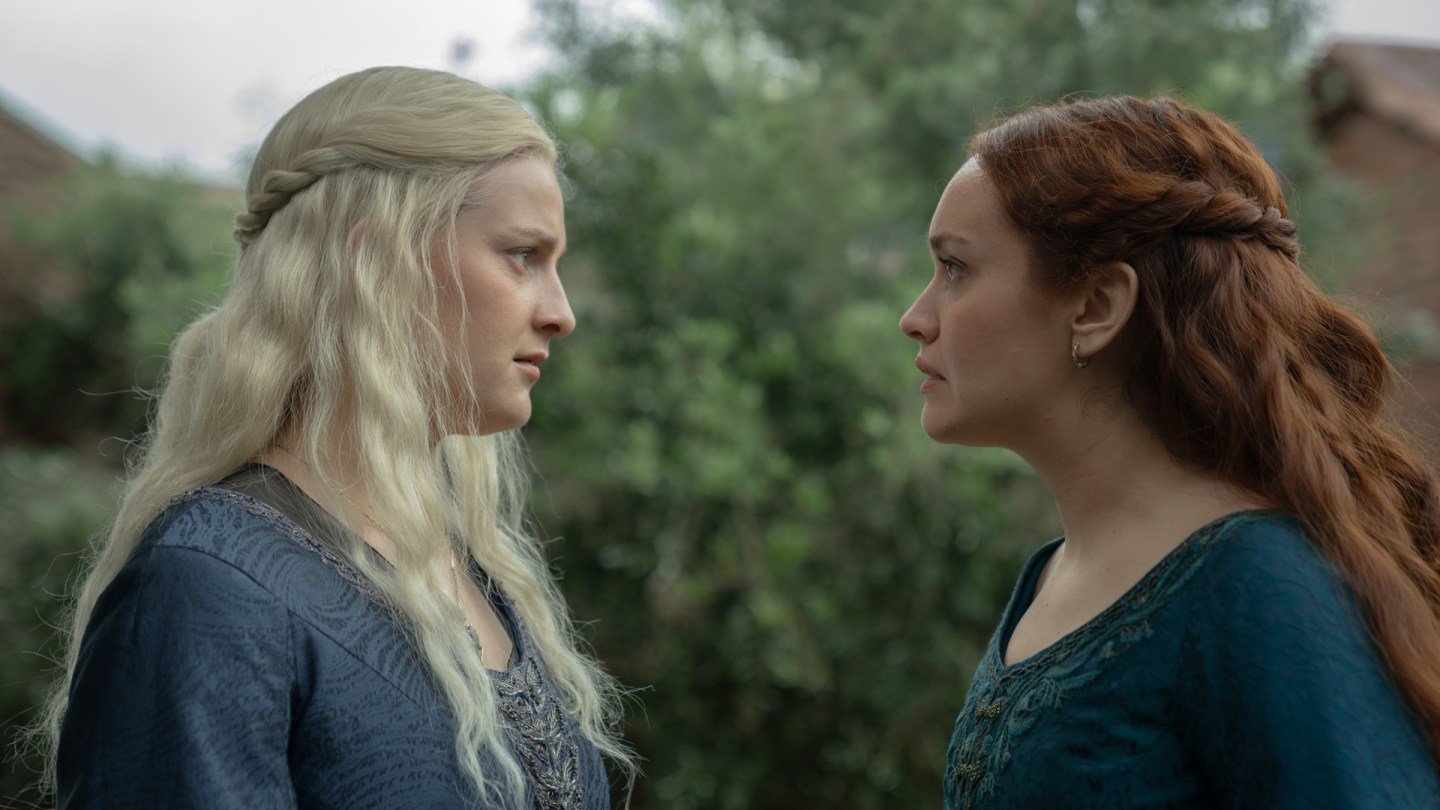
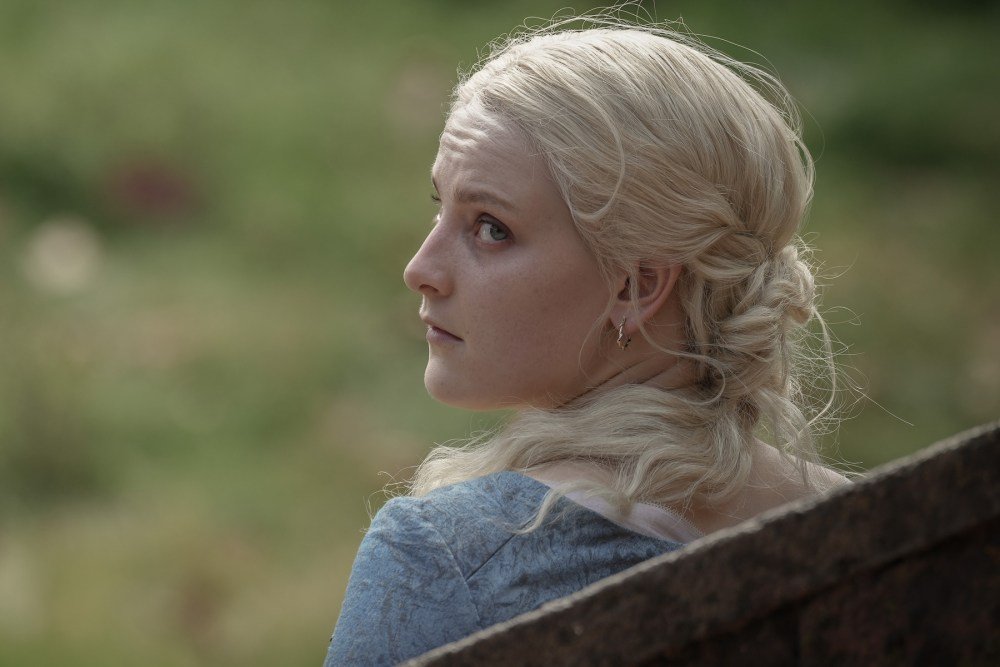
These end up being among the final words Queen Helaena Targaryen ever hears. In the House of the Dragon season three finale, a newly ousted Mysaria (Sonoya Mizuno) issues her stark warning to the recently imprisoned Helaena (Phia Saban), who internalizes that information and weaponizes it: first, by way of speaking ugly truths about Rhaenyra (Emma D’Arcy) right to her face, and then, finally, by way of an open Red Keep window. Just as King Tommen once plummeted from that very same location in Game of Thrones, so too now has Helaena fallen. The season ends with Rhaenyra coming upon Helaena’s vacant quarters, while Team Green’s queen herself lies on the ground below, impaled on spikes.
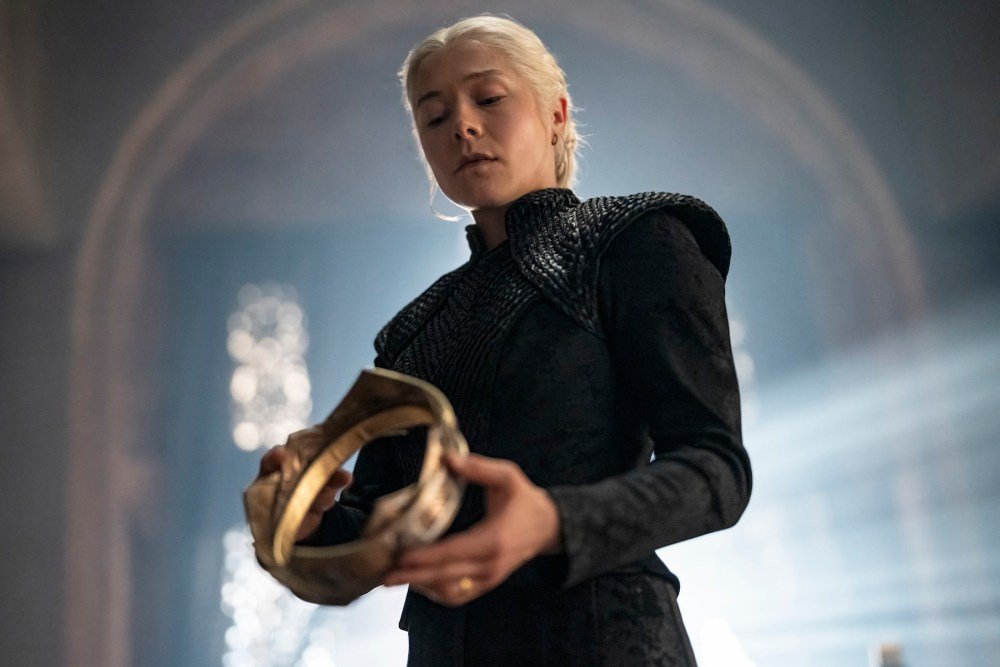
It’s a haunting image, perhaps appropriately so, given Helaena as a character who knows a thing or two about nightmares and dreams. It’s also a hinge upon which much of the rest of House of the Dragon will turn, according to the folks behind the scenes. In a press event held ahead of the season finale, D’Arcy spoke about Helaena’s death and what it means for the show’s future: “Helaena is sort of the moral heart of the show, I think. She’s maybe the only character who has a proximity to power, but remains kind of uncontaminated. And so, I think her death sort of condemns Rhaenyra to the path she’s chosen. I think there’s sort of no way back after that.”
If there’s a way back, it exists somewhere far beyond the fallen Helaena. Below, Phia Saban chats with The Hollywood Reporter about building out the dream-seeing queen’s final chapter.
***
How much did you know about Helaena’s fate in advance?
When I got the job, I spent a lot of time Googling and searching the Wikis, so I’ve always known this was coming. Plus, there are so many fans out there in the world, and I know so many people who knew and would make a point to tell me about what was going to happen to me.
When it’s a show this big with a character fate this crucial, is it pretty much impossible to avoid that kind of spoiler on your end?
Totally. It was never an option not to know. I’m just happy I made it three seasons!
You’ve had a lot of time to think about her death, then. What are some of your first thoughts when you think about the character, now that her arc ends in this way?
Objectively, it’s very sad. The story is sad. I love Helaena. I feel for Helaena. I try to find hope, by thinking she felt as though she had been killed already in many ways, but… it’s very sad. But for me? Kind of a bucket list thing: I got to die on TV! (Laughs.) I got to do the thing where you keep your eyes open… everyone wants to do that!
How was that experience?
The prosthetics were amazing. It made me want to do a thing where I’m entirely in prosthetics. It was so genius, getting to work on that. You really work with the most talented people on House of the Dragon. I could go through every department right now and tell you all about them, but the people I had never really worked with much before were the prosthetics people, and it was amazing. I sat there while they created my neck, which had this incredible spike, and they painted it on me in a way that was so lifelike. It was so fun.
What went into crafting the force-feeding scene?
It involved a few weeks of what we’d call “gruel meetings.” I would try all these different slops, and they would say, “Choose the one you want to get force-fed.” The one we picked, it was a dal, low spice level. It was okay!
Before that goes down, literally, you have one final scene with Emma. What do you remember about it?
I really loved it, because it came from a conversation I had with executive producers [Ryan Condal and Sara Hess] about it. I felt a lot of ownership over Helaena and have loved building that character. And I felt it was important to get across some of the things that I had always had as Helaena mantras in my mind in that moment. And I felt like that was the justice for Helaena. So we spoke a lot about Joan of Arc, and this idea that there’s more to life than not being dead. I found it really delicious that Helaena could be like, “There are things in the world that you’ll never know how beautiful they are, and they’re not even beautiful.” And that’s truly what she wants to get back to: having a relationship with the world and not being kept and silenced and used.
That links up with the scene in the courtyard, when Helaena looks out at all the birds in cages being taken away.
Is there a shot of her holding something in her hand? If there isn’t, what might be some context is that when we shot that scene, I was holding a dead caterpillar. To me, that moment became more about her relationship with nature, mourning her freedom and how strongly she feels for her creatures — and exactly as you say, how it strikes her that to see something that won’t live and fly again. I think to me, that’s what that was about, but they might’ve done some clever editing and just not got me holding it.
What was your last day on set like?
I saw Fabien talk about this, and I wonder how much it’s clever scheduling from the team, but the last thing I shot was my death shot. I was on a soundstage surrounded by spikes feeling pretty proud of myself in my prosthetics, trying to keep my eyes open with the whole team. And then Ryan came out and he said some nice things and lots of lovely people were there. And yeah, it was really amazing. It’s very hard in the moment to take in the finality of it. This is something I’ve been working on, and a character I’ve been caring for, for five years now. But there is joy in this. There’s pride and there’s excitement. It will probably hit me once I see the full episode and it’s out there, or perhaps when they all get back to work without me.
***
House of the Dragon season three is now streaming on HBO Max; read THR‘s finale coverage.
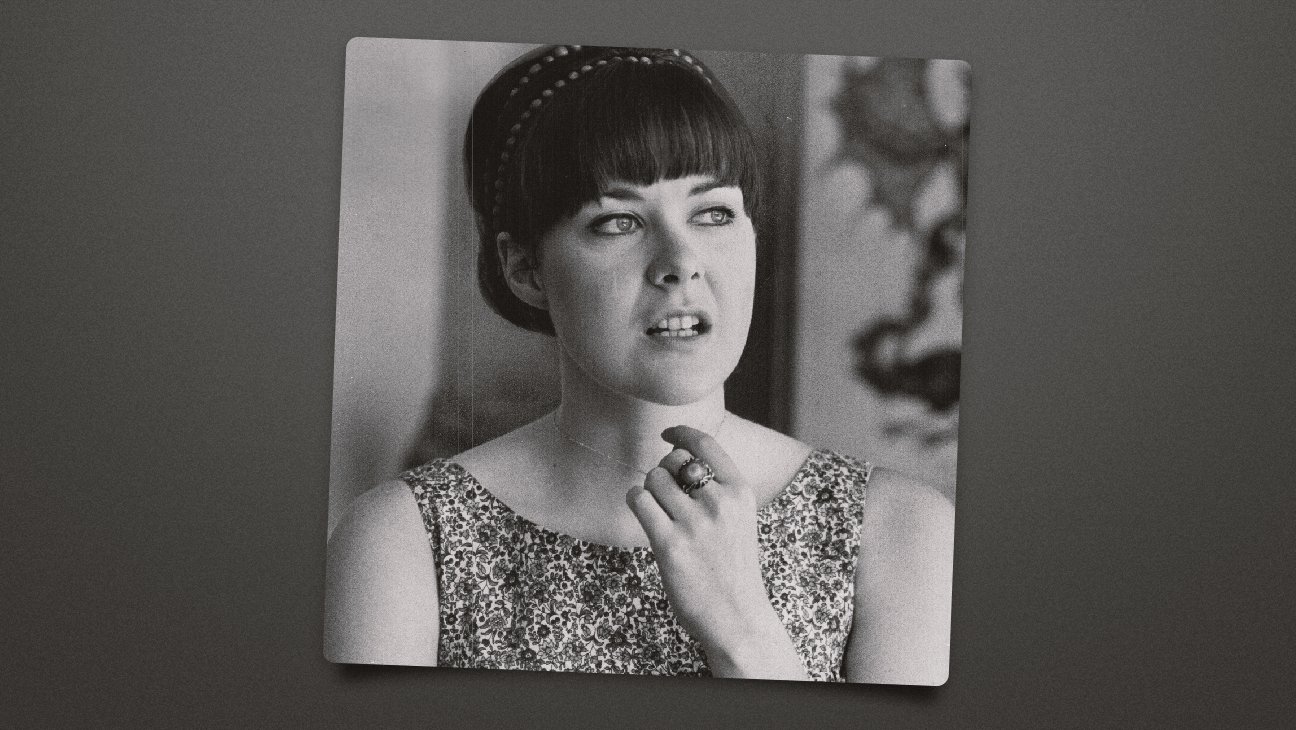
Tedde Moore, an actress who is best known as playing young Ralphie Parker’s teacher in A Christmas Story, has died. She was 79.
Moore died Wednesday in Huntsville, Ontario, according to a post on her Facebook page. A cause of death was not given.
“On Wednesday August 5th under sunny skies overlooking Fairy Lake, Tedde passed away surrounded by family physically and spiritually in her beloved Huntsville Muskoka,” the post reads. “Her bravery in this choice was almost overwhelming, beyond beautiful and also difficult. Forever the teacher, she had a quote for every occasion and a special way of touching the lives and hearts of everyone she met. Her magic and love will be remembered by all she took under her generous and welcoming wings.”
Moore played Miss Shields in the 1983 Christmas classic opposite Peter Billingsley. She memorably gives Ralphie a bad grade on his paper about wanting the Red Ryder BB gun for Christmas and also has to deal with Flick (Scott Schwartz)’s getting his tongue stuck on a ice-cold flagpole. Moore was nominated for a Genie Award, presented by the Academy of Canadian Cinema and Television, for best performance by an actress in a supporting role. She reprised her role for 1994’s My Summer Story, which, like A Christmas Story, was based on Jean Shepherd’s semi-autobiographical stories.
Her other TV appearances include spots on Friday the 13th: The Series, RoboCop: Prime Directives, Odyssey 5 and This Is Wonderland.
Moore played Mrs. Claus in the 2011 TV movie Mistletoe Over Manhattan and also portrayed Nanny Shaw in the miniseries The Kennedys that same year. According to iMDB.com, her final credit was the 2017 TV movie Magical Christmas Ornaments.
Born April 11, 1947, Moore was the daughter of Darwina Faessler Moore and actor Mavor Moore, best known for playing the title role in a Canadian radio drama adaptation of Nero Wolfe in 1982. Her grandmother was Canadian theater pioneer Dora Mavor Moore.
She attended the Royal Academy of Dramatic Art in London, graduating in 1967 with the Principal’s Medal of Honor. After graduating, she starred opposite Christopher Walken in the Stratford Festival production of A Midsummer Night’s Dream.
In 2009, Moore was diagnosed with multiple sclerosis.
Moore had two children with Canadian film and television director Donald Shebib, who directed many documentaries, including 1970’sGoin’ Down the Road and 1973’s Between Friends. Their children are daughter Suzanna, a child actor (Are You Afraid of the Dark?) turned teacher, and Noah, a child actor (Goosebumps) turned Grammy-winning music producer, also known as “40,” who is a frequent collaborator of Drake’s. 40, who produced the Drake hits “Hold On, We’re Going Home,” “One Dance,” “God’s Plan,” “Toosie Slide” and “Take Care,” was diagnosed with multiple sclerosis in 2007, two years before his mother.
Moore has another daughter, Zoë, from a previous relationship with actor Patrick Christopher Carter, and raised a foster daughter, Chaunce Drury.
While players on both sides of the battle for the Iron Throne are to blame for the carnage, Season 3 of the “Game of Thrones” prequel has put forward the quickly unraveling Queen Rhaenyra Targaryen (Emma D’Arcy) as the one most responsible for the fire and blood. And “House of the Dragon” co-creator and showrunner Ryan Condal is prepared for Rhaenyra’s heel turn to be compared to that of her descendant Daenerys Targaryen (played by Emilia Clarke) in 2019’s “Game of Thrones” series finale.
“I think that’s wonderful if people draw parallels between this and the original series,” Condal said during a press conference Friday. “For sure, there’s going to be mirroring and echoes and reflections across the two series, and people will see things that are either intentional or subliminal. And I will just say that I think this is a one of those existential themes that goes across this entire universe, which is the draw of the Iron Throne — what it does to a person in its thrall, or the people that are trying to get to it.”
Condal notes the “big difference” here is that “Daenerys only got to the Iron Throne at the very end, after she had destroyed the city,” while “Rhaenyra goes through this experience of having the throne, trying to hold it and being, in a way, turned and changed by it — altered by the experience.”
“They’re very different things, but I think the parallels do call to the greater themes of the ‘A Song of Ice and Fire’ universe, which is pride and power, and how power corrupts, and how far it corrupts. And it can change good people into corrupted people,” Condal says. “It can take corrupted people and make them real villains, and other people, like Viserys, it can simply just destroy.”
It seems the Iron Throne is doing a mixture of both to Rhaenyra by the end of the third season of “House of the Dragon.” She’s been pricked and bloodied by it, and is now making the choice to turn violent herself, becoming responsible (directly or inadvertently) for more than one death in the finale.
“I really wanted to make sure that that journey was a legible one,” D’Arcy says. “I think, broadly, if we’re to be more practiced at protecting democracy, which seems increasingly fragile at times, we have to be smarter about understanding the behaviors of dictatorial leaders. I think Ryan and I both, this was an opportunity to attempt to try and make a certain type of behavior at least understood by an audience. And from an acting perspective, it felt much more playable to think about empathy and the sort of empathetic machine and how that gets damaged and affected by events, than it did to sort of solely think about her relationship with authoritarianism or something.”
Rhaenyra orders Daemon (Matt Smith) to take Tumbleton, and kill every Hightower he can while leaving its people as unharmed as possible. Daemon brings troops and his dragon Caraxes, but holds out on laying siege for as long as possible, especially as Ormund has stationed children on the battlements and in front of the gates to the city. Eventually, Daemon uses Caraxes to burn down the entrance so that the Blacks can storm the town in search of Ormund and his Rhaenyra’s latest rival, Daeron (Benjamin Evan Ainsworth). The plan is to take those Hightowers out before turning to the matter of a revived Aegon (Tom Glynn-Carney) and his dragon Sunfyre.
By the end, many of Rhaenyra’s supporters, including Northmen Roddy the Ruin (Tommy Flanagan), have been killed by a traitorous Ulf (Tom Bennett) and his dragon Silverwing — but so has Ormund, who went up in flames when Ulf double-crossed him, too.
Daemon, Corlys (Steve Toussaint) and Hugh (Kieran Bew) make it out alive, and the last we see of Ulf, he is being chased by Daemon on Caraxes and Hugh on Vermithor. Back in the burnt Tumbleton, Gwayne Hightower (Freddie Fox) is barely left standing, while the fate of Daeron and his dragon Tessarion are unknown.
“All season long, we’re setting up this classic medieval siege, which is really where we wanted to get to, and the fun of that, the concept of that battle was that Ormund had basically done all he could to blunt the threat of Rhaenyra’s greatest power — which is that she has, or had, six dragons, under her command at that point,” Condal says. “So how do I take the dragons off the board and make this an even fight, man-to-man? And he sees his army as better trained and better suited than the rivermen that are coming to attack. He knows the ground, he’s inside the city, they have to come over the walls, sacrifice a bunch of their men. It was a very, very, very complex thing to fold all together, but we wanted to do a classic Medieval siege. That was the elevator pitch for the finale.”
Back in King’s Landing, Rhaenyra is making moves she thinks will keep her firmly on the Iron Throne as long as Daemon and his team pull through. She kicks Mysaria out of the Red Keep, and has a captive, pregnant Helaena forcefed to keep her alive. Rhaenyra dons some Joan of Arc-esque armor, and has Alyn (Abubakar Salim) escort her and her young son and new heir Joffrey (Oscar Eskinazi) to the sept, where she demands to be annointed as the queen in front of all her people. When the High Septon refuses this request yet again, in favor of supporting Aegon’s return, she orders his execution.
Then Rhaenyra takes to the streets, and tells the people of King’s Landing the prophecy her father, Viserys, entrusted to her: Aegon the Conqueror’s “A Song of Ice and Fire” vision of the Targaryens and their dragons being the only ones who can defeat the whitewalkers in the future. She tells the crowd (which Mysaria is hiding in) that she is the “prince that was promised,” and they look on in shock, confusion and fear.
It’s a big moment for fans who will recall the importance of this prophecy to the original “Game of Thrones” series, and how “House of the Dragon” has incorporated it into its own mythology in a break from its source material, George R.R. Martin’s “Fire & Blood.”
“It’s not in the book, and it’s not in the history, but there is a bunch of talk about how Rhaenyra became very despotic, and became a tyrant at the end, and was very unpopular with the people,” Condal says. “So we saw it as, this could just be something that happened, and there was disagreement over exactly, what it was, so it didn’t make the historical record. My glib toss-off from the historians is, ‘Oh, well, Targaryens say crazy shit all the time.’ But so much of their existence is this self-aggrandizement. And for the stonemasons standing there in the crowd just looking up at this, it could just sound like somebody trying to make something of themselves, because they have no idea of all the quote-unquote real history that went into Rhaenyra making that speech.”
Condal says the scene was written into the “House of the Dragon” storyline because the writers wanted “a real seismic change, a sea change in Rhaenyra’s relationship to her people” leading into the final season.
“She’s seen to the death of their religious leaders, she’s standing outside of the church of the faith of most of the people standing there, as a member of a totally different faith, this old Valyrian faith of dragons and fire gods and blood magic,” Condal says. “And [she’s] pronouncing herself this chosen one, the leader that is going to take them through the fire and out of the darkness.”
When Rhaenyra returns to the Red Keep, she receives the terrible news that Helaena has jumped to her death. (Read Variety‘s interview with Phia Saban here.) In Helaena’s room, Rhaenyra finds a tapestry Helaena had just finished sewing that predicts a dark and fiery end for Rhaenyra in the future. Now, she’s left to wonder how the people — including Helaena’s traveling mother, Alicent (Olivia Cooke), her childhood best friend — will react when they learn of Helaena’s death. And who they will blame.
The “House of the Dragon” team has already broken the “superstructure” story for the final season, and Condal has handed in a draft of the first episode to HBO, but there’s no timeline for when Season 4 will air just yet. Condal says he has been on a break throughout the airing of Season 3.
“No, I’ve actually taken time off,” Condal says. “I needed to step away from all of this. But we have an incredible season coming. As crazy and big as Season 3 was, I think Season 4 is going to be even bigger.”
Condal adds: “It’s a great privilege to be able to tell a story, and to be able to control and write the ending, and to control when and where that happens. This is not a given in making television, certainly. So, we’re very excited to get back in, and we have new characters, and new dragons and new locations all to come, that I think are gonna make it a very worthy, final season.”
For more of Variety’s “House of the Dragon” finale coverage, read this interview with Phia Saban, who plays Helaena Targaryenand this interview with James Norton, who plays Ormund Hightower. This interview has been edited and condensed.
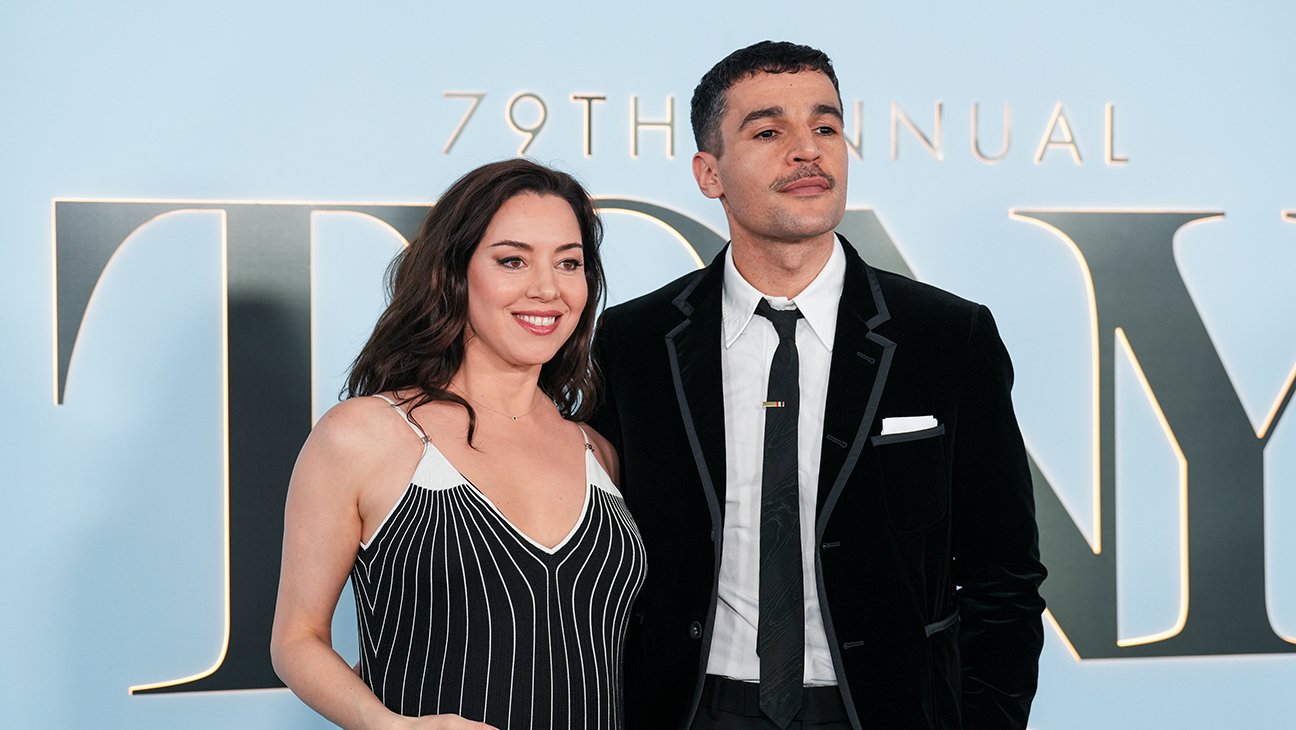
The couple reportedly welcomed a baby daughter in late July, according to reports. TMZ posted photos of the actress carrying a baby in New York after seeing Death of a Salesman on Sunday, which marked Abbott’s last performance.
Abbott played Biff Loman in the Broadway revival of Arthur Miller’s classic play opposite Nathan Lane and Laurie Metcalf; he earned his first Tony Award nomination for the role, and they attended the ceremony as a couple (see photo above).
Plaza, meanwhile, earned an Emmy nom for best supporting actress in a drama series for her role in The White Lotus in 2023. She also was the co-creator of Prime Videos animated series Kevin. Her other credits include Agatha All Along and Parks and Recreation.
News first surfaced in April that Plaza was pregnant with her first child. The couple have worked together previously, in the 2020 movie Black Bear as well as in the off-Broadway play Danny and the Deep Blue Sea.
She was previously married to writer-director Jeff Baena (Life After Beth), who died by suicide in January 2025.
SPOILER ALERT:This article contains spoilers for the Season 3 finale of “House of the Dragon,” now streaming on HBO Max.
HBO’s “House of the Dragon” lost its moral center with the death of Helaena Targaryen (Phia Saban) in Sunday’s Season 3 finale.
The pregnant Helaena takes her own life by jumping from her window in the Red Keep when left alone in her room. It’s a death many fans saw coming following a season of Helaena’s ominous visions and deep depression over being secluded from her young daughter, Jaehaera, in King’s Landing. Queen Rhaenyra (Emma D’Arcy) discovers Helaena’s suicide just before the episode ends.
“It’s a tragedy. That’s definitely the arc of Helaena’s story,” Saban tells Variety. “But I think, as she says earlier, ‘This is my body, and this is my baby — and both of those things have been forsaken as long as I’ve lived.’ And she doesn’t want to live the way she’s living anymore, and she feels that she wants to protect the children that she does have. She’s just trying her best.”
Before she died, Helaena left behind the final piece of a tapestry she’s been embroidering throughout all of “House of the Dragon” Season 3 for Rhaenyra to find. After the image of Rhaenyra jumping to her own death and landing on spikes, Rhaenyra sees a depiction of her on the Iron Throne with blood streaming down from the crown on her head and surrounded by dragon flames.
HBO
During a press conference, D’Arcy called Helaena the “moral heart of the show” and predicted how her death will affect Rhaenyra heading into “House of the Dragon”’s fourth and final season.
“She’s maybe the only character who has a proximity to power, but remains kind of uncontaminated,” D’Arcy says. “And so, I think her death, condemns Rhaenyra to the path she’s chosen. There’s no way back after that. There’s certainly no route back to a more moderate form of leadership. And, I mean, I don’t know where we go from here, but I imagine it’s likely to be impassable in her relationship with Alicent, which I think also means Helaena’s death condemns Rhaenyra to be alone in her pursuit for power.”
While creator Ryan Condal has deviated on “House of the Dragon” from the source material in author George R.R. Martin’s “Fire & Blood,” Helaena’s arc has had some of the most significant changes, including the exclusion of her youngest child, Maelor. In Martin’s version, Helaena dies by suicide after Maelor — who survived the “Blood & Cheese” incident in Season 2 — is brutally murdered while she’s locked up in the tower. And she is not pregnant at the time of her death.
Saban says these book plot points didn’t affect her performance of the character on “House of the Dragon.”
“I think you can only play the story that you’re telling,” Saban says. “So really it’s the character that I built, and the story that Ryan and Sarah [Hess] and all the writers were creating, that was really all that felt relevant. But I know that there are differences in the stories, and I think that some of those differences are really cool. And I don’t think that Helena would have been maybe such a juicy part for me personally to play if there weren’t some of the differences that have been made. So you kind of just roll with the punches.”
See below for more from Variety‘s interview with Saban about the “House of the Dragon” Season 3 finale.
I don’t know how much you follow stuff online, but Helaena has been a deeply beloved character, and even more so this season. I think people just want her to be with her chickens and her babies, so I know they are going to take this very hard, and it really mirrors what happens in the book “Fire & Blood,” because the smallfolk will take Helaena’s death so hard. How do you personally feel, knowing that this is all coming? Helaena’s death is really a turning point in this series.
It’s very nice to hear that, and that people care. I guess that’s really what you can hope for. That one way or another, people sort of care whether you live or die. So that’s very nice to hear.
During the finale conversation between Helaena and Rhaenyra, Helaena tells the story of a beetle she likes, and Rhaenyra’s like, “That’s great. You could show me sometime.” And Helaena says, “You don’t care. You’re pretending. You’re ugly.” Does she now dislike Rhaenyra more than she doesn’t like Aegon? What brought her to this point with Rhaenyra, and would she have previously chosen Rhaenyra as the “better” one?
Interesting. I don’t know about the comparison. I think the context is so different for both of them. It’s very hard to compare. The feeling from Rhaenyra is that she feels extremely violated. She feels her freedom’s been violated by her and her relationship to freedom and to nature and to all of the things that feed her as a person have been taken away. So I suppose it’s more than a punishment — I feel it’s more like a home truth. You’re looking for what’s useful to you, and there are things in the world that are fascinating and beautiful, despite how they relate to like power struggles in the kingdom. And I think she just is making a point about that. That there’s more to life. And actually, I think she’s proud that that’s how she feels.
Do you think Helaena reaches her breaking point because of Mysaria’s warning to her? If she hadn’t had that interaction with Mysaria, would she have kept going as she was?
I don’t think it wouldn’t have happened if Mysaria didn’t say it, but I do think it’s just another addition to the descent. There’s a confirmation of what Helaena already feels, which is that she is never going to live a life again in which she feels alive. And that’s kind of what Helaena says to Rhaenyra. She’s like, “There’s more to life than not just not being dead. Like, the bar is on the floor. I have higher dreams and hopes and feelings for the world than that.” In a sense, maybe some might say that she takes power from what she does. That she can, rather than being killed by a vision, she can choose that for herself.
We’ve gotten a lot of Helaena’s visions this season. Which one did you enjoy performing the most? What did you think was the most powerful?
I love all of them. I can’t say that I didn’t love being on the dragon. That’s like a bucket list thing. We’re on the dragon show — I had to get in there. So I’m very grateful that was written for me. And I loved it. It was so fun.
Helaena chose to stop working on her tapestry and leave it behind where Rhaenyra will presumably find it. It looks like Rhaenyra is bleeding from the crown in that final embroidery — is that what you think that is?
I think Helaena’s embroideries blend a sort of dreamlike and literal. It’s an art form, so I don’t think she’s subscribing to necessarily always realism. But yes, it didn’t look like a great portent, did it? Wish her all the best, though!
For more of Variety’s “House of the Dragon” finale coverage, read this recap and story about the press conference with co-creator Ryan Condal and star Emma D’Arcy and this interview with James Norton, who plays Ormund Hightower. This interview has been edited and condensed.
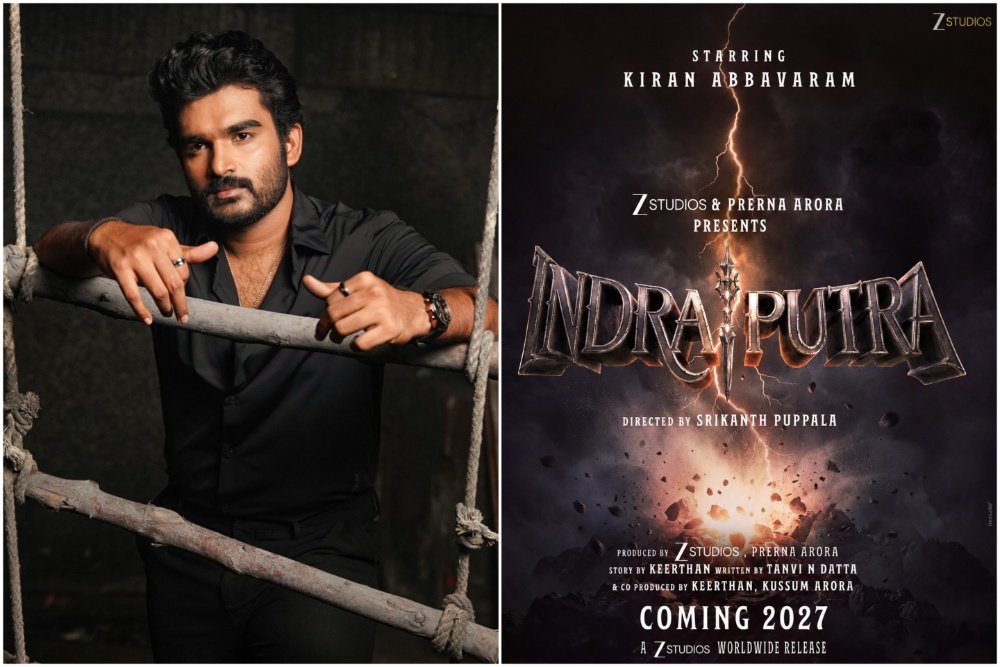
Kiran Abbavaram‘s mythological action-fantasy for Zee Studios has revealed its title as “Indraputra,” with the pan-Indian project, directed by Srikanth Puppala, set to begin principal photography in October.
Abbavaram takes on a mythology-rooted part built around the conflict between dharma, the principle of righteous duty and moral order in Hindu philosophy, and adharma, its violation. The film is designed as a pan-India release intended to reach audiences across languages, and is positioned as the opening chapter of a broader mythological universe.
“‘Indraputra’ is very different and unconventional from anything I have done before,” Abbavaram said. “The moment I heard the story, I realized it was a film that would stimulate me further as an actor and it very well aligns with my cinematic vision. The role requires both emotional depth and physical changes, and I am excited to bring this character to life. I am thankful to Zee Studios and Srikanth garu for believing in me. I can’t wait to start this amazing journey.”
Abbavaram made his acting debut in 2019 with the romantic comedy “Raja Vaaru Rani Gaaru.” 2021’s “SR Kalyanamandapam,” which he also wrote, built his wider profile. He went on to star in “Sebastian P.C. 524” and “Sammathame” in 2022, followed by three releases in 2023 including “Vinaro Bhagyamu Vishnu Katha,” with “K-Ramp” and “Chennai Love Story” being his most recent releases.
“Indraputra” is produced by Zee Studios and Prerna Arora, and co-produced by Keerthan. The film is now in pre-production ahead of an October start, with the supporting cast, technical crew and release date to be revealed imminently.
“Indraputra” marks Puppala’s feature directorial debut. He previously worked in the direction teams of “Kudi Yedamaithe,” “Katamarayudu” and “Gopala Gopala,” and most recently served as first assistant director to Rishab Shetty on “Kantara: A Legend – Chapter 1.”
“‘Indraputra’ is a dream that has been close to my heart for a very long time,” Puppala said. “Our mythology is filled with timeless stories, and with this film, we aim to present one such epic on a scale that is both visually spectacular and emotionally relevant to the audiences across the country. Having Kiran Abbavaram lead this journey is truly exciting, as he brings sincerity, intensity, and conviction to the character. I thank Zee Studios for placing their faith in this vision, and I am really looking forward to taking ‘Indraputra’ on floors this October.”
Arora’s credits include “Toilet: Ek Prem Katha” and “Dhundh.” She has an existing relationship with Zee Studios, having previously produced “Jatadhara” for the studio.
“‘Indraputra’ is the beginning of a world we have been passionately building,” Arora said. “Inspired by the richness of Indian mythology, infused with a contemporary vision, the film marks the first chapter of a very expansive mythological universe.”
“Indraputra” joins a run of pan-India projects built around interconnected mythological worlds, following Ele Animations’ “Mahaprabhu Jagannath,” the launch title of its planned Sanatan Universe, and Hombale Films and Kleem Productions’ “Mahavatar Cinematic Universe,” an animated franchise built around the 10 avatars of Vishnu, spanning seven features from 2025’s “Mahavatar Narsimha” through 2037.
Ingeborg and Adam are visionary hand surgeons who are bound by love, control and irresistible fixations. Ingeborg, for one, feels compelled to steal objects. Adam longs to become one.
But after an accident, their well-choreographed lives suddenly face a force that could upset the careful balance that has long defined their relationship: the enigmatic Gaia. With her arrival, unexpected desires start springing up.
With Objet a, her new mind-bending and visceral feature, Berlin-based visual artist and filmmaker Ann Oren (Piaffe) returns to Locarno. It is a stylized cinematic exploration of the fragile relationships between humans, as well as humans and nature. And it is likely to make you look and think at control, desire, intimacy, identity – and kleptomania – in a different way.
Objet a, world-premiering in the international competition of the 79th edition of the Locarno Film Festival on Tuesday, Aug. 11, stars Aenne Schwarz (All Is Well, Every You Every Me) as Ingeborg, Louis Hofmann (All the Light We Cannot See, The Forger, Dark) as Adam, and Simone Bucio (Piaffe, The Ivy) as Gaia. Georg Friedrich (Great Freedom) and Sofia Kokkali (Our Wildest Days) also feature.
“I’m interested in human desire and how it connects us to other species,” Oren says in a director’s note. “The human body is the starting point for my cinematic language: the more control we have over it, the more we separate ourselves from the natural world.”
Oren wrote the screenplay for Objet a with Geoffroy Grison. The cinematography is courtesy of Juan Sarmiento G. (The Voice of Hind Rajab, A Poet), with editing by Hansjörg Weißbrich (Rose, Late Shift). The film is produced by Schuldenberg Films in co-production with Tarantula, asterisk* and ERT. A theatrical release in Germany through Grandfilm is scheduled for the first quarter of 2027. Oscilloscope Laboratories has acquired the North American rights. Bendita Film Sales is handling international sales.
Ahead of the Locarno premiere of Objet a, Oren, Schwarz and Hofmann talked to THR about the serious and fun sides of the production, how they collaborated on its choreography and how timely its themes are if you look close enough.
Ann, what gave you the idea for this film and this story?
ANN OREN Several things, but what I was starting with was the sense of touch. I make very visceral films. My first feature film, Piaffe, dealt with the sense of sound. I start with the experience of the human body today in order to understand the human condition today. Here, I was thinking about the sense of touch today and what happens when we touch flat screens more than we touch our lover’s skin. A lot of experiences have flattened down to touching this plexiglass most of the day, so what is happening to our fingertips? I think they’re really deprived, and I was imagining zombie-like, hungry fingers – hungry to touch something. And then I had this idea of a couple that is living a very bubbled life and communicating emotionally through objects.
‘Objet a’
Courtesy of Juan Sarmiento G./Schuldenberg Films
I am curious, Aenne and Louis, how Ann pitched this project to you. To me as a viewer, Objet a sometimes felt a bit like a dance choreography that was very body-driven and that I could “feel” physically while watching.
AENNE SCHWARZ When I read the script, I felt a real longing to become part of this genuinely faraway world, which, at the same time, felt somehow familiar. What was very intense was when Ann talked us through the script. I remember when we all met, she had such a precise and full vision of what she wanted. And then, yes, it was a very physical experience. I experienced it like diving in, and at the same time, you had to hold the line and be very straight because they’re such delicate characters.
LOUIS HOFMANN I remember that in our first rehearsal, the term dance popped up quite a few times. The way we moved around one another was, I guess, testing out how near you could be to one another and what distance you could create. I remember that there were only a few moments where the characters would actually touch. But most of the time, it was about playing with the distance between them, creating tension, and playing with that tension.
SCHWARZ Yes. The gaze was part of the tension between us. You never lose each other. But sometimes, you are very far and sometimes much closer. It’s always a thin line holding us together.
HOFMANN And that longing for the touch is, I think, omnipresent, and that created the tension.
Interesting how you both describe this. Now it makes more sense to me why I sometimes felt that you two were almost moving like marionettes. Ann, are you happy if viewers get that sense?
OREN Absolutely, because this is exactly the type of work that I’m doing. I see working with actors as being about a very physical performance. There is also the psychology, but what I’m actually interested in is how the characters make decisions, not rationally, but rather through gut feeling. I look at human beings as the species that they are. In everyday life, it happens to everybody that we are compelled to do something, although we don’t really understand why. And I think it’s very exciting for a viewer to see that in a character and see that things are charged with this kind of tension.
In the psychoanalytic theory of Jacques Lacan, “objet a” is an unattainable object of desire. Aenne, Louis, were you familiar with this term, or did Ann go through some of this theory? Or was it not really that important to understand such concepts?
HOFMANN My girlfriend mentioned it to me. I wasn’t aware of it, but she was. And then during rehearsals, we touched on it a little bit. My character Adam has this desire of wanting to be a desired object for someone else. But then through his journey, he is also developing a sense of what he wants to be for himself. For me, that was a very beautiful journey to go on.
‘Objet a’ film still, courtesy of Juan Sarmiento G./Schuldenberg Films
AENNE I saw the title and remembered that a long time ago I studied literature, and Lacan was a topic in one seminar. I remember that I was very excited about it, and so I got a little bit into it. A close friend of mine is a Lacanian psychoanalyst. I felt I had a very intense meeting with this “objet a” myself during filming. The film became this object, in a way. I also wanted to touch it. I also wanted to have it, to own it, and it was also slipping away. So for me, it was a very personal experience with the theme.
HOFMANN You mentioned marionettes. I sometimes felt that the way I was being, or we were being directed, I felt so secure and so safe. In Ann’s world that she created, we just kind of obeyed her vision in a very beautiful way. I don’t mean that we had no say in it anymore, because it was quite the opposite. She was still welcoming all of our ideas.
Do you remember any examples?
HOFMANN When I tried to find the character, I very much went through voice. It was an impulse. I’d read somewhere that the soul of a character is placed in the voice, and I’ve never really gone through that, using the voice in particular to create the character. During rehearsals, I was reading Georg [Friedrich]’s part with Aenne, and I was mimicking, for fun, Georg’s [Austrian] accent and dialect. And then Ann was like: “Wait, I love this voice for you.” And I said: “Hang on, I can’t really have Georg’s voice when being in a film with Georg.” But I then took that placement of the voice, where his voice sits. That’s just an example of how playful we were with one another while being in that very safe and secure environment of Ann’s vision.
Ann Oren, courtesy of Björn Melhus
Courtesy of Björn Melhus
Ann, as a filmmaker, how do you think about colors? I noticed, or maybe I should say “felt,” colors quite a bit in Objet a…
OREN This is the bread and butter of my language. I don’t even have to sketch it out. It just comes to me. What would be the color palette of the film, and how does that support the mood that I would like to bring across? For this film, I wanted to reduce colors. Actually, we only have natural colors in the film until, slowly, green becomes the guest and the star color in the film. You have to work very hard to reduce color, actually, especially when you’re shooting outside, and then you slowly introduce it. So when you have a sequence in the end, it’s really ecstatic.
So we made sure in the production design and in the costumes that the range was from whites and beiges into the deep browns. The red color was used only in the bedroom … and [in another location] in the background. When I see Adam and Ingeborg within these natural colors, it really makes me think of them a little bit more like animals.
I felt the desire inside, or below the surface, of the couple without the characters having to talk about it. Is there a trick to tap into that to make us viewers sense this desire?
SCHWARZ With Ingeborg, what I thought was very exciting about her was that her fingertips and her eyes are her sensual organs. And I really tried to dive into these sensations. The crutch she [gets for one of her legs as the film unfolds] became part of my body. It was exciting for me to really open to the world that an object can become so strong. And with Gaia, she also has a sense she never had before, and she can’t control it. That is like an earthquake for her. She goes into a direction she never went before, and she can’t understand it.
She basically has things in order. She knows what she wants. She’s very sensitive and delicate, but also very clear in what the object has to do for her. And then this kind of melting starts when her body breaks. When her leg is broken, something breaks into pieces.
‘Objet a’ film still, courtesy of Juan Sarmiento G./Schuldenberg Films
HOFMANN I remember that the objects, the crutch, as well as a corset I use, had an immense effect – not only on us but on the whole team. There was a fascination with the beauty of how they were built, and maybe how we got attached to them. We treated them as extended parts of ourselves, and there was this fascination coming from the team as well.
I also remember us, as actors, acting differently when we had our objects with us. There was more to us, and it was also kind of between us. This film is about these two people who are symbiotic and living their life in a very symbiotic way, doing everything with one another – working together, living together, loving each other – and then there are these new elements popping up that are so disturbing at first, and so irritating, and so frightening. And then they slowly but surely start to go with those impulses, and they don’t really know where they’re coming from.
SCHWARZ One thing that was very special was that this was very playful, and also funny in a way. And that gave us also a lot of freedom. We were having fun. We were laughing.
HOFMANN At first, I wondered, “Is this going to become not body horror, but is it all going to be really dark, scary and just full of doom?” But I felt it was quite endearing, and so sweet, no matter how strange these desires might appear to other people. At the end of the day, they are very endearing, sweet desires. And I found the characters so endearing.
SCHWARZ Yes, there’s a tenderness.
Ann, can you share how you think of rituals as part of your storytelling?
OREN That has a lot to do with obsessions with control. You see that with both of them, especially with Adam’s character. He’s obsessed with controlling his body, developing his body, and then he wants his body to also get attention. But the more control we have over our bodies, the more we are disconnected from the natural world that we are a part of. And I think this is a very contemporary condition.
The need for rituals, historically, first of all, is that they are relaxing. It doesn’t have to be a religious ritual, but it can be about the things that you have to do in the morning or the things that you have to do before you leave the house. I think that the need for it also has to do with forgetting ourselves and connecting with something larger than ourselves. If in the beginning, the characters are connected to controlling their lives and to objects, towards the end, it opens up to a psychedelic experience that is like ecstasy. And ecstasy has always been a need for humankind. Today, there is a renaissance of psychedelics in the world because we’re so controlled – the need to forget ourselves, to have a moment of ego loss, and to connect to something larger than ourselves. I didn’t want to have a didactic experience for the audience, but rather lure them into something through passion.
Speaking of passion, Adam and Ingeborg really try to control that when we first meet them…
OREN I built the sexuality between the couple so that they were canceling parts of their bodies; they’re not including their genitals. It’s all about this exchange of the experience of touching and being touched, but in the most clinical way, which makes it absurd and interesting and a very particular choice for the two of them, which makes them suit each other very well. I think we live so bubbled today, and we’re trying to control everything, and it’s becoming about maximizing the length of your life, but you forget to live your life.
The film starts with thinking about the human condition, our bubbled life, and what, in a way, leads us to the disaster that we are in right now. We’re living in times of war, climate catastrophe and tech fascism, and it starts from that. So, the film is something very fantastical, and I have very particular characters. But it touches on living in the world right now, and I hope that it’s going to resonate and be absorbed this way. I like to work with ambiguity, so I don’t want a person to come out of the film and be able to describe it with one sentence. That would make it rather boring.