Katie Holmes and Jason Bard Yarmosky are continuing to make their romance known.
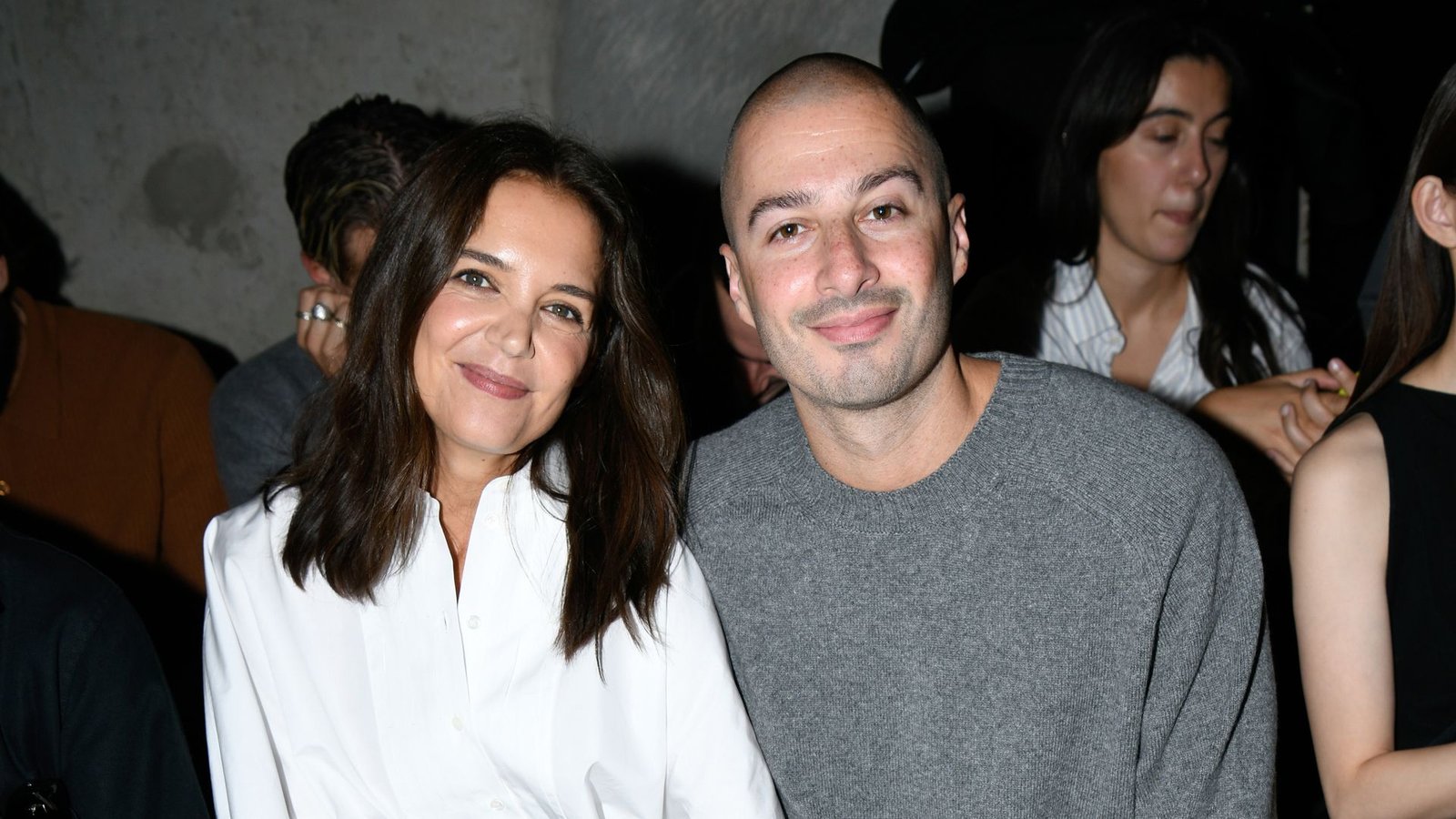
The actress and visual artist stepped out together Thursday for the Isabel Marant show during Paris Fashion Week, where they coordinated their understated looks and weren’t shy about showing some affection.
Holmes And Yarmosky Hold Hands At The Show
Holmes, 47, and Yarmosky, 39, held hands as they arrived at the fashion event, just days after enjoying another romantic escape together in Italy.
The Dawson’s Creek alum kept things sleek and simple in a loose black sweater decorated with thin horizontal rows of silver sparkle. She paired the top with high-waisted black jeans, a black snakeskin belt and black heels featuring silver-tipped toes.
Katie Holmes (L) and Jason Bard Yarmosky attend the Lanvin show during Paris Fashion Week
Holmes kept the rest of her look mostly monochromatic, carrying a large brown suede handbag and adding a bold pop of color with crimson lipstick.
Yarmosky coordinated with his girlfriend in a black sweater and matching trousers. His square-toed boots featured steel-colored caps that complemented the metallic details on Holmes’ shoes.
The couple later sat together in the front row, where Yarmosky wrapped an arm around Holmes’ waist as they posed for photographers.
The Couple Has Been Traveling Together
The Paris appearance comes after Holmes and Yarmosky were spotted getting cozy during a getaway to Lake Como.
The couple was photographed sipping champagne and cuddling while being transported around the picturesque Italian destination.
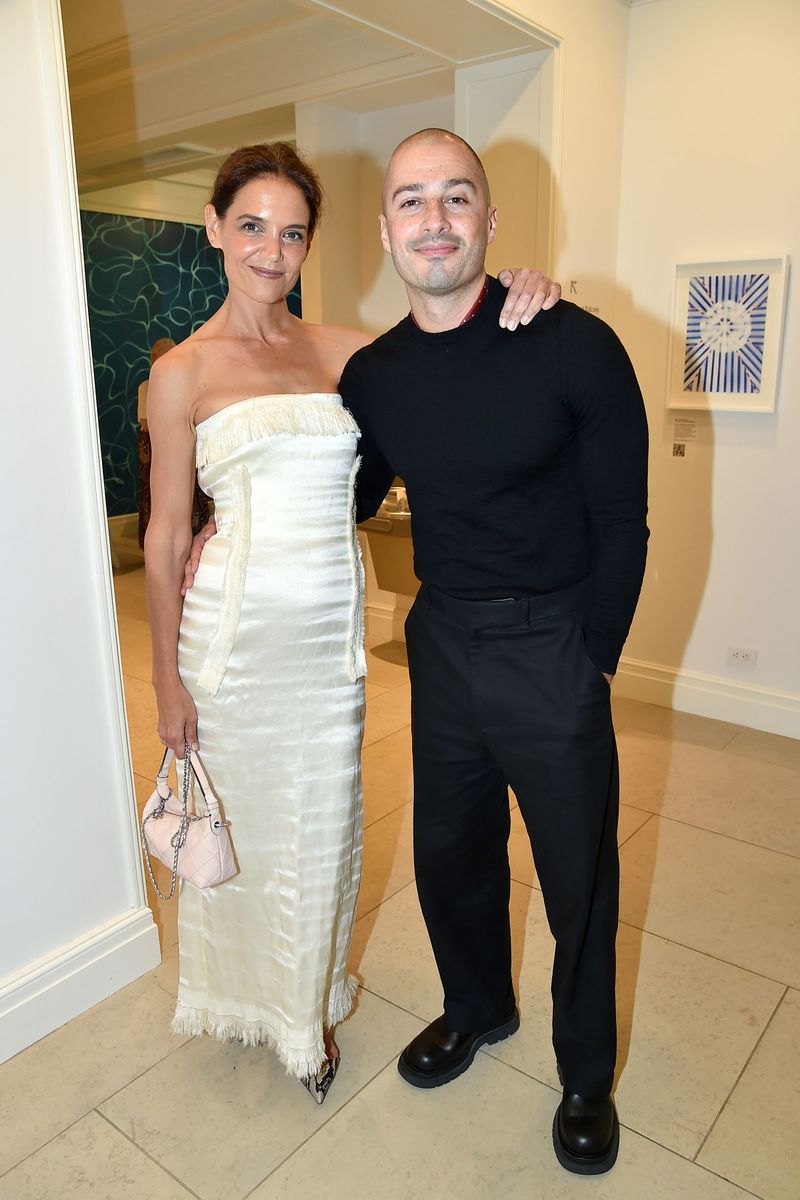
Katie Holmes and Jason Bard Yarmosky attend Guild Hall Summer Gala 2026
It wasn’t their first visit to Lake Como recently, either. The pair reportedly returned to the popular vacation spot after making another trip there just two weeks earlier.
Following their Italian escape, Holmes and Yarmosky headed to France for Paris Fashion Week. They were also among the famous faces attending a party hosted by Carine Roitfeld at the famed caviar restaurant Le Prunier.
Their Romance Has Taken Them From New York To Milan
Holmes and Yarmosky have seemingly made fashion week appearances part of their relationship itinerary.
The couple attended the Calvin Klein show during New York Fashion Week in September before heading to Milan, where they were spotted together at the Tod’s show last week.
Now, they’ve landed in Paris for another round of front-row appearances.
Jason Bard Yarmosky and Katie Holmes at the Michael Kors 45th Anniversary Collection Dinner held at Swifty’s at The Hedges Inn on August 20, 2026 in East Hampton, New York. (Photo by Lexie Moreland/WWD via Getty Images)
Paris Fashion Week’s Spring/Summer 2027 womenswear season kicked off Monday. The nine-day fashion extravaganza is bringing international celebrities and designers to the French capital for dozens of runway shows and presentations.
Among the week’s headline-making appearances was Celine Dion’s surprise performance at L’Oréal Paris’ annual show beneath the Eiffel Tower.
Holmes And Yarmosky Have Been Going Public With Their Romance
The pair’s relationship first sparked speculation in June.
By the following month, Holmes and Yarmosky appeared to confirm they were more than friends when they arrived hand-in-hand at a screening of Olivia Wilde’s sex comedy The Invite.
Earlier this month, Holmes also gave fans a closer look at their relationship by sharing photos from their Italian getaway on Instagram.
The snapshots included romantic images of the couple kissing alongside scenic views from their trip. Yarmosky shared some of the same photos on his own Instagram account, giving the romance another public nod.
With multiple trips, fashion week appearances and plenty of PDA under their belts, Holmes and Yarmosky seem increasingly comfortable letting the world see their relationship.
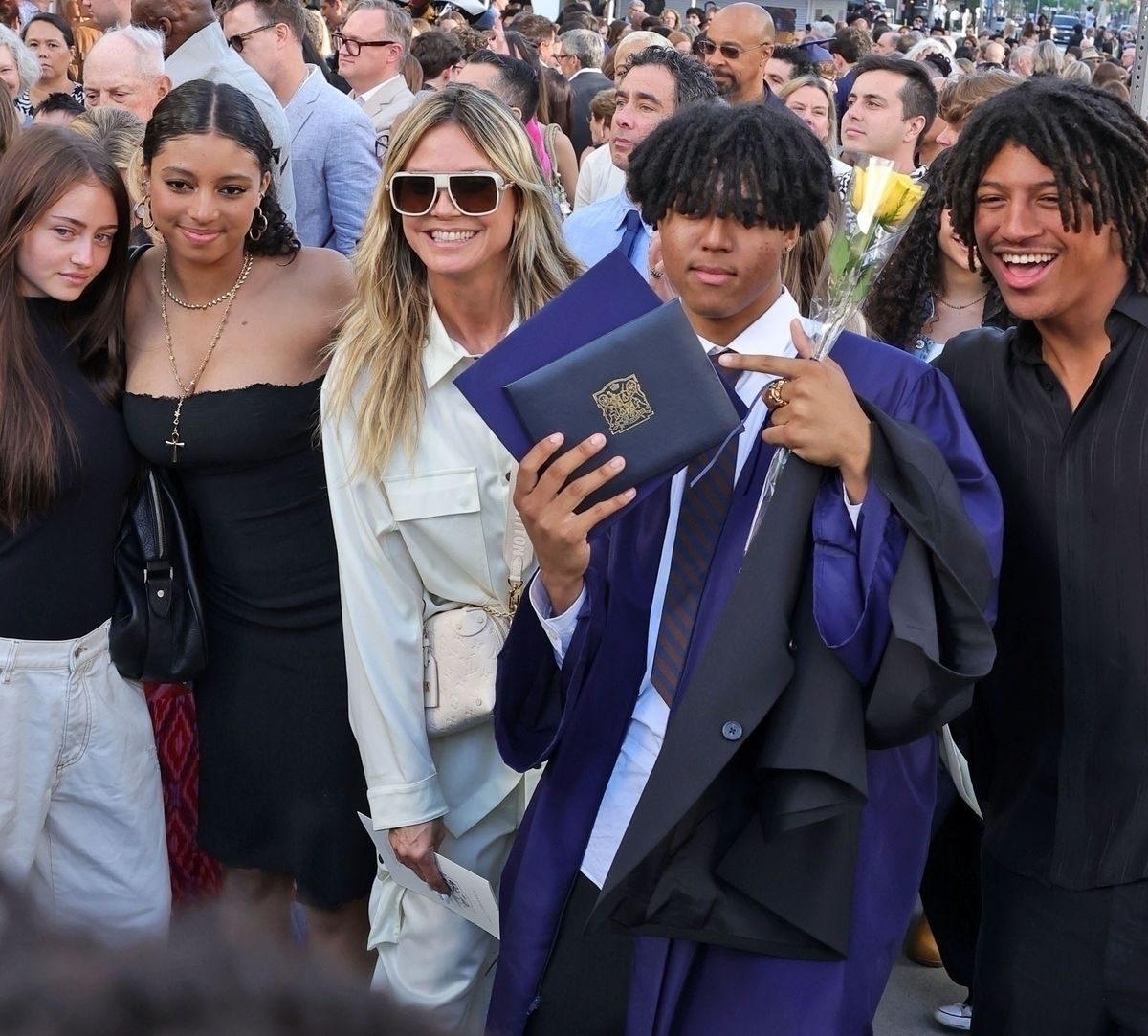
Heidi Klum has spent decades commanding attention at Fashion Week, but this time, the supermodel had a new reason to celebrate in Paris.
Klum’s youngest daughter, Lou Sulola Samuel, 16, made her Paris Fashion Week debut on Oct. 3, stepping into the high-fashion scene alongside her famous mom for the Vivienne Westwood Spring/Summer 2027 show. The appearance was a milestone for Lou, who has largely maintained a private life despite growing up with two world-famous parents.
Lou Sulola Samuel and Heidi Klum at the Vivienne Westwood fashion show as a part of Paris RTW Spring/Summer 2027 fashion week
And there was extra meaning behind the mother-daughter trip. Lou turns 17 on Oct. 9, and Klum revealed that Paris Fashion Week was an early birthday gift for her youngest daughter.
You may also like
Continue reading
Heidi Klum Brings Daughter Lou to Paris Fashion Week
For her first official Fashion Week experience in Paris, Lou joined Klum in the front row at the Andreas Kronthaler for Vivienne Westwood Spring/Summer 2027 show.
The teenager did not walk the runway. Rather, her debut marked her first Paris Fashion Week appearance and a chance to experience a major designer show from the front row.
Lou Samuel, Heidi Klum and Paris Jackson attend the Vivienne Westwood Womenswear Spring/Summer 2027
Klum explained to British Vogue that she wanted the occasion to be special because of her connection to Vivienne Westwood and creative director Andreas Kronthaler.
The supermodel called the Paris getaway a “little early birthday present” for Lou and said she believed the Westwood show would be the ideal first Fashion Week experience for her daughter.
Lou Sulola Samuel attends the Andreas Kronthaler for Vivienne Westwood show during Paris Fashion Week Womenswear Spring/Summer 2027
Klum certainly knows the territory. Just one day earlier, the 53-year-old model had walked the Ottolinger Spring/Summer 2027 runway during Paris Fashion Week.
Lou Samuel’s Vivienne Westwood Look Had a Gen Z Twist
Lou made her arrival memorable with a youthful take on Vivienne Westwood’s signature dramatic silhouettes.
The 16-year-old wore an acid-wash pink denim ensemble featuring a structured corset-style top with a flared peplum and a coordinating asymmetrical miniskirt. She completed the outfit with towering floral platform shoes and a snakeskin-print shoulder bag.
Her long brunette curls were worn loose and voluminous, giving the polished Fashion Week outfit a more relaxed feel.
Klum coordinated with her daughter without completely matching her. The supermodel chose a sculptural white blazer with exaggerated lapels and a cinched waist, paired with a long white column skirt and platform heels.
Jaden Smith, Lou Sulola Samuel and Heidi Klum attend the Vivienne Westwood Womenswear Spring/Summer 2027 show as part of Paris Fashion Week on October 03, 2026 in Paris, France.
The result was a mother-daughter fashion moment that highlighted their individual styles rather than turning the pair into exact look-alikes.
Lou and Klum also posed at the show alongside Jaden Smith and Paris Jackson, making Lou’s first major Paris fashion event a particularly star-packed introduction.
Lou Samuel Admits She Was Nervous About Her Fashion Week Debut
Despite growing up around celebrities, photographers and fashion, Lou admitted that her first official Fashion Week experience came with nerves.
Speaking with British Vogue, the teenager explained that being photographed has been part of her life since childhood because of her famous family. Attending a major fashion event, however, felt different.
Lou Sulola Samuel and Heidi Klum attend the Vivienne Westwood Womenswear Spring/Summer 2027 show as part of Paris Fashion Week on October 03, 2026 in Paris, France.
Lou said the experience gave her an opportunity to express herself and show more of who she is rather than simply being photographed because of her parents. She also admitted she was “totally nervous” because it was her first time attending an event of this kind.
That distinction could prove important if Lou decides to pursue fashion professionally. Her Paris appearance allowed her to enter the spotlight on slightly different terms, with fashion and personal style at the center of the conversation.
Could Lou Samuel Follow Heidi Klum Into Modeling?
Lou has not announced plans to become a professional model, so her Paris Fashion Week appearance should not be mistaken for confirmation of a modeling career. Still, fashion already runs through the Klum family.
Her older sister Leni Klum, 22, has established a modeling career of her own, while her brother Henry Samuel has also entered the industry. Henry made his runway debut at the Lena Erziak Spring 2025 Couture show and has since appeared at additional fashion presentations.
Heidi Klum with all 4 of her kids Leni, Lou, Johan and Henry.
Lou told British Vogue that she does not necessarily seek fashion advice from her siblings. Instead, watching them pursue their own careers gives her confidence because they share a similar upbringing.
Whether Lou ultimately follows Leni, Henry and Heidi into modeling remains an open question.
Who Is Heidi Klum’s Daughter Lou Samuel?
Lou Sulola Samuel is the youngest of Heidi Klum’s four children. She is Klum’s daughter with singer Seal, alongside sons Henry and Johan. Klum’s eldest daughter, Leni, is from her previous relationship with Flavio Briatore, and Seal later adopted her.
Lou Samuel and Heidi Klum attend the BoF500 Gala during Paris Fashion Week
Compared with Leni, Lou has generally stayed away from major public appearances. That made her Paris Fashion Week outing particularly notable. With her 17th birthday arriving just days after the event, the trip also marked a new chapter for the teenager.
Whether that chapter eventually includes modeling remains to be seen. But for one weekend in Paris, Lou got a firsthand introduction to the fashion world her mother has inhabited for decades.
On Sunday night, John Oliver dedicated the majority of his Emmy-winning show “Last Week Tonight” to the Secret Service’s failings in recent years while declining to address the major media news of the week: David Ellison’s newly-formed Skydance Corp. swallowing up Warner Bros. Discovery — which controls Oliver’s network HBO — and merging it with Paramount Skydance to form a mega-company.
So, would his late-night compatriot Jon Stewart give his two cents on the merger during Mondays’ episode of “The Daily Show,” since it’s also a part of Skydance Corp.?
Apparently not.
Stewart dedicated the show entirely to AI, first ripping apart AI leaders’ empty promises of job creation, economic prosperity and its ability to cure cancer while admitting that there’s a 10-25% chance it will kill us all. Currently, however, AI is primarily being used for ICE and other surveillance, drone warfare targeting and potential dynamic pricing at places like McDonald’s.
“What are we getting in exchange for this 10-25% chance at extinction?” asked Stewart, adding, “Right now it’s mostly murder, surveillance and surge pricing for the McRib? What a trade! I’m getting the sense that you guys might be full of shit.”
The comedian also pushed back at President Trump allowing these AI companies to self-regulate after his recent fawning AI summit, since the Zuckerberg’s and Musk’s of the world don’t exactly have a sterling track record when it comes to playing it safe. There’s also the matter of how many jobs AI will eliminate. Though AI leaders keep repeating over and over that the technology will lead to newer, different jobs and an economic windfall for everybody, they can’t say what jobs it would create or how it will economically benefit everyday people.
“The view of our self-policing geniuses is that the new world that we are building must continue without regulation or financial limitation because it’s important work carried out by important people,” offered Stewart. “And my guess is: They’ll still have jobs when this is done… Stop lying to us! Claims of universal high income and incredible hobbies isn’t going to paper over how frightening this future can sound.”
The “Wall Street” actor, who is the son of the late Hollywood legend Kirk Douglas, opened up on a recent episode of the “SmartLess” podcast and said the title “really pisses” him off.
While discussing his success with hosts Sean Hayes, Jason Bateman and Will Arnett, Douglas said, “Well, first of all, you know, Hollywood royalty. I mean… this ‘nepo’ thing really pisses me off.” He continued: “I don’t know a career where a father or mother don’t try to help their son or daughter get into their business and this and that, and why they picked on this because of the well-known aspect of it.”
Beyond the discussion of nepotism, Douglas also noted that the best advice he could give to aspiring actors is to recognize “good material.” “The problem we all have is we don’t play an instrument, or we don’t paint, or we don’t write,” he said. “We’re standing there. But a good piece of material, man, a good piece of material helps things along well.”
His father, Kirk, died in 2020 at 103. He starred in films including “Spartacus,” “Seven Days in May,” “20,000 Leagues Under the Sea,” “Champion,” “The Bad and the Beautiful,” “Lust for Life,” “Paths of Glory” and “Lonely Are the Brave.” He earned three Oscar nominations and was awarded an honorary Oscar in 1996.
Douglas is known for his turns in “Fatal Attraction,” “Behind the Candelabra” and more films. Douglas has won one Oscar for acting and one for producing; he took home the trophy for best actor in a leading role in 1988 for “Wall Street” and best picture in 1976 as a co-producer of “One Flew Over the Cuckoo’s Nest.”
Douglas’ forthcoming memoir, “One Helluva Ride,” comes out Tuesday.
Picked among 50 submissions from Eurimages member states, the 10 selected series will vie for the coveted €50,000 ($56,000) Council of Europe Series Co-Production Development Award.
TV Beats co-heads Roosa Toivonen and Petri Kemppinen
Credit: TV Beats
“Never before have we welcomed that many big names and companies,” said Petri Kemppinen, co-head of TV Beats, alongside Roosa Toivonen.
This year’s crop hails from Belgium, Czechia, Estonia, Finland, Iceland, Ireland, Lithuania, Poland, Spain, and co-production partner Canada. As underscored by Toivonen, the geographical spread mirrors TV Beats’ core which is “to act as a bridge between the Baltics, Central Eastern Europe, and the Nordics. Three territories – Czechia, Finland, and Estonia – topped the list of applications.
“Estonia is very dynamic in TV drama, and we did receive more applications than from Lithuania and Latvia,” said Toivonen who mentioned the catchy story of “Stormbird,” about a young female fugitive, under Soviet-occupied Estonia in 1949. Also from Estonia is the fast-paced YA drama “Breaking the Ice,” produced by Jevgeni Supin, who was distinguished last year with an Honorary TV Beats Producer Award.
TV Beats co-heads also pointed at the larger number of projects in early development compared to previous years, set to make their very first pitch in Tallinn. “Obviously the hefty €50,000 development award from the Council of Europe is a major draw in today’s touch times for indie producers who struggle to gather development money when commissioners and public funders are cutting back. They need co-production partners to lift their projects,” Kemppinen said.
Theme-wise, in an age of distrust and as the Baltics and CEE feel the heat from Russian threats, espionage is the beating heart of three shows (“Tanner,” “Fortel,” “The Woman Who Roared”), while oppressive regimes, systems or leaders -even disguised as devils-feature in the remaining slate, next to the ever-popular crime bets.
Next to the TV Beats Co-Financing Market slate, more than 20 other top-tier series looking for additional financing, distribution and sales, will bow at ‘TV Beats Screenings’ and ‘TV Beats Coming Soon’, to be unveiled at a later date.
The TV Beats Forum is part of the Tallinn Black Nights Film Festival’s industry platform Industry Tallinn & Baltic Event, running over Nov 9-20.
Full rundown of TV Beats Co-Financing Market lineup:
“Breaking the Ice” (“Päike mis sulatab jääd,” 6X45’, Estonia) Young adult drama from Estonian powerhouse Zolba Productions (“Von Fock”, “My Dear Mother,” “A Girl From Tallinn”), co-penned and co-created by the seasoned Leana Jalukse (“Mother”, “Von Fock”) and German screenwriting expert Joachim Friedmann.
Beneath the polished surface of Estonia’s elite ice rinks, a Russian hockey prodigy ruled by his violent father and an Estonian figure skater groomed by a manipulative coach fall in love across a national divide. “Breaking the Ice” is not another fast-paced feel-good love story on skates,” says producer Jevgeni Supin. “Our series looks beneath the polished surface of youth sport, where abuse by parents and coaches is often disguised as pursuit for excellence. At its heart, it’s is a story about two young people who find the courage, through love, to break this cycle.”
“Fortel” (8X45’, Poland)
Credit: Apple Film Production
Legendary Polish film mogul and director Dariusz Jabłoński (“The Pleasure Principle,” “The Cop-A New Chapter”), serves as creator and showrunner of this spy thriller penned by US screenwriter Marc Grey, episodic writer of Apple TV’s International Emmy-winning show “Tehran.”
Jabłoński’s own pedigreed banner Apple Film Production is producing for commercial giant Polsat. The core of the action is the little-known Polish town of Rzeszów close to the Ukraine border which has turned into a spy nest and arms dealing platform. The story tracks a CIA officer who sets a trap for Russian saboteurs, targeting confidential Western arms shipments while secretly searching for his missing brother, who may hold the key to the leak, says the logline.
“Fortel” is about the history we’re living through right now, in real time, two hours from my home,” Jabłoński tells Variety. “Rzeszów is a city that woke up one morning to find itself at the center of the war, with no instruction manual and no way out. I want to make a thriller that feels the way the war feels – chaotic, morally unresolved and shot through with unexpected moments of humanity, with a cast drawn from several of the countries involved. A Polish-based story that the whole world needs to see right now,” he claims.
“Happy New Year!” (“Laimingų Naujų!” 10X21’, Lithuania)
Credit: Big Drama
Created and helmed by rising talent Montis Norvaisis for his outfit Big Drama, setup with producer Lineta Lasiauskaitė. The drama turns on a young woman, victim of spike drinking at a lavish New Year’s Eve party in a remote manor. When the guests refuse to confront the crime, her best friend seeks justice herself. Norvaisis will draw from his own experience to portray a raw and authentic portrait of New Year’s Eve youth parties.
“Kalmann” (6X45’, Iceland, Finland, Estonia) TV adaptation of Icelandic-Swiss crime author Joachim B. Schmidt’s “Kalmann” book series, penned by María Heba Þorkelsdóttir and Kristófer Dignus who directs.
Produced by Kontent’s Guðný Guðjónsdóttir and Sara Djeddou Baldursdóttir, who have attached Iceland’s main streamer Síminn and co-pro partners Snapper Films from Finland and Cuba Films from Estonia. Headlining the show is the eccentric sheriff Kalmann, who uses unique instincts to solve murders.
“’Kalmann’ sits within the internationally established Nordic crime space, but brings warmth, humor, melancholy and humanity to the genre alongside a compelling murder investigation,” says Baldursdóttir, who plans to use TV Beats to test the show’s concept, tone and international potential. Production is set to start in the fall 2027.
“Intimacy on Prescription” (“Intimita na předpis, 8X60’, Czechia) “Can good sex save every marriage,” says the logline about the tragicomedy set in 1970s Czechoslovakia, and inspired by the real story of Stanislav Kratochvíl, a pioneer of couples sex therapy. The show, helmed by established theater and film director Jiří Havelka (“Owners”), is set in a psychiatric clinic, where couples are invited to say out loud what society, marriage and shame have taught them to hide.
“For us, ‘Intimacy’ is not only about sex, but about the courage to speak honestly about desire, fear, shame, power and the need to be seen by the person closest to you,” says producer Karolina Zalabáková, who looks forward to pitching in Tallinn this story “strongly rooted in Czech and Czechoslovak history” with “emotional themes that are universal and highly exportable.” The screenplay from head-writer Kristina Májová, co-written with Matěj Randár and Jan Smutný, is based on an original idea by Kateřina Kořínková.
“Stormbird” (“Tormilind,” 5X42’, Estonia)
Credit: Meteoriit
Historical thriller from acclaimed filmmaker Kadri Kõusaar, credited for the Cannes Un Certain Regard’s “Magnus” and Estonia’s Oscar pick “Mother.” Set in 1949, under Soviet occupied Estonia. After killing soldiers who attack her family, Lee (18), known as ‘Stormbird’, becomes a fugitive and joins the Forest Brothers band led by “Geronimo” to rescue her imprisoned brother, Uku. Hunted by the Red Army, she fights to survive, while her childhood friend Reinhardt becomes her enemy. producer Aet Laigu says “Stormbird” “is first and foremost a story about people trying to survive and forced to make impossible choices under occupation.” It’s also a unique take of a “rarely seen part of European history”, depicted through a young woman’s eyes, turning on topical themes such as freedom, resistance and identity.
“Tanner” (6X50’, Ireland, Canada) Produced by Fíbín Films’ Bernie Hoban and Darach Ó Tuairisg, co-produced by Fraser Ash and Kevin Krikst for Canadian power-player Rhombus Media, attached to HBO’s Emmy nominated “The Sympathizer.”
The story created and penned by Keith Hodder, with Damian McCann and Sarah Gordon turns on a former Irish intelligence officer who returns home to investigate a missing teenager and uncovers a tech-powered conspiracy reaching from elite schools to the highest levels of government. Hoban says “Tanner” stands out thanks to its unique world “rarely seen before, the Irish intelligence services operating in a country whose prosperity is increasingly intertwined with some of the world’s most powerful multinational corporations, creating fascinating tensions between democracy, sovereignty and corporate influence.”” Through a uniquely Irish lens, “Tanner” tackles themes that resonate across the world while anchoring them in the journey of an unforgettable protagonist – a deeply flawed investigator whose greatest gift may also be his undoing,” she adds.
“The Inheritance” (“De Erfenis,” 6X45’, Belgium) From fast-expanding powerhouse Panenka behind the New8 hit show “This is Not a Murder Mystery” and Series Mania 2025 Special Mention winner “Putain.” Commissioned by leading Flemish broadcaster VTM. Created and penned by Alexandra Jans with Jan Van Dyck for producers Kato Maes, Kristoffel Mertens and Karlijn Van de Cruys. Psychological thriller set against the world of animal welfare and hunting. When Hanne, a staff member of a struggling animal rescue, unexpectedly becomes executor of a wealthy hunting family’s estate, a bitter battle over the inheritance erupts. Van de Cruys says the show will draw from its breathtaking location-Belgium’s largest national park of Limburg’s Hoge Kempen, and the personal take from Jans who has crafted the story out of her own personal experience.
“The Woman Who Roared” (4X45’, Finland)
Credit: Olga Dimenshtein/Sons of Lumière
From box-office hit habitué, actor and filmmaker Pamela Tola (“Ladies of Steel,” “Bad Apples”). Dramedy in which the recently widowed Leena (65) discovers that the Helsinki Zoo is actually an arena where international spies gather. She believes the place is linked to a top-secret nuclear weapon her late husband had hidden.
“The Woman Who Roared” offers a fresh take on the spy genre – thrilling, funny, and full of heart,” says producer Mete Sasioglu of Sons of Lumière, who will be looking for co-producers, especially from France, Eastern Europe and the Nordics in Tallinn.
“When Devils Rule” (“Los demones mandan,” 6X35’, Spain) Darkly humorous political thriller with supernatural elements from the team behind Movistar Plus’ anticipated “Patagonia.” Atlantika Films’ Nano Arrieta-creator and producer with Claudia Ruíz — shares the writing room with Popy Blasco, Ibai Ariztegi and Bárbara Zemelman. In a world fractured by power, fear and political extremism, a group of women uncovers a demonic force operating at the highest level of society-and realizes the chaos around them may be part of a much darker design.
Apple Martin has officially gone from fashion campaign star to runway model. The 22-year-old daughter of Gwyneth Paltrow and Coldplay frontman Chris Martin made her runway debut on Thursday, Oct. 1, stepping onto the catwalk for Chloé’s Spring/Summer 2027 show during Paris Fashion Week.
For the milestone moment, Martin wore an airy white maxi dress that leaned fully into the romantic, free-spirited aesthetic associated with Chloé under creative director Chemena Kamali.
PARIS, FRANCE – JANUARY 24: (EDITORIAL USE ONLY – For Non-Editorial use please seek approval from Fashion House) Apple Martin attends the Chanel Haute Couture Spring Summer 2023 show as part of Paris Fashion Week on January 24, 2023 in Paris, France. (Photo by Pascal Le Segretain/Getty Images)
And while Martin has spent the past few years steadily building a fashion résumé, walking a Paris Fashion Week runway puts her in an entirely new category.
Apple Martin makes her runway debut at Paris Fashion Week
Martin made her first-ever runway appearance at Chloé’s Spring/Summer 2027 ready-to-wear show in Paris, where she joined an established cast that included models Mona Tougaard, Edie Campbell, Mariacarla Boscono and Eva Herzigová. Cynthia Erivo and Claire Danes were among the famous faces watching from the front row.
Apple Martin makes her runway debut at Paris Fashion Week, walking for Chloé in a plunging white dress as her fashion and acting career takes off.
The debut came at a particularly high-profile show for the French fashion house. Chloé presented its collection at the historic Paris Observatory, with Claudia Schiffer also among the celebrity guests. Kamali’s Spring/Summer 2027 collection, titled “Obsession,” revisited elements from Chloé’s archives while mixing delicate lace, lingerie-inspired details and broderie anglaise with more substantial outerwear.
She walked in a billowing white dress featuring a plunging neckline, ruffled details, dramatic sleeves and intricate eyelet cutouts. The romantic design extended to a scalloped hem, while light brown platform shoes added serious height to the look.
She walked in a billowing white dress featuring a plunging neckline, ruffled details, dramatic sleeves and intricate eyelet cutouts.
Her beauty look remained understated. Martin wore her long blonde hair loose in soft waves and kept her makeup minimal, allowing the bohemian dress to command most of the attention.
At points during her walk, she slipped her hands into the dress’s pockets, giving the elaborate look a more relaxed feel.
At points during her walk, she slipped her hands into the dress’s pockets, giving the elaborate look a more relaxed feel.
Apple Martin’s Chloé relationship started before the runway
The Paris Fashion Week appearance was not Martin’s introduction to Chloé. Earlier in 2026, she became the face of the fashion house’s Chloé à la Plage summer collection. The campaign, photographed by David Sims, placed Martin in a surreal beach setting and featured airy dresses, broderie anglaise pieces, beachwear and accessories.
That campaign made her runway appearance feel like a natural progression in her relationship with the label.
Apple Martin attends the Chanel Haute Couture Spring Summer 2023 show
Martin has also worked with Self-Portrait and GapStudio. Vogue notes that she appeared in a GapStudio campaign alongside her famous mother, giving the mother-daughter pair another fashion connection beyond Martin occasionally dipping into Paltrow’s wardrobe.
Her modeling career began gaining momentum in 2025. She appeared in a Self-Portrait resortwear campaign that October and returned for the label’s Spring 2026 campaign.
Now, she can add Paris Fashion Week runway model to the list.
Jennifer Garner is taking a trip down memory lane with one of her former Alias co-stars and ex-boyfriend, Michael Vartan.
The actress recently reunited with Vartan as she celebrated the 25th anniversary of the hit spy series that helped launch her into stardom.
Garner shared a rare photo with Vartan as part of an Instagram video commemorating the show’s milestone on Sept. 30.
Garner and Vartan Reunite for Alias Anniversary
In the selfie, the 54-year-old actress smiled alongside Vartan, 57, while wrapping an arm around him. Garner wore a black pullover, while Vartan kept things casual in a chambray button-down, glasses and a New York Mets baseball cap.
The former couple dated briefly in 2003, during a break between Garner’s marriages to Scott Foley and Ben Affleck.
Jennifer Garner Instagram
“They were my whole world, the cast and crew, and they still are,” Garner said in a voiceover accompanying the video. “All these years later, we’ve been together. We’re a little band that’s gone together for the past 25 years.”
Garner’s tribute also featured photos with several other Alias favorites, including Victor Garber, Ron Rifkin, and Merrin Dungey, as well as series creator and director J.J. Abrams.
Jennifer Garner Reflects on Sydney Bristow
Garner starred as CIA operative Sydney Bristow throughout the show’s five-season run from 2001 to 2006. Looking back on landing the role, she said the character was unlike anything she had previously done.
“Alias was so far outside of anything I had done,” Garner recalled. “No one had thought of me for action. No one had thought of me for a tough role.”
You may also like
Continue reading
The role ultimately had a lasting impact on her both personally and professionally.
Garner, who shares daughters Violet, 20, and Seraphina, 17, and son Samuel, 12, with Affleck, said portraying Sydney “changed me as a person.”
“I walked differently after I played Sydney,” she added. “It’s something I’m so proud to be a part of.”
What Michael Vartan Has Been Up To
While Garner has remained a familiar face on screen, Vartan has largely stepped away from the Hollywood spotlight in recent years.
His most recent film role came in 2017, when he played a detective in the independent thriller Small Town Crime. He later made a guest appearance on the CBS comedy God Friended Me in 2018.
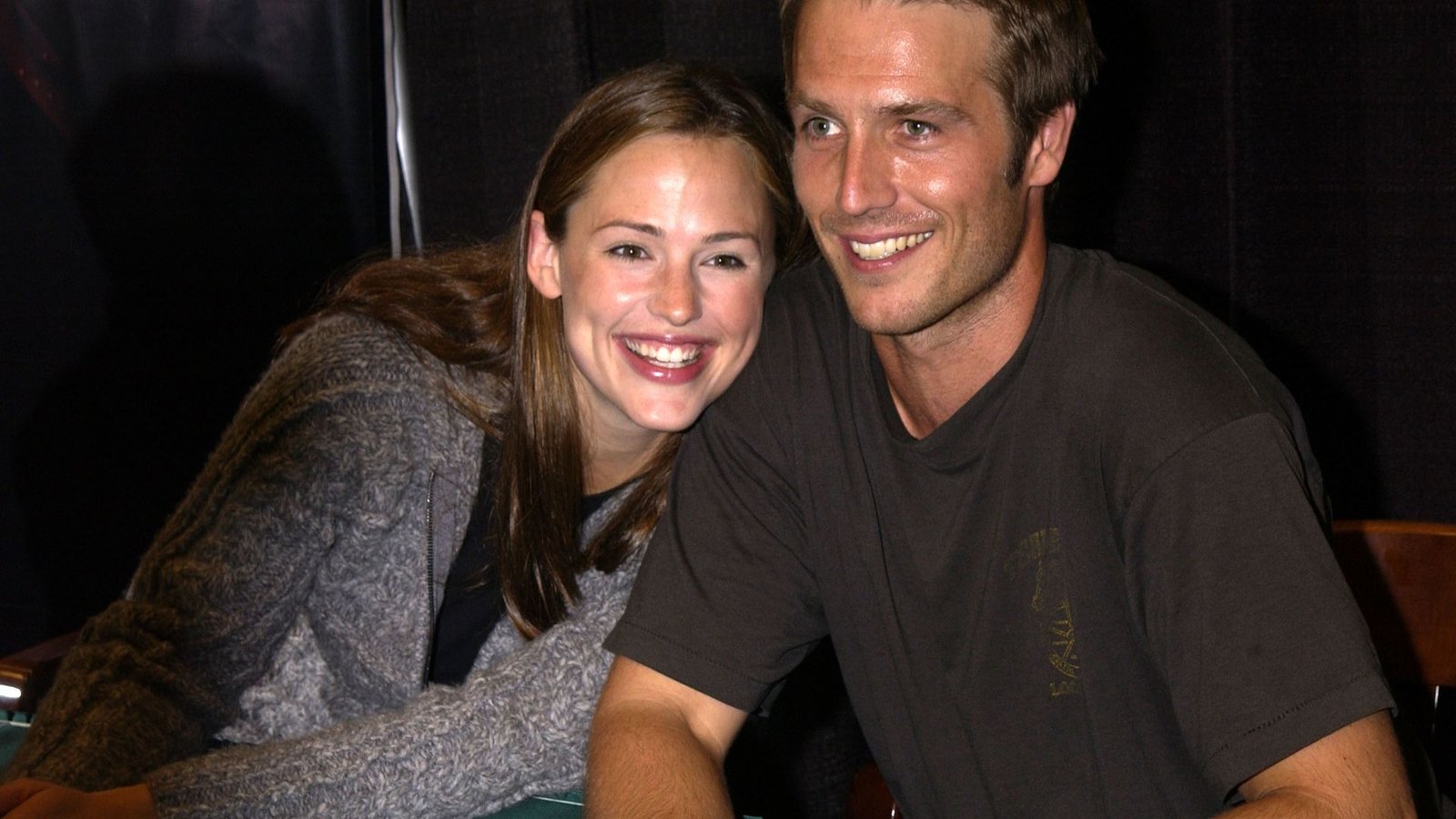
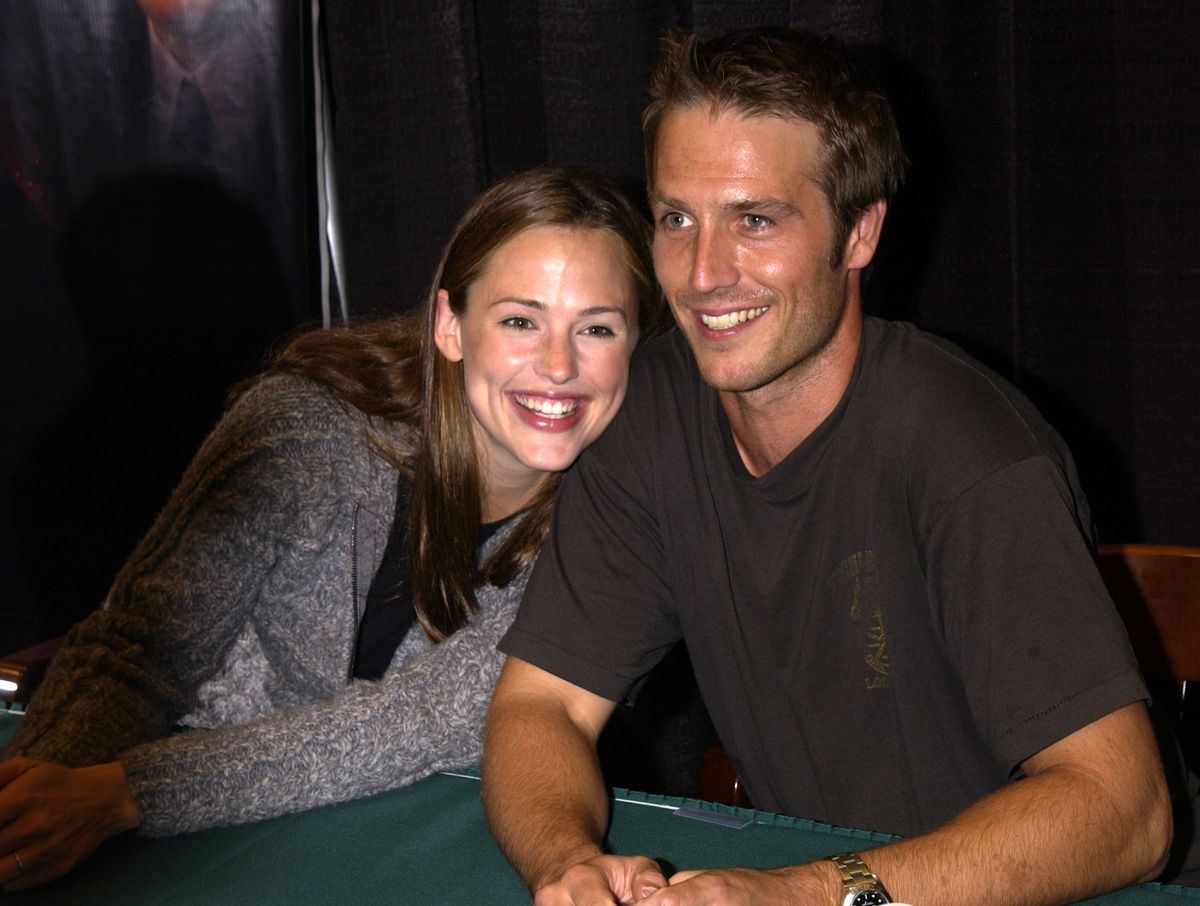
Jennifer Garner and Michael Vartan (Photo by Albert L. Ortega/WireImage)
Vartan previously opened up about his changing perspective on acting and fame during a 2017 interview with Entertainment Tonight.
“For the first part of my career, I’ve really been an insecure actor,” he said at the time, adding that as he got older, he became less concerned with other people’s opinions and things that ultimately weren’t important.
More than two decades after Alias premiered, Garner and Vartan’s reunion shows that the former co-stars have kept their connection alive long after the cameras stopped rolling.
Dakota Johnson had a little help from one of her closest friends when she took the stage for her third time hosting Saturday Night Live.
The actress returned to Studio 8H on Oct. 3, one day before her 37th birthday, with Turnstile serving as the musical guest. Naturally, Johnson used her opening monologue to poke fun at her dating history before getting an unexpected assist from Taylor Swift.
Taylor Swift Plays Dakota’s ‘Therapist’
Johnson kicked off her monologue by talking about her friends and their unwavering support for her romantic choices.
“I have really good friends. They don’t judge me for dating these men; they’re actually really supportive,” she joked, referencing her past relationships with musicians Chris Martin and Role Model.
That’s when Swift, 36, walked onto the stage.
“Ladies and gentlemen, my literal therapist,” Johnson said while introducing the pop star.
“I’m not your therapist, actually,” Swift said. “You just show up once a week at my house with an empty bottle of wine and ask if I want some.”
“Yeah, well, I have manners,” Johnson fired back.
Swift then described Johnson’s supposed therapy sessions, joking that her friend would “flop” onto her couch and overshare before Swift offered the occasional, “Damn, that’s crazy.”
“Is that not a therapist?” Johnson quipped.
Johnson Has A Message For The Women
The Verity star continued poking fun at her romantic history, particularly her tendency to date musicians.
“I’m doing a public service by dating them because ladies, I am saving you a lot of money on Zoloft,” Johnson joked. “So you’re welcome, America! And also England and parts of Ireland and Cleveland, allegedly.”
NEW YORK, NY – SEPTEMBER 13: Dakota Johnson attends day 15 of the 2026 US Open Tennis Championships on September 13, 2026 in New York City. (Photo by XNY/Star Max/GC Images)
Swift responded with an enthusiastic “Woo-woo!” referencing her husband Travis Kelce’s connection to the area.
The surprise appearance also gave Swift a chance to turn heads with her outfit.
Swift And Johnson Bring The Fashion
For her surprise SNL appearance, Swift wore a Wells plaid off-the-shoulder mini dress by Simkhai, paired with a Cassandre Chain Saint Laurent belt and Burberry Pillar leather boots.
Johnson went for a much bolder look, stepping out in a red latex Versace dress from the brand’s Fall 2013 collection.
She completed the outfit with Giuseppe Zanotti Intriigo 90 mules and a Roberto Coin Wide Cobra collar diamonds necklace.
Swift Surprises Johnson Again With Birthday Cake
Swift wasn’t finished with the birthday surprises.
At the end of the show, the singer returned to the stage carrying a turquoise-and-white frosted cake for Johnson.
You may also like
Continue reading
“Thank you for having my birthday with me!” Johnson exclaimed as she jumped up and down before embracing her longtime friend.
The sweet moment capped off an already memorable night for the actress.
The Friends Have Been Close For Years
Johnson and Swift have maintained a friendship for several years, and the actress has been part of some major moments in the singer’s life.
Johnson attended Swift’s star-studded July wedding to NFL star Kelce, 36.
The actress also appears in Swift’s latest music video for “Patient Zero,” which is featured on the deluxe edition of The Life of a Showgirl, which premiered at the 2026 MTV Video Music Awards.
Just days before her SNL hosting gig, Johnson had another major Swift-related moment. She presented the singer with the first-ever Artist Director Honors award during the Sept. 27 ceremony.
From award shows to weddings and now SNL, these two clearly know how to show up for each other.
Mike Leigh is bringing love and care to the Golden Globes’ comedy race.
Bleecker Street will submit “Tender Loving Care,” Leigh’s likely final film, in the musical or comedy categories at the upcoming 84th Golden Globes, Variety has learned exclusively.
Marion Bailey will compete for best actress in a musical or comedy, where she is expected to face contenders including Julianne Moore (“The Debut”), Inde Navarrette (“Obsession”) and Olivia Wilde (“The Invite”). Kate O’Flynn, Alice Bailey Johnson and Paul Jesson will compete in the supporting acting races, which the Globes do not divide by genre. The submissions mirror the studio’s overall acting strategy heading into the Oscar campaign.
The news comes a week after Focus Features submitted “Obsession,” Curry Barker’s horror breakout, as a comedy — a classification that prompted plenty of head-scratching among awards pundits and moviegoers on social media. Leigh’s film, however, seems like a more natural fit. It can be argued that Leigh has never really made comedies or dramas; rather, he makes films about life, which tends to be both at once.
“Tender Loving Care” follows Amy (O’Flynn), a London social worker who moves in with her friend and colleague Rosie (Johnson) after a breakup. Meanwhile, Amy’s parents, Birdie (Bailey) and Geoff (Jesson), navigate the indignities of getting older. Drunken singalongs and kitchen dancing sit alongside hospital visits, with the laughs often arriving with a wince attached.
The last time the Golden Globes classified a Mike Leigh film as a comedy, Sally Hawkins walked away with the best actress prize. That was 18 years ago, for “Happy-Go-Lucky,” with a 21-year-old O’Flynn in a small role that marked her first screen job. Coming off her Emmy win for supporting comedy actress in Apple TV’s “Widow’s Bay,” O’Flynn’s momentum is building. She won the Silver Shell for best leading performance at the San Sebastian Film Festival in September, where the film also took the Golden Shell and the best screenplay prize.
For Bailey, the Globes push represents long-overdue recognition for the veteran performer. Leigh’s real-life partner and a longtime member of his acting company, she previously played Sophia Booth, J.M.W. Turner’s Margate landlady and companion, in his 2014 film “Mr. Turner.” In “Tender Loving Care,” she acts opposite her real-life daughter, Johnson, who plays Amy’s best friend.
Leigh’s films have earned six Golden Globe nominations across three titles throughout his career, with two of his leading ladies taking home trophies. “Secrets & Lies” scored three nominations, including best motion picture (drama) and supporting actress for Marianne Jean-Baptiste, while Brenda Blethyn won best actress in a drama. Imelda Staunton also earned a nomination in the same category for her critically acclaimed titular role in “Vera Drake.” Then came “Happy-Go-Lucky,” which landed a best motion picture (musical or comedy) nom alongside Hawkins, who won best actress. The film, and Hawkins’ performance, failed to translate into an Oscar nom.
Shockingly, Leigh himself has never been nominated at the Globes for either directing or screenwriting, despite garnering seven Oscar noms throughout his career. “Topsy-Turvy,” “Another Year,” “Mr. Turner” and “Hard Truths” all came up empty.
After a 50-year career, Bleecker Street is hoping to get Leigh the recognition he deserves. The company will release “Tender Loving Care” in theaters Dec. 4. The 84th Golden Globe nominations will be announced Monday, Dec. 7, and the ceremony, hosted by Nikki Glaser, is set for Sunday, Jan. 10.
Best Picture (Drama) “Dune: Part Three” (Warner Bros.) “Fjord” (Neon) “I Play Rocky” (Amazon MGM Studios) “La Bola Negra” (Netflix) “The Odyssey” (Universal Pictures) “Wildwood” (Laika)
Best Picture (Comedy or Musical) “The Debut” (A24) “The Invite” (A24) “Michael” (Lionsgate) “Project Hail Mary” (Amazon MGM Studios) “Tender Loving Care” (Bleecker Street) “Wild Horse Nine” (Searchlight Pictures)
Actor (Drama) Matt Damon, “The Odyssey” (Universal Pictures) Pedro Pascal, “Behemoth!” (Searchlight Pictures) Robert Pattinson, “Primetime” (A24) Andrew Scott, “Elsinore” (Focus Features) Sebastian Stan, “Fjord” (Neon) John Turturro, “The Only Living Pickpocket in New York” (Sony Pictures Classics)
Actor (Comedy or Musical) Tom Cruise, “Digger” (Warner Bros.) Ryan Gosling, “Project Hail Mary” (Amazon MGM Studios) Jaafar Jackson, “Michael” (Lionsgate) John Malkovich, “Wild Horse Nine” (Searchlight Pictures) Brad Pitt, “The Further Mis-Adventures of Cliff Booth” (Netflix) Seth Rogen, “The Invite” (A24)
Actress (Comedy or Musical) Marion Bailey, “Tender Loving Care” (Bleecker Street) Julianne Moore, “The Debut” (A24) Inde Navarrette, “Obsession” (Focus Features) Meryl Streep, “The Devil Wears Prada 2” (20th Century Studios) Olivia Wilde, “The Invite” (A24) Zendaya, “The Drama” (A24)
Supporting Actor Colman Domingo, “Michael” (Lionsgate) Andrew Garfield, “Artificial” (Neon) Guitarricadelafuente, “La Bola Negra” (Netflix) Paul Giamatti, “The Debut” (A24) John Leguizamo, “The Odyssey” (Universal Pictures) Sam Rockwell, “Wild Horse Nine” (Searchlight Pictures)
Supporting Actress Gemma Chan, “Josephine” (Sumerian Pictures) Penélope Cruz, “The Invite” (A24) Anne Hathaway, “The Odyssey” (Universal Pictures) Scarlett Johansson, “Paper Tiger” (Neon) Samantha Morton, “The Odyssey” (Universal Pictures) Kate O’Flynn, “Tender Loving Care” (Bleecker Street)
Director Javier Ambrossi and Javier Calvo, “La Bola Negra” (Netflix) Jesse Eisenberg, “The Debut” (A24) Martin McDonagh, “Wild Horse Nine” (Searchlight Pictures) Christopher Nolan, “The Odyssey” (Universal Pictures) Denis Villeneuve, “Dune: Part Three” (Warner Bros.) Olivia Wilde, “The Invite” (A24)
Screenplay “The Debut” (A24) — Jesse Eisenberg “Dune: Part Three” (Warner Bros.) — Brian K. Vaughan, Denis Villeneuve “The Invite” (A24) — Rashida Jones and Will McCormack “Fjord” (Neon) — Cristian Mungiu “The Odyssey” (Universal Pictures) — Christopher Nolan “Wild Horse Nine” (Searchlight Pictures) — Martin McDonagh
Original Score “Behemoth!” (Searchlight Pictures) — James Newton Howard, Alan Silvestri, Brandon Roberts, Michael Abels, Emily Bear, Lukas Frank, Michael Giacchino, Henry Jackman, Nami Melumad “The Debut” (A24) — Emile Mosseri “Dune: Part Three” (Warner Bros.) — Hans Zimmer “La Bola Negra” (Netflix) — Raül Refree “The Odyssey” (Universal Pictures) — Ludwig Göransson “Project Hail Mary” (Amazon MGM Studios) — Daniel Pemberton
Original Song “The Debut” (A24) — “This City May Have Chewed Me Up (But It Hasn’t Spit Me Out)” (Jesse Eisenberg) “The Devil Wears Prada 2″ (20th Century Studios) — “Shape of a Woman” (Lady Gaga) “La Bola Negra” (Netflix) — “La Nieve” (Guitarricadelafuente and Raül Refree) “The Odyssey” (Universal Pictures) — “When I’m Home” (James Blake and Travis Scott) “Primetime” (A24) — “On Video” (Phoebe Bridgers) “Toy Story 5” (Pixar) — “I Knew It, I Knew You” (Taylor Swift)
International Feature “Fjord” from Romania (Neon) “Godzilla Minus Zero” from Japan (GKids) “La Bola Negra” from Spain (Netflix) “Minotaur” from France (Mubi) “Possible Love” from South Korea (Netflix) “Woman Unknown” from Denmark (U.S. Distributor TBD)
Box Office and Cinematic Achievement “The Devil Wears Prada 2” (20th Century Studios) “Michael” (Lionsgate) “Mr. Irrelevant” (Paramount Pictures) “Obsession” (Focus Features) “The Odyssey” (Universal Pictures) “Project Hail Mary” (Amazon MGM Studios) “Spider-Man: Brand New Day” (Sony Pictures) “Toy Story 5” (Pixar)
Variety parent company Penske Media Corporation owns Golden Globes producer Dick Clark Prods. in a joint venture with Eldridge.
David Ellison moved mountains and fought off many detractors in his quest to acquire Warner Bros. Discovery. Now, as the transition is set to formally close on Oct. 6, the high-wire act is about to begin.
The enlarged entity, to be known as Skydance, will carry a nearly unprecedented level of debt for a large media M&A transaction — a nearly $80 billion chunk — and that leverage will weigh on virtually every decision the company makes over the next three years. By comparison, when Discovery bought WarnerMedia from AT&T, it assumed $43 billion of AT&T’s debt, leaving the new WBD with about $53 billion in gross debt as of June 2022.
Skydance has a tight runway through the end of 2029 to significantly pare down the long-term debt on the company’s books. If Skydance doesn’t hit some very specific targets laid out in its agreements with lenders for reducing its overall leverage ratio, Larry Ellison, the software billionaire and the father of the Skydance CEO, will be on the hook to make up the difference out of his personal wealth.
Analysts from three major credit ratings agencies — Moody’s Ratings, S&P Global Ratings and Fitch Solutions’ CreditSights — say the company is walking a tightrope of having to manage a difficult post-deal integration process at a time when the entertainment landscape continues to evolve in unpredictable ways. Skydance is counting on a of things to right for its key units — from Paramount Pictures and Warner Bros. to HBO Max and Paramount+ to CNN and CBS — while it also faces competitive pressure to invest big in content and improved technology for the aging infrastructure at the legacy Paramount and Warner Bros. in particular.
Barring a box office miracle or windfall of streaming subscribers in the coming months, Skydance is projected to operate for all of 2027 with negative cash flow — which will make it harder to be opportunistic in the marketplace. It’s not an impossible feat. But it will require enormous discipline across the organization to focus on priorities and most important, new pipelines for profit.
“They need to move as quickly as possible to get this leverage down,” says Jawad Hussain, managing director at S&P Global Ratings. “While 2027 is not going to have any cash flow, if [Skydance] does this quickly enough, then by 2028 you’re starting to make money and you can then start paying down your debt. And then in ’29 it can get better. That’s the time frame that they have to do it in.”
The company has committed to achieving $6 billion operational savings over three years. That process will be hard on the organization as much of it will come from staff cuts to address overlapping operations and redeployment of resources.
“Until you own the asset, you can’t necessarily fully know what you need to do,” Hussain says. “We’re hoping to see a nice layout of the strategy and the sequencing and timelines around that. I would say post-Q3 into the end of the year, and then early next year when they report Q4, we’re hoping to see a nice layout of the strategy and the timelines around that.”
Robert Fishman, senior analyst for MoffettNathanson Research, also sees Skydance leaders operating in a tough environment of balancing the need to grow the streaming engines — HBO Max and Paramount+ — without starving the linear channels that still generate the majority of the company’s cash flow.
“The company is going to be forced into choosing where to invest their dollars, led by streaming,” Fishman says. “And they need to make sure that the cash flows they’re shifting toward are not going to be to the detriment of the overall company’s cash flows.”
The transaction that saw the smaller Paramount Skydance take over the larger WBD was enabled through Byzantine financing structures and a consortium of debt partners that include Middle East sovereign wealth funds.
The debt piled on to the new company’s balance sheet has sparked intense scrutiny in business and geopolitical circles, although Skydance has consistently assured leaders and Wall Street that the foreign entities will have no governance role or operational influence on the company.
For media biz analysts, the big question that is unanswerable in the short term is how David Ellison and his newly recruited co-CEO Ynon Kreiz can make the merger math work. In the view of S&P Global’s Hussain and others, the Skydance deal is putting together two media giants that were already struggling to generate consistent profit and cash flows given all the outside pressures in the marketplace.
“Paramount itself was generating a little bit of cash flow. Warner Bros. was generating some cash flow — but they both had their issues,” Hussain observes. “So this has been the big issue for a lot of these legacy media companies. We already saw this with Discovery and Warner Bros. merging [in 2022]. We saw this with Viacom and CBS merging [in 2019] They’ve had a go at it. So the question is: why is this time going to be different?”
Jason Cuomo, senior VP in the corporate finance group for Moody’s Ratings, believes it will take time before investors can really measure the potential of the company. In that sense, the backstop of Larry Ellison’s extraordinary resources is seen by many as the only way that the deal could be completed given how much is at risk. Moody’s has rated Skydance’s debt overall at Ba3, which is one notch below investment grade. That investment rating means the company pays higher interest rates in most cases for the credit facilities and short-term borrowings that are a normal course of business for large enterprises.
“It’s a massive company that is going through a multiyear restructuring. That’s going to mean a lot of disruption and a lot of change at the highest levels,” says Cuomo.
“A key support for the credit profile is the controlling shareholder’s [the Ellison family] commitment to backstop the company’s target leverage at the end of 2028 and 2029. If that commitment wasn’t there, our view of this credit profile and the risk would be greater. It effectively will reconcile the divide between what the company hopes to achieve in two to three years and what the commitment is. They’re committed to close that gap. That is one of the material risks that exist.”
S&P Global and CreditSights give Skydance slightly higher ratings that push them over the edge into investment grade territory that was essential for a company shouldering so much debt. S&P Global and others calculate Skydance in 2026 and 2027 as having a debt-to-earnings ratio of 7. The goal is to chop that down to 3 or less by 2029.
Hunter Martin, senior analyst for telecom, media and cable for CreditSights, says the Street will be watching the company’s financial performance closely. But he echoes Cuomo’s view that it will be impossible to tell after just a few quarters. Martin says he’ll keep a close watch on the near-term fate of the linear channels. As those channels go, so goes the company’s biggest source of cash flow.
“There’s two big things that are important that we can look at right now: what is happening when it comes to traditional TV networks businesses: CNN, TNT, TBS, the Discovery channels, Nickelodeon, CBS. “They’re in secular decline, but they contribute like 70 plus % of the profits and almost all the free cash flow,” Martin says. “They’ve already been cutting costs, so we want to see how that develops because this is the big profit driver and the big cash generator of the combined business.”
Martin adds that despite the turmoil around the deal making process, both Paramount and Warner Bros. come into the deal with operational success stories to tout.
“Both of these businesses have shown pretty good momentum in recent quarters,” Martin says. “So what we want to see there if they can maintain or improve that momentum after combining.”
Hussain says he’ll watch how the company handles its tech-stack needs in merging Paramount, HBO Max and Pluto TV FAST channel service. All of the legacy studios have struggled to deliver great digital user experiences a la Netflix. Skydance has a shot to stand tall if it can catch up with Netflix and Disney+ in algorithm and design. Given the Ellison family’s roots in technology (Larry Ellison is co-founder of Oracle), there may be resources available that will turbocharge the inevitable combination of the company’s streaming platforms into a single vertical powered by the same tech engines.
“The legacy media companies were always at a disadvantage because they didn’t necessarily have the tech backgrounds to figure out the tech part,” Hussain says. “Content is obviously very important. But your ability to distribute and have a good platform is important as well. Netflix has demonstrated that. And you see with YouTube and others how their platforms themselves are also very important in making the customer experience better and all of that stuff. So now you’re bringing in someone who has a far more tech background.”
MoffettNathanson’s Fishman says the company’s content spending priorities in the first year will also be telling. After Skydance bought Paramount in August 2025, it’s first splashy news announcement was a seven-year commitment to UFC rights at an eyepopping $7.7 billion price tag.
“One of the biggest things that we’re watching for is the direction of the combined content spending going forward, and where they’re going to look to take some efficiencies,” Fishman says. “And whether sports is going to take an increasing share of that, given upcoming [NFL rights] negotiations, and where streaming fits into [Skydance’s] overall budget as they reallocate resources away from linear.”
Martin notes that the speed bump Skydance hit in the approval process — the antitrust lawsuit filed by 12 states — cost them probably another $500 million in higher interest fees on short-term debt as rates have inched up.
“They’re not going to have like any extra cash flow to pay down debt [in 2027] because all these synergies will take some time to realize,” Martin says. “A lot of cost to achieve these synergies that are front-weighted. You have to do redundancies, and you have to pay people [severance fees],” he says. “If you have to do the technological investment to move over to a new platform, you might have to get out of old real estate leases to move everyone to one headquarters. Those are headwinds initially.”
Martin and other analysts reinforce that Skydance has a juggle a number of spinning plates in real time — against hard deadlines backed by hard numbers.
“The market knows that basically, they need to deliver on these cost synergies. And they need to grow their profits to reduce debt load and improve their credit metrics,” he says.
 © Dave Benett
 © Patrick McMullan via Getty Image
 © Lexie Moreland