The fest’s highest honorary award, received last year by Jennifer Lawrence and veteran Spanish Esther Garcia, will be accompanied by a screening of the German filmmaker’s latest feature film, Bucking Fastard, which is competing in the upcoming Venice Film Festival.
“Over a career spanning six decades, Herzog has become one of the most influential figures in contemporary cinema, building an extraordinary body of work ―around 80 films― shaped by obsession, extreme situations and the contradictions of human nature,” said the San Sebastian Film Festival. “His films, both fiction and non-fiction, are populated by dreamers and conquerors confronted with extreme landscapes and forces beyond their control. Guided by his concept of ‘Ecstatic Truth,’ Herzog advocates a cinema that transcends the mere observation of facts to reveal a deeper, more poetic dimension of reality.”
The Donostia Award screening will take place at the Victoria Eugenia Theatre before the award ceremony at the city’s Kursaal venue. Starring Rooney Mara, Kate Mara, Orlando Bloom and Domhnall Gleeson, Bucking Fastard tells the unusual story of twin sisters whose extraordinary bond leads them to speak in unison, love the same man and share the same dreams.
Some of Herzog’s most iconic films include Aguirre, the Wrath of God (1972), Fitzcarraldo (1982), Grizzly Man (2005) and Cave of Forgotten Dreams (2010).
He has also published poetry and books of prose, such as Of Walking In Ice, Conquest of the Useless and, recently, The Twilight World, a novel. Herzog has staged about a dozen operas and even acted in films, among them Jack Reacher, The Mandalorian and guest roles in The Simpsons.
“If somebody offers you a job, it’s very nice if they’re offering you also an exciting script, but in reality, two or three things come into play,” Freeman shared. “What are they going to pay you? If they’re going to pay you enough, then you overlook some of the glitches in the script that happen to be there.”
“Sometimes you can mention things that are in the script that don’t quite work out for you and by and large, that gets worked out,” he added.
Freeman already has a long list of accomplishments, most notably his Academy Award win for best supporting actor for Million Dollar Baby, in addition to four other Oscar nominations across his career. He’s also known for his roles in Invictus, The Dark Knight, Se7en and Driving Miss Daisy, among many others.
But even at 89, Freeman has no plans of retiring from the industry or slowing down. “I’m like Clint Eastwood on that: Don’t let the old man in,” he said. “So, keep working. If you can get out of bed and don’t fall down when you do it, then you just count your blessings and keep moving. So, I’ll work as long as I can — as long as somebody says, ‘Do you want to do this part?’”
As for whether he has any other dream roles that he has yet to take on, Freeman quipped, “No. I’m pushing 90 now. So, the roles that I wished I had been able to play, Denzel Washington will play.”
Freeman most recently returned for Lioness season three, which premiered on Paramount+ earlier this week.
Spider-Man: Brand New Day is still catching new records as the Tom Holland-led movie continues its impressive start at the box office.
Sony Pictures announced Thursday that director Destin Daniel Cretton‘s film has landed the highest-grossing first week in domestic box office history. It has surpassed $500 million in North America in its first seven days, becoming the fastest film to reach that half-billion milestone by supplanting Avengers: Endgame, which hit the threshold in eight days after opening in April 2019.
Spider-Man: Brand New Day has notched records at a head-spinning pace, which includes scoring the best-ever domestic box office sums for a Monday and a Tuesday. Brand New Day became the second-fastest feature to cross the billion-dollar mark globally when Sony announced Tuesday morning that it reached the threshold in six days, bested only by Endgame.
Over the weekend, Brand New Day was in a neck-and-neck battle with Endgame for the biggest domestic opening weekend ever. On Monday morning, Sony confirmed that Spidey had indeed prevailed to claim the crown with $360 million, surpassing Endgame’s $357.1 million domestic start, although the latter’s $1.2 billion global launch still held the record for its worldwide opening weekend.
Spider-Man: Brand New Day also set records for the biggest Thursday previews and top Friday domestic sum, along with giving Sony its best-ever opening weekend. Hailing from producers Marvel Studios and Amy Pascal, it carries a $225 million production budget.
Zendaya, Sadie Sink, Jacob Batalon, Jon Bernthal and Mark Ruffalo also star in the new movie from Shang-Chi and the Legend of the Ten Rings filmmaker Cretton. It sees Marvel Comics’ signature hero enduring a lonely existence without his loved ones before an invisible enemy tracks him down.
“They’re not popular because they’re popular,” the exec emphasized. “They’re popular because they’re talented, and they deserve their popularity. They’re lovely, decent, grounded, good-valued people, and they work really hard. So they’ve earned every ounce of their success.”
Sony projects that Brand New Day will continue attracting audiences in the coming weeks as the summer starts winding down. Its second weekend will encounter fresh competition from such wide releases as One Night Only, Super Troopers 3 and Ice Cream Man.
Lionsgate is working on the sequel to “Michael” and hopes to start rolling the cameras soon on the second biopic about Michael Jackson.
The studio hopes to begin production in late 2026 or early 2027, Lionsgate’s motion picture chief Adam Fogelson said on Thursday’s earnings call, with the hopes of releasing the final product at the end of next year or in the first half of 2028.
Although the studio waited to officially greenlight the follow-up film, this spring’s “Michael,” which became a box office juggernaut with $1 billion globally, ends with the words “His Story Continues” — making it clear that audiences hadn’t seen the last of the King of Pop.
Antoine Fuqua directed “Michael,” which chronicles the performer’s journey from the Jackson 5 to superstar status. The first film, starring the singer’s real-life nephew Jaafar Jackson, wraps up with 1987’s “Bad” tour. It’s unclear what period in Jackson’s life the second movie will cover, though the filmmakers can mine material including his hit album “Dangerous” as well as the multiple allegations of child sexual abuse that followed Jackson for the rest of his life.
Due to a last-minute legal dispute, “Michael” ended up omitting the most controversial aspects of Jackson’s life. The movie was supposed to address the molestation accusations, but those plans had to be scrapped after attorneys for the Jackson estate discovered a clause in the settlement with one of the accusers that barred the depiction of him in any movie. That forced the filmmakers to retool much of the story, though Fogelson said that some of the material that was cut could be used in the sequel.
“We have a number of sequences, particularly some big musical sequences, that were shot previously, that are almost sure to be incorporated,” Fogelson said on Thursday’s call. “We are mostly focused right now on how to make sure we can deliver, at the right price, the biggest, best sequel. That is what the audience is going to want and deserve after the experience we gave them the first time.”
Fogelson said he’s “not ready to give guidance on the budget yet” but said the company will be able to use some material that was previously shot.
If you purchase an independently reviewed product or service through a link on our website, The Hollywood Reporter may receive an affiliate commission.
For context, the Galaxy Z series’ latest entries, Samsung’s most advanced foldables ever, have been available for pre-order since July 22 with an official Aug. 7 release date. As for the promotion, T-Mobile’s “Samsung Galaxy Z Fold8 on Us” offer is available to new and existing customers with device trade-in on the Experience Beyond plan. And while the Fold8 is the world’s lightest fold, for those who prefer a larger screen, opt for the Galaxy Z Fold8 Ultra for just $200 with device trade-in (regularly $2,100-plus). Customers who’d rather not trade in a device can still get $1,100 off the Ultra when activating a new line instead.
Prefer the new Galaxy Z Flip8, the world’s lightest and thinnest flip? Get it for just $100 (a savings of $1,100) with a new line or eligible trade-in on either the Experience More or Experience Beyond plans.
On today’s episode of “Daily Variety” podcast, Variety’s Corbin Bolies reports from Las Vegas where he is covering the AI4 conference with a slew of top leaders and true believers. The excitement around generative AI is still as hot as the temperature in Sin City, but the polarizing effect of the technology is evident as well, Bolies reports.
Mann’s focus is on guiding the creative community to an understanding of “just how people can navigate this conversation in a way that amplifies filmmaking and creativity, while keeping humans at the forefront in this era of AI slop,” Bolies explains. “You have Hollywood studios and creatives afraid of just what AI’s impact on the industry can be, from both the models that are trained and scraping their copyrighted work to generated content that people fear may take the place of traditional films and traditional TV shows.”
Flawless focuses on tools that help filmmakers more easily handle dubbing of content for various markets. Mann emphasizes the benefits of that AI tech can offer in handling certain post-production functions that can otherwise be very costly.
“When people hear the word AI, their first thoughts are the extremes, and Scott’s hoping that Flawless and other filmmakers who are working in the same space as him can break through that noise and show that AI can be additive to Hollywood and helpful while keeping humans and creatives working in partnership with them,” Bolies says.
The AI4 conference, held at the Venetian Las Vegas, casts a wide net on AI’s impact well beyond entertainment and content creation. Bolies says the coming wave of robotic devices will be capable of mind-blowing functions.
“I’ve seen at least three different types of humanoid robots today alone — one that looks straight out of Will Smith’s [2004 thriller] ‘I, Robot,’ ” he says. “They looked a little freaky to me, but it just shows what the mobility of these robotics are. We’ve seen AI on a software level, but on a hardware level, that’s going to be a big impact.”
Things get witchy in Episode 3 of “Stuart Fails to Save the Universe,” and a scary, 60-foot Bernadette (Melissa Raush) makes a guest appearance.
The aptly titled episode, “Spoiler: Bert Is Magic,” kicks off with Bert (Brian Posehn) tied at the stake and about to be burned alive. Then he begs for it to rain — and it does. That’s the first sign that in this universe, Bert really is a wizard with magical powers. He can turn regular Coke into Diet Coke at the flick of a wrist, and hocus pocus up a cute puppy.
Back in the comic book store (in this case, it’s called “The Wizard’s Sleeve” and more like a store filled with powerful, spellbinding books), Stuart (Kevin Sussman) tries to explain to the Denise (Lauren Lapkus) from last week’s universe what is exactly going on with the machine that’s transporting them across the multiverse.
Kripke (John Ross Bowie), who had seen Bert on the stake, makes his way back to the store. “Stuart, we have to leave here. The people in this world think science is evil.” Cracks Stuart: “How’s that different from our world?”
Because this universe doesn’t obey the laws of physics, Kripke realizes they need magic to make the teleportation machine work. They ask Alexa where they can find someone to help — and up pops a little demon named, of course, “Alexa” (played by Louis Mustillo). Alexa points them to Bernadette Rostenkowski, “master sorceress.”
At first, it seems like normal Bernadette from “The Big Bang Theory.” She says she’s out of business, because the “Wizards Guild of America claimed I used my powers while we were on strike.” She tells them about a reversal spell that could get her powers back — but she needs the “blood of an innocent.” Having had just one girlfriend, Stuart works.
Bert is back at the store, and turns Kripke into a penguin as revenge for leaving him at the stake. But then they’re interrupted by Wil Wheaton, who’s a wizard in this universe. He shows up to warn Stuart not to trust Bernadette. (Wheaton, of course, was frequently seen on “The Big Bang Theory” playing himself.) Turns out Bernadette is actually a demon. Bert and Wil get into a sorcery battle — and Bert wins. At the same time, Bernadette makes her potion and turns into a 60-foot monster, destroying Pasadena. She wants to rule the universe and take the machine — but Bert, with his powers, manages to get the four of them out just in time.
“I remember a while ago getting a call from Chuck [Lorre] and he shared what the premise was, and I remember him saying that ‘you would be Bernadette, but not really, just a different version of Bernadette. So it’d be extremely different from anything you ever played.’ ” Rauch tells Variety. “And then he told me the cast, and I was just absolutely ecstatic. Because I love Kevin and Lauren and Brian and John so much, both as human beings and also just fans of theirs as actors. I think each of them is just a comedic laser in their own right.”
In reprising Bernadette with a twist, Rauch says, “it was just so wonderful to not only be able to step back into Bernadette’s sensible loafers and her glasses, but then to be able to have this new layer to Bernadette. It sort of made some sense in this alternate universe. There’s always been this edge to Bernadette. So the fact that they then cranked that up a million notches, and now she’s also a demon, just tickled me.
“I just thought it was so fun to play,” she adds. “And my gosh, the fact that I get to play 80 feet tall when I’ve barely reached five feet in real life, is very thrilling. I’ve never done that sort of motion capture before. Just the scale of everything that they did there is truly extraordinary. They built an entire miniature city of Pasadena that I was able to walk through and crush and pick up little versions of people and yell at them. It was a blast.”
Rauch says she wore a motion capture suit for the scene and “got a real high from it. Now I feel like I just want to walk around and crush things. I felt very powerful!”
Only Murders in the Building showrunner John Hoffman wouldn’t mind if the show went on forever.
The true-crime comedic mystery, starring Martin Short, Steve Martin and Selena Gomez, nabbed five Emmy nominations for its fifth season, including one for outstanding comedy series — a nod it’s received every year since its first season in 2021.
“Many people have asked, ‘How long are you going to stay with that show?’ ” Hoffman tells The Hollywood Reporter. “I’m like, ‘Until they want to stop.’ No one’s doing anything without me because I just love this group.
“Each season, there has always been that drive in me to say, ‘No, we’ve done that.’ ‘No, that’s not fresh,’ or, ‘That thing doesn’t subvert,’ ” Hoffman continues. “All of that comes up, so I just keep pushing that way just naturally as a writer and director however I can.”
For season six, Hoffman and the Only Murders in the Building creative team are pushing the story overseas to London, a risk for a show whose niche and clever conceit is also conveniently its title.
Whether the show could survive traveling to a wholly different backdrop had been an obstacle Hoffman had wanted to tackle since early in the series’ run, he says.
“There’s no way around a certain understanding of needing to freshen up a show. I mean, how many murders can be in one building?” Hoffman says. “It felt like the right time. I love the idea of however we can broaden the reach of the show and put the trio in new situations, new landscapes for a moment.”
For five seasons of the critically acclaimed show, its titular building and the New York City skyline have been critical to its DNA. In upping the ante for its sixth season, Hoffman says the team knew it was important to keep that tone and spirit in the show.
“There’s no question it’s a New York show, even as we jump to London for an entire season,” Hoffman says. “It’s been really interesting to look at the show anew in this way after five seasons and yet also see what we can hold on to.
“The spirit of the show and the center of it and the emotional hook and how it feels, surprisingly, still feels like our show, and there isn’t a shift that takes us out too much,” he adds. “So that part is always the driving force, wherever the case takes them, whether it’s New York or some other place. I will happily report that London has been incredible for us.”
One way the show has always managed to keep things fresh is by adding new guest stars to the cast and giving them plenty in the script to play with. Jane Lynch, Nathan Lane, Paul Rudd, Da’Vine Joy Randolph, Matthew Broderick and Meryl Streep have all been nominated for past guest roles on the show.
The next time Short, Martin and Gomez appear onscreen, they’ll be joined by iconic British film and TV actors, including David Tennant, Jodie Whittaker, Jim Broadbent, Martin Freeman and Olivia Colman.
“I watch the show get deeper, richer, funnier, crazier and just marvel at it and then watch everyone else come aboard and sink into an ensemble when they’ve been the stars of their own things,” says Hoffman. “They find their way here and they’re brilliant, elevating your material and everything else around them, and the vibe around the set changes and, boy, I would not say no to that.”
This story first appeared in an August stand-alone issue of The Hollywood Reporter magazine. To receive the magazine, click here to subscribe.
The Fast & Furious franchise may be stuck in neutral, but Louis Leterrier is charging full speed ahead.
The French filmmaker behind Fast Xand its long-gestating follow-up, Fast Forever, is releasing the genre-blending thriller, The Last House, on Aug. 7 via Netflix. He’s also about to wrap production on a sci-fi action thriller called Liminal for Apple. On top of those features, the fourth season of Lupin, the Netflix series he co-showruns, drops in October. He even launched a production company known as Carrousel Studios with his Lupin lead, Omar Sy, and The Last House EP, Thomas Brenski.
The Last House chronicles the Delgado family — led by Wagner Moura’s Jason and Greta Lee’s Ann — as they try to raise their two children inside their house that has been mysteriously sealed shut, leaving them with no way out. One might assume that a film set almost entirely within a single residential home would be far easier to pull off than the globe-trotting spectacle of the Fast franchise and the constant management of its massive movie star ensemble. Yet Leterrier says the genre exercise about coexistence and mercy was the most challenging film of his career.
“The Last House was the most difficult film I’ve ever done. You have no idea. It was awful,” Leterrier tells The Hollywood Reporter. “I tried to make everything practical. We built a real house … and a whole neighborhood on stage. And as the movie evolves, the house evolves. So it was very technical and very difficult, but I loved every second of it. I love it now [that we’re done]. Every day, the cast and crew looked at each other and were like, ‘Oof, this is a tough one.’”
As for the 11th, and series-capping, installment of the Fast Saga, Leterrier insists he’s still attached regardless of his busy schedule. As has been widely reported, he confirms that Fast Forever’s budget remains the biggest hurdle.
When Furious 7 (2015) and The Fast of the Furious (2017) became billion–dollar grossers — largely due to China driving nearly $400 million-worth of ticket sales — the creative team continued to up the ante, adding more and more ambitious sequences, as well as star power. However, the last three entries, including the spinoff Hobbs & Shaw, have regressed to an average around $730 million worldwide, and China’s attendance, in particular, has fallen 45 percent to 65 percent. Thus, the producers have to find a creative way to split the difference given how unpredictable the box office is these days.
In any event, Leterrier is eager to get started despite not reading a script yet, but he also can’t spin his wheels until the Fast brain trust and studio get their ducks in a row.
“I can’t wait, but I also cannot wait. Directors don’t idle well, so I have to direct [other projects until then]. I love this franchise, and I hope we get to finish in the best way possible,” Leterrier says. “I’m contracted. [If] we go, we go. We’re lucky to be having a great year [at the box office], but it’s different now. Movies have evolved and tastes have evolved and the box office has evolved. So we have to align our budgetary needs to the reality of the box office. We know that, and it’s fine. Everybody does that. It’ll be fine.”
Below, during a conversation with THR, Leterrier also discusses the inspirations behind The Last House, as well as its format shift from 35 mm to digital midway through the piece.
****
We last spoke for Fast X, and you obviously went all over the world to film that movie. Did the rigor of that globe-trotting production make a contained movie like The Last House all the more appealing?
Yeah, absolutely. But I didn’t know that my wish would become a nightmare. The Last House was the most difficult film I’ve ever done. You have no idea. It was awful.
How come?
Because I tried to make everything practical. We built a real house with wild walls and a liftable ceiling, and we could light it easily. It was one-way concrete and wood. We built a whole neighborhood on stage. The garden, rain and animals were real. There was one dog, but the rest were wild animals that acted like wild animals. And as the movie evolves, the house evolves. So it was very technical and very difficult, but I loved every second of it. I love it now [that we’re done]. (Laughs.) Every day, the cast and crew looked at each other and were like, “Oof, this is a tough one.”
Director Louis Leterrier and star Wagner Moura on the set of The Last House
Chris Baker/Netflix
Most directors start their careers with something tied to a single location, but you did two decades of globe-trotting before finally doing a contained movie.
We’re better when given a box, and I literally gave myself a box. If you’re given parameters that are a little contained, you think about your shots and the acting a bit more or a bit differently. Obviously, I do this whenever I work on a big canvas, but it’s not as compromised. You have to trust your savviness and your instinct a little bit more than just putting five cameras on something and going.
I had to be very specific on this one because it was smaller and the budget was much smaller. It’s one of the smallest movies I’ve made, but it needed to be to make my first very personal movie. This one spoke to me when I read the first act. The script is quite different from the final movie, but when I read it, I was like, This movie is talking about me as a human being, as a father, as a family member and as a member of society. So I was willing to let go of the super giant production to go a little tighter.
What were your points of reference?
I wanted to capture that feeling of a dark 1980s Amblin or Spielberg movie: Close Encounters of the Third Kind,Poltergeist and E.T. These movies spoke about us, and they certainly spoke to me because I experienced the world through giant screens. So I tried to capture that feeling with this one — and by mixing formats.In the [intimate character-driven] first half of the film, we used spherical lenses on 35mm [à la E.T.], and then anamorphic C-series lenses on digital in the [more adventurous] second half.
The Last House makes the COVID pandemic look like a staycation. The Delgado family are literally stuck inside their house, and they have to survive on what they already have on hand. Did the writer Matthew Robinson birth this script during the pandemic?
I think the first act was born shortly after the pandemic. Matthew Robinson wrote it during a two-week fever dream. So the first act stayed pretty much the same, but then it evolved a little bit. I didn’t want to make a COVID movie, but I did want to make a movie that spoke about our universal experience during the pandemic. The first month was surviving physically and feeding yourself and trying to protect yourself. But it very quickly evolved into surviving psychologically, mentally and emotionally. I think we’re still reeling from it. As a society, we don’t interact the way we used to interact before COVID. That’s where our movie begins, and we can jump through the exposition much quicker to get to the characters.
Noah Alexander Sosnowski as Graham, Wagner Moura as Jason, Greta Lee as Ann, Riley Chung as Ruth in The Last House
Chris Baker/Netflix
As I was watching, I kept wondering if you shot sequentially because the story and structure really support that ultra-rare scenario. I’ve since learned that you did actually shoot in order. Was that a requirement for you?
It would’ve been impossible to do it otherwise because we only had one house. It was shot in sequence, but we planned it backwards. We peeled back layer after layer. Again, because I’m an insane person, I was all about the practicality of everything. I didn’t want anything to be brought into the house later that wasn’t in the house at the beginning. So I couldn’t come up with an act two idea, such as, Let’s put a car here or a bike there. Everything that they use and consume had to be seen from the start.
We consulted survival experts to calculate how much wood they could remove from the walls to heat themselves or build something they needed over the course of [six or seven] years. And everything in the house worked. The hunting traps were built practically out of Dyson vacuum cleaners and skateboards. We could literally go hunting if we wanted. We didn’t, obviously, because those wild animals were fine, but the traps worked perfectly. Everything was just done so perfectly. Our production designer, Kevin Jenkins, and his team worked so hard at making the house and the contents of the house so perfectly real.
Thanks to Jane Petrie’s costume department, the sweatshirt that Greta Lee wears in the beginning becomes something else in the middle and then becomes a fishing line at the end. We had one sweater, and we just took it apart.
Not to mention, our poor actors had to gain weight and then lose weight and muscle to feel really weak. Then they had to gain weight again and be aged up. All of that stuff took a toll on them, but they did it willingly and amazingly.
Fast Forever, or Fast 11, has taken so long that you’ve made two other movies in that time. Are you still going to wait it out? Or have you run out of patience?
No, I love Fast. I worked very hard in coming up with the idea for the end and everything. I was so lucky to be a part of the franchise. So I can’t wait, but I also cannot wait. Directors don’t idle well, so I have to direct. (Leterrier snaps fingers a few times to signify how he needs to keep directing projects.) I created a studio in Europe. We wrote and shot a season of Lupin, my show in Europe. I did two movies [The Last House and Liminal], and I’m doing another one. So I cannot wait. But I love this franchise, and I hope we get to finish in the best way possible.
So it’s a maybe at this point in time?
No, I’m contracted. [If] we go, we go. We’re lucky to be having a great year [at the box office], but it’s different now. Movies have evolved and tastes have evolved and the box office has evolved. So we have to align our budgetary needs to the reality of the box office. We know that, and it’s fine. Everybody does that. It’ll be fine.
FX’s “The Shards,” Ryan Murphy‘s adaptation of the Bret Easton Ellis thriller novel, is a love letter to Los Angeles. Filming there, he told his producers, was a non-negotiable.
“We shot it in L.A. and, of course, it could have shot in Canada,” the showrunner told Variety at “The Shards” New York premiere on Monday night. “I could have made it for cheaper, but I said absolutely not. My partners were like, ‘Great, let’s roll up our sleeves and make it work.’ And we did.”
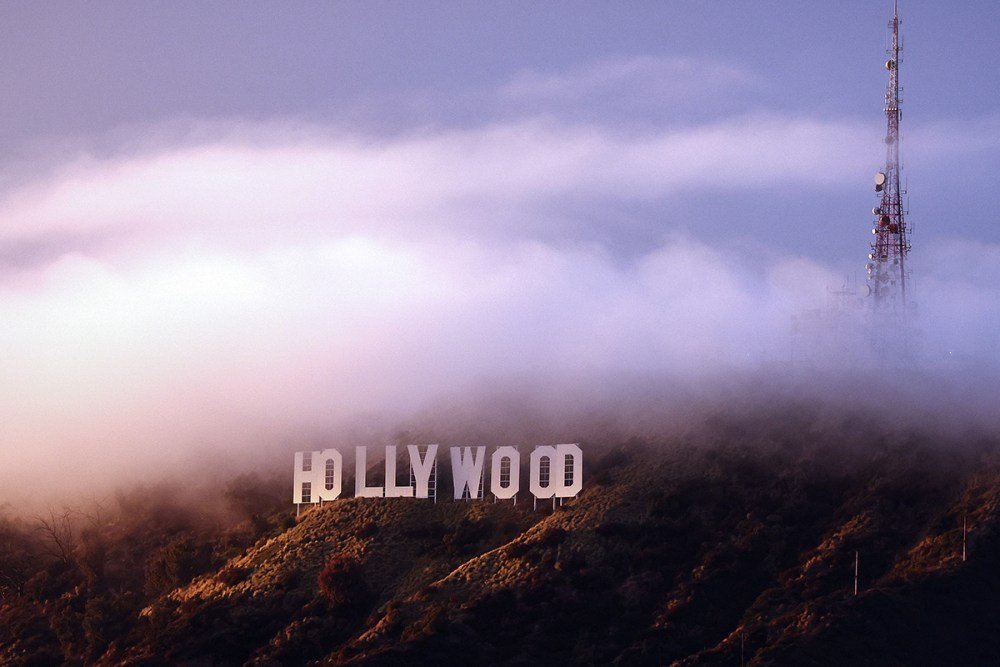
Hollywood, once the epicenter of American film and television productions, has been grappling with production fleeing California in search of more competitive tax incentives. Despite recent efforts from state and city officials to increase tax incentives, Los Angeles production volume dropped 3.1% in the second quarter of 2026.
During a rare interview with Variety, Murphy explains why he “demanded” his next two projects shoot in Los Angeles, and how he was “very conscious” about the way sex was portrayed in “The Shards.”
Well, that’s interesting because one of the first things I did was “Nip Tuck.” It’s funny, I directed the pilot and worked on all the episodes, so I don’t consider that there’s a lot of sexual content in it.
What I like about this show is that it has a lot of romantic relationships that turn into romantic triangles. At the heart of the show, there are several strong romances that — in success — would carry on over three seasons. But I was very aware, and I made it about that idea. So, I think the key is not a lot of graphic-ness, but then you see something like “Heated Rivalry,” which was done so beautifully. And everyone’s obsessed with it.
The key is that it’s not about the sexual content; it’s about whether [the audience] likes the characters and what they’re doing. This show is different than [“Heated Rivalry”]. This is a high school show: first times, first kiss, first break-up. So I think that generation of young people will like it for that reason. I hope so, but I was very conscious about that when I was making it.
Homer Gere stars in “The Shards.” He just had a breakout role in “Euphoria.” Is that where you found him?
No, I did not know Homer. He auditioned, and I saw his audition. We auditioned close to 500 people for these parts [over] many, many months. He just gave an incredible audition. I mixed and matched him with the cast. All of these actors earned those parts. I would never have dug them up.
You watched “Euphoria,” though?
Well, afterward, when we were shooting [“The Shards”]. And I’m friends with Sam Levinson. [Gere] had just done one episode, but he was cast before I knew about “Euphoria.” I thought, “Well, good for Sam. Homer’s a star and a great actor.” What Homer did in that show was incredible. Very brave. People had a lot of opinions about that, as they do. But no, I had my own relationship independent of seeing that show. But I watched that show as a fan. I love that show. I always have. It’s incredible.
The biggest Hollywood story of the year is the Paramount-Warner Bros. merger. Do you feel confident that creators will continue to thrive amid the potential industry consolidation?
Well, I think they will always continue to thrive, right? There have been many of those [mergers] in our history. The thing that I’m very conscious about and would like to protect is the jobs. Keep the jobs, and more specifically, my next tranche of work is bringing filming back to Los Angeles. It’s ridiculous. It’s a travesty. I think the mayor [Karen Bass] could do a much better job than she’s done, for one.
That’s also on the filmmakers to figure out the economic troubles and how to make things in L.A. so that our crews and cast can sleep in their home city, go home and have meals with their families. I have two things shooting, and they’re both going to be in L.A. I demanded that. I made that work economically. The most important thing to me is that it’s up to the individual showrunners and filmmakers to say, “Hey, we want this.” In my experience, as long as you can figure out a will, there’s a way. And they’re the first people to say, “Great, we’d love for it to shoot in L.A.”
I don’t think that’s the obstacle. It’s always the tax credits. The tax credit in L.A. should be better. It should be made more interesting and inviting to the studios. That starts with the government. I’ve spoken to the governor about this. He’s a friend, Gavin [Newsom]. He agrees. I haven’t spoken to Mayor Bass about this. I’d love to, but I think start there. Do that. That’s what matters.
I think they’re making progress. Do you have faith they can pull it off and bring back more productions?
I hope so. I started working in Hollywood in 1995. There’s nothing more haunting than walking on those beautiful soundstages that are ghost towns. It’s upsetting, and it doesn’t have to be that way. Everybody wants to shoot in L.A.
And this show is a love letter to L.A.
Right. And we shot it in L.A. Of course, it could have shot in Canada. I could have made it for cheaper, but I said absolutely not. My partners were great about that. They were like, “Great. Let’s roll up our sleeves and make it work.” And we did.