Category: Business

  • The Ethereum Foundation and Vitalik Buterin Have Released an Important New Document Regarding ETH

    The Ethereum Foundation and Vitalik Buterin Have Released an Important New Document Regarding ETH

    The Ethereum Foundation has released a new document defining the core principles and mission of the Ethereum ecosystem. Titled “The Ethereum Foundation’s Mission Statement,” the document serves as a guide outlining the foundation’s role, decision-making principles, and the future direction of Ethereum.

    Ethereum co-founder Vitalik Buterin stated in a social media post that the document in question defends Ethereum’s goal of being a “shelter technology,” meaning a technology that protects users’ technological sovereignty. According to Buterin, Ethereum is positioned as an infrastructure that enables collaboration without coercive authorities, is resistant to censorship, and allows individuals to have control over their digital assets.

    The published text specifically states that the Ethereum Foundation is not the “parent or ultimate authority” of Ethereum. It describes its role as a “custodian” rather than a manager of the ecosystem. Within this approach, the foundation aims to contribute to the growth of the open-source community rather than controlling the network’s development alone.

    The document highlights ETH’s core principles as decentralization, privacy, security, and open-source development. The foundation states that Ethereum’s continued existence as a censorship-resistant, user-sovereignty-protecting, and secure infrastructure is the raison d’être of the ecosystem. It specifically adds that these features should not be sacrificed for short-term conveniences.

    The statement noted that Ethereum initially began as just a protocol idea but has evolved into a global movement and ecosystem, adding that the network’s core purpose is to empower users to have complete control over their assets, identities, and decisions.

    The Ethereum Foundation also described Ethereum as part of a broader technological vision, stating that it is a crucial component of an ecosystem of open, free, and resilient digital systems called the “Infinite Garden.” According to the foundation, in a world where AI-powered systems and closed digital platforms are becoming increasingly prevalent, the need for technologies that protect user sovereignty and open infrastructure is growing even stronger.

    *This is not investment advice.

  • “$1 Billion Soon”: Hugo Philion Predicts 500% Growth for XRP on Flare

    “$1 Billion Soon”: Hugo Philion Predicts 500% Growth for XRP on Flare

    Flare Network cofounder Hugo Philion confirmed that the XRPFi ecosystem is on the verge of a historic breakthrough as the volume of assets in FXRP, which is wrapped $XRP on the Flare network, has already come very close to the $200 million mark.

    The goal, however, according to Philion, is more ambitious, as he states that reaching the $1 billion level is a matter of the near future, which literally implies a 500% increase in liquidity within the network.

    Why $1 billion milestone is within reach for $XRP: Key growth drivers

    Major developers on Flare, such as Quantic, note that millions of dollars are flowing daily from the $XRP Ledger into Flare, raising the main question for builders: how to use this flow effectively.

    Philion’s forecast that $1 billion will soon be locked in $XRP can be supported by several arguments. For example, the fact that FXRP is currently the only possible option for spot trading $XRP on the Hyperliquid platform — the main decentralized environment in the crypto industry.

    We are at almost $200m USD in FXRP now. We will soon be at $1Bn. https://t.co/0woU9HxqRm?from=article-links

    — Hugo Philion (@HugoPhilion) March 13, 2026

    In addition, FXRP staking integration with the Xaman wallet has been implemented. This allows $XRP Ledger users to directly route their assets into Flare for staking and receiving yield in $XRP inside the wallet. Major companies, such as VivoPower and Everything Blockchain, have already begun using Flare infrastructure to generate yield on their $XRP reserves.

    Moreover, modular lending protocols Morpho and Mystic allow FXRP holders to use their tokens as collateral, while today it also became known that FXRP received integration with Base, Coinbase’s network, where the total value locked currently stands at $4.2 billion.

    The numbers are on Philion’s side, and $87 billion in $XRP market cap makes this $1 billion prediction much more real than it seems from first glance.

  • BlockSec Joins Morph Payment Accelerator as Official Audit Partner

    Morph has recently announced that BlockSec is joining the Morph Payment Accelerator as its official audit partner. The partnership gives payment companies building on Morph direct access to professional smart contract audits and penetration testing, with a 20% discount on audit services exclusively for Payment Accelerator participants.

    🔐 Security is foundational for real payment infrastructure.@BlockSecTeam joins the Morph Payment Accelerator as an official audit partner, helping teams launch secure, audited payment products on Morph.

    Built for payments. Secured for scale.

    Learn more ↓ pic.twitter.com/6kvo2Fhwrz

    — Morph (@MorphNetwork) March 13, 2026

    For a program designed to scale real-world payment products on Morph mainnet, having a dedicated security partner in place before companies go live is a meaningful structural addition.

    What BlockSec Actually Does

    BlockSec is not a generalist security firm that added smart contract audits to its service list after the fact. The company was built around the principle that security research and real-world protection belong in the same organization.

    Its work spans smart contract audits, infrastructure security reviews, and real-time threat monitoring through its Phalcon product suite, which gives clients ongoing visibility into live protocol activity rather than a one-time pre-launch check.

    Its client base covers a wide range of onchain environments: DeFi protocols, centralized exchanges, stablecoin issuers, and crypto payment providers across multiple markets. That range matters here.

    Payment infrastructure sits at the intersection of several of those categories simultaneously, and a security firm that has only ever audited DeFi code is not the same as one that has worked directly with payment-focused products handling continuous user fund flows.

    As part of the Morph partnership, BlockSec will provide participating companies with smart contract audits, penetration testing, and security guidance throughout the build and deployment process. Eligible Payment Accelerator projects can reach out directly to begin the audit process and access the discounted rate.

    Why Payment Products Face a Different Security Bar

    There is a tendency in the onchain space to treat security as a universal concern with universal solutions. Smart contract audits are smart contract audits. In practice, payment infrastructure operates under a distinct set of requirements that most audit checklists were not originally designed around.

    A DeFi protocol experiencing an exploit typically affects liquidity providers and traders who understood the risk profile of what they were using.

    A payment gateway processing thousands of daily transactions for merchants and end consumers operates in a different accountability environment entirely. Downtime is a business failure. A fund loss event is potentially a regulatory one. The threshold for what counts as acceptable security is higher, and the consequences of falling short are less contained.

    This is before factoring in the specific attack surfaces that payment products introduce. High-frequency transaction patterns, predictable settlement windows, and integration with off-chain systems all create vectors that standard DeFi audit frameworks may not fully address.

    Penetration testing becomes relevant in ways it rarely is for isolated onchain protocols. BlockSec’s experience across both smart contract and infrastructure security makes it suited to cover that broader surface area.

    About the Morph Payment Accelerator

    The $150 million Payment Accelerator, backed by the BGB ecosystem, is a performance-based program for payment companies, financial institutions, and infrastructure providers building on Morph.

    Most accelerator programs pay out on milestones or proposal quality. This one pays on volume. Incentives are tied to verified stablecoin payment settled on Morph mainnet, so the companies that move more money earn more. There is no optimizing for program mechanics here.

    Target verticals include crypto cards and digital issuing, cross-border remittance platforms, and merchant payment gateways. Participants build on Morph’s near-instant settlement infrastructure, lower operating costs relative to traditional payment rails, and programmable onchain functionality designed for payment flows at scale.

    Final Words

    The BlockSec partnership adds a security standard to that foundation. Rather than leaving each participating company to independently source and fund its own audit process, the accelerator now provides a direct path to credible security coverage at a reduced cost.

    For early-stage payment companies where budget constraints can push security timelines later than they should be, that structure removes a real friction point. It also raises the overall quality floor for what gets built and shipped within the program, which benefits every participant as the ecosystem grows.

  • CFTC Moves to Rein In Prediction Markets With Guidance, Rulemaking Review

    CFTC Moves to Rein In Prediction Markets With Guidance, Rulemaking Review

    In brief

    • The CFTC has issued a staff advisory to exchanges and has launched an Advanced Notice of Proposed Rulemaking seeking public comment.
    • Chairman Michael Selig said the agency will defend its jurisdiction over event-contract markets as states increasingly challenge platforms tied to sports outcomes.
    • The move comes as courts, lawmakers, and regulators debate whether sports prediction markets should be treated as financial derivatives or gambling.

    The U.S. Commodity Futures Trading Commission launched a two-pronged regulatory push into prediction markets Thursday, moves Chairman Michael Selig framed as the agency finally stepping up after years of inaction.

    The CFTC’s Division of Market Oversight’s Letter No. 26-08, published Thursday, directs registered exchanges on compliance and product listing requirements for event contracts, derivatives whose payouts hinge on real-world outcomes, from sports results to political elections.

    The commission also published an Advanced Notice of Proposed Rulemaking, or ANPRM, inviting public comment on whether it needs to write new rules or amend existing ones for prediction market oversight, with comments due within 45 days of Federal Register publication.

    “Prediction markets are here to stay, and under my leadership, I’ll protect the agency’s jurisdiction over these markets and allow them to flourish in the U.S.,” Selig posted on X.

    The twin actions come as the CFTC scrambles to assert control over a sector it claims falls squarely within its mandate, but which states increasingly view as unlicensed sports gambling operating behind a financial-instrument fig leaf. 

    Peter Hammon, an attorney and advisor in the online gaming and sports betting industry, told Decrypt that the overall picture is less dramatic than it appears.

    “Selig/CFTC mostly restated current regulations without offering any opinions or new ideas and then asked for input from stakeholders,” he said.

    Hammon said two takeaways stood out: that Selig appears to see responsible gambling as “a serious PR problem,” and that the remarks acknowledge prediction markets are “not a novel idea,” noting similar platforms have operated under regulation in the U.S. and overseas for decades.

    “There is mostly no dispute over CFTC’s regulatory authority over prediction markets that don’t involve sporting events,” he said. “The dispute is whether or not CFTC should be allowed to classify sports prediction markets as a financial asset class, instead of as sports betting.” 

    He noted that every other Western country with regulated gambling and financial markets opts to classify the activity as gambling. 

    “Maybe there is something unique to the American system or American financialization psyche,” he said, “but I’ve yet to hear that argument articulated by stakeholders.”

    Nominated by President Donald Trump to the Chair post, Selig has spent the past month publicly warning states that the CFTC will defend its turf in court. The agency has already filed an amicus brief in the Ninth U.S. Circuit Court of Appeals in support of Crypto.com. 

    In announcing the rulemaking last week at the FIA Global Cleared Markets Conference in Florida, Selig said the agency was “no longer going to sit idly while these markets develop within our framework” and that prediction markets are “now viewed by the public as more accurate than political polls.”

    The advisory reminds exchanges that insider trading and manipulation rules apply to event contracts, warning that it is unlawful to “defraud” or manipulate prices, including through the misuse of confidential information.

    It also flags risks in sports contracts tied to injuries or single-player actions, urging exchanges to coordinate with leagues and warning the CFTC can halt listings if contracts fail compliance standards.

    “The only genuine threat to sports prediction markets is a negative Supreme Court ruling,” Hammon noted. 

    State-level licensing has already been tried and failed, he added, “largely due to high gaming excise taxes, lack of liquidity, and cumbersome rules regarding liquidity pooling across state lines,” meaning a Supreme Court loss would likely kill the business model outright.

    Daily Debrief Newsletter

    Start every day with the top news stories right now, plus original features, a podcast, videos and more.

  • Trump Meme Coin, Render and Pi See Double-Digit Rallies as Bitcoin Rises

    Trump Meme Coin, Render and Pi See Double-Digit Rallies as Bitcoin Rises

    In brief

    • Bitcoin’s recent push toward the $73,669 weekly high is supported by stabilizing ETF flows.
    • TRUMP, Pi Network, and Render tokens saw significant double-digit gains fueled by distinct project-specific news
    • Experts attribute the altcoin rallies to easing geopolitical tensions and a broader risk-on sentiment

    Bitcoin has been locked in a relatively tight trading range for weeks. But that hasn’t stopped a few altcoins from staging double-digit rallies fueled by specific catalysts and a broad return of risk appetite.

    The leading cryptocurrency has traded between roughly $73,000 and $62,000 for the past five weeks. Over the last 24 hours, Bitcoin has shown renewed resilience, climbing nearly 3% to trade at $72,300, according to crypto price aggregator CoinGecko. This stabilization comes as exchange-traded fund inflows have continued to stabilize over the past two weeks, Decrypt previously reported.

    The Official Trump token has surged 48% over 24 hours, coinciding with an announcement for a “Crypto and Business Conference” with President Donald Trump at Mar-a-Lago.

    Other altcoins, such as Pi Network and Render, are up nearly 15% over 24 hours. The gains in Pi Network follow U.S. exchange Kraken’s confirmation of a token listing. Pi Network is a mobile-first cryptocurrency ecosystem founded by Stanford PhDs that has transitioned from a social experiment into a live blockchain. Its popularity stems from a unique “mobile mining” mechanism where over 60 million users participate by checking in daily.

    Render, a token in the artificial intelligence category, has soared 14% amid ongoing AI developments, extending a rally that began on March 10 and pushing its monthly gains to 45.5%.

    “Altcoins like Trump memecoins, Render, and Pi Network are ripping higher on their own stories: political hype and policy teases fuel $TRUMP, AI/GPU momentum and burns lift Render, while Pi rides pre-Pi Day upgrades, Kraken listing buzz, and retail FOMO into +20-30% moves,” Andri Fauzan Adziima, research lead at Singapore-based crypto exchange Bitrue, told Decrypt.

    This selective altcoin activity, alongside Bitcoin’s stabilization, signals capital rotating into specific narratives as broader market sentiment improves. It suggests a targeted play rather than a universal altseason, with fresh catalysts driving individual token performance.

    “Bitcoin meanwhile keeps carving higher highs and lows around $70,000-$72,000, backed by steady-to-strong ETF inflows (hundreds of millions daily, BlackRock dominating) and shrinking exchange supply, giving this recovery real legs for $80,000+ if the bid holds,” Adziima added.

    The bigger picture points to a “classic risk-on relief rally,” according to Adziima.

    Meanwhile, easing geopolitical tensions in the Middle East—with President Trump reportedly signaling a quick Iran wind-down and oil prices sliding—could encourage capital to flow back into crypto markets.

    Daily Debrief Newsletter

    Start every day with the top news stories right now, plus original features, a podcast, videos and more.

  • Zcash (ZEC) Price Soars above $221, Drops after Correction

    Zcash (ZEC) Price Soars above $221, Drops after Correction

    Key Highlights

    • Zcash has witnessed a spike of 2.88% and is trading at around $214 following the spike in BTC price
    • This upward momentum in the privacy coin was seen after receiving $25 million in the latest seed funding round
    • Shielded transaction volume rising, new U.S.-based compliant mining pool coming from Foundry Digital in April

    On March 13, Zcash ($ZEC), one of the leading privacy cryptocurrencies, witnessed an upward momentum, where it soared above $221; however, it quickly faced a correction and plunged below $214.

    While publishing this, the Zcash price is revolving around $213.66 after soaring by 1.6% on a daily chart with a market capitalization of $3.5 billion, according to CoinMarketCap.

    Why Is Zcash Price Soaring?

    There are many developments behind the spike in Zcash ($ZEC), including fresh funding in the recent seed funding round.

    On March 9, the Zcash Open Development Lab (ZODL), a new company formed by the core developers who left Electric Coin Company after a governance shake-up, announced it had raised over $25 million in seed funding. Major companies like Paradigm, a16z crypto, Coinbase Ventures, Winklevoss Capital, and others jumped in.

    The fresh capital will boost the development of the Zcash protocol and the user-friendly Zodl wallet (formerly Zashi), which makes private transactions easier for its users.

    The Relative Strength Index (RSI) is currently sitting around 42 to 55 on the 14-day chart. According to this indicator, below 30 means oversold, or potentially too cheap, while above 70 means oversought, or getting too hot. At around 45, $ZEC is nicely balanced, not exhausted. It has plenty of room to run higher without a big pullback.

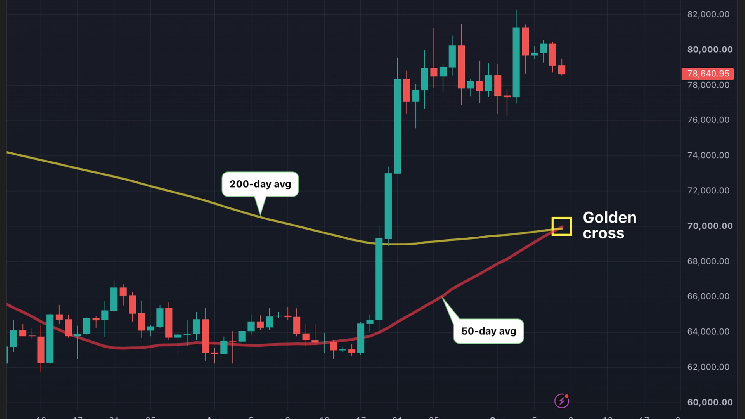
    Looking at moving averages, the short-term 50-day moving average is revolving near $210 and $212. This is acting as a safety net that buyers are defending.

    The longer 200-day moving average is higher and trending up, which shows that the overall direction is still positive after last year’s massive gains. Recent price movement has bounced off support around $200, which is a classic bullish signal.

    According to other technical indicators, Fibonacci levels are like natural pause exports that the price often respects. From the recent low near $200, $ZEC is now testing the 23.6% Fibonacci retracement.

    It breaks through the next level at $220 to $230, which is the 38.2% Fib level. Analysts say that the next stop could be $250 to $278. This would show a quick 15% to 20% gain from current levels.

    This news sparked instant excitement, and investors are seeing ZODL as a fresh start for Zcash’s privacy tools at a time when people are increasingly worried about surveillance and regulations.

    On-chain data is showing healthy inflows, which have been growing steadily. Additionally, major institutions are joining the party. Foundry Digital is launching a U.S.-based Zcash mining pool in April 2026, which is aimed at companies that want compliant privacy mining.

    Popular analysts are bullish on the short-term momentum. The ZODL funded “a fresh wave of capital” that is already attracting new buyers. MEXC analysts noted that social activity and engagement are up sharply. CoinCodex sees neutral-to-bullish shows and predicts $ZEC could push toward $230 and beyond soon if resistance breaks.

    According to some experts, there are some predictions that say it could see a breakout of $300 to $600 if privacy demand continues to rise.

  • Analyst Flags Rare XRP Signal Amid Market Turbulence

    Something unusual is happening with $XRP, according to an analyst. The coin has dropped over 60% since its 2025 peak, and online chatter shows sentiments are turning bearish. Arthur, CIO of RoyalPeakCap, claims his personal indicator has just crossed a critical threshold.

    $RED ALERT: Something unusual is happening on $XRP. My personal indicator just crossed above the black line. Historically, every time this happens, it is followed by an immediate explosive bullish move. But this time… price is still ranging,” he noted.

    🚨$RED ALERT: Something unusual is happening on $XRP.

    My personal indicator just crossed above the black line. Historically, every time this happens, it is followed by an immediate explosive bullish move.
    But this time… price is still ranging. And paradoxically, that’s the worst… pic.twitter.com/7BnFXVvCq6

    — Arthur (@XrpArthur) March 13, 2026

    Arthur warns that the current sideways movement could be the worst possible scenario for this signal. If the price continues consolidating while the indicator cools toward neutral levels, momentum could reset and open the door to a sharp downward move.

    Price Behavior Signals Potential Shift

    $XRP has been falling for several weeks, with each bounce quickly pushed down by sellers. Lately, the price started to level out around $1.40, gathering just below a key resistance point, showing the market is pausing for now.

    The Relative Strength Index (RSI) is slowly climbing even though $XRP’s price is staying flat. This could mean selling pressure is easing, and bigger players might be quietly buying.

    $XRP also recently tested and briefly broke its downward trendline. While it didn’t spark a full rally, it suggests the selling momentum may be weakening. The analyst is keeping a close eye on the $1.45–$1.50 zone.

    Hitting this level repeatedly could either push the price higher or give big traders a chance to sell into small gains. According to Arthur, the latter seems more likely, which could mean the price might face more weakness soon.

    Market Outlook and Scenarios

    If $XRP can’t push past its resistance, this sideways movement might just be a pause before another dip. The price could wobble up and down for a while before sliding lower. Analysts call this a “liquidity trap,” where things look calm enough to lure buyers, but a bigger drop could still be on the way

    Right now, the $XRP market is at a crucial point, and traders and investors need to watch it closely. As of writing, according to CoinMarketCap, the token is trading at $1.44, having gone up 5% in the past day.

    Disclaimer: The information presented in this article is for informational and educational purposes only. The article does not constitute financial advice or advice of any kind. Coin Edition is not responsible for any losses incurred as a result of the utilization of content, products, or services mentioned. Readers are advised to exercise caution before taking any action related to the company.

  • Nvidia Drops Nemotron 3 Super Amid $26 Billion Open-Model AI Bet—America’s Answer to Qwen?

    Nvidia Drops Nemotron 3 Super Amid $26 Billion Open-Model AI Bet—America’s Answer to Qwen?

    In brief

    • Nvidia launched Nemotron 3 Super, a 120B open-weight AI model optimized for autonomous agents and ultra-long context tasks.
    • The hybrid Mamba-Transformer MoE architecture delivers faster reasoning and over 5× throughput while running at 4-bit precision.
    • Nvidia’s $26 billion investment into open-source AI wants to counter China’s rise in the field.

    Nvidia just shipped Nemotron 3 Super, a 120-billion-parameter open-weight model built to do one thing well: run autonomous AI agents without bleeding your compute budget dry.

    That’s not a small problem. Multi-agent systems generate a lot more tokens than a normal chat—every tool call, reasoning step, and slice of context gets re-sent from scratch. As a result, costs explode, models tend to drift, and the agents slowly forget what they were supposed to be doing in the first place… or at least decrease in accuracy.

    Nemotron 3 Super is Nvidia’s answer to all of that. The model runs 12 billion active parameters out of 120 billion total, using a mixture-of-experts (MoE) design that keeps inference cheap while retaining the reasoning depth complex workflows need. It packs a 1-million-token context window, so agents can hold an entire codebase, or nearly 750,000 words in memory before collapsing.

    To build its model, Nvidia combined three components that rarely appear together in the same architecture: Mamba-2 state-space layers—a faster, memory-efficient alternative to attention for handling long token streams—along with Transformer attention layers for precise recall, and a new “Latent MoE” design that compresses token embeddings before routing them to experts. That allows the model to activate four times as many specialists at the same compute cost.

    The model was also pretrained natively in NVFP4, Nvidia’s 4-bit floating-point format. In practice, that means the system learned to operate accurately within 4-bit arithmetic from the very first gradient update, rather than being trained at high precision and compressed afterward, which often causes models to lose accuracy.

    For context, a model’s precision is measured in bits. Full precision, known as FP32, is the gold standard—but it is also extremely expensive to run at scale. Developers often reduce precision to save compute while trying to preserve useful performance.

    Think of it like shrinking a 4K image down to 1080p: The picture still looks the same at a glance, just with less detail. Normally, dropping from 32-bit precision all the way to 4-bit would cripple a model’s reasoning ability. Nemotron avoids that problem by learning to operate at low precision from the start, instead of being squeezed into it later.

    Compared to its own predecessor, Nemotron 3 Super delivers more than five times the throughput. Against external rivals, it’s 2.2x faster than OpenAI’s GPT-OSS 120B on inference throughput, and 7.5x faster than Alibaba’s Qwen3.5-122B.

    We ran our own quick test. The reasoning held up well, including on prompts that were deliberately vague, badly worded, or based on wrong information. The model caught small errors in context without being asked to, handled math and logic problems cleanly, and didn’t fall apart when the question itself was slightly off.

    The full training pipeline is public: weights on Hugging Face, 10 trillion curated pretraining tokens seen over 25 trillion total during training, 40 million post-training samples, and reinforcement learning recipes across 21 environment configurations. Perplexity, Palantir, Cadence, and Siemens are already integrating the model in their workflows.

    The $26 billion bet

    The model may be one piece of a larger strategy. A 2025 financial filing shows Nvidia plans to spend $26 billion over the next five years building open-weight AI models. Executives confirmed it, too.

    Bryan Catanzaro, VP of applied deep learning research, told Wired the company recently finished pretraining a 550-billion-parameter model. Nvidia released its first Nemotron model back in November 2023, but that filing makes clear this is no longer a side project.

    The investment is strategic considering Nvidia’s chips are still the default infrastructure for training and running frontier models. Models tuned to its hardware give customers a built-in reason to stay on Nvidia despite efforts from competitors to use other hardware. But there’s a more urgent pressure behind the move: America is losing the open-source AI race, and losing it fast.

    Chinese open models went from barely 1.2% of global open-model usage in late 2024 to roughly 30% by the end of 2025, according to research by OpenRouter and Andreessen Horowitz. Alibaba’s Qwen overtook Meta’s Llama as the most-used self-hosted open-source model, according to Runpod. American companies including Airbnb adopted it for customer service. Startups worldwide are building on top of it. Beyond market share, that kind of adoption creates infrastructure dependencies that are hard to reverse.

    While U.S. giants like OpenAI, Anthropic, and Google keep their best models locked behind APIs, Chinese labs from DeepSeek to Alibaba have been flooding the open ecosystem. Meta was the one major American player competing in open source with Llama, but Zuckerberg recently signaled the company might not make future models fully open.

    The gap between “best proprietary model” and “best open model” used to be massive—and in America’s favor. That gap is now very small, and the open side of the ledger is increasingly Chinese.

    There’s also a hardware threat underneath all of this. A new DeepSeek model is widely expected to drop soon, and it’s rumored to have been trained entirely on chips made by Huawei—a sanctioned Chinese company. If that’s confirmed, then it would give developers around the world, particularly in China, a concrete reason to start testing Huawei’s hardware. China’s Ziphu AI is already doing that.

    That’s the scenario Nvidia most needs to prevent: Chinese open models and Chinese chips building an ecosystem that doesn’t need Nvidia at all.

    Daily Debrief Newsletter

    Start every day with the top news stories right now, plus original features, a podcast, videos and more.

  • Bitcoin Quantum Threat Is Real But Not Imminent, Says Cathie Wood’s Ark Invest

    Bitcoin Quantum Threat Is Real But Not Imminent, Says Cathie Wood’s Ark Invest

    In brief

    • A new Ark Invest and Unchained report says quantum computing poses a long-term risk to Bitcoin, not an immediate threat.
    • Roughly 35% of the Bitcoin supply could be exposed to quantum attacks under certain conditions.
    • Bitcoin may eventually require post-quantum cryptography through a consensus upgrade.

    The crypto industry is becoming increasingly aware that quantum computing could eventually challenge the cryptographic systems that secure Bitcoin and other prominent networks. However, the threat is likely years or decades away, according to a new report by Ark Invest—the investment management firm of tech investor Cathie Wood—and Bitcoin-focused financial services firm Unchained.

    The report published on Wednesday examines whether advances in quantum computing could enable Shor’s algorithm to break the elliptic curve cryptography used to secure Bitcoin wallets. The authors say current quantum machines remain far below the capability required to compromise Bitcoin’s security, echoing comments from quantum computing experts.

    “Today’s quantum systems lack the capabilities required to compromise Bitcoin. Meaningful breakthroughs would disrupt internet security first, triggering coordinated responses well beyond Bitcoin,” the researchers wrote. “In our view, quantum development will be a gradual technological progression—not a sudden ‘Q-day‘ event—giving markets and the Bitcoin network time to adapt.”

    The report comes as the conversation around quantum computing and cryptocurrency has steadily increased over the last year, with prominent figures including Coinbase CEO Brian Armstrong, Ethereum co-founder Vitalik Buterin, and Cardano founder Charles Hoskinson addressing the risk.

    “Commentators often parse two distinct eras in the development of quantum computing in relation to Bitcoin, one era in which quantum computing cannot affect Bitcoin and another in which it has broken Bitcoin’s underlying cryptography completely,” the report said.

    Bitcoin’s security relies on hash functions that protect mining and block structure, and elliptic curve cryptography that proves wallet ownership. However, future quantum computers could potentially reverse public keys to recover private keys, raising concerns about “harvest now, decrypt later” attacks in which blockchain data is collected today to exploit it once quantum computers become powerful enough.

    The report, however, says today’s quantum computers operate in the “Noisy Intermediate-Scale Quantum,” era, typically using around 100 logical qubits. Breaking a Bitcoin key with a quantum computer would require thousands of high‑quality, error‑corrected qubits and an enormous number of reliable quantum operations—far beyond what today’s quantum machines can do.

    Because of those limits, the report says any quantum threat to Bitcoin would likely emerge in stages rather than all at once.

    “In our view, within 10-20 years, the [practical quantum computing] research community will make enough progress on algorithms to give the Bitcoin developer community time to adapt and optimize them for the Bitcoin blockchain, virtual machine, and ecosystem of tools, devices, and companies,” the researchers wrote.

    Researchers estimate that quantum computers would first become useful in fields such as chemistry before advancing enough to break weaker cryptographic systems. Later, they would become capable of attacking the elliptic curve cryptography used in Bitcoin wallets, initially taking significant time to break individual keys. In its final stage, quantum computers would be able to break keys faster than Bitcoin’s roughly 10-minute block interval.

    Even if the threat is gradual instead of instant, the report notes a substantial share of Bitcoin’s supply could face exposure if quantum computers eventually break elliptic curve cryptography.

    “About 1.7 million Bitcoin are held in vulnerable P2PK addresses that are believed to be lost, while another roughly 5.2 million BTC sit in reused or Taproot addresses that could be migrated—together accounting for about 35% of the total Bitcoin supply,” the researchers wrote.

    The report says Bitcoin developers may eventually need to adopt post-quantum cryptography, a class of cryptographic systems designed to remain secure against quantum computers.

    In February, developers merged BIP 360 into Bitcoin’s GitHub improvement repository, advancing a potential post-quantum framework for the network. BIP 360 introduces a new output type called Pay-to-Merkle-Root, or P2MR, that would disable a technical feature called key-path spending, which exposes public keys when coins are spent.

    Integrating those protections into the Bitcoin network would require changes to its consensus rules, however, a process that depends on agreement across the decentralized community of developers, miners, and users.

    “Bitcoin isn’t just one piece of software. There’s an entire ecosystem of wallets, hardware devices, and exchanges, and migrating all of that will take time,” BIP 360 co-author and cryptographer Ethan Heilman told Decrypt. “There are still open questions about which algorithms to use and what the right approach is, so discussions about post-quantum upgrades could take five to 10 years.”

    Bitcoin’s design makes major changes difficult, a feature the report says protects the network but can slow the process of adopting and enacting upgrades.

    “From that perspective, Bitcoin’s caution represents a tradeoff between adaptability and assurance, which will continue to shape its long-term evolution,” the report said.

    That dynamic, Heilman said, could also shape how developers prioritize upgrades: “If the threat isn’t urgent, things move slowly. Once it becomes real, development tends to accelerate.”

    Ark Invest and Unchained did not immediately respond to requests for comment by Decrypt.

    Daily Debrief Newsletter

    Start every day with the top news stories right now, plus original features, a podcast, videos and more.

  • Santiment Reveals the Six Most Popular Altcoins Right Now! Some Altcoins Were Surprising!

    Santiment Reveals the Six Most Popular Altcoins Right Now! Some Altcoins Were Surprising!

    Bitcoin (BTC) and altcoins continue to recover amid the ongoing US-Iran conflict. Bitcoin has climbed back above $71,000, while Ethereum ($ETH) has surpassed $2,100.

    While altcoins are also seeing significant upward movements, cryptocurrency analytics company Santiment recently revealed the most popular altcoins in the cryptocurrency world.

    According to Santiment, investors showed strong interest in altcoins such as Tether ($USDT), $AAVE, Ethereum ($ETH), Solana ($SOL), Ripple ($XRP), and Avalanche ($AVAX).

    Tether led the trending cryptocurrencies in the last 24 hours, surprisingly followed by $AAVE, $ETH, $SOL, $XRP, and $AVAX.

    The most popular cryptocurrencies in the crypto sector and the reasons why are listed below:

    “Tether: Trending due to approximately $50.4 million worth of $USDT being exchanged for around 324 $AAVE on Ethereum. According to the data, a cryptocurrency investor lost approximately $50 million in a transaction where they exchanged interest-bearing aEthUSDT for aEthAAVE via the CoW Protocol.”

    $AAVE: Trending due to the exchange of approximately $50.4 million worth of $USDT for around 324 $AAVE on Ethereum. The $AAVE CEO announced a refund of approximately $600,000 in relation to the incident.

    Ethereum: Trending due to BlackRock’s staking ETF. BlackRock’s iShares Staked Ethereum Trust (ETHB) began trading on Nasdaq yesterday.

    Solana: Reports of intermittent network outages and slow confirmations are trending due to a high-profile NFT launch. Twitter is buzzing about Solana’s growing stablecoin market share and trading volume.

    $XRP: It’s trending due to news of Ripple’s share buyback announcement, which increased the company’s valuation to approximately $50 billion, and ongoing Reddit discussions about Ripple financing its operations through $XRP sales.

    Avalanche: Trending due to Grayscale’s $AVAX ETF. Grayscale launched Avalanche staking ETF (GAVA), which began trading on Nasdaq and offers institutional investors exposure to $AVAX, combined with on-chain staking rewards.

    *This is not investment advice.