
Category: Business

  • AI Could Become 2,000 Times More Efficient by Copying the Brain: Study

    AI Could Become 2,000 Times More Efficient by Copying the Brain: Study

    In brief

    • A new chip inspired by the mechanics of the brain could make AI far more efficient in specific tasks, researchers from Loughborough University found.
    • This could be instrumental in reducing energy drain in weather systems, biological processes and more, where AI is involved.
    • The team focused on physical processes over hardware when designing this AI, suggesting the possibility of reworking how AI is built.

    AI systems, like ChatGPT or Claude, are known for their intensive energy usage. They need to store data in one place and then process it elsewhere, constantly moving it back and forth. It’s a problem which could now be fixed with new research.

    A team of physicists from Loughborough University have designed a device that can process data that is changing over time directly inside the hardware. Traditional systems have relied on software-based methods to do this in the past.

    With this new chip, the team of researchers argue that it could be 2,000 times more energy efficient than existing methods.

    “This is exciting because it shows we can rethink how AI systems are built,” said Dr. Pavel Borisov, lead author of the study, in a statement. “By using physical processes instead of relying entirely on software, we can dramatically reduce the energy needed for these kinds of tasks.”

    Where conventional AI systems are akin to sending documents back and forth between two offices (memory and processor) over and over, with this new chip, it could be like having one smarter office, working on everything in one place.

    Brain gain

    At the heart of the chip is a memory resistor, a memory chip that remembers past signals. That memory alters how it responds to new signals—in other words, it’s not just following instructions, but learning from history. This is an idea modelled on the human brain.

    “Inspired by the way the human brain forms very numerous and seemingly random neuronal connections between all its neurons, we created complex, random, physical connections in an artificial neural network by designing pores in nanometre-thin films of niobium oxide as part of a novel electronic device,” said Dr. Borisov.

    “We showed how one can predict the future evolution of a complex time series using these devices at up to two thousand-times lower energy consumption compared to a standard software-based solution.”

    AI is often used to process data that changes over time, such as weather reports, stock market tracking or wave analysis. They might not be random, but they are sensitive to small changes.

    For these more chaotic kinds of measurements, traditional AI systems need to use huge amounts of energy to keep up with all the small changes, sending information back and forth. This new chip could be perfectly designed for these more chaotic systems.

    By analysing past measurements and experiences, the chip better learns to track and understand these chaotic types of measurements, reducing the energy output needed.

    While we often think of AI as something like ChatGPT, or facial image software, it is found in most applications these days. This tool is aimed not at static information, like a chatbot, but at time-dependent information.

    “Heart beat rates, brain electric activity, the outside temperature. These are all changing every day. There are capable applications that track these, but they are energy-intensive and they require a stable online connection to a server,” Dr. Borisov told Decrypt.

    These are the kind of areas this chip could be implemented in, creating smarter systems for data that isn’t stable, often changing throughout time.

    “My end goal would be for this kind of technology to be used in a time-dependent signal. Whether that’s in a car, a robot, a nuclear power plant, or in a smart watch,” he added. “For example, to monitor if someone has a stroke or not, to monitor the health of a car engine, or that the nuclear reactor is operating normally, this sort of thing.”

    Daily Debrief Newsletter

    Start every day with the top news stories right now, plus original features, a podcast, videos and more.
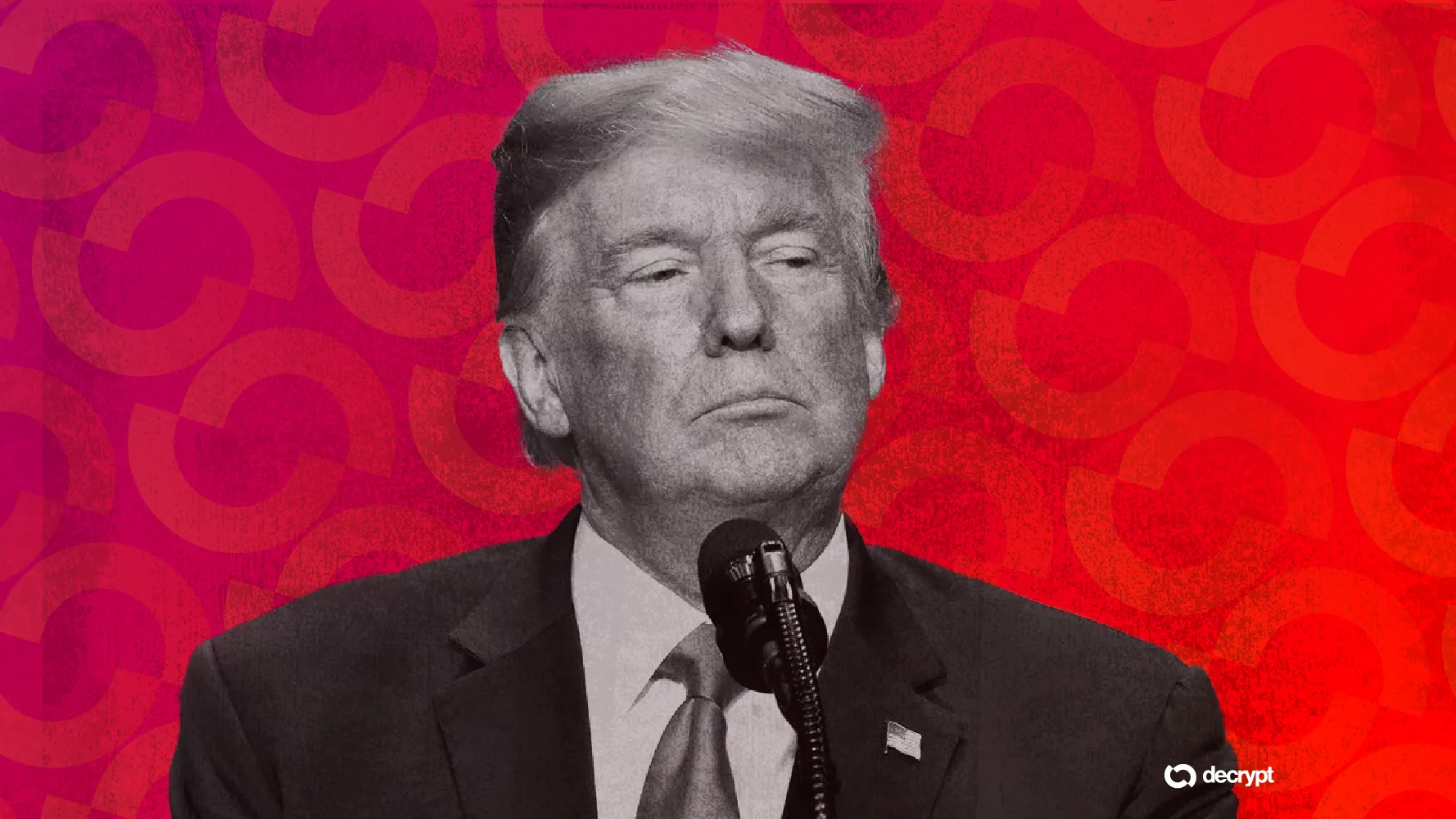

  • Trump Admin Backs Prediction Markets With Lawsuits Against Illinois, Arizona and Connecticut

    Trump Admin Backs Prediction Markets With Lawsuits Against Illinois, Arizona and Connecticut

    In brief

    • The DOJ and CFTC sued Illinois, Arizona, and Connecticut to defend prediction markets from state regulation.
    • The Trump administration argues platforms like Kalshi and Polymarket fall under federal—not state—authority.
    • The move escalates a nationwide legal battle over whether prediction markets are gambling or federally regulated event contracts.

    The Justice Department and the CFTC jointly filed lawsuits Thursday against Illinois, Arizona, and Connecticut, coming to the aid of prediction markets in the latest escalation of an ongoing jurisdictional battle over the novel sector.

    In the lawsuits, the Trump administration argues the CFTC has exclusive jurisdiction to regulate sports-related wagers on popular prediction market platforms including Polymarket and Kalshi.

    In the last year, a growing number of states have sued such platforms, arguing sports-themed prediction markets are not event contracts under the CFTC’s purview—but, instead, unregulated sports betting by another name.

    In suing Illinois, Arizona, and Connecticut—three of several states that have come after top prediction market platforms—the Trump administration has made perhaps its most forceful move yet to free the emerging sector from state gambling regulations.

    “The CFTC will continue to safeguard its exclusive regulatory authority over these markets and defend market participants against overzealous state regulators,” said CFTC Chairman Michael Selig, in a statement. “This is not the first time states have tried to impose inconsistent and contrary obligations on market participants, but Congress specifically rejected such a fragmented patchwork of state regulations because it resulted in poorer consumer protection and increased risk of fraud and manipulation.”

    The DOJ and CFTC argued today that by sending cease and desist letters last year to Polymarket, Kalshi, and Crypto.com, state regulators violated a federal law granting the CFTC exclusive authority to regulate event contracts.

    “This Court should put an end to the ongoing efforts by Defendants to undermine the uniform application of federal law,” Thursday’s complaint against Illinois, filed in the U.S. District Court for the Northern District of Illinois, reads.

    In the last few weeks, state regulators have notched notable early victories against prediction markets. Last month, Nevada became the first state to successfully ban a prediction market platform temporarily, as its lawsuit against the platform, Kalshi, heads to trial.

    Today’s lawsuits could soon be followed by more, given several other states have issued cease and desist orders to prediction market platforms offering sports-related wagers.

    In going after Illinois and Connecticut first, the Trump administration has set its sights on two deep-blue states. Trump has, in particular, lambasted Illinois Governor J.B. Pritzker for resisting elements of the White House’s immigration crackdown, and referred to him late last year as “a big fat slob.” Pritzker was named as a defendant in today’s lawsuit against the state of Illinois.

    While Arizona did vote for Trump in 2024, the “purple” state currently boasts two Democratic senators and a Democratic governor. Last month, the state became the first in the nation to file criminal charges against a prediction market platform, Kalshi, for allegedly operating an illegal gambling business without a license.

    But tensions over prediction market regulation are not strictly partisan. Several red states have gone after Polymarket and Kalshi’s sports wagers in the last few months, including Tennessee. And the government of Utah, which swung for Trump by more than 20 points in 2024, has emerged as one of the leading critics of the ballooning sector.

    The Trump administration, however, has taken an aggressively supportive approach towards prediction markets. The president’s media company has its own prediction market-related ambitions, and his son, Donald Trump Jr., currently advises both Polymarket and Kalshi. 

    Even the DOJ itself now shares some DNA with the lucrative sector. Yaakov Roth, the principal deputy assistant attorney general representing the federal government in its new case against Illinois, previously represented Kalshi in the company’s landmark victory against the CFTC in 2024.

    Daily Debrief Newsletter

    Start every day with the top news stories right now, plus original features, a podcast, videos and more.

  • Ethereum Founder Vitalik Buterin Details His ‘Private’ and ‘Secure’ AI Setup

    Ethereum Founder Vitalik Buterin Details His ‘Private’ and ‘Secure’ AI Setup

    In brief

    • Vitalik Buterin runs AI entirely on local hardware using the open-source Qwen3.5:35B model, avoiding cloud-based tools he considers a privacy risk.
    • He built a messaging daemon that blocks his AI agent from contacting third-parties without manual human approval, and advises Ethereum wallet teams to do the same.
    • Buterin cited research finding that roughly 15% of community-built tools for OpenClaw, the fastest-growing GitHub repo in history, contained malicious instructions.

    Ethereum co-founder Vitalik Buterin detailed his personal AI setup in a new blog post, describing the configuration as both “private” and “secure.” Buterin said he runs his artificial intelligence setup entirely on local hardware, and has built custom tools around the large language model (LLM) to prevent his AI agents from sending messages or moving crypto without human sign-off.

    “The new two-factor authentication is the human and the LLM,” he wrote.

    The post, published Wednesday, marks a step beyond Buterin’s previous calls for privacy-preserving AI. In February, he outlined a four-quadrant Ethereum-AI roadmap spanning private AI use, agent markets, and governance. But this new post goes further, offering a granular look at how he’s actually implemented those principles himself.

    Buterin runs the open-source Qwen3.5:35B model locally via llama-server. And after testing multiple setups, he prefers using a  laptop with an Nvidia 5090 GPU that hits 90 tokens per second. That’s fast enough to feel usable, Buterin added.

    He stores a full dump of Wikipedia articles and technical documentation on his machine to minimize how often he needs to query external search engines, which he treats as a privacy leak.

    The most crypto-relevant disclosure involves how he connects AI to his Ethereum wallet and messaging accounts. Buterin wrote that he built and open-sourced a messaging daemon that allows his AI agent to read Signal messages and emails freely, but restricts outbound messages to himself unless a human manually approves them first.

    He advised teams building AI-connected Ethereum wallet tools to adopt the same architecture, with autonomous transactions capped at $100 per day and anything above that requiring confirmation.

    The approach is consistent with how Buterin already manages his crypto holdings. He keeps 90% of his funds in a multisig Safe wallet, distributing keys among trusted contacts so that no single person becomes a point of failure.

    The AI guardrails appear to be an extension of that same philosophy into an agentic context.

    Buterin opened the new blog post by citing security researchers who found that roughly 15% of skills built for OpenClaw, now the fastest-growing GitHub repository in history, contained malicious instructions, with some silently exfiltrating user data without any indication to the user.

    “I come from a mindset of being deeply scared that just as we were finally making a step forward in privacy with the mainstreaming of end-to-end encryption and more and more local-first software, we are on the verge of taking 10 steps backward by normalizing feeding your entire life to cloud-based AI,” he wrote in the post.

    Daily Debrief Newsletter

    Start every day with the top news stories right now, plus original features, a podcast, videos and more.

  • Coinbase Gets Conditional Approval From Banking Regulator—But Isn’t Launching a Bank

    Coinbase Gets Conditional Approval From Banking Regulator—But Isn’t Launching a Bank

    Coinbase signaled on Thursday that it plans to refine its services after receiving conditional approval for a national trust bank charter from the Office of the Comptroller of the Currency (OCC).

    In a blog post, the San Francisco-based crypto exchange said that it is not becoming a commercial bank. Rather, the charter will provide the firm with “federal regulatory uniformity” when it comes to custodying various types of assets on behalf of customers, it said.

    The development underscores how crypto-native companies are becoming increasingly tied to the traditional financial system. Coinbase said that the shift will enable the exchange to create new products that cater to both individuals and institutions.

    Coinbase highlighted payments as an area that the charter will allow it to expand into. The company already has a deep relationship with stablecoin issuer Circle, which gained approval for a national trust banking charter alongside several competitors last year.

    Coinbase Custody Trust Company obtained a limited purpose trust charter from the New York Department of Financial Services in 2018. That established the firm as a qualified custodian, allowing it to safeguard securities on behalf of professionals like investment advisors.

    In the blog post, Coinbase said its work with the Department served as a cornerstone toward building operational maturity and institutional trust. The firm said that it will continue to operate under the regulator’s supervision and its stringent BitLicense framework.

    Coinbase made clear that it doesn’t plan on accepting deposits from individuals like a traditional bank. What’s more, it doesn’t expect to engage in fractional reserve banking.

    Operating under the oversight of a federal regulator, the OCC’s charter removes potential barriers to the exchange’s interstate expansion when it comes to the banking realm. Still, Coinbase’s exchange is already available across the U.S. in all 50 states.

    Under the GENIUS Act, a federal framework for stablecoins signed into law last year, the OCC has supervisory authority over qualified stablecoin issuers. The legislation recognizes national trust banks as those permitted to become part of that group. What’s more, the GENIUS Act allows stablecoin issuers to operate without navigating a patchwork of state-level licenses.

    When Circle received OCC approval last year, the Office’s Comptroller of the Currency, Jonathan V. Gould, declared that “new entrants into the federal banking sector are good for consumers, the banking industry and the economy.”

    Ripple, BitGo, and Paxos Trust Company and Fidelity Digital Assets received a green light at the same time, underscoring how stablecoins are reshaping corporate structures for crypto-native firms. In 2021, Anchorage Digital became the first federally chartered digital asset bank, being awarded that status under the Biden administration.

    Not long after the OCC’s wave of approvals last year, Sen. Elizabeth Warren raised the alarm regarding World Liberty Financial’s efforts to attain a charter. She argued in a statement that Gould’s refusal to delay review for the President Donald Trump-banked crypto firm amounted to a “sham.”

    “We have never seen financial conflicts of this magnitude and no crypto market structure legislation should pass Congress without guardrails to stop this kind of corruption,” she added.

    The Bank Policy Institute, a trade group representing America’s largest banks, urged the OCC to reject a spate of charter applications in October. The organization argued that allowing crypto-native firms to offer bank-like products without greater supervision could “blur the statutory boundary of what it means to be a ‘bank,’” while heightening systematic risk.

    Still, the crypto industry’s growing bondage to the traditional financial system has shown no signs of slowing down. In early March, Kraken secured approval for a Federal Reserve “master account,” giving the crypto exchange access to the Fed’s core payment services.

    Editor’s note: This story was updated after publication with additional details.

    Daily Debrief Newsletter

    Start every day with the top news stories right now, plus original features, a podcast, videos and more.

  • SEI Price Jumps 5% Ahead of EVM-Only Migration

    SEI Price Jumps 5% Ahead of EVM-Only Migration

    On April 1, the Sei ($SEI) price witnessed a positive spike after losing over 21% in value over a month, which sparked excitement in its community. The cryptocurrency has surged by over 5.81% on a daily chart.

    According to CoinMarketCap, $SEI is currently hovering at around $0.0540 along with a market capitalization of $370 million. The daily trading volume also soared by 64%, reaching over $121 million.

    The new activities have been detected on the network today, where the data suggests market interest and buying pressure are slowly developing.

    $SEI Witnesses Major Developments and Growth in On-Chain Activities

    The rally in the $SEI was witnessed after major network developments. In February, Coinbase Markets announced that Sei will fully migrate to an EVM-only architecture between April 6 and April 8. It will make it easier for developers and users to participate in the chain.

    Sei has announced plans to deprecate its support for Cosmos based transactions, moving to an EVM-only architecture. Coinbase will support the migration to the Sei EVM from April 6-8, 2026.

    What does this mean for you? Read more in the thread ⬇️

    — Coinbase Markets 🛡️ (@CoinbaseMarkets) February 27, 2026

    At the same time, Kraken announced that it will add support for $USDC and USDC0 on Sei EVM. This will help the network to enhance liquidity for stablecoin trading.

    Stablecoin rails to Sei just expanded.

    Kraken now supports $USDC and USDT0 deposits and withdrawals on Sei EVM.

    More from @TokenRelations: https://t.co/Uivsu5Hc6j

    — Sei (@SeiNetwork) March 31, 2026

    According to the on-chain data, daily active addresses have soared by 32% in the last month to nearly 2 million. This shows active participation with real usage. The token is slowly coming out of oversold territory, and short-term momentum indicators are suggesting bullish momentum in the cryptocurrency. However, it all depends on the overall crypto market’s direction.

    If the cryptocurrency stays above $0.052 to $0.053, there might be a chance for potential gains toward $0.058 to $0.060 in the upcoming days.

    Technical indicators are suggesting a bullish trend with an upward momentum in the cryptocurrency in the upcoming time. Apart from this, whales are preparing to participate in this by accumulating more coins, which shows confidence in the market. If the crypto market maintains bullish momentum, traders are likely to invest more in $SEI.

    The crypto market, along with Bitcoin ($BTC), witnessed a small spike on April 1, as it surpassed $69,000 with approximately 2% gains. However, it failed to sustain a rally and again plunged below $69,000. At present, $BTC is trading at around $68,226.28 with a market capitalization of $1.36 trillion.

    The upward momentum in the crypto market has also added $4 billion to $5 billion in total value, which has increased its market cap by around $2.34 trillion. These gains were seen after poor performance in March. It is showing a fresh buying interest across major cryptocurrencies.

    $SEI Network is a dedicated layer 1 blockchain, especially designed for trading and decentralized finance (DeFi) applications. It is designed to handle a large number of transactions very quickly with less transaction cost. It uses smart technology called parallel execution, which allows multiple transactions to happen at the same time without slowing down the network.

    It is mainly good for decentralized exchanges (DEXs), perpetual futures, prediction markets, and trading apps.

    Apart from this, major regulatory developments have boosted confidence in crypto investors. Recent proposals, including new rules from the Department of Labor that could make it easier for 401(k) retirement plans to include cryptocurrencies and other alternative assets, have increased investors’ confidence.

  • German Analysis Firm Shares Two Critical Price Levels for Ethereum

    German Analysis Firm Shares Two Critical Price Levels for Ethereum

    Cryptocurrency analytics company MakroVision has shared its updated assessment of Ethereum’s short-term technical outlook. According to the analysis, Ethereum’s price is struggling to recover due to selling pressure encountered at critical resistance levels recently.

    According to an assessment published by MakroVision, Ethereum has faced strong resistance, particularly at the $2,130 level, and has been rejected multiple times from this region. Analysts stated that this level is the most critical threshold to overcome in the short term, while the $2,400 level stands out as the next significant resistance area. A break above this region could lead to a more noticeable improvement in the market outlook.

    On the support side, the $1,900 level is considered critical for the current price structure. According to the analysis, Ethereum’s ability to stay above this level will be decisive for short-term stabilization. However, a warning was issued that if $1,900 is broken downwards, selling pressure could accelerate and the price could retreat back towards the $1,730 region.

    Related News Bloomberg Analyst James Seyffart: “Bitcoin Has Lost 50% of Its Value, But There Is a Very Strong Signal”

    The analysis of the chart structure indicated that Ethereum has recently shown signs of a limited recovery by forming higher lows, but upward movements have consistently encountered selling pressure in resistance zones. This situation has created an uncertain outlook for the market.

    According to MacroVision’s analysis, the short-term outlook will remain weak unless the Ethereum price permanently regains the $2,130 level. It is noted that a loss of the $1,900 support level, in particular, could significantly increase the downside risks in the markets again.

    *This is not investment advice.

  • Trump to announce Iran ceasefire talks amid troop withdrawal discussions

    Trump to announce Iran ceasefire talks amid troop withdrawal discussions

    President Trump plans to announce progress in Iran’s military campaign, with potential troop withdrawals and a ceasefire if Iran offers concessions. The US-Iran ceasefire by April 7 is at 8% YES, down from 10% yesterday and 26% a week ago.

    Traders in the April 7 market remain skeptical, with odds dropping. The April 15 market is at 18% YES, down from 20% yesterday. The April 30 market rose to 38% YES from 36%, suggesting traders expect developments by mid-April. The biggest jump is between April 15 and April 30, a 20-point increase, indicating significant expected changes.

    Despite large trades, actual money shows modest interest. With $205,330 in $USDC trading daily in the April 7 market, $15,138 shifts the price 5 points. The largest move was a 2-point drop at 8:13 AM. For April 15, $594,502 in $USDC daily means $43,954 moves the price 5 points, showing more stability but still sensitive to large orders.

    Trump’s announcement aligns with recent de-escalation signals, potentially affecting ceasefire odds. If Iran offers nuclear and missile concessions, odds could shift. At 8¢, a YES share for April 7 resolves at $1—offering a 12.5x return if a ceasefire is declared soon. Traders need to believe a breakthrough is imminent for that bet to pay off.

    Watch for CENTCOM statements and any softening rhetoric from Tehran. The Sultan of Oman or Qatar could mediate, with any confirmation of talks boosting odds.

    Markets Impacted

    • US x Iran ceasefire by April 7? — currently 8.5% YES
    • US x Iran ceasefire by April 15? — currently 18.5% YES
    • US x Iran ceasefire by April 30? — currently 38.5% YES
    • US x Iran ceasefire by May 31? — currently 55.5% YES
    • US x Iran ceasefire by June 30? — currently 62.5% YES
    • US x Iran ceasefire by December 31? — currently 73.5% YES

    Get prediction market intelligence as a structured API feed. Early access waitlist.

  • XRP Adoption Expands as Ripple Embeds Digital Asset Capabilities Directly into Enterprise Treasury Platforms

    XRP Adoption Expands as Ripple Embeds Digital Asset Capabilities Directly into Enterprise Treasury Platforms

    $XRP is advancing into enterprise finance as Ripple integrates it into treasury systems, enabling real-time liquidity management and positioning it as a functional asset for corporate cash operations.

    $XRP Becomes Core Asset In Ripple Treasury Liquidity Strategy

    A shift in enterprise finance is accelerating as digital assets gain practical utility. Enterprise blockchain company Ripple shared on April 1 that it embedded native digital asset capabilities into its treasury platform, positioning $XRP as a core instrument for corporate liquidity management.

    Ripple, a provider of blockchain-based financial infrastructure, detailed that its Ripple Treasury platform now enables organizations to hold, manage, and transact with $XRP alongside $RLUSD directly within existing treasury workflows. The integration allows finance teams to treat these assets similarly to fiat cash, with real-time valuation, seamless transaction recording, and full auditability across all treasury activities.

    Chief financial officers and treasury teams can now access Digital Asset Accounts that incorporate $XRP into standard account structures without requiring separate wallets or external systems. Transactions involving $XRP are captured with high precision, including native amounts, corresponding fiat values, and live exchange rates at execution. This approach eliminates reconciliation gaps and ensures consistency with traditional financial reporting standards while maintaining operational continuity.

    $XRP Gains Enterprise Momentum With Real-Time Settlement and Utility

    The platform’s Unified Treasury capability provides consolidated visibility into $XRP and fiat positions across banks and custodians through a single interface. By aligning digital asset accounts with conventional banking frameworks, the system enables organizations to monitor liquidity in real time and manage cross-border flows more efficiently. $XRP supports near-instant value transfer, while $RLUSD introduces a stable, dollar-denominated option for treasury operations.

    Growing interest in $XRP adoption reflects broader demand for faster settlement and improved capital efficiency. Traditional financial systems often involve multi-day settlement cycles and limited operating hours, restricting liquidity movement. $XRP’s ability to facilitate rapid transfers introduces an alternative model where value can move continuously, reducing delays and minimizing exposure to foreign exchange fluctuations.

    Ripple indicated that future developments will expand $XRP’s role within enterprise treasury, including integration with tokenized financial products and enhanced cross-border settlement capabilities. As organizations modernize financial operations, $XRP is increasingly viewed as an operational tool rather than a speculative asset, supporting real-time liquidity management within evolving global financial infrastructure.

    FAQ 🧭

    • How is $XRP being used in enterprise treasury management?
      $XRP is now integrated into treasury platforms for real-time liquidity tracking and transactions.
    • Why are companies adopting $XRP for liquidity management?
      Firms seek faster settlement, continuous transfers, and improved capital efficiency.
    • What makes Ripple Treasury different for CFOs?
      It allows $XRP to function like fiat within unified financial workflows and reporting systems.
    • What future role could $XRP play in corporate finance?
      $XRP may support tokenized assets and advanced cross-border settlement infrastructure.
  • Trump may announce ground troops needed for iran’s uranium

    Trump may announce ground troops needed for iran’s uranium

    Trump might announce that ground troops are necessary to seize Iran’s uranium. Odds for US forces entering Iran by April 30 are at 52.5% YES, down from 57% yesterday.

    Traders are reacting to the potential announcement. The April 30 market dropped 4 points as of 3:15 PM, with a YES share now at 52¢. The December 31 market remains more optimistic at 64.5% YES. The March 31 market is stagnant at 0.1%.

    The ceasefire market isn’t doing much better. April 7 ceasefire odds are at 8.5% YES, down from 10% yesterday. The potential troop deployment is driving bearish sentiment. April 30 odds are at 38.5% YES, a 2-point rise, suggesting some traders still see a chance for a ceasefire.

    Volume shows the market’s weight. The US forces market trades $2.6M in $USDC daily, with $37K needed to move April odds 5 points. The ceasefire market trades $1.3M in $USDC, requiring $16K for a 5-point shift.

    Trump’s possible announcement increases tension but lacks specifics. A YES share at 52¢ for US troops by April 30 pays $1 if it resolves — a risky bet unless ground operations seem likely. Watch for Pentagon statements or changes in CENTCOM posture.

    Hegseth’s next Pentagon briefing is crucial — scheduled for Thursday. Any change in operational language could affect these markets.

    Markets Impacted

    • US forces enter Iran by March 31? — currently 0.1% YES
    • US forces enter Iran by April 30? — currently 52.5% YES
    • US forces enter Iran by December 31? — currently 64.5% YES
    • US x Iran ceasefire by April 7? — currently 8.5% YES
    • US x Iran ceasefire by April 15? — currently 18.5% YES
    • US x Iran ceasefire by April 30? — currently 38.5% YES
    • US x Iran ceasefire by May 31? — currently 55.5% YES
    • US x Iran ceasefire by June 30? — currently 62.5% YES
    • US x Iran ceasefire by December 31? — currently 73.5% YES

    Get prediction market intelligence as a structured API feed. Early access waitlist.

  • Pakistan steps in as intermediary in US-Iran crisis

    Pakistan steps in as intermediary in US-Iran crisis

    Pakistan is acting as a mediator in the US-Iran conflict, with a 10-day ceasefire extension now in place. The odds of a US-Iran ceasefire by April 30 have risen to 38.5% YES, up from 36% yesterday.

    The April 30 market saw a 4-point increase at 10:56 AM, indicating traders view mid-April as a potential turning point. The April 7 market dropped to 8.5% YES from 10% — suggesting no immediate breakthroughs are expected.

    With $1,365,780 in USDC traded over 24 hours, these markets are liquid but still volatile. It takes $15,138 to move the April 7 price by 5 points, showing a decent order book. The largest move was a 2-point drop at 8:13 AM, highlighting the impact of modest trades.

    Pakistan’s role as a mediator adds complexity, but without tangible progress like scheduled talks, markets stay cautious. At 38.5¢, a YES share for April 30 pays $1 if resolved. This bet hinges on a significant diplomatic breakthrough in the next 28 days.

    Watch for US or Iranian statements acknowledging Pakistan’s efforts or more mediation from Oman. Trump’s language in upcoming addresses could also signal changes — terms like ‘deal’ or ‘productive’ would influence these markets.

    Markets Impacted

    • US x Iran ceasefire by April 7? — currently 8.5% YES
    • US x Iran ceasefire by April 15? — currently 18.5% YES
    • US x Iran ceasefire by April 30? — currently 38.5% YES
    • US x Iran ceasefire by May 31? — currently 55.5% YES
    • US x Iran ceasefire by June 30? — currently 62.5% YES
    • US x Iran ceasefire by December 31? — currently 73.5% YES

    Get prediction market intelligence as a structured API feed. Early access waitlist.