Category: Business

  • BlackRock private credit fund is latest to crack, hitting crypto prices and DeFi markets

    BlackRock private credit fund is latest to crack, hitting crypto prices and DeFi markets

    Cracks in the global private credit market are rattling investors, raising concerns the stress could spill into crypto markets.

    Bloomberg reported Friday that BlackRock’s $26 billion private credit fund has begun limiting withdrawals amid rising redemption requests. The move follows similar stress at Blue Owl, which sold $1.4 billion in loans last month to meet withdrawals and reportedly has exposure to a collapsed U.K. property lender.

    Shares of major asset managers including BlackRock (BLK), Apollo Global Management (APO), Ares Management (ARES) and KKR slid 4%-6% Friday, extending their 2026 rout.

    Read more: Blue Owl liquidity crisis has investors bracing for 2008-style fallout

    If redemption pressure forces private credit funds to unwind positions, it could trigger broader deleveraging across asset classes that could ripple through digital assets including bitcoin BTC$67,962.60, Andreja Cobeljic, head of derivatives trading at Swiss crypto bank AMINA Bank warned in an emailed note.

    Credit stress meets energy shock

    U.S. banks extended nearly $300 billion in loans to private credit providers as of mid-2025 and another $285 billion to private equity funds, Cobeljic wrote, carrying risks that credit woes could extend to the banking sector

    “In isolation this would be manageable,” he said. “But emerging in the middle of a broader global deleveraging event, alongside an energy shock and collapsing rate-cut expectations, it is a different conversation.”

    “For risk assets, including crypto, a disorderly unwind here would represent a significant second-order shock that current pricing does not reflect,” he said.

    Contagion to tokenized asset markets

    A second channel of credit risk could surface directly on blockchain rails.

    Tokenized private credit products — loans and funds packaged and issued on public blockchains as tokens — have grown quickly as part of the broader real-world asset (RWA) trend. According to data from rwa.xyz, the on-chain private credit market now stands at just under $5 billion. That remains tiny compared with the roughly $3.5 trillion global private credit market in 2025, estimated by the Alternative Credit Council.

    But the growing presence of these assets inside decentralized finance (DeFi) means stress in the underlying loans could ripple directly to crypto markets.

    “Institutions are entering crypto, but often with products that even degens and DeFi natives don’t fully grasp,” said Teddy Pornprinya, co-founder of real-world asset protocol Plume.

    Real-world credit products can carry complex risks that are not always obvious to crypto investors, he said, including volatile net asset value swings and headline yields that don’t fully reflect fees or credit risk.

    A recent episode shows how off-chain credit stress can spill into DeFi.

    According to a report by risk advisory firm Chaos Labs, the 2025 bankruptcy of auto-parts supplier First Brands Group affected a private credit strategy run by Fasanara Capital. A tokenized version of the strategy, mF-ONE, had been issued on the Midas RWA platform and used as collateral for borrowing on the Morpho protocol.

    When the underlying fund marked down exposure tied to the bankruptcy, the token’s net asset value slipped about 2%, pushing highly leveraged borrowers close to liquidation and tightening liquidity on the platform. Lenders ultimately avoided losses, but the episode highlighted how tokenized private credit used as DeFi collateral can transmit traditional credit stress into on-chain markets.
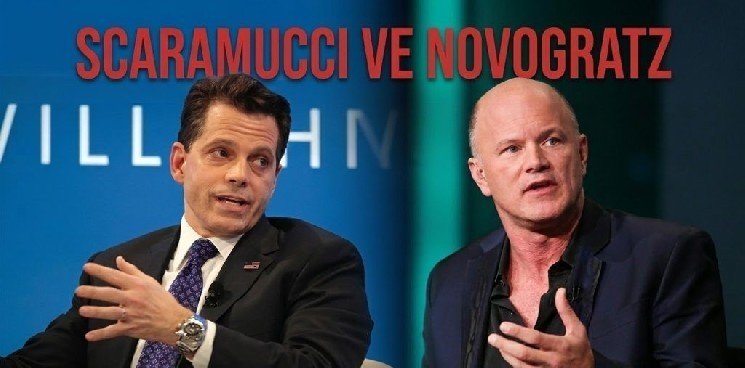
  • Anthony Scaramucci and Mike Novogratz Discuss Bitcoin and Ethereum: “The Worst May Be Behind Us”

    Anthony Scaramucci and Mike Novogratz Discuss Bitcoin and Ethereum: “The Worst May Be Behind Us”

    Renowned macro investors Anthony Scaramucci and Galaxy Digital CEO Mike Novogratz discussed the current state of the cryptocurrency market, allegations of manipulation, and future expectations in their latest broadcast.

    Amidst geopolitical tensions in the Middle East, markets are giving signals that “the worst may be over” for Bitcoin.

    Mike Novogratz displayed cautious optimism when evaluating Bitcoin’s recent price movements. Novogratz stated that he views the $60,000 level as a “tradable bottom.” He noted that sellers are showing signs of fatigue in the market and argued that after testing this level several times, Bitcoin is beginning to encounter upward resistance. However, he emphasized that for a real sense of relief in the market, the price needs to break above the $80,000 barrier.

    One of the most striking points in the news article was the “Jane Street” case, which caused a major stir in the crypto community. According to claims circulating on the crypto Twitter (X) world, Jane Street allegedly implemented a systematic selling program during the 2022 Terra (LUNA) crash, thereby driving down the price of Bitcoin.

    While Novogratz acknowledged that such giant financial institutions surpass even traditional giants like Goldman Sachs in terms of speed and resources, he noted that attributing the decline in Bitcoin entirely to such “scapegoats” might not be accurate. He stated that liquidity providers in the market are making enormous profits, but this isn’t always positive for society or market health.

    Novogratz noted that there is a strong stance against Ethereum falling below the $1,800 level, and reminded that crypto hedge funds are currently in a short position. He predicts that if the price of BTC suddenly rises to $80,000 or $100,000, these funds may be forced to buy again due to fear of missing out (FOMO), which could create upward momentum.

    *This is not investment advice.

  • Nvidia Is Probably Done Investing in OpenAI and Anthropic, Says CEO—Why?

    Nvidia Is Probably Done Investing in OpenAI and Anthropic, Says CEO—Why?

    In brief

    • Nvidia signaled the end of its major investments in OpenAI and Anthropic.
    • The OpenAI-Anthropic feud is escalating fast after a Pentagon deal and federal backlash.
    • With this decision, Nvidia avoids choosing sides as AI labs clash with each other and Washington.

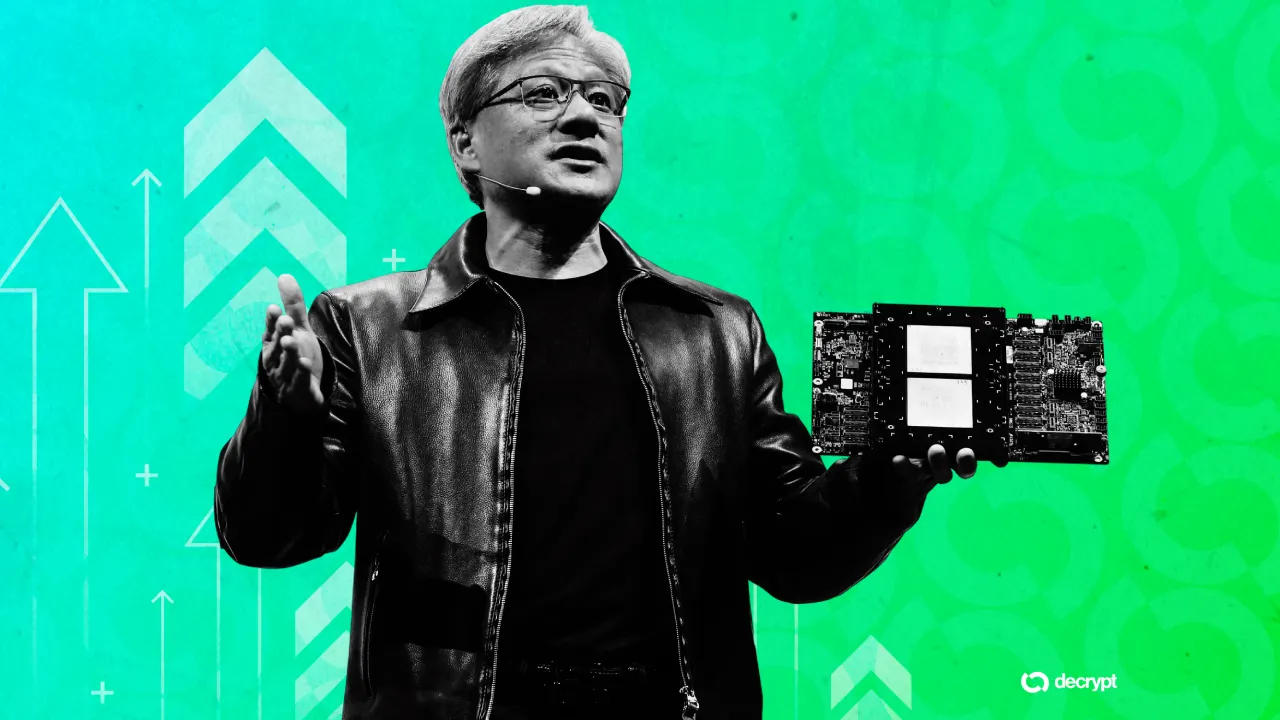
    At the Morgan Stanley Technology, Media, and Telecom conference in San Francisco on Wednesday, Jensen Huang said Nvidia is likely done investing in AI giants OpenAI and Anthropic.

    The $30 billion investment it just finalized into OpenAI was a steep drop from the $100 billion deal announced last September, and will likely be the last check. Same for the $10 billion it put into Anthropic in November.

    The official reason sounds clean: Both companies appear to be heading toward IPOs later this year, and private deals of this nature close once that window opens.

    “This might be the last time we’ll have the opportunity to invest in a consequential company like this,” Huang told the audience.

    Granted, late-stage investors write checks right up to the IPO bell all the time, and the original $100 billion OpenAI commitment didn’t shrink to $30 billion because of some procedural IPO rule. Something else changed.

    Nvidia now holds stakes in two companies in the middle of an all-out war with each other—and with Washington. Trump ordered all federal agencies to stop using Anthropic’s technology after the company refused to let Claude be deployed for autonomous weapons or mass domestic surveillance. Within hours, OpenAI announced its own Pentagon deal—a move Anthropic publicly called “mendacious.”

    The public sided with Anthropic. Within 24 hours of the back-to-back announcements, Claude shot to the top of the free app rankings on Apple’s U.S. App Store, overtaking ChatGPT. At the end of January, it was outside the top 100. An Anthropic spokesperson told Decrypt that it saw record signups in the days following the Pentagon’s move.

    Meanwhile, the QuitGPT movement had claimed an estimated 2.5 million users taking action against OpenAI—canceling subscriptions or spreading the boycott—by the time the dust started settling.

    Nvidia’s relationship with Anthropic was already strained before all this. Two months after putting $10 billion into the company, Dario Amodei stood at Davos and compared U.S. chip companies selling high-performance processors to approved Chinese customers to selling nuclear weapons to North Korea. He didn’t name Nvidia, but didn’t need to either.

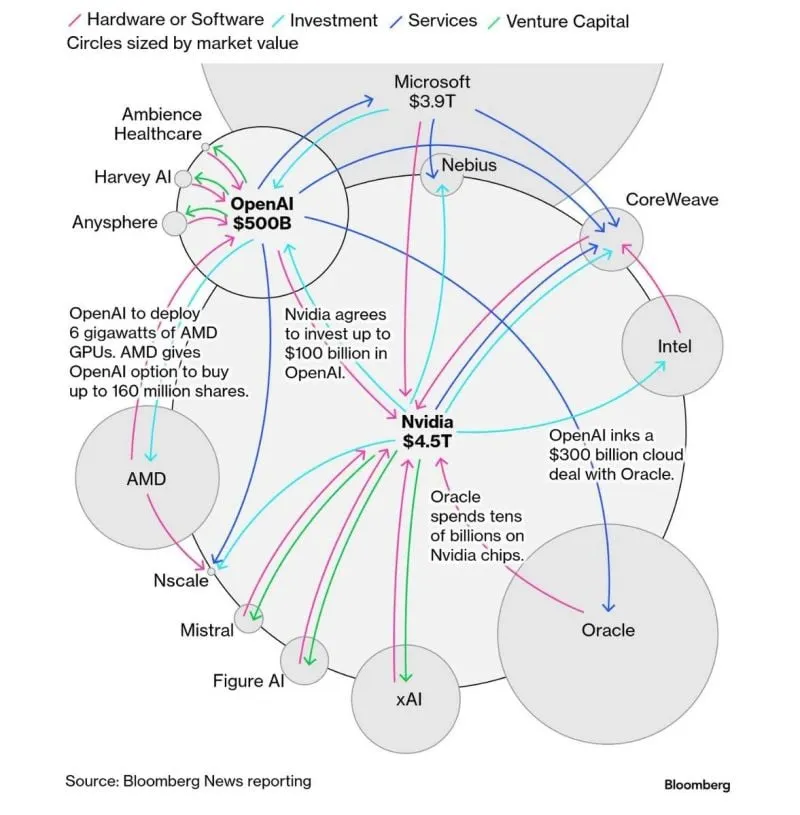
    There’s also the structural awkwardness of the whole circular economy behind Nvidia’s massive investments in AI startups. Nvidia invests in OpenAI, but OpenAI spends it on Nvidia chips. The circularity drew bubble comparisons.

    Source: Bloomberg

    What Nvidia is actually doing is getting out of the business of picking sides. It sells GPUs to OpenAI, Anthropic, xAI, Google, and everyone else racing for the frontier. The arms dealer doesn’t get to have a favorite army.

    Getting caught holding equity on both sides of a Pentagon standoff, in which one investee is increasingly hated and the other gets designated a national security supply-chain risk, is exactly the kind of mess that makes customers nervous.

    The IPO story is a convenient door. Huang walked through it.

    Daily Debrief Newsletter

    Start every day with the top news stories right now, plus original features, a podcast, videos and more.

  • Crypto Exchange OKX Debuts Social Platform Linking Posts to Trades

    Crypto Exchange OKX Debuts Social Platform Linking Posts to Trades

    In brief

    • Orbit lets users discuss markets, host livestreams and execute trades directly from posts within the OKX app.
    • Performance data, including holdings, profit and loss, and trading history, can be displayed in real time using exchange-derived metrics.
    • The platform won’t initially be available in the U.S., Europe, Singapore, Australia or the UAE.

    Crypto exchange OKX said Thursday it is rolling out a native social networking feature inside its trading app that allows users to discuss markets, disclose trading performance, and execute trades directly from posts.

    The feature, called Orbit, embeds a real-time discussion layer into the OKX app where users can post trade ideas, host livestreams, and form groups while linking directly to tradable assets through cashtags such as $BTC or $ETH. 

    The launch reflects a broader push by trading platforms to blend social media with market activity.

    Social trading platform eToro pioneered the model in 2010 with its OpenBook platform and CopyTrader feature, while crypto exchanges have since introduced similar tools, including Bybit in 2022 and by Binance on its futures platform in 2023.

    The launch comes as OKX pushes further into traditional finance following an investment from Intercontinental Exchange, the parent company of the New York Stock Exchange, in a deal valuing the exchange at $25 billion and aimed at enabling tokenized stock trading.

    OKX said Orbit aims to address a long-standing credibility issue in online trading communities, where influencers often share screenshots of profitable trades without independently verifiable records.

    “When you view an Orbit user’s profile, you can toggle at the top between ‘posts’ and ‘performance,’” an OKX spokesperson told Decrypt. “These update in real time and are calculated based on the user’s trading history via the OKX app.”

    Under the “performance” tab, users can view a trader’s holdings, total profit and loss, and “trading history (open, closed, and existing positions),” where leverage is also visible.

    Those metrics can also be sorted across multiple time frames, including 7 days, 30 days, 90 days, and one year.

    Users must first complete identity verification and comply with the platform’s terms of service before accessing Orbit, which is subject to the same KYC, AML, and transaction-monitoring controls applied across the exchange, the OKX spokesperson added.

    Still, sharing the data is optional. 

    “The user can decide whether or not to share performance data, but cannot selectively edit or omit the data shown,” the spokesperson said, adding that the information displayed is derived directly from exchange data and “is not editable by the user.”

    Orbit also introduces creator rewards tied partly to follower engagement and activity. 

    “Follower trading activity is one way to earn rewards,” the spokesperson said, adding that traders can also be rewarded for posting content, livestreaming and building communities on the platform.

    The feature won’t initially be available in the U.S., Europe, Singapore, Australia, or the United Arab Emirates, markets where regulators have shown greater interest in social trading and online investment promotion.

    The rollout has begun with a limited group of users and will expand after a beta phase.

    Daily Debrief Newsletter

    Start every day with the top news stories right now, plus original features, a podcast, videos and more.

  • Aave Labs Proposes Dedicated Bug Bounty Program for Aave V4 With Sherlock

    Aave Labs Proposes Dedicated Bug Bounty Program for Aave V4 With Sherlock

    • Aave Labs has published a proposal for a dedicated bug bounty program for a 24/7 channel to report security issues.
    • High-priority submissions require participants to stake at least 250 $USDC, which is forfeited if the report is invalid or deemed spam.

    Aave Labs has published a proposal to launch a new dedicated bug bounty program for its v4 on Sherlock’s security platform for DeFi protocols.

    The proposal aims to establish a channel to report any security concerns on the DeFi platform as it transitions to the fourth version (v4) of its protocol. The Labs says that Sherlock has been working with the community to audit the current v3 protocol and was used for early v4 testing. This translates to shared reporting standards and escalation paths for all parties.

    Founder Stani Kulechov noted that bug bounties have been an important part of the network’s security strategy. He also praised the Sherlock team for its expertise in managing previous bug bounty programs and security contests.

    We propose launching the Aave V4 bug bounty program with Sherlock. Bug bounties have long been an important part of Aave’s security strategy, and the Sherlock team has demonstrated strong expertise in managing both security contests and bug bounty programs. https://t.co/azjjaV7fIZ

    — Stani.eth (@StaniKulechov) March 5, 2026

    On its part, Sherlock expressed support for the proposed program, adding, “Always-on coverage, structured triage, and clear escalation for high-severity reports as V4 ships and scales. Aave’s commitment to security stays constant.”

    Aave’s 250 $USDC Stake to Prevent Spam

    The bug bounty program will be limited to the Aave v4 repositories and deployed contracts. Any expansion or migration of other programs would need a separate governance poll.

    Participants can hand in medium- or low-priority submissions at will. However, they cannot upgrade these to upper-tier submissions even if they expand in scope to ensure they pay enough attention to the original classification.

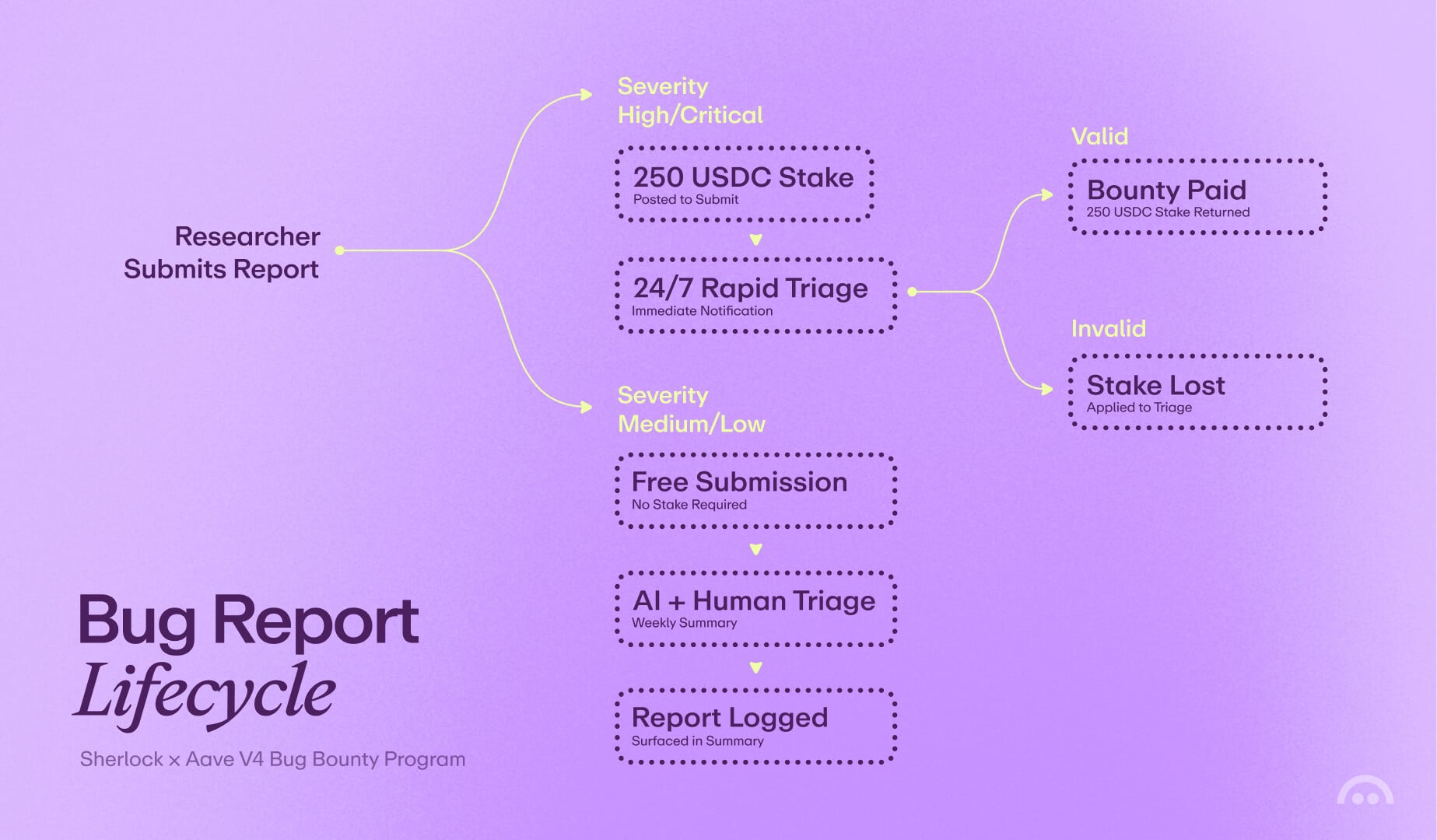
    The high-priority and critical submissions, which receive heftier payouts, will be limited to users who stake 250 $USDC. If the submission is valid, the stake is returned together with the payout. If invalid, the stake is forfeited to pay for triage costs. This is intended to prevent spam where participants classify all submissions as high-priority to take a shot at the higher payout.

    For high-priority submissions, Aave’s designated security team members are instantly notified via Telegram and Slack to respond immediately. The lower-priority submissions are assessed by an AI program working alongside human reviewers. Only the reports deemed higher-quality will be submitted for review.

    Image courtesy of Aave Labs.

    Aave Labs conceded that while the 250 $USDC staking will reduce spam, it could put off some genuine researchers from submitting high-priority security concerns. To mitigate, it intends to keep the medium-priority tier free and to prioritize experienced researchers using this tier.

    It also acknowledged that by barring the re-classification of medium submissions to high-priority, it would punish misclassified submissions. It intends to publish an extensive guide as part of the program launch materials.

    The proposal comes weeks after a dispute between Aave Labs and BGD Labs imploded, with the latter announcing its departure at the end of this month. BGD, which was contracted by the Aave DAO to cater to security and technical issues, says the Labs has frustrated its efforts to advance the protocol.

  • Binance Responds to Inquiry Letter from the U.S. Senate

    Binance Responds to Inquiry Letter from the U.S. Senate

    Binance, one of the world’s largest cryptocurrency exchanges, has officially responded to an inquiry letter sent by US Senator Richard Blumenthal, denying recent allegations of sanctions violations.

    The company argued that the media reports were based on misunderstandings and that its compliance processes were among the strongest in the industry.

    In its response to a Senate hearing on February 24, Binance stated that the allegations, first raised by The Wall Street Journal, were “defamatory.” The company said that the claims of sanctions non-compliance in the news reports were untrue and that its operations were misinterpreted.

    Binance stated, “We take these allegations seriously. However, they misrepresent both our daily operations and the significant progress we’ve made in building one of the strongest compliance programs in the industry.”

    The exchange claimed that strict KYC (Know Your Customer) and sanctions controls are implemented on the platform. According to Binance, users from Iran are banned from accessing the platform, and accounts deemed risky during investigations conducted by security forces are removed from the platform.

    The company also stated that accounts are reviewed when credible risk information emerges, closed when necessary, and shared with relevant authorities. Binance argued that its compliance mechanism “worked effectively” in the incidents mentioned in the Senate letter.

    Binance stated that its compliance program is constantly being strengthened and that the platform’s security standards are high, adding that more than 300 million users worldwide trust the platform.

    Binance also stated that its response to the Senate was prepared based on the information available and that it could provide additional information if necessary.

    *This is not investment advice.

  • Dogecoin Down Bad as Bitcoin Gives Up Latest Gains

    Dogecoin Down Bad as Bitcoin Gives Up Latest Gains

    In brief

    • Dogecoin (DOGE) is down about 8% in the last 24 hours, the biggest fall among top 100 crypto tokens in that time.
    • The token’s slide has helped pull down the entire meme category, which is one of the only net losers in the last 24 hours according to CoinGecko.
    • Other popular memes like Pepe, Fartcoin, and Official Trump have also fallen in the last day.

    A day after leading the crypto market’s top tokens in gains, leading meme coin Dogecoin (DOGE) is atop the pack of losers on Thursday as Bitcoin slides to nearly $71,000 after nearly touching $74,000 on Wednesday for the first time in four weeks.

    DOGE has now fallen about 8% in the last 24 hours, turning the token red for the week as it recently changed hands around $0.094. No other coin has fallen harder among the top 100 cryptocurrencies by market cap in the last day, according to CoinGecko.

    The fall should not be surprising, according to Bitwise Research Analyst Danny Nelson. 

    Nelson told Decrypt on Wednesday that the surge in DOGE alongside the market’s rise was not to be mistaken as the start of a “sustainable meme coin rally.” 

    “Dogecoin thrives on the attention economy. It needs to grow its audience to grow in value,” he said, adding that Wednesday’s rally did not provide the appropriate attention catalyst for proper Dogecoin growth. 

    After gaining traction in part due to the backing of billionaire Elon Musk, DOGE is now down 87% from its 2021 all-time high of $0.73. 

    The token’s daily fall has helped pull down the entire meme coin category, which is the only top 20 market cap category tracked by CoinGecko in the red over the last 24 hours.

    The category as a whole has fallen around 0.5% in the last 24 hours and now 8.3% on the week as other notable meme coins like Pepe and Bonk have dipped 5.7% and 2.9% respectively, after a strong Wednesday.

    Popular Solana meme coin Fartcoin has fallen around 4.9% in the last 24 hours as well, extending its losses in the last month to 19% as it recently changed hands around $0.16. The token is now down around 93% from its January 2025 all-time high of $2.83.

    President Trump’s own official Solana-based meme coin—TRUMP—has suffered a similar fate since that time. The token is down around 6.5% in the last 24 hours, changing hands around $3.23, and now nearly 96% off its all-time high of $73.43.

    Daily Debrief Newsletter

    Start every day with the top news stories right now, plus original features, a podcast, videos and more.

  • Roblox Is Now Using AI to Rewrite Chat Swears in Real Time

    Roblox Is Now Using AI to Rewrite Chat Swears in Real Time

    In brief

    • Roblox’s new AI-powered feature rewrites profanity in chat instead of replacing messages with “####.”
    • The system aims to keep conversations readable during gameplay while enforcing Roblox’s community standards.
    • The company is also upgrading its chat filters to detect profanity and attempts to gain players’ personal information.

    The massively popular online gaming platform, Roblox, is replacing the strings of hashmarks that appear when its chat filters catch profanity with AI-rephrased versions of flagged messages, the company announced on Thursday.

    The feature, called real-time chat rephrasing, modifies profanity in messages so conversations remain readable instead of appearing as blocked text.

    “For example, a message that violates Roblox’s profanity policies, such as ‘Hurry TF up!’ would previously have appeared as ‘####’ within experience chat,” the company said. “That will now be rephrased to ‘Hurry up!’”

    This new design, according to Roblox Vice President of User and Discovery Product Rajiv Bhatia, aims to maintain civility by rephrasing the language and replacing “stop signs” with actual words.

    “Chat is central to how people connect, coordinate, and play on Roblox,” Bhatia said in a statement. “Real-time rephrasing helps keep gameplay and conversations on track while guiding language toward what’s appropriate.”

    In May 2025, Roblox introduced real-time warnings that alert users when messages may violate platform rules, and encourage them to reconsider their wording.

    “In experiments last year, Roblox saw that issuing in-experience text chat notifications and time-outs resulted in a 5% reduction in filtered chat messages and a 6% reduction in consequences from abuse reports,” the company said.

    Despite the drop, Roblox said the new change addresses a long-standing issue where filtered language appears as strings of random characters, which can make chats difficult to follow during gameplay.

    While players in the chat are notified when text is rephrased, the company says the new system does not alter its enforcement policies for profanity.

    “To be clear, when we rephrase a message that violates our profanity policy, it is still a violation, and the same rules still apply,” Bhatia said in a separate statement on Thursday. “A user who continues to try to curse in chat will still face the same consequences for repeatedly violating our policy.”

    The rephrasing feature, Roblox said, is available only in chats between age-verified users in similar age groups, and supports all languages currently available through Roblox’s automatic translation tools. To get a handle on how teen players talk during gameplay, Roblox said the new rephrasing feature was developed in collaboration with members of its Teen Council.

    The company is also upgrading its text filtering system to better detect attempts to evade moderation rules, including variations of language that substitute numbers or symbols for letters, known as leetspeak.

    Roblox’s chat rephrasing is part of a growing trend in the gaming industry, with companies increasingly using AI to moderate player behavior in multiplayer games. In 2024, Activision said more than 2 million accounts were flagged for disruptive chats after deploying its AI-powered ToxMod moderation system across several Call of Duty titles. The company said the tool helped reduce repeat offenders and cut severe instances of disruptive voice chat.

    Roblox has also expanded its own use of AI across the platform. In February 2024, the company introduced real-time AI chat translation that allows players to communicate across more than 16 languages in Roblox chat.

    “This is a bold new approach, and we won’t always rephrase things perfectly,” Bhatia said of the latest move, adding that the company will continue to learn and experiment with the feature. “Our ultimate goal is to empower users to collaborate and connect in a way that is both fun and respectful.”

    Roblox did not immediately respond to a request for comment by Decrypt.

    Daily Debrief Newsletter

    Start every day with the top news stories right now, plus original features, a podcast, videos and more.

  • CoinDesk 20 performance update: Aave drops 4.3% as all index constituents trade lower

    CoinDesk 20 performance update: Aave drops 4.3% as all index constituents trade lower

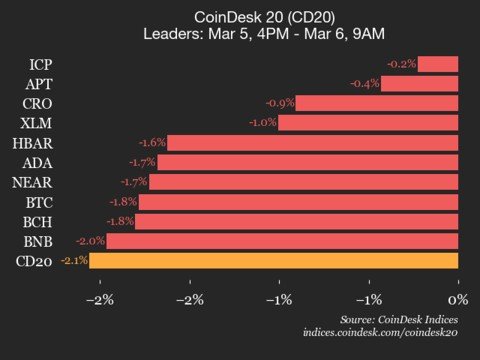
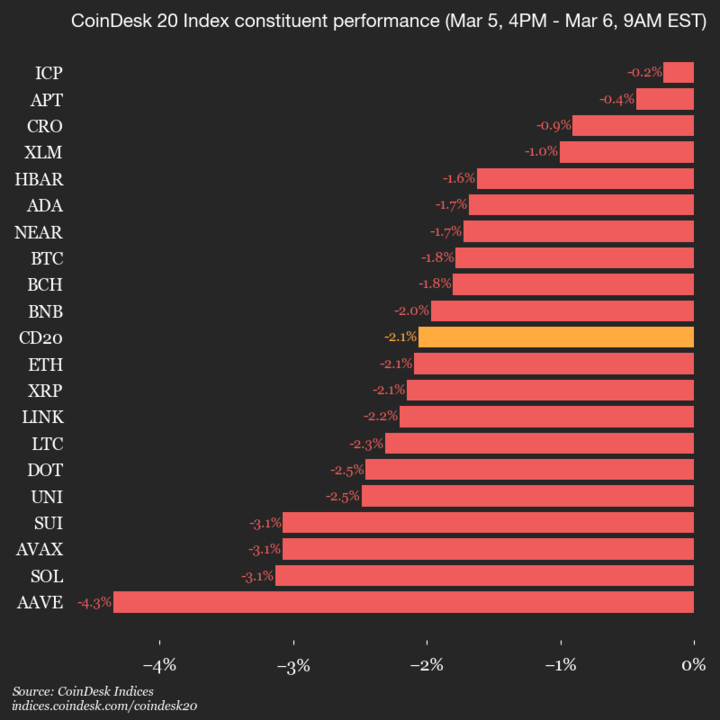
    CoinDesk Indices presents its daily market update, highlighting the performance of leaders and laggards in the CoinDesk 20 Index.

    The CoinDesk 20 is currently trading at 1991.98, down 2.1% (-41.93) since 4 p.m. ET on Thursday.

    None of the 20 assets are trading higher.

    Leaders: ICP (-0.2%) and APT (-0.4%).

    Laggards: AAVE (-4.3%) and SOL (-3.1%).

    The CoinDesk 20 is a broad-based index traded on multiple platforms in several regions globally.

  • Vitalik Buterin Makes Important Appeal to the Ethereum Community: “If We Do This, We Will Regain Momentum!”

    Vitalik Buterin Makes Important Appeal to the Ethereum Community: “If We Do This, We Will Regain Momentum!”

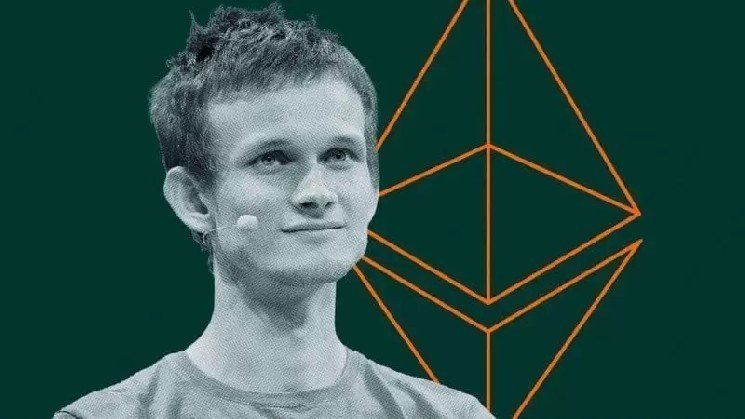
    Ethereum founder Vitalik Buterin called on the ETH community to embrace a bolder vision, specifically stating that the application layer needs to be “thought from scratch.”

    According to Buterin, the Ethereum ecosystem must break away from conventional thinking patterns to design next-generation applications without compromising its core principles.

    Buterin stated that the Ethereum community needs to reassess its relationship with the application layer and the rest of the world. He argued that Ethereum’s core features—censorship resistance, open-source nature, privacy, and security (CROPS)—must be preserved, and that a radical questioning of current approaches, particularly at the application layer, is crucial.

    The Ethereum founder stated last year that privacy has become one of the primary priorities for the ecosystem, signifying a radical shift in the application stack. According to Buterin, since Ethereum’s application infrastructure has not been developed with privacy in mind until now, it may be necessary to create a completely different application stack in this new era.

    Buterin also noted that one of the key topics of discussion this year was the reassessment of the role of Layer 2 (L2) solutions. He stated that it was necessary to rethink “from scratch” which L2 models could create the strongest synergy with Ethereum, adding that this process required both a technical and a cultural transformation.

    Buterin stated that the Ethereum ecosystem has long operated with a “how do we improve the existing system?” approach, arguing instead that a new mindset is needed. According to this new model, developers should reassess which applications truly create the greatest value on a robust Layer-1 infrastructure and an ever-growing toolset.

    Buterin suggested that developers assume Ethereum is a completely empty network as a thought experiment. He asked them to consider how they would design initial applications in areas such as DeFi, decentralized social networks, and authentication, arguing that setting aside existing dependencies and outdated assumptions would foster creativity.

    According to the Ethereum founder, this approach could be one of the keys to the ecosystem regaining momentum.

    *This is not investment advice.