Category: Business

  • Bitcoin Hits an 11-Week High Above $78,000 but Analysts Say the Rally Is a Squeeze, Not a Shift

    Bitcoin Hits an 11-Week High Above $78,000 but Analysts Say the Rally Is a Squeeze, Not a Shift

    Bitcoin climbed above $78,000 on April 22, reaching its highest price in 11 weeks, as a wave of short liquidations and improved macro sentiment following Trump’s ceasefire extension combined to push the asset to a key technical level that had resisted multiple breakout attempts.

    Bitcoin rose above $78,000 on April 22 for the first time since early February, touching an 11-week high as easing geopolitical tensions and a concentrated cluster of short liquidations above the level combined to push price through resistance that had turned back multiple attempts in recent weeks. According to Fortune’s April 22 price data, BTC was trading at $78,194 as of 9:15 a.m. ET, up approximately $2,293 from the prior morning.

    Bitcoin 11-Week High Fueled by Short Liquidations and Macro Relief

    CoinDesk reported that approximately $180 million in short futures positions were sitting above the $78,000 level heading into the session, according to CoinGlass liquidation heatmap data, creating significant upside fuel if price could clear the threshold. The broader catalyst was Trump’s extension of the Iran ceasefire announced on April 21, which lifted risk sentiment across equities and crypto simultaneously. Crypto futures open interest rose more than 4% to $126 billion in the 24 hours surrounding the move, with funding rates flipping positive across most major tokens, signaling renewed demand for leveraged long exposure.

    Diana Pires, Chief Business Officer at sFOX, said, “Bitcoin reaching an 11-week high and testing the $78,000 level is being framed as a macro-driven move, but the move appears largely driven by positioning, with a significant amount of short liquidations sitting above the market. This is a squeeze dynamic more than a fundamental shift in demand.”

    Altcoins Join the Rally, But the Breadth Tells Its Own Story

    The Bitcoin move pulled altcoins higher across the board, with memecoins leading gains and higher-beta assets outperforming. As crypto.news documented, a similar dynamic played out during the earlier $225 million short squeeze in mid-April, where forced buying in derivatives markets accelerated a price move that ultimately failed to hold. The current rally’s altcoin participation pattern drew cautious readings from analysts watching for signs of genuine capital reallocation versus tactical risk-on positioning.

    According to Diana, “Participation is expanding into altcoins, but it’s concentrated in higher-beta, more speculative segments. That’s consistent with a short-term risk-on reaction, not a broad reallocation of capital.”

    Whether the Move Can Hold Is the Real Question

    Bitcoin spent more than 46 consecutive days below $76,000 before this week’s move, building up one of the largest concentrations of short positioning in recent history, as crypto.news tracked. K33 Research head of research Vetle Lunde noted that comparable risk-off regimes with negative funding and rising open interest have historically preceded significant recoveries once short sellers were forced to unwind. That structural setup provided the technical conditions for the current move, but analysts are watching closely whether spot demand can sustain price above $78,000 once the immediate liquidation fuel is exhausted. The FOMC meeting on April 28 and 29 is the next major macro test, with rate cut expectations still largely absent from the near-term calendar.

    “What matters now is whether this move can sustain without continued positioning support. Liquidity conditions remain tight, and capital is still selective in how it allocates to risk assets. Until that participation deepens and proves durable, this type of price action is more reflective of short-term positioning than a broader shift in market structure,” Diana explained.
  • International Finance Bank Confirms XRP as a Payment Rail Within ILP Stream Protocol

    IFB Presentation Reveals $XRP’s Role as a Bank Payment Rail in ILP STREAM Protocol

    A newly surfaced internal presentation from International Finance Bank (IFB), highlighted by crypto researcher SMQKE, is reinforcing a growing narrative that $XRP goes beyond theory, positioning it as a live payment rail within the Interledger Protocol (ILP) rather than just a conceptual banking framework.

    The document, prepared for IFB’s technical and risk teams, details how banks can integrate with Ripple’s ILP framework. It highlights the STREAM protocol as a core layer enabling real-time value and data transfer across disparate ledgers.

    Notably, $XRP is explicitly identified as the settlement mechanism powering that exchange of value.

    This distinction is important because ILP is built to be asset-agnostic, routing value across different currencies and networks.

    Nevertheless, IFB’s implementation points to a more specific role for $XRP within STREAM, functioning as the bridge asset that moves value between systems. In practice, it serves as the liquidity layer that enables fast, efficient settlement across otherwise disconnected networks.

    IFB’s Multi-Rail Payment Strategy Reveals $XRP’s Real Institutional Role

    Even more revealing is how IFB frames its payment architecture as a multi-rail system, where different networks are used depending on need, much like choosing between PayPal, Apple Pay, or a bank transfer.

    Within this setup, RippleNet, ILP, and Mojaloop sit alongside legacy rails such as SWIFT and SEPA.

    Rather than a one-size-fits-all approach, IFB applies selective routing. RippleNet—and by extension $XRP, is deployed only where counterparties are already within Ripple’s ecosystem or where it offers clear FX and settlement efficiency.

    The takeaway is straightforward that $XRP isn’t used universally, but strategically, wherever it delivers measurable economic advantage.

    Interoperability is also of the essence and IFB confirms that ILP can run alongside SWIFT gpi Instant, underscoring a broader reality that blockchain isn’t replacing traditional finance overnight, but embedding itself within it. The result is a hybrid infrastructure where legacy rails and blockchain networks increasingly work in parallel rather than in opposition.

    This convergence narrative is reinforced by estimates suggesting that 60% of SWIFT-connected banks already have some level of exposure to Ripple-related technology.

    Looking forward, some within the $XRP Ledger community see $XRP expanding beyond cross-border payments into decentralized finance (DeFi) applications. If that trajectory continues, its role could shift from a liquidity bridge to a core component of emerging financial infrastructure.

    In conclusion, IFB’s documentation stands out for its practical framing of $XRP as a functional infrastructure within institutional payment systems.

  • KCEX Unregistered Exchange Evades South Korean Ban: iOS App Store Loophole Exposed

    KCEX Unregistered Exchange Evades South Korean Ban: iOS App Store Loophole Exposed

    An unregistered overseas crypto exchange, KCEX, continues to operate in South Korea despite a government ban, leveraging a loophole through the iOS App Store. This situation reveals significant gaps in the country’s regulatory framework for virtual asset service providers. As of April 22, 2025, the exchange remains accessible to South Korean users, undermining efforts to enforce financial oversight.

    KCEX Unregistered Exchange: Background and Timeline

    South Korean financial authorities flagged KCEX for unregistered business activities in August 2024. The exchange, based overseas, never obtained the necessary license from the Financial Services Commission (FSC). Despite this, it continues to attract users through its mobile application.

    The timeline of events highlights the challenges regulators face. In 2024, the FSC strengthened rules for virtual asset service providers. They required all exchanges to register with the Korea Financial Intelligence Unit (KoFIU). Non-compliance carries penalties, including blocking access to local markets.

    However, KCEX sidestepped these measures. The exchange did not block South Korean IP addresses. Instead, it maintained its app on the iOS App Store. This move allowed users to download and trade freely. The app’s availability on Apple’s platform gives it legitimacy in the eyes of many users.

    How the iOS App Store Bypass Works

    The bypass relies on Apple’s global distribution system. Apple does not individually vet each app for compliance with foreign financial regulations. Instead, it relies on the app developer’s self-certification. KCEX likely listed its app as available in all regions, including South Korea.

    This oversight creates a major enforcement gap. South Korean authorities can block websites and domain names. They can also request internet service providers to restrict access. But they cannot directly remove apps from Apple’s App Store without a formal request to Apple. Such requests take time and often face legal hurdles.

    Additionally, users can bypass regional restrictions by changing their App Store account region. This technique requires no technical skill. It makes the ban nearly impossible to enforce at scale.

    Regulatory Gaps in South Korea’s Crypto Oversight

    South Korea has one of the strictest crypto regulatory environments globally. The Specific Financial Information Act requires all exchanges to register with KoFIU. Exchanges must also implement anti-money laundering (AML) and know-your-customer (KYC) procedures.

    Despite these rules, unregistered exchanges thrive. A 2024 report from the FSC found over 30 unregistered overseas exchanges targeting South Korean users. These platforms often offer higher leverage or fewer restrictions than domestic exchanges.

    Table: Comparison of Registered vs. Unregistered Exchanges in South Korea

    Impact on South Korean Crypto Users

    The continued availability of KCEX exposes users to significant risks. Without regulatory oversight, these exchanges may engage in market manipulation. They might also fail to secure user funds. In 2023, several unregistered exchanges collapsed, causing millions in losses for South Korean investors.

    Moreover, users face legal consequences. Trading on unregistered platforms violates South Korean law. The FSC has warned that users could face fines or criminal charges. Yet enforcement remains rare, creating a sense of impunity.

    Financial experts emphasize the need for better user education. Many traders choose unregistered exchanges for lower fees or access to specific tokens. They often overlook the risks until a problem occurs.

    Expert Analysis: Why Enforcement Fails

    Legal experts point to jurisdictional issues as the primary barrier. KCEX operates from a country outside South Korea’s legal reach. The FSC cannot issue fines or freeze assets held abroad. International cooperation through bodies like the Financial Action Task Force (FATF) exists but is slow.

    Furthermore, technology evolves faster than regulation. Decentralized exchanges (DEXs) and peer-to-peer platforms add another layer of complexity. Even if Apple removes the KCEX app, users can access the exchange via web browsers or alternative app stores.

    Dr. Kim Min-ji, a professor of financial law at Seoul National University, notes: “The current regulatory framework assumes a centralized, cooperative environment. The crypto market is neither. Regulators must adopt a more proactive, technology-driven approach.”

    Broader Implications for Global Crypto Regulation

    The KCEX case is not unique. Similar situations occur in Japan, the United States, and the European Union. Apple and Google face increasing pressure to vet financial apps more rigorously. In 2024, the EU’s Digital Services Act (DSA) began requiring app stores to verify the legal status of financial service providers.

    South Korea could adopt similar measures. The FSC has discussed requiring app stores to block unregistered exchanges. However, such a mandate would face legal challenges from Apple and Google. It could also set a precedent for other countries.

    Industry observers predict a shift toward self-regulation. Crypto exchanges may form consortiums to verify each other’s compliance. Blockchain analytics firms already offer tools to identify unregistered platforms. These tools could help app stores automate vetting processes.

    Conclusion

    The KCEX unregistered exchange case highlights the persistent challenge of enforcing crypto regulations in a globalized digital economy. Despite South Korea’s robust legal framework, the iOS App Store loophole allows the exchange to operate freely. This situation underscores the need for international cooperation, technological innovation in enforcement, and greater user awareness. Until regulators close these gaps, unregistered exchanges will continue to pose risks to investors and undermine financial stability.

    FAQs

    Q1: What is KCEX, and why is it considered unregistered in South Korea?
    KCEX is an overseas cryptocurrency exchange that has not registered with South Korea’s Financial Services Commission (FSC) as required by law. It was flagged for unregistered activities in August 2024 but continues to operate.

    Q2: How does KCEX bypass South Korea’s ban through the iOS App Store?
    The exchange lists its app as available in all regions on Apple’s App Store. Apple does not automatically block apps based on foreign financial regulations, allowing South Korean users to download and use it.

    Q3: What risks do users face when trading on unregistered exchanges like KCEX?
    Users risk financial loss from potential scams or exchange collapses. They also face legal consequences, including fines or criminal charges, for violating South Korea’s Specific Financial Information Act.

    Q4: Can South Korean authorities force Apple to remove the KCEX app?
    Yes, but only through a formal legal request. The process is slow and requires international cooperation. Apple may comply if the request is legally sound, but enforcement is not immediate.

    Q5: What steps can South Korea take to prevent similar loopholes in the future?
    Regulators could mandate app stores to verify the registration status of financial apps. They could also strengthen international partnerships and adopt blockchain-based monitoring tools to detect unregistered platforms.

  • A Decisive Moment for Bitcoin: The $80,100 Level Is Critical

    A Decisive Moment for Bitcoin: The $80,100 Level Is Critical

    In its latest report on the Bitcoin market, cryptocurrency analytics company Glassnode stated that the price is retesting critical thresholds and the market has entered a “decision phase.”

    According to Glassnode’s analysis, Bitcoin signaled a significant shift in market structure by surpassing the $78,100 level, which has long been considered a crucial reference point, often seen as the boundary between bull and bear regimes.

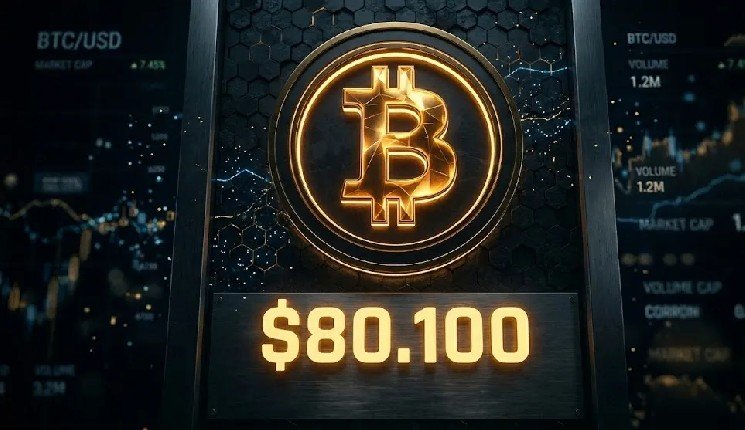
    The report states that the short-term investor cost basis is at $80,100, and this area currently stands out as strong resistance. According to the analysis, if the price rises towards $80,000, more than 54% of investors who bought recently will be in profit. This threshold historically marks the point where uptrends begin to tire and selling pressure increases.

    Glassnode data reveals that short-term investors realized profits of up to $4.4 million per hour, roughly three times the average of $1.5 million seen at local peaks earlier in the year. According to the analytics firm, this signals a need for caution in the market.

    Related News Anthony Pompliano Claims the Bitcoin Bull Market Has Begun – “The Sling Shot Effect Is Coming”

    On the other hand, there are signs of a limited recovery in the institutional sector. The 7-day average flows into Bitcoin ETFs turning positive again indicate a gradual return of institutional demand after a long period of outflows.

    Early signs of recovery are also being observed in the spot market. While the cumulative volume delta has moved into positive territory, buyers are reportedly behaving more aggressively, particularly on offshore exchanges. In contrast, derivatives markets are presenting a more cautious outlook. The continued negative perpetual funding rates indicate that short positions are gaining weight in the market. However, this situation could act as “fuel” for an upward movement if spot demand strengthens.

    On the volatility front, pressure persists. Both implied and realized volatility remaining low indicates the disappearance of premiums in option pricing, suggesting that investors have not yet taken a clear position on a strong direction.

    According to Glassnode, from a technical perspective, the $80,000 level acts as mechanical resistance in upward movements, but if the price falls back to $75,000, there is a risk that downward movements will accelerate.

    *This is not investment advice.

  • Coinbase warns of quantum risk: Is crypto prepared for a slow-moving security crisis?

    Coinbase warns of quantum risk: Is crypto prepared for a slow-moving security crisis?

    Quantum computing is no longer a distant theory, as early signals now suggest crypto holders may soon face a silent race to secure their funds.

    The Coinbase advisory board has now noted that a quantum computer capable of breaking encryption remains over a decade away.

    Source: Coinbase

    As the picture became clearer, attention shifted toward the “harvest now, decrypt later” risk model. This means exposed keys today may become targets once quantum capability arrives.

    Around 6.9 million Bitcoin [BTC], or 32% of the supply, already sits in exposed wallets.

    This creates uneven risk, where older wallets face higher vulnerability. As a result, holders may need to migrate funds within a proposed three-year window, which may reshape behavior and network activity.

    Blockchain responses to quantum risk begin to diverge

    Quantum risk is pushing blockchains into early preparation, which is reshaping how networks approach long-term security. Bitcoin is exploring new address formats, though it has not committed to a full upgrade, which reflects cautious coordination.

    As this unfolds, Ethereum [ETH] has outlined a detailed migration roadmap, which may improve scalability alongside stronger security.

    Meanwhile, Solana [SOL], Algorand, and Aptos have begun rolling out quantum-resistant options, which signals faster adaptation among newer chains.

    Layer 2 networks like Optimism [OP] have also introduced transition timelines, which adds clarity to execution.

    This uneven progress creates divergence, where some networks move faster than others. Over time, this gap may influence capital flows, as users and developers shift toward ecosystems with clearer upgrade paths.

    Execution risk drives quantum readiness

    The focus has shifted from quantum capability to execution risk, which now drives market perception. Post-quantum cryptography already exists, yet adoption speed remains the key challenge.

    As this becomes clearer, readiness starts to diverge, since Algorand and Aptos move faster than major networks.

    Meanwhile, Ethereum and Solana still use validator signatures that aren’t secure against future threats, which increases risks by making networks vulnerable to delays in upgrades, problems with validators, and possible security issues.

    As markets process this shift, price impact remains muted in the short term, since no immediate threat exists. However, medium-term volatility may rise, as news around breakthroughs or upgrades shapes sentiment.

    Over time, assets may develop a safety premium, as investors favor networks with proven migration paths. This dynamic shifts valuation toward crypto-agility, where faster upgrades may attract capital and strengthen long-term positioning.

    Final Summary

    • Bitcoin faces rising quantum risk, as exposed wallets and migration pressure begin to reshape long-term security and user behavior.
    • Ethereum and Solana show growing divergence, as quantum upgrade readiness starts to drive valuation and capital flows.
  • April 2026 Is Already the Worst Month for Crypto Hacks Since February 2025, With $606 Million Lost in 18 Days

    April 2026 Is Already the Worst Month for Crypto Hacks Since February 2025, With $606 Million Lost in 18 Days

    Crypto protocols have lost more than $606 million to hacks and exploits in just the first 18 days of April 2026, making it the single worst month for theft in the industry since the $1.4 billion Bybit breach in February 2025, according to data from DefiLlama.

    Crypto protocols have lost more than $606 million to hackers across 12 separate incidents in just 18 days of April 2026, according to data tracked by DefiLlama. Yahoo Finance reported the figure from BeInCrypto’s analysis, confirming that April has already become the worst month for crypto theft since February 2025, when the Bybit breach alone accounted for $1.4 billion.

    April 2026 Crypto Hacks Dwarf the Entire First Quarter

    The scale of April’s damage is stark in context. The entire first quarter of 2026 saw $165.5 million in losses across a relatively quiet stretch. April’s $606 million total arrived in under three weeks, making the month 3.7 times larger than Q1 combined and pushing 2026’s year-to-date theft total to approximately $771.8 million across 47 separate incidents. Two exploits account for nearly all of it. The $285 million Drift Protocol attack on April 1, later attributed to North Korea’s Lazarus Group, and the $292 million KelpDAO breach on April 18, also linked to Lazarus, together represent roughly 95% of the month’s losses and approximately 75% of everything stolen in crypto in 2026 so far. As crypto.news reported, the KelpDAO exploit alone triggered over $10 billion in Aave outflows and sent shockwaves across more than 20 connected protocols.

    The Attack Frequency Problem Is Getting Worse

    Beyond the dollar totals, the pace of attacks is accelerating in a way that concerns security researchers as much as the individual incident sizes. DeFi recorded 47 separate incidents in the first four and a half months of 2026, compared with 28 over the same period in 2025, a 68% year-over-year increase in attack frequency. The shift in attack methods is equally significant. As crypto.news documented, April’s exploits cut across smart contract vulnerabilities, infrastructure attacks, and social engineering campaigns, including AI-driven attacks on wallets like Zerion. The diversification of attack vectors means that technical audits and code reviews alone are no longer sufficient protection for protocols with significant TVL. “None of these accounts for the collateral damage seen across TVL, user trust, valuations, and the space’s morale. DeFi remains a niche market until risk can be properly priced,” an analyst wrote in BeInCrypto’s coverage.

    What the April Hack Surge Means for Crypto Markets

    Markets have already begun pricing in what analysts are calling a “security risk premium” on DeFi assets. As crypto.news tracked, crypto’s cumulative hack losses have now crossed $17 billion over the past decade, with attackers increasingly pivoting away from smart contract bugs toward private keys, signing infrastructure, and human-layer social engineering. Institutional players are responding with emergency rate limits and frozen bridge flows, while Jefferies has warned the string of marquee hacks could temporarily slow Wall Street’s appetite for DeFi tokenization projects. If even one more mid-size exploit occurs before April 30, the month’s total could approach $700 million, according to DefiLlama data cited by BeInCrypto.

    DefiLlama’s hacks tracker shows the attack frequency running at approximately one incident every 2.9 days in 2026, a pace researchers say reflects a growing attack surface driven by DeFi TVL exceeding $120 billion and the proliferation of cross-chain bridge infrastructure.

  • UK’s Financial Conduct Authority Leads London Crackdown on Crypto Traders

    UK’s Financial Conduct Authority Leads London Crackdown on Crypto Traders

    In brief

    • UK Financial Conduct Authority led multi-agency raids on eight London premises suspected of illegal P2P crypto trading.
    • Officers issued cease-and-desist orders requiring immediate cessation of unauthorized trading activities.
    • The evidence gathered will support ongoing criminal investigations into suspected money laundering operations, the agencies said.

    The UK’s Financial Conduct Authority said Wednesday that it conducted its first coordinated raids targeting illegal peer-to-peer crypto trading, hitting eight London premises alongside tax authorities and organized crime units.

    The Tuesday morning operation saw FCA officers issue cease-and-desist letters at each location, ordering traders to immediately halt unauthorized activities. The raids were conducted under the Money Laundering, Terrorist Financing and Transfer of Funds Regulations 2017.

    Evidence obtained during the on-site inspections is now supporting criminal investigations, the regulator said. The coordinated action involved HM Revenue & Customs and the South West Regional Organized Crime Unit working alongside FCA enforcement teams. Senior officials from the agencies emphasized the criminal risks posed by unregistered operators.

    “Unregistered peer-to-peer crypto traders operating in the UK are doing so illegally and pose a financial crime risk,” said Steve Smart, executive director of enforcement and market oversight at the FCA, in a statement. “We will use our powers and work with partners to disrupt them.”

    Detective Inspector Ross Flay of the South West Regional Organized Crime Unit highlighted concerns about money laundering channels.

    “By working with our colleagues at the FCA and HMRC, we are able to effectively target and disrupt unregistered peer-to-peer crypto traders operating illegally,” Flay said. “As law enforcement, we want to stop these traders providing a route for criminals to move, disguise, and spend illegal money.”

    The raids represent a significant escalation in UK crypto enforcement. The FCA currently has zero registered peer-to-peer crypto traders or platforms operating legally in the country, meaning all P2P trading activity operates outside regulatory oversight.

    P2P platforms typically allow users to exchange digital assets directly, often using cash or bank transfers. These characteristics have drawn increased scrutiny from financial regulators globally concerned about money laundering vulnerabilities. Tuesday’s coordinated raids mark the FCA’s first physical enforcement action targeting the sector after years of issuing warnings about unregistered crypto businesses.

    Earlier this month, the FCA launched a consultation on regulated crypto activities, covering areas such as stablecoin issuance, trading platforms, custody, and staking. Crypto firms can begin applying for authorization from September 2026, with the full regulatory regime taking effect in October 2027.

    The consultation closes June 3, with final rules expected in summer 2026. DeFi and distributed ledger resilience rules will be addressed in separate consultations later in the year.

    Daily Debrief Newsletter

    Start every day with the top news stories right now, plus original features, a podcast, videos and more.

  • Google Will Spend Up to $185 Billion This Year to Power AI ‘Agentic Era’: CEO

    Google Will Spend Up to $185 Billion This Year to Power AI ‘Agentic Era’: CEO

    In brief

    • Google plans to spend up to $185 billion this year on AI and cloud infrastructure to power the “agentic era,” its CEO said.
    • Sundar Pichai said nearly 75% of new code at Google is now AI-generated and approved by engineers.
    • New deals with Citi, Thinking Machines, and a $750 million partner fund show Google’s plan to monetize agentic AI.

    Google is making one of its biggest-ever bets on artificial intelligence.

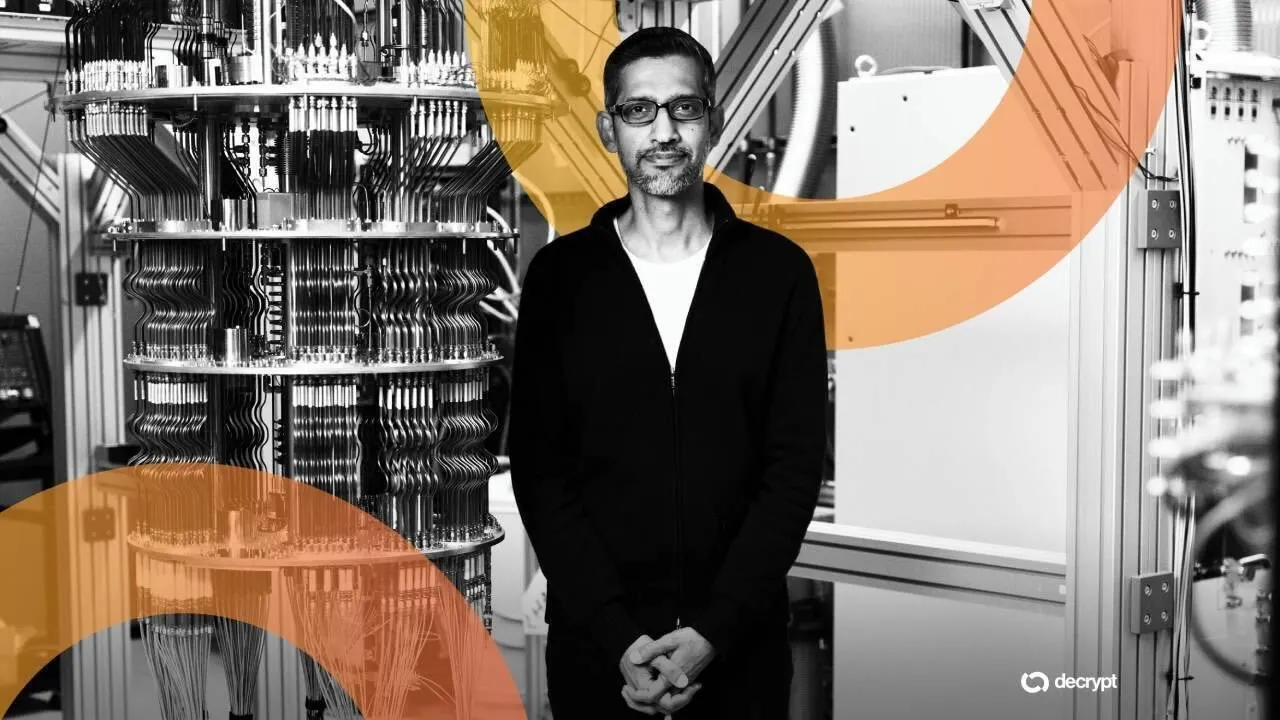
    Speaking Wednesday at the Google Cloud Next event in Las Vegas, CEO Sundar Pichai said the company plans to invest between $175 billion and $185 billion in capital expenditures this year—up from $31 billion in 2022—to build the infrastructure needed for what he called the “agentic era” of AI.

    “As we move into the agentic era, we are taking this to the next level,” Pichai said. “We are making big investments now and for the future.”

    The spending surge highlights Google’s effort to compete with rivals, including Microsoft, Amazon, and OpenAI, as the industry shifts from chatbots to autonomous AI agents capable of completing tasks with limited human oversight. According to Pichai, Google is already using those systems internally.

    “Today, nearly 75% of all new code at Google is AI-generated and approved by engineers, up from 50% last fall,” he said. “We are now shifting to truly agentic workflows.”

    However, despite the push into agentic AI, Pichai emphasized that human engineers review the AI-generated code. He said Google is also using AI to automate parts of its cybersecurity operations, helping teams process large volumes of threat intelligence faster and respond to risks more quickly.

    “Each month, our teams receive unstructured threat reports at a scale that will take thousands of hours to review—a nearly impossible task,” he said. “Today, our security operation center agents automatically triage tens of thousands of unstructured threat reports each month by accelerating the extraction of critical intelligence and filtering out the noise. It’s reduced threat mitigation time by over 90%; we are more on the front foot than ever before.”

    Google also used Cloud Next to show how it plans to turn that spending into revenue. The tech giant announced a $750 million fund to help its 120,000-member Google Cloud partner ecosystem build and deploy agentic AI products. The initiative includes engineering support, early access to Gemini models, and incentives for companies such as Accenture, Deloitte, and McKinsey & Company.

    While Google used Cloud Next to show how it plans to turn its AI spending into revenue, other companies, including Citi and Thinking Machines Lab, revealed how they are using Google’s infrastructure and AI tools to launch new products and train frontier models.

    Citi unveiled “Citi Sky,” an AI-powered wealth management assistant for U.S. clients. At the same time, Thinking Machines Lab said it expanded its use of Google Cloud’s AI Hypercomputer to accelerate AI research and model training.

    “One thing that is super clear: We are firmly in the agentic Gemini era,” Pichai said. “The conversation has gone from ‘Can we build an agent?’ to ‘How do we manage thousands of them?’”

    Editor’s note: This story was updated after publication to correct the day of the event.

    Daily Debrief Newsletter

    Start every day with the top news stories right now, plus original features, a podcast, videos and more.

  • Bitcoin Dominance Surpasses 60% First Time in 2026 as BTC Nears $80K

    Bitcoin Dominance Surpasses 60% First Time in 2026 as BTC Nears $80K

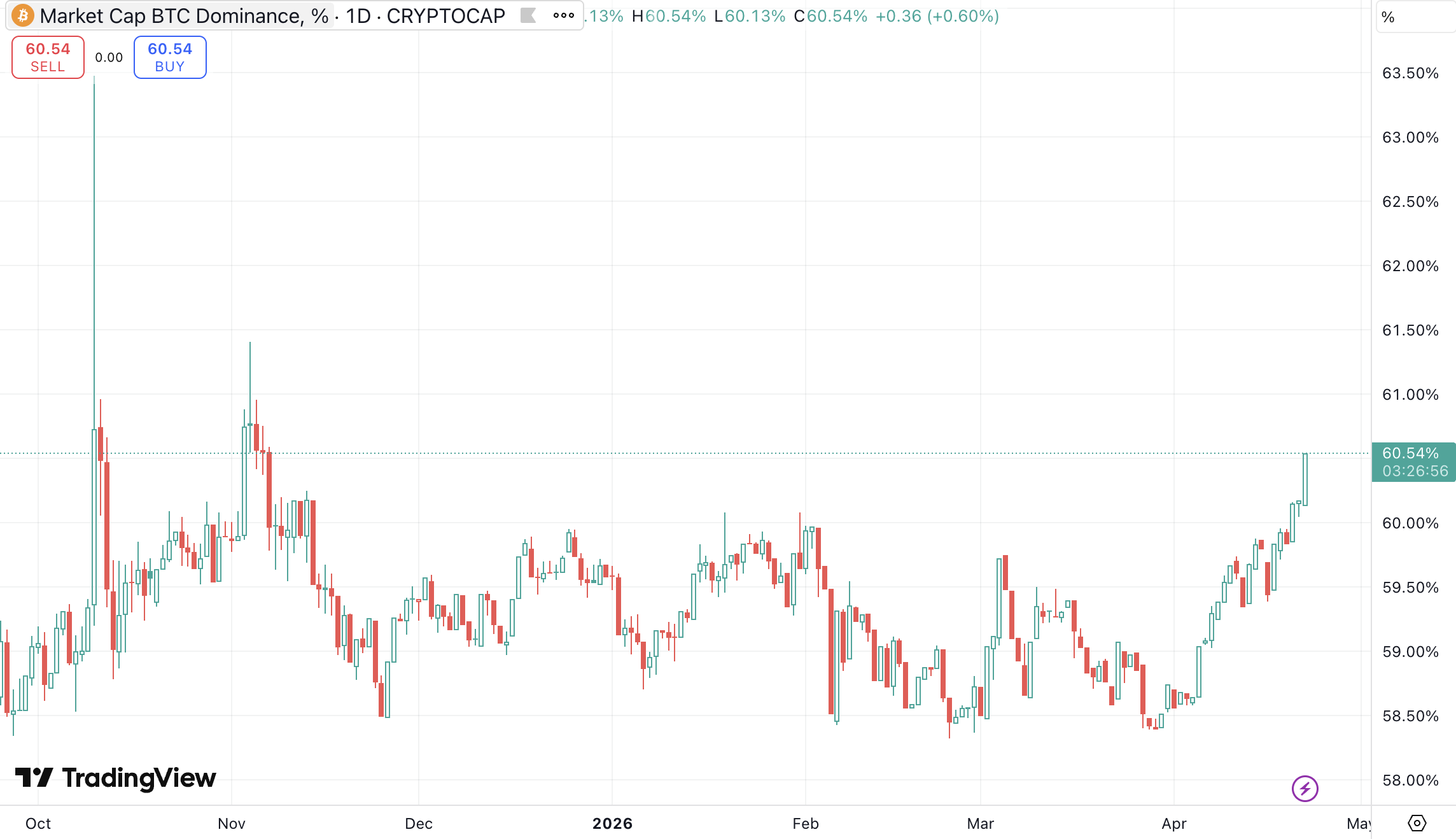
    Bitcoin is reasserting its absolute control over the cryptocurrency market, with its market cap dominance breaking past the 60% threshold for the first time in 2026.

    Bitcoin’s dominance ($BTC.D) has surged to 60.63%, leaving the broader altcoin market in the dust.

    $BTC.D via TradingView

    The metric, which tracks Bitcoin’s share of the total overall crypto market capitalization, had been consolidating in the 58% to 60% range throughout the first quarter of the year before staging a massive breakout in late April.

    “The broader promise of crypto has failed”

    The rest of the market is struggling to keep pace. This has prompted some to question the viability of the broader altcoin sector.

    Veteran trader Bob Loukas has said that Bitcoin didn’t even need a euphoric, record-breaking run to crush its competitors this cycle.

    “Bitcoin dominance bottomed out for the Cycle above 50%, without Bitcoin doing anything extraordinary, highlights the broader promise of Crypto has mostly failed,” Loukas stated. The general trend points to a market heavily concentrated on the flagship asset.

    $BTC bulls eyeing $80K

    Bitcoin’s dominance surge is happening in tandem with a powerful price recovery.

    Bitcoin has now shaken off its bearish momentum after truly catastrophic losses in early 2025.

    For most of March, Bitcoin has been seeing some volatile price action, with the top coin fluctuating between $62,000 and $72,000. It has recorded a series of higher highs and higher lows.

    Currently trading around $78,900 (up over 3.3% on the daily session), Bitcoin is now on the verge of a major psychological breakout. It remains to be seen whether the flagship coin can successfully reclaim the pivotal $80,000 level in the coming days.