Category: Business

  • France Tax Data Leak Could Fuel Scams, Attacks Targeting Bitcoin Holders

    France Tax Data Leak Could Fuel Scams, Attacks Targeting Bitcoin Holders

    In brief

    • A reported breach of France’s tax authority exposed data tied to 678,437 people and businesses.
    • The records allegedly include income figures, addresses, tax identifiers, and family information.
    • The data could help criminals craft targeted scams against wealthy taxpayers and Bitcoin holders.

    A hacker is selling a trove of French tax records that could expose more than 678,000 people and businesses, including Bitcoin holders, to phishing, identity theft, and targeted attacks.

    According to a report by French cybersecurity outlet FrenchBreaches, a hacker is selling records allegedly stolen from France’s tax authority, the DGFiP, during a June breach for several thousand euros.

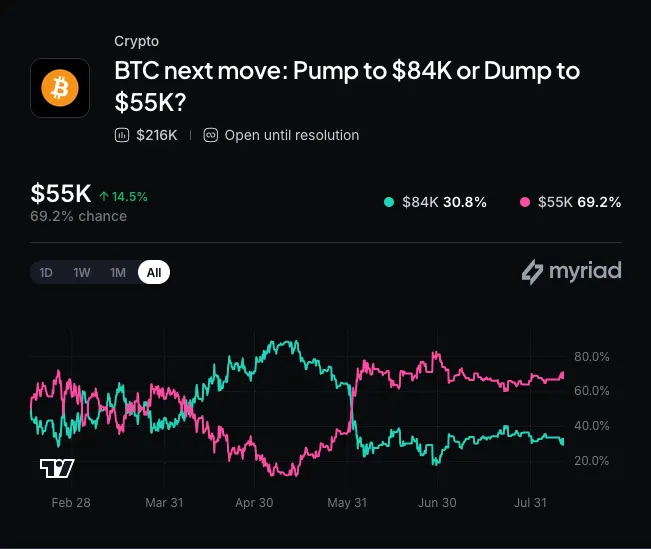
    Myriad: Bitcoin's next move? Click to make your prediction.
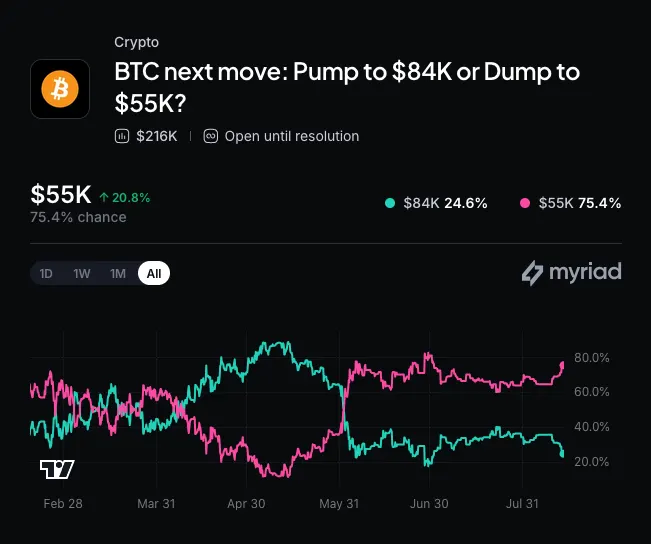
    Myriad: Bitcoin’s next move? Click to make your prediction.

    “More bad news for Bitcoiners living in the leading country for wrench attacks,” Chief Security Officer at Bitcoin security platform Casa Jameson Loop wrote on X. “The French tax authority has been hacked, and 678K records leaked.”

    FrenchBreaches said the database contains records on 392,867 individuals and 285,570 professionals, including 26,805 people with reference tax income of at least $116,000, 386 above $1.16 million, and eight above $11.6 million; the hacker is reportedly offering the file for several thousand dollars.

    FrenchBreaches said a sample of the leaked data included names, birth details, home and email addresses, phone numbers, income figures, withholding tax rates, family status, dependents, and tax-share information.

    “There DGFiP officially confirms the intrusion in its information system,” FrenchBreaches wrote in an update. Stolen credentials were used in late June to access and extract taxpayer data, and the number of people affected remains under investigation, the firm added.

    According to FrenchBreaches, the attacker used stolen VPN credentials and an internal search tool to extract names, contact details, tax identifiers, income figures, withholding rates, and family information before officials cut off access.

    “A scammer with real tax information and knowing of the existence of an old approach to the DGFiP could, for example, construct a fraudulent message that is much more credible than a simple fake generic email,” FrenchBreaches wrote.

    While the FrenchBreaches report focused on the data leak, it comes amid a rise in wrench attacks, in which criminals use violence or threats to steal cryptocurrency.

    In July, CertiK reported 52 attacks worldwide during the first half of 2026, including 33 in France. Earlier this month, Chainalysis reported 46 attacks through June, including 30 in France, with more than $30 million stolen.

    “Criminals have recognized that crypto holders are high-value targets because they possess wealth in an instantly and irreversibly transferable form,” Chainalysis wrote.

    Daily Debrief Newsletter

    Start every day with the top news stories right now, plus original features, a podcast, videos and more.

  • Germany’s Crypto Holding Period: Two Tax Models Are on the Table, and €21,100 Separates Them

    Germany’s Crypto Holding Period: Two Tax Models Are on the Table, and €21,100 Separates Them

    The information provided in this article is for informational purposes only and does not constitute financial advice. Cryptocurrency investments carry a high degree of risk.

    Germany’s one-year rule is the best-known crypto tax rule in Europe: hold a coin for more than twelve months, sell it, owe nothing. Since the German cabinet’s 2027 budget decision, one sentence has appeared in almost every report about its future: crypto gains will be taxed like stock gains. That sentence is wrong twice over, and both errors can be checked against documents anyone can download.

    It is wrong first because, as of 12 August 2026, there is no law and not even a ministry draft on crypto taxation. It is wrong second, and this matters far more, because two entirely different models are circulating. On a €100,000 gain held for more than twelve months, the two models are €21,100 apart. Which one ends up in the statute book is genuinely open, so anyone talking about “the” German reform is talking about nothing in particular.

    Key facts at a glance

    • As of 12 August 2026 there is no law and no ministry draft on crypto taxation. The working draft of Germany’s Annual Tax Act 2026, published on 13 July 2026, contains no crypto provision at all.
    • Two models are in circulation: moving crypto into capital income under section 20 of the Income Tax Act (cabinet decision of 6 July 2026), and keeping it in section 23 but deleting the one-year rule (bill 21/5752 of 5 May 2026).
    • On a €100,000 gain that is €26,375 versus up to €47,475, a difference of €21,100.
    • The bill was rejected in the finance committee on 20 May 2026. Only Die Linke voted for it; the conservatives, the AfD and the Social Democrats voted against.
    • Under that bill, gold, antiques, artworks, historic vehicles and foreign currency keep the one-year rule explicitly. Exactly one asset class is carved out.
    • Revenue estimates range from roughly €300 million to €11.4 billion a year. That is a factor of 38.

    How the German rule works today

    Under section 23 of the German Income Tax Act, crypto assets count as “other economic goods”. A private sale is taxable only if fewer than twelve months passed between purchase and disposal. Sell earlier and the gain is added to your ordinary income at rates up to 45% plus the solidarity surcharge. Sell later and the gain is not taxed at all.

    One detail matters for the debate that follows: this is not a preferential crypto regime that someone invented for Bitcoin. It is the general rule for privately held assets such as physical gold or a classic car, and Germany’s Federal Fiscal Court confirmed in February 2023 that crypto falls under it (case IX R 3/22).

    Nothing about that has changed. Whatever comes next, the documentation burden lands on the taxpayer, which is why acquisition records are the practical bottleneck in every scenario. Tools that produce a German-compliant tax report are listed in our crypto tax software comparison.

    Model 1: capital income under section 20

    This is the finance ministry’s line. Crypto would be lifted out of private disposals and treated like interest, dividends and stock gains, at the flat withholding rate of 25% plus the 5.5% solidarity surcharge on that tax, giving 26.375%. Add church tax and the burden lands near 28%, depending on the federal state.

    No legal text exists for this model. Not a draft, not a paragraph. Everything written about it rests on a budget document and on the finance minister’s public statements. That leaves open exactly the questions that decide the real burden: whether the €1,000 saver’s allowance would apply, how losses could be offset, and whether crypto exchanges would become paying agents that withhold tax at source.

    Model 2: staying in section 23, without the deadline

    This model has one advantage over the first: it exists as finished statutory language. The bill from the Green parliamentary group carries the number 21/5752, is dated 5 May 2026, and is titled, in translation, a bill “to close a fairness gap in the taxation of crypto assets”.

    Article 1 number 1 inserts a new sentence into section 23:

    “The one-year deadline in sentence 1 does not apply to disposals of crypto assets.”

    Crypto would remain an “other economic good”. The explanatory memorandum states the consequence plainly: gains would be taxed “regardless of the holding period, on disposal, at the personal income tax rate”. Depending on other income, that is up to 45% plus the solidarity surcharge.

    The bill was rejected in the finance committee on 20 May 2026. Only Die Linke supported it. The Social Democrats, who share the goal, voted against it because they wanted to wait for their own finance minister’s proposal. That makes the text dead as a vehicle but very much alive as a blueprint: it is the only fully drafted statutory language anyone has produced on this question.

    The comparison: €21,100 on the same gain

    The following assumes a sale with a €100,000 gain after more than twelve months, no church tax, and no other private disposals in the same year.

    The gap between the ministry’s model and the drafted bill at the top rate is therefore €21,100 on an identical gain.

    One detail almost every summary omits: the solidarity surcharge behaves differently in the two models. On the flat withholding tax it is levied without any threshold. On assessed income tax it only kicks in above a threshold that most taxpayers no longer cross. At the 42% and 45% marginal rates assumed above the threshold is comfortably exceeded, so the surcharge applies. On smaller gains and lower other income the arithmetic changes, which is precisely why the blanket claim “crypto is about to get more expensive” is worth so little.

    Three ways the bill is worse than stock taxation, not equal to it

    The rate. Stock gains face 25% plus surcharge. The bill applies personal rates up to 45% plus surcharge. That is not parity; it is a penalty of up to 21.1 percentage points.

    Loss offsetting. Losses from private disposals under section 23 may only be netted against gains from other private disposals. They sit in their own narrow bucket and cannot be set against interest or dividends. Under the section 20 model, crypto losses would join the much wider capital-income bucket.

    Withholding. Section 23 has no withholding mechanism by design. Every single disposal has to be declared, with acquisition date, cost basis and proceeds. The section 20 model could in principle withhold at source, but only through a domestic paying agent. How that would work for exchanges based elsewhere in the EU appears in neither document.

    Gold, art and classic cars keep the one-year rule

    The most revealing passage of the bill is not in the statutory text but in the reasoning, where the drafters explain why singling out crypto is justified:

    “The provision is appropriate because other economic goods such as physical gold, antiques, artworks, historic vehicles or foreign currencies are used for speculative gains to a considerably lesser extent.”

    So the bill does not clean up the system. It removes one asset class and justifies that with an assumption about how investors behave. That is where the constitutional exposure sits: Germany’s Article 3 equality clause requires an objective reason for unequal treatment, and whether a behavioural assumption qualifies would be for the courts to decide. The same section states that crypto assets have “not proven themselves as a digital equivalent to gold and other precious metals”.

    The reasoning also contains a claim that does not survive checking. It says Germany is “almost the only country within the European Union” that exempts gains after a short holding period. Portugal exempts after 365 days and taxes shorter holdings at 28%. Czechia has exempted disposals after three years since the 2025 tax year. Luxembourg applies a six-month speculative period. Holding-period exemptions are not the German anomaly the bill describes.

    The cut-off date is already in the past

    The bill’s application clause turns solely on when an asset was acquired. The new rules would first apply to disposals of assets “acquired or created after 31 December 2025”.

    The bill is dated 5 May 2026. The cut-off was therefore more than four months in the past when the text was introduced, and the reasoning says so openly: the new rules apply to crypto acquired from 1 January 2026, because for those assets “the one-year holding period existing until the law enters into force has not yet expired”. The drafters lean on a 2010 ruling of the Federal Constitutional Court, which held that the “mere possibility of collecting gains tax-free at a later date” creates no legally protected position.

    There is also a gap the bill simply does not address. Under the finance ministry’s circular of 6 March 2025, holding periods for identical crypto assets are determined asset by asset where possible and otherwise first-in-first-out, wallet by wallet. The bill writes that consumption order into law only for foreign currency amounts, not for crypto. With an acquisition-based cut-off, the protected older holdings would in case of doubt be consumed first. How that interacts with the political promises of grandfathering is a story of its own, and we will take it apart separately.

    The reform paradox: day traders would pay less

    The argument that turns the debate on its head comes from the conservative side. On 31 July 2026, CDU member of parliament Olav Gutting spelled out what the ministry’s model does to short-term sellers: today, someone selling inside the one-year window pays their personal rate of up to 45%. Under the section 20 model it would be a flat 25% plus surcharge.

    The reform would therefore relieve the high-earning day trader and burden the long-term holder who could previously sell tax-free after twelve months. That is the opposite of the stated intention, and it holds whatever you think of the holding period itself.

    Nobody knows what this raises: estimates differ by a factor of 38

    The distance between the lowest and the highest figure is a factor of 38. That is no longer estimation uncertainty; it means nobody knows the order of magnitude.

    Two qualifications, both important. The Austrian figure first: the Austrian finance ministry reports around €33.84 million of capital gains tax from crypto for 2024, and that is the total collected since service providers began withholding on 1 January 2024. It is not the isolated yield of Austria’s 2022 abolition of its holding period, so it functions as a ceiling on that yield rather than a measurement of it. Scaled to Germany by population it gives the €300 million above, and that stays a ceiling too. Austria also shows what grandfathering looks like in practice, because holdings bought before March 2021 stayed outside the new regime, as we set out in our piece on Austrian pre-2021 holdings.

    Second, the €11.4 billion. On 15 March 2026 the Bitcoin Bundesverband published an open letter with 15 questions about the €11.4 billion estimate, addressed to Blockpit and to the study’s author Co-Pierre Georg, covering data provenance, sample representativeness, extrapolation method and the absence of error margins. Its core line: the greater the political impact of a number, the higher the standard of transparency it has to meet. To our knowledge the questions remain unanswered.

    The path that number travelled is instructive. In the finance committee session of 20 May 2026 the Greens cited the study and its €11.4 billion, then halved the amount in their own calculation and wrote “at least about €5 billion” into the bill. The bill gives no reason for the halving.

    Why this is not only a German story

    Two threads reach beyond Germany. The bill’s own reasoning points to the European Parliament’s proposal for the 2028 to 2034 budget framework, which includes a levy based on a uniform rate on capital gains from crypto assets as a possible new EU own resource. Germany’s domestic argument is being made with one eye on Brussels.

    The second thread is data. Under DAC8, centralised crypto service providers in the EU have been collecting reportable information since 1 January 2026, with the first exchange of data scheduled for September 2027, as we set out in our piece on automatic crypto tax reporting in Germany. Whatever rate a country lands on, the visibility question is already settled, and self-custodied holdings sit outside that reporting net rather than outside the tax law.

    What this means in practice

    None of this produces an instruction, and anyone handing you one knows the statutory text no better than everyone else does. Three sober points remain.

    Acquisition records are the bottleneck in every scenario. If the deadline survives, they prove the exemption. If it goes, they establish the gain. If grandfathering arrives, the acquisition date decides the treatment of every single lot. Export the transaction histories from your trading venues while the accounts are open and store them off the platform; Germany’s filing deadlines do not wait for the political process, as our note on the German crypto tax deadline showed. The tax-report capabilities of each venue are listed in our exchange comparison, and holdings on a hardware wallet need their address mapping documented by you.

    Selling as a precaution is a bet on an unknown rule. Selling today to get ahead of a cut-off date nobody has defined can trigger a tax that holding would never have caused. That is an observation, not a recommendation in the other direction.

    Watch the wording, not the headline. The two models differ on rate, on loss offsetting, on withholding and on the cut-off date. Any report that does not say which model it is describing is not telling you what you need to know.

    Our managing director Dennis Weidner has worked through the primary documents, the arithmetic and the European comparison in his statement on the crypto holding period and the finance committee’s reply. Individual tax questions belong with a qualified tax adviser; this article does not replace one.

    FAQ

    Has Germany abolished the crypto holding period? No. As of 12 August 2026, section 23 of the Income Tax Act applies unchanged: after more than twelve months of holding, the gain is untaxed. There is no adopted law and no finance ministry draft on crypto taxation. The working draft of the Annual Tax Act 2026 of 13 July 2026 contains nothing on the subject, though a provision could still be added before the cabinet stage or later in the parliamentary process.

    What is the difference between the two models? Under the section 20 model, crypto becomes capital income taxed at a flat 25% plus solidarity surcharge, giving 26.375%. Under the section 23 model it stays an “other economic good” but loses the one-year deadline and is taxed at the personal income tax rate of up to 45% plus surcharge.

    How much tax would €100,000 of gains attract? Today, after twelve months, nothing. Under the section 20 model, €26,375. Under the section 23 model, €44,310 at a 42% marginal rate and €47,475 at the 45% top rate, in each case before church tax.

    Would new rules apply to coins I already hold? The only fully drafted bill, 21/5752, turns on the acquisition date and captures everything acquired after 31 December 2025. No text exists for the ministry’s model. The conservatives have promised protection for existing holdings, while Die Linke explicitly rejects any transition period. The state of that debate is in our piece on petition 201716.

    Does physical gold stay tax-free after a year? Under the Green bill, yes. It removes only crypto assets from the one-year rule and names gold, antiques, artworks, historic vehicles and foreign currencies as goods that keep it.

    Does this affect me if I am not a German tax resident? Generally no; these rules govern German income tax. The reason to follow it anyway is that Germany’s one-year exemption is the reference point other European debates measure themselves against, and the same bill points to an EU-level levy on crypto capital gains as a possible own resource from 2028.

    When could a new rule take effect? 1 January 2027 is the announced date. That would require a ministry draft, an association consultation, three readings in the Bundestag and the federal council to be completed by December 2026. None of those dates is confirmed.


    None of this is settled: the ministry draft is still outstanding, the consultation of associations follows, a first reading is pencilled in for 7 to 11 September and the federal council for 18 December. Each of those steps can change which of the two models applies and which cut-off date sits inside it. We read every new text against the primary sources and summarise weekly what actually changed in the wording, in English and in German. Stay with it on cryptoticker.io.

    Sources

    • German Bundestag: Bill 21/5752, on closing a fairness gap in the taxation of crypto assets (PDF in German, statutory text and reasoning, 5 May 2026)
    • German Bundestag, heute im bundestag: Greens fail with their push on crypto asset taxation (finance committee vote, 20 May 2026)
    • Federal Ministry of Finance: Individual questions on the income tax treatment of certain crypto assets (PDF in German, circular of 6 March 2025, replacing the 10 May 2022 circular)
    • Section 23 of the German Income Tax Act as currently in force
    • Federal Constitutional Court: decision of 7 July 2010, 2 BvL 14/02 and others (paragraph 64, relied on in the bill’s reasoning)
    • Bitcoin Bundesverband: The €11.4 billion question (open letter with 15 questions, 15 March 2026)
    • Dennis Weidner: The crypto holding period and the finance committee’s reply (model comparison, revenue range, holding periods in Europe, 12 August 2026)
    • Austrian Federal Ministry of Finance, capital gains tax collected on cryptocurrencies in 2024 (€33,839,499.66 in total, withholding by service providers since 1 January 2024)

    Note on AI use: AI tools were used for this article – in research and drafting, and for the header image, which is AI-generated and does not depict a real event. All figures, claims and sources are editorially checked before publication.

  • Trump-backed World Liberty wins conditional bank charter from federal regulator

    Trump-backed World Liberty wins conditional bank charter from federal regulator

    A federal bank regulator has granted World Liberty Trust Co. a conditional bank charter, it announced Friday.

    The Office of the Comptroller of the Currency, the U.S. banking agency that grants federal charters, said in a letter posted to its website that World Liberty could operate fiduciary and other trust company-related activities as a national trust bank.

    “This preliminary conditional approval is granted based on a thorough evaluation of all information available to the OCC, including the representations and commitments made in the application and by the Bank’s representatives,” the letter said.

    Final approval won’t be granted until the company meets additional “preopening requirements,” the letter said.

    According to the letter, World Liberty Trust Company will focus on services tied to World Liberty Financial’s $USD1 stablecoin.

    “The bank plans to issue $USD1, a fiat currency-backed stablecoin, to institutional clients on a nationwide basis, assuming this role from BitGo Bank & Trust, National Association (BitGo), the current exclusive issuer and custodian for $USD1,” the letter said. “The bank plans to provide its digital asset custody services as a fiduciary, primarily to $USD1 customers and other institutional clients.”

  • Ireland’s New AML Strategy Brings ‘Enhanced Checks’ on Private Crypto Wallets

    Ireland’s New AML Strategy Brings ‘Enhanced Checks’ on Private Crypto Wallets

    In brief

    • Ireland published its first National Anti-Money Laundering Strategy on Thursday, with crypto-asset rules among the reforms it sets out.
    • The final elements of the EU Transfer of Funds Regulation will bring enhanced checks on transfers involving private crypto wallets and stricter due diligence on overseas crypto firms.
    • The strategy builds on a 30-point action plan published in June that promised enhanced safeguards around crypto-assets and digital finance.

    Ireland published its first national anti-money laundering strategy on Thursday, including crypto measures targeting wallets held outside regulated firms.

    Most of the EU Transfer of Funds Regulation has already been implemented in Ireland, with the Department of Finance saying that the remaining elements introduce new obligations for crypto-asset service providers, requiring “enhanced checks” on transfers involving private crypto wallets and stricter due diligence when dealing with overseas crypto firms.

    That mechanism is the FATF travel rule, under which information on the originator and the beneficiary must accompany a transaction. The strategy document records that it arrived alongside MiCA, which created crypto-asset service providers as a category of regulated entity across the bloc.

    Ireland gave crypto firms less room to adjust than most member states, allowing a 12-month grandfathering window against the 18 months the regulation permits, according to ESMA’s list. That closed at the end of December 2025, so the new obligations land on firms already holding full authorization. MiCA came fully into force across the bloc on July 1, and Brussels is preparing to reopen the rulebook in 2027 to cover non-EU stablecoin issuers.

    Tánaiste and Minister for Finance Simon Harris said criminal organizations are exploiting new technologies, crypto-assets and complex international financial networks to conceal profits, and that the launch sends the message that “Ireland will not be a safe place to launder criminal proceeds.” The strategy runs to 2030.

    Thursday’s document builds on a 30-point action plan the government published in June alongside its National Risk Assessment, which named crypto-asset misuse among Ireland’s evolving financial-crime threats and promised “enhanced safeguards around crypto-assets and digital finance.”

    A crypto standard for gambling operators

    The most concrete domestic crypto measure was set out in that June plan, which tasked the Gambling Regulatory Authority of Ireland with establishing an industry standard for accepting crypto-related activities as a source of funds, with due diligence to verify the money is legitimate. It is slated for the second quarter of 2027.

    Ireland’s measures arrive inside a wider EU timetable that tightens further. The bloc’s Anti-Money Laundering Regulation bars crypto-asset service providers from providing or holding anonymous crypto-asset accounts, or accounts allowing transactions to be anonymized or further obscured, including through anonymity-enhancing coins. That prohibition stops short of self-hosted wallets, exempting providers of hardware, software and self-hosted wallets that hold no access to or control over them. The rules apply from July 2027, policed by the Anti-Money Laundering Authority in Frankfurt.

    Outside the bloc, the UK has been reworking its own regime, with HM Treasury publishing draft reforms in September 2025 that would lower the change-in-control notification threshold for crypto firms from 25% to 10%.

    The travel rule Ireland is finishing transposing comes from the Paris-based body whose recommendations grade national frameworks, and which has been pressing members harder on crypto. In a July report, the FATF said that DeFi platforms with identifiable controllers already fall within its rules and should be supervised like other financial firms, and found nearly 93% of surveyed jurisdictions had yet to apply the standards to any qualifying arrangement.

    Daily Debrief Newsletter

    Start every day with the top news stories right now, plus original features, a podcast, videos and more.

  • While Bitcoin (BTC) was falling, Whales weren’t idle, they changed positions: Here are the altcoins they traded…

    While Bitcoin (BTC) was falling, Whales weren’t idle, they changed positions: Here are the altcoins they traded…

    Bitcoin has fallen by 1.4% in the last 24 hours, dropping to around $62,000. This has also affected altcoins, with other major altcoins like Ethereum and XRP also showing a decline.

    According to CoinMarketCap data, Velvet (VELVET) was the top-performing altcoin in the last 24 hours with a 38% gain. It was followed by Ether.fi (ETHFI), Cosmos (ATOM), and MemeCore (M).

    In contrast, altcoins such as Venice Token (VVV), LayerZero (ZRO), and Lighter (LIT) were among the biggest losers.

    While the altcoin market experienced both rises and falls, whale activity continued.

    According to Lookonchain, a cryptocurrency analysis platform, a whale with the address 0x117f traded in the altcoin $ASTER. Specifically, the whale opened a 4x long position of 7.2 million $ASTER ($4.33 million) and staked 4.02 million $ASTER ($2.42 million) for four years.

    Another whale, with the address 19pFLW, bought another 300 Bitcoin (worth $19.03 million) approximately five hours ago, increasing his Bitcoin holdings to 1,120 (worth $70.43 million).

    According to Lookonchain’s report, another whale traded in the altcoin $HYPE. This whale, who had previously sold $HYPE, this time sold 923,743 $HYPE (worth $53.02 million). Initially holding 2.93 million $HYPE (worth $163.37 million), this whale had sold 1.03 million $HYPE (worth $57.44 million) approximately two weeks ago. With this latest sale, they still hold 969,595 $HYPE (worth $55.5 million).

    Finally, Lookonchain reported that address 0x66f8, known as the largest on-chain BTC bear, closed its $136 million short position, making a profit of $1.65 million. Following this profit-taking, this whale moved into a long position in Bitcoin with 40x leverage.

    *This is not investment advice.

  • Israel’s largest bank to offer crypto trading with Galaxy

    Israel’s largest bank to offer crypto trading with Galaxy

    Bank Leumi, Israel’s largest bank, will offer cryptocurrency trading to customers from early 2027 becoming the first Israeli bank to announce such a service.

    Customers of Leumi and its mobile banking unit, Pepper, will be able to buy, hold and sell bitcoin BTC$62,880.24, ether ETH$1,875.38 and solana (SOL) through a section of the Leumi Trade app, according to a Friday announcement.

    Galaxy Digital (GLXY) will provide trading and services through GalaxyOne Institutional, its platform for banks and asset managers. Leumi has also signed an agreement to use Galaxy’s custody infrastructure, formerly known as GK8, to support the offering.

    The tie-up gives Galaxy a banking partner in Israel and places Leumi among a growing group of financial institutions bringing crypto access inside customer platforms. By embedding trading within its capital-markets app, the bank is betting that clients will favor a regulated banking interface over standalone crypto exchanges.

    Maya Ravia, Leumi’s head of strategy, described digital assets as an increasingly integral part of the global financial system. Galaxy Israel CEO Lior Lamesh said early movers among banks would help define finance’s shift toward open, programmable infrastructure.

    The companies did not disclose commercial terms, fees or customer eligibility requirements. CoinDesk has reached out to Bank Leumi for further comments.

  • Strategy says MSCI should measure markets, not dictate corporate assets

    Strategy says MSCI should measure markets, not dictate corporate assets

    Strategy (MSTR) has pushed back against MSCI’s proposed methodology for identifying “non-operating companies,” which could result in the largest bitcoin treasury company being removed from the index provider’s global equity indexes.

    Strategy said on X, “Digital assets are assets. Index providers should measure markets, not decide which assets companies are allowed to own,” Strategy said. “MSCI’s proposal puts it out of step with regulators, markets, and its own customers. Bitcoin doesn’t need MSCI. Neither does Strategy.”

    The latest consultation replaces an earlier proposal focused specifically on companies with significant digital asset holdings. Applying the new financial-ratio screen using May 2026 data would have resulted in the removal of Strategy, Metaplanet and uranium holder Yellow Cake from the MSCI ACWI IMI.

    The response follows Strategy’s formal objection in December 2025 to MSCI’s previous proposal, which would have excluded companies whose digital assets represented at least 50% of total assets.

    Strategy argued at the time that it is an operating company, not an investment fund or passive bitcoin vehicle, pointing to its software business, active treasury operations and bitcoin-backed credit instruments. It described the 50% threshold as arbitrary and urged MSCI to maintain neutral index standards.

    MSTR is lower by 4.3% on Friday as bitcoin dips to $62,600.

  • ‘Bitcoin Is Burning’: Red Team Turns to Chinese AI to Find Flaws

    ‘Bitcoin Is Burning’: Red Team Turns to Chinese AI to Find Flaws

    In brief

    • The Bitcoin Red Team is using Chinese AI models to search Bitcoin projects for security flaws.
    • Calle said developers have confirmed numerous critical and high-severity vulnerabilities.
    • They warned that unmaintained projects should not be trusted.

    The Bitcoin Red Team is using Chinese AI models to search nearly the entire Bitcoin open-source ecosystem for security flaws, according to pseudonymous developer and Red Team lead Calle.

    The volunteer group combines AI tools with human review to examine wallets, Lightning applications, software libraries, and other Bitcoin projects. Researchers privately report credible findings to developers so the flaws can be fixed before details are released.

    Myriad: Bitcoin's next move? Click to make your prediction.
    Myriad: Bitcoin’s next move? Click to make your prediction.

    “We’re experiencing a massive collision between decades of human open source slop against 2 weeks of Kimi K3,” Calle wrote Thursday on X. “Everything is broken, Bitcoin is burning.”

    Kimi K3 is an AI model from Chinese startup Moonshot AI that developers can download and run on their own systems. It can analyze large codebases and complete lengthy software tasks with little supervision.

    The Bitcoin Red Team has also used Chinese developer Z.ai’s GLM 5.2, as well as models from OpenAI and Anthropic. American models, though, come with limitations, and developers frequently run up against restrictions imposed by OpenAI and Anthropic when doing security research. “Red team rugged by OpenAI cyber again,” Calle posted earlier this week. “Don’t like asking for permission. Loading up Kiimi K3.”

    Nevertheless, the developer noted that the team is making progress, even if slow and painful.

    “We’ve basically completed a basic scan of virtually the entirety of Bitcoin open source,” Calle wrote. “The low hanging fruit is done.”

    In August, the group reported filing 4,962 findings across 390 projects, including 85 rated critical and 635 rated high severity. Calle said developers had confirmed “a ton of real critical and high vulnerabilities,” though the group has not named the affected projects or released technical details.

    “Response speed is very different across projects and shows how healthy each project is,” they wrote. “I recommend acting fast these days.”

    Lightning software, which supports faster and cheaper Bitcoin payments, was particularly difficult to review because of its complexity, Calle said, calling it “more broken than the average.”

    “Those projects that started AI audits months ago are in a completely different position than those who didn’t,” he wrote. “Projects need their own AI audit pipeline going into the future.”

    Calle also warned against relying on unmaintained projects and said AI has made it more stressful for developers to keep their software secure.

    The Bitcoin Red Team is not alone. Last month, Hugging Face used China’s GLM 5.2 to investigate a breach after OpenAI models hacked into its systems and U.S. commercial models refused to analyze the attack logs.

    Despite saying Bitcoin is “burning,” Calle argued that the audits are making its software stronger.

    “Bitcoin is the obvious first target, but the rest of the world will follow shortly,” Calle wrote. “Sometimes old things need to burn so new things can grow on healthy soil.”

    Daily Debrief Newsletter

    Start every day with the top news stories right now, plus original features, a podcast, videos and more.

  • Former SEC Official: Crypto Rulemaking Can Begin Before CLARITY Act Passage

    Former SEC Official: Crypto Rulemaking Can Begin Before CLARITY Act Passage

    Anne Kelly, a former official at the U.S. Securities and Exchange Commission (SEC), has stated that the agency does not need to wait for the passage of the CLARITY Act to begin rulemaking for digital assets. In a post on X, Kelly emphasized that the SEC can initiate rulemaking proactively, and if the CLARITY Act is later enacted, its provisions can be incorporated through additional rule proposals.

    Understanding the CLARITY Act and Its Timeline

    The CLARITY Act, which aims to clarify the regulatory status of digital assets, has been a topic of debate in Congress. However, even if the bill were to pass immediately, it would still take several months for the SEC and the Commodity Futures Trading Commission (CFTC) to draft detailed implementation rules. Kelly’s remarks highlight a pragmatic approach: rather than waiting for legislative action, regulators can begin the process now, ensuring a smoother transition once the law is finalized.

    Implications for the Crypto Industry

    For the cryptocurrency industry, this signals a potential acceleration in regulatory clarity. Market participants have long sought clear guidelines on how digital assets are classified and regulated. By starting rulemaking earlier, the SEC could provide much-needed direction, reducing uncertainty for businesses and investors. Kelly’s perspective underscores that Congress and regulators are partners in this effort, not adversaries, and that collaboration can lead to more effective oversight.

    Why This Matters

    The timeline for crypto regulation has been a point of contention, with industry advocates pushing for faster action and regulators emphasizing the need for thorough deliberation. Kelly’s comments suggest that a proactive approach could bridge this gap, allowing the SEC to address key issues while Congress continues its work. For stakeholders, this could mean earlier clarity on compliance requirements, potentially fostering innovation while ensuring investor protection.

    Conclusion

    As the debate over crypto regulation continues, the possibility of the SEC moving forward with rulemaking independent of the CLARITY Act offers a constructive path forward. While the legislative process is essential, regulators have the tools to begin shaping the framework now. This development could mark a significant step toward a more defined regulatory environment for digital assets in the United States.

    FAQs

    Q1: What is the CLARITY Act?
    The CLARITY Act is a proposed U.S. law designed to clarify the regulatory status of digital assets, determining which are securities and which are commodities, and assigning oversight to the SEC or CFTC accordingly.

    Q2: Can the SEC really start rulemaking before the CLARITY Act passes?
    Yes, according to former SEC official Anne Kelly. The SEC has existing authority to propose rules for digital assets, and any later legislative changes can be incorporated through additional rulemaking.

    Q3: How long would implementation take after the CLARITY Act passes?
    Even if passed immediately, it would likely take several months for the SEC and CFTC to draft and finalize detailed rules, given the complexity of the subject and the need for public comment periods.

  • Figure Q2 profit jumps 192% as loan volume reaches $4.3B

    Figure Q2 profit jumps 192% as loan volume reaches $4.3B

    Figure Technology Solutions reported $4.26 billion in Consumer Loan Marketplace volume for the second quarter on Aug. 13, up 132% from a year earlier and 47% from the first quarter.

    The Nasdaq-listed blockchain lending company also reported net income of $87.4 million, up 192%, while net revenue more than doubled to $225.6 million.

    The results mark Figure’s strongest quarter since becoming a public company and show a growing share of activity moving through its capital-light marketplace model. Figure Connect accounted for $2.77 billion, or 65%, of total consumer loan marketplace volume, compared with $767 million a year earlier.

    Figure Connect now handles 65% of marketplace volume

    Figure Connect volume rose 262% year over year in Q2. The marketplace, launched in June 2024, connects third-party loan sellers and buyers using Figure’s blockchain-based infrastructure. Figure defines Connect volume as consumer loans originated by third-party sellers through the marketplace.

    That distinction matters when interpreting the headline $4.3 billion figure. Consumer Loan Marketplace volume also includes HELOC, debt-service coverage ratio and personal loan originations through Figure’s loan origination system. It should not be read as $4.3 billion of blockchain trades alone.

    The shift toward third-party activity supports Figure’s push for a business requiring less balance-sheet capital. Ecosystem and technology fees rose to $72.9 million from $28.1 million, while gain on loan sales increased to $57.6 million from $36.3 million. Figure Connect itself represented nearly two-thirds of marketplace volume.

    Figure also added 102 origination partners during the quarter, taking its active network to 489 across mortgage banks, depositories, servicers and fintech companies. Operations and processing costs fell to roughly 67 basis points of marketplace volume from 79 basis points one year earlier.

    Figure profit grows faster than revenue

    Net revenue rose 113% year over year to $225.6 million, while net income increased from $30 million to $87.4 million. The net income margin expanded from 28.3% to 38.8%. Operating income also rose to $77.7 million from $27.7 million, showing the profit increase was not solely the result of below-the-line accounting items.

    Adjusted EBITDA reached $119.4 million, up 126%, while adjusted EBITDA margin expanded to 54.6% from 47.2%. Figure’s presentation sets a medium-term adjusted EBITDA margin target of 60% for 2026 through 2028. The 60% figure is a management target, not a guaranteed outcome.

    The balance sheet also expanded. Cash and cash equivalents, excluding restricted cash, reached $1.4 billion at June 30, up $239.4 million from year-end. Loans held for sale increased 47.7% to $597 million.

    Blockchain lending products expand beyond home equity

    Figure’s growth is increasingly coming from products outside its original home-equity business. Small and medium-sized business loan volume grew 57% from the first quarter, while third-party borrowing on its Democratized Prime onchain lending marketplace reached about $170 million as of Aug. 6, roughly 23 times its year-end level.

    Its regulated digital asset business also continued to scale. YLDS in circulation stood at $556 million at June 30, compared with $328 million at the end of 2025. Figure’s SEC-registered yield-bearing YLDS token expanded beyond Provenance to Sui, adding another route for the company’s tokenized financial products.

    Figure is also expanding its underlying loan inventory. As crypto.news reported, the company agreed to acquire real-estate lender Kiavi for $717 million, a transaction expected to add residential transition and DSCR loans to Figure’s marketplaces. Figure said Thursday the acquisition remains on track to close during the second half of 2026.

    Figure closed a $600 million offering of 8.5% senior notes due 2031 on July 14, with proceeds intended in part to fund the Kiavi transaction. The acquisition still depends on closing conditions and required regulatory approvals.

    Q3 guidance points to another volume increase

    Figure expects Consumer Loan Marketplace volume of $4.8 billion to $5.2 billion in the third quarter. At the midpoint, the company’s investor presentation says that would represent roughly 102% growth from a year earlier. The guidance is forward-looking and depends on lending demand, funding markets and other operating assumptions.

    CEO Michael Tannenbaum said weekly loan applications had exceeded $1 billion by July and said the pending Kiavi acquisition “will significantly grow our platform into adjacent asset classes.” The latter remains a company expectation until the acquisition closes and integration begins.

    Investors responded positively to the earnings session. FIGR closed Aug. 13 at $31.88, up 3.94%, after trading between $29.50 and $33.77 during the day.

    The next milestones are Figure’s weekly operating updates, Q3 marketplace performance and completion of the Kiavi acquisition. The Aug. 13 filing furnished the quarterly earnings release to the SEC.