Category: Business

  • Binance Founder CZ Makes a $1 Million Prediction for Bitcoin

    Binance Founder CZ Makes a $1 Million Prediction for Bitcoin

    Binance founder Changpeng Zhao (CZ) pointed out that the supply of Bitcoin is limited, saying that soon there won’t be enough $BTC for millionaires.

    CZ stated that as of August 2026, the amount of Bitcoin mined will have exceeded 20.07 million, adding that only 4.4% of the total supply of 21 million is yet to be mined.

    Pointing out that while there are approximately 23.6 million millionaires in the US, the number of $BTC in circulation is only 20.07 million, CZ said, “Soon, millionaires won’t be able to own a full Bitcoin.”

    CZ also stated that he estimates 10 to 20 percent of existing Bitcoins are lost, inaccessible, or unrecoverable, characterizing Bitcoin as a deflationary asset.

    According to CZ, the actual usable coin supply may be much less than 21 million, as many long-term $BTC holders are unwilling to sell their assets. Additionally, it’s worth noting that Satoshi Nakamoto’s $BTC holdings are unlikely to move again.

    In addition, CZ claimed that BNB, an altcoin linked to Binance, has a similar structure.

    *This is not investment advice.

  • People Are Turning to AI for Mental Health, California Wants It Banned

    People Are Turning to AI for Mental Health, California Wants It Banned

    In brief

    • SB 903 would prohibit companion chatbots from offering psychotherapy.
    • AI could assist clinicians but could not make independent therapeutic decisions.
    • The bill cleared the Assembly Appropriations Committee 13-0 on August 13.

    California is one step closer to barring AI chatbots from posing as therapists and making mental health decisions without human oversight.

    Introduced on January 21, Senate Bill 903 cleared the Assembly Appropriations Committee in a 13-0 vote on Thursday and was ordered to a third reading. No date has been announced for the Assembly vote.

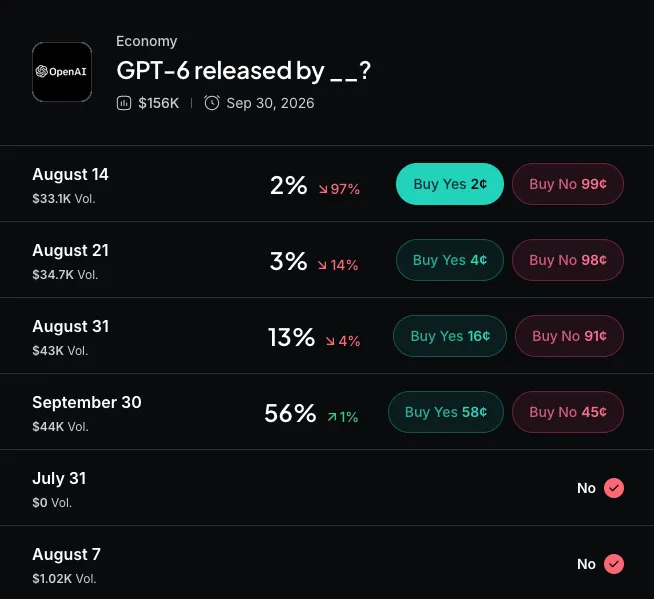
    Myriad: When will OpenAI release GPT-6? Click to make your prediction.
    Myriad: When will OpenAI release GPT-6? Click to make your prediction.

    “AI algorithms are not fit to take over the job of human therapists, who have skills and training that AI is incapable of replicating,” bill author California State Senator Steve Padilla said in a statement when introducing the measure. “We must act and place guardrails that prevent AI algorithms from being deployed in a way that is potentially harmful to patients.”

    Also known as the Wellness and Oversight for Psychological Resources Act, SB 903 would limit AI in psychotherapy to support tasks, bar chatbots from posing as therapists and require clinician oversight and patient consent. It would also protect therapy data while exempting peer support, religious counseling, research and federally approved medical tools.

    The Senate passed SB 903 by a 39-0 vote in May. It later cleared two Assembly policy committees by votes of 17-0 and 14-1. If the Assembly approves the amended bill, it would return to the Senate for concurrence before going to California Governor Gavin Newsom for signing.

    Critics, including Robert Boykin, executive director of the technology industry group TechNet, said requiring clinician involvement could delay care as counties face shortages of behavioral healthcare workers.

    “At a time when every county in California faces a shortage of behavioral healthcare workers, SB 903 still puts a clinician bottleneck in front of the intake and screening tools that help patients reach care faster,” Boykin told the non-profit news outlet CalMatters in a statement.

    The news comes amid growing concern over AI’s mental health effects.

    In June, an American Psychological Association survey found that 77% of psychologists had patients who used AI for mental health purposes, while researchers at King’s College London, the Protestant University of Applied Sciences and the City University of New York found that chatbots can reinforce delusions through excessive agreement and personalized responses.

    “The tendency of AI chatbots to agree with user opinions has been likened to social media echo chambers and, in its most extreme form, to an ‘echo chamber of one,’ where the positive corrective influence of real-life social interactions is absent,” the researchers wrote.

    Daily Debrief Newsletter

    Start every day with the top news stories right now, plus original features, a podcast, videos and more.

  • MiCA’s cleanup is creating a new scam wave across the European Union

    MiCA’s cleanup is creating a new scam wave across the European Union

    The European Union’s (EU) crypto clean-up has handed scammers a weapon.

    When the Markets in Crypto-Assets (MiCA) regulations’ ramework came into full force on July 1, more than 1,700 unlicensed crypto platforms were required to stop serving EU customers and direct them to licensed alternatives. Only 323 companies held a valid MiCA authorization at the time. That gap, in which up to 10 million users were told to move their digital assets, is exactly what fraudsters needed.

    . The mechanism is straightforward. Scammers copy the language of real migration notices, impersonate regulators, and push users to fake platforms before victims realize the difference.

    Social engineering scams were already concerning in 2025. Crypto exchange WhiteBIT found that nearly 41% of crypto incidents last year involved malicious actors deceiving victims through fake investment offers or impersonation. European regulators, however, say they have seen an increase in crypto scams since the July 1 deadline.

    A spokesperson for France’s Autorité des marchés financiers (AMF) noted scammers were posing as AMF employees, convincing victims to pay upfront administrative fees to recover stolen funds.

  • Crypto wallet SafePal reveals a data breach exposing nearly 40,000 customers’ order info

    Crypto wallet SafePal reveals a data breach exposing nearly 40,000 customers’ order info

    The breach has impacted 39,798 customers who placed orders between March 2, 2025 and April 11, 2026.

    SafePal stressed that the core security of its wallets remains intact, adding that users’ seed phrases, private keys, bank passwords, bank account information, payment card numbers, and government-issued IDs were not affected.

    However, SafePal said users who have shared their private keys or seed phrases via a phishing email, phone call, or letter should treat their wallet as compromised and transfer their assets to a new wallet.

    How SafePal is responding

    The company said it had patched the vulnerability and introduced additional security measures in response. SafePal notified all affected customers by email from security@safepal.com on Sunday and hired an independent third-party security firm to audit the fix and review its order-processing systems.

    SafePal also said it would retain customers’ personal data in its order-processing system for only 90 days from the date of collection. In addition, the company identified and removed more than 30 fraudulent websites and phishing links associated with the breach.

    Customers can use a verification tool on SafePal’s website to check whether their data was affected, the company said.

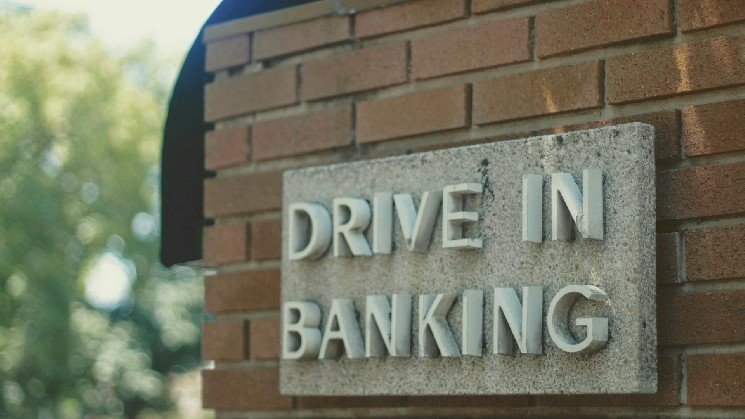
  • The ‘long bitcoin, short the bankers’ era is officially over as TradFi giants embrace digital assets

    The ‘long bitcoin, short the bankers’ era is officially over as TradFi giants embrace digital assets

    “The old ‘long bitcoin, short the bankers’ trade is over: banks have moved from resisting digital assets to building and enabling or distributing them through custody, tokenization and regulated trading,” Dori said.

    He attributed the shift to client demand and clearer rules, calling it structural rather than cyclical.

    Early bank entrants included Swissquote, which added bitcoin trading in 2017, DBS in 2020 and BBVA in 2021. BNY Mellon started institutional crypto custody in 2022, the same year Nubank launched bitcoin and ether trading and LGT added crypto services.

    St.Galler Kantonalbank and Santander followed in 2023, while Zürcher Kantonalbank added retail trading in 2024, before other major financial industry players including Standard Chartered, Charles Schwab, SoFi and Morgan Stanley entered the space.

    Anchorage Digital CEO Nathan McCauley, meanwhile, said its client roster has increasingly reflected the convergence of traditional and decentralized finance over the past two years.

    Large financial firms are partnering with specialist providers rather than building their own infrastructure, he said. Still, real-world assets coming onchain and crypto wrappers being created by large asset managers is showing two worlds are increasingly becoming one.

    “We’re quickly headed towards a world where there isn’t ‘traditional finance’ and ‘decentralized finance.’ There’s just ‘finance,” McCauley told CoinDesk. “

  • Legendary Trader Brandt: ‘Who Cares About XRP?’

    Legendary Trader Brandt: ‘Who Cares About XRP?’

    Veteran trader Peter Brandt has stated that he has little interest in owning the Ripple-linked $XRP cryptocurrency. Moreover, he has made it clear that he would immediately convert a large $XRP position into Bitcoin.

    This comes after the trading vet was challenged over his views on $XRP on the X social media network. “Are you kidding me? Who the heck even cares about $XRP?” he wrote.

    “I do all my betting in futures,” Brandt continued. “Who knows if you would even be good for the bet if you lost. And I could care less about owning a half million $XRP. I would convert it immediately to BTC.”

    $XRP plunges below $1

    In the meantime, the Ripple-linked token is currently struggling to hold the psychologically important $1 level.

    The popular cryptocurrency was recently trading around $0.9992, according to the price data provided.

    $XRP remains about 72.6% below its $3.65 all-time high reached on July 17, 2025, CoinGecko data shows.

    As reported by U.Today, the token recently slipped below $1 for the first time since November 2024. Ironically, it is now worth less than the highly regulated RLUSD stablecoin, which was launched by Ripple in late 2024.

    A veteran $XRP naysayer

    Brandt has frequently clashed with members of the $XRP community, and he is known as one of the most high-profile critics of the token.

    In December 2025, he wrote that “no group of traders has been more easily baited” than $XRP and silver bulls.

    He was even more blunt in October 2025, calling $XRP “addicts” the “most immature unprofessional group on X” and saying he believed they “deserve to end up broke.”

    Earlier, Brandt described $XRP as “the Edsel” (one of the biggest car failures in automotive history).

    In June 2020, he went so far as to call $XRP a “manipulated scam (IMO),” while in July of that year he compared Ripple’s relationship with $XRP to the Federal Reserve’s relationship with the U.S. dollar. He previously argued that Ripple was effectively $XRP’s “bag holder.”

    Still, there was a temporary truce between Brandt and the $XRP community. In late 2024, Brandt warmed up to the token, which was highly unusual for him. In November 2024, the legendary trader noted that $XRP had cleared its 2023 high and pointed to a “massive coil.” Back then, the token was in the middle of a huge rally.

    His bullishness did not last long. In March 2025, he warned of a possible decline toward $1.07 if $XRP‘s bearish head-and-shoulders pattern played out.

    With $XRP again trading around or below $1, Brandt might finally feel vindicated.

  • Michael Saylor Compared Bitcoin to Gold

    Michael Saylor Compared Bitcoin to Gold

    Strategy founder Michael Saylor said that Bitcoin is reshaping the way wealth is stored and transferred by converting digital scarcity into economic value.

    Saylor stated that Bitcoin combines computers, digital networks, and cryptography, describing this structure as “the first digitally designed monetary network in human history.”

    According to Saylor, Bitcoin digitizes monetary assets entirely, ensuring that supply is controlled by publicly available protocols rather than the decisions of individuals or institutions. Thus, economic value is transformed into information that can be securely transmitted over global communication networks.

    Comparing Bitcoin to gold, Saylor stated that increasing the supply of Bitcoin is more difficult, while integrating it with software and transferring it is easier. He noted that network participants are incentivized to protect the system’s security, arguing that the proof-of-work mechanism connects Bitcoin to the physical world.

    Saylor noted that this mechanism consumes real energy in exchange for ledger security, increasing the cost of altering past transactions. He stated that miners, energy companies, and investors have formed a common defense system around this structure, adding that while Bitcoin could be described as “digital gold,” the term “digital monetary energy” is more accurate.

    Saylor stated that the Bitcoin network is not merely fixed software; it is an adaptable system comprised of miners, nodes, developers, capital, and users. He explained that Bitcoin is deliberately kept simple at its core, and that its primary purpose is to create a secure and reliable ledger for scarce digital assets.

    Saylor stated that complex functions are left to applications at higher levels, arguing that this architecture makes Bitcoin a foundation upon which economic value can be transferred across time and space. According to Saylor, this structure also supports innovations in payment, credit, and financial services.

    Saylor stated that Bitcoin’s deeper impact lies in creating a new form of digital sovereignty, noting that private keys allow individuals to control their economic power without permission. He added that in this system, ownership is verified through mathematical methods rather than institutions.

    Saylor stated that companies, banks, trusts, and applications could build comprehensive economic systems around Bitcoin, and that social networks could also leverage this technology to add real costs and responsibilities to the digital environment.

    Saylor stated, “Gold’s physical scarcity translates into money, while Bitcoin’s digital scarcity does the same.” Arguing that Bitcoin is more than just a means of payment, Saylor likened money to energy, describing Bitcoin as the monetary energy of the digital age.

    *This is not investment advice.

  • Humanity eyes $0.33 as whale wallets grow – H rally at risk IF…

    Humanity eyes $0.33 as whale wallets grow – H rally at risk IF…

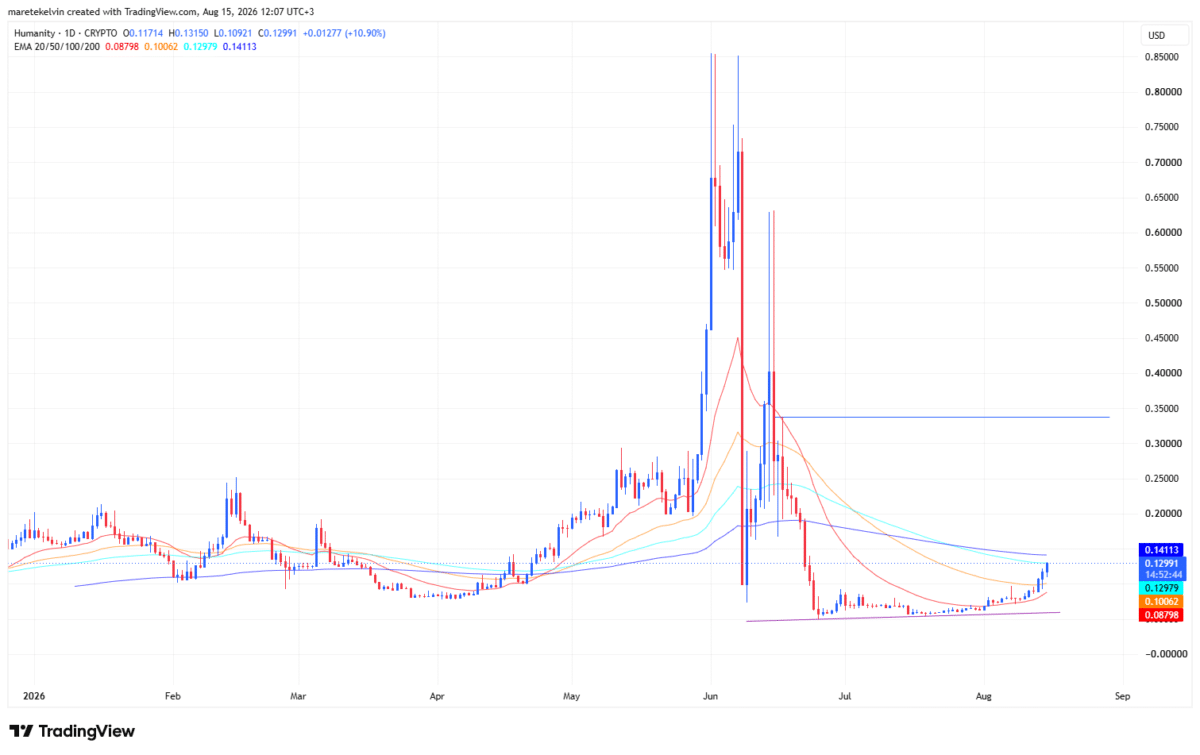
    Humanity [H] extended its weekly rally and moved above the 20-day and 50-day Exponential Moving Averages (EMAs).

    The technical improvement arrived as capital rotated toward altcoins. More large-holder wallets and bullish derivatives positioning supported H’s recovery. Could this momentum push Humanity toward the next resistance at $0.33?

    Can Humanity hold above its EMAs?

    Humanity advanced during the past week and traded above its 20-day and 50-day EMAs. This move suggested that buyers had gained momentum across the short and medium terms.

    Holding above both EMAs could help bulls extend the rally toward $0.33.

    However, losing these levels would weaken the bullish structure and increase the possibility of a deeper correction.

    Source: TradingView

    Are Humanity whales accumulating H?

    Notably, Humanity’s large-holder activity offered another bullish signal.

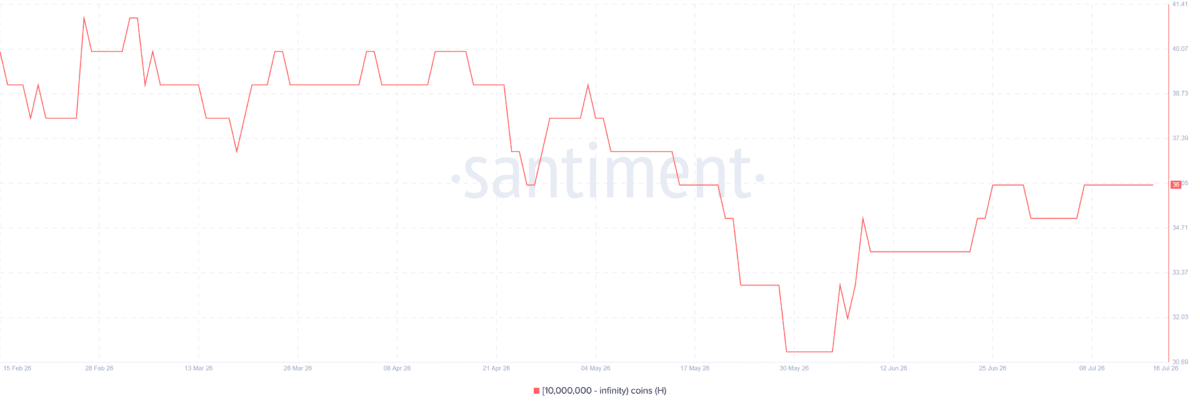
    The number of wallets holding over 10 million H reached 39, its highest level in several months. This increase suggested more wallets had entered that holding bracket. However, the metric alone could not confirm fresh whale purchases.

    Even so, continued growth in large-holder wallets could support H’s attempt to reach $0.33.

    Source: Santiment

    What does H’s 7% volatility mean?

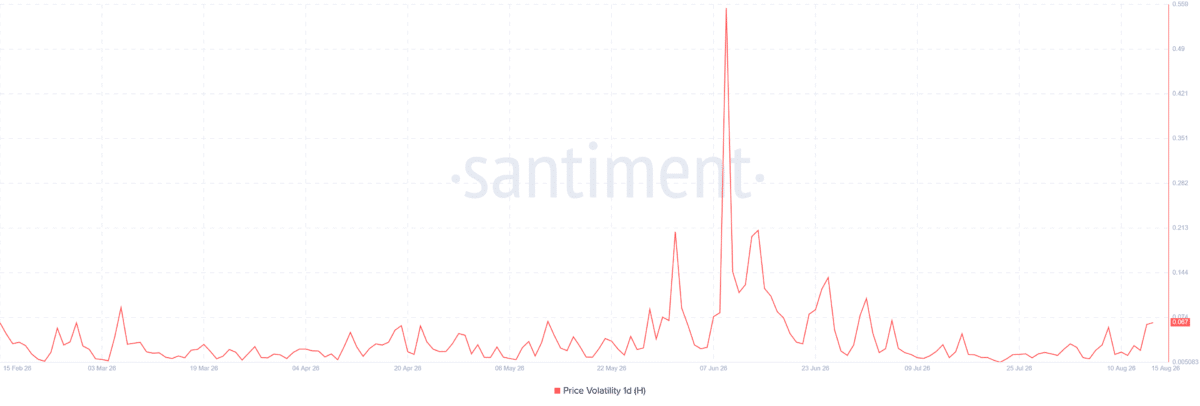
    At the same time, H’s Price Volatility climbed to approximately 7%, reaching its highest recent level. This increase indicated that H had begun experiencing wider price movements as its bullish trend continued.

    Elevated Price Volatility could amplify the rally if buying pressure holds. It could also accelerate losses during a sudden reversal.

    Therefore, the same metric supporting a faster move toward $0.33 also increased H’s pullback risk.

    Source: Santiment

    Are Humanity traders too bullish?

    On top of that, derivatives positioning remained strongly tilted toward buyers.

    Long positions represented approximately 66% of H’s tracked positioning, showing that traders expected further upside. This bullish positioning supported the continuation scenario.

    However, it also left leveraged longs exposed if momentum weakened. A price reversal could trigger Long Liquidations and deepen any resulting pullback.

    Source: Coinalyze

    Can Humanity reach $0.33?

    Humanity’s bullish structure rested on its EMAs, rising large-holder wallets, and strong long positioning.

    If buyers maintain control, H could extend its weekly advance and challenge the $0.33 resistance. For now, both EMAs remain the key support levels below H’s price.

    A sustained move above $0.33 could strengthen the bullish case. Losing EMA support may invalidate the near-term setup.


    Final Summary

    • Humanity traded above its 20-day and 50-day EMAs, strengthening its short-term bullish structure.
    • Wallets holding over 10 million H reached 39, their highest count in several months.
  • Apple Turns to Alibaba to Help Build AI Model for China

    Apple Turns to Alibaba to Help Build AI Model for China

    In brief

    • Apple trained a large language model for China with support from Alibaba, Reuters reported.
    • The deal could make Apple the first foreign company allowed to operate its own proprietary AI model in China.
    • Apple Intelligence is expected to reach Chinese iPhones through an iOS update in the coming months.

    Apple trained its own AI model for China with Alibaba’s help as it races to bring Apple Intelligence to Chinese customers, Reuters reported.

    Citing three people familiar with the matter, Reuters said the Cyberspace Administration of China registered Apple’s generative AI service last month, clearing a key regulatory hurdle that has kept OpenAI’s ChatGPT and Anthropic’s Claude unavailable in China.

    Myriad: When will OpenAI release GPT-6? Click to make your prediction.
    Myriad: When will OpenAI release GPT-6? Click to make your prediction.

    Alibaba Chairman Joe Tsai confirmed the companies’ arrangement in February 2025.

    “They talked to a number of companies in China,” Tsai reportedly said at the time. “In the end they chose to do business with us.”

    According to Reuters, Apple plans to pair its model with Alibaba’s Qwen and technology from Baidu. It remains unclear what role each system will play; however, Apple Intelligence, the company’s branded artificial intelligence initiative, is expected to reach Chinese iPhones through an iOS update “in the coming months.”

    The news comes after a difficult year for Apple’s AI business.

    In January, the company said its next-generation Foundation Models would use Google’s Gemini, instead of a proprietary design, following delays and a weak reception for Apple Intelligence.

    In May, Apple agreed to pay $250 million to settle claims that it misled iPhone buyers about AI features that were unavailable at launch. The delay has left Apple trailing Chinese rivals such as Huawei, which already sells phones with AI features.

    In June, the company unveiled Siri AI, a rebuilt assistant that can hold conversations, analyze images, and use personal context. Apple said the assistant would enter beta later this year but remain unavailable in China while it worked through regulatory requirements.

    Daily Debrief Newsletter

    Start every day with the top news stories right now, plus original features, a podcast, videos and more.