Author: rb809rb

  • Christopher Nolan Crammed Inside Trojan Horse With 20 Actors to Shoot Pivotal ‘Odyssey’ Scene

    The Odyssey world tour landed in New York City on Tuesday night, shutting down Lincoln Square for a star-studded red carpet accompanied by soldiers and a massive Trojan Horse.

    The 40-foot statue is much more than just a prop to promote the film, as it also plays a pivotal part in the story — Odysseus (played by Matt Damon) and his men hide inside for their secret attack to win the Trojan War, before they begin their long and treacherous journey home. Christopher Nolan and his team built the horse — along with many other major set pieces — practically for the film, and even saw the director himself climb inside.

    John Leguizamo, who plays Odysseus’ trusted friend Eumaeus, told The Hollywood Reporter on the red carpet that he first saw the Trojan Horse when “I was looking for Chris Nolan to meet him, and they told me he was inside the horse with 20 actors and the DP [Hoyte van Hoytema] and the IMAX camera. I couldn’t believe that. I was like, wow, this man is a leader. This man is not going to ask anything of you that he doesn’t attempt himself.”

    Charlize Theron, Samantha Morton, John Leguizamo, Tom Holland, Matt Damon, Anne Hathaway, Lupita Nyong’o, and Zendaya at the New York premiere.

    Mike Coppola/Getty Images for Universal Pictures

    Damon — who walked the NYC carpet alongside fellow stars Tom Holland, Anne Hathaway, Zendaya, Charlize Theron, Lupita Nyong’o, Elliot Page and Jon Bernthal — has also spoken about shooting the Trojan Horse sequence during the press run, telling GamesRadar+ that Nolan didn’t have a plan on how they would film it until the day of.

    Damon said that Nolan told the group they were “just going to cram in there and figure it out,” as the star recalled “that feeling of claustrophobia, that was all just developing organically… Hoyte was looking through the lens, and Chris was right next to him. They just built that in real time. It was so cool to see. If we had planned it out, I don’t think it would have had that same energy.”

    The original horse from the film is currently on display outside the AMC Theater at Universal Studios Hollywood’s CityWalk. The Odyssey hits theaters on Friday.

    Michaela Zee contributed to this report.


  • DeepMind CEO Says AGI Will Be Bigger Than Electricity or Fire

    DeepMind CEO Says AGI Will Be Bigger Than Electricity or Fire

    In brief

    • Demis Hassabis says AGI is likely only a few years away.
    • He wants a new U.S. standards body to evaluate frontier AI models before deployment.
    • The proposal calls for pre-release testing that could eventually become mandatory for the most capable systems.

    For the second time this year, Demis Hassabis predicted that artificial general intelligence would arrive before the end of the decade. This time, however, he said it won’t simply be another technological breakthrough—it will rival the discovery of electricity or fire.

    In a blog post published Tuesday on X, the Google DeepMind CEO said AGI is “probably only a few short years away,” describing it as a technology that could reshape human civilization.

    “When we look back on this time in the decades to come, I think we will realise we were standing in the foothills of the singularity–nothing less than the dawning of a new age for humanity.”

    According to Hassabis, AGI, the point when computers can understand, learn, and perform a wide range of tasks as well as or better than humans, should not be compared with advances such as the internet or mobile computing because its impact could be even greater.

    “It is much more akin to the discovery of electricity or fire,” he wrote. “If you stop to think about it, we’ve essentially found a way to make sand think. It’s miraculous.”

    Despite that optimism, Hassabis warned that AI capabilities are advancing faster than society’s ability to understand and manage the risks, pointing to cybersecurity threats that already exist with today’s frontier models, adding that future systems could introduce biological, nuclear, and other national security risks.

    As AI becomes more agentic and capable of self-improvement, he argued, stronger technical safeguards will be needed to ensure humans remain in control.

    “On the horizon, we will need robust safeguards to maintain control of increasingly agentic, recursively self-improving systems–and tackle unknown issues that will only become clearer over time.”

    The news comes as AI leaders have spent much of the past year since the public launch of ChatGPT in 2022 warning that AGI could arrive sooner than expected. In January 2026, Anthropic CEO Dario Amodei said human-level AI could emerge within one to five years and warned governments were underestimating the pace of development. Then, in June, Hassabis predicted AGI would arrive by 2030 and warned society had “not long to prepare.”

    To address those concerns, Hassabis proposed creating a U.S. Frontier AI Standards Body modeled after the Financial Industry Regulatory Authority, or FINRA, a private organization that oversees U.S. brokerage firms. The federally supervised public-private partnership would be funded primarily by the AI industry and staffed by independent technical experts and open-source representatives to evaluate frontier AI models.

    “The rapid progress we’re seeing in AI requires a new approach to testing frontier AI model capabilities that is dynamic, adaptable, and rigorous,” he wrote. “The US is well positioned, given its economic and technical standing, to take the first step in developing such a framework.”

    The proposal follows similar calls made by the prominent members of the industry to establish oversight for advanced AI.

    In May 2023, during a hearing before the U.S. Senate Committee on the Judiciary, OpenAI CEO Sam Altman called for a federal agency to license powerful AI systems and require independent safety audits. More recently, last month, President Donald Trump signed an executive order creating a voluntary framework for reviewing advanced AI models before their release. That same month, Anthropic CEO Dario Amodei warned that AI is getting too powerful and safety rules akin to the Federal Aviation Administration (FAA) are needed.

    Despite the push to regulate AI development, Hassabis said the world has only a limited window to establish common standards before AGI arrives.

    “The future is not yet written, we must use this precious window before AGI arrives to shape this technology for the benefit of all humanity,” he wrote. “What we collectively do now will determine how the next phase of civilisation unfolds. By safely stewarding AGI into the world, we can enter a new golden age of scientific discovery and progress, and usher in a bright future of incredible human flourishing.”

    Daily Debrief Newsletter

    Start every day with the top news stories right now, plus original features, a podcast, videos and more.


  • Whether in ‘Jurassic Park’ or ‘The Piano,’ Sam Neill Put the Movies First

    Whether in ‘Jurassic Park’ or ‘The Piano,’ Sam Neill Put the Movies First

    Sam Neill had been steadily working in the movies for nearly two decades before he became, at the age of 45, a star in the industry’s eyes. A sturdy, reliable everyman who radiated, depending on the role, a kind of quietly masculine decency or a steely chill, the New Zealander never chased the flashy, all-guns-blazing lead roles. Indeed, through the early years of his career, he did much of his best work as a selfless supporting pillar for various female tour de force turns: Judy Davis in “My Brilliant Career,” Isabelle Adjani in “Possession,” Nicole Kidman in “Dead Calm” and Meryl Streep in “Plenty” and “A Cry in the Dark.” His performances in all those films were intelligent, carefully etched and modulated so as to throw all the spotlight on his co-star; if he wasn’t yet a household name, that very humility had him much in demand.

    Yet when a pair of career-defining roles in 1993 launched him to the A-list, it wasn’t through a notable change in tack. As paleontologist Dr. Alan Grant in Steven Spielberg’s “Jurassic Park,” he was finally first-billed in a Hollywood mega-blockbuster, playing a macho hero type with his own accompanying action figure — but Neill knew as well as anyone that he was still playing second banana to a horde of dazzlingly rendered dinosaurs. With those creature effects always set to be the film’s primary selling point, Spielberg and Universal didn’t need a ready-made star for what producer Kathleen Kennedy at the time conceded “isn’t an intensely complicated part.” Neill was professional and affordable and wouldn’t pull focus; he was perfect.

    Yet “Jurassic Park” was the kind of cultural colossus that threatened to make him a Hollywood leading man in spite of himself — even if, in a Los Angeles Times interview at the time, he shrugged off the idea, claiming that Spielberg’s film may have given him “a little more leverage,” but he continued to have “this penchant for small films — my agents complain about it from time to time — because I like to play a lot of different things.”

    One of those small films was “The Piano,” by his compatriot Jane Campion, which won the Palme d’Or at Cannes just as “Jurassic Park” was hitting theaters. In it, Neill was no hero. As the violently abusive, cuckolded husband of Holly Hunter’s mute mail-order bride in Campion’s colonial-era erotic fable, he was the stiff, priggish counterpoint to the liberated, sensual masculinity embodied in the film by Harvey Keitel. It was an unflattering, potentially thankless part that Neill played with a petty, almost poignantly impotent rage, and a fascinating performance to be doing the rounds while, over on the other side of the world, Neill was being fashioned as a Hollywood action man.

    Once again, he was a lucky charm for his female co-star: Hunter won the Oscar for her brilliantly anguished, intuitive turn, and while “The Piano” received eight nominations overall, there was none for him. Not that he was bothered. Years later, he wrote that he regarded Campion’s “important feminist film” as being like “a medal on my chest”: “It’s a film that will always have a place in cinema history. And I served in it.”

    It’s a statement that encapsulates Neill’s approach to his career. He’d never headline a hit on the scale of “Jurassic Park” again, but that film and its sequels enabled him to take more profitable, unmemorable paycheck roles than he might otherwise have been offered. And those in turn gave him the liberty to pursue unusual, intimate projects with gifted collaborators (from John Carpenter’s “In the Mouth of Madness” to Sally Potter’s “Yes” to Warwick Thornton’s “Sweet Country” to Taika Waititi’s “Hunt for the Wilderpeople”) in which his own performance was less important than the artistic whole. In later years, unlikely social media fame — for posts showcasing his wry sense of humor and down-home love of nature — would seal his reputation as one of the industry’s nice guys. As a screen presence, however, he was more interesting and unpredictable than that.

  • QuickSwap Goes All-In on Orbs for Perpetual Futures Trading

    QuickSwap Goes All-In on Orbs for Perpetual Futures Trading

    QuickSwap, one of the oldest names in decentralized exchange trading, has officially rolled out Orbs’ Perpetual Hub Ultra 2.0 as the default engine powering perpetual futures across every chain it operates on. The decision wasn’t made behind closed doors. It came after a community vote, “Full Shift of Decentralized Perpetuals to Orbs Network,” which cleared with a decisive 81.8% approval from QUICK token holders.

    The shift effectively retires the Orderly-based Falkor setup that had been running on Polygon PoS, replacing it with the same Orbs-driven architecture that QuickSwap already introduced on Base back in the fourth quarter of 2025. It’s not a cold start, either. QuickSwap and Orbs have been working together for years at this point, with tools like dTWAP, dLIMIT, and Liquidity Hub already live in production on both Polygon PoS and Base.

    Ran Hammer, VP of Business Development at Orbs, framed the announcement as something bigger than a routine infrastructure swap. “This is what the next phase of DeFi looks like: a top-tier DEX running a complete perps stack natively on Layer-3, with liquidity from day one and execution quality that rivals centralized venues,” he said. He also pointed to the vote itself as a signal of where the industry is heading, adding, “An 81.8% community vote says it all – decentralized markets are ready to compete with traditional finance on its own terms.”

    Full-Service Perpetual Trading Stack

    What QuickSwap gets out of the deal, in practical terms, is a full-service perpetual trading stack that doesn’t lean on outside providers. Execution, settlement, hedging, liquidation, pricing, and the trading interface itself are all handled natively through Orbs’ Layer-3 infrastructure. There’s no bootstrapping period to worry about, either; liquidity is pulled in from day one through Orbs’ integrated system, which taps into several deep liquidity sources at once rather than relying on a single pool building up over time.

    Under the hood, the platform runs on a TEE-secured execution environment, meaning trades are processed inside a trusted, hardware-isolated setting rather than out in the open. Price feeds come in cryptographically signed, and the resulting state is periodically committed on-chain through rollup settlement, giving traders a verifiable record without sacrificing speed.

    On the trading side, users get access to the usual order types, market, limit, stop-loss, take-profit, along with more advanced bracket orders. Convenience features like one-click trading, account abstraction, and gasless transactions are also part of the package, lowering the friction that’s historically kept some traders away from on-chain platforms.

    QuickSwap itself needs little introduction to anyone who’s spent time in DeFi. It’s been running since 2020 and remains the top exchange within the Polygon ecosystem, expanding over the years from Polygon PoS into Polygon zkEVM and Base while holding onto its reputation as Polygon’s flagship DEX.

    Like much of its infrastructure, the exchange is steered by its community through QUICK token governance, which is exactly the mechanism that greenlit this latest move. Orbs, for its part, operates as a decentralized Layer-3 network built specifically to handle the kind of complex trading logic that standard smart contracts struggle with.

    Its validator network runs on delegated Proof-of-Stake, backed by more than 1.12 billion ORBS tokens staked across the system. Both teams are pitching this integration as a step toward closing the gap between decentralized and centralized trading venues, not just in terms of speed and cost, but in the overall experience, while still keeping self-custody and on-chain transparency intact for users.

  • Anya Taylor-Joy Is a Con Artist on the Run in Apple TV’s High-Voltage Thriller ‘Lucky’: TV Review

    Anya Taylor-Joy Is a Con Artist on the Run in Apple TV’s High-Voltage Thriller ‘Lucky’: TV Review

    Based on Marissa Stapley’s 2021 novel of the same name and adapted for television by “Your Friends & Neighbors” creator Jonathan Tropper, Apple TV limited series “Lucky” is the captivating story of one young woman’s desperate attempt to break free of the dark and violent life that’s shaped her. More than an intricate game of cat-and-mouse, the crime drama plays on the tensions between nature and nurture while unpacking the dangers and vulnerabilities that come with loving other people.

    We first see Luciana “Lucky” Armstrong (a fantastic Anya Taylor-Joy) trying to evade the FBI at a crowded bus stop somewhere in Arizona. But this is not where Lucky’s story begins. In a flashback to the previous day, Lucky embraces her husband, Cary (Drew Starkey), on the balcony of their massive hotel suite in Las Vegas. At the bidding of Lucky’s incarcerated con artist father, John (Timothy Olyphant), the couple has stolen $10 million from notorious gangster Wayne Whittaker (William Fichtner), and they decide to live it up for one last night before fleeing the country. Despite their celebratory mood, Lucky can’t quite shake the feeling that something is on the verge of going horribly awry.

    When Lucky awakens the next day alone in the suite, with neither Cary nor the money in sight, she realizes her gut instinct was correct. With FBI special agent Billie Rand (Aunjanue Ellis-Taylor) on her tail and Whittaker underboss Priscilla Matheson (Annette Bening) on her neck, Lucky must use all the knowledge her sole parental figure instilled in her so she may emerge from her circumstances in one piece.

    Replete with gunfights, car chases and more than a few intriguing grifts, all seven episodes of “Lucky” feature heart-racing sequences that rival those of any worthwhile high-voltage thriller. Still, the show maintains its dynamism because it remains character-driven. Billie’s obsession with taking down Priscilla constantly puts her team in peril, because being so laser-focused on one thing clouds the bigger picture. While it’s clear that John deeply loves his daughter, his addiction to manipulation and money usurps his paternal instincts. Priscilla is as vicious as they come, but her muscle, Dutch (Clifton Collins Jr.), does all her bloody bidding. Yet, in Whittaker’s presence, she becomes softer and more compliant. Cary, torn between his own desires and others’ expectations, can’t seem to determine where his loyalties lie. Lucky thinks she can escape the world she was born into unscathed. However, as Priscilla reminds her at one point, “Just because you don’t like who you are doesn’t mean you can run away from her.”

    Lucky faces this conundrum as she tries to track down Cary while outrunning the FBI and Priscilla’s wrath. Meanwhile, the series unpacks how she even got into this predicament. Through flashback sequences, we see her childhood with John, which was shaped by distrust and lies. This exhausting existence has kept Lucky emotionally dependent on her father. It also cost her the only sense of true normalcy she’s ever known.

    “Lucky” is a project worthy of Taylor-Joy’s talent. Following the resounding success of “The Queen’s Gambit,” she was cast in the high-profile 2024 movie “Furiosa: A Mad Max Saga,” where George Miller’s spectacle overwhelmed her performance — and it bombed. “Lucky” is different. Through Taylor-Joy’s character, the series reminds us to face ourselves, even the broken and painful bits that feel shameful. It is about embracing the good and the bad before fully shedding what no longer serves you. As Lucky comes to understand, it’s one thing to con other people, but the cost of conning yourself is often insurmountable.

    The first two episodes of “Lucky” debut July 15 on Apple TV, with the remaining episodes airing weekly on Wednesdays.

  • CZ’s 1.1B memecoin burn sparks buzz – Can it revive fading demand?

    CZ’s 1.1B memecoin burn sparks buzz – Can it revive fading demand?

    Memecoins often thrive on hype, yet they can lose relevance just as quickly when attention fades.

    Binance founder Changpeng Zhao’s (CZ) recent wallet activity initially fueled speculation across the memecoin market. He later clarified the transfers were routine, not valuation‑related.

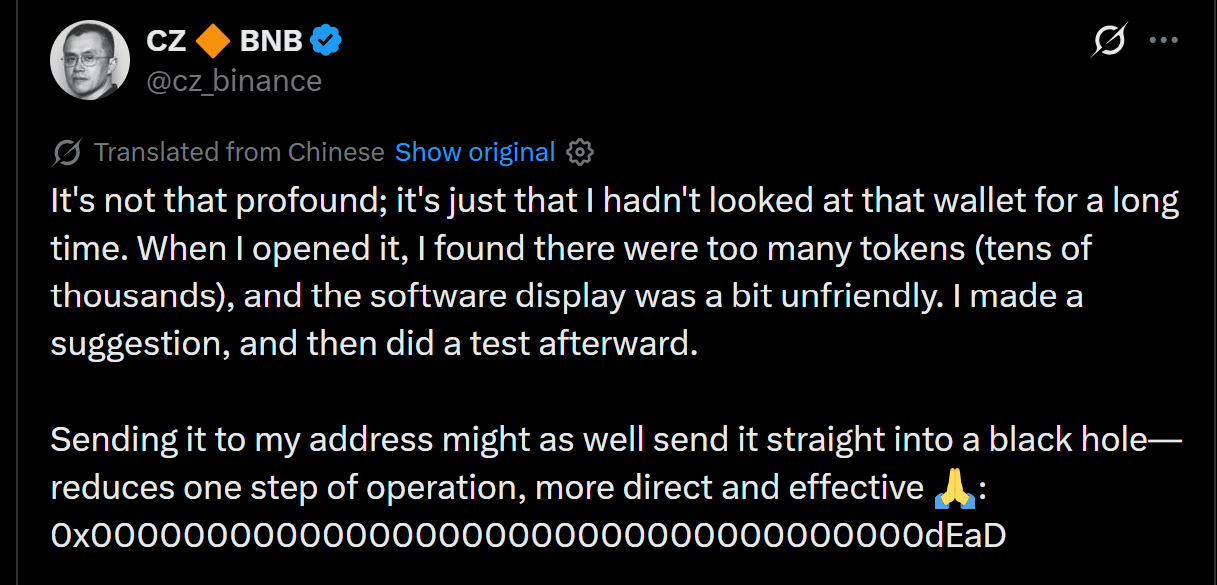
    Rather than making a statement about token valuations, he simply cleared thousands of unsolicited donations by sending them directly to the burn address.

    In a post on X, CZ noted,

    Source: X

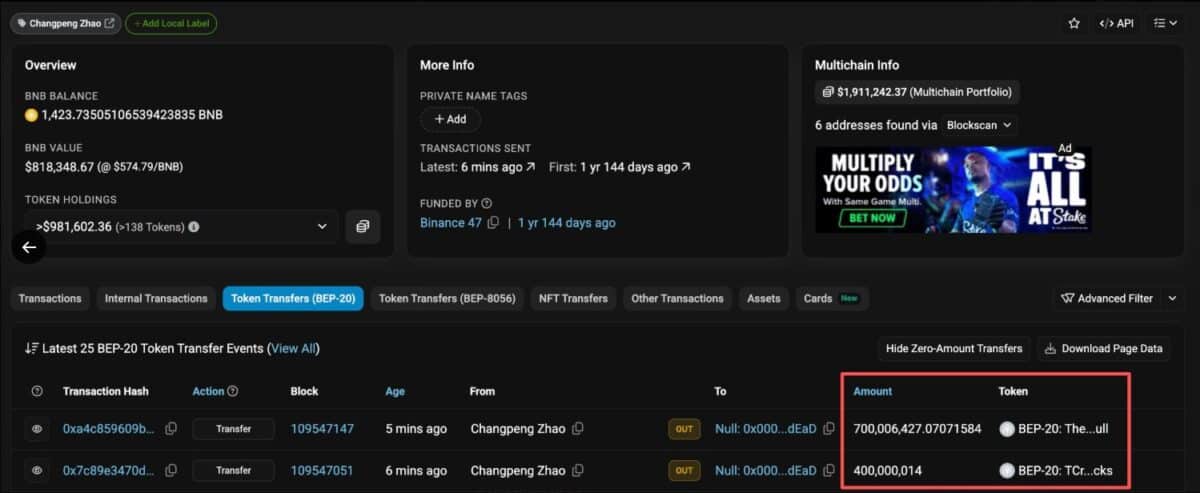
    This move permanently removed roughly 1.1 billion donated memecoins from circulation, including transfers of 700 million and 400 million tokens shown in the wallet activity. However, the broader market impact remains limited because these assets already had little utility or liquidity.

    Source: X

    Instead, the transaction underscores how speculative narratives can quickly overshadow routine wallet management. Ultimately, sustainable valuations will continue to depend on genuine demand rather than symbolic token burns.

    Memecoin demand remains fragile

    CZ’s decision to burn unsolicited memecoins also reflects the broader challenges facing the memecoin sector. While new narratives occasionally attract speculative inflows, sustained demand has remained weak since Bitcoin’s October 2025 peak.

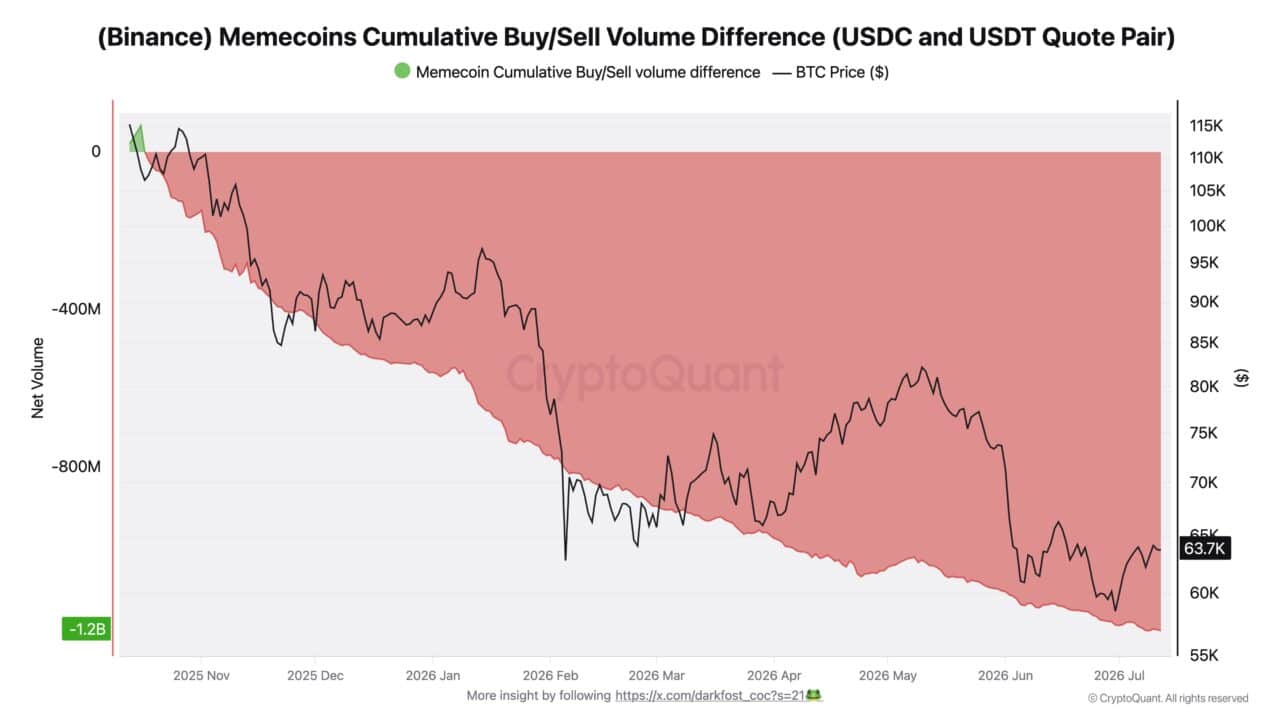
    As Bitcoin [$BTC] plummeted, investors began reducing their exposure to riskier assets. This led to cumulative Binance memecoin net volume declining to -$1.21 billion.

    This suggests that rather than accumulate for long-term growth, traders increasingly view memecoins as assets to exit during uncertainty. Unless risk appetite improves, capital will likely continue concentrating in stronger cryptocurrencies.

    Source: Dakforst on X

    As a result, this leaves memecoins vulnerable to lower liquidity, sharper volatility, and shorter-lived recoveries.

    Rather than signaling isolated selling, the persistent outflows point to a prolonged risk-off environment across the sector. Although Robinhood Chain briefly revived interest in newer tokens, that momentum failed to reverse broader capital rotation.

    Without consistent buying, memecoins will stay driven by short‑lived narratives rather than durable demand.


    Final Summary

    • Memecoins remain driven by speculation, with CZ’s burn carrying limited market impact.
    • Bitcoin [$BTC] weakness continues weighing on memecoins, as persistent capital outflows keep the sector in a prolonged risk-off environment.
  • World’s first operation performed by robot surgeons has been carried out

    World’s first operation performed by robot surgeons has been carried out

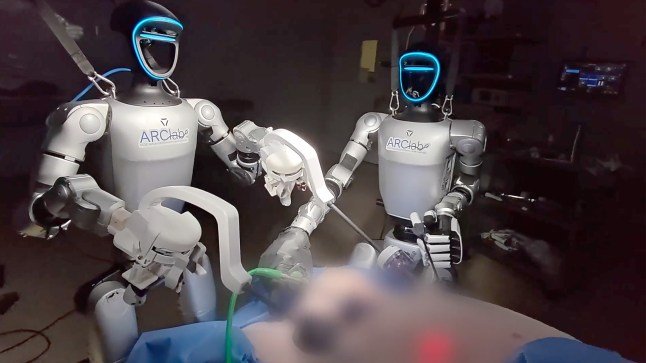
    Two teleoperated robots work as a team to perform a laparoscopic gallbladder removal during a pre-clinical trial
    Two teleoperated robots work as a team to perform a laparoscopic gallbladder removal during a pre-clinical trial (Picture: University of California San Diego (UCSD)/Cover Images)

    It’s like the plot of a science fiction film.

    The world’s first operation performed by robot surgeons has been successfully carried out.

    Researchers say the breakthrough could one day allow specialists to carry out life-saving procedures from hundreds of miles away, helping patients in remote communities, disaster zones and military field hospitals.

    The human-shaped robots completed two gallbladder removal operations during a preclinical trial on large animal models.

    One procedure saw a robot operate alongside a human surgeon acting as an assistant. In the second, two humanoid robots worked together as the surgical team.

    The research, published in the journal Nature, was carried out by engineers and surgeons at the University of California San Diego.

    Nicknamed ‘Surgie’, the robots stand around 5ft tall, weigh just 27kg and use standard surgical instruments, meaning they could work in existing operating theatres without the specialist facilities needed for conventional robotic surgery systems.

    A human-robot team made up of a humanoid robot and a human surgeon acting as an assistant successfully performed a gallbladder removal (Picture: University of California San Diego (UCSD)/Cover Images)

    Professor Michael Yip, one of the study’s senior authors, said the technology could help tackle a growing global shortage of surgeons.

    He said: ‘There is a shortage of surgeons alongside growing patient needs, which leads to longer wait times, reduced access and greater healthcare disparities.

    ‘Remotely operated and autonomous humanoid robots have real potential for expanding access to critical surgeries that patients would otherwise not receive.’

    Conventional robotic surgery systems can weigh almost 1,800lb and require specialist operating theatres and large support teams.

    The researchers say humanoid robots are far cheaper, more compact and could be deployed in under-resourced hospitals or temporary medical facilities.

    Dr Shanglei Liu, who remotely controlled one of the robots during the trial, said: ‘It’s a fraction of the cost and it takes a fraction of the space in an operating room. So it’s easy to deploy anywhere from rural areas to the battlefield, and even to space.’

    Ryan Broderick, MD, controls a robot during a gallbladder removal procedure (Picture: University of California San Diego (UCSD)/Cover Images)

    The robots mirror a surgeon’s hand movements using a teleoperation system, allowing procedures to be performed remotely.

    The team says the technology is still in its early stages. The robots needed several recalibrations during surgery and the operations took much longer than those carried out using existing robotic systems.

    But the researchers believe the technology will improve rapidly, pointing out that early robotic keyhole surgery once took six hours but can now be completed in around 30 minutes.

    They hope humanoid robots will eventually work alongside surgeons, helping deliver specialist care to patients wherever it is needed.

  • Analyzing Ether.fi’s slip amid $8.6B market crash: What’s next for ETHFI?

    Analyzing Ether.fi’s slip amid $8.6B market crash: What’s next for ETHFI?

    Ether.fi [$ETHFI] has posted a sharp decline as capital outflows across the broader market drive much of the fall.

    The asset recorded a double-digit loss in the early hours of Tuesday, extending its price to a low of $0.384 on the chart. Outflows continue to dominate, yet the market is already flashing early signs of a possible recovery and leaves room for a rally to still stretch higher.

    Capital exits $ETHFI’s on-chain economy

    The steepest hurdle facing $ETHFI’s price over the past day has been the on-chain capital exit.

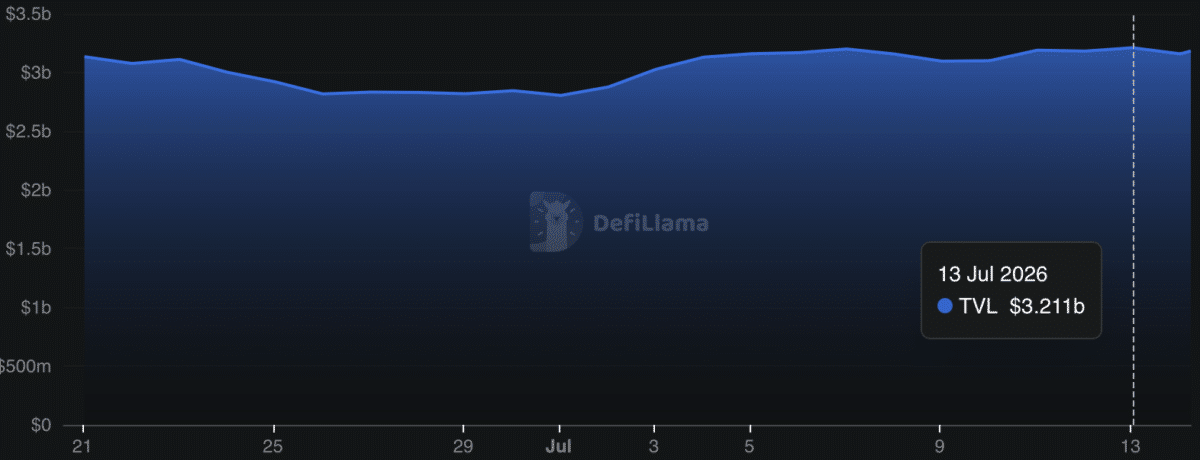
    Total value locked (TVL), which gauges the strength of on-chain capital through the deposits and withdrawals moving through the protocol, shows that roughly $54 million has left the market.

    The metric slid from $3.212 billion to roughly $3.153 billion, signalling that retail holders are exiting the market, likely on concerns over rising volatility.

    Source: DeFiLlama

    On a protocol level, the asset has held up decently, with earnings—the profit that remains once incentives are stripped out—reaching $1.34 million and already nearing half of the $2.79 million generated in June.

    The pattern suggests the recent sell-off reflects a reaction to market sentiment and not a structural bearish trend. That sentiment traces back to the notable decline the crypto market absorbed over the past day, when it shed around $8.61 billion in total capitalization.

    Perpetual contracts keep bears in play

    The clearest gap in the market emerges from $ETHFI’s perpetual contracts, which show that bears still hold some strength after an 11% decline dragged open interest to $62.26 million.

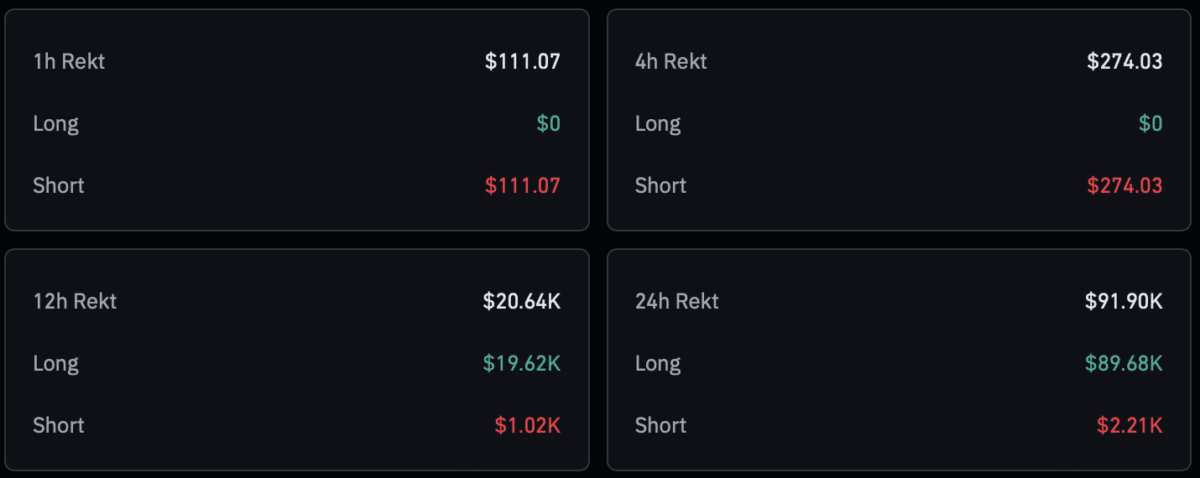
    That gap stems from an imbalance in liquidations, with market data revealing a wide disparity between long and short liquidations. Over the past 24 hours, long traders have lost roughly 40 times more than short traders.

    The liquidation data shows short traders lost just $2,210 against $89,680 for long traders across the same period, and the uneven spread points to the strength of the bears.

    Source: CoinGlass

    On lower timeframes, the liquidation disparity widens further, though the capital lost this time around remains minimal.

    The liquidation heatmap offers no clear directional bias for the asset, instead showing fairly evenly distributed clusters.

    These clusters mark areas on the chart where buy or sell orders sit, and clusters resting above the price usually act as sell zones that pull the price toward them and force selling, while clusters below reverse the dynamic and force buys once the price drops into them.

    For now, there’s no decisive direction, leaving momentum to dictate the next price move.

    Rising long volume hints at $ETHFI accumulation

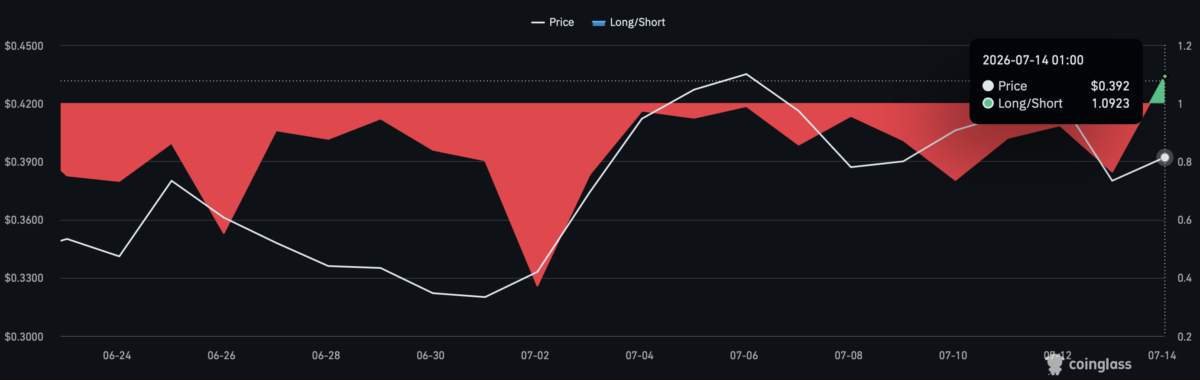
    While liquidations remain skewed in favour of the shorts, activity on the long-to-short ratio points to rising accumulation.

    At the time of writing, the long-to-short volume ratio on the chart shows more long volume in the market, pushing up to 1.02. A continued climb would imply that buy interest still lingers in the market.

    Source: CoinGlass

    Whether that offers a sufficient basis for a shift in direction remains unclear. The broader crypto market that shaped the sell-off sentiment has begun cooling, and a strong chance remains that $ETHFI benefits from the turn and recovers, flipping momentum against the sellers.


    Final Summary

    • Ether.fi’s token fell 10% after roughly $54 million left the protocol, moving in step with a broader crypto market that shed about $8.61 billion in a day.
    • Buying activity is quietly picking up and a calming market could give $ETHFI room to bounce back.
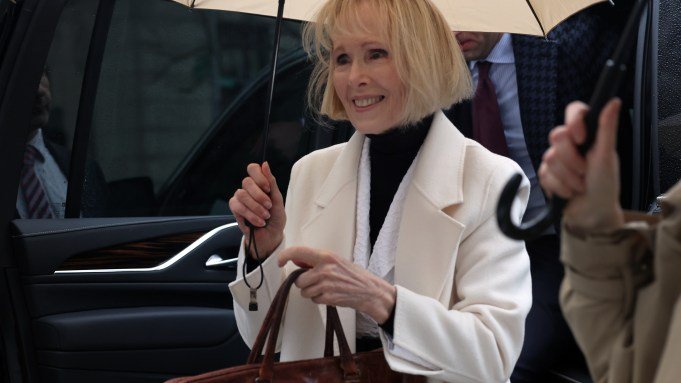
  • E. Jean Carroll Receives $5.63 Million Payment From Donald Trump In Sex Abuse And Defamation Case

    E. Jean Carroll Receives $5.63 Million Payment From Donald Trump In Sex Abuse And Defamation Case

    UPDATE: Writer E. Jean Carroll has been paid a damages amount of $5.63 million as part of her successful lawsuit against Donald Trump, after the president exhausted his appeals.

    According to an entry in the docket of federal court in New York, the funds were transmitted to the law firm representing Carroll on Monday.

    “The Eagle Has Landed,” Carroll wrote on her Substack page on Tuesday.

    A jury awarded Carroll $5 million after ruling that Trump was liable for sexual abuse and defamation. It stemmed from a 1996 incident at a Manhattan department store, where Carroll claimed that Trump sexually abused her. Trump has denied the allegations, but Carroll also sued for defamation after his claim that she was spreading falsehoods.

    Trump appealed, but the Supreme Court declined to take up the case last month. That left in place the verdict, and a judge ordered the funds released from a court escrow account. The figure paid includes interest, although it is slightly less than some earlier estimates.

    Trump is also appealing a verdict in a separate proceeding, in which a jury awarded Carroll $83.3 million after finding him liable for defamation.

    PREVIOUSLY: A federal judge ordered the release of around $5.8 million held in an escrow account to writer E. Jean Carroll after the Supreme Court declined to take Donald Trump’s appeal of a jury’s judgment that he was liable for sexually abusing and defaming her.

    U.S. District Judge Lewis Kaplan issued the order on Wednesday, despite efforts by Trump’s attorneys to hold off on the disbursement as they pursue a rehearing before the Supreme Court, which declined their petition last month. Those rehearings, though, are very rare.

    The funds represent a jury’s $5 million judgment, plus interest, after a 2023 trial. The funds were held in an account controlled by the court for more than three years.

    After Kaplan’s most recent order, Trump’s legal team filed an appeal.

    The jury found Trump liable for sexually abusing Carroll in a Manhattan department store in 1996, and later claiming that her allegations were false.

    In a separate proceeding, a Manhattan jury awarded Carroll $83.3 million in damages after finding Trump liable for defamation. Trump’s legal team is appealing that verdict to the Supreme Court as well.

    Kaplan wrote, “In the last analysis, defendant has been stalling this case for years. A jury unanimously concluded that he sexually abused and defamed plaintiff and awarded her damages accordingly. The judgment on that verdict has been upheld on appeal. En banc rehearing has been denied. The Supreme Court has denied certiorari without dissent. It is time for him to ‘do equity’ and pay the judgment.”

  • Federal Court Hearing Set For State AGs’ Emergency Motion To Halt Paramount-Warner Bros. Discovery Merger

    Federal Court Hearing Set For State AGs’ Emergency Motion To Halt Paramount-Warner Bros. Discovery Merger

    A federal court has set a hearing for Friday to consider an emergency motion filed by a dozen state attorneys general to at least temporarily halt Paramount‘s proposed merger with Warner Bros. Discovery.

    The states are seeking a temporary restraining order to pause the transaction as their antitrust lawsuit proceeds.

    U.S. District Judge P. Casey Pitts was assigned the case earlier on Tuesday. Pitts was appointed to the federal bench by President Joe Biden.

    The hearing will be at 10 a.m. PT. The court also set a deadline of noon on Thursday for Paramount’s opposition to the TRO.

    The states want the judge to rule by July 22, warning that the company would otherwise close the transaction after that date. The date is around the time that the European Union is expected to issue its decision on the transaction, with the U.S. Justice Department having already cleared the deal.

    More from this Story Arc

    Paramount WB