Author: rb809rb

  • ‘In the City’ Finale Recap: Kyle and Amanda’s Emotional Split, Three Pregnancy Announcements and More

    ‘In the City’ Finale Recap: Kyle and Amanda’s Emotional Split, Three Pregnancy Announcements and More

    [This story contains spoilers from In the City‘s season one finale, “Cider and Squabbles.”]

    Bravo‘s first season of In the City concluded Tuesday night with emotional confrontations, pregnancy announcements and an inside look at the end of Kyle Cooke and Amanda Batula‘s relationship.

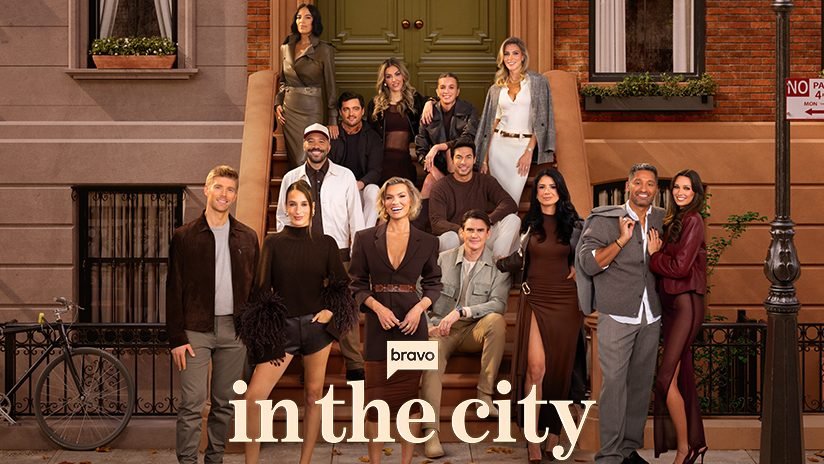
    The season finale of the Summer House spinoff, set in New York City, follows Lindsay Hubbard, Kyle Cooke, Amanda Batula, Danielle Olivera, Eoin Heavey, Andrea Denver, Lexi Sundin, Nick Barber, Yvonne Najor, Georgina Ferzil, Whitney Fransway, Kenny Martin, Gavin Moseley and Katie as they navigate friendships, relationships and careers.

    The episode picks up with the cast still on their Friendsgiving trip to Connecticut, where Whitney Fransway — who previously appeared on The Bachelor and Bachelor in Paradise — finally comes face-to-face with Lindsay after criticizing her for playing the “mom card.” Whitney had also questioned Lindsay’s decision to take the master bedroom instead of giving it to Yvonne and Nick.

    Following a talk filled with tears and raised voices, the two appear to put their issues behind them — well, the reunion will really answer that. 

    Meanwhile, Gavin steps in to defend Lindsay, prompting Kenny to confront him over the digs he’s made at Whitney throughout the season. The pair ultimately resolves their differences during an emotional conversation.

    Once the Friendsgiving drama dies down, Kyle takes over the DJ booth while the rest of the house celebrates. Amanda, however, heads to bed early, highlighting the growing distance between the couple.

    After returning to New York City, Kyle and Amanda once again head to separate apartments. Earlier in the season, Amanda explained that living apart would allow them to “date again” while working on their marriage. The pair also left separately in the Summer House season 10 finale, but this time Kyle appears to realize their relationship may truly be coming to an end.

    The finale then jumps ahead two months to January 2026, when Kyle and Amanda announce their divorce after 10 years together and four years of marriage. The episode also revisits the fallout that followed in March, when Amanda and fellow Summer House star West Wilson confirmed they were dating — a relationship that sparked controversy because West had previously been involved with Amanda’s close friend Ciara Miller and was also one of Kyle’s closest friends.

    “There’s so many things that factored into the demise of our relationship. It’s not just one thing,” Amanda tells Kyle during an emotional conversation. She also admits she’s been afraid to leave her apartment because of the backlash surrounding her relationship with West.

    The episode closes with confessionals filmed in June, where Kenny confidently says he plans to marry Whitney one day. It also checks in with three couples — Yvonne and Nick, Danielle and Eoin, and Lexi and Andrea — all of whom announce they’re expecting children, though their pregnancies had previously been reported publicly.

    Noticeably absent from the June update are Kyle and Amanda. With Amanda not returning for Summer House season 11 while Kyle remains part of the cast, the finale leaves open questions about the future of In the City and whether Amanda would return should Bravo renew the series for a second season.

    Part one of the In the City reunion airs Tuesday, July 21, at 8 p.m. ET, followed by part two on July 28.

  • Google’s AI Has Access to More Than You Think. Change These 7 Settings Now to Protect Your Privacy

    Google’s AI Has Access to More Than You Think. Change These 7 Settings Now to Protect Your Privacy

    Do you ever use Google Gemini? If so, you’ve probably noticed that the AI chatbot is eager to learn as much as possible about you to better personalize its responses. But how much does this AI chatbot really need to know?

    First, you should know what information Google’s AI collects. This list includes prompts, shared files, videos, photos, browser pages, transcripts, Gemini Live recordings, the names and custom instructions of your Gems, and any additional instructions you give Gemini to tailor its responses. Keep in mind that Gemini also powers many of Google’s base features now, so even if you don’t use the chatbot, you’re likely interacting with the AI model in some way.

    Google offers a few ways to control your privacy, but it does make certain changes difficult. For example, you can delete past conversations and revoke Gemini’s access to Google Drive, Gmail, and Google Calendar. You can also use Gemini in temporary mode so it won’t save your chats. However, the only way to prevent Gemini from training on your chats is to turn off Google’s history retention for them. And if you do that, it means you won’t be able to view or refer back to prior conversations.

    That said, there are some workarounds that strike a balance between privacy and effectiveness when using Gemini. Here are seven ways to boost your privacy when using Google’s AI platform.


    1. Opt Out of Google Search AI Training

    In its quest to gather even more of your information, Google is now using your search uploads to train its AI models. That means every time you add an image, document, audio file, or video to the Google search bar, it is collected in order to improve Gemini-powered products like Google Lens and Search Live. This is now happening by default, so if you don’t want Google’s AI to know what you’re looking for online, you’ll need to disable the feature.

    To do this, open the My Activity settings screen, choose Search Services History, and make sure the Save media option is unchecked. You can also turn Search Services off entirely, delete past activity, and set up an auto-delete option.

    search services history setting page

    (Credit: PCMag / Google)


    2. Don’t Let Google Use Your Chats for Training

    Gemini will use your conversations with it to train itself. Though Google promises that your data is anonymized, you may still not want any sensitive or personal details being shared this way. Unfortunately, the only way to stop this is to completely prevent Google from storing and using previous chats. This will remove conversations from Google’s activity history and your own chat history, meaning you won’t see any of your previous chats.

    To me, that’s a huge drawback as I often refer to my chat history to see what topics have already been covered. But if you don’t need to view your chat history, sign in to the Gemini Apps Activity page with your Google account. If the Keep activity setting is on, click the drop-down button and choose Turn off.

    Turn off activity

    (Credit: Google/PCMag)

    The next window explains what happens when you turn off your Gemini Activity. Beyond preventing future conversations from being used for AI training, this action removes these chats from your Activity feed and chat history. To confirm this step, click the Got it button. When you return to the main Gemini screen, you’ll see that your previous chats are gone.

    Prevent Your Chats From Being Used for Training

    (Credit: Google/PCMag)


    3. Delete Past Chats From Google’s History

    Since I want to access many of my previous chats, I typically don’t disable them from Google’s activity. Instead, I’ll selectively remove certain conversations that I no longer need. Google lets you delete specific chats, all those from a certain period, or everything in one shot.

    Deleting chats this way removes them from Google’s activity history and your chat history. But at least it gives you control over which conversations you want to remove and which ones you wish to keep. At the Gemini Apps Activity page, I’ll remove certain conversations that I feel are more sensitive or personal and don’t want Google to store, either for its own activity or in my history.

    Delete a specific chat

    (Credit: Google/PCMag)

    Click the X next to any individual chat you wish to delete. To remove all chats or just those from a specific time period, click the Delete drop-down button near the top of the Activity page. You can then opt to delete activity from the last hour, the last day, all time, or a custom range.

    Delete multiple chats

    (Credit: Google/PCMag)

    Instead of manually removing conversations, you can also set up an auto-delete option. Near the top of the Activity page is a setting called Choose an auto-delete option if the option is currently turned off or Deleting activity older than… followed by a specific period of time if the option is currently on. Click the right arrow next to that setting and choose Auto-delete activity older than from the drop-down menu, and choose a specific timeframe—3 months, 18 months, or 36 months. Click Next > Confirm > Done. If you don’t want your chat history to be removed automatically, choose Don’t auto-delete activity instead.

    Recommended by Our Editors

    Choose an auto-delete option

    (Credit: Google/PCMag)


    4. Prevent Gemini Live From Storing Your Voice Conversations

    Gemini Live allows you to converse with Google’s AI by voice. But here’s another area where the company can use your chats for AI training. By default, Google captures audio recordings of your conversations and any screenshots shared during a live conversation. Some recordings are even sent (anonymously) to human reviewers. Thankfully, you can easily turn this option off.

    Prevent Gemini Live from Storing Your Voice Conversations

    (Credit: Google/PCMag)

    At the Gemini Apps Activity page, look at the top of the screen for a setting called Improve Google services with your audio and Gemini Live recordings. If it’s checked, click the box to uncheck it. Read the information displayed at the pop-up window. If this sounds good to you, click the Turn off button to finalize your action.

    Finalize your action

    (Credit: Google/PCMag)


    5. Cut Off Gemini’s Access to Google Drive, Gmail, and Google Calendar

    Gemini can access your files and other content from certain connected apps, including Google Drive, Gmail, and Google Calendar. Part of Gemini’s Personal Intelligence skill, this lets you run AI-related tasks and actions on your own data. For example, you could tell Gemini to summarize a particular file stored on Google Drive or to generate a response to a certain email in Gmail. If you don’t want Gemini to have access to your files, you can easily disable this.

    At the main screen, click Settings & help > Personal Intelligence > Connected Apps, and then turn off access to Google Workspace (Gmail, Google Docs, Google Keep, Google Calendar, Google Drive, and Google Tasks), Google Photos, Google Search, YouTube, and YouTube Music. Turn off the switch for any apps and services that you don’t need to use with Gemini, and then select Disconnect.

    Cut Off Gemini’s Access to Google Drive, Gmail, and Google Calendar

    (Credit: Google/PCMag)


    6. Turn Off Personal Intelligence’s Memory Feature

    Another aspect of Gemini’s Personal Intelligence is Memory. With this enabled, Gemini remembers your past chats and learns from them to better understand your interests, preferences, and other personal details. The goal here is to help the AI tailor its responses to you, but you might not want this. This is an opt-in feature, so it should already be disabled. To check, click Settings & help > Personal Intelligence, then check whether the Memory switch is enabled. If it is, you can just turn it off.

    Turn off Personal Intelligence’s Memory Feature

    (Credit: Google/PCMag)


    7. Use Gemini in Temporary Mode

    One more way to protect your privacy with Gemini is to use it in temporary mode. You can easily start a new temporary chat to discuss a private or sensitive topic; it won’t appear in your chat history or on the Google Activity page, and won’t be used to train Gemini or personalize your experience. You can set one up by clicking the Temporary chat button next to New chat in the left sidebar. Gemini explains how the temporary chat works. Type and submit your request, knowing that the chat will remain private. Temporary chats are retained only for 72 hours.

    Use Gemini in Temporary Mode

    (Credit: Google/PCMag)

    About Our Expert

  • ‘Dancing With the Stars: The Next Pro’ Cast: All the Dancers Vying for a Spot on Season 35

    ‘Dancing With the Stars: The Next Pro’ Cast: All the Dancers Vying for a Spot on Season 35

    Plus, The Hollywood Reporter breaks down all the judges and mentors who will appear on the spinoff.

    Dancing With the Stars is getting ready to welcome the addition of a new professional dancer at the end of Next Pro. 

    The spinoff stars a group of 12 dancers who must compete in weekly challenges for a shot at becoming the next pro dancer on season 35 of Dancing With the Stars. Only time will tell who will win the series, securing a spot in the main series’ recurring cast. 

    With new episodes airing Mondays, The Hollywood Reporter is breaking down all the details on the cast of dancers, who was eliminated each week, the judges and mentors.

  • Alix Earle Reveals When She’ll Address Alex Cooper Feud: “A Serious Struggle Behind the Scenes”

    Alix Earle Reveals When She’ll Address Alex Cooper Feud: “A Serious Struggle Behind the Scenes”

    Three months after the feud between Alex Cooper and Alix Earle reached a new peak, the latter finally revealed when she plans to address the drama.

    After Cooper called out the social media star in April, Earle teased at the time that she was working on a response. However, a video never came to fruition.

    That’s because the Dancing with the Stars alum shared during a recent interview with Time magazine that she’s going to unpack her side on season one of her upcoming Netflix reality show, Earle Meets World.

    “It’s something I’m going to talk about on the show,” Earle said. “That was one of the things in the beginning they wanted me to talk about, and I really wasn’t comfortable sharing.”

    She continued, “Then everything unfolded the way it did while we were filming. There was a serious struggle behind the scenes of emotions, and my family showed up for me. Those moments that sometimes seem so fun for people online, but are hard behind the scenes — I am happy that we were able to capture that.”

    After Earle left Cooper’s Unwell Network in March 2025, nothing was ever confirmed about what went down between the two women and why Earle parted ways. She had launched her Hot Mess podcast under Unwell, but took it with her when she left.

    Rumors about a squabble between them have swirled over the past year, but the drama made headlines again in April 2026 when Cooper took to TikTok to directly accuse Earle of starting “fake drama” and creating a “fake narrative” over what went down between them.

    “Hey girl, the passive aggressive reposts and the likes and the commenting on things — I’ve got to call you out here,” Cooper said in the video. “You’re going to need to get specific and just say what you’ve got to say about me. There’s no NDA. No one is stopping you. Stop hiding behind other people and just say it yourself.”

    She was seemingly addressing a TikTok video that Earle had reposted days prior of another creator calling the Call Her Daddy host “so awful” for telling people’s stories when they’re at their lowest.

    Though Earle replied in the comment section of Cooper’s TikTok, “Okay on it,” she never officially dropped a response.

    But it appears fans who are locked on all the drama will get what they’ve been waiting for on Earle Meets World, set to premiere later this year.

  • Mayu Matsuoka, Riisa Naka’s Netflix Cosmetic Surgery Drama ‘Plastic Beauty’ Sets September Premiere, Adds 23 Cast Members

    Mayu Matsuoka, Riisa Naka’s Netflix Cosmetic Surgery Drama ‘Plastic Beauty’ Sets September Premiere, Adds 23 Cast Members

    “Plastic Beauty,” Netflix‘s upcoming Japanese drama set inside the country’s fast-growing cosmetic surgery industry, will premiere Sept. 17, the streamer announced alongside 23 additional cast members joining stars Mayu Matsuoka and Riisa Naka.

    Yuki Saito, who previously directed “Unmet: A Neurosurgeon’s Diary,” helms the series from a script by Junya Ikegami (“The Queen of Villains”). Netflix and the creative team spent months researching Japan’s cosmetic surgery world firsthand ahead of production. That research extended to the makeup department, where special effects artist Amazing JIRO (“Straight to Hell”) led a team that crafted a distinct “before,” “downtime” and “after” progression for every patient character featured across the cast.

    The series unfolds against Japan’s ongoing debate over beauty standards – a culture growing more open to diverse appearances even as its cosmetic surgery sector remains one of its fastest-growing industries. That tension plays out through two doctors with opposing views on transformation: Fumi Numata, a gifted physician forced out of her hospital after an emergency operation, and Rin Tohyama, a celebrity surgeon who sees beauty as a source of healing. When Fumi takes a job at Rin’s clinic planning to expose its darker side, their standoff drives the series, with the story more interested in what pushes people toward transformation than in the surgeries themselves.

    Matsuoka (“Shoplifters”) plays Fumi, a doctor whose principles are put to the test once she enters a profession with its own set of rules. Naka (“Alice in Borderland”) plays Rin, the clinic’s public face and its most committed defender against Fumi’s efforts to take it down.

    Also joining the cast are Shotaro Mamiya as Rui Komiya, the clinic’s second-in-command; Minami Tanaka as head nurse Nanami Todoroki; Hiromi Nagasaku as Fumi’s mother, Taeko Numata; and Atsuro Watabe as Arata Tohyama, an influential figure in the industry. Rounding out the ensemble are Riku Hagiwara, Mijika Nagai, Daichi Watanabe, Reiji of comedy duo Nakagawake, Kavka Shishido, Yu Shirota, Naosumi Masuko, Sosei Takeda, Rika Izumi, Kentaro Tamura, Eisuke Sasai, Hana Amano, Hina Kagei, Naoko Ken, Kayo Noro, Rin Furukawa, Yumi Adachi, Shunsuke Kazama and Kōki.

    Harue Miyake and Katsuhito Mogi produce, with Shin-ichi Kudo serving as planning producer. K2 Pictures produces the series for Netflix.

  • ‘Lucky’ Review: Anya Taylor-Joy Stars as an Identity-Swapping Con Woman in an Apple TV Thriller With Identity Issues of Its Own

    ‘Lucky’ Review: Anya Taylor-Joy Stars as an Identity-Swapping Con Woman in an Apple TV Thriller With Identity Issues of Its Own

    In a good con artist story, the marks are rarely the focal characters, but they’re often just as important.

    A grotesquely rich mark is an indication that the swindlers are the heroes and the tale has eat-the-rich undertones, making flimflammery into the last refuge of the desperate everyman.

    Lucky

    The Bottom Line

    Never clicks, despite a strong cast.

    Airdate: Wednesday, July 15 (Apple TV)
    Cast: Anya Taylor-Joy, Annette Bening, Timothy Olyphant, Aunjanue Ellis-Taylor
    Creator: Jonathan Tropper

    An overly sympathetic mark is an indication that the swindlers are villains, or at the very least anti-heroes, so desperate that they throw away class solidarity to make a quick buck.

    And if the mark is a MacGuffin, a few meaningless keywords tossed around without anything tangible to invest in, the rest of the story had darned well be delightful. Otherwise it’s going to feel insufficiently considered to the point of meaninglessness.

    That the main con in Apple TV‘s Lucky takes place before the events of the series, makes no sense, and therefore adds nothing to the principal story isn’t necessarily the only reason nothing in the seven-episode limited series clicks. But it’s representative of the choices made in an adaptation that scraps the entirety of the book being adapted and replaces those elements with motley bits and pieces that fail to generate a consistent tone, theme or pace. It’s a show about an identity-swapping heroine that has no sense of its own identity.

    It isn’t even that Marissa Stapley’s book is particularly good. It’s a frivolous beach read with an interesting main character. It’s more that Jonathan Tropper’s take on the material is half frivolous lark, half self-important commentary, wholly nothing in particular, though Anya Taylor-Joy and a solid ensemble cast work hard to swim against the underdeveloped stream.

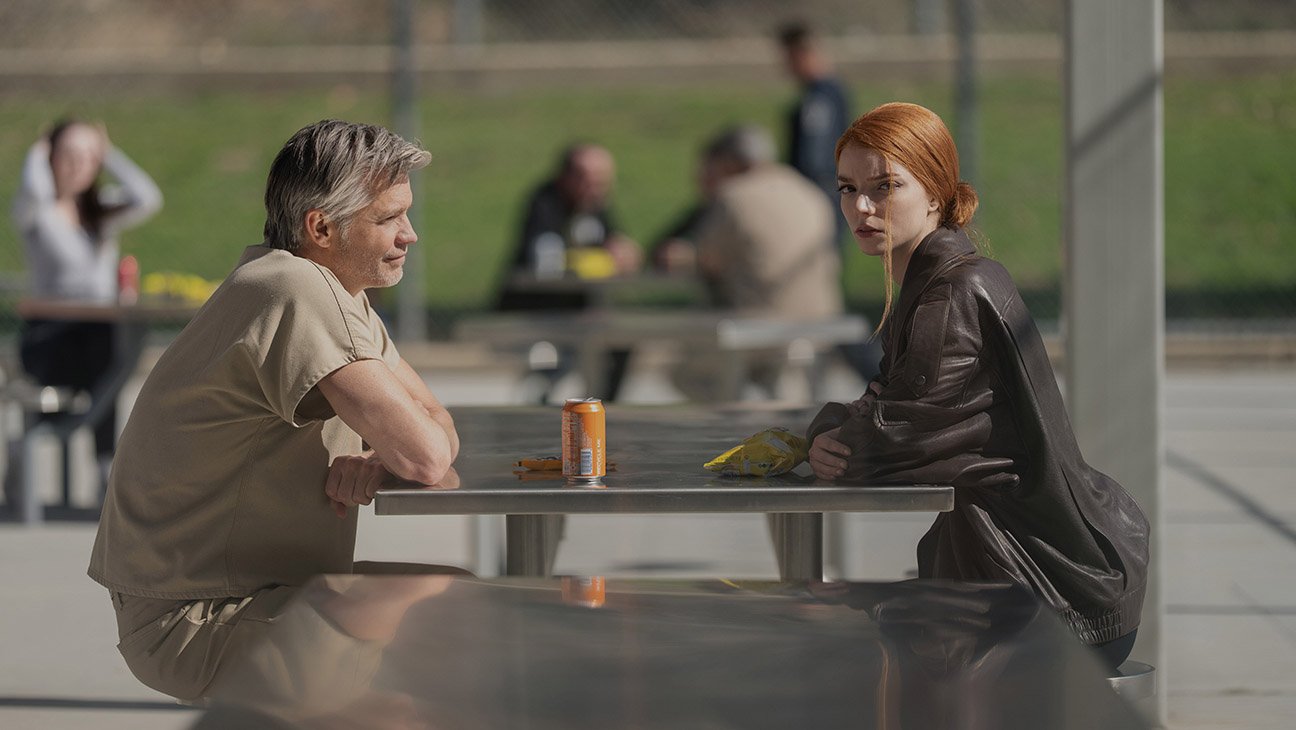
    Taylor-Joy plays Lucky, a young con woman semi-reluctantly raised into The Life by her now-incarcerated con man father, John (Timothy Olyphant).

    Lucky and hubby Cary (Drew Starkey) are enjoying one last night of revelry in Las Vegas before fleeing the country with a briefcase containing nearly $10 million in cash, money skimmed by her father from an elaborate scam perpetrated by his mother (Annette Bening‘s Priscilla) and a wealthy, shady big boss (William Fichtner’s Whittaker).

    What was that scam? Something stupid about oil. I’m not even sure if that’s the con I referred to above because it’s so amorphous. Who is the victim? Is it us? Does it matter? Is there something Tropper could have done involving price-fixing in the oil industry? Perhaps. Does he get anything at all out of that backdrop here? Nope.

    Anyway, after said night of revelry, Lucky wakes up alone. Did something happen to Cary or was Lucky the mark? It’s completely impossible to care, but things start moving so quickly that “caring” becomes immaterial.

    Almost immediately, Lucky is fleeing from Priscilla and her chief enforcer Dutch (Clifton Collins Jr.), and from a dogged FBI agent (Aunjanue Ellis-Taylor) determined to bring everybody down. Like Netflix’s hit Harlen Coben adaptation I Will Find You, it’s another triangulated search that allows or requires every piece of exposition to be delivered in triplicate, at the expense of what ought to be pretty clean “run or die” momentum.

    Anybody who has read the book will note that its primary plotlines involve Lucky’s search for her birth mother and her possession of a winning lottery ticket she knows she can’t cash because she’s a wanted woman for a scam tied to bilking senior citizens of their investment income. Every bit of that has been scrubbed, to the degree that I wonder why, if all Apple, Tropper and executive producers Reese Witherspoon and Hello Sunshine wanted to do was make a show about a reluctant con woman with a con man father, any source material was required at all. This is as much a remake of Paper Moon as it is an adaptation of Lucky, and it definitely isn’t that either.

    Tropper and the series seem to actively hate the lightness of the book, the idea that you can perpetrate frauds and still be a redeemable heroine, without having the necessary intellectual heft to complicate things in a meaningful way. Tropper’s Your Friends & Neighbors, imperfect as it is, does a lot of the same things only much better, and neither show approaches the level of viewer-challenging moral ambiguity of Tropper’s Banshee.

    Participating in television’s ongoing “everything is the wrong length” epidemic, Lucky, at seven episodes, is exactly the wrong length. Anything shorter and things would perhaps move fast enough for us to ignore how poorly developed every supporting character is; anything longer might have allowed for the story to feel fully inhabited by real characters, not plot catalysts played by overqualified performers.

    The series sets viewers up with a pilot that’s almost entirely a Run Lola Run-style pursuit, with Taylor-Joy’s Lucky weaving in and out of casinos and making various daring escapes, all while changing her hairstyle and look in ways that aren’t convincing given that Taylor-Joy is mighty distinctive. Still, it’s entertaining, and Taylor-Joy is having a blast playing a woman easily able to inhabit multiple personae, all while sneaking into and out of labyrinthine casino passageways and leaping across various trucks at a rest station. Jonathan Van Tulleken, who directed the first and last two episodes of the series, isn’t great at the lighter elements of the story, but he moves things along.

    Then there are a couple of episodes in which the pieces are navigated around the chess board — man, Lucky isn’t in the same league as Taylor-Joy’s last limited series, Queen’s Gambit — with repeated exposition and more outfit and hairstyle changes. Finally, the series closes with two episodes building to a climax in which every twist is precisely predictable.

    Wedged in-between is a fourth episode, directed by Jet Wilkinson, that includes both a bruising car chase through Long Beach playing San Diego and lots of characters yelling sanctimoniously at each other and underlining the line of dialogue that gives the episode its title — “Are We Bad People?”

    The answer would theoretically be “yes” and I would theoretically be fully game to have a show in which the main characters are constantly facing their imperfections. That’s good drama! But in Lucky, the characters are, mostly, barely characters, which makes it hard to invest in whether or not they’re “bad” or “good.”

    When Lucky and Cary shout at each other, it isn’t a fair fight because one is the main character in the series played by an exceptionally versatile actress and the other is some guy played by some guy (Starkey has been good in other things in the past, but Cary is a useless role).

    Priscilla and Whittaker yelling at each other is closer to a fair fight, since Bening and Fichtner are fine actors on comfortable footing. Still, he’s on slithery autopilot and she’s mostly there to evoke memories of The Grifters, which doesn’t work when the material’s sense of moral ambiguity is so much less refined than the murky pragmatism driving Stephen Frears’ classic. Thanks to Bening, it’s possible to go seven episodes without wondering why Priscilla is defined by her love of horses, her love of her boring, boring son (she at least knows he’s a waste of time) and nothing else. Priscilla is the series’ main antagonist and she’s a cipher brought very partially to life by a great actor.

    See also Ellis-Taylor, so solid and so intense that you barely realize the only things we know about Agent Rand are things other characters tell her about herself in clumsy fashion. Ellis-Taylor and Olyphant gave the recent Justified reboot season its beating heart and it’s disappointing that nobody on Lucky was able to capitalize on that chemistry for more than a scene or two. More frequently, Ellis-Taylor has to share her scenes with Mo McRae’s Agent Gates and with Eric Lange as her surly boss, and McRae and Lange are stuck with characters who might as well have been named “Generic Partner” and “Generic Boss.”

    Taylor-Joy and Olyphant are really the series’ standouts: the former because Lucky is an entertaining mix-and-match character, even if eliminating most of the the book’s flashback structure eliminates most of the depth to her character’s reluctance; the latter because both Olyphant and Tropper are smart enough to emphasize the imperfections in his slickly charming huckster archetype.

    But John isn’t much of a character either, and it’s hard to take this thin half-hearted “It’s tough to be the son or daughter of a career criminal/con man” meditation seriously. Or humorously. Or thrillingly. Whatever Lucky wants to be or thought it could be, it doesn’t come together as more than an uneven diversion with a super Fiona Apple theme song.

  • Robotaxi riders are falling asleep, sparking frantic 911 calls

    By Kara Carlson and Natalie Lung, Bloomberg

    Waking up in a Waymo comes as a shock.

    Ditto Kasendar remembers soft music drifting from the robotaxi’s speakers as he rode home late at night from a friend’s birthday party last year. The next moment, Los Angeles firefighters were opening the door and asking if he was OK.

    RELATED: Waymo car delivers misbehaving teen passengers to San Mateo police

    His six-minute trip had ended nearly an hour before. A remote Waymo assistant, dialing in through the car’s speakers, repeatedly tried to rouse him and finally called 911 when he wouldn’t stir.

    “I was like, ‘Oh my god, what happened?’” said Kasendar, 30, an interior designer.

    Kasendar’s robocab nap was, unfortunately, not an isolated incident.

    As companies like Alphabet Inc. and Tesla Inc. bring self-driving taxis to more cities, the messier aspects of serving unpredictable humans are becoming harder to ignore. Passengers are falling asleep, spilling drinks, dropping food, vomiting, experiencing medical emergencies and, in at least two instances, giving birth in the cars. They stumble out of the vehicles and forget to close the doors, forcing the operators to pay nearby gig workers to do it.

    These seemingly minor nuisances are becoming a drain on municipal resources and complicating the rollout of robotaxi service.

    So many robotaxi customers have nodded off in the midst of a ride that Austin police and firefighters even have a name for the incidents: “sleepers.” The Texas capital recorded 99 such calls in Waymo’s first nine months of service there, said Roger Patterson, a commander with Austin-Travis County Emergency Medical Services.

    RELATED: Waymos are convenient, safe and increasingly obnoxious

    If tired or wasted passengers fall asleep in a traditional taxi or rideshare, the driver can shout or shake them awake. Not so in a robotaxi. Remote assistants monitoring the cars try talking through the speakers and checking on passengers with interior cameras. But if they get no response, company protocols often require them to call 911. And first responders have to assume the worst.

    Austin dispatchers treat an incident as a potential heart attack if the remote assistant can’t tell whether the passenger is breathing, Patterson said. In the end, only about 3% of such calls require transporting the passenger to a hospital, he said. But the incidents tie up personnel who might be needed elsewhere.

    “We don’t want to commit a significant number of resources to these calls when, statistically, we know that most of the time, these people do not need further medical treatment,” Patterson told an Austin City Council meeting in April. “These calls are very resource-heavy.”

    For the cities involved, robotaxis can pose other problems that require a human response. In San Francisco, more than 60 Waymos had to be moved out of the way after a widespread blackout in December left the cars paralyzed on city streets, in some cases blocking first responders.

    Last week, the National Highway Traffic Safety Administration sent autonomous driving companies a letter saying some cars have been driving through emergency scenes, ignoring flares and traffic cones and obstructing ambulances. It urged the companies to find solutions and said the administration would set up meetings with them to ensure the problems are addressed.

    “When someone else is there to take on the responsibility, then that divests the company of a lot of incentives to do something,” said Bryant Walker Smith, an associate law professor at the University of South Carolina and expert on automated vehicle technology. “Local governments are massively subsidizing the research and development and operation of automated driving.”

    Tom Dwiggins, fire chief of a Phoenix suburb served by Waymo, said the companies need to standardize their procedures so first responders won’t have to guess how to immobilize vehicles, open car doors and contact remote assistants in an emergency.

    “We would love to see one standard approach across the board,” said Dwiggins, with the Chandler, Arizona fire department. “If you expect a firefighter in a four-minute response to look up research, try to figure out which vehicle it is, what type of platform it’s on, what company — that’s not going to happen.”

    Robotaxi companies don’t publicly report statistics on slumbering customers or mid-ride emergencies, making it difficult to gauge the scale of such problems. Most host cities aren’t in a rush to publicly discuss them, either. Officials in San Francisco, ground zero for the technology’s testing and deployment, did not disclose numbers despite repeated requests from Bloomberg, although Austin officials in a public meeting said San Francisco experienced 250 such incidents in 2025.

    The rollout of autonomous taxis, however, can at times resemble a vast social experiment, testing technology and people alike.

    Alphabet’s Waymo, Amazon.com Inc.-owned Zoox and Tesla have had to design incentives to keep passengers from trashing cars that lack a watchful human driver. Tesla, for example, charges users $50 for moderate messes such as food spills or significant dirt. Smoking or leaving biowaste behind costs $150.

    Waymo, meanwhile, prompts users to report their own spills, charging a $50 cleaning fee that jumps to $100 if the next passenger discovers the mess first. Repeat offenders — for trash and smoking violations — will be charged more, according to the company’s help page.

    “Life happens, which is why we have robust systems and trained professionals ready to support our riders and fleet when it does,” said a Waymo spokesperson. “Since Waymo is a shared space, we ask riders to treat the vehicles with respect and let us know if a car needs more attention so it stays clean and pristine for the next person.”

    The absence of a driver can lull passengers into thinking they can do whatever they want, unobserved. But the cars have internal cameras. Waymo’s remote team of support staff, for example, can access that footage to conduct cleanliness checks or if they detect unusual activity or rule violations.

    And someone will always find the mess. Waymos — all of them electric — return to their depots when they require charging, giving workers a chance to clean the cars. If they have to deal with any sort of biohazard, they are paid extra for the shift, one former contractor told Bloomberg News. A recent job listing for an autonomous vehicle cleaner posted by Moove, Waymo’s fleet partner in Miami, included “respond to biohazard incidents (vomit, blood, spills) per OSHA bloodborne pathogen protocol” as one of the job’s responsibilities. “Full PPE and training are provided,” the posting read.

    Social media show many passengers are willing to ride with some level of mess, even if it annoys them. They often post snapshots of the refuse, including beer cans, spilled fries, a half-eaten bowl — even cracked eggs.

    Sarah Vasile, a frequent Waymo rider in Los Angeles, has found trash and alcohol left inside some vehicles. Her roommate recently took a ride during which BuzzBallz rolled out from beneath the seat. Still, Vasile considers the robotaxis cleaner than most human-driven cabs or rideshares.

    Last year, Vasile realized she had stepped in dog poop just before her Waymo arrived. She hit the call button on the back screen of the car to report the issue to Waymo remote assistants, who thanked her and said the car would return to its depot after her trip was done. She wasn’t charged for cleaning.

    “It made me feel good knowing that they weren’t going to send the car to someone else,” she said.

    Preventing or cleaning filth, however, pales in comparison to the problems posed by medical emergencies en route.

    Waymo has a team of specialized, US-based agents dedicated to coordinating with first responders during incidents, according to the company’s written testimony to US Senator Ed Markey in February. Riders who experience a medical emergency can reach out to 911 directly or contact Waymo’s remote support staff via the in-car tablet. Zoox passengers can press the “emergency call” button located above them, on the screen, or on their app to connect with a support representative who will contact first responders as necessary, according to a company spokesperson.

    In December, a passenger in San Francisco on her way to the hospital even gave birth in a Waymo’s back seat. The remote assistant called to check on the rider and contacted 911 after the vehicle detected “unusual activity,” according to NBC News. That marked at least the second Waymo delivery, following a similar situation in Phoenix.

    David Margines, director of product management at Waymo, said the vehicles can offer a safer solution in emergencies than a traditional taxi or rideshare, whose driver may not know how to respond.

    For his part, Kasendar said the response to his accidental nap made him even more likely to use Waymo, which he rides about four or five times a week. It didn’t hurt that the experience ultimately did not cost him more than the original $8 fare, even with the added time.

    “It feels safer in a way,” Kasendar said. “With humans you don’t know what’s going to happen, but with Waymo you do know.”

    More stories like this are available on bloomberg.com

    ©2026 Bloomberg L.P.
  • Nordstrom Anniversary Sale 2026: The Top 20 Deals on Hollywood’s Most-Loved Labels

    Nordstrom Anniversary Sale 2026: The Top 20 Deals on Hollywood’s Most-Loved Labels

    If you purchase an independently reviewed product or service through a link on our website, The Hollywood Reporter may receive an affiliate commission.

    From discounted designer gems to the best of premium beauty, summer’s steepest savings have arrived courtesy of Nordstrom’s Anniversary Sale. Early access for the annual event opens on a rolling basis starting Tuesday, July 14 (more on this ahead), with public sale access between Saturday, July 18 and Sunday, August 9.

    Below, everything to know about the 2026 Anniversary Sale, including 20 of the most sought-after styles for this season and beyond.

    Nordstrom Anniversary Sale Dates and Early Access

    While the 2026 Nordstrom Anniversary Sale opens to the general public on Saturday, July 18, rewards members can enjoy early access as soon as Tuesday, July 14. Customers’ access dates depend on their membership tier in The Nordy Club, the retailer’s free-to-join loyalty program. Access dates for the 2026 sale are as follows:

    • Icons: July 14
    • Ambassadors: July 15
    • Influencers: July 16
    • Everyone: July 18

    Influencer status can be achieved either by opening a Nordstrom Credit Card or reaching a purchase balance of $500. Ambassador status is unlocked with a minimum annual spend of $5,000, and Icon status is achieved once reaching a minimum annual spend of $15,000 using your Nordstrom card. The sale ends for everyone on Sunday, August 9.

    Nordstrom Credit Card Benefits​ and Sign Up Bonus

    For those considering signing up for Nordstrom’s credit card, the Anniversary Sale is the most strategic time to do so. Card members get automatic Influencer status, which opens the sale’s early access window on July 16, two days ahead of general access. Additionally, through Aug. 9, new cardmembers will receive $60 off their next purchase.

    For beauty fans, Nordstrom is also offering cardmember-exclusive cosmetics savings of up to 30 percent on top brands like Dyson, Clé de Peau Beauté and Clarins. These Early Access Beauty Exclusives — only available July 18 — join Nordstrom’s larger collection of Anniversary Sale Beauty Exclusives, offered to all shoppers. Non-cardholders can apply for a credit card now at Nordstrom.com.

    Nordstrom Anniversary Sale 2026: Shop 20 Best Deals

    The darted, tapered-leg gives a subtle barrel jean effect.

    While Nordstrom’s fashion and beauty deals may first come to mind, homeware is a sleeper hit year after year.

    Transition from chilly summer nights to breezy fall days with Faherty’s trending rugby shirt, available in three striped varieties.

    No explanation needed.

    Hop on the animal print wave with four patterned variations of the limited-edition Nordstrom x Flabelus collab.

    If you haven’t already, it’s time to embrace the boar bristle brush. By distributing oils from roots to ends, these natural bristles are the secret to healthy, shiny hair, and Bur Bur’s version has gone completely viral for its chic wavy handle. For the best results, pair with the Detangling Mermaid Brush, also 30 percent off for a limited time.

    Nordstrom Anniversary Sale: the most acceptable time to splurge on cashmere socks.

    Prep for summer showers with Barbour’s water-repellent jacket, available in both olive and black.

    Therabody can do no wrong.

    Also available in pink stripe.

    A summer-friendly alternative.

  • Almost Friday’s Tyler Falbo to Direct R-Rated Comedy ‘Boys for Life’; Paramount Sets Theatrical Release Date (EXCLUSIVE)

    Almost Friday’s Tyler Falbo to Direct R-Rated Comedy ‘Boys for Life’; Paramount Sets Theatrical Release Date (EXCLUSIVE)

    Tyler Falbo, a writer, director and producer known for his shaping the viral comedy videos of sketch group Almost Friday, is helming an R-rated comedy movie for Paramount.

    Titled “Boys for Life,” the film will be released theatrically on April 9, 2027, under Paramount’s newly announced Primal label. While few plot details are available, Variety hears it is an ensemble comedy about a group of friends reuniting — with a twist.

    “Boys for Life” is currently in production. Paramount acquired the project in a competitive situation that also involved A24 and Warner Bros., Variety hears. Falbo serves as director and producer, and he co-wrote the script with Max Barrett. Galen Core also serves as producer.

    As its de facto showrunner, Falbo is credited with driving the dark, genre-bending humor of “Almost Friday TV,” the sketch comedy arm of the Los Angeles-based digital media company that launched Will Angus, Eilise Patton and other rising talent into the comedy scene. Falbo is also attached to direct “Last Night Was a Movie,” his TV project starring Almost Friday cast members that’s in development at FX.

    Co-writer Barrett is the creator of Friday Beers and co-founder of Almost Friday Media, who, in 2020, formed the company’s original sketch comedy crew of Liam Cullagh, Angus, Chet Collins and Billy Langdon.

    The project hails from Paramount Primal, which will focus on “smartly budgeted” films from “next-generation storytellers” across comedy, horror, action and grounded science-fiction. The label recently acquired the U.S. rights to adapt the original screenplay for “A Nightmare on Elm Street” from the Wes Craven estate.

    Falbo is represented by Range Media Partners, UTA and Ziffren Brittenham. Barrett is represented by Mosaic, Fox Rothschild and WME.

  • Christopher Nolan Crammed Inside Trojan Horse With 20 Actors to Shoot Pivotal ‘Odyssey’ Scene

    The Odyssey world tour landed in New York City on Tuesday night, shutting down Lincoln Square for a star-studded red carpet accompanied by soldiers and a massive Trojan Horse.

    The 40-foot statue is much more than just a prop to promote the film, as it also plays a pivotal part in the story — Odysseus (played by Matt Damon) and his men hide inside for their secret attack to win the Trojan War, before they begin their long and treacherous journey home. Christopher Nolan and his team built the horse — along with many other major set pieces — practically for the film, and even saw the director himself climb inside.

    John Leguizamo, who plays Odysseus’ trusted friend Eumaeus, told The Hollywood Reporter on the red carpet that he first saw the Trojan Horse when “I was looking for Chris Nolan to meet him, and they told me he was inside the horse with 20 actors and the DP [Hoyte van Hoytema] and the IMAX camera. I couldn’t believe that. I was like, wow, this man is a leader. This man is not going to ask anything of you that he doesn’t attempt himself.”

    Charlize Theron, Samantha Morton, John Leguizamo, Tom Holland, Matt Damon, Anne Hathaway, Lupita Nyong’o, and Zendaya at the New York premiere.

    Mike Coppola/Getty Images for Universal Pictures

    Damon — who walked the NYC carpet alongside fellow stars Tom Holland, Anne Hathaway, Zendaya, Charlize Theron, Lupita Nyong’o, Elliot Page and Jon Bernthal — has also spoken about shooting the Trojan Horse sequence during the press run, telling GamesRadar+ that Nolan didn’t have a plan on how they would film it until the day of.

    Damon said that Nolan told the group they were “just going to cram in there and figure it out,” as the star recalled “that feeling of claustrophobia, that was all just developing organically… Hoyte was looking through the lens, and Chris was right next to him. They just built that in real time. It was so cool to see. If we had planned it out, I don’t think it would have had that same energy.”

    The original horse from the film is currently on display outside the AMC Theater at Universal Studios Hollywood’s CityWalk. The Odyssey hits theaters on Friday.

    Michaela Zee contributed to this report.