Author: rb809rb

  • Bitcoin, stocks rise, oil slides, after report of Iran’s willingness to end conflict

    Bitcoin, stocks rise, oil slides, after report of Iran’s willingness to end conflict

    Bitcoin rose alongside U.S. stocks after Iran’s President Masoud Pezeshkian reportedly said the country would be prepared to end the conflict if it receives security guarantees.

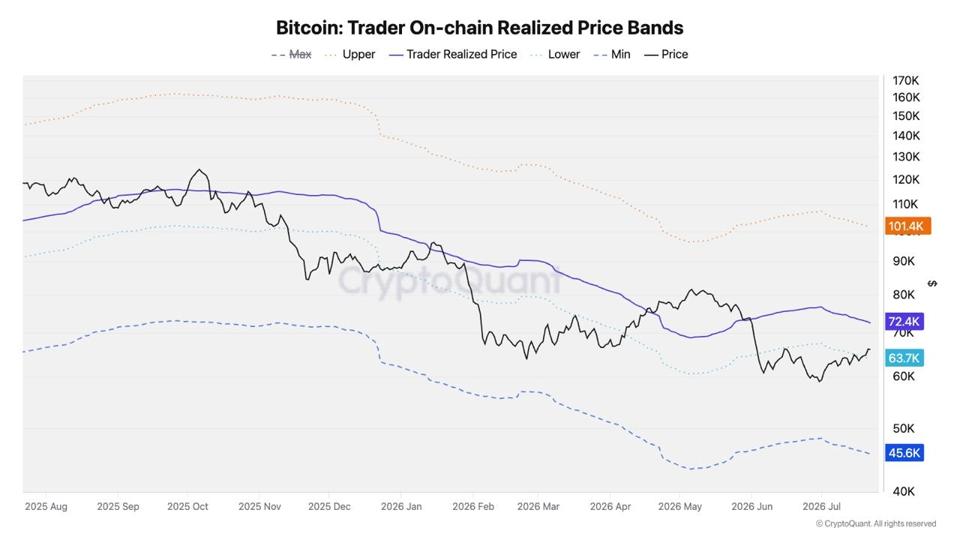
    The crypto asset was trading at $67,762, up nearly 2% over the past 24 hours. The Nasdad about doubled its gain on the news, now higher by 3.1%. WTI crude oil, meanwhile, tumbled from just shy of $105 per barrel to $102.

    Pezeshkian’s unconfirmed remarks are raising the prospect of a diplomatic off-ramp, easing fears of a wider conflict that could disrupt oil flows, fuel inflation and continue to rattle global markets.

  • Netflix’s ‘Age of Attraction’ Renewed for Season 2

    Netflix’s ‘Age of Attraction’ Renewed for Season 2

    Netflix has given a second season renewal to Age of Attraction after the dating reality series strongly hooked with viewers after a March 25 rookie season wrap.

    The premise for Netflix’s latest dating series ignores birthdates as Romeo and Juliet rely on sparks and compatibility for a connection before finally revealing their ages in the the so-called Promise Room.

    “Age of Attraction throws age out the window as singles search for their soulmates—but will the years come between them? In this reality dating series, connections are put to the test as participants navigate chemistry, life stages, and the question of whether love is truly ageless,” reads a synopsis from producers Velvet Hammer Media.

    But while age may or may not matter to the daters, Netflix has noticed audience numbers as its second season renewal follows Age of Attraction making it into the streamer’s English TV Top 10 and reaching the Top 10 in 26 countries after premiering on March 11.

    “We love concepts that are impossible to look away from and Age of Attraction nailed that from day one. It’s messy, it’s real and that’s what makes it fun to watch. Huge thanks to Netflix for embracing this dating experiment with us. The response has been incredible, and we’re excited to push it even further in season two,” Jennifer O’Connell and Rebecca Quinn, executive producers and co-founders of Velvet Hammer Media, said in a statement.

    The dating series, hosted by Nick Viall and Natalie Joy, is also executive produced by Sam Dean and and David Friedman. Age of Attraction continues Netflix’s audience success with dating series like Single’s Inferno, Perfect Match, Love is Blind and Too Hot to Handle.

  • Dan Levy Didn’t Love It When People Asked “What Are You Doing Next?” After ‘Schitt’s Creek’ Ended

    What’s the opposite of a mistake? That’s what Netflix pulled off Monday night by taking over L.A.’s hottest restaurant, Max & Helen’s on Larchmont Avenue, for an intimate introduction of the streamer’s new crime comedy series Big Mistakes.

    A typical wait to snag a table at the neighborhood diner by Nancy Silverton and Phil Rosenthal still stretches well past an hour (if not closer to two) but with Netflix taking over the host stand for the private tastemakers event, influencers, stars and select press breezed inside only to sprint toward a generous spread of Max & Helen standouts on the diner counter. The menu featured grilled cheese, tallow fries, sourdough waffles with maple butter, beef hot dogs, BLTs, cinnamon rolls and Silverton’s famous chocolate chip cookies, some with custom names to match the show’s characters and plot (like Trusted Accomplices, Sweet Regrets and Pour Decisions).

    Bites aside, the main attraction was a delicious conversation between creators Dan Levy and Rachel Sennott. But even they acknowledged the feat of grabbing a seat. “Guys, how happy are we that we all finally got in here?” Sennott asked in kicking off the nearly 40-minute chat before praising the waffle while Levy called the grilled cheese one of the best he’s ever had in front of a crowd that included Dylan Efron, Grimes, Kerri Kenney-Silver, Lisa Rinna and Harry Hamlin, Natasha Lyonne, Sarah Levy, Zoe Lister-Jones and others.

    Though they shared duties on creating the show, Sennott was tasked with moderating the Q&A and asking Levy about how he pulled off show running, executive producing and starring in the eight episode series, which marks his first under an overall deal with Netflix for his Not a Real Production Company. But Big Mistakes marks his second original scripted series after Schitt’s Creek, the cultural phenomenon that lasted six seasons and won four Emmys at the 2020 ceremony including best comedy series.

    Big Mistakes follows Nicky (Levy) and Morgan (Taylor Ortega), two deeply incapable siblings who are in over their heads when a misguided theft for their dying grandmother accidentally pulls them into the world of organized crime. Blackmailed into increasingly dangerous assignments, they clumsily fail upwards, sinking deeper into chaos they’re ill-equipped to handle. Laurie Metcalf, Jack Innanen, Boran Kuzum, Abby Quinn, Elizabeth Perkins, Jacob Gutierrez, Joe Barbara and Mark Ivanir also star.

    Sennott and Levy share the stage.

    (Photo by Emma McIntyre/Getty Images for Netflix)

    Sennott used Schitt’s Creek as a jumping off point for her first question by asking Levy how he came up with the idea for a crime caper coming off this “amazing, huge, successful and award-winning show.”

    “Well, a lot of time had to pass,” Levy answered. “When the show ended, there was this immediate conversation of, like, ‘What are you doing next?’” Turns out he didn’t love that question, calling it “a horrible way of doing business.

    “God forbid I nap,” he quipped. “For me, it was like, I needed to take a minute because I knew what the show meant to me and I knew what it meant to other people. And having a show of your own, you’re so proud of what you make and if you’re lucky enough to get, in our case, six seasons of a TV show, you walk away from that really proud of what you’ve done. To jump into something else, it almost does the new project a disservice because you’re constantly going to be comparing it to the one that came before. So, I needed the dust to settle.”

    While that dust settled, Levy wasn’t exactly staring at the wall eating grilled cheese. He kept busy with other projects, creating and hosting the HBO Max series The Big Brunch, acting in projects like The Idol (with Sennott), Sex Education, Curb Your Enthusiasm, Smurfs, Unfrosted and Haunted Mansion. He also wrote, directed and starred in Good Grief, a Netflix film about grief and friendship. But he eventually turned his attention toward creating another comedy series by asking himself a question: What scripts am I not reading?

    “Like, he’s gay. He’ll never play in an action movie,” he said of challenging himself to play against stereotypes. “So, I was, like, let’s do action. And let’s make it funny and let’s create a kind of genre that is both funny and thrilling and suspenseful and fun. I have always had a phobia of being blackmailed into organized crime. Don’t ask me why. I think it stems from a fear of being trapped.”

    That developed further into an idea involving family dynamics, which he explored to award-winning results in Schitt’s Creek. “Well, why don’t we tell a new family story? And I knew I wanted it to be a brother-sister dynamic and you’re the only person I wanted to work on this with.”

    They had formed a bond on HBO’s The Idol — when Levy mentioned the show’s title, Sennott jokingly said, “I remember that” and did not elaborate — despite their brief time together. “We only spent four days together, but I’ve been madly in love with everything you’ve ever done and I respect the hell out of you,” Levy explained. “I remember pitching you the idea and being like … So anyway, I thought like maybe we could collaborate on this and you were like, ‘I’m in.’”

    Levy said they spent six months writing Big Mistakes together over Zoom, eventually getting together in person for about five days. They hammered out the pilot during a single day. “We got so much coffee, too, I remember, and I brought my weird granola bars to your house. But I just felt so inspired,” Sennott said. “And then we got towards the end of the day and we started playing music.”

    Sennott said she was impressed and inspired by Levy’s influences and his detailed research of small town folk who found themselves blackmailed into organized crime. (She also loved his use of Katy Perry’s “Firework,” which Levy said they miraculously got cleared for use on the show.) To give the show an authenticity, they collaborated with a crime expert. “Having a professional is so helpful,” Sennott said. Levy finished the thought: “Not only did he say, ‘Yeah that’s plausible but here are three other ways this person could die.’ And you’re, like, ‘Well, I didn’t think of that but now that’s on the table.”

    What Levy left off the table are bad manners. “The family ensemble is tough, too, because you want the right people for the job and part of it is the gut instinct of, ‘Do I like this person?’ Do I want to spend a long period of time with this person? Are they generous of spirit? Are they able to leave their ego at the door? Are they going to be disruptive on set?’ Even if that person is right for the job, if I get a whiff that they’re going to just make people’s lives a living hell on set, I will not hire the person. It is not worth It.”

    It’s clear from the conversation that Levy came to Big Mistakes not wanting to make any of his own.

    “I knew I wanted it to feel cinematic. I knew I wanted the score to be really intense and it was really just about tempering performances and making sure that we were earning our laughs and making sure that when the crime hit and the tensions were high and the thrills were there, that we went there,” he said as the conversation wrapped up. “How would you, in the darkest depths of your soul, react to this? Because that’s the greatest connection that the audience will have to this show, hopefully, like, what would I do?”

    Find out when Big Mistakes debuts April 9 on Netflix. See more from inside Max & Helen’s on Monday night below.

    Natasha Lyonne, Zoe Lister-Jones, Rachel Sennott and Grimes

    (Photo by Emma McIntyre/Getty Images for Netflix)

    Levy and Phil Rosenthal

    (Photo by Emma McIntyre/Getty Images for Netflix)

    Dylan Efron

    (Photo by Emma McIntyre/Getty Images for Netflix)

    Harry Hamlin, Levy and Lisa Rinna

    (Photo by Emma McIntyre/Getty Images for Netflix)

    A custom Big Mistakes menu at Max & Helen’s.

    (Photo by Emma McIntyre/Getty Images for Netflix)

    The food spread including a cheeseburger deluxe, beef hot dogs, a BLT and tallow fries.

    (Photo by Emma McIntyre/Getty Images for Netflix)

    The sought after waffles with maple butter and a tray of chocolate chip cookies.

    (Photo by Emma McIntyre/Getty Images for Netflix)

    Atmosphere inside featuring framed stills and behind-the-scenes images from Big Mistakes.

    (Photo by Emma McIntyre/Getty Images for Netflix)

    Dan Levy and Sarah Levy

    (Photo by Emma McIntyre/Getty Images for Netflix)

    Samuel Arnold and Renan Pacheco

    (Photo by Emma McIntyre/Getty Images for Netflix)

  • Eli Roth’s Slasher ‘Ice Cream Man’ Sets August Release Date

    Eli Roth’s Slasher ‘Ice Cream Man’ Sets August Release Date

    Ice Cream Man,” the next horror film from director Eli Roth, will hit theaters during the dog days of summer. It will be released on Aug. 7 in 2,000 North American venues.

    The slasher takes place in an idyllic summer town that descends into madness when an ice cream man serves kids from his truck with horrifying results. “Ice Cream Man” stars Ari Millen (“Orphan Black”) as the eponymous deliverer of sweet treats, along with Benjamin Byron Davis (“Guardians of the Galaxy 3”), Dylan Hawco (“Heartland”), Kiori Mirza Waldman, Charlie Zeltzer (“The Handmaid’s Tale”) and Sarah Abbott (Netflix’s “The Body”). Karen Cliche, Shiloh O’Reilly and Charlie Storey, who were in Roth’s prior slasher “Thanksgiving,” also appear in “Ice Cream Man.”

    “Ice Cream Man” is Roth’s first film under The Horror Section’s banner, following the company’s launch in March 2025. A horror mainstay, Roth is the director of scary movies such as “Cabin Fever,” “Hostel,” “The Green Inferno” and “Knock Knock.” He was also behind 2018’s “Death Wish” remake starring Bruce Willis, as well as the PG family film “The House With a Clock in Its Walls,” featuring Jack Black and Cate Blanchett.

    Roth will also produce and co-write the script for “Ice Cream Man” with his long-time collaborator Noah Belson. Snoop Dogg will contribute music to the film. Rap icon Nas will serve as executive producer through The Horror Section’s new strategic partnership with his Mass Appeal outfit.

    In addition to “Ice Cream Man,” The Horror Section’s upcoming slate includes “Don’t Go in That House, Bitch!” starring Snoop Dogg.

  • ‘Supergirl’ Star Milly Alcock Says ‘I Really Can’t Stop’ Backlash and Understands Why Scorsese and Ridley Scott Criticized Superhero Movies: ‘Not Every Film Is for Everyone’

    ‘Supergirl’ Star Milly Alcock Says ‘I Really Can’t Stop’ Backlash and Understands Why Scorsese and Ridley Scott Criticized Superhero Movies: ‘Not Every Film Is for Everyone’

    Milly Alcock told Vanity Fair in a new interview that she’s aware she’ll face backlash over leading Warner Bros. “Supergirl” simply because she’s playing a female superhero. The 25-year-old actor is no stranger to dealing with intense fandoms having broke out as young Rhaenyra Targaryen in the first season of HBO’s “Game of Thrones” prequel series “House of the Dragon.”

    “It definitely made me aware that simply existing as a woman in that space is something that people comment on,” Alcock said. “We have become very comfortable having this weird ownership of women’s bodies. I can’t really stop them. I can only be myself.”

    Alcock debuted as Supergirl in a cameo in last year’s “Superman,” which launched James Gunn and Peter Safran’s new DC Universe on the big screen. This summer’s “Supergirl” is the next movie up for the franchise. Alcock told Vanity Fair that she swore off doing a big franchise after completing work on “House of the Dragon.” She changed things up considerably starring opposite Julianne Moore in Netflix’s “Sirens” limited series, but then she couldn’t find work for an entire year.

    “I was so shit-scared that my life was over at 22. And, of course, it wasn’t,” Alcock said about the career anxiety that settled in and made the chance to audition for “Supergirl” all the more favorable. “I kind of bullied myself into it.”

    Vanity Fair also asked Alcock about legendary directors such as Martin Scorsese and Ridley Scott speaking out against the superhero genre. Scorsese infamously compared comic book movies to theme park rides when talking about the worrisome state of film exhibition, while Scott said superhero movies are “boring as shit” and “they aren’t any fucking good.” Alcock does not seem to mind.

    “I get it. They’ve been around for fucking ever making phenomenal films,” she said. “Not every film is for everyone. The beauty of art is that you can be selective.”

    Warner Bros.’ “Supergirl” synopsis reads: “When an unexpected and ruthless adversary strikes too close to home, Kara Zor-El, aka Supergirl, reluctantly joins forces with an unlikely companion on an epic, interstellar journey of vengeance and justice.” The movie also stars Matthias Schoenaerts as Krem of the Yellow Hills, David Krumholtz as Supergirl’s Zor-El and Jason Momoa as the alien mercenary Lobo.

    “Supergirl” opens in theaters June 26. Head over to Vanity Fair’s website to read Alcock’s interview in its entirety.

  • DoorDash partners with Rivian spinoff Also for autonomous delivery vehicles

    DoorDash’s autonomous delivery plans will get an assist from the Rivian spinoff Also. On Tuesday, the companies announced a strategic partnership in which the delivery company will invest in Also. They intend to “develop and accelerate deployment of autonomous delivery at scale.”

    The companies didn’t specify which micromobility vehicles will be used. Also, which Rivian spun off as a separate company in 2025, is currently focused on models that combine pedals and motorized assist.

    Also’s first commercial product is the $3,500 TM-B e-bike with a virtual drivetrain. Seemingly more tailored to DoorDash’s needs is the TM-Q. This four-wheeled EV is designed to haul cargo while still fitting in bike lanes. (Have fun with that, cyclists!) The larger (commercial) version, pictured below, looks like it could haul quite a few food orders at once.

    Two Also TM-Q EVs. One is fitted with a large enclosed storage cabin. The other shows the narrow device without any attachments.

    The TM-Q with its most robust modular storage cabin (left) and without any attachments (right) (Also)

    In a statement, Also co-founder and president Chris Yu said the partnership will deploy autonomous vehicles in “areas not yet fully solved for.” These include “the intersection of roadways, bike lanes, and road adjacent spaces.” In October, Amazon agreed to buy thousands of TM-Q vehicles for last-mile deliveries.

    As part of the deal, DoorDash co-founder Stanley Tang will join Also as a board observer. TechCrunch reports that the partnership boosts Also’s valuation to above $1 billion.

  • Why 12 European banks are teaming up to save the euro from digital dollarization

    Why 12 European banks are teaming up to save the euro from digital dollarization

    Europe risks losing control of its financial future to the U.S. dollar unless it brings the euro onto blockchain rails, according to Jan-Oliver Sell, CEO of bank-backed stablecoin project Qivalis.

    The warning reflects the growing concern among European banks and policymakers that the next phase of global finance, increasingly built on blockchain infrastructure, is being dominated overwhelmingly by dollar-pegged stablecoins such as Tether’s USDT and Circle’s USDC.

    “If we don’t have a euro onchain with depth of liquidity, then the only alternative is the U.S. dollar,” Sell told CoinDesk. “That’s a real risk to Europe’s financial and digital sovereignty.”

    Stablecoins are no longer just crypto. They are now at the core of financial systems globally with a market capitalization of roughly $314 billion currently but could rise to anywhere between $800 billion and $1.15 trillion in the next five years, according to a recent Jeffries calculation.

    In traditional finance, the euro accounts for roughly 20% to 25% of global activity, making it the world’s second reserve currency, Sell said. Onchain, however, its presence is almost nonexistent.

    “In the blockchain space, the euro makes up about 0.2% of transactions,” Sell said. “That’s a huge disconnect.”

    Top 12 EU banks vying for stablecoin dominance

    Qivalis, backed by a consortium of 12 major European banks including ING, UniCredit and BBVA, is attempting to close that gap by issuing a MiCA-compliant euro stablecoin.

    The project is targeting a launch as soon as regulatory approval is secured, with Sell pointing to the second half of the year as a goal, depending on licensing timelines with the Dutch central bank.

    Sell said the consortium aims to build the “default” euro-denominated token for global crypto markets, effectively creating a European alternative to dominant dollar stablecoins.

    “We want to be the main issuer of euro stablecoins globally,” he said. At its core, Qivalis is positioning itself as infrastructure rather than just a token. “We’re building the interface between blockchain and the euro,” Sell said. “It has to be available wherever the use cases are.”

    Qivalis is designed to address a key issue that has held back euro stablecoins so far: fragmentation.

    “A couple of banks trying to issue their own coins just fragments the space further,” Sell said. “Bringing institutions together creates the distribution and liquidity needed to make it usable.”

    Not the ECB’s digital euro

    The project comes as the European Central Bank (ECB) continues work on a digital euro it aims to release no earlier than 2029, but Sell said the two efforts are fundamentally different.

    ECB President Christine Lagarde recently said the bank had finalized its part of the central bank digital euro and it was now up to political institutions to act. The project, which aims to create a public digital means of payment, is under review by the European Council and the European Parliament.

    Qivalis will issue a private, MiCA-regulated stablecoin, while the ECB’s plans rely on centralized infrastructure.

    “We don’t see it as competition,” Sell said. “It’s an enhancement of the same financial stack.”

    He described a “monetary stack” in which central bank money sits on centralized systems, while blockchain-based use cases, such as cross-border payments and onchain settlement, require a euro-native asset on public networks.

    “At the moment, if you want to operate onchain, you’re effectively forced into the dollar,” he said.

    A race against dollar dominance

    The urgency behind the project is tied to how quickly financial activity is shifting toward blockchain-based systems — from crypto trading to global payments and decentralized finance.

    Qivalis is betting that a bank-backed, regulated approach can compete with incumbent dollar stablecoins by building liquidity and integrating across exchanges, custodians and DeFi platforms.

    “We’re looking to build that entire ecosystem around the euro onchain,” Sell said.

    Part of the challenge is not just issuing the token, but creating demand in markets where dollar stablecoins are already deeply embedded.

    Sell pointed to currency risk as one reason euro-denominated alternatives could gain traction.

    “If you’re a European user earning yield in dollars, you’re also exposed to FX risk,” he said, noting that exchange rate moves can offset returns.

    A question of financial sovereignty

    As more financial activity moves onto blockchain rails, the absence of a widely adopted euro stablecoin could leave Europe structurally dependent on dollar-based infrastructure.

    “One of the risks is that as more activity moves onchain, if there’s no usable euro, then everything just happens in dollars,” he said.

    “We’re looking to build a cornerstone of European digital autonomy. If we don’t have this, we will face dollarization.”

    The goal, he added, is not to replace the dollar outright, but to ensure the euro remains competitive in a rapidly evolving financial system.

    “It’s about putting the euro back in its place as the second global reserve currency in this space as well,” Sell said. “It’s about putting the financial future back in our hands as Europeans.”

  • ‘Paradise’ Stars Julianne Nicholson and Thomas Doherty Had the Same Questions as You About That Season 2 Finale

    [This story contains MAJOR spoilers from the Paradise season two finale, “Exodus.”]

    Julianne Nicholson didn’t know Sinatra’s fate when she first signed on to play the villain of Paradise. Creator Dan Fogelman likes to keep some mystery even among the cast, so the actress didn’t find out that Sinatra was going to sacrifice herself until they started production on season two.

    “Going down with the ship, quite literally and visually, it’s pretty astounding,” Nicholson tells The Hollywood Reporter in the conversation below with Thomas Doherty, who plays Link/Dylan.

    You can now perhaps call Doherty her onscreen son — as that revelation was dropped in the season two finale, titled “Exodus,” before Sinatra stayed behind to destroy the bunker she helped create, dying in the process. Paradise answered season two’s big looming question — Who is Alex? — by revealing that “Alex” is a quantum computer that is designed to play with time. When Sinatra meets Doherty’s character — who had been going by the nickname Link until now — she believes that he is her son, who died as a child, and that his existence is proof that Alex works.

    “You have to believe in the story — and then go get your PhD in quantum physics and it will all make sense,” says Nicholson with a laugh. “But Samantha believes that Link/Dylan is her son, so that’s what I had to hold onto.”

    Below, the co-stars share what the writers explained to them about the AI quantum computer named Alex that will steer Paradise into season three, now that Sterling K. Brown‘s Xavier has been tasked with going to find Alex and saving the world, while Nicholson shares how she’s processing that moving goodbye to Sinatra after two seasons: “She kind of breaks my heart.”

    ***

    Now knowing the connection between you two, did you have a chemistry read before Thomas was cast? Julianne, were you involved in his casting? You two look alike. 

    JULIANNE NICHOLSON No, we didn’t know that. Dan [Fogelman, creator] did the casting. But that’s the feedback we’ve been getting!

    THOMAS DOHERTY People keep saying it’s our eyes. 

    How much did you know once he was cast about this Link/Dylan role and how it would connect to Sinatra by the end of the season?

    NICHOLSON I don’t think I knew right away. I probably knew two or three episodes in what was coming down the road. But then it was trying to make sense of that. How does that work? Which I’m still trying to figure out. (Laughs.)

    DOHERTY And then [the writers] try and explain it to you, and it just makes it worse. It’s all quantum physics and mechanics and stuff. 

    What was your casting story, Thomas?

    DOHERTY I wasn’t even going to do the audition. I was a huge fan of Paradise, and then we got the breakdown for the character, and it said, “Burly man.” I don’t generally fall into that category or description. (Laughs.) But, I was burly enough! It was really, really quick. I auditioned a few times in New York. Then I flew out to L.A. to meet with Dan and John [Requa] and Glenn [Ficarra], who directed the first two episodes and who are producers as well. Then I got told that Shailene [Woodley] was going to be playing Annie. I got the job on a Thursday. By Monday, I had moved to LA. 

    I had a week in L.A. to prepare, but Shailene went into fittings on Wednesday and started shooting on Friday. It was really, really quick.

    Nicholson as Sinatra saying goodbye to Thomas Doherty as Link/Dylan in the finale.

    Hulu

    Did you have the full scope of your character?

    DOHERTY No. You have to go to Dan and be like, “Please tell me!” So he told me. He gave me a general idea of the direction that it was heading, which is amazing and quite rare in television. A lot of the time, they haven’t even written the scripts while you’re filming. So that was really good to know directionally where I was going to go.

    The beginning of the season did dabble in the time and space realm with those memory flashes. Were you playing that straight in the beginning, where it could be effects from the blast or from radiation, or were you leaning into the Alex of it all?

    NICHOLSON I had no idea. The nose bleeds and all those things were a complete mystery to me. It wasn’t until further into the episodes that it started to make sense in terms of alternate timelines, and when people come into your life —  you know, the mind of Dan Fogelman. 

    I looked back on the conversation I had with you, Julianne, and Dan Fogelman after the season one finale, and he confirmed you were not dead after that finale and that you would be in season two, but you didn’t know what that was going to look like. He said he threw some big things at you right before our interview. Did he bring up Alex before our chat?

    NICHOLSON Yes. Pretty much. He threw out the idea of Alex but also said, “Don’t say anything” — as I’m reeling and trying to make sense of it myself. (Laughs.)

    When did you understand her full arc, and when did he tell you about her fate?

    NICHOLSON Pretty early on in the season. The scripts hadn’t been written yet, but I knew how it was going to end and I loved it. Because I feel that Sinatra’s been a little bit misunderstood, and people have been a bit harsh on her. She’s deserved it in some regards. But giving her that humanity and that ultimate generosity was something I loved. I love her, so for her to have that as the way of saying goodbye felt really big and moving. Going down with the ship, quite literally and visually, it’s pretty astounding.

    Did you know Sinatra was a two-season role from the start?

    NICHOLSON No, I didn’t know. Dan likes to keep a little mystery around for everybody; keep everybody on their toes. But I didn’t need to know. I was very happy to take it as it comes and trust that whatever storylines Dan was coming up with was going to be the right thing for the show and the characters. 

    She was more of a villain, I would say, in season one. She finds her humanity more in season two, and seems more recognizable to the person we saw in flashbacks. What was that like for you to uncover more layers to her, and how do you feel about her in the end when you think about her? 

    NICHOLSON I find her whole storyline so genuinely moving. To be able to explore those different colors of a person’s life and to flesh those out was so fun. She kind of breaks my heart, actually. Dan is so good being in the gray area, which is like being a person. We’re not all good. We are not all bad. Obviously, these are extreme circumstances. But I thought Dan did a great job, and I loved doing those last scenes with Sterling and finding that closure. 

    DOHERTY You’re also so good. Something in your eye changes, and it’s almost like she goes from Sinatra to Samantha. 

    “Alex,” pictured here, was revealed to be a quantum computer in the finale.

    Hulu

    When you started getting scripts for the final two, and given this era of AI that we’re currently in, what did you make of Alex? Did she feel too realistic, in an unnerving way? What was your reaction? 

    DOHERTY For a long time, we discussed just trying to understand it!

    Right, a quantum computer that does… what? 

    DOHERTY Exactly. 

    NICHOLSON “So, how is he my son? Somebody explain that to me?”

    Did you get it explained? Can you explain it to us? 

    NICHOLSON Yes, it was explained to me a few times, but if you start getting literal, the whole thing goes down the toilet. So you have to believe in the story — and then go get your PhD in quantum physics and it will all make sense. If you hold onto a detail, the whole thing falls apart. You have to give some grace, and just believe it. Samantha believes that Link/Dylan is her son, so that’s what I had to hold onto. 

    What I was holding onto was Dylan’s reaction when Sinatra called him her son. He didn’t look at her like she was crazy. He looked at her almost with recognition. Can you talk about how you played that scene?

    DOHERTY It was that panic. He was bombarded with so much information in that hallway — hearing that you’re my mother, that Annie [Shailene Woodley] was pregnant and has a child, and I have a child, and Annie’s dead. That all happened in a minute. I played it as very, very overwhelmed, but it wasn’t a denial. He built Alex. Link created Alex with the professor and someone stole her. So I think because of Link’s knowledge of Alex, it’s completely feasible and he understands. I like to think there were moments of him thinking about possibilities that this could exist, and be a reality. 

    Did you have sit downs before these final scenes, where you would have lessons in quantum physics or debates about what was happening? 

    NICHOLSON There’s always at least one writer on the set, so daily, we would have check-ins and say, “Ok, explain that to me?” And they would explain it so clearly, and it made so much sense that you were like, “Okay. I’ve got it.” Then if you try to describe it to somebody else, or explain how this could possibly be, it’s like sand through the fingers. It sort of falls away. 

    DOHERTY You’re right, you have to just believe. You have to trust and believe. It’s kind of an unusual thing. I’ve never had to do that before [in acting]. 

    It gives Baby Annie a different layer of importance in this world. Do you have any idea about season three?

    DOHERTY I have no idea about season three. 

    NICHOLSON I have literally heard nothing. So I’m not quite sure. 

    [Note: Paradise was officially renewed for the third and planned to be final season after this interview.]

    Heading into season three, Sterling K. Brown’s Xavier (left, pictured with Doherty’s Link and Baby Annie) was tasked with saving the world, and going to find Alex.

    Hulu

    In your final move as Sinatra, you task Xavier with saving the world. It seems like Dylan will have a role in that. What excites you about hypothetically teaming up with Sterling K. Brown to go and save the Paradise world?

    NICHOLSON I’m imagining you guys flying around the world, popping into places and solving crimes. 

    DOHERTY Yeah, we’ll have a spinoff show. (Laughs.) But that would be amazing. I didn’t really get a lot of onscreen time with Sterling, and I’d love to love to work more intimately with him. So that would be awesome [if that happens]. And then, hypothetically, with Baby Annie, to play out as well.

    Julianne, what was the final scene that you filmed?

    NICHOLSON My very last day was that stuff with Sterling down the hallway when we have our goodbye. We filmed me walking through the ruins a little bit earlier. So the wrap on Sinatra was when she hands him the key and shuts the door and locks herself in. 

    How did you feel once they wrapped? What was it like to say goodbye to her? 

    NICHOLSON I found it really moving; genuinely moving. You grow to care for your characters. I remember feeling a little bit intimidated — that’s a big ending, and I was wanting to do that justice. I remember feeling like I didn’t know exactly what that was going to look like or feel like. Dan was there and I went over to him, and was like, “Dan, I just need a little help. Tell me something. Why am I saying this to Sterling?” And he said, “Don’t forget: You’re going to go away, but your husband and daughter are still going to be in this world. So you’re asking for help, you need him to help them and keep the world going for them.” That helped me so much to then say goodbye. I also love Sterling. He is so easy to be with, and I really love these two characters together: Sinatra and Xavier. It felt genuinely emotional and deep knowing where they’ve come from to now where they end. 

    DOHERTY You said it was almost a relief when you saw him alive. 

    NICHOLSON Yes, because I haven’t seen him for the whole season until the finale. I think Sinatra was genuinely happy to see him. They’re adversaries, yes, but there’s also a respect and admiration and care there, from her side anyway. Even though he does have a gun to her head — again — she’s happy to see him and relieved he made it back. 

    When you two said goodbye, Sinatra was so confident she’ll see Dylan again. Is there anything in your writers’ conversations that you could share to help make sense of that?

    NICHOLSON It’s back to this idea of different timelines happening at the same time, and the possibilities that opens up. I feel like we also just needed some hope. We needed to hold onto love and hope, and whether that means we’re in the same physical plane together again or you go into the spirits, who knows. It’s more open than anything physical that you can put your finger on, I think. 

    Season one tackled climate issues, and this speaks to our current AI era. What do you hope viewers are thinking about in bigger picture terms, about how we treat and view the world?

    NICHOLSON Much like the first season and the way we treat our environment and the climate crisis, it is a wake-up call. It’s alarm bells: Pay attention. And the whole AI thing is to really pay attention. Maybe ChatGPT helps you get your homework done, but there are bigger questions we need to be asking and holding people accountable to. 

    DOHERTY It’s absolutely petrifying. The climate crisis, and what the government has redacted in terms of policy is even scarier. The AI thing, I’m not smart enough to understand it, so that’s quite terrifying. There is something about this hyper-normalization of everything that’s happening in the world right now, where you become so apathetic because you don’t know what to trust. You don’t know what to believe. It forces you to then say, “Okay, what can I control?” And it’s how you conduct yourself in the world, how you move in the world and how you treat other people. When you can’t trust outside, with all these voices and opinions, it forces you to turn inward and return to yourself, and trust yourself and your gut. I don’t think anything bad can ever come from being more connected to yourself and knowing yourself more. That’s the silver line I can draw. 

    Julianne, you’ve been doing some comedy. What’s next for you?

    NICHOLSON I’m doing a film next, a drama. It takes place in 1989; I play an American who grew up in Berlin. I’d love to do more comedy. It was so fun to break my way into that world.

    ***

    Paradise is now streaming seasons one and two on Hulu.

  • US Charges Hacker Behind $53 Million Uranium Finance Exploit

    US Charges Hacker Behind $53 Million Uranium Finance Exploit

    In brief

    • U.S. authorities have charged Jonathan Spalletta with exploiting Uranium Finance, draining tens of millions of dollars from the company that led to its collapse.
    • Prosecutors say he allegedly abused smart contract flaws, later moving funds through mixers and buying high-value collectibles.
    • About $31 million in crypto linked to the case was seized last year.

    An alleged crypto hacker who once described digital assets as “fake internet money” is now in U.S. custody, accused of carrying out a $53 million exploit that helped bring down a decentralized exchange, in a case an expert says shows courts are taking a harder look at whether smart contract exploits can be treated as lawful.

    U.S. authorities on Monday unsealed an indictment charging Jonathan Spalletta, also known as “Cthulhon” and “Jspalletta,” with computer fraud and money laundering in connection with two 2021 attacks on Uranium Finance, a decentralized exchange. 

    Spalletta surrendered to authorities on Monday following the charges, now facing a maximum of 10 years on the computer fraud count and 20 years on the money laundering charge.

    “Stealing from a crypto exchange is stealing—the claim that ‘crypto is different’ does not change that.”U.S. Attorney Jay Clayton said in a statement

    The case fits into a wider effort to address DeFi exploits that combine technical loopholes with misuse of funds.

    “The idea that ‘code is law’ is increasingly being tested in court,”  Angela Ang, head of policy and strategic partnerships for Asia Pacific at TRM Labs, told Decrypt

    “Exploiting smart contract vulnerabilities may be technically possible, but that doesn’t mean that courts will view it as legally permissible—especially when paired with laundering and concealment,” she added.

    The indictment alleges Spalletta carried out a first attack on April 8, 2021, exploiting a rewards-tracking bug in Uranium’s smart contracts to repeatedly drain a liquidity pool of approximately $1.4 million. 

    Roughly two weeks later, he wrote to another individual, “I did a crypto heist of $1.5MM… There was a bug in a smart contract, and I exploited it… Crypto is all fake internet money anyway.”

    Authorities say he later returned most of the stolen funds after negotiating with the platform, but kept about $386,000 under what prosecutors describe as a sham “bug bounty” arrangement.

    On April 28, he allegedly exploited another flaw across 26 liquidity pools, obtaining about $53.3 million in crypto and leaving Uranium Finance unable to continue operating.

    Between April 2021 and November 2023, Spalletta allegedly funneled around $26 million through Tornado Cash, moving funds across multiple blockchains and wallets to obscure their origin. 

    Onchain sleuth ZachXBT had previously traced the laundering trail in a December 2023 report, identifying how stolen ETH was withdrawn from the mixer and routed through brokers to purchase high-value collectibles.

    The collectibles included rare Magic and Pokémon cards, a Julius Caesar-era coin, and a Wright brothers artifact later carried to the moon by Neil Armstrong, according to the indictment.

    Last February, law enforcement also seized crypto worth about $31 million that authorities say was tied to the alleged scheme.

    When asked whether stricter auditing or insurance could have prevented the platform’s collapse, Ang said that “Stronger auditing and insurance mechanisms can reduce the likelihood and impact of exploits, but they’re not a silver bullet.” 

    Organizations need a “multi-layered defense,” including “regular security audits, secure coding practices, multi-signature controls, and a strong security culture, rather than relying on any single safeguard,” she added.

    Daily Debrief Newsletter

    Start every day with the top news stories right now, plus original features, a podcast, videos and more.

  • ‘Backrooms’ Trailer: Chiwetel Ejiofor and Renate Reinsve Get Lost Beyond Reality as YouTube Horror Sensation Becomes an A24 Movie

    ‘Backrooms’ Trailer: Chiwetel Ejiofor and Renate Reinsve Get Lost Beyond Reality as YouTube Horror Sensation Becomes an A24 Movie

    A24 has released the trailer for “Backrooms,” an upcoming sci-fi horror film starring Renate Reinsve and Chiwetel Ejiofor.

    Directed by Kane Parsons in his feature directorial debut, “The Backrooms” is based on Parsons’ viral YouTube found-footage horror universe. His anthological series debuted in 2022 and focused on the story of a therapist searching for her patient who vanished mysteriously into a dimension beyond reality. Just 19 when he signed with A24, Parsons is the youngest filmmaker ever to collaborate with the studio.

    The screenplay is written by Will Soodik, based on the online urban legend of the same name, which inspired Parsons’ YouTube series.

    Along with Reinsve and Ejiofor, the film stars Mark Duplass (“Creep”), Finn Bennett (“A Knight of the Seven Kingdoms”), Lukita Maxwell (“Generation”) and Avan Jogia (“56 Days”).

    Chernin Entertainment, part of the North Road Company, will co-finance the film alongside A24. Producers include Atomic Monster, Chernin Entertainment and 21 Laps Entertainment. Shawn Levy, Dan Cohen and Dan Levine are producing for 21 Laps Entertainment and Chris Ferguson for Oddfellows Pictures. James Wan and Michael Clear are producing for Wan’s Atomic Monster, with Judson Scott executive producing and Alayna Glasthal overseeing for the company. Chris White, who brought the project to Atomic Monster, will also executive produce. Additional producers include Roberto Patino.

    Production took place in Canada in July, with Chernin Entertainment co-financing alongside A24. A24 and Chernin Entertainment serve as co-studios on the film.

    “The Backrooms” is in theaters on May 29. Watch the trailer below