Author: rb809rb

  • US attacks Iran for 12th night as the House approves defence spending

    US attacks Iran for 12th night as the House approves defence spending

    NewsFeed

    Strikes from the US on Iran are raining down for the 12th night in a row, as President Donald Trump is reportedly considering expanding US attacks. Shortly before strikes began, the House of Representatives approved $95B in war funding. Al Jazeera’s Kimberly Halkett reports.

  • Travis Scott Says He Was “Nervous as F” About Acting in Christopher Nolan’s ‘The Odyssey’

    Travis Scott Says He Was “Nervous as F” About Acting in Christopher Nolan’s ‘The Odyssey’

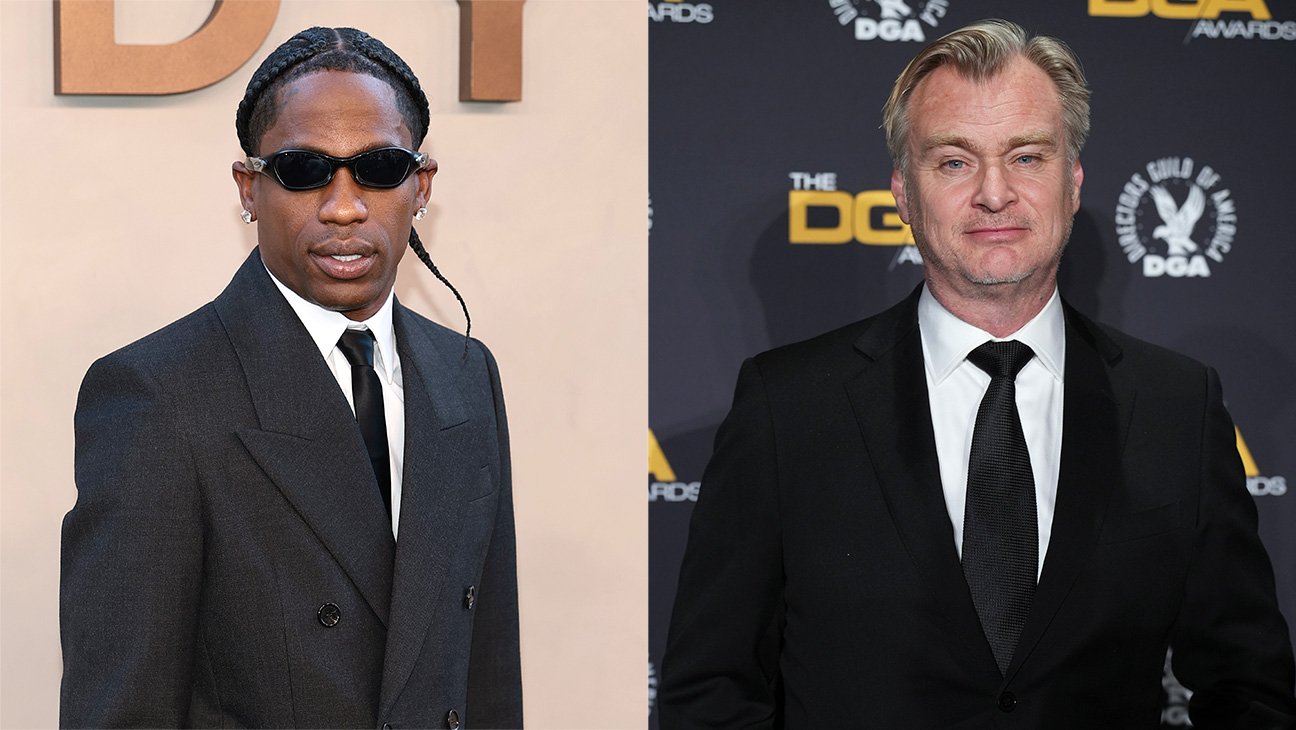
    Travis Scott is opening up about how Christopher Nolan cast him in The Odyssey.

    During a Tuesday night appearance on The Tonight Show Starring Jimmy Fallon, Scott recalled receiving an unexpected phone call from the Oscar-winning director, who asked if he’d be interested in acting in the Greek epic.

    “My phone went off and it just said, ‘Chris.’ And I’m thinking, ‘OK, I don’t know what this is about. Maybe he wants to go to a show?’” Scott said. “So I pick up and he’s like, ‘Would you be interested in acting in a movie?’ And I’m like, ‘I mean, I guess, you know? What’s the [role]?’”

    Scott recalled Nolan telling him the film would be “coming out soon” and that he wanted him to be part of it. Surprised by the ask, Scott responded: “I’m like, ‘Whoa, hold on. Wait. You know I make music?’” before Nolan gave him “his whole thesis on why.”

    “I really enjoy his time. I’m really inspired by him. He’s a real mentor of mine outside of this,” Scott said of the Oppenheimer filmmaker. “So I’m like, ‘Yo, whatever you’re down with, I’m down. However it goes, I’m with it.’”

    Scott played Demodocus, the bard who narrates Odysseus’ journey in the opening scene and is the first voice and face audiences see in the film.

    Though he admitted, “I was actually nervous as ‘F,’” Scott said he initially assumed his scenes would be with extras.

    “I didn’t know that it was going to be Anne Hathaway, Tom [Holland] and Robert Pattinson — a bunch of amazing people,” he said. “I don’t know what the fuck I’m doing. But they were such an amazing cast.”

    Scott continued to praise Nolan and the cast for making it a comfortable experience. The pair previously collaborated on the soundtrack for Nolan’s 2020 film Tenet, which starred Pattinson.

    “Chris is an amazing director,” Scott said before adding of the cast, “Everybody made me feel comfortable. I was just glad to be there and just watch him. And being in such a world of them. So I’m just glad to be here.”

    Nolan recently spoke with Time magazine about why he cast Scott, saying, “I wanted to nod towards the idea that this story has been handed down as oral poetry, which is analogous to rap.”

    In addition to acting, Scott also recorded the original song “When I’m Home” for The Odyssey‘s closing credits alongside James Blake, with production from the film’s composer Ludwig Göransson. Nolan is credited as a co-writer.

    The Odyssey is now playing in theaters.

  • Spencer Pratt Tears Into Gavin Newsom, Rob Bonta Over Paramount Lawsuit in Lengthy Video Rant

    Spencer Pratt Tears Into Gavin Newsom, Rob Bonta Over Paramount Lawsuit in Lengthy Video Rant

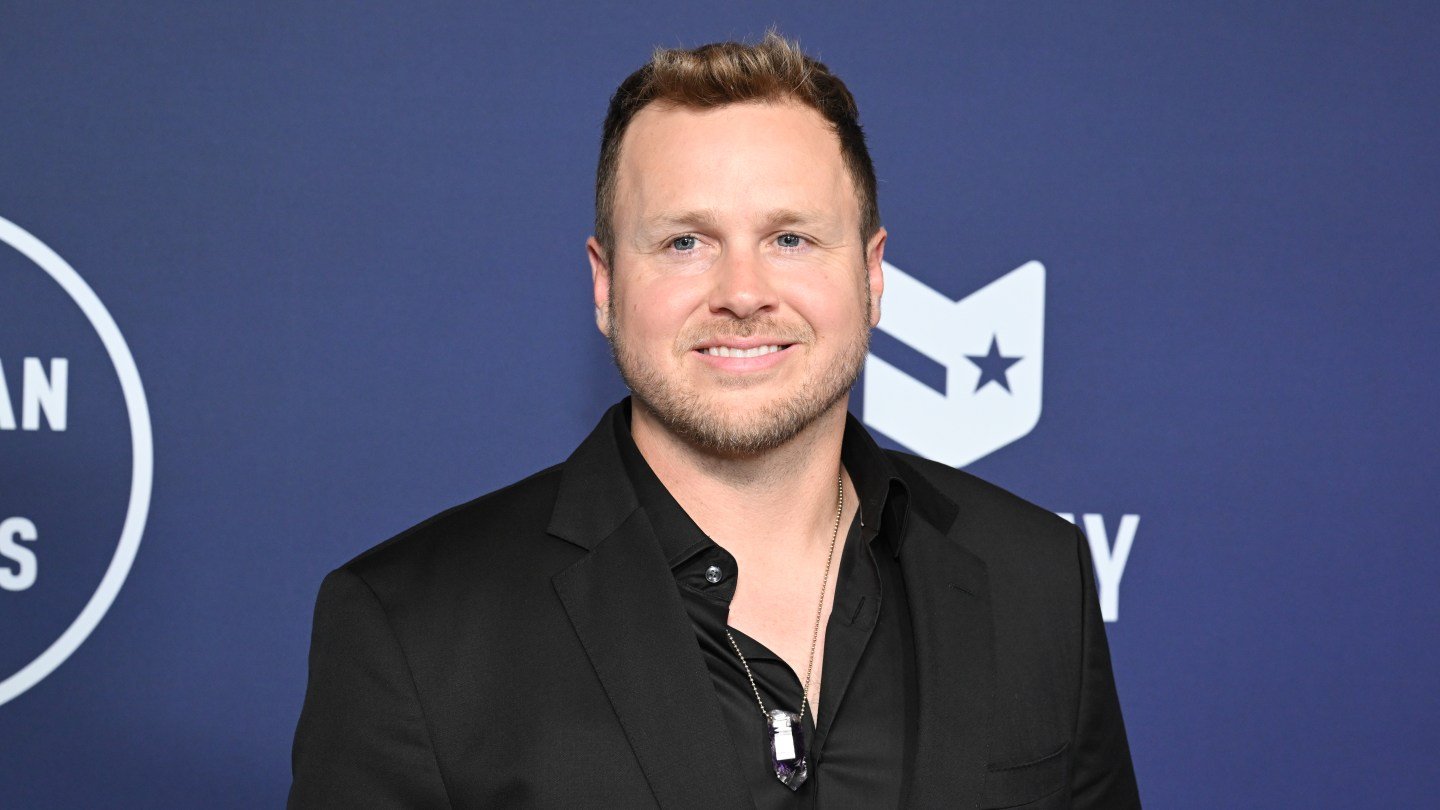
    Los Angeles mayoral hopeful and former reality TV star Spencer Pratt released a lengthy, artificial-intelligence-assisted screed taking down the lawsuit filed by 12 state attorneys general against Paramount over its merger with Warner Bros. Discovery. In a TikTok video, he shouts that Hollywood is kaput if the suit succeeds.

    On July 20, a coalition of 12 states led by California filed a suit against Paramount to block its $110 billion acquisition of Warner Bros. Discovery. The coalition includes New York and Colorado, among others. A federal judge issued a temporary restraining order pausing the merger earlier this week.

    Pratt, the former MTV star who played the villain of reality TV hit The Hills 20 years ago, began leaning into Los Angeles city politics in 2025 after his Pacific Palisades home burned in one of the fires that engulfed parts of the city. Pratt and other area property owners filed a suit against the city of Los Angeles and its Department of Water and Power, alleging the fires were DWP’s fault; he also began blaming Mayor Karen Bass, citing a slow response.

    @spencerpratt

    Greasy Gavin and Bonehead Bonta are the real life slick-haired archetypal douchebag villains we’ve seen in every movie. Now they’re coming to destroy the Hollywood for good, over petty politics. The Paramount sabotage is…way worse than you think.

    ♬ original sound – Spencer Pratt

    Mad as hell about L.A. politics in the wake of the fires, he launched a campaign for mayor on the fire’s anniversary, positioning himself as a common-sense populist. In June, he came in third place behind Bass and City Councilmember Nithya Raman, after an initial count had put him more than eight percentage points ahead of her. He refused to accept the result and drew support from President Donald Trump (who already doomed his chances in L.A. with his vocal support) and House Speaker Mike Johnson; both claimed the race was fraudulent, once again without evidence.

    Pratt had said he’d stay in L.A. to remain laser-focused on local politics. But with this new video, he’s gone national, training his screed on every state suing Paramount. Being a Californian, he naturally singles out Gov. Gavin Newsom and Attorney General Rob Bonta, claiming the two are destroying Hollywood as they try to “cripple two of the greatest film studios of all time over politics.”

    “[Newsom and Bonta] are everything Paramount isn’t,” Pratt claims. “While Paramount and Tom Cruise have spent the last decades building up Hollywood, [these two] have been destroying it — chasing productions out of town, sending projects to Budapest, neglecting film tax credits and incentives to win back production, doing everything they can to cripple the film industry while Atlanta and Hungary steal our lunch. And now they’re suing Paramount to make sure the industry crumbles further, all because Paramount wants to invest $110 billion into Warner Bros.”

    The 10-minute-plus clip splices in A.I.-generated cutaways from Pratt to clips of popular Hollywood movies. The former candidate channels Alex Jones, sitting behind a desk and yelling into the camera as he argues the state’s leaders want jobs out of California. Citing a clip from a podcast interview with Bonta, he notes that tech giants like Amazon aren’t named in the lawsuit despite making blockbusters with major theatrical releases — Pratt cites Top Gun: Maverick and dubs its star “Saint Tom Cruise.”

    In the clip, Pratt also tries to shoot down Bonta’s claim that a Paramount–Warner Bros. Discovery merger would reduce production, arguing other factors were at play.

    “They claim that after Disney acquired Fox, production decreased. Notice they specifically say after they merged — they don’t say because they merged, because something else happened after that 2019 merger that may have had an impact on production,” he says. “Yeah, they merged right before COVID, but Gavin Newsom shut down the entire state and followed that with the biggest, most prolonged labor dispute in Hollywood history. Everybody’s production decreased.”

    Pratt also points to what he calls political motivation behind the opposition, noting the lack of similar scrutiny over Amazon’s MGM acquisition, and that streamers like YouTube weren’t named in the suit — inconvenient, he argues, for the theory of a Paramount monopoly.

    “This isn’t the ’80s, Rob. Streaming has changed everything. More and more people get their content online, which means fewer and fewer are watching traditional cable. The trend line only goes in one direction,” he says in the clip.

    Pratt closes out the rant with high praise for Paramount, which he credits with saving the industry.

    “There’s a ton of competition for these studios,” Pratt claims. “This whole lawsuit is a scam. He needs to quit playing petty politics and crippling Hollywood.”

  • Nordstrom’s Anniversary Sale Is a Goldmine of Jewelry Markdowns — Here Are the 23 Standouts

    Nordstrom’s Anniversary Sale Is a Goldmine of Jewelry Markdowns — Here Are the 23 Standouts

    If you purchase an independently reviewed product or service through a link on our website, The Hollywood Reporter may receive an affiliate commission.

    From designer jewelry to under-$25 finds, the Nordstrom Anniversary Sale is home to hundreds of discounted gems. Through Sunday, Aug. 9, the retailer is offering up to 45 percent off dozens of its best-selling jewelry brands: Bony Levy, Monica Vinader, Lizzie Fortunato, Mejuri and John Hardy, to name just a handful.

    To sweeten the deal, Nordstrom is running a Women’s Fine Jewelry Trunk Show alongside its annual savings event. This means that through Aug. 9, 100-plus heavily discounted designer pieces are available online only. Once Aug. 10 hits, the limited-edition assortment will not only lose its discount — it will be gone for good.

    One more Anniversary Sale shopping tip ahead of our jewelry picks: For those considering signing up for Nordstrom’s credit card, now is the most strategic time to do so, because through Aug. 9, new cardmembers will receive $60 off their next purchase. See all benefits and apply for a credit card now at Nordstrom.com.

    Nordstrom Anniversary Sale 2026: Shop Best Jewelry Deals

    online trunk show-exclusive

    These sculptural post back earrings are an exceptional price for 14k solid gold, and their delicate swaying chains add a subtle sense of movement.

    Another great value, Bony Levy is a favorite all year round for its excellent quality and fair price point.

    A bead chain is both timeless and on trend, and the CZ barrel pendant adds a little extra sparkle.

    Lizzie Fortunato is a standout for elegant statement styles. This glamorous number pairs faceted emeralds with peachy emerald-cut glass.

    One more Lizzie Fortunato favorite.

    online trunk show-exclusive

    Features a 0.35ct. lab grown diamond paired with 18k gold vermeil.

    It always pays to invest in a timeless pair of everyday diamond studs. Price per wear will be minuscule, especially given the 25 discount. These natural diamond earrings are available (and on sale) in a variety of carat weights.

    Or test the waters by getting the look for less.

    BaubleBar’s casual-cool statement necklace also comes in gold tone metal on a deep green cord.

    No comment. Just sick.

    Edge up any outfit with a black sapphire moment.

    Fully lean in with more sapphire-covered knots.

    Offered in both 14k gold plated and platinum plated versions.

    Lab diamonds paired with 18k gold vermeil.

    Same as above. Stack or wear solo.

    Related: The 75 Most Dazzling Jewelry Gifts From Celebrity-Owned and Hollywood-Loved Labels

    And one for those who’d rather solid gold.

    Round lab-grown diamonds set in either sterling silver or sterling silver with 18k-gold plating.

    A timepiece that doubles as jewelry.

    Make your Apple Watch a bit less Apple Watch-y.

    An easy pop of color.

    Get that layered look sans the tangling.

    Related: These Hollywood-Loved Designer Handbags Are Up to $1,500 Off at Nordstrom’s Anniversary Sale

    online trunk show-exclusive

    Inspired by ’50s Italian glamour and crafted from 18k gold vermeil.

    14k yellow, white and rose gold in one.

    Shop the full assortment of savings via Nordstrom’s Jewelry & Watches landing page. And for more curated picks, visit THR‘s main Anniversary Sale shopping guide.

    About the Author

    Erin Lassner is THR’s E-Commerce Writer. She covers shopping content across fashion, beauty and lifestyle, and has nearly ten years of experience testing and reviewing the best of skin-care, makeup, accessories and wellness.

  • Chainlink Moves BUILD Rewards Toward Fee-Based LINK Agreements

    Chainlink Moves BUILD Rewards Toward Fee-Based LINK Agreements

    Chainlink is shifting the economics of its BUILD program toward commercial fee agreements, a move that could make $LINK’s utility more closely tied to paid oracle and infrastructure services.

    The update follows the final BUILD rewards claims ending July 7, 2026. Under the new direction, participating projects are expected to move toward commercial agreements with fees paid in $LINK or other liquid tokens.

    That matters because $LINK investors have long watched one question closely: how does Chainlink’s adoption translate into token utility?

    This does not mean immediate price impact. It does not mean every Chainlink integration suddenly creates direct $LINK demand. But it does show the network continuing to push toward clearer commercial rails for its services.

    TL;DR

    • Chainlink is moving BUILD program economics toward commercial fee agreements.
    • Fees may be paid in $LINK or other liquid tokens, depending on the agreement.
    • The shift is about long-term token utility, not guaranteed short-term $LINK price movement.

    Why $LINK Utility Is Always The Question

    Chainlink is one of the most widely used infrastructure networks in crypto.

    Its oracle services help deliver price data, proof of reserves, cross-chain messaging, and other off-chain inputs to blockchain applications. DeFi protocols, stablecoin issuers, tokenized asset platforms, and financial institutions all rely on oracle infrastructure in some form.

    But for $LINK holders, adoption alone is not the entire story.

    The market wants to understand how usage connects to the token. Does more oracle demand create more $LINK-denominated fees? Do stakers benefit? Are payments made in $LINK? Are tokens held, distributed, or sold? How much of the network’s commercial activity flows through the token economy?

    Chainlink’s move toward commercial fee agreements is relevant because it speaks directly to that issue.

    It makes the economic relationship between projects and Chainlink services more explicit.

    BUILD Was About Ecosystem Alignment

    The BUILD program was designed to align early-stage projects with Chainlink’s ecosystem.

    Projects could receive support, services, or integration help while committing a portion of their token supply or economic upside back to Chainlink’s network. That model made sense for bootstrapping adoption, especially when many crypto projects were still building toward product-market fit.

    But as Chainlink matures, the network needs commercial arrangements that look less like ecosystem support and more like paid infrastructure.

    That is where fee-based agreements come in.

    A project that relies on Chainlink services can pay for those services. If fees are paid in $LINK or other liquid tokens, the arrangement becomes easier to evaluate and potentially easier to connect to broader network economics.

    The Shift Does Not Guarantee Price Action

    It is important not to overstate this.

    A move toward fee-based agreements does not automatically mean $LINK will rally. Token price depends on many factors, including market conditions, supply dynamics, staking design, investor sentiment, and the actual size of commercial payments.

    There is also nuance around “$LINK or other liquid tokens.”

    If some agreements use tokens other than $LINK, the direct $LINK demand effect may vary. If fees are paid in $LINK but later distributed or sold, the market impact may also depend on the flow structure.

    So the safe interpretation is not “fees equal price increase.”

    The safe interpretation is that Chainlink is continuing to build a more commercial model around its infrastructure, and $LINK remains part of that model.

    For long-term holders, that is still meaningful.

    Chainlink’s Institutional Push Needs Revenue Logic

    Chainlink has been pushing deeper into institutional finance, cross-chain messaging, tokenized assets, proof-of-reserve systems, and data services.

    Those areas require reliable infrastructure. They also require clear business models.

    Institutions do not want vague token incentive systems. They want service-level reliability, pricing, compliance comfort, and dependable technical support. Commercial agreements make that easier.

    At the same time, Chainlink’s crypto-native community wants to know that the token continues to matter.

    Balancing those two audiences is difficult. Chainlink needs to be credible to institutions without making $LINK feel disconnected from network usage.

    Fee-based commercial agreements are one way to bridge that gap.

    The Next Metric To Watch

    The next thing $LINK investors will watch is not just how many projects sign agreements, but how those agreements are structured.

    Important details include payment token, fee size, whether fees connect to staking, how revenue is distributed, and whether enterprise adoption produces visible on-chain flows.

    Until those details become clearer, the update is best viewed as a structural step rather than a complete economic answer.

    Still, the direction is notable.

    Chainlink is moving from early ecosystem reward alignment toward more direct commercial infrastructure relationships. That is what mature middleware networks eventually need.

    For $LINK, the value of that shift will depend on execution.

    If Chainlink can turn adoption into recurring fees while keeping $LINK connected to the economics of the network, the token utility debate becomes more concrete.

    This article is based on Chainlink’s update on commercial agreements and BUILD program rewards.

    This article was written by the News Desk and edited by Samuel Rae.

    This report is based on information released in disclosures at primary source documentation.

  • Where to Find a Commonwealth Games 2026 Livestream in the U.S. to Watch the Event for Free

    Where to Find a Commonwealth Games 2026 Livestream in the U.S. to Watch the Event for Free

    If you purchase an independently reviewed product or service through a link on our website, Variety may receive an affiliate commission.

    Some of the best summer athletes in the world are heading to Scotland for the 2026 Commonwealth Games.

    A quadrennial event dating back to 1930, the Commonwealth Games unites thousands of athletes from more than 70 nations across the British Commonwealth — I.e. countries that are currently or were formerly part of the British Empire. So while countries like Canada, Australia, England, New Zealand, South Africa and Jamaica will all be participating, there will not be a U.S. contingent at the Games.

    How to Watch the 2026 Commonwealth Games

    This year’s Commonwealth Games run from July 23 to August 2 in Glasgow, Scotland, with events airing live and as nightly highlights on channels like 7Plus in Australia and Channel 5 in the UK.

    North American viewers can watch the Games for free on CBC, Canada’s national public broadcaster, via a virtual private network like ExpressVPN or NordVPN (NordVPN excludes a 30-day money back guarantee). Your VPN lets you set your location to Canada to stream the CBC’s coverage of the 2026 Commonwealth Games online from anywhere in the world.

    Or set your location to Australia or the United Kingdom to stream the 7Plus and Channel 5 Commonwealth Games feed online.

    How to Watch the 2026 Commonwealth Games From the U.S.

    You can also watch the Commonwealth Games in the U.S. through beIN SPORTS, the Qatar-based sports media group that is now available in America on streaming services like Fubo and Sling.

    Fubo offers beIN SPORTS on its own for just $5.99/month, or as part of the Fubo Core package, which gets you 200 live TV channels to stream online for $63.99/month (regularly $88.99 monthly).

    Don’t have Fubo? Test drive the service with a five-day free trial here and use it to stream the Commonwealth Games in the U.S. for free. Fubo’s plans include free DVR so you can record the events to watch back on-demand whenever you want.

    The cheapest way to get beIN SPORTS on Sling, meantime, is to sign up for the streamer’s Sling Orange base plan (from $45.99/month) and then add the Sports Extra package for an additional $11 a month. You’ll get more than 40 live TV channels in total that you can stream online.

    Sling Orange includes 50 hours of free cloud DVR in addition to an on-demand library of free TV shows and movies that you can stream online.

    Commonwealth Games 2026 Sports

    Unlike previous Commonwealth Games, which have featured more than 30 different summer sports, this year’s event will include just 10 sports, the lowest number of events offered at the Games since 1994. Organizers say rising costs, lack of venues and viewership decline have led to the removal of sports like field hockey, diving, rugby sevens and cricket.

    Still, there’s plenty of big names to watch for in the remaining sports, which include athletics, swimming, artistic gymnastics, boxing and cycling. Paris 2024 Olympic swimming champions Kaylee McKeown from Australia and Adam Peaty from England, are expected to compete, as is Canada’s gold-medal winning 4×100 meter men’s relay team in track and field.

    The track event will also see Scottish middle-distance runner Josh Kerr, who just broke the 27-year world record in the mile, and Jamaican superstar Shericka Jackson, a two-time World Champion who holds the second-fastest time ever recorded in the women’s 200m events.

    Reigning Olympic pommel horse champion Rhys McClenaghan from Northern Ireland will compete in the men’s gymnastics event, where he’ll face off against Cyprus’ Marios Georgiou, who is a former European All-Around champion and a three-time Olympian.

    This year’s Commonwealth Games kicks off with an Opening Ceremony featuring British singer-songwriter Tom Walker (of “Leave the Light On” fame), along with Scottish singer-songwriter, KT Tunstall and other local artists. The last edition of the Commonwealth Games was held in 2022 in Birmingham, where rockers Duran Duran performed at the Opening Ceremony.

  • Uniswap Governance Proposal Would Route Optimism Fees To UNI Burns

    Uniswap Governance Proposal Would Route Optimism Fees To UNI Burns

    Uniswap governance is reviewing a proposal that would route protocol fees from selected Optimism pools toward $UNI token burns, testing a more direct connection between deployment-level activity and token economics.

    The proposal is specific to Optimism pools. That distinction matters because it is not a protocol-wide fee burn across all Uniswap deployments.

    Still, the idea is significant.

    $UNI holders have long debated how Uniswap’s massive trading footprint should connect to the $UNI token. A fee-routing and burn mechanism on Optimism would give governance a narrower test case rather than changing the entire protocol at once.

    TL;DR

    • Uniswap governance is reviewing a proposal tied to Optimism pool fees.
    • The proposal would route selected fees toward $UNI token burns.
    • The scope is Optimism-specific, not a protocol-wide Uniswap burn mechanism.

    $UNI Tokenomics Are Back In Focus

    Uniswap is one of the most important decentralized exchanges in crypto, but its token economics have always been debated.

    The protocol processes large amounts of trading volume, yet $UNI does not automatically capture value from every trade in a direct, simple way. Governance controls key decisions, but tokenholders have often wanted clearer links between protocol usage and token value.

    That is why fee routing matters.

    If protocol fees from selected pools can be used to buy and burn $UNI, the token may gain a more visible economic connection to exchange activity. Burns reduce supply, at least mechanically, and they are easy for the market to understand.

    But implementation is everything.

    Which pools are included? How much fee revenue is routed? How are burns executed? What are the legal and governance implications? Could the model expand beyond Optimism later?

    Those are the questions governance needs to answer.

    Why Optimism Is A Sensible Test

    Optimism is a useful place to test the idea because it narrows the scope.

    Uniswap is deployed across multiple networks. A protocol-wide change would be more complex and more controversial. Testing fee routing on a specific deployment gives governance a way to examine the mechanics without rewriting the entire system.

    It also reflects how DeFi is becoming more chain-specific.

    Activity on Ethereum mainnet is different from activity on Optimism, Arbitrum, Base, Polygon, or other networks. Fees, users, liquidity, incentives, and trading behavior vary by chain.

    A deployment-level test may help Uniswap learn whether fee burns are practical in one environment before considering broader changes.

    That does not guarantee the proposal will pass or expand.

    But it gives $UNI holders a concrete experiment to debate.

    Burns Are Simple, But Not Magic

    The market often likes token burns because they are easy to understand.

    Fewer tokens can sound bullish. But burns only matter if the underlying fee stream is meaningful, recurring, and large enough to affect supply over time.

    A small burn from limited pools may be symbolically important but economically modest. A larger mechanism could matter more, but it may also raise more governance, liquidity, and regulatory questions.

    That is why the Optimism-specific scope is important.

    The proposal can show how the process works without overpromising immediate impact. $UNI holders should watch the mechanism, not just the headline.

    If fees are routed transparently and burns are executed reliably, the model may gain support. If the impact is tiny or the process creates new complications, governance may be more cautious.

    Uniswap Is Searching For Token Value Alignment

    The broader issue is value alignment.

    Uniswap has strong product-market fit. It is widely used, deeply integrated, and central to DeFi liquidity. But tokenholders still want to know how that usage translates into $UNI’s long-term role.

    Governance power alone may not be enough for every investor.

    A fee burn proposal gives the DAO another possible answer. It connects protocol activity, chain-specific revenue, and token supply mechanics in a way that is easier to track.

    That does not mean every Uniswap fee should automatically flow to tokenholders. The protocol also needs liquidity, incentives, legal resilience, and sustainable governance.

    But the discussion is important.

    It shows that DeFi’s largest protocols are still experimenting with how to align users, liquidity providers, developers, and tokenholders.

    For Uniswap, the Optimism proposal could become a small but meaningful test of whether deployment-level fee routing can support $UNI economics without disrupting the protocol’s broader market position.

    This article is based on the Uniswap governance proposal for Optimism pool fee routing.

    This article was written by the News Desk and edited by Samuel Rae.
    This report is based on information released in disclosures at primary source documentation.

  • Base And Optimism Push Native Account Abstraction Toward The OP Stack

    Base And Optimism Push Native Account Abstraction Toward The OP Stack

    Base and Optimism are working to bring native account abstraction to the OP Stack, with developer testing already live on Base Vibenet and mainnet rollout planned for the Cobalt upgrade in September 2026.

    The update centers on EIP-8130 and aims to make user accounts more flexible across OP Stack chains.

    For users, the idea is simple: crypto wallets need to feel less clunky. Account abstraction can help make that happen by supporting features such as smoother onboarding, better transaction flows, and more flexible account logic.

    The important caveat is that this is not fully live across mainnet OP chains yet. The feature is in testing, with broader rollout planned later.

    TL;DR

    • Base and Optimism are working on native account abstraction for the OP Stack.
    • Developer testing is live on Base Vibenet.
    • Mainnet rollout is planned for the Cobalt upgrade in September 2026.

    Why Account Abstraction Matters

    Crypto still has a user experience problem.

    Seed phrases are intimidating. Gas fees are confusing. Wallet approvals are messy. Signing flows are hard for ordinary users to understand. Even experienced crypto users can make mistakes when moving across chains and apps.

    Account abstraction is one of the industry’s main attempts to fix that.

    Instead of treating every wallet like a simple externally owned account with limited logic, account abstraction allows more programmable account behavior. That can support features such as sponsored transactions, session keys, recovery systems, spending limits, batched actions, and app-specific permissions.

    In plain English, it can make wallets behave more like modern financial apps without giving up the benefits of blockchain infrastructure.

    That is why Base and Optimism pushing native support into the OP Stack matters.

    If account abstraction becomes part of the stack itself, developers may not need to build as many workarounds at the app layer.

    Base Gives The Upgrade Real Distribution

    Base has become one of the most important consumer-facing Layer 2 networks in crypto.

    Its Coinbase connection gives it distribution, brand recognition, and access to a large pool of potential users. That makes Base an important testing ground for wallet and account improvements.

    If native account abstraction works well on Base, it could improve onboarding for apps built on the network. Users may be able to interact with applications more easily, while developers get better tools for designing smoother experiences.

    The Optimism side matters too.

    The OP Stack is used by multiple chains. Improvements to the stack can spread across the broader Superchain ecosystem if adopted. That means the work is not limited to one network in theory.

    But adoption will still depend on implementation, timing, and developer support.

    The Vibenet testing phase is useful because it gives builders a place to experiment before mainnet rollout.

    Mainnet Timing Is The Key Caveat

    The September Cobalt upgrade is the important timeline marker.

    Until then, users should not assume native account abstraction is fully available on mainnet. Developer testing is not the same as production deployment. Apps may experiment before the broader rollout, but real user impact depends on mainnet readiness.

    That distinction matters because account abstraction is often discussed as if it has already solved crypto UX.

    It has not.

    The technology is promising, but it needs wallet support, app integration, secure implementation, and user-friendly design. A technical upgrade alone does not automatically make crypto easy.

    Still, native support can remove a major barrier.

    If Base and Optimism make account abstraction easier for developers to use, the next generation of apps may feel much less awkward than today’s DeFi and wallet flows.

    The OP Stack Is Becoming More User-Focused

    The OP Stack conversation often focuses on scaling, fees, sequencer revenue, and network architecture.

    Account abstraction brings the focus closer to the user.

    Lower fees are helpful, but they do not solve confusing wallet experiences. Faster confirmations are useful, but they do not fix bad onboarding. A better account model can attack those problems more directly.

    That is why this update matters for the broader Ethereum Layer 2 market.

    Competition between L2s is no longer just about throughput. It is about which networks can attract real users and keep them active. Better wallet experiences may become a major differentiator.

    Base and Optimism are betting that account abstraction belongs inside the infrastructure layer, not only as an optional app feature.

    If the Cobalt rollout succeeds, the OP Stack could become more attractive to consumer apps, gaming projects, payment tools, and DeFi platforms that want simpler user flows.

    The market should watch the testnet phase closely.

    The promise is big, but the proof will come when developers turn the upgrade into products that ordinary users can actually understand.

    This article is based on Base’s announcement of native account abstraction work for the OP Stack.

    This article was written by the News Desk and edited by Samuel Rae.
    This report is based on information released in disclosures at primary source documentation.

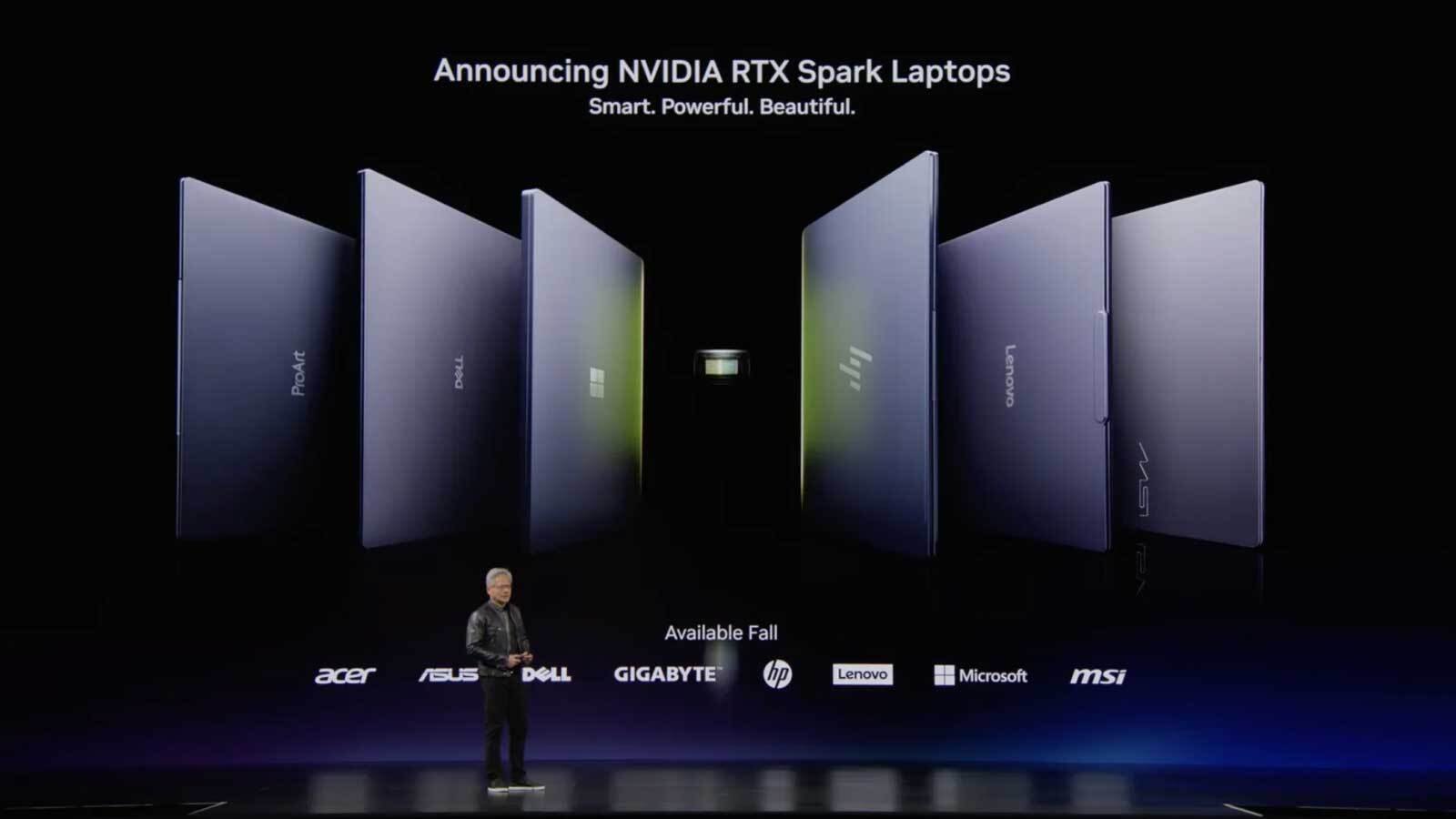
  • Modded RTX Spark Driver Gets Nvidia GPUs Working in Windows on ARM

    Modded RTX Spark Driver Gets Nvidia GPUs Working in Windows on ARM

    Modders have managed to get Nvidia’s RTX Spark driver working on alternative Arm platforms, enabling Nvidia desktop GPUs to run on Windows on Arm systems, Windows Latest reports.

    Windows on Arm is mostly limited to laptops equipped with Qualcomm’s Snapdragon SoCs and does not support Nvidia desktop GPUs. Nvidia’s RTX Spark offers a more graphically capable Windows on Arm experience, but at a high cost and with a developer focus. But with its driver release, modders have opened up support and compatibility to a wider array of hardware.

    By extracting the ARM64 Nvidia driver from RTX Spark software, a developer named VoidTech got it working on the Kunpen 920 server processor. It’s based on the same architecture as the Snapdragon X Elite, and features 24 cores running at 2,600MHz each. Its performance is roughly around that of Apple’s A15 mobile chips, or an Intel Core i5-1235U. Hardly a powerhouse.

    But still, it’s a desktop chip running Windows on Arm and, in this particular test, it also ran an RTX 4060 GPU. It’s part of the Huawei Qingyun W510 ARM workstation system, and uses 32GB of DDR4-2933 memory.

    Performance in game tests wasn’t great, though the CPU is likely a major factor. In the Black Myth: Wukong benchmark, this system managed an average of 21 frames per second, but with lows of 3fps at times.

    VoidTech estimates that around 25% of the CPU’s performance was consumed by the x86-to-Arm translation layer, which makes these kinds of setups viable. That, combined with the RTX 4060’s relative entry-level performance, means it’s no surprise that gaming wasn’t amazing. But it’s an early proof of concept. With better drivers and hardware, it seems possible that you could game on a Windows on Arm desktop with discrete Nvidia graphics before long.

    VoidTech believes this method would work with RTX 20, 30, and 50 GPUs as well, so we may see an RTX 5090 version of this test down the line.

    Recommended by Our Editors

    In the meantime, VideoCardz reports that another user got a Radxa Orion O6 workstation working with this same driver configuration, pairing an eight-core Arm CPU with an Nvidia RTX 2080 Ti. No performance results were published, but I have to imagine it was worse.

    Classic Windows on Arm issues are likely to slow adoption of this new way to play, though. Anti-cheat software still struggles with the translation layer, breaking a number of experiences, and the motherboard’s network interface didn’t work because it didn’t have Windows drivers.

    The graphics card’s video output didn’t work properly, either, forcing VoidTech to stream it to another desktop to record it. Lots of work still to be done.

    About Our Expert

  • Netflix Reteams With Yeon Sang-ho for ‘Parasyte: Tamiya’ Series

    Netflix Reteams With Yeon Sang-ho for ‘Parasyte: Tamiya’ Series

    Korean hitmaker Yeon Sang-ho’s Parasyte universe is getting an all-new host body to infect. On Thursday morning from Seoul, Netflix unveiled Parasyte: Tamiya, an upcoming Japanese season of the hit sci-fi horror series that has delighted fans with its inspired K-drama reimagining of artist Hitoshi Iwaaki’s best-selling manga.

    Yeon, fresh off the release of Netflix thriller series Human Vapor and zombie blockbuster Colony, returns as the lead creative force behind the show, having developed its story and co-written all episodes with his regular collaborator Ryu Yong-jae. Netflix says the new season is already in post-production and will premiere on the service sometime in 2027.

    The original Parasyte: The Grey spent four weeks on Netflix’s Global Top 10 Non-English TV list in 2024 and topped the rankings in 34 countries upon its release.

    Whereas the original season’s novelty came from transplanting Iwaaki’s classic manga to a South Korean setting, the new chapter is said to burrow more deeply into the original source material. Japanese actress Shioli Kutsuna, best known to global viewers for her recurring part in the Deadpool franchise, stars as Ryoko Tamiya, a parasite who seizes the body of a high school teacher and — initially as ruthless as the rest of her kind — gradually comes to suspect that coexistence with humans, rather than predation, may offer her species its best chance of survival. The series tells that story from her side of the divide, with Kutsuna playing the character in three registers: the original human, the violent creature that takes her over and the evolving being caught between the two.

    Japanese actress Shioli Kutsuna as Ryoko Tamiya.

    Netflix

    “Ryoko Tamiya is a truly captivating villain in the original manga,” Yeon says. “Her struggles over the nature of her own existence are what elevate the original Parasyte from a simple hero-based manga aimed at kids to something deeper.”

    “I wanted to convey her perpetual struggle over the need for parasites to coexist with humans and the issue of their survival, and how she suffers setbacks and learns over time,” the filmmaker adds. “I think the anguish she experiences is the essence of Parasyte.”

    Kutsuna, who previously worked with Netflix on the sumo drama Sanctuary and will appear in the streamer’s upcoming live-action Gundam film, calls Tamiya “the most challenging role I have ever played in my acting career.”

    She adds: “During the six months I spent living as Tamiya, I experienced many emotions I had never encountered before.”

    Yeon adds: “She did a wonderful job of portraying the process of a non-human creature coming to understand both humanity and its own existence.”

    Yeon has become one of Netflix’s most consistent and prolific collaborators in East Asia. His projects at the streamer as a creator, director or writer include Hellbound (two seasons), sci-fi feature Jung_E, occult chiller The Bequeathed, Parasyte: The Grey, last year’s Revelations and the just-launched The Human Vapor, his big-budget Japanese series collaboration with Toho. He’s kept just as busy as a theatrical filmmaker. Colony, the Cannes Midnight-premiered zombie thriller starring Jun Ji-hyun that returned him to Train to Busan territory, has grossed $42.4 million in South Korea since late May, making it one of the year’s biggest Korean hits. He’s simultaneously been experimenting with ultra-low-budget filmmaking, having released mystery thriller The Ugly last year, and with the AI-themed thriller Paradise Lost set to premiere at the Toronto Film Festival this fall.

    For Parasyte: Tamiya, Yeon reunites with Grey co-writer Ryu Yong-jae, while Japanese filmmakers Kensaku Kakimoto (Glass Heart) and Kazuhiro Nakagawa (Double, Bullet Train Explosion) direct the episodes. WOWPOINT, the production house behind The Grey, The Human Vapor and Colony, produces.

    Iwaaki’s manga, published by Kodansha from 1988 to 1995, has previously spawned an anime series and a two-part Japanese film franchise directed by Godzilla Minus One‘s Takashi Yamazaki.

    Says Yoshihiro Sato, manager of live-action creative at Netflix Japan: “‘What makes a human?’ ‘Can we coexist with beings that are different from us?’ — These questions posed by Parasyte more than 30 years ago feel much more pressing for our modern society that has placed non-sentient AI at all of our fingertips.”

    He adds: “Our purpose in making this series was to take the universal questions posed by the original manga 30 years ago and bring them into the modern spotlight.”