UPDATED, with reaction: The FCC removed a key constraint on broadcasters’ ability to consolidate stations, voting to repeal an ownership cap put in place to try to limit power of any one media company.
The FCC’s 2-1 vote Thursday was to repeal a restriction that limits companies from owning stations reaching more than 39% of TV households. But it faces a potential court challenge, amid warnings that only Congress has the authority to remove the restriction.
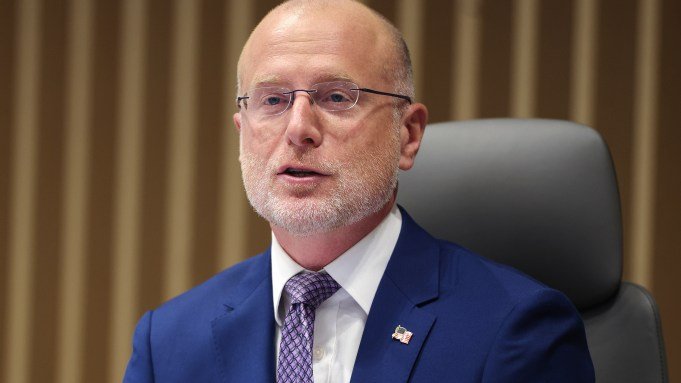
FCC chairman Brendan Carr said that the move was long overdue given the dramatic changes to the competitive landscape, warning that inaction risked seeing local stations “going the way of newspapers.”
“It is time to restore balance to the broadcast airwaves,” Carr said. “Repealing the national cap will provide essential relief for local broadcasters by restoring a healthy counterbalance to the growing leverage of national programmers.”
He predicted that allowing broadcasters to increase scale will allow them to attract capital and boost advertising to produce news and other local programming.
Removal of the cap — which limits any company from collecting stations that reach more than 39% of the country — has long been a goal of broadcasters, who have complained that they have been unable to scale up to compete with unregulated tech giants as they have siphoned off local television advertising revenue. The FCC move was quickly praised by the main broadcast lobby, the National Association of Broadcasters.
Nexstar Media Group has been among the companies championing the repeal of the cap, having already obtained a waiver from the FCC’s media bureau to merge with Tegna, a transaction creating a broadcast giant with around 260 stations covering 80% of the country. The merger closed, but Nexstar has been ordered by a judge to keep the assets and operations separate amid an antitrust lawsuit brought by state attorneys general and DirecTV.
Anna Gomez, the sole Democrat on the FCC, said in a statement today, “The large station groups positioned to grow even larger under this decision are not local broadcasters, they are national companies that own local stations and increasingly dictate what airs on them. Trading a squeeze from Big Tech for a squeeze from Big Media does nothing to protect the communities this cap was designed to serve.” She warned of shrinking newsrooms, as large station groups seek efficiencies in local operations.
Skepticism of the FCC’s action crosses party lines. Sen. Ted Cruz (R-TX) has said that he has doubts that the FCC can repeal the cap on its own, and Michael O’Rielly, a former Republican commissioner, has said that the authority lies with Congress as it was a statute. Former House Majority Leader Tom DeLay, in a recent op-ed, wrote of how he negotiated the 39% figure in a 2004 appropriations bill. “Regulatory agencies cannot defy or modify laws enacted by Congress,” DeLay wrote for The Daily Wire.
Newsmax CEO Chris Ruddy told a congressional hearing earlier this year that he was “prepared to litigate” over the FCC’s action, arguing that the TV industry “is too important to be handed over to a small number of conglomerates.”
The FCC under Carr has argued that while Congress “has at times directed the Commission to change our rules, it has never withdrawn our authority under the Communications Act to regulate or change ownership limits.” In its order, the FCC claimed that Congress’ 2004 action was a directive only for the commission to “modify its rules.” The agency also cited a 2002 appellate court decision that characterized a specified percentage for the cap as a “starting point from which the Commission was to assess the need for further change.”
Major station groups were praising the FCC’s action even before the vote. Chris Ripley, the CEO of Sinclair Broadcast Group, said on an earnings call Wednesday, “We fully expect people to challenge this order, and we think the FCC is on solid legal ground here in terms of their authority to change this rule and the rationale behind changing it. The FCC’s mandate is to deregulate over time. That was the mandate from Congress, as conditions change, and that’s what’s happening here.”
With the cap repealed, the FCC will shift to a case-by-case review of merger transactions that otherwise would exceed the 39% threshold. Carr has said that a rationale behind removing the cap was to bolster local TV station groups in the leverage against major broadcast networks. That raises the prospect that some companies will get the greenlight and others, like networks with a national footprint, will not.
“Congress never envisioned that local broadcast TV stations would become nothing more than undifferentiated passthroughs of national programming produced in Hollywood and New York,” Carr said on Thursday. “But if the FCC does not change course, this could become the reality in many towns and cities and counties.”
In announcing the plans, the FCC stated, “There may be transactions that would have exceeded the limits of the 39% national cap that do not promote the public interest and those will be denied. On the other hand, there may be transactions that would have exceeded the cap that do promote the public interest and could gain Commission approval.”
The FCC’s vote came around the same time that Nexstar was hosting an earnings call. Its CEO, Perry Sook, said that the repeal “will remove a certain level of uncertainty in future M&A,” and that it would allow broadcasters to “compete on the same playing field in the domestic U.S. with every other purveyor of advertising, and every other purveyor of video that we compete with that has access to 100% of U.S. households.”
But he said that the move may not have a big impact on the Nextstar-Tegna merger lawsuit, as it’s “more about antitrust than the national ownership cap.”
Sen. Elizabeth Warren (D-MA) warned that the FCC action was an effort to “illegally rewrite the rules to make it easier for billionaires to line their own pockets while jacking up costs and controlling what Americans watch. After rubber-stamping the Nexstar-Tegna megamerger, this looks like the Trump administration’s latest attempt to roll out the red carpet for more antitrust disasters.”
As discussions continue in the US on the CLARITY Act, which aims to regulate the cryptocurrency market, it has been reported that close supporters of President Donald Trump are working hard to reach an agreement on ethical guidelines.
According to crypto journalist Eleanor Terrett, citing her sources, while the White House has begun contacting Republican Senator Thom Tillis and Democratic Senator Ruben Gallego regarding a bipartisan ethics regulation proposal, circles interested in crypto policy remain uncertain.
A source in the industry described the current situation as “a strange wait,” while Terrett reported that some of Trump’s closest supporters had been working intensely behind the scenes throughout the week to reach a compromise on ethical considerations.
Related NewsWatch Out: Hundreds of Millions of New Tokens Will Enter Circulation in an Altcoin
The proposed ethics regulation is expected to include limitations on the financial interests of public officials and political figures in the cryptocurrency sector. However, there is no agreement yet on the final scope of the proposal and how it will be incorporated into the CLARITY Act text.
Meanwhile, the parties are continuing negotiations on other unresolved issues in the bill. The White House is reportedly leading the discussions, particularly regarding the Blockchain Regulatory Certainty Act (BRCA).
The White House is reportedly trying to persuade some federal law enforcement agencies and regulators who have reservations about BRCA. The regulation aims to clarify under what conditions individuals developing software or providing infrastructure services on decentralized blockchain networks will not be considered financial intermediaries.
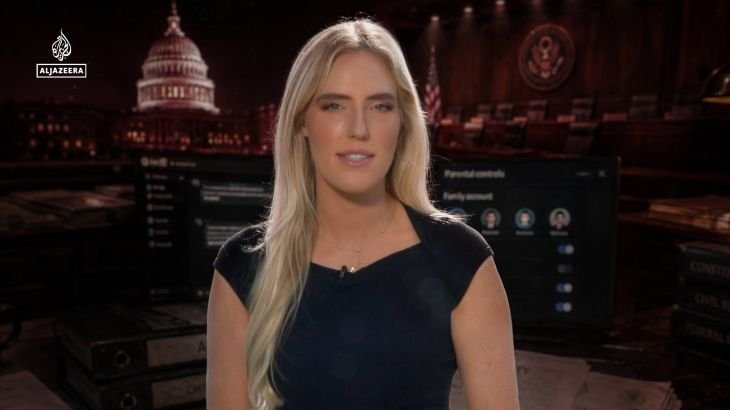
Congress is pushing a new bill forward that would give parents the power over their kid’s interactions with AI chatbots. Al Jazeera’s Emma Withrow explains.
A federal judge stayed an order to compel Donald Trump‘s trust to provide financial documents to the BBC, which the president is suing in a $10 billion defamation claim.
U.S. District Judge Roy Altman set aside for now a magistrate’s order that the Donald J. Trump Revocable Trust produce documents dating back to Jan. 1, 2023.
Related Stories
The BBC argued that the documents were relevant as Trump had claimed damages to his brands and businesses. Altman noted that Trump’s attorney no longer intends to pursue damages premised on harm to the businesses, granting the stay until the court rules on whether an amended lawsuit can be filed.
Trump sued the BBC in December over edits that were made in a documentary about the January 6th attack on the Capitol.
In the documentary, Trump: A Second Chance?, a clip is shown from his January 6 speech, in which he says, “We’re going to walk down to the Capitol … and I’ll be there with you. And we fight. We fight like hell.” In fact, the remark was an edit of different portions of the speech. The documentary aired on Oct. 28, 2024.
The BBC opposes Trump’s effort to amend his complaint, calling it a “transparent effort to avoid the imminent court-ordered deadline to begin producing financial discovery.” Trump’s legal team contend that the revisions “further crystallize and focus this case.”
We’ve found a precious 40 minutes away from the hustle and bustle of press day for season four of ITV‘s Trigger Point at London’s Soho Hotel. Tucked into the corner of one of its underground bars, McClure speaks to The Hollywood Reporter while her co-stars — Eric Shango, Natalie Simpson, Maanuv Thiara among them — dutifully pose for photos and laud the latest work of show creator Daniel Brierley.
McClure, returning as the no-nonsense bomb disposal expert Lana Washington in another high-octane, watch-behind-your-hands instalment, is taking us through her early years at Nottingham’s Television Workshop, a Midlands-based film, TV, and theatre training school for kids from working-class backgrounds. She had initially eyed a career in professional dance and landed a place at the prestigious Italia Conti academy. But her family couldn’t afford the tuition. She stayed with the Television Workshop until the age of 21.
I halt the conversation early on to ask if what I’ve read online — that McClure was mentored at the Workshop by The Odyssey breakout Samantha Morton, a fellow Nottingham native — is true. The actress is quick to clarify: “That isn’t correct. Sam is a huge part of the Workshop, and my word, I mean, even now, the gigs that she’s in,” she says, alluding to the latest Christopher Nolan hit, wide-eyed with awe. “[But] we never crossed over. I actually didn’t know her while I was in the Workshop.” The pair would, later in their respective careers, meet at odd events. “You gravitate to each other if you’re both from Nottingham or the Workshop,” explains McClure, who was proudly born and raised in the English city (she has resisted the industry-induced pressure to relocate to the capital — a decision we’ll come to later).
It was only when both of them were leading Dominic Savage’s I Am… series that McClure and Morton ended up “having a long chat on the phone.” They’ve stayed in touch, and McClure certainly calls her peer “an icon of the Workshop, and of the acting world.” But, contrary to what the internet purports, this friendship didn’t blossom until well beyond the Nottingham Television Workshop, which McClure remains a devoted patron of.
And while Morton’s face currently graces thousands of cinema screens across the world, it is Vicky McClure who is known far and wide here in Britain. She has steadily risen through the ranks for two decades now to become one of the most prolific actors in the country, famed for her forthright characters and becoming, frankly, a legend of the U.K. police procedural (Line of Duty, Broadchurch, to name a few).
With Trigger Point continuing to pull in millions of viewers — season three’s seven-day consolidated average came in at 5.1m last year — and a hotly anticipated Line of Duty return imminent, McClure, now 43, enters a chapter of her career marked by prolificacy, freedom, and industry-wide reverence.
Vicky McClure (center) in 2006’s ‘This Is England.’
IFC Films/Courtesy Everett Collection
Her starring role aged 23 as Lol Jenkins in Shane Meadows’s 2006 film This Is England, and in the Channel 4 sequel mini-series This Is England ’86, This Is England ’88 and This Is England ’90 from 2010 to 2015, is what she considers her long-awaited big break. “But I went straight back to the office,” McClure tells THR about her job at a house valuation company. “There’s just an illusion that once you’re in a film or you’re in something, that’s it. Onward you go,” she continues. “I’d train new people, then I sort of went into the HR department, looked after things like the vending machines, the post, a wide variety. I was even fire warden at one point, which I think has done me well for drifting into Lana,” she laughs. “That was my thing. I’d go off and do This Is England, and then I’d come back.”
She worked at the business for eight years, and in that time, starred in a film directed by Madonna, Filth and Wisdom (2008). “We always think people care more than they do,” McClure says when asked what her office mates thought of the Madonna gig. “You know what I mean? They go, ‘Oh, amazing. That’s cool. Well, we’re having lunch.’”
The reality is, while McClure was shooting with mega-stars, she was also getting told “no” a lot. “I learnt very quickly to stop telling people when I had an audition because nine times out of 10, I never got the job,” she admits. She recalls going up for roles in Peaky Blinders and Sarah Gavron’s 2015 Suffragette film. “That was one of those moments,” she says about feeling particularly heartbroken by the Suffragette casting, which eventually went to Carey Mulligan, Helena Bonham Carter, Anne-Marie Duff and Meryl Streep. “I wasn’t really that bothered about learning too much at school. I’d missed out on lots of history, so Jonny [Owen, McClure’s husband, also an actor and producer] sat down with me and we talked about the suffragette movement in great detail. I started getting really attached to this world and these characters.”
Over time, she nailed the accent — “at the Workshop, it wasn’t like you trained to do accents, you just did them” — but eventually, nothing came of it. “They’re a bit naughty,” she says. “Sometimes casting directors can do that thing where they go, ‘So you’re available for those dates?’ Come on, guys. That’s basically a: ‘Let’s shake hands and roll the cameras!’”
Still, on TV especially, McClure gradually made a name for herself with small roles in Five Daughters, The Body Farm and True Love. Then, in 2012, Jed Mercurio’s Line of Duty hit BBC Two. The series, about an anti-corruption unit inside a fictional police force, accrued a cult following around the world. Perhaps for the first time, McClure, as the driven, undaunted Detective Constable (later Sergeant and Inspector) Kate Fleming, was getting her flowers.
“I don’t think I felt fame throughout This Is England,” she ponders. “People were really respectful of that show, and it was such an ensemble piece that it didn’t belong to just one person. It was a really special show… [And] I think Line of Duty [is too]. It’s not a fluke because Jed’s writing is obviously impeccable, but it’s all down to the audience, and if they start tuning in and if they show [interest], then you’re in a good spot. But there’s every chance it can go [the other way], and shows do, don’t they?” says the veteran of British broadcast television, likely well acquainted with the graveyard of BBC and ITV shows haunting various streaming platforms. “No one watches them, and then a few years later, there’s this weird surge where everyone starts watching them again.”
When the news of Line of Duty‘s season seven broke last year, it certainly wasn’t a surprise to McClure. “We’d never closed the door,” says Mercurio’s star. “Me, Jed, [co-stars] Martin [Compston] and Aidy [Adrian Dunbar] meet up for a curry at least a couple of times a year. We’ve always had a sociable time when we make the show,” she continues, “and I think that comes across. We always said, ‘Oh, it’d be a shame if [season six] was the last one,’ because we felt like we had a really different experience [during] COVID… So then it was a case of: How are the stars going to align? We’ve all been lucky to get other gigs. Of course, Jed’s busy. He’s got to write it. We knew when he started to pick up his pen again…” she pauses, flashing a grin.
(L-R) Martin Compston, Adrian Dunbar, Vicky McClure in ‘Line of Duty.’
Courtesy Everett Collection
It is interesting, McClure adds, that Line of Duty is predominantly a cast of working-class people, “written by Jed, who grew up in a working-class family in Birmingham,” she says. “And it plays out on screen — you have accents and you have characters that are able to tap into certain flaws. Relationships were formed that are so long-lasting. Martin and Aidy are family now. I adore them both. So [hiring working-class talent] works. People need a bit more belief in those lives and characteristics.”
McClure has been a champion of opening doors for working-class creatives her whole career. Her work with the Television Workshop is testament to that, though she isn’t content yet — by any means. “London should not be the center of the universe. For anything,” she says. “Don’t get me wrong, it’s an amazing city. But there is Nottingham, Birmingham, Manchester, Glasgow… The world’s a beautiful place, but with the industry in tow, it can’t all be London central. It has been and it still is, for so many years. And it’s just not serving anyone now.”
When I put to her that there has been something of a production boom outside of the capital — in Wales, Scotland, and Northern Ireland — she maintains that while shoots are there, all of the really important get-togethers still happen in London. “It’s really naive of us to think that people can just afford that horrendous train fare or the petrol, or whatever it may be, [and] to just up and leave to get to that meeting. And I remember it was tricky for me. To get here and go, ‘I need to grab a sandwich and a cup of tea’ or something. It’s expensive.” McClure knows from first-hand experience that thousands of young actors will miss out on network-building because they can’t pay London rent: “It’s a very privileged space, a very privileged industry.”
And even when the long-hoped-for acclaim arrives, the quote-unquote “fame” comes with unwanted side effects. “I don’t want to sit here and go, ‘It’s been a problem for me,’” concedes McClure, who says that staying in Nottingham has made showbiz a more liveable place — literally — for an actor of her calibre. “I like to do things here and there. When I get nice invitations, if I can make them, and it’s something I want to do, I’ll go, and the paps [paparazzi] will do what they’ll do. You can kind of control it, to a degree. You can choose to put yourself out there a bit more — and sometimes you need it. You need the promotion to help whatever business it is you’re trying to sell.”
This is the more pragmatic side to McClure. With a BAFTA and a handful of wildly popular shows under her belt, you can’t deny it: She knows the ropes. “It’s a business and I’m in my mid-40s now,” she continues. “I’m a bit wiser, a bit longer in the tooth. I can see what things are, and you’re less naive. I’m not Hollywood. I feel Hollywood talking to The Hollywood Reporter,” she says, smiling again, though admitting she’s never even been to L.A. (Tinseltown may yet come knocking — McClure’s next film, Kenneth Branagh’s The Last Disturbance of Madeline Hynde, sees her next to Jodie Comer, Patricia Arquette and Michael Sheen.) “I think when I’m on my deathbed,” she continues, “I won’t be worrying about my career.”
What might McClure be more concerned with? Her charity work, for one — in 2019, she formed Our Dementia Choir following her late grandmother’s Alzheimer’s diagnosis. The organization was the subject of a BBC documentary, led by McClure, and over the years the group has performed in front of tens of thousands, including at Nottingham’s Splendour Festival. She also has a production company co-founded with her husband, Build Your Own Films, backed by All3Media and committed to nurturing projects “rich in subject matter, diversity and representation.”
McClure in a first-look image of Lana Washington from season four of ‘Trigger Point.’
ITV1
Right now, however, it’s more Trigger Point on the telly for McClure. Releasing soon, the new season promises a deeper look into Lana’s trauma and, as you might have guessed, some pretty explosive drama. “There’s no joke to her job. It is life and death,” McClure says about returning to everyone’s favorite Expo. “We feel like we’ve seen it all in Trigger Point. Different types of scenarios.” She stops. Eye contact. “You haven’t seen it all.” She says this season’s writing team had a lot of fun concocting more dire situations for the Met Police bomb squad. “And we really own that. If there’s anyone that can go out with a bang, it’s Trigger Point. This is the bomb show.”
She remembers reading a Times paper describing the series as “Scooby-Doo on acid.” It was meant to be, according to McClure, a bit of a diss. She loved it. “It is Scooby-Doo on acid!” she beams. Most importantly, this Nottingham native is given the opportunity to take on the fearless Lana Washington once more, and it’s exactly where Vicky McClure wants to be. “I love it when she has one of them ‘fuck you’ moments. I always slip in a few more fucks than I probably should!”
Catch McClure in the brand new series of Trigger Point, coming soon to ITV1 and STV.
Warner Bros. Discovery would like you to focus on its second quarter 2026 streaming revenue — up 9 percent to $3.1 billion — because the box office was ugly.
Theatrical revenue dropped 46 percent from the comparable quarter last year as Supergirl and The Bride bombed. Making matters worse, their comps were to Q2 2025 hits A Minecraft Movie and Sinners.
WBD’s advertising revenue sunk 22 percent as Turner continues to feel the sting of no NBA. TV/streaming programming highlights in the June quarter included Euphoria, House of the Dragon, The Pitt, and the final season of Hacks.
Wall Street forecast Warner Bros. Discovery would record $9.21 billion in quarterly revenue. Another miss: WBD reported total revenues of $8.717 billion; net income was $100 million.
And yet, Paramount Skydance still wants it.
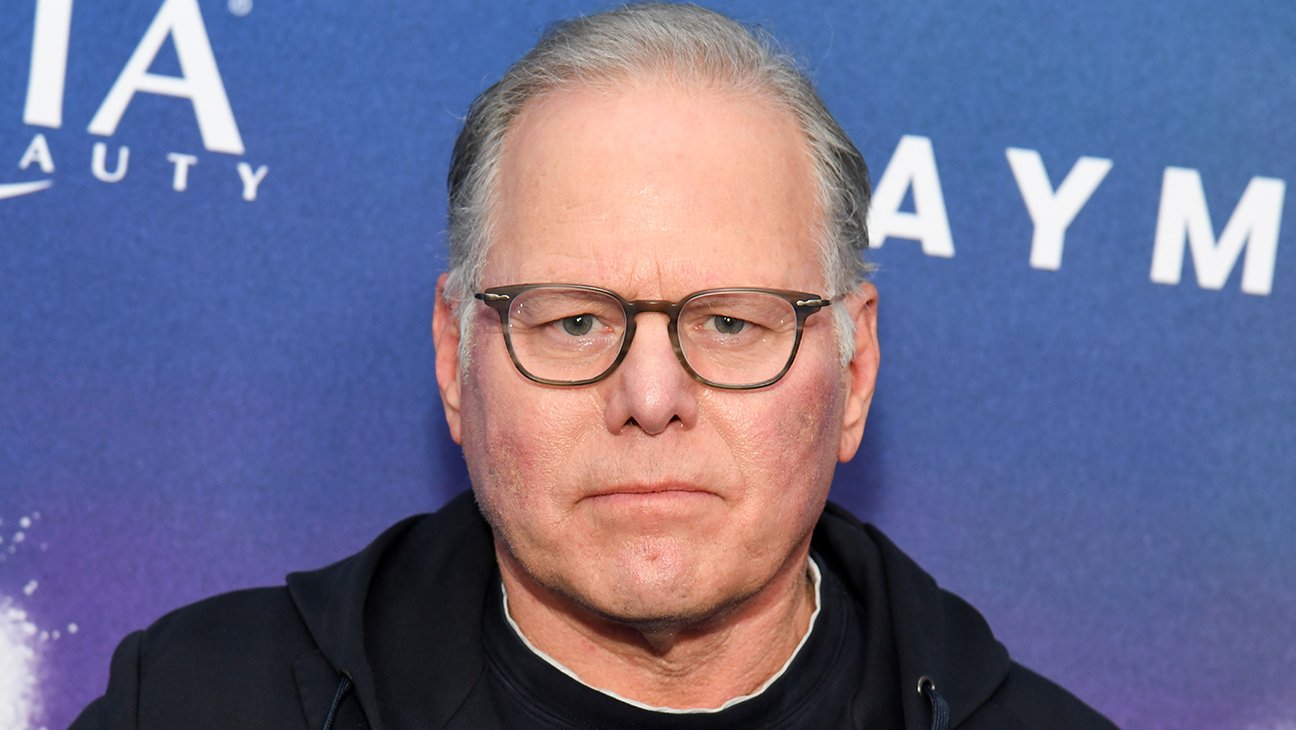
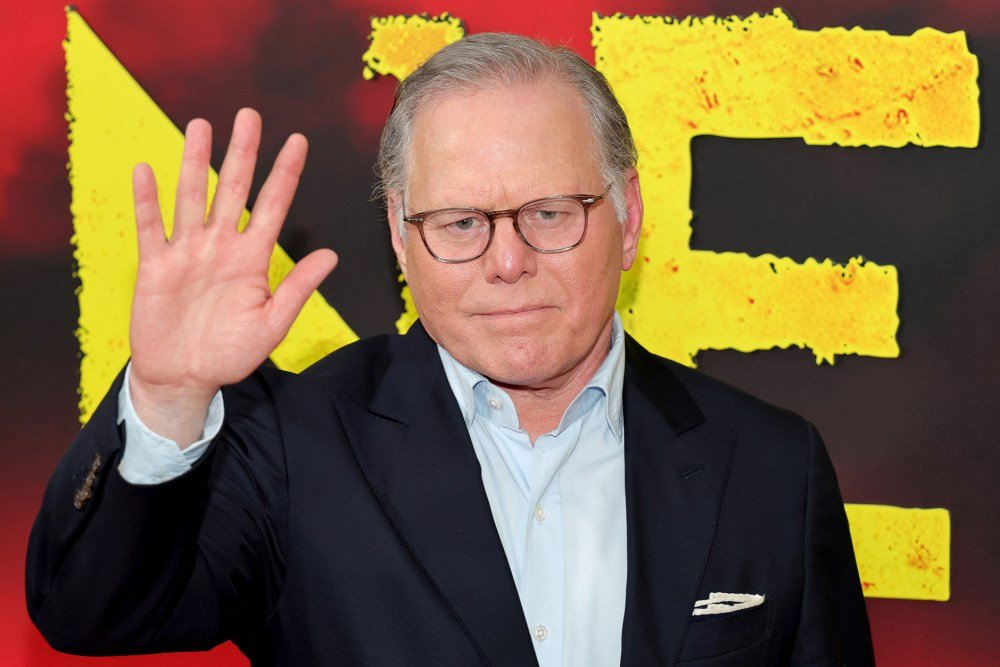
The process — and the drama — continues for David Ellison’s $111 billion takeover of WBD. There have been regular calls emanating from the U.S. and abroad to block the deal. It was originally supposed to be Netflix that bought the “WB” piece of “WBD,” but Ellison swooped in with an even bigger check and a promise to absorb the company in its entirety.
A coalition of a dozen states are attempting to block Paramount/WBD; the case will go to trial in March 2027. Meanwhile, beginning Oct. 1, 2026, Paramount Skydance must begin paying a ticking fee of $7 million per day to WBD shareholders. The ticking fee is only paid out if the deal closes.
Ellison believes the opposition is politically motivated and centers on his potential oversight of CNN’s editorial content. He already controls CBS News, which has undergone many changes since Ellison’s Skydance merged with Paramount Global.
“The issue is whether I can be trusted as a steward of Warner’s CNN. There has been speculation about my politics, my loyalties, my intentions,” he wrote in a recent New York Times op-ed. “Unfortunately, I can’t give anyone a view into my heart and mind, but I can share this: I have regularly voted for candidates of both parties; I hold some views that would be called conservative and others that would be called liberal, just like most Americans; and when it comes to our news operations, I do not aspire to lead these companies to bend their newsrooms to my views. I believe that news should be based on facts and truth.”
There were no updates provided on the pending deal within Warner Bros. Discovery’s earnings report.
Versant, the cable TV-focused spinoff from NBCUniversal that runs CNBC, MS NOW, USA, Golf Channel and other assets, reported lower second earnings on lower revenue and public company costs from its Comcast separation.
Now solo Versant reported revenue for the quarter to June 30 at $1.64 billion, down 3.8 percent from $1.7 billion in the same period of 2025. In that revenue mix, linear distribution was down 6.3 percent to $954 million, as Versant continues to rely on a declining pay TV business.
Advertising revenue at $423 million was down just under 1 percent from the year-earlier period when ad revenue dropped 13 percent. Platforms revenue grew 0.8 percent to $212 million, and content licensing revenue was unchanged at $43 million.
Net income attributable to Versant was down 30 percent at $211 million due to lower overall revenues and one-time costs following the separation from Comcast, including higher tax expenses after the divestiture of SportsEngine. The adjusted EBITDA fell 9 percent to $624 million.
Versant, as it looks to diversify away from traditional pay TV channels to focus more on streaming TV platforms and digital business lines, said it was raising both revenues and EBITDA guidance for the second half of the year. The full-year outlook for 2026 will see total revenue of between $6.2 billion and $6.45 billion, while the adjusted EBITDA will come in between $1.9 billion and $2.05 billion.
“Versant’s brands once again demonstrated strength, durability and scale, reaching more than 120 million viewers each month during the quarter while reinforcing our leadership across news, sports and entertainment,” said Mark Lazarus, Versant CEO, said in a statement ahead of a morning analyst call to also include CFO and COO Anand Kini.
Warner Bros. Discovery has a great story to tell about its streaming business –if only its other operations didn’t get in the way.
The parent of HBO, TNT and the Warner Bros. movie studio said net income in the second quarter fell significantly as growth at its new-tech streaming operations was more than offset by the continued erosion of its cable-TV networks and a weaker studio lineup than in the year-earlier period. TV ad sales fell 22% due to Warner’s loss of NBA games after the 2025 season, and TV distribution revenue fell due in part to a 10% decrease in the number of subscribers to its networks.
Total revenue fell 11% to $8.7 billion, compared with $9.8 billion in the year-earlier period. Net income attributable to the company fell to $149 million from $1.58 billion, partially the result of $1.1 billion of pre-tax acquisition-related amortization of intangibles, content fair value step-up, and restructuring expenses.
Warner is in a difficult spot. It needs to continue to manage its operations even though it has agreed to be purchased by Paramount Skydance. While the proposed deal has won approval in multiple countries, it has been held up in federal court by a coalition of 12 attorneys general who are making the case that the combination of the two media companies would create an entity that would be in violation of antitrust law in areas such as movie production and the operation of cable television properties. The case will not come to trial until next year.
Even so, Warner had some bright spots to show off. Streaming revenue rose above $3 billion for the first time, thanks to an increase of 10% that was aided by expansion of HBO Max in various markets around the globe. In a move that counters conditions at its TV networks, Warner said advertising and distribution revenue increased noticeably at its streaming venues, with distribution fees up 11% and ad revenue up 8%.
Revenue at the company’s studios was off 39% to $2.3 billion thanks to comparisons with the year-earlier period, which benefitted from the release of films such as “A Minecraft Movie,” “Sinners,” and “Final Destination Bloodlines.”
Cashu creator calle said the campaign logged 85 critical and 635 high-severity issues in its first 30 hours.
Contributors each prompt their own agents, which the group says produces a wider spread of hits than a single method would.
Privacy and coinjoin projects carried the highest share of serious findings, at 24%.
A volunteer group calling itself the Bitcoin Red Team has filed 4,962 security findings across 390 Bitcoin projects in roughly 30 hours, running what it describes as a “large-scale ecosystem audit” with AI agents doing much of the scanning.
Pseudonymous developer calle, who created the Bitcoin ecash protocol Cashu, published the campaign’s first situation report on Wednesday. It puts 85 findings at critical severity and 635 at high, together 14.5% of the corpus and an average of 1.85 serious issues per project, filed at 166 findings an hour. He said the team has grown to 16 people working around the clock; the report logs 17 contributors, 14 of them human and three automated.
Bitcoin Red Team update: we’ve grown to 16 globally distributed people working 24/7
We’re running a large-scale ecosystem security audit across bitcoin code bases.
27.5 hours in, we’ve filed 4,962 findings across 390 projects. 85 critical and 635 high severity issues.
Much of the work is still manual, “hand holding the AI,” calle wrote, though automated harnesses are improving, and 91% of findings arrived through automated scan intake. Letting everyone use their own preferred review method “has proven to be the most effective strategy,” he said, because contributors prompt their agents differently and turn up different bugs. Around 21% of findings have been dynamically reproduced with proof-of-concept code.
The severity spread varies sharply by category. Privacy and coinjoin tools returned the highest proportion of high-or-critical findings at 24%, followed by swaps and exchanges at 21% and payments and merchant tools at 17%. Cryptographic libraries and SDKs produced the largest raw volume at 1,101 findings, but only 10% cleared the high bar.
Maintainers are getting flooded
Only 19 projects, under 5% of those reviewed, have had findings disclosed upstream so far, and calle acknowledged the campaign is adding to a difficult moment for maintainers.
“We’re sincerely sorry if our reports added stress to your already stressful day,” he wrote, while arguing the findings should go out fast because project owners are best placed to validate them, validation is now nearly free with AI, and anyone else running the same tools will reach the same bugs. Eight findings have been retired as false positives.
The Coldcard backdrop
The campaign lands as Bitcoin’s security assumptions come under scrutiny. Coinkite’s Coldcard wallet lost users some $130 million after a March 2021 firmware build drew wallet seeds from a software fallback rather than the device’s hardware random number generator, leaving private keys guessable. In a post-mortem, the firm noted it was likely that “someone used AI to review previous versions of our firmware.”
Ledger chief technology officer Charles Guillemet told Decrypt on Tuesday that the incident showed AI was now being used to identify vulnerabilities in crypto code “at machine speed.” He added that “open source and reviewed are not the same thing,” noting the Coldcard flaw sat in public code for more than five years until an adversary reportedly used AI to find it. Defence, he argued, now has to move at the same speed as attackers—as groups like the Bitcoin Red Team are demonstrating.
Daily Debrief Newsletter
Start every day with the top news stories right now, plus original features, a podcast, videos and more.
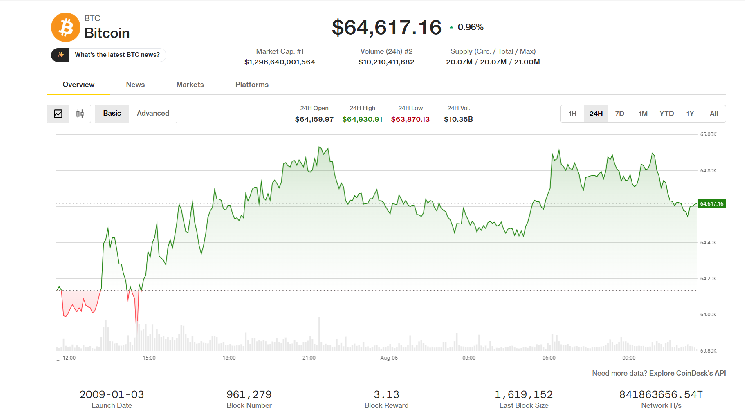
Bitcoin $BTC$64,597.62 has added around 0.9% in the past 24 hours to $64,700, while the broader CoinDesk 20 (CD20) is up just 0.16%. Strength in equity markets, which have climbed to record highs, appears to leave the crypto sector unperturbed.
Crypto appears to be moving to the perceived safety of the biggest tokens, with bitcoin and ether $ETH$1,903.32 the only CD20 members in positive territory. Zaheer Ebtikar, the chief strategy officer at crypto neobank Plasma, told CoinDesk altcoins are struggling “without aggressive support from bitcoin momentum.”
Altcoin open interest has fallen about 15% over the past month while bitcoin has gained roughly 8%, Ebtikar said. CoinMarketCap’s Altcoin Season index fell one point from Wednesday to 42/100.
“Because Bitcoin has moved into capital markets plumbing with ETFs, basis trading, institutional hedging, and collateral, that flow doesn’t need a rally to justify itself. However, most of the altcoin market hasn’t made that transition yet,” Ebtikar said.
The divergence, according to Ebtikar, results from projects failing to clearly define how value accrues, making them unable to justify investors’ exposure to their tokens during market declines.