Bitcoin miner MARA swung to a net loss of $611.3 million from a year-earlier profit in the second quarter of 2026, driven primarily by a change in the value of its Bitcoin holdings, despite reporting its highest quarterly Bitcoin production in more than a year.
The net loss, equivalent to $1.60 per diluted share, is down compared to a net income of $808.2 million, or $1.84 per diluted share, in the second quarter of 2025, according to the company’s 10-Q SEC filing. MARA mined 2,422 Bitcoin in the quarter, 3% more than the prior year period, but higher production was more than offset by a 28% decline in the average Bitcoin price.
“Two things defined Q2 for MARA. Bitcoin prices created a challenging revenue environment [and] we used the quarter to fundamentally transform our power portfolio and capital structure,” said MARA chief financial officer Salman Khan during an earnings call on Thursday.
The quarter highlights MARA’s exposure to Bitcoin prices even as it expands mining capacity and pursues AI and high-performance computing infrastructure. As of June 30, MARA held a total of 35,577 Bitcoin, with a total fair value of $2.1 billion, making it the fourth-largest public Bitcoin holder after Strategy, Twenty One Capital and Metaplanet.
MARA eyes continued AI expansion
In February, the company acquired a majority stake in Exaion SaS, which operates high-performance computing (HPC) data centers and secure cloud and AI infrastructure.
In the same month, MARA also announced a partnership with Starwood Capital Group and its data center development platform Starwood Digital Ventures to enable the conversion of select MARA sites to meet demand from “enterprise, hyperscale and AI customers.”
Related: Bitcoin miners’ AI pivot loses Wall Street’s wow factor
MARA said it is targeting at least two AI/HPC lease signings by year-end.
“Working alongside Starwood, we are progressing lease discussions across multiple sites, and we remain confident in our ability to sign at least 2 leases before year-end,” MARA CEO Fred Thiel said on Thursday.
In July, MARA also agreed to acquire a 1,200-acre powered land site in Matagorda County, Texas, with expected access to up to 2 gigawatts of grid capacity by April 2028. The company said it intends to develop the site for AI and HPC workloads as well as Bitcoin mining.
MARA’s expansion plans also include its pending acquisition of Long Ridge Energy & Power in Ohio, a $1.5 billion deal that MARA has said could support up to 600 megawatts of AI and critical-IT load over time.
Related: Galaxy, MARA Holdings deepen Texas expansion with land acquisitions
Bitcoin mining remains foundational
In a letter to shareholders on Thursday, Thiel said Bitcoin mining still represents the core of MARA’s business and will continue to generate cash flow that supports its other investments.
“Ultimately, we do not view Bitcoin mining and AI infrastructure as competing businesses,” said Thiel.
“Our capital allocation philosophy remains straightforward. Every megawatt should be deployed into its highest-value application. In some markets, that will continue to be Bitcoin mining. In others, it will be AI infrastructure, sovereign cloud, or enterprise computing.”
Magazine: 10 weirdest things ever tokenized… including farts
Today, a total of 6 companies own 90% of the American media market. A recent decision in the Trump administration now allows a single company to reach more than a third of US households, a concentration that hasn’t been seen since television’s birth nearly 70 years ago.
UPDATED, WITH Nexstar comment: Nexstar officials cannot serve on the board of Tegna as an order remains in place to keep the two companies separate, a federal judge ruled on Thursday.
U.S. District Judge Troy Nunley clarified that his preliminary injunction, issued in April, prohibited current and former Nexstar “officers, employees, directors, consultants, or other affiliated personnel” from serving on Tegna’s board. He wrote that Nexstar had to file a report within 10 days to ensure compliance.
“It is shocking that Defendants think installing a Board of Directors comprised primarily of Nexstar executives would not create influence over Tegna management,” the judge wrote. “This undermines Tegna as an independent entity and violates the preliminary injunction.”
The judge also admonished Nexstar for their “lack of candor,” pointing to their lack of disclosure of the fact that three Nexstar officials, including CEO Perry Sook, were appointed to the Tegna board.
“Defendants repeatedly failed to disclose material information to this Court, declined to seek Court guidance or relief, and then publicly declared that the Court had ‘approved’ their actions,” the judge wrote.
A coalition of state attorneys general and DirecTV sued to block the Nexstar-Tegna merger in March. In the next 24 hours, the FCC gave its greenlight to the transaction, and Nexstar closed the deal soon after that.
Nunley later granted a preliminary injunction that requires that the Nexstar and Tegna assets and operations be kept separate.
The plaintiffs last month objected to the presence of Nexstar officials serving on Tegna’s board, including Nexstar CEO Perry Sook.
In his order, Nunley also ordered a set of steps to ensure compliance, including providing board minutes and other documents to the plaintiffs on a monthly basis. He also directed the parties to file a stipulation and proposed order to potentially appoint a special master to oversee compliance. The judge wrote that Nexstar’s actions “violated the preliminary injunction as clarified. Therefore, ongoing compliance monitoring and discovery is warranted in this case to ensure adherence to the preliminary injunction, particularly in light of Defendants’ lack of candor.”
A Nexstar spokesperson said in a statement, “We will comply with the court’s order, including its requirements regarding Tegna’s Board and the compliance process going forward. We remain focused on defending the transaction on the merits and strengthening local broadcasting for communities across America.”
Nexstar is appealing the preliminary injunction, with oral arguments expected in November or December. A trial is on the docket for next year. The company had argued that its executives must sit on the Tegna board to fulfill Sarbanes-Oxley Act requirements and debt agreement obligations, but the judge wrote that he was not persuaded.
The company said in a statement last month that it “has scrupulously complied with the Court’s hold-separate order. Tegna continues to operate independently, and Nexstar has no involvement in Tegna’s retransmission consent negotiations, content decisions, staffing, or other day-to-day operations. Nexstar’s executives’ service on Tegna’s Board is consistent with the Court’s order and is critical to ensuring that Nexstar can continue to satisfy its financial reporting obligations while the hold-separate requirements are in place.”
The plaintiffs argued that “antitrust law prohibits executives of one company from serving on the board of a competing company because doing so would enable a company to influence its competitor and access its confidential information — exactly what this Court’s preliminary injunction seeks to prevent.”
Only Murders in the Building showrunner John Hoffman wouldn’t mind if the show went on forever.
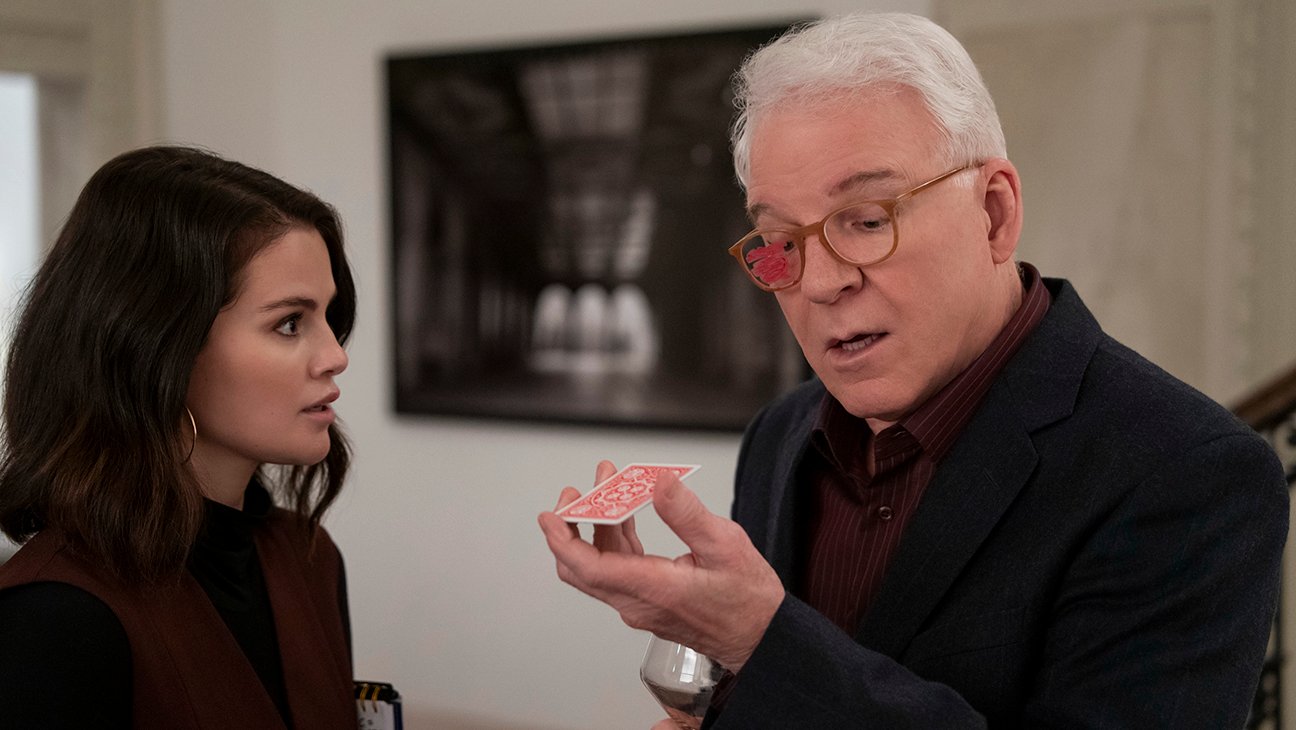
The true-crime comedic mystery, starring Martin Short, Steve Martin and Selena Gomez, nabbed five Emmy nominations for its fifth season, including one for outstanding comedy series — a nod it’s received every year since its first season in 2021.
“Many people have asked, ‘How long are you going to stay with that show?’ ” Hoffman tells The Hollywood Reporter. “I’m like, ‘Until they want to stop.’ No one’s doing anything without me because I just love this group.
“Each season, there has always been that drive in me to say, ‘No, we’ve done that.’ ‘No, that’s not fresh,’ or, ‘That thing doesn’t subvert,’ ” Hoffman continues. “All of that comes up, so I just keep pushing that way just naturally as a writer and director however I can.”
For season six, Hoffman and the Only Murders in the Building creative team are pushing the story overseas to London, a risk for a show whose niche and clever conceit is also conveniently its title.
Whether the show could survive traveling to a wholly different backdrop had been an obstacle Hoffman had wanted to tackle since early in the series’ run, he says.
“There’s no way around a certain understanding of needing to freshen up a show. I mean, how many murders can be in one building?” Hoffman says. “It felt like the right time. I love the idea of however we can broaden the reach of the show and put the trio in new situations, new landscapes for a moment.”
For five seasons of the critically acclaimed show, its titular building and the New York City skyline have been critical to its DNA. In upping the ante for its sixth season, Hoffman says the team knew it was important to keep that tone and spirit in the show.
“There’s no question it’s a New York show, even as we jump to London for an entire season,” Hoffman says. “It’s been really interesting to look at the show anew in this way after five seasons and yet also see what we can hold on to.
“The spirit of the show and the center of it and the emotional hook and how it feels, surprisingly, still feels like our show, and there isn’t a shift that takes us out too much,” he adds. “So that part is always the driving force, wherever the case takes them, whether it’s New York or some other place. I will happily report that London has been incredible for us.”
One way the show has always managed to keep things fresh is by adding new guest stars to the cast and giving them plenty in the script to play with. Jane Lynch, Nathan Lane, Paul Rudd, Da’Vine Joy Randolph, Matthew Broderick and Meryl Streep have all been nominated for past guest roles on the show.
The next time Short, Martin and Gomez appear onscreen, they’ll be joined by iconic British film and TV actors, including David Tennant, Jodie Whittaker, Jim Broadbent, Martin Freeman and Olivia Colman.
“I watch the show get deeper, richer, funnier, crazier and just marvel at it and then watch everyone else come aboard and sink into an ensemble when they’ve been the stars of their own things,” says Hoffman. “They find their way here and they’re brilliant, elevating your material and everything else around them, and the vibe around the set changes and, boy, I would not say no to that.”
This story first appeared in an August stand-alone issue of The Hollywood Reporter magazine. To receive the magazine, click here to subscribe.
The Fast & Furious franchise may be stuck in neutral, but Louis Leterrier is charging full speed ahead.
The French filmmaker behind Fast Xand its long-gestating follow-up, Fast Forever, is releasing the genre-blending thriller, The Last House, on Aug. 7 via Netflix. He’s also about to wrap production on a sci-fi action thriller called Liminal for Apple. On top of those features, the fourth season of Lupin, the Netflix series he co-showruns, drops in October. He even launched a production company known as Carrousel Studios with his Lupin lead, Omar Sy, and The Last House EP, Thomas Brenski.
The Last House chronicles the Delgado family — led by Wagner Moura’s Jason and Greta Lee’s Ann — as they try to raise their two children inside their house that has been mysteriously sealed shut, leaving them with no way out. One might assume that a film set almost entirely within a single residential home would be far easier to pull off than the globe-trotting spectacle of the Fast franchise and the constant management of its massive movie star ensemble. Yet Leterrier says the genre exercise about coexistence and mercy was the most challenging film of his career.
“The Last House was the most difficult film I’ve ever done. You have no idea. It was awful,” Leterrier tells The Hollywood Reporter. “I tried to make everything practical. We built a real house … and a whole neighborhood on stage. And as the movie evolves, the house evolves. So it was very technical and very difficult, but I loved every second of it. I love it now [that we’re done]. Every day, the cast and crew looked at each other and were like, ‘Oof, this is a tough one.’”
As for the 11th, and series-capping, installment of the Fast Saga, Leterrier insists he’s still attached regardless of his busy schedule. As has been widely reported, he confirms that Fast Forever’s budget remains the biggest hurdle.
When Furious 7 (2015) and The Fast of the Furious (2017) became billion–dollar grossers — largely due to China driving nearly $400 million-worth of ticket sales — the creative team continued to up the ante, adding more and more ambitious sequences, as well as star power. However, the last three entries, including the spinoff Hobbs & Shaw, have regressed to an average around $730 million worldwide, and China’s attendance, in particular, has fallen 45 percent to 65 percent. Thus, the producers have to find a creative way to split the difference given how unpredictable the box office is these days.
In any event, Leterrier is eager to get started despite not reading a script yet, but he also can’t spin his wheels until the Fast brain trust and studio get their ducks in a row.
“I can’t wait, but I also cannot wait. Directors don’t idle well, so I have to direct [other projects until then]. I love this franchise, and I hope we get to finish in the best way possible,” Leterrier says. “I’m contracted. [If] we go, we go. We’re lucky to be having a great year [at the box office], but it’s different now. Movies have evolved and tastes have evolved and the box office has evolved. So we have to align our budgetary needs to the reality of the box office. We know that, and it’s fine. Everybody does that. It’ll be fine.”
Below, during a conversation with THR, Leterrier also discusses the inspirations behind The Last House, as well as its format shift from 35 mm to digital midway through the piece.
****
We last spoke for Fast X, and you obviously went all over the world to film that movie. Did the rigor of that globe-trotting production make a contained movie like The Last House all the more appealing?
Yeah, absolutely. But I didn’t know that my wish would become a nightmare. The Last House was the most difficult film I’ve ever done. You have no idea. It was awful.
How come?
Because I tried to make everything practical. We built a real house with wild walls and a liftable ceiling, and we could light it easily. It was one-way concrete and wood. We built a whole neighborhood on stage. The garden, rain and animals were real. There was one dog, but the rest were wild animals that acted like wild animals. And as the movie evolves, the house evolves. So it was very technical and very difficult, but I loved every second of it. I love it now [that we’re done]. (Laughs.) Every day, the cast and crew looked at each other and were like, “Oof, this is a tough one.”
Director Louis Leterrier and star Wagner Moura on the set of The Last House
Chris Baker/Netflix
Most directors start their careers with something tied to a single location, but you did two decades of globe-trotting before finally doing a contained movie.
We’re better when given a box, and I literally gave myself a box. If you’re given parameters that are a little contained, you think about your shots and the acting a bit more or a bit differently. Obviously, I do this whenever I work on a big canvas, but it’s not as compromised. You have to trust your savviness and your instinct a little bit more than just putting five cameras on something and going.
I had to be very specific on this one because it was smaller and the budget was much smaller. It’s one of the smallest movies I’ve made, but it needed to be to make my first very personal movie. This one spoke to me when I read the first act. The script is quite different from the final movie, but when I read it, I was like, This movie is talking about me as a human being, as a father, as a family member and as a member of society. So I was willing to let go of the super giant production to go a little tighter.
What were your points of reference?
I wanted to capture that feeling of a dark 1980s Amblin or Spielberg movie: Close Encounters of the Third Kind,Poltergeist and E.T. These movies spoke about us, and they certainly spoke to me because I experienced the world through giant screens. So I tried to capture that feeling with this one — and by mixing formats.In the [intimate character-driven] first half of the film, we used spherical lenses on 35mm [à la E.T.], and then anamorphic C-series lenses on digital in the [more adventurous] second half.
The Last House makes the COVID pandemic look like a staycation. The Delgado family are literally stuck inside their house, and they have to survive on what they already have on hand. Did the writer Matthew Robinson birth this script during the pandemic?
I think the first act was born shortly after the pandemic. Matthew Robinson wrote it during a two-week fever dream. So the first act stayed pretty much the same, but then it evolved a little bit. I didn’t want to make a COVID movie, but I did want to make a movie that spoke about our universal experience during the pandemic. The first month was surviving physically and feeding yourself and trying to protect yourself. But it very quickly evolved into surviving psychologically, mentally and emotionally. I think we’re still reeling from it. As a society, we don’t interact the way we used to interact before COVID. That’s where our movie begins, and we can jump through the exposition much quicker to get to the characters.
Noah Alexander Sosnowski as Graham, Wagner Moura as Jason, Greta Lee as Ann, Riley Chung as Ruth in The Last House
Chris Baker/Netflix
As I was watching, I kept wondering if you shot sequentially because the story and structure really support that ultra-rare scenario. I’ve since learned that you did actually shoot in order. Was that a requirement for you?
It would’ve been impossible to do it otherwise because we only had one house. It was shot in sequence, but we planned it backwards. We peeled back layer after layer. Again, because I’m an insane person, I was all about the practicality of everything. I didn’t want anything to be brought into the house later that wasn’t in the house at the beginning. So I couldn’t come up with an act two idea, such as, Let’s put a car here or a bike there. Everything that they use and consume had to be seen from the start.
We consulted survival experts to calculate how much wood they could remove from the walls to heat themselves or build something they needed over the course of [six or seven] years. And everything in the house worked. The hunting traps were built practically out of Dyson vacuum cleaners and skateboards. We could literally go hunting if we wanted. We didn’t, obviously, because those wild animals were fine, but the traps worked perfectly. Everything was just done so perfectly. Our production designer, Kevin Jenkins, and his team worked so hard at making the house and the contents of the house so perfectly real.
Thanks to Jane Petrie’s costume department, the sweatshirt that Greta Lee wears in the beginning becomes something else in the middle and then becomes a fishing line at the end. We had one sweater, and we just took it apart.
Not to mention, our poor actors had to gain weight and then lose weight and muscle to feel really weak. Then they had to gain weight again and be aged up. All of that stuff took a toll on them, but they did it willingly and amazingly.
Fast Forever, or Fast 11, has taken so long that you’ve made two other movies in that time. Are you still going to wait it out? Or have you run out of patience?
No, I love Fast. I worked very hard in coming up with the idea for the end and everything. I was so lucky to be a part of the franchise. So I can’t wait, but I also cannot wait. Directors don’t idle well, so I have to direct. (Leterrier snaps fingers a few times to signify how he needs to keep directing projects.) I created a studio in Europe. We wrote and shot a season of Lupin, my show in Europe. I did two movies [The Last House and Liminal], and I’m doing another one. So I cannot wait. But I love this franchise, and I hope we get to finish in the best way possible.
So it’s a maybe at this point in time?
No, I’m contracted. [If] we go, we go. We’re lucky to be having a great year [at the box office], but it’s different now. Movies have evolved and tastes have evolved and the box office has evolved. So we have to align our budgetary needs to the reality of the box office. We know that, and it’s fine. Everybody does that. It’ll be fine.
Most projects don’t go off the rails because people stop working—they go off the rails because timelines, dependencies, and priorities get messy. Microsoft Project Professional 2024 helps bring order to the chaos, giving you one place to plan, schedule, and track complex work. Right now, you can grab a lifetime license for just $48.99 with promo code AUG25 through August 9 (MSRP $1,129.99).
Designed for project managers and team leads, Project 2024 includes prebuilt templates, dependency tracking that automatically adjusts schedules, and interactive Gantt charts that make it easier to see how every task fits into the bigger picture. Built-in reports, multiple timeline views, and what-if planning tools help you make smarter decisions before small delays become major setbacks.
It also supports timesheet tracking, Project Online, Project Server sync, and Microsoft Teams integration for easier collaboration across projects.
If spreadsheets and scattered task lists aren’t cutting it anymore, Microsoft Project Professional 2024 offers a more capable way to stay organized.
Prices subject to change. PCMag editors select and review products independently. If you buy through StackSocial affiliate links, we may earn commissions, which help support our testing.
About Our Expert
StackCommerce Team (Sponsored)
Experience
Products featured in these stories are selected by our partners at StackCommerce. If you buy something through links on our site, PCMag may earn an affiliate commission.
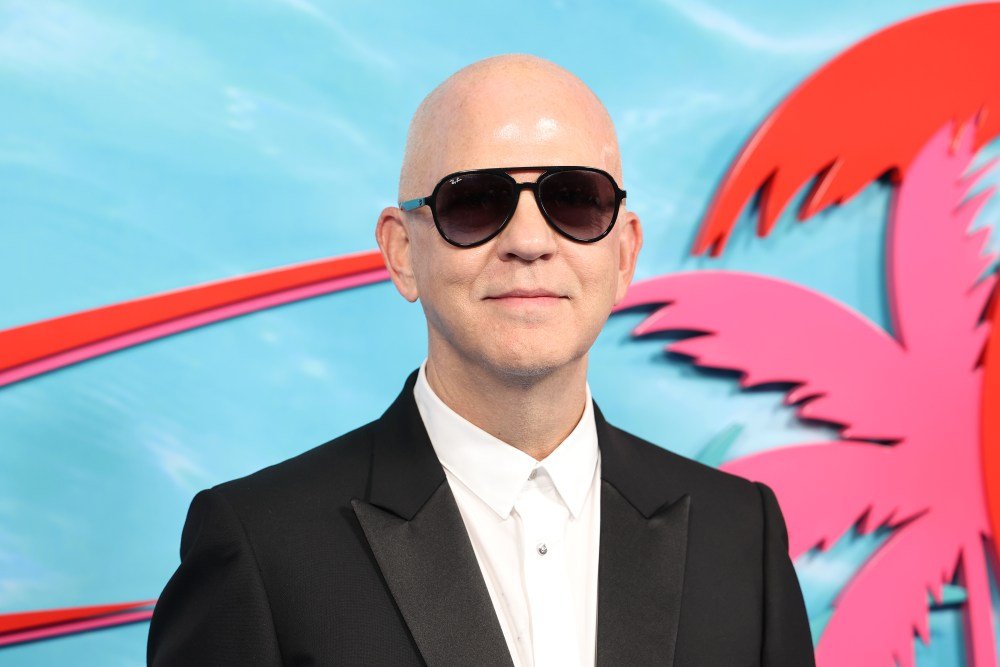
FX’s “The Shards,” Ryan Murphy‘s adaptation of the Bret Easton Ellis thriller novel, is a love letter to Los Angeles. Filming there, he told his producers, was a non-negotiable.
“We shot it in L.A. and, of course, it could have shot in Canada,” the showrunner told Variety at “The Shards” New York premiere on Monday night. “I could have made it for cheaper, but I said absolutely not. My partners were like, ‘Great, let’s roll up our sleeves and make it work.’ And we did.”
Hollywood, once the epicenter of American film and television productions, has been grappling with production fleeing California in search of more competitive tax incentives. Despite recent efforts from state and city officials to increase tax incentives, Los Angeles production volume dropped 3.1% in the second quarter of 2026.
During a rare interview with Variety, Murphy explains why he “demanded” his next two projects shoot in Los Angeles, and how he was “very conscious” about the way sex was portrayed in “The Shards.”
Well, that’s interesting because one of the first things I did was “Nip Tuck.” It’s funny, I directed the pilot and worked on all the episodes, so I don’t consider that there’s a lot of sexual content in it.
What I like about this show is that it has a lot of romantic relationships that turn into romantic triangles. At the heart of the show, there are several strong romances that — in success — would carry on over three seasons. But I was very aware, and I made it about that idea. So, I think the key is not a lot of graphic-ness, but then you see something like “Heated Rivalry,” which was done so beautifully. And everyone’s obsessed with it.
The key is that it’s not about the sexual content; it’s about whether [the audience] likes the characters and what they’re doing. This show is different than [“Heated Rivalry”]. This is a high school show: first times, first kiss, first break-up. So I think that generation of young people will like it for that reason. I hope so, but I was very conscious about that when I was making it.
Homer Gere stars in “The Shards.” He just had a breakout role in “Euphoria.” Is that where you found him?
No, I did not know Homer. He auditioned, and I saw his audition. We auditioned close to 500 people for these parts [over] many, many months. He just gave an incredible audition. I mixed and matched him with the cast. All of these actors earned those parts. I would never have dug them up.
You watched “Euphoria,” though?
Well, afterward, when we were shooting [“The Shards”]. And I’m friends with Sam Levinson. [Gere] had just done one episode, but he was cast before I knew about “Euphoria.” I thought, “Well, good for Sam. Homer’s a star and a great actor.” What Homer did in that show was incredible. Very brave. People had a lot of opinions about that, as they do. But no, I had my own relationship independent of seeing that show. But I watched that show as a fan. I love that show. I always have. It’s incredible.
The biggest Hollywood story of the year is the Paramount-Warner Bros. merger. Do you feel confident that creators will continue to thrive amid the potential industry consolidation?
Well, I think they will always continue to thrive, right? There have been many of those [mergers] in our history. The thing that I’m very conscious about and would like to protect is the jobs. Keep the jobs, and more specifically, my next tranche of work is bringing filming back to Los Angeles. It’s ridiculous. It’s a travesty. I think the mayor [Karen Bass] could do a much better job than she’s done, for one.
That’s also on the filmmakers to figure out the economic troubles and how to make things in L.A. so that our crews and cast can sleep in their home city, go home and have meals with their families. I have two things shooting, and they’re both going to be in L.A. I demanded that. I made that work economically. The most important thing to me is that it’s up to the individual showrunners and filmmakers to say, “Hey, we want this.” In my experience, as long as you can figure out a will, there’s a way. And they’re the first people to say, “Great, we’d love for it to shoot in L.A.”
I don’t think that’s the obstacle. It’s always the tax credits. The tax credit in L.A. should be better. It should be made more interesting and inviting to the studios. That starts with the government. I’ve spoken to the governor about this. He’s a friend, Gavin [Newsom]. He agrees. I haven’t spoken to Mayor Bass about this. I’d love to, but I think start there. Do that. That’s what matters.
I think they’re making progress. Do you have faith they can pull it off and bring back more productions?
I hope so. I started working in Hollywood in 1995. There’s nothing more haunting than walking on those beautiful soundstages that are ghost towns. It’s upsetting, and it doesn’t have to be that way. Everybody wants to shoot in L.A.
And this show is a love letter to L.A.
Right. And we shot it in L.A. Of course, it could have shot in Canada. I could have made it for cheaper, but I said absolutely not. My partners were great about that. They were like, “Great. Let’s roll up our sleeves and make it work.” And we did.
MetaMask has officially launched Agent Wallet, a self custodial wallet that allows AI agents to execute onchain transactions while operating within rules established by the user.
Your agent finally gets its own wallet.
MetaMask Agent Wallet is now live for everyone. pic.twitter.com/F81PZ7etxv
— MetaMask 🦊 (@MetaMask) August 6, 2026
The wallet lets users connect AI frameworks including Claude Code, OpenAI Codex, OpenClaw, Hermes, OpenCode, and Cursor. Agents can then monitor markets, prepare transactions, and execute trades through MetaMask’s command line interface.
Users can establish daily spending limits, allowlisted protocols, and risk preferences before granting an agent permission to transact. MetaMask offers two operating settings called Guard Mode and Beast Mode.
Guard Mode requires agents to remain within approved protocols and spending limits. Transactions outside those rules are paused and presented to the user for two factor approval through email or the MetaMask mobile app.
Beast Mode removes some of the policy restrictions for advanced users, although transactions identified as malicious are still blocked and sent for human approval. Agents cannot bypass MetaMask’s security checks, according to the company.
The wallet supports execution across Hyperliquid and supported Ethereum Virtual Machine networks, including Robinhood Chain and Monad. It can complete token transfers, swaps, batch transactions, and other decentralized finance operations.
MetaMask said users do not need to hold a network’s native token to pay gas fees when completing eligible transfers and swaps. The wallet can instead settle the network fee using the token involved in the transaction.
Supported EVM transactions pass through a three stage security process before execution.
The first stage simulates the transaction and displays expected balance changes, token approvals, and gas routing. The second scans for threats using technology powered by blockchain security company Blockaid. The final stage uses MetaMask’s Smart Transactions system to limit value lost through maximal extractable value activity.
Eligible transactions that pass the security process but still result in a covered loss may qualify for MetaMask Transaction Protection of up to $10,000 per month, subject to the program’s terms and conditions.
Agent Wallet supports server wallets, where keys are secured separately from a user’s primary wallet, and a bring your own wallet option that keeps keys on the user’s device. MetaMask said users retain control of their keys and can export their secret recovery phrase.
Developers can access the wallet through MetaMask’s CLI and install dedicated skills that translate natural language requests into wallet commands. The system returns structured information that can be processed by compatible AI models and agent frameworks.
MetaMask first introduced Agent Wallet through a limited early access release in June. The company announced its official launch on August 6, opening the product to traders and developers testing agent driven onchain workflows.
Another week, another turn of the screw in the Paramount–Warner Bros. Discovery merger — aka David Ellison vs. the creative community. Microdramas may be all the rage in Hollywood, but they’ve got nothing on what’s currently playing out in state attorneys general offices, C-suites and op-ed pages.
With a host of players lining up on both sides of the deal and the AG’s picking up a major victory this week in their case against the merger, The Hollywood Reporter thought it a good moment for two staffers covering the story, Steven Zeitchik and Alex Weprin, to sit down and talk about it.
Steven Zeitchik: Well, it’s been an eventful week. The judge basically handed the AGs major leverage by setting the trial all the way in March instead of in the fall, which will cost Par (and gift WB shareholders) hundreds of millions of dollars in penalty fees, I think it’s about $7 million per day. This puts tons of pressure on Ellison to make a deal, doesn’t it?
Alex Weprin: I think they will need to try and figure out what they can do to get a settlement done. The AGs want structural remedies, and I wonder if there are enough things they could divest to appease them. Basic cable channels? There are ways to do that. Film studios? I’m not so sure.
SZ: Ya, I think the question is what the floor is for the AGs and what the ceiling is for Ellison, and do they overlap. I feel like he’d probably be willing to part with a Nick or MTV to get it done since he’s really more of a film guy, but would that be enough for Rob Bonta et al? There are also theatrical commitments beyond just words but not sure how that would work. A CNN divestiture would be a big political win but as you’ve noted the AG’s have staked their case on consolidation, not political speech. They can still spin it though as “diversity of voices” or some such. Settlements have a way of healing all wounds.
AW: I think Paramount needs CNN more than just about any of the other cable assets — it is simply more profitable and more stable than the other WBD cable channels. The cost savings from merging CBS and CNN could also be significant. If the antitrust case is based on pay-TV channel penetration, they could probably carve out a nice chunk of channels, and maybe just keep CNN and a couple more to keep everything below the limits.
SZ: Yeah I can’t see Ellison being at all willing to part with it. But how far does he go to fight — does he want a messy trial and billions in shareholder penalty fees or are is he incentivized to make it go away quicker? Would he settle for an ombudsman/oversight board? Selling a minority stake? It’s hard to see where there’s common ground here, and the AGs are feeling their oats.
AW: I think he’d be thrilled with an oversight board, I just can’t imagine that would appease the AGs. They may smell blood in the water. And again, cable TV is in many ways easier because the past year has seen spinoffs and sales, so you can imagine how it would work. He wants the Warners film studio, there’s no obvious structural remedy there, right?
SZ: I don’t see how the studio gets taken out of this. Some commitment to a certain number of movies would be the only possible solution but how do you enforce that governmentally and is it even legal? Part of the problem here is that the critics are opposed to consolidation but consolidation is why he’s doing this! So I don’t see how you make everyone happy. The other chip of course is HBO. That’s obviously a huge one for the creative community — the crown jewel and big buyer — and one they would be THRILLED to see not go with Ellison. But is there any way he lets that go? Maybe if he was really, really, in a gun to his head situation. Maybe.
AW: I think HBO and HBO Max are the key gaining streaming scale for them, so I think it is a must have for him. The good news for Ellison is that the AG’s case is so focused on basic cable that they don’t even touch HBO, which would make it an odd chess piece to play. I think that AMC and Regal Cinemas CEOs, meanwhile, are angling for a binding commitment to make a minimum of 30 movies per year for an extended period of time. There is precedent: When Comcast acquired NBCUniversal, they agreed to certain conditions for seven years.
SZ: Interesting re: Comcast, I’d forgotten about that. And yeah, the Max+Plus juggernaut is a real selling point for him. Honestly that’s the rare case where I think the whole need-to-compete-with-the-tech-guys argument holds water. With the number of subs each has (though there’s probably a fair bit of overlap) the combined Max-Paramount Plus really would be a pretty staunch competitor to Netflix, Amazon and Disney+ (and I guess a surging Peacock and Apple to a rather, um, lesser extent). So basically if we had to predict it feels like a few cable channels get spun off and the studio commits to a theatrical floor of some kind and both sides call it a win. Who wins in that scenario? Is the creative community appeased? Should they be?
AW: I don’t think there’s any scenario that appeases the creative community, but selling off a bunch of cable channels (maybe or maybe not including CNN) would be a start, and a binding commitment to 30 films for an extended period would please the theater owners. The issue for writers, actors, etc is that it will still mean one less buyer for their wares, and that is a harder nut to crack. Here’s a wildcard: What if they … cut a deal with Netflix? Maybe sell Netflix the film distribution division, one of the WBD sub-studios, some IP? Maybe sell some cable channels to Versant or private equity?
SZ: Wow, Netflix coming back in for anything meaningful would be a true — dare I say — Game of Thrones-like twist. It’s hard to imagine the creative community being appeased by THAT, since they were even more worried about Netflix than they were Par given the former’s anti-theatrical stance. But it would certainly address monopoly/consolidation fears. As for the cable channels to private equity, that would technically be a win but I think of the be-careful-what-you-wish-for variety.
AW: Movie theaters have been battered since COVID, and this is the first good year since then. I think they fear the merger falling through and one or both companies not having the capacity to produce as many movies as they did, I think they fear the merger being completed without any binding commitments around a minimum number of films. A binding deal for a minimum of 30 films for an extended period (maybe seven years, the length of the Comcast commitments) could give them a runway to try and salvage their businesses.
SZ: It’s certainly a lot more attractive for a studio to make that commitment now than it was seven months ago when the deal was announced and before the big box office rebound. Let’s pivot quickly to the other part of the story this week — the allies. You mention Regal and AMC. The CEOs of those companies just came out in favor of the deal. Not a huge surprise to me — they are reading tea leaves and angling for favorable terms. What do you make of that? And what do you make of the gambit — pretty transparent it seems to me — to get people like Ari Emanuel to sing Par’s praises and show “hey, not all Democrats oppose this!” (Just the major ones in Congress, many of the AGs and many of their biggest donors in Hollywood).
AW: Ari is obviously in business with Paramount (and everyone else, to be fair), and he has clearly been a consigliere to Ellison in recent years. No doubt many of his clients oppose the merger, and as an agent he must be cognizant of the competition factor. But, yes, he is out there as a well-known Democrat (albeit one who is also friendly with Trump) supporting the deal.
SZ: I’m just not sure having people with obvious skin in the game — Chris Wallace is another one, a RedBird advisor and guy who may well want to get back on CNN who wrote a pro-merger column for THR this week — coming out in favor of the deal achieves anything strategically. Ellison also wrote that NYT op-edmaking his case. If anything I feel like seeing all these foot soldiers out there stumping for it could backfire for Ellison, make opponents — and there are so many in the creative community — feel like the deal is rigged. Anyway should be an interesting few coming weeks. Or is it years? I’m losing track.
AW: My suspicion is that if both sides are open to structural remedies, we will know more sooner rather than later. But either way it would make a great starting point for a Succession spinoff series.
SZ: That could be the new HBO’s first greenlight! Great chatting as always.
DC Studios co-chief James Gunn is putting to bed one of the more popular online rumors about the upcoming “The Batman 2,” directed by Matt Reeves and once again starring Robert Pattinson as the Dark Knight. Social media has been convinced that Reeves is filming “The Batman 2” and “The Batman 3” back to back, alleging this is one of the reasons his sequel to 2022’s “The Batman” spent so many years in development. Not so fast.
Gunn was asked on Threads to confirm or deny the rumor about two “Batman” sequels shooting back to back, to which he bluntly answered: “I can deny.”
It’s not uncommon in Hollywood for studios to shoot sequels back to back as one huge production. This is how “The Matrix Reloaded” and “The Matrix Revolutions” were filmed after the blockbuster success of the “The Matrix,” for instance, as were “Pirates of the Caribbean: Dead Man’s Chest” and “At World’s End” following the huge reception for “The Curse of the Black Pearl.” Marvel shot “Avengers: Infinity War” and “Avengers: Endgame” as one production over the course of an entire year.
Warner Bros. recently delayed the release of “The Batman 2,” which is now in production in London. The movie will open in theaters on Feb. 18, 2028, nearly six years after the March 2022 opening of “The Batman.” Joining Pattinson in the long-delayed sequel are Scarlett Johansson and Sebastian Stan, plus Charles Dance, Brian Tyree Henry and Sebastian Koch. Reeves co-wrote the sequel’s screenplay with Mattson Tomlin. Plot details remain under wraps, as do the roles being played by the film’s supporting cast.
“The Batman Part II” was originally supposed to open Oct. 2, 2026, before Warner Bros. delayed it to Oct. 1, 2027. Moving the film to 2028 gives Reeves additional time in post-production.