CFTC Chair Michael S. Selig directed staff to explore crypto market structure rules using the agency’s existing authority.
Selig said he will direct staff to formally propose the rules if the Clarity Act remains stalled in Congress.
The potential framework could cover crypto exchanges, leveraged trading, and on-chain finance protocols.
Commodity Futures Trading Commission Chair Michael S. Selig has directed agency staff to begin developing crypto market structure rules, preparing the regulator to act if Congress fails to pass the Clarity Act.
Speaking Thursday at the inaugural meeting of the CFTC’s Innovation Advisory Committee, Selig said passing bipartisan market structure legislation remains his preferred path. If the bill remains stalled, however, he said the CFTC will use its existing authority to establish a regulatory framework for crypto markets, calling it “the most important step towards future-proofing this industry is passing this bipartisan bill.”
The Clarity Act would establish a federal framework for digital assets and clarify the CFTC and SEC’s roles in overseeing crypto markets. Selig said legislation would make those rules harder for a future administration to reverse.
“Passing Clarity is the surest way that we can prevent another Gary Gensler from running a rogue campaign of lawfare against the individuals and companies in this room today,” Selig said, referring to the former SEC chair who brought several costly lawsuits against crypto startups.
On Wednesday, President Donald Trump urged Congress to pass a “fair version” of the Clarity Act. However, if Congress fails to act, Selig said, the CFTC is prepared to move ahead on its own.
“If Clarity continues to stall because of Democrat obstruction, the CFTC will utilize its existing authorities to begin establishing a regime for crypto asset markets,” he said.
Selig has already directed staff to begin exploring what those rules could look like.
“To achieve this, I’ve directed the CFTC staff to begin exploring rules to codify a CFTC market structure for crypto assets using the agency’s existing authorities,” he said.
Under the framework outlined by Selig, current CFTC registrants and currently unregistered crypto exchanges could come under CFTC oversight and offer leveraged or margined crypto trading under rules tailored to digital asset markets.
Selig also directed staff to work with developers of on-chain finance protocols on how they could legally operate in the United States.
“I’ve also directed staff to engage with developers of on-chain finance protocols to establish ways in which developers can offer their protocols in a legal and compliant manner in the United States, future-proofing developer protections once and for all,” he said, referencing previous comments made by President Trump.
During the press conference with leading crypto executives on Wednesday, Trump also said Selig is working to bring decentralized perpetual futures exchange Hyperliquid into the United States.
Selig said the agency will give Congress more time to pass the Clarity Act before moving forward on its own.
“Rest assured, I will direct CFTC staff to move swiftly to propose these rules for the industry,” he said.
Daily Debrief Newsletter
Start every day with the top news stories right now, plus original features, a podcast, videos and more.
“Naruto” fans will have access to the popular anime franchise’s first-ever digital card game with Thursday’s worldwide launch of the officially licensed “Naruto Ninja Cards.”
Described as “a gamified card-collecting experience,” “Naruto Ninja Cards” lets app users collect the series’ most iconic characters in card form, uncover exclusive artworks, and enjoy real-time strategic activities with friends.
While the offering, the only free-to-play “Naruto” app on the App Store and Google Play, may seem like a small-scale project, the game has been five years in the making for Paris and Tokyo-based indie studio Sekai.
After launching as an anime-focused startup in 2021 and a few rounds of brainstorming and development talks, the initial four-person Sekai team set out to land the rights to make a “Naruto” app from Japanese broadcaster TV Tokyo. (There have been many unofficial “Naruto” apps and projects launched over the years, but few approved by the IP owner.) The network not only ended up partnering with Sekai, but also invested in the studio, marking its first investment in a Western company since it backed Crunchyroll.
“We spent a year and a half in Japan convincing the IP’s owners to trust us, and became the first foreign studio ever licensed to build this,” Samy Therain, cofounder and CEO of Sekai, says. “We’re giving our soul to this project. Half a million fans felt it, and showed up before we ever asked. Today’s launch is theirs.”
TV Tokyo/Sekai
“The Sekai team’s genuine passion for ‘Naruto’ is what truly resonates with fans worldwide,” TV Tokyo head of global distribution Hiroaki Saiki says. “I trust that their care, patience, and deep understanding of the series’ core spirit will drive the success of this product!”
Sekai’s investors also include Mike Shinoda of Linkin Park (a band whose music is closely tied to the “Naruto” fan-edit community), NBA All-Star Rudy Gobert, Skycatcher, Makers Fund and Alexis Ohanian’s fund 776.
According to Sekai, since “Naruto Ninja Cards” soft launched Feb. 5 the app has seen 500,000 downloads, 93% of which it says is from organic search. The team credits its early success to “never-before-seen hand-drawn artworks, Easter eggs hidden for those who know the series by heart, and updates shaped by fan feedback since day one.”
Though today is the worldwide launch for “Naruto Ninja Cards,” just a few years ago the Sekai team was mourning the project before it even got off the ground.
After months of grinding at licensing expos and networking events, a chain-reaction of high-profile introductions (including meetings with Reddit founder Alexis Ohanian, Crunchyroll founder Kun Gao and former Toei Animation boss Kanji Kazahaya) Therain says Sekai had its first sit-down with the TV Tokyo team in January 2022. Over the course of a year and a half living in Japan and months of discussion and negotiations and relationship-building with TV Tokyo, Therain says Sekai was “ghosted” by the network and didn’t know why.
TV Tokyo/Sekai
From here, Sekai plans to not only grow the “Naruto Ninja Cards” app, but also expand into additional anime-inspired AAA games and even live events.
“When they don’t reply to one email, you know something is wrong, and so that’s what happened. And for a month, we had no news,” Therain tells Variety. “So that’s why I flew. I flew again to Japan, and I wanted to get a chance to go to them. That’s why my hotel room was across the street from their office because I knew, when I’m there, I need to be available if they want to talk to me. I’m right across the street, and so we went there with two of my co-founders and we waited a bit.”
The rain says the Sekai team received guidance from industry insiders that this turn of events likely meant the deal was going to “fade away.” Then they learned “Naruto” author Masashi Kishimoto had not signed off on the project.
Sekai leadership team/Courtesy Sekai
“And then I get a call telling me it’s over,” Therain says. “Then I’m like, what can we do? It’s either we start with another IP from the ground up, and so it’s going to take a lot more time, or I don’t know — find something, do something.”
The Sekai team was at a loss, and Therain recalls calling his wife crying in the lobby of a hotel in Tokyo.
“The dream is over. It’s over. It’s just over. And she’s like, ‘What? Why? What happened?’ So I tell her, ‘The author said no,’” Therain says. “And you can’t talk to the author. You can’t get an audience with him. Once he says no, goodbye. And she’s like, ‘That’s great news!’ I’m like, ‘What didn’t you understand? The author said no.’ And she reminded me that the entire adventure was under the, let’s say the protection of Naruto, and our motto as a company was ‘Live your own shonen adventure’ or ‘Live like a shonen,’ which literally means when something goes bad, just fight for it.’”
The rain says his wife inspired him to keep trying and “so I just went home, and I wrote a letter to the author of ‘Naruto,’ not knowing if he would get it or read it or anything, I just put it on paper.”
“Because that’s what Naruto does. Naruto is famous for what we call talk no jutsu, which is literally the power of words,” Therain says. “And so, whenever he beats an enemy, it’s never with his fists. It’s after they exhausted all the weaponry and the magic and all this stuff. That’s when they start talking, and he turns the bad guy into a good guy because in ‘Naruto,’ no bad guy is bad entirely. You can turn anything into anything else. So I wrote on paper what ‘Naruto’ meant to me, every reason why I loved him, and how he changed my life, how he was there all the time, every time. And I ended it with [a part] which was exactly like Naruto: “I don’t know if you’re going to say like ‘Sorry, yeah,’ but no matter what happens, basically I will try again and again and again. Akiramenai, I will never give up because this is my ninja way. And this is what you taught me with ‘Naruto,’ Sensei.’”
The rain says he can’t disclose what exactly happened from there, but notes that after he sent the letter to TV Tokyo, the deal was approved by “Naruto” author Masashi Kishimoto.
“It was a beautiful loop, in a way, because I was in this moment where everything seemed lost, and I felt like Naruto, and I was listening to the music and I was crying because I was like, this is just reality matching with the dream,” Therain says. “So after that, the dream came true, basically.”
“Until the end of this year, it’s mainly two things: product iterations, to bringing more and more and more. On Discord, we have almost 1,410 people, and we’re known to reply to everyone to take into account what they ask for, to steer the product into the direction of what people really want, so there’s a lot of product shipping,” Therain says. “Obviously, we’re shipping a new set of cards every three months, and that’s a lot of work. So shipping more cards so that more people see their favorite characters that they can have, and they and they are happy about that. And then communication.”
The next part of the plan is “doing more stuff around ‘Naruto’ because our IP deal covers more.”
“So one of them is live events in stadiums like no one has ever seen before, and so we’re already working on that with people from Hollywood and backers,” Therain says. “But we really want to create events that will feel to people after they participated in these events that they can’t go to any other type of event ever again. We call that the ‘Super Bowl of Anime.’ So we really, really want to bring the epicness that we feel when we watch a Naruto fight to a real live stage, and that obviously involves pyrotechnic effects, holograms, and things like that. That’s very important to us.”
Bitcoin ($BTC), with its recent accelerated rise, is approaching the “golden cross” pattern, which is considered one of the key indicators of long-term bullish momentum in technical analysis.
Bitcoin’s price surged above $72,000, with gains exceeding 12% in the past week. This rise also pushed $BTC above its 200-day simple moving average (SMA), currently standing at $69,005.
Critical Threshold for Golden Cross in Bitcoin
A golden cross occurs when a shorter-term moving average crosses a longer-term moving average from below to above. For Bitcoin, the key indicators followed by the markets are the 50-day and 200-day moving averages.
If $BTC continues its upward trend and the 50-day SMA crosses above the 200-day SMA, a golden cross pattern will officially form. In technical analysis, this crossover is generally considered a signal that the long-term uptrend is strengthening.
The fact that Bitcoin is currently trading slightly above its 200-day SMA is also a noteworthy development for the market.
Why is the 200-Day Average Important?
The 200-day SMA (Short-Motion Moving Average) shows the average of Bitcoin’s closing prices over the last 200 trading days and is among the most closely followed technical indicators for determining the long-term direction of the market.
Bitcoin remaining above its 200-day moving average for an extended period can be interpreted as a sign that the overall market structure may shift from a bearish to an bullish trend. Conversely, a drop back below this level could signal a weakening of the bullish momentum.
Coinbase CEO Brian Armstrong stated that Bitcoin ($BTC) could experience a strong upward trend in the coming years, adding that reaching the $300,000 to $400,000 range by 2030 is “very likely.”
Appearing on the Varney & Co. program on Fox Business Network, Armstrong shared his long-term expectations regarding the price of Bitcoin, while also drawing attention to recent developments in cryptocurrency regulation in the US.
Armstrong stated, “Looking ahead to the next few years, say by 2030, I think it’s very likely we’ll see Bitcoin at the $300,000 and $400,000 levels. We’ll see how it progresses after that.”
Bitcoin surged sharply, surpassing the $72,000 level, in the period following Armstrong’s statements. $BTC’s gains in the last 24 hours approached 10%, and market activity accelerated with the crypto-friendly statements from Washington.
Armstrong: There’s a Great Sense of Urgency in the Trump Administration
Coinbase CEO stated that he also attended a meeting held by US President Donald Trump at the White House on Wednesday with high-ranking figures from the cryptocurrency and traditional finance sectors.
According to Armstrong, one of the most important items on the meeting’s agenda was the long-debated CLARITY Act.
Armstrong said the following regarding the matter:
“Just yesterday, the chairman had a meeting with top regulators from the SEC and the CFTC. This was the main topic of discussion. There was a strong sense of urgency within this administration: to complete and enact CLARITY.”
Following the meeting, Trump also called on Congress to move forward with the Clarity Act, describing the legislation as a “very, very powerful” piece of law.
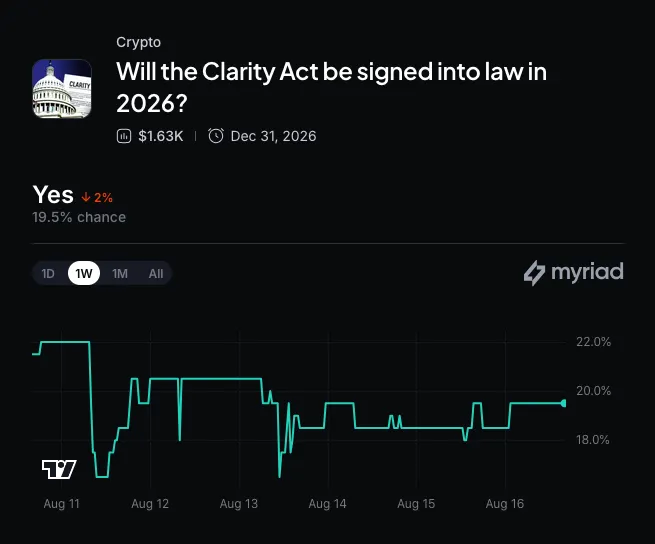
The bill, which was previously expected to be voted on in August, is now expected to be put to a vote in September following the delay.
The long-awaited CLARITY Act aims to create a comprehensive regulatory framework in the US that determines under what conditions digital assets are classified as securities, commodities, or stablecoins used for payment purposes.
The cryptocurrency sector has argued for years that the legal status of digital assets in the US needs to be more clearly defined. If the bill becomes law, it is expected that the jurisdiction of regulatory bodies such as the SEC and CFTC in the crypto market will also become clearer.
However, the CLARITY Act struggled to progress throughout much of 2026 due to ongoing debates between the banking sector and crypto companies regarding stablecoin yields.
Some banks have warned that crypto companies offering high returns to stablecoin holders could lead to a shift of deposits from traditional banks to crypto platforms.
Armstrong, however, said that not the entire banking sector was opposed to the bill.
The Coinbase CEO said, “There are actually many banks that have stated their support for the CLARITY Act. Most banks acknowledge that it gives them new powers and allows them to grow their businesses thanks to this new technology. That’s great. However, I can say that there are still a few banks that oppose it.”
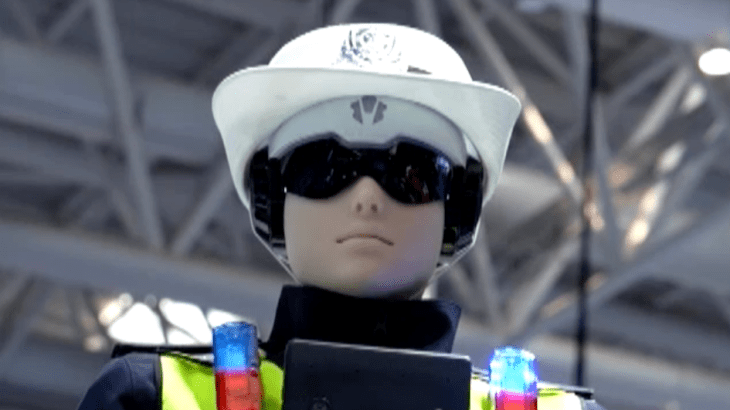
Humanoid robots are at the forefront of China’s race for technological supremacy at Beijing’s World Robot Conference. Al Jazeera’s Katrina Yu reports on how Chinese firms are racing US rivals as Beijing bets on humanoid robots to boost productivity.
As a one-time aspiring filmmaker, I still like to play around with video editing software. Curious about what AI video generators can do for my movie-making experimentation, I gave Google Flow a try. But can it really replace traditional filmmaking? I had to test it out.
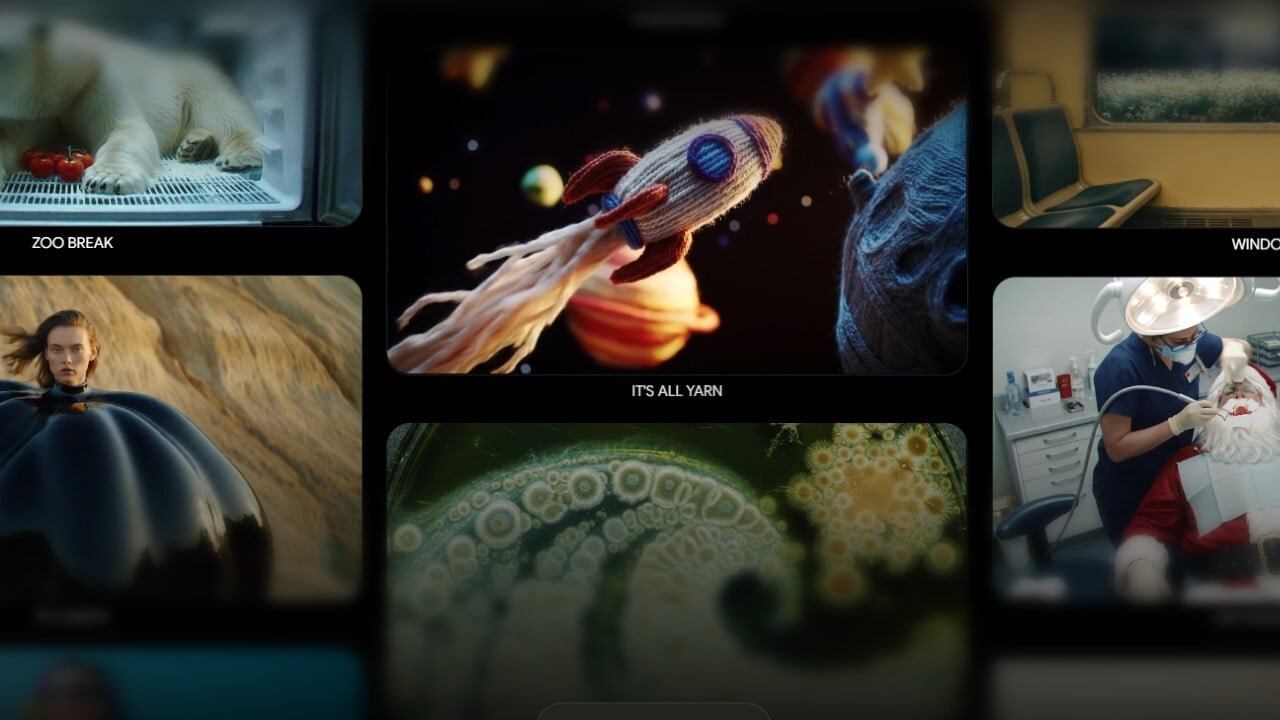
I learned that Flow can generate videos using text prompts or uploaded images. You describe every detail about the scene, camera movements, and angles, then add sound effects, background noise, and even speech. Google’s tool then creates a video with multiple clips; select the one you like, then build, extend, and fine-tune it from there. Here’s how my experiment went, and how you can create movie magic with Flow.
What You Need to Use Flow
You can use Google Flow with either a free account or one of the paid AI subscription plans. To provide access to Flow, Google doles out a certain number of credits per day or per month:
Free accounts: 50 credits per day (credits refresh daily, so you don’t have more than 50 credits to use at any one time)
Google AI Plus: 200 credits each month.
Google AI Pro: 1,000 credits each month.
Google AI Ultra ($100): 10,000 credits each month.
Google AI Ultra ($200): 25,000 credits each month.
The number of credits you chew up depends on the model you select and the duration of your videos. For the model, you can choose among Omni Flash, Veo 3.1 Quality, Veo 3.1 Lite, and Veo 3.1 Fast. The Omni Flash and Veo 3.1 Quality models generate higher-quality videos but take longer to run and use up more credits. The Veo Lite and Fast models are of lower quality but don’t take as long and use fewer credits. The credit allocation per model and duration works as follows:
Gemini Omni Flash: 15 credits for 4 seconds, 20 credits for 6 seconds, 25 credits for 8 seconds, 30 credits for 10 seconds. 40 credits to edit an uploaded video of any length.
Veo 3.1 Quality: 100 credits for 8 seconds of video.
Veo 3.1 Lite: 10 credits (5 credits for Ultra subscribers) to create a 4-second, 6-second, or 8-second video.
Veo 3.1 Fast: 20 credits (10 credits for Ultra subscribers) to create a 4-second, 6-second, or 8-second video.
Omni Flash and Veo 3.1 Quality are only available to paid accounts. However, free users can use Omni Flash in YouTube through the YouTube Shorts and YouTube Create app features at no extra cost. Paid subscribers are able to choose among all four models, but should still keep track of how many credits are used for each video. I have an AI Pro subscription, so I can tap into any of the models, though I’m careful not to bump up against my monthly limit of 1,000 credits.
Google’s Veo 3 Helped Me Produce This Video
Set the Model and Number of Videos
You should be able to create your video from any desktop browser. Google recommends you use the Chromium-based Chrome or Edge, but I had no trouble using Firefox. Log in to the Flow website with your Google account, then click New project and select the Settings icon to the right of the prompt.
(Credit: PCMag / Google)
Here, you can change the number of videos generated and which model to use. If credits are at a premium, click 1x to create one video; otherwise, you can go for two. For the model, I typically use Veo Lite or Veo Fast to limit the number of credits used and then turn to a Quality model only for a video I want to publish or share. Certain models also allow you to choose the duration of the video.
(Credit: PCMag / Google)
Create a Video From a Prompt
Since I plan to describe the video using only text, I type what I want at the prompt. I’ll sometimes use an AI chatbot, such as ChatGPT or Gemini, to create a prompt for me based on details that I provide. After adding my description, I click the arrow to submit it. For this one, I submitted the following description:
Create a photorealistic and cinematic video capturing a tense, epic aerial battle high above New York City at midday. The shot is a dynamic tracking medium close-up following a determined female superhero in a sleek, dark blue and silver suit as she dodges an energy blast. Shimmering golden energy crackles around her clenched fists. Her adversary is a massive, insectoid robot with a glinting metallic carapace and multiple glowing red optical sensors, which transforms its limbs into plasma cannons. The bright, high-contrast sunlight casts sharp shadows, emphasizing the action-packed and dangerous confrontation against a backdrop of towering skyscrapers.
(Credit: PCMag / Google)
Flow then creates the number of videos I specified. I can click the video to play it. Hovering over any video displays a small toolbar in the upper right. From there, I can click the three-dot icon to download, rename, share, or delete the video. Click Done, and the video is saved to your library.
(Credit: PCMag / Google)
If you want to add music or dialogue, you’ll need to specify that in the prompt. For the music, I can just write something like “soft jazz music is playing in the background.” For the dialogue, I have to identify which character should be speaking and put the words in quotes. Here, I submitted the following prompt:
“A man and a woman are in a crowded department store. Soft jazz music is playing in the background. The man is kneeling on one knee and holding an engagement ring. He says to the woman: ‘Will you marry me?’ The woman says: ‘Sir, this is a Walmart.’”
(Credit: PCMag / Google)
Create a Video From an Image
You can also use still images to create your video, either by generating them within Flow or uploading them. To do this, New Project from the main screen, pick your model, then click the plus icon. At the media window, I clicked Upload media and picked the photo I wanted to use to create the video.
(Credit: PCMag / Google)
In this case, I chose a photo of me sitting in the captain’s chair of the Enterprise at a Star Trek set recreation. Since Flow is relying heavily on the still image, I can keep the description brief and simple. I submitted the description as follows:
A medium shot of a confident and determined male captain in his late 30s, sitting in the iconic command chair on the bridge of the Federation starship USS Enterprise. He is wearing a classic gold Star Trek captain’s uniform from the Original Series era, reminiscent of the one worn by Captain Kirk. The camera slowly pushes in on the captain’s face, capturing his focused gaze.
Based on the image and my description, Gemini created the video, which I could then play and control.
Recommended by Our Editors
(Credit: PCMag / Google)
Create a Video From a Video
You can also create a new video from a video stored in your Flow library or uploaded from your computer. I added my video by clicking the plus sign at the prompt, selecting Upload media, and then choosing the video from my PC. I next clicked on the plus sign again, selected the video, and clicked Add to prompt.
Here, I used a video of a large animated dinosaur model I had shot at a London museum. I kept the prompt simple and told Flow to create a video of a dinosaur wearing a Santa hat running rampant down a London street. In response, the AI generated a video using the dinosaur from the photo, but then expanded it to a London Street scene with Big Ben in the background.
(Credit: PCMag / Google)
Create a Character
You can also generate your own character to use in your videos. To do this, I selected Characters at the main screen. I was then able to choose one of the default characters, upload an image of a person or animal, or describe the character through text. I opted to upload an image of a goat. I was then asked to choose a name and voice for the character and describe how the character acts.
(Credit: PCMag / Google)
When I was finished creating my character, I started a new prompt, clicked the plus icon, and then chose the character from the media window. I then described the video I wanted with the description: “Professor Goat is lecturing in front of a classroom of students and is drawing a mathematical equation on a blackboard.” In response, it created a clever video with a goat man teaching math before a class of students.
(Credit: PCMag / Google)
Can Google Be Your Cinematographer?
While the videos all looked great, very cinematic, and stylish, AI is still imperfect and glitches do pop up. In my experience, Flow didn’t always follow every detail in the prompt. As one example, the mouths of characters sometimes didn’t move when speaking. With time and tweaking, I could probably fix those errors. Still, as a first attempt in each case, Flow turned out to be a fairly adept filmmaker.
About Our Expert
Lance Whitney
Contributor
Experience
I’ve been working for PCMag since early 2016 writing tutorials, how-to pieces, and other articles on consumer technology. Beyond PCMag, I’ve written news stories and tutorials for a variety of other websites and publications, including CNET, ZDNet, TechRepublic, Macworld, PC World, Time, US News & World Report, and AARP Magazine. I spent seven years writing breaking news for CNET as one of the site’s East Coast reporters. I’ve also written two books for Wiley & Sons—Windows 8: Five Minutes at a Time and Teach Yourself Visually LinkedIn.
I’ve used Windows, Office, and other Microsoft products for years so I’m well versed in that world. I also know the Mac quite well. I’m always working with iOS, iPadOS, watchOS, and Android on my various mobile devices. And these days, I write a lot about AI, so that’s become another key area for me.
My wife always jokes about all the tech products we have around the house, but I manage to put them to good use for my articles. I like Lenovo computers, so I own a couple of Lenovo desktops and several laptops. I have three MacBooks and a Mac mini. For my mobile life and work, I use an iPhone 16 Pro, iPad Pro, and iPad mini as well as an Apple Watch. But since I write about Android, I own several Android phones and tablets. Like any tech person, I have a cabinet full of cables, wires, and assorted mysterious gadgets. And when it’s time to take a break from writing, I have an old Xbox 360 and Nintendo Wii, both of which I use for exercise and fitness games.
The Paw Patrol litter is gonna need a scientist dogs. Maybe a poodle — they’re smart.
Colossal Biosciences, a de-extinction company trying to bring back the Woolly Mammoth, has enlisted the beloved pups in its efforts to save endangered species. Paramount, Spin Master and Colossal have teamed to “teach children that real animals don’t always have the Paw Patrol to rescue them. The group playing God even got Godzilla: King of the Monsters writer/director Michael Dougherty — and the dude who voices firedog Marshall (Carter Young) — to put together a call-to-action video for the little tablet-wielders.
The campaign teaches the kiddos that mayors in purple tails and top hats are not always the big bads to the animal kingdom. Usually it’s disease; often it’s us.
“The next generation of protectors, that’s us. Together, we can become a real-life Paw Patrol for our planet,” the campaign tells them.
Yes, it’s a real Mission PAW situation. Watch the video:
Thus far, Colossal has de-extincted Red Wolves, the most endangered species of wolf with only 14 left in the wild — the company used the same tech that was deployed to bring back Dire Wolves. The nerds at Colossal have also used “AI-enabled bioacoustic sensors” to decode their howls, the company says.
Colossal is very tech-forward, and is presently “working with indigenous tribes and other partners on more than 25 AI & biotechnology-enabled conservation projects” aimed at saving rhinos and amphibians as well.
If this all sounds familiar, well, it’s basically the plot of Jurassic Park. And Paw Patrol: The Dino Movie is… also basically the plot of Jurassic Park — just, you know, for preschoolers.
“After their ship gets caught in a mysterious storm, the Paw Patrol pups crash land on an uncharted tropical island filled with dinosaurs. They meet Rex, a pup who has been stranded on the island for years and has become an expert in all things dino-related,” the Dino Movie logline reads. “When the Paw Patrol’s archrival, Mayor Humdinger, begins recklessly mining in hopes of exploiting the island for its natural resources, he inadvertently causes a huge, dormant volcano to erupt.”
The pups are soon “thrown into a series of high-stakes, dino-sized rescues bigger than anything they’ve done before,” it continues, “as they must stop Humdinger before everything on the island goes extinct.
Director Ilya Khrzhanovsky is defending his upcoming film DAU against attacks by the government of Ukraine that it represents Russian propaganda and should not be screened at the Venice Film Festival next month.
Khrzhanovsky took to Facebook on Thursday to post a point-by-point rebuttal of the criticism of his film and claims linking him, the film’s financiers, and DAU actor Teodor Currentzis to Vladimir Putin’s Russia.
“DAU is not a Russian film and does not represent Russia at the Venice Film Festival,” Khrzhanovsky writes, noting that he is “not a citizen of the Russian Federation” having renounced his Russian citizenship “in protest against the state policy of the Russian Federation and its war against Ukraine.”
His film, Khrzhanovsky said, “is not an instrument of Russian state cultural policy. It is an artistic statement about the nature of totalitarian evil.”
The 3-hour DAU film is the latest in a series of movies, art installations and video projects created by Khrzhanovsky using material filmed over three years from 2008 to 2011 on a closed set in Kharkiv, Ukraine.
Earlier this week, the Ukraine Ministry of Foreign Affairs, the Ministry of Culture, and the Ukrainian Embassy in Italy issued a joint statement criticizing the Venice festival for including DAU in its line-up.
“At the time when Russia is continuing its war of aggression against Ukraine, systematically destroying cities, cultural heritage and national identity,” the statement reads, “offering one of the world’s most prestigious cultural platforms to a project linked to the Russian state and its networks of influence sends a deeply worrying signal.”
The statement goes on to list the film’s alleged connections to Putin’s Russia, including Khrzhanovsky’s citizenship, and that of DAU lead actor Teodor Currentzis, and its connection to Sergei Adoniev, a Russian business man who has been sanctioned by Ukraine and the U.S.
Venice Film Festival artistic director Alberto Barbera took to Instagram on Wednesday to clap back at those allegations and to defend his decision to include DAU at this year’s festival. In his post, Barbera describes Khrzhanovsky as “a Russian dissident who ended up on the regime’s blacklist as a terrorist and enemy of the state — a director who, from the very beginning, has taken a stand against the Russian invasion of Ukraine”. He called the attacks on DAU an “inexplicable smear campaign against a film that its accusers have evidently not even seen yet.”
The DAU project, initially conceived as a biopic of the Nobel Prize-winning Soviet scientist Lev Landau (nicknamed Dau), became a massive immersive installation. Hundreds of cast members, actors and non-actors, lived on the closed set, in costume and in character, isolated from the outside world during filming. From the hundreds of hours of footage shot, Khrzhanovsky has produced several feature films. DAU. Natasha, screened at the Berlin Film Festival in 2020, winning a Silver Bear for outstanding artistic contribution for cinematographer Jürgen Jürges.
In his Facebook post, Khrzhanovsky refutes or qualifies the various accusations made against him and his film. Adoniev, he says, was a financier of the broader artistic 𝘋𝘈𝘜 project but “his financing ended completely in 2019 and he has had no financial relationship with the project since then. He did not finance the completion of the film selected for the competition of the Venice Film Festival.” Adoniev’s involvement, the director adds, was prior to his being sanctioned by the U.S. or Ukraine government.
The filming of the DAU project in Ukraine, writes Khrzhanovsky, took place before the Russian invasion of the country. His own position on Russia’s war against Ukraine “has been and remains unequivocal,” he writes. “I publicly supported Ukraine long before the full-scale invasion. Following the annexation of Crimea in March 2014, I signed an open letter by Russian filmmakers in support of Ukraine.”
A stickier point is DAU lead actor Theodor Currentzis. A well-known Greek conductor, Currentzis took on Russian citizenship in 2014. Currentzis has never publicly supported Russia’s war against Ukraine, but he has not publicly condemned it either.
“However one may judge his decision not to make such statements [against the war], judging a person on the basis of the citizenship they hold — and, even more so, using citizenship acquired years after most of the filming as evidence of the film’s current connection to the Russian state — is not justified,” writes Khrzhanovsky.
Given what he characterized as his long and enduring support for Ukraine, Khrzhanovsky said the attempt to frame him and his film as supporting the Russian state or its war against Ukraine was “especially painful for me.” He said he understood the need, “during wartime, to scrutinize the sources of financing of cultural projects, political connections, and possible instruments of Russian influence. [But] that is precisely why standards of factual accuracy must be particularly high.”
His movie, he said, “should not be prematurely judged on the basis of false associations, distorted chronology, or assumptions that contradict the documented history of the project. I have been and remain opposed to Russia’s war against Ukraine and to the political system that made this war possible. Opposing totalitarianism also means defending factual truth.”
DAU will screen in competition at the 2026 Venice Film Festival, which runs Sept. 2-12.
Check Point Research identified nearly 2,000 compromised WordPress sites used by the StopAndProtect malware operation.
More than 6,000 unique IP addresses had been compromised as of July 24, including 1,852 in the United States.
Researchers believe the attackers accidentally infected themselves, exposing internal files and tools used to manage compromised sites.
Nearly 2,000 hacked WordPress websites were used to distribute malware, steal data, monitor victims, and deploy ransomware, according to cybersecurity firm Check Point Research.
In the report published on Tuesday, researchers said the StopAndProtect ransomware family was first discovered in mid-May before tracing it to a broader operation. The hacked websites hosted malware, sent commands to infected computers, and stored stolen documents, screenshots, and activity logs.
“The operation doesn’t rely on a single piece of malware, but on a whole toolkit of criminal software working together,” Check Point researcher Jaromír Horejsi wrote. “Some components encrypt files, others silently steal documents or lock the screen, and another acts as a live chat between the attackers and their victims.”
According to Check Point, the malware targets Windows users and begins with a fake CAPTCHA on a compromised website. The ClickFix prompt instructs victims to run a PowerShell command that installs malware capable of stealing credentials, cryptocurrency wallet seed phrases, spreading through networks and USB drives, locking screens, and deploying ransomware.
The report did not say whether macOS and Linux users are affected.
However, mistakes by the attackers gave Check Point researchers a deeper look inside the operation, the company said.
“Operational security (OPSEC) failures by the developer exposed lots of files, including detailed infection logs from victims’ machines, screenshots from infected computers, and source code of tools the criminals use to mass-manage compromised websites,” Horejsi wrote.
By July 24, the campaign had compromised more than 6,000 unique IP addresses, including 1,852 in the United States and 630 each in Russia and India.
Exposed directories contained infection logs and screenshots from victims’ computers. Researchers said they were able to collect over 31,000 screenshots between mid-May and the end of July, along with more than 700 archives containing stolen data, including documents, passwords, and cryptocurrency wallet files.
Check Point believes the threat actor also accidentally infected themselves.
“We collected a few hundred files exfiltrated from victims’ machines, and we believe that in one instance the threat actor infected themselves, as one archive contained several unusual files with suspicious content,” Horejsi wrote. “This also helps us better understand how the actor operates and how many compromised domains they likely control.”
ClickFix has surfaced in several other malware campaigns this year.
In May, an apparel website linked to FBI Director Kash Patel was taken offline after macOS visitors were reportedly targeted with ClickFix malware. Users were prompted to paste a command into Terminal that installed an infostealer capable of targeting browser data, session tokens, and crypto wallets.
In July, Jamf Threat Labs found ClickFix-style malware being distributed through a sponsored ad on X. The ad redirected users to a website that instructed them to open Terminal and run a command that installed a variant of the Atomic infostealer. In August, Microsoft researchers warned that hackers were using compromised websites and BNB Chain smart contracts to distribute malware through fake CAPTCHAs.
Daily Debrief Newsletter
Start every day with the top news stories right now, plus original features, a podcast, videos and more.
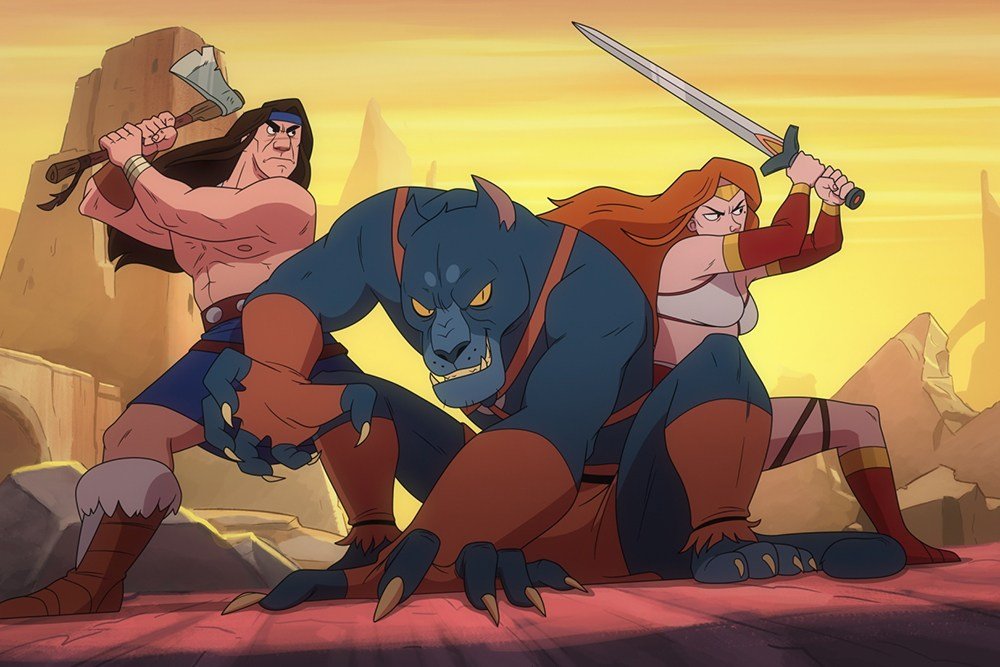
Paramount+ has unveiled the trailer for “Golden Axe,” a new adult animated comedy series based on Sega’s classic 1989 beat-em-up video game.
According to the official logline, “Golden Axe” follows “warriors Ax Battler, Tyris Flare and Gilius Thunderhead as they reunite to save Yuria from the evil giant Death Adder, who just won’t seem to stay dead. Their quest is complicated by Hampton Squib, an inexperienced and wildly underprepared adventurer whose dream of heroism far exceeds his abilities. Forced to work together despite their flaws, they must find a way to stop Death Adder once and for all.”
Matthew Rhys stars as Gilius Thunderhead, “a grumpy battle dwarf with exceptionally poor hygiene and a chip on his shoulder.” Other cast members include Danny Pudi as Hampton Squib, Lisa Gilroy as Tyris Flare, Liam McIntyre as Ax Battler and Carl Tart as Chronos “Evil” Lait.
In the trailer, we see our three heroes talking strategy before they head into battle. “To defeat Death Adder, we need an actual plan,” Gilius says. A confident Tyris then chimes in, delivering a meta punchline: “We’re going to do what we do best: Face a series of progressively harder enemies until we have a big final battle with Death Adder.”
Mike McMahan and showrunner Joe Chandler co-created the series. They also co-wrote the first episode and served as executive producers. Other executive producers include Haruki Satomi, Shuji Utsumi and Toru Nakahara for Sega, and Neal H. Moritz, Pavun Shetty and Toby Ascher for Original Film. Titmouse serves as the animation studio for the series, with Chris Prynoski, Shannon Prynoski, Antonio Canobbio and Ben Kalina serving as executive producers. “Golden Axe” is produced by CBS’ Eye Animation Productions, CBS Studios’ animation arm, Sony Pictures Television and Original Film.
“Golden Axe” arrives on Paramount+ on Sept. 16. Check out the trailer below.