Before bitcoin had a massive price tag attached to it, it had its first true recipient. On January 12, 2009, Finney became the first person to receive a bitcoin transaction, when Satoshi Nakamoto sent him 10 $BTC in what is now recognized as the moment digital cash left the whiteboard and became a working network.
That said, Finney was not some bystander who got lucky but a tech veteran who had already spent decades building the tools Bitcoin would eventually lean on. In the early 1990s, he was an active voice on various cypherpunk mailing lists, the same community of coders and privacy advocates whose ideas fed into Bitcoin’s design.
He later became the second employee hired by Phil Zimmermann at PGP Corporation, the company behind Pretty Good Privacy (PGP) encryption software, and worked there as a key contributor until his retirement in 2011.
Moreover, in 2004, years before Bitcoin existed, Finney built Reusable Proofs of Work (RPoW), an early prototype cryptocurrency built on Hashcash that proved out concepts Bitcoin would later formalize.
A Fight He Didn’t Step Away From
Finney disclosed his amyotrophic lateral sclerosis (ALS) diagnosis publicly in October 2009, less than a year after receiving that first bitcoin transaction. The disease is progressive and attacks the nerve cells that control muscle movement.
Finney wrote in March 2013 that he had become “essentially paralyzed,” yet he kept engaging with Bitcoin’s early community through the disease’s advancing stages. When he was declared legally dead on August 28, 2014, in Phoenix, Arizona, at age 58, his family carried out cryopreservation arrangements with the Alcor Life Extension Foundation that had been made years in advance.
The Satoshi Question That Won’t Go Away
Finney’s closeness to Bitcoin’s creation, paired with his cryptography background and a Caltech engineering degree, has fueled years of speculation that he was Satoshi Nakamoto himself, or worked closely with whoever was.
Bitcoin.com News has previously laid out the many facts pointing to Hal Finney being Satoshi, an internal look at the circumstantial case that still gets revisited every time the identity question resurfaces. Finney always denied being Bitcoin’s creator, and no verified evidence has settled the question either way.
What Ten Bitcoin Became
The anniversary lands at a notable moment for the asset Finney helped bring to life. Bitcoin’s price crossed $80,000 for the first time since May on August 25, gaining roughly 28% over eight days and briefly touching an intraday high above $81,000.
At that price range, the 10 $BTC Finney received from Satoshi Nakamoto in January 2009 would be worth roughly $805,000 today, a figure that would have sounded absurd to almost anyone in the room when that transaction first went through.
Finney never got to see bitcoin’s price reach even a small fraction of where it trades now. But the tools he built, the questions his life still raises about Bitcoin’s origins, and the fact that his name remains the answer to “who received the first bitcoin” mean his imprint on the network hasn’t faded with time.
Twelve years on, that’s still what people are logging on to remember today.
Bitcoin treasury company Capital B plans to raise €21 million and use the proceeds, along with operating funds, to buy another 270 Bitcoin.
The immediate deal would leave the company’s stated measure of Bitcoin backing per diluted share almost unchanged, while four warrants attached to each new share create a larger layer of contingent dilution.
The company announced a private placement of 36,219,070 shares with attached warrants at €0.58 per unit. That would produce €21.01 million in gross proceeds and an estimated €19.9 million after fees.
Closing was expected on Aug. 31 at the earliest, meaning neither the shares nor the planned Bitcoin purchase was complete when the deal was announced. Capital B said the proceeds and operating funds could lift its treasury from the 3,145 $BTC confirmed on Aug. 17 to a potential 3,415 $BTC.
The immediate Bitcoin-per-share math is flat
On the diluted shareholder bases displayed in Capital B’s Aug. 28 release, the company had about 7.4725 $BTC per million shares before the placement. Combining the proposed 3,415 $BTC with the post-placement diluted count of 457,096,891 shares produces about 7.4711 $BTC per million shares.
That is a decrease of roughly 0.02%, making the immediate transaction effectively flat against the company’s stated objective of increasing Bitcoin per diluted share over time.
Infographic outlines Capital B’s Bitcoin holdings, diluted share counts, and $BTC per million shares across three dilution scenarios and financing estimates.
Related Reading
Bitcoin treasury Strive bought 20 $BTC, but 110,000 new shares left holders with less Bitcoin exposure
Before the reverse-split adjustment, each new share carries two warrants exercisable at €0.75, €0.98, and €1.27. Full exercise would create 144,876,280 more shares and provide another €135.82 million.
If every new warrant were exercised and no additional Bitcoin were attributed to those proceeds, Capital B’s potential 3,415 $BTC would be spread across 601,973,171 displayed diluted shares. That equals about 5.6730 $BTC per million shares, 24.1% below the pre-placement ratio.
The five-year warrants are contingent on investors choosing to exercise them, so the associated shares and cash have not been received.
An investor holding 1% before the placement would fall to 0.9% on the ordinary post-placement basis and 0.72% on the company’s diluted basis without participating. Full exercise of the new warrants would reduce those figures to 0.65% and 0.55%, respectively.
The issuer also says its displayed diluted calculation excludes older BSA families, specified warrants attached to convertible bonds and unissued capacity under a €300 million TOBAM program. Those items sit outside the 24.1% scenario.
In June, shareholders had authorized much broader financing capacity, including up to €5 billion of capital increases and €100 billion of credit instruments.
The Aug. 28 placement is a priced example that the proposed Bitcoin only matches the immediate share expansion, while the attached warrants determine whether the longer-term ratio improves or falls.
The White House has previously said that the president’s stock and bond portfolio is independently managed.
According to the president’s latest financial report, released by the Office of Government Ethics, he sold between $50,001 and $100,000 of Netflix on June 12, another $500,001 to $1 million on June 18, between $15,001 and $50,000 on June 16, and between $50,001 and $100,000 on June 24. He bought between $1,001 and $15,000 on June 3, and between $1,001 and $15,000 on June 23.
Per the filing, the president also purchased between $50,001 and $100,000 in The Walt Disney Co. on June 18, and between $1,001 and $15,000 on June 3. He purchased between $1,001 and $15,000 in Warner Bros. Discovery on June 16. The form also showed the sale of $1,001 to $15,000 in Comcast securities on June 16, $1,001 to $15,000 on June 23, $1,001 to $15,000 on June 3, and between $100,001 and $250,000 on June 24.
The report also showed the sale of $100,001 to $250,000 shares of Amazon on June 12 and the sale of $100,001 to $250,000 on June 24. It showed the purchase of $15,001 to $50,000 of Amazon on June 15, the purchase of $1,001 to $15,000 on June 23, the purchase of $1,001 to $15,000 on June 3.
The OGE report does not require specific amounts of sales or purchases, but ranges.
A White House official did not immediately respond to a request for comment. But the administration has previously said that “all holdings are maintained in discretionary accounts and invested through computer-based model portfolios that automatically replicate recognized indexes, such as the Schwab 1000.”
The official said that Trump does not have the ability to “direct, influence, or provide input regarding how the portfolio is invested or when investments are bought or sold.”
At PCMag Deals, every product we recommend has to hit a few vital benchmarks: good reviews from the experts at PC Labs and real discounts, verified by price-checking apps and historical data across retailers. Every Friday, I pick out the best of the best, tech items that are cut by 25% or higher, and spotlight five of them for your shopping pleasure. This week: a ridiculously bright TV, an amazing mini projector, gorgeous noise-cancelling earbuds, and more, all at massive savings.
Amazon’s Echo Show smart screens are great hubs for home automation, integrating with thousands of different devices to give you instant control over them. We gave the latest model an Editors’ Choice award in our review, noting that it was optimized for the company’s Alexa+ AI-powered voice assistant, which is better at building off of previous prompts and understanding natural language. The big, bright display can show you visual examples as well as transcripts of your conversations. The large rear-mounted speaker is assertive and crisp, with two front-facing, full-range drivers and a 2.8-inch woofer. It’s also better at knowing when you’re in the room thanks to a suite of sensors including ultrasound, ambient light, and Wi-Fi radar. Take 25% off this killer home assistant while you can.
More Bluetooth Speaker Deals
*Deals are selected by our commerce team
Samsung Galaxy Buds 4 Pro Wireless Earbuds Deal
Samsung Galaxy Buds 4 Pro Wireless Earbuds
Bluetooth, active noise cancellation, 32 hours battery life
If you’re looking for a pair of earbuds that dominates the competition and you also want to save money, Woot has a weekend-only discount on the exceptional Samsung Galaxy Buds 4 Pro. We gave these in-ear headphones an “Excellent” rating in our review, praising their robust stem-based design, comfortable fit, and excellent sound quality. While they’ll work with any Bluetooth device, they’re at their best paired to a Samsung smartphone, which unlocks high-resolution audio up to 24-bit/96kHz, spatial audio and head-tracking. The companion app gives you tons of control over the sound, with six EQ presets and a custom nine-band option. Battery life is also impressive, with six hours in the earbuds and an additional 26 in the charging case.
Sick of the dim, fuzzy screen on your current TV? It’s time to trade up. Advances in screen construction and backlighting that use ultra-tiny mini LEDs for crisp contrast and vibrant colors can bring cinema-quality movies and TV shows to your living room, and the TCL QM8L is one of the best examples on the market. We gave this TV an enthusiastic review, earning an Editors’ Choice award for its wide hue coverage, speedy 144Hz refresh rate, and great off-angle viewing. It’s the brightest Mini-LED screen we’ve ever tested in the lab, and it’s got tons of ports for all your devices. At retail, it’s a little spendy, but Best Buy has a ridiculous 44% price drop that makes it very competitive.
More TV Deals
*Deals are selected by our commerce team
Google Nest Learning Thermostat Deal
Google Nest Learning Thermostat
24v compatible, boiler, heat pump, air conditioner, furnace, Google Assistant, Alexa, HomeKit
The weather is nothing but surprising lately, and as summer comes to an end and temperatures drop, you’re going to need a little help keeping your heating bills under control. A 25% price cut on the excellent Google Nest Learning Thermostat is just what the doctor ordered. It’s simple to install, works with a wide variety of HVAC systems, and works with multiple sensors for a holistic view of your home environment. You can read our comprehensive review, where we praised its big, clear display, user-friendly interface, and support for several different automation protocols including Matter, Google Assistant, and Amazon Alexa. This bundle comes with a remote sensor as well.
Recommended by Our Editors
More Smart Thermostat Deals
*Deals are selected by our commerce team
Aurzen Zip Mini Projector Deal
Aurzen Zip Mini Projector
1280×720 resolution, 100-lumen brightness, standard throw.
Do you technically need a portable projector that folds up to the size of a stack of Post-It notes? Probably not, but you should want one. The Aurzen Zip is a marvel of engineering, packing bright, colorful images, easy connectivity, and a full 90 minutes of battery life into its tiny shell. In our review, it earned an Editors’ Choice award for its solid picture quality, automatic focus and vertical keystone adjustment, and serviceable built-in speakers. The DLP chip uses a red/green/blue LED light source and TI’s XPR pixel shifting technology to pump out reliable 720p footage. Our main criticism was the price, which is why this 35% discount earns it a spot on the list.
More Portable Projectors
*Deals are selected by our commerce team
Want to save even more money on top tech? Our deals page has hundreds of offers.
About Our Expert
K. Thor Jensen
Contributing Writer
Experience
K. Thor Jensen is a writer and cartoonist living in the Pacific Northwest. He has contributed to dozens of prestigious outlets, including PCMag, Tested, Clickhole, and Newsweek. His second graphic novel, Cloud Stories, was released in 2017.
Kids get into all sorts of things on the internet, but no parent wants young children perusing adult websites, so now, half of the US and several other countries have implemented age-verification laws that require websites to confirm that their visitors are not minors.
Sounds simple enough, but many of us don’t really want to send a video selfie or a photograph of our driver’s license to all the platforms we visit, whether that’s Discord or Pornhub. To that end, Pornhub’s parent company, Aylo, has blocked access to its sites (including YouPorn and Redtube) in regions with age-verification laws.
The most recent state to lose access to Aylo sites was Iowa, where Gov. Kim Reynolds (R) signed an age-verification bill that went into effect on July 1. Previously, West Virginia Gov. Patrick Morrisey (R) approved a similar bill that took effect on June 12.
Meanwhile, an age-verification bill approved by Missouri lawmakers took effect on Aug. 28. Aylo sites were already blocked in the state under a regulation issued by the attorney general, but the legislature wanted to make it more official.
In March, Aylo also blocked access to its sites in Australia in protest of the Online Safety Act, about a month after it did the same in the UK. They joined two dozen US states and France, where Aylo sites are inaccessible without a VPN.
Our Top Rated VPNs for Pornhub
Though Australia’s law was passed in 2021, age-verification requirements for “designated internet services,” a broad category that includes websites, went into effect on March 9.
“Age checks relating to certain products have long been used to allow the community to protect children from things which might endanger their immediate safety or may harm their long-term health and development,” the Australian government argues.
Age checks in the country can be handled in one of the following ways:
Matching of photo identification
Facial age estimation
Credit card checks
Digital identity wallets or systems
Confirmation of a user’s age by their parent
Using technology to estimate age based on relevant data inputs.
Aylo, however, backs device-based age verification, which would put the onus on companies like Apple, Google, and Microsoft to check people’s ages versus specific porn sites.
“Australia is following a similar approach to the UK, which all our evidence shows does not effectively protect minors, and instead creates harms relating to data privacy and exposure to illegal content on non-compliant platforms,” an Aylo spokesperson says. “We continue to believe that device-based solutions remain the most realistic and effective way to protect minors online, and every organization in a user’s online journey plays a role.”
Aylo points out that Apple requires app stores to verify a user’s age when creating an account to comply with a Texas law. “We suggest Apple enable the screen time feature to limit adult websites by default, and make it such that the very same verification be required to disable it,” it says. “This can ensure that only age-verified Apple devices can access adult websites.”
In Australia, VPN use reportedly surged in the days leading up to the ban, The Guardianreports. Proton VPN, for example, moved from 174th to 19th place on the list of free iPhone apps in Australia while NordVPN went from 189th to 13th, according to Sensor Tower data.
The Australian law requires service providers to “take reasonable steps to prevent workarounds,” which could include integrating “VPN detection services,” but that’s often easier said than done. (More on VPNs below.)
Last year, Aylo said it would comply with the UK’s Online Safety Act. However, Aylo later determined that the law had “not achieved its intended goal of protecting minors, [and] made the internet more dangerous for minors and adults and jeopardized the privacy and personal data of UK citizens.”
As of Feb. 2, new users in the UK cannot access Aylo’s content-sharing platforms, including Pornhub, YouPorn, and Redtube, though “UK users who have verified their age will retain access through their existing accounts.”
In April, meanwhile, EU regulators announced that an age-verification app is “ready for deployment in EU countries, [and] will allow users to prove their age without sharing unnecessary personal data and to browse the internet in full privacy, while ensuring that children cannot access inappropriate content.” Security consultants, however, have concerns.
Which US States Are Blocked From Viewing Pornhub?
In the US, Aylo has blocked Pornhub and its other sites in the following states in protest of its age-verification laws:
Alabama
Arizona
Arkansas
Florida
Georgia
Idaho
Iowa
Indiana
Kansas
Kentucky
Mississippi
Missouri
Montana
Nebraska
North Carolina
North Dakota
Oklahoma
South Carolina
South Dakota
Tennessee
Texas
Utah
Virginia
West Virginia
Wyoming
Ohio also has an age-verification law, but Pornhub is not blocked there because the law doesn’t apply to providers of interactive computer services, which Aylo says covers its sites. Lawmakers there are now working to close that loophole with a bill that passed the House in March, but hasn’t seen much action since then.
In early April, Wisconsin Gov. Tony Evers (D) vetoed the state’s age-verification bill, arguing that it’s an “intrusion into the personal privacy of Wisconsin residents.” Residents would be required to hand over personal information to adult sites when verifying their age, and “nothing in the bill prohibits the transmission of such information to a third party, such as a data broker or the government,” Evers says. “This is a violation of personal privacy.”
Similar bills in Hawaii and Washington state failed to make it out of committee, while Minnesota House lawmakers rejected HR 1434 in late March.
In Michigan, bill sponsors pulled their companion House and Senate bills over concerns about data collection. Lawmakers there, however, are pursuing a social media addiction bill that trade group NetChoice says would lead to “invasive age verification.”
According to the Free Speech Coalition, another seven states have pending age-verification bills—Illinois, Maryland, Massachusetts, New Jersey, New York, Pennsylvania, and Rhode Island—as well as Washington, DC.
How Did This Start in the US?
The age-verification battle in the US dates back to 2023, when Louisiana passed an age-verification bill. At the time, Pornhub complied with the law and saw its traffic drop by approximately 80% in the state.
“But we know that people didn’t stop consuming porn overnight because of this new law,” Pornhub says. “They just very easily moved to pirate, illegal, or other non-compliant sites that don’t ask visitors to verify their age.”
Pornhub argues that it has “robust Trust and Safety measures…to protect both the users viewing content on Pornhub from engaging with potentially dangerous content and provide a safe platform for creators to monetize their content and engage with fans.
“Therefore, these laws have not only failed at protecting minors, but have introduced further harm by displacing traffic to sites with few or zero Trust and Safety measures,” it says.
So, as more states moved to pass age-verification laws, Pornhub opted to block access in those states, starting with Utah in 2023.
If you visit Pornhub in a state where the site is blocked, you’re met with a message that argues the state’s law is “ineffective, haphazard, and dangerous.
Recommended by Our Editors
States argue that they’re trying to protect children. “If a billion-dollar corporation would rather leave Missouri than verify that children are not accessing graphic sexual content, that tells you everything you need to know about its priorities,” Missouri Attorney General Hanaway said in a statement. “We are proud to stand on the side of parents, families, and basic decency. Missouri will not apologize for protecting children.”
What Do These State Laws Do?
The laws are very similar, but here’s a sampling of what they require.
In Alabama, access to Pornhub was blocked ahead of an age-verification law that went into effect on Oct. 1, 2024, AL.com reports. Under HB164, adult sites must use “reasonable age verification methods” to confirm that people are over the age of 18 and display warnings about porn being “potentially biologically addictive” and harmful to “human brain development.”
In Florida, HB 3 requires adult sites to verify that visitors are 18 “using either an anonymous or standard age verification method.” Anonymous ones “must be conducted by a nongovernmental, independent third party.” Florida’s attorney general can collect civil penalties of up to $50,000 per violation, reasonable attorney fees, and court costs, while minors can also pursue up to $10,000 in damages.
In Indiana, SB17 went into effect on June 27, 2024, and requires sites that offer adult content to “use a reasonable age verification method to prevent a minor from accessing an adult-oriented website.” Indiana Attorney General Todd Rokita says, “Children shouldn’t be able to easily access explicit material that can cause them harm. It’s common sense. We need to protect and shield them from the psychological and emotional consequences associated with viewing porn. We look forward to upholding our constitutional duty to defend this law in court.”
In Kentucky, House Bill 278 applies to sites where more than one-third of their content would be considered harmful to minors.
In Missouri, AG Hanaway used the state’s Merchandising Practices Act to impose a new age-verification rule that requires platforms that host sexually explicit content to prevent minors from accessing them via age checks that use government IDs or another reasonable method. Failure to implement these safeguards will result in penalties up to $10,000 per day. Lawmakers recently turned that regulation into law.
In Montana, SB 544 requires sites to verify age by having people provide “a digitized identification card” or access a “commercial age verification system” that checks a government ID or uses some other sort of “commercially reasonable method” to verify someone’s age.
In North Carolina, House Bill 8 was part of a larger education bill that also covered things like adding a computer science requirement for high school graduation. But it also imposed the age-verification check for adult sites. It requires sites to use “a commercially available database that is regularly used by businesses or governmental entities for the purpose of age and identity verification or…another commercially reasonable method.” Sites that fail to comply could face civil action from the parents of kids who viewed pornography or anyone whose data is unlawfully retained. In signing the bill in 2023, former Gov. Roy Cooper (D) said those age checks are “important…to help protect children from online pornography.”
In Tennessee, the Protect Tennessee Minors Act requires sites to verify IDs once an hour via uploaded IDs and retain seven years of anonymized data on users who access the site, The Tennesseanreports. (South Carolina’s Child Online Safety Act (H. 3424) has similar requirements.)
In Texas, HB 1181 requires adult sites to verify that visitors are of age. It was set to go into effect in September 2023, but Pornhub sued and secured an early victory. Texas Attorney General Ken Paxton appealed and got a temporary reprieve in March 2024, allowing the state to enforce HB 1181.
Taking It to the Courts
The Free Speech Coalition and a group of adult platforms, including Aylo, have sued over laws in several states. The Texas case made its way to the US Supreme Court, which ruled in Texas’s favor in late June 2025, putting the brakes on the other cases.
How to Access Pornhub in States Where It’s Blocked
The Pornhub website as it appears in Utah. (Credit: Pornhub)
When Pornhub was blocked in Utah, we turned to VPN services and connected to servers in Virginia and Utah. Upon navigating to Pornhub, we were greeted by the blockade message.
If you’re affected by the ban, use the VPN app of your choice to connect to a server not in a location currently blocked by Pornhub. (Note that while this guidance can be used to get around Pornhub’s embargo, it could also be used to avoid the very age-restriction requirements Pornhub is protesting. We can’t advise you on the risks of trying to circumvent the law.)
When you switch on a VPN, your web traffic is routed through an encrypted connection to a server operated by the VPN company. That server could be in a different state or a different country from you. Because your web traffic exits that server, it appears as if you are browsing the web from wherever the server is.
So, if you’re in Utah, you should connect to a VPN server that’s not located in Utah, and then navigate to Pornhub as usual. We recommend that you also use incognito mode while streaming pornography to prevent the URLs from showing up in your browser’s history and autocomplete options.
If you don’t already have a VPN service installed, you can find one that will suit you in our roundup of the best VPNs for Pornhub.
Which VPN Should You Use?
Nearly all VPN services will let you specify the country where you want your traffic to appear. Some will let you pick down to the city level. A few let you see a list of the actual servers themselves, and their locations, and make your choice that way.
US-based Pornhub viewers will probably want to use a VPN server that’s located in the US. We recommend a VPN that will at least let you choose servers in a specific US state. Do note that latency will increase and browsing speed will decrease when using a VPN, and that the impact will be more noticeable the further away the VPN server is from you.
PCMag’s top-rated VPN Editors’ Choice winner, Proton VPN, shows the cities and specific servers available to customers. It also offers an excellent free VPN, but your server choice will be far more limited—there are servers in the US, but you can’t specify which to use. Fortunately, the free version has no time or data limit.
Other Editors’ Choice-winning VPNs that let you select cities include IVPN, Mullvad VPN, NordVPN, and TunnelBear VPN. Note that IVPN and Mullvad VPN use a privacy-protecting account number system that requires very little personal information, and both will accept cash sent to their respective HQs for a nearly anonymous experience.
How to Watch Porn Online Safely
Max Eddy contributed to this story.
About Our Expert
Chloe Albanesius
Executive Editor, News
Experience
I started out covering tech policy in DC for The National Journal, where my beat included state-level tech news and all the congressional hearings and FCC meetings I could handle. I later covered Wall Street trading tech before switching gears to consumer tech. I now lead PCMag’s news coverage.
Getting my start in DC means I still have a soft spot for tech policy; Congressional hearings can sometimes be as entertaining as a Bravo reality show, for better or worse. But PCMag is all about the technology we use every day, as well as keeping an eye out for the trends that will shape the industry in the years ahead (or flop on arrival). I’ve covered the rise of social media, the iOS vs. Android wars, the cord-cutting revolution that’s now left us with hefty streaming bills, and the effort to stuff artificial intelligence into every product you could imagine. This job has taken me to CES in Vegas (one too many times), IFA in Berlin, and MWC in Barcelona. I also drove a Tesla 1,000 miles out west as part of our Best Mobile Networks project. Of late, my focus is on our hard-working team of reporters at PCMag, guiding and editing their robust coverage.
If you’re an emerging director, chances are you’ll hear a word of encouragement from Dave Franco.
Jeremy Saulnier certainly did after the actor saw the filmmaker’s breakout self- and crowd-funded revenge thriller, Blue Ruin (2013), starring his childhood best friend Macon Blair. When Blair himself took a crack at the director’s chair a few years later, Franco also reached out to compliment his Sundance-winning I Don’t Feel at Home in This World Anymore. The Palo Alto native admits his generosity is partly motivated by a desire to get on talented directors’ radars for future roles, but it’s mainly about softening the industry’s competitiveness.
“We don’t tell each other enough how much we enjoy each other’s work. There’s such a competitive spirit within the industry that I just want to put out some good vibes, especially if it’s someone’s first time putting out a movie,” Franco tells The Hollywood Reporter in support of Idiots’ Aug. 28 theatrical release. “So I guess I play the long game sometimes, but it doesn’t normally lead to collaboration. More often than not, it has led to friendship.”
In Blair’s case, Franco’s overture in 2017 led to both friendship and eventual collaboration. The writer-director quickly returned the favor by sending Franco his road comedy script called The Shitheads. Franco soon realized, however, that he was too young to play the then-40-something Mark Southard, an aging slacker who, along with another underachiever named Davis Hench, winds up transporting a reprehensible trust-fund teen named Sheridan to rehab.
The film would nearly go in 2017 and 2018 with a couple different combinations of actors, particularly Luke Wilson and Tracy Morgan, but then its financing came crashing down, shelving the picture until Franco wrote another one of his patented emails around 2024. At this point, he’d not only aged into the role of Mark, but he’d also directed and/or produced a number of projects to where he could be equally beneficial behind the camera.
“I said, ‘No pressure, but I’m here. If I can help in any way as a producer, I’d love to come in and help find the money,’” Franco recalls. “So I’ve basically been stalking Macon for the past ten years in trying to collaborate with him.”
The Shitheads did indeed find funding in 2025 en route to a fall shoot in Georgia. Franco even proved instrumental on the casting side of things by recommending O’Shea Jackson Jr. as Davis. The two actors had previously worked together on a series for the short-lived short-form platform, Quibi. And when it came time to find the despicable teenage influencer named Sheridan, Franco suggested Mason Thames from their 2025 film Regretting You.
Before being retitled to Idiots, the film’s original title of The Shitheads wasn’t just a reference to Mark and Davis’ gross incompetence at life. It also had to do with the film’s signature scene in which Sheridan spikes his handlers’ generic colas, causing Mark to produce a geyser of diarrhea in their motel room.
“It’s a top-three poo scene in cinematic history. It’s up there with Jeff Daniels in Dumb and Dumber,” Franco states. “I remember calling my wife [Alison Brie] after that day and telling her I just did the craziest thing I’ve ever done on camera, which is saying a lot because I’ve done so many fucked-up things on camera. But I hold to that statement, and I’m pretty confident that it’s a violent moment people will talk about afterward.”
The pic premiered at 2026’s Sundance Film Festival before securing theatrical distribution from IFC the following month. The deal was not contingent on a title change, but Team Shitheads, once they learned about the realities of promotion, realized that they’d only be making it harder for their small throwback comedy to gain traction. Thus, they landed on Idiots to keep the tontal spirit of the original intact.
All in all, Franco hopes Idiots can do its part to bring back a brand of comedy that has largely disappeared from multiplexes.
“Idiots hearkens back to comedies from the early 2000s: The Hangover, Superbad, Pineapple Express, Harold & Kumar Go to White Castle,” Franco says. “There are other moments besides the diarrhea scene that’ll shock audiences. I have personally missed these types of comedies. So I hope people check it out because, for us to be able to make more comedies again, people need to see the rare ones that do get made.”
Below, during a recent conversation with THR, Franco also discusses his future as a director, before updating his status on 24 Jump Street and Now You See Me 4.
***
You don’t look like Alison Brie. (Franco is using his wife’s Zoom account.)
I like to get people’s hopes up and then slash them when I finally appear on screen.
I keep tabs on the situation. So a script called TheShitheads shows up in your inbox one day. It’s from Macon Blair of Blue Ruin fame. Were you already familiar with the work he and Jeremy Saulnier have done together?
Big time. I re-watch BlueRuin every single year. It’s probably the movie I recommend to people more than any other. It was made for less than half a million dollars, and it’s a perfect, taut thriller. So that was my introduction to Macon as an actor.
Then I saw the first movie he wrote and directed, I Don’t Feel at Home in This World Anymore, and that’s when I reached out to Macon to say, “I love your shit. I will do anything with you.” This was nearly 10 years ago now [in 2017], and at the time, he sent me the script for The Shitheads. But I was too young to play the Mark role that I ultimately played. So it wasn’t meant to be, and we amicably parted ways
Eight years then passed, and I reached out to him again to say, “Hey man, I’m old now. Let’s go! Whatever happened to that project?” Then he told me that it almost went, but it fell apart. So I said, “No pressure, but I’m here. If I can help in any way as a producer, I’d love to come in and help find the money.” And he said, “Alright, let’s give it a shot.” So I’ve basically been stalking Macon for the past ten years in trying to collaborate with him.
Do you often play the long game?
If I see a movie that I love, especially by a first-time director, I will reach out to them and let them know how much I love their work. Part of that is obviously wanting to work with them myself, but another part is that we don’t tell each other enough how much we enjoy each other’s work. There’s such a competitive spirit within the industry that I just want to put out some good vibes, especially if it’s someone’s first time putting out a movie. I just want to send them some love. So I guess I play the long game sometimes, but it doesn’t normally lead to collaboration. More often than not, it has led to friendship. I’ll meet up with people every once in a while to talk film, and one of those people is Jeremy Saulnier. I reached out to him about Blue Ruin.
As you mentioned, the Shitheads script has had quite a history the last 13 years. It once had Luke Wilson and Tracy Morgan attached to it in 2017. Macon did tell me that he aged the piece down a little bit because you and O’Shea Jackson Jr. are still younger than that combo would’ve been at the time. But how noticeable were those changes from your perspective?
If I’m being honest, not a ton changed. It was more just practicalities like, “Hey, we don’t have enough time or money to do some set piece, so we had to cut it.” But for the most part, the script has remained untouched, which speaks to just how timeless this story is and how iconic these characters are. It stood the test of time, and there weren’t a bunch of rewrites just to make it more modern.
You’ve always been able to play younger, and I still think you can play younger. Has that been a blessing for the most part? Or has it worked against you like it originally did with The Shitheads in 2017?
It’s a tough question to answer. I’m sure it’s gone both ways where it’s benefited me in certain circumstances and then been detrimental in others. But for this film, I did want to look slightly older than I typically do. I did my absolute best to grow out my facial hair, and it came in nice and scraggly. I learned that I can grow a pretty strong goatee, but the sides are nasty and patchy. So it worked beautifully for this character who’s a full-on shithead.
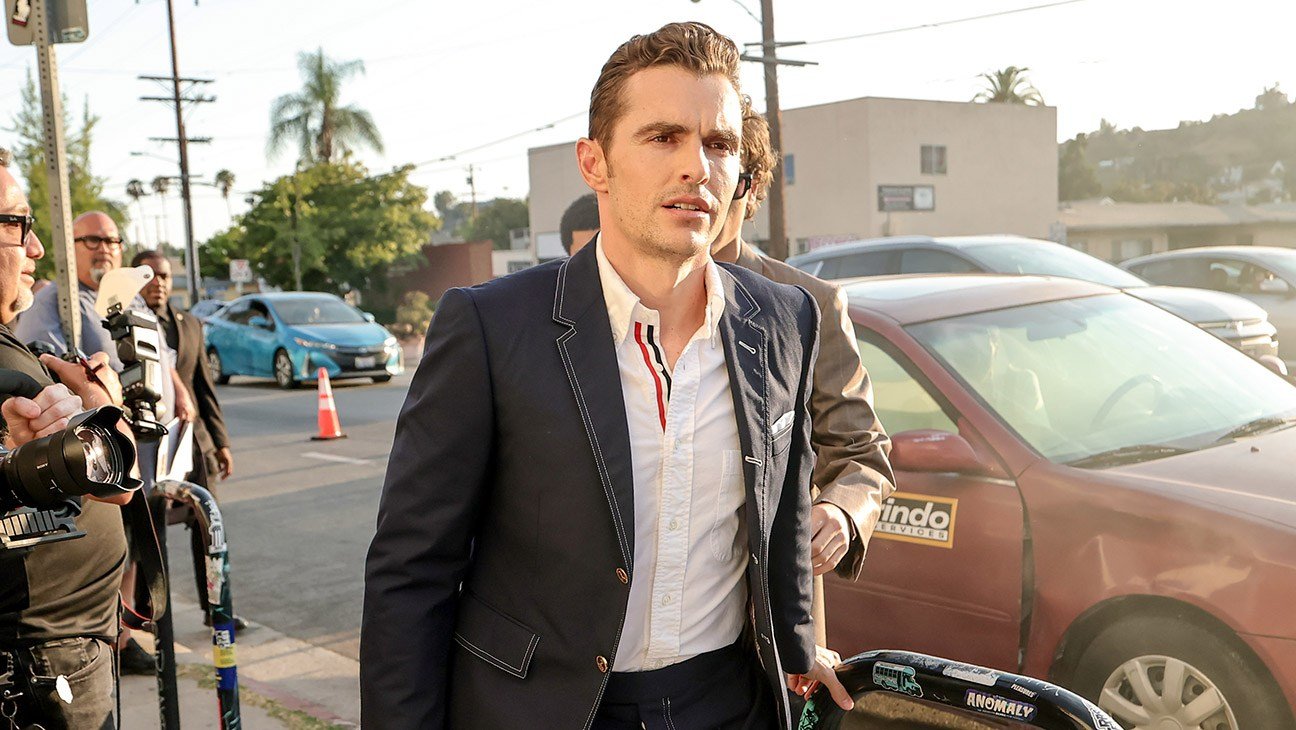
Dave Franco as Mark in Macon Blair’s Idiots
Courtesy of IFC
6 Balloons (2018)was the more dramatic portrayal, but coming out of The Studio season one’s penultimate drug episode, were you hesitant at all to play another character who’s drugged out of his mind?
You’re the first person to ever connect 6Balloons to TheStudio, and I appreciate that. I played a heroin addict in 6 Balloons, and it’s a hardcore drama. Leading up to filming, I lost 20 pounds in a month. I’m not a very big guy as is, so that was a significant portion of my body weight. I was not a happy person, as you can imagine. But I wanted to take myself out of my comfort zone in order to try something new. And even though it’s a very small movie that not a ton of people have seen, it’s interesting how much it still comes up. It usually happens when directors are reaching out to me about slightly more serious projects that they’re working on, and then they’ll point to my performance in that. So it means a lot just because we put a lot into that one.
But when I’m playing “Dave Franco” on TheStudio — and I’m inebriated on alcohol, weed, cocaine and mushrooms at the same time — I can push the boundaries a little bit more. I can be a little sillier and a little more over the top. It’s a more manic version of being drugged out.
In Idiots, my character partakes in drugs as well, but it’s a different kind of drug trip. This is more of a sink-into-the-couch type of trip. If someone says the wrong trigger word, it sends Mark spiraling into hell. So I like to believe that I have a lot of range when it comes to playing drug addicts.
The funniest part of Idiots to me is how Mark is constantly trying to relate to people that he has absolutely nothing in common with, such as the scene in the bathroom with Sheridan (Mason Thames) or the scene coming out of the bathroom with the motel clerk: “You’re a man who takes pride in what he does; I am too.” Like you said, he truly is full of shit.
Yeah, he really likes to believe he’s a hero, and he has a strong lack of self-awareness. He means well, but he just doesn’t know how he’s coming across to others. He says to Sheridan, “Guys like you and me, we’re used to being up in the high steel.” So there’s nothing more fun to play than a cocky fucking idiot — someone so convinced he’s a great person, and the smartest guy in the room, when in reality, he’s just a shithead.
Macon explained the title saga to me, but did you fully expect the Shitheads title to change at some point?
If I’m being totally honest, once we got through Sundance with that title, I had hopes that we could somehow take it to the finish line. But we had a very open, honest conversation with our distributor, IFC. And to their credit, they said, “Hey, we’re willing to ride this title. If you guys want to go punk rock, we are right there with you. But we have to let you know that it limits us in terms of where we can market this film. You can’t just have the word shit on a giant billboard in Hollywood.”
Ultimately, we put so much work into this film, and because we want as many people to see it as possible, that’s why we pivoted. There’s a Lars von Trier movie called The Idiots, but no one had taken the cleaner version of Idiots, so we jumped on it.
Yeah, it’s now the movie’s second Lars von Trier reference.
You gotta love the double Lars von Trier reference.
O’Shea Jackson Jr.’s Davis, Dave Franco’s Mark and Mason Thames’ Sheridan in Macon Blair’s Idiots
Courtesy of IFC Entertainment
I’m glad they kept Sheridan’s “shitheads” line in the movie as a nod to the former title and the explosive motel scene. I know they changed the line to “idiots” in the trailer, but if you were forced to do so in the movie, would you have protested that choice to ADR the new title?
Yeah, there’s no reason to change that line just because that’s how it’s represented in the trailer. Just let it play out the way we intended when we shot it.
O’Shea’s character goes off on Mason’s character after that “shitheads” line, and Mark quietly laughs as this mostly measured guy finally loses his cool. But I did wonder if you actually broke ever so slightly there given how sudden and strong the outburst is.
That was definitely intentional. That was my character being so giddy and pleased by the fact that Sheridan is finally being put in his place. He’s also entertained by the idea of this man of God stepping outside of his comfort zone and swearing in a way that he probably never has before. So there’s a lot for Mark to be titillated by in that moment.
I have to tell you a story about the time I saw Together. I was standing behind a critic as he was giving his comment to the studio rep. And he remarked, “I liked the movie, but the two leads had absolutely no chemistry.” And then the rep and I both responded in unison: “Dude, they’re married.” Hilarity then ensued once he realized his oversight, and I still tease him about it to this day.
I appreciate you standing up for me, but to be fair, there are married couples that don’t have chemistry together on screen. We actually feared that that might be the case. And while I’m never one to pat myself on the back, that is not an issue with that film. The chemistry is fucking there. (Laughs.) I think some people mistake chemistry for characters just not liking each other. So our characters are definitely at odds for most of that film, but we’re flowing off each other in an objectively smooth and electric way.
Dave Franco and Alison Brie in Together
Germain McMicking/Courtesy of NEON
You’ve probably been told that you’ve got good chemistry with other actors throughout your career. But I always hesitate to make that assumption because only the scene partners truly know whether they have good chemistry or not. What percentage of the time is it actually good chemistry versus good acting and good editing?
There’s been situations where it’s known that certain people hated each other on set, and then they have “great chemistry” when you see the final product. So there are cases like that, but more often than not, if they have good chemistry on set, you’re going to feel it when you see them on the big screen.
For me, I’ve made a conscious effort, especially in the last decade, to surround myself with people that I know and love, whether that’s my best friends or my wife. When I’m surrounded by people that I feel comfortable with, that allows me to be free and open and take risks. I know I’m going to fall on my face sometimes, but I also know that no one is going to judge me. They’ll keep encouraging me to try weird shit, and that’s when the best stuff comes.
I last spoke to you for The Rental, so what’s up with writer-director Dave Franco? Have Obsession and Backrooms motivated you to make another horror movie?
I definitely will direct again, and I really believe that the next movie I direct will be a horror film. That said, when you’re directing something, you’re focused on that project for years at a time, and it takes everything out of you. So I’m just not currently in the state of mind to dedicate myself to one project like that.
But I’ve been able to scratch that itch by being a producer on films like Idiots that I’m also acting in. I can still be a part of all the conversations from the ground up and through the release of the film. So that’s been really fun and satisfying for me, and it still allows me to bounce around to many different projects.
Do you know yet if you’re going to be in 24 Jump Street?
The truth is I don’t know yet. I have let them know how much I adore the franchise and that I’m here if they need me — but if Eric Molson doesn’t naturally fit into the story, I understand.
Do you think Now You 4 Me is going to happen?
I think it’s going under the name of 4 Now You See Me: 4 Now You Don’t. (Laughs.)
You’ve clearly workshopped this title.
(Laughs.) I’ve heard that there’s a script in the works, but I haven’t seen anything. That’s as much as I know at this point.
For the sake of inspiration, The Studio welcomed any and all industry stories from the cast and crew. Did you ever offer up your experience on the 2019 motion picture 6 Underground?
(Laughs and responds sarcastically.) Why do you assume that movie spawned production stories?
Well, I asked you about it during The Rental, and while you said it was 50 times crazier than I could possibly imagine, you also said it was better suited for an off-the-record dinner conversation.
(Laughs.) With The Studio, the truth is I wasn’t on that set long enough for them to be mining stories from me. I wasn’t around during pre-production or the whole writing process.
But 6Underground was a whirlwind. I played a [getaway] driver who drives around the streets of Florence, Italy, but I didn’t expect to actually do a lot of the driving with Ryan Reynolds in the passenger seat — plus Mélanie Laurent and Adria Arjona in the backseat. There was a moment when I was doing donuts next to a world-famous museum in Florence, and if I hit something, I could have literally destroyed a piece of history. Looking back, it was a slightly idiotic thing to do, and I blame myself. I should have just handed the wheel over to my stunt double.
Decades from now, when you and your wife are swapping set stories like the one you just shared, what day on Idiots will you likely bring up first?
You know it has to be the day of the diarrhea scene. It’s a top-three poo scene in cinematic history. It’s up there with Jeff Daniels in Dumb and Dumber. I remember calling my wife after that day and telling her I just did the craziest thing I’ve ever done on camera, which is saying a lot because I’ve done so many fucked-up things on camera. But I hold to that statement, and I’m pretty confident that it’s a violent moment people will talk about afterward.
The cast and crew experienced it for the first time together. We never tested the rig before cameras rolled on the day, and it was so volcanic that everyone on set immediately started cracking up. But the camera was still on me as I was losing my faculties in this delirious state, so I had to stay in character and pretend like nothing was happening. We did two takes, and on the second take, we decided to add a little texture with some mashed-up Cocoa Krispies.
Raunchy comedies like this used to be common.
Yeah, Idiots is meant to be a throwback comedy. It hearkens back to comedies from the early 2000s: The Hangover, Superbad, Pineapple Express, Harold & Kumar Go to White Castle. It’s a movie that goes hard. There are other moments besides the diarrhea scene that’ll shock audiences. They won’t believe how far we push things in this. I have personally missed these types of comedies, and I have heard from many other people who feel the same way. So I hope people check it out because, for us to be able to make more comedies again, people need to see the rare ones that do get made.
Did the MPA force Macon to cut the diarrhea scene down at all?
There was no conversation about that. They were like, “Get rid of the title Shitheads, but show the gnarliest shit scene possible.” Respect.
*** Idiots is now playing in movie theaters nationwide.
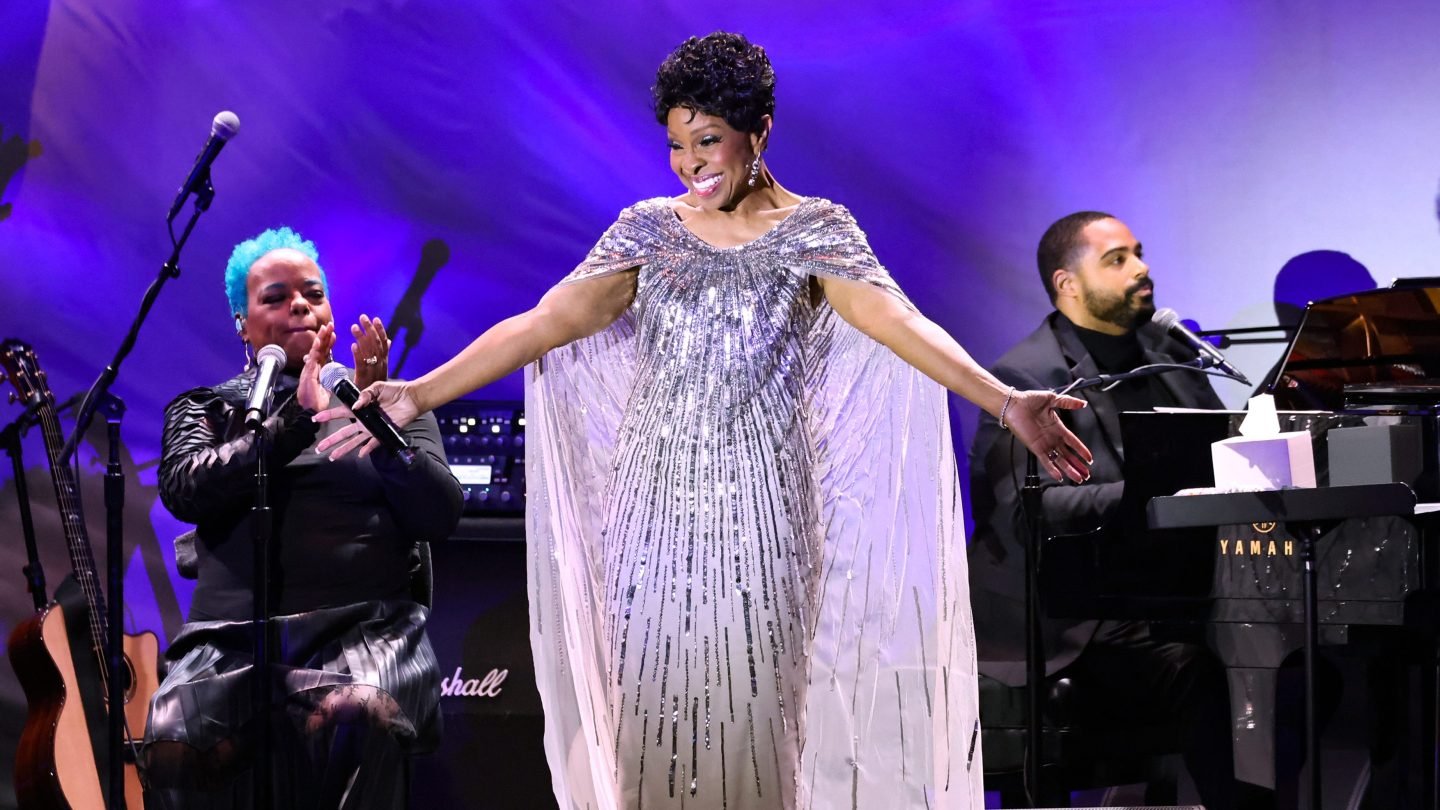
Gladys Knight has announced she’s cutting down on performances as she enters a “new era.”
“After much soul searching I’ve decided that I will be easing into fewer performances while focusing on transitioning into the next stage of my career and life moving forward,” the seven-time Grammy winner said in an Instagram post. “I’ll be spending more time on projects with my husband and visiting with my grandbabies and am looking forward to this new era.”
She continued, “I’d like to take a moment, in advance, to thank all my fans over this last three quarters of a century for making a little girl’s dream come true and supporting her every step of the way. I am immensely grateful to all of you and send my eternal love back to you.”
Knight is currently on a solo tour and recently wrapped her time on the road for The Queens Tour alongside Chaka Khan, Patti LaBelle and Stephanie Mills. However, in her statement, Knight did not rule out all future live performances, writing, “I hope to see your smiling faces out and about on the road. God bless all of you and hope to see you soon.”
The announcement follows her July performance at the Hollywood Bowl with Smokey Robinson, which sparked some concern for the singer. In a recap of the performance, Billboard wrote that Knight “barely got through this show, and only by leaning heavily on her backup singers.”
Knight’s son, Shanga Hankerson, has shared his apprehensions about his mother’s busy life on tour. He previously told People in 2025 that her touring schedule was “detrimental” to her health, alleging that her husband, William McDowell, has been “mental[ly] and financial[ly]” abusive to Knight.
“I did my best to give [McDowell] the space to play the role of husband and do what was in my mom’s best interest, and he has not done that,” Hankerson said. “Why is she working? Why is she in this situation where she’s being made to believe that she has to work like this? That’s really my issue with it.”
Knight refuted her son’s claims in a statement with People.
“I’m sorry that my health and performances have been misrepresented. I want my fans and those concerned to rest assured I am doing very well for someone who has been on stage for three quarters of a century, hard to believe, right?” she said. “I’m healthy and happy and visiting friends and family these last few months. I’m excited to get back on the road with my sisters and on stage with The Queens Tour. See you soon.”
Nesvit reflects on how quickly the demand for microdramas and related vertical media has grown in the U.S. and Europe in the handful of years that Holywater has been active in vertical media. Last year, Holywater struck a deal with Fox that calls for the partners to produce as many as 200 vertical media series derived from IP drawn from Fox’s vault.
“There is a huge difference between me trying to reach out to studios and producers two years and one year ago when we just started the micro drama space. The first time when me and my co-founder went to Hollywood and started talking to studios and creators, it felt like knocking on the doors without getting any reply out there, even though the people are there behind the door,” Nesvit observes. “Right now, it feels like all the doors are open. And actually the studios and creators are the ones who are knocking on our on our doors. And it’s beautiful because people start to realize that this is not a fad. A lot of things were called a fad like Netflix and YouTube.”
Nesvit addresses a host of questions that are swirling around the vertical media boom from those who work in traditional Hollywood. First and foremost, there is grave concern that the low-budget model around vertical media will encourage the use of low-end generative AI to create weak content. Nesvit acknowledges that the vertical media world has reached a crossroads, especially for newer entities that are competing with AI-fueled apps from China that churn out romance stories at an astounding rate.
“We have a choice either to be comfortable like most of our competitors, especially from China, because they know how to do this really well, to stay comfortable and continue producing 99% of our shows within [the romance] genre, or push the boundaries and expand the audience and start experimenting with other genres,” Nesvit says. “We choose the second way, even though it’s more risky, because we have to invest more in R&D in something that doesn’t work necessarily from the first time, but we believe that we will drive more new audience like this.”
Nesvit points to My Drama’s success with the recent serial based on Fox’s unscripted series of “Farmer Wants a Wife” produced with Fox. “This is the first large IP that was released on vertical platform, and the metrics are amazing. So we’re experimenting with fantasy, with crime, a lot of experimenting with sports shows,” he says. “Romance is still a core driver of our revenue. But at the same time, we see that every time we release new formats and new genres, they expand in our audience.”
“Strictly Business” is Variety’s weekly podcast featuring conversations with industry leaders about the business of media and entertainment. (Please click here to subscribe to our free newsletter.) New episodes debut every Wednesday and can be downloaded at Apple Podcasts, Amazon Music, Spotify, Google Play, SoundCloud and more.
First the Blackberry and Hot Cheetos got the feature film treatment, and now: “Hooters: The Movie.”
Based on real-life events that took place at the restaurant, the founders of Hooters are turning their business into a movie, which is already in the works, first reported by Deadline.
The official description for the film reads: “Ted and Lenny are two lifelong friends from a small town in Iowa who accidentally launch a national restaurant empire, only to find everything they built threatened by the federal government. The adventure begins when Ted becomes infatuated with Diane, whom he first sees from afar when featured in a spring break commercial. Determined to find her in real life, Ted talks a hesitant Lenny into joining him on a road trip to Clearwater Beach, Florida. Diane would later become the very first Hooters Girl.”
Jon Rosenbaum will direct the script written by Ed Droste, Phil Olson and Chuck Melcher. It will be independently produced by members of the original Hooters founding partners. Principal photography is scheduled to begin in November.
Wednesday Aug. 26
David Fincher’s “Once Upon a Time in Hollywood” Gets Official Title
Brad Pitt as Cliff Booth returns for another wild ride in “The Further Mis-Adventures of Cliff Booth,” directed by David Fincher with a screenplay by Quentin Tarantino. But this time, it’s Hollywood in 1977.
The feature follow-up to “Once Upon a Time in Hollywood” will be released in Imax theaters globally for an exclusive two-week run starting Nov. 25, before debuting on Netflix on Dec. 23.
Alongside Pitt will be Elizabeth Debicki, Scott Caan, Carla Gugino, Yahya Abdul-Mateen II, Peter Weller, Matt Groove, JB Tadena, Corey Fogelmanis, and Karren Karagulian, and will be produced by Pitt and Ceán Chaffin.
Visual Effects Society Awards Has Added New Categories
Visual Effects Society Awards has added new categories including Outstanding Visual Effects in a Short Project, Outstanding In-Camera Effects in a Photoreal Project, Outstanding CG Cinematography in a Photoreal Project and Outstanding CG Cinematography in an Animated Project.
The Outstanding Visual Effects in a Short Project “recognizes the sophistication of social media content,” according to VES. This category covers both photoreal and animated projects – including narrative short films, documentary shorts, music videos, native social media content, and experimental films – up to 45 minutes in length.
Switching from Outstanding Special (Practical) Effects in a Photoreal Project to Outstanding In-Camera Effects in a Photoreal Project, this category honors artistry created through physical, optical or mechanical techniques and captured by a camera. This includes pyrotechnics, miniatures, and animatronics to special makeup effects, forced perspective sets and other practical crafts. The expanded scope “celebrates the ingenuity of the artists whose real-world creations remain fundamental to visual effects storytelling,” according to VES.
Outstanding CG cinematography has been replaced by two distinct categories to honor animation and photoreal projects.
Isaac Mizrahi Documentary ‘Unzipped’ Set to be Re-released by Janus Films
Janus Films is set to re-release the Isaac Mizrahi documentary “Unzipped.”
Directed by Douglas Keeve, the documentary looks into the life of the fashion designer in the 1990s. It explores the fashion world in the ‘90s through Mizrahi’s work on his 1994 fall collection. The film features appearances by Naomi Campbell, Cindy Crawford, Eartha Kitt, Kate Moss, Liza Minnelli, Sandra Bernhard and Richard Gere.
The film premieres Sept. 25 in New York and Oct. 9 in Los Angeles with a national rollout to follow.
“Unzipped” was originally released in 1995. It has been digitally restored by the Sundance Institute and UCLA Film & Television Archive.
More than a decade after the last installment of “Grand Theft Auto” released, players are finally getting “GTA 6” on Nov. 19.
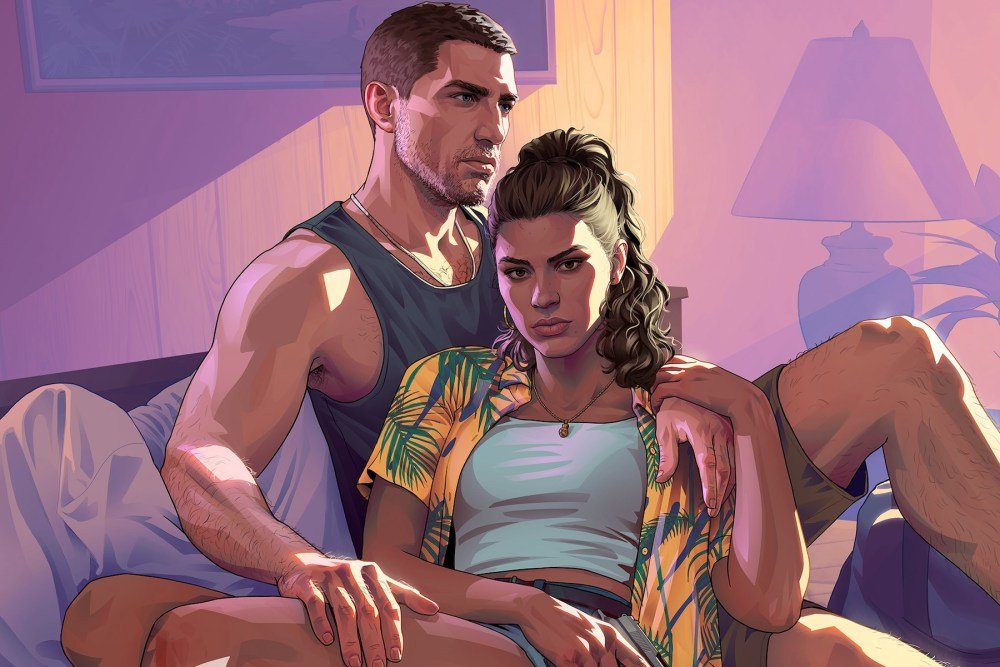
Per the official description for “GTA 6” from publisher Rockstar Games, “Jason and Lucia have always known the deck is stacked against them. But when an easy score goes wrong, they find themselves on the darkest side of the sunniest place in America, in the middle of a criminal conspiracy stretching across the state of Leonida – forced to rely on each other more than ever if they want to make it out alive.”
With three more months until the game’s official release, here is everything we know about “Grand Theft Auto VI.”
Where can I play ‘GTA 6’?
The game is currently set to release on the PlayStation 5 and Xbox Series X and S devices, meaning it won’t be available to play on older generations of the gaming consoles. There is no confirmation on when it will arrive on the PC, but previous “GTA” games have been released on consoles before expanding to PCs later.
What will it look like?
Rockstar’s “GTA” franchise is already known for its photorealistic characters and lifelike movements, and “GTA 6” will be no different. On Aug. 27, Netflix released an extended preview of the game captured entirely on PlayStation 5.
The preview teases Jason and Lucia in scenes across the fictional Vice City, the Miami-inspired city players are familiar with. But “GTA 6” expands beyond city limits into Leonida, inspired by Florida, which is home to various distinct regions, like the Leonida Keys, Grassrivers, Port Gellhorn, Mount Kalaga and an area called Ambrosia.
Players who have allegedly seen the game say the map for “GTA 6” is significantly larger than the playable area in previous games. Rockstar has not officially confirmed this.
What is the game’s storyline?
Protagonists Jason Duval and Lucia Camino are at the center of “GTA 6,” where their odds are seemingly stacked against them. When a score goes wrong for the duo, “they find themselves on the darkest side of the sunniest place in America,” the official website states. Now stuck in the midst of a criminal conspiracy in the fictional state of Leonida, Jason and Lucia must put their full trust in each other if they want a chance at making it out alive.
Who are the characters?
Jason and Lucia are at the forefront of the game’s narrative, with Lucia recently being released from prison. Seeing Jason as a way to leave her troubled past behind and reaching the “good life” her mom used to tell her of, the pair form a Bonnie-and-Clyde-esque relationship in the world of drug runners. Below is a list of additional characters confirmed in “GTA 6.”
Cal Hampton — Jason’s friend and Brian’s associate who prefers “snooping on Coast Guard comms” from the comfort of his own home
Boobie Ike — A Vice City legend with an empire made up of real estate, a strip club and a recording studio
Dre’Quan Priest — A hustling aspiring musician ready to leave the days of performing at Boobie’s strip club behind after recently signing under Real Dimez
Bae-Luxe and Roxy — also known as Real Dimez, the two have been best friends since high school. The rapping duo is signed under Only Raw Records
Raul Bautista — Raul is a cunning, charming and experienced bank robber always looking out for new talent
Brian Heder — Brian is a seasoned drug runner who operated during the prime time of smuggling in the Keys
Who is involved?
While there is no official confirmation of the actors who star in “GTA 6,” Jason and Lucia are rumored by fans to be played by Dylan Rourke and Manni L. Perez.
Rockstar North is the developer and Rockstar Games is the publisher of the franchise. Take-Two Interactive is the parent company of Rockstar.
When will it come out?
Thirteen years in the making, “GTA 6” will officially be available Nov. 19. The game’s release has faced several setbacks including leaks, delays and economic uncertainty.
Preorders launched on June 25, one day after Take Two-Interactive’s Rockstar Games revealed pricing for the game would be $79.99 for the standard edition, which can be purchased as a digital or physical (which includes a code in a box rather than a disc) copy. The “ultimate” version will cost $99.99 and include “an exclusive collection of premium vehicles, weapons, apparel and action threaded across all aspects” of the game.
Fans finally got a preview on Aug. 27 with Netflix’s “Grand Theft Auto VI: An Extended Look.” The special included 27 minutes of content that revealed cinematic and gameplay scenes throughout the fictional Vice City and teases the overall narrative of the game.
How much is it expected to make?
Global preorders for “GTA 6” have reached an estimated $260 million, which lines it up for a potential $4.5 billion in sales by launch week.
“GTA 5” is still in the top five bestselling video games each year, 13 years after its initial release. It has raked in nearly $10 billion since its Sept. 2013 launch. In game sales alone, “GTA 5” has sold 230 million copies worldwide, placing it second in bestselling video games of all time behind Minecraft.
How long will it take to play?
It could take about 80 hours to complete, according to Rockstar North co-studio head Rob Nelson. His playthrough included the campaign in its entirety plus some optional content, so it likely won’t take exactly 80 hours for each individual player.
What affects the character’s appearence?
“GTA 6” is more than just guns and chaos. This time, players can experience in-game role-play and build out Jason and Lucia – romantically and physically. The narrative of the game is all about fostering the protagonist’s relationship, and the strength of the relationship will be recognizable on the character’s bodies, Rob Nelson, Head of Development and Co-Studio Head at Rockstar North, told IGN.
“So being in the open world and exploring together or doing activities together — playing pool or mini golf or kayaking; normal slice of life things. Or, robbing stores together, robbing banks together. However players want to spend that time together, it will have a positive impact on the relationship.”
But to stay fit for each other and the action, “GTA 6” will also bring back the weight and muscle system from “Grand Theft Auto: San Andreas.” These characters can go to the grocery store, eat meals and even put on and lose weight.
Just like the players, Jason and Lucia need constant communication, hearty meals and a solid eight hours of sleep each night. All of these key gameplay details affect the characters physical appearance.