Getting healthy and staying active can be challenging, and sometimes it’s hard to keep yourself accountable. Well, a health-focused smartwatch can help you along the way to reach your goals. The Garmin Vivoactive 5 smartwatch is just the thing you might need. Over on Amazon, it’s on sale for $181.97, down from its original $299.99 price. That’s just over $118 in savings!
As of August 31, the Garmin Vivoactive 5 smartwatch is 39% off. According to CamelCamelCamel, this is the lowest price it’s been at since May. So if you missed out on the first discount, now’s a great time to hop on this deal!
Garmin Vivoactive 5 Fitness GPS Smartwatch
11-day battery life, 2-hour charge time, 50-meter water resistant depth,
This smartwatch and fitness tracker comes with a beautiful AMOLED display that’s both colorful and bright, allowing you to get a clearer glance at your health metrics. You can track parameters like sleep and sleep levels so you can make more informed decisions about your health. There are also more than 30 built-in indoor and GPS sports apps, giving you plenty of options both inside and outside activities. Whether it’s cycling, running, or swimming, you’ll be able to measure your progress while being aware of your location.
It’s got some accessibility features too, such as wheelchair mode that tracks pushes instead of steps. If you’re a sleepy person during the day time, the watch also tracks your nap length to let you know how your body is impacted. And with up to 11-days of battery life (five with always-on display), you can ensure that the watch will be ready when you are, with no distractions.
Our expert Andrew Gebhart awarded it an “Excellent” rating. In our in-depth review, he said, “With a gorgeous display, long battery life, and bountiful health insights, the Garmin Vivoactive 5 is an excellent wellness-focused smartwatch.”
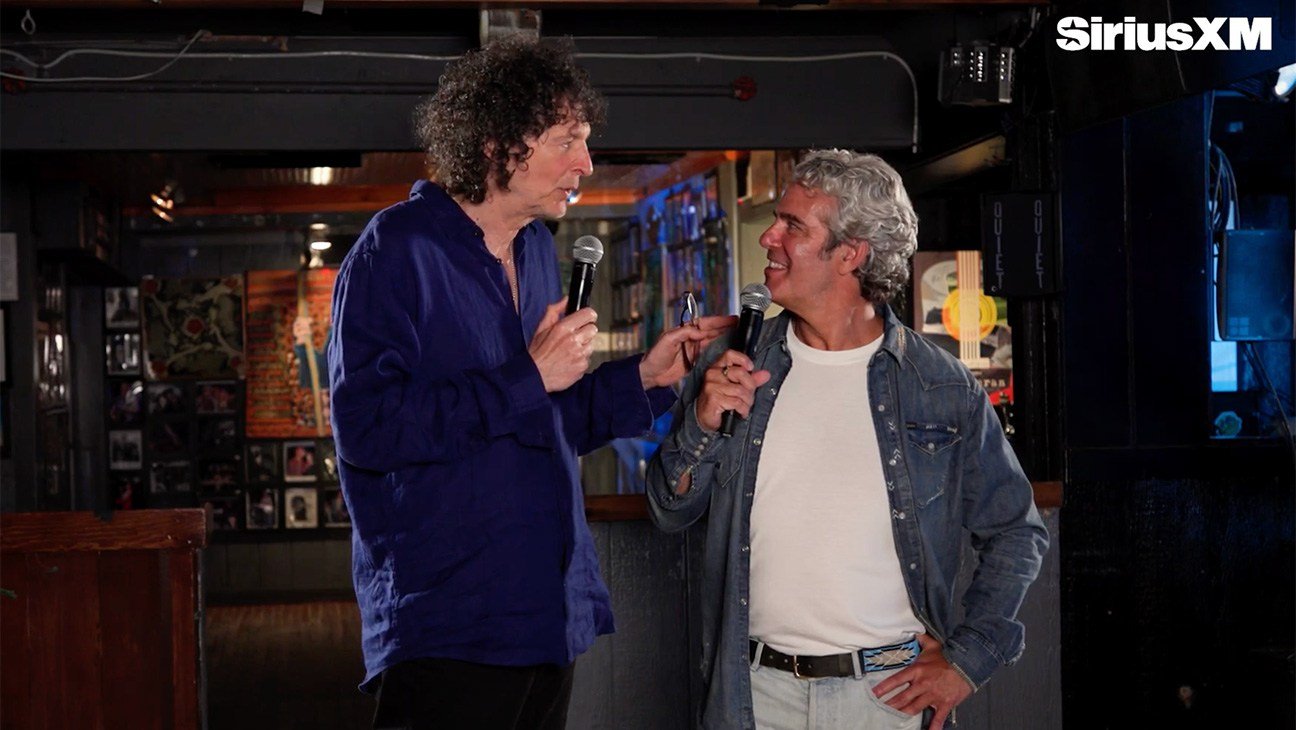
The transition comes about one year after Stern and Cohen pranked listeners by having Cohen take over the airwaves and imply that Stern was fired and that Howard 100, Stern’s main channel, was now his own. The prank came amid rumors about Stern’s impending retirement and the cancellation of his show.
This time, Stern is actually giving Cohen Channel 101, his second channel which hosted archival clips of his show, as he returns and transitions to only doing one show a week, rather than the typical two. Stern has also struck a deal with HBO Max to adapt his live SiriusXM show into streaming episodes for HBO Max.
“Last year we pranked the world. We made everybody think that I was taking over Howard 100. It was the best morning. Now the carrot is being dangled that Radio Andy will be taking over 101. Is this a prank? Am I being pranked?” Cohen asks Stern in a new video released by SiriusXM.
“No, you are not being pranked. And Andy has been gracious enough to take over 101. And I have one request: please continue the tradition of doing a lot of gay antics,” Stern says.
On Sept. 14, Howard will also unveil a new lineup for his Howard 100 channel, which will include Wrap Up Wednesday, an expanded version of Howard’s Wrap Up Show hosted by Gary Dell’Abate and Jon Hein that previously ran on Howard 101.
In the past, Cohen, who helms a SiriusXM radio empire, including hosting Andy Cohen Live, has been rumored to be the eventual successor for Stern. SiriusXM did not comment on that theory, but Cohen and Stern seemed to downplay the idea.
“Any chance I could get 100, and you take 101?” Cohen asks in the video.
“No, I’m not giving up 100,” Stern says.
As part of the channel shakeup, Sebastian Maniscalco’s Comedy Radio will take over Cohen’s previous channel, 102, while Netflix is a Joke Radio will move to channel 105, which has been home to temporary or pop-up programming. SiriusXM did not comment on reported layoffs as part of Stern’s move to one show a week.
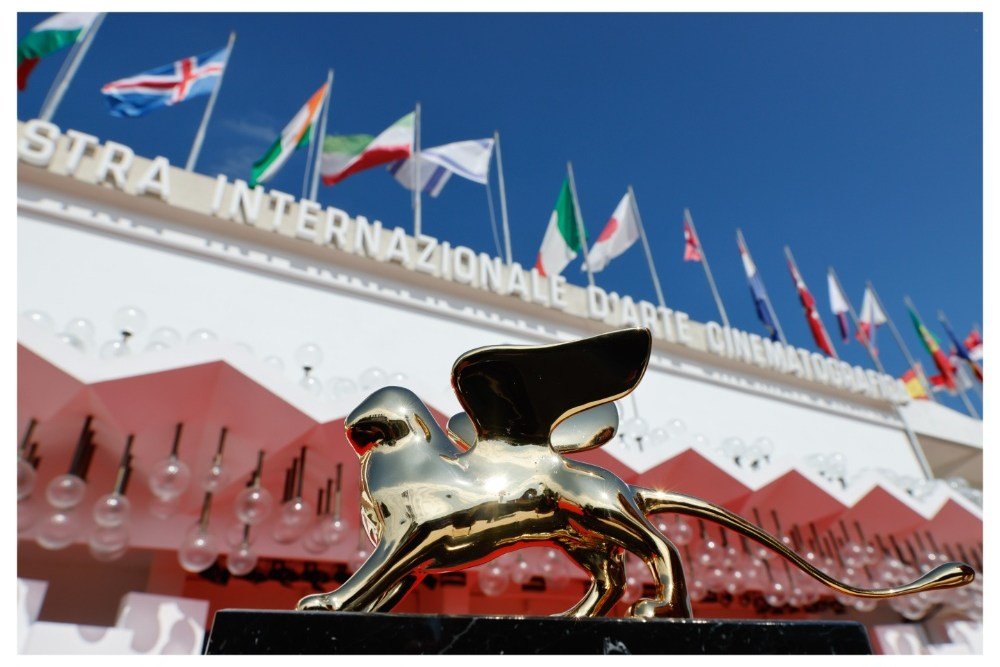
The Venice Film Festival opens Wednesday with Danny Boyle’s “Ink,” a juicy exposé of how British tabloid The Sun propelled Rupert Murdoch’s rise to right-wing media baron, kicking off 11 days of buzzy movies, major stars and an unusually charged political debate on the Lido.
Venice director Alberto Barbera has described this year’s lineup as the event’s “most political” in recent years, with films tackling war, Palestine, immigration, climate change and shrinking political freedoms. And before the festival has even opened, several of those fault lines have already erupted into controversy.
At the same time, Venice remains one of the fall’s key launchpads for prestige movies, awards hopefuls and international titles looking to build momentum with distributors and buyers. Though U.S. studio and streamer presence this year is more muted than in past editions, the selection features a robust roster of hotly anticipated star-driven movies, some of which are making noise even before landing on the Lido.
“Ink” stars Jack O’Connell, Guy Pearce and Claire Foy are all expected on the Palazzo del Cinema red carpet for the Sept. 2 launch of the timely film, which has been acquired by Netflix for the U.S. and Latin America.
Though U.S. studio and streamer presence this year is more muted than in past editions, the Venice selection features a robust roster of hotly anticipated star-driven titles, some of which are making noise even before landing on the Lido.
Robert Pattinson will be on hand to promote Lance Oppenheim’s “Primetime,” in which he plays “Dateline NBC” correspondent Chris Hansen. Hansen recently claimed that he walked away from a preview screening of “Primetime” in the offices of distributor A24 — which will release the film on Sept. 25 in the U.S. — after refusing to sign a legal agreement he described as unlike anything he has encountered in four decades on the beat. A source close to A24 told Variety that Hansen was asked to sign a standard NDA that all preview audiences must adhere to for an unreleased film.
John Malkovich, Sam Rockwell and Steve Buscemi are all expected on the Venice red carpet for the Sept. 3 launch of Martin McDonagh’s “Wild Horse Nine” that sees Rockwell reunite with the “Three Billboards” director in a dark comedy about CIA agents.
Also on Sept. 3, Kate Mara, Rooney Mara and Orlando Bloom will be on the Lido to launch Warner Herzog’s “Bucking Fastard,” in which Bloom plays Gareth Mulroney, the lover of inseparable, synchronized sisters Jean and Joan Holbrooke (played by real-life sisters Kate and Rooney Mara).
Liam and Noel Gallagher are confirmed to be on the Venice red carpet on Sept. 5 for the launch of Disney+ doc “Oasis: Don’t Look Back in Anger,” about the British band’s reunion world tour which captures the moment the two rocker brothers reconciled after 15 years without contact.
Penélope Cruz, Javier Bardem, Stephen Graham, and Paul Dano will be disembarking on the lagoon Sept. 8 to promote marriage crisis drama “Bunker,” one of the most anticipated films of the fall festival circuit in which Cruz and Bardem appear on-screen as husband and wife. “Bunker” hails from playwright-turned-filmmaker Florian Zeller, who won two Oscars with his feature debut “The Father.” Sony Pictures Classics is handling the U.S. release, while FilmNation represents the film internationally.
Also on Sept. 8, Oscar-winning filmmaker Alex Gibney will be back in Venice with Elon Musk doc “Musk,” an incisive nearly four-hour piece probing the world’s richest man and influential “inventor-entrepreneur” that is expected to feature several explosive revelations. Musk has already called it “a hit piece” sight unseen.
The politics surrounding the festival, meanwhile, are unlikely to remain in the background.
In late August, Barbera came under fire from Ukrainian officials for the inclusion of dissident Russian director Ilya Khrzhanovsky’s competition entry “DAU,” which they claimed has Russian state links. Barbera took to social media to deny that allegation: “DAU is not a Russian film; it is not pro-Putin propaganda; it is a film of denunciation of totalitarian regimes and their intrusion into the lives of citizens to limit their freedom.”
Last week, the fest added “NAZA,” a new hot-button documentary from Oscar-winning “No Other Land” directors Yuval Abraham and Rachel Szor, to the competition lineup. The doc, which was shot at night on the rooftops of Tel Aviv, shows “in detail the systems behind Israel’s calculated mass killing of Palestinian civilians in Gaza,” according to its official synopsis.
Also last week, Nobel Prize-winning author Annie Ernaux, Pink Floyd co-founder Roger Waters and filmmakers including Matteo Garrone and Isabel Coixet signed an open letter urging the festival to take “concrete action in support of Palestine.” The letter was an initiative of the Venice4Palestine collective, which similarly targeted the festival last year. There was no comment from the event’s organizers.
And over the weekend, a small storm erupted after it emerged that the festival was considering scrapping its jury press conference, allegedly due to a scheduling conflict. Barbera and his team then decided to go ahead and hold the presser after online observers blasted Venice’s hesitation to cancel it as a move to shield jury members from being quizzed about politics.
Now it will be interesting to see how the jury, headed by Maggie Gyllenhaal, will navigate this thorny situation on Wednesday. The festival’s main jury also comprises Tunisian filmmaker Kaouther Ben Hania, whose acclaimed “The Voice of Hind Rajab,” about the killing of a five-year-old Palestinian girl in Gaza, premiered at Venice last year and won the Silver Lion Grand Jury Prize. The other jurors are Daniel Blumberg, Francesco Casetti, Xavier Giannoli, Shahrbanoo Sadat and Johnnie To.
For all the political noise surrounding this year’s edition, Venice remains one of the industry’s most closely watched fall launchpads, where a strong reception can set the tone for a film’s awards campaign, international sales or wider rollout.
For the event’s organizers, though, what ultimately matters in Venice is what’s on the screen.
“The festival is an open space that is not conditioned by politics; it’s a place of dialogue and discussion between artists and creators,” Barbera recently told Variety.
The last holiday weekend of the summer is here, and no matter what your plans are for Labor Day, you know we’re here to cover the sales. Major retailers have already started unleashing Labor Day discounts early, and I decided the first stop in my coverage would be PCs both portable and desktop. Here are five offers that are already heating up, with more to come as the Labor Day weekend gets closer.
HP OmniBook X Flip 2-In-1 Laptop Early Labor Day Deal
Let’s lead off with a shockingly deep discount on a HP portable that’s got the flexibility to work for just about everyone. In our review of the OmniBook X Flip 2-in-1 laptop, PCMag expert Jorge Jiminez raved over the unit’s lavish 120HZ OLED touchscreen, robust metal chassis and wide range of customization options. This loadout is securely in the midrange productivity bracket, with a solid AMD Ryzen AI 5 processor that acquitted itself very well in testing, with optimizations for Microsoft Copilot on-device artificial intelligence tasks. It’s paired with a Radeon 840M GPU for even more operational efficiency. The keyboard on the 14-inch version that we tested felt a little cramped, so an extra two inches of diagonal space is welcome on this one for a more comfortable feel. Best Buy has it for 48% off, the lowest price we’ve ever recorded for this one.
For a budget-priced Windows machine, this Dell is an absolute steal. Typically portable PCs under $500 have dire loadouts and murky monitors, but this one is a full 2K IPS touch display with good color and contrast. Under the hood, you’re getting great component value, with a peppy but affordable Intel Core i5 processor running the show and 512 gigabytes of internal storage. I would say that the 8GB of DDR5 RAM is slightly skimpy, but memory prices are absolutely out of control right now so it’s not surprising. Just don’t keep a million browser tabs open and you’ll probably be fine. The keyboard and touchpad are both good-sized and well-built, and port selection is solid but not exceptional. Battery life is also a strong point, with fast charging taking you from zero to 80% full in just an hour.
We’re tracking gaming deals as well, and right now the best entry-level offer we’ve spotted is a deep $400 discount on HP’s HyperX Omen laptop. In our review of this unit, we praised every element of its construction and design but one: the underpowered RTX 5050 graphics card it shipped with. Thankfully, HP listened to our criticism and is now building them with a significantly more capable RTX 5060 GPU instead. That makes a huge difference, because we really liked its sturdy construction, comfortable keyboard, well-considered port selection and long battery life. While this isn’t an envelope-pushing machine, it’s built for reliability and can tackle all of today’s top games in good quality.
Dell has been one of the most trusted names in home and office computing for generations, and right now Best Buy has a price drop that brings a very capable tower down to under a thousand bucks. The Dell Slim has a relatively small footprint without compromising on performance, featuring a perky 20-core Intel Core Ultra 7 processor that we consider an excellent value for the money, easily capable of handling everyday productivity and entertainment tasks all day long. A full terabyte of internal storage is also a surprise, given how spendy SSDs are these days. The fan setup and cooling system are also quite good, with near-silent operation even under heavy workloads.
Gaming desktop deals can come from all over, and we’ve found that Walmart is a surprisingly great spot for midrange towers with some nice components. While the RTX 5060 graphics card isn’t the tippy-top of Nvidia’s new Blackwell line, it’s a great 1080p performer that churns out stable framerates and also boosts on-device AI performance. Coupled with a very competitive AMD Ryzen 5 8400F processor, you’ll squeeze a ton of juice out of this one. The case is also well-constructed, with an attractive tempered glass side panel and mesh front panel highlighting the efficient RGB fans within. We have a review of the similar Codex R2 from 2024 where we gave it an Editors’ Choice award for budget gaming excellence.
More Desktop Deals
*Deals are selected by our commerce team
Want to save even more? Our deals page is chock full of bargains.
About Our Expert
K. Thor Jensen
Contributing Writer
Experience
K. Thor Jensen is a writer and cartoonist living in the Pacific Northwest. He has contributed to dozens of prestigious outlets, including PCMag, Tested, Clickhole, and Newsweek. His second graphic novel, Cloud Stories, was released in 2017.
If Japan does increase rates and the yen rises quickly, cheap yen-funded bullish bets in stocks, bonds and even cryptocurrencies taken over the years can unwind. Foreigners who bought Japanese stocks on the back of a weak yen may sell. Japanese savers who sent money overseas as a hedge may bring it home. When those positions close, risk assets could be sold. Bitcoin suffered collateral damage in early August 2024, when a Bank of Japan rate increase drove the yen higher and spurred a wave of risk aversion.
So while bitcoin’s long-term bull case looks as solid as ever, it still trades like a high-risk asset when traditional markets get squeezed by rate and currency shocks. Stay alert!
Read more: For analysis of today’s activity in altcoins and derivatives, see Crypto Markets Today . For a comprehensive list of events this week, see CoinDesk’s “Crypto Week Ahead.”
What’s trending
North Korean hackers are moving tens of millions on Hyperliquid as Trump pushes to onshore the crypto platform (CoinDesk): Blockchain data reviewed by CoinDesk appears to show wallets said to be tied to North Korea’s Lazarus Group sold more than $30 million in bitcoin on the platform in the last three weeks alone.
CME’s share of $XRP futures jumps as token rallies 40% in a week (CoinDesk): A growing share of $XRP futures trading is moving toward CME even as traders cut leveraged positions across crypto exchanges.
Global bond yields soar to multi-decade highs as Middle East turmoil reignites inflation fears (CNBC): Government bond yields jumped across major markets, with borrowing costs in Japan and the U.K. touching multi-decade highs, and U.S. Treasury yields surging.
Oil prices rise and stocks slide as Middle East violence flares, adding to uncertainty (AP): Oil prices jumped 2% and world shares fell Tuesday. Brent crude gained 2% to $92.35 per barrel. U.S. benchmark crude advanced 2.5% to $87.84 per barrel.
“Together in Love and Anarchy.” This year’s motto for the 39th Helsinki International Film Festival – Love & Anarchy stated by Outi Rehn, program director, and Pauliina Ståhlberg, executive director, says it all.
Speaking with Variety ahead of the full program’s disclosure Sept. 1, the festival’s co-honchos were happy to reiterate its key values. “Love and Anarchy proudly takes a stand, and we don’t pretend that we’re not political. Every film selected is a political statement and even not showing a film is a political statement,” said Ståhlberg, distancing herself from Wim Wenders who sparked controversy at the last Berlinale when stating at the jury presser that “festivals and artists should stay out of politics.”
Pauliina Stahlberg, Outi Rehn
Courtesy of Alejandro Ramirez, Helsinki Film Festival
With freedom of speech and democracy at its core, the festival’s own selection process was carefully shaped this year to reflect this stand. A five-person team headed by Rehn replaced fest co-founder and artistic director Pekka Lanerva, who officially retired last year. “But he’s still part of our programming team; we’re just more voices in the mix to make it truly democratic,” said Rehr who joined the festival as full-time staffer in 2012.
“We’re all running the show!,” insisted seasoned industry exec Ståhlberg, only the second year in her job.
So how was this year’s curating job for the Love & Anarchy team whose mission was to gather “the most dazzling cinematic diamonds and rarest little film gems” from the world’s biggest festivals, in full dialogue with Finnish distributors, while prioritizing gender parity?
“It’s been challenging as there were too many good films around, and Cannes in particular had an exceptional year,” said Rehn, who proudly noted that four Cannes competition entries will bow in the festival’s most prestigious Gala Screenings.
Kickstarting the festivities Sept. 17 as opening Gala film will be the Spanish drama “The Black Ball” for which Javier Ambrossi and Javier Calvo shared a Cannes best director prize. Then Palme d’Or winner “Fjord” will bow as Nordic Gala pick. Na Hong-jin’s rollercoaster monster film “Hope” will screen as Love & Anarchy Gala and Andrey Zvyagintsev’s “Minotaur” – Cannes Grand Prix winner – as closing Gala film on Sept. 23.
Rounding out the Gala strand is local prodigy Hanna Bergholm with her chiller “Nightborn,” which world premiered in Berlin’s main competition.
For Ståhlberg, “Nightborn” epitomizes “the recognition that Finnish talent (working across film and series) are achieving at festivals worldwide, as well as with the local audience.” “With nearly 32% of the market, we’re at the top of the European league. Finns love watching local films,” she underscored.
“Considering the record number and superb selection of Finnish short films submitted for our national competition, I can say that the future looks bright for Finnish cinema,” added Rehn.
A total of 121 shorts and 136 films from more than 80 countries will screen across the festival’s 20 plus sections, many of which are renewed each year. “It’s only when we start picking films that some sections take shape. By waiting until the last minute to lock the sections and name them, it gives us a lot of freedom, as well as a clear overview of filmmaking trends,” Rehn explained.
Film highlights include Paolo Sorrentino’s “La Grazia,” James Gray’s “Paper Tiger,” Quentin Dupieux’s “Full Phil” and Kiyoshi Kurosawa’s “The Samurai and the Prisoner,” all showcased in the Spotlight Selection.
The new section More than Human exploring “the world of animals, plants and merfolk,” will “reminds us of all beings right to live and to be treated equally, across the boundaries of species,” said the co-honchos.
Politics, Sex and More Other film spotlights in the popular Fight for Power strands take in CPH:DOX winner “The Secret Reading Club of Kabul,” this year’s Palestinian Oscar submission “Palestine 36,” and Cannes selected doc “Rehearsals for a Revolution.” “By flagging Iran, Palestine, but also Ukraine in other sections, we really take a stand,” insisted Ståhlberg.
Animation will also stand solid with titles ranging from “Jim Queen,” about a virus in Paris turning gay men straight, “Bouchra,” a queer animated from Morocco, to the black metal Finnish comedy “Belzebubs,” based on JP Ahonen’s webcomic.
True to the festival’s anarchic and edgy spirit, the taboo-breaking Let’s Talk About Sex strand will make a come-back with five titles including the controversial U.S. indie “Blue Film,” which world premiered in Edinburgh in 2025, “My Friend the Porn Star” and the BDSM-driven “Pillion,” starring Alexander Skarsgård.
Among top talent expected are Cristian Miungiu for “Fjord,” screening as well as opener of the festival’s industry sidebar Finnish Film Affair, “Nightborn” helmer Bergholm, actor Seidi Haarla and composer Eicca Toppinen, Danish actor Trine Dyrholm, Swedish/Icelandic actor Sverrir Gudnason and Faroese filmmaker Búi Dam, set to present their respective Nordic Council Film Prize nominated pics “Beginnings,” “The Love That Remains” and “Birita.”
Other guest confirmed include U.S. filmmaking duo John Adams and Toby Poser for “Mother of Flies,” Greek writer-director Thanasis Neofotistos and screenwriter Grigoris Skarakis for “The Boy With the Light-Blue Eyes,” Sámi artist Elle Sofie Sara for “Árru” and Estonian filmmaker Meel Paliale and production designer Jasmin Kulagina for “Rolling Papers.”
Meanwhile seasoned Finnish filmmaker Zaida Bergroth (“Tove,” “The Good Son”), named lead mentor for the Nordic training scheme Söderlångvik Masterclass (Sept. 17-20), backed by the festival and the Amos Anderson Fund, will take the stage in Helsinki to discuss her 2017 Toronto selected “Miami” with star actor Krista Kosonen (“Blade Runner 2029,” “Beforeigners”).
The Helsinki International Film Festival – Love & Anarchy runs Sept. 17-27 and its industry confab Finnish Film Affair Sept. 23-25.
The number of women working as TV creators and directors on original U.S. shows airing on streaming services has declined, in addition to female characters in major roles, according to the latest “Boxed In” study released Tuesday.
The report, which tracked over 2,500 characters and more than 3,600 behind-the-scenes credits during the 2025-26 television year, was penned by Dr. Martha Lauzen, executive director of the Center for the Study of Women in Television and Film at San Diego State University.
She found that the amount of women creating shows across streaming plummeted from 36 percent in 2024-25 to 24 percent in 2025-26, which was a stark contrast to the increase the year prior (27 percent in 2023-24 to 36 percent in 2024-25). The new findings indicate that last year’s increases were a momentary surge, rather than the beginning of a positive trend. As for broadcast, women creators also declined slightly from 20 percent in 2024-25 to 19 percent in 2025-26.
“The numbers of women creating shows on both platforms are now lower than they were almost a decade ago in 2017-18,” Lauzen said.
When it came to the percentage of women directing streaming projects, the report found that number also dropped from 32 percent in 2024-25 to 22 percent in 2025-26, following the temporary increase after 2023-24 (23 percent). Women directing broadcast programs also dipped from 18 percent in 2024-25 to 16 percent in 2025-26.
This new study follows a report from The Hollywood Reporter in June that spotlighted the lack of progress in women-held below-the-line positions after a behind-the-scenes video of Sydney Sweeney on the set of Euphoria season three started circulating on social media. At the time, fans were quick to point out that the majority of the crew members seen in the clip were men, while Sweeney was sitting in a suggestive pose.
As for roles in front of the camera, the number of female characters in major roles also declined last year, per the study. For streaming, women comprised 44 percent of major characters in 2025-26, down from 49 percent in 2024-25, and on broadcast, females accounted for 46 percent of major characters, down slightly from 47 percent in 2024-25.
The report also found that male characters continue to have an easier time aging on television compared to female characters. On both streaming and broadcast shows, the majority of women in speaking roles were in their 20s and 30s, while the majority of men were in their 30s and 40s. The number of female characters also experienced a steep decline as they aged from their 30s into their 40s, while their male counterparts didn’t experience a substantial drop until their 50s.
“The emphasis on youth for the majority of female characters foregrounds their appearance, whereas males are able to credibly age into positions of personal and public power, normalizing the perception that men are naturally more powerful than women,” Lauzen added. “The fully-realized characters played by Kathy Bates on Matlock or Jean Smart on Hacks remain the exception, not the rule, for women on television.”
The “Boxed In” report has monitored over 65,000 characters and more than 80,00 behind-the-scenes credits on original dramas, comedies and reality television programs over the last 27 years, starting in 1997-98. It aims to provide a comprehensive historical record of women’s representation and employment in television.
Bitcoin surged 24% in August, recording its strongest monthly gain since November 2024, before stabilizing around $78,000 following this sharp rise.
According to economists, high oil prices and rising US Treasury bond yields have limited further gains in $BTC. On the other hand, expectations for an interest rate hike in September have significantly increased following Federal Reserve Chairman Kevin Warsh’s speech in Jackson Hole.
However, according to analysts, Bitcoin continues to hold onto critical support levels.
Bitcoin Holds Critical Support!
According to Bitfinex analysts, Bitcoin is holding onto its critical support level at $77,100 despite signals from the Fed indicating a more hawkish monetary policy.
According to Bitfinex’s latest Alpha report, $BTC experienced a sharp pullback last week after rising to $81,500, following Federal Reserve Chairman Kevin Warsh’s remarks at Jackson Hole.
However, despite this pullback, $BTC’s ability to hold above $77,100 indicates that the uptrend is not yet broken.
Spot Buying is Also Behind Bitcoin’s Rise!
Bitfinex analysts stated that the Bitcoin surge in August was not solely due to leveraged trading, but that actual spot market purchases also supported the rise.
At this point, analysts stated that there was a total net inflow of $924.5 million into US spot Bitcoin ETFs during the week of August 24-28. Bitfinex added that liquidity concentrated in ETFs and stablecoins supports the uptrend in Bitcoin and the crypto market, but high inflation and expectations of future interest rate hikes could limit further gains.
At this point, the US employment data to be released on September 4th and the inflation data to be released on September 11th will be critical in terms of expectations regarding the Fed’s interest rate decision in September.
Can $BTC Hold Above $80,000?
Although Bitcoin fell below $80,000 following Kevin Warsh’s hawkish speech at Jackson Hole, it is holding onto the $77,100 support level.
However, questions remain about the sustainability of the price above $80,000. While Bitfinex notes that strong spot Bitcoin demand and a net inflow of $925 million into spot Bitcoin ETFs are supporting the market, some analysts are more cautious about the sustainability of the rally.
At this point, Greeks.live analyst Adam noted that there had been large inflows into ETFs, but this strong inflow series ended with a $202 million outflow on August 28th. The analyst stated that the net outflows from ETFs in the last few days, and the possibility of these outflows becoming permanent, could make it difficult for $BTC to hold above $80,000.
The analyst also discussed Strategy’s decision to resume $BTC purchases after a long hiatus. According to the analyst, Strategy’s Bitcoin purchases may support the price in the short term, but may not be enough to change the long-term trend on their own.
Macro Risks Persist!
Finally, the analyst noted that, as Bitfinex has also pointed out, the Fed’s hawkish stance and macroeconomic uncertainties are among the main risks for Bitcoin.
According to the analyst, these factors are putting additional pressure on investor confidence and the $BTC price. At this point, the analyst believes it’s too early to talk about a new strong bull trend without a sustained move above $80,000 in Bitcoin. ETF flows and Fed policy will be decisive in determining the short-term direction.
Chile’s Santiago Film Festival (Sanfic), which runs Nov. 2 – 6 this year, is toasting the seventh edition of its genre-focused Sanfic-Morbido Lab with the launch of a WomanInFan Southern Cone partnership with the Sitges Film Festival and a new pix-in-post section, Fantastic WIP.
Hailed as a bold experiment seven years ago, the Sanfic-Morbido Lab, part of Sanfic’s industry section Sanfic Industria, has evolved into one of the region’s most consistent conduits for fantastic/genre filmmaking.
The lab will again select six genre film projects from across Latin America for intensive development, personalized mentoring from Pablo Guisa Koestinger — CEO of Grupo Mórbido and executive director of the Fantastic Pavilion at the Marché du Film, Cannes Film Festival.
At stake are a number of awards that include the Premio Mórbido, offering co-financing of up to 20% of the final budget, and the Premio Fantastic Pavilion, which guarantees participation in the Fantastic Pavilion at Cannes.
“Seven years of the Sanfic-Mórbido Lab is not just a number — it’s a proof of concept. The talent was always there. What didn’t exist was the pipeline. We built it, and now it works,” said Guisa.
“WomanInFan Latam recognizes what we already know: the women making genre cinema in our region are some of its most powerful voices. And the Fantastic WIP closes the loop — because making a great film is only half the job. Getting it finished, getting it out, getting it to the world — that’s the other half. Everything we build here has one destination: The Fantastic Pavilion, and from there, the world.”
Fantastic WIP responds to the need for these projects that have been developed and went into production but lacked the support to complete their trajectory. Filmmakers behind these films in post will present their work to international sales agents, distributors, festival programmers and industry professionals for valuable feedback and potential distribution.
Gabriela Sandoval, director of Sanfic Industria noted: “With WomanInFan Southern Cone and Fantastic WIP, we are expanding our commitment to genre cinema, which we have been advancing for seven editions through the Sanfic-Mórbido Lab. “
“We are delighted to strengthen this partnership with Sitges and Grupo Mórbido—two leading forces in genre cinema worldwide—and to establish WomanInFan Southern Cone as a platform that connects the extraordinary women’s voices emerging from our region with the partners and markets that can amplify their stories and help bring them to international audiences.”
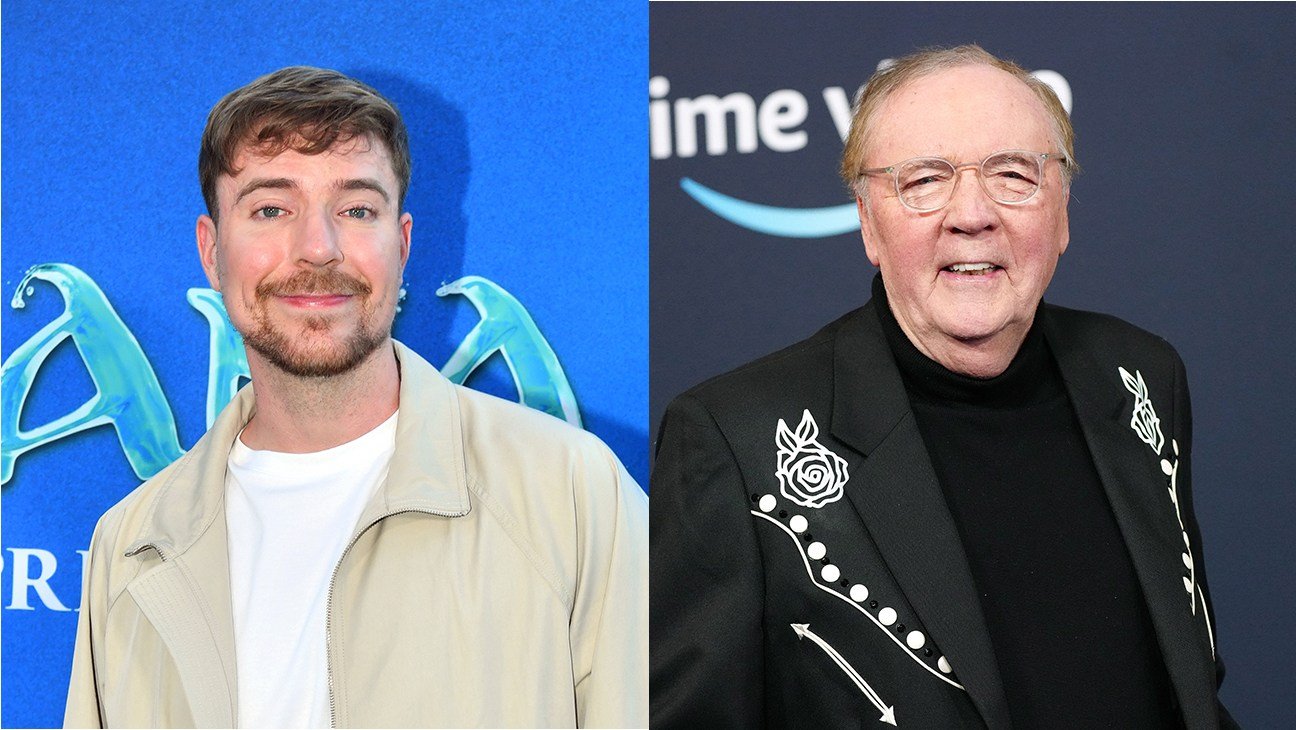
According to Semafor, the pair’s new novel collaboration, titled The Most Dangerous Games, has been tracking poorly in presales.
Citing anonymous sources “close to the project,” Semafor reported that the thriller is “on track to be a historic bomb.” As of last week, preorders were “numbering in the four digits … a tiny fraction of what the publisher will need to justify Patterson’s and YouTuber Jimmy Donaldson’s [aka MrBeast] hefty fees.” As of Monday, the book was at No. 18 on Amazon’s new releases list.
However, another knowledgeable source told The Hollywood Reporter that the number of preorders is not unusual, particularly for a genre novel, and that what really matters is first-week sales. They also pointed out that the book is currently at No. 1 on the mystery novels list.
The Hollywood Reporter has reached out to reps for book publisher HarperCollins for comment.
According to the book’s webpage, the logline is: “A thousand strangers receive the invitation. One hundred make the cut. An unprecedented competition from MrBeast, the world’s #1 creator with more than a billion followers, and James Patterson, the world’s #1 bestselling author, where the stakes couldn’t be higher.
“The Games begin in Antarctica, where one wrong step “on the ice kills you, and they never let up: Shark water off a remote Chilean island, desert heat that cooks you where you stand, storm-battered peaks, and caves so black you cannot find your own hand. No rescue. No second chances. A billion dollars to whoever is still standing.
“Then the terrain stops being the thing that can kill you, and the other players start. Alliances turn into ambushes. Trust becomes the sharpest weapon. And somewhere above it all, a hidden voice is watching every move, testing, deciding who deserves to survive.”
Donaldson and Patterson have been promoting the book on social media, including in a YouTube short titled “Read My Book, You Could Win $1,000,000.” Donaldson, who has 515 million subscribers on YouTube, is known for giving away money to his followers for taking part in (and successfully completing) various outlandish stunts.