Author: rb809rb

  • Bitcoin barely blinks as U.S. hits Iran, sending oil higher and stocks lower

    Bitcoin barely blinks as U.S. hits Iran, sending oil higher and stocks lower

    Geopolitical stress is back in the market, lifting oil higher. Still, bitcoin $BTC$77,528.67 is trading steadily during Asian hours, showing resilience and outperforming gold and stocks, a recurring theme through August.

    Oil prices rose on both sides of the Atlantic after the U.S. attacked an Iranian island in the Strait of Hormuz, a major oil tanker route that has been disrupted since the conflict began six months ago. The attack drew retaliatory action from Iran.

    WTI crude futures jumped nearly 2% to $85.10, with Brent rising 1.9% to $92.39, according to TradingView. Gold fell 0.8% to $4,418 per ounce, and futures tied to the Nasdaq slipped 0.5% alongside losses in Asian equity markets.

    Bitcoin, however, traded near $77,580, largely unchanged since midnight UTC, according to CoinDesk. $BTC’s price has surged 23% this month versus gold’s 9% gain and the Nasdaq’s 4% rise. Other major tokens, however, traded slightly lower. Payments-focused $XRP ($XRP) fell by 0.8% with solana (SOL) down 0.6%.

    Bitcoin’s continued outperformance could be linked to strong inflows into spot ETFs and hopes for aggressive intervention by the Fed in the wake of the Treasury’s bond buyback program.

  • ‘Pokémon: Wild Card’ Movie Sets 2027 Release Date, Drops Anime Teaser Starring Trading Card Game Player

    ‘Pokémon: Wild Card’ Movie Sets 2027 Release Date, Drops Anime Teaser Starring Trading Card Game Player

    It’s time to catch ’em all because Pokémon is heading back to the big screen.

    The popular trading card and video game franchise is returning with “Pokémon: Wild Card,” a new movie releasing worldwide in 2027. The film was announced during the closing ceremony of the 2026 Pokémon World Championships, held in San Francisco. A short teaser also gave a brief look at the upcoming movie, which stars a trading card game player and a ghostly Pokémon named Mimikyu.

    The mysterious teaser reveals the trading card game player, who’s dressed in a yellow hoodie like Mimikyu. The ghost and fairy type Pokémon was introduced in “Sun” and “Moon,” the seventh generation games in the “Pokémon” franchise. It crudely disguises itself as a Pikachu, the mascot of the “Pokémon” series, but its true form is hidden below the yellow rag that it wears.

    Katsuhiko Kitada, who previously worked on anime films and shows like “The First Slam Dunk,” “Attack on Titan,” “Naruto: Shippuden” and more, will direct “Pokémon: Wild Card.” Character design is being handled by Akemi Hayashi, who has worked on “Banana Fish,” “Lazarus” and other anime. CloverWorks, the Japanese animation studio behind titles like “Spy X Family,” “Bocchi the Rock” and others, will produce the film.

    “Wild Card” is the first “Pokémon” movie made since 2020’s “Pokémon the Movie: Secrets of the Jungle,” which was released theatrically in Japan and worldwide on Netflix in 2021. The last “Pokémon” film to hit theaters worldwide was 2018’s “Pokémon the Movie: The Power of Us,” which received a limited release by Fathom Events outside of Japan.

    Next year will also see the release of “Winds” and “Waves,” the 10th generation of “Pokémon” titles. The franchise celebrated its 30th anniversary in 2026.

    Watch the teaser below.

  • Cronos halts blockchain after $75 million lending exploit hits lending app Tectonic

    Cronos halts blockchain after $75 million lending exploit hits lending app Tectonic

    Cronos stopped its entire blockchain on Sunday after an attacker exploited Tectonic, its biggest lending platform, in an attack estimated at roughly $75 million.

    Cronos is a blockchain launched by Crypto.com in 2021 and closely tied to the exchange, which uses it to run cheaper transactions for its own products. Its CRO token is the one Crypto.com holds up as the centre of its ecosystem, and the chain hosts a small set of lending and trading apps, of which Tectonic is the largest.

    Tectonic lets users deposit crypto and borrow other assets against it, much like putting up a house as collateral for a loan.

    One of the assets it accepted as collateral was TONIC, its own token, which had about $1.34 million of liquidity and roughly $11,000 of daily trading volume. Tectonic’s own documentation warns that low-liquidity assets can be particularly susceptible to price manipulation.

    That appears to have provided the opening, blockchain data shows, as an attacker pushed TONIC’s price up roughly 100-fold in about 20 minutes, deposited the suddenly much more valuable tokens into Tectonic and borrowed real assets against them.

  • Mamdani lookalike contest draws hundreds of hopefuls in New York

    Mamdani lookalike contest draws hundreds of hopefuls in New York

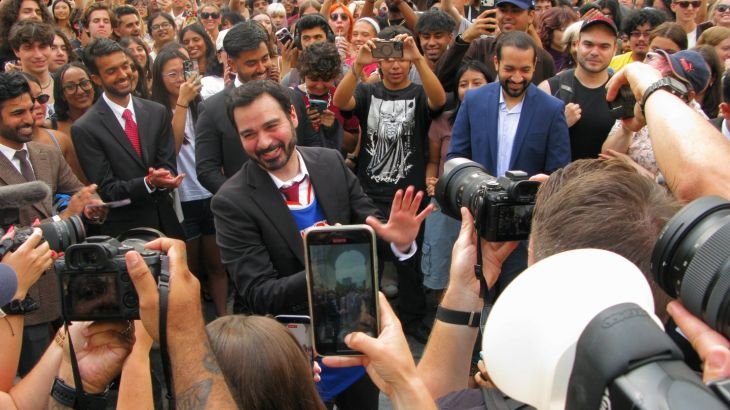
    Hundreds turned out for a Zohran Mamdani lookalike contest in New York, where nine contestants competed for the crowd’s vote. Part-time actor and Mamdani impersonator Amadeo Fusca won the contest and took home a prize of $100.

  • Why a Famous Burger Chain Now Calls Itself a ‘Bitcoin Company’

    Why a Famous Burger Chain Now Calls Itself a ‘Bitcoin Company’

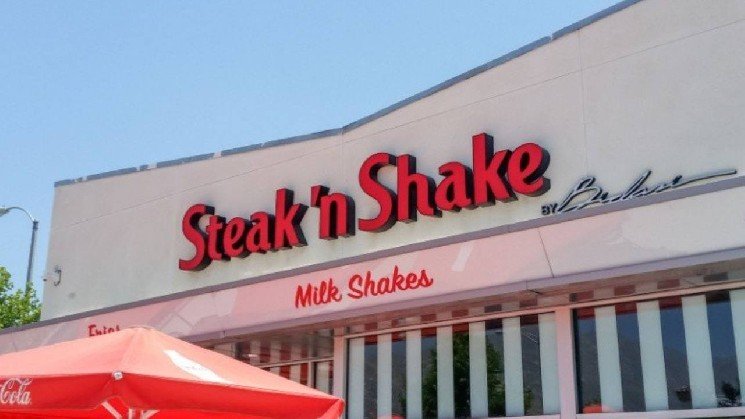
    Why Steak ‘n Shake Now Calls Itself a Bitcoin Company

    A burger chain founded in 1934 has redefined itself around bitcoin, Steak ‘n Shake shared Aug. 30 on X, more than 15 months after it began letting customers pay in the cryptocurrency at its restaurants. The declaration follows an Aug. 7 filing in which its parent company put a number on the chain’s sales growth.

    “From the moment we started accepting bitcoin payments, Steak n Shake has produced the best same-store sales in the fast food industry,” the company summarized. “Bitcoiners continue to help our business. We have never seen an allegiance as strong as Bitcoin holders. The increased business and savings have helped us reinvest in food quality.”

    The restaurant chain remarked:

    “Steak n Shake is a Bitcoin company.”

    Biglari Holdings Inc. (NYSE: BH), which owns the chain, reported a 13.8% same-store sales increase for domestic company-operated and franchise-partner-operated restaurants in the second quarter of 2026.

    How Bitcoin Moved From the Register to the Balance Sheet

    Payments came first, when Steak ‘n Shake started taking bitcoin in May 2025 over the Bitcoin Lightning Network, a second layer that settles small transfers faster and more cheaply than the base blockchain.

    Those cheaper transactions sit behind the operating savings the chain describes. Rather than cashing out the proceeds, Steak ‘n Shake routes customer bitcoin payments into a Strategic Bitcoin Reserve instead of treating the cryptocurrency as a checkout feature.

    Steak ‘n Shake then increased its bitcoin exposure twice in January, first by $10 million and then by $5 million in notional value. Separately, Steak ‘n Shake partnered with Fold on its employee bitcoin bonus program.

    What Bitcoin Pays Workers and Diners

    Hourly employees at company-operated restaurants have earned a bitcoin bonus on top of wages since March 1, set at 21 cents for every hour worked and payable after a two-year vesting period.

    Customers got their own entry point on Oct. 31, 2025, when Fold Holdings, Inc. (Nasdaq: FLD) and Steak ‘n Shake launched a limited-time $5 bitcoin promotion at roughly 400 U.S. locations. Diners who bought a Bitcoin Steakburger or Bitcoin Meal uploaded the receipt for a code redeemable through the Fold app.

    The company posted pretax operating earnings of $6.3 million for the second quarter, against $3.7 million a year earlier, across insurance and reinsurance, licensing and media, restaurants, and oil and gas. Across the first six months of 2026, those earnings came to $2.1 million, down from $13.7 million in the same stretch of 2025.

  • Enhypen Lands First No. 1, Dolly Parton Reenters Top Five on Albums Chart

    Enhypen Lands First No. 1, Dolly Parton Reenters Top Five on Albums Chart

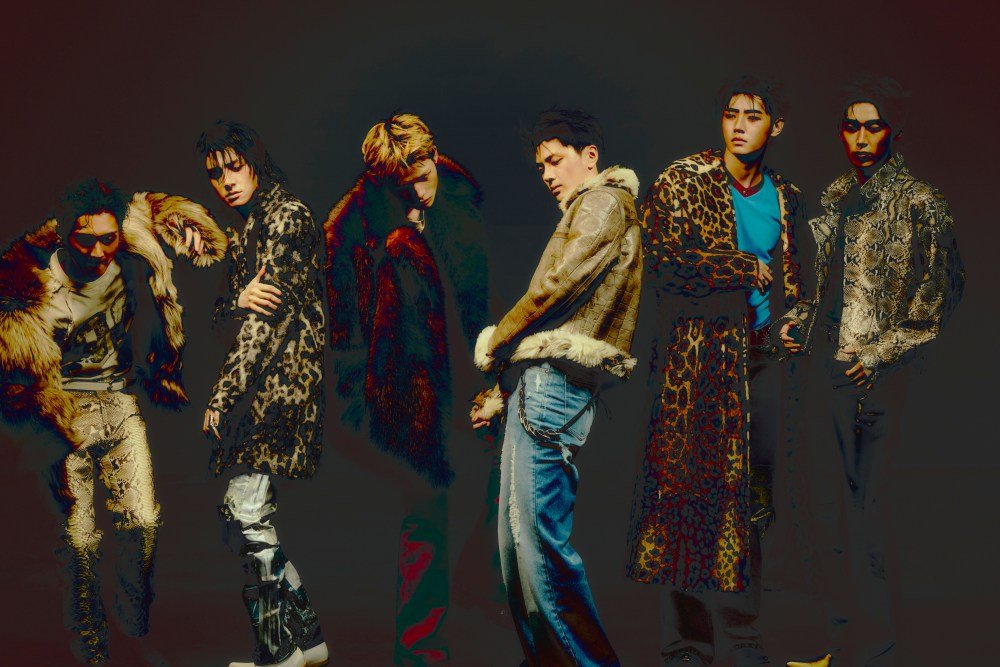
    Enhypen has scored its first No. 1 on the Billboard 200 with “The Sin : Bliss,” while Dolly Parton reentered the top 5 with “Ultimate Dolly Parton” following news of her death earlier this week.

    K-pop group Enhypen moved 98,000 equivalent album units in their first week with “The Sin : Bliss,” marking their seventh top 10 over the past four years. Enhypen previously reached No. 2 on the albums chart with “The Sin : Vanish” earlier this year, and also reached the same position with 2024’s “Romance : Untold.”

    Additionally, Parton returned to the top 10 with “Ultimate Dolly Parton,” which re-entered the chart at No. 5 with 59,000 equivalent album units. The country icon released the greatest hits collection in 2003 and peaked at No. 112 in 2019. With the resurgence of “Ultimate Dolly Parton,” the singer notches her fourth top 10 and her second-highest-charting album ever.

    Parton, who died at 80 after a short battle with cancer, saw a sharp increase in streams following news of her death. On Spotify, total streams increased over 1,260% globally and 2,320% in the United States in the first 24 hours after her death was announced. “Jolene” had the biggest surge with 630% globally and 1,225% in the U.S., while “9 to 5” increased 620% globally and 1,030% in the U.S. and “Islands in the Stream” increased 525% globally and 1,235% in the U.S.

    Elsewhere in the top 10, Ella Langley’s “Dandelion” lands at No. 2 followed by Olivia Rodrigo’s “You Seem Pretty Sad for a Girl So in Love” at No. 3 and Morgan Wallen’s “I’m the Problem” at No. 4. Rounding out Nos. 6 through 10 are Katseye’s “Wild,” Noah Kahan’s “The Great Divide,” Stray Kids’ “This & That,” Drake’s “Iceman” and Ariana Grande’s “Petal.”

  • Korea’s Showbox Launches Microdrama Label Showbite, Sets Sights on Global Markets (EXCLUSIVE)

    Korea’s Showbox Launches Microdrama Label Showbite, Sets Sights on Global Markets (EXCLUSIVE)

    Showbox, the Korean film and content studio, has launched a new microdrama label, Showbite, and will begin rolling out original short-form content in September, spanning genres from romance and comedy to revenge, action-thriller, period drama, fantasy, mystery and horror.

    The romance slate includes “Taste of You,” a BL enemies-to-lovers story set in the world of culinary competition, and “Love in Thailand,” a romantic comedy set at a golf resort. Also on the slate are “The New Hire Is Too Hot to Handle,” an office romance built around a high-concept premise; “Love, Again,” which follows a second-chance romance involving lost memories and a reunion; and “My Ex-Bias Problem,” a romantic comedy centered on an arrogant K-pop idol whose life changes after he is sent to a remote island village.

    Showbite’s female-driven revenge titles include “The Fallen Heiress Returns Wicked,” “They Messed with the Wrong Daughter-in-Law” and “Contract Marriage: The Heir’s Hound.” The label will also release the action crime-thriller “Asura: Return of the Reaper.”

    The slate extends into historical and fantasy territory with “The Secret Wife Exchange,” a period drama set in Joseon society, and “Her Royal Queen Energy,” a reincarnation fantasy set in an alternate modern Korean monarchy.

    Mystery and horror also feature prominently. “Bridal Shower: The Missing Bride” is a mystery comedy built around a string of twists, while “The Fallen Idol Is Possessed!” blends K-pop, romance and supernatural elements. “Lucky Horror Live Show” is a horror thriller centered on a livestream that turns terrifying.

    Showbox said the label is designed to pair its background in storytelling with the pace of short-form drama, bringing Korean stories to audiences around the world.

    Showbite will attend Broadcast Worldwide in Seoul, and the Busan International Film Festival‘s Asian Contents & Film Market, where it plans to meet with partners at home and abroad to expand its distribution network.

    The label will launch official TikTok, Instagram and YouTube accounts under the Showbite name in early September, with updates on upcoming titles to follow through those channels.

  • New GOLD Token Wallets Sell 224.5M Tokens in $330K Solana Exit

    New GOLD Token Wallets Sell 224.5M Tokens in $330K Solana Exit

    Lookonchain reported on Aug. 29 that 15 newly created wallets linked by the tracker to the GOLD token team sold 224.5 million tokens for 3,178 $SOL, worth about $330,000. The sale reportedly generated a profit of roughly $312,000. The original data post is available on X.

    The Data Point

    The report gives a narrow snapshot rather than a promise about future prices. Its figures describe the wallets, products or market segment identified in the post, and the timing matters because crypto activity can change quickly. For the Aster move, the reported return was unrealized. For the GOLD sale, the wallet attribution came from on-chain tracking. For the $SOL withdrawals, the transactions show movement from named exchanges but do not reveal the owners’ plans. For the ETF, exchange-balance and volume items, the figures are measurements from the named data providers, not official statements from every market participant.

    Why It Matters

    These developments matter because they show how trading activity, custody decisions and liquidity can affect digital-asset markets. A new perpetual listing can attract leverage as well as attention. A coordinated-looking token sale can raise questions about concentration and disclosure. Large withdrawals may reduce immediately visible exchange balances, but they do not automatically indicate accumulation. ETF inflows can broaden regulated access, while exchange outflows can reflect many motives, including self-custody, staking or transfers between venues. Volume dominance likewise measures participation, not the quality or durability of the assets being traded.

    What the Report Does Not Show

    The posts do not establish that any reported move will continue. They also do not, by themselves, prove intent, ownership or a completed change in market structure. Readers should distinguish realized gains from unrealized positions, observed transfers from wallet labels and>Next Indicators

    Follow-up evidence will include whether the activity persists after the initial move, whether additional wallets or filings clarify attribution, and whether liquidity remains available across venues. In the ETF and exchange-balance cases, subsequent daily flows will show whether the reported direction was temporary or part of a longer trend. Until that evidence arrives, the developments remain dated market observations. BlockchainReporter will continue to separate sourced on-chain data from interpretation and avoid turning a single reading into a forecast. Context is available in earlier market coverage.

  • ‘Lanterns’ Stars Aaron Pierre, Jasmine Cephas Jones on John’s Backstory Episode and How Being Black Informs His Quest to Become Green Lantern: ‘Fear Is Instilled in Our Ancestry’

    ‘Lanterns’ Stars Aaron Pierre, Jasmine Cephas Jones on John’s Backstory Episode and How Being Black Informs His Quest to Become Green Lantern: ‘Fear Is Instilled in Our Ancestry’

    SPOILER ALERT: This article contains spoilers for Season 1, Episode 3 of “Lanterns,” now streaming on HBO Max.

    From the series’ opening scene, “Lanterns” sets up John Stewart’s (Aaron Pierre) calling to one day step into his own as Green Lantern. But it’s not until Sunday’s episode that we learn just how long John has been preparing and training — at the direction of his parents — to one day take Hal Jordan’s (Kyle Chandler) title.

    “It was a gift to have the opportunity to explore each of these characters with such enormous depth,” Pierre tells Variety of filming Episode 3. “It’s not a given that you get to have this much experience with a character, and live this much with a character in your portrayal.”

    In the latest “Lanterns” episode, John is grilled about his difficult life choices by one of the Guardians (Laura Linney) to see whether he’s worthy of replacing Hal. It’s the moment John has been waiting for all his life — the moment he gets to prove exactly why he is worthy of the ring.

    “I know exactly why me,” John says at the beginning of the interview.

    The episode cuts back and forth between John’s tense interview and his upbringing, revealing how John was conditioned to be fearless from a young age. The flashbacks show how desperate his parents become after John Stewart, Sr. (J. Alphonse Nicholson) is tested by the Guardians in the middle of the night, ultimately failing to become Green Lantern because he shows fear. Investing in John’s future is how the family finds salvation.

    As the son of somebody who had real potential to become Green Lantern, both John’s father and Bernadette (Jasmine Cephas Jones), his mother, recognize that if they do everything in their power, John will be the perfect candidate. In order to test him during his childhood, his parents do everything from shooting an apple off his head to leaving him stranded in a dangerous part of town, forcing John to fend for himself. They also lie, and tell him that the Guardians are always watching over him through birds.

    Knowing how everything John has done in his life has been with the goal of one day becoming Green Lantern, including joining the Marines and isolating himself from other people in his life, informed how Pierre played his budding dynamic with Chandler from the beginning.

    “He’s had a wealth of life experience, more life experience than people twice, three times his age have even come close,” Pierre says.

    Jones wanted to show that despite her stern attitude with John and forcing him to grow up, her love for her child always comes through.

    “I really wanted to show that militant side of her, and that she made that decision at a very young age for him, and that is his destiny,” Jones says. “No matter what happens, she’s gonna stick with it.”

    The biggest challenge was showing those moments of vulnerability when her character doesn’t speak, Jones says: “Like telling him to shoot a gun off of his father’s head, but then seeing in her face how much that breaks her.”

    When a young John learns that his parents lied to him about the Guardians always watching over him, he grapples with the reality that he wasn’t chosen, and will have to work harder than most people around him to prove that he’s worthy. At one point, Bernadette even tells him: “Sometimes, a Black man has to raise his own hand. Doesn’t mean you’re not good enough, doesn’t mean you’re not better. It just means they don’t see us.”

    “The importance of having no fear in a society, and also being a person of color in this country, fear is instilled in our ancestry as well,” Jones says. “That was also an important piece to talk about. How do we extract that for him to become the Green Lantern?”

    Nicholson adds: “It’s real, man. Yeah, I know we all want to escape from it but sometimes those questions need to be addressed even in our fictional worlds, right? Why do they make us have these feelings or why do they exist? And so just asking the questions sometimes allows room for people to talk about it. I think that’s what great writers do.” 

    The idea of raising John to be the next Green Lantern is largely born out of his father’s trauma. Investing in his son, and doing everything he can to give John the highest odds possible, becomes the only way he knows how to move forward.

    “He doesn’t want to let his son down. Essentially, he felt like he let himself down, he let his community down, let his wife down, so now it’s up to him to make sure that his son doesn’t feel that way and doesn’t go into the same spiral of depression,” Nicholson says. “It’s really cool to see him protect his son in a really tough way, but it’s tough love.”

    The major turning point in the episode comes when John takes matters into his own hands by shooting an apple off his mother’s head. He’s finally become exactly who his parents raised him to be.

    “It’s him taking a step into his own lane and really showing how fearless he is because that’s a huge risk, right?” Nicholson says. “He showed an immense amount of confidence, and I’m proud as his father to have shown him how to have that confidence early on.”

    As Pierre looks back on filming, one of the most enjoyable parts of the episode was getting to work with the child actors, including Jayce Eiland and Cairo Cash Lee, who play the younger versions of John.

    “They really need to be celebrated, acknowledged and commended for delivering all of the emotion and beyond that was necessary,” Pierre says. “It was very rare that we were working on the same location or on the same day because it’s a completely different timeline, but anytime I had the opportunity, I would definitely give them a fist and just tell them how proud I was.”

  • Interactive Map Showing Exactly Where 67 Million US Crypto Holders Live

    Interactive Map Tracks Crypto Holders Across the US

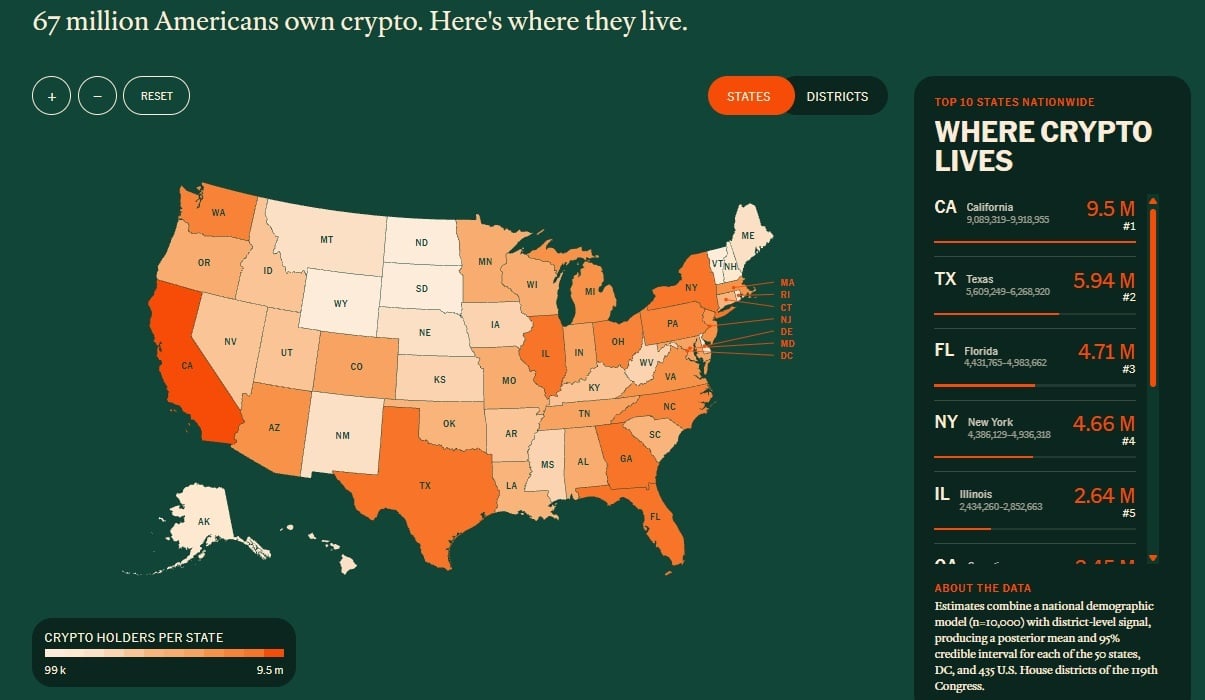
    An interactive map estimates where 67 million American crypto holders live, providing figures for all 50 states, Washington, D.C., and the 435 U.S. House districts in the 119th Congress. The National Cryptocurrency Association (NCA), a nonprofit crypto education organization, displays the data through a map hub with state and district views, allowing users to explore individual geographic areas.

    Ripple Chief Legal Officer and NCA President Stuart Alderoty highlighted the maps in an Aug. 24 post on X, stating:

    “67 million Americans hold crypto. 232,000 American jobs are supported by the industry. The National Cryptocurrency Association built two maps so you can see the data by state and district.”

    California leads the state estimates with approximately 9.5 million crypto holders, followed by Texas with 5.94 million, Florida with 4.71 million, New York with 4.66 million, and Illinois with 2.64 million. The underlying 2026 State of Crypto Holders Report found that roughly one in four American adults owns cryptocurrency.

    Regionally, the state-level distribution broadly tracks the U.S. population. The South accounts for 38% of holders, while the West represents 27%. The Midwest and Northeast each account for 18%, indicating that ownership is spread across the country rather than concentrated exclusively around major technology and financial centers.

    The National Cryptocurrency Association’s interactive map estimates crypto ownership by state, with California leading at 9.5 million holders, followed by Texas, Florida, New York, and Illinois. Source: NCA.

    Figures Reflect Modeled Estimates, Not Verified Counts

    The map’s figures are statistical estimates rather than exact counts of identified crypto owners. Its methodology combines a national demographic model based on a sample of 10,000 U.S. crypto holders with district-level signals to produce a posterior mean and 95% credible interval for every covered geographic area.

    A posterior mean is the model’s central estimate after the available evidence is incorporated. The credible interval represents the range within which the model calculates that the actual figure is likely to fall. California’s estimate, for example, ranges from approximately 9.09 million to 9.92 million holders.

    The broader ownership estimate came from an online survey conducted by The Harris Poll for NCA between Feb. 12 and March 3. Researchers weighted the survey findings behind the 67 million estimate and extrapolated them to the broader U.S. crypto-owning population. The sample data is accurate to within 0.7 percentage points at a 95% confidence level.

    Separate research offers a narrower comparison focused specifically on bitcoin. A July study estimated that 49.6 million Americans hold bitcoin, representing 18.6% of the adult population. The NCA figure covers cryptocurrency generally, while the bitcoin estimate measures ownership of a single digital asset.

    Crypto ownership may include assets held through software wallets, hardware devices, or accounts controlled by centralized platforms. A broader explanation of how to create a crypto wallet outlines the different arrangements holders can use to store and access their digital assets.

    Crypto Supports Nearly 232,000 American Jobs

    A separate NCA dataset measures the crypto industry’s economic footprint across individual states. Nationwide totals include 231,845 crypto-supported jobs, $55.4 billion in economic activity, and $30.8 billion in worker income, according to the Pragmatic Policy Group analysis of crypto employment commissioned by the association.

    The employment figure comprises about 34,000 direct positions at crypto companies, 75,000 indirect jobs at suppliers, and 123,000 induced jobs supported by worker spending. The analysis calculates that each direct crypto position supports roughly six other roles across industries such as professional services, health care, insurance, food service, and logistics.

    NCA launched in March 2025 with a $50 million grant from Ripple to support cryptocurrency education and public awareness. At the time, Alderoty described the association’s purpose as providing Americans with facts, resources, tools, and support for engaging with crypto.

    On the employment map, California also leads with approximately 57,600 crypto-supported jobs, $16.9 billion in economic impact, and $7.7 billion in worker income. New York follows with 53,800 jobs, while Texas supports 26,500, Washington accounts for 15,100, and North Carolina has approximately 9,500.