Almanak has publicly launched today, offering Aave users a new non-custodial workflow for creating onchain strategies. This innovation allows users to transform strategy ideas into code using plain language or Python, facilitating backtesting and paper trading against mainnet forks. This development is significant as it enhances user control and strategy deployment while maintaining wallet autonomy, which is crucial in decentralized finance.
What Went Down
The launch of Almanak adds a powerful tool for Aave users, enhancing their ability to engage with onchain strategies. Users can now create and simulate strategies within a single platform, increasing efficiency and control over their trading. As the cryptocurrency market exhibits mixed signals, innovations like Almanak may attract attention from traders seeking to optimize their strategies and manage risks effectively. Aave’s ongoing evolution continues to position it as a leader in the decentralized finance space.
Aave is a prominent decentralized finance protocol that allows users to lend and borrow various cryptocurrencies. The launch of Almanak provides Aave users with enhanced tools to develop onchain strategies, aligning with the protocol’s focus on innovation and user empowerment in the DeFi ecosystem. The platform’s non-custodial nature underlines the growing trend towards decentralized solutions that prioritize user control.
Key Levels to Watch
Traders should keep an eye on the ongoing developments within Aave as more users adopt Almanak for strategy deployment. The potential for increased user engagement and the introduction of new tools may lead to heightened activity in Aave’s liquidity pools. As more strategies are implemented, the overall health factor and user participation on the platform will be crucial metrics to watch.
The 32nd edition of the Unifrance Rendez-Vous TV content market in Le Havre kicks off Sept. 7 with a broad selection of more than 350 programs boasting strong international potential presented by France’s leading distributors.
The Rendez-Vous hosts some 50 exclusive screenings of hit scripted series, animated shows and acclaimed documentaries, including a special showcase of three of the year’s highlights.
Despite a new condensed program this year, the four-day Rendez-Vous will still see a full lineup of industry panel discussions, events and soirées, including the presentation France’s TV programming export figures for 2025 by promotional org Unifrance and the National Film Board (CNC).
France’s premiere TV market, the Rendez-Vous last year brought together some 150 buyers from 40 countries and more than 50 local distribution companies.
The titles in the spotlight this year include:
Credit: AH! Production
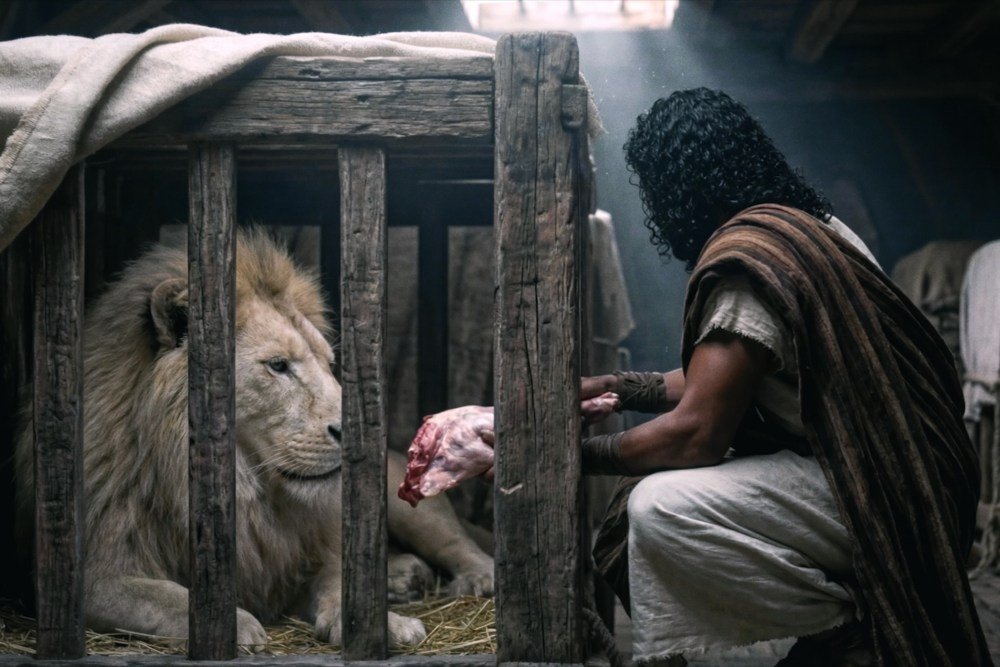
“Beasts of the Colosseum,” directed by Nicolas Brénéol, produced by AH! Production for Novo 19 and sold internationally by Balanga.
It examines how ancient Rome, captivated by the “venationes” — spectacles featuring wild beasts rather than gladiators — organized with the help of legionaires the capture and transportation of lions, panthers, elephants and bears from the Empire’s frontiers to the Colosseum.
Credit: Caroline Dubois
“Swapped,” directed by Vania Leturcq and Savina Dellicour, produced by Lincoln TV for France 2 and distributed by France TV Distribution.
Set in 1889 Paris, the series follows Rose (Lula Cotton Frapier), a young mother and wet nurse who, when forced to give up her own child, secretly swaps her baby with that of Hélène de Gersande (Alexia Giordano), a mother grieving the sudden loss of her infant. It’s “in the vein of ‘Downton Abbey’ but in a French style,” says Julia Schulte, France TV Distribution’s senior VP of international sales.
Credit: Nicolas Velter/France Télévisions/Siècle Productions/Wild Bunch
“The Red and the Black,” adapted from Stendhal’s novel, written by Georges-Marc Benamou and Gilles Taurand, directed by Gaël Morel, produced by Siècle Productions for France Télévisions, and distributed by Wild Bunch Distribution.
The four-part series chronicles the efforts of young Julien Sorel (Victor Belmondo) to rise socially beyond his modest upbringing while entangled in a web of passion and power. Julien’s pursuit of greatness leads him down a path where love, pride and hypocrisy collide… with tragic consequences.
Credit: DMLS Films (Banijay Group)/TF1/About Premium Content
Other notable new shows with cross-border, if not local adaptation potential, include About Premium Content’s “Country Spy,” produced by Banijay Group’s DMLS Films, which follows French intelligence agent Marie-Line Maupain, who, after 30 years of service, ends up back in the rural region she once called home. Putting her spy instincts to good use, she begins investigating criminal cases behind the back of the local police captain.
Credit: Vivement Lundi!/Autour de Minuit/France Télévisions
Aimed at kids 10 and under, “Super-Lucha” follows 10-year-old Ennio, who comes from a long line of Super-Luchadores, masked vigilantes who fight the forces of evil in a small Mexican town. Sold by Autour de Minuit, directed by Goulwen Merret and produced by Vivement Lundi! and Nadasdy Film, the stop-motion animated show is inspired by Mexican pop culture and papier-mâché piñatas.
Credit: Nicolas Velter/Incognita TV/Tripode Productions/Arte
“The Nefertiti Case,” sold by Film & Picture and produced by Incognita Télévision and Tripode Productions, chronicles the efforts of Andrea, head of the French Museums Directorate, to save a landmark exhibition after the priceless bust of Nefertiti, on loan from Berlin, falls to the ground and breaks. Desperate, she seeks the help of a legendary forger recently released from prison, who also happens to be her estranged younger sister.
Credit: Bande à Part Films/Les Films Pelléas/Gaumont Télévision
In Gaumont’s “The Deal,” set in 2015, Swiss diplomat Alexandra Weiss leads a mission hosting last-chance nuclear talks between the U.S. and Iran, with Europe, Russia and China. As tensions rise and delegates’ hidden agendas jeopardize fragile diplomacy, Alexandra’s former love Payam, a threatened Iranian engineer, appears, forcing her to cross lines to protect him. Bande à Part Films, Les Films Pelléas and Gaumont produce.
Credit: Elda Productions
Andana Films offers Tamara Erde’s timely two-part documentary “Gaza, a People’s History,” from Elda Productions and Kwassa Films, which explores the history of the 400 square-kilometer stretch of Palestinian land, wedged between Israel, Egypt and the Mediterranean Sea, once home to 2.23 million people. The production revisits key moments in the region’s history.
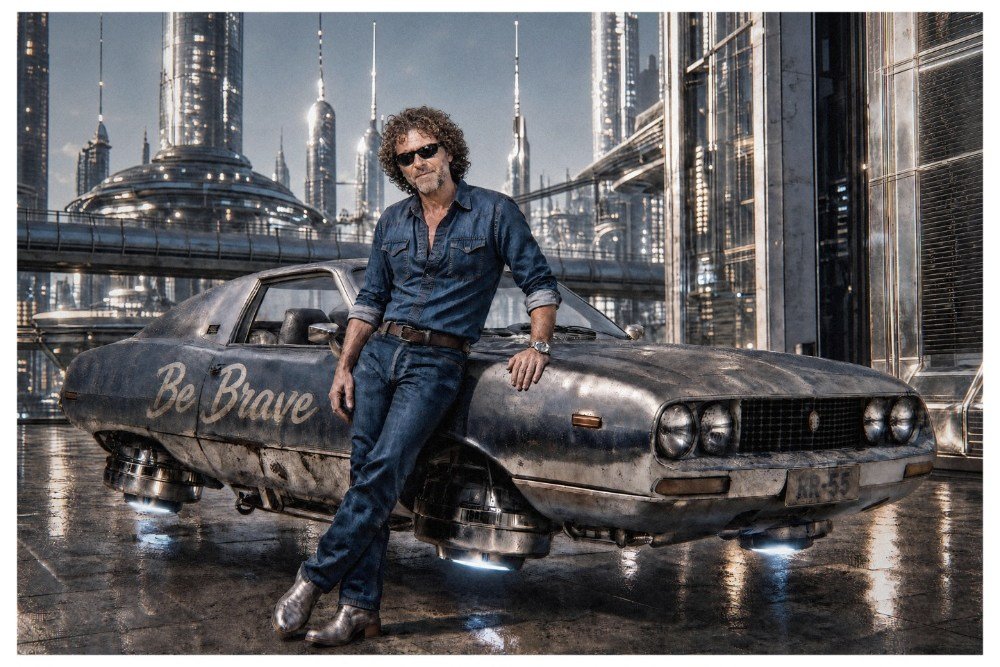
New York-based Italian director Francesco Carrozzini is heading to the Venice Film Festival with “Be Brave” an 85-minute portrait of Renzo Rosso, founder of the Diesel fashion brand. The groundbreaking doc uses AI in a way that “can still live within a space of emotion and storytelling,” he says.
“Be Brave” portrays Rosso as a visionary underdog who went against the grain and rose from poverty to owning a fashion empire. Carrozzini did not shoot a single frame of his protagonist, instead recreating Rosso at different stages of his life using AI.
“I want to put this [film] forward as an invitation for everyone to think about how AI as a tool can open up new creative possibilities for filmmakers,” Venice chief Alberto Barbera stated when announcing its inclusion in the festival. “Be Brave” is among the first AI features to launch from a top-tier film festival.
Carrozzini was first in Venice with “Franca: Chaos and Creation,” the doc he made about his mother, the late, influential editor of Italian Vogue. The director was subsequently on the Lido in 2022 with his first feature “The Hanging Sun.”
In the year-and-a-half that Carrozzini spent making “Be Brave” “AI has changed to a point where what we were doing in the beginning had to be redone,” he says. “And the moment we will be in the theater it will probably be old already,” he adds. This makes it hard. But “Working with a medium that is transforming at this pace is also really exciting,” he notes.
“Be Brave” is produced by Lorenzo Mieli, Mario Gianani, and Gabriele Immirzi at Rome-based Our Films, a Mediawan company.
Carrozzini speaks to Variety ahead of Venice about the challenges of making “Be Brave” and his thoughts on how AI can best be utilized in the filmmaking space.
Why did you decide to use AI for this project?
Lorenzo Mieli approached me with the idea of making a film about Renzo Rosso. Initially, I was a bit reluctant because I had sort of taken a step back from the world of fashion that I grew up in to throw myself into narrative film and TV. But Lorenzo insisted, and when he wants to sell you an idea he’s pretty effective. The idea was to create something a bit innovative and to experiment with AI, though it wasn’t quite clear what we were going to do. So we started testing the idea. In the very beginning, it was really about necessity. There is a lot of archival like TV stuff of Renzo Rosso, but there’s no good interviews. There are no really good intimate moments in his archives. So the idea became: first of all, we can recreate those from scratch; though we were worried about them not being believable. From the seed of that idea, then came the idea of: Well, let’s take AI and make it sort of the theme of the film and also make it the challenge towards something bigger than ourselves.
What was the next step?
We wrote a script. This film is fully scripted. We started toying with the idea of me finding Renzo; a rather well-known device in documentary filmmaking. But at the same time putting together the puzzle of who he is, just as he was running away from me because he was trying to trick me. We used this device, but then it sort of became the theme of the film. This film is not a thesis on AI. The only thing that is said towards the end – which I think is really important – is that the human has to come first. This is a reflection on AI in storytelling and entertainment. It’s not a reflection on AI tout court.
Let’s drill down on the nuts and bolts of making this piece. It’s not all AI because there are some so-called talking heads in the doc that are real people. For the rest, you had a reservoir of archive material to draw on. Talk to me about your workflow.
It was a nightmare, especially in the beginning, until we found the workflow, as you say. Because it’s trial and error. As you know, AI will never give you exactly what you’re asking. It will always give you a version of what you’re asking.
How did this process apply to putting Renzo on screen?
We used pictures of Renzo from the time [in which his scenes and interviews are set]. And then you have to have him speak. And you have to have him say what you want. And do it in the voice that you want. He also has to be dressed the way you want. Just boiling things down to that, and to the voice and the lip sync is painstaking. Regarding Renzo’s voice in this film, it had to have different ages as well, so that it would really be as real as possible. The first task is getting what you want.
And beyond that?
Trying to capture not only his physical age, but his behavior. For people who don’t know this process, behavior is really, I would say, the hardest thing. You can get the voice perfect. You can get the image right. But it’s the behavior that was really challenging in creating quite a lot of footage of Renzo.
What was it like for you to be directing yourself (as you appear in the film) done in AI?
Well, it’s all based on my pictures, and because it’s me, it’s the part that scared me the most. With Renzo sometimes I would think I saw a tiny discrepancy. But with me, I was like: “Oh my god, that’s real!”
Back to the workflow. Can you describe it in detail?
All this becomes a workflow problem. Labeling all this material as if it was footage, and making it accessible to the editor. Blackstone was one of the companies behind a big part of it. And then this genius, Roberto Beragnoli who was the AI artist, did the heavy lifting. It was really months and months of finding a way to get all that we wanted, in the order that we wanted it.
It looks like just a documentary. But the work that went into it is like the work of a big, heavy CGI feature film. The quality part was a big challenge, because there are so many different software tools that we used to create the material. In AI you work at very low quality, and you have to upscale it. It’s very technical. I don’t want to get too nerdy, but the whole process is quite nerdy.
You’ve talked to me about creating a person with AI. How do you create a place with people in it?
That was really a very exciting filmmaking endeavour because with anything I do that is scripted, I have to come up with you know, the same exact number of [visual] ideas. If the scene says: “Off Broadway theater. Morning. Ten people waiting in line.” I have to decide how do those ten people look? How are they dressed? Where exactly are they? In the beginning it was very frustrating because instead of casting and scouting and talking to a costume designer, you do it with AI.
Do you think it’s important for the viewer of this piece to know when they are watching AI and when they are not?
I want to say no. This film tells a story of a man who lived, who is real, and whose adventures are all quite true. And so, if we are able to entertain you, make you laugh and empathize with this character, then that’s what counts. What interests me is not whether they’re able to discern it or not, but whether the film has an effect.
One of the fears concerning AI in fiction filmmaking is that the medium of cinema could lose the value of the empathic connection people have with other humans. What are your thoughts about that?
That’s why I was interested in approaching AI through the medium of documentary, which is very different from fiction, although ours is a fictionalized documentary, because it’s written and created. It still has the form of the documentary, it has that filter that you put on when you watch it. If this was that beautiful documentary “Free Solo” [which captured rock climber Alex Honnold’s hair-raising ascent of Yosemite National Park’s 3,000-foot El Capitan rock formation] that would be a very different thing because we would be pretending that something that never happened had happened.
How would you feel about directing a fiction film in AI?
I think something similar is happening with scripted material in fiction. With TV shows and movies. We haven’t overcome that yet. And I’m not sure that we want to. The empathy you talk about, it’s generated by real people doing things that, despite being more or less made up, are still human. That emotion is human. That cry is human. That laughter is human. Once you know that it’s not human – and right now we can tell, even if we’re not told – the moment you start watching, after five minutes you know that you’re not going to get on board exactly because that empathy is lacking. Again, I’m not saying that we fully succeeded. People will tell us [whether we did or not]. But we tried to apply a form of AI that can still live within a space of emotion and storytelling, I think. Because you can’t discern it, it still works for its purpose. Right now I would not necessarily take on a project, such as a historic film or a fiction film made in the present day, where I don’t use actors.
This interview has been edited and condensed for clarity.
Strategy MSTR$129.49·At close made its first bitcoin purchases since late June, adding 4,603 coins for $369.7 million last week, or an average price of $80,318 each.
The acquisition was funded via the sale of $602.8 of common stock, according to a Monday morning press release. The remaining proceeds went toward $151.8 million in buybacks of the company’s STRC preferred stock and to add to Strategy’s cash reserves.
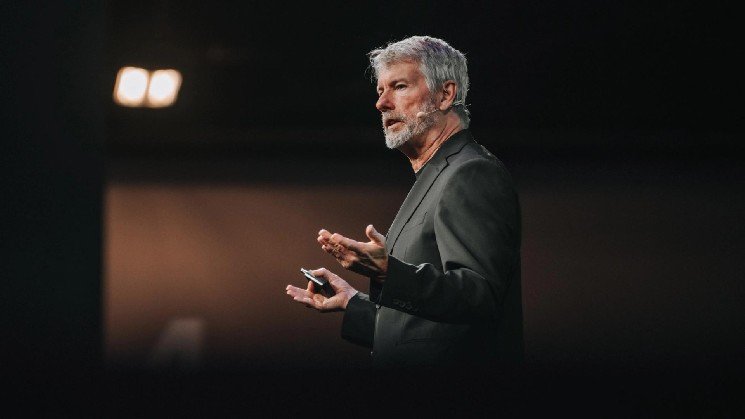
Led by Executive Chairman Michael Saylor, the company now holds 845,050 bitcoin purchased for $63.73 billion, or an average price of $75,412 each.
MSTR is up 1.65% pre-market as bitcoin trades at $78,400, up marginally from late Friday.
Singer-songwriter and Pink Floyd co-founder Roger Waters has signed on as executive producer on filmmaker Rishi Pelham’s debut feature documentary, “Freedom Theatre.”
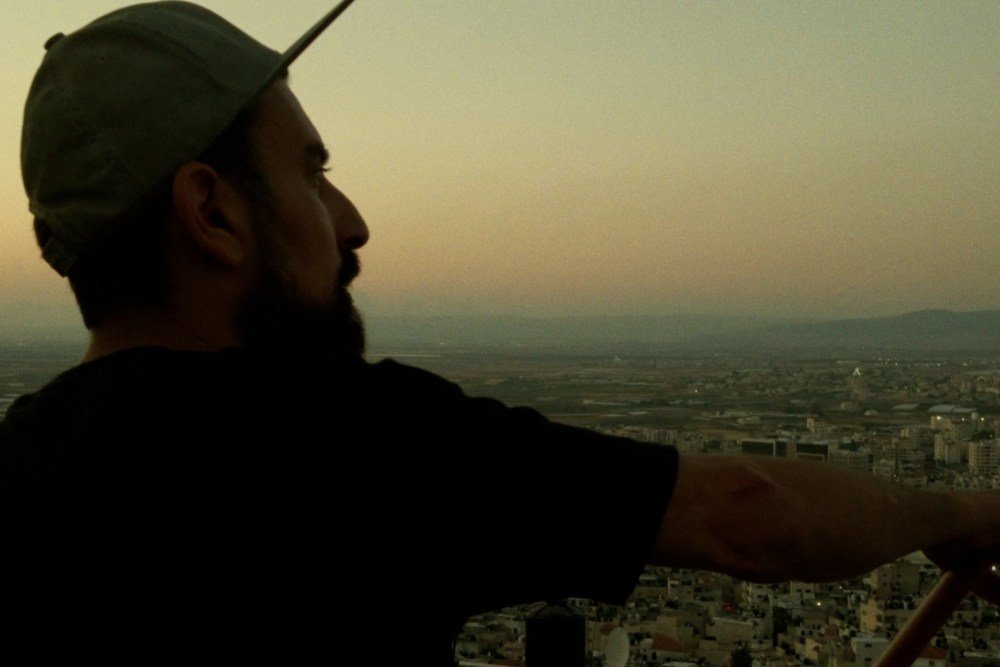
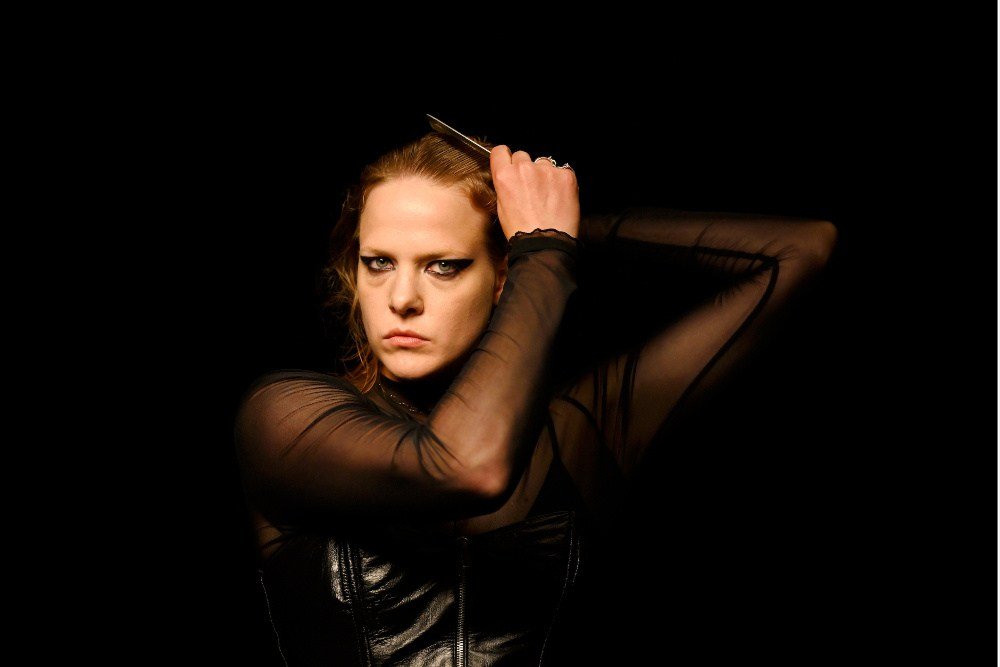
Described as “an immersive and sensory character study,” the film follows resistance fighter turned artist Ahmed Tobasi into the creative heart of the Jenin refugee camp in Palestine, where he fights to keep his theater open amidst imminent destruction.
Courtesy of Rishi Pelham/Bathtub Films
“I didn’t intentionally set out to make this film,” Pelham said. “I kept returning to Jenin, to the theater, to the camp, and over time the story insisted on being told. What drew me in was the tension between two worlds: the black-box rehearsal room, sealed and controllable, and the camp outside, alive, volatile, and impossible to contain. Slowly, these spaces began to bleed into one another.”
Pelham also co-composed the documentary’s original score, which features prominent Palestinian artists such as techno DJ and producer Sama’ Abdulhadi.
Shot over the course of five years, “Freedom Theatre” is currently in the final stages of post-production.
Suzanne Harb is producing the documentary in collaboration with Pelham for London-based Bathtub Films, behind the director’s award-winning 2019 drama “Hilda” that was executive produced by Tim Roth.
Also on board “Freedom Theatre” are executive partners Khaled Habayeb and Alaa Alasad of Amman-based Tabi360, whose credits include Zain Duraie’s acclaimed family drama “Sink,” which premiered last year in Toronto, and Ameer Fakher Eldin’s 2025 Berlin competition title “Yunan.”
In Waters, the project has gained a prominent activist and supporter of Palestinian liberation. He is among the hundreds of artists who recently signed an open letter calling for the Venice Film Festival “to take concrete action in support of Palestine.”
The film team is planning a festival circuit rollout and will be attending the Venice fest for meetings with potential partners.
“Shielded wallets that use Zakura Common, and full nodes like Zakura itself, all benefit,” Zcash cofounder Sean Bowe said in an X post.
Read more: Inside Zcash’s new node that targets Visa-scale privacy at 50,000 transactions per second
The changes do not require an upgrade to Zcash itself. Wallet developers can adopt the open-source libraries on the network as it exists today. At the same time, Zakura has already moved to the new stack in version 1.3.0 and Vizor Wallet is among the first to pick it up.
Zcash’s scaling problem is not only about how quickly the blockchain can produce blocks. When Zakura launched in July, its developers laid out a goal of eventually supporting more than 50,000 private transactions per second, roughly the scale of major card networks. They additionally put today’s wallet software at a ceiling of about one transaction per second.
CoinDesk reported at the time that the plan involved attacking several bottlenecks at once, including how quickly nodes check transactions to how much data wallets have to download.
However, the new cryptography stack attacks another one: how long the user’s own device spends constructing the private payment in the first place.
Wallets should also sync faster under the new libraries, Zakura said, while full nodes benefit from quicker transaction checks and fewer orphaned blocks. The team said its software can already handle the 25-second block times proposed for Zcash’s next major upgrade, NU7.
NBCUniversal and U-Next have entered into a long-term strategic partnership in Japan, bringing NBCUniversal’s international streaming brand Universal+ exclusively to the platform alongside joint initiatives with Universal Studios Japan and new global distribution pathways for Japanese content.
U-Next, operated by Usen & U-Next Group, is Japan’s second-largest subscription video-on-demand platform behind Netflix, with more than 5.2 million paid subscribers as of May 2026, according to GEM Partners. The service combines movies, television series, anime, sports including the Premier League, live music and e-books in a single app.
As the entertainment industry moves beyond standalone broadcasting, film and streaming segments toward a model centered on IP that spans digital platforms, live experiences and global distribution, the two companies aim to establish what they call a next-generation entertainment model in Japan.
The partnership’s first pillar centers on Universal+, which will roll out in Japan starting in October 2026 as an exclusive offering on U-Next. The service will carry NBCUniversal’s catalog from studios including Universal Pictures, Focus Features, DreamWorks Animation, Illumination, Universal Studio Group and Sky, featuring franchises such as “The Super Mario Bros. Movie,” “Minions,” “Jurassic Park” and “Fast & Furious.” Beginning in the spring of 2027, U-Next will also offer major theatrical releases shortly after their cinema runs and first-run series from NBCUniversal on a rolling, exclusive basis.
NBCUniversal’s 2026 theatrical slate will include event films such as Christopher Nolan’s “The Odyssey,” opening in Japan on Sept. 11, and Steven Spielberg’s “Disclosure Day,” opening Oct. 1. On the television side, the studio’s slate includes “The Five Star Weekend,” scripted series “Line of Fire” and “War,” along with library titles “Suits” and “Heroes.”
The second pillar centers on live experiences tied to Universal Studios Japan (USJ), which marks its 25th anniversary in 2026. U-Next and USJ will explore joint development of live music events, exclusive experiences and benefits for U-Next’s subscriber base, and the planning and production of video content featuring the park.
The third pillar will build new distribution pathways for Japanese dramas, anime, films and U-Next original productions through NBCUniversal’s Peacock service in the U.S. and Universal+ in Latin America, with the companies aiming to expand into additional markets over time.
“What sets apart this multi-faceted partnership is the innovative breadth achieved for both businesses,” said Chris Taylor, managing director, Asia Pacific, TV distribution and international networks and direct-to-consumer for NBCUniversal. “For NBCUniversal, it brings together our film and television catalog, our theme park experiences through Universal Studios Japan and our global distribution network – all under one roof for Japanese audiences.”
“U-Next’s impressive performance, having recently eclipsed five million subscribers, make them an ideal platform for NBCUniversal to align with on this ambitious partnership that includes the first fully-loaded Universal+ launch in Asia Pacific – reinforcing the importance of the Japanese market to our overall business,” Taylor said. He added that the collaboration builds on NBCUniversal’s strategy of pairing premium branded entertainment destinations with its traditional licensing business, and that the companies see an opportunity to extend the reach of U-Next’s Japanese dramas and anime as Asian content grows in global popularity.
“We are very pleased to enter into this strategic partnership with NBCUniversal,” said Tsutsumi Tenshin, president and representative director of U-Next Co., Ltd. “While continuing to build on the service and trust we have cultivated to date, we aim to evolve U-Next beyond a service for simply watching video content into a platform where people can discover entertainment, become passionate about it, connect with real-world experiences, and bring Japanese content to audiences around the world.”
“This partnership is the first step toward realizing those possibilities,” Tsutsumi added. “Together, we will build a new kind of entertainment service that extends beyond streaming.”
Specific initiatives under the partnership, including further USJ collaborations, the NBCUniversal content lineup, global expansion plans for Japanese content, user campaigns and new live event projects, will be unveiled on a rolling basis starting this fall.
Pokémon: Wild Cardwas announced Sunday night during the closing ceremony of the 2026 Pokémon World Championships, which took place in San Francisco.
“For the first time in seven years, a new Pokémon movie is on its way,” the Pokémon Company president and CEO Tsunekazu Ishihara said at the event, according to IGN. Ishihara added that the main character is a Pokémon trading-card game player who is “battling and striving to be a champion.”
A teaser for the upcoming animated feature film also was unveiled, which revealed that the movie will be released in 2027; actually, it says “coming 2027 and beyond,” hinting more is to come. In the teaser, viewers get a glimpse of the player, who’s dressed in a yellow hoodie à la Mimikyu.
Katsuhiko Kitada is directing the film, with character designs by Akemi Hayashi. Story Inc. is producing while CloverWorks is handling the animation for Pokémon: Wild Card.
The last Pokémon movie, Pokémon the Movie: Secrets of the Jungle, was released in 2020 in Japan and the following year in the U.S.
Meanwhile, 2027 also will see the debut of a Pokémon series, The Misadventures of Sirfetch’d and Pichu, on Disney+ and DisneyXD.
Finland’s biggest international film and TV drama market, Finnish Film Affair, unspooling parallel to the Helsinki Intl. Film Festival – Love & Anarchy, has unpacked its full program, rolling out Sept. 23-25 in the Finnish capital.
In the pure Nordic tradition of mind-blowing chills and thrills, genre-bending content and documentaries are headlining the slate of 38 titles from the Nordics and beyond, to be pitched to 500-plus attendees at FFA’s centerpiece Showcase Day, Sept. 24.
Selected as FFA opener, Hanna Bergholm’s horror “Nightborn,” top winner at the Fantasia Festival and Berlinale Golden Bear contender, will set the tone for this year’s Nordic market, where eight Nordic genre pics in development will compete for best pitch, as part of a new partnership with the Nordic Genre Lab. The training and networking program is the brainchild of seasoned Finnish executive Laura Laaksonen (Purr PR), co-founder of Nordic Genre Lab with former Netflix executive Claire Willats (Two Magpie Entertainment).
Lydia Taylerson
Courtesy of Alejandro Ramirez
“We’ve partly replaced our Finnish Weird section with the Nordic Genre Lab showcase which fills the need on the market for fun, quality, genre-bending content from the Nordics,” FFA head of industry Lydia Taylerson told Variety.
Genre projects to watch include Making Movies’ “Alma” helmed by Pete Riski (“Icebreaker,” “Dark Floors”) from a script by Ilja Rautsi (“Red Snow,” “Nightborn”), the first Faroese horror feature “Whistler,” produced by Outlier Projects, “Linden Lane 6,” produced by the prolific banner It’s Alive Films (“Euthanizer,” “100 Litres of Gold”) and “Trespassers,” produced by Patrick Andersson (“Midsommar”), with Mylla Films co-founder Jakob Abrahamsson.
Headlining the six-title documentary slate selected by Tayleron, Mourad-Anis Moussa (Visions du Réel) and Erika Dilday (American Documentary Inc.) is “Lonesome Land,” by prominent filmmaker Virpi Suutari.
“Lonesome Land”
Courtesy of Euphoria Film
Besides Suutari’s latest plea to safeguard Finnish forests after her multi-awarded “Once Upon a Time in a Forest,” topics range from a tribute to working-class Italian men during WW2 in “Umarells – We Know Better,” to biopics about New York/Helsinki-based late artist Iria Leino in “Dear Iria,” and fallen-from grace Olympic medallist Mika Myllylä in “Myllylä.”
On the scripted front, the eight films in development and five works in progress selected by Taylerson, Katre Kajamäe-Gupta (Eurimages) and Natasha Degnova (LeveK) play across an equally wide range of topics and genres.
“We have familiar faces such as Aku Louhimies, Pamela Tola, the up-and-coming Laura Hyppönen, who first pitched her project “Lex Julia” at Finnish Film Affair in 2021, and true newcomers Kyran Davies and Scott Quinn with “The Lost Sons of Nada,” one of the rare Finnish-U.K. co-production projects,” noted Taylerson.
“Lex Julia” is also one of four Nordic selections, together with the Norwegian thriller “11 Hours,” the Danish psycho drama “Without You” and Icelandic coming-of-age “Just a Kid.”
As for the popular Series session curated by APFI (Audiovisual Producers Finland), this year’s slate of six TV titles range from thrillers and crime shows to teen drama and animation from hot helmers including American Film Institute graduate Jojo Erholtz (“Maria Kallio,” “Tape”) and Elin Grönblom (“Bloodsuckers”).
European Drive “All in all, it’s been very interesting to receive a record number of submissions for the Fiction in Development (45), Fiction in Progress (11-the largest number since 2022) and Documentaries (22), which proves the attractiveness of Finland as filming and production destination,” Taylerson observed.
“Also, this year we ended up with quite a few European co-productions in the final lineup, another display of the growing trend of Europe-leaning partnerships,” she said, underscoring the endemic lack of public funding for film in Finland, forcing indie producers to look beyond national borders for coin.
“Finns have to continue widening their networking opportunities across Europe, which is why we’ve signed a new collaboration with the Marché du Film for the inaugural Producers Network Award,” she added.
To help Nordic producers and filmmakers further hone their skills, more than 20 top industry experts, such as Isabel Arrate Fernandez (IDFA), Jason Gutierrez (Tribeca), Hugo Rosak (Karlovy Vary), Jim Kolmar (SXSW), Celine Dornier (IPR.VC), James Copp (Night Train Media), Mette Damgaard-Sørensen (Danish Film Institute) and Kjetil Omberg (Norwegian Film Institute), will take center stage to discuss among other things how to better budget, finance a feature, co-produce, navigate the international festivals, distribution landscape and the next Agora EU program in Europe.
The two-day panel sessions will close Sept. 25 with the popular XYZ masterclass, sponsored by U.S. genre specialists XYZ Films, FFA and Film Tampere, which will zoom in on how the Norwegian action comedy “The Trip” morphed into the U.S. remake “Over Your Dead Body,” shot in Tampere. XYZ Films founder Aram Tertzakian, producer of the U.S. version starring Jason Segel and Samara Weaving, will moderate the talk.
Furthermore, as part of the FFA training scheme Nordic Flair, 10 Nordic producers with a first feature project, will have access to the full FFA program and micro-sessions with mentors Max Malka (Banijay Finland), Jim Kolmar (SXSW), Gary Cranner (Mantra Films Norway) and Natascha Degnova (LevelK).
“We have amazing guests, with impressive resumes. It makes sense to tap into their expertise and insight and help Nordic professionals take their first step into the industry,” added Taylerson.
“Halima”
Courtesy of Keke Leppala
Full list of FFA projects: Fiction in Development: “Babyface,” directed by Aleksi Delikouras, produced by Helsinkifilmi (Finland) “Big Deal,” directed by Hedda Mjøen, produced by Kruela Film (Norway, Finland, Estonia) “Kekri: Trick or Die,” directed by Jari Pauna, produced by Pari Pauna Pictures (Finland) “The Big Party,” directed by Nicole Genovese, produced by Yukundun, Frakas, Good Hand (France, Belgium, Finland) “The Bottom Line,” directed by Jon Blåhed, produced by Just Republic, Anagram Sweden (Finland, Sweden) “The Lost Sons of Nada,” directed by Kyran Davies, Scott Quinn, produced by Poolboy, Falcon Nest Films (Finland, U.K.) “The Weight of a Man,” directed by Jojo Erholtz, produced by Whatever Pictures (Finland) “Tick Fever,” directed by Sebastian Granskog, produced by Characterhouse (Finland)
Fiction in Progress “Good Times, “directed by Pamela Tola, produced by Bardy Studios, Estar (Finland, Estonia) “Halima,” directed by Naima Mohamud, produced by It’s Alive Films, No-Office Films, Vico Films (Finland, Ireland) “Lapland War,” directed by Aku Louhimies, produced by Backmann & Hoderoff (Finland) “Lex Julia,” directed by Laura Hyppönen, produced by Greenlight Productions, Orka Film, Alexandra Film, Götafilm, Breidablick (Finland, Poland, Estonia, Sweden) – also part of the Nordic Selection “The Campers,” directed by Kari Ketonen, produced by Red Carpet Film & TV (Finland)
Nordic Genre Lab “Alma,” directed by Pete Riski, produced by Making Movies (Finland) “Echo Chamber,” directed by Juha Fiilin, produced by Fiilin Good Films (Finland) “Linden Lane 6,” directed by Josefina Rautiainen, produced by It’s Alive Films (Finland) “Long Way Home,” directed by Kjersti Helen Rasmussen, produced by Truewest (Norway) “Sauna Diplomacy,” directed by Teemu Niukkanen, produced by TACK Films (Finland) “The Evil Eye,” directed by Kristian Lidegaard, produced by Manna Film (Denmark) “Trespassers,” directed by Johannes Persson, produced by Mylla Films (Sweden) “Whistler,” directed by Gudmund Helmsdal, produced by Outlier Projects (Faroe Islands)
Nordic Selection “11 Hours,” directed by Daniel Fahre, produced by Fenomen Studios, Maha Film (Norway) “Just a Kid,” directed by Vala Ómarsdóttir, produced by Ursus Parvus (Iceland) “Without You,” directed by Nils Holst-Jensen, produced by Hyæne Film (Denmark)
Documentaries “Umarell – We Know Better,” directed by Hannu-Pekka Vitikainen, produced by Zone2 Pictures (Finland, Germany) “P,” directed by Vadimir Loginov, produced by Korraks Film (Estonia) “Lonesome Land,” directed by Virpi Suutari, produced by Euphoria Film, Tambo Film (Finland, Denmark) “Darkness Counts,” directed by Anna Antsalo, produced by Ekokuvayhtiö Viisi (Finland) “Unicorns Never Die,” directed by Janne Tanskanen, Olli Vuokko, produced by Kinocompany (Finland) “Dear Iria,” directed by Janna Kyllästinen, produced by Iria the Film, BUFO (USA, Finland) “Marianne’s Lament,” directed by Antti Haase, Pariana Reyes, produced by Making Movies (Finland, Bulgaria, Mexico, TBA) “Myllylä,” directed by Sean Ricks, Jussi Sandhu, Ville Hakonen, produced by Wacky Tie Films, Story AB, f(x) Produksjoner (Finland, Sweden, Norway)
Series “Checkmate,” written by Veli-Pekka Hänninen, produced by Solar Films (Finland) “The Crimes of Others,” written by Sami Keski-Vähälä, Tara Kylmä, produced by Funfar Studios (Finland) “Body in the Closet,” written/directed by Elin Grönblom, co-written by Josefin Sonck, produced by Warner Bros Int’l Television Production (Finland) “Tango Metal,” directed by Jojo Erholtz, written by Mia Ylönen, Tua Harno, produced by Helsinki-filmi, Glassriver (Finland, Iceland) “Arctic Divers,” directed/written by Laura Satimus, co-written by Petro Salminen, produced by Kopla Entertainment, Yle Asia (Finland) “The Tradewife Theory,” written by Vilja Kesmimäki, produced by Just Republic (Finland)