Author: rb809rb

  • Canada’s Carney calls for unity as Alberta prepares for secession vote

    Canada’s Carney calls for unity as Alberta prepares for secession vote

    Prime Minister Mark Carney’s Thanksgiving message comes a week ahead of Alberta’s vote on a separatism referendum.

    Prime Minister Mark Carney has used his Thanksgiving message to Canadians to call for national unity, a week before the oil-rich province of Alberta is set to vote on a proposal to secede from Canada.

    “We can’t build big things on fault lines,” Carney said in his video message on Monday, warning that Canada faces threats to its economy, security and way of life.

    Recommended Stories

    list of 3 itemsend of list

    “We have to be strong, and we are stronger together.”

    His comments come as Albertans head to the polls on October 19 to decide whether to begin the process of seeking independence. The initial referendum is non-binding, but it proposes to hold a binding vote in the future to decide whether Alberta should secede.

    The question facing voters is: “Should Alberta remain a province of Canada, or should the Government of Alberta commence the legal process required under the Canadian Constitution to hold a binding provincial referendum on whether or not Alberta should separate from Canada?”

    The vote follows a growing push by a vocal group of separatists, fuelled by longstanding grievances over federal energy and environmental policies.

    The secessionist movement has accused the Canadian government of unfairly targeting Alberta’s oil and gas industry, the cornerstone of the province’s economy.

    The movement is also being watched south of the border, as Canada’s relationship with the United States under President Donald Trump has become strained.

    An investigation by The Globe and Mail earlier this month revealed that US Republican operatives met with secession organisers in Alberta to talk about campaign strategies. Separatist leaders had reportedly offered access to the province’s water and oil royalties in exchange for US support for independence. Separatist leaders have disputed those claims.

    Carney’s comments also come after another secessionist movement, the Parti Quebecois, won the most seats in a provincial election in Quebec last week, allowing it to return to power after more than a decade.

    The Parti Quebecois, however, only won 59 seats out of a total of 129 in Quebec’s National Assembly, leaving it short of a majority government.

    Still, following that victory, US tech entrepreneur Elon Musk, considered the richest man on the planet, applauded the results. He has been known to use his wealth and influence to support political causes, particularly on the far right.

    “Good. Quebec should separate,” Musk wrote on social media. “They would be better off. Alberta and Saskatchewan should separate too.”

    Carney, who grew up in Alberta, said he was filming the message from a classroom at his former school, St Francis Xavier High School in Edmonton.

    “I’m back home a lot these days because we are building big things again in Alberta: thousands of new homes, high-speed rail, a new pipeline to the West Coast that will create lasting opportunity and prosperity for hundreds of thousands of people in this province and across the country,” he said.

    Despite the secessionist movement’s growing visibility, polls suggest most Albertans oppose independence.

  • ‘It’s a Wonderful Life’ 80th Anniversary Box Set Includes 4K Remaster, Limited-Edition Keepsakes

    ‘It’s a Wonderful Life’ 80th Anniversary Box Set Includes 4K Remaster, Limited-Edition Keepsakes

    It’s been eight decades since Frank Capra’s It’s a Wonderful Life made its way into theaters, introducing audiences to the Christmas fantasy film that is now regarded as one of the best movies of all time.

    Now, Paramount Pictures is celebrating the 80th anniversary of the holiday classic with a limited-edition box set that includes a physical version of the film in 4K Ultra HD quality, along with special keepsakes and merch.

    Amazon

    AMAZON EXCLUSIVE

    The It’s a Wonderful Life 80th Anniversary Deluxe Gift Set features the film on Blu-ray/DVD, with a digitally restored and remastered black and white version, along with a colorized version. Each disc also offers exclusive behind-the-scenes content, including a “making of” featurette, a look at the cast wrap party, and the original trailer. Your purchase also includes a code to download a digital version of the film that you can stream online.

    Perhaps most appealing to movie buffs and collectors though, is the limited-edition merch included in the set. The items include a commemorative stocking holder, archival photographs from the set, and a 200-page keepsake book written by Jimmy Hawkins, who memorably played George Bailey’s son Tommy in the 1946 film.

    Everything is housed in a specially-designed gift box that features the characters of George and Mary (played by Jimmy Stewart and Donna Reed, respectively) in their now-iconic pose of Mary being lifted in the air. The inside of the box is inscribed with the famous line George says to Mary as they walk home after a party: “You want the moon? Just say the word and I’ll throw a lasso around it and pull it down.”

    Pre-order the It’s a Wonderful Life 80th anniversary box set for $114.99 now on Amazon. You can also get the three-disc set without the gifts for $84.99 here. This is an Amazon exclusive so the only place to buy the anniversary set is through the retailer.

    Released in December 1946, It’s a Wonderful Life tells the story of George Bailey, who contemplates ending his life on Christmas Eve. But just as he is about to jump from a bridge, he encounters his guardian angel, Clarence, who begins to show George just how beloved and important he is, and what life would be like without him.

    Amazon

    ALSO AVAILABLE

    The film is also available on its own on Blu-ray or you can stream it free online on Prime Video.

    It’s a Wonderful Life was nominated for five Academy Awards, including Best Picture. Along with being listed in countless “best of” lists, the film was also selected for preservation in the United States National Film Registry for being deemed as “culturally, historically, or aesthetically significant.”

  • Why the Cornell gang rape case has raised concerns about fraternity culture

    Why the Cornell gang rape case has raised concerns about fraternity culture

    For more than 40 percent of US presidents, the fraternity hall was an early stop on the road to the White House.

    Fraternal organisations, more commonly known as fraternities or frats, have a long and storied history on college campuses in the United States.

    Recommended Stories

    list of 3 itemsend of list

    One industry group, the North American Interfraternity Conference (NIC), represents 58 fraternities spread across 600 schools. It claims nearly 200,000 undergraduate students as active members and an alumni population of 4.2 million.

    The draw for college-aged men is the promise of brotherhood, a bond that transcends keg parties and late-night revelry. Like sororities and other members-only student organisations, fraternities are often touted as pathways to personal, academic and professional success.

    But critics argue that some fraternities have leveraged their exclusivity to encourage and normalise violence, dangling social acceptance as a reward for compliance.

    “This isn’t [some sort of] a hobbyist club,” said anthropologist Aldo Cimino, a Kent State University professor who studies fraternity hazing. “It is the seriousness of the affiliation that has generated the intensity of these induction rituals.”

    In recent weeks, one case has renewed debate over fraternity culture and whether the campus organisations use their exclusivity to shield bad behaviour.

    In September, an anonymous woman known as Jane Doe filed a civil lawsuit against the Chi Phi fraternity at Cornell University and seven of its members, accusing them of gang raping her during a party on the night of October 19, 2024.

    Doe’s sorority, Delta Delta Delta, and Cornell itself are among the co-defendants.

    Her lawsuit raises questions about fraternity and sorority culture at US schools, collectively known as “Greek life” for the groups’ use of Greek lettering and symbols.

    Upon her admission to Cornell, Doe argues she encountered a “glorified – yet materially false and misleading – facade” for Greek life.

    “She arrived on a campus where the University actively promoted Greek membership as a ‘vital’ part of the campus community and endorsed these organizations as well-managed, worthy pathways to new friendships and improving one’s educational and professional opportunities,” the lawsuit said.

    The complaint accuses the fraternities of instead perpetuating a pattern of sexual assault and abuse.

    What are fraternities?

    Now a multibillion-dollar industry, fraternities in the US trace their origins to men-only clubs established at some of the country’s oldest universities.

    The tradition began at the College of William and Mary in 1776, when Phi Beta Kappa was founded as a secret society for debate and scholarly exchange.

    Its adoption of the Greek alphabet, oath of secrecy, and arcane membership rites helped establish a blueprint for future fraternities and sororities. Often with houses of their own, fraternities eventually grew into informal extensions of the campus residential system.

    Historian Nicholas Syrett wrote about the origins of such groups in his book The Company He Keeps: A History of White College Fraternities.

    In an interview with Al Jazeera, he explained that fraternities have long embraced so-called masculine ideals. But those ideals have changed from generation to generation.

    In the past, fraternities sought to position themselves in “opposition to boyhood” by embracing “independence, strength of character, handsomeness and loyalty”, Syrett explained.

    But their modern iteration has shifted to include a greater emphasis on “athleticism, sexual success with women, and recklessness” as well as alpha-male posturing.

    Syrett argues that the fraternity system’s cult of toughness reflects a wider matrix of gendered expectations and social hierarchies.

    Early fraternity men, Syrett says, prized intellect and academic distinction, provided neither betrayed too much effort. But “this has largely taken a backseat in contemporary fraternities”, he explained.

    “When [men] are initiated, they are taught that loyalty to the brotherhood is of the utmost importance,” Syrett said of fraternities today. “This leads to the keeping of all kinds of secrets, including things that are against the rules and/or the law.”

    A mark of elite status

    In the two and a half centuries since the first fraternities were formed, Greek life has expanded to include different races and identities outside of white men.

    Some Greek groups have even eschewed the traditional gender divide altogether to better embrace transgender and non-binary members.

    But fraternities and sororities overall tend to act as “microcosms of the larger society”, according to Elizabeth Allan, a professor at the University of Maine and director of its Hazing Prevention Research Lab, “with race, pretty privilege and economic segregation helping shape the system”.

    “The [social] stratification that we see in the larger society is going to be reflected, in large part, in many of these organisations, unless they’re actively working to disrupt it,” she added.

    Between membership dues and rent at fraternity chapter houses, Greek organisations can price out all but the more affluent students, according to Allan.

    “Pretty privilege” – the social bias in favour of those deemed conventionally attractive – can add to the pressure, with sorority applicants in particular shelling out hundreds, if not thousands, of dollars for cosmetic treatments and outfits.

    Experts say the sense of exclusivity that many fraternities and sororities cultivate is a powerful draw for incoming students, who see membership as a path to upward social mobility.

    That perception is reinforced by the groups’ internal dynamics. Many sororities and fraternities encourage networking among members.

    A 2021 Gallup survey commissioned by the NIC and the National Panhellenic Conference found that 42 percent of fraternity or sorority alumni said a fellow member had helped them find an internship or job.

    Meanwhile, 51 percent of Greek members reported having a job waiting at graduation or found employment within two months. The rate was much lower among those who were not members of such fraternities or sororities, at 36 percent.

    How hazing shapes fraternities

    Critics often point to hazing rituals in particular as shaping a culture of violence at some fraternities and sororities.

    Hazing is a process through which prospective Greek life members undergo humiliating and sometimes perilous tasks to secure admission.

    The phenomenon is prohibited by law in most US states, though the definitions, penalties and scope of such laws vary. The consequences, however, can be deadly.

    One of the earliest recorded deaths associated with fraternity hazing took place at Cornell in 1873.

    At the time, a group of “pledges” – would-be fraternity members – were blindfolded and led far from campus at night, with instructions to make their way back on their own.

    In the dark, one of the pledges, Mortimer M Leggett, and two fraternity members stumbled over a cliff and plunged into the gorge of Six Mile Creek. The two fraternity members survived. Leggett, however, did not.

    Secret initiation rituals can forge an “informal psychological social contract in which members feel obligated to protect the organisation”, according to Pietro Sasso, who studies college student experience at Old Dominion University.

    Some members may feel the need to rally around the fraternity even when “doing so conflicts with their personal values or responsibilities to others”, Sasso added.

    “My research on fraternity cultures suggests that organisational socialisation can normalise behaviours that individuals might otherwise question, making the environment itself an important part of prevention,” he explained.

    Inside Doe’s lawsuit against Chi Phi

    Doe’s case cites some of the social pressures and incentives that lead young men and women to Greek life on campus.

    “She was drawn to the sorority and its promises of sisterhood and lifelong friendships, the status it conferred on its members, and the community it provided on campus when she was over 1,000 miles away from home,” the lawsuit said of Doe.

    But Doe said she joined Cornell’s Greek community without being fully aware of the pattern of sexual assault associated with the local fraternities.

    During Doe’s first semester, in 2022, there were at least five reported cases of victims at Cornell being drugged, and two alleged cases of sexual assault. All of those cases, according to her lawsuit, took place at fraternities.

    Two years later, on the night of the alleged gang rape, Doe claims she was pressured by fraternity members to take drugs like ketamine, marijuana and alcohol. After agreeing to a threesome, she said she found herself in a “room full of predatory, fraternity men” who raped her while she was incapacitated.

    A photo of a group chat included in her lawsuit shows one Chi Phi member informing his fellow fraternity brothers that there was “free pussy” in an upstairs alumni room. A member of the chat replies, “I f***ing love chi phi.” Another chimes in, “Like you can walk in and whip it out.”

    Several of the men have denied any wrongdoing.

    But the case has sparked questions about whether the culture of Greek life contributes to a high rate of sexual assault in fraternities and sororities.

    One 2021 survey published by the American Psychological Association tracked male students from high school through their second year of college. It found that fraternity members were 62 percent more likely to report sexual aggression during their first two years of college.

    Separately, a 2009 study published in the journal Violence Against Women estimated that 29 percent of sorority members reported suffering sexual assault during college, roughly four times the rate of non-members.

    Reforming Greek life

    After the alleged gang rape in 2024, Cornell’s Chi Phi chapter was closed, and the fraternity remains barred from campus. Two male defendants in Doe’s lawsuit were expelled, while another two were suspended.

    But some student activists say too little is being done to reform Greek life in the wake of Doe’s case. They want stronger measures to enforce accountability within private, members-only groups where secrecy often reigns.

    CJ Barles, a junior at the University of California, Davis, is one of the students across the US organising protests in support of Doe. She told Al Jazeera she understands the appeal of the fraternity and sorority systems.

    “Affiliated students say it looks good on their resume,” Barles explained. “They see it as a built-in cult, a seat at the table and a crew to call their own.”

    But Barles said she has heard troubling reports. Some fraternities, she explained, hold parties “requiring every man” to arrive with several women in tow. That requirement says “a lot about the culture some of these spaces cultivate”, she added.

    At a rally last week, Barles and other protesters called on the University of California system to implement new measures to hold fraternities accountable for sexual assault, including enshrining students’ right to withdraw consent during sexual encounters.

    But Barles said she left feeling dumbstruck by the accounts of sexual violence shared by women on campus, many of whom spoke from personal experience.

    “It’s unbelievably upsetting, the amount of stories I heard,” said Barles. The litany of grievances has fanned her scepticism of the Greek system: “I wouldn’t step within a mile of most of them.”

  • Why some Georgia DAs are pushing back against state law removing candidates’ party affiliations from ballots

    Why some Georgia DAs are pushing back against state law removing candidates’ party affiliations from ballots

    Claim:

    Ahead of the 2026 midterm election, Georgia removed candidates’ political party affiliation labels from ballots.

    Rating:

    Mixture

    What’s True

    In May 2026, Georgia Governor Bill Kemp signed House Bill 369 into law, which would make several county-level races in some of Georgia’s most Democratic counties “nonpartisan” — meaning that local candidates would run for office without party labels on the ballot. The law would only apply to five counties, including and surrounding Atlanta, the most diverse region in the state.

    What’s False

    However, the law doesn’t go into effect until Jan. 1, 2028, and as of this writing, county district attorneys are challenging the constitutionality of the bill in court. The law wouldn’t apply to the entire state, which the DAs argue violates Georgia’s uniformity clause.

    In the weeks leading up to the 2026 midterm elections, a claim circulated that Georgia lawmakers had removed political party labels from ballots in an effort to give Republicans a leg up in counties that have seen steady electoral wins for Democrats.

    Social media posts sounded the alarm, warning Georgia voters to bring sample ballots or memorize candidates before heading to the polls to avoid voting for someone on the basis of name recognition alone.

    “Georgia voters- It seems our Trump loving election denying Republican led election board has decided to remove the (R) and the (D) that normally appears next to candidate’s names on the upcoming midterm ballots. And you’re not allowed to use your phone while voting to look up affiliation,” an Oct. 4 Facebook post that was shared thousands of times read (archived). “They want you to either not vote in that category or hopefully choose the wrong one. A lot of incumbents are Republican so they’re hoping you’ll just choose by name recognition.”

    We looked into the claim and found that while it was true Georgia Gov. Bill Kemp signed House Bill 369 into law in Georgia in May 2026, making several county-level races “nonpartisan,” the law would not take effect until Jan. 1, 2028 — and only in five Atlanta-area counties, not the entire state. As a result, we’ve rated the claim a mixture of true and false information.

    The five counties’ district attorneys — all of whom are Black women representing the most diverse region of the state — argue the law is unconstitutional because it’s geographically limited to that region. Those counties include and surround state capital Atlanta, a Democratic stronghold.

    HB 369 applies the nonpartisan distinction to counties in which the elected office of county coroner has been abolished. It’s unclear precisely how lawmakers made the connection between nonpartisan coroner elections and the need to remove party affiliation labels from other candidates’ names.

    According to The Associated Press, state Sen. John Albers, a Republican from Roswell (an Atlanta suburb) said during a legislative session that he “believed it will promote public safety.” State Rep. Trey Kelley, also a Republican, reportedly claimed that “by passing this legislation, we’re giving voters the opportunity to rid themselves of district attorneys who are more concerned with playing partisan games than prosecuting and delivering justice.”

    In June 2026, DeKalb County District Attorney Sherry Boston announced she was filing a lawsuit challenging the law. She was accompanied by three out of the other four county DAs. We reached out to all five DA offices for comment, and a spokesperson from Clayton County responded reiterating that if the bill held by 2028, it would only deal with certain elected officials.

    A June 3 statement outlining the three grounds on which Boston’s lawsuit challenged the validity of the law read:

    1. Violation of Georgia’s Uniformity Clause – The Georgia Constitution requires that laws must work the same way throughout the state and prohibits lawmakers from enacting local or special laws that change the rules for one area of Georgia.  The Georgia Supreme Court has repeatedly held that laws that target just one or a handful of counties are unconstitutional.
    2. Violation of the Georgia and U.S. Equal Protection Clauses – Both the Georgia and United States Constitutions mandate that laws must protect all people equally. State lawmakers did not give any legitimate reason for treating the 5 metro counties, their elected officials, and their voters differently from the state’s other 154 counties.  They set them apart on the basis that they have medical examiners instead of coroners, which has no connection to the need for nonpartisan elections.  In addition, the five counties targeted have large Black voter populations and Black female District Attorneys.
    3. Violation of Georgia’s Rejected Bills Clause – Before lawmakers passed the nonpartisan county elections bill as HB 369, the same proposal failed a full vote of the Senate as SB 573.  Before the Legislature can take up a measure it previously rejected, the Georgia Constitution requires a two-thirds vote by the rejecting chamber.  That did not happen with HB 369.

    Gwinnett County District Attorney Patsy Austin-Gatson, in her August lawsuit of a similar nature, wrote that the law’s medical examiner distinction “is arbitrary and has no rational relation to the partisan status of county elections.” The lawsuit continued: “There is simply no reason why a county with a medical examiner should have a nonpartisan election for district attorney but a county with a coroner should have partisan elections for district attorney.”

    We also contacted state Rep. Jasmine Clark, a Democrat from Georgia, who has spoken about the bill on her social media. In a statement to Snopes via email, Clark’s office wrote that if voters want to see who and what are currently on their ballot, they can print a sample ballot at Georgia’s voting information page.

    Sources

    Amy, Jeff. ‘With Their Candidates Losing in Metro Atlanta, Georgia GOP Seeks to Remove Party Labels’. The Associated Press, 27 Mar. 2026, https://apnews.com/article/georgia-nonpartisan-party-elections-republicans-democrats-willis-878d379c03dcca87b60712d2e3c2bb49.

    Brumback, Kate. ‘District Attorney Challenges New Georgia Law That Removes Party Labels in Atlanta-Area Elections’. The Associated Press, 3 June 2026, https://apnews.com/article/georgia-district-attorney-elections-nonpartisan-republicans-kemp-9aeed6b014c27ae826533acef95805c6.

    ‘Dr. Jasmine Clark | Mother. Scientist. Truth Teller.’ Dr. Jasmine Clark for Congress, https://www.jasmine4ga.com/meetjasmine. Accessed 8 Oct. 2026.

    GA My Voter Page. https://mvp.sos.ga.gov/s/. Accessed 8 Oct. 2026.

    ‘Georgia Demographics – Map of Population by Race’. Census Dots, https://www.censusdots.com/race/georgia-demographics. Accessed 8 Oct. 2026.

    Montellaro, Zach. ‘Donald Trump Flips Georgia’. Politico, 17 Oct. 2025, https://www.politico.com/2024-election/results/georgia/.

    Moyer, Jameson. ‘Kemp Signs HB 369: Metro Atlanta Counties Face Nonpartisan Shift’. Text.Article. FOX 5 Atlanta, FOX 5 Atlanta, 13 May 2026, https://www.fox5atlanta.com/news/kemp-signs-hb-369-metro-atlanta-counties-face-nonpartisan-shift.

    Plaintiff Patsy Austin-Gatson . ‘CIVIL ACTION FILE NO. 26CV011821’. Lawsuit. 21 Aug. 2026, https://georgiarecorder.com/wp-content/uploads/2026/08/PAG-lawsuit-HB369.pdf.

    Raymond, Jonathan. ‘Kemp Says “I Really Haven’t Looked at” Bill That Would Make Many Local Elections in Five Metro Atlanta Counties Nonpartisan’. 11Alive, 2 Apr. 2026, https://www.11alive.com/article/news/politics/brian-kemp-responds-to-hb-369-bill-to-make-local-elections-in-fulton-dekalb-gwinnett-cobb-clayton-counties-nonpartisan/85-d7f8616a-4528-4dc3-abaa-2220e262a855.

    Representative Sharper of the 177th, et al. House Bill 369 (AS PASSED HOUSE AND SENATE). House Bill 369, https://www.legis.ga.gov/api/legislation/document/20252026/247976.

    Welcome to Dekalb County District Attorney. https://www.dekalbda.org/news_detail_T6_R428.php. Accessed 8 Oct. 2026.

  • Did Erika Kirk confront Heather Cox Richardson during panel?

    Did Erika Kirk confront Heather Cox Richardson during panel?

    Claim:

    Turning Point USA CEO Erika Kirk and political historian Heather Cox Richardson had a public confrontation during a panel in which Kirk said to Richardson, “Sit down, you 63-year-old academic.”

    Rating:

    False

    A rumor is circulating that a confrontation took place between Turning Point CEO Erika Kirk and historian Heather Cox Richardson during a panel. According to numerous Facebook posts over the past several months, Kirk insulted Richardson by poking fun at her age.

    One Facebook post stated: 

    Erika Kirk Insults Heather Cox Richardson: “Sit down, you 63-year-old academic” — But Her Response Shocked the Entire Nation

    Erika Kirk delivered the sarcastic remark with a cold, defiant stare that silenced the entire auditorium. Heather Cox Richardson did not react immediately — at least not for the first few seconds. The historian and public intellectual simply raised an eyebrow, tilted her head slightly, and offered a calm, knowing smile, as though she had grown accustomed to pressure, criticism, and high-stakes moments throughout years of service.

    Slowly, Heather Cox Richardson picked up the microphone, rose to her feet, and faced Kirk directly with the steady composure of someone who has spent a lifetime studying history and engaging the public with clarity and conviction.

    When Richardson finally spoke, her words were measured, confident, and deeply grounded — the voice of a woman in her 60s fully aware of her journey, her purpose, and her identity.

    Rather than reacting emotionally, she transformed the moment into something far greater than the insult itself.

    “I’m proud of every one of my years,” she said calmly. “They represent study, teaching, service, lessons learned, and the responsibility of standing up for something bigger than yourself. Age isn’t an insult — it’s a record of what you’ve contributed.”

    The Facebook post also linked to an article an ad-filled blog with the headline, “A Public Insult Sparked Silence—Then Heather Cox Richardson’s Response Changed Everything Forever.” 

    The above Facebook post and article describe an incident that never took place. The post is an example of “AI slop” — low-quality content that’s easy to create thanks to artificial intelligence tools. Such content can overwhelm social media feeds, leaving users unsure of what’s real and what’s not. As such, we rate this claim as false.

    News organizations would have covered the alleged dramatic interaction between the two public figures if it ever took place. However, our searches of Google, DuckDuckGo (archived) and Bing for any legitimate news coverage about such an interaction or panel found no results. 

    The post in question notes under the poster’s name that this is “AI content.” It links to an article on a blog that is clearly not a legitimate news organization. 

    (Facebook user “Carl Paoli”)

    The article does not give us a date or time of this interaction and did not even report on the exchange. When such stories spread online about controversies between public figures and without mentioning specifics of the events but encouraging readers to click on articles from unknown websites, they are often acting as “clickbait” — directing social media users to online advertising and unrelated content.

    The story also closely resembled other rumors we looked into about one public figure telling another to “sit down.” For example, one similar false claim involved U.S. President Donald Trump telling Pope Leo XIV, “Sit down — you’re just the pope.” In another, Trump’s son Barron allegedly told astronaut Christina Koch, “Sit down, you’re just an astronaut.” 

    Kirk gained prominence after the assassination of her husband, conservative activist and Turning Point USA CEO Charlie Kirk, on Sept. 10, 2025. She took over as the organization’s CEO after his death. A political historian, Richardson has been a vocal critic of Trump.  

    Snopes has debunked many AI slop rumors and written an explainer on this trend. 

    Sources

    “A Public Insult Sparked Silence—Then Heather Cox Richardson’s Response Changed Everything Forever .” Trendify1.Jervisfamily.Com, 1 Oct. 2026, https://trendify1.jervisfamily.com/posts/public-insult-sparked-silence-then-heather-cox-richardsons-response-changed-everything-pmai123456-team-apex-c7323d. Accessed 12 Oct. 2026.

    Izzo, Jack. “Snopestionary: AI Slop, Explained.” Snopes, 22 Aug. 2025, https://www.snopes.com//articles/470975/ai-slop-media-literacy/. Accessed 12 Oct. 2026.

    Loe, Megan. “25 ‘AI Slop’ Rumors We Debunked in 2025.” Snopes, 28 Dec. 2025, https://www.snopes.com//collections/2025-ai-slop-rumors/. Accessed 12 Oct. 2026.

    PerryCook, Taija. “False Claim about Erika Kirk Pregnancy Announcement Recirculates 1 Year after Husband’s Death.” Snopes, 10 Sept. 2026, https://www.snopes.com//fact-check/erika-kirk-pregnancy-announcement/. Accessed 12 Oct. 2026.

    “Trump ‘openly Embracing’ Destruction of American Democracy: Heather Cox Richardson.” MS NOW, https://www.ms.now/morning-joe/watch/trump-openly-embracing-destruction-of-american-democracy-heather-cox-richardson-2513352771952. Accessed 12 Oct. 2026.
     

  • Man who spent 40 days in cave without concept of time breaks down the astonishing effects on his body

    Man who spent 40 days in cave without concept of time breaks down the astonishing effects on his body

    A man who spent 40 days underground as part of an experiment on how removing the perception of time impacts people spoke of feeling ‘liberation’ during the experiment.

    Christian Clot led a group of volunteers spent 40 long days inside a cave in the south of France as part of an science experiment called ‘DeepTime’ which charted how it impacted people when you remove the usual ways that we chart the passage of time.

    “During the first week in the cave, it was really hard to accept the idea that when I wake up, I didn’t have to check my smartphone or my watch to see if I slept enough. I just have to listen to my body,” Clot said.

    “It was like a liberation, you know. It was like: Wow, amazing. I just have to listen to me!”

    When we say removing the passage of time, we don’t just mean taking away people’s watches and phones – the experiment very deliberately put them in a place that would take things much further.

    Our bodies have a natural rhythm for when to sleep and wake, based on things like sunlight which gives us an idea of what stage of the day it is, but here even this factor was removed by isolating the group in the cave.

    How would you sleep if you could get up whenever you wanted? (Getty Stock)

    How would you sleep if you could get up whenever you wanted? (Getty Stock)

    That meant that the people in the cave were entirely removed from any external sense of the time, whether it was artificial or natural, meaning that people had only their intuition or general ‘sense’ of time.

    During their underground stay volunteers could take scientific observations, with the cave being mostly dark except for one living area which was lit up.

    The volunteers were instructed to simply eat and sleep when they felt like they needed to, while it was ‘absolutely forbidden to wake up someone else’ so people just woke up when they woke up.

    Fascinatingly, the experiment found that there was a lot of individual variation among the people who participated.

    Clot told Insider that after the 40 days underground most of the people involved had completed just 40 ‘cycles’ of what we might think of as a day, indicating that they ended up on a time frame of 30 hours instead of 24.

    The experiment also removed daylight as a factor in regulating participants' sleep cycles (Getty Stock)

    The experiment also removed daylight as a factor in regulating participants’ sleep cycles (Getty Stock)

    One person on the study had an even longer cycle, sleeping 23 times over the course of the 40 day experiment.

    Things also changed over the course of the experiment as well as people began to readjust to the strange new environment in which they found themselves.

    At first, Clot said that people were entirely out of sync with one another as they were still tied to how they would sleep and wake up in their everyday lives.

    “People were awake around the clock,” said Clot.

    But he noticed that as the days, such as they were, continued to pass on people began to fall into a strange synchronicity.

    “In an unconscious way, when people wanted to be together, they woke up at the same time,” said Clot.

    It just goes to show how forces that we think of as all-encompassing are in fact a lot more malleable than we might expect.

  • Stacks’ STX, a Bitcoin layer-2 token, has surged by 50% in four weeks

    Stacks’ STX, a Bitcoin layer-2 token, has surged by 50% in four weeks

    This creates a positive feedback loop for $STX: As more $BTC moves into the Stacks ecosystem, a larger portion of $STX is systematically locked up and removed from the active market. By tying bitcoin liquidity directly to $STX scarcity, the architecture skews demand-supply dynamics heavily in favor of long-term price appreciation.

    Period 3 follows Periods 1 and 2, which served as preparatory phases to safely transition signers and bootstrap initial liquidity.

    $STX is not the only coin to have surged over 24 hours. BDX, REDNER, and PYTH are other major gainers, adding 6% each. It’s a sign of liquidity increasingly pivoting to coins other than the major cryptocurrencies.

    Still, the broader context remains tightly bound to macroeconomic indicators. Analysts are getting ready for Wednesday’s U.S. Consumer Price Index (CPI) report, which could heavily influence expectations for upcoming Federal Reserve interest-rate decisions. Stay alert!

    Read more: For analysis of today’s activity in altcoins and derivatives, see Crypto Markets Today . For a comprehensive list of events this week, see CoinDesk’s “Crypto Week Ahead.”

    What’s trending

    • Ledger says ‘spy’ chip inside CryptoBilis Ledger devices transmitted wallet keys over mobile network (CoinDesk): Covert hardware implanted in some Ledger crypto wallet devices read users’ 24-word recovery phrases and sent them to an attacker over a mobile phone network.
    • Global semiconductor stocks sell-off over AI boom worries pulls Asian shares lower (AP): Global shares were mixed, but a selloff in chipmaker shares pulled Asian shares lower, with South Korea’s benchmark Kospi index falling more than 5%. U.S. futures edged higher, and oil prices fell.
    • Bitcoin whale that sat through the March 2020 crash moves $378 million (CoinDesk): A bitcoin whale who received their coins days before the Covid crash of March 2020 and sat through it has moved $377.6 million worth of $BTC.
    • U.S. Treasury yields fall as energy prices pull back (CNB): Bond yields fell after energy prices dropped in early trading as investors looked ahead to key economic data releases this week.
  • Solana Treasury Firm DeFi Development Keeps Buying SOL as CHAD Preferred Stock Hits Record

    Solana Treasury Firm DeFi Development Keeps Buying SOL as CHAD Preferred Stock Hits Record

    In brief

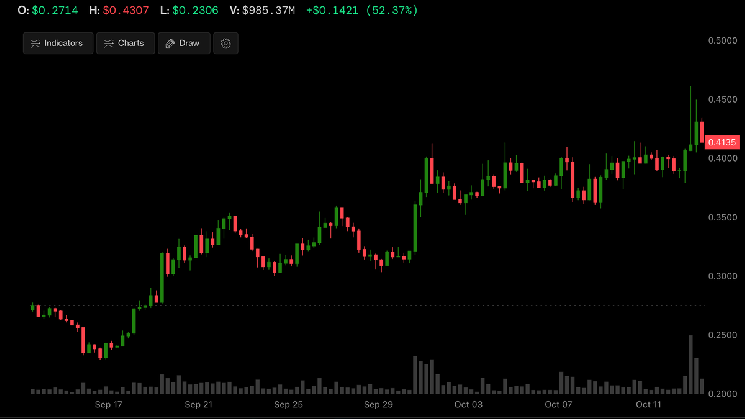
    • DeFi Development Corp added about 22,070 SOL and SOL equivalents last week, lifting its treasury to roughly 2,586,282 tokens, up 12% since August 12.
    • Its CHAD perpetual preferred stock, which pays a 13% annual dividend on a $10 stated amount, hit record highs in the week ended October 9 and is approaching $10 after an IPO priced at $8.
    • DFDV common stock traded near $4.41 on Monday, giving the company a market value of about $144 million against roughly $287 million worth of SOL.

    DeFi Development Corp, the Nasdaq-listed Solana piggy bank, added about 22,070 SOL—worth about $2,373,211—and “SOL equivalents” to its treasury last week, according to a press release published Monday.

    That brings its stash to roughly 2,586,282 tokens, worth about $287 million with SOL near $111. Weekly buys keep shrinking, from 101,381 SOL in mid-September (around $11.4 million) to 47,706 ($5.8 million), then 26,202 ($3.1 million).

    Myriad: Where does Solana go next? Click to make your prediction.
    Myriad: Where does Solana go next? Click to make your prediction.

    DFDV is a digital asset treasury company, a public firm that holds a cryptocurrency so stock investors can bet on it without opening a crypto account. It was a real estate software firm called Janover until April 2025, when it pivoted to Solana and copied Strategy’s Bitcoin playbook.

    CHAD, the company’s perpetual preferred stock, hit all-time highs in the week ended October 9 and is approaching $10. Perpetual preferred shares never mature and get dividends before common stock; CHAD pays a variable 13% a year on its $10 stated amount, or $1.30 per share, declared each business day.

    “CHAD reaching new highs and approaching $10.00 even as SOL pulled back is an encouraging sign that investors are recognizing its distinct income proposition,” said Dan Kang, Chief Strategy Officer. “For common shareholders, CHAD provides a funding source that can support accretive SOL per share growth without issuing additional common shares. For CHAD holders, it offers daily income supported by that growing, productive treasury,” he added.

    That record sounds less dramatic once you know the shares priced their IPO at $8 in September, below their own stated amount. Last week DFDV even authorized buybacks for whenever CHAD trades under its $10 par value. Mission nearly accomplished.

    BitcoinBTC · USD

    $83,280−3.4%

    Oct 6Oct 8Oct 10Oct 11Oct 13

    $86.6k$84.6k$82.7k$80.7k

    24h HighHigh$84,074

    24h LowLow$81,018

    VolVol$1.3B

    Market projectionsOdds by Myriad

    →

    The price matters because DFDV funds its SOL purchases through a $300 million at-the-market program, which sells new CHAD shares gradually at market prices. The closer CHAD trades to $10, the more SOL each new share buys.

    “Short-term volatility has not changed our conviction or our commitment to accumulating SOL,” CEO Joseph Onorati said in the release.

    SOL fell about 9% over seven days, and nearly $1 billion in long positions, or bets that prices would rise, were liquidated in 24 hours. Liquidation is forced selling: when traders bet with borrowed money and prices fall far enough to wipe out their collateral, exchanges close the bet automatically, pushing prices lower still.

    A 13% dividend looks generous, but CHAD is backed by a company whose main asset trades about 62% below its January 2025 peak of roughly $295. The release itself warns that staking rewards may not be enough to cover dividends.

    DFDV’s common stock traded near $4.41 on Monday, a market value of about $140 million—roughly half the value of its SOL, though it also carries debt. When a treasury company trades below its crypto stash, selling shares to buy tokens stops making sense, one reason the sector is under pressure.

    CHAD holders will keep collecting $0.00516 per share for each business day through October 30, and the next macro test arrives Wednesday with the U.S. September inflation report.

    Daily Debrief Newsletter

    Start every day with the top news stories right now, plus original features, a podcast, videos and more.

  • MI5 Chief warns of growing terror AI threat as right-wing extremism reaches children as young as 13

    MI5 Chief warns of growing terror AI threat as right-wing extremism reaches children as young as 13

    Extreme right-wing terrorism is continuing to infiltrate younger people in the UK who are being taken down ‘dark paths’ of the internet, the Director General of MI5 has said.

    In his annual update on current threats to the UK, Sir Ken McCallum said that just months ago, MI5 was investigating a radicalised extreme right-wing 13-year-old in the UK.

    During his speech to select media at Thames House, the headquarters of the UK’s domestic intelligence agency, today (13 October), Sir Ken said of the investigation: “Believe me, we wish we didn’t have to. But that investigation generated insight that enabled one of our international partners to prevent a lethal attack on their soil.”

    He added: “We will continue to work tirelessly to detect and get ahead of such volatile threats. But no system can catch them all.”

    Currently, the terror threat in the UK remains high, with the Joint Terrorism Analysis Centre (JTAC) having increased the UK terrorism threat to severe, which means an attack in the UK is ‘highly likely’, for the first time in almost five years.

    (Getty Stock Image)

    (Getty Stock Image)

    On advice to parents, he said (if) ‘you’re worried your teenager is being taken down some dark paths on the internet, have a word with a teacher, healthcare professional or someone you trust in your community’.

    ‘The benefits of AI are real, but so are the national security threats’

    Sir Ken also announced the launch of an AI Threat Assessment Centre – to be known as AITAC – in the UK, which will be housed in MI5 and bring together expertise from various bodies to inform Government and produce assessments.

    He said Artificial Intelligence (AI) was ‘supercharging the cybersecurity contest between attackers and defenders’, given it can produce ‘propaganda’ and also ‘radicalise material tailored to the individual’.

    “We’ve caught terrorists seeking to exploit AI to improve their reconnaissance and attack methodologies, with AI-enabled drones adding a new twist,” he said.

    He added: “Not yet realised – but the misuse case to which I’d attach the greatest weight – is AI’s potential to change the stakes on existing or even new bioweapons.”

    (Ian Forsyth/Getty Images)

    (Ian Forsyth/Getty Images)

    Earlier in the week, Britain’s AI minister Kanishka Narayan warned that a breach of the UK’s cyber defences was ‘likely, if not inevitable’.

    Over the last few months, experts have also warned that AI could wipe out humanity within the near future if the technology race is allowed to go on unchecked.

    ‘We were all horrified by the murder of Ann Widdecombe in July’

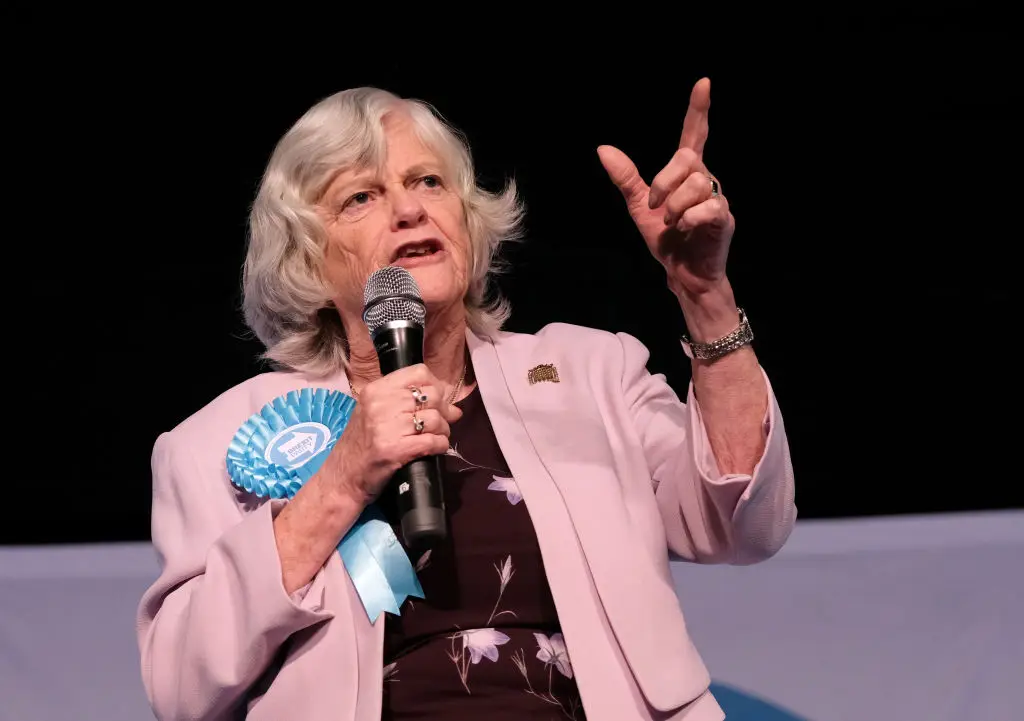
    Reform UK spokeswoman Ann Widdecombe died aged 78 after being hit over the head with a hammer 21 times at her home in Devon in July.

    The man accused of murdering her, Joshua Kerry, 28, has also been charged with a terror plot against Reform UK leader Nigel Farage.

    Speaking about societal resilience, Sir Ken said that ‘sadly, the case is part of a concerning trend of violence targeted at political figures, religious or community groups and more’.

    On Monday, 12 October, Home Secretary Shabana Mahmood announced an independent review of the UK’s protective security system.

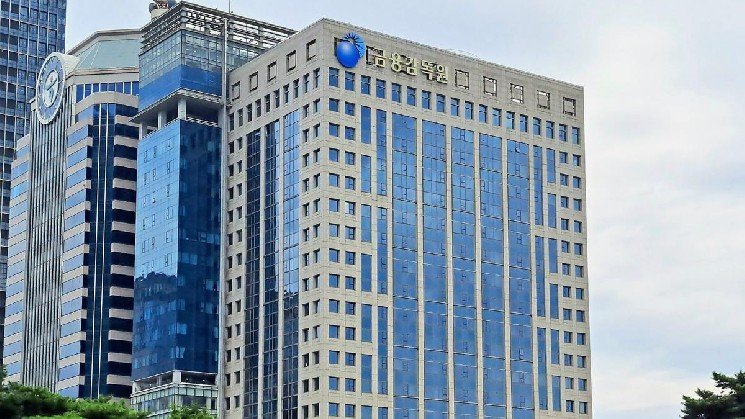
  • South Korea blocks 27 crypto exchanges, including Bitmart and Kucoin

    South Korea blocks 27 crypto exchanges, including Bitmart and Kucoin

    “User assets remain safe and secure, and we will communicate any further updates through our official channels.”

    BitMart, Phemex and MEXC did not immediately respond to a CoinDesk request for comment.

    South Korea’s proposed Digital Asset Basic Law, yet to come into force, would set the groundwork for a legal framework for digital assets, including issuance, trading, custody and supervision. The country’s Financial Services Commission and Financial Supervisory service announced new rules in April, removing the discretion exchanges had to let users bypass holding periods.

    The FIU said it has referred 44 unregistered operators to investigators and will seek further blocks against websites that reopen under different addresses. Only 28 virtual asset service providers are currently registered with the regulator.

    The financial watchdog also warned that traders using unauthorized platforms could face difficulties recovering their funds. The FIU said it will work with the Digital Asset eXchange Alliance (DAXA), an industry association, to help affected customers withdraw their funds where access restrictions create problems. It also urged investors to check whether their exchange is registered and to withdraw assets from unauthorized operators.

    South Korean investors have been gradually moving large amounts of crypto overseas for months due to stricter rules, with an estimated $110 billion leaving domestic exchanges in 2025.