Author: rb809rb

  • ‘Michael’ May Be ‘Family-Friendly,’ but It’s a Movie That Taps Into Michael Jackson’s Most Powerful Creative Fuel — His Anger

    ‘Michael’ May Be ‘Family-Friendly,’ but It’s a Movie That Taps Into Michael Jackson’s Most Powerful Creative Fuel — His Anger

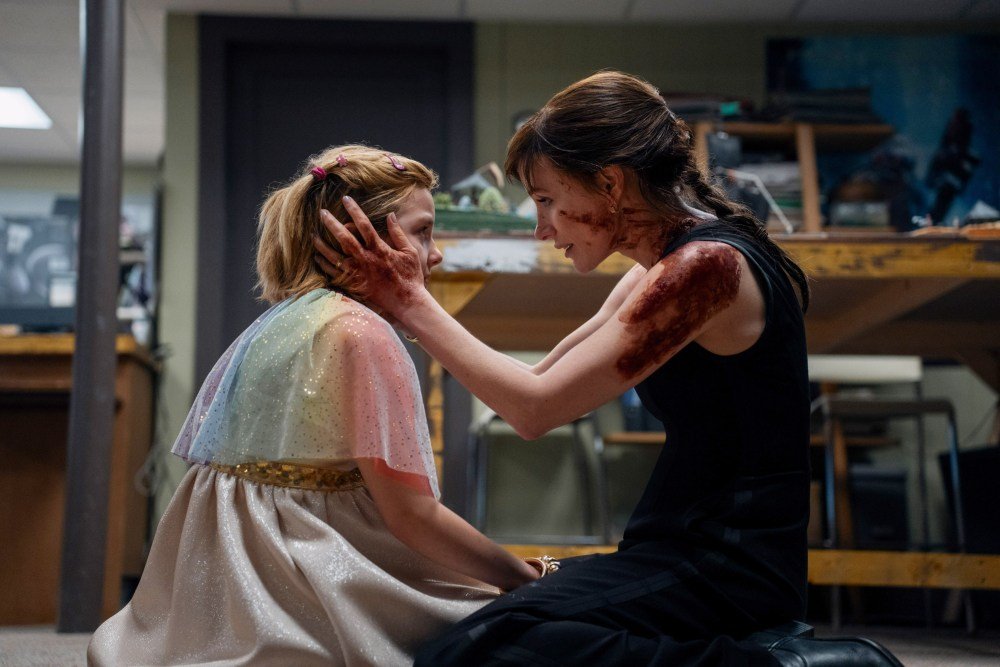
    The media has done a good job of talking about what’s not in “Michael.” I refer, of course, to the accusations of child sexual abuse that dogged Michael Jackson from 1993 until the day he died (and, of course, they didn’t stop then). The media has done a far less good job of talking about what’s actually in “Michael.” If you scan the coverage, you’d think that the movie was the most scrubbed and innocuous of jukebox musicals. You might think the reason it’s going to make a jillion dollars is that a lot of people are only too happy to revel in a Michael Jackson biopic that’s all greatest-hits cues and nostalgic high points: a two-hour hologram of Michael mania.

    If that’s all “Michael” was, it’s certainly possible that the film might still be breaking box-office records. Yet I think one reason for “Michael’s” extraordinary success is that it’s actually a more interesting movie than many have given it credit for. In its sanded-off middle-of-the-road biopic-of-a-supernova way, “Michael” hits an emotional chord that touches something resonant and moving about Michael Jackson and his music. The film tells a very particular story, and what that story is about is the very source of Michael Jackson’s creative power.

    “Michael” shows us an ascent to the pop stratosphere on the wings of his genius. Through it all, though, he has a major antagonist: his father, Joe (played with a hustler’s threatening authenticity by Colman Domingo), who made the Jackson 5 what they were and thinks that he owns them. Even considering what a stern taskmaster he is, there’s no reason on earth for him to take off his belt and beat the young Michael with it; that’s a display of violence worthy of a criminal. And when Michael, having turned 20, joins forces with Quincy Jones to record “Off the Wall,” which will become his breakthrough 1979 solo record (though in fact it’s his fifth solo album), he’s asserting his independence in a way that will only escalate the war of wills between himself and Joe, the Svengali dictator who thinks of his son as an indentured contract player.

    Throughout the movie, their relationship heads in one direction, and toward one thing: separation. And there’s plenty of Oedipal showbiz drama along the way, from the scene in the law office where Michael, imperious behind aviator shades, starts to feel the cold thrust of his own authority (that’s when he gets the idea to fire Joe as his manager) to the horrific aftermath of the accident that befell him during the shooting of a Pepsi commercial, a cataclysm the film presents — metaphorically — as an outgrowth of Joe’s karma, his need to destroy Michael, if necessary, in order to possess him.

    But the underlying story that “Michael” tells, in tracing Michael’s war with his father, is the saga of Michael Jackson’s anger. That’s the quality Joe’s manipulation and abuse planted in Michael. And that’s the quality we begin to see simmering under the surface of Jaafar Jackson’s performance.

    Here’s the power of it. Anger wasn’t just Michael’s (understandable) reaction to what a tyrannical cad his father was. More than that, anger became a foundation of Jackson’s creative mystique. Because when you listen to many of his key greatest songs, from “Billie Jean” to “Beat It” to “Bad” to his most unacknowledged masterpiece, “Smooth Criminal,” that’s what they’re expressing. That’s what set those songs apart. It was Michael Jackson’s anger that made them burn like a transcendent disco inferno.

    By and large, none of that is true of “Off the Wall,” a great record that brought Michael to a new peak, yet not the peak of “Thriller.” The emotion that courses through “Off the Wall” is joy — the sheer exaltation of “Don’t Stop ’til You Get Enough,” in which he might be talking about “Star Wars” or the ecstasy of love (“Keep on…with the force, don’t stop,/Don’t stop…’til you get enough”), or the dancing-on-air romanticism of “Rock with You.” But three years later, when he released “Thriller,” Jackson made an album that stood in the same relation to “Off the Wall” as the Beatles’ albums after “Rubber Soul” stood in relation to the ones before. He’d scaled the stairway of his talent to become a more visionary artist. And the defining quality of his new music, and his new image, was its electrostatic fury. In the case of “Billie Jean,” the greatest pop song of the 1980s, you might even call it rage.

    “Billie Jean” was, of course, an attack on the woman who would dare to falsely accuse Michael of being the father of her child. Yet part of what made it such an indelible song is that it was almost as if he was attacking sexuality itself (“Billie Jean is not my lover”). The anger was expressed not just in the lyrics but in the fearsome up/down domination of the beat, and in the sound of Michael’s voice — the pent-up intensity, the yelps and hiccups, the fusion of despair and vituperative passion into a phrasing so percussive it cut like a dagger (“Who will dance…on the floor…in the round”). The meaning of “Billie Jean” was also there in the molten glare he had in that video. We think of Michael Jackson as a “family-friendly” performer because that’s the image he crafted for himself, and he was indeed that thing, yet he also worked in the tradition of pop musicians who expressed a volcanic wrath that had no other outlet but song.

    “Beat It” channeled an adjacent alchemy. It was a song that decried gang violence, yet the beauty of it was that Michael condemned that violence with a stoked vengeance as agitated as that of any gangbanger. What the singing and the choreography told you was, on some level, he yearned to be one. The same way that he longed to be a monster in “Thriller” or as bad as he could be in “Bad.” His offstage persona was that of a saint: the high voice, the decorous manners, the giggly gentleness. Yet it all acted as a set-up for the funk-soul demon he unleashed in his music.

    This was brought to an apotheosis in “Smooth Criminal,” the song that was actually, in effect, the sequel to “Billie Jean.” It was built around a furious, combustible expansion of the earlier song’s beat, and told the story of a girl named Annie who was murdered. But though Michael practically wept tears for her in the chorus, the subtext was that Annie’s murder was the punishment for Billie Jean’s sin. And it was Michael, on some level, who was the smooth criminal.

    There are key moments in “Michael” where we glimpse Michael’s anger. The film is shrewd in showing us that Bubbles the chimp — a joke to most of us for decades — was, in fact, a case of Michael bringing a wild animal into his home as an act of stand back aggression against his family. And at the end, when he finally summons the force to throw Joe over, it’s a moment so liberating that it’s a thriller. Mostly, though, the story “Michael” tells is that of how Michael’s anger is tamped down, redirected, channeled. All so that it can be the pulse of his art.

  • Canadian premier wants to ban social media and AI chatbots for kids in Manitoba

    Manitoba could be the first province in Canada to establish a social media ban for kids, but the proposal’s details aren’t very clear yet. The province’s premier, Wab Kinew, announced during a fundraiser event on Saturday and on X that Manitoba would put in place a ban for social media and AI chatbots for its youth.

    “They’re doing these very awful things to kids all in the name of a few likes, all in the name of more engagement, and all in the name of money,” Kinew said at the event. “Our kids will never be for sale and their attention and their childhoods should never be profited from.”

    Kinew didn’t elaborate on the ban’s crucial details, like the specific age restriction, when it will be introduced nor how it will be enforced. CBC reported that Kinew didn’t speak to reporters after his remarks at the fundraiser.

    Besides Manitoba, the Liberal Party of Canada recently voted in favor of proposals to restrict both social media and AI chatbot use for anyone under 16 during the party’s national convention in Montreal. There are several efforts to restrict social media across Canada. One even seeks to limit those under 14 from accessing these platforms, an even younger cutoff than the ban recently enacted in Australia. However, a recent poll from the Molly Rose Foundation has cast some doubt on the effectiveness of such laws, which other countries have also adopted or are currently considering. The poll showed that a majority of teens still have accounts on banned social media platforms, or have found ways around the ban.

  • Running out of time on Clarity: State of Crypto

    Running out of time on Clarity: State of Crypto

    The crypto market structure bill has not made much public movement in a month. While making a prognosis on the bill is difficult, it’s not hard to see that the clock for passage is running out.

    You’re reading State of Crypto, a CoinDesk newsletter looking at the intersection of cryptocurrency and government. Click here to sign up for future editions.


    The narrative

    We won’t get the crypto market structure bill this month. That’s not the end of the process, but we’re approaching a timeline that’ll surely increase the amount of gray in people’s hair.

    Why it matters

    Much of what’s happened around market structure issues — Securities and Exchange Commission staff statements, for example — are not permanent guidance. The SEC has time to come up with rules that go through a notice-and-comment period, but that’ll take time. Market structure legislation was aimed at cementing crypto industry goals and regulations into law, making it that much more difficult for a future administration to undo those rules. In other words, without the Clarity Act, it’s entirely possible that we’ll have this same conversation in a few years. To be clear, this isn’t advocating for this bill, much as I might wish to write about anything else. This is just stating a likely future scenario.

    Breaking it down

    Memorial Day — May 25, or just about a month from now — has been seen since at least last December as a “drop-dead” date for legislation to advance, if it is to have a chance at passage before the election. As we get into the summer, lawmakers are going to leave town to run their campaigns and won’t have time to worry about a crypto bill (or much other legislation).

    Before Congress leaves, it’s going to take up a bill to fund the Department of Homeland Security (House) and figure out if Kevin Warsh will become the next Fed chair (Senate).

    CoinDesk’s Jesse Hamilton laid out the other steps necessary to get Clarity across the finish line — i.e. President Donald Trump’s desk — last week.

    The crypto industry desperately wants this bill; more than 100 signed an open letter last week urging a markup hearing in the Senate Banking Committee, which would be the first step toward overall passage.

    Still, at this point it’s unclear how close the committee is to moving forward. Stablecoin yield continues to dominate the conversation, but other outstanding issues have not been resolved either, at least publicly.

    Even when these issues are resolved, the House will need to vote again on the bill.

    Congressman French Hill, who chairs the House Financial Services Committee, told CoinDesk earlier this month that many of the outstanding issues around sales practices for stablecoins and decentralized finance had already been sorted out by the House in its version of the bill, meaning the Senate should be able to find common ground.

    “I think the Senate’s relayed quite a bit on the House work on both FIT21 [the Financial Innovation and Technology for the 21st Century Act] from the previous Congress and CLARITY in this Congress,” he said. “I think you see that quite clearly in the Senate Agriculture markup, I think you see that in the basic draft of many of the components in the Senate bill.”

    And, well, not to plug Consensus Miami again, but we are going to be discussing this next month. It’ll be a party, you should swing by.

    This week

    • There are no major hearings or policy events scheduled, though the Senate Banking Committee may notice a vote on Kevin Warsh’s nomination for Fed Chair.

    If you’ve got thoughts or questions on what I should discuss next week or any other feedback you’d like to share, feel free to email me at nik@coindesk.com or find me on Bluesky @nikhileshde.bsky.social.

    You can also join the group conversation on Telegram.

    See ya’ll next week!

  • Accused shooter was targeting Trump and US officials, authorities say

    Accused shooter was targeting Trump and US officials, authorities say

    President Donald Trump says suspect wrote an anti-Christian declaration and is ‘sick guy’.

    United States authorities believe a gunman who is accused of trying to storm the White House Correspondents’ Association dinner was targeting US President Donald Trump and members of his administration, acting Attorney General Todd Blanche says.

    Blanche said on Sunday that authorities believe the suspect travelled from California to Washington, DC, by train via Chicago.

    Recommended Stories

    list of 4 itemsend of list

    Shots were fired on Saturday evening near the ballroom where the dinner was being held as Secret Service agents subdued the gunman and as Trump, top government officials and hundreds of journalists attended the event.

    Investigators have not publicly named the suspect, but multiple US media outlets have identified him as Cole Tomas Allen, 31, of Torrance, California.

    Trump told Fox News that the family of the suspect raised concerns about him to local police before the event. The president also told the TV news channel that the accused man had written an anti-Christian declaration.

    “The guy is a sick guy,” he told Fox News. “When you read his manifesto, he hates Christians.”

    Law enforcement officials who made initial examinations of the suspect’s electronic devices and his writings believe he intended to target Trump administration members in attendance at the dinner.

    “It does appear that he did in fact set out to target folks who work in the administration, likely including the president,” Blanche told the NBC TV network.

    The suspect is believed to have bought the two firearms he carried with him on Saturday night in the past couple of years, the attorney general said. He is not being cooperative with law enforcement and is expected to face multiple charges on Monday, Blanche said.

    Social media posts that appear to match the suspect show he is a highly educated tutor and amateur video game developer with multiple degrees in computer science and mechanical engineering.

    Video posted by Trump showed the suspect running past security barricades as Secret Service agents ran towards him. One officer in a bullet-resistant vest was shot but was recovering, officials said. The gunman was taken into custody and was not injured but was taken to hospital to be evaluated, police said.

    Outside the hotel, members of the National Guard and other authorities flooded the area as helicopters circled overhead.

    Trump used the incident to push his plans to construct a large ballroom next to the White House, a plan that has faced legal challenges and that polls indicate most Americans oppose.

    “What happened last night is exactly the reason that our great Military, Secret Service, Law Enforcement and, for different reasons, every President for the last 150 years, have been DEMANDING that a large, safe, and secure Ballroom be built ON THE GROUNDS OF THE WHITE HOUSE,” Trump wrote on his Truth Social platform on Sunday.

    The $400m ballroom has become a passion project for Trump during his second term.

    Trump was unusually conciliatory after what he saw as a third attempt on his life in less than two years, calling for unity and bipartisan healing.

  • ‘Michael’ May Be ‘Family-Friendly,’ but It Taps Into Michael Jackson’s Most Powerful Creative Fuel — His Anger

    ‘Michael’ May Be ‘Family-Friendly,’ but It Taps Into Michael Jackson’s Most Powerful Creative Fuel — His Anger

    The media has done a good job of talking about what’s not in “Michael.” I refer, of course, to the accusations of child sexual abuse that dogged Michael Jackson from 1993 until the day he died (and, of course, they didn’t stop then). The media has done a far less good job of talking about what’s actually in “Michael.” If you scan the coverage, you’d think that the movie was the most scrubbed and innocuous of jukebox musicals. You might think the reason it’s going to make a jillion dollars is that a lot of people are only too happy to revel in a Michael Jackson biopic that’s all greatest-hits cues and nostalgic high points: a two-hour hologram of Michael mania.

    If that’s all “Michael” was, it’s certainly possible that the film might still be breaking box-office records. Yet I think one reason for “Michael’s” extraordinary success is that it’s actually a more interesting movie than many have given it credit for. In its sanded-off middle-of-the-road biopic-of-a-supernova way, “Michael” hits an emotional chord that touches something resonant and moving about Michael Jackson and his music. The film tells a very particular story, and what that story is about is the very source of Michael Jackson’s creative power.

    The Michael the movie shows us ascends to the pop stratosphere on the wings of his genius. Through it all, though, he has a major antagonist: his father, Joe (played with a hustler’s threatening authenticity by Colman Domingo), who made the Jackson 5 what they were and thinks that he owns them. Even considering what a stern taskmaster he is, there’s no reason on earth for him to take off his belt and beat the young Michael with it; that’s a display of violence worthy of a criminal. And when Michael, having turned 20, joins forces with Quincy Jones to record “Off the Wall,” which will become his breakthrough 1979 solo record (though in fact it’s his fifth solo album), he’s asserting his independence in a way that will only escalate the war of wills between himself and Joe, the Svengali dictator who thinks of his son as an indentured contract player.

    Throughout the movie, their relationship heads in one direction, and toward one thing: separation. And there’s plenty of Oedipal showbiz drama along the way, from the scene in the law office where Michael, imperious behind aviator shades, starts to feel the cold thrust of his own authority (that’s when he gets the idea to fire Joe as his manager) to the horrific aftermath of the accident that befell him during the shooting of a Pepsi commercial, a cataclysm the film presents — metaphorically — as an outgrowth of Joe’s karma, his need to destroy Michael, if necessary, in order to possess him.

    But the underlying story that “Michael” tells, in tracing Michael’s war with his father, is the saga of Michael Jackson’s anger. That’s the quality Joe’s manipulation and abuse planted in Michael. And that’s the quality we begin to see simmering under the surface of Jaafar Jackson’s performance.

    Here’s the power of it. Anger wasn’t just Michael’s (understandable) reaction to what a tyrannical cad his father was. More than that, anger became a foundation of Jackson’s creative mystique. Because when you listen to many of his key greatest songs, from “Billie Jean” to “Beat It” to “Bad” to his most unacknowledged masterpiece, “Smooth Criminal,” that’s what they’re expressing. That’s what set those songs apart. It was Michael Jackson’s anger that made them burn like a transcendent disco inferno.

    By and large, none of that is true of “Off the Wall,” a great record that brought Michael to a new peak, yet not the peak of “Thriller.” The emotion that courses through “Off the Wall” is joy — the sheer exaltation of “Don’t Stop ’til You Get Enough,” in which he might be talking about “Star Wars” or the ecstasy of love (“Keep on…with the force, don’t stop,/Don’t stop…’til you get enough”), or the dancing-on-air romanticism of “Rock with You.” But three years later, when he released “Thriller,” Jackson made an album that stood in the same relation to “Off the Wall” as the Beatles albums after “Rubber Soul” stood in relation to the ones before. He’d scaled the stairway of his talent to become a more visionary artist. And the defining quality of his new music, and his new image, was its electrostatic fury. In the case of “Billie Jean,” the greatest pop song of the 1980s, you might even call it rage.


    “Billie Jean” was, of course, an attack: on the woman who would dare to falsely accuse Michael of being the father of her child. Yet part of what made it such an indelible song is that it was almost as if he was attacking sexuality itself (“Billie Jean is not my lover”). The anger was expressed not just in the lyrics but in the fearsome up/down domination of the beat, and in the sound of Michael’s voice — the pent-up intensity, the yelps and hiccups, the fusion of despair and vituperative passion into a phrasing so percussive it cut like a dagger (“Who will dance…on the floor…in the round“). The meaning of “Billie Jean” was also there in the molten glare he had in that video. We think of Michael Jackson as a “family-friendly” performer, because that’s the image he crafted for himself, and he was indeed that thing, yet he also worked in the tradition of pop musicians who expressed a volcanic wrath that had no other outlet but song.

    “Beat It” channeled an adjacent alchemy. It was a song that decried gang violence, yet the beauty of it was that Michael condemned that violence with a stoked vengeance as agitated as that of any gangbanger. What the singing, and the choreography, told you was: On some level he yearned to be one. The same way that he longed to be a monster in “Thriller” or as bad as could be in “Bad.”” His offstage persona was that of a saint: the high voice, the decorous manners, the giggly gentleness. Yet it all acted as a set-up for the funk-soul demon he unleashed in his music.

    This was brought to an apotheosis in “Smooth Criminal,” the song that was actually, in effect, the sequel to “Billie Jean.” It was built around a furious combustible expansion of the earlier song’s beat, and told the story of a girl named Annie who was murdered. But though Michael practically wept tears for her in the chorus, the subtext was that Annie’s murder was the punishment for Billie Jean’s sin. And it was Michael, on some level, who was the smooth criminal.

    There are key moments in “Michael” where we glimpse Michael’s anger. The film is shrewd in showing us that Bubbles the chimp — a joke to most of us for decades — was, in fact, a case of Michael bringing a wild animal into his home as an act of stand back aggression against his family. And at the end, when he finally summons the force to throw Joe over, that’s a moment so liberating it’s a thriller. Mostly, though, the story “Michael” tells is that of how Michael’s anger is tamped down, redirected, channeled. All so that it can be the pulse of his art.

  • Bitcoin (BTC) Options and Technical Data Point to a Single Price Level: “If This Level Is Breached, a Breakout Will Begin”

    New analyses of Bitcoin’s short-term price dynamics in the cryptocurrency markets reveal that the $80,000 level is a critical threshold. According to analysts, breaking above this level could lead to a significant increase in market volatility.

    According to an assessment shared by on-chain data analyst Murphy, when indicators such as gamma exposure in the options market, open interest relative to the strike price, and break-even implied volatility (IV) are considered together, the $80,000 level stands out as the first significant resistance point for Bitcoin. A high volume of open call options, a positive gamma structure, and low implied volatility are noteworthy at this level.

    According to the analysis, dynamic hedging by market makers during price increases can increase selling pressure. In particular, a low IV environment can increase sensitivity to hedging, making price movements sharper. Data shows that there are approximately 7,200 $BTC open positions at the $80,000 level, supported by positive gamma.

    Related News VanEck, the Billion-Dollar Asset Manager, Announces It Has Turned Bullish on Bitcoin

    However, experts argue that $80,000 does not represent the ultimate peak. If the Bitcoin price surpasses this level and approaches $82,000, the market structure could change rapidly. It is stated that with the negative gamma effect coming into play, corresponding to approximately 4,644 $BTC of open positions in this region, selling pressure could give way to sharper and more directionless price movements, meaning increased volatility.

    In conclusion, analysts state that the $80,000 level is not only a technical resistance but also a critical threshold where dynamics stemming from derivative markets intensify, and that a break above this level could lead to a more volatile price structure for Bitcoin.

    *This is not investment advice.

  • Oz Pearlman Reveals Magic Trick Performed on Karoline Leavitt Before White House Correspondents’ Dinner Shooting

    Oz Pearlman Reveals Magic Trick Performed on Karoline Leavitt Before White House Correspondents’ Dinner Shooting

    Mentalist Oz Pearlman, who hosted the White House Correspondents’ Association dinner Saturday night, is revealing the magic trick he performed on Karoline Leavitt moments before shots were fired.

    Pearlman was seen speaking with the White House press secretary and First Lady Melania Trump, who was sitting next to President Donald Trump, and then showing them a mysterious piece of paper. Moments later, they all ducked to the ground behind the table on stage, before Trump and Melania were rushed out of the Washington Hilton ballroom.

    ABC News chief Washington correspondent Jonathan Karl later caught up with the mentalist, who revealed what was written on the paper.

    “Karoline Leavitt, the press secretary, said, ‘Challenged me. I’m having a baby next week.’ We were talking about it because we both have children, and she goes, ‘Can you guess what I’m naming my daughter?’ And so this was happening backstage,” he said. “We were interrupted because the president walked in. And so I said, ‘Let’s save it for when we get up on the dais.’”

    Pearlman later went on stage to introduce himself to Trump and Melania, and that’s when he performed the magic trick on Leavitt, with the president and first lady also watching closely.

    “I was coming to say hello to the president and to the first lady, and I was guessing letter by letter how many letters were in [Leavitt’s unborn child’s] name,” he recalled. “Then right at the moment where you see it happen, I wrote down the name and I said, ‘How did I do?’ And I turned around and that’s when you see the first lady go, ‘Oh! Is that the name?’”

    However, before Leavitt could confirm if Pearlman was correct, a gunman stormed into the ballroom shooting. The suspect, later identified as 31-year-old Cole Tomas Allen, reportedly charged through a security checkpoint and into the Washington Hilton ballroom with multiple weapons.

    U.S. Attorney Jeanine Pirro confirmed in a press briefing that the suspect will be charged with using a firearm and assaulting a federal officer with a dangerous weapon, and that there will likely be “many more charges” to come. Trump also shared at a separate news conference at the White House that an officer was shot but saved by a bulletproof vest.

    Once the scene was under control, Pearlman told Karl that Leavitt gave him permission to share the name he had written on the paper.

    He said, “I believe the name is Vivian. So yeah, that’s what I guessed.”

  • Live Updates: 2026 NBA Playoffs, R1 | Cavaliers-Raptors begins Sunday’s action

    Live Updates: 2026 NBA Playoffs, R1 | Cavaliers-Raptors begins Sunday’s action

    Brandon Ingram and the Toronto Raptors look to tie their 2026 NBA Playoffs first-round series on ESPN to open Sunday’s slate.

    We’re bringing you the best of the 2026 NBA Playoffs, presented by Google, with the NBA.com live blog, featuring all of the meaningful moments, performances, observations, news, notes and highlights from Sunday’s action.

    What we know about Sunday’s games:

    • Teams with a 2-1 lead have historically gone on to win an NBA Playoffs series 80% of the time.
    • With a 3-1 lead, it’s been 95.6% of the time, with 13 teams recovering from such a gap in NBA history.
    • If the series goes to 2-2, the home team for Game 5 has won 73.1% of the time.

    APRIL 26, 2026 / 2:08 ET

    Murray-Boyles getting busy 👏

    The Raptors still trail Cleveland with time running out in the first half, but their rookie big man is showing a lot of promise. Collin Murray-Boyles is up to 9 points off the bench today.


    APRIL 26, 2026 / 1:48 ET

    Low scoring first quarter

    Each team scored in the closing seconds of the first quarter as the Cavaliers took a 17-14 lead into the break.

    1,144 assists & counting

    James Harden is regarded as one of the best scorers in the league, but he’s also a top distributor. The Beard has made the postseason in 17 years straight, and adds to his legacy while climbing the all-time playoff assists list.


    APRIL 26, 2026 / 1:36 ET

    Mitchell shake & bake 3️⃣


    APRIL 26, 2026 / 1:25 ET

    Edwards suffers bone bruise

    Minnesota’s All-Star guard went down in the first half of game 3 between the Timberwolves and Nuggets and will not return for the remainder of the series. Shams Charania reports that Anthony Edwards is expected to miss multiple weeks due to the left knee injury.

    Scuffle under review 🔔

    The Wolves managed to win without Edwards or Donte DiVincenzo, but an altercation broke out just before the final buzzer sounded. Charania adds that rulings are expected to be made before game 5 regarding possible suspensions.


    APRIL 26, 2026 / 1:17 ET

    Meet Scottie at the rim 😤

    Scottie Barnes has set the tone early in Toronto. Both teams struggled to find early baskets, until Barnes finished a dunk in transition over Dean Wade.

    Moments later he flushed a two-handed dunk in the half-court, prompting a Cleveland timeout. All of Toronto’s points thus far have come in the paint, as the lead 8-3 with 8:20 to play in the first.

    APRIL 26, 2026 / 12:30 ET

    Starting Lineups: Cavaliers-Raptors, Game 4

    Donovan Mitchell and the Cleveland Cavaliers face the Toronto Raptors in Game 4 of their 2026 NBA Playoffs series at 1 ET on ESPN.


    All stats from Thursday’s Game 3, which the Raptors won 126-104.

    Cleveland:

    • PG James Harden (18 pts, 4 ast)
    • SG Donovan Mitchell (15 pts, 5 reb)
    • SF Dean Wade (5 pts, 5 reb, 1 stl)
    • PF Evan Mobley (15 pts, 6 reb, 7 ast)
    • C Jarrett Allen (12 pts, 3 blk)

    Toronto:

    • PG Ja’Kobe Walter (0 pts, 2 reb)
    • SG RJ Barrett (33 pts, 5 reb)
    • SF Brandon Ingram (12 pts, 3 reb, 2 stl)
    • PF Scottie Barnes (33 pts, 11 ast)
    • C Jakob Poetl (8 pts, 6 reb)

    APRIL 26, 2026 / 12:15 ET

    Sunday’s injury report

    Immanuel Quickley is out for the Raptors, while A.J. Lawson is available.

    Jordan McLaughlin and Victor Wembanyama are questionable for the Spurs.

    Joel Embiid is doubtful for the 76ers. Tyrese Maxey is available, while Kelly Oubre Jr. is questionable.

    Luka Dončić is out for the Lakers, while Austin Reaves is questionable. Kevin Durant is questionable for the Rockets.

  • Matthew Lillard Says Nostalgia Is ‘One of the Reasons’ Hollywood Is ‘Hiring Me Again’: ‘I Don’t Think Anyone Really Likes Me. They Just Miss the Old Times’

    Matthew Lillard Says Nostalgia Is ‘One of the Reasons’ Hollywood Is ‘Hiring Me Again’: ‘I Don’t Think Anyone Really Likes Me. They Just Miss the Old Times’

    Matthew Lillard said during a recent appearance on the “Phase Hero” podcast that he thinks nostalgia played a major role in his recent Hollywood resurgence.

    “’Scooby-Doo’ one and two are more popular now than they ever were when they came out. So I do think there’s a weird nostalgia thing happening in our industry and in the zeitgeist because I think that people are longing for ye olde times,” Lillard said. “I think that’s one of the reasons I’m having this moment to be honest, is because I was identified in that moment, so people are hiring me again.”

    He later added with a laugh, “I think that’s why I’m working. I don’t think anyone really likes me. They just miss the old times.”

    Lillard told Business Insider in 2024 that after reprising the role of Shaggy in “Scooby-Doo 2: Monsters Unleashed,” he thought he’d be “No. 1 on the call sheet for the next 10 years of movies.” But unfortunately, after the film bombed at the box office, “the exact opposite happened.” Lillard said at the time, the experience forced him to reprioritize his goals as an actor.

    “I was caught up in the success of what I was doing, I was caught up in the parts I was getting, I was caught up in this drive to be quote-unquote famous,” Lillard admitted. He later added, “I’ve gone through good patches and bad patches. I’ve been irrelevant and thought I was never going to work again.”

    Lillard’s first major reintroduction to Hollywood was in 2023 when he played William Afton in “Five Nights at Freddy’s.” Since then, his career has been on a steady upswing. Other recent credits include “The Life of Chuck,” “Five Nights and Freddy’s 2,” “Scream 7” and “Daredevil: Born Again.” He will soon appear in Mike Flanagan’s “Carrie” TV show and star alongside Pedro Pascal, Will Anrett and Olivia Wilde in Tony Gilroy’s “Behemoth!”

  • White House Correspondents Association President Weijia Jiang Says Dinner Shooting ‘Was a Harrowing Moment for Everyone in Attendance’

    White House Correspondents Association President Weijia Jiang Says Dinner Shooting ‘Was a Harrowing Moment for Everyone in Attendance’

    Weijia Jiang, WHCA president and CBS News’ Senior White House Correspondent, has released a statement following last night’s shooting incident at the White House Correspondents’ Dinner.

    Taking to X, she wrote, “I know many of you are still processing what happened last night. Thank you to the USSS and all the law enforcement agencies who kept us safe. We are so grateful. To the members of the WHCA, we will get through this together.” In an attached note, Jiang said the shooting “was a harrowing moment for everyone in attendance.” She wrote, “We express our deepest gratitude to the U.S. Secret Service and all law enforcement personnel who ensured the safety of everyone in the ballroom and beyond. Their actions protected thousands of guests, and we wish a full and speedy recovery to the officer who was injured in the line of duty. We are grateful everyone in attendance was unharmed, including the President, the First Lady, and the Vice President.”

    Her note continued, “Our dinner exists to celebrate the First Amendment and the hard daily work of the journalists who defend it. Last night, those journalists showed exactly the kind of calm and courage that work demands, jumping into reporting immediately after the incident unfolded. We are proud of everyone in that room. The WHCA board will be meeting to assess what happened and determine how to proceed. We will provide updates as soon as any are available.”

    On Sunday morning, Jiang appeared on Face the Nation with Margaret Brennan” and spoke about the evening.

    Jiang talked about why Trump stayed behind. She said, “It all happened so fast, and when we were still on stage, we were in the middle of a very light moment with the entertainer who was doing a trick. And when I heard something in the audience, I thought it was a protester or something we’re very used to. But then, when I saw SWAT team members come to the head table and rush us to the ground and say, down, down, down, we were crawling off the stage. And in the back, that is a holding area where people wait, including President Trump and distinguished guests, to go onto the stage.”

    Jiang praised the SWAT officers and Secret Service security for their quick work to protect the President and everyone in attendance.

    She also talked about her family being in the audience and how she was processing the event. “I have covered countless shootings and murders and terrible things in my career, and this is the first time that I’ve been on the other side of a potentially violent and deadly situation, and no amount of reporting can prepare you for that. You’re right that my family was in the audience, and it was incredibly meaningful to have them there. That added an additional complicated layer, because I’m thinking about the safety of my members, the safety of all of our dinner guests, and obviously, at the forefront, the safety of the people who I can see, who matter the most to me. And we didn’t have information.”

    Jiang shared how President Trump called her into his holding room to brief her before he posted about the dinner being postponed. “He really wanted to talk it through and to explain that he himself realized how important that night was. It’s something we do every night, and when I did address the room, I reminded everyone that, you know, the freedoms that we are celebrating tonight in the First Amendment are still incredibly fragile.” She continued, “And I appreciate that the president acknowledged that, and he told me that we were not going to be deterred. He refused to stand down, and that’s why he was there, despite what had unfolded, and I don’t know what his team was telling him, they were relaying to me, the president keeps saying he’s not going anywhere, so that’s why he stayed.”

    President Donald Trump, First Lady Melania Trump and numerous cabinet officials were swiftly evacuated from the event as the shooter was tackled by law enforcement. Law enforcement officials said the suspect charged a security checkpoint with magnetometer screening devices with a rifle, a handgun and knives in tow. He is reported to have exchanged gunfire with Secret Service officials.

    Shortly after, the President held a press conference and promised the dinner would be rescheduled within 30 days. “I fought like hell” not to cancel the event, he said. He added, “We’re going to do it again. We’re not going to let anybody take over our society. We’re not going to cancel things out, because we can’t do that.”

    President Trump has had a pugnacious relationship with mainstream media and news organizations. At his late-night briefing, he sought to strike a conciliatory tone and even complimented the media for the immediate coverage of the latest shooting incident to disrupt the normal routines of American life. Trump praised the quick work of law enforcement officials, who ensured the gun was “taken down by some very brave members” of the Secret Service.

    “In light of this evening’s events, I ask that all Americans recommit with their hearts…we have to resolve our differences peacefully,” Trump said at the end of the night.