Author: rb809rb

  • Pay $33 Just One Time for Lifetime Windows 11 Pro & Office 2021 Licenses

    Pay $33 Just One Time for Lifetime Windows 11 Pro & Office 2021 Licenses

    TL;DR: Through September 27, get lifetime licenses for Windows 11 Pro and Microsoft Office Professional 2021 for one PC for $32.97 (MSRP $418.99), with no recurring subscription fees.

    If you’re setting up a new PC or upgrading your current one, bundling your software tools can be a smart move, but it’s often expensive. Luckily, there’s an affordable way to upgrade.

    Take advantage of this bundle that pairs Windows 11 Pro with a Microsoft Office Pro 2021. Instead of paying subscriptions, you can get these essential Windows tools on sale for only $32.97 (MSRP $418.99).

    Microsoft Office Professional 2021 includes Word, Excel, PowerPoint, Outlook, Teams (free version), OneNote, Publisher, and Access. It’s a robust set of tools built for professionals handling everything from reports and presentations to email and database management. Since this isn’t a Microsoft 365 subscription, once it’s installed on your Windows device, you’ll get full desktop functionality without recurring fees.

    Alongside your Office suite, you’ll also get a license for Windows 11 Pro. Designed for both security and usability, Windows 11 Pro includes support for biometric logins, BitLocker encryption, Snap Layouts, and virtualization tools like Hyper-V. It also comes with Copilot, an AI-powered assistant that can help generate images, write code, or adjust system settings.

    Recommended by Our Editors

    You have until September 27 at 11:59 p.m. PT to grab licenses for Windows 11 Pro and Microsoft Office Pro 2021 for just $32.97 (MSRP $418.99). No coupon is necessary.

    The Ultimate Microsoft Office Professional 2021 for Windows

    Lifetime License + Windows 11 Pro Bundle


    $32.97
    at StackSocial

    $418.99
    Save $386.02


    Get Deal

    Prices subject to change. PCMag editors select and review products independently. If you buy through StackSocial affiliate links, we may earn commissions, which help support our testing.

    About Our Expert

  • ‘I Play Rocky’ Review: Anthony Ippolito Is an Endearing Pre-Stardom Sylvester Stallone in Peter Farrelly’s Crowd-Pleasing Making-Of Drama

    ‘I Play Rocky’ Review: Anthony Ippolito Is an Endearing Pre-Stardom Sylvester Stallone in Peter Farrelly’s Crowd-Pleasing Making-Of Drama

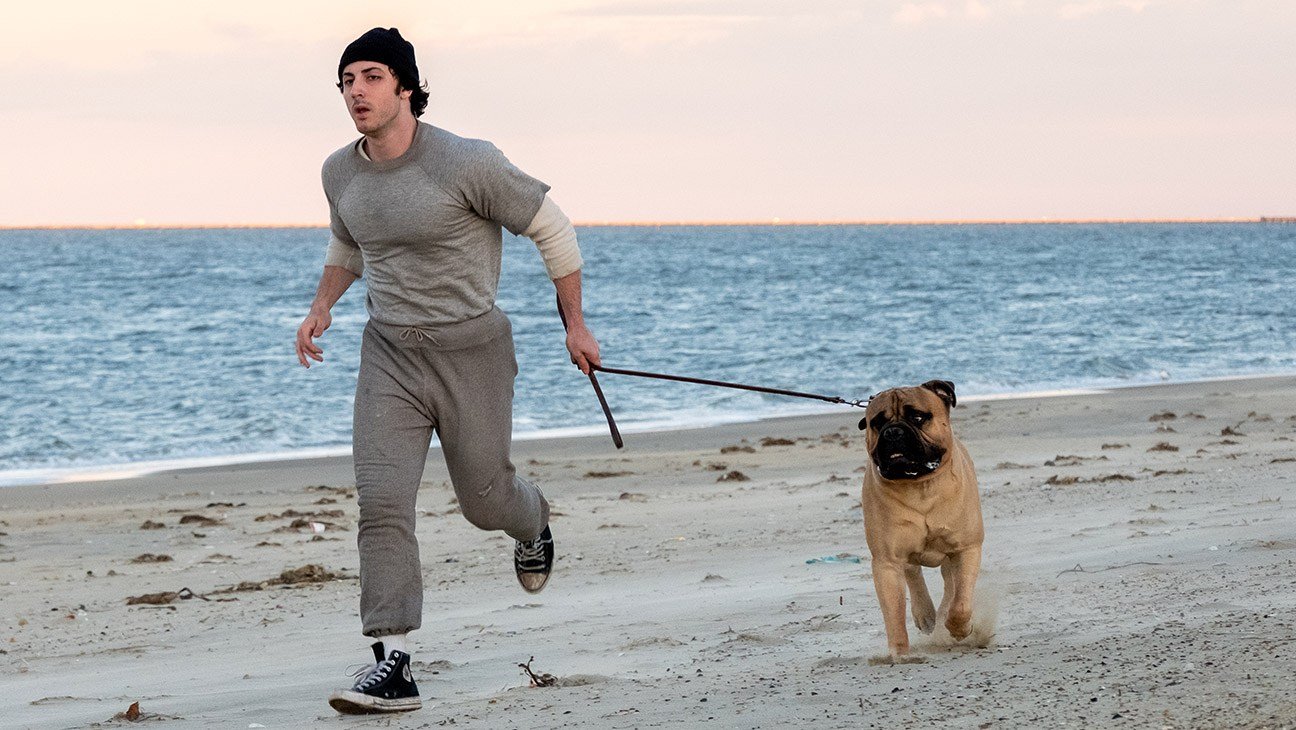
    The winning idea behind screenwriter Peter Gamble and director Peter Farrelly’s I Play Rocky was to retrace the making of a classic 20th century triumph-of-the-underdog saga by fashioning the behind-the-scenes story into its own rousing shot of underdog triumph. Sure, Rocky was the quintessential boomer movie — the top-grossing film of 1976 and an Oscar winner for best picture the following year. But pretty much every generation since has ensured that it remains an influential pop-culture landmark half a century later, its message of self-belief, resilience and determination against stiff odds still a resonant evocation of the American Dream. Who cares if it’s pure fiction?

    The strongest asset the new movie has in its corner is actor Anthony Ippolito, who had previously appeared as another member of the Hollywood star firmament, Al Pacino, in the miniseries The Offer, about the chaotic development and production of The Godfather. Having heard about the Rocky project before casting had even begun, Ippolito sent in a self-taped audition that convinced the filmmakers they had found their guy. That decision turns out to have been unquestionably right, potentially sparking debate as to whether he’s a better actor than Stallone. (Seriously, have you tried watching Stop! Or My Mom Will Shoot?)

    I Play Rocky

    The Bottom Line

    A big-hearted movie about moviemaking, if not an artful one.

    Venue: Toronto International Film Festival (Special Presentations)
    Release date: Friday, Nov. 6
    Cast: Anthony Ippolito, AnnaSophia Robb, Toby Kebbell, P.J. Byrne, Jay Duplass, Matt Dillon, Stephan James, Tracy Letts, Kiki Seto, Erik Palladino, Robert Morgan
    Director: Peter Farrelly
    Screenwriter: Peter Gamble

    Rated PG-13,
    2 hours 8 minutes

    Gamble’s script starts out in New York, where frustrated young actor Sylvester, then going by Mike, works a series of dead-end jobs while auditioning for the same thankless bit parts as thugs and cops. One of those jobs is ticket taker at a movie theater, where pretty blonde box office cashier Sasha (AnnaSophia Robb), who would become his first wife, catches his eye. 

    Stallone’s infamous early foray into softcore porn on a film quaintly titled The Party at Kitty and Stud’s — later re-released as Italian Stallion after Stallone had found fame — is given sanitized treatment as an economic necessity when he is kicked out of his grungy rooming house over unpaid rent and forced to sleep on the street.

    The film jumps ahead 16 months, when Sylvester and Sasha have relocated to Los Angeles, still struggling to stay afloat. A friendly customer at the restaurant where Sylvester works as a valet parking attendant gives him an “in” with his producer buddies Robert Chartoff (Toby Kebbell) and Irwin Winkler (P.J. Byrne). The meeting yields nothing concrete, but Sylvester slips his script for Paradise Alley into a slush pile on the way out. Chartoff and Winkler are impressed, though not quite enough to option it — the movie would resurface elsewhere two years later as Stallone’s directing debut, greenlit on the strength of his Rocky fame — but they invite him to come back and show them anything else he has written.

    Inspired after watching the 15-round Muhammed Ali-Chuck Wepner fight in a bar, Sylvester goes home fired up and cranks out the Rocky script in three-and-a-half days. Chartoff and Winkler immediately go for it and start tossing around possible names to star as the southpaw boxer of the title — Charles Bronson, Burt Reynolds, Clint Eastwood, Ryan O’Neal. But Sylvester rejects the deal, stating his one condition: “I play Rocky.”

    There are fun insights into the art of the moviemaking deal, first in Chartoff and Winkler’s negotiations with irascible Sandy Maddox (Tracy Letts), a composite studio exec, and next in a protracted back and forth with Stallone, as their offer to buy the script climbs to $360,000, an astronomical fee back then for a first-time screenwriter. But still Sylvester refuses to budge, insisting that he poured his heart and soul into the role and refusing to hand it off to another actor.

    While Gamble’s script isn’t exactly subtle about it, the themes of perseverance and force of will that are so essential to Rocky are traced back to Stallone’s unwavering commitment to a part that’s in his bones. Refusing to let the commercially promising project wither and die, the producers opt to halve the already meager $2 million budget agreed to by Maddox, allowing them to cast anyone they want.

    The extent to which Chartoff and Winkler are on board with Maddox’s contractual loophole is kept vague. But the budget and shooting schedule are so tight that any overage means Sylvester can be fired immediately and replaced by another actor. To help bring the film in on time, they hire director John G. Avildsen (Jay Duplass), known for his efficiency with fast, frugal shoots.

    Since every underdog story needs an antagonist trying to beat them down, Sasha believes the filmmakers are conspiring to sabotage her husband’s involvement by breaking him physically, pushing him to the point of exhaustion. On top of six hours a day of intensive boxing training, they have him run some 20 miles all over the city on the first day of location shooting in Philadelphia (New York was prohibitively expensive). A doctor advises him to stay off his feet for two weeks due to a pulled tendon. But Sylvester knows that would get him kicked off the film.

    The most iconic scenes from Rocky — notably the training montage; the sprint up the steps of the Philadelphia Museum of Art, Rocky raising his arms in triumph at the top; the bare-knuckle pounding at frozen sides of beef in a meat storage room; the ice rink interlude with Talia Shire (Kiki Seto) — are recreated with reverential respect for the original, some more effectively than others. But even when all this plays like visual karaoke, anyone with a soft spot for Rocky will likely find themselves hit by a wave of warm nostalgia.

    As he showed in his 2018 solo directing debut, Green Book, which won the best picture Oscar the following year, Farrelly is a populist director who feels no compulsion to challenge his audience. In that case, he offered a soft, conciliatory take on the racial divide, while in I Play Rocky, he doesn’t shy away from sentimental excess and even a slight shlockiness. The sainthood of Stallone here is shamelessly manipulative, but it works, restoring a likable everyman quality that’s been obscured by decades of celebrity baggage.

    There are stirring breakthrough moments built into the movie, such as a confrontation between Rocky and Mickey, the old-timer who wants to manage him, played by Burgess Meredith (Robert Morgan). Avildsen says the scene as written is not delivering, prompting Stallone to step away for five minutes and return with a semi-improvised reworking of it that socks across the emotional stakes.

    The action again jumps forward, to the premiere of Rocky, “ten months and one baby later.” The jittery artist too anxious to sit still and watch his work on opening night is a hoary trope of showbiz movies. But when the movie’s premiere audience stands and cheers in a moment of glory, clumps of the Toronto audience at I Play Rocky’s first screening did the same. Irrespective of Stallone’s political affiliations, this is a feel-good movie that should play equally well across red and blue states.

    Farrelly coaxes solid performances from the ensemble, particularly Robb, who makes Sasha the opposite of a mousy wife, lovingly supportive but also tough-talking and opinionated. Kebbel and Byrne are an amusing double-act as Chartoff and Winkler, the latter now 95 and still producing, recently with the Creed movies and Martin Scorsese’s The Irishman. Letts was born to play this kind of brutally blunt, ruthless-when-necessary businessman, and Duplass brings a kind of impish spark to Avildsen, making him seem a director who thrives under pressure.

    There are strong moments also with Matt Dillon as Sylvester’s verbally abusive father Frank, who became a hairdresser when his acting career failed to take off; and Stephan James, who has a hilarious intro scene as Carl Weathers, strutting into his audition with the natural authority of Apollo Creed, his muscles packed into a superfly 1970s denim outfit, with his bare torso oiled and glistening.

    The element that holds the movie together is Ippolito, who nails the garbled, rumbling diction, hangdog expression and hulking physicality of Stallone while never losing sight of his insecurities at this unproven point in his career. I Play Rocky repurposes most of its emotional uplift from the movie within the movie, but anyone with fond memories of the boxing drama — perhaps those who first saw it back in the day most of all — will feel a surge of elation from the moment Bill Conti’s theme music is folded in.

  • Wanna Be a Streaming Star? Twitch Thinks AI May Be Able to Help

    Wanna Be a Streaming Star? Twitch Thinks AI May Be Able to Help

    Entirely AI-generated streamers have racked up big audiences over the past few years. One such case, an account called Neuro-sama, could chat with viewers, make reaction videos, and play games all while streaming 24/7. It briefly became the most subscribed streamer in the world. Meanwhile, streams of Anthropic’s Claude Sonnet playing Game Boy Color classic Pokemon Red have also racked up healthy numbers.

    But even if you’re attached to doing things the old-fashioned way, AI may still be able to make you a better streamer, supposedly. Amazon-owned Twitch is now testing what it calls an AI Stream Coach. The Stream Coach will reportedly give you personalized feedback after every stream, including what it thinks you did well and what you can improve.

    The new tool will also recommend ways to better engage your community, learn about “Twitch culture,” and use monetization tools. The feature isn’t set for widescale roll-out anytime soon. Twitch says it will initially limit the testing to “a small group of streamers” to get optional feedback after each stream. The streaming platform also made it clear that Stream Coach will remain entirely optional, and that eligible streamers can opt out.

    “If we ever expand this beyond this small test, it would be opt-in,” read the announcement.

    If you’ve been selected for the test, Twitch says you can find more details and the opt-out setting in the Stream Coach tab in your Creator Dashboard.

    Recommended by Our Editors

    The new feature has already prompted some mixed responses from the community. One user posted “A. Robot. Starts. Telling. Me. How. To. Run. My. Own. Stream. Im. Gonna. Lose. It.”

    Twitch’s previous AI integrations have prompted criticism from the community. In August this year, the company confirmed that users’ data would be used for AI training. Over 16,000 users later voted in favour of a suggestion to make AI training opt-in rather than opt-out.

    About Our Expert

  • Alex Gibney Says He Got “Nothing Back” From Elon Musk When Reaching Out After Doc Legal Threat

    Alex Gibney Says He Got “Nothing Back” From Elon Musk When Reaching Out After Doc Legal Threat

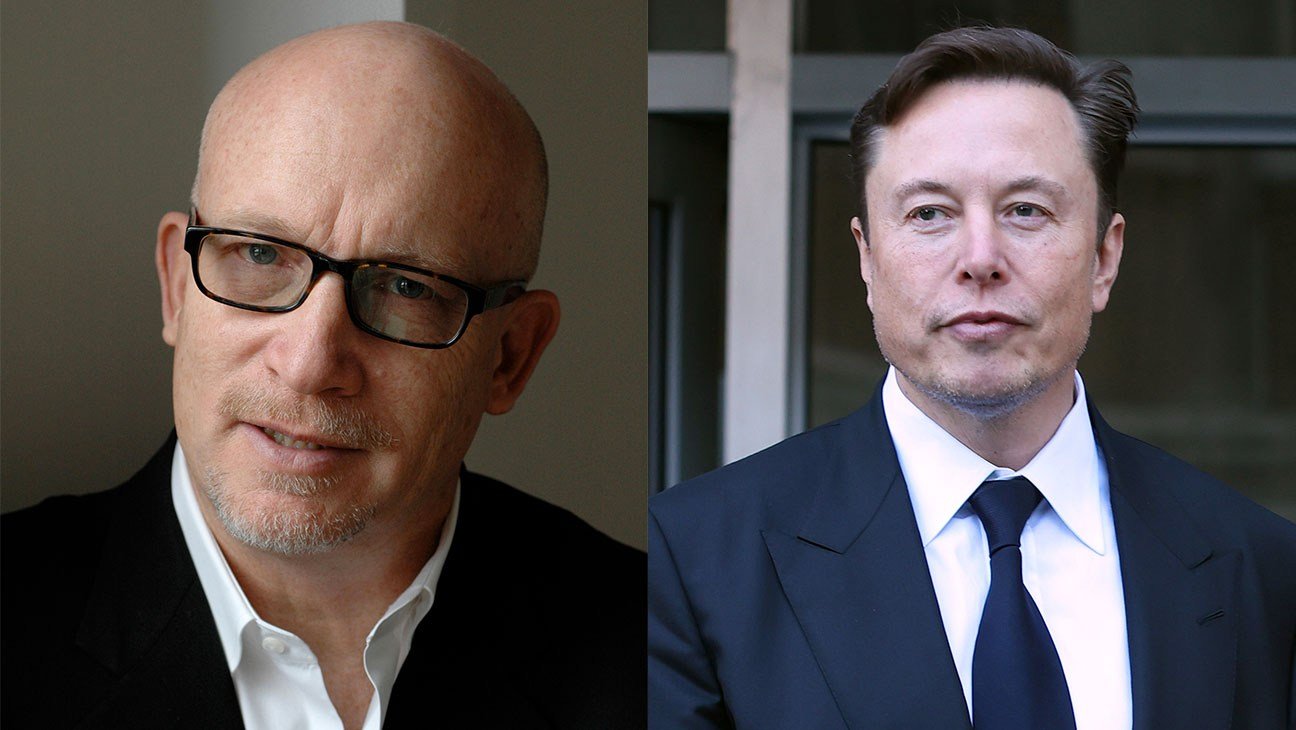
    Musk documentary filmmaker Alex Gibney responded Sunday to a documentary legal threat from Elon Musk.

    “I reached out immediately… But he clearly wasn’t interested in talking. We made so many formal outreaches to him, and with the exception of his remarks on Twitter, we received nothing back,” Gibney said during a keynote conversation in Toronto.

    The veteran doc maker said Musk was heavily lawyered and fact-checked, so he’s confident about the veracity of his account of the tech billionaire. But he told the TIFF audience he has “great concern” that Bleecker Street will be able to theatrically release the near-four hour documentary in October and HBO Max will be able to stream the film, as planned, before Warner Bros. Discovery is taken over Paramount as part of an ongoing merger and acquisition process.

    “I do worry about the storm clouds on the horizon and the fact that they (HBO) are in the midst of a takeover battle by Paramount. Larry Ellison, who is cited in the film, is one of Elon’s friends and one of the investors in his takeover of Twitter… But so far, so good,” Gibney said. “It’s a great concern and the consolidation of the media and also the aggressive editorial takeover of the media by the tech barons is really deeply concerning,” he added.

    Gibney’s comments follow the Musk film world premiering in Venice before shifting to TIFF for a North American bow on Monday. The world premiere was followed by attorney Alex Spiro, acting for Musk, sending Gibney and his production team a letter, alleging they had misrepresented facts about the tech mogul.

    And Musk himself blasted the film as a “boring … hit piece” on X. The letter — confirmed by The Hollywood Reporter — focuses on what Spiro says is an insinuation in the film that Musk used his Starlink satellites to somehow influence the 2024 presidential election to boost Donald Trump.

    Earlier, Jigsaw Productions issued a statement after receiving Spiro’s letter: “Alex Gibney’s films are consistently recognized for their in-depth, fact-driven explorations of influential figures and corporations, coupled with his bold and engaging directorial style. This approach has garnered him international praise, an Academy Award among other accolades, and a reputation that The Times of London recently lauded as the ‘gold standard for fearless journalistic integrity.’ The right to engage in open debate and fact-based examinations of powerful public figures is protected by the First Amendment — something that should be recognized and defended by all Americans, including the associates of Elon Musk, who has proclaimed himself to be a ‘free speech absolutist.’”

    Musk is Gibney’s most recent film and follows a career making documentaries that investigate powerful institutions and individuals. In Musk, Gibney looks at the tech mogul behind electric cars, space travel, social media, AI, and more.

    During his keynote, Gibney discussed Elon Musk’s infamous DOGE purge and its impact on the independence and financing of USAID, the foreign aid agency. “When you’re into hundreds of thousands of people who are killed by performative cruelty, it’s really a staggering moral stain on Elon Musk and the federal government,” he argued.

    Gibney also discussed Musk’s use of stock manipulation, as well as securing government handouts and energy credits, as part of his exploitation of financial markets. “You’ve got a con artist who has put in the White House another con artist, and they just keep running bigger and bigger cons, because there’s no Department of Justice or FBI to tell them to do otherwise,” he told the TIFF audience.

    Gibney is also a producer of Edward Said: Between Worlds, a film about the Palestinian scholar, that is also screening at the Toronto Film Festival. “I just find him such a compelling public intellectual at a time when there’s a dearth of public intellectuals who engagement with such a sense of humanism, and obviously this is one of the great global scandals of this moment, the genocide in Gaza and the horrific things that are happening on the West Bank,” he said.

    Gibney’s other films include the Oscar-winning Taxi to the Dark Side, The Last Gladiators, Mea Maxima Culpa: Silence in the House of God, The Armstrong Lie and Citizen K.

  • ‘On Behalf of My Son’ Review: A Strained Brazilian Drama About a Mother’s Apology Tour

    ‘On Behalf of My Son’ Review: A Strained Brazilian Drama About a Mother’s Apology Tour

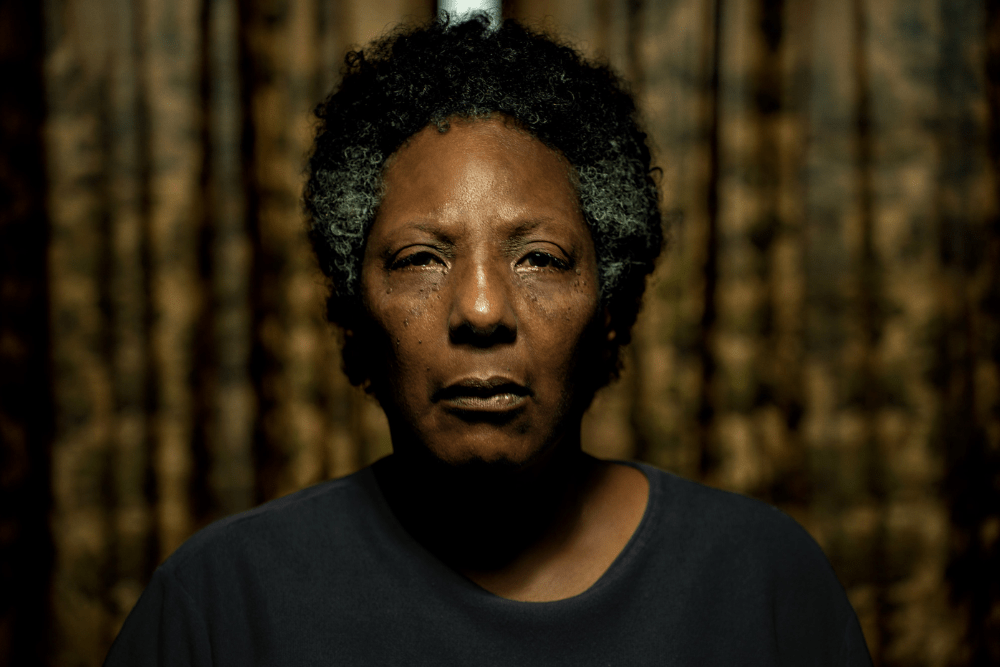
    A Brazilian drama with a powerful premise but labored execution, Gabriel Martins’ “On Behalf of My Son” follows the ripple effects of a tragic bus accident through the eyes of the driver’s mother, Vicentina (Rejane Faria). As she pillories herself with an apology tour, family members of the other victims veer in and out of the spotlight, offering more potentially affecting moments which — by structural necessity — quickly fade from view. Instead, the dramatic focus pivots entirely around Faria’s performance, which unfortunately works against the movie, more often than not.

    Opening with unassuming portraits of passengers on their commute in the city of Belo Horizonte, “On Behalf of My Son” begins with an enticing visual setup for individual stories that don’t fully materialize. In the moment, however, Martins imbues tremendous intrigue through snippets of the seemingly distracted middle-aged driver, Wesley (Renato Novaes), and eventually, through the crash itself. Its presentation is shocking and harrowing even if you know it’s coming.

    The film is at its most vigorous here, when its possibilities lie ahead. In the few moments we see Vicentina before she’s told of this tragedy, the aged character hobbles around on her crutch and performs unassuming household tasks with a captivating, disaffected demeanor, as she curtly cuts off an incoming phone call (the dramatic irony of which only the viewer is aware). Something’s clearly on her mind, and we never need to know exactly what in order for her to feel familiar.

    Once she’s told of the tragedy by her younger neighbor Joana (Maíra Azevedo), the routine of having to answer questions and identify her son’s remains allows Faria to shift quickly into thorny territory, promising a film that lives within the rankling discomfort of loss. Wesley’s twin brother (also played by Novaes) briefly comes to visit, practically conjuring Wesley’s ghost as he wanders around the house. However, gossipy TV news stories speculate on Wesley’s intent and state of mind, foisting doubt upon the mourning matriarch as an intimate mystery fades into view. Her way of dealing with the ensuing guilt is to track down the families of the other victims and apologize on her son’s behalf, which, on paper, makes for a fascinating approach to grief, but proves rote and repetitive in execution.

    Across nearly two-and-a-half hours, the camera follows Vicentina — from an observant distance when she makes arduous journeys between neighborhoods, and then in closeup when she arrives — as she meets with family members one by one. Few of these sit-downs play out with meaningful differences until late into the runtime, during which Faria is shouldered with dramatic heavy lifting that doesn’t quite gel with her approach. She’s clearly adept at summoning despair when required, but behind the character’s rehearsed apology (which we hear spoken ad nauseam) is a near-identical approach to emoting that proves troublesome when repeated back to back. It’s a performance of loud thoughts writ large across her face, reeled in by pursed lips, resulting in the awkward effect of stilted emotions struggling to be expressed, when the film ought to be at its most volatile.

    A handful of those she visits offer riveting work in return — like Fábio Leal as a grieving, battered lover who harbors complicated feelings about his fiancé’s death — but Vicentina becomes a mere interloper to these lives, and they seldom affect her own sense of self, or her sense of contrition, in the process. Those who reject or question her motives are pushed far into the movie’s gradual, calculated unspooling, gesturing at thorny complexities which are never allowed to arise.

    The recurring appearance of a mysterious friend of Wesley’s, a death-metal frontman with dwarfism named Fred (a heartbreaking Giovanni Venturini), becomes vital to Vicentina understanding that he lived a life of unexpected interests and frustrations. But before these doubts and mysteries can be folded into her worldview, the focus pivots elsewhere, never allowing even dead ends and unanswered questions to emotionally linger, before the film wraps around to questions of how Vicentina is to live and cope going forward.

    Martins has a deft eye for place and environment. Many of the victims are poor, and his camera’s tour of Black Brazilian lives hints at a multifaceted cultural portrait not usually contained within the Brazilian cinema that takes hold in North America. (At least, not since “City of God.”) However, the fluidity of his exploration is hardened early on, thanks to a tedious focus on hitting the same beats with little variety or escalation. It is, at best, intriguing from a safe distance, where its detailed, rundown textures can tell you more about its characters’ struggles than up-close depiction of their inner lives ever does.

  • Anthropic CEO Pushes to ‘Slow the Pace’ of AI Development, Other CEOs Fall in Line

    Anthropic CEO Pushes to ‘Slow the Pace’ of AI Development, Other CEOs Fall in Line

    It’s been an eventful week for Anthropic. Following a viral tweet from a former employee who accused the company of “gambling with lives” over the speed of developing frontier models, CEO Dario Amodei has called on all major US AI firms to “slow the pace” of the development of technology. And many of the biggest AI CEOs have chimed in to agree with him.

    Amodei argues that a “coordinated pacing strategy” would allow companies to focus even more resources on alignment, testing, and evaluating models as they develop, as well as on interpretability (understanding what’s actually going on inside an AI model).

    The CEO said Anthropic “is unilaterally committing” to a three-stage plan for AI firms. The first step will involve adding third-party embedded evaluators to AI firms, who will use their employee-like access to monitor training, deployment, and operational and safety practices in place at those firms. For example, these external reviewers would have the right to independently publish key findings on risk levels, incidents, practices, and the access they did or didn’t receive.

    The second step, which Amodei calls Democratic Coordination, involves top AI firms voluntarily working together to set safety standards and to limit the pace of development, with the US government mediating, or at least enabling, these discussions due to antitrust concerns.

    Global Coordination, the third step, involves making deals with foreign countries to limit the most potentially dangerous use cases, such as making biochemical weapons. Higher levels of these deals could involve adding a “speed limit” to development, creating a global standards body, or even a total pause.

    Amodei’s post is notable, though perhaps not unprecedented. We’ve seen lengthy posts about the future of AI from other CEOs, too. And tech companies of all stripes have played the regulatory dance with Congress and the White House for years. In 2018, Meta CEO Mark Zuckerberg pushed for “the right regulation.” But the company and Google routinely turn around and spend millions lobbying to kill any resulting bills.

    According to Amodei, “the most effective method of pacing is via regulation that targets all US frontier AI companies, as that covers even those who are unwilling to cooperate voluntarily.”

    The Gang’s All Here

    Anthropic’s stand against the Pentagon notwithstanding, few companies want to be the odd ones out, particularly if that will result in “the AI is going to kill us” headlines. That’s probably why you saw rival AI firms get in line after Amodei published his post.

    OpenAI CEO Sam Altman

    OpenAI CEO Sam Altman, who has a rather frosty relationship with Amodei, popped up on X to say, “I agree with Dario that we need to pace the frontier. This has been a primary topic of discussions we’ve had at OpenAI in recent weeks. Committing to having independent evaluators with employee-like access is a great idea, and we will do the same. We’ll have more to share soon.”

    One point of concern for Amodei was OpenAI agents escaping to the open internet and attacking Hugging Face. “My worry [is] that in 6-12 months, such a swarm could be capable of taking over the entire internet with a persistent botnet (potentially causing hundreds of billions of dollars in damage), and that the scale of damage would continue to increase from there if AI becomes more powerful without the necessary guardrails,” Amodei wrote, though he didn’t put all the blame on OpenAI. “Incidents have happened across the industry, including at Anthropic, and I believe it’s incumbent on every frontier AI company to act as if OAI-HF had happened to them.”

    SpaceX CEO Elon Musk

    SpaceX CEO Elon Musk, meanwhile, who was locked in a long legal battle with OpenAI and a public spat with Altman, said “Dario is right” in a post on X.

    Google DeepMind co-founder Demis Hassabis

    Google DeepMind co-founder Demis Hassabis added, “Dario’s essay points towards the right path forward. The details need working through, but the direction is correct for meeting this critical moment. This is also why we recently put out our proposal for an industry-wide standards body for frontier AI.”

    Microsoft CEO Satya Nadella

    Microsoft CEO Satya Nadella took a more measured approach. “For firms, it’s imperative that they retain full control over their unique and tacit knowledge,” he tweeted today. “Every organization should be able to build its own continuous learning loop/hill climbing machine, without becoming dependent on any one model provider, and have the ability to embed its own knowledge into models and weights they control.

    “So, in this context, we welcome the research, focus, and deliberate pacing needed to get alignment right as the design goal,” he continued. “We also welcome ideas like ’embedded evaluators’ and the broader efforts to develop the mechanisms to make this more than just talk.”

    Nadella stressed that this shouldn’t be “controlled by a handful of entities, but must have broad representation across the ecosystem, countries, and fields, including academia.”

    Recommended by Our Editors

    ‘A Start, But Not Enough’

    Not everyone agrees. Former Stability AI CEO Emad Mostaque expressed doubts about whether the proposed neutral evaluators could keep up with “swarms” of AI agents, and questioned how such a project could ensure they were truly impartial.

    Earlier this month, Sen. Bernie Sanders (I-Vt.) proposed legislation that would “permanently ban the development and deployment of superintelligent AI and temporarily pause advanced AI development until a federal regulator has established safety rules.”

    Following the posts from Amodei, Musk, and Altman, Sen. Sanders said their promises are “a start, but it’s not enough.”

    “When you are racing towards a cliff, you don’t just ease up on the gas pedal,” Sanders tweeted. “You hit the brakes. When the future of humanity is at stake, we need a PAUSE on advanced AI development and a ban on artificial superintelligence — an AI mind smarter than any human and capable of operating independently beyond our control.”

    Sanders pushed President Trump and Chinese President Xi Jinping to “negotiate a treaty to pause AI and ban superintelligence” at their upcoming AI summit, “before it is too late.”

    In Ireland this week, Trump argued that people are “bringing up things that won’t happen,” and said he wants the US to win the AI race over China.

    About Our Experts

  • Why Jon Hamm Says ‘American Hostage’ Feels “Very Relevant” to “Current Political Climate”

    Why Jon Hamm Says ‘American Hostage’ Feels “Very Relevant” to “Current Political Climate”

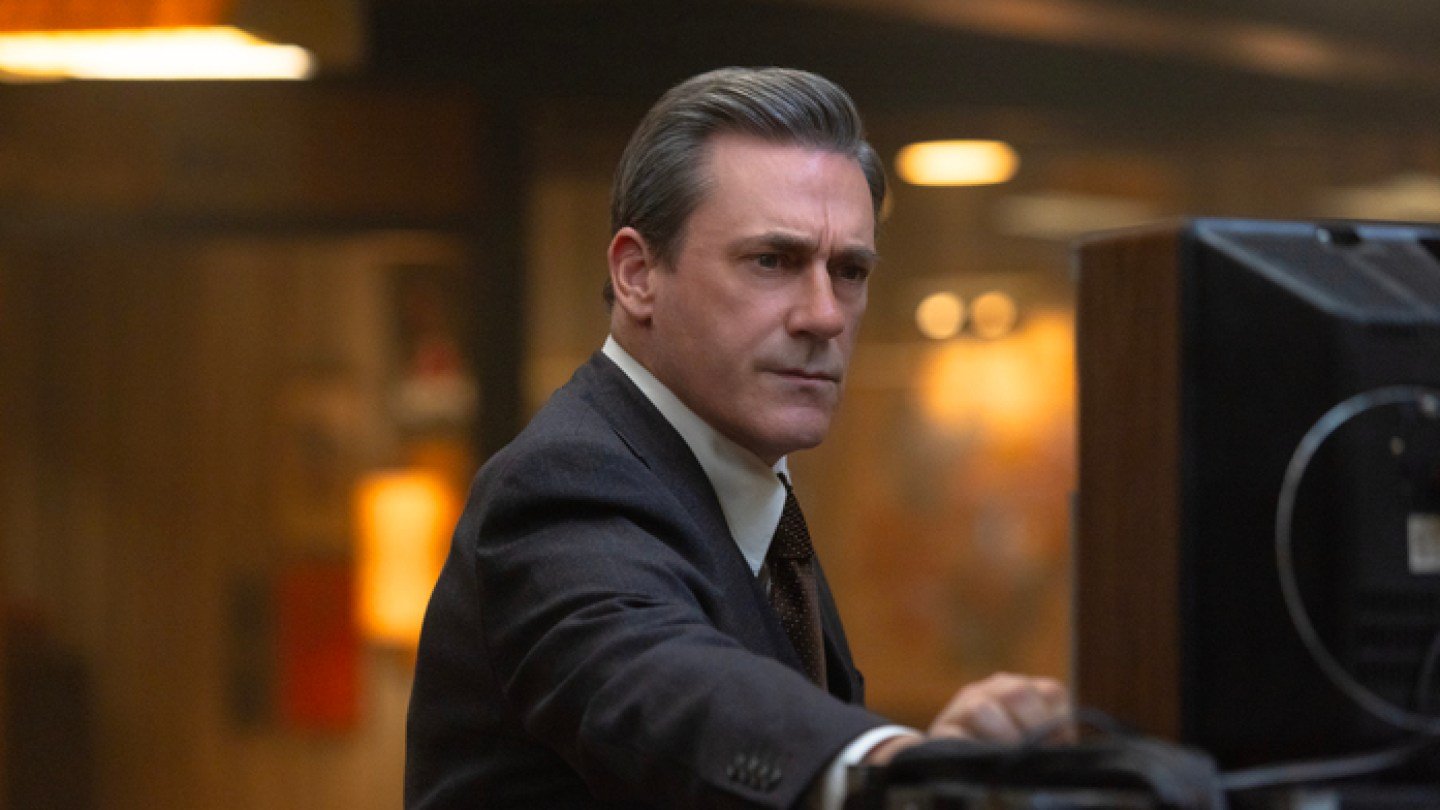
    In Jon Hamm’s new series, American Hostage, he stars as a local news broadcaster who finds himself in the middle of a hostage situation when a disgruntled borrower kidnaps a mortgage broker.

    The 1977 true crime story, which was chronicled on a narrative podcast of the same name also starring Hamm, is decades old, but its political themes closely mirror today’s world, Hamm told The Hollywood Reporter on Sunday.

    “ I think that there’s some thematic devices that resonate in the culture politically now,” Hamm said at The Hollywood Reporter’s Studio at 1 Hotel during TIFF, presented by sponsor Canada Goose. “I think the idea of a certain segment of the population being overlooked, or feeling overlooked or feeling under-addressed, in their wants and needs and desires. The show is called American Hostage. We fought very hard for that title because we thought it really spoke to the story on several occasions. This man obviously takes a person hostage, but is he in fact hostage to his American Dream?” 

    “There’s a lot of resonance to the title,” the Emmy winner added. “I think that’s why the story, for whatever reason, feels — even though it’s a 50-year-old true story — it feels very relevant, given the current political climate.” 

    Co-created by Shawn Ryan and Eileen Myers, American Hostage is described by Sony as a “psychological thriller that tells the harrowing true story of Fred Heckman, a beloved Indianapolis radio reporter who is thrust into the middle of a life-or-death crisis when hostage-taker, Tony Kiritsis, demands to be interviewed on his popular radio news program.”

    The news story on which the series is based made headlines at the time and reflected a changing media landscape, where live local stories made national news. For Hamm, the local news story he remembers as being the most significant is O.J. Simpson’s infamous police chase in June 1994.   

    “ I think probably most people’s first experience of any of that was the O.J. situation because it happened in the middle of a huge sporting event,” Hamm said. “It was national. Most of us live in L.A., and L.A. had a car chase kind of every day, but it was very local. That became a very daily kind of thing in the ’90s. Some helicopter would chase some car going somewhere. The original one was most likely the O.J. situation.” 

    “If you go back in time, this [1977 Tony Kiritsis case] is one of the first times we kind of see a local story explode nationally,” Hamm continued. “Another similar thing that happened was the Patty Hearst situation, where when they raided the house down in South Central Los Angeles. … It was the beginning of where we are now. I think the salacious part of this story — through no fault of its own — [it became] this life or death story. [It’s] kind of where we have landed now, where everything is maximized for the salaciousness of its content.” 

    American Hostage also shows how audiences previously trusted the information delivered by their news organizations, in stark contrast to today where trust in the media remains at record lows, according to data from Gallup. Ryan emphasized that the “journalistic aspect to the show” is “very pertinent today.”   

    “Right now, we live in a very fractured journalist world,” Ryan explained. “You can kind of choose your news more than the news really informing you these days. Back then, I’m old enough to remember what it was like for journalists to be trusted and for the news to be something that was sacred.”

    Ryan added that Hamm’s character is “stuck in a very precarious position” in the series because he’s a journalist “who has invested decades into building his reputation as telling the truth … and now he’s also expected to be a hostage negotiator and to try to save two lives.”  

    American Hostage is scheduled to premiere on MGM+ on Sept. 20. 

  • Harry Styles reveals Argentinians CA7RIEL & Paco Amoroso are joining his tour

    CA7RIEL & Paco Amoroso are on their Free Spirits World Tour until November, but they’ll be hitting the state again in 2027 for one of the biggest milestones of their career. On Thursday, Harry Styles dropped the dates for his Together, Together 2027 tour, and fans quickly noticed the Argentine duo’s name. 

    CA7RIEL and Paco Amoroso are one of the most unique acts in music right now© Getty
    CA7RIEL and Paco Amoroso are one of the most unique acts in music right now

    Styles will be in six cities on the North American leg of the global stadium tour before heading to Europe. CA7RIEL & Paco Amoroso will be joining them on April 9 and April 10 for their shows in Dallas, Texas, at AT&T Stadium. 

    Harry Styles is hitting the road with the help of some friends© Getty
    Harry Styles is hitting the road with the help of some friends
    You may also like

    Continue reading

    Who are CA7RIEL & Paco Amoroso?

    The duo met in first grade after sitting next to eachother by chance © Redferns
    The duo met in first grade after sitting next to eachother by chance

    The duo, often mistaken for brothers due to their shared surname, consists of Catriel Guerreiro (aka Ca7riel) and Ulises Guerriero (aka Paco Amoroso). They met way back in primary school when they were six.

    Catriel said in an interview with Arte that they sat next to each other. “It was first grade. Just one of those f***ing coincidences in life; we ended up sitting next to each other,” he explained.

    Since the beginning, people thought they were siblings, and they started trolling together immediately. “The teacher was taking attendance and said, ‘Okay, Ulises Guerriero?’ He raised his hand. ‘Catriel Guerreiro.’ I raised my hand. “Oh, are you brothers?” she asked. And we said yes,” he said.

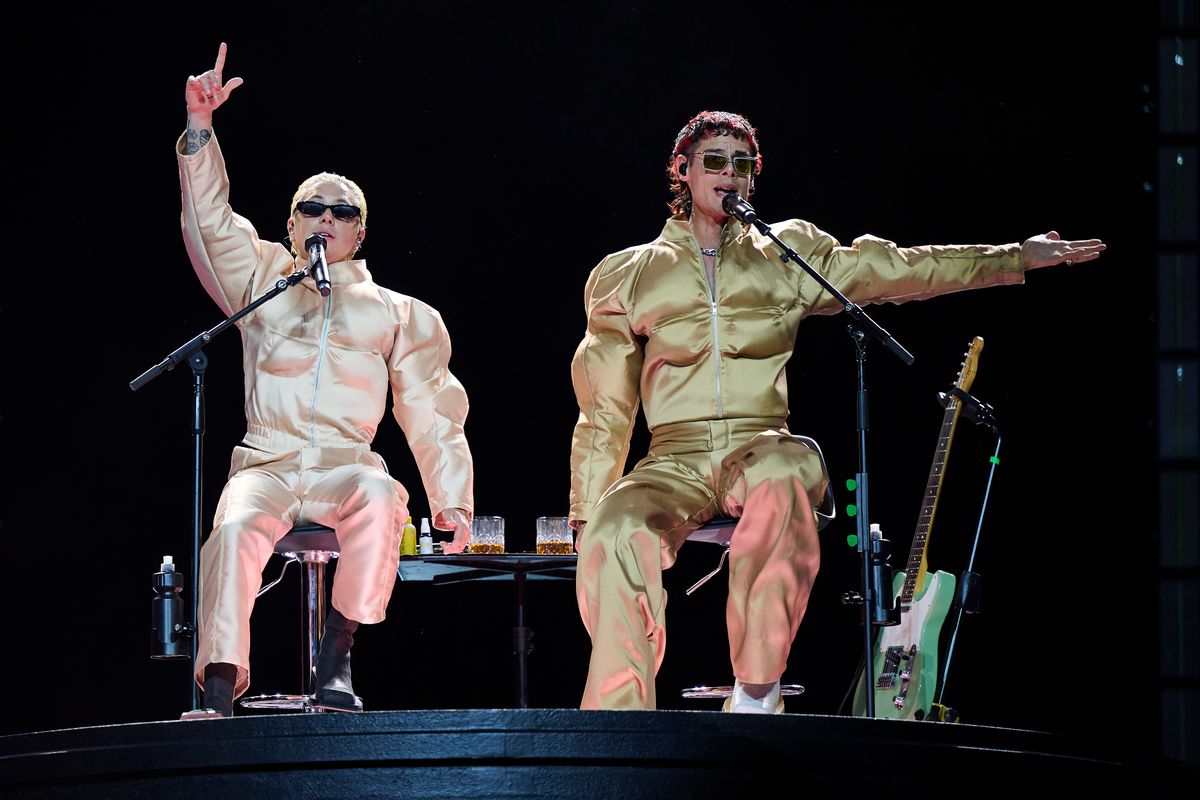
    CA7RIEL & Paco Amoroso performs on stage at Movistar Arena on May 28, 2025 in Madrid, Spain© Getty
    CA7RIEL & Paco Amoroso performs on stage at Movistar Arena on May 28, 2025 in Madrid, Spain

    They sat in music workshops together, one strumming guitar, the other violin, eventually forming a rock band called Astor y las Flores de Marte in 2010. They officially became a duo in 2018, shifting into the experimental-trap/funk/hip-hop/pop world, and are among the first wave of Urban musicians in Argentina. 

    Now, they’ve practically become blood. “We’re not brothers, but we’re basically brothers,” Catriel told Arte. 

    They dropped their debut studio album, Baño María, in April 2024. But everything changed when they lit up the international scene with their viral Tiny Desk session, released on October 4, 2024, which has garnered over 55 million views at the time of this publication. 

    Riding the wave of success, they went on tour, opened for Kendrick Lamar, and have played at the world’s biggest music festivals, venues, and stadiums.

    LAS VEGAS, NEVADA - NOVEMBER 13: EDITORIAL USE ONLY. (L-R) Ca7riel and Paco Amoroso pose in the press room with the Best Pop Song for "El Día del Amigo", Best Alternative Song for "#Tetas", Best Alternative Music Album for "Papota", Best Short-Form Music Video for "#Tetas" and Best Long-Form Music Video for "Papota" during The 26th Annual Latin GRAMMY Awards at MGM Grand Garden Arena on November 13, 2025 in Las Vegas, Nevada. (Photo by Arturo Holmes/Getty Images)
    The artists won 5 Latin GRAMMYS

    In 2025, they were the stars of the show at the Latin GRAMMYS. Tied with Mexican legend Edgar Barrera for the second most nominations after Bad Bunny, they won 5 awards at the Latin GRAMMY Premiere Ceremony:  Best Alternative Song, Best Long Form Music Video, Best Alternative Music Album, Best Short Form Music Video, and Best Pop Song. They also made out.  

    Paco Amoroso and CA7RIEL© Getty
    They won their first GRAMMY in February

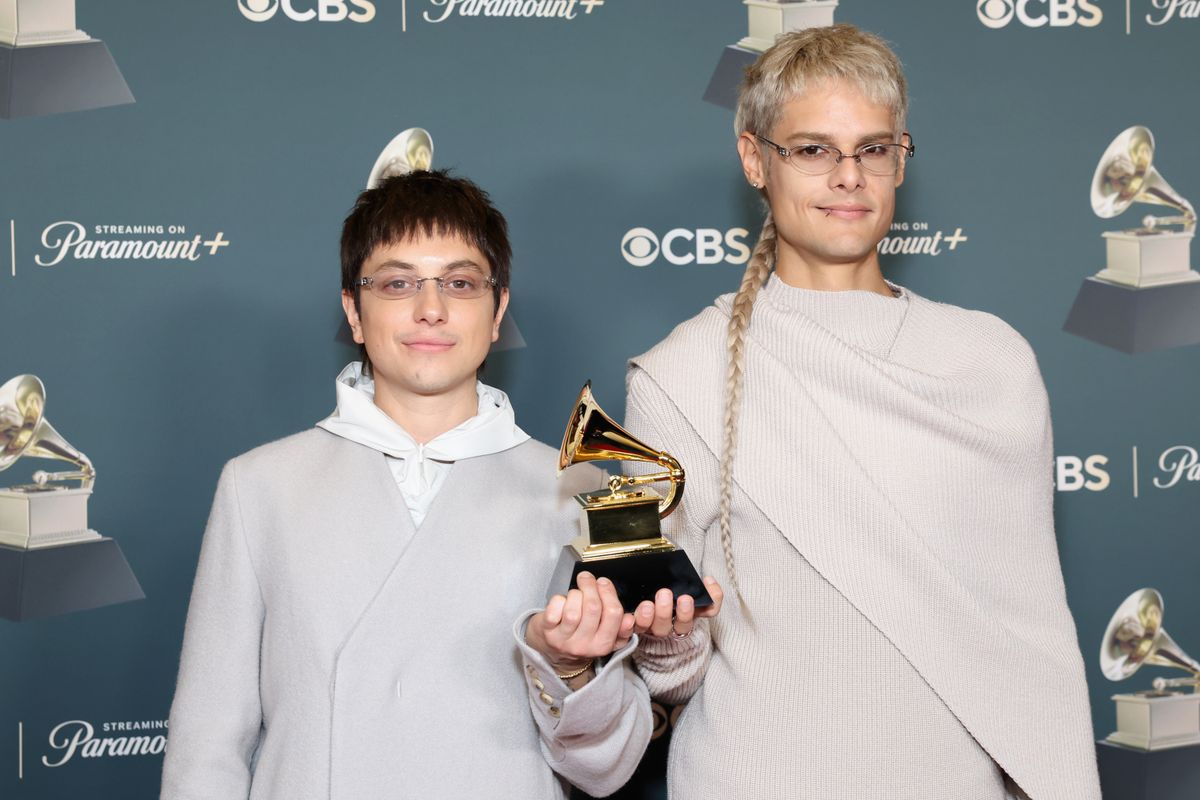
    Then, they won their first Grammy Award for Best Latin Rock or Alternative Album for their EP PAPOTA at the 68th Grammy Awards on February 1, 2026.

  • Ella Langley’s ‘Dandelion’ Album Returns to No. 1 Spot on Billboard 200 for First Time in Four Months, So ‘Choosin’ Texas’ Won’t Get Lonely at the Top

    Ella Langley’s ‘Dandelion’ Album Returns to No. 1 Spot on Billboard 200 for First Time in Four Months, So ‘Choosin’ Texas’ Won’t Get Lonely at the Top

    Ella Langely’s fans are choosing her “Dandelion” album as a complete piece of work, and not just staying entirely trained on her long-running “Choosin’ Texas” smash. “Dandelion” has returned to the No. 1 spot on the Billboard 200 album chart for a third non-consecutive week at the top. Its previous stay at No. 1 was contained to the first two weeks it was out, in late April , but the album has rarely been too far from the summit in the intervening four and a half months.

    With the re-ascent of “Dandelion” on the album chart, probably no one needs to be told that this means Langley is again topping both of Billboard’s primary charts, as the indomitable “Choosin’ Texas” remained at No. 1 on the most recent Hot 100 singles chart to be released. The next Hot 100 will be made public on Monday, and chances are good that “Texas” will still be on top, which would mark the song’s 22nd week at No. 1. If that turns out to be the case, Langley will have tied Mariah Carey’s all-time record of 22 weeks for “All I Want for Christmas is You” and be one week away from breaking the record.

    “Dandelion” benefited from the ongoing hunger for all things Langley, but also from a Labor Day holiday period in which there were no huge albums debuting. It reached the summit with 67,000 equivalent album units. That’s pretty much par for the recent course for Langley’s album; that figure was down just 1% from the previous week for her. But as Billboard pointed out, 67,000 was the lowest number for a No. 1 album in more than a year. (The last time an album was No. 1 with fewer units was in May 2025, when SZA’s “SOS” topped the chart with just 52,000.)

    The only new album to make the top 10 was Adela‘s first full-length alum, “Prima,” which bowed at No. 4 with 56,000. The numbers for Adela were tilted toward full-album sales, with 31,000; streaming (SEA) units were good for another 25,000 units, on the strength of 25.94 million on-demand streams. The album debuted at No. 1 on the album sales chart and No. 14 on the streaming albums chart.

    Beyoncé’s “B’Day” virtually counted as a new album, reentering the chart for the first time in 18 years due to a 20th anniversary deluxe reissue. It reentered at No. 8 with 38,000 units.

    Rounding out the top 10: Olivia Rodrigo, still riding high at No. 2 (with 64,000 units, down just 4%), followed by Morgan Wallen at No. 3, Noah Kahan at No. 5, Ariana Grande at No. 6 (up nine spots thanks to a deluxe edition with live tracks coming out), Rod Wave at No. 7 (down six spots and 57% after debuting at No. 1 a week ago), Drake at No. 9 and Olivia Dean at No. 10.

  • Is Clarity dead? A vibes-based analysis: State of Crypto

    Is Clarity dead? A vibes-based analysis: State of Crypto

    And the vibes aren’t great. A new text came out last week with changes sought by Democrats. But the key issue — ethics — remains in limbo. The cloture vote will take place seven weeks before the midterm election. As this newsletter has noted before, the issues remaining seem resolvable. The real key issue is politics, as has been the case for much of this summer. The closer lawmakers get to this election, the less likely they are to play nicely on this type of issue.

    According to industry participants this past week, the rough consensus is that anything can happen, really. There should be a vote on Tuesday, but it may get pushed if there’s a last-minute breakthrough in negotiations. There are, as of Friday afternoon, not 60 votes for the bill but negotiations are expected to stretch through the weekend and that may change.

    But overall, industry participants seem pessimistic that the bill will advance.

    The newer, growing narrative is that the Securities and Exchange Commission and Commodity Futures Trading Commission can fill some of the regulatory gaps with rulemaking. But this too, may be fraught with risk.

    The key issue is that interest groups will almost certainly sue the agencies, regardless of what they do, and that litigation can stretch out any rulemaking process out for months. The litigation doesn’t even need to be successful — it just needs to drag out through Jan. 20, 2029, when the next president will be inaugurated.