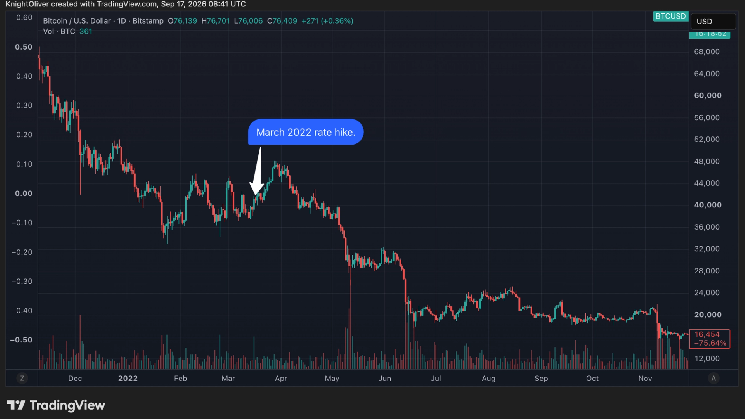
Following the initial March 2022 hike, bitcoin rallied roughly 18% over the following 12 days before subsequently falling around 50%. That raises the possibility that another relief rally could give way to a prolonged bear market. However, one comparable cycle offers limited evidence, and bitcoin’s decline in 2022 coincided with losses across equities, bonds and metals, alongside turmoil within the crypto industry.
The reasons the Fed hiked rates on Wednesday was due to inflation, annual headline inflation has remained above 2% for over five years, although core inflation, which excludes food and energy, has eased to 2.4%, its lowest level in five years. So progress is being made.
However, that progress has now been faced with an energy shock. Geopolitical tensions in the Middle East have pushed both WTI and Brent crude well above $100 a barrel, threatening to reignite inflation and squeeze growth. Global bond yields have also climbed, with the U.S. 10-year Treasury yield reaching 5%, adding further pressure to financial conditions and risk assets.
Bitcoin’s bear market is approaching the one-year mark. Could a new rate-hiking cycle prolong the downturn?
Key House supporters of a federal film & TV incentive are establishing a congressional caucus, as work continues on legislation establishing the nationwide production credit.
The Congressional American Film & TV Production Caucus will “work to revitalize, strengthen, and expand film production across the United States,” per an announcement on Wednesday.
The founding members of the caucus include Rep. Brian Jack (R-GA), Rep. Laura Friedman (D-CA), Rep. Nathaniel Moran (R-TX), Rep. Linda Sánchez (D-CA), Rep. Nicole Malliotakis (R-NY) and Rep. Tom Suozzi (D-NY).
The organizers cited the loss of more than 100,000 film and television production jobs since a 2022 peak, and a fall in production spending by 20% while such output grew in the U.K. and Eastern Europe.
They cited the lure of subsidies offered by foreign countries, and argued that states are unable to compete on their own.
Supporters of an incentive are emphasizing support on both sides of the aisle.
President Donald Trump recently announced his support for a federal incentive, and there are hopes among supporters that will generate momentum for congressional action when Congress returns after the midterms.
Moran, Sánchez, Malliotakis and Suozzi are members of the Ways & Means Committee, which writes tax law. Jack serves on the Rules Committee, essential to getting a bill to the floor.
Friedman, a former film producer, said in a statement, “Film and television work is leaving this country because 65 other nations decided to compete for these hundreds of thousands of good-paying jobs. A national film tax credit is how we bring that work home, and this caucus is a key step to build support for it.”
Moran said, “Every production that sets up here ripples out, supporting the businesses around it and pumping money into local communities. We need to keep that going and keep American storytelling in America.”
Supporters have not given any timeline for introduction of legislation, but it could be in the coming weeks. Friedman and Jack appeared in a press call on Tuesday organized by the Motion Picture Association to outline the urgency for a production credit.
After fencing went up around the Kennedy Center and the main building was closed to the public, a House lawmaker on Thursday called for an emergency hearing, warning that the shutdown violates a judge’s order.
The board, dominated by allies of President Donald Trump, voted Tuesday for a resolution to immediately close the main building of the complex, citing safety issues while the center has been working on plans for a large-scale renovation. The resolution also pointed to a recent incident in which a portion of the ceiling collapsed to the floor following a recent rainstorm.
But attorneys for Rep. Joyce Beatty (D-OH), an ex officio member of the center board who has been challenging the closure plan, noted that U.S. District Judge Christopher Cooper’s order prohibits a shutdown until he lifted a preliminary injunction, something that he has yet to do. The judge has ruled that renovations could proceed, but a closure could come only after the board made a fuller analysis of its impact.
Per a court filing, a staffer at a law firm representing Beatty sought to enter the main building on Wednesday but was advised by security that it was closed to the public.
Cooper has given the center until Thursday morning to respond to Beatty’s motion for an emergency hearing.
The judge on Tuesday prohibited the board’s latest plan to return Trump’s name to the façade of the complex or to designate its grounds for him. Trump, who serves as the center’s chair, posted on Truth Social that they would seek an expedited appeal, but that the renovation would not proceed if courts rule against the naming plan.
Beatty has said that she is not opposed to a renovation, but previous plans were to keep the center open as the rehab was carried out in phases.
US-based cryptocurrency exchange Coinbase has made noteworthy announcements for two new altcoins.
In its initial announcement, Coinbase Markets stated that the BLUE $CHIP (BLUECHIP) and Ritual (RITUAL) tokens have been added to the exchange’s listing roadmap.
However, just hours after this announcement, Coinbase released another announcement regarding BLUECHIP, stating that the token would be available for spot trading.
According to the exchange’s statement, spot trading for BLUE $CHIP (BLUECHIP) began a few hours ago.
Coinbase also stated that BLUECHIP will be accessible through Coinbase.com, the Coinbase mobile app, and Coinbase Advanced, while institutional investors will be able to access the asset through Coinbase Exchange.
Thus, BLUECHIP became one of the assets to receive a spot listing announcement just hours after being added to Coinbase’s listing roadmap.
No Transaction Announcement Yet for Ritual (RITUAL)
On the other hand, Ritual (RITUAL) has also been added to Coinbase’s listing roadmap, but so far, there has been no separate announcement regarding when trading will begin for RITUAL, as was the case with BLUECHIP.
Coinbase’s listing roadmap is used to publicly share the assets that the exchange has decided to list but for which trading has not yet begun.
The exchange states that sufficient market maker support and the necessary technical infrastructure must be in place before an asset can be launched for trading. Therefore, the launch date for an asset included in the roadmap is announced separately, and in some cases, the process may be postponed or changed.
In this context, investors are now watching for a possible spot trading announcement for Ritual (RITUAL) from Coinbase.
The biggest risk in a crypto presale purchase is often a fake link or unsafe transaction, not the wallet itself. A copied website can look real, and a rushed approval can give a malicious contract access that a buyer never intended to grant.
Trust Wallet users should verify the official website, contract details, and transaction request before funding MemeToro or any other presale.
Start With The Official Website, Not A Social Link
Open the MemeToro website by typing or bookmarking the official address. Do not rely on links sent through private messages, search ads, comments, or accounts claiming to be support.
Compare the page with official project channels and the public GitHub repository where possible. A real crypto presale page should clearly show the purchase route, supported assets, and current stage terms.
Before connecting Trust Wallet, confirm:
The website domain is spelled correctly.
The browser connection uses $BNB Smart Chain when required.
The page shows the expected payment method.
No one has asked for your recovery phrase.
A recovery phrase is never needed to buy crypto presale. Anyone requesting it is attempting to take control of the wallet.
Review Permissions And Transaction Prompts
A wallet connection lets a site ask for a transaction. It does not mean every request should be approved.
Read the Trust Wallet prompt before signing. For a purchase, it should show the asset being spent, the amount, network fee, and a request that matches the official crypto presale screen.
Be especially careful with approval requests. An approval can allow a contract to spend a token from your wallet. If the amount is unlimited or unclear, stop and verify the contract through official project information.
MemeToro’s public fair-launch contract draft is designed without an owner, admin role, or upgrade path. It is intended to lock funding rules and limit contributor funds to refunds or the planned liquidity process.
The full production contract system remains unfinished. Buyers should not assume that every contract using MemeToro branding is official. Always use the current official portal and published project links.
Check The Wider Presale Rules Before Buying
Contract safety is one part of the review. Buyers should also check token allocation, claim rules, audit information, vesting, and the difference between live features and future plans.
MemeToro is in Stage 7 at $0.00430 under the supplied information. $MT is intended to support platform access, funding, staking, rewards, trading, and prediction markets.
The project has published 1,373 lines across 17 files for its early fair-launch system. It still needs testnet deployment, token execution, liquidity routing, and independent security review.
For a safer Trust Wallet purchase, fund a separate wallet only with the amount you intend to use, keep $BNB for fees, verify the official portal, and save the transaction hash after confirmation.
Wallet safety is a habit. Verify the link, read the prompt, avoid broad approvals, and never share the recovery phrase.
To view this video please enable JavaScript, and consider upgrading to a web
browser that supports HTML5
video
Way up in the sky, a triangle glowed the same three colours over and over again: yellow, red and green.
Craning their neck to see it, mobile phone in hand, was a former RAF personnel member on holiday on the west coast of Bali in Indonesia.
The triangle wasn’t alone.
‘We saw three triangular-shaped objects in the sky,’ the personnel member, who asked to speak anonymously, tells Metro of the July 6 UFO encounter.
‘One was flashing red, pink and blue green lights and the other was showing three steady green lights.
‘The third was quite faint. They were not making any noise and were stationary.’
A UFO, a kite or just AI? Depends on who you ask (Picture: Gary Heseltine)
The sky was clear and the wind still as the objects hovered about 600ft above them and their partner’s heads for 20 minutes from 6.40pm, they add.
‘We moved briefly inside the apartment to get ready to go out. When we moved outside again, we noticed they had gone. That’s about it. Quite weird really.’
‘There are several things to suggest it’s a UFO’
Gary Heseltine, the editor of UFO TRUTH MAGAZINE, was sent the footage by a former colleague.
He says that at first glance, the objects in the clip appear to be drones.
‘But there are several things that suggest to me that they might be anomalous, or a UAP,’ Heseltine says, using the modern term for UFOs, unidentified anomalous phenomena.
‘They hovered above the hotel for 20 minutes in total silence and they have an unusual appearance, three objects with two distinct shapes.’
The objects don’t appear to be in a typical drone formation, though, and he location of the encounter, a hotel in Seminyak, is ‘unusual’.
‘All in all,’ the retired British Transport Police Detective Constable adds, ‘curious and for me unidentified.’
So… is it aliens?
Depends on who you ask. Metro shared the alleged close encounter with other experts in all things extraterrestrial.
Mark Christopher Lee, a UFOlogist and filmmaker, says that while the video is ‘impressive’, he’s not convinced it shows aliens coming to say hello.
Instead, he said the triangles could be Balinese kites fitted with ‘terrestrial’-looking LED lights.
The objects were seen at the height of the island’s kite-flying season, a centuries-old tradition where locals ask the Hindu gods for a good harvest.
Some kites, known locally as layang-layang, are fitted with green, blue and red lights, a Bali tourist website says.
‘For a brief few seconds my ancient alien head on was thinking ancient Vimāna [flying ships described in Hindu text] coming back!’ adds Lee.
‘But logic kicks in, especially with those lights – I guess at night you also can’t see the strings.’
Mick West, a science writer and UFO sceptical investigator, was blunter with his verdict.
‘They look like LED kites,’ he says.
Experts suggested the video was of a kite (Picture: Gary Heseltine)
Bali’s kite season runs from May to September each year (Picture: SOPA Images/LightRocket/Getty Images)
Videos of UFOs over the decades are all too infamous for being low-quality. And we might be entering the modern-day version of that.
Kate Burns, VP EMEA of identifAI – a tool that detects if an image or video is AI-generated – says parts of the video appear to be edited.
She added: ‘The challenge with such videos, however, is that the lower the resolution they are, the harder it is to provide an entirely confident score.’
But exact figures on UFO sightings can be tricky, as police forces do not record them, leaving alien hunters to compile their own databases.
Nearly 100 sightings of orbs, colourful triangles and fleets of metal discs in UK skies have been reported to UFO Identified this year.
Almost all sightings can be explained away as hoaxes, Chinese paper lanterns or aircraft lights, according to Nick Pope, who investigated UFOs for the Ministry of Defence in the 1990s.
Speaking before his death in April, Pope told Metro nearly all callers to the ministry’s ‘UFO desk’ were ‘sincerely believed’ they saw a UFO.
‘In the end, we found about 80% or so of these sightings were misidentifications, 15% had insufficient data and 5% were unknown,’ he said.
‘That 5% doesn’t mean extraterrestrial, but as I always remind people, neither did we rule that out.;
The Latin Grammy 2026 nominations have officially arrived, setting up a major night for Karol G, Rosalía, Jorge Drexler, CA7RIEL& Paco Amoroso and prolific songwriter and producer Edgar Barrera.
The Latin Recording Academy announced the nominees for the 27th Annual Latin Grammy Awards on Wednesday, September 16. Barrera leads the overall field with 10 nominations, while Karol G, Rosalía, Jorge Drexler and Argentine duo CA7RIEL & Paco Amoroso each earned seven.
Silvana Estrada and Mon Laferte are also among the year’s most recognized artists, with six nominations each, while Milo J received five.
You may also like
Continue reading
The nominations span 60 categories and cover recordings released during the eligibility period from June 1, 2025, through May 31, 2026.
Who Has the Most Latin Grammy Nominations in 2026?
Edgar Barrera enters the 2026 Latin Grammys with the highest nomination total at 10. The songwriter and producer’s nominations include recognition for his work with artists including Karol G and Carín León, along with nods in the Producer of the Year and Songwriter of the Year categories.
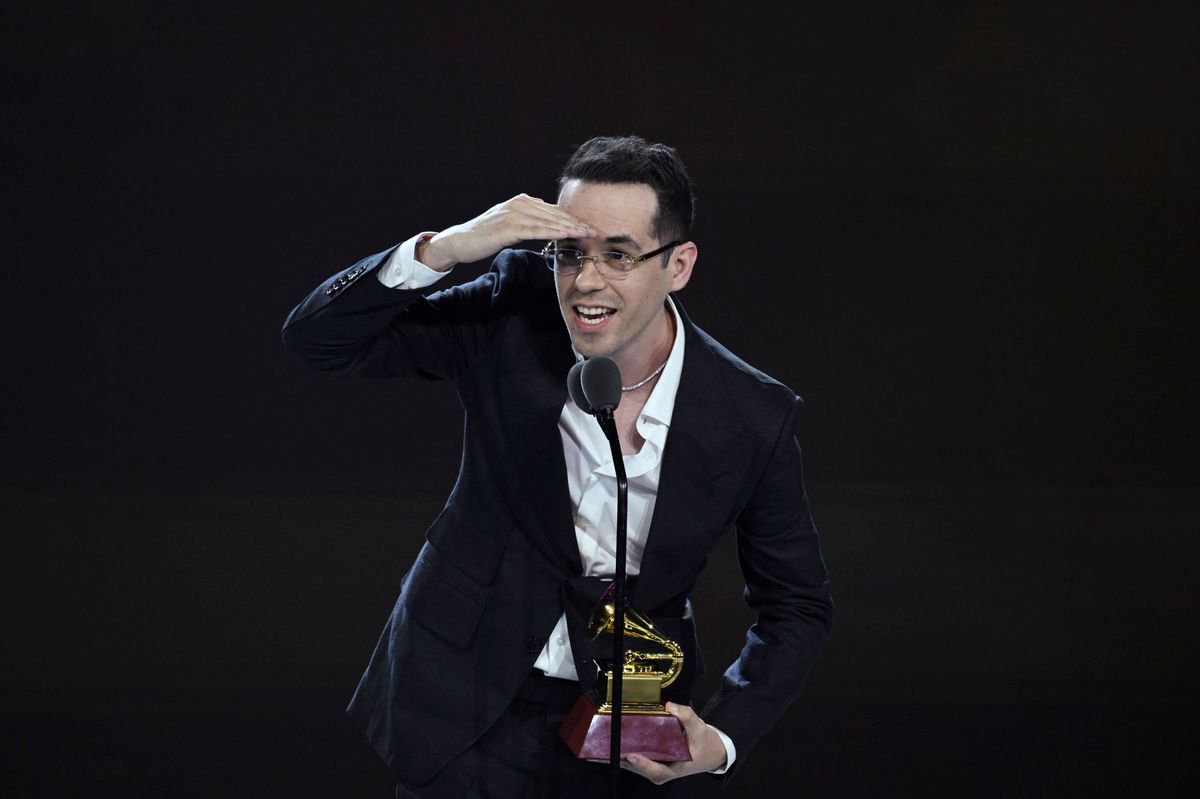
Edgar Barrera accepts the Producer of the Year award during the Premiere Ceremony for The 24th Annual Latin Grammy Awards on November 16, 2023, in Seville, Spain.
But among recording artists, there is a four-way tie near the top.
Karol G, Rosalía, Jorge Drexler and CA7RIEL & Paco Amoroso each have seven nominations, giving the 2026 ceremony a particularly competitive general field.
Karol G and Rosalía both appear in three of the night’s biggest races: Album of the Year, Record of the Year and Song of the Year.
Album of the Year brings together artists from across Latin America, Spain and Brazil, with pop, alternative, singer-songwriter, música mexicana and other sounds represented.
The nominees are:
Anitta, EQUILIBRIVM
CA7RIEL & Paco Amoroso, Free Spirits
Jorge Drexler, Taracá
Silvana Estrada, Vendrán Suaves Lluvias
Karol G, Tropicoqueta
Mon Laferte, Femme Fatale
Carín León, Muda
Milo J, La Vida Era Más Corta
Rawayana, ¿Dónde Es El After?
Rosalía, Lux (Complete Works)
The category gives Karol G and Rosalía another major awards-season moment while also placing established names such as Drexler alongside a newer generation of artists including Milo J and CA7RIEL & Paco Amoroso.
Paco Amoroso and CA7RIEL attend the 68th GRAMMY Awards
Anitta’s nomination for EQUILIBRIVM also puts the Brazilian superstar in one of the ceremony’s most prominent categories.
Karol G Lands Major Latin Grammy 2026 Nominations
Karol G’s Tropicoqueta earned an Album of the Year nomination, while her collaboration with Marco Antonio Solís, “Coleccionando Heridas,” is nominated for Record of the Year.
The song also appears in Song of the Year, where Karol G shares songwriting recognition with Edgar Barrera, Kevyn Mauricio Cruz and Luis Miguel Gomez Castaño.
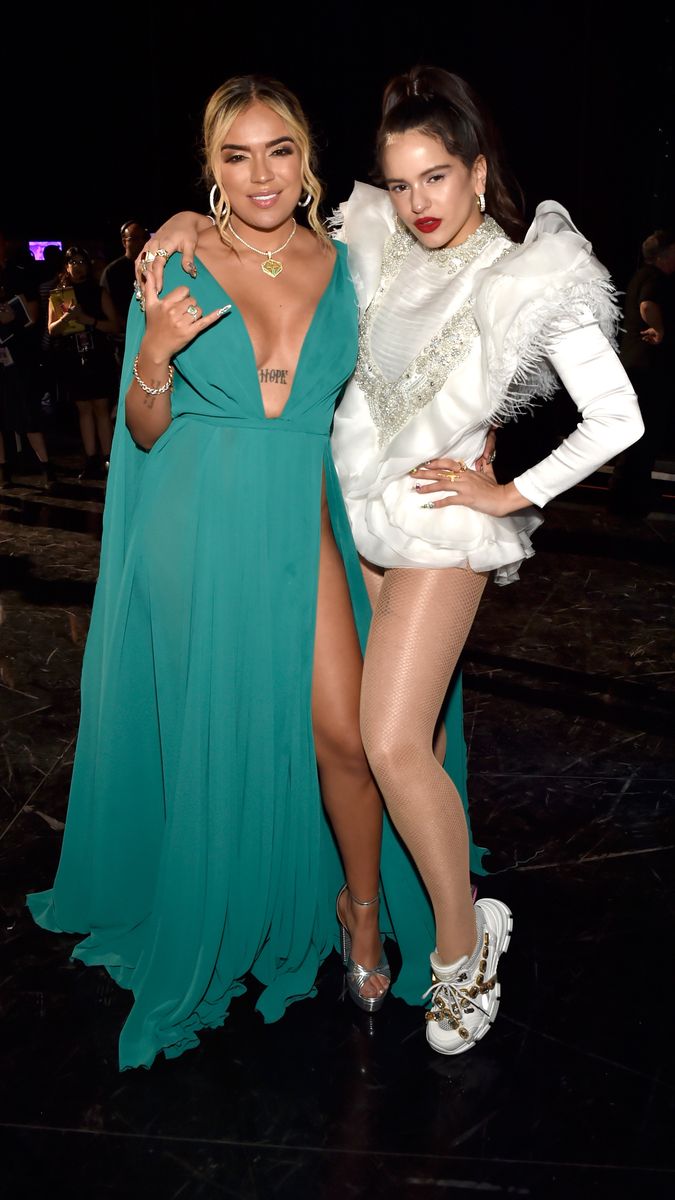
Karol G performs at the Coachella Stage during the 2026 Coachella Valley Music and Arts Festival
That puts Karol G in all three major recording and songwriting categories and continues her presence at the center of the Latin Grammy conversation.
Rosalía’s ‘Lux’ Earns Major 2026 Latin Grammy Nominations
Rosalía is similarly represented across the biggest categories.
Lux (Complete Works) is nominated for Album of the Year, while “La Perla,” featuring Yahritza y Su Esencia, is nominated for both Record of the Year and Song of the Year.
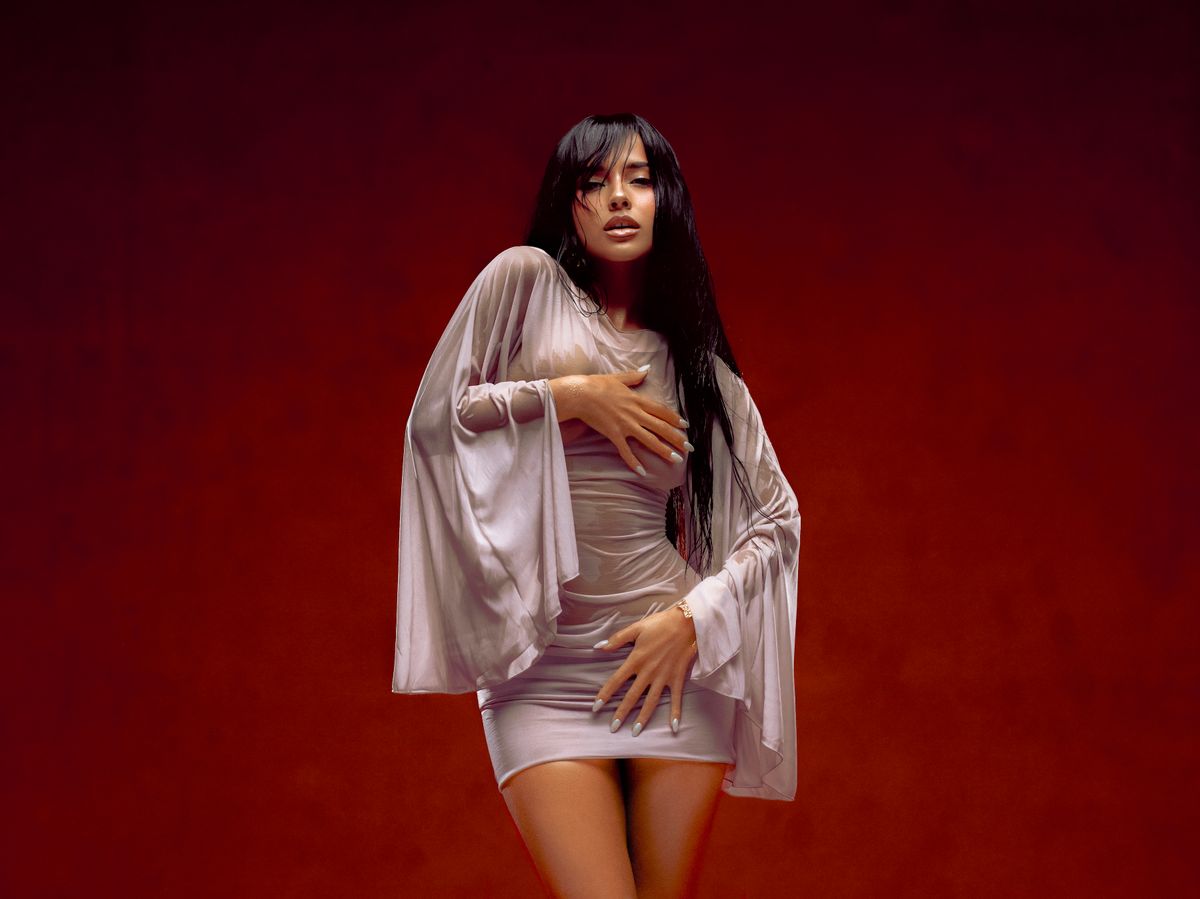
Rosalía returns to the stage after a family emergency as the North American leg of her LUX Tour officially begins.
Rosalía finished with seven nominations overall, tying Karol G, Jorge Drexler and CA7RIEL & Paco Amoroso among the most nominated recording artists of the year.
Latin Grammy 2026 Record of the Year Nominees
Record of the Year is packed with major names and collaborations.
The nominees include “Ha Ha” by CA7RIEL & Paco Amoroso, “¿Cómo Se Ama?” by Jorge Drexler, “Dime” by Silvana Estrada, “O Amor Nos Encontrou” by Loulu Gilberto, “Coleccionando Heridas” by Karol G and Marco Antonio Solís, “Femme Fatale” by Mon Laferte, “Desde Que Te Tengo” by Carín León, “Niño” by Milo J, “La Perla” by Rosalía featuring Yahritza y Su Esencia, and “Alma” by Elena Rose.
Song of the Year recognizes songwriters rather than simply the performers behind the recordings, and several of 2026’s most nominated stars appear here too.
The nominated songs are “Coleccionando Heridas,” “¿Cómo Se Ama?,” “Dime,” “Femme Fatale,” “Hasta Jesús Tuvo Un Mal Día,” “Humano,” “La Perla,” “Mi Gran Amor,” “Nilo” and “Solifican12.”
Among the notable collaborations is Santana featuring Becky G‘s “Mi Gran Amor,” with a songwriting team that includes Edgar Barrera, Becky G and Carlos Santana. Juanes and Vivir Quintana are represented with “Humano,” while CA7RIEL & Paco Amoroso’s “Hasta Jesús Tuvo Un Mal Día,” featuring Sting, is also nominated.
Who Is Nominated for Best New Artist at the 2026 Latin Grammys?
The Best New Artist category has 11 nominees this year: Delilah, FABIAN, Loulu Gilberto, Arath Herce, Macario Martínez, maye, Sofia Monroy, Kendall Peña, Dora Sanches, ARIA VEGA and Zeca Veloso.
Arath Herce is especially prominent across the full nominations list, receiving four nominations overall.
What’s New at the 2026 Latin Grammys?
The Latin Recording Academy introduced several changes for its 27th awards cycle.
Best Portuguese Language Urban Performance has evolved into Best Portuguese Language Urban Album, while Best Latin Electronic Music Performance is now called Best Electronic Music Performance. Best Urban/Urban Fusion Performance has also been renamed Best Urban Performance.
Latin Grammy 2026 nominations are here, with Edgar Barrera leading the field and Karol G, Rosalía, Jorge Drexler and CA7RIEL & Paco Amoroso scoring big.
The Academy also clarified its approach to artificial intelligence. Only human creators can be submitted, nominated or win a Latin Grammy. Music containing AI-generated elements may remain eligible in applicable categories, but the human contribution must be meaningful and relevant to the category.
When Are the 2026 Latin Grammy Awards?
The 27th Annual Latin Grammy Awards take place Thursday, November 12, 2026, at the MGM Grand Garden Arena in Las Vegas. The ceremony will air live on Univision. Final-round voting begins October 1 and runs through October 12.
Mexican singer Natalia Lafourcade poses with her trophies for during the 18th Annual Latin Grammy Awards in Las Vegas, Nevada
With Edgar Barrera collecting 10 nominations and Karol G, Rosalía, Jorge Drexler and CA7RIEL & Paco Amoroso sitting at seven apiece, the 2026 nominations put songwriters, global superstars and emerging talent in the same spotlight.
How many Latin Grammy categories are there in 2026?
Nominees were selected across 60 categories for the 27th Annual Latin Grammy Awards.
When and where are the Latin Grammys 2026?
The 2026 Latin Grammy Awards will be held November 12 at the MGM Grand Garden Arena in Las Vegas and will air live on Univision.
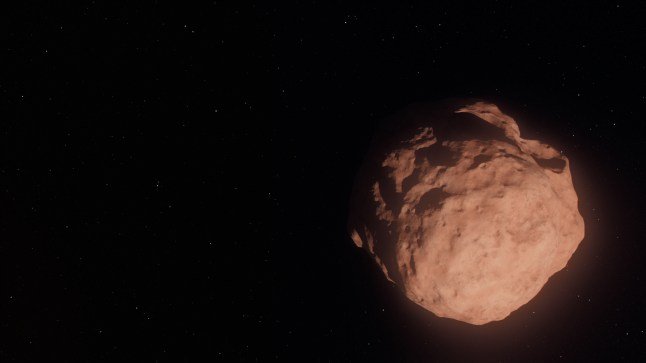
Artist’s concept of a Trans-Neptunian Object, a small, faint, icy body (Picture: NASA, ESA, Leah Hustak (STScI)/Cover Images)
Scientists have identified 27 mysterious new objects hovering at the edge of our Solar System.
Astronomers used the combined power of NASA’s Hubble and James Webb Space Telescopes for the first time to study the trans-Neptunian objects (TNOs).
TNOs are small, faint and icy bodies orbiting the Sun beyond Neptune.
Some are among the smallest and faintest objects ever directly observed.
In two complementary papers published in The Astronomical Journal, researchers analysed the colour, composition and size distribution of 27 newly discovered tiny TNOs.
They unexpectedly found fewer small TNOs than predicted by some models of planet formation. They also discovered that the colours of the smallest objects closely matched those of their much larger counterparts. Most TNOs are more than 100 million times fainter than objects visible to the unaided eye.
The TNO is orbiting the Sun beyond the orbit of Neptune (Picture: NASA, ESA, Leah Hustak (STScI)/Cover Images)
Scientists believe these small bodies offer a glimpse into an early stage of planet formation. At that time, a disc of dust and pebbles orbiting the young Sun began to clump together into city-sized ‘planetesimals’ – the solid building blocks from which planets eventually formed.
Beyond Neptune, the process stopped before these bodies could merge into full-sized worlds, leaving behind a frozen population of planetesimals. In what researchers describe as the deepest TNO survey so far, teams led by PhD candidates from the University of Victoria in Canada, working under the guidance of the National Research Council of Canada, and Northern Arizona University in Flagstaff studied the same region of sky using both telescopes.
Hubble observed visible light from the objects, while Webb detected their infrared light. By combining the observations, researchers were able to measure the TNOs’ colours, which provide clues about the composition of their surfaces. They also determined their sizes and traced their orbits.
The teams examined two populations of TNOs. The first, known as dynamically ‘cold’ TNOs, remain in relatively circular orbits close to the original plane of the Solar System.
The second, dynamically ‘hot’ TNOs, are thought to have formed between the present-day orbits of Uranus and Neptune before being pushed outwards as the giant planets migrated early in the Solar System’s history. These ‘hot’ objects now follow highly elliptical orbits and move in and out of the plane of the Solar System.
Astronomers had expected small TNOs in both populations to have experienced numerous collisions. Such impacts should have fragmented the objects and altered their surfaces compared with those of larger TNOs. But the observations told a different story. The smallest bodies appeared to resemble their larger relatives, suggesting collisions have not significantly altered their surfaces.
One possibility is that collisions occur less often than expected. Another is that the TNOs somehow preserve their original, pre-collision compositions. Researchers say the reason remains unclear.
The teams examined two populations of TNOs. The first, known as dynamically ‘cold’ TNOs, remain in relatively circular orbits close to the original plane of the Solar System (Picture: World History Archive)
‘You could imagine a scenario where getting knocked around and fragmented would change the surface composition, and then you would see a different surface colour for tiny TNOs compared to their larger siblings,’ said Northern Arizona University PhD candidate Anastasia Morgan, who led the study of colour and composition.
‘So it’s really fascinating to see that the smallest objects are somehow ‘remembering’ and preserving the history of how they were made.’
‘These dynamically ‘hot’ TNOs retain a signature of where they were born, even though they’ve been orbitally scrambled since then,’ said co-author David Trilling of Northern Arizona University.
Both the ‘hot’ and ‘cold’ populations appear to have retained the colours they had when they formed, with little change since the birth of the Solar System.
The researchers also found fewer very small TNOs than expected from some planet formation models. Webb identified 27 new, exceptionally faint TNOs. One was so faint that its brightness was comparable to standing on Earth and seeing a small swarm of fireflies on the Moon.
The smallest object observed was about 3 miles (5km) across. That’s roughly five times smaller than the size detectable by even the most sensitive ground-based telescopes.
The findings provide a rare look at the remnants of the Solar System’s earliest planet-building process – and suggest that some of these tiny frozen worlds have remained remarkably unchanged for billions of years.
MemeToro has published the first smart contract layer for its AI memecoin launchpad. The update adds 1,373 lines across 17 files while $MT continues through Stage 7.
This development reflects a wider shift in AI memecoin news from social-media personalities toward agents connected with documented rules and on-chain financial systems.
AI Memecoin News Moves Beyond Automated Social Posts
Early AI memecoins often became known through agents that posted online, replied to communities and developed recognizable digital personalities. This model showed that software could help manage attention around a token.
The next stage adds operational functions. Agents can collect market data, organize research, score risks and prepare structured proposals before a token launches.
MemeToro follows this second approach. Its agent scans collected news, social sentiment and market signals before creating a token concept.
The proposal includes a name, ticker, evidence, reasoning, supply and funding conditions. This makes the system useful for launch research instead of using AI only to promote a finished token.
The project’s news portal is planned to support this information layer. Users could follow relevant events while reviewing the evidence behind agent-generated launch proposals.
Deterministic Validation Controls the AI Agent
Generative AI can produce incorrect facts or links. MemeToro therefore sends every proposal through fixed validation code before allowing it to advance.
The validator rejects a URL when the trend connector never collected it. This prevents the AI from adding unsupported evidence to a launch manifest.
Other automatic checks reject:
Allocations that do not equal exactly 100%.
Insider allocations above zero.
Funding amounts that conflict across the proposal.
Missing or malformed launch conditions.
Payment rules that fail the approved format.
The AI agent cannot change these checks by writing a persuasive explanation. A proposal that breaks the rules receives a rejection.
This refusal system gives MemeToro a clear place in AI memecoin news. It treats choosing not to launch as a useful agent function rather than measuring progress only through token volume.
Smart Contracts Add Fair-Launch Enforcement
MemeToro’s recent code release introduced FairLaunchEscrow.sol, launch interfaces, tests and architecture notes. The escrow is designed to hold contributor funds during one fixed-rate $BNB Chain round.
Its terms are locked when the round is created. The contract has no owner, administrator or upgrade path.
Contributor and liquidity allocations must cover the full launch supply. This prevents the launch round from creating a separate founder or private tier.
Money can only return to contributors through refunds or move to the planned executor for liquidity. The contract can also store a fingerprint of the public launch manifest.
These rules connect AI research with verifiable funding conditions. The completed executor and automated PancakeSwap step remain future development stages, while the published code establishes their required boundaries.
$MT Connects the Agent, Trading and News Ecosystem
$MT is intended to power several parts of MemeToro. Its planned roles include launchpad access, memecoin funding, staking, prediction markets, trading and community rewards.
The news portal can help users discover market developments, while the AI agent turns selected signals into documented proposals. The trading dashboard is intended to help users follow and trade launched assets.
Creators may earn up to 1.2% of trading volume. Holders can also access staking rewards advertised at up to 35%, depending on the final pool conditions.
Users can purchase $MT through the official presale portal with $BNB, ETH, selected stablecoins or card. Stage 7 prices $MT at $0.00430, while $0.05186 remains a planned launch target.
MemeToro’s current AI memecoin news is therefore centered on product development. The wider sector continues moving toward agents whose decisions and financial rules can be checked publicly.
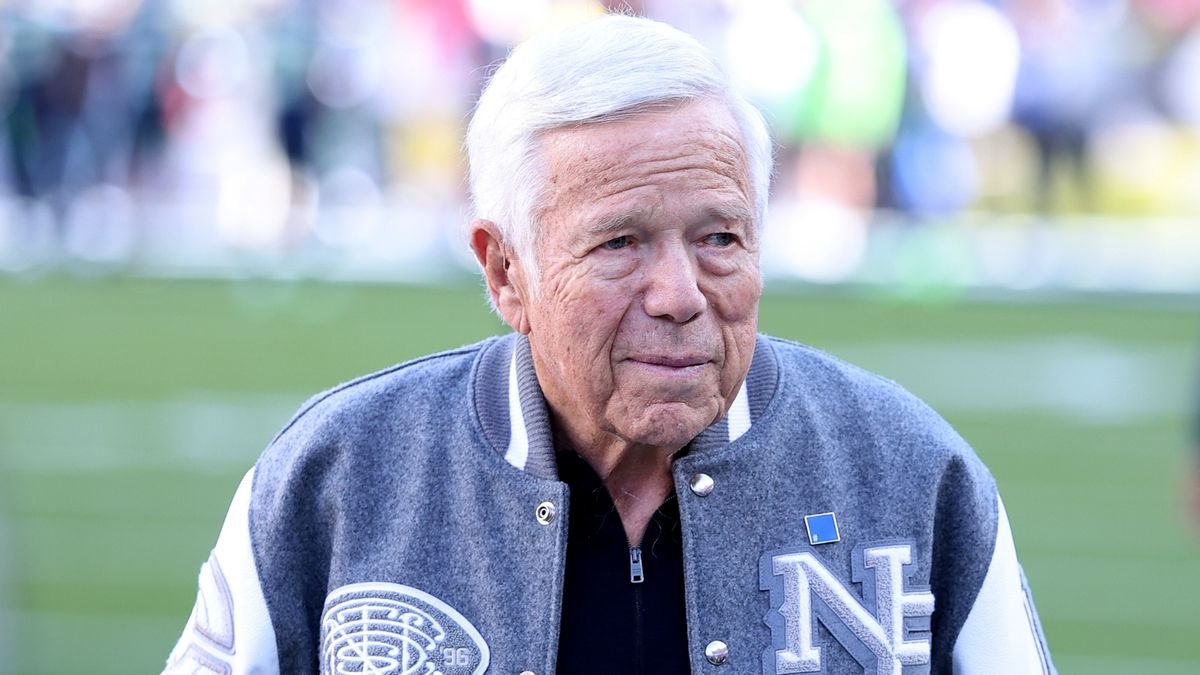
Gillette Stadium owner Robert Kraft, who musician Macklemore said orchestrated his removal as an opening act on Ed Sheeran’s tour, once faced a solicitation charge, and his name appears in the files related to late sex offender Jeffrey Epstein.
Rating:
Context
Kraft faced a charge of solicting prostitution in Florida, but the case was ultimately dropped as it hinged on video that was secretly recorded. Kraft’s name also appears in the Epstein files multiple times, but they do not connect Kraft to Epstein’s crimes and he has not been accused of any involvement in those crimes.
After rapper Macklemore was dropped as an opening act on singer-songwriter Ed Sheeran’s 2026 tour over his pro-Palestine stance, a rumor spread that Gillette Stadium and New England Patriots owner Robert Kraft once faced a solicitation charge and appeared in the federal government’s files related to the late financier and sex offender Jeffrey Epstein.
Macklemore said in an Instagram post that Kraft had orchestrated his removal from Sheeran’s tour after he advocated for Palestinian freedom during a performance. Kraft confirmed in a statement provided to ESPN on Sept. 14, 2026, that he had Macklemore removed as an opening act for shows at Gillette Stadium because the venue has a “longstanding commitment to providing a welcoming environment for all guests and ensuring that events held at our venue do not provide a platform for hate speech.”
The rumor about Kraft spread on X and Facebook. On X, a post (archived) read, “This is who Ed Sheeran sided with: an Epstein-connected billionaire who was charged with soliciting prostitution”:
In short, the claim is true.
Snopes found Kraft faced charges of “soliciting another to commit prostitution,” according to the Palm Beach County, Florida, clerk’s database. (Readers can verify the information directly by search for Kraft’s name, the offense date of Jan. 19, 2019, and the case number 50-2019-MM-002346-AXXX-NB). However, the case was dismissed after a federal court of appeals upheld a lower court’s decision to throw out video evidence.
Further, it is also true that Kraft appears in the Epstein files, largely regarding the solicitation charge he faced. However, the files do not connect Kraft to Epstein’s crimes, and he has not been accused of any involvement in those crimes.
The Palm Beach County database shows that the charges against Kraft were filed on Feb. 25, 2019, and he was arrested the following day on misdemeanor offenses allegedly committed on Jan. 19 and 20, 2019. The case status showed it was closed.
Authorities accused Kraft of paying workers at a massage parlor in Jupiter, Florida, for sex acts. However, his case hinged on a video that was secretly recorded, which Kraft’s attorneys argued was an invasion of his privacy. A federal court of appeals agreed:
Neither the Florida statutes, nor case law authorize covert audio surveillance to investigate prostitution-related offenses. It follows that the more intrusive video surveillance is also prohibited, providing yet another basis for affirmance.
This matches information found through links to news reports we identified among the Epstein files on the U.S. Department of Justice website. A search for Kraft’s name turned up 24 documents, the vast majority of which shared news articles reporting on his solicitation charge.
In one document containing a death announcement, Kraft is one of the email recipients copied on a message. In an email that Epstein sent to Melanie Spinella, then the assistant of former Apollo Management CEO Leon Black, Kraft is named in a link to a story by The Guardian regarding his ownership of an offshore company the paper said could help him avoid taxes in the U.S.