Author: rb809rb

  • ‘Tango Metal’ Kickstarts Partnership Between Finland’s Helsinki-filmi and Iceland’s Glassriver (EXCLUSIVE)

    ‘Tango Metal’ Kickstarts Partnership Between Finland’s Helsinki-filmi and Iceland’s Glassriver (EXCLUSIVE)

    In a move mirroring European indie producers’ look out for strong partners in an unstable market, Helsinki-filmi (“Tom of Finland,“ “The Summer Book,” “Codename: Annika”), one of the biggest content creators in Finland, and Glassriver (“As Long as I Live,” Black Sands”), one of the leading players in Iceland, have come together to co-produce a slate of films and series.

    Kickstarting the initial three-title partnership is the Finnish crime show “Tango Metal” (“Rautamurhat”), to be pitched on Thursday at the Helsinki Intl. Film Festival’s industry sidebar Finnish Film Affair.

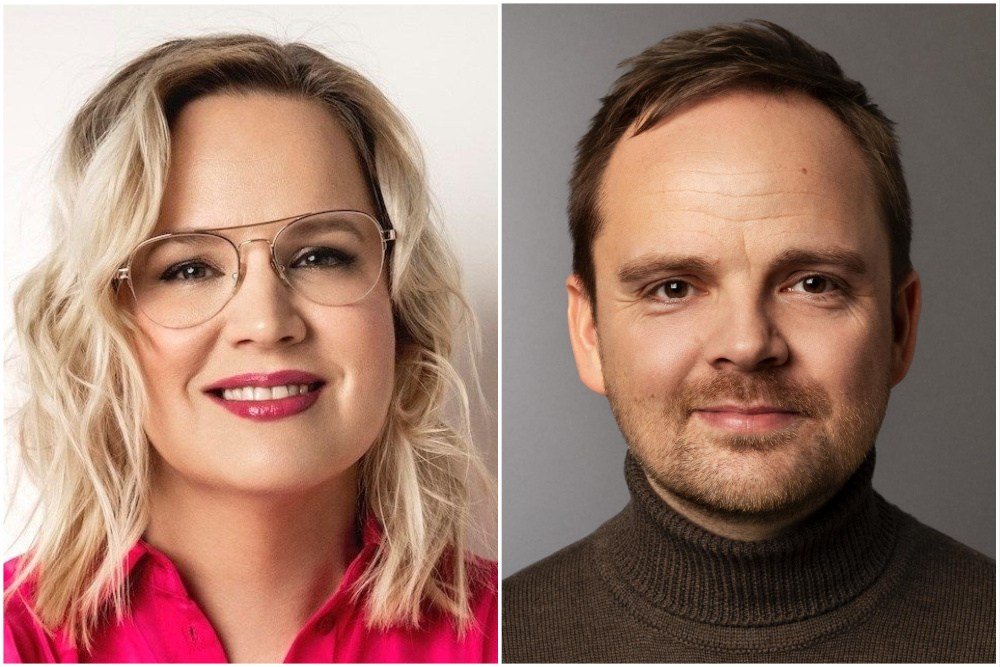
    Based on an idea by showrunner Mia Ylönen, Helsinki-filmi’s head of drama credited for SkyShowtime’s “Codename: Annika,” the six parter reunites Ylönen with writer Tua Harno (“North 66 Precinct,” “Guts”) and AFI, NFTS graduate Jojo Erholtz (“Detective Mario Kallio,” “Living With My Ex”), both attached as well to Helsinki-filmi’s upcoming series “Dead Women Talking.”

    The story turns on Finnish crime reporter and tango enthusiast Paula (38), sent to Reykjavik to investigate the ritualistic murder of her estranged brother. In her search for the truth, Paula is joined by detective Bjarki Haraldsson (35), her polar opposite. While the Finn’s life is at a standstill following the accidental death of her husband, the sunny Bjarki is a father, crime detective by day and metal band frontman at night. The investigation draws them close to each other, until the killer comes after them.

    “Basically, Paula has lost everything, while Bjarki has seemingly everything. I wanted to oppose these characters and see how their worlds collide,” said Ylönen, who used to cover Heavy Metal gigs as a journalist.

    The producing partners are currently in advanced negotiations with commissioners in Finland and Iceland, with the show in development and scheduled to start production later this year.

    Ylönen, who approached Glassriver with the project, said tangoing with them on this series and other scripted content “makes total sense.”“They have an impressive track record, especially in crime, thriller series such as ‘Black Sands,’ ‘Cold Haven,’ and are very active in international co-productions, which is where we’re venturing into for our series. Financing is in decline in Europe. We have to stand on our own feet and be clever with financing,” said the former TV news reporter turned writer, showrunner and executive producer.

    Ylönen also pointed at shared mindsets between the two Nordic nations. “We both come from small nations; we have a dark sense of humor and rely on trust. This is something that has been evident since we started working on this project.”

    Glassriver CEO, producer Andri Ómarsson, concurred with her. “In Iceland, we’re on the outskirts of the Nordics and Europe. Today, all countries realize that international partnerships are critical to get a project off the ground. It makes sense on a creative and business standpoint to collaborate with Finland,” said the seasoned TV executive, who also underscored broadcasters’ and streamers’ flexi mindsets and shift towards co-commissioning.

    “We did ‘Cold Haven’ as a co-commissioning between Síminn [Iceland’s leading streamer] and RTP in Portugal. That was Síminn’s first co-commissioning on a high-end show, and they got really excited about it,” said Ómarsson.

    Other upcoming projects to be co-produced by Helsinki-filmi and Glassriver include a Finnish near-sci-fi adventure feature, and an Icelandic TV project based on an original story, to be majority shot in Iceland. Details will be announced when key financing is locked.

    Currently on Glassriver’s active slate are Síminn’s crime series “Elma,” based on Eva BjörgÆgisdóttir’s best-selling book series, set to premiere next month. The co-production with Belgium’s Lunamine is repped globally by Mediawan, with a pre-sale to Finland’s MTV in place.

    Also on Síminn’s list and set for a spring 2027 premiere is the climate disaster series “Avalanche,” co-produced with Finland’s Whatevergroup, currently in post in Finland. The prolific Erholtz is attached as editor.

    Meanwhile, soon to start lensing in Tenerife is the comedy drama “Hot Stuff,” ordered by Iceland’s Channel 2 and co-produced with Romania’s IDEA Film.

    On Helsinki-filmi’s slate is the Yle crime series “Dead Women Talking,” backed by the Nordic 12 pubcasters alliance. “That’s our biggest international co-production since “Codename: Annika,” stated Ylönen about the series currently lensing, which will have a podcast spinoff.

    Then on the feature film front, Helsinki-filmi’s “Tell Everyone” by Alli Haapasalo (audience prize winner at Sundance 2022 for “Girl Picture”) is due to open domestically Oct. 9. The film bagged last year’s Finnish Film Affair best project award.
  • Tokenized stocks may see limited U.S. demand: TD Cowen

    Tokenized stocks may see limited U.S. demand: TD Cowen

    The SEC has opened a five-year route for tokenized U.S. stock trading, but TD Cowen has found that domestic investors, institutions, and listed companies show little appetite for the products.

    TD Cowen said U.S. investors already have efficient access to listed shares, leaving tokenized venues under pressure to offer benefits that outweigh thin liquidity and added operational work.

    Reid Noch, vice president of U.S. equity market structure at TD Cowen, wrote in a Friday paper that both retail and institutional demand will likely remain limited during the market’s early stage.

    “U.S. investors already have efficient access to the underlying shares,” Noch wrote, adding that tokenized platforms need a compelling benefit to offset their operational complexity and restricted liquidity.

    The assessment followed the U.S. Securities and Exchange Commission’s five-year tokenized stock exemption, announced on Sep. 17. The conditional relief lets qualifying Tokenized Securities Venues use permissioned automated market makers and liquidity pools to trade tokenized National Market System stocks.

    Eligible liquidity providers can also receive temporary relief from certain dealer-registration requirements. Each participating venue remains subject to limits on the number of stocks it supports and the trading volume processed through the system.

    Tokenized stocks must compete with efficient U.S. markets

    For American investors, TD Cowen’s concern centers on whether tokenization improves a market that already offers deep liquidity, low-cost brokerage services and fast electronic execution.

    Blockchain-based venues could extend stock trading into nights, weekends and holidays. Their automated market makers, or AMMs, would price transactions through asset pools and preset rules instead of matching buyers and sellers in a conventional order book.

    In practice, Noch warned that continuous access does not guarantee favorable execution. A pool with limited assets may produce weaker prices, especially when fewer traders and liquidity providers are active outside the main U.S. session.

    AMM pricing also places more weight on the amount and composition of assets deposited in each pool. Although a venue may remain technically open around the clock, TD Cowen’s analysis indicates that investors could still prefer established exchanges if the onchain market offers less liquidity or higher trading costs.

    U.S. exchanges generally operate their main sessions between 9:30 a.m. and 4 p.m. Eastern Time on weekdays. Several brokers already provide premarket and after-hours access, reducing the value that some domestic traders may place on a separate blockchain venue.

    The SEC has attached investor protections to its experiment. Approved tokens must represent NMS stocks and preserve the economic interest, dividends, voting power, and liquidation rights associated with the underlying shares.

    Synthetic products that merely follow a company’s stock price do not qualify. As previously covered by crypto.news, the agency’s investor-rights requirements separate qualifying stock tokens from offshore products that may offer economic exposure without making the buyer a shareholder.

    Issuer objections could restrict tokenized stock listings

    Before a third party tokenizes a company’s shares, the SEC framework requires the proposed venue to notify the issuer. The company then has 30 days to object, according to the TD Cowen paper.

    Listed businesses therefore retain some control over whether unrelated operators create blockchain versions of their securities. Trading cannot proceed under the exemption when an issuer objects.

    According to Noch, discussions with dozens of issuers found little interest in offering tokenized shares. The group included several companies with large retail investor bases, although crypto-linked businesses such as Figure showed more interest.

    “Our conversations with dozens of issuers” revealed minimal demand outside crypto-adjacent companies, Noch wrote.

    Figure provides an existing comparison between traditional and blockchain-based shares. Its Nasdaq-listed FIGR stock trades alongside blockchain-native FGRS shares carrying the same economic exposure and voting rights.

    During the 24-hour period studied by TD Cowen, conventional FIGR shares accounted for 99.9% of the company’s notional trading. The finding suggests that equal economic and governance rights have not been enough to move meaningful activity away from the Nasdaq-listed security.

    Other SEC conditions may also limit how quickly venues can add markets. Smart contracts must be public and auditable, while operators must disclose trading activity, related-party transactions, and key details about their systems.

    A venue must also halt a tokenized stock whenever the primary exchange stops trading the underlying shares. As a result, round-the-clock availability would not override an official halt related to volatility, company news or a regulatory issue.

    In early September, the SEC also proposed a transfer-agent rule overhaul covering digital ownership records, cybersecurity, asset protection and third-party technology providers. Transfer agents maintain the official shareholder register used for voting, dividends, stock splits and other corporate actions, making their records important when a token claims to represent legal ownership.

    Stock perpetuals show stronger demand than tokenized shares

    For crypto traders seeking exposure to public companies, TD Cowen found more activity in perpetual futures than in spot stock tokens.

    A snapshot of Nvidia-related trading on Binance showed that perpetual futures generated 96% of notional volume, while spot products accounted for 4%. Perpetuals track the price of an asset without transferring ownership of the referenced shares.

    The contracts have no fixed expiration date and use recurring funding payments to keep their prices close to the underlying stock. They may also offer leverage, which lets traders control a larger position with less capital but increases liquidation risk when prices move against them.

    “As we continue to outline, we see perpetual futures as the stronger demand story,” Noch wrote.

    TD Cowen expects platforms to keep adding the products inside and outside the United States, citing retail demand for leverage.

    Recent filings support the comparison. On Sep. 18, Coinbase submitted proposals for 50-plus stock perpetuals tied to companies including Nvidia, Microsoft and Tesla. The exchange plans to offer 24-hour trading from Monday through Friday if U.S. regulators clear the contracts.

    Coinbase’s proposed products would provide leveraged price exposure without voting rights, dividends or ownership of the referenced shares. Their listing remains subject to regulatory review, and the company has not announced a launch date or complete contract specifications.

    Earlier in September, Ondo Finance also asked the SEC and Commodity Futures Trading Commission to apply existing security-futures rules to stock perpetuals. Its Panama-based affiliate had processed $8 billion in cumulative volume within about six weeks, according to Ondo’s regulatory submissions.

    Ondo said the offshore platform settles contracts in stablecoins and remains unavailable to American users. Many of its perpetuals reference U.S.-listed companies, allowing eligible non-U.S. traders to follow their stock prices without opening a conventional brokerage account.

  • Chainlink blockchain finance push hits Sibos with Microsoft, DTCC in room

    Chainlink blockchain finance push hits Sibos with Microsoft, DTCC in room

    Sergey Nazarov, the Chainlink Co-Founder, is heading to one of the biggest gatherings in global banking technology next week, and his presence says a lot about where Chainlink blockchain finance integration currently stands. Nazarov is set to take part in three sessions at the Sibos conference, appearing alongside representatives from Microsoft and DTCC in what amounts to one of Chainlink’s most visible moments on a traditional finance stage this year.

    Key takeaways

    • Chainlink Co-Founder Sergey Nazarov will participate in three sessions at the Sibos conference next week.
    • Sibos is a major global financial services and technology conference that brings together banks, market infrastructure providers, and technology firms.
    • Chainlink is engaging with institutions including Microsoft, DTCC, Clearstream, and the International Finance Corporation at the event.
    • Chainlink operates as a decentralized oracle network that connects smart contracts to real-world data.
    • The event highlights growing collaboration between blockchain infrastructure and traditional banking systems.

    Chainlink’s Sergey Nazarov to Participate at Sibos Conference

    Nazarov’s appearance at Sibos next week puts Chainlink squarely in front of the institutions that decide whether blockchain tools get adopted at scale. This isn’t a niche crypto meetup — it’s a conference built for banks, custodians, and payment networks, which makes Chainlink’s presence there notable in itself.

    Involvement in Three Sessions

    According to details shared around the event, Nazarov is scheduled to speak across three separate sessions at Sibos. That kind of repeated stage time signals more than a courtesy appearance; it suggests Chainlink has multiple threads of conversation running with the conference’s institutional audience at once.

    Significance of Sibos as a Financial Event

    Sibos has long served as a meeting point for the world’s financial services and technology sectors, drawing major banks and infrastructure providers under one roof. Having a blockchain company’s co-founder featured in three sessions there reflects how far the conversation around blockchain financial services has shifted from experimental pilots toward mainstream discussion.

    Chainlink’s Collaboration with Leading Financial Institutions

    Chainlink isn’t attending Sibos in isolation — it’s showing up alongside some of the biggest names in global finance and payments. That lineup matters because it shows which institutions are willing to be publicly associated with blockchain infrastructure conversations right now.

    Engagements with Microsoft, DTCC, Clearstream, and IFC

    At Sibos, Chainlink is engaging directly with Microsoft and DTCC, and reports point to further connections with Clearstream and the International Finance Corporation. Each of these names carries weight in its own corner of finance: DTCC handles a huge share of securities settlement infrastructure, Clearstream is a major post-trade services provider, and the IFC operates as a development finance institution with global reach. Chainlink positioning itself among this group suggests it’s aiming for relevance in the plumbing of financial markets, not just the crypto trading layer.

    Focus on Bridging DeFi and Traditional Banking

    The throughline across these engagements is Chainlink’s stated ambition to bridge decentralized finance with traditional banking systems. This isn’t happening in a vacuum. Chainlink has already been extending its infrastructure into institutional-grade networks elsewhere this month.

    Chainlink’s Decentralized Oracle Network and Its Role in Finance

    At its core, Chainlink functions as a decentralized oracle network designed to connect smart contracts with real-world data, which is what makes it relevant to institutions in the first place. Smart contracts on their own can’t reliably pull in information like asset prices, settlement confirmations, or market data from outside their own blockchain — that’s the gap Chainlink’s oracle infrastructure is built to fill.

    This function is precisely why Chainlink keeps showing up in conversations about blockchain financial services. Financial institutions exploring tokenization, settlement, or cross-chain transfers need dependable, tamper-resistant data feeds, and that’s the practical value proposition Chainlink brings to the table at events like Sibos.

    Implications and Expectations from Sibos Participation

    Nazarov’s three sessions at Sibos matter less for the appearance itself and more for what could follow. Conferences like this often become launchpads for new partnership announcements, and Chainlink’s presence at Sibos discussions suggests the company is trying to build momentum on multiple fronts at once.

    Why this matters: regulators are beginning to explore the potential benefits of blockchain technology within traditional finance, and each high-profile engagement — whether a conference session or a mainnet integration — adds to the case that decentralized infrastructure can coexist with regulated financial systems rather than compete against them. For a market currently sending mixed signals, a strong showing at Sibos could shape sentiment around Chainlink heading into the rest of the year, particularly if new partnerships or technical announcements emerge from the sessions Nazarov is part of.

    FAQ

    Who from Chainlink is participating at the Sibos conference?

    Sergey Nazarov, Chainlink Co-Founder, will participate in three sessions at the Sibos conference.

    What is the significance of the Sibos conference for Chainlink?

    Sibos is a major global financial services and technology conference where Chainlink engages with leading financial institutions to advance blockchain adoption.

    Which institutions will Chainlink engage with at Sibos?

    Chainlink will engage with institutions like Microsoft, DTCC, Clearstream, and the International Finance Corporation.

    What is Chainlink’s role in the blockchain and finance integration?

    Chainlink is a decentralized oracle network that connects smart contracts with real-world data, aiming to bridge decentralized finance with traditional banking systems.

    Article produced with the assistance of artificial intelligence and reviewed by the editorial team.

  • Animoca Brands delays IPO plans, suspends merger talks with Currenc

    Animoca Brands delays IPO plans, suspends merger talks with Currenc

    Animoca Brands suspended discussions for a proposed reverse merger with Currenc Group Inc. (CURR), which would have seen the digital asset investment company secure a Nasdaq listing.

    The two companies decided the proposed timeframe to finalize the transaction didn’t align with their respective goals, Animoca announced on Tuesday.

    Talks between Animoca and Currenc kicked off late last year, with plans for the former to own 95% of the merged company.

    Hong Kong-based Animoca said it “remains fully committed” to listing on a major public exchange, with co-founder Yat Siu adding it will “continue to pursue optimal routes” to a public listing.

    Animoca Brands’ portfolio spans decentralized finance (DeFi), AI, non-fungible tokens (NFTs) and gaming, with advisory services forming an increasing chunk of its revenue stream in recent years.

    Currenc shares closed at $3.23 on Monday, 1.25% higher on the day, before dropping 0.93% in after-hours trading.

  • Why young people are paying to get hired

    Why young people are paying to get hired

    Some graduates are paying thousands just to look employed. And parents are spending up to $50,000 on career coaches. Why is the entry level job market so broken? Al Jazeera’s Yasmeen ElTahan explains.

  • Read The Proposed Consent Decree To Settle The Paramount-Warner Bros. Discovery Merger

    Read The Proposed Consent Decree To Settle The Paramount-Warner Bros. Discovery Merger

    As entertainment figures and politicos weigh in on the settlement of the Paramount–Warner Bros. Discovery merger, the parties submitted details of a consent decree for a judge’s approval.

    Among other things, the five-year decree requires a minimum number of annual film releases and another to spend $300 million more on domestic U.S. film production than was spent in 2025. It also sets levels of U.S. film production if Congress establishes a federal film tax credit. If there is a breach, one remedy is to divest the company interest in Miramax.

    Related Stories

    Restrictions also were placed on affiliate fee negotiations for cable channels, and requirements for negotiating separately. If there is a breach, Paramount may be on the hook to divest channels including BET, VH-1, Comedy Central, Smithsonian, Destination America and Science.

    The consent decree also sets up a news editorial independence board to oversee CBS News and CNN, including establishing a set of standards and principles.

    Read the proposed consent decree.

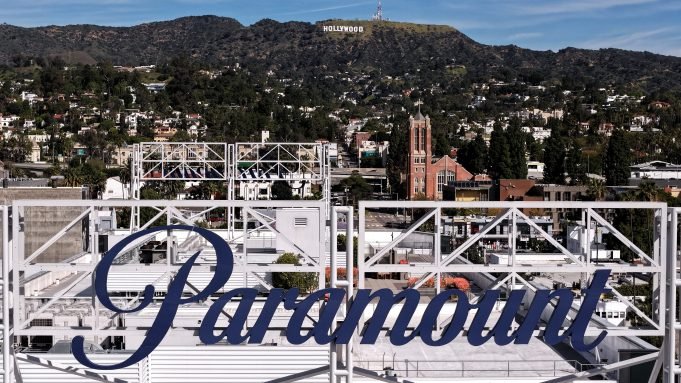
    The decree also requires Paramount to continue the operation of its lot and that of Warner Bros.

  • Paramount-WBD Settlement Sets Up Editorial Independence Board For CNN And CBS News

    Paramount-WBD Settlement Sets Up Editorial Independence Board For CNN And CBS News

    The potential ownership of CBS News and CNN under one corporate owner has generated months of fear, anxiety and loathing at both networks, but the Paramount–Warner Bros. Discovery settlement tries to resolve some of the issues with the establishment of an editorial independence board.

    Per the terms of the consent decree reached with a dozen state attorneys general, the board will establish a set of guiding principles based on each network’s policies for “accuracy, independence, fairness and journalistic integrity.” The board will resolve any disputes between CBS News employees, CNN employees and management regarding any alleged violations of the principles. And it will monitor “adherence to ethical journalism as defined by journalism industry best practices and to editorial independence.”

    The decree also sets up who can serve on the body, made up of five retired or active journalists who have worked for a minimum of ten years, and who will be appointed by the combined Paramount-WB board. No more than two members may be affiliated with the same political party.

    “No member of any government or governmental entity, including federal, state, and local governments, may approve or have approval rights over members appointed to the Editorial Independence Board,” per the decree. Officers, directors or non-journalist employees of Paramount-WB also are restricted from serving on the board, whose members will have terms of three years. Paramount would have 180 days to establish the board.

    A separate settlement with the Writers Guild of America includes a provision prohibiting writer layoffs at CBS News broadcast for five years, the guild said.

    What the AGs’ consent decree does not do is restrict a combination of CBS News and CNN. Nor does it give the board oversight over who runs the respective news entities, something that has been an issue as CEO David Ellison tapped Bari Weiss to lead CBS News after Skydance’s purchase of Paramount last year.

    That has raised concerns that the network would be steered rightward, or even in a direction more favorable to Donald Trump. Weiss previously worked as an opinion writer for The New York Times and founded The Free Press, the center-right opinion and analysis site that Paramount also purchased. As part of her changes, she ousted the executive producer of 60 Minutes, while some of the correspondents who were fired have alleged politically motivated interference. Weiss has defended her input to the show, saying it is part of the news process.

    As part of commitments to close its purchase of Paramount last year, Skydance said that it would install an ombudsman to take complaints over CBS News. The person they hired, Kenneth Weinstein, was not a journalist but the former head of the rightward Hudson Institute.

    Other actions have triggered further suspicions, including that, like CBS News, changes would be afoot for CNN, including appointing Weiss to oversee that network as well. As he sought administration approval to purchase Warner Bros. Discovery this year, Ellison hosted a dinner for the Trump White House tied to the White House Correspondents’ Dinner, and he appeared at the president’s State of the Union address.

    Seth Stern, chief of advocacy of the Freedom of the Press Foundation, called the consent decree’s oversight board “worthless.”

    He said in a statement, “It’s unclear how the attorneys general or courts can constitutionally hold Paramount accountable for the board’s actions or inaction without themselves interfering in content. The attorneys general might be fine with censorship when they’re the ones doing it, but what happens when successors with opposing political views inherit enforcement powers?”

    California Attorney General Rob Bonta, who led the state AG lawsuit, told reporters that the independent board would “ensure independent, objective, fact-based reporting at CBS News and at CNN.”

    An independent board is unusual, not not unprecedented. A special committee was set up in 2007 to oversee editorial integrity at the Wall Street Journal, as Rupert Murdoch’s News Corp was looking to acquire the news outlet from the Bancroft family trust. The committee, though, does have a say in major newsroom positions, as it has to grant approval for the appointments of an editor-in-chief and editorial page editor. Comcast committed to an ombudsman when it acquired NBC Universal, with concerns over corporate interference in the editorial process. David McCormick, vice president of standards at NBC News, had already been serving as ombudsman in 1993, and expanded his duties to other NBCU news properties.

  • Did African countries try to plant giant wall of trees to stop Sahara Desert’s spread?

    Did African countries try to plant giant wall of trees to stop Sahara Desert’s spread?

    Claim:

    More than 20 African countries banded together to combat the spread of the Sahara Desert by planting a giant wall of trees to run across the continent. This wall will stretch for around 7,000 km coast to coast.

    Rating:

    Mostly True

    Context

    In 2007, more than 20 African countries partnered up in a project to tackle desertification through the spread of the Sahara Desert, which was conceived as a giant wall of trees meant to stretch from coast to coast of the continent. Over time, the focus shifted to smaller-scale planting programs that go beyond just trees. The official goal for the length of the “wall” was 8,000 km. Today, however, reports show that the project has done poorly.

    For several years, an image of a stretch of green trees across the African continent has spread online purportedly showing an ambitious inititative called the “Great Green Wall.” 

    Such a plan has been in the works since 2007 and involves the participation of numerous African countries. Its aim was to have trees extend like a belt across the Sahel region, which is at the base of the Sahara, in order to prevent the expansion of the desert due to climate change.

    According to social media posts on Facebook and other platforms, more than 20 African countries are a part of this effort to plant trees across the continent from coast to coast:

    Across Africa, more than 20 countries are building something extraordinary together: the Great Green Wall. This massive belt of trees stretches from coast to coast along the southern edge of the Sahara, designed to stop the desert’s spread and restore land that’s been degraded for generations.

    But here’s what makes this different from other environmental projects. It’s not just about planting trees—it’s about restoring livelihoods for millions of farmers and communities who depend on this land. It’s about fighting climate change by creating ecosystems that actually support people, not just preserve them behind barriers.

    Imagine a living wall visible from space, built not to divide but to heal and unite an entire continent. That’s the cultural shift we’re witnessing: when nations choose collaboration over isolation, when environmental action becomes community action.

    (Facebook user Culture Collective)

    The posts are mostly true, in that this is a real effort being carried out by African countries, though the stated length of the wall upon completion varies. According to recent news coverage, the initiative is perceived as an overall failure with only small success stories. 

    According to the United Nations Convention to Combat Desertification, the project aimed “to restore Africa’s degraded landscapes and transform millions of lives in one of the world’s poorest regions, the Sahel. Once complete, the Wall will be the largest living structure on the planet – an 8,000 km natural wonder of the world stretching across the entire width of the continent.”

    The goal was to have the “wall” extend from Senegal in the west to Djibouti in the east, by 2030. The now-defunct official website of the Great Green Wall inititative detailed the reasons behind all their efforts:

    The catalyst for the Great Green Wall is the daily impact of desertification and climate change that is undermining the futures of millions of communities across Africa’s Sahel region.

    Since the 1970s, the Sahel has been heavily affected by recurrent periods of drought. These droughts have threatened the livelihoods and future of entire populations across the region.

    The lack of rain has led to the disappearance of livestock and the destruction of cereal crops. The great famines that rocked the Sub-Saharan region in the 80s each affected millions of people. In addition, the high population growth rate is increasing demand for food and pressure to gain access to other natural resources which are the basis for livelihoods and the survival of the rural population.

    Millions of people – particularly rural youth – are currently facing an uncertain future due to the lack of decent rural jobs and continuous loss of livelihoods due to land degradation and falling yields.

    But according to a 2021 Associated Press report, since the project’s inception in 2007, millions of the planted trees have died due to diminishing rains and rising temperatures. Only 4% of the project’s original goal has been met and around $43 billion is needed to complete it. Given these challenges, the focus of the project has shifted from planting just a wall of trees to a “mosaic” of smaller and more durable projects that emphasize community-focused solutions that support agriculture and prevent desertification.

    The Great Green Wall’s old website claimed a number of successes. Senegal planted around 12 million drought-resistant trees in less than a decade, while 5 million hectares of degraded land was restored in Nigeria, and 15 million hectares in Ethiopia. A November 2021 report in the journal Nature Sustainability assessed the economic effect of the program and concluded that it was economically worthwhile:

    The Great Green Wall programme is a colossal initiative to restore 100 million hectares of degraded ecosystems across 11 countries in the region […] We evaluated the economic costs and benefits of future land restoration projects under this programme. We applied different scenarios that account for both market-priced and non-market benefits from restored ecosystems and consider the heterogeneity of local decision-making contexts in terms of investment planning horizons, discount rates, and the time needed for the restored ecosystems to start yielding their benefits in full. The results show that every US dollar invested into land restoration yields on average US$1.2 under the base scenario, ranging from US$1.1 to US$4.4 across the scenarios. At most, ten years are needed for land restoration activities to break even from the social perspective, accounting for both market-priced and non-market ecosystem benefits. To fund all proposed land restoration activities, an investment of US$44 billion is needed under the base scenario (US$18–70 billion across scenarios). 

    The report added that “violent conflicts in the Sahel are estimated to reduce the accessibility to these degraded ecosystems from 27.9 million hectares to 14.1 million hectares.”  

    While originally only 11 countries were a part of the effort, more than 20 African nations have participated. This video from September 2020 detailed some of the projects and their effect:

    A 2026 NPR report called the inititative a “cautionary tale” of poor planning and a lack of local participation. The report investigated 15 projects in Senegal, Djibouti and Chad, finding some more successful than others. A majority of the sites visited were unable to survive in the long term. 

  • Focus on This Editors’ Choice-Winning Deal With 21% Off Viture Pro 2 AR Glasses

    Focus on This Editors’ Choice-Winning Deal With 21% Off Viture Pro 2 AR Glasses

    Smart glasses can be pretty expensive, but there are some budget ones out there that are still of exceptional quality. The Viture Pro 2 XR/AR glasses are the prime example of this. They come with one crucial feature that stands out among the competition: vision correction. This alone helps out others who might be visually impaired, offering something that other smart glasses can’t. They’re now on sale for $298, which is down from their original $379 price. That’s $80 in savings!

    As of September 21, the Viture Pro 2 XR/AR smart glasses are on sale for 21% off. According to CamelCamelCamel, this is the lowest price they’ve been in the past month. So now is the best time to grab a pair if you missed out!

    Viture Pro 2 XR/AR Smart Glasses

    146-inch display, 120Hz refresh rate, 1080p resolution


    $298.99
    at Amazon

    $379.00
    Save $80.01


    Get Deal

    The Viture Pro 2 smart glasses use UltraClarity 3.0 optics to ensure that text, subtitles, and details look clear at every corner of the lens rather than just only the center. Whether you’re looking at documents or playing video games, the image fills up the entire lens and keeps you immersed. They have built-in myopia adjustment dials in both lens, letting you turn them independently. This way, nearsighted users can use the smart glasses without using prescriptions inserts or contacts. On the XR front, these glasses project a 146-inch screen at 120Hz and 1080p resolution, making them perfect for gaming or streaming wherever you go.

    Additionally, they’re SGS A+ Eye Care Certified, meaning that the smart glasses will reduce blue light visual fatigue, allowing you to use them for longer. The frame itself is comfortable too. It’s 20% lighter than the predecessor, with a 39% thinner hinge for a more sunglasses-like look. Included in the box are seven different nose-pad sizes so that you can find the perfect fit for you.

    Our expert Will Greenwald awarded them an “Outstanding” rating. In our in-depth review, he said, “The $299 Viture Pro 2 takes the crown for budget-friendly smart glasses by matching the class-leading brightness of pricier rivals while adding built-in vision correction at no extra cost.”

    More Smart Glasses Deal

    *Deals are selected by our commerce team

    Be sure to check out our other Smart Glasses coverage and Amazon deals.

    More Smart Glasses Deals at Best Buy

    Recommended by Our Editors

    More Smart Glasses Deals at Walmart

    More Smart Glasses Deals at Target

    About Our Expert

  • Donald Trump Vows To Appeal Ruling In Networks’ White House Ban Lawsuit, Even Though Judge Has Yet To Rule

    Donald Trump Vows To Appeal Ruling In Networks’ White House Ban Lawsuit, Even Though Judge Has Yet To Rule

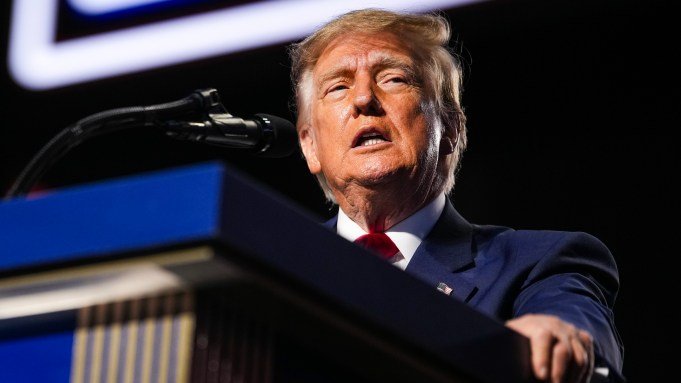
    Donald Trump has vowed to appeal a judge’s ruling in the networks’ challenge of his ban on their access to the White House, even though a federal judge has yet to issue a ruling in the case.

    Shortly after CNN, Politico and MS NOW filed suit on Monday against Trump for his ban on their access to the White House, the case was assigned to U.S. District Judge Timothy J. Kelly. Kelly set a hearing for Wednesday on the networks’ motion for a temporary restraining order to prohibit such a ban and restore their correspondents’ credentials.

    Trump appointed Kelly in his first term, but the judge ruled in favor of CNN and then-White House correspondent Jim Acosta after the administration pulled his credentials.

    Trump wrote on Truth Social on Monday, “As expected, Fake News CNN, Politico (Pay back the 8 Million Dollar contribution made by the U.S. Government to keep them afloat!), and MSNOW (formerly known as MSDNC!), have brought suit to gain access to the White House, and your President, ME! They have drawn a great Judge, for them, a man who ruled in favor of Jim Acosta, who now seems to have disappeared from the Planet. The Judge’s name is Tim Kelly, and he was, sadly, appointed by ‘TRUMP.’ In other words, almost without question and, as usual, we’ll go for appeal because Fake News people and publications that only write negatively, and who violate our National Security by writing false and defamatory stories with unknown ‘sources,’ shouldn’t be allowed access to the most important Office anywhere in the World.”

    In the Acosta case, Kelly ruled that precedent required that the White House give proper notice of a revocation of a credential. In the 1977 D.C. Circuit opinion, Sherrill vs. Knight, the judges ruled that “the protection afforded newsgathering under the First Amendment guarantee of freedom of the press requires that this access not be denied arbitrarily or for less than compelling reasons.”

    Trump announced his ban on Friday. On Saturday, reporters for CNN, Politico and MS NOW said that they were denied access to the White House when their hard passes no longer worked.

    Another Trump appointed federal judge, Trevor McFadden, sided with the Associated Press last year when they sued the administration for banning them from the White House pool and other events. The AP was restricted after it declined to change the name of the Gulf of Mexico to the Gulf of America, as set out in one of Trump’s executive orders.

    McFadden wrote in his opinion, “The Court simply holds that under the First Amendment, if the Government opens its doors to some journalists — be it to the Oval Office, the East Room, or elsewhere — it cannot then shut those doors to other journalists because of their viewpoints. The Constitution requires no less.” His decision is under appeal.

    In contrast to the AP case, which had to do with being blocked from specific areas of the White House, the three networks were restricted from the grounds entirely.

    Trump has also made clear that the ban was over their coverage. Courts have typically required that such restrictions on press freedom serve a compelling government reason for it. In his Truth Social post, Trump wrote that ‘FAKE NEWS IS A THREAT TO DEMOCRACY.”

    He wrote, “Virtually every story about me, or anything having to do with me, is negative, wrong and, in many cases, DANGEROUS for our Country! No matter how GREAT my Achievements, they trivialize and demean. The fact is, I won all seven Swing States, the Popular Vote, the Electoral College (312 to 226), and the Counties throughout America by 86%, and yet it is reported that I get 94% bad publicity. With such a Crooked and Corrupt Press, how did I win in such a LANDSLIDE? It is because the Media has NO credibility, and that is a very bad thing for our Nation! Why should I have to give “access” to such people? Perhaps Judge Kelly could explain that!”

    Kelly has given Trump until Tuesday to respond to the networks’ lawsuit.