Author: rb809rb

  • My Son Was Killed at Sandy Hook. ‘The Drama’ Showed Me Every Warning Sign We Keep Missing

    My Son Was Killed at Sandy Hook. ‘The Drama’ Showed Me Every Warning Sign We Keep Missing

    A lot of people are talking about The Drama. Much of that conversation has focused on how it was marketed, how it landed with audiences, and whether it went too far — or not far enough — in depicting a young person on the brink of violence.

    Those are valid questions. But they are not the most important ones.

    What if, instead, we asked: What does this story show us about the moments before violence — and what we can do about them?

    Thirteen years ago, my six-year-old son Dylan was killed at Sandy Hook Elementary. I don’t watch films like this the same way anymore. My mind doesn’t go first to the plot or the performances. It goes to the before. The warning signs. The missed opportunities. The moments when something could have been different.

    Violence — whether directed outward or inward‚ is rarely spontaneous. It is almost always preceded by signals that, in hindsight, feel painfully clear.

    In The Drama, those signals are there.

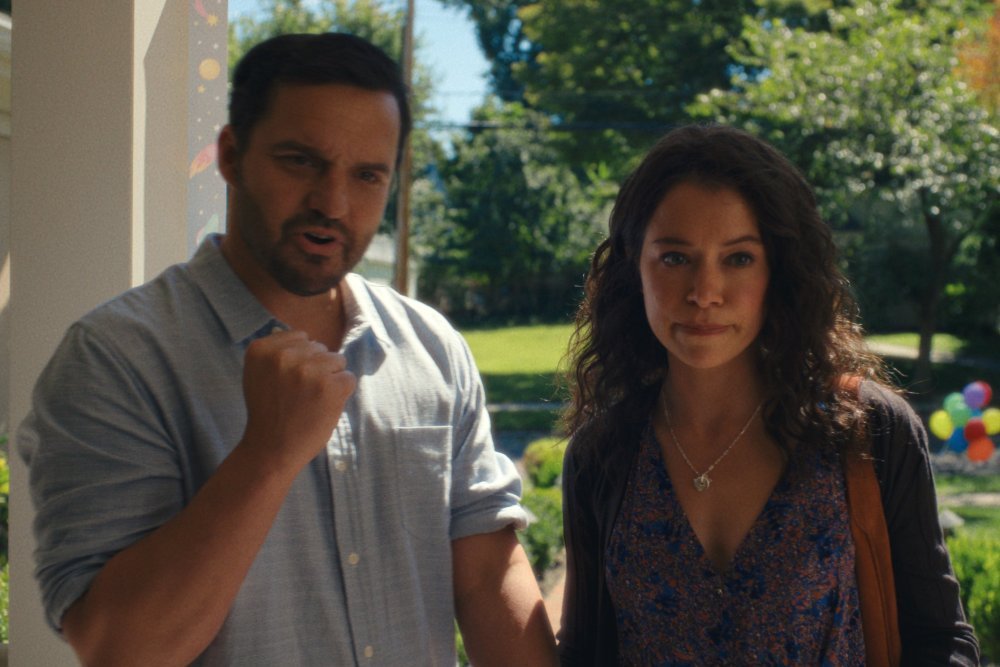
    We see Emma, the protagonist, struggling with isolation and disconnection. We see the impact of bullying and her consumption of media steeped in school shooting culture. We see a lack of meaningful support from her community and a growing sense of invisibility. There are hints of depression, despair, even suicidal thinking. And there is access to — and practice with — her father’s rifle, the element that can turn ideation into action.

    No single one of these tells the whole story. Together, they form a pattern we have seen too many times in real life.

    At Sandy Hook Promise, our work rests on a simple but urgent truth: these patterns can be recognized, and when they are, tragedies can be prevented. Through our Know the Signs programs, we teach students, educators, and community members how to recognize warning signs — and, just as importantly, when and how to respond.

    That second part matters. Awareness without action is not prevention.

    The Drama offers a glimpse of what intervention looks like. There is a moment — subtle but pivotal — when Emma connects with a peer, shares an emotional opening, and is welcomed into a community of students working on gun violence prevention. That connection interrupts a trajectory that seemed to be heading toward harm. Emma could have moved forward with her plans. Instead, she dumps them into a pond.

    It is easy to overlook, but it is the most important part of the story. When a young person feels seen, supported, and connected, outcomes change.

    The question is whether we, as viewers, recognize that moment for what it is.

    Too often, we assume intervention requires expertise or authority —that only professionals can step in. In reality, prevention is driven by ordinary people deciding to act. In the film, a student walks up to Emma after class with a simple hello and an invitation. That’s the whole thing.

    It can be as simple as reaching out to someone who has withdrawn. Taking a troubling comment seriously instead of dismissing it. Connecting a young person to a trusted adult. Creating a moment of belonging where there was none before.

    So much of this was missed in Emma’s case. I was left wondering: Would it have taken another mass shooting before anyone intervened? Were her parents having conversations about her loneliness, her change in appearance? Did they secure the firearm? Did the school see any of the warning signs along the way?

    These actions are not dramatic. They don’t make for cinematic climaxes. But they save lives.
    We also tend to believe we would recognize when something is wrong — that the signs would be obvious. The truth is, recognition is a skill. It can be learned, practiced, and strengthened.

    That is where the real opportunity lies.

    If you have seen The Drama, you have already been exposed to the warning signs we teach every day. You have seen how they accumulate, how they are missed, and how — at a critical moment — they can be used to interrupt violence before it happens.

    The next step is to move from observation to reflection, and from reflection to action.

    Where did you notice the signs? What moments stood out as opportunities for someone to step in? What might you do differently, now that you have seen them?

    These are not abstract questions. They are the foundation of prevention.

    We cannot control every outcome. But we can change how prepared we are to respond. We can build a culture where people are more attuned to one another, where warning signs are taken seriously, and where stepping in is seen not as overreacting, but as caring.

    Stories like The Drama will continue to be told. They reflect a reality that is already part of our lives. The question is whether we treat them as entertainment – or as an opportunity to learn how to change the ending.

    Because the most important work doesn’t happen on the screen.

    It happens in the moments before.

    Nicole Hockley is co-founder and CEO of Sandy Hook Promise and the mother of Dylan, who was killed at Sandy Hook Elementary School.

  • Amazon’s Candace Parker Predicts Big WNBA Season in Store: ‘There’s More Movement Than We’ve Ever Seen’

    Amazon’s Candace Parker Predicts Big WNBA Season in Store: ‘There’s More Movement Than We’ve Ever Seen’

    Have a little sympathy for Candace Parker. As the WNBA great gets ready to offer her take on some of the biggest games in the league’s next season, she may face challenges in figuring out where to look.

    WNBA players return to the court after pushing for a more robust collective bargaining agreement with a league that has been notorious for low pay. Two new teams, the Portland Fire and Toronto Temp, have built rosters and are set to join the season. And free agency has been at a new high.

    “There’s more movement than we’ve ever seen,” says Parker, noting that the league is about to enter its 30th season, which gives her more tools to explain the game to fans. “It’s so nice to be able to watch the game you love, with the ability to back it up with analysis and tell a story.”

    Parker is likely to play a key role as she joins Amazon’s Prime Sports as a regular game analyst, boosting a broader series of efforts by media companies to lure bigger crowds to the WNBA when its new season gets underway next month.

    Amazon’s Prime Video will feature Parker and Swin Cash analysts, with Michael Grady doing play by play. And its on-air roster also includes Cynthia Cooper and Teresa Weatherspoon; former WNBA player and current NBA assistant coach Lindsey Harding, Duke University Women’s Basketball head coach Kara Lawson; LaChina Robinson and former WNBA player and coach Ty Young. Lisa Bylington and Mike Watts will also serve as play-by-play voices, while JayDee Dyer, Kayla Grey and Morgan Ragan will work the sidelines. Allie Clifton, NBA on Prime sideline reporter, will serve as the studio host for WNBA on Prime’s pregame, halftime and postgame coverage.

    “I think the game and the sport have always been good, but I don’t know if the awareness has been there,” says Amina Hussein,  head of on air talent and development at Amazon’s Prime Sports during a recent interview.  “I feel that finally, people have jumped. People are paying attention.”

    Amazon is one of several media giants putting a bigger spotlight on women’s sports. In a telling sign, ESPN will this summer launch “Women’s Sports Sundays,” featuring WNBA and NWSL matches. The new showcase replaces a veteran program, “Sunday Night Baseball,” this summer. NBC Sports is also backing the WNBA across NBC and Peacock and will be working with some of the same talent who are on hand for Amazon: Michael Grady and LaChina Robinson.  Zora Stephenson and Noah Eagle will call games along with Grady, while Maria Taylor will work as lead studio host alongside analysts Sue Bird and Cheryl Miller.

    Robinson believes viewers will be captivated by the technology at use in Amazon’s WNBA studio show. “They can actually change the basketball court from WNBA to the Tennessee Lady Vols to honor Candace Parker,” she says. “My jaw was on the floor!” When it comes to building out tech to enhance the viewer experience, she adds, “I think we’re just getting started.”

    Even after 30 years.

  • ‘Clueless’ Sequel Series With Alicia Silverstone No Longer in Development at Peacock (EXCLUSIVE)

    ‘Clueless’ Sequel Series With Alicia Silverstone No Longer in Development at Peacock (EXCLUSIVE)

    The “Clueless” sequel series, which would see Alicia Silverstone reprise the role of Cher Horowitz, is not moving forward at Peacock, Variety has learned exclusively.

    The project was announced as being in development at the NBCU streamer in April 2025. According to sources, CBS Studios and Paramount remain high on the project and the IP. Given the rabid fanbase for the film and the auspices it boasts, it is expected to generate significant interest in the marketplace when it is taken out to buyers once again.

    Exact plot details for the show were not revealed, aside from the fact it would pick up with Cher’s life years after the events of the iconic film.

    Josh Schwartz and Stephanie Savage are attached to write along with Jordan Weiss. All three will executive produce, with Schwartz and Savage doing so under their Fake Empire banner. Silverstone will executive produce in addition to starring. Amy Heckerling, who wrote and directed the film, and Robert Lawrence, who produced the film, also serve as executive producers. Universal Television was attached to produce along with CBS Studios, but is no longer involved.

    Peacock had previously developed a wholly separate “Clueless” project in 2020 that would have focused on Cher’s best friend Dionne, but that ultimately did not move beyond development.

    “Clueless” originally debuted in 1995 and is loosely based on the Jane Austen novel “Emma.” Along with Silverstone, the cast included Paul Rudd, Stacey Dash, Brittany Murphy, Donald Faison, Elisa Donovan, Breckin Meyer, and Dan Hedaya. A TV adaptation aired on ABC and then UPN from 1996 until 1999 for three seasons, with Rachel Blanchard playing Cher.

    Peacock’s current scripted slate includes returning shows like the comedies “Twisted Metal,” “The Paper,” and “The ‘Burbs,” as well as dramas like “The Day of the Jackal” and the upcoming shows “M.I.A.,” “The Five-Star Weekend,” “Dig,” “Superfakes,” and the “Friday the 13th” prequel “Crystal Lake.” Interestingly, Peacock has not announced a new series order since May 2025 when “Dig” — which hails from Amy Poehler and Mike Schur — was picked up.

  • Someone allegedly used a hairdryer to rig Polymarket weather bets

    A hairdryer was allegedly used to rig Polymarket bets on the weather at Charles de Gaulle airport in Paris, according to a report by The Telegraph. French authorities note that the official temperature readings at the airport spiked twice in the past month, reaching levels much higher than expected. On both occasions, gamblers on Polymarket appear to have walked away with thousands upon thousands of dollars by betting on those temperature fluctuations.

    The gambling site relies on readings from temperature sensors, and the one at Charles de Gaulle airport is on a public road. This makes it easy to access. The operating theory is that someone snuck in and used a battery-powered hairdryer to bring the recorded temperature up well beyond the actual heat outside.

    Meanwhile, the Polymarket page indicated less than a one percent chance of the airport exceeding a particular temperature. Successful bets on these fluctuations netted an unknown user around $34,000.

    “In view of physical findings on one of our instruments and the analysis of sensor data, Météo-France was indeed led to file a complaint for alteration of the operation of an automated data processing system with the Air Transport Gendarmerie Brigade of Roissy,” a spokesperson for France’s official weather agency said.

    There is no indication that Polymarket forced anyone to return their winnings, but the temperature sensor has been moved to a new location. The site is still running bets on the daily temperature in and around Paris.

    It sucks that someone potentially tricked a temperature sensor with a hairdryer to scam actual gamblers out of potential winnings. However, this sort of thing should be expected when betting money on real-world scenarios like this. If something can be rigged, and there’s money to be made, it’ll get rigged. Humans are gonna human.

    This does, however, shine a light on the types of bets that should be allowed on sites like Polymarket and Kalshi. Polymarket, for instance, hosts numerous bets on the outcome of wars, whether or not countries will receive nuclear weapons and potential prison sentences, among many other sensitive topics. What happens when someone uses something much more dangerous than a hairdryer to change the outcome of something for financial gain?

  • Lido’s $3M First-Loss Buffer Faces Its First Real Test After Kelp Security Breach

    Lido’s $3M First-Loss Buffer Faces Its First Real Test After Kelp Security Breach

    A security incident at Kelp, a liquid restaking protocol, has sent ripple effects through decentralised finance, catching one of Lido Finance’s yield vaults in the crossfire. Lido has paused deposits and withdrawals on its EarnETH vault while it works through two separate but connected problems: direct exposure to a compromised asset and a liquidity squeeze spreading across lending markets.

    The Exposure

    Of Lido’s EarnETH vault, roughly 9% of total assets are tied to rsETH, the token at the centre of the Kelp incident. That is not a majority stake, but it is enough to trigger a pause while curators work out exactly how much, if any, has been lost.

    The Arbitrum Security Council has already recovered around $70 million in ETH connected to the attack. Further recovery efforts are ongoing, but the final accounting on losses has not yet been settled.

    A Second Problem: The Lending Crunch

    Beyond the rsETH exposure, EarnETH is also dealing with a separate headache. Elevated borrowing rates across lending markets have put pressure on looping strategies inside the vault that have nothing to do with Kelp. Vault curators have been actively deleveraging those positions, and Lido says fast action has already achieved a significant reduction in outstanding wETH debt. A fuller update on progress is expected shortly.

    The Safety Net Gets Tested

    If losses are confirmed when the dust settles, Lido has a mechanism ready. The Lido DAO treasury holds a $3 million first-loss position inside the EarnETH vault, put there specifically for situations like this one. Under the protection mechanism, the DAO’s vault shares would be burned to absorb losses before ordinary depositors feel the pain, effectively using treasury funds as a buffer.

    The arrangement was approved by Lido’s governance earlier this year as part of a broader push to make the Earn product credible enough to scale. Monday’s events are its first real test.

    What It Means

    DeFi’s interconnected architecture means a single protocol breach can travel fast and far. The Kelp incident has now touched lending market liquidity, restaking tokens, and yield vault strategies across multiple platforms simultaneously.

    For Lido, the immediate priority is containing the damage and restoring normal vault operations. For the broader market, it is a reminder that yield in decentralised finance rarely comes without strings attached.

  • Lotus Taps WisdomTree Money Market Fund to Build Yield Floor into DeFi Lending

    Pre-launch DeFi lending protocol Lotus has announced that WisdomTree’s Treasury Money Market Digital Fund (WTGXX) will serve as part of the reserve framework backing LotusUSD, its core vault token, according a press release shared with The Defiant. The DeFi protocol said the move marks one of the first instances of a money market fund being referenced within a DeFi lending protocol.

    LotusUSD reserves are composed of USDC and tokenized short-duration U.S. Treasuries. According to the release, WTGXX integration is designed so that lenders earn a baseline yield even at zero utilization, sidestepping the structural problem in standard DeFi lending where returns dry up when borrowing demand is low.

    WTGXX currently tokenizes over $857 million in U.S. Treasuries, primarily on Ethereum with a secondary allocation on Arbitrum, and carries a 7-day APY of 3.49%, per data from RWAxyz.

    The integration is made possible in part by WisdomTree’s recently granted Securities and Exchange Commission exemptive relief permitting 24/7 instant settlement of WTGXX shares — a prerequisite for compatibility with around-the-clock DeFi infrastructure.

    “We are seeing growing interest in connecting regulated financial assets, such as WTGXX, with blockchain-based infrastructure,” Maredith Hannon, head of BD for digital assets at WisdomTree said in the release. “This momentum reflects broader exploration of how tokenized traditional assets may be used within emerging digital ecosystems.”

    Lotus also uses a tranched market structure, letting lenders select explicit risk profiles within a single connected liquidity pool rather than accepting uniform pool-wide exposure, per the protocol’s documentation.

    The announcement comes days after the Kelp bridge exploit, which saw an attacker mint unbacked rsETH and use it as collateral on Aave to borrow nearly $200 million in real assets, and left Aave modeling between $124 million and $230 million in bad debt. Lotus founder and CEO David Reising drew a direct line between that event and the protocol’s design thesis:

    “Yield in DeFi lending markets is too reliant on risky, volatile collateral. This was highlighted by this weekend’s KelpDAO exploit and the subsequent $15B Aave fallout — one of many events that have demonstrated the need for risk that’s predictable, bounded, and priced fairly.”

    Reising argues the problem is structural, continuing, “The desire to lend against subprime assets, like rsETH, is a market structure issue that can be eliminated by letting people sit at a variety of risk levels in asset markets containing high-quality collateral. Collateral risk isn’t the only option to generate high returns.”

    On how Lotus’s design addresses it: “When lenders earn a reliable base rate on stable assets via productive debt, opaque collateral becomes less attractive by default, and platform-level tail risk shrinks before an exploit happens.”

    Lotus lists pre-deposit vaults opening in May 2026, with general availability to follow. Early access requests are open on the protocol’s launch page.

    Tokenized Treasuries have seen strong DeFi adoption, with protocols like Aave’s Horizon RWA Market now accepting them as collateral — a trend Lotus is extending further into lending market design.

    This article was written with the assistance of AI workflows. All our stories are curated, edited and fact-checked by a human.

  • Michael Tilson Thomas, Renowned Conductor, Dies at 81

    Michael Tilson Thomas, the charismatic conductor and composer who won 12 Grammys and presided over the San Francisco Symphony for 25 years, the London Symphony Orchestra and the Los Angeles Philharmonic, has died. He was 81.

    Tilson Thomas died Wednesday in his home in San Francisco of glioblastoma, it was announced on his website. He underwent brain surgery to remove a tumor in 2021 after being diagnosed with glioblastoma multiforme and announced the tumor had returned in February 2025.

    Two months later, he conducted his final concert with the San Francisco Symphony.

    A pianist and protege of West Side Story composer Leonard Bernstein, Tilson Thomas was known for his energetic interpretations of Austria’s Gustav Mahler. He specialized in music from Russia and work by Americans George Gershwin and Aaron Copland as well.

    The 2010 National Medal of Arts recipient and 2019 Kennedy Center honoree also had a reputation as a bad boy of classical music, once leaving the stage at the Hollywood Bowl to protest noise from a police helicopter.

    Tilson Thomas served as the San Francisco Symphony’s 11th music director from 1995 until he resigned following the 2019-20 season. His work as a composer included From the Diary of Anne Frank, a UNICEF commission that premiered in 1991 and was narrated by Audrey Hepburn.

    Tilson Thomas was born in Los Angeles on Dec. 21, 1944. His father, Theodor Thomashefsky, was a producer who worked for Orson Welles’ Mercury Theater Company and later for Roy Rogers cowboy serials, and his mother, Roberta, was a researcher at Columbia Pictures. Grandparents Boris and Bessie Thomashefsky were founding members of the Yiddish Theater in America.

    Tilson Thomas started playing the piano at age 3, had a musical epiphany by 13 when he listened to Mahler — “I was so shocked to discover that it described the shape of my own unresolved life,” he told The Guardian in 2012 — and at 19 was named music director of L.A.’s Young Musicians Foundation Debut Orchestra.

    Later, he conducted the full L.A. Phil for youth concerts and studied at USC under Jascha Heifetz and Gregor Piatigorsky. He first met Bernstein in 1968, and the two began working together in New York.

    In his mid-20s, he became assistant conductor of the Boston Symphony Orchestra and was a sensation after making his New York debut at Lincoln Center.

    Tilson Thomas was a guest conductor of the L.A. Phil in the 1980s and the principal conductor of the London Symphony Orchestra from 1988-95, taking it on tours in Europe and the U.S. In 1987, he co-founded the Miami-based New World Symphony to prepare young musicians around the world for careers in classical music.

    In 2009, he created the YouTube Symphony Orchestra, made up of young players from 30 different countries, to give a concert that could be watched on the internet.

    Joshua Robison, his husband and manager, died in February at age 79.

    “I think I’m somewhere between a director and a sports coach,” Tilson Thomas told The Guardian. “You recognize how uniquely talented the different musicians are and try to imagine how they can come to the fore in performance. No good director, working with a particular cast, would try and force them to be something other than what they are. Nor would a good director say to an actor, ‘Say the first three words quickly, then the next two slowly,’ and so on for the whole of the play.

    “The point is that the actor must become the role. It’s the same with music. You try to show the musicians ways they can make the most out of the music and get the most out of each other.”

  • Tana Mongeau Makes ‘Brand Safe’ Era Official With Launch of Podcast Series: “It’s Still Honest”

    Tana Mongeau Makes ‘Brand Safe’ Era Official With Launch of Podcast Series: “It’s Still Honest”

    Tana Mongeau has been teasing a new era for weeks but it’s now official.

    The internet’s onetime lovably messy provocateur has indeed turned over a new leaf, personally and professionally, and entered her Brand Safe era. That’s the title of Mongeau’s new podcast series, which is set to debut with its first episode on May 9.

    Brand Safe follows Mongeau’s wildly popular Cancelled, a podcast she hosted with Brooke Schofield. The series ended last September after 130 episodes, successful tours and a distinction of regularly charting in the top 10 of podcast rankings. Their tear-filled finale has been viewed 1.5 million times on YouTube. And the emotions weren’t relegated to the end, as the premise of the show often found the pair covering high drama from their lives, pop culture, famous friends and more.

    But with Brand Safe, Mongeau is charting a more intentional path. “Brand Safe isn’t the Tana people might expect,” Mongeau said in a statement. “It’s still honest — sometimes brutally so — but it’s also about growth, self-awareness and actually sitting with the reality of my life instead of just reacting to it.”

    Fans, of which Mongeau has millions (9 million on TikTok; 2.4 million on X; 5.5 million on Instagram; 5.5 million on YouTube), can expect a mix of solo episodes and guest interviews that span entertainment, culture and her inner circle. Per official intel, Brand Safe is designed as “a more intimate extension of her day-to-day life,” by puling directly from her world.

    Topics she will cover include family, relationships, sobriety, career evolution, and the behind-the-scenes realities. Mongeau, who has long been unfiltered and honest, has made a promise to reveal more about her deals, shoots and the moments she hasn’t shared on camera. “It’s still me,” she said. “Just recalibrated.”

    Mongeau rose to fame on YouTube where she amassed a loyal following drawn to her authentic brand of storytelling, which she might’ve called rambling back in the day. She has had a knack for building audiences across the platform of the moment, migrating to Instagram and TikTok, OnlyFans and X. As her influence grew, so did her empire as she launched a talent agency and more. But Mongeau has long said that her style of celebrity never made her a hot commodity for brand deals like her influencer counterparts. (On the subject of OnlyFans, she announced on TikTok Wednesday that she’s “shutting it down” amid the new brand safe time in her life.)

    However, that all changed in the wake of Cancelled as she gradually stepped into this new era. Underscoring just how impactful (and lucrative) this new corporate-friendly Mongeau has been, she recently posted product videos promoting Medicube and Peter Thomas Roth. The former, which featured Medicube’s PDRN Pink Collagen Gel Mask, has been viewed 22.8 million times, while the latter, promoting the Water Drench Hyaluronic Cloud Cream Hydrating Moisturizer, snagged 12.3 million.

    Brand Safe will be found on YouTube, Apple Podcasts, Spotify and other podcast platforms. Mongeau’s new era is supported her team: WME, Brillstein Entertainment Partners’ Brittny Turner and ICON PR.

  • 3 things to watch in Knicks-Hawks Game 3

    Down 12 entering the 4th quarter, Atlanta goes on a tear to take down New York and shock the MSG crowd and tie the series.

    • Download the NBA App

    Coming off a stunning, fourth-quarter comeback in Game 2 of their first-round series against the New York Knicks, the Atlanta Hawks are looking to maintain home-court advantage with the series moving to Atlanta.

    The Hawks won 14 of their last 15 regular-season games at State Farm Arena, but the one loss (Apr. 6) was to the Knicks, who won their first five road games (by a total of 10 points) in last year’s playoffs.

    Here are three things to watch with both teams looking to take a 2-1 series lead in Game 3 on Thursday (7 p.m. ET, Prime Video).


    1. Bench play

    Starters’ minutes are extended in the playoffs, but one big difference between the Knicks’ win in Game 1 and the Hawks’ win in Game 2 was how the teams performed with reserves on the floor …

    • In Game 1, the Knicks outscored the Hawks by six points in Jalen Brunson’s 11:36 on the bench.
    • In Game 2, they were outscored by four points in Brunson’s 11:53 on the bench.

    Karl-Anthony Towns was also on the bench for almost all (11:22) of that 11:53 that Brunson rested in Game 2, and the Knicks scored just 16 points on 23 offensive possessions in that time. His bench ranked third this season, which is a small sample size, but small sample sizes are all you get in the playoffs. Coach Mike Brown may choose to stagger (or extend) his All-Stars’ minutes a little more on Thursday.

    For the Hawks, Jonathan Kuminga is an X-factor. After a quiet night in Game 1, the 23-year-old played almost 35 minutes in Game 2, scoring 19 points and adding two steals and a block on defense. And he was on the floor instead of All-Defense candidate Dyson Daniels as the Hawks held the Knicks to just six points on nine clutch possessions.

    With backup center Jock Landale out, the Hawks may be undersized and outmanned at the five, but can play bigger at the other positions, especially with the Knicks using three small (and/or slight) guards – Jordan Clarkson, Miles McBride and Jose Alvarado – off the bench.


    2. Late-clock execution

    The Knicks had one of the best (and most-used) late-clock offenses in the league. They ranked second in effective field goal percentage (51.2%) in the last seven seconds of the shot clock and fourth in the percentage of their shots (22%) that came in the last seven seconds.

    It’s good to be good late in the clock, but it’s better not to have so many long possessions. Every team’s effective field goal percentage was much lower in the last seven seconds of the shot clock than it was otherwise.

    In this series, the Knicks have struggled late in the clock. They’re just 12-for-46 (including 4-for-16 from 3-point range) in the final seven seconds of the shot clock through Game 2. That’s an effective goal percentage of just 30.4%, compared to 63.8% through the first 17 seconds.

    Here was a critical possession late in Game 2 where the Knicks walked the ball up the floor and couldn’t get the ball to Towns in the post. So the ball remains 30 feet from the basket and ends up in the hands of Josh Hart with six seconds left on the clock …

    Knicks late-game possession in Game 2

    Hart has been a much-improved 3-point shooter this season, but his shooting a pull-up 3 with three seconds left on the clock is a pretty good result for the Hawks …

    Knicks late-game possession in Game 2

    The Hawks haven’t been as efficient early in the clock, but they’ve had to work late about half as often…

    Shooting in the last 7 seconds of the shot clock

    Team FGM FGA FG% 3PM eFG% %FGA
    New York 12 46 26.1% 4 30.4% 29%
    Atlanta 8 25 32.0% 2 36.0% 15%

    eFG% = (FGM + (0.5 * 3PM)) / FGA
    %FGA = Percentage of total FGA

    Credit the Hawks’ defense for some of the Knicks’ struggles late in the clock. Nickeil-Alexander Walker has had some timely stops against Brunson, and they’ve all been pretty disciplined when he gets into the paint, staying down on pump fakes and contesting his shots without fouling.

    The Knicks should still have better success late in the clock as the series continues. But they should also play with a bit more pace to avoid so many late-clock situations.


    3. Towns in the post

    The Knicks were trying to get the ball to Towns in the post against Kuminga in that possession illustrated above. But Kuminga denied the entry pass and the Knicks were left scrambling late in the clock.

    Onyeka Okongwu has been the Hawks player who has defended Towns the most, but he’s also been matched up with a lot of smaller Hawks. Sometimes it’s been Dyson Daniels, so Atlanta can switch the Brunson-Towns pick-and-roll.

    Towns has, at times, taken advantage of those mismatches on the glass. But according to tracking data, he’s had just four post-ups over the two games, the same number as Brunson.

    Okongwu forced him into a tough shot in the fourth quarter on Monday, but Towns’ other three post-ups were against Kuminga (who fouled him) and Mouhamed Gueye. Against Gueye, he made a short jump hook and missed a short turnaround.

    We could see the Knicks be a little quicker to get Towns the ball in the post when he’s matched up with a smaller defender in Game 3. And if he can take advantage of his size inside, that could open things up elsewhere on the floor.

    * * *

    John Schuhmann has covered the NBA for more than 20 years. You can e-mail him here, find his archive here and follow him on Bluesky.

  • Derrick White wins 2025-26 NBA Sportsmanship Award

    • Download the NBA App
    • 2025-26 NBA Awards: Complete coverage
    • NBA Sportsmanship Award: All-Time Winners

    Boston Celtics guard Derrick White has been named the 2025-26 NBA Sportsmanship Award winner, earning the Joe Dumars Trophy.

    Presented annually since the 1995-96 season, the NBA Sportsmanship Award honors a player who best represents the ideals of sportsmanship on the court.  The trophy is named for Naismith Basketball Hall of Famer and two-time NBA champion Joe Dumars, who won the inaugural NBA Sportsmanship Award and played his entire 14-year career with the Detroit Pistons.

    Each NBA team nominated one of its players for the 2025-26 NBA Sportsmanship Award.  From the 30 team nominees, a panel of league executives selected six finalists (one from each NBA division).  Current NBA players then voted to select the winner from those finalists.  The complete voting results are available here.

    White has won the NBA Sportsmanship Award for the first time.  The Celtics have now had recipients in consecutive seasons after Jrue Holiday earned the honor last season.

    A nine-year NBA veteran, White is a two-time Kia NBA All-Defensive Team selection and an NBA champion with Boston (2023-24).  He also helped the Austin Spurs win the NBA G League championship during his rookie season with the San Antonio Spurs (2017-18).  White won a gold medal with the USA Men’s National Team at the 2024 Paris Olympics.