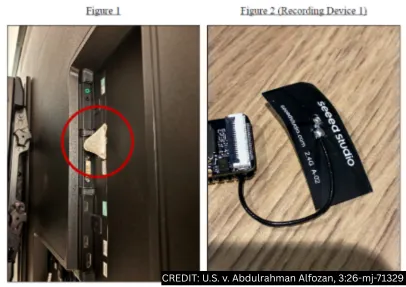
A hairdryer was allegedly used to rig Polymarket bets on the weather at Charles de Gaulle airport in Paris, according to a report by The Telegraph. French authorities note that the official temperature readings at the airport spiked twice in the past month, reaching levels much higher than expected. On both occasions, gamblers on Polymarket appear to have walked away with thousands upon thousands of dollars by betting on those temperature fluctuations.
The gambling site relies on readings from temperature sensors, and the one at Charles de Gaulle airport is on a public road. This makes it easy to access. The operating theory is that someone snuck in and used a battery-powered hairdryer to bring the recorded temperature up well beyond the actual heat outside.
Meanwhile, the Polymarket page indicated less than a one percent chance of the airport exceeding a particular temperature. Successful bets on these fluctuations netted an unknown user around $34,000.
“In view of physical findings on one of our instruments and the analysis of sensor data, Météo-France was indeed led to file a complaint for alteration of the operation of an automated data processing system with the Air Transport Gendarmerie Brigade of Roissy,” a spokesperson for France’s official weather agency said.
There is no indication that Polymarket forced anyone to return their winnings, but the temperature sensor has been moved to a new location. The site is still running bets on the daily temperature in and around Paris.
It sucks that someone potentially tricked a temperature sensor with a hairdryer to scam actual gamblers out of potential winnings. However, this sort of thing should be expected when betting money on real-world scenarios like this. If something can be rigged, and there’s money to be made, it’ll get rigged. Humans are gonna human.
This does, however, shine a light on the types of bets that should be allowed on sites like Polymarket and Kalshi. Polymarket, for instance, hosts numerous bets on the outcome of wars, whether or not countries will receive nuclear weapons and potential prison sentences, among many other sensitive topics. What happens when someone uses something much more dangerous than a hairdryer to change the outcome of something for financial gain?
A security incident at Kelp, a liquid restaking protocol, has sent ripple effects through decentralised finance, catching one of Lido Finance’s yield vaults in the crossfire. Lido has paused deposits and withdrawals on its EarnETH vault while it works through two separate but connected problems: direct exposure to a compromised asset and a liquidity squeeze spreading across lending markets.
The Exposure
Of Lido’s EarnETH vault, roughly 9% of total assets are tied to rsETH, the token at the centre of the Kelp incident. That is not a majority stake, but it is enough to trigger a pause while curators work out exactly how much, if any, has been lost.
The Arbitrum Security Council has already recovered around $70 million in ETH connected to the attack. Further recovery efforts are ongoing, but the final accounting on losses has not yet been settled.
A Second Problem: The Lending Crunch
Beyond the rsETH exposure, EarnETH is also dealing with a separate headache. Elevated borrowing rates across lending markets have put pressure on looping strategies inside the vault that have nothing to do with Kelp. Vault curators have been actively deleveraging those positions, and Lido says fast action has already achieved a significant reduction in outstanding wETH debt. A fuller update on progress is expected shortly.
The Safety Net Gets Tested
If losses are confirmed when the dust settles, Lido has a mechanism ready. The Lido DAO treasury holds a $3 million first-loss position inside the EarnETH vault, put there specifically for situations like this one. Under the protection mechanism, the DAO’s vault shares would be burned to absorb losses before ordinary depositors feel the pain, effectively using treasury funds as a buffer.
The arrangement was approved by Lido’s governance earlier this year as part of a broader push to make the Earn product credible enough to scale. Monday’s events are its first real test.
What It Means
DeFi’s interconnected architecture means a single protocol breach can travel fast and far. The Kelp incident has now touched lending market liquidity, restaking tokens, and yield vault strategies across multiple platforms simultaneously.
For Lido, the immediate priority is containing the damage and restoring normal vault operations. For the broader market, it is a reminder that yield in decentralised finance rarely comes without strings attached.
Pre-launch DeFi lending protocol Lotus has announced that WisdomTree’s Treasury Money Market Digital Fund (WTGXX) will serve as part of the reserve framework backing LotusUSD, its core vault token, according a press release shared with The Defiant. The DeFi protocol said the move marks one of the first instances of a money market fund being referenced within a DeFi lending protocol.
LotusUSD reserves are composed of USDC and tokenized short-duration U.S. Treasuries. According to the release, WTGXX integration is designed so that lenders earn a baseline yield even at zero utilization, sidestepping the structural problem in standard DeFi lending where returns dry up when borrowing demand is low.
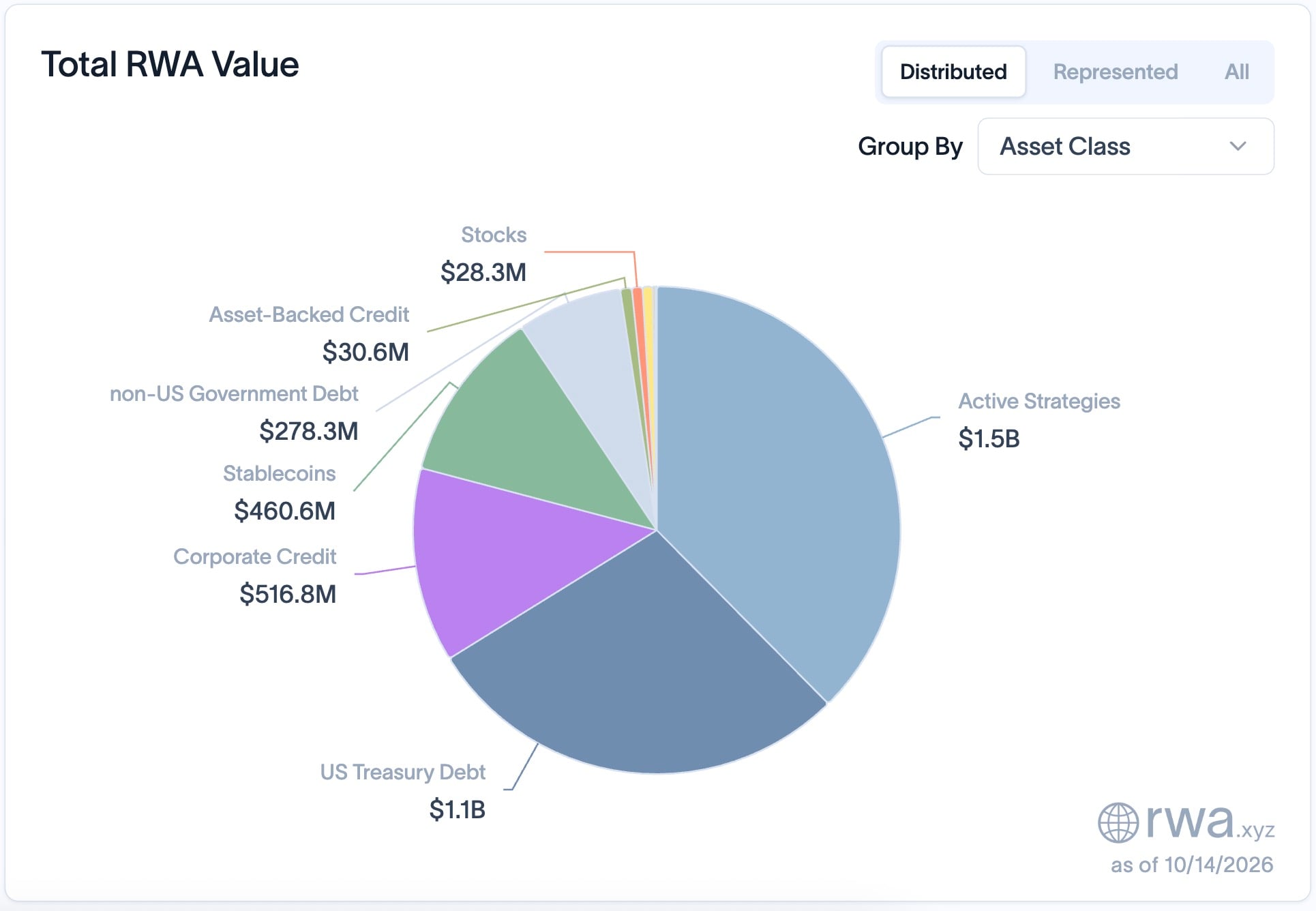
WTGXX currently tokenizes over $857 million in U.S. Treasuries, primarily on Ethereum with a secondary allocation on Arbitrum, and carries a 7-day APY of 3.49%, per data from RWAxyz.
The integration is made possible in part by WisdomTree’s recently granted Securities and Exchange Commission exemptive relief permitting 24/7 instant settlement of WTGXX shares — a prerequisite for compatibility with around-the-clock DeFi infrastructure.
“We are seeing growing interest in connecting regulated financial assets, such as WTGXX, with blockchain-based infrastructure,” Maredith Hannon, head of BD for digital assets at WisdomTree said in the release. “This momentum reflects broader exploration of how tokenized traditional assets may be used within emerging digital ecosystems.”
Lotus also uses a tranched market structure, letting lenders select explicit risk profiles within a single connected liquidity pool rather than accepting uniform pool-wide exposure, per the protocol’s documentation.
The announcement comes days after the Kelp bridge exploit, which saw an attacker mint unbacked rsETH and use it as collateral on Aave to borrow nearly $200 million in real assets, and left Aave modeling between $124 million and $230 million in bad debt. Lotus founder and CEO David Reising drew a direct line between that event and the protocol’s design thesis:
“Yield in DeFi lending markets is too reliant on risky, volatile collateral. This was highlighted by this weekend’s KelpDAO exploit and the subsequent $15B Aave fallout — one of many events that have demonstrated the need for risk that’s predictable, bounded, and priced fairly.”
Reising argues the problem is structural, continuing, “The desire to lend against subprime assets, like rsETH, is a market structure issue that can be eliminated by letting people sit at a variety of risk levels in asset markets containing high-quality collateral. Collateral risk isn’t the only option to generate high returns.”
On how Lotus’s design addresses it: “When lenders earn a reliable base rate on stable assets via productive debt, opaque collateral becomes less attractive by default, and platform-level tail risk shrinks before an exploit happens.”
Lotus lists pre-deposit vaults opening in May 2026, with general availability to follow. Early access requests are open on the protocol’s launch page.
Tokenized Treasuries have seen strong DeFi adoption, with protocols like Aave’s Horizon RWA Market now accepting them as collateral — a trend Lotus is extending further into lending market design.
This article was written with the assistance of AI workflows. All our stories are curated, edited and fact-checked by a human.
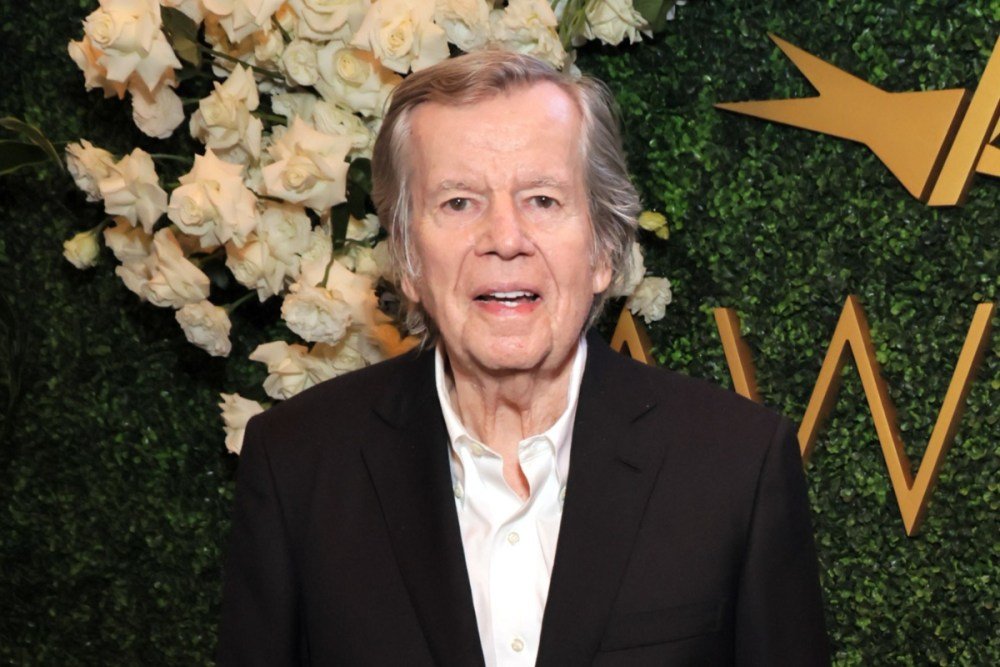
Michael Tilson Thomas, the charismatic conductor and composer who won 12 Grammys and presided over the San Francisco Symphony for 25 years, the London Symphony Orchestra and the Los Angeles Philharmonic, has died. He was 81.
Tilson Thomas died Wednesday in his home in San Francisco of glioblastoma, it was announced on his website. He underwent brain surgery to remove a tumor in 2021 after being diagnosed with glioblastoma multiforme and announced the tumor had returned in February 2025.
Two months later, he conducted his final concert with the San Francisco Symphony.
A pianist and protege of West Side Story composer Leonard Bernstein, Tilson Thomas was known for his energetic interpretations of Austria’s Gustav Mahler. He specialized in music from Russia and work by Americans George Gershwin and Aaron Copland as well.
The 2010 National Medal of Arts recipient and 2019 Kennedy Center honoree also had a reputation as a bad boy of classical music, once leaving the stage at the Hollywood Bowl to protest noise from a police helicopter.
Tilson Thomas served as the San Francisco Symphony’s 11th music director from 1995 until he resigned following the 2019-20 season. His work as a composer included From the Diary of Anne Frank, a UNICEF commission that premiered in 1991 and was narrated by Audrey Hepburn.
Tilson Thomas was born in Los Angeles on Dec. 21, 1944. His father, Theodor Thomashefsky, was a producer who worked for Orson Welles’ Mercury Theater Company and later for Roy Rogers cowboy serials, and his mother, Roberta, was a researcher at Columbia Pictures. Grandparents Boris and Bessie Thomashefsky were founding members of the Yiddish Theater in America.
Tilson Thomas started playing the piano at age 3, had a musical epiphany by 13 when he listened to Mahler — “I was so shocked to discover that it described the shape of my own unresolved life,” he toldThe Guardian in 2012 — and at 19 was named music director of L.A.’s Young Musicians Foundation Debut Orchestra.
Later, he conducted the full L.A. Phil for youth concerts and studied at USC under Jascha Heifetz and Gregor Piatigorsky. He first met Bernstein in 1968, and the two began working together in New York.
In his mid-20s, he became assistant conductor of the Boston Symphony Orchestra and was a sensation after making his New York debut at Lincoln Center.
Tilson Thomas was a guest conductor of the L.A. Phil in the 1980s and the principal conductor of the London Symphony Orchestra from 1988-95, taking it on tours in Europe and the U.S. In 1987, he co-founded the Miami-based New World Symphony to prepare young musicians around the world for careers in classical music.
In 2009, he created the YouTube Symphony Orchestra, made up of young players from 30 different countries, to give a concert that could be watched on the internet.
Joshua Robison, his husband and manager, died in February at age 79.
“I think I’m somewhere between a director and a sports coach,” Tilson Thomas told The Guardian. “You recognize how uniquely talented the different musicians are and try to imagine how they can come to the fore in performance. No good director, working with a particular cast, would try and force them to be something other than what they are. Nor would a good director say to an actor, ‘Say the first three words quickly, then the next two slowly,’ and so on for the whole of the play.
“The point is that the actor must become the role. It’s the same with music. You try to show the musicians ways they can make the most out of the music and get the most out of each other.”
Tana Mongeau has been teasing a new era for weeks but it’s now official.
The internet’s onetime lovably messy provocateur has indeed turned over a new leaf, personally and professionally, and entered her Brand Safe era. That’s the title of Mongeau’s new podcast series, which is set to debut with its first episode on May 9.
Brand Safe follows Mongeau’s wildly popular Cancelled, a podcast she hosted with Brooke Schofield. The series ended last September after 130 episodes, successful tours and a distinction of regularly charting in the top 10 of podcast rankings. Their tear-filled finale has been viewed 1.5 million times on YouTube. And the emotions weren’t relegated to the end, as the premise of the show often found the pair covering high drama from their lives, pop culture, famous friends and more.
But with Brand Safe, Mongeau is charting a more intentional path. “Brand Safe isn’t the Tana people might expect,” Mongeau said in a statement. “It’s still honest — sometimes brutally so — but it’s also about growth, self-awareness and actually sitting with the reality of my life instead of just reacting to it.”
Fans, of which Mongeau has millions (9 million on TikTok; 2.4 million on X; 5.5 million on Instagram; 5.5 million on YouTube), can expect a mix of solo episodes and guest interviews that span entertainment, culture and her inner circle. Per official intel, Brand Safe is designed as “a more intimate extension of her day-to-day life,” by puling directly from her world.
Topics she will cover include family, relationships, sobriety, career evolution, and the behind-the-scenes realities. Mongeau, who has long been unfiltered and honest, has made a promise to reveal more about her deals, shoots and the moments she hasn’t shared on camera. “It’s still me,” she said. “Just recalibrated.”
Mongeau rose to fame on YouTube where she amassed a loyal following drawn to her authentic brand of storytelling, which she might’ve called rambling back in the day. She has had a knack for building audiences across the platform of the moment, migrating to Instagram and TikTok, OnlyFans and X. As her influence grew, so did her empire as she launched a talent agency and more. But Mongeau has long said that her style of celebrity never made her a hot commodity for brand deals like her influencer counterparts. (On the subject of OnlyFans, she announced on TikTok Wednesday that she’s “shutting it down” amid the new brand safe time in her life.)
However, that all changed in the wake of Cancelled as she gradually stepped into this new era. Underscoring just how impactful (and lucrative) this new corporate-friendly Mongeau has been, she recently posted product videos promoting Medicube and Peter Thomas Roth. The former, which featured Medicube’s PDRN Pink Collagen Gel Mask, has been viewed 22.8 million times, while the latter, promoting the Water Drench Hyaluronic Cloud Cream Hydrating Moisturizer, snagged 12.3 million.
Brand Safe will be found on YouTube, Apple Podcasts, Spotify and other podcast platforms. Mongeau’s new era is supported her team: WME, Brillstein Entertainment Partners’ Brittny Turner and ICON PR.
Coming off a stunning, fourth-quarter comeback in Game 2 of their first-round series against the New York Knicks, the Atlanta Hawks are looking to maintain home-court advantage with the series moving to Atlanta.
Here are three things to watch with both teams looking to take a 2-1 series lead in Game 3 on Thursday (7 p.m. ET, Prime Video).
1. Bench play
Starters’ minutes are extended in the playoffs, but one big difference between the Knicks’ win in Game 1 and the Hawks’ win in Game 2 was how the teams performed with reserves on the floor …
In Game 1, the Knicks outscored the Hawks by six points in Jalen Brunson’s 11:36 on the bench.
In Game 2, they were outscored by four points in Brunson’s 11:53 on the bench.
Karl-Anthony Towns was also on the bench for almost all (11:22) of that 11:53 that Brunson rested in Game 2, and the Knicks scored just 16 points on 23 offensive possessions in that time. His bench ranked third this season, which is a small sample size, but small sample sizes are all you get in the playoffs. Coach Mike Brown may choose to stagger (or extend) his All-Stars’ minutes a little more on Thursday.
For the Hawks, Jonathan Kuminga is an X-factor. After a quiet night in Game 1, the 23-year-old played almost 35 minutes in Game 2, scoring 19 points and adding two steals and a block on defense. And he was on the floor instead of All-Defense candidate Dyson Daniels as the Hawks held the Knicks to just six points on nine clutch possessions.
With backup center Jock Landale out, the Hawks may be undersized and outmanned at the five, but can play bigger at the other positions, especially with the Knicks using three small (and/or slight) guards – Jordan Clarkson, Miles McBride and Jose Alvarado – off the bench.
2. Late-clock execution
The Knicks had one of the best (and most-used) late-clock offenses in the league. They ranked second in effective field goal percentage (51.2%) in the last seven seconds of the shot clock and fourth in the percentage of their shots (22%) that came in the last seven seconds.
It’s good to be good late in the clock, but it’s better not to have so many long possessions. Every team’s effective field goal percentage was much lower in the last seven seconds of the shot clock than it was otherwise.
In this series, the Knicks have struggled late in the clock. They’re just 12-for-46 (including 4-for-16 from 3-point range) in the final seven seconds of the shot clock through Game 2. That’s an effective goal percentage of just 30.4%, compared to 63.8% through the first 17 seconds.
Here was a critical possession late in Game 2 where the Knicks walked the ball up the floor and couldn’t get the ball to Towns in the post. So the ball remains 30 feet from the basket and ends up in the hands of Josh Hart with six seconds left on the clock …
Hart has been a much-improved 3-point shooter this season, but his shooting a pull-up 3 with three seconds left on the clock is a pretty good result for the Hawks …
The Hawks haven’t been as efficient early in the clock, but they’ve had to work late about half as often…
Shooting in the last 7 seconds of the shot clock
Team
FGM
FGA
FG%
3PM
eFG%
%FGA
New York
12
46
26.1%
4
30.4%
29%
Atlanta
8
25
32.0%
2
36.0%
15%
eFG% = (FGM + (0.5 * 3PM)) / FGA %FGA = Percentage of total FGA
Credit the Hawks’ defense for some of the Knicks’ struggles late in the clock. Nickeil-Alexander Walker has had some timely stops against Brunson, and they’ve all been pretty disciplined when he gets into the paint, staying down on pump fakes and contesting his shots without fouling.
The Knicks should still have better success late in the clock as the series continues. But they should also play with a bit more pace to avoid so many late-clock situations.
3. Towns in the post
The Knicks were trying to get the ball to Towns in the post against Kuminga in that possession illustrated above. But Kuminga denied the entry pass and the Knicks were left scrambling late in the clock.
Onyeka Okongwu has been the Hawks player who has defended Towns the most, but he’s also been matched up with a lot of smaller Hawks. Sometimes it’s been Dyson Daniels, so Atlanta can switch the Brunson-Towns pick-and-roll.
Towns has, at times, taken advantage of those mismatches on the glass. But according to tracking data, he’s had just four post-ups over the two games, the same number as Brunson.
We could see the Knicks be a little quicker to get Towns the ball in the post when he’s matched up with a smaller defender in Game 3. And if he can take advantage of his size inside, that could open things up elsewhere on the floor.
Boston Celtics guard Derrick White has been named the 2025-26 NBA Sportsmanship Award winner, earning the Joe Dumars Trophy.
Presented annually since the 1995-96 season, the NBA Sportsmanship Award honors a player who best represents the ideals of sportsmanship on the court. The trophy is named for Naismith Basketball Hall of Famer and two-time NBA champion Joe Dumars, who won the inaugural NBA Sportsmanship Award and played his entire 14-year career with the Detroit Pistons.
Each team nominated one of its players for the Sportsmanship Award.
From the 30 nominees, a panel of league executives selected six finalists (one per division).
Current NBA players then voted to select the winner from the finalists.
Each NBA team nominated one of its players for the 2025-26 NBA Sportsmanship Award. From the 30 team nominees, a panel of league executives selected six finalists (one from each NBA division). Current NBA players then voted to select the winner from those finalists. The complete voting results are available here.
White has won the NBA Sportsmanship Award for the first time. The Celtics have now had recipients in consecutive seasons after Jrue Holiday earned the honor last season.
A nine-year NBA veteran, White is a two-time Kia NBA All-Defensive Team selection and an NBA champion with Boston (2023-24). He also helped the Austin Spurs win the NBA G League championship during his rookie season with the San Antonio Spurs (2017-18). White won a gold medal with the USA Men’s National Team at the 2024 Paris Olympics.
President Donald Trump has said he ordered the United States Navy to “shoot and kill” any Iranian boat laying mines in the Strait of Hormuz, a move that could jeopardise the fragile ceasefire between the two countries.
The US president also said on Thursday that the military will heighten its efforts to remove explosives from the strategic waterway.
Recommended Stories
list of 3 itemsend of list
“I have ordered the United States Navy to shoot and kill any boat, small boats though they may be (Their naval ships are ALL, 159 of them, at the bottom of the sea!), that is putting mines in the waters of the Strait of Hormuz. There is to be no hesitation,” Trump wrote in a social media post.
“Additionally, our mine ‘sweepers’ are clearing the Strait right now. I am hereby ordering that activity to continue, but at a tripled-up level!”
Iranian officials have repeatedly promised that their country would defend itself and respond to any US attack.
Hormuz – which had been open without interruption before the war – has emerged as a major point of contention in this war.
Iran closed down the strait in response to the US-Israeli military campaign, and it is now suggesting that it has rights to the passage that links the Gulf to the Indian Ocean – parts of which go through Iranian territorial waters.
The closure of Hormuz has spiked oil prices, putting political pressure on Trump at home in the US, where the price of one gallon (3.8 litres) of petrol has surpassed $4, up from $3 before the conflict.
A satellite image shows a fleet of small boats at sea, north of the Strait of Hormuz near the Kargan coast, Iran, April 22 [File: European Union/Copernicus Sentinel-2/Handout via Reuters]
Dueling blockades
About 20 percent of the world’s oil and natural gas flowed through Hormuz before the war.
After a two-week ceasefire came into effect last month, Trump announced a naval siege on Iranian ports and kept it in place even after Tehran announced reopening Hormuz in response to the inclusion of Lebanon in the truce.
Iran has set lifting the blockade as a precondition for resuming talks with the US.
Trump extended the ceasefire that was set to expire on Wednesday, but Washington has kept its blockade on Iran-linked ships.
The Pentagon said on Thursday that the US military conducted a “maritime interdiction and right-of-visit” to a tanker carrying Iranian oil in the Indian Ocean.
Earlier this week, the US military also said it seized an Iranian vessel and ordered dozens of others to turn around.
Meanwhile, Iran has also captured foreign commercial vessels around the Hormuz Strait, which it said were in violation of naval regulations.
The duelling blockades risk re-igniting the war. The US has not set a deadline for the extended truce.
The White House said on Wednesday that Trump is “satisfied” with the siege on Iran.
Trump says Hormuz ‘sealed up tight’
Although Iran has all but halted vessel traffic in the waterway, Trump said on Thursday that the US has “total control over the Strait of Hormuz”, adding that the passage is “sealed up tight”.
The US president also reiterated his claim that the Iranian leadership is divided.
“Iran is having a very hard time figuring out who their leader is! They just don’t know!” Trump wrote on his Truth Social platform.
“The infighting is between the ‘Hardliners’, who have been losing BADLY on the battlefield, and the ‘Moderates’, who are not very moderate at all (but gaining respect!), is CRAZY!”
Earlier in the day, Trump shared a post by conservative commentator Marc Thiessen, calling for the assassination of Iranian officials who oppose diplomacy with the US.
“If there are two factions in Iran, one that wants a deal and one that doesn’t, let’s kill the ones who don’t want a deal,” it said.
Despite Trump’s repeated claims, there has been no evidence of a rift within the leadership in Iran.
Although US and Israeli strikes killed Iranian Supreme Leader Ali Khamenei and several top officials, there have been no major defections within the ruling system.
Last month, Khamenei was replaced by his son Mojtaba, who had been wounded in US attacks, according to the Pentagon.
Mojtaba Khamenei is yet to make a public appearance since he succeeded his slain father, raising speculation about his health.
But Iranian officials, including the lead negotiators – Foreign Minister Abbas Araghchi and Parliament Speaker Mohammad Bagher Ghalibaf – have voiced a unified position in rejecting the US blockade.
Iranian leadership also agreed to the ceasefire and enforced it earlier this month.
On Thursday, Iran’s Foreign Ministry praised the Islamic Revolutionary Guard Corps (IRGC), the ideologically driven military branch spearheading the war effort.
“We salute the noble defenders and guardians of the homeland, and honour the memory of the crimson-shrouded martyrs of the IRGC,” Iranian Foreign Ministry spokesperson Esmaeil Baghaei said in a post on X, marking the anniversary of the establishment of the Revolutionary Guard.
Morning Minute is a daily newsletter written by Tyler Warner. The analysis and opinions expressed are his own and do not necessarily reflect those of Decrypt. And check out our new daily news show covering all of the top stories in 5 minutes or less, downloadable on Apple Pod or Spotify.
GM!
Today’s top news:
Crypto majors rally then reverse as oil concerns mount; BTC -1% at $77,300
The US Government discloses that it’s operating a Bitcoin node
Justin Sun sues WLFI to unfreeze his tokens
Andre Cronje’s Flying Tulip introduces a “circuit breaker” for DeFi
MegaETH gets 10th app launch with Xeet, TGE expected in May
📈📉 Bitcoin Clears $79,000, Then Reverses
Bitcoin crossed $79,000 Wednesday morning, reaching its highest level in 11 weeks after President Trump announced he was extending the US-Iran ceasefire indefinitely.
The move came after Iran refused to send negotiators to a second round of talks in Islamabad, and Trump said the extension would hold until Tehran submits a “unified proposal” to end the war.
But the price action was shortlived, with Bitcoin falling back to $77,300 overnight as oil concerns mount and the IEA Chief called that “We are facing the biggest energy security threat in history.”
Oil jumped another 4% to $94/barrel and stock futures have moved into the red after making another new ATH yesterday.
⚖️ Justin Sun Sues Trump’s World Liberty Financial Over Frozen Tokens
Justin Sun filed a federal lawsuit in California on April 21 against World Liberty Financial, the Trump family-backed DeFi project, alleging fraud, breach of contract, and unjust enrichment.
The complaint centers on a hidden blacklist function that WLFI quietly added to its token smart contract in August 2025 – without a governance vote or any disclosure to investors. Sun alleges WLFI used that function to freeze approximately 2.9 billion of his WLFI tokens in September 2025 after he moved roughly $9 million worth of holdings, a transfer he says was routine. At the time of the freeze, his stake was worth over $100 million.
WLFI fired back publicly: “We have the contracts. We have the evidence. We have the truth. See you in court.” Eric Trump went even further, commenting on Justin Sun’s $6M banana purchase. Well, I’ll let you read his comments for yourself 👇
🗳️ Kalshi Fines Congressional Candidates for Betting on Their Own Races
Prediction market platform Kalshi announced Wednesday that it had fined and suspended three congressional candidates for “political insider trading” – betting on their own elections.
The three are Ezekiel Enriquez, a Republican who ran in Texas’ 21st Congressional District primary; Matt Klein, a Democrat running in Minnesota’s 2nd Congressional District primary; and Mark Moran, who ran in Virginia’s Democratic Senate primary before switching to an independent campaign.
Fines were small, ranging from $539 to $6,229.30. All three were banned from the platform for five years. Two cooperated with Kalshi’s investigation though Moran did not.
Moran made clear the stunt was intentional. He wrote on X: “I traded $100 on myself, knowing this would happen… and the attention it would create to highlight how this company is destroying young men.” He said as a senator he would “go after Kalshi and impose significant penalties – 25%, a vice tax – to pay down our national debt.”
The plot thickens…
₿ The US Government Is Running a Bitcoin Node
Admiral Samuel Paparo, commander of US Indo-Pacific Command (INDOPACOM), disclosed Wednesday that the US government is actively running a Bitcoin node and conducting operational network security tests using the Bitcoin protocol.
This followed his Tuesday Senate Armed Services Committee testimony, where he told lawmakers that “Bitcoin shows incredible potential as a computer science tool that, through the proof-of-work protocols, actually imposes more costs than just the algorithmic securing of networks.” He described Bitcoin as “a peer-to-peer, zero-trust transfer of value” with “really important computer science applications for cybersecurity.”
Notably, the framing tracks directly with the Jason Lowery thesis that proof-of-work can function as a physical-cost cyberdefense layer, analogous to conventional military deterrence. Paparo’s testimony marks the first time a combatant commander has publicly characterized Bitcoin as a national security asset in congressional testimony.
💸 André Cronje’s Flying Tulip Brings Circuit Breakers to DeFi Lending
André Cronje, the developer behind Fantom, Yearn Finance, and Solidly, is addressing one of DeFi’s most pressing issues with his newest project.
Flying Tulip, Cronje’s new AMM and lending protocol, has introduced a programmatic circuit breaker module designed to rate-limit capital outflows during abnormal withdrawal events.
The circuit breaker works by monitoring outflow velocity in real time. When withdrawals exceed a defined threshold, whether triggered by a smart contract exploit, oracle failure, or a large coordinated position unwind, the system automatically throttles the rate at which capital can exit the protocol.
Cronje has been vocal for years about DeFi’s need for TradFi-style risk infrastructure without TradFi’s centralization trade-offs. Circuit breakers are standard in equity markets (the NYSE halts trading when the S&P drops 7%, 13%, or 20% in a session) but have been largely absent from DeFi because they require either centralized admin keys or complex governance coordination to trigger. Flying Tulip’s implementation is fully programmatic, with no admin override, which means it operates the same way regardless of who is watching.
Of course the timing is notable after last week’s $292M KelpDAO exploit and accelerating issues with Defi protocols being hacked. Perhaps a DeFi-wide circuit breaker would ease the pain…
🌎 Macro Crypto and Markets
Crypto majors are red as oil concerns rise; BTC -1% at $77.7k; ETH -3% at $2,330; SOL -3% at $86; HYPE even at $41.10
Stable (+18%), DEXE (+8%), and M (+7%) led top movers
Oil +4% at $94; Gold -1% at $4,700
Stock futures are red after making another new ATH yesterday
GSR launched the first actively managed multi-asset crypto ETF in the US on Wednesday, the GSR Crypto Core3 ETF (BESO) on Nasdaq, offering exposure to Bitcoin, Ethereum, and Solana with weekly rebalancing and staking rewards on ETH and SOL holdings
OpenAI launched workspace agents in ChatGPT Wednesday, replacing custom GPTs with a more powerful team-oriented successor powered by Codex; workspace agents can handle complex, long-running tasks like preparing reports, writing code, and responding to messages, while operating within organization-set permissions and role-based access controls
Corporate Treasuries & ETFs
Meme Coin Tracker
Meme leaders were red on the day; DOGE -2%, SHIB -2%, PEPE -4%, TRUMP -5%, BONK -3%, PENGU -3%, SPX -3%, FARTCOIN -6%
uncraft (+100x), Burnie (+77%) and Noob (+180%) led notable movers
Pumpcade rebounded 30% to $25M
💰 Token, Airdrop & Protocol Tracker
Andre Cronje’s Flying Tulip project introduced a “circuit breaker” for DeFi using a programmatic module to limit outflows in extreme scenarios
MegaETH had its 10th app launch with Xeet, meaning that the MEGA TGE should indeed happen soon
Axie Infinity’s Ronin blockchainset May 12 as the date for its migration from Ethereum sidechain to full Layer-2 network on the OP Stack; the shift cuts RON token inflation from over 20% to under 1% and jumps marketplace Treasury fees 2.5x from 0.5% to 1.25%
Believe App founder Ben Pasternakwas arrested for assault and strangulation
🚚 What is happening in NFTs?
NFT leaders were mostly green again; Punks +3% at 28.9ETH, Pudgy +5% at 4.69 ETH, BAYC -5% at 8.64 ETH; Hypurr’s -3% at 375 HYPE
Azuki (+19%), Elementals (+33%) and Doodles (+17%) led notable movers; Meebits also up 14%
Nouns jumped 160% after the founder announced that the 1 Noun/per day streak had finally been broken after 1,700+ days
An 8-Punk sweep kicked off a big day of Punk action that led to 16 overall sales, the most in weeks
Daily Debrief Newsletter
Start every day with the top news stories right now, plus original features, a podcast, videos and more.
Market intelligence firm Glassnode’s risk index and moderate strategy trackers have aligned, hinting at a “cleared risk” environment for Bitcoin.
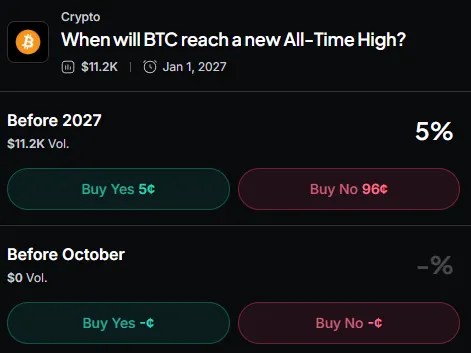
Analysts called the current setup “an excellent window for strategic accumulation” pointing to a new all-time high for Bitcoin by year-end.
Glassnode warns 54% of recent buyers are in profit, with realized profit spiking to $4.4 million, a level that has marked every local top in 2026.
Bitcoin’s sustained bullish market structure over the past three weeks has triggered a clear risk landscape signal that could hint at an extension of the ongoing rally.
The Risk Index—Glassnode’s proprietary metric that quantifies systemic risk on a scale of 0 to 100—is hovering at zero, the lowest possible level, indicating a “cleared risk landscape,” according to a Thursday Telegram post from the market intelligence firm. It also serves as a primary gauge of market health, with a 25 threshold that distinguishes between low- and high-risk regimes.
The Moderate Strategy, which captures upside momentum and exits when conviction fades, has flipped from “Moderate” to “High Confidence.”
The alignment of these models signals a bullish regime, analysts told Decrypt, underscored by sustained inflows into Bitcoin ETPs and aggressive demand from spot buyers.
First time since Oct 10: Moderate Strategy flips to high confidence. Risk Index at 0, signaling a cleared risk landscape.
After 7 years of research and extensive backtesting, we’re introducing Bitcoin Vector: a systematic framework for #BTC exposure, validated across market… pic.twitter.com/xWZl8QzcuS
“This is an excellent window for strategic accumulation rather than chasing deeper dips,” Lacie Zhang, research analyst at Bitget Wallet, told Decrypt. Zhang added that the firm maintains, “a strong conviction for a positive close to 2026, supported by improving market structure and institutional conviction that should drive Bitcoin to a new all-time high.”
“As the US-Iran conflict subsides, bullish bets will continue to propel the market upward in the near term,” Jeff Mei, COO of BTSE, told Decrypt.
As a result, Bitcoin hit $79,388 on Wednesday, its highest level in over three months.
Investor sentiment has also seen considerable improvement, resulting in the Fear and Greed Index jumping from “extreme fear” at the start of April to “fear.” Likewise, users on prediction market Myriad, owned by Decrypt’s parent company Dastan, see a 74% chance that Bitcoin extends its rally toward $84,000 next,up from lows of 62% at the start of the week.
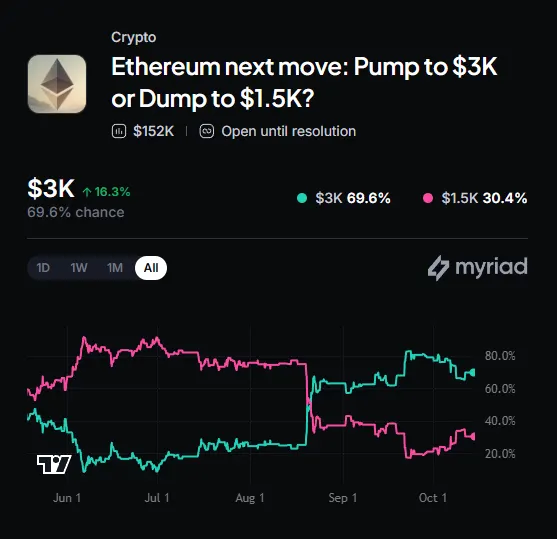
A similar outlook can be seen with Ethereum, with users assigning a 54% chance that the second-largest crypto by market cap pumps to $3,000 next.
“Breaking and holding above $80K would act as a major technical and psychological catalyst, clearing the path for further recovery toward $90K and potentially $100K,” Zhang said.
Both Bitcoin and Ethereum are down 0.5% and 2.9%, respectively over the past 24 hours, according to CoinGecko data. Bitcoin is currently trading at around $77,800, while Ethereum is around $2,330.
What’s next?
Despite Glassnode’s risk indicator and the underlying bullish developments, investors need to exercise caution, analysts argued.
“Risks include the resumption of hostilities in the Middle East, restriction of oil flows, and elevated inflation that could lead to rate hikes,” Mei added.
Geopolitical uncertainty remains a key concern, experts previously told Decrypt.
Additionally, the recent uptrend has pushed 54% of recent buyers into profitable territory, according to Glassnode’s latest report. These buyers are now at a threshold that has historically exhausted bear market rallies.
Short-term holders’ realized profit has spiked to $4.4 million, Glassnode analysts noted. That number is three times the $1.5 million threshold, which “ marked every local top year-to-date, signaling caution in the absence of a meaningful demand catalyst.”
The missing piece remains a fundamental catalyst—whether it’s the CLARITY Act, Fed rate cuts, or a lasting Middle East truce. Until then, the risk landscape may be cleared, but the path above $80,000 is not.
Daily Debrief Newsletter
Start every day with the top news stories right now, plus original features, a podcast, videos and more.