Author: rb809rb

  • A Full Year of the New Rosetta Stone Sapphire Is 20% Off Right Now

    A Full Year of the New Rosetta Stone Sapphire Is 20% Off Right Now

    TL;DR: New users can lock in one year of Rosetta Stone Sapphire—access to all 25 languages—for $127.20 (MSRP $159).

    Rosetta Stone recently launched its new Sapphire platform, and a one-year subscription is 20% off right now. New users can explore languages such as Spanish, French, Italian, German, Japanese, Korean, Arabic, and Mandarin through immersion learning rather than drills and flashcards.

    Their Dynamic Immersion® method teaches languages the way people naturally learn them: through context, repetition, listening, reading, and speaking. It’s designed so students build the confidence to actually use a language in real-world situations, not just recognize it on a menu or in passing.

    Rosetta Stone also supports learning with TruAccent™ speech recognition technology, which analyzes pronunciation and provides feedback as you practice speaking. Interactive Chat Missions simulate real-life conversations, while personalized Sapphire Studio activities allow learners to focus on topics that matter most to them.

    With lessons available across desktop, mobile, and tablet devices, users can learn whenever it fits their schedule. Rosetta Stone’s structured system helps learners move beyond memorization toward genuine communication.

    Recommended by Our Editors

    Get a one-year Rosetta Stone Sapphire subscription for $127.20 (MSRP $159) and start working through all 25 languages at your own pace.

    Rosetta Stone Sapphire

    1-Year Subscription


    $127.20
    at StackSocial

    $159.00
    Save $31.80


    Get Deal

    Prices subject to change. PCMag editors select and review products independently. If you buy through StackSocial affiliate links, we may earn commissions, which help support our testing.

    About Our Expert

  • Where to Watch France vs. England World Cup Third-Place Playoff Online

    Where to Watch France vs. England World Cup Third-Place Playoff Online

    If you purchase an independently reviewed product or service through a link on our website, The Hollywood Reporter may receive an affiliate commission.

    Just ahead of the 2026 World Cup final between Spain and Argentina, France and England must go toe-to-toe to determine who will take third place. Broadcast live on Saturday, July 18 at 2 p.m. PT/5 p.m. ET on Fox, the match can be livestreamed on any streaming service that carries said network, namely DirecTV (with a five-day free trial), Fubo, Sling and Hulu + Live TV. And since the World Cup concludes with the July 19 final, DirecTV’s five-day trial will provide free coverage through the remainder of the tournament and beyond.

    Like every match in this year’s tournament, the France vs. England matchup will also stream live on Fox One, the official 2026 World Cup streamer. Following the service’s three-day free trial, a Fox One subscription costs $19.99 per month. For Spanish-language coverage, Peacock is the official World Cup streamer.

    At a Glance: How to Watch France vs. England World Cup Third-Place Playoff

    Where to Watch France vs. England World Cup Match: Air Date, Time

    The tournament’s third-place game will be broadcast live on Saturday, July 18 at 2 p.m. PT/5 p.m. ET on Fox. It will also air live on Telemundo in Spanish.

    Where to Stream France vs. England World Cup Match Online Free

    Since the FIFA World Cup bronze match airs on Fox, it will also be available to watch live on any streaming service that carries the network, including DirecTV (with a five-day free trial), Fubo, Sling and Hulu + Live TV. By opting for DirecTV’s five-day trial, fans can also tune in to the July 19 final at no cost.

    All matches also stream live on Fox One, the official World Cup streamer. Following Fox One’s three-day free trial, the service costs $19.99 per month. For Spanish-language coverage, Peacock is the official World Cup streamer.

    More on each option — and their new subscriber discounts — below.

    Five-day free trial; packages from $19.99 per month

    Fox is included in any of DirecTV’s signature packages: Entertainment, Choice, Ultimate or Premier. Plus, DirecTV offers a five-day free trial for its streaming service, meaning new subscribers can tune in to the World Cup at no cost.

    Learn more about each plan option, including how to build your own channel lineup (starting at just $19.99 per month), at directv.com.

    Fubo

    Up to $30 off first month; packages from $64.99 per month ($54.99 for first month)

    Fox is available to stream with a subscription to Fubo, which offers between $10 and $30 off for the first month. Plans start at $54.99 during the first month and $64.99 monthly thereafter.

    Plans from $4.99 per day or $19.99 per month

    Fox is included in Sling’s Blue Plan, from $45.99 per month, and Sling’s Orange & Blue plan, from $60.99 per month. That said, local channel availability depends on your TV market. Visit Sling.com to check station availability and package options, starting as low as $4.99 per day or $19.99 per month.

    Three-day free trial; packages from $89.99 per month

    Watch Fox for free with a three-day trial to Hulu + Live TV. Subscriptions come bundled with Disney+ and ESPN+, and start at $89.99 per month.

    Related: The Best Peacock Subscription Deals and Free Trial Hacks

  • ‘The Odyssey’ Galloping to $120M in Muscular Box Office Opening

    ‘The Odyssey’ Galloping to $120M in Muscular Box Office Opening

    Christopher Nolan‘s box office journey with The Odyssey looks to be one for the books, as Universal Picturesstar-studded adaptation of the classical Greek mythological tale gets off to a rousing start in its opening weekend.

    Starring Matt Damon as the heroic Odysseus, the epic feature is fending off competition with $51.2 million on Friday from 3,900 North American screens, including Thursday previews. Earning an A CinemaScore from audiences, the film is eyeing a $120 million-plus frame, which would make it 2026’s biggest live-action opening, with only Toy Story 5 ($159 million) and The Super Mario Galaxy Movie ($131 million) debuting above it. The Odyssey is also set to claim the top R-rated opening of the year and Universal’s highest weekend launch ever for an R-rated movie.

    Globally, The Odyssey appears headed for $257.8 million for the summer weekend, with $137.3 million from 73 international markets.

    This marks an even stronger start than initially projected for the film, which has a production budget of $250 million, as the studio was targeting a domestic opening in the mid-$80 million to $100 million range. Tom Holland, Anne Hathaway, Robert Pattinson, Lupita Nyong’o, Zendaya and Charlize Theron star in the story of Odysseus (Damon) on his tumultuous trip home after the Trojan War to reclaim his throne as the king of Ithaca and reunite with his wife Penelope (Hathaway). Nolan and Emma Thomas produce for Syncopy.

    With The Odyssey marking the first feature to be shot entirely on IMAX cameras, premium large formats have been a priority for many moviegoers, and cinephiles have flocked to the 25 U.S. theaters that screen IMAX 70mm film. The title is eyeing an estimated $30 million from IMAX screens domestically for 25 percent of its North American haul, with an additional $22 million expected from IMAX showings internationally.

    This movie looks to notch the third-biggest opening weekend domestically of Nolan’s impressive career and the best outside of the Batman franchise, behind 2012’s The Dark Knight Rises with $160 million and 2008’s The Dark Knight at $158 million. The Odyssey is also set to become Nolan’s biggest global opening, topping The Dark Knight Rises’ $249 million worldwide launch.

    The Odyssey is the weekend’s sole new offering in wide release, unlike the filmmaker’s most recent title, Oppenheimer, which opened in July 2023 alongside Barbie as part of the sensation known as Barbenheimer. The film about the physicist who led development of the atomic bomb opened to $82.4 million domestically and ultimately collected $975 million worldwide, and it won seven Academy Awards, including best picture and Nolan’s first best director Oscar. 

    Nolan’s successful ride with The Odyssey includes sterling reviews, as its 95 percent approval rating from critics on Rotten Tomatoes is currently the best tally of his career, just ahead of The Dark Knight and Memento at 94 percent. The Odyssey is also “verified hot,” with a 97 percent Rotten Tomatoes score from audiences. In his review for The Hollywood Reporter, chief film critic David Rooney deemed it “a meditative action movie both immense and intimate, albeit one whose flow is impeded by the inherently episodic nature of the nonlinear source material and some questionable casting choices.” Additionally, THR’s list ranking Nolan’s movies places The Odyssey in second place, behind only The Dark Knight.

    The sophomore frame for Disney’s live-action Moana is set to dock in second place. After a disappointing opening, the Dwayne Johnson-led feature is heading to roughly $19 million domestically for the weekend, declining around 56 percent for a two-week run of $82 million in North America.

    Illumination’s Minions & Monsters and Disney’s Toy Story 5 are in close competition for No. 3 on the chart. As the latest title in Universal’s Despicable Me franchise, Minions & Monsters looks to pick up $4.2 million Friday for a third weekend of $14 million, bringing its domestic haul to $136 million. Meanwhile, the latest installment in the popular Toy Story series is also lassoing roughly $4.2 million Friday for around $13.8 million in its fifth frame for a domestic sum of $429 million.

    Closing out the top five is Warner Bros.’ Evil Dead Burn, the latest entry in the Evil Dead horror franchise. After its opening sum last weekend was well behind the debut of 2023’s Evil Dead Rise, Evil Dead Burn is expected to gross around $4.7 million this weekend, declining 66 percent for a two-week domestic total at $23.8 million.

    Sunday’s World Cup final between Spain and Argentina presents potential competition for moviegoing, particularly among international audiences. In a rare summer occurrence, next weekend is devoid of new wide releases, as studios appear reticent to date any titles between The Odyssey and Sony’s July 31 release of Spider-Man: Brand New Day, starring Holland and Zendaya.

  • ‘The Odyssey’: What Academics Are Saying About Christopher Nolan’s Epic

    ‘The Odyssey’: What Academics Are Saying About Christopher Nolan’s Epic

    So, a Homerist, an archaeologist and a dentist walk into a bar. 

    Fresh from a Thursday night showing of Christopher Nolan‘s “The Odyssey,” a group of 17 spent the evening doing what scholars have done with Homer’s epic for nearly 3,000 years: arguing about it.

    “We had a really robust debate,” says Joel P. Christensen, editor of “The Oxford Critical Guide to Homer’s Odyssey.” Christensen was accompanied by retired Homer scholars (often referred to as Homerists), editors, professors, historians and various public intellectuals. “And my wife is a dentist,” he adds, “so she was the red herring in the crowd.”

    The conversation ranged from Nolan’s decision to make Polyphemus (the Cyclops that Matt Damon’s Odysseus stabs in the eye) nonverbal to the film’s depiction of language itself. Each intellectual was fervently dedicated to a different academic discipline, yet Homer’s “The Odyssey” is one of the few works that transcends any single field of literature or history.

    “I was surprised by how many academics liked it,” Christensen says. “I had to be restrained a few times by my wife. Everybody knows that I’m the worst audience for the film.” After a long pause, he continues, “I’ve been saying to myself: ‘This is not Homer’s “Odyssey.” This is Nolan’s “Odyssey.” And it needs to be judged on different terms.’”

    There’s a palpable excitement around “The Odyssey” that movie theater exhibitors have been yearning for. Beyond its colossal box office projections, it’s the first feature shot entirely with Imax cameras. Over 95% of Imax 70mm screenings (the format Nolan says the film is intended to be seen in) have already sold out for the first five weeks. The spectacle is also fueling a cultural revival for classic literature in a way that academics have rarely seen before.

    “I’ve been in this business for a long time, and I don’t think I’ve seen anything like this,” says Monica Cyrino, a classics professor at the University of New Mexico who has spent decades studying ancient worlds on screen. “It’s had the impact of the OG ‘Gladiator,’ but even that didn’t have the same run-up. There’s already been hundreds of published academic articles — and the movie hasn’t even come out yet. It’s crazy!”

    In the months leading up to its release, Nolan’s film has become a flashpoint for online culture-war debates. Critics have argued that the “woke” castings of Lupita Nyong’o and Elliot Page, along with certain production design choices, are historically inconsistent with the Mycenaean world traditionally associated with “The Odyssey.” But after Variety spoke with leading classicists and historians, it became clear those weren’t the issues driving the conversation in academic circles. 

    “I’m really disturbed that so much of the conversation has been about how ‘woke’ or progressive this film was going to be,” Christensen says. “I actually think it’s a very conservative film. The roles for women are constrained. The interracial casting is women of color who just get to be married to white men, which is not progressive.”

    From a filmmaking perspective, literature and film experts alike will argue that no Hollywood epic portraying the ancient world has ever achieved complete historical accuracy, instead reflecting the cultural assumptions and audience preferences of the time.

    “These are fictional characters,” film critic Alonso Duralde notes in his review of “The Odyssey” on the “Breakfast All Day” podcast. “There probably wasn’t actually a Helen of Troy. There probably weren’t actually a lot of these folks. And if there were, the ancient world was a lot more mixed than we think from all the Italian sword-and-sandal epics we were given in the ‘50s and ‘60s. You had people from Africa, Asia and Europe. They had boats, y’all!”

    As for critiques of the film’s production design, whether it’s the polished Trojan Horse or the costumes (many fans online argued Benny Safdie’s Agamemnon looked more like a Batsuit than Bronze Age armor), Nolan has described his philosophy as: “What is the best speculation and how can I use that to create a world?” That approach didn’t seem to ruffle the feathers of classicists, many of whom have tempered their expectations for what a Hollywood blockbuster is designed for: entertainment.

    “Nobody cared,” Christensen laughs, speaking for his academic cohort. “Even the head archaeologist didn’t care. Because here’s the thing: ‘The Odyssey’ is filled with anachronisms. Homeric poetry contains different historical layers. What’s important is that the depiction functions as a vehicle for the audience’s fantasy about the past.”

    While the majority of classicists are embracing the spectacle of Nolan’s blockbuster, opinions start to diverge when discussing his adaptation of Homer’s language for the screenplay. As Harvard classics professor Gregory Nagy puts it, there is no single “original” version of “The Odyssey” in a modern sense — that’s because the poem emerged from an oral tradition.

    “‘Homer’s Odyssey’ was already historical fiction, reimagining an ancient past when it was first composed,” says Richard P. Martin, a professor of Greek and Latin literature at Stanford. “Fellow classicists are happy with Nolan’s version because we all recognize it is a version. There is no ‘correct’ treatment, because every generation makes its own version of the poem, either by retranslation or revisualization in various media. All publicity about Homer is good publicity.”

    Just as Odysseus assumes different identities to survive his arduous homecoming trek, there’s a long-standing debate over whether “Homer” was a single author — or, as Friedrich August Wolf first argued in 1795, that the poems were the product of “the whole Greek people” and were edited several times to suit changing contemporary tastes.

    Famously, Alexander Pope’s 18th-century translation made “The Odyssey” into a text about polite manners and tact, while Richmond Lattimore’s 1960s translation sought to preserve the rhythms and formulas of the original Greek language. Laura Slatkin, one of the leading Homer scholars, says Lattimore’s translation often feels “archaic” for her students at New York University because the diction is too quaint and formal.

    “None of them are definitive,” Slatkin says. “That tells you something about the problem of translation, but it also tells you something about ‘The Odyssey’ because it’s not simple enough for a definitive translation. You’re building on existing resources from previous songs, from previous poetic traditions, but you’re not simply repeating them or recapitulating them. You’re … assimilating them.”

    More recently, Emily Wilson’s translation suggests “The Odyssey” was socially progressive for its time and “meditates on what women [and other suppressed groups, broken down by race or economic status] might be capable of.” She argues that “Homer is, and is not, our contemporary,” and that her translations (along with all the others) should be contextualized as a “text that exists in two different temporal and spatial moments at once.”

    Slatkin described Nolan’s screenplay, which Variety’s chief awards editor Clayton Davis predicts will compete for best screenplay at next year’s Academy Awards, as “the newest song” in a lineage of adaptations. “The Odyssey” has always been a tale that contains multitudes — balancing realism and fantasy, moral certainty and reconciliation, strangeness and familiarity. Just as the ancient Greeks (and every civilization that followed them) used “The Odyssey” to express their own ideas about morality, Nolan is doing the same.

    “The consensus I’ve heard so far is that it’s going to generate a lot of discussion in the classroom,” says Justin Arft, a fellow Homerist and associate professor at the University of Tennessee, Knoxville. “Even with all the omissions and changes, no one’s too upset about that. Honestly, we’re all curious — maybe confused, at times — but really interested in this as a piece of art. Nolan’s film is a piece of art, and Homer is a piece of art.”

    Once that classroom discussion begins, academics will surely have some more words for all the creative liberties Nolan’s movie takes. Martin, Christensen and several other classicists knocked Nolan for watering down the “sophisticated” morality of Homer’s poem and devoting more narrative time to spectacle, such as the fall of Troy. 

    “I understand where the critics are coming from because I can speak in both registers,” Cyrino said. “What they don’t understand is the near-term and long-term benefit this has for us as a discipline. Humanities programs are being cut everywhere, especially classics programs. I’m a department chair, and I guarantee my Greek classes are going to be fuller this year!”

    She concludes, “You know what Hollywood does: one thing succeeds, and 10 more follow. This is going to be great. As my husband always says, business is booming!”

  • Jim Parsons was ‘Miserable’ During Peak ‘Big Bang Theory’ Popularity: ‘I Wouldn’t Do That Again and For Any Amount of Money’

    Jim Parsons was ‘Miserable’ During Peak ‘Big Bang Theory’ Popularity: ‘I Wouldn’t Do That Again and For Any Amount of Money’

    Jim Parsons recently told the “All Out with Jon Dean” podcast (via People) that he was “miserable” during the height of his long-running TBS sitcom “The Big Bang Theory.”

    “I look back now and realize that there were many ways, at some of the best moments of my life, I was miserable,” Parsons said. “I was not happy. I was stressed.”

    He added, “I felt that there was so many plates I was supposed to be keeping in the air and that the success and the good things of life that were happening were only due to this overworking… discipline and whatever. Maybe to a degree that was true. I don’t know. I can’t say because that’s how I was.”

    Despite the overwhelming success of “The Big Bang Theory,” Parsons said he wouldn’t relive it “for any amount of money.” He went on to acknowledge that the role “is not going away,” but since the show wrapped in 2019, he’s been “changing my relationship to it.”

    “It’s evolving, and it gets better all the time. What I feel is better, what I feel is healthier. It’s not something that I think probably anybody, but I was certainly not equipped to, looking back,” Parsons explained.

    “The Big Bang Theory” ran for 279 episodes from 2007 to 2019, and followed the misadventures of a group of socially awkward science geeks and their much cooler female neighbors. Parsons starred alongside Johnny Galecki, Kaley Cuoco, Simon Helberg, Kunal Nayyar, Melissa Rauch and Mayim Bialik. The show earned 10 Emmys during its run, including four best lead actor in a comedy wins for Parsons.

  • DOG Mode explains Bitcoin’s next governance fight

    DOG Mode explains Bitcoin’s next governance fight

    Debates and disputes about Bitcoin’s governance often pivot on the rules baked into the world’s original blockchain network’s code. The latest dispute suggests the reality is more nuanced.

    The alternative Bitcoin client “$DOG Mode”, introduced by Bitcoin developer “Leonidas”, doesn’t attempt to rewrite Bitcoin’s consensus rules. Instead, it targets the default relay policies used by Bitcoin Core and other node software. These are in effect the settings that determine which valid transactions are forwarded around the network before miners include them in a block.

    In doing so, the developer is reopening a philosophical debate over censorship, free markets and who really governs the network.

    Leonidas is an advocate of the Ordinals protocol, which allows data to be stored on the Bitcoin blockchain, often in the form of images or texts to essentially create a version of non-fungible tokens (NFTs).

    The Bitcoin Improvement Proposal (BIP) 110 sought to tighten the network’s rules to make such transactions more difficult, prompting accusations of censorship from its critics.

    Bitcoin consensus rule changes are rare, hence why attempts to alter them seem so seismic. In many ways, $DOG Mode represents the philosophical mirror image of BIP-110.

  • Taylor Sheridan’s ‘Call of Duty’ Movie Will Be Set in ‘Modern Warfare’ Universe

    Taylor Sheridan’s ‘Call of Duty’ Movie Will Be Set in ‘Modern Warfare’ Universe

    Paramount Pictures‘ upcoming “Call of Duty” movie from writer Taylor Sheridan will be based on the Xbox-owned first-person shooter franchise’s “Modern Warfare” games.

    Plot details about the movie have been kept under wraps since it was first announced in September 2025. But during a “Call of Duty in Culture Panel” promoting the October release of “Modern Warfare 4,” which took place at Fanatics Fest in NYC Saturday, “Call of Duty” movie director and co-writer Peter Berg took the stage to reveal to fans that the film will be set in the “Modern Warfare” universe.

    Since the original game’s release in 2003, the “Call of Duty” franchise has grown to include more than 30 mainline games. Among the dozens of titles, which have hailed from different developers over the years but are now all under Xbox via its purchase of publisher Activision, are the “Modern Warfare” games. Beginning with “Call of Duty 4: Modern Warfare” in 2007, the “Modern Warfare” storyline marked the first “CoD” games to break from the franchise’s original World War II setting.

    The “Modern Warfare” games have largely been set in the Middle East and followed Captain John Price and his Task Force 141 team’s mission to defeat terrorist Vladimir Makarov. This story will continue with the fall launch of “Modern Warfare 4,” which features a war that breaks out between North and South Korea.

    Last month, Paramount Pictures set a June 30, 2028 release date for the currently untitled “CoD” film, which is being produced in collaboration with publisher Activision.

    When the deal to make a “CoD” movie was first announced last year by new Paramount owner Skydance, sources told Variety that while the focus was to make the one “Call of Duty” movie from writer Taylor Sheridan, the multiyear pact includes the potential for Paramount to expand the “Call of Duty” universe across film and TV.

  • An Altcoin Is Heading to a Vote That Will Have Numerous Implications, Including a Token Burn

    An Altcoin Is Heading to a Vote That Will Have Numerous Implications, Including a Token Burn

    Uniswap management is preparing to vote on a proposal that would enable protocol fees for the first time in select Uniswap v4 liquidity pools. Separately, a proposal plans to extend the fee mechanism implemented in Uniswap v2 and v3 to Robinhood Chain.

    The final on-chain voting process has begun for both proposals. Voting opens on Sunday and will continue until July 26th. Uniswap founder Hayden Adams said they expect the proposals to have a significant impact on the $UNI burning mechanism, particularly highlighting the current trading volumes on Robinhood Chain.

    The Uniswap v4 proposal calls for enabling protocol fees in fixed-fee pools, pools created through perpetual swap auctions, and pools using aggregator hooks. The regulation will cover Ethereum, Arbitrum, Base, BNB Chain, Polygon, Optimism, and Robinhood Chain networks.

    According to the proposal text, a second vote will be held later for the remaining five networks. This is because Uniswap’s GovernorBravo governance agreement allows a maximum of 10 on-chain transactions in a single offer.

    A separate Robinhood Chain proposal by Hayden Adams aims to enable fees on Uniswap v2 and v3 pools on the network. All three protocol versions of Uniswap were made available with Robinhood Chain’s mainnet launch on July 1st.

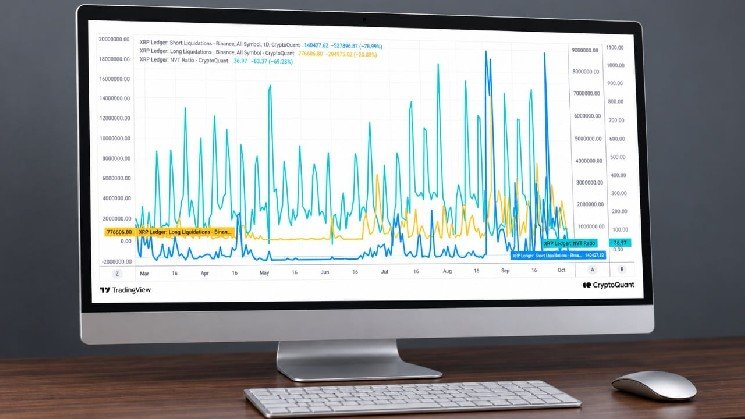
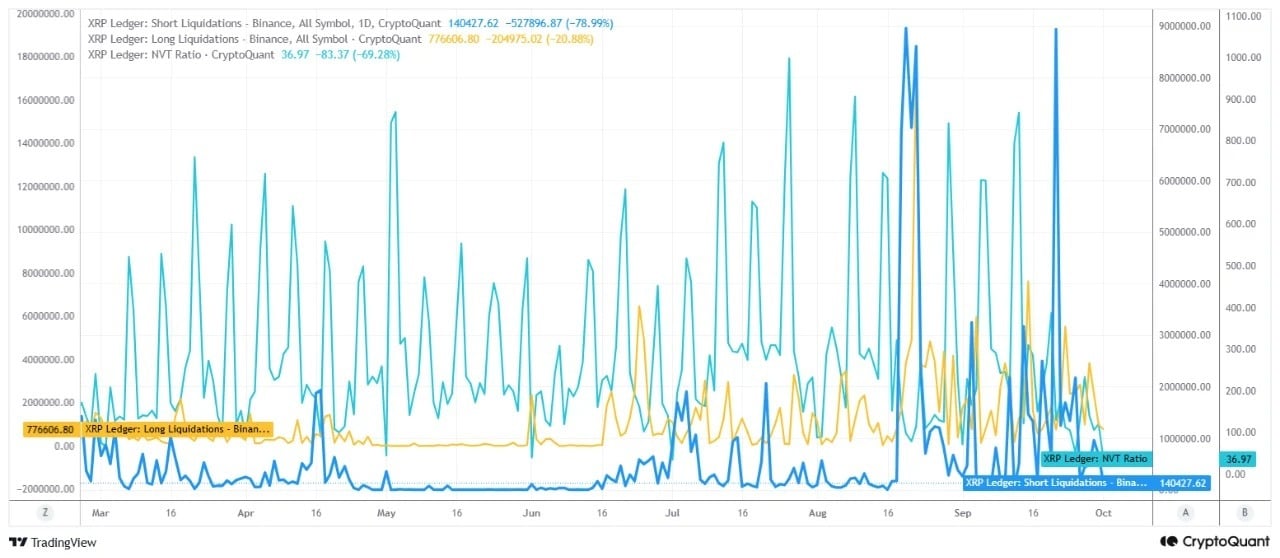
    Related News Analyst: “The Leverage Cleanup in XRP Is Complete; Conditions Are Similar to the Period When It Surged 8x”

    According to data included in the proposal, the total exchange volume of Uniswap applications on Robinhood Chain exceeded $6 billion as of July 10th. The Ethereum Layer 2 network, developed with Arbitrum infrastructure, recorded approximately $3.1 billion in decentralized exchange volume in its first week. It was noted that memecoins were predominantly traded in the initial transactions.

    The protocol fees collected under both proposals will be transferred to the $UNI combustion mechanism, which was established by the UNIfication governance regulation approved with 99.9% support in December.

    With this governance change, protocol fees were enabled in the Uniswap v2 and v3 pools on the Ethereum mainnet, and 100 million $UNI were burned in the Uniswap treasury. However, the implementation of v4 fees was postponed to a later proposal pending the completion of the necessary technical infrastructure.

    The fee mechanism has reportedly been expanded to 11 different networks to date. According to the Uniswap v4 proposal, the protocol set a daily record last month by burning 186,000 $UNI in a single day.

    Enabling fees in Uniswap v4 requires a more complex infrastructure compared to previous versions. While v2 and v3 used fixed fee tiers, v4’s hook architecture allows pools to change their fees from block to block.

    The new proposal creates a management-controlled system that categorizes pools under specific “families” and calculates the fee for each pool according to predefined rules, rather than setting the fee individually.

    Both proposals utilize the accelerated governance process adopted under UNification. This process skips the request for comments phase and proceeds directly to on-chain voting after a five-day Snapshot voting period.

  • Crypto executives say digital native generations may never need a bank account

    Crypto executives say digital native generations may never need a bank account

    Evidence of that shift is growing. Visa’s stablecoin tracker recorded $6.6 billion in volume across 132.4 million retail-sized transactions (those worth less than $250) during the latest 30-day period. Standard Chartered expects stablecoin circulation to increase about sevenfold to roughly $2 trillion by 2028, while agent-led purchases could rise from 1% of e-commerce in 2025 to 12% in 2029. Neobanks capture nearly 40% of new banking accounts globally, boasting over 1.4 billion users.

    A step further

    Naveen Mallela, Standard Chartered’s global head of payments, also expects the traditional account-based model to change. He believes people will eventually use a wallet tied to their identity instead of separate bank and brokerage accounts.

    “Rather than having bank accounts with individual banks or having separate brokerage accounts, you would have a wallet where you’ll have cash, tokenized deposits of some sort issued by different banks, stablecoins, tokenized money market funds, crypto and funds, all of that in one app, one wallet,” he said, clarifying that this was his personal opinion, not a formal Standard Chartered position.

    His forecast does not remove banks from the system. The wallet he described could hold deposits and tokens issued by several banks, which would continue providing much of the money, infrastructure and controls behind the services.

  • Is Fast Charging Actually Killing Your Phone’s Battery? Here’s the Truth

    Is Fast Charging Actually Killing Your Phone’s Battery? Here’s the Truth

    As long as we’ve had smartphones, we’ve wanted to charge them faster. Each year, the newest phones come out with incredible advancements in fast charging technology. While a 30W charger used to feel incredibly fast, it’s now a pretty standard charging speed, replaced by blistering figures over 100W in the fastest phones. A few years back, Realme debuted a 150W phone capable of charging to 50% in just five minutes. The iPhone 17 Pro Max’s 40W charger can reach a 50% charge in 20 minutes.

    But as phone makers experiment with faster charging, concerns about overheating and battery degradation have risen. Is the device in my pocket just one fast charge away from exploding? In short: probably not, but there are still a few things to know.

    Read more: Stop Stressing About Your Phone Battery


    Why Phone Batteries Lose Charge Capacity Over Time

    Ever wonder how a phone actually charges? Lithium-ion batteries (the type used in iPhone and Android devices) have two layers—lithium cobalt oxide and graphite. When lithium ions move from the graphite layer to the lithium cobalt layer through an electrolyte solution, electrons get released. When you charge the battery, the ions move back in the other direction and are stored to be released later.

    Your Phone’s Battery Sucks. Here's How to Fix It

    PCMag Logo

    Your Phone’s Battery Sucks. Here’s How to Fix It

    That release of energy creates the heat you may feel radiating from the back of your phone after a long charging session or heavy use. And, yes, that heat can damage the battery in the long term. However, I need to stress that li-ion batteries have become smaller and more efficient over the years. They can handle more charge cycles—going from depleted, to full, and back down again—before they begin to lose their charge capacity.

    For a visual breakdown, I think the below video from tech YouTube channel Branch Education offers a helpful representation.

    As your smartphone goes through charge cycle after charge cycle, it degrades naturally. This is unavoidable. Over time, the salts in the electrolyte solution within the battery can crystallize, forming solids that block the transmission of ions through the solution. If fewer ions get through, fewer electrons are released, and the battery can’t provide as much power as it did when it was new. 

    Additionally, if you put more power into the battery than it’s designed to accept, it can disrupt the delicate balance inside a Li-ion cell. This can remove too many lithium ions from the battery’s internal structure. And once that lithium’s gone, you can’t really put it back.

    These processes can happen more quickly if your phone is exposed to excessive heat, such as when you draw a lot of power from the battery at once with a fast charger. However, it’s worth noting that the same thing can happen just by leaving your phone in a car on a hot summer day.

    lithium-ion battery design graphic

    (Credit: Samsung)


    How Phones Mitigate Battery Damage

    In the early days of fast charging, batteries got very hot when charging quickly. Phones weren’t built to vent excess heat from the battery effectively, so they were more prone to overheating. But guess what? Current phones are now much better at ventilation and don’t have this issue. For instance, phones now have heat shields, thermal layers, and even cooling pipes to move heat away from the battery. I’ve even seen some gaming phones with cooling fans.

    iphone battery optimization settings

    Apple’s iPhone has battery optimization settings (Credit: Apple)

    Plus, phones are now built with features that manage the flow of power going to the battery during a charge. Your phone will stop taking in power once the battery is full, even if it remains plugged in, which is why I’m not worried about my phone bursting into flames when I charge it overnight.

    Adaptive charging features also help optimize things by “learning” your behavior so the phone holds off on charging to 100% until closer to when you actually need it. Multi-stage charging means more power is directed into the battery at first, but trickles off as it approaches 100%, so you’re not getting 80W of power the entire time. 

    Manufacturers are also always developing new charging protocols and battery designs to help get more juice to phone batteries in less time. In recent years, Apple has added a collection of battery performance settings and Google introduced a Battery Health Assistant to its line of Pixel phones that can automatically adjust voltage and charging speeds. More advanced batteries, cables, and power supplies will help manage heat and cut down on any adverse effects, too. So, really, don’t worry about using fast charging.

    Recommended by Our Editors


    How to Check Your Phone’s Battery Health

    Don’t believe me? Your iPhone should let you check for yourself by showing the current health of your battery, including maximum capacity, if a replacement is recommended, cycle count, and more, under Settings > Battery > Battery Health.

    Older phones have fewer options, but if you have an iPhone 15 or later running iOS 17.4, I recommend checking Cycle Count, which can help you track how heavily the battery’s capacity has been used up. On iOS 26, you also get a redesigned Battery Settings page with improved battery usage statistics and a new feature to extend battery life.

    Android users have fewer options. To see cycle counts, open Settings > About phone > Battery information on Google’s Pixel 8a and later. Samsung users will need the Samsung Members app to see cycle counts and other battery health information. If your device isn’t compatible, I recommend using one of several third-party diagnostic apps to find the information you need.

    iphone battery optimization settings with cycle count

    (Credit: Apple)


    Should You Use Fast Charging?

    So, is fast charging really that bad for your phone? Well, yes and no. It can be hard on your battery, especially if it runs for a long time at high power. But modern phones are now designed with battery charging management features to make serious damage far less likely. But keep in mind that, as YouTuber Marques Brownlee points out, a lot of these advancements are still too new to know whether they work the way they should in the long term.

    Right now, I’m comfortable knowing my phone has features that are supposed to help keep it running as intended. However, I’ll admit that we do ultimately need more data to answer the question definitively, and not just take the manufacturer’s word for it. For now, if you take care of the battery (and follow our advice), this degradation will happen more slowly. Just remember this happens to all Li-ion batteries eventually, no matter what you do, so don’t beat yourself up too much over it. 

    About Our Expert