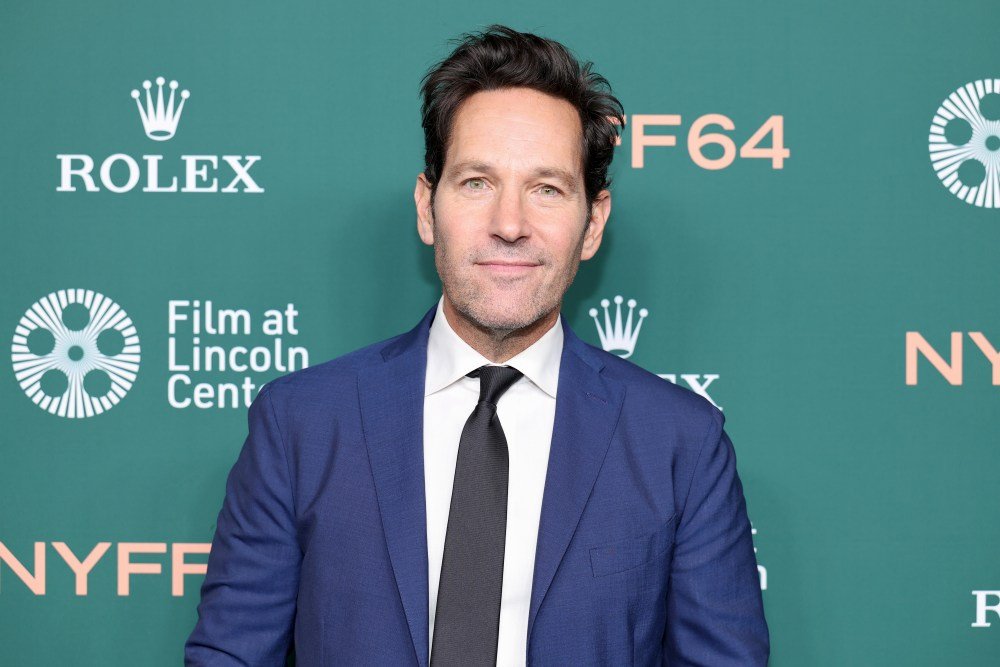
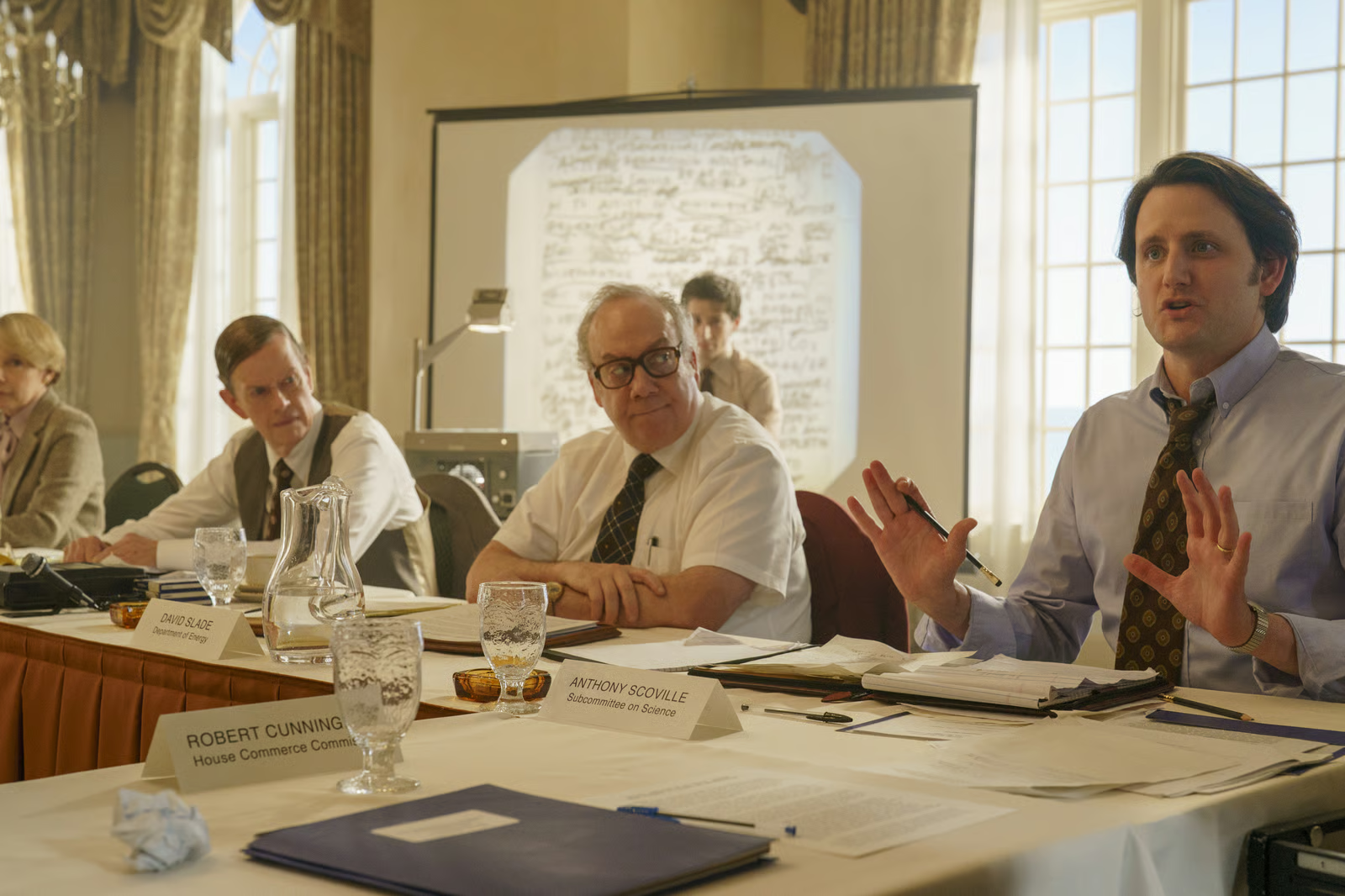
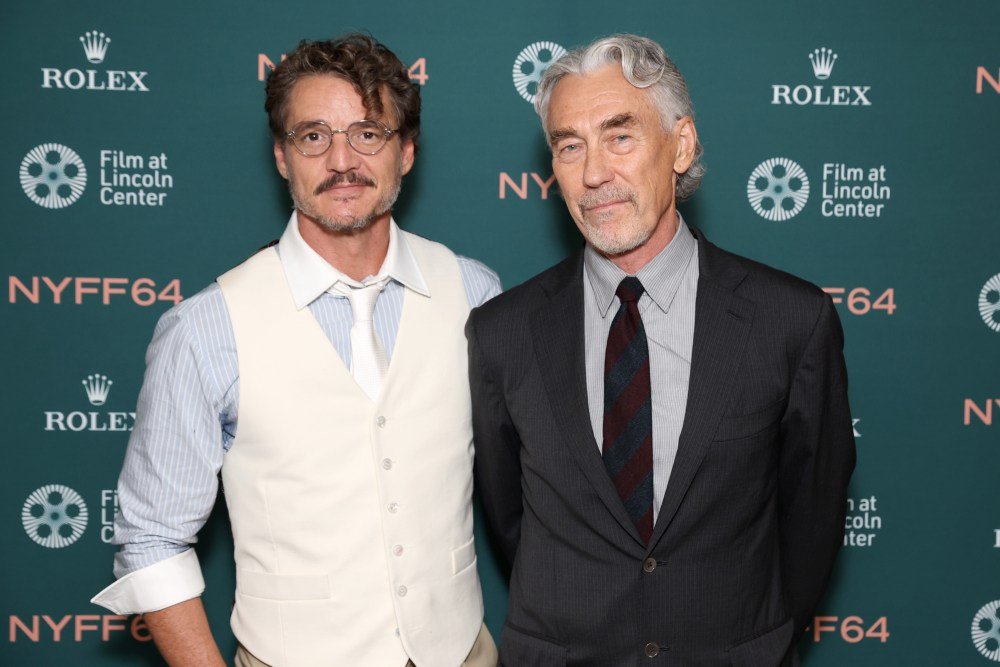
Paul Rudd plays the moderator of the first-ever meeting dedicated to solving America’s climate crisis in “A Statement,” the latest film from Oscar-winning director Tom McCarthy. Set at a Florida beachside resort in 1980, the film follows 20 experts who spend a weekend in a conference room and — analogous to “12 Angry Men” — hash out their differences over how to draft a statement to Congress about the effects of carbon dioxide emissions on the climate.
Rudd found himself more connected to the sprawling ensemble cast, which includes Paul Giamatti, Tatiana Maslany and John Turturro, by leaving his smartphone in his trailer, a practice he claims he’s now followed for some time.
“I don’t go to sets with a phone. I haven’t done that for a while now,” he told Variety Saturday evening during the film’s world premiere at the New York Film Festival. “It’s important to put it down. Anytime. They’re horrible things. I’m addicted to it like everybody else. They’re facilitating our own destruction.”
Rudd revealed that McCarthy enforced a “very strict no phones policy” on the set of “A Statement,” which he found brought his castmates closer together and made filming feel more like a play.
“The world has changed since cell phones have existed. We don’t look at each other or talk to each other quite the same way,” Rudd said. “Now, [with the phone ban], we were forced to really spend time with each other and talk. Working on a movie set in 1980, we’re dressed in a certain kind of way. It felt like, ‘Oh, yeah. I remember this. This feels like it used to feel when people sat around and spoke to one another.’”
Amy Ryan, whose character delivers a sobering wake-up call to the group at the film’s climax, encouraged other filmmakers to follow McCarthy’s lead. The absence of notifications and doomscrolling, she said, “definitely made the work much more rich.”
“What happens is there’s a five-minute break and people are connected. ‘Hey, what are you doing? How’s your morning? What do you think of this scene?’” Ryan explained. “I equate it to like when you quit sugar. In three days, it’s out of your system. You don’t miss it! And hopefully, it becomes like a toy you’re gonna get sick of.”
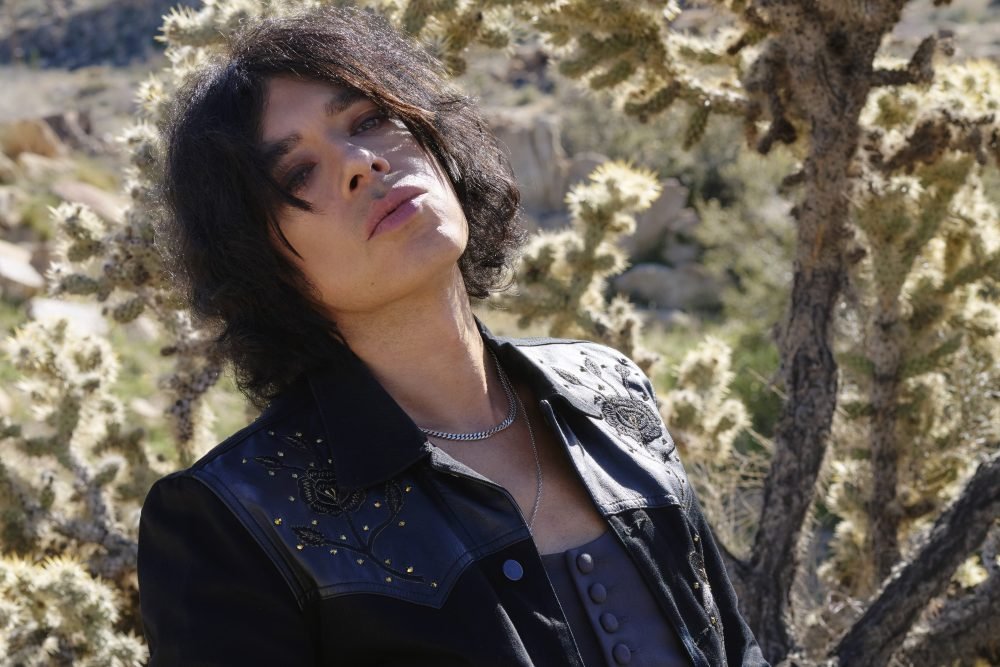
Lawrence Rothman has a lot of nerve, starting an album with a song called “The Meaning,” and then daring to ask some of the questions inherent in the big picture created by those two words — like, if not what is the meaning of life, then what is the meaning of music? (Of course, for a lot of musicians and music lovers, those two questions might as well be synonymous.) But thoughtfulness and intent are never far away from Rothman’s music, or at least hasn’t been since they made a shift about five years ago toward recording in Nashville and feeling the embrace of the Americana community, as opposed to drifting through a series of rock ‘n’ roll bands and personas in L.A. for a lot of years prior.
“The Meaning” kicks off Rothman’s new album, “Here Lives Love/Sawdust to Stardust,” which they consider the completion of a trilogy of Americana-rooted albums that tell the story of the singer’s life and career to date. (Rothman suggests the music being formulated for the next album actually has more of a jazz flavor, though they’re convinced that belongs as much in Americana as the acoustic singer/songwriter material being emphasized at present.)
During the recent AmericanaFest in Nashville, Variety sat down to talk with Rothman not just about wrapping up the fruitful trilogy with “Here Lives Love/Sawdust to Stardust” but about a rich and growing side career producing other artists, including Amanda Shires‘ 2025 confessional album “Nobody’s Girl” (and “Take It Like a Man” before it), Maggie Rose‘s vivacious “Half Moon” and Tift Merritt‘s comeback, “Sugar.” When Rothman begins the new album asking the most core question of them all, “Why am I breathing?,” any of these albums — the ones produced for others, and their own new one — offers a substantial and worthy enough answer.
To ask first about your production work: You work with a lot of great singer-songwriters, and there’s a lot of versatility in the types of sounds you get with different people. No one would mistake an Amanda Shires record for the Maggie Rose album you just had come out.
I don’t know if it’s the Gemini in me, but I’ve loved so many different types of music. my entire life. So to produce and to be able to add sounds, textures and treatments to things that are in a new style every month — because I produce something once a month — helps keep me alive, really, and eep my inspiration up. Amanda Shires makes poetic songs that are just these heartbreaking stories, done in a way that’s so classy, and like Leonard Cohen. It is such a great thing to immerse myself in, because I love sad music, and she definitely makes some beautifully sad songs. You can do that for a while and you’re in that zone, and then it’s great to be able to pop out and do something like Maggie Rose, where it’s more of a celebratory thing of being a mother and this new stage of her life, where it’s about a weird youthfulness in the energy a family gives back to you. T hat record feels very celebratory, and very different than the Tiff Merritt record I made earlier in the year, which was more of a look at the life of an artist, much like myself — what I’ve gone through and what she went through, in a heavy lyrical mode.
I’m a little Method when I produce. I have to feel like I’m in the band. As a sensitive artist yourself, when you’re with all these musicians and you’re getting Method with them, you can lose yourself in it and start to feel a bit like you’re taking on everybody’s trauma. So it’s nice to be able to go amongst these groups of musicians that I work with who telling their truths and spilling their drama and their sadness. They’re all such great people that when you leave those sessions, it’s almost like you’ve been acting in a film, crying and singing and laughing with them, and then at the end of it, you can walk away like yourself again. And I feel like all those artists that I work with, when they’re done, it’s like a clean reset. They got it out of them. I got it out of myself. It’s like a little bit of a demon that you dance with, when you’re producing things.
Lawrence Rothman
Mary Rozzi
How do you make yourself “part of the band”? Is that literally through playing an instrument as part of the sessions?
Like I said, I like to be immersive with it, and I don’t want to feel like I’m the producer behind the glass. I stand in the recording room, not the control room, when I’m producing. If a singer’s singing, I’m right next to them. Sometimes I’ll take my shirt off and dance. I’ll do whatever it takes to get it to have an energy. Because there’s something so clinical, almost like a doctor, about being behind a glass, and they’re in the distance — it just feels odd to me. So I’ve never been one to not just immerse myself physically in the room. If I’m not playing something, I’m tapping something or just getting people to get going.
You’ve talked with liking having women’s voices on your own albums…
I like to frame my voice. My voice is so low that a woman’s texture, or that range, always complements my voice well. So for this record, I have Amanda and Jillian Jacqueline and Katie Pruitt singing on some song, and I got to sing with Sarah Klang (as a duet on “A Fire Test”).
The artists we were just talking about you producing recently — Amanda, Maggie, Tift — are all women. Not that that would be solely your focus, but do you find you gravitate toward women artists more than others?
Yeah, I don’t look at it like that at all. I have to just love the music. And I’m not doing producing to become a millionaire of any sort. I’m doing it because I want to help this singer express what they’re doing in a way that feels like, are we pushing the envelope in some direction that’s forward? And with Americana music, funny enough, I think it’s the most forward-thinking music of any genre right now — because you can be R&B, you can be rock ‘n’ roll, singer-songwriter, folk, you can even be a little bit jazz, and it’s all accepted in the community of Americana. And I think the term Americana is being reinvented as different than what it started as. and now it’s the place for people who want to take all the styles that have sort of, I guess, begun in America or become more mainstream through American culture, and mashing them up to be something that’s uniquely its own.
I think some of the freshest and most exciting music I’ve heard in the last five years has come out of the Americana quote-unquote “scene.” So I find myself working and producing a lot of artists that are under that umbrella. But to me, they’re also all, like, either a rock ‘n’ roll artist or someone like Maggie Rose, who is like soul meets singer-songwriter. So when you’re asking me about, is it women, or… For me, I think right now it’s that it has to resonate in a way that’s pushing genre forward. And if we’re gonna still use use those genre terms like Americana, pop and alt rock, Americana is the place where I feel like you can kind of be anything. I wouldn’t be shocked if somebody put out a space-dance-country-folk record. You can kind of be anything in it and you’re welcomed into the party, as long as the thing that ties it together is the music’s played by real people. There’s great lyrics, whether it’s storytelling or more abstract. And I’m not anti-AI, but I feel like gives the identity to Americana music is that humans created it all. It’s the human touch music.
You have come to feel very comfortable in Americana, though it’s not at all where you started. And with your new album being pretty acoustic, you’re pretty in the pocket with that at the moment.
Yeah, the last three albums, I’ve pretty much focused on that, and that’s been the community that’s welcomed me, so it’s the one I want to identify myself with and support. But if I want to go make a jazz record for the next one, I’m gonna go make it. If it’s called jazz or Americana, I don’t really care. It’s come up a lot that it’s been hard to label what I do, and that’s fine with me. I love Beck, and Beck’s hard to label as well. David Bowie, I don’t even know what the label of that music would be, you know?. He started as a folk artist, and then was a rocker, and then was a pop star, and then was kind of an abstraction star.
Lawrence Rothman
Mary Rozzi
You met and talked with David Bowie, and he had an impact on your thinking about things,, right?
I met David Bowie early on when I was starting my solo career. I’d disbanded my band with my brothers called Living Things that we were doing for 13 years, and I was exhausted. I’d met David Bowie, and I had a song that I had just written called “Montauk Fling,” and I showed it to him. I said, “Hey, I think I’m starting this new chapter of my musical existence, and what do you think of this?” Because it was very different from what I’d done before. And he listened to it, and gave me some great advice. He was just like, “The chorus that you’re singing about there, and the verses, do you mean it?” And I’m like, “Well, yeah!” And he’s like, “But what’s the meaning of it?” So I had to explain it to him. And he’s like, “Well, I don’t think you hit the meaning of it. You need to be more direct.” And so I went back in and rewrote that chorus, and I was very direct. The chorus (ended up being) “Why do you want to fuck like strangers?” I got right to the meaning of what I was trying to say. But that was a really interesting exercise from such an icon, because I had never really looked at David Bowie’s lyrics as I do Leonard Cohen’s per se.
At that point he was about to do “Blackstar,” and when you listen to that record, it’s very much him, autobiographical. He’s about to die. And so I guess he was at a point of what is the meaning of all of what we’re doing in art? — and he was examining it in his own self with “Blackstar.” And I wrote that down in my journal at the time: “David Bowie says, ‘What’s the meaning of all of this?’” It led me to start writing this song called “Glory,” which was on my album “Good Morning America.” A lot of people responded well to it, so when I got to this new record, I wanted to keep exploring what Bowie had said with that. I started the record with the song “The Meaning,” because it’s like, what is the meaning of me putting out music, or any of us putting out music? It’s very ego-driven. As a musician, you’re out there playing rock star — or you’re not, and that’s also playing rock star. If it’s all performance, what is the meaning of doing any of it? With him, I felt like I got to a result of, like, the meaning of doing any of it is just to tell some kind of solid story that somebody can understand, that when they’re going through it, they can go, “That’s pulling me through this hard time.”
For Bowie with “Blackstar,” obviously that was cathartic to write about death because he was dying. With “The Meaning,” I wrote about, why am I putting this album out right now? Why am I doing this music? I’m doing it because it’s my primal scream. It’s my therapy.
You are calling this album, “Here Lies Love/Sawdust to Stardust,” the conclusion to a triology, which began for you with 2021’s “Good Morning, America” and had its middle part with 2024’s “The Plow That Broke the Plains,” which we previously discussed for Variety. Why do you think of them as a trilogy?
Henry Miller is one of my favorite writers of all time, and his his trilogy called “Sexus, Plexus and Nexus” was in my psyche my whole life. I thought, “One day I want to make a record that has the feeling of that, as far as telling a story across three pieces of work.” So when I went into the first record, “Good Morning America,” that was the clean slate. I said to myself, “I’m gonna do this trilogy now, starting with the South,” and it brought me to Nashville. I knew that I wanted to get back to letting songs and lyrics be the forefront of what I was doing as an artist; less so, production, because I had been doing records where I felt the production was kind of the centerpiece. I had gotten to a stage in my life where storytelling and the lyrics and presenting things that were the true me. At the beginning of my career, I was nine different people. I used prosthetics and I had nine different names and I performed different concerts as different alters, as I called them. I did that for seven years and it kind of just overtook my whole lifestyle. So at the top of that 2021 record, I wanted to get back to “this is what I’m going through” on the page with some chords behind it.
So the start of the trilogy was with that idea, and I connected with Lucinda Williams, who has been a huge influence on my life on every level. On that record, she sang with me on a song called “Decent Man,” and that brought me to Nashville. I’d come here as a kid to record, I fell back in love with the city and the scene, and then that record just sort of dictated where I was gonna go. I started writing more songs from that record that appeared on the last record, “The Plow That Broke the Plains,” and then a few of those songs I wrote during that period have appeared now on this one. I brought back some of the same collaborators throughout the three records. Katie Pruitt is on the first one, and now she’s on the last one with me. Amanda Shires is on all three. And Jason Isbell is on the last one and the new one. We wrote a song called “Nothing Like Shakespeare” together in the same three hours that we wrote a song off my last record called “Poster Child.”
Both of those songs, “Nothing Like Shakespeare” and “Poster Child,” sort of tell my origin story. “Poster Child” tells the story of what I went through as an artist at a young age, being signed at eight different major labels and getting dropped and getting signed again, and them sort of using my story as fodder for press and things like that, and how I felt like I got a little bit taken advantage of. “Nothing Like Shakespeare” is how I got to L.A. to get that first record deal. I lived with this girl who was the first love of my life, and we broke up when we got to L.A. In the lyric, I say, “I took the bus, she took the house,” because that’s what literally happened. I got a new record deal with a band with my brothers, and I’ll never forget the bus pulling up at our house, and I came out with everything I had, and it was done.
So, that’s the backstory with the trilogy situation. I hope one day people have the attention span to sit with it and listen from song one, which was “Thrash the West” on that first record in 2021, to the final song on this record, which is “Sawdust to Stardust.” Because basically that is the opening and the ending of this sort of filmic record that I’ve made that tells my complete adulthood story of the trials and tribulations I went through and how I got into music.
Is it a cathartic story, overall?
You know, it’s been a painful experience being in music, I’m not gonna lie. But it’s something that I can’t live without. Every time through the years that I’ve gone “I give up,” the next morning I wake up and I’m at the piano or guitar. My wife laughs at me about it because I give up, like, once a year. But I can’t get away from it. I’ve been on stage playing music since I was 8 years old; got my first record deal at 16. And it has more to do with the act of creation than it has to do with the fame or the fortune. I always say to my wife, “You can’t have a little hallelujah without a little hell.”
I’ve been on this journey a long time, and I’ve never gotten famous, and that’s never been my goal. There’s a lot of expectations you get from family members and things like that of like, “Why don’t I see you on late night TV?” Or “Why aren’t you over here on the radio?” That’s part of what I call the stress pool of making art, is the expectations of your audience, of your family, of your friends. For me, art’s always been about the act of creation. I don’t really care about who likes it or who doesn’t. There’s many people who only like my first album that I did, which was very indie pop, and all this newer singer-songwriter stuff, they don’t like. I lost probably thousands and thousands of fans, but I don’t care. It’s not why I’ve gotten into this. … When you’re in the mercy seat as a musician, and there’s all this expectation, regardless if you’re famous or not famous, but you always have a fan base. And I just find I have to stay true to myself, and with that brings a lot of hell, you know?
I don’t think I can really write stories about other people. Unless it’s a friend of mine and I’m observing it, it has to be something connected to me. Those types of writers that can just kind of observe from afar and write about it, that to me is more like work, and I can do that for other people, because I write a lot for other people. But for me, when I’m writing my own songs, if there’s not some weight behind it that’s resonant with my real life, I feel like it’s empty words. So it’ll always be autobiographical, I think. But hopefully, next time, I’m thinking it’s gonna be happy. Maybe I’ll have my Bobby McFerrin moment, you know?
Going back to the song “The Meaning,” a press release said you were donating proceeds to the Trevor Project. Why that cause?
I’m doing a portion of my whole album for it, but for that one song, I’m giving the full. If let’s say it got synced in a movie or something — which is hopefully what will happen; Madi Diaz and I originally wrote it for a movie that got shelved — I’m giving the full fee to the Trevor Project. You know, growing up being torn apart to pieces daily, it’s part of why I moved to L.A., because it was a little bit more acceptable to just be yourself. So I feel like I want to support what they’re doing as much as I possibly can. I’m not a rich person, but, I do put out art, and I can afford to help in the way that I can help, which is through my art, basically. And I’ve had a lot of people reach out to me since (the song went online). It’s ticking the box where somebody will listen to it, they’re having a bad day, and it’s lifting them. So I felt like that’s an appropriate song for that cause, because a lot of those kids are really going through it, and the song mirrors that there’s hope, you know? I went through it, and I’m still here. And I’m glad I did. I found meaning in my existence of why I was a little bit different growing up than everybody else. That created who I am today, which is completely unique. Back in the day, people picking on my physical appearance used to kill me. Now I take all that and I just put it in a song. So that’s the meaning of me being a little bit odder than everybody else.
You look like a rock star now, but if that’s how you looked growing up, there are reasons to understand why that might not have been the popular thing. Missouri is not the rock star milieu.
It was a lot of shit. You know, my mom was always the type of person where it’s like, “Be you. You’re an individual. Be yourself.” And I could wear a dress; I could wear a cowboy hat and no shirt with cut-off jean shorts if I wanted. She didn’t give a shit. I could put makeup on, do whatever I wanted to do, so I was always super eccentric. Back then, the word everybody would use was “androgynous.” That was how I was defined in the ’90s growing up, is like, “Oh, that’s the androgynous kid.” Growing up in Missouri, and you get a lot of heat for being not an athlete or at least dressing like an athlete.
To ask about another song on the new album, “Worn Out Woman” — was that inspired by anyone in particular?
I’m glad you brought up that one. Nobody’s asked about that, and that’s one of my favorite ones. It’s about my wife (Floria Sigismondi, known as the writer-director of “The Runaways” and dozens of music videos going back to the early ’90s). She’s a director and photographer, and she’s been doing it professionally for about 35 years, and is highly successful at it. She actually grew up in a time when there were no women directors, and came to work with people from Bowie to Rihanna. As time went on, I could tell that the weight of misogyny in the business of film was hitting her hard. and one night she was in the process of making her upcoming movie and a lot of stuff was being thrown at her. Her mother was dying. I sat at the piano and started to come up with that, and I kept it in my back pocket. I got together with a great songwriter called Amy Wadge (known as the co-author of Ed Sheeran’s “Thinking Out Loud”), who came over to my house the next week. She was like, “Let me hear it,” and afterward, she was like, “I’m gonna cry. That’s me.” And so I said, “Well, let’s write that. Let’s finish that.”
Amy’s got a record coming out, too, and she’s about the same age as my wife. She was telling me the parallel story of how she’s been the head of the family, or the light bearer, and that’s the same with my wife. My wife grew up with her sister and her parents, and she was like the parent. And that, mixed with being a woman director in Hollywood, is intense. She ironically directed three episodes of “The Handmaid’s Tale.” And she did this thing for Sigur Rós where it was like gas masks and art sort of become reality. She was like, “I don’t know about that song. I don’t want that to become my reality, (that) I’m worn out.” I’m like, “No, no! We’re just doing the the primal scream. We’re just screaming out the bad vibes on it and now it’s gone. Now you’re not worn out…” I told her, “I think a lot of other women will feel similar and see themselves in it.” It’s a testimony.
About another new song, “A Word’s a Weapon” — was that prompted by contemporary discourse?
It’s a saying that I’ve said my whole life, actually. I would just be like, your words are weapons and they go cut through me like a knife. I don’t know why it never dawned on me to write it in a song. But the political state that we’re in right now is so loaded and so huge and so even sometimes even beyond my comprehension. The one thing I know for sure, especially in the United States of America, is that people can hurt each other, like on steroids, 10 times more, by the things that they say than actually pushing them down the stairs. It’s really hard sometimes to wash off what somebody said to you, because it cuts harder than a punch or a fall or even getting stabbed. It’s just something that really psychologically changes you. And the way Americans speak to each other is so rancid and vile. I’n this country, I think everybody just needs to wash their mouths off with soap and pick up some books and just relearn how to talk to one another.
Currently, zkSync’s price remains at $0 with no significant trading volume reported. This lack of trading activity is not unusual given the speculative nature of upcoming announcements. Traders are looking for indicators that could signal future movements, particularly in light of zkSync’s engagement with its community. As the broader market remains volatile, zkSync’s developments may serve as a catalyst for renewed interest and activity.
zkSync is a layer-2 scaling solution for Ethereum, designed to enhance transaction throughput and reduce costs. Its recent focus on financial sovereignty and innovative strategies positions it as a key player in the evolving blockchain landscape. As zkSync prepares to unveil its announcements, the implications for both its ecosystem and the larger crypto market could be significant.
Key Levels to Watch
Traders are keeping a close eye on zkSync as it approaches the anticipated announcement timeline. The potential for positive developments could lead to increased market activity and price movements. Risks remain, particularly if expectations are not met, but the current buzz suggests a heightened interest that could benefit zkSync in the near future.
As of now, Cosmos is trading at $0 with no reported trading volume in the last 24 hours. This lack of volume indicates a relatively quiet market despite the significant news surrounding Blockdaemon’s recent partnership. Such developments may lead to increased interest in Cosmos as institutional adoption grows, potentially impacting future trading activity.
Blockdaemon provides institutional blockchain infrastructure, focusing on services like staking and node management. Cosmos, known for its interchain capabilities, seeks to facilitate a decentralized network that allows different blockchains to communicate with one another, making it an ideal partner for enhancing blockchain services.
Key Levels to Watch
Traders are advised to monitor developments within the Cosmos ecosystem following this partnership. The growing institutional backing may indicate a shift in market dynamics, particularly regarding Bitcoin dominance and overall crypto cycles. With increasing institutional interest, traders should watch for potential upticks in trading volume and price action in the coming weeks.
This article is for informational purposes only and does not constitute financial advice.
If you see only one movie this year about a super-geek task force of scientists, academics, lawyers, activists, and bureaucrats who meet in a hotel conference room in St. Petersburg, Florida, in 1980 to hash out a manifesto about climate change, make that movie “A Statement” (at least, until a better one comes along). The conference I described really did take place. It was a mission dreamed up by the U.S. Congress. The issue of global warming was on the map, and the committee, gathering in Florida over a weekend for three days of meetings, was asked to devise a mission statement that would assess the dangers of climate change and make recommendations to Congress as to what, exactly, should be done about it.
“A Statement” was directed and co-written by Tom McCarthy, the sturdy carpenter of “Spotlight” and “Stillwater,” and it features some fine actors, like Paul Rudd, who plays the very diplomatic conference moderator, and Paul Giamatti, who plays a spiky Department of Energy official, and John Turturro, disarmingly elegant and funny as a professor of nuclear science at M.I.T., and Amy Ryan, as the quiet functionary who ultimately emerges as the conscience of the group.
The movie, as you’ve likely gathered, is not a tale of high-speed helicopter chases and daredevil heists. The conference — 20 men and women pontificating, arguing, strategizing, hashing out the truth — is the entire movie. “A Statement” is a film about conversation, so let me put my own prejudice forward: I’m utterly in favor of movies about conversation — humanistic legal showdowns like “12 Angry Men” (one of the greatest movies ever made), or a dinner-table dialogue like “My Dinner with Andre,” or “Before Sunrise” and its sequels, or the films of Eric Rohmer. I’m someone who actually thinks that talk is action (just ask any of my friends). And I love hearing issues argued over intelligently, which makes me the target audience for a movie like “A Statement.”
That said, I watched the film with seriously divided feelings. On paper, “A Statement” sounds like an interesting movie, but it’s at once talky and flat, grabby and meandering, impassioned and neutral. It wants to be a “firebrand” docudrama, yet I can’t imagine who the audience is going to be for it. My heartless prediction: next to no one. Not because the film is bad, but because it’s like an endless magazine article in movie form.
McCarthy and his co-screenwriters, Thomas Bidegain and Noé Debré, decided not to “dramatize” the conference. Instead, they dug the dialogue right out of the actual transcripts, presenting the conversations verbatim, which is on some level a daring choice. And McCarthy is certainly a skilled enough filmmaker to get the effect he was going for. In “A Statement,” he catches the sound and rhythm, the verbal wheel-spinning, the fuddy-duddy quibbling essence of that thing known as a strategic planning meeting.
For anyone, in any profession, who has attended such a meeting (i.e., just about anyone who has ever worked for a corporation or the government or a school system, or anyone who’s ever belonged to a guild or a union), that achievement may come off as a mixed blessing. Because the not-so-dirty secret of this kind of meeting is that while it can, at its best, get things done, the truth is that sitting there and listening to the endless jawboning and jockeying for position, the heel-digging stands followed by wilting compromise, the testy yet somehow bland infighting — all of it can be enough to make you want to curl up into a ball. In “A Statement,” what we’re really watching is the quintessence of a certain kind of middle-class American entropy.
To be fair, the mild fascination of “A Statement” is that we’re eavesdropping on 1980, seeing what people said and thought about climate change in that very different era. You might expect it all to sound well behind the curve. But the disquieting surprise of “A Statement” is that there’s no “Ah, if only they knew then what we know now!” factor. The movie is based, in part, on “Losing Earth: The Decade We Could Have Stopped Climate Change,” Nathaniel Rich’s 2019 book about the 1980s, and the central thesis of the book is that we knew it all then — or, at least, the most knowledgeable people did.
Early on, the Turturro character, Dr. David Rose, uses an overhead projector to present five slides that he’s prepared. They display graphs that chart where the carbon dioxide levels are heading and project what the damage to the environment will be. The facts are all clear (even though there’s some minor quarreling about them): the threats to the ozone layer, the primal danger of fossil fuels, the timetable of where it’s all heading.
Most of us didn’t start hearing about global warming until much later in the decade (Bill McKibben’s game-changing New York Review of Books article “Is the World Getting Hotter?” appeared in 1988), and the idea that a disparate collective like this one was fully onto it is news. So what are the people in the room arguing about? I actually wish they argued more. There’s a lot of hair-splitting, and given that the very nature of climate change is that it requires speculation, there’s a fundamental disagreement about how they should conceptualize the threat to the future. Should they say “Here’s what’s going to happen” or “Here’s what could happen”? (That’s a worthy conversation.) There are committee members who are protecting their turf, not wanting to offend the powers that be. (They include Jason Clarke as a colorfully corrupt blowhard.) But part of what we pick up on is that when it comes to the actual ideas, the voices on display aren’t really so far apart.
The two most colorful characters are Turturro’s puckish professor and Rafe Pomerance, who’s the president of Friends of the Earth. Pomerance was one of the first environmental activists to speak out on climate change, and Evan Peters, in a beard and longish hair, plays him as a fuming establishment hippie, all hyped up on everything he knows. During the meeting, he bides his time before speaking his mind, but his attitude is that the time for delaying is already gone — that the committee should advise Congress as boldly as possible.
It’s clear, at least to most of us, that he’s right: They should be sounding the alarm. Let Congress know how dire the situation is (or will be, if there’s a failure to act). But even if the committee members succeed in doing that (spoiler alert: they don’t), here’s a question: How should they advise Congress to take action? What, eactly, should be done?
Early on, there’s a moment that foreshadows what the real debate is (or should be). When Rafe, the token counterculture tree-hugger, is first introduced to the professor and learns that he’s a nuclear scientist, he makes a joke about calling him the “Big Bad Wolf.” The professor laughs it off. This is back in the era when the simple use of the word “nuclear” could make it sound like a dirty word. But, in fact, the professor is the one who truly understands what’s going on. Decades ahead of his time, he makes the point that renewables — at the time, principally solar energy — aren’t going to cut it. There’s no way that they can begin to replace fossil fuels. And guess what? They still can’t. If you want to stand up to the oil industry, only one source of energy that exists today has the potential to get us off fossil fuels, and that’s nuclear energy. And the professor comes right out and says it. (Don’t believe him? Watch the powerful Robert Stone documentary “Pandora’s Promise” or Oliver Stone’s “Nuclear Now.”)
But the professor is dismissed — by Rafe, and also by an officious lawyer (Tatiana Maslany) who’s allergic to the word “nuclear.” I was fascinated to see this subject come up in “A Statement.” Yet it gets dropped as quickly as it’s raised, and this raises a question: What is this movie really about? When you reach the surprise ending, the message seems to be that when it comes to climate change, we’ve become a society that’s a lot like Hamlet — able to talk, unable to act. And that’s a point well worth making.
But in a strange way, “A Statement” is an example of that very syndrome. On its modestly budgeted indie level, it’s yet another movie, like “Digger,” that seems to be about nothing so much as members of the Hollywood community signaling their concern. But if they’re really so concerned, why don’t they put aside the familiar tropes about climate change — the hand-wringing and the hectoring — and do something that’s really outside the box? “A Statement” catches a moment in time, and gives you an intriguing window into just how much was known at the time. Yet as a drama, the film is a bit like greenhouse gases. It traps you in a place that’s not bold enough to imagine solutions.
The audio version of this article is generated by AI-based technology. Mispronunciations can occur. We are working with our partners to continually review and improve the results.
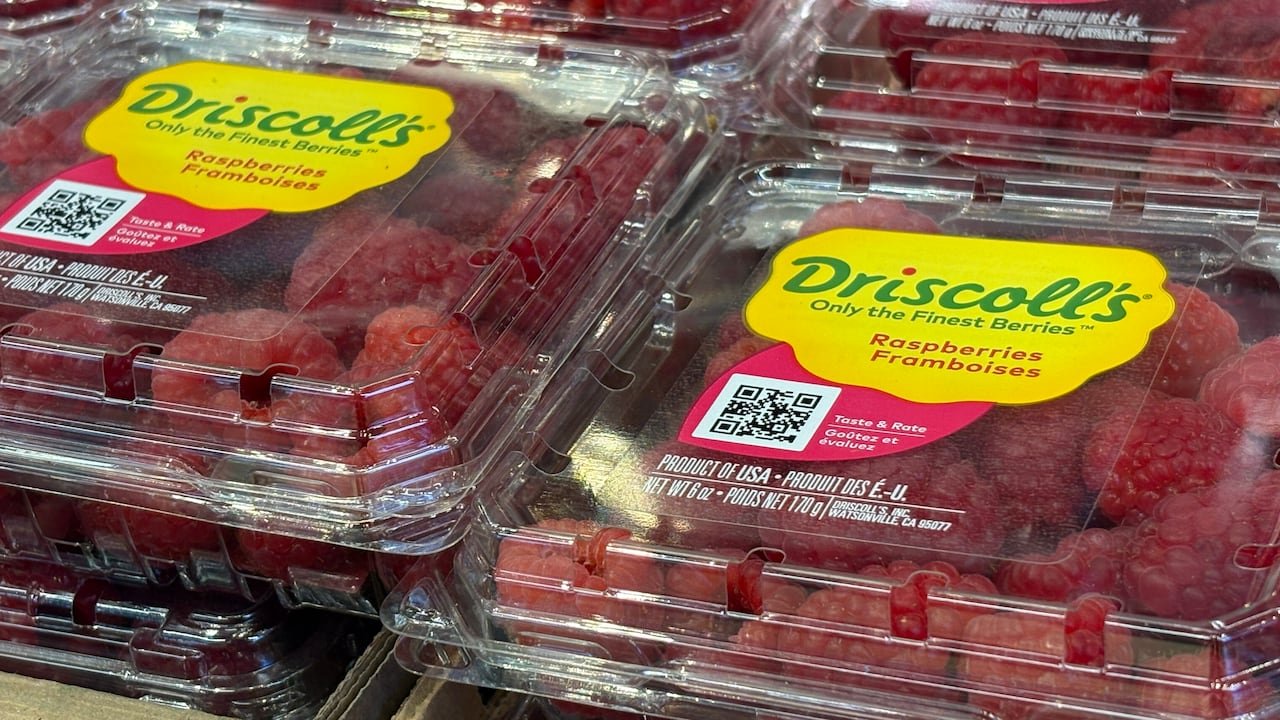
Lawyers are asking a Quebec Superior Court judge to authorize a class-action lawsuit against American fruit giant Driscoll’s.
It comes after CBC News reported on allegations that the company had sent millions of pounds of berries to Canada with non-compliant levels of chemical residues between 2022 and 2024.
The lawsuit was lodged on behalf of a Quebec woman who consumes Driscoll’s berries.
The filing alleges the American multinational fails to inform consumers who purchase its berries of the presence of pesticide residues or other chemical substances exceeding the maximum limits permitted in Canada.
“The failure to disclose this crucial information regarding berries marketed in Quebec is compounded by misleading representations concerning these products,” lawyers wrote.
The suit seeks to cover any individual who purchased Driscoll’s brand berries — including strawberries, raspberries, blackberries or blueberries — since Jan. 1, 2022.
“Through these proceedings, the plaintiff seeks to represent all class members in order to obtain a reduction in their obligations and punitive damages aimed at denouncing and penalizing the company’s highly reprehensible practices.”
In Quebec, it could take at least a year for a judge to determine if a lawsuit meets the legal criteria for authorization.
Driscoll’s denies allegations
The allegations made by former Driscoll’s employee David Harada sparked concern about food safety among Canadians.
The Canadian Food Inspection Agency (CFIA) confirmed to CBC News it conducted several inspections on Driscoll’s berries sold in grocery stores across the country between 2022-24 and found chemical levels above the legal limit in Canada.
The chemicals include bifenthrin, iprodione and captan: fungicides and insecticides.
However, the CFIA says the inspections did not lead to recalls, or a corrective action was implemented and the investigations were closed.
Harada sued the company in California for unlawful retaliation after he alleges he was retaliated against for speaking up about his findings.
Driscoll’s denies the allegations in Harada’s lawsuit, saying, “at all times, Driscoll’s took any concerns David raised seriously. We investigated the allegations he raised, followed the facts, and addressed any issues that needed to be addressed.”
Driscoll’s has said that it amended its controls to comply with Canadian standards, adding the company has never knowingly shipped products it believed to be unsafe.
In response to the proposed class action, Driscoll’s says it’s aware of its filing in Quebec and disputes the allegations.
“[Driscoll’s] welcomes the opportunity to address these claims through the legal process, where the underlying facts, data, and expert analysis can be fully examined,” the company wrote in an email to CBC.
“We are confident that Canadians will see that Driscoll’s maintains comprehensive food safety and compliance programs and that the allegations do not reflect the reality of how our business operates.”
The company adds it invests significant resources to ensure the safety and quality of its berries.
“For more than 100 years, we have worked to earn the trust of consumers by communicating responsibly about our products and growing practices, and we remain committed to earning the trust of Canadian consumers every day through safe, high-quality products and compliance with Canadian laws and regulations.”
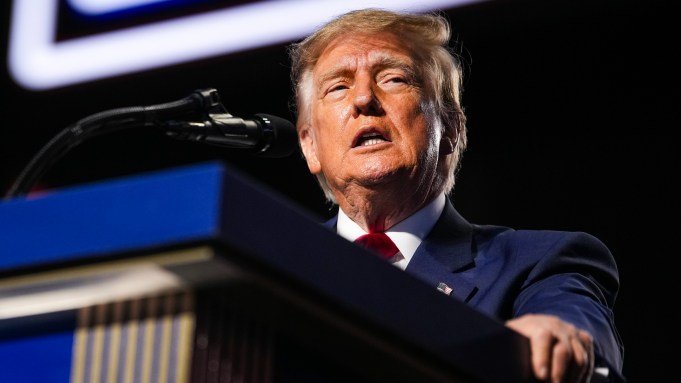
The Justice Department argued that Donald Trump can legally ban CNN, MS NOW and Politico from the White House because he determined that they didn’t meet the “minimum requirements of professionalism.”
Last month, a federal judge granted the three outlets a temporary restraining order that forced the White House to reinstate dozens of their reporters’ hard passes. The outlets are now asking the judge to extend that 14-day order for a longer term via a preliminary injunction, claiming that Trump’s ban is a violation of their First and Fifth amendment rights.
U.S. District Judge Timothy Kelly, a Trump appointee, has said that he is bound by the precedent set in In a 1977 D.C. Circuit opinion, Sherrill vs. Knight, in which the judges ruled that “the protection afforded newsgathering under the First Amendment guarantee of freedom of the press requires that this access not be denied arbitrarily or for less than compelling reasons.”
In a court filing on Friday, the DOJ claimed that the Sherrill case still would allow for the president to restrict the three outlets from accessing the White House grounds because the White House has a “compelling interest.”
The DOJ lawyers claimed that the Sherrill decision does not “prevent the President from concluding that bona fide journalists would identify sources instead of relying on anonymous sources, commit to factual accuracy, and provide the White House an opportunity to comment, rather than ‘perform their duties in a way that … interfere[s] with the White House’s daily operations.’ …At a bare minimum, it is a significant violation of decorum to publish classified and sensitive national security information.”
The news outlets’ legal team has rejected that assertion, writing in a filing earlier this week that Trump’s “statements also make clear he implemented the ban to coerce more favorable coverage from CNN, MS NOW, and Politico, and to deter other journalists and news organizations from newsgathering and reporting that the President might view as negative. And his administration has continued to retaliate against Plaintiffs even after the temporary restraining order, only underscoring that Defendants’ motive is to punish and chill journalism they dislike.”
Even as access to the White House grounds has been reinstated, the White House has continued to restrict CNN from coverage of TV pool assignments, including travel with Trump on Air Force One.
The outlets’ lawyers, led by Theodore Boutrous Jr., also noted that Trump and other White House officials “overlooked that the First Amendment protects reporting on matters affecting national security.”
Kelly has set a hearing for Thursday on the news outlets’ motion for a preliminary injunction.
In granting a TRO, Kelly concluded that the White House failed to provide due process to the news outlets.
The DOJ has pointed to letters sent to the outlets as evidence that they were given due process. But those letters were sent on Sept. 22, four days after Trump’s ban was started.
The judge also has noted that some of the objectionable stories cited by the DOJ do not have to do with national security. Kelly wrote in his order that “even the justifications provided to Plaintiffs after this case was filed are ambiguous about the true purpose of the revocations: while Defendants’ letters to Plaintiffs mention national security concerns, they purport to identify reporting that ‘threatened national security and/or spread falsehoods’ leaving open the possibility that all the stories fall into the later bucket, rather than the former.”
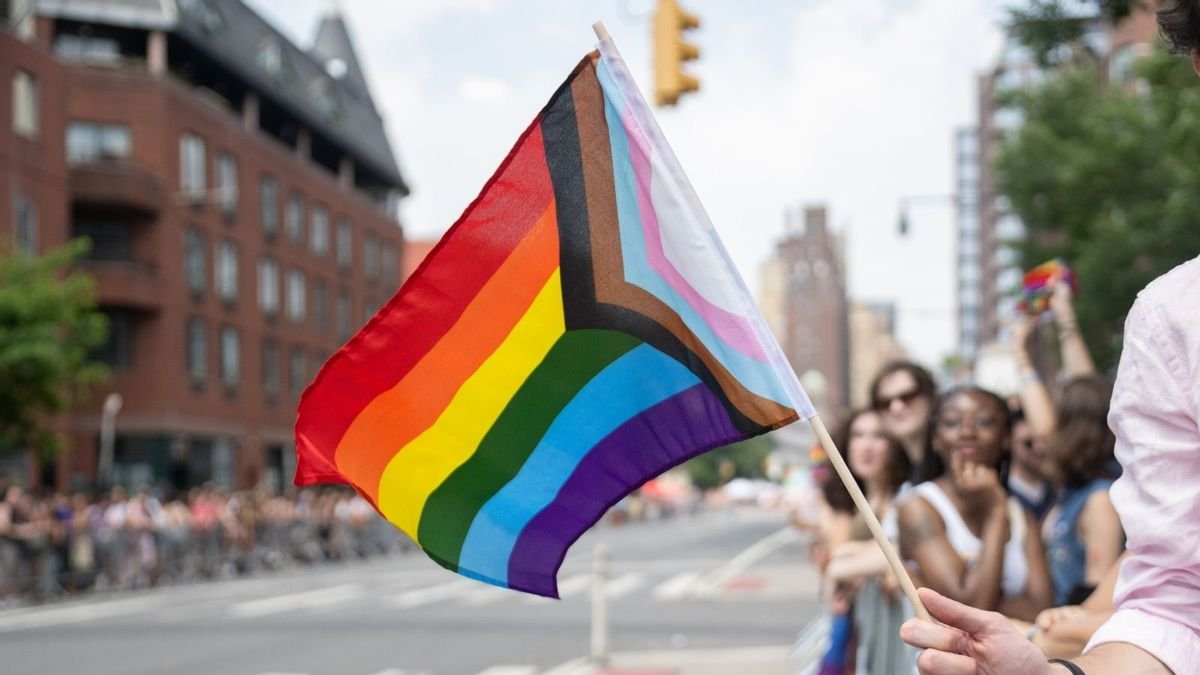
A school district recently fired a California teacher for forcing her students to recite the U.S. Pledge of Allegiance while facing an LGBTQ+ pride flag, as social media posts claimed in late 2026.
Rating:
What’s True
The Newport-Mesa Unified School District in Costa Mesa, California, announced it placed a teacher — whom it did not identify — on administrative leave for posting a video of herself saying the U.S. flag made her “uncomfortable” and suggesting to one student, possibly jokingly, that he recite the Pledge of Allegiance to a pride flag displayed on her classroom wall. However …
What’s False
The video was recorded in 2021, a fact some people omitted from their “breaking” social media posts in 2026. No evidence showed the teacher, who taught English at Back Bay High School, “forced” any students to pledge allegiance to the pride flag, as was falsely claimed in memes and posts using fake, AI-generated images.
What’s Undetermined
A district spokesperson said at the time, “The teacher is no longer in the classroom. We follow due process and our investigation continues.” The statement didn’t identify the teacher by name, nor did it specify whether she departed the school because she resigned or because she was fired. People who claimed she was fired didn’t offer evidence to support it.
A rumor that a California school district fired a teacher for forcing students to recite the Pledge of Allegiance while facing an LGBTQ+ pride flag circulated online in September 2026.
For example, on Sept. 29, a Facebook user posted a meme (archived) showing three images of a woman smiling, laughing and wearing a rainbow-striped shirt and jacket. Pride flags also appeared on the wall in the background. The meme read, “A California teacher has been fired after forcing students to pledge allegiance to the pride flag. Do you believe she deserved to be fired?”
We found these posts contained a mixture of truth, falsehood, speculation and artificial intelligence.
The Newport-Mesa Unified School District in Costa Mesa, California, did once announce (archived) it had placed a teacher — whom it did not identify — on administrative leave for posting a video in which she could be heard saying the U.S. flag made her “uncomfortable” and suggesting to one student, possibly jokingly, that he recite the Pledge of Allegiance to a pride flag displayed on the classroom wall.
However, this all took place in 2021, a fact some people omitted from their “breaking” social media posts in 2026. No evidence supported the claim that the teacher, who was reportedly named Kristen Pitzen and worked as an English teacher at Back Bay High School, “forced” any students to pledge allegiance to the pride flag. Images used in the above meme and otherposts that supposedly depicted the educator were in fact AI-generated and inauthentic.
At the time of the incident, a district spokesperson said, in part, “The teacher is no longer in the classroom. We follow due process and our investigation continues.” The statement didn’t identify Pitzen by name, nor did it specify whether she departed the school after submitting a resignation or whether she was fired. People who posted the claim she was fired didn’t share evidence that the district had terminated her employment.
Via Messenger, Snopes contacted an account possibly belonging to Pitzen to ask questions. We will update this article if we receive further information.
Here are the facts
On Aug. 27, 2021, an educator — reportedly Pitzen, who was listed at the time as an English teacher for Back Bay High School in Costa Mesa — allegedly shared a video on her personal TikTok account in which she said she had packed her classroom’s U.S. flag away and appeared to indicate she didn’t intend to display it again.
In the clip, she laughed when recalling a story in which a student said her class was reciting the Pledge of Allegiance without a flag, then pointed the camera at a pride flag on her wall. She said she told him, “We do have a flag in the class that you can pledge your allegiance to.” She laughed at several moments during the video, suggesting she may have been at least partly joking. No students or other staff were visible in the clip.
People then reposted the video and named Pitzen as its originator, with some X users organizing and calling forherfiring that same day. Some users claimed her (now-defunct) TikTok handle on the account on which she shared the video and other clips was @mrsgillingsworth. We could not independently verify whether she truly owned the handle or if the videos originated from a different account.
In the video, she says the following:
Ok, so during third period, we have announcements and they do the Pledge of Allegiance. I always tell my class, “Stand if you feel like it. Don’t stand if you feel like it. Say the words if you want. [You] don’t have to say the words.” So, my class decided to stand but not say the words. Totally fine.
Except for the fact [laughing] that my room does not have a flag. It used to be there but I took it down during COVID because [whispering] it made me uncomfortable. And I packed it away and I don’t know where and I haven’t found it yet. [laughing] But my kid today goes, “Hey, it’s kind of weird that we just stand and then, you know, we say it to nothing.” And I’m like, “Oh, well, you know I’ve gotta find it. Like I’m working on it. I got you.” [laughing, shaking head]
In the meantime, I tell this kid, “We do have a flag in the class that you can pledge your allegiance to.” And he like looks around and he goes, “Oh, that one?” [laughing, pointing to pride flag]
Following a wave of social media backlash, someone posted on the district’s Facebook page the next day — a Saturday — posting (archived) that a teacher had been placed on administrative leave after causing “alarm and concern related to saluting the American flag.” The post did not identify Pitzen by name.
(Newport-Mesa Unified School District – NMUSD via Facebook)
On the following Monday, Aug. 30, the district reportedly published a statement saying the teacher (still not identified) was “no longer in the classroom.” The statement appeared in news articles, including in the Los Angeles Times:
We are aware that one of our teachers posted a video on her personal social media that caused alarm and concern related to saluting the American flag. We assure you that we take matters like this seriously. Showing respect for our nation’s flag is an important value that we instill in our students and an expectation of our employees. The teacher is no longer in the classroom. We follow due process and our investigation continues.
Via email, district spokesperson Annette Franco confirmed the authenticity of the statement. We also asked whether the district fired the teacher mentioned in their statement — or whether the educator resigned. Without naming the teacher, Franco told us, “I can confirm that she is no longer with the District.” We also requested comment from current Back Bay High School principal Scott Mazurier, who started at the school in 2024 and was not present during the incident. We will update this article if we receive more details.
The school district’s policies include information about “patriotic exercises,” including “the reciting of the Pledge of Allegiance.” One part of the policy documentation says, “Individuals may choose not to participate in the flag salute for personal reasons.”
“Back Bay and Eastbluff to Welcome New Principals.” Newport-Mesa Unified School District, 16 May 2024, https://web.nmusd.us/departments/public-information/news/details/~board/nmusd-news/post/back-bay-eastbluff-principals-scott-mazurier-daphne-eby.
“CA Teacher ‘Uncomfortable’ with U.S. Flag Would Rather Have Students Pledge to Pride Flag.” WSET, WKRC, 31 Aug. 2021, https://wset.com/news/nation-world/ca-teacher-uncomfortable-with-us-flag-would-rather-have-students-pledge-to-pride-flag.
“Ceremonies And Observances.” GAMUT Online, Newport-Mesa USD | AR 6115 Instruction, 8 Sept. 2009, https://web.archive.org/web/20210830213520/http://www.gamutonline.net/district/newportmesa/DisplayPolicy/597434/.
Gleeson, Scott. “Teacher Removed from Class after Suggesting Student Pledge Allegiance to LGBTQ Pride Flag.” USA TODAY, 2 Sept. 2021, https://www.usatoday.com/story/news/education/2021/09/02/california-teacher-removed-after-urging-student-pledge-lgbtq-flag/5693430001/.
@iluvdj274. “Posted on Newport Mesa School District about Kristin Pitzen Aka …” X, 30 Aug. 2021, https://x.com/iluvdj274/status/1432560564924866560.
KTLA 5 Digital Staff, et al. “O.C. Teacher Investigated after Joking about Pledging Allegiance to Pride Flag Instead of American.” KTLA5, 30 Aug. 2021, https://ktla.com/news/local-news/o-c-teacher-investigated-after-joking-about-pledging-allegiance-to-pride-flag-instead-of-american/.
Nguyen, Lilly, and Sara Cardine. “Newport-Mesa Unified School District, Teacher under Fire for Social Media Post Rejecting Flag.” Los Angeles Times, Daily Pilot, 31 Aug. 2021, https://www.latimes.com/socal/daily-pilot/news/story/2021-08-30/newport-mesa-unified-school-district-teacher-under-fire-for-social-media-post-rejecting-flag.
“On Friday Evening, One of Our Teachers Created a Personal Social Media Post …” Facebook, Newport-Mesa Unified School District – NMUSD, 28 Aug. 2021, https://www.facebook.com/NMUSD/posts/4302990113070915.
Robinson, Alicia. “Newport-Mesa District Investigating Teacher’s TikTok about Saying Pledge to Pride Flag.” Orange County Register, 30 Aug. 2021, https://www.ocregister.com/2021/08/30/newport-mesa-district-investigating-teachers-tiktok-about-saying-pledge-to-pride-flag/.
“Staff Directory.” Internet Archive Wayback Machine, Back Bay/Monte Vista High School, 18 June 2021, https://web.archive.org/web/20210618114317/https://backbay.nmusd.us/staff.
Yurcaba, Jo. “Teacher Faces Backlash for Suggesting Student Pledge Allegiance to Pride Flag.” NBC News, 30 Aug. 2021, https://www.nbcnews.com/nbc-out/out-news/teacher-faces-backlash-suggesting-student-pledge-allegiance-pride-flag-rcna1817.
Tony Gilroy blasted the “tragic” nature of the Paramount-Warner Bros. merger at the world premiere of his new film, “Behemoth!” Produced on a $36 million budget, “Behemoth!” is representative of the mid-budget, adult-oriented drama that once sustained Hollywood’s theatrical business — and allowed filmmakers like Gilroy to make a name for themselves in the industry. He fears the impending merger (which David Ellison just announced would place both of the historic movie studios under a company named Skydance) threatens to dismantle the very “healthy and beautiful business” he has worked in for over three decades.
“People say the movie business is in trouble,” Gilroy told Variety Friday night at Alice Tully Hall. “You go around, you stand anywhere you want, what do people talk about? Did you see this? Did you see that? What episode are you on? The business is solid, and to destroy the architecture that made it so in the name of venture capital, it’s tragic.”
“Thank you for making [the festival] so elegant and glamorous, and for surrounding us with so many amazing films,” Gilroy told the crowd. “The way this is curated this year, this is a freakin’ lineup! Holy sh*t. And everybody knows it. When so many things go to shit in Hollywood, this is like a thank you. Thank you for letting us bring our soufflé to your groovy party.”
Gilroy also thanked Matt Greenfield and his partners at Searchlight Pictures, the indie studio owned by the Walt Disney Company, which also produced “Andor.”
“This is not an easy movie to greenlight, and it’s not an easy movie to sell,” he concluded. “But here we are. We’re here. We got here calmly, gracefully, no drama, and our joie de vivre intact.”
Tony Gilroy introduces his new film “Behemoth!” at its worldwide premiere at #NYFF:
“This is a hard movie to green light, and a hard movie to sell. And here we are.” pic.twitter.com/WeHLKyJ8Gc
Skydance has tentatively set Tuesday, Oct. 6, to close the merger, which will consolidate Hollywood’s traditional Big Five studios (Disney, Universal, Sony, Warner Bros. and Paramount) under just four corporate owners. While Ellison has maintained that Paramount and Warner Bros. will retain their separate studio identities under Skydance, industry figures — including “Behemoth!” producer Sanne Wohlenberg — fear the consolidation will make the “possibilities for a filmmaker alarmingly limited.”
“God, it’s certainly turbulent and uncertain times, isn’t it? It never seems to get any easier,” Wohlenberg said. “I do think you have to take a deep breath and keep believing that things will be circular and come back. When you look at history, there have been many, many bad times. Sadly, we are steering into one, which will make the competitive nature of the industry and possibilities for a filmmaker alarmingly limited. And it shouldn’t be like that. I think we will survive it and I hope for better times.”