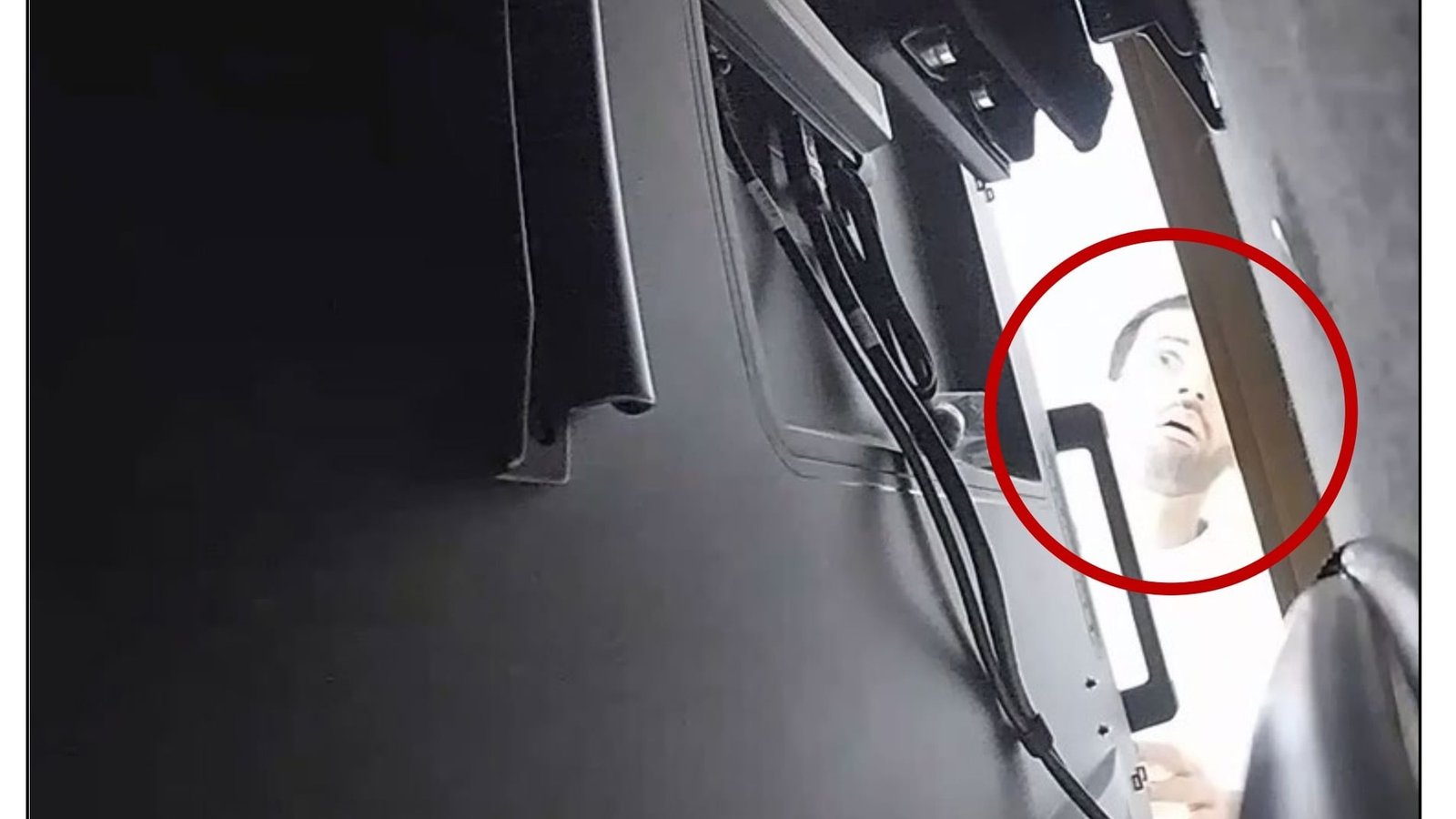
The ex-OpenAI employee accused of planting a recording device to spy on the company’s executives allegedly has “considerable support” from the Saudi Arabian government, according to federal prosecutors.
“Throughout 2025 and 2026, the defendant was in frequent communication via WhatsApp with a member of the Saudi Royal Family, including as recently as October 5, 2026,” US prosecutors said in a court document filed on Sunday.
The 35-year-old Abdulrahman Alfozan, a former engineering lead and Saudi national, was arrested earlier this month for allegedly trying to commit corporate espionage. US prosecutors are now laying out more evidence about his potential motives and why he could flee the country if released from custody.
The evidence includes Alfozan’s WhatsApp conversations with an unnamed Saudi royal family member, who allegedly wanted the ex-OpenAI employee to join an AI initiative being launched in the country. “In May 2026, the individual told the defendant, ‘Saudi needs you more then [sic] the US!’ to which the defendant responded ‘100,’ indicating he agreed,” prosecutors say. “The individual repeatedly tried to recruit the defendant and asked when he planned to leave OpenAI. At the time, the defendant said he wouldn’t leave until his stock vested.”
The 11-page court document also reveals that Alfozan’s wife and son left the country on October 11th, two days after his arrest. The wife and son originally planned on departing on October 12th with their tickets “paid for by the Saudi government.” “That flight was canceled, however, when a member of the Saudi military booked and paid for yet another one-way ticket for the defendant’s wife and son, this one business class to Doha, Qatar, on October 10, 2026,” prosecutors say.
“The defendant’s wife told the FBI agents who interviewed her that her US visa was expiring and that she and her son were permanently moving back to Saudi Arabia—and that her husband, the defendant, eventually intended to do the same,” prosecutors added, even though Alfozan had applied to become a naturalized US citizen.
Federal prosecutors laid out the evidence when Alfozan’s attorneys on Friday requested that he be released from custody as he awaits trial. Alfozan agreed to wear a location GPS ankle monitor and that he would surrender all his passports.
Recommended by Our Editors
“Mr. Alfozan was made aware of OpenAI finding the (audio recording) device per its own filings and OpenAI’s public statements, approximately eight to ten days before he was arrested,” his attorneys noted. “If his intention was to flee, he would have done so at that time.”
However, federal prosecutors responded by telling the judge: “The defendant presents a serious risk of flight. The Court should detain him pending trial to assure his appearance.” The court document also notes that Alfozan’s residence was searched and contained “several electronic components similar” to the custom audio recording device installed in the OpenAI conference room that executives used for sensitive meetings.
“The defendant’s iPhone contained photographs, dated between September 22–28, 2026, depicting, among other things, at least one additional concealed recording device as well as what appear to be the input/output panels on televisions and other electronic devices in various locations in OpenAI buildings,” the court document adds.
About Our Expert

Michael Kan
Principal Reporter
Experience
I’ve been a journalist for over 15 years. I got my start as a schools and cities reporter in Kansas City and joined PCMag in 2017, where I cover satellite internet services, cybersecurity, PC hardware, and more. I’m currently based in San Francisco, but previously spent over five years in China, covering the country’s technology sector.
Since 2020, I’ve covered the launch and explosive growth of SpaceX’s Starlink satellite internet service, writing 600+ stories on availability and feature launches, but also the regulatory battles over the expansion of satellite constellations, fights with rival providers like AST SpaceMobile and Amazon, and the effort to expand into satellite-based mobile service. I’ve combed through FCC filings for the latest news and driven to remote corners of California to test Starlink’s cellular service.
I also cover cyber threats, from ransomware gangs to the emergence of AI-based malware. In 2024 and 2025, the FTC forced Avast to pay consumers $16.5 million for secretly harvesting and selling their personal information to third-party clients, as revealed in my joint investigation with Motherboard.
I also cover the PC graphics card market. Pandemic-era shortages led me to camp out in front of a Best Buy to get an RTX 3000. I’m now following how the AI-driven memory shortage is impacting the entire consumer electronics market. I’m always eager to learn more, so please jump in the comments with feedback and send me tips.
Leave a Reply