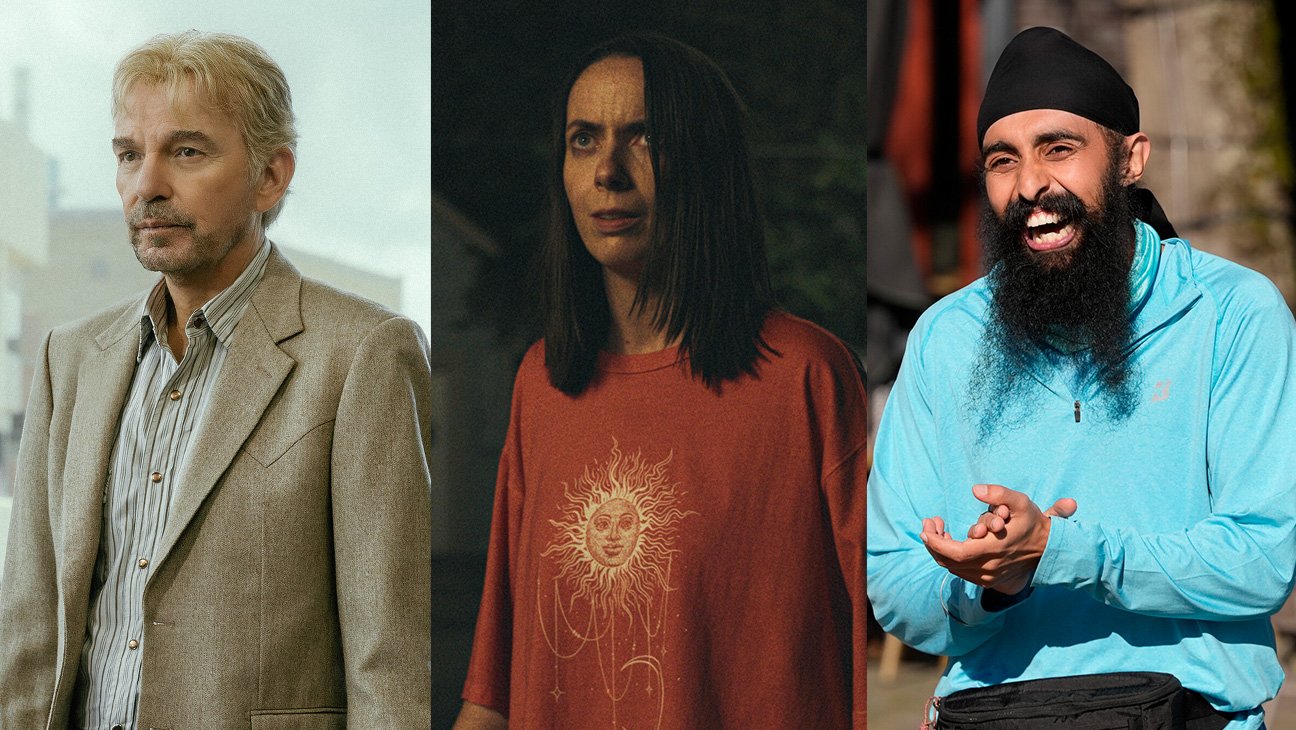
On Wednesday morning, 16 days after the close of voting to determine the nominees for the 78th Primetime Emmy Awards, the TV Academy announced its finalists across more than 100 categories, as selected by 27,000 voters who all got to weigh in on the program nominations (e.g. best drama, comedy, limited/anthology, etc.), as well as the category or categories that pertain to their specific “peer group” (e.g. the performers peer group picks the acting nominees, the animation peer group picks the animation nominees, etc.). Their picks, which I have spent the morning studying, provide a ton of interesting clues — and perplexing questions — about which way the wind is blowing as we head toward final voting period (Aug. 17-26), followed by the Creative Arts Emmys ceremonies (Sept. 5-6) and the Primetime Emmys telecast (Sept. 14 on NBC).
One fun development: Law & Order: SVU vet Mariska Hargitay, who was named the host of the Primetime telecast yesterday, was today nominated for producing and directing the HBO documentary special My Mom Jayne, a film about her late mother, Jayne Mansfield. Those categories will be presented at the Creative Arts ceremonies, meaning Hargitay won’t be in the hot seat on the same night she hosts the Primetime ceremony. But if she wins at least one award at the former before heading to the latter — which seems quite possible, although she faces formidable competition in both categories — she will join an elite group of people who won an Emmy and hosted the Emmys in the same year: Neil Patrick Harris, David Letterman, Jon Stewart and Jimmy Kimmel.
Meanwhile, as is the case almost every year, HBO/HBO Max and Netflix were the platforms with the most overall nominations — the former landed 122 and the latter 111 this year. They are also the only platforms to land at least one nom in each of the three highest-profile program categories: drama series, comedy series and limited/anthology series. Netflix is represented by drama The Diplomat, comedy Nobody Wants This and limited/anthology The Beast in Me and Beef, whereas HBO/HBO Max has dramas The Gilded Age and A Knight of the Seven Kingdoms, comedy Hacks and limited/anthology DTF St. Louis. (The Pitt, Hacks and Beef seem likely to win.)
Apple TV scored considerably fewer total noms than those two platforms — 87, a company record — but arguably had the most impressive showing of all platforms in the major categories, claiming three of the eight slots in both the drama series (Pluribus, Slow Horses and Your Friends & Neighbors) and comedy series (Margo’s Got Money Troubles, Shrinking and Widow’s Bay) categories, as well as 24 acting noms.
Widow’s Bay is a particularly fascinating case: the rookie horror/comedy wasn’t even a part of the Emmys conversation until very late in the game — indeed, several of its episodes rolled out after the May 31 eligibility deadline — but it caught fire at just the right moment and wound up with 19 noms, more than all programs except for The Pitt (which landed a field-leading 25 noms for its second season, up from 13 for its first) and Hacks (24 noms for its fifth and final season, breaking the previous comedy series record of 23 noms in a single season set by The Bear in 2024 and matched by The Studio in 2025).
In the best drama race, The Pitt, Pluribus, Slow Horses, The Diplomat and Hulu’s Paradise were sure-things, but the same could not be said for the three shows that ended up nominated alongside them: HBO’s The Gilded Age, for its third season (its second season was nominated but in an unusually thin year coming out of the COVID-19 pandemic); HBO’s A Knight of the Seven Kingdoms, for its first season; and, for its second season, the aforementioned Your Friends & Neighbors. Your Friends & Neighbors received just one nom for its first season and again for its second, but the nom for its first season was for best main title theme music, while the nom for its second was for the top prize for which it was eligible. (Conversely, HBO’s Task, for its first season, received six noms, including one for directing, one for writing and two for acting but didn’t crack the best drama category. Go figure.)
Meanwhile, the final seasons of Prime Video’s The Boys, HBO’s Euphoria and Netflix’s Stranger Things — all of which were nominated for best drama for prior seasons — failed to make the cut in their last cycle of eligibility (though each got several other noms, most notably Euphoria’s Zendaya for best drama actress). And Emmys voters once again rejected Taylor Sheridan‘s large portfolio of hit Paramount+ shows, including the sophomore season of Landman, which had received a best drama ensemble Actor Award nom, and the rookie season of The Madison, for which Michelle Pfeiffer was in contention. (Tulsa King landed a single nom, in the category of best stunt coordination for comedy programming.) Landman, in particular, had a strong argument for some noms, and its stars hit the trail on its behalf, but apparently that wasn’t enough for the TV Academy; voters aren’t sure about Sheridan himself, and Sheridan has made no effort to court them, so I wouldn’t expect a different result unless/until he does.
The best comedy category unfolded just as I forecasted, with noms for Hacks, Widow’s Bay, Shrinking, Margo’s Got Money Troubles, Nobody Wants This, ABC’s Abbott Elementary, Hulu’s Only Murders in the Building and FX/Hulu’s The Bear. The Bear, which took home the prize for its first season before losing to Hacks and Apple TV’s The Studio for its next two, seems to have barely hung on to a nom for its fourth, given that it landed only eight total noms (down from 13, a then-record 23 and 13 for its respective prior seasons), with Ayo Edebiri its only series regular to land an acting nom.
Shows that were probably within striking distance include HBO’s The Comeback, for its third and final season; for their second seasons, Prime Video’s Jury Duty (a best comedy nominee for its first) and Netflix’s The Four Seasons (Colman Domingo got an acting nom for both); and, for its first, HBO’s The Chair Company (which landed unexpected directing and writing noms). Two solid first-year comedies, FX’s The Lowdown and HBO’s I Love LA, were completely shut out, as was network TV’s best hope other than Abbott Elementary, NBC’s The Fall and Rise of Reggie Dinkins.
The best limited/anthology series category was filled out with Beef (the prior installment of which won the category), FX/Hulu’s Love Story, Netflix’s The Beast in Me, HBO’s DTF St. Louis and Peacock’s All Her Fault. Beef is the most nominated limited/anthology series of the year — its 16 noms are three more than the next most nominated — and the only one, other than DTF St. Louis, to land at least one nom in the directing and writing categories, which makes it extra shocking to me that the member of its principal cast who gave the strongest performance, in my view, Cailee Spaeny, was the only one who was not nominated. I don’t understand what happened there.
Limited/anthology series that couldn’t have missed by much — particularly given the underperformance of Love Story, which landed just six noms — include Netflix’s Black Rabbit (which scored a directing nom for Jason Bateman, one of his four spread between that show and DTF St. Louis), Death by Lightning (nominated for its writing and Nick Offerman’s supporting turn) and Monster: The Ed Gein Story (Charlie Hunnam and Laurie Metcalf got noms).
It’s another year of Peak TV in which the acting categories — lead, supporting and guest — were dominated by a small handful of shows: The Pitt (13), Hacks (10), Widow’s Bay (6), Shrinking (6), DTF St. Louis (5) and Pluribus (5). Is that more a reflection on the strength of those shows’ performances or the fact that TV Academy members are only watching a relatively small number of shows? Perhaps both. Regardless, the fact that several lower-profile shows still mustered an acting nom — e.g. Riz Ahmed for Prime Video’s Bait, Chase Infiniti for Hulu’s The Testaments, Richard Gadd for HBO’s Half Man, Steve Carell for HBO’s Rooster and Yahya Abdul-Matteen II for Disney+’s Wonder Man — is encouraging, I suppose.
In other news…
It’s a big year for pop stars. Taylor Swift, presumably on her honeymoon, got a belated wedding gift from the TV Academy, as Disney+’s Taylor Swift: The Eras Tour: The Final Show landed five noms, including one for its namesake, as a credited producer, in the category of best variety special (pre-recorded). Her competition includes Disney+’s The Muppet Show, in which Sabrina Carpenter appears, and for which Carpenter is nominated as an EP, and NBC’s Wicked: One Wonderful Night, which stars Ariana Grande, who didn’t take a producing credit. Meanwhile, in the category of best variety special (live), Bad Bunny — under his birth name, Benito Antonio Martínez Ocasio — is nominated as a producer, alongside Jay-Z, of The Apple Music Super Bowl LX Halftime Show Starring Bad Bunny.
Joining the Super Bowl halftime show in the variety special (live) category are four awards shows. The 2026 Oscars, hosted by Conan O’Brien, which was recognized with nine total noms, tying the best Emmys showing ever for an Oscars telecast (2013 and 2020); the 2026 Golden Globes, hosted by the aforementioned Nikki Glaser, marking the Globes’ first showing in the category since 2020; the 2026 Grammys, hosted by Trevor Noah; and the 2025 Tonys, hosted by Cynthia Erivo.
Megan Stalter, who was overlooked for her scene-stealing turn as Kayla in prior seasons of Hacks, scored got a nom for the show’s last season — just two days after debuting on Broadway in Oh, Mary! — which was nice to see.
Actress-turned-director Salli Richardson-Whitfield made Emmy history, becoming the first Black woman ever to receive two noms in the same year for best directing for a drama — she’s up for both an episode of The Gilded Age and the most impressive episode of Task, which we recently discussed — and, as an EP of The Gilded Age, she’s nominated for best drama too.
And lastly, the makeup of the reality competition category rarely changes, which makes it all the more notable that ABC’s Dancing with the Stars was included as a nominee for the first time since 2016, and that CBS’s The Amazing Race — which has more nominations (22) and wins (10) than any other show in the category’s history — was not included as a nominee. The Amazing Race was nominated for every season for which it has been eligible since the inception of the category in 2003 — until now. Was the show hurt by atypically bad reviews, did voters tire of it, or did they like it but were simply more enthusiastic about five other shows? Probably a combination of all three.
Leave a Reply