When “Curb Your Enthusiasm” wrapped up its 24-year-run in 2024, fans were concerned it would be the last time they’d see Larry David on screen. He had been saying the HBO sitcom was ending for the better part of the series’ run, and with Season 12 he finally called it quits. (“I said it before,” he told Variety at the time. “But I wasn’t 76 when I said it.”)
But his longtime collaborator Jeff Schaffer — who, in his early 20s, joined “Seinfeld” as a writer before becoming a major force behind the scenes of “Curb” — always knew David would be back on TV.
“I guess we’re like a plague of locusts, but you don’t have to wait 17 years,” he says over Zoom ahead of the premiere of “Life, Larry and the Pursuit of Unhappiness,” a historical sketch comedy show that he describes as “‘Curb’ in costume.” (Schaffer co-created the project with David and directed all seven episodes.)
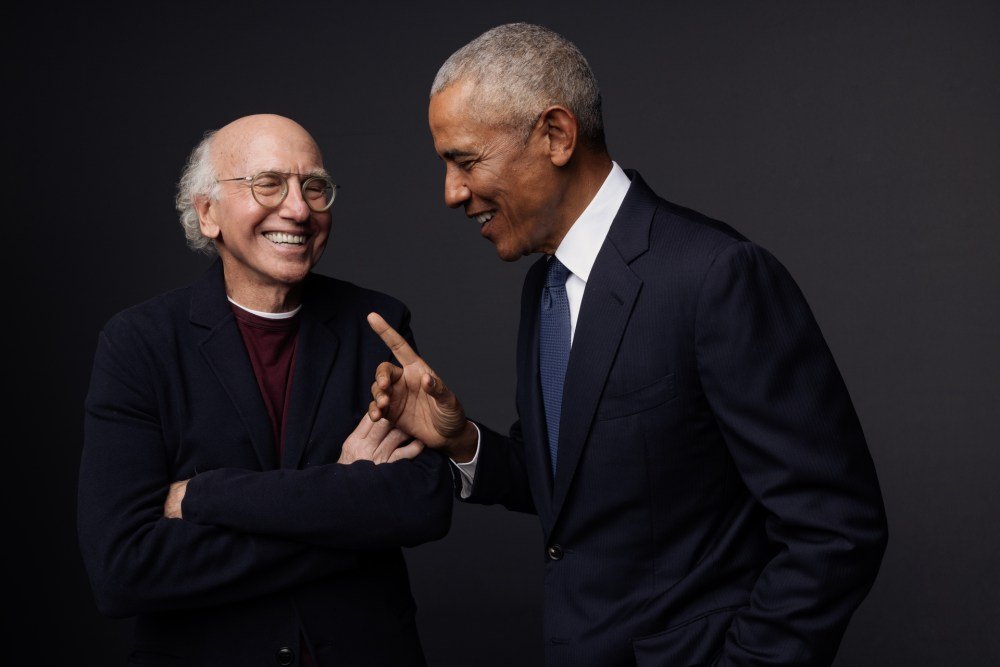
The series, which premiered on HBO on June 26, is executive produced by Barack Obama, who also appears in a sketch. In typical David fashion, the “Curb” star plays selfish, petty and unfiltered men throughout history. For every Founding Father looking to free the colonies from British tyranny, there was a Larry (often called Lawrence here) who suggests that sharing desserts and umbrellas should be prohibited by the Declaration of Independence. And in this version of history, Larry takes a stand for Rosa Parks when a white bus driver demands she give up her seat — not because Larry cares about civil rights, but because he’s sitting in the aisle and doesn’t want to get up.
In other words, the show is a celebration of America’s 250th birthday, but one that smears a little cake on the country’s face.
I didn’t think I’d see another project from you and Larry so soon after “Curb.”
“Curb” ended, and we were batting around some ideas. Then this sort of appeared. Larry will forego any opportunity to do things that are offered to him. He’s the great foregoer. But he was interested in this one, and we just started writing.
When you say this idea just “appeared,” it came from the Obamas, right?
Ethan Lewis at Higher Ground reached out on behalf of the Obamas. They wanted to do something for the 250th, and Larry, who is an American history buff, was interested in the idea of Larry going through history. To be honest, the seeds of this started a few years earlier when we did this commercial for FTX — lovely people, I don’t know what happened to them. Basically, Larry went through world history, dumping on every great invention. He remembered how much he liked being in costume, and he forgot how much he hated being in wigs.
So, Larry took a shine to this idea very quickly, in a way that Larry rarely takes a shine to anything. It helps that he and President Obama have a really good rapport, as you see in the show. From the first meeting, it was like, “We’ve got to get these two on screen together.”

Jeff Schaffer and Larry David at the premiere of “Life, Larry and the Pursuit of Unhappiness.”
Getty Images for HBO
When “Curb” ended, there was a concern among fans that Larry might be done with making television. You never shared that concern.
Larry can’t sit still. He’s like a prostitute who has sex when he’s not working. He’s always writing and thinking about stuff. We were actually in the beginning stages of thinking about other things to do after “Curb.” There was a movie we were thinking about, and there was a possible limited series we were thinking about, but this seemed appealing for a variety of reasons. One was working with the Obamas, and two was that the show had a deadline. It had to be done by now for the 250th.
The idea that it was eventized appealed to us. We said we’d do six episodes, and that’ll be that. It didn’t feel like it had the full weight of a series where you have to worry about Season 2 or Season 3. It was just a lark. But we ended up making so many sketches that we did seven episodes. Frankly, the thing that really appealed to Larry is that he loves American history. He studies it. This is a man who has the Gettysburg Address in his bathroom.
Does he really?
Yeah, his office bathroom has the Gettysburg Address. That’s where we got that “Curb” bit from. He doesn’t want to waste his urination time. Like his urination, those fallen soldiers of Gettysburg shall not be in vain.
“Life, Larry…” has a very “Curb” sensibility. Were those other ideas you and Larry considered — the movie and the limited series — similar?
We never stray far from the “Curb” sensibility. Larry still has ideas. I always say, “Until you can walk outside and not be annoyed by your fellow man, we’ll have a job.” So the question is, “What kind of vessel do you pour those ideas into?” Is it a movie that has fun “Curb” ideas? A limited series or a historical sketch comedy?
Since “Seinfeld,” Larry’s comedy has always been “big thing, little thing.” It’s like, “Hey, we’re going to get to make our own pilot. Wait, who stole the raisins?” There’s always this juxtaposition of a big thing you should be caring about and the little thing that’s somehow dominating your attention. When you get into these historical events everybody knows, the big thing is already right there in front of you. So we can just have fun with the little thing, and that juxtaposition really tickled Larry.
To what extent is this show scripted, compared to the outline structure of “Curb”?
The writing process and the shooting process were very similar to “Curb.” There wasn’t a full script, there was an outline. We probably had a few more lines in it for historical stuff, but it’s still an outline. And then we got fun people to come and play with Larry. Everybody came in for a day — the only person there for two days was Kathryn Hahn, just because of locations. So you have your outline, and every scene is a live rewrite, same as “Curb.” The thing that was different was the way we shot it. This is much more cinematic than “Curb.” Larry didn’t want them to feel like sketches; he wanted them to feel like shorts or little movies. We’re on location — we built the World War I trench and the Wright Flyer. Our production team and costume team took great pains to make it look as real as possible, and then we just drop Larry in and watch all hell break loose.
Larry David and Jerry Seinfeld as Lewis and Clark in “Life, Larry and the Pursuit of Unhappiness”
HBO
Were there certain castings that clicked immediately when you were brainstorming?
We started by writing down a list of big events and small events and going, “Which one do we have an angle for today?” One of the first obvious things was that Larry is the guy who told Lincoln to go see that play. We knew that arc right from the beginning, and Larry was like, “Kathryn Hahn needs to play Mary Todd Lincoln, and boy, it’d be funny if Bill Hader was Lincoln.” When we started writing the Lewis and Clark thing, that was about a boys weekend. It had a “Honeymooners” feel to it, and we thought, “Let’s get Larry and Jerry in a ’50s sitcom tone.”
Were there any historical events you explored but ultimately couldn’t find an angle for?
We played with Yalta for a while. We had a Gold Rush sketch that we wrote and rewrote, and we couldn’t figure out the ending. We put in a new ending and — well, it’s not in the show. It had funny parts, but it didn’t have a good enough angle.
While making the show, did you learn anything about history that surprised you?
There were a whole bunch of things. Larry goes, “We should do a popular vote thing with Samuel J. Tilden.” I’m like, “Samuel J. who?” Sometimes doing the research gave us our way in. Everyone thinks Thomas Jefferson wrote the Declaration of Independence, but there was actually a committee of five, with Jefferson and Adams and Franklin and Roger Sherman and Robert Livingston. Actually all of them took the first crack at it, so that was our angle. Larry is Robert Livingston, and this is his first draft. Our main thing was that Larry was rarely listened to, and that’s a good thing for history because when he was, it was met with terrible results.
A funny thing the show illuminates is the idea that people throughout history — even people involved in these world-changing events — were probably talking about really dumb shit and airing petty grievances.
As long as there have been people, there have been petty complaints about people. It’s not like talking shit started in the 20th century.
Larry David as Robert Livingston in “Life, Larry and the Pursuit of Unhappiness”
HBO
I’m curious about Obama’s role in producing the show. Did he ever use his executive power? No one is going to say no to the president if he asks for a certain guest star or more budget.
Using a presidential veto to get more money would have been amazing. I wish I’d thought of that. “The president needs an extra three days of shooting. He demands it.” We should have done that.
But the president’s input — and [Higher Ground’s] Ethan Lewis and Joe Paulsen’s — was invaluable. From our first meeting, he had read a whole bunch of stuff and was really liking it. He gave a few notes about something and Larry went, “Yeah, yeah, yeah, we got it.” And the president goes, “I spent a half an hour talking about how funny everything is. I give you one note and you get into a defensive crouch.” The president said, “When I was in the Oval Office, I took advice and listened to my advisors, and I was the president of the United States.” And Larry just goes, “Yeah, but I’m the president of this.”
As you said, this show is billed as a limited series. But, if given the chance, would you want to do more of it?
We had a blast. I mean, with Larry, you’re talking about the guy who said every season of “Curb” was the last season. There is nothing he relishes more than being done with something, but he also never stops working. It’s one of the delightful paradoxes of Larry: can’t wait to finish, always starting something. I don’t know if enough time has passed where he’s forgotten how much he hated being in wigs, but we’ll see. We’re going to do something. There’s a lot more history left on the table, that’s for sure.
So the two of you are definitely not hanging up the hat after this?
No, no. Like I said, people are still irritating.
This interview has been edited and condensed.
Leave a Reply