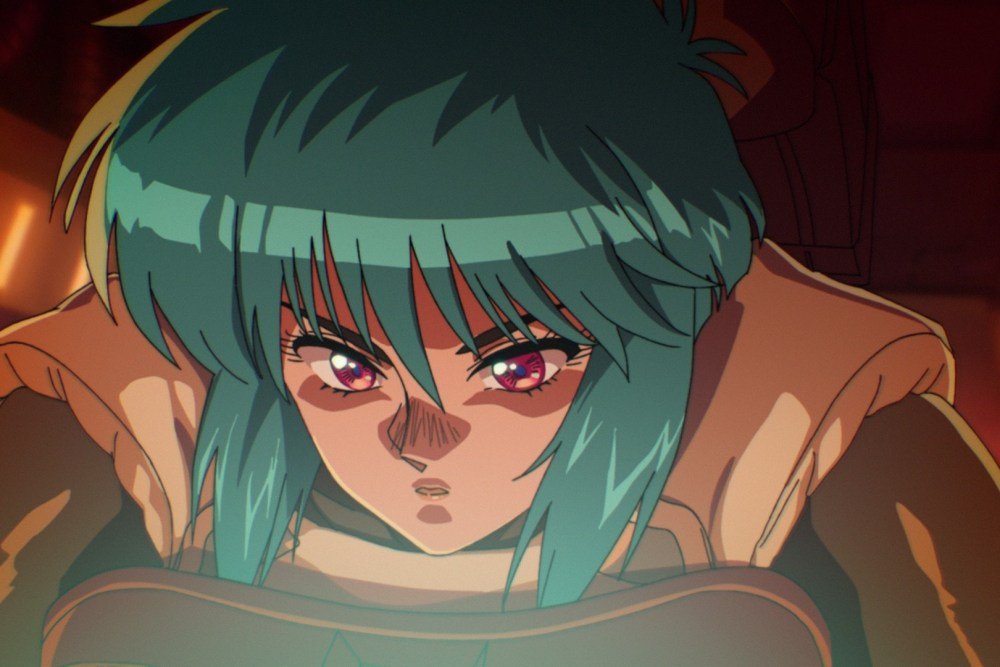
Ahead of the Annecy Animation Festival premiere of “The Ghost in the Shell,” the new adaptation of the famous manga by Masamune Shirow, director Mokochan emphasized the human element that went into making this cyberpunk sci-fi series set in a world where humanity and technology are inextricably linked.
“Ghost in the Shell” is set to bow worldwide on Prime Video July 7.
To the director, this embrace of the physicality of hand-drawn animation was the best way to represent the manga. “The manga is obviously hand-drawn on paper; it’s analog,” Mokochan adds in an interview with Variety. “And so even though what is depicted here is this cyber world, the fact that it’s been hand drawn by people is what gives it, it gives it its warmth, and its appeal, and that was something I wanted to replicate in the anime.”
The production of the show at the acclaimed Science Saru studio (“Scott Pilgrim Takes Off,” “Dandadan”) was driven by this enthusiasm for tactile animation. To the team it was crucial that, even with all of the metal and circuitry which permeate both the environment and people of “The Ghost in the Shell,” everything felt organic.

Credit: Shirow Masamune/Kodansha/The Ghost in the Shell Committee
Making an adaptation which more closely resembled the look of Shirow’s manga series was decided early on. “After ‘Ghost in the Shell: SAC_2045’ we were thinking about what should be the next incarnation of ‘Ghost in the Shell,’” says Bandai Namco producer Kengo Abe, “and Kondansha and Bandai Namco wanted something that fans of ‘Ghost in the Shell’ and new fans would be able to enjoy together.”
Abe states that they felt the most appropriate way to accomplish this would be to go back to Masamune Shirow’s manga, and decided to approach Science Saru to create the series. “We knew it would be challenging, just the sheer heft and scope and detail that is in this manga,” says Science Saru producer Kohei Sahita. “We knew that it would be a lot of work, but both myself and all the staff just had so much love for this project, and we started out passionate, and we got more passionate as it went on.”
For a show about the future it might seem odd to examine the past, but director Mokochan felt that it didn’t hurt the story at all. “The manga is pretty old now, but it doesn’t feel old,” he explains. “It’s because it has, at its core, this sense of wonder at the world.” During the presentation the director also spoke of the manga’s boundless energy, perhaps part of why it still carries a sense of vitality even 37 years after its first issue. Mokochan also adds that because of the changes that society is going through with technology and AI, it’s a valuable story to revisit.
At the same time, technology in “The Ghost in the Shell” is based on the time period from when the manga was first made; the show is populated with electronics now considered archaic: VCRs and CD drives rather than holograms and touch screens. The director felt that using technology of the time that the manga was written felt thematically appropriate, but at the same time, there is admittedly a little nostalgic fondness at play. “There’s a bit of a ’90s revival boom happening at the moment,” Mokochan says. “It’s quite contemporary not to really distinguish between now and a little while ago.”
It wasn’t just through technology through which “The Ghost in the Shell” captures the era in which the original manga was made, but also through the character design and costumes: In the first episode protagonist Makoto Kusunagi sports a blazer with the large shoulder pads characteristic of the silhouettes of the era. It was a mighty effort: Mokochan notes that Shirow’s manga was unusual for how many different outfits the artist included for the characters, rather than keeping just a few for efficiency. In bringing all of these over to the anime, during the presentation Mokochan estimated that Kusunagi has 48 outfits during the series, saying that overall there were probably double the design elements compared to what you might see in other anime.
“The reason for having all those design assets is so that the animators, any animator, knows how to draw that character in that scene, in that episode,” explains Sahita. “They have something to refer to, and with TV anime, normally the more of those designs you have, the more likely it is that someone’s going to make a mistake, they’re going to draw the wrong outfit, and so quite often you reduce the number of different design elements you have, because it’s less effort involved and less chance of mistakes, but in this case we didn’t do that. We really wanted to have every single one of the costumes, and that’s how the numbers just went up.”
A sense of diversity also extended from the visual assets into the soundtrack by Taisei Iwasaki, Ryo Konishi and Yuki Kanesaka. Throughout the two episodes shown it continually shifts genres, from jazz to dance music to a more traditional orchestra and back again.
“The concept was that half of the scenes should have this analog feel, this physicality to the music,” says Mokochan, “and the other half should have a cyber feel. The conversation that we had there with the sound director was normally in anime the music kind of follows the lines or the feeling or the events that are going on on screen, but in this case we decided that the music should cover the whole scene, essentially help create the world.”
Everything in “The Ghost in the Shell” is made to reflect something also mentioned during the talk prior to the premiere: the idea of a world built around visual density and tactility, and the music played a similar role. This visual approach immediately distinguishes “The Ghost in the Shell” from the many other adaptations that came before it, finding a new route into Shirow’s manga which feels more playful and energetic than ever.
Leave a Reply