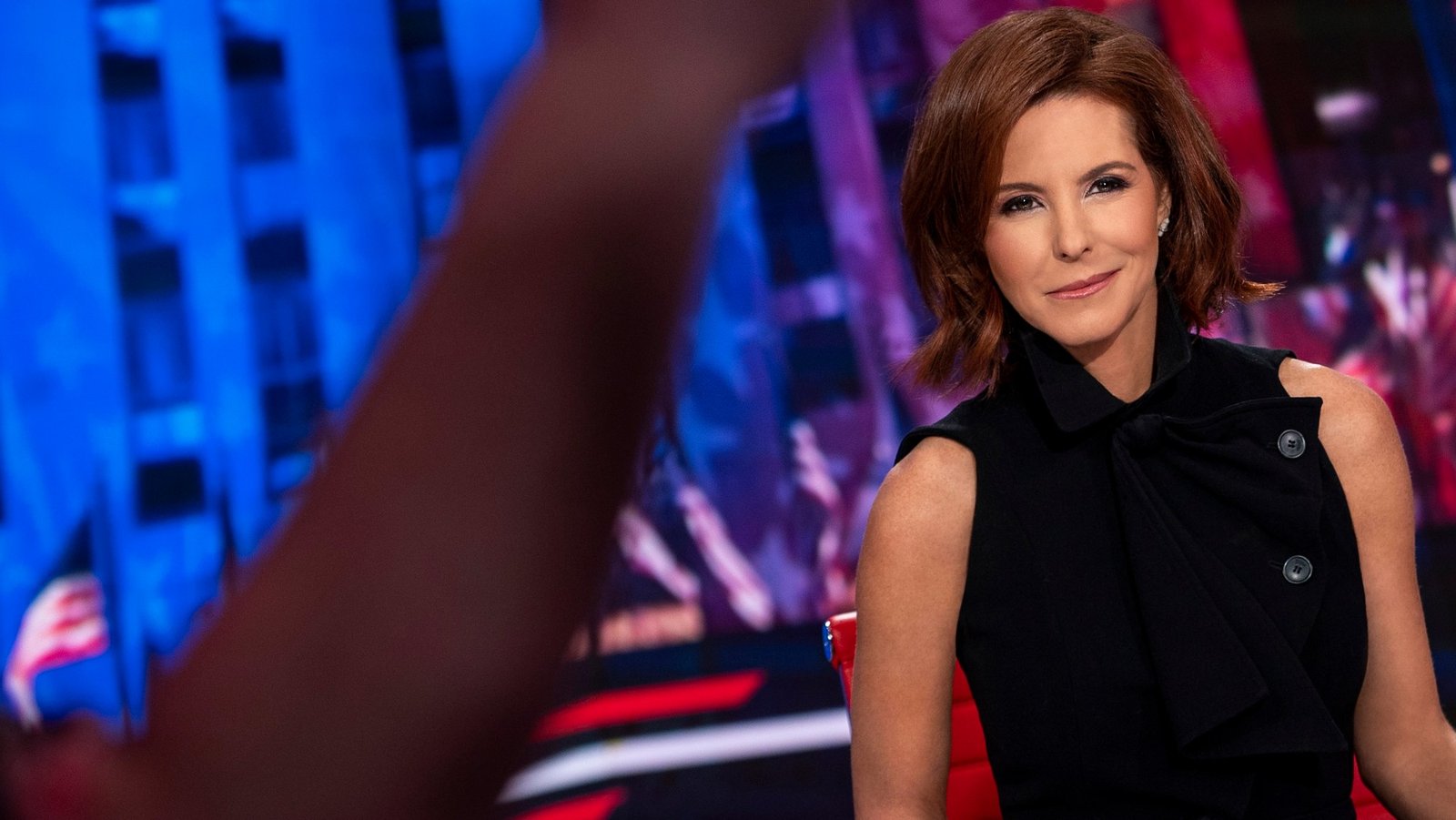
MS NOW host Stephanie Ruhle has always followed the money, but as she launched her new show Money, Power, Politics on Monday, she wants viewers to follow the throughline between those three topics.
Ruhle has hosted 11 p.m.’s The 11th Hour for four years, but is handing that show off to her friend Ali Velshi this week to move to the mornings, though loyal viewers of her late night program will see some similarities to what she did there.
The Hollywood Reporter recently caught up with Ruhle to talk about the move, and what to expect in her new timeslot, including a live audience and interactive elements.
I don’t know if [MS NOW president] Rebecca Kutler first approached you with the idea of moving from 11 p.m. to the morning, or if you were interested in making that switch. Can you give any background about what went into the move?
Six months ago, I went to Rebecca with this idea that I felt like cable news, especially in a dynamic world, while people are watching online and in real time, could use a big, comprehensive morning show. I absolutely love The 11th Hour. I love what we make. I love that it’s the end of the day. At The 11th Hour, we say, here’s everything that happened today, and here’s why it matters. But I think that one of the most important things, or the most important thing to voters, has always been the economy, and now more than ever, not markets.
I come from business news, and business news covers business for a business-savvy audience, but money is controlling everything now more than ever. We’re 16 years out from Citizens United, and there is more money in politics than you could ever imagine. By the end of next week, the SpaceX IPO is going to have trillionaire Elon Musk and a whole new universe of billionaires, and the power and influence they have over everyday life is huge. We’re on the precipice of an AI explosion, where every element of the way that we work, we live, and we play is going to change, and I wanted to make a two-hour morning show that was very much involved with the audience to not just set the stage for the day and say here’s what’s happening today, but that could be a show that people could watch at any time.
The goal of what we make is how do we help people get better and smarter, and I think a just criticism of the media, or the legacy media, when I’m places, people are always saying to me, “Why don’t you cover this?” or “why don’t you cover that?” or they’re talking about what they’re screaming at their television, and when Rebecca took over MS, she made the mantra and the mission of the organization, “We the people,” and so I said, what if we actually made a show that incorporated the people, that was truly interactive? So we don’t have all of our details ironed out yet, but once we get there, we’re going to have one day a week, the show is going to have a studio audience, we’re going to have a lot more interaction, we’re going to have a potential call-in component, and I think that’s going to be very attractive to a lot of our bigger guests, where people say, “Why aren’t you covering this that I care about?” Where they’re going to get to ask their questions, they’re going to get to participate in a way that I think new media exists and old media hasn’t. We’re going to try to marry the two.
So, a couple follow-ups on that. You mentioned how money and business and politics are more intertwined, I think, than ever. I was just reading before we talked about the government possibly taking stakes in AI companies. There’s a lot of unprecedented stuff that intersects business and politics, so from your point of view, MS Now is not CNBC; the audience may not come from that financial background, so how do you get that across?
But that’s exactly the point, because when I worked in business news — I came from finance, right — so I worked in investment banking for 15 years, so it was actually a much easier transition for me when I first started working in business news, because I was that audience. And I think that it’s a really intimidating language that only some people speak, and they don’t necessarily pause and explain things, because they don’t have to, and when I joined NBC, I spent a lot of time on the Today show doing, especially during COVID, basic explainers of how to get your check during COVID, to figure out how PPP loans work.
Well, now, as you just said, we’re living in unprecedented times, in terms of, hold on a minute, the government is taking stakes in businesses? What does that mean to me? AI is going to transform jobs. What does that mean to me? And so I think it’s really important to create a show that we actually press pause and just say, “Here’s what’s happening,” “Here’s what it means,” and more importantly, “Here’s what it means to you.”
I think that, given how much influence the corporate world or that money is having over every element of policy, I think we should have a show that we’re explaining this to people and not in a Encyclopedia Brown conjunction junction sort of Schoolhouse Rock way, but just basically saying, “Here’s what’s happening in the world, and here’s why it matters to you,” because I think that there’s lots of folks out there that are not hardcore politicos, and there’s lots of people out there that aren’t super business savvy, but I think there’s a bigger audience that wants to be engaged and informed, and I think that’s what we’re looking for.
You mentioned the idea of having a live studio audience and possibly a call-in thing; that’s fascinating to me, because it suggests a level of a two-way conversation that is atypical in news. Why was that appealing to you and interesting to you? I know you do the YouTube show with Ali Velshi and that strikes me as like a two-way street, too, on a platform that might be a little more native to. So, when you think about what you’re going to do on Money, Power, Politics, what was the thinking there? And how do you kind of want to execute on that?
Every time we do any sort of live event, whether it was when Jacob Soboroff and I did a town hall last year where the entire audience was fired federal workers telling their stories, that was one of the most impactful things I ever participated in. If you remember when Doge happened. Lots of people would say, “Yeah, the government’s too fat. We should trim the government. Do we need all those jobs?” It’s easy to say that when you don’t know those people or what those jobs are. And we did this TV special where all sorts of people that were government workers who were fired got up there and said, “Here’s what I do. I’m one of the people who helps get your tax returns sorted. I’m one of the people who works at a national park, and I’m a guide there,” and actually talking to real people.
I think that breaks through people in a world of misinformation and disinformation. People don’t just trust information, so I want to have real people participating, real people who are running small businesses, explaining what their life is like, having farmers on to say “this is the impact of the tariffs,” or “this is the impact of the closing of the Strait of Hormuz.” So, so my mom is somebody who could fall prey to media misinformation, and you can lie to my mother about things that are happening on the other side of the world, if she doesn’t see it, but you can’t lie to Louise Ruhle about the price of london broil, you can’t lie to Louise Ruhle about the price of gas, and I want to make a show that incorporates real people talking about their lived experiences, because again, I think most people are not hyper-political, most people do not hate their neighbors, they care about their neighbors, and so I just want to create a show for people to get informed, engaged, and better, and smarter.
And I’ll tell you, I mentioned the town hall that Jacob and I did, and we do smaller ones throughout the year, but once a year we do this MS NOW Fan Fest, and it’s just this extraordinary day where we have our super fans there, but we are with an audience, and for me those are the most electric and exciting days. And listen, it’s the 250th birthday of the United States of America. There is so much to celebrate in America; people who are watching the news care about this country, and they care about our future, and I want to make them part of what we make.
To take a step back for a second, you’ve got more real estate to work with the new show. What are elements that might be familiar to people that watch The 11th Hour, and what are maybe some new things that you want to bring to the show that you now have the ability to do that was a little more challenging in the old time slot?
So, in the old timeslot, we actually had two shows. Three days a week we would do 11th Hour, which was basically our straight news program, and two nights a week we would do The Nightcap, which is a roundtable with four guests that come from different backgrounds, and now we’re going to marry the two.
So the first hour is going to be more like our traditional 11th Hour with some new elements, and the second is going to be this roundtable conversation, and so we’re going to take what I think was the best of it. We would finish the 11th Hour, and I would say, God, I love the nightcap format, and other nights I say, God, I love the traditional format. And now we’re going to have both.
Two of our franchises that I think matter the most to the 11th Hour that we’re going to take with us is a recurring segment, “White House For Sale?” where we are regularly covering activity out of this administration that is unprecedented in terms of potential corruption, potential grift, and I think the most important things to the American people right now, and it doesn’t matter who you vote for, is affordability and accountability. OK, so in “White House For Sale?” we are covering accountability things, what this White House is doing. Is it for America? Is it for Trump’s personal interests? Is it for his financial interest? Is it for his business? And it’s important for us to cover that accountability portion, and also to question Democrats: “What are you going to do about this when and if you win?” And the other element is affordability and just explaining what’s at stake in this world. So we’re at this moment in this K-shaped economy where the rich are getting richer and the poor are getting poorer, and we have to diagnose why is this happening and what is happening because if you take the wealthiest people in America at the end of the Biden administration, their wealth has exploded, yours has not, and so we’re going to talk about the impact of that on America.
We have another franchise, “For Facts’ Sake,” and we say this all the time that the truth matters, but only if you hear it, just pressing pause and fact-checking. We just saw it yesterday with that interview with President Trump, where he just came unglued or unleashed on Kristen Welker, one of the best, most hardworking, most just journalists out there, and I think it’s really important for us in this show to continue this franchise, “For Facts’ Sake,” because the president or others want to say the news is biased, the news is biased, but the truth is not biased, it’s just that some people don’t want to hear the truth.
So, what Kristen Welker was doing yesterday was just pushing the president over and over, where she was saying, “Please give us evidence of the fraud,” and the president’s response was, “You’re biased, you’re all out to get me.” I can’t speak for everybody, but what we’re making is not out to get the president. What we’re out to do is cover the facts, and when you cover the facts, it might anger people, it might incense them, it might infuriate them. But I think it’s really important every day in this typhoon of news and distractions and information to just say we’re going to need to fact check this, and the beauty of having two hours is that we’ve got the time to do it, because I can tell you every day when we’re planning the 11th Hour, there’s a giant pile of content that we want to cover that’s on the cutting room floor.
I know you’ve had a lot of experience kind of putting these roundtables together, but in your mind, what makes for a good roundtable that’s good TV, that’s informative and interesting?
Respect people who have credibility and expertise, and people who respect one another. I don’t make content that goes viral; I don’t. I have a belief, and maybe it’s shortsighted that I think much of what goes viral is making us sick, and I know it because I’ve had people on TV who I can tell and I can feel it are just there for the show and just there for the soundbite, and that might serve that guest at that moment, but I actually think long term it doesn’t. I think that makes for just a show. I think if you want to have a long-term audience that sticks with you, it’s about trust and reliability, and I think that having people who are experts in their field, not spokespeople, not mouthpieces, actual experts, and you know what, sometimes you might have an oil expert on whose glasses may be smudged, and they might not be TV sexy, or savvy, or friendly, but they’re the smartest person with the most important content that day.
And I think that the most important thing is for the audience to know and trust me, and for me to say, “Guess what? My goal is to try to make you guys better and smarter on an assortment of topics today that could be politics, that could be business, that could be culture, that could be education, and I’m going to bring in the best people to do that, and, and you might not know them, or have ever heard of them, but at the end of this segment, I think you’re going to be glad you heard from them.” That’s what I would say would be different. I think that a show should absolutely have differing opinions and respectful disagreement, just like if you came to my house for dinner, I would love it if you disagreed with people at the table and you talked about why you love the Mets and somebody else talked about why they love the Yankees, and you have respectful disagreement, but if you can’t sit at the table like you would in my home in a respectful way, then it’s pretty quick. You can’t come back.
What else are you thinking about when the show launches?
I would just say this. So, the title of the show is Money, Power, Politics, and I want to bring on lots of voices of influence who can explain to us the way the world works, and I think that when I say power, people immediately said to me, “Are you going to go back to sort of like your CEO lane?” You want to have all those business people on. I think we’re going to have business people on, but I think that power is also this idea that we’re going to have audience and viewer engagement, because power is about community, power is about voters, power is about people being educated to go out and pursue the careers they want and the lives they want, and I want us to sort of revisit this idea of power, in that individuals have power if we’re engaged, and that’s my hope.
It’s easy right now to be dark and negative, and I especially like that we’re making this show in the morning. I know there are a lot of things to be negative about in the world, and I think there’s a lot of things to be worried about, and we’re covering it, but I also think that we can make a strong, smart, optimistic show that celebrates lots of good people doing great stuff, and I invite, and I listen, I know the president loves to watch TV at 9 a.m. and I can’t wait for him to tune in.
All day long and all night long.
Yes, and by the way, how lucky am I? My handoff is Morning Joe. That has been one of the smartest, best shows, not just on cable television, but on all of television for north of 15 years. I love getting the handoff from them. I love being part of Morning Joe. I go on Morning Joe regularly, and I’m excited to have a new neighbor.
Following Morning Joe is a good, good place to be, given the audience they have.
I mean, me and Willie Geist, two kids from New Jersey, you can’t beat that.
Leave a Reply