Flames ripple across the tide in a jagged rockpool near the shore of the lonesome, wind-whipped Chilean island that houses “La Perra“: a film often content to surrender to the elements, though rarely in quite such unexpected combination. As it turns out, there’s a rational explanation for this flammable water — years ago, a gas pipeline burst on that spot, making for something of a famed local curiosity — but it’s an aptly uncanny image in Chilean writer-director Dominga Sotomayor‘s arresting, intriguing new film. A portrait of independent womanhood in unforgiving surrounds, “La Perra” trades heavily in matters that resist easy explanation, from an unresolved mystery of disappearance in the protagonist’s past, to the unknowable mind of her wayward dog.
Recently premiered in the Directors’ Fortnight sidebar at the Cannes Film Festival, Sotomayor’s first film since last year’s Netflix-backed “Swim to Me” drifts far from the comparatively broad commercial accessibility of that for-hire project, circling back toward the intimate, off-kilter sensibility of her highly personal breakout works “Thursday to Sunday” and “Too Late to Die Young.” This despite the fact that “La Perra” (which translates as “The Bitch,” though the film retains its Spanish title internationally) is, like “Swim to Me,” an adaptation, drawn from a well-regarded, widely translated novel of the same title by Colombian author Pilar Quintana.
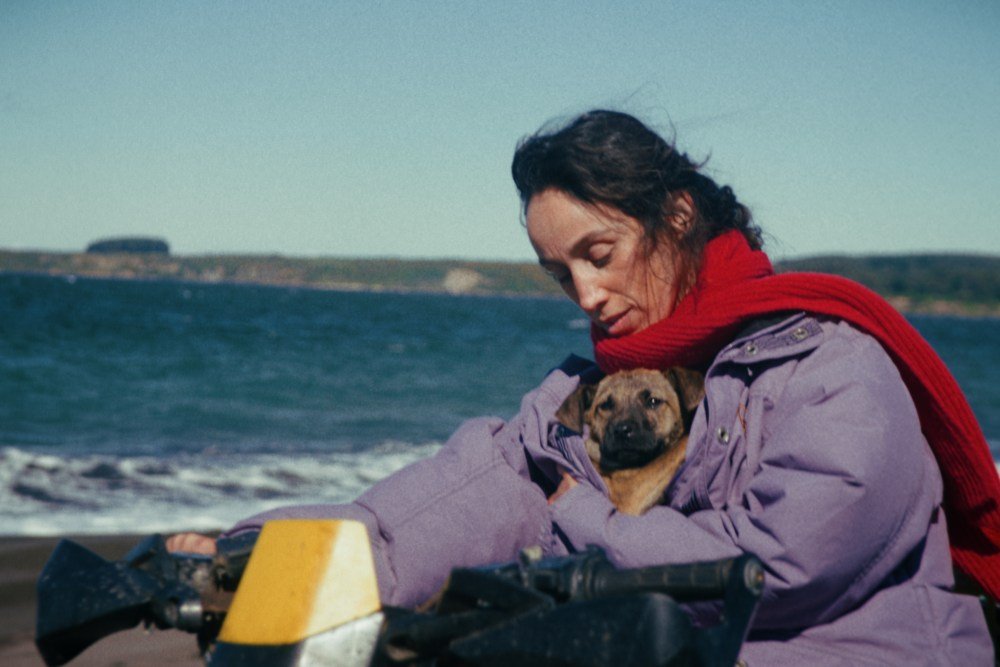
The dog of the title — a spirited, unwieldy brown-and-black mutt of indistinct provenance, named Yuri — would appear to be the new film’s warmest selling point, holding the camera as she does with enough expressive agency to render her a character in her own right, alongside protagonist Silvia, a hardy rural survivor played, in an excellent, intensely contained performance, by Manuela Oyarzún. (Yuri, the immensely appealing animal-shelter find who plays the dog of the same name, duly gets second billing in the credits.) But if “La Perra” initially promises a gratifying bonding tale of two free spirits, human and canine, lovingly united, nothing in Sotomayor’s increasingly melancholic film proceeds quite as expected: It’s not for dog lovers of a more sentimental persuasion, though its behavioral observation across species is rewardingly detailed and on point.
The rugged, scarred, khaki-colored landscape of Chile’s remote Santa Maria Island, meanwhile, plays at least as significant a role in proceedings as any character in Sotomayor and co-writer Inés Bortagaray’s script. This distinctively harsh choice of locale, and the ways in which it shapes the protagonist’s existence, plays a major role — perhaps the major role — in redetermining Quintana’s Colombia-set story for the screen.
Like many of the island’s residents, fortysomething Silvia makes a modest living harvesting and selling the seaweed deposited on the beach by churning, generous waters. Though she has a partner, Mario (David Gaete), who shares her simple, placid way of life, she has apparently never felt the need for children. Impulsively adopting Yuri as a puppy, however, awakens some level of maternal instinct in her; the two are devoted, until Yuri runs away one New Year’s Eve, seemingly spooked by fireworks.
Silvia is bereft, though the loss awakens a deeper, carefully bandaged layer of grief from her past — cuing a flashback to a formatively upsetting incident for the young Silvia (Rafaella Grimberg, a remarkable match for Oyarzún, both physically and temperamentally), involving a visiting Brazilian family (headed by “I’m Still Here” star Selton Mello, in a brief, potent turn) and the same coastal cave where she fears Yuri may have disappeared. Sotomayor doesn’t handle flashbacks in conventional fashion: As befits the out-of-time nature of the island, the film can float almost imperceptibly between past and present, with key objects and locations as subtle transition points, conveying the sense of Silvia sometimes living in her memories as actively as she does in her waking life.
“La Perra’s” impact is quiet and cumulative, but it lingers. It’s not a film of clear-cut revelations and changes of heart, but its understanding and appreciation of female solitude — even the kind that comes nested in companionship — is honest and delicately nuanced, and should resonate with viewers patient enough to grapple with the film’s ellipses and tough-minded emotional breaks. The calm assurance of Sotomayor’s filmmaking, meanwhile, impresses as much as in her earlier works, well served by the fluid, muscular expansiveness of Simone D’Arcangelo’s cinematography and Federico Rotstein’s freely intuitive editing — all parties working in tandem to convey lives and landscapes at once turbulent and still, isolated and in soulful dialogue with one another.
Leave a Reply