Booking a hotel because The White Lotus made it look good was just the beginning. The expanded version of set-jetting involves volcanic wine country, an invitation-only whisky room in Edinburgh and a Slovenian cellar where the bear salami is aged by the moon.
These are the European destinations worth building a trip around — and the films to reference before and after the experience.
Sicily: For wine lovers
In 1971, Francis Ford Coppola couldn’t shoot in Corleone — it looked too modern. He moved east, to the hillside villages of Savoca and Forza d’Agro near Taormina, and accidentally gave Sicily a cinematic identity that has never worn off. Bar Vitelli, where Pacino’s Michael Corleone first saw Apollonia, still serves granita under the same vine-covered terrace. The Church of San Nicolo, where they married, still stands at the end of the same cliffside street. “White Lotus” Season 2 doubled down on Taormina and introduced the Etna wine country to a generation of viewers who hadn’t found it yet.
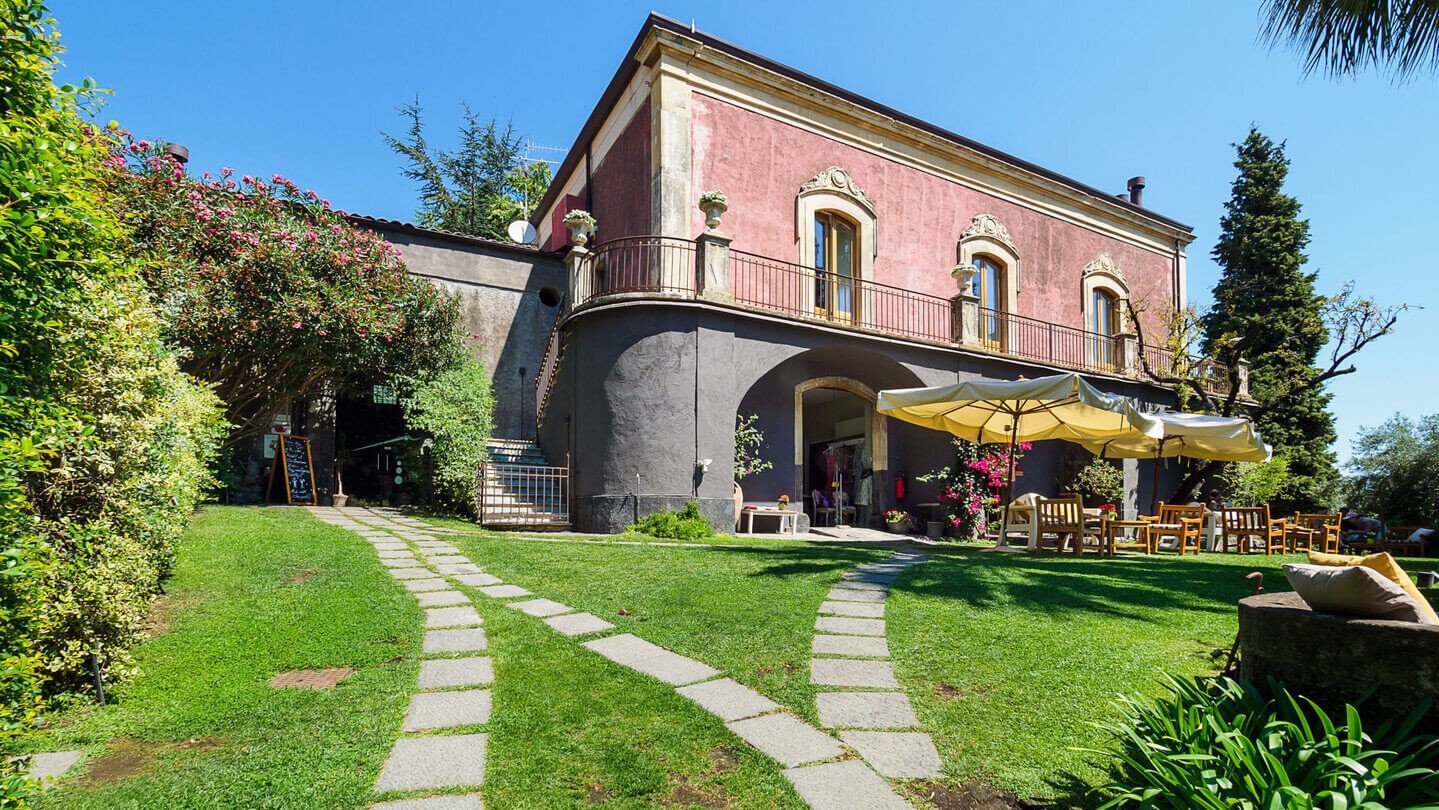
On Etna’s slopes, the Benanti and Tornatore wineries produce nerello mascalese and carricante from vines rooted in volcanic soil, unlike anything else growing in Europe right now. Planeta handles the broader education, with wines that have become reference points for the whole island. The place to stay is Monaci delle Terre Nere, a former 17th-century Augustinian monastery that Guido Coffa spent years converting into a Relais & Chateaux wine estate — 62 acres of vineyards, citrus orchards and lava-stone terraces, with a kitchen that lives and dies by what the farm produces that morning. Before leaving the area, lunch or dinner at Anciovi, the poolside seafood restaurant at San Domenico Palace — the Four Seasons where The White Lotus was actually filmed — is mandatory.
Venice: For art lovers
Steven Spielberg used Venice well in “Indiana Jones and the Last Crusade” (1989) — the Grand Canal boat chase and Campo San Barnaba doubling as a library. The city hasn’t changed its approach since. In 2026, the Venice Biennale brings the global art world back to the one city that has been staging this kind of thing since before the concept existed. The Giardini pavilions and Arsenale are the serious work — formally ambitious and often politically uncomfortable. The collateral exhibitions in palazzos and deconsecrated churches across all six sestieri are where the best discoveries happen.
The St. Regis Venice on the Grand Canal near the Accademia Bridge handles the city’s logistical complexity without making a fuss about it — the butler service is ideal to simplify every need in a city where nothing is simple. Dinner at Airelles Venezia at the new ABC Kitchen is an absolute must.
Slovenia: For food lovers

AS Boutique Hotel, courtesy of AS Boutique Hotel
Ljubljana is small, walkable and layered — a castle on the hill, a covered market by the river, an architectural confidence that punches well above the city’s size. Jaz by Ana Ros, which opened in 2023 inside the AS Boutique Hotel on Copova ulica, is the meal worth planning around. “JAZ” is Slovenian for “I” — this is Ros unencumbered by the pressure of Hisa Franko, her three-Michelin-star destination restaurant in the Soca Valley. No tasting menus. Shared plates. A menu that changes daily based on what came in from the Ljubljana market that morning and what Ros felt like cooking.
The AS Boutique Hotel has 30 rooms designed by Ofis Architects with views to the castle. The essential excursion is to the Ribnica Valley, 45 minutes south, where David Lesar runs BioSing out of an underground cellar. Lesar cures bear, deer and pork into salamis aged according to lunar phases in clay-lined chambers — no additives, no industrial shortcuts, nothing that didn’t exist in 1492 when the Ribnica Valley first started trading. Ros serves the products at Hisa Franko. The tasting in Lesar’s cellar, paired with wines from his 10,000-bottle private collection, is one of the more theatrical food experiences available anywhere in Europe.
Puglia: For Agritourism lovers
“No Time to Die” (2021) used the ravine city of Gravina in Puglia for one of its action sequences. The region has absorbed a decade of being discovered and come out intact. The right base in 2026 is Tenuta Negroamaro, a 10-suite estate near Gallipoli on the Ionian coast — seven hectares of pine woods and red-soil gardens, interiors by designer Olga Ashby, private plunge pools and a kitchen sourcing from the estate. It sits in Salento, the quieter southern end of the region, where the pace is slower.
Amsterdam: For architecture lovers
George Clooney, Brad Pitt, Matt Damon, Julia Roberts and Catherine Zeta-Jones were all in Amsterdam in 2003 filming “Ocean’s Twelve” with Soderbergh using the Nine Streets canal houses as his backdrop.
Rosewood Amsterdam, which opened in the former Palace of Justice on the Prinsengracht, is where the industry crowd should stay. Studio Piet Boon handled the design; Kunstmest Consulting curated nearly 1,000 works across four deliberate themes. Re-Masters pairs contemporary artists against the Dutch golden age — think Viviane Sassen in dialogue with Vermeer’s legacy. Innovative Media puts digital works on a large lobby screen in collaboration with Amsterdam’s Nxt Museum. Urban Art covers the street culture. Frank Stella’s Polish Village reliefs and Maarten Baas’ Grandfather Clocks are among the signature pieces, and guided art walks run alongside rotating exhibitions in The Gallery.
Belgrade: For off-the-beaten-path lovers
Ralph Fiennes chose Belgrade to shoot “Coriolanus” (2011), his directorial debut — filming in the Serbian parliament building, across the city’s bridges and through a streetscape that compresses medieval, Ottoman, Austro-Hungarian and Socialist modernist architecture into a single sightline. Fiennes said the city’s spirit drew him first and the locations confirmed it.
The Bristol Belgrade opened in 1912 as the most glamorous address in the Savamala district and spent the better part of a century living up to it — the Rockefellers had a suite named for them, Tito was a regular, Garry Kasparov played chess here. After closing in 2018 and spending two and a half years under the hands of 16 restoration artists working alongside Belgrade’s cultural monuments institute, it reopened in early 2025 as a five-star independent property with 143 rooms, a Michelin Key and an Art Nouveau Secession facade that looks exactly as Nikola Nestorovic designed it in 1912. The Library is the room to know — fireplace, books, the right atmosphere for a city that rewards the long evening.
Scotland: For whisky lovers
Hendrick’s Gin Palace, courtesy of Hendrick’s Gin Palace
Sam Mendes shot the Glencoe sequences of “Skyfall” (2012) in the Scottish Highlands. Now the Highlands have a second pop culture claim — “The Traitors,” both the U.K. BBC edition and the U.S. Peacock version, films at Ardross Castle, a 19th-century Scottish Baronial estate on more than 100 acres along the River Alness north of Inverness. The castle’s long corridors and Highland backdrop have made it one of the most recognized locations in reality television globally.
The Balvenie distillery in Dufftown is the whisky visit that earns the trip. Floor maltings still running the traditional way, coopers making barrels on site, a 30-year vertical tasting conducted without theatrics. It is the kind of place that converts the curious into the serious. Down in Girvan, the Hendrick’s Gin Palace runs at an entirely different frequency: Victorian greenhouse, cucumber cocktails, the theatrical self-awareness of a brand that has fully committed to its own unique style.
In Edinburgh, Gleneagles Townhouse in the New Town is smaller and in some ways sharper than the Perthshire flagship — members’ club energy, correctly restrained. One Hundred Princes Street has the castle views and the proportions that remind you what Edinburgh was built to do. Both make the case for staying longer. The reservation worth pursuing is the private room at Johnnie Walker Princes Street: invitation only, archive bottles, the kind of conversation about provenance and rarity that doesn’t happen on the standard tour.
Leave a Reply