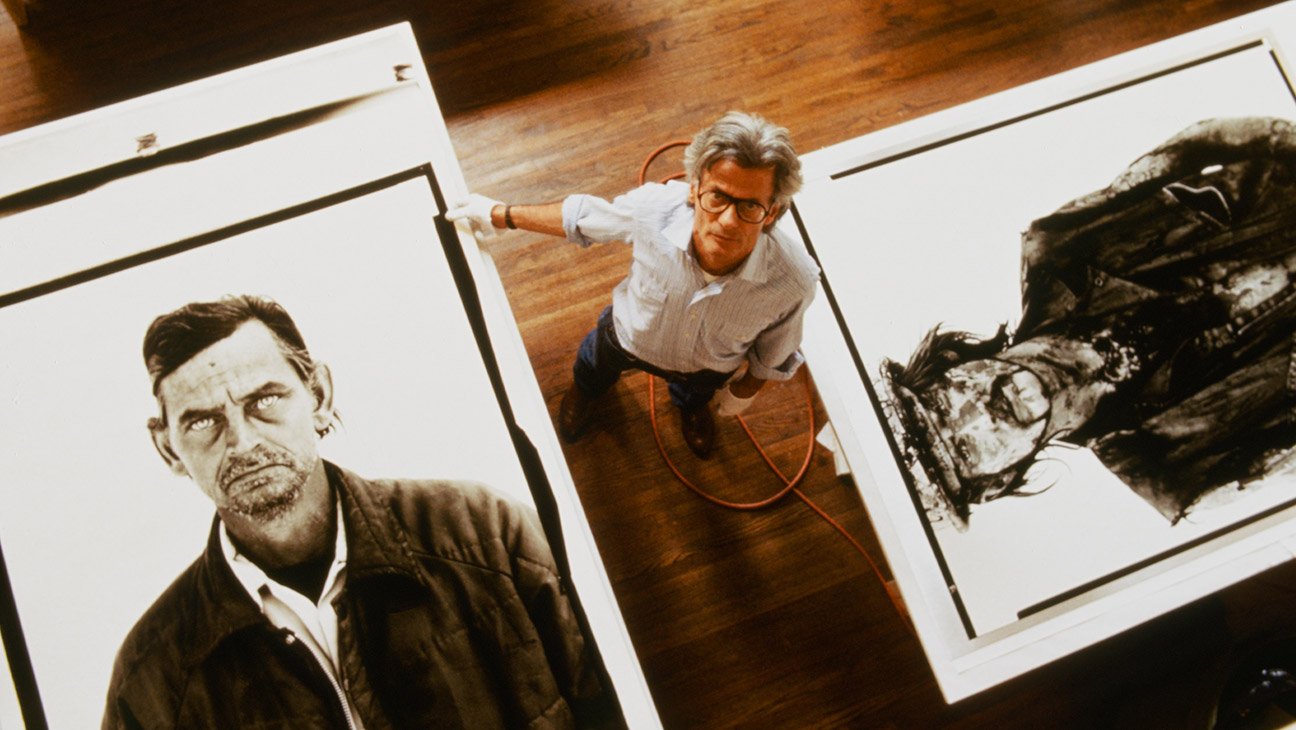
At one point in Avedon, Ron Howard’s documentary about the famed photographer Richard Avedon, the claim is made that Avedon captured much of the 20th century. It’s a bold assertion, but Howard’s film, which distills a dizzying archive provided by the Richard Avedon Foundation, makes a compelling case over its 100-minute runtime.
After becoming the preeminent photographer at the height of American fashion magazines, Avedon was the inspiration behind the Audrey Hepburn and Fred Astaire musical comedy Funny Face. His notoriety led him to capture the most famous faces in entertainment, politics, society and culture, from James Baldwin and Allen Ginsberg to Marilyn Monroe and Charlie Chaplin to the Reagans and Warhol’s Factory. In between his portraiture and commercial work (you have Avedon to thank for Brooke Shields’ seminal Calvin Klein campaign), he documented the rubble of post-War Paris, the architects of the American Civil Rights movement and the napalm victims of the Vietnam War.
All of this, as well as the photographer’s personal life and more, is explored in Avedon, which is getting a special screening in Cannes on May 17.
Howard is no stranger to biodocs. With a focus on prolific creatives, he has directed docs about Luciano Pavarotti (2019’s Pavarotti) and Jim Henson (2024’s Jim Henson Idea Man), the latter of which also bowed at Cannes. He says of his choice of subjects, “We’re all appreciative of their work, but maybe we didn’t recognize quite what it entailed.”
Ahead of touching down in France, Howard talked to THR about the origins of Avedon, the importance of authorship in imagery and how Avedon “used his work to satisfy his own curiosity.”
When did you lock the documentary?
Just a few weeks ago.
Wow.
But it’s been years of working on this, going back to our first visits to the archives. What I so love about this period of my life, creatively moving back and forth between scripted narratives and doc films is that the tempo and the pace of the documentaries is so different. It’s just always with you, percolating, for a long stretch of time. It’s rarely that kind of flat-out sprint. Sometimes, the very last interview you do, it’s not just a few quotes you can plug into the film, it instigates a real rethink, and deepens your understanding of the subject. I really love the opportunity to explore these other worlds, and quite often with me, it’s been individual biographical work.
Why are you drawn to biographical film?
The only verité piece I did was when we followed [chef] José Andrés around. And when we did the Paradise fire film [2022’s We Feed People], we had no idea exactly where that would go. But it’s really been about the opportunities that came my way. I’m very interested in people who achieve artistic excellence. I’m interested in the life and the spark, along with the dues they had to pay and the cost to the other aspects of their life. That all goes into the stew that winds up being a career with significant output.
How did Richard Avedon come on your radar as a documentary subject?
Sara Bernstein, the president of the documentary division at [Howard’s production company] Imagine, had gotten wind that the Avedon family and the foundation were perhaps open to allowing a filmmaker to have access to the archives and be supportive of the effort of reaching out for interviews. So I went to the archive, and it happened to coincide with that [2023 retrospective] in New York. I had nothing but respect for the name Richard Avedon and the handful of images that I could ascribe to him, but no sense of the depth and reach of what he had done. You could open up every drawer and your head explodes with — who he photographed and under what circumstances. There were also these tapes that he recorded of the sessions, which weren’t really right for the movie, but I could see that he wasn’t just taking photos of human beings as symbols or reflections. He was actually drawing out their inner self and finding ways to let that inform the photo, even if it was his commercial, glossy magazine work or advertising. That was enough of a reason, to me, to talk about making the film.
And then I had no idea how much of his life he committed to social observation, to civil rights, to exploring the lesser-known corners in service of photo journalism. People weren’t always supportive. Magazine people didn’t want him running away and covering Vietnam. They weren’t excited about that. That’s not what they wanted him to do. I’m sure his business manager didn’t like that. And the critics weren’t always embracing it, and he had some very harsh criticism that really beat him up. And yet he persevered, and was just determined to fully apply his creativity in the ways that he understood best. To me, it just became this object lesson in creative endurance. He’s using his cachet and stature to actually say something else and do more. I found that incredibly inspiring.
I wound up being really emotionally connected to Avedon. I’m not anything like him, outside of the fact that I love to work and I have a lot of energy around it. It was funny, he reminded me of a couple of mentors of mine from his era who shared similar qualities. That acerbic wit, who designed to be at the center of things.
Like who?
The director of all the episodes of Happy Days, a guy named Jerry Paris. Everywhere Jerry went, he was the ring master. He had these great parties at his house. They weren’t Hollywood parties — it was swimming and playing basketball, it wasn’t that he was fancy or outrageous. But he was funny at all times, and he loved people. Avedon would go up and photograph people on the street. If we were with Jerry and in some city because of some promotional tour, he would just go up and talk to people in restaurants.
Someone in the doc points out that you can see the arc of the 20th century in Avedon’s work.
He was prolific [and] in demand, and that’s a hell of a combination, especially in that era where magazines were the social media. That was a lot of water cooler conversation. It was television and magazines during the his era, even more than cinema. He was so tireless. Despite the fact that he destroyed thousands of negatives, he just covered a lot of ground. I relate to this, too: He used his work to satisfy his own curiosity, to explore the world, not just to eat in great restaurants or stay in nice hotels.
In the process of making Avedon,did you pinpoint a personal favorite image of his?
There are so many that aren’t even in the film. I really wanted the movie to be a movie. I really wanted it to work the way a movie works, as a journey. So, I had to make some decisions. But there is something about his straight humanistic portraiture, like a young Lou Alcindor, who later was Kareem Abdul-Jabbar, holding the basketball when he’s 18 or 19 years old on a New York playground. I grew up loving the movies of John Ford, and it turned out that my favorite photograph of John Ford as an old man with an eye patch was Avedon and I didn’t even know.
And you, yourself, never had any run-ins with Avedon?
You know, I wasn’t really going to be in the fashion magazine [world], nor was I a controversial, sociologically edgy or surprising subject. So I’m not surprised, but I would have loved to have been in there.
I’m not sure if you saw it, but Avedon gets a shout-out in The Devil Wears Prada 2.
I saw that! I really enjoyed that movie.
It’s a testament to his staying power in the world of fashion, and the sentiment expressed in that movie was that his work and way of working couldn’t be replicated today.
It’s hard to know. That’s why we use that quote at the end [of the doc] where he says, “I don’t even think there’ll be photographers later,” and that images, wherever they exist, will just be called down. But then, conversely, he turns around and says the thing that I believe, which is for human beings to feel a kind of depth or connection with an image it needs to run through the filter of an artist to give it a soul and an intention. All an all, whatever the tools that are used to generate images or capture images, I feel like authorship is going to be something that we still appreciate.
Leave a Reply