K-pop has not only conquered the world, it has brought the world to South Korea. That was the somewhat unsurprising headline finding of a new research study commissioned by Airbnb as part of its ongoing collaboration with some of the country’s biggest music stars.
Last week, Airbnb threw open the doors to a neon-lit, fully immersive experience created in partnership with K-pop boy band Cortis. At the same time, the company quietly dropped an in-depth report titled “Korea Calling: How K-Culture Is Driving a New Generation of Travelers into Korea.” While the Cortis experience lit up social media as fans flocked to central Seoul in hopes of getting a glimpse of one of K-pop’s fastest-rising groups, the research study laid bare the savvy strategy behind the global travel brand’s growing efforts to align its brand in Korea with the country’s greatest cultural exports.
Airbnb’s report, which was based on a survey of several thousand international guests to Korea, found that 94 percent of visitors and prospective travelers to the country say K-culture influenced their interest in going. Perhaps more consequentially, travelers strongly motivated by K-culture stay longer, spend more and are more likely to travel in groups. The report captures the growing trend of young people from across the globe hashing out plans for their long-dreamt-of K-pop or K-drama pilgrimage.
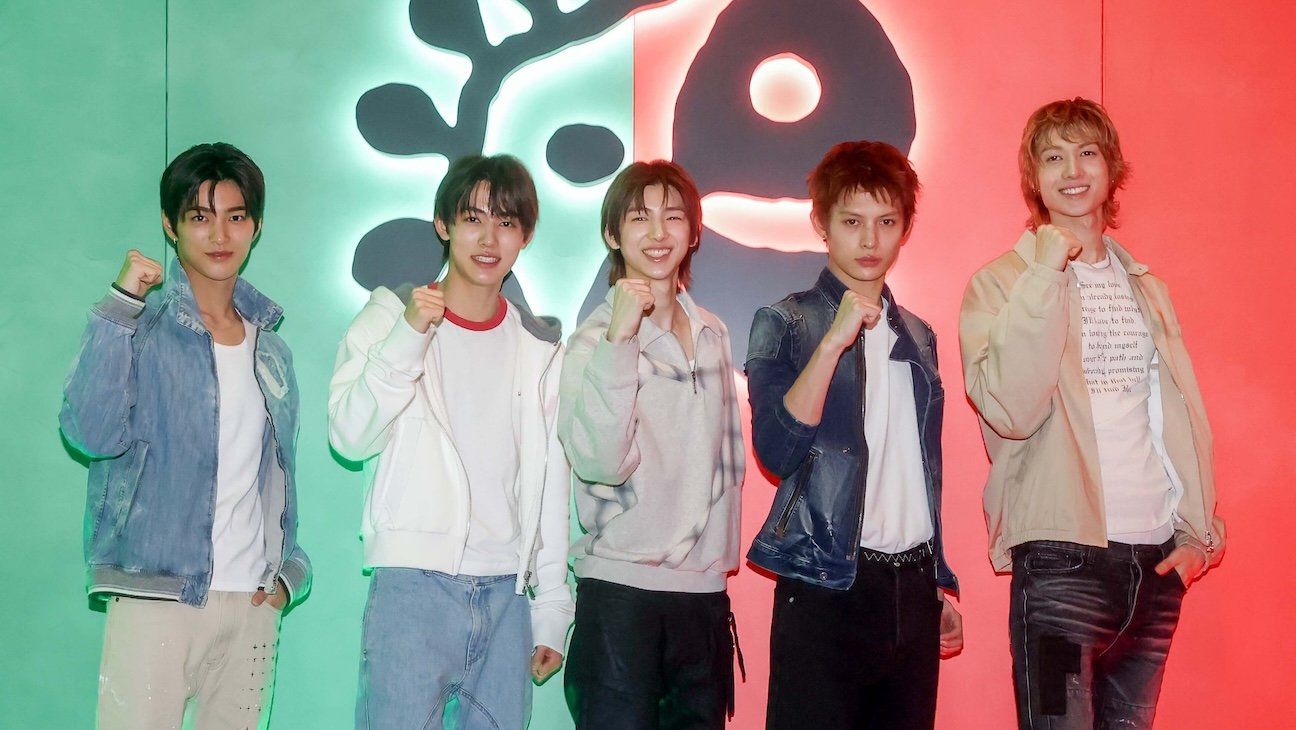
Cortis is among the hottest new groups sparking such demand. The five-member group — Martin, James, Juhoon, Seonghyeon and Keonho — debuted under Hybe’s BigHit Music label in August 2025, the most prominent new act launched on the storied imprint behind BTS in years. Their debut EP, Color Outside the Lines, landed at No. 15 on the Billboard 200, and earlier this year they headlined the opening night of the NBA Crossover Concert Series during NBA All-Star 2026 — the first K-pop act to do so.
Their lead single, “Redred,” off recently released second EP Greengreen, supplied both the soundtrack and the visual experience for the hideout Airbnb built around them at home in Korea. The space, tucked into a sleek events building in central Seoul, is split across two color worlds drawn from the EP — crimson red zones and teal green spaces, furnished with personal items and design touches drawn from the members’ own creative studio.
Across a guided two-hour journey, the 30 fans chosen for the launch-day Airbnb event moved through a sequence of game-like stations, the first designed to coax out their personal preferences so they could see how their tastes compare to members of Cortis.
“It feels special to invite our fans, Coers, into our Seoul hideout,” the group said in a statement timed to the launch. “‘Redred’ is all about discovering ourselves — what we lean into, what we push back against.”
Elsewhere in the hideout, fans deciphered Cortis-themed crosswords using UV-lit clues, customized keepsakes to take home, and worked their way through a paint-splatter zone. The afternoon climaxed with a block-stacking game played between the fans and all five members of the group — the kind of unscripted, in-person encounter that has become the greatest emotional currency of K-pop fandom.
Airbnb opened the broader pop-up — same space, but without the group members present — to more than 1,000 additional guests over the following week.
For Airbnb, the partnership is the latest move in a K-pop strategy that it has been slowly building for years. The company first tied itself to K-culture in 2022, offering two guests an overnight stay in the rural pension where BTS filmed their reality show In the Soop. A first-of-its-kind stay inside Seoul’s Dongdaemun Design Plaza followed in 2023, in partnership with BTS’ Hybe label-mates Enhypen. Last year, Airbnb expanded the strategy significantly through a tie-up with Seventeen, running a series of fan experiences across Seoul, Los Angeles and Tokyo timed to the group’s world tour.
The model echoes Airbnb’s high-profile moves in the U.S. pop world — such as the recent Sabrina Carpenter listing dropped during this year’s Coachella — but with the added element that most K-pop fans are also interested in exploring traditional Korean culture as part of their fandom. Airbnb is pitching its growing Experiences business — unique, in-person activities designed and led by a local host — directly to K-pop travelers, too, with popular activities on the platform including K-pop dance classes or tours through Seoul’s iconic night markets.
“K-pop and K-concerts are a strong driver of travel demand,” said Lyla Seo, Airbnb’s country manager for Korea, during a small group conversation with reporters in Seoul last week. “When fans book a flight ticket and then look for the accommodation, we’d love to be that anchor — and then provide the variety of experiences so they can understand the city in a better way.”
According to Seo, BTS’s recent comeback show in Seoul drove occupancy across the city’s accommodation stock — Airbnb listings included — to near-capacity over a single weekend. The company’s report also found that travelers strongly motivated by K-culture spend around $435 more per trip on average than those who are not.
Unlike in most markets, Airbnb’s pop music partnerships in Korea are about more than typical marketing — they’ve become an important part of its government lobbying, too.
Airbnb arrived in Korea in 2013 and, like many tech platforms entering the country during that era, found unusually fertile ground. Korean consumers tend to be early adopters, and the company’s pitch — stay like a local — resonated with a generation of Koreans who were beginning to travel abroad in record numbers. For most of the next decade, Airbnb operated in a legal gray zone, with its host base expanding rapidly through the pandemic as domestic travel surged.
But a reckoning of sorts came two years ago. Facing mounting regulatory scrutiny, complaints from competitors, and questions about which listings were properly licensed, Airbnb made what Seo describes as “the very difficult decision” to voluntarily enforce its hosts’ compliance with Korea’s stringent short-term rental laws, requiring every listing on the platform to hold the appropriate accommodation license. The challenge is that Korea enforces some of the world’s strictest requirements for Airbnb hosting (not including the territories that have outright banned the service). There are 27 different license categories under which a host may register, each with its own set of qualifications. Some require the sign-off from every neighboring apartment in a building. Others include proof of English-language proficiency on the part of the host.
“The first reaction from many potential hosts is, ‘How do I even start?’” Seo says.
But the executive says Airbnb had reached a stage of maturity in Korea where it had no choice but to ensure that all of its hosts operate legitimately.
“The intention was clear: to build a trust in this society and to be accepted as a social corporation in Korea,” Seo says. “You have to behave, and show your commitment first.”
The K-pop partnerships Airbnb is forging serve as a second prong in its regulatory messaging.
The Korean government has set a target of 30 million annual inbound visitors — a sharp jump from the roughly 16.4 million the country drew in 2024, the most recent year for which official figures are available. K-culture is one of the country’s most prized strategic assets, and a marquee point of pride for the Seoul government. By aligning itself publicly with K-pop’s biggest names and producing data showing that culturally motivated visitors stay longer and spend more — particularly outside Seoul, where Airbnb’s geographic footprint is most differentiated from hotels — the company is making a bet that it can translate brand goodwill into regulatory reform.
“We’ve never experienced this much love and interest from outside the peninsula. We need more accommodations here, but our regulations cannot keep up with it,” Seo says. “So we’re working together with the government to reform. Government wants to have 30 million inbound travelers — we’d love to be part of that. But to get there, we need to re-regulate.”
Leave a Reply