This weekend brought yet another disturbing act of political violence. Each time, we hope it’s the last, but hovering over the act is the knowledge that it won’t be the last and the fear that it won’t be the worst.
At least, that’s how many of us feel about the tragic shooting at the White House Correspondents’ Dinner on Saturday night. The trolls and point-scorers feel differently. Because how that opening sentence should really read is, “Yet another disturbing act of political violence, yet another round of recriminations about whose speech was responsible and who should be shut down as a result.”
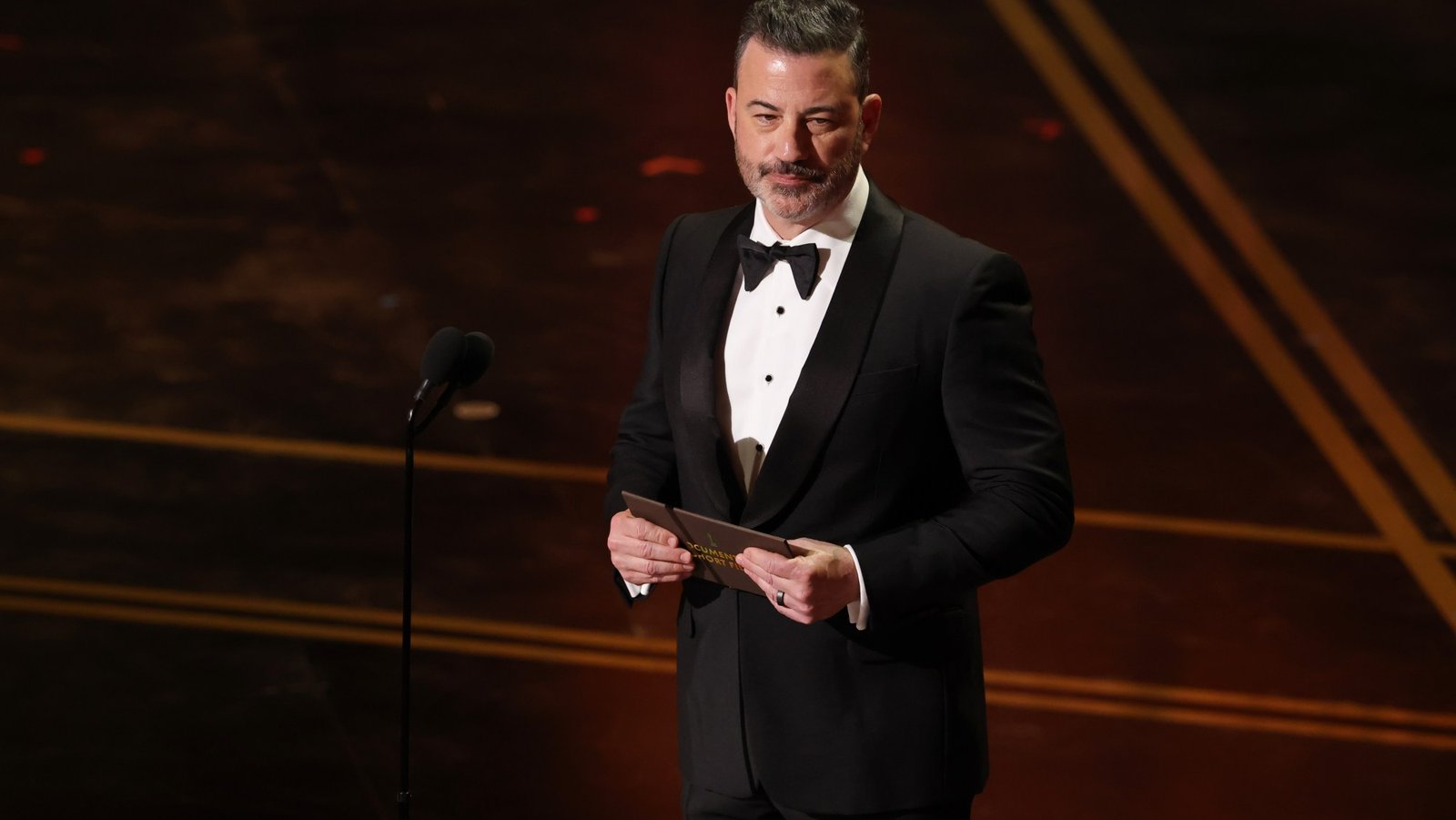
In this case, the bogeyman is a familiar one: Jimmy Kimmel, who, as both Melania Trump and Donald Trump argued Monday, should be taken off the air (again) for a joke he made last week about the potential future death of Donald Trump.
But I’d argue that eyerolling another MAGA attempt to exploit a tragedy is, while an entirely fair reaction, not the full or accurate one either. It’s possible for the right to be acting in bad faith and for the left to downplay the role of demonization and violence-normalization, not with one late-night host’s misinterpreted joke — Kimmel’s quip was, as my colleague Tony Maglio notes, essentially an old-person punchline and is being taken profoundly out of context — but a different, deeper culture of demonization. When perhaps the most popular voice on the left, Hasan Piker, tosses out thoughts like “My favorite flag? Hizbollah…it’s got an AK on it and a fucking hand holding it up” and “Empires never die quietly, and we must end the American empire,” the latter of which he didn’t even restrict to his trolling livestream but told a Yale student group this month, it becomes harder to say violence-coded provocation is just a right-wing thing.
Conservatives’ playbook of using a horrific incident as an excuse to shut down the speech they don’t like — it would have been news if the White House didn’t try to capitalize on the violence at the Hilton — is by now well-known. Less known, and more uncomfortable, is how some Democrats tend to go silent on the role normalization can play in these tragedies too. The lesson of incidents like the WHCD shooting is that the real devil isn’t the other side — it’s the framing of sides to begin with.
This is a monumental and often impossible moment for media companies, when the corporate leaders who control them have been put under unprecedented government pressure even as the rhetoric from all quarters rises to unheard-of levels. We have moved from comedians commenting on current events to becoming part of them, from entertainers anointing politicians to evolving into their antagonists. Many of us believe that taking Kimmel off the air is wrong in the specific, given who else throughout the Internet hasn’t been de-platformed for saying far worse, and troubling in the cosmic, given the suppressive benchmark this could set for the future. Using corporate tools to stop comedians from making jokes is second only in its Orwellian nightmarishness to using government tools to do the same.
And yet to say that those speakers have no reason to consider their words is to ignore both today’s realities and common sense. Anyone with a platform can influence the culture — the platforms wouldn’t be so coveted if they weren’t. When leading Democratic candidates throw caution to the wind and throw around the term fascism, comparing Donald Trump to the men who caused genocide in Europe, it gets harder to say that only one side is upping the rhetoric. When a Saturday Night Live comic says, “I think that’s cool that the president is going to the theater. I mean — what’s the worst that could happen?,” as Michael Che recently did, then it’s totally reasonable to react with, “Yeah, he shouldn’t have said that” (and also, “Surely, there was a better joke about Trump going to the Kennedy Center?”). And if you’re a Democrat shrugging it off with, “Eh, it’s just a punchline,” imagine your reaction to near-misses on Barack Obama’s life sandwiched around Tucker Carlson saying the same thing.
In such a climate, should late-night hosts not make any joke at all about dead presidents? Should executives allow such jokes to pass through? I don’t know the answer. (The latter seemed to be a yes when Disney, under new CEO Josh D’Amaro, and NBC Universal, under leader Michael Cavanagh, each, mindfully or otherwise, greenlit the quips.) But it is clear that at least in these cases, performers and executives, admittedly in tricky situations, tended to the permissive. And so what was once out of bounds — I could be wrong but, re Che specifically, I don’t recall assassination jokes being tossed out on modern network television before — continued to move within the Pale, and a scourge went on afflicting politicians and groypers and, yes, comedians alike.
Sure, the White House in this case could be cynically exploiting a painful situation. But also dangerous speech and potentially consequent acts of violence can come from anywhere, including the left; both things can be true. If you believe Melissa Hortman could be assassinated because of what the right has been saying, can’t someone plan violence against Charlie Kirk or Donald Trump because of what the left has been saying? Of course they can. It’s just easier to pretend otherwise, or pretend it isn’t all part of the same dangerous team-sport game that got us into this mess. As Jon Stewart said after Kirk, “We are treated in the aftermath of these horrific crimes to the news media’s active politicized scavenger hunt. Which piece of inconclusive arcana proves which half of the country is to blame?” The syndrome of demonizing-rhetoric is bad no matter who is doing the rhetoricizing (and no matter who did it first and who does it worst, which you’d have to be deceitful or naive to say isn’t MAGA).
Because the problem of course isn’t that one political ideology embraces violent rhetoric more than the other, even though of course at any given historical moment that can by definition be true; the problem is that in 2020s America, a culture of provocateur one-upmanship, algorithmic outrage, a mental-health crisis and the partisanship of the football field being transferred to the political arena has created the perfect conditions for this type of violence to flourish. And as misguided and dangerous as it would be to think that canceling Jimmy Kimmel will stop it, it would be equally misguided to think that just ignoring the problem will make it go away. Or to think that only side is contributing to it.
Now, there is a very, very big difference between words that may indirectly foster violence and policies that directly carry them out, and calling out a person sensationally is not the same as shooting them in the streets, full stop. I hear you, my fellow liberals, as you start typing out a comment to this effect. But we’re not talking about comparing words to policies. We’re talking about comparing words to words.
Comments like Che’s and Piker’s may not fall under a fire-in-a-crowded-theater legal definition, as certain right-wing trolls want to suggest. But that is not the only standard by which we live our lives. There’s a lot we wouldn’t want someone to say to inflame a jittery situation even if it’s fully legal. No matter how much so many us love and believe in edgy comedy, a line exists between cutting satire and violence-normalizing, and maybe stay wary of anyone who tries to use the bogeyman of repression to erase it.
In light of all this, what can any of us, from the biggest executive or entertainer to the most common citizen, actually do? At risk of depressing you, nothing. But also everything. Not enact policies or lash out with punishment but just pay individual heed to the conditions as they exist now and make the decisions our own conscience tells us to make (a personal-responsibility calculus you’d think, incidentally, Republicans would prefer).
In the end I think we’ll get to a good place (optimism!), if only because the political system will, by its counter-cyclical nature, ultimately (after too much pain) produce a candidate who galvanizes with the possibility of unity and common goals.
In this regard, our media-entertainment industrial complex is actually leading the way, with Project Hail Mary and the Artemis coverage and the little hopecore movement currently blossoming. When it comes to media moments that bring the country together, a space mission has a much better track record than either a comedian’s joke or cancellation.
Leave a Reply