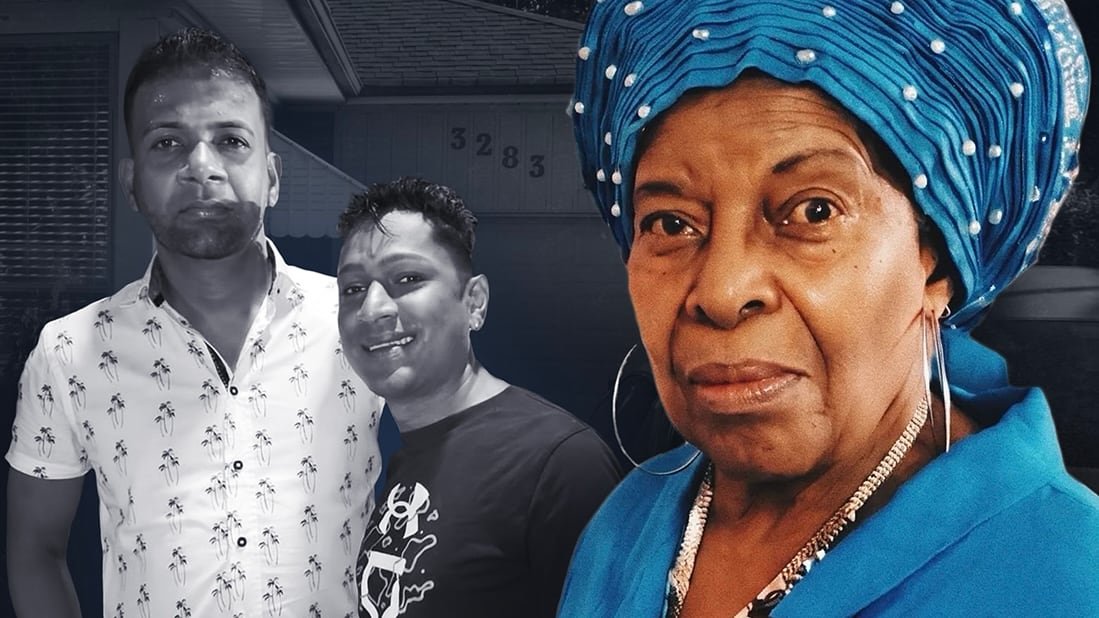
Dorelia Licorish didn’t know where she was. Her confusion came after she was asked a simple question by a Toronto judge presiding over a video court hearing last May.
“Are you in Guyana right now?”
Licorish, an 86-year-old Toronto resident who was in the South American country at the time, turned to the two men with her.
“I’m supposed to say yes?”
“Yes,” one of them responded.
A provincial agency had gone to court to get legal guardianship over Licorish, arguing she was mentally incapable and the men were taking advantage of her financially.
Back in Canada, members of her family had been searching for Licorish. They called police after they hadn’t been able to reach her for weeks and her house looked abandoned.
Less than six months after that call, Licorish died in hospital from an infected bedsore so deep her pelvic bone was exposed. The two men with her in Guyana are living in her Toronto home. Police have laid no charges.

Licorish’s nieces, Susanne Perch, left, and Andrea Phillips-Beckles, right, are seeking answers from police about what happened to their aunt. (Krista Hessey/CBC)
An investigation by CBC’s the fifth estate into Licorish’s death reveals that even when government agencies and law enforcement are alerted to a case of suspected elder abuse, they can fail to protect the most vulnerable seniors.
Licorish’s family believe she was neglected by the men who had moved in as tenants before declaring themselves her caregivers.
“I would like to get justice for her because [the police] didn’t take anything seriously at all,” said Andrea Phillips-Beckles, Licorish’s niece.
- Watch the full documentary, “They called her ‘Mommy,’” from the fifth estate on YouTube or CBC-TV on Friday at 9 p.m.
Mistreatment of older adults is on the rise, experts say, as Canada becomes a “super-aged” country this year, with one in five people aged 65 or older.
While rates of elder abuse are not tracked nationally, a 2022 study by University of Toronto researchers found one in 10 Canadians over age 65 experiences some form of elder abuse — physical, financial or sexual — every year, and racialized and cognitively impaired older adults are at higher risk.
“Dorelia’s story is one that’s being played out in so many places, among so many individuals each and every day in our country, and this issue is only growing bigger,” said Dr. Samir Sinha, director of geriatrics at Sinai Health System and University Health Network in Toronto.
“What’s preventing this from happening to you?”

An undated photo of Licorish. (Krista Hessey/CBC)
Beloved auntie
Licorish immigrated to Canada from Barbados in the early 1960s. She was sharp-witted and fiercely independent, her family and friends said. She did not have any children of her own, but after her sister died, raised Phillips-Beckles.
“She was one vibrant, vibrant woman,” Phillips-Beckles said.
Licorish worked as a nurse at the Centre for Addiction and Mental Health on Queen Street West in Toronto for decades before retiring.
Christiana Egi, Licorish’s former nursing colleague and close friend of 35 years, told the fifth estate she noticed Licorish was displaying memory problems as early as 2018.

Dorelia Licorish is remembered by her friends and family as a fiercely independent woman who loved fashion, travelling and gardening.
In early 2024, Licorish told Egi that a married couple, Daniel Gopie and Elton John Rambarrat, had moved into her basement and were helping her around the house.
“I was like, ‘I hope this is for real, that something doesn’t happen.’”
The first red flags for Licorish’s family came in June 2024. Licorish’s landline had been disconnected and a second cousin received word the new tenants had said the house was now in their name.
The cousin showed up at Licorish’s home on Lawrence Avenue East with police, but Licorish got angry and asked them to leave.

Daniel Gopie, left, Licorish and Elton John Rambarrat in an undated photo. (Submitted by Daniel Gopie)
A month later, she gave Rambarrat and Gopie powers of attorney over her property and personal care — giving them control of her finances and health should she be deemed incapable. Then she signed a will leaving all her assets to them, including her million-dollar Toronto home.
When Phillips-Beckles went to the home in August 2024, she says Licorish didn’t immediately recognize her and the men never left her aunt’s side. One of the men told her Licorish’s will is “bulletproof.”
“He started calling her ‘Mommy,’ and then she said, ‘These are my sons from God.’ I said, ‘No, they’re sons from the devil,’” Phillips-Beckles said.
Legal documents in question
In September 2024, Ontario’s Office of the Public Guardian and Trustee (OPGT) began looking into the relationship between Licorish and her tenants after receiving a tip from a real estate lawyer.
The OPGT is a provincial agency tasked with safeguarding the interests of mentally incapable Ontarians.
The lawyer told the agency he had been asked to add Rambarrat and Gopie to the title of Licorish’s property. He refused after Licorish could not recall the men’s names.
In a 120-page affidavit filed in Ontario Court of Justice, the OPGT detailed what allegedly happened after Rambarrat and Gopie moved in. The men said they had met Licorish at her church and she allowed them to live in the basement rent-free in exchange for helping her with shopping and chores.
They began going with Licorish to appointments with her longtime family doctor, court records show. The doctor told the OPGT that after an appointment in September 2024, she asked Licorish about the men and the powers of attorney document they had shown her, Licorish was “very surprised” and didn’t remember signing it.

An undated photo of Gopie, left, Licorish and Rambarrat. (Submitted by Daniel Gopie)
Her family doctor wrote she had “concerns with Ms. Licorish’s memory” and had booked a mini-mental status exam. However, Rambarrat cancelled the appointment. In medical notes from August 2025, doctors wrote Licorish had a history of dementia but it is unclear when it was first diagnosed.
In an interview with the fifth estate, the men said Licorish did not have dementia and was capable of granting them powers of attorney and creating a will that named them sole beneficiaries.
“The lawyer did the will. She did think it was fine and we didn’t see it as a problem; it’s something [Licorish] wanted to do,” Rambarrat said.
The lawyer, Veena Pohani, told OPGT that while the three had “an unconventional relationship,” she did not see signs of abuse and Licorish appeared happy.
Pohani declined to be interviewed for this story, citing client-solicitor privilege.

Rambarrat says lawyer Veena Pohani created the powers of attorney documents and will for Licorish. (veenapohani.com)
While a dementia diagnosis does not necessarily mean someone is incapable, lawyers have a duty to ensure clients have the mental capacity to understand the legal decisions they are making and that they are not being pressured by outside forces, according to the Ontario Law Society.
Pohani told the OPGT Licorish was capable of making these decisions, although no information is included about how she determined that.
Allegations of financial abuse
Banking records submitted in court show a dramatic change in Licorish’s spending around the time the men entered her life. Thousands of dollars in ATM cash withdrawals and near-weekly alcohol purchases quickly depleted her modest pension and drove her account into overdraft.
Rambarrat and Gopie were added to Licorish’s accounts in early October 2024. They cashed out some of her investments and withdrew money from her line of credit a few weeks before they took Licorish to their home country of Guyana for the first time.

Undated photos of Licorish with Gopie and Rambarrat in Guyana. (Submitted by Daniel Gopie)
Bank staff wrote to OPGT that Licorish told them she “trusts them fully” and the transactions were completed with her consent.
However, about six weeks later, Licorish told OPGT investigators that she was not aware of withdrawals in the thousands.
Rambarrat and Gopie deny using Licorish’s money for their own purposes and say they used it for home repairs.
However, when asked by OPGT investigators, they could not provide a receipt.
Family tries to intervene
Over 18 months, Licorish’s family members made multiple calls to Toronto police, voicing concerns about the men’s relationship with their elderly relative.
Body camera recordings and records obtained through the Freedom of Information Act show police treated multiple reports as “family disputes.”
The fifth estate also learned police went to Licorish’s house in March 2024, the same month the men allegedly moved in, and noticed she had cognitive issues.
Court records also reveal Gopie, who became Licorish’s main caregiver, pleaded guilty to two assault charges in 2013 and 2018, unrelated to Licorish. Yet, police took no action to intervene.
Retired Durham police detective Martin Franssen, who specialized in suspected cases of elder abuse and reviewed the OPGT court file, says Licorish’s case is “textbook.”
He says Gopie’s criminal history and Licorish’s vulnerable mental state should have alerted officers to look into the situation more.
“This is the future of Canada — based on the changing age demographics — and we have to change our ways.”
OPGT goes to court, Licorish goes to Guyana
In October 2024, the OPGT filed a notice in court to remove Rambarrat and Gopie as Licorish’s powers of attorney for property and for the agency to take over her financial affairs.
However, seven months passed before OPGT submitted evidence.
By then, the men had taken Licorish to Guyana for a second time. All three attended a virtual court hearing to assign Licorish a lawyer who would be tasked with discerning her wishes.
In the audio recording of the hearing, obtained by the fifth estate, the OPGT’s lawyer said the agency went to court “hastily” and did more investigative work after speaking to Pohani.

The lot in New Amsterdam, Guyana, where sources say Rambarrat and Gopie intend to build a house. (Krista Hessey/CBC)
The men told the judge they were in Guyana because they are building a house. They said they brought Licorish with them because they were her caregivers and it wasn’t safe for her to be left alone.
The men spoke for Licorish until the judge asked if there was anything she wanted to say.
“I don’t want them to leave me,” she replied weakly.
Franssen says it is common in predatory relationships involving older adults for the perpetrator to quickly make the victim feel dependent upon them, making it less likely that they will report the abuse.
“If cognition comes into play … they may not even realize it’s being done, but they will believe, in a lot of cases I’ve seen and dealt with, that they have that reliance on that individual.”
The fifth estate spoke to several residents who saw and interacted with Licorish while she was in Guyana. Fearing retaliation, CBC News agreed not to identify them.
Multiple sources questioned how well Licorish was being cared for because Gopie would drink heavily, sometimes becoming intoxicated with Licorish. They said the three of them stayed in a dilapidated home where several other people connected to Rambarrat also lived.

Sources say the men and Licorish stayed at this house for weeks alongside several other members of Rambarrat’s family. (Krista Hessey/CBC)
During the trip, Licorish grew too weak to leave the house independently and would be left alone for hours, several sources said.
The men deny this, saying she was on vacation and well-cared for. They say she only visited the rundown home during the day and slept elsewhere.
The fifth estate has learned that when Licorish returned to Canada in July 2025, the lawyer assigned to her at the court hearing was unable to obtain instructions, though there was no explanation as to why.
“We have a system that, as designed, can’t act quickly enough,” Sinha said. “We don’t have the luxury of time in these cases.”
Licorish’s final months
Upon returning from Guyana, Licorish’s mental and physical health had declined, Licorish’s friends and family said. She became bedridden after a brief hospitalization in August for a swollen knee and began receiving visits from personal support workers and nurses.
Partial records from the province’s home-care agency, Ontario Health atHome, obtained by the fifth estate show Licorish had a pressure injury on her tailbone on Oct. 5, 2025. Nursing notes say the men were not “willing and able” to care for the wound.
The Victorian Order of Nurses, a non-profit nursing agency, was authorized to send someone to tend to the bedsore every three days.
A nurse reported to Ontario Health atHome Rambarrat had assisted him with turning Licorish because she would not allow the male nurse to touch her and he advised Rambarrat to turn Licorish frequently.
That same nurse said on Nov. 5 he requested a specialist to come to look at the wound because it was getting bigger and deeper. However, it’s unclear if that occurred.

Licorish was unresponsive when she arrived at Scarborough General Hospital on Nov. 7, 2025. (Submitted by Susanne Perch)
On Nov. 7, 2025, Licorish was rushed to Scarborough General Hospital after a nurse found her unresponsive, medical records show.
She had gone into septic shock, a reaction to an infected Stage 4 bedsore, the most severe rating, that was oozing brown liquid and had a foul smell. Doctors also noted “profound dehydration” and high blood sugar levels.
When asked why he or Gopie did not take Licorish to the hospital sooner, Rambarrat said they deferred to the health-care professionals caring for Licorish.
Both S.R.T.-Med-Staff, the agency sending PSWs to care for Licorish daily, and the Victorian Order of Nurses did not respond to detailed questions, citing privacy laws.
The men, as Licorish’s attorneys for personal care, had a legal duty of care to her, retired police detective Franssen said.
“Why didn’t you pick up [and call] 911? Why did you need a health-care professional to walk in that day and turn to you and say, ‘I suggest you call 911?’”
Licorish died on Nov. 21, 2025, 10 days after the men agreed for her to be moved to palliative care.
Sinha says her death was preventable.
“If she arrived at the hospital sooner, she may still be alive.”
Because of her passing, the OPGT’s case in court was dismissed.
Police close the case
Licorish’s family only found out she was in hospital after a cousin driving by her house saw an ambulance out front. When they became aware of Licorish’s condition, they called Toronto police again. This time, they alleged the men neglected Licorish and begged police to investigate.
In May, six months after Licorish’s death, Toronto police detectives informed the family they had closed the case.
Toronto police declined interview requests, saying in a statement they conducted a thorough review of the circumstances surrounding Licorish’s care, finances and death.
“The investigation included the examination of extensive medical, home care and other records, consultation with multiple parties involved in her care…. Following that investigation, no evidence was identified to support the laying of criminal charges,” a media spokesperson wrote.

Multiple members of Licorish’s extended family called Toronto Police Service’s 43 Division about Rambarrat and Gopie’s relationship with their elderly aunt. They accuse the police of not taking their concerns seriously. (Ousama Farag/CBC)
Family members are in the process of contesting Licorish’s will, arguing she wasn’t mentally capable at the time of signing.
Rambarrat and Gopie say Licorish’s family did not care for her and they are entitled to her house.
“I’m obligated to get something,” Gopie said in an interview. “Does nobody come and clean her piss? Clean her shit? Do anything for her?”
Phillips-Beckles has a binder of files and contacts she’s been collecting as she tries to piece together what happened to her aunt.
“I can’t wrap my head around it at all, that she’s gone and how she went,” she said. “She shouldn’t have gone that way.”
Leave a Reply