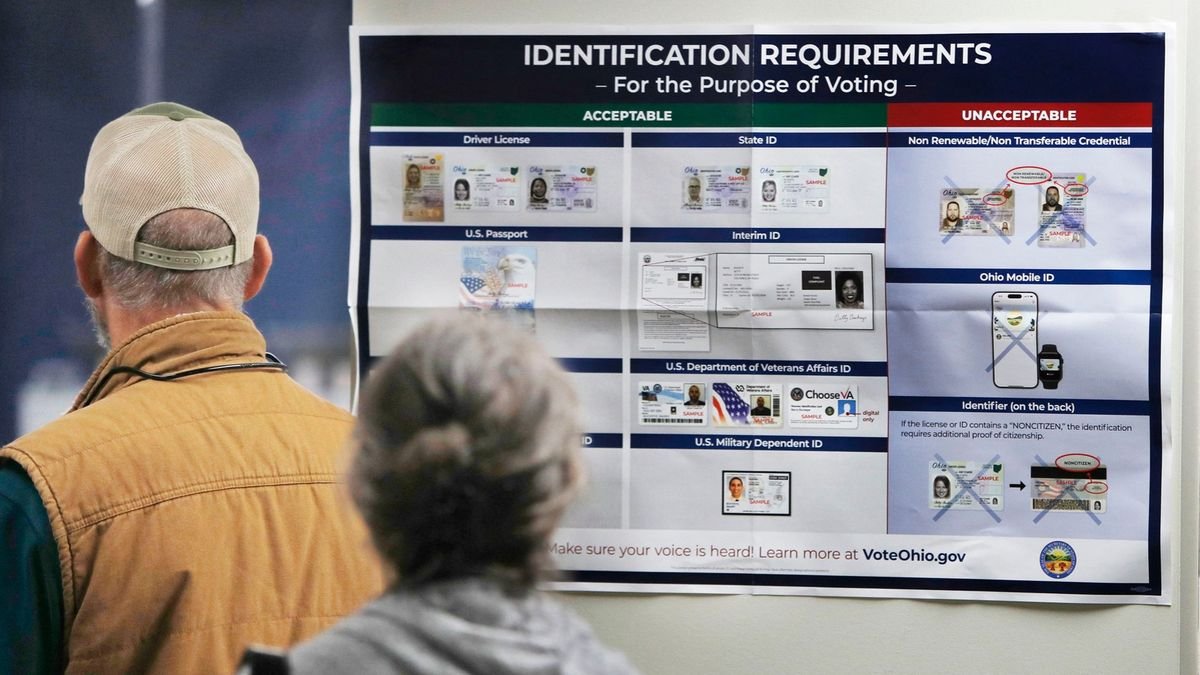
Democrats won the 2026 U.S. midterm elections in all the states that don’t require people to show ID to vote.

- The claim that Democrats won the 2026 U.S. midterm elections in all the states that don’t require people to show ID to vote is true.
- According to the National Conference of State Legislatures, 14 states and Washington, D.C., do not require voters to show ID at the polls.
- Election results from The Associated Press showed that Democrats won a Senate seat, more than half of a state’s U.S. House seats — or both — in those 14 states.
- However, there was no evidence that Democrats won races only in states that had no voter ID requirements. Democrats won Senate seats or the majority of a state’s House races in several states with ID requirements. Conversely, Republicans won some individual races in states that do not require ID on polling day.
- Snopes based our assessment of this claim on midterm election projections from the AP. Though many news outlets “call” races on election night, results are not official until a state’s elections officials have certified them.
Following the 2026 U.S. midterm elections, a claim circulated that Democrats won all the U.S. states that do not require people to show ID to vote.
For example, one X user wrote (archived):
Fun Midterms fact:
– Dems won all of the states that do not require voter ID at the polls. 100%.
– States that GOP won such as Florida, Alabama, Wyoming etc., require voter ID
– GOP won none of the no-ID states such as California, New York, Illinois, etc. Zero.
The claim also circulated on Facebook (archived). Days before the election, the Australian TV journalist James Morrow made a similar claim, saying, “So, are people going to start to put two and two together and say, gosh, why do all these Democrats keep running in cities where you don’t need ID?”
It’s unclear what the social media posts mean by “winning a state.” For the purposes of this fact check, we’ve defined “winning a state” as winning a Senate seat, more than half of a state’s U.S. House seats, or both.
The claim that Democrats won all the U.S. states that don’t require voters to show ID at the polls is true, though election results from The Associated Press showed that Democrats also won a Senate seat or more than half of a state’s House seats
According to the National Conference of State Legislatures, which collates legislation from all the states on various topics, 14 states and Washington, D.C., do not impose any ID requirements on voters at the polls. Democrats won Senate seats or made up more than half of the state’s representatives (or both) in all 14 of those states. (Washington, D.C., does not elect a senator and has a non-voting representative in the House.)
However, Democrats also won Senate seats or made up more than half of the state’s representatives in several states that do require voters to show ID at the polls. Democrats won a majority in the Senate and House in three states that require voters to show ID, meaning there was no evidence to suggest that Democrats could win only in states with no voter ID requirements at the polls.
It’s worth noting that we based our assessment of this claim on midterm election projections from the AP. Though many news outlets “call” races on election night, results are not official until a state’s elections officials have certified them.
The breakdown
According to the NCSL, these 14 states don’t ask voters to show any ID at the polls: California, Hawaii, Illinois, Maine, Maryland, Massachusetts, Minnesota, Nevada, New Jersey, New Mexico, New York, Oregon, Pennsylvania and Vermont.
The remaining 36 states have laws that request or require voters to show some form of ID at the polls. Some of these states specifically require photo ID.
While it’s true Democrats won Senate seats or made up more than half of the state’s representatives in all 14 states without voter ID requirements, that’s only half the story.
Democrats also won a Senate seat or made up more than half of the state’s representatives in several that do require voter ID: Arizona, Colorado, Connecticut, Delaware, Georgia, Iowa, Kansas, Michigan, New Hampshire, North Carolina, Ohio, Rhode Island, South Carolina, Texas, Virginia and Washington.
In Iowa, for example, Democrat Josh Turek flipped Republican Sen. Joni Ernst’s seat. Democrats also won three of the state’s four races for the House.
According to Iowa’s secretary of state, voters must show “an Iowa driver’s license or non-operator ID, U.S. passport, U.S. military ID or veteran’s ID, tribal ID/document, or Iowa voter ID” at the polls. Iowa elections officials also require photo ID if someone is registering to vote on Election Day.
Michigan, New Hampshire and Rhode Island all require voters to show photo ID at the polls. Democrats won a majority of the seats in the House and a Senate seat in these three states.
Because the claim that Democrats “won” all the states that don’t require voter ID is true, the claim that Republicans only won states that did require voter ID is also true.
Republican candidates didn’t win any Senate seats in states with no voter ID requirements. However, they did win a minority of the available House seats in nine of the 14 states with no voter ID at the requirements.
For example, Republicans won six out of 17 House seats in Pennsylvania and six out of 26 in New York, which are both states that don’t require any form of voter ID at the polls.
Democratic wins in ‘no ID’ states not a sign of fraud
There is no evidence tying Democrat wins in states that don’t require voter ID at the polls to election fraud theories such as noncitizen voting. Snopes reported in advance of the midterm elections that noncitizens rarely vote in U.S. elections.
Based on accounts from elections officials, we found that existing protections throughout the registration process would make it extremely difficult for bad actors to register enough ineligible voters to sway elections. We also found that existing protections already work to ensure that only eligible voters can register and cast a ballot.
According to the Fair Elections Center, a nonpartisan voting rights and election reform organization, all the 14 states that do not require voter ID at the polls require voters to submit either a state driver’s license number, state ID number or part of their Social Security number when registering to vote.
There was also no evidence to suggest that Democrats could win only in states that did not have voter ID requirements at the polls.
For further reading, follow Snopes’ coverage of the 2026 U.S. midterm elections.
Leave a Reply