
Listen to this article
Estimated 3 minutes
The audio version of this article is generated by AI-based technology. Mispronunciations can occur. We are working with our partners to continually review and improve the results.
Ontario has connected more than 511,000 people to family physicians since it launched its primary health care plan last year, the province’s health minister announced Monday.
Minister Sylvia Jones said since 2018 more than 20,000 additional physicians have been added to the workforce and there has been a 14 per cent increase in family doctors.
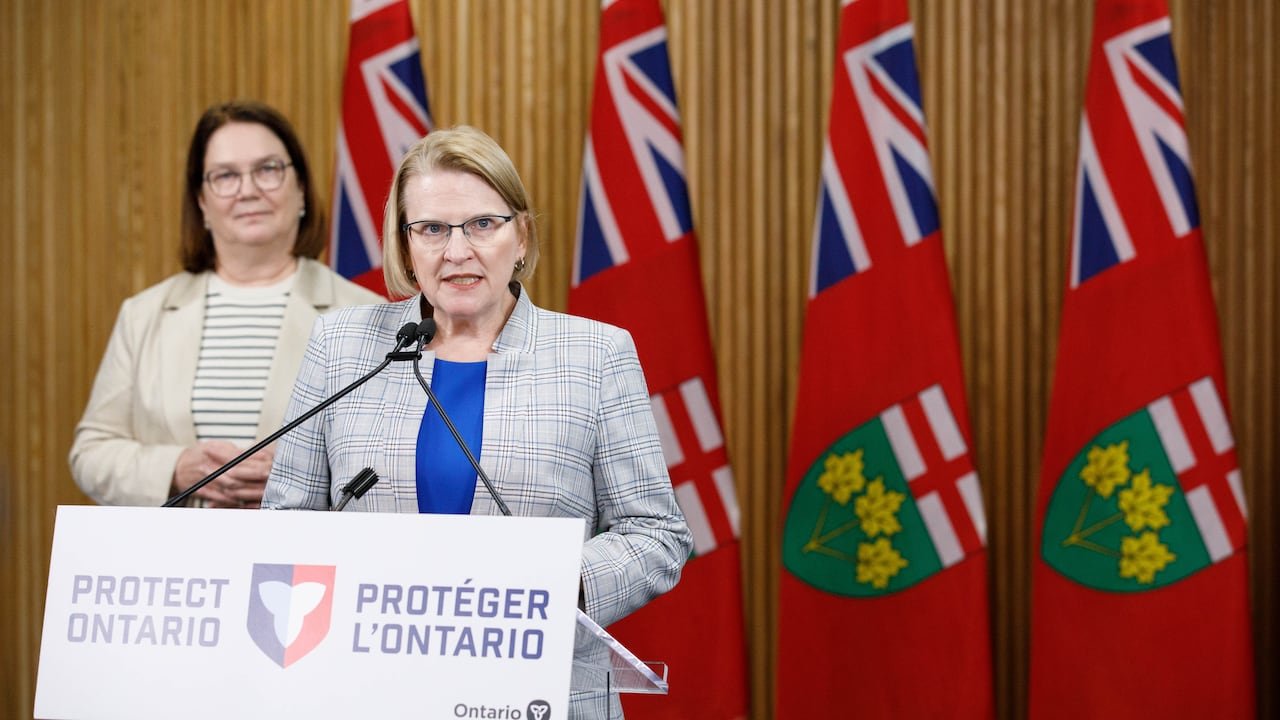
“We are not stopping there,” she said at a news conference alongside Dr. Jane Philpott, the former federal health minister appointed by the Ontario government in 2024 to lead a primary care action team. “We know there is more work to do.”
The progress so far means the government is on track to meet its target of ensuring every Ontarian has a primary care provider by 2029, Jones says.
“Together, we are building a health care system to last,” she said.
Last year, the Ontario Medical Association said that 2.5 million people across Ontario didn’t have a family doctor.
The province’s $3.4-billion primary health care plan, which was launched in January 2025, has a goal of closing that gap and connecting every Ontarian to a publicly-funded family physician or primary care team.

Since 2018, Ontario has added roughly 20,000 doctors to the workforce, Health Minister Sylivia Jones said Monday. (Guy Quenneville/CBC)
In a news release Monday, the province said more than 470,000 people have been cleared from the Health Care Connect waitlist since the start of 2025.
Jones said as part of its commitments, the province is expanding medical schools in Ontario by adding 340 undergraduate seats and 551 postgraduate positions for a 67 per cent increase in family medicine graduates per year.
Jones said the province is also building 18 primary care teaching clinics — one of which has already opened in Brampton to support Toronto Metropolitan University’s new medical school.
Ontario also took in more than 2,300 nurses and 570 doctors from the U.S. last year and is spending $300 million to expand the workforce by creating up to 170 primary care nurse practitioner seats and 150 physician assistant positions, Jones added.
The move comes amid layoffs at Ontario hospitals, with several announcing job cuts this year as they try to climb out of financial holes.
Earlier this month, St. Joseph’s Health Care London announced it would be letting go of 85 registered nurses, with plans to move them into other positions.
A couple of weeks prior, the union that represents many workers at Hamilton Health Sciences said they forecasted 413 job cuts — including the reduction of 143 nursing positions and 84 health-care aide roles.
A call for proposals is currently open with the province looking to see 78 primary care teams created or expanded, which officials say should connect another 600,000 people.
Leave a Reply