
Warning: This article contains content which some readers may find distressing
Last night (1 November), footage emerged of a Learjet 60 smashing into the ground on a road in West Palm Beach, Florida, before exploding into a frightening fireball.
All nine passengers and crew onboard the aircraft have been confirmed deceased, following an announcement from US Transportation Secretary Sean Duffy. The identities of those onboard have not been publicly released.
The US Federal Aviation Administration and National Transportation Safety Board are now investigating the cause of the incident, as numerous theories about what could’ve contributed to the crash circulate online.
Questions have also been raised about the lack of recognisable wreckage at the crash site, with several aviation experts now explaining that this is due to the speed at which the jet collided with the ground.
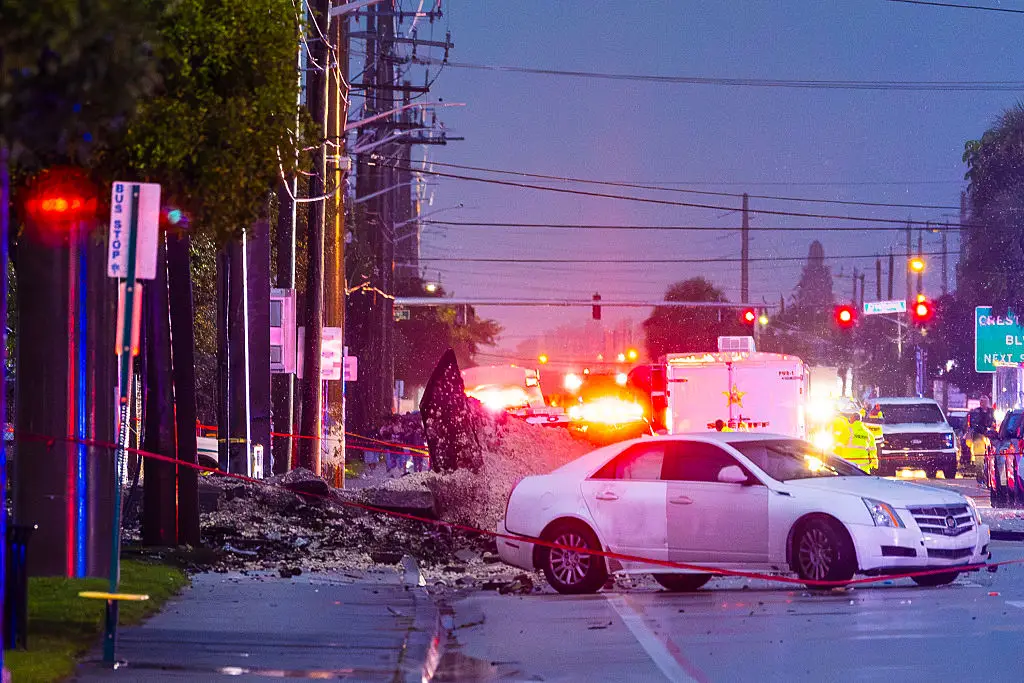
The aircraft had been travelling from Austin, Texas, bound to the Bahamas (Saul Martinez/Getty Images)
According to released cockpit audio, the jet had been descending at 20,000ft a minute and most likely slammed into the ground at a speed of around 340 mph, meaning that the aircraft would’ve shattered upon impact.
“The energy transfer breaks apart the aircraft fuselage,” DeWitt Ingram, a Learjet type-rated captain and founder and president of Par-Avion Group Aviation Consulting, told local outlet CBS 12 News, adding that the only remaining parts of the plane will likely be the landing gear or engine components.
Meanwhile, aviation attorney Zachary Gorwitz gave a similar analysis to the Miami Herald, saying that the ‘incredible force of the impact’ meant the lack of debris was ‘really not surprising’.

The frightening crash was captured on dashcam footage (X)
Cockpit audio released
Audio from the plane’s cockpit was shared online moments after the crash, with a female crew member heard issuing a mayday call to Air Traffic Control.
We’re descending 8,000. Mayday, mayday! We’re descending 10,000 feet per minute. Declaring emergency 722 Bravo Delta. We are in an overspeed condition, descending 20,000 feet per minute,” the crew member can be heard saying. “We’re going to crash into the ground.
“We are descending 22,000 feet, and we are banking 60 degrees… Look outside. Holy f**k, we’re out of time.”
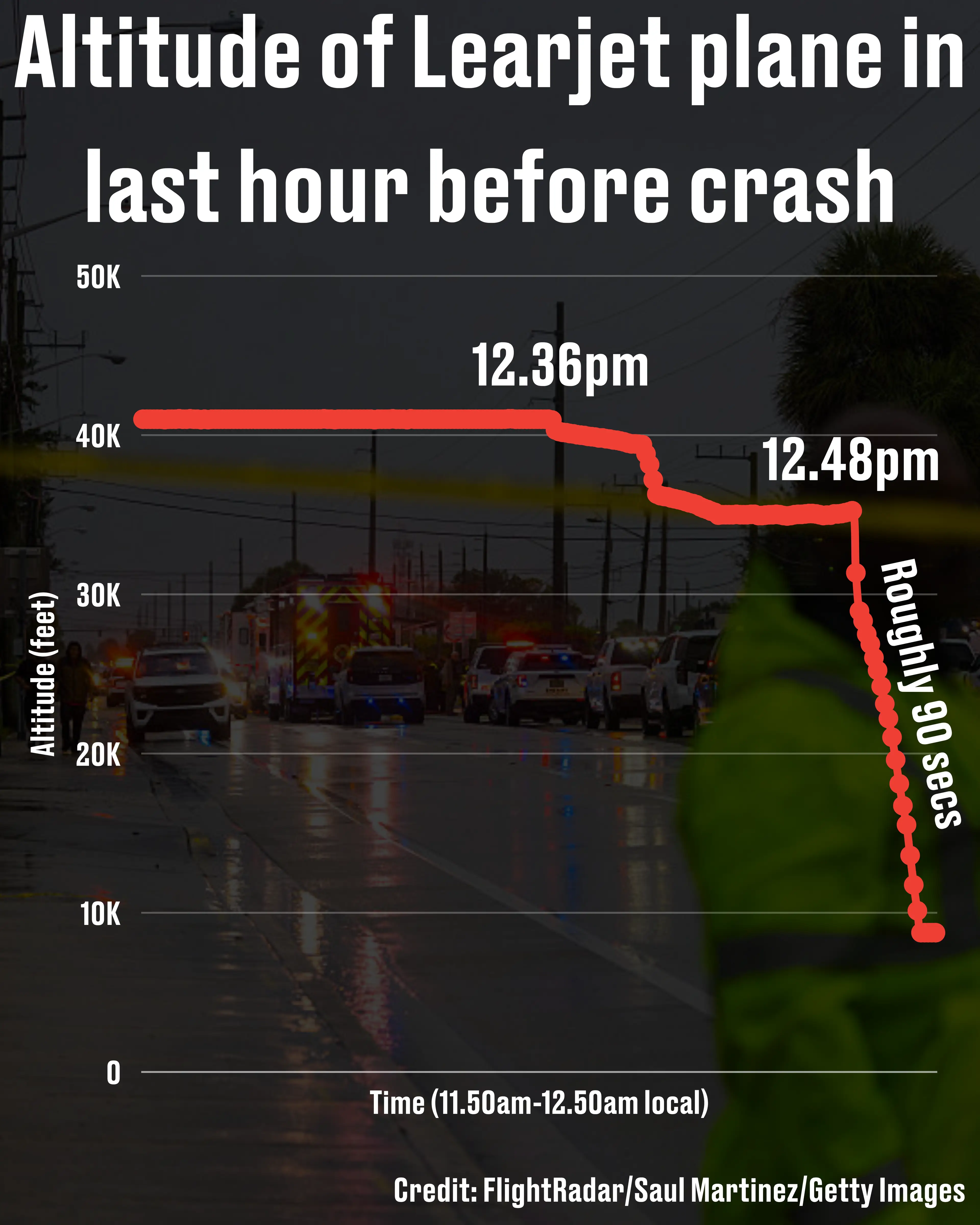
(LADbible/FlightRadar/Saul Martinez/Getty Images)
Weather may have played a role in plane crash
The crew member had also mentioned the presence of ‘severe icing’ during the plane’s final moments, leading people to speculate whether or not this had caused the fatal crash.
“When an aircraft flies through clouds containing supercooled water droplets, those droplets can freeze on contact with the aircraft,” Justin Crabbe, commercial pilot CEO at Jettly, a global private aviation broker platform, told LADbible.
“Even a relatively small amount of ice can significantly affect how an aircraft flies and how turbulence can also impact an aircraft.
“Severe icing means ice is accumulating at a rate that the aircraft’s anti-icing or de-icing systems may not be able to adequately manage.
“Ice changes the shape of the wings, reduces lift, increases drag and can make the aircraft much more difficult to control.”
Leave a Reply