The connection
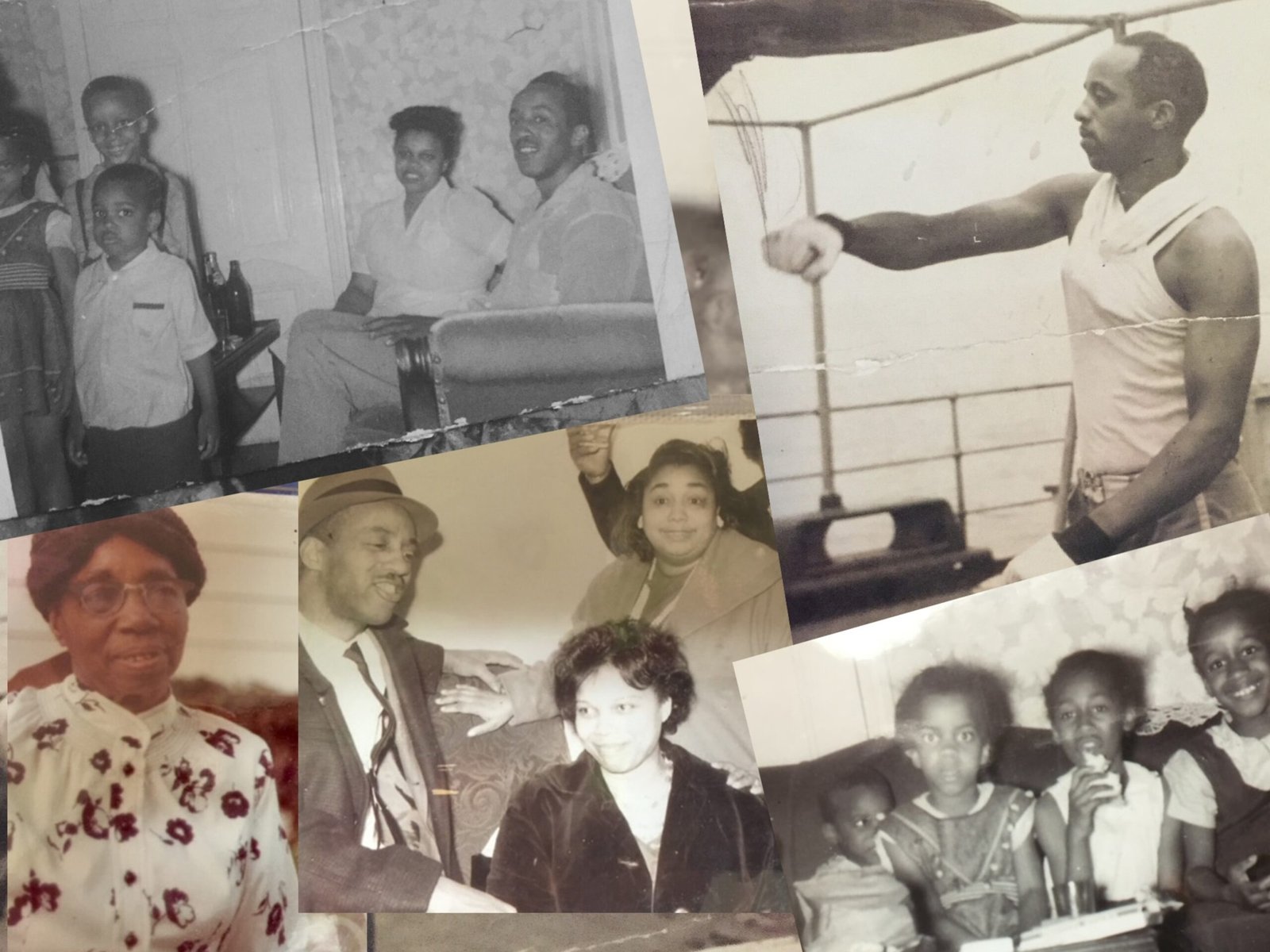
I was born in Baltimore in 1953, the fourth of five children, to William Francis Brooks and Mattie Bell (Crosson). My parents left Baltimore for New Jersey when I was five. We lived in Newark and then Linden, where I went to junior high and high school.
I left Linden to go to college in Ithaca, New York. I worked at the Ithaca Journal for nearly four years before I moved to Asheville, North Carolina and then to Philadelphia. I ended up in the Washington suburb of Silver Spring, where I’ve lived for more than two decades.
Little did I know when I moved to Maryland that my family’s history was just hours away. Both Matthew and Bessie (my paternal grandparents) were born in Leonardtown close to the plantation where their relatives had been enslaved. St. Mary’s County, founded in 1637, was home to the first Maryland colony and was named for Mary, mother of Jesus.
I had always wanted to do an ancestorial search but had never got around to it. A cousin had researched my mother’s side of the family, but I knew nothing about the Brooks side. Until that phone call from Helen Bowe, vice president for public affairs at Wells Fargo. She said the financial services company was looking for a candidate to do an ancestry search with records from the Freedman’s Bureau.
I ultimately learned things about my post-Civil War relatives that I’m sure even my father and grandfather didn’t know. And I received news clippings of stories from the Baltimore Afro-American on my grandfather and father, which I had never seen before.

Photocopy of an advertisement of Schmidt ‘s Bakery published on January 27, 1914 in the Evening Sun newspaper in Baltimore. The bakery is where Brooks’ grandfather worked for decades. Image Via Library of Congress, Prints & Photographs Division, HABS
Breaking through the ‘1870s wall’
The research yielded a trove of information from the 1870 Census—the first conducted after the Civil War and the passage of the 13th Amendment that listed African Americans by name. But is considered a genealogical brick wall for many Black Americans searching for their heritage because so little information was available for those who were enslaved.
Prior to 1870, records rarely noted names of enslaved and formerly-enslaved people in what is referred to as the “1870’s wall.” They were included in the count of household property of slaveowners, their gender and approximate age being the only labels they were granted. But another database, Enslaved.org, has helped researchers and descendants of Africans unlock the depths of the slavery since its launch nearly three years ago.
Using the Freedman’s bureau, my research team yielded a legal contract signed in November 1870 between David Washington Brooks (my great-great grandfather) and his older brother James Brooks with former slaveholders A.W. and Martha Turner for 35 acres of land. David and James paid $100 in cash and pledged to pay the remainder in an installment plan: $124 in the first year, $118 in the second, $112 in the third, and $106 in the fourth. They paid off that contract and bought another 40 acres in the spring of 1878 for $400.
There were three generations in the Brooks family home near Charlotte Hall in Northern St. Mary’s County, according to that 1870 U.S. Census: David, 31, his wife, Mahalay, 25, their two children, and his widowed mother, Nellie, who lived with the family for two decades and was 73 at the time.
James Brooks, 34, and his wife, Margaret, 33, lived next door with their four children aged 1, 8, 11, and 13.
Leave a Reply