You know summer’s nearing its end when the pool parties slow down and the students start trickling back into their classrooms. But if back-to-school shopping didn’t scratch the savings itch the way you hoped, we have great news: Labor Day weekend is finally here, and we’ve picked out some of the best deals on big-name tech that are making us drool.
As one of the last three-day weekends of 2026, you should be focusing on how you’re going to celebrate the unofficial end of summer—not sifting through sales pages for the best savings on headphones, laptops, tablets, SSDs, wearables, and more. Don’t! That’s our job here at PCMag, and we’ve already kicked off the search so you don’t have to.
We’ll be adding all the best Labor Day weekend tech deals we find across the web, so make sure to check back here as the updates roll in!
Best Labor Day Laptop Deals
Asus Zenbook S14 Laptop Deal
Asus Zenbook S14
14-inch OLED 3K touch-screen, Intel Core Ultra 9 (2026), 32GB RAM, 1TB SSD
$1,499.99
at Best Buy
$1,899.99
Save $400.00
Get Deal
A ridiculously good screen is within reach right now: this Asus Zenbook S14 sports a 14-inch, vibrant, 3K OLED touch-screen that’s basically a dream for content creators. It can clock up to a blinding 1,100 nits of brightness and a 120Hz refresh rate that makes everything on-screen smoother than a fresh jar of Skippy.
Asus didn’t hold back with the power, either. Under the keys, it runs on a potent Intel Core Ultra 9 processor that supports local AI activity, heavy-duty multitasking, and creative content sessions. Tack on a mind-boggling 32GB of RAM (in this memory crisis) and a spacious 1TB SSD, and you’ve got yourself a laptop with brilliant bandwidth and storage to spare.
It earned an “Excellent” rating in our detailed review, especially for its build quality and impressive battery life. And for $400? Now that’s the kind of discount that’ll bring you some peace of mind.
Acer Swift Go 15 Laptop Deal
Acer Swift Go 15 Laptop
16-inch WUXGA touch-screen, AMD Ryzen AI 9 465 (2026), 32GB RAM, 1TB SSD
$999.99
at Best Buy
$1,499.99
Save $500.00
Get Deal
It’s one thing to want a big-screened laptop, and it’s entirely another to be looking for a beautiful big-screened laptop. The Acer Swift Go 16 checks both boxes with its dazzling 16-inch WUXGA touch-screen display that can clock up to 350 nits of brightness. When we reviewed it, laptop expert Mark Knapp gave this laptop an “Excellent” rating and called the screen “gobsmackingly good.”
Under the hood, this laptop runs on an AMD Ryzen AI 9 465 processor that’s powerful enough to handle 1080p gaming and any of your productivity tasks, especially thanks to the jaw-dropping 32GB of memory. Pair that with a roomy 1TB storage capacity, and you’ve landed yourself a highly capable daily driver for $500 off—that’s a 33% discount!
Lenovo IdeaPad Slim 3i Deal
Lenovo IdeaPad Slim 3i
Intel Core i3-N305, 128GB UFS storage, 8GB RAM
$362.00
at Amazon
$499.99
Save $137.99
Get Deal
If you’re balling on a budget but still looking to land a laptop during the Labor Day savings, look no further than the Lenovo IdeaPad Slim 3i. Besides its 15.6-inch big-screen appeal, it rocks a capable (yet price-conscious) Intel Core i3 processor, which is plenty powerful enough for basic, everyday tasks, browsing, and even light streaming when the work’s all wrapped up.
While 128GB of storage might not be enough for gaming or heavy-duty media storage, you can always put the $138 you’re saving with this deal toward an external SSD. It’s a fantastic entry-level, budget laptop that’s perfect for students trying to skate by with a capable daily driver that doesn’t drain their bank account. You can check out our full review of this affordable laptop, too!
Lenovo ThinkPad E16 Deal
Lenovo ThinkPad E16
16-inch, 1200p display, Intel Ultra 7 255H CPU, 16GB RAM, 512GB SSD
$1,278.99
at Amazon
$1,799.00
Save $520.01
Get Deal
Lenovo is among the most trusted laptop brands in the industry, and we’ve tested just about every notable model with rigorous benchmarks for years now. Those reviews include the first-gen Lenovo ThinkPad E16, where laptop expert Eric Grevstad pointed out that it didn’t reinvent the wheel but did offer a “capable big-screen business laptop at a bargain price.” It’s 29% off on Amazon right now, cutting a cool $500 off the $1,799 list price.
Back then, we might’ve had a bone to pick with the display quality, but the third-generation on sale here fixes that with a dazzling 16-inch, 1200p screen with ample space for dozens of multitasking windows, which is a huge advantage if you’re writing a research paper or RFP and need all your resources up on one screen. It’s easy on your eyes, lets you tackle all the tasks hard, and is only $1,278.99 for a Labor Day treat.
More Laptop Deals
*Deals are selected by our commerce team
Best Labor Day Monitor Deals
AOC Agon Pro OLED Gaming Monitor
AOC Agon Pro OLED Gaming Monitor
27-inch display, 240Hz refresh rate, 2K Quad HD resolution
$349.99
at Amazon
$499.99
Save $150.00
Get Deal
Get your game on this Labor Day weekend with a monitor that can keep up with your clicking. The AOC Agon Pro OLED Gaming Monitor features a gorgeous 27-inch display with 2K Quad HD resolution, HDR10 support, and a 101% DCI-P3 color gamut, delivering brilliant hues straight to your eyeballs. It also has a blazingly quick 240Hz refresh rate, so you won’t miss a frame in the boss fights where every second matters. And since it sure walks the walk when you’re gaming, it can definitely handle a few hours of productivity like it’s nothing. Two birds, one stone.
Depending on the game you’re playing, you can choose between six different modes (including racing and FPS presets) that could give you the upper hand when it matters most. And for a sweet $150 off (that’s a 30% discount), this gaming monitor is looking like valuable dropped loot.
Lenovo ThinkVision 14-inch Portable Monitor Deal
Lenovo ThinkVision 14-inch Portable Monitor
14-inch WXGA+ display, USB-C, 100% sRGB
$269.00
at Lenovo
$549.00
Save $280.00
Get Deal
If you want to take your work to the library, coffee shop, or simply anywhere that isn’t your desk or dorm, you’ll want to bring an extra screen with you—and a portable monitor is how you make that happen. This Lenovo ThinkVision 14-inch Portable Monitor won our Editors’ Choice award, earning a rare “Outstanding” rating in our in-depth review. PCMag expert Tony Hoffman praised it for taking “some of the best features from other portable monitors in the M14 line and meld[ing] them into a killer secondary display with a high-quality, touch-enabled screen.”
It has a gorgeous IPS display with a 1500:1 contrast ratio and 100% sRGB color coverage, so don’t scratch your head and wonder if the hues are slightly off on those slides you’re examining. The capacitive screen is highly sensitive and TÜV Rheinland Eyesafe-certified, so you can stare at it for hours at a time (and even burn the midnight oil) without worrying about eyestrain. Snagging this portable monitor is a no-brainer—especially with this jaw-dropping $162 discount!
Arzopa Z1FC 144Hz Portable Gaming Monitor Deal
Arzopa Z1FC 144Hz Portable Gaming Monitor
16.1”, Ultra Slim, Eye Care, External Second Screen for Laptop, PC, PS5, Mac, Xbox
$96.99
at Amazon
$129.99
Save $33.00
Get Deal
Game on! No, seriously—game on this awesome gaming monitor from Arzopa. It’s a 16.1-inch portable gaming screen you can connect to your laptop, Mac, Xbox, PS5, Steam Deck, or other device via USB-C or mini HDMI. It boasts a bright Full HD picture thanks to its 1080p resolution, and you can rest assured that every on-screen color will be lifelike and vibrant with 106% sRGB color coverage. That’s pretty impressive at this price point!
But where this monitor really shines is its 144Hz refresh rate. It’s zippy enough to make all your games fluid and smooth, no matter where you’re playing. While its portability means you can bring it anywhere, it’ll be particularly useful if you have roommates and are looking to up your boss battles without stealing real estate from them. And for less than $100 right now, you’d better grab it while you can!
More Monitor Deals
*Deals are selected by our commerce team
Best Labor Day Desktop PC Deals
Lenovo IdeaCentre Tower Deal
Lenovo IdeaCentre Tower
Intel Core Ultra 7 265 CPU, 16GB RAM, 1TB SSD`
$1,049.00
at Best Buy
$1,529.99
Save $480.99
Get Deal
Desktop computers are a big step above laptops—literally. They pack an extra punch for other work, streaming, and gaming, and this particular tower PC sports a slim profile, bringing that power to your desk without taking up much space. And for Labor Day, Best Buy has it for an enticing 35% off!
The Lenovo IdeaCentre Tower PC rocks an Intel Core Ultra 7 265 processor, a generous 16GB of memory, and a roomy 1TB SSD. That’s enough to be a smooth operator with almost all your tasks, especially casual browser activity. And if ports are a priority, this tower is stacked with seven USB ports and an HDMI 2.1 output (perfect for whatever monitor you choose to connect). It’s a solid PC that puts you a couple of steps up from a small laptop screen, and for over $480 off, it’s an economical pick, too!
More Desktop Deals
*Deals are selected by our commerce team
Best Labor Day Printer Deals
Canon Pixma TR4720 All-in-One Printer Deal
Canon Pixma TR4720 All-in-One Printer
100-sheet tray, 8.8 black images per minute, 4.4 color images per minute
$69.00
at Best Buy
$107.00
Save $38.00
Get Deal
Printers are still a household necessity, especially if you like to keep hard copies of your important documents (or recipes). This entry-level Canon Pixma TR4720 is the all-in-one printer you need. And it’s less than $70 at Best Buy right now!
The Pixma TR4720 printer has a slim 100-sheet tray and a body that doesn’t take up too much real estate. It can print 8.8 black-and-white pages per minute and 4.4 color pages per minute, which you can do right from your phone via the Canon app or Apple AirPrint. It’s also conveniently compatible with Pixma’s Cloud Link2, Amazon Alex, and Google Home. When we reviewed it, we gave it a “Good” rating—particularly since the competition at its price point is off the charts. And for $38 off right now, it’s a no-brainer.
If you’re looking for something else, check out the other best printers we’ve reviewed for 2026!
Canon MegaTank G3270 Wireless Printer
Canon MegaTank G3270 Wireless Printer
USB, Wi-Fi, Inkjet, borderless printing, display screen, 13.2 pounds
$159.99
at Amazon
$248.99
Save $89.00
Get Deal
This Canon MegaTank G3270 is also a great pick for your house or apartment—especially since it’s 36% off right now, slashing $90 off the $248.99 list price. It checks all the basic boxes you’d expect (wireless printing, copying, and scanning) and includes an ink supply that could last up to two years, saving you money on the infamous cost of ink. With that supply, it can print up to 6,000 black-and-white pages or 7,700 color pages using just one set of inks.
In our 2023 review, PCMag expert M. David Stone gave it an “Excellent” rating, declaring it one notch above an entry-level printer “thanks to its support for printing from mobile devices.” While the 100-sheet maximum capacity leaves a bit to be desired, the low $159 sale price right now makes up for it in spades.
More Printer Deals
*Deals are selected by our commerce team
Best Labor Day Tablet Deals
Samsung Galaxy Tab S10 Ultra Deal
Samsung Galaxy Tab S10 Ultra
14.6-inch, 1TB, S-Pen, Android 14, Fingerprint reader
$1,119.99
at Best Buy
$1,619.99
Save $500.00
Get Deal
It’s officially tablet time, and this Labor Day weekend sale proves it. The Samsung Galaxy Tab S10 Ultra is actually a solid step up from the Galaxy Tab S10+, which we gave an “Excellent” rating in our review. The Ultra model has a huge 14.6-inch screen that uses Dynamic AMOLED tech to deepen contrast and make colors pop right off the display. And with Samsung’s DeX mode, which gives you all sorts of PC-like features, you can have the best of both laptop and tablet worlds.
Don’t forget about the included S-Pen, which you can use for everything from daytime doodles to vigorous note-taking. For $500 off this Labor Day, this Samsung tablet is a strong contender for your next versatile daily driver.
11-inch Lenovo Idea Tab Deal
11-inch Lenovo Idea Tab
2.5K IPS touch-screen, 90Hz, 8GB RAM, 256GB storage, Tab Pen, folio case
$189.99
at Best Buy
$299.99
Save $110.00
Get Deal
This Idea Tab was practically made for college and grad students, but any casual user can see that it’s worth its weight in gold. It sports a large 11-inch 2.5K IPS touch-screen that’s both vibrant and highly responsive, making it perfect for marking up presentations, PDFs, and any other note-taking habits you might have (thanks to the included Tab Pen, too). Plus, it has a 90Hz refresh rate that puts it a step above Apple’s entry-level A16 iPad—talk about smooth screenplay!
The tablet is built for the AI era with a MediaTek Dimensity 6300 processor that handles everything from everyday tasks to light gaming. And with 12 hours of video-streaming battery life, you’re in for a full day of studying and entertainment before you have to find a charging cord.
Right now, the Lenovo Idea Tab is 36% off at Best Buy, saving you a special $110 for Labor Day. But if you’re looking for something a little different, check out the best affordable tablets we’ve found for 2026.
More Tablet Deals
*Deals are selected by our commerce team
Best Labor Day TV Deals
Hisense 65-inch Class S7 Canvas Series Smart TV
Hisense 65-inch Class S7 Canvas Series Smart TV
4K QLED, Hi-Matte Display, Google TV, UltraSlim Wall Mount (2026)
$999.99
at Amazon
$1,999.99
Save $1,000.00
Get Deal
Why just watch movies and shows on your TV when you can display a Monet in the middle of your living room? On a regular TV, that might be a waste of power or a burn-in risk, but with this Hisense Canvas Series smart TV, it’s a true way to show off some of your favorite classic art.
Using Hi-Matte display tech, the S7 comes with over 1,000 complimentary art pieces and employs Hi-QLED color to display everything you watch in gorgeous, 4K vibrancy. And with a 144Hz native refresh rate, you can switch from a still Van Gogh to your favorite college football team and not miss a beat.
Right now, the 65-inch Hisense S7 Canvas Series smart TV is a massive 50% off at Best Buy for Labor Day. That keeps $1,000 in your pocket to put toward making your living room feel a little more luxurious!
Samsung 65-inch Class S90F Series Smart TV Deal
Samsung 65-inch Class S90F Series Smart TV
OLED 4K UHD, Samsung Vision AI, Tizen
$1,299.99
at Best Buy
$2,499.99
Save $1,200.00
Get Deal
TVs inevitably become the centerpiece of your living room, so you can’t just buy any screen for your setup. Nor should you, when this 65-inch Samsung Class S90F smart TV is on sale for $1,200 off (a 48% discount). With a dazzling OLED screen and advanced 4K AI processing, everything you throw on it will meet your eyes with smooth, lifelike motion and color. Plus, gamers can step up to the plate thanks to AMD FreeSync Premium Pro and Nvidia G-Sync built right into the interface.
We haven’t reviewed this specific model, but our friends over at CNET gave it a spectacular 8.6/10 score in their review. One of the only qualms was the price tag, but a $1,200 markdown pretty much renders that moot.
But if you’re looking for something else, check out our experts’ list of the best TVs for 2026!
Hisense 55-inch E6 Cinema Series Smart TV (55E6QF) Deal
Hisense 55-inch E6 Cinema Series Smart TV (55E6QF)
Hi-QLED, 4K, UHD, Fire TV, AI light sensor, Dolby Vision, 60Hz
$297.97
at Amazon
$429.99
Save $132.02
Get Deal
Cinephiles, this is where you step up. This Hisense E6 Cinema Series smart TV brings 55 inches of gorgeous screen space to your living room wall for less than $300 right now for Labor Day—Amazon has it on sale for 31% off, bringing the $429.99 list price down to $297.97. Complete with Hi-QLED and HDR10+ display tech, every single frame will jump right off the screen with true-to-life color and smooth action.
It also boasts Filmmaker Mode, which automatically tweaks settings to revert movies and shows back to what their creators originally intended. So, if you’re into classics or older entertainment, this TV will deliver an authentic experience. And as a Fire TV, it has an intuitive interface that lets you jump right into your favorite media without a learning curve.
But if you’re itching for other options, check out PCMag expert Will Greenwald’s list of the best TVs for 2026!
More TV Deals
*Deals are selected by our commerce team
Best Labor Day Streaming Device Deals
Amazon Fire TV Stick 4K Plus Deal
Amazon Fire TV Stick 4K Plus
4K, Dolby Vision, HDR10, Amazon Alexa, Wi-Fi 6
$39.99
at Amazon
$69.99
Save $30.00
Get Deal
The Amazon Fire TV Stick 4K Plus is an affordable, fast, and feature-heavy streaming stick that stands out from the rest of the budget crowd. It streams beautiful 4K resolution, so your shows and movies pop right off the screen, and supports HDR content in HDR10, HDR10+, and Dolby Vision for dramatically better depth and contrast. With Wi-Fi 6 and a better processor, it offers much speedier performance and Alexa responses, which is particularly helpful if you have other Amazon smart home devices! And with all the apps available in the Amazon Fire TV Store, you won’t be lacking when it comes to streaming platforms.
Greenwald gave it a rare 4.5/5 rating in our review, earning the Fire TV Stick 4K Plus our Editors’ Choice award. It’s easily one of our top picks for media streamers, which is what makes this 50% off deal even sweeter.
More Streaming Device Deals
*Deals are selected by our commerce team
Best Labor Day Fitness Tracker Deals
Garmin Instinct 3 Smartwatch Deal
Garmin Instinct 3 Smartwatch
AMOLED, GPS, 4GB, Activity tracking, alarm clock, 100-meter water resistance
$299.00
at Amazon
$449.99
Save $150.99
Get Deal
Adventure is calling—will you listen? OK, maybe your daily walk around the neighborhood isn’t that treacherous, but if your lifestyle leans toward the rugged side in any capacity, the Garmin Instinct 3 smartwatch is the perfect investment in your health, fitness, and tactical lifestyle aesthetic. And it’s seeing an Labor Day sale for 34% off right now, putting $150 back in your pocket.
It brings a scratch-resistant 1.2-inch AMOLED display right to your wrist with a durable, metal-reinforced bezel. It’s a data monster for health and movement, tracking up to 93 different workouts and sports profiles, and a power-efficient machine with up to 18 days of battery life. Perfect for going off-grid!
Garmin Vivoactive 5 Deal
Garmin Vivoactive 5
4GB storage, 264-hour battery life, 164 feet water resistance
$189.99
at Amazon
$299.99
Save $110.00
Get Deal
Oh, Garmin—a royal name in the fitness and health tracking realm. When we reviewed the Garmin Vivoactive 5, PCMag expert Andrew Gebhart gave it a glowing “Excellent” rating for its beautifully rounded design and onboard music storage. It rocks a spectacular 11-day battery life, 4GB of storage, and water resistance up to 164 feet for all you extreme athletes and hobbyists. And between that and its top-notch health and activity tracking metrics, it’s a particularly good pick for anyone looking to take their health by the horns.
And right now is the time to buy; Amazon has it on sale for 37% off, putting $110 back in your pocket. But if you’re looking for something different, check out our experts’ list of the best smartwatches for 2026!
More Smartwatch Deals
*Deals are selected by our commerce team
Best Labor Day Wireless Headphones Deals
Sony WH-1000XM5 Headphones Deal
Sony WH-1000XM5 Deal
Noise-Canceling Headphones, 30mm drivers, 7Hz to 20kHz, AAC and SBC Codecs, USB-C Charging Cable
$198.00
at Amazon
$399.99
Save $201.99
Get Deal
If you’re going to dive into the Labor Day savings spree, allow us to reveal one of the best holiday sale prices we’ve seen on our Editors’ Choice award for audiophiles: the Sony WH-1000XM5s. Amazon has these premium noise-cancelling headphones on sale for a jaw-dropping 50% off—their all-time lowest price—for Labor Day. So, if you need perfect cinematic sound to follow you through your day, these headphones are positively the right pick.
That glorious sound is powered by 30mm drivers that deliver a frequency range of 4Hz to 40kHz, and depending on how loud you jam out or how you use ANC, Sony estimates you can squeeze out a solid 30 hours of battery life. Speaking of, their ANC is top-notch and doesn’t use a noticeable—and annoying—high-frequency hiss to mask signals, unlike most noise-cancellation technology. PCMag expert Tim Gideon compared these headphones to the Bose QuietComfort 45 and Apple AirPods Max in our in-depth review, and even with that stiff competition, concluded that “the 1000XM5 over-ear headphones offer comparable noise cancellation and arguably the best sound quality of the bunch.”
Bose QuietComfort Headphones Deal
Bose QuietComfort Headphones
World-class noise canceling, 24-hr battery, adjustable EQ, multipoint pairing, aware mode, USB-C
$229.00
at Amazon
$359.00
Save $130.00
Get Deal
Bose is an audio industry leader delivering in quality, comfort, and active noise cancellation in spades. The Bose QuietComfort over-ear headphones are no exception to the lineup and deliver spectacular noise cancellation for the price. Right now, they’re even cheaper with this 36% off deal. Students, if you want to drown out a crowded hallway or chattering campus on the way to class, these headphones are how you do it affordably.
The QuietComfort headphones boast up to 24 hours of playtime, plenty of customizable modes, and top-tier noise cancellation. In our review, PCMag expert Tim Gideon even said that they outperformed the Apple AirPods Max in that department! At $130 off, they’re an undeniably good pick for your next over-ear companions.
Nothing Ear (a) Wireless Earbuds Deal
Nothing Ear (a) Wireless Earbuds
11 mm driver, 45 dB smart Active Noise Cancellation, clear voice technology, ChatGPT integration
$59.00
at Amazon
$79.00
Save $20.00
Get Deal
Stand out from a bland sea of AirPods with the Nothing Ear (a) buds. They make it clear that premium can come in a more affordable package—literally, they’re transparent. The Nothing Ear (a) wireless earbuds rock the company’s iconic see-through design for a more unique, futuristic look. And once they’re in your ears, you can enjoy 45dB hybrid active noise cancellation, Hi-Res Audio features, and play music on two phones at once thanks to dual-device connectivity. You’ll never want to take them out, and you won’t have to that often with up to 42.5 total hours of battery life.
When we reviewed the Nothing Ear (a), Gideon gave them an “Excellent” rating, praising their striking design and bass-heavy sound. The noise cancellation could be better, but the trade-off is a sick-looking pair of earbuds. And right now, 25% off feels pretty premium for the student looking to make a statement on campus.
Sony WH-CH720N Wireless Headphones Deal
Sony WH-CH720N Wireless Headphones
V1 processor, 35-hour battery, 192g, multipoint connection, DSEE audio
$98.00
at Amazon
$179.99
Save $81.99
Get Deal
Want Sony sound without the Sony WH-1000XM5’s price tag? The Sony WH-CH720N Wireless Headphones are also on sale, and Amazon slashed 46% off these more affordable over-ear headphones. That sends some already affordable active noise cancellation below the $100 mark!
In our review, PCMag audio expert sang the praises of these headphones’ above-average noise cancellation at their regular price. They also rock 35 hours of battery life for all-day listening, and all-around solid audio performance with crisp highs and deep bass. And since they’re Sony’s self-proclaimed “lightest over-ear headphones with noise cancellation ever,” you might forget that they’re even on your head at all.
Recommended by Our Editors
More Headphone Deals
*Deals are selected by our commerce team
Best Labor Day Speaker Deals
JBL Go 5 Portable Bluetooth Speaker Deal
JBL Go 5 Portable Bluetooth Speaker Deal
Waterproof, dustproof, 10-hour battery, stereo pairing
$39.95
at Amazon
$54.95
Save $15.00
Get Deal
You can never have too many Bluetooth speakers, especially when they’re as cute as the JBL Go 5. Weighing in at just a hair over half a pound and small enough to fit in the average palm, it’s both water and dustproof (IP68). That makes for easy jamming anywhere you go, whether that’s poolside, seaside, or inside whenever you need some tunes. And right now, Amazon has it on sale for 27% off for Labor Day, dropping the price down to $39.95.
This little speaker packs a surprisingly big sound with rich bass and bright, clear audio. But if aesthetics are also on your priority list, the Go 5 brings the flair with ambient lighting along its upper and lower edges. And with up to 10 hours of playback, you can enjoy the show all day long.
Anker Soundcore 2 Portable Bluetooth Speaker Deal
Anker Soundcore 2 Portable Bluetooth Speaker
Stereo Sound, Bassup, IPX7 waterproof, 24-hour playback, 12W power
$29.98
at Amazon
$44.99
Save $15.01
Get Deal
We love the sound of Labor Day savings, especially when Amazon knocks 33% off this powerful little portable speaker. The Anker Soundcore 2 portable speaker packs 12W of power and lasts up to 24 hours on a single charge—perfect for when your Labor Day barbecue inevitably runs into the evening. It also rocks an IPX7 waterproof rating that’ll keep your soundtrack safe if the elements decide to rain on your parade, but if you need to make a quick run for cover, it’s only about the size of a pencil case!
With a $44.99 list price, the Anker Soundcore 2 is already relatively affordable. But with this deal, Amazon sends it under the $30 mark! But if you’re looking for other options, check out the other best speakers we’ve tested for 2026.
More Bluetooth Speaker Deals
*Deals are selected by our commerce team
Best Labor Day Soundbar Deals
JBL Bar 1300X Soundbar Deal
JBL Bar 1300X Soundbar Deal
Spatial audio, powerful subwoofer, 11.1.4 channels
$1,079.95
at Amazon
$1,699.95
Save $620.00
Get Deal
With amazing spatial audio, an 11.1.4-channel setup, and a massive 12-inch wireless subwoofer, the JBL Bar 1300X Soundbar is the investment to make if you’re after a truly immersive home theater setup. It has detachable, rear satellite speakers that you can recharge and place anywhere around your house for stellar surround sound—which you can connect to via the built-in Apple AirPlay and Google Cast. And in true JBL fashion, you can customize an array of features with the JBL app.
Sure, this soundbar might be among the most expensive we’ve tested—but it earned our Editors’ Choice award when we reviewed it for good reason. Home theater expert Will Greenwald gave it a rare “Outstanding” rating, noting that one of his only qualms was the intimidating sticker price—an issue fixed by this Labor Day deal. Right now, Amazon has it for 36% off, taking the $1,699.95 list price down to $1,079.95. That’s $620 off, making now the best time to buy better-sounding movie nights!
Make sure to check out the best soundbars we’ve reviewed for 2026!
More Soundbar Deals
*Deals are selected by our commerce team
Best Labor Day Robot Vacuum and Mop Deals
iRobot Braava Jet m6 Deal
iRobot Braava Jet M6 (6110)
Robot vacuum and mop, precision jet spray, smart mapping, Amazon Alexa
$199.99
at Amazon
$449.99
Save $250.00
Get Deal
The Braava Jet M6 won our Editors Choice award a few years ago, and while there are newer robo-vacs out there also worth your dollar, we couldn’t ignore this 56% discount for Labor Day.
The Jet M6 is primarily a robot mop, but it also sweeps up any debris it comes across beautifully. With a generous 150-minute battery life, it’ll make its way across your apartment or house’s floor to make things squeaky clean without getting down on your hands and knees yourself. And thanks to smart mapping and detection, you don’t even need to give it a tour before it gets to work.
And for only $199.99 right now, the Jet M6 sure scoops up the savings!
Ecovas Deebot X11 OmniCyclone Deal
Ecovas Deebot X11 OmniCyclone
Robot Vacuum and Mop with 180 minutes of battery life
$699.00
at Amazon
$1,099.99
Save $400.99
Get Deal
The Ecovas Deebot X11 OmniCyclone is a 2-in-1 cleaning machine that barely has to catch its breath. With four-wheel drive, fantastic suction, and self-emptying capabilities, this robot vacuum and mop cleaned for three consecutive hours during our testing (thanks to handy GaN supercharging tech that tops off its power whenever it returns to base). And if your household is trying to cut back waste, the X11 doesn’t use disposable dust bags, either.
Smart home expert Andrew Gebhart gave the Deebot X11 OmniCyclone robot vacuum and mop an “Excellent” rating in our review, touting it as the “most well-rounded choice for the price,” particularly for its fast charging and cleaning technology that helps avoid cross-contamination. And in the spirit of Labor Day savings, it’s a massive 36% off going into the three-day weekend. That shaves off $400 off the normal $1,099.99 list price.
More Robot Vacuum Deals
*Deals are selected by our commerce team
Best Labor Day Wi-Fi Router Deals
TP-Link Archer BE400 Deal
TP-Link Archer BE400
Dual 2.5 Gbps ports, USB 3.0, 2,400 sq ft, 90 devices, HomeShield, Quad-Core CPU
$129.99
at Amazon
$179.99
Save $50.00
Get Deal
If seamless connectivity is on your Labor Day wishlist, it’s a great time to grab the Archer BE400 Wi-Fi 7 router. It drapes 2,400 square feet of your home in speedy-quick Wi-Fi using a six-stream, dual-band connection with up to 6.5 Gbps of total bandwidth. That’s on par with higher-end routers, and the kind of speed you look for if you want to stream in 4K, 8K, or even lock in for an AR gaming session.
It can support up to 90 devices with a strong signal at once, thanks to its six high-performance antennas and convenient Multi-Link Operation, which reduces bandwidth congestion. Plainly, this router works over time to support your connection. And for 28% off, investing in the Archer BE400 now will keep $50 in your pocket!
More Wireless Router Deals
*Deals are selected by our commerce team
Best Labor Day Unlocked Smartphone Deals
Samsung Galaxy Z Flip 7 FE Deal
Samsung Galaxy Z Flip 7 FE
6.7-inch screen, 5G, 256GB storage, 50MP, 12MP, 10MP cameras
$649.99
at Amazon
$999.99
Save $350.00
Get Deal
Flip on the savings switch again! The Samsung Galaxy Z Flip 7 FE is $350 off for Labor Day, slashing 35% off the normal $999.99 list price. It’s a more affordable and slightly downgraded version of the Flip 7, but it still packs power without being the official flagship. Both inner and outer displays are spacious and stunning, and a powerful processor supports a rich range of AI features as well as all your everyday tasks. It boasts an impressive 50-megapixel camera for highly detailed flicks, whether you’re taking a casual selfie or making a living as a content creator. And with an improved battery built to last all day, it’s the kind of foldable that’ll keep up with you through work and play.
PCMag expert Eric Zeman gave the Galaxy Z Flip 7 FE an “Excellent” rating in our review, praising the phone for its beautiful, brighter screens and useful AI features. And right now, you can get it for 35% off!
More Smartphone Deals
*Deals are selected by our commerce team
Best Labor Day Security Camera Deals
Blink Outdoor 4 XR Security Camera Deal
Blink Outdoor 4 XR Security Camera
Extended range sync module, 1,000-foot coverage, 900MHz band, 2-year battery life, Alexa-compatible
$93.49
at Amazon
$169.99
Save $76.50
Get Deal
Don’t let this massive 45% off Labor Day deal slip past you. The Blink Outdoor 4 XR camera system comes with two cameras that cover up to 1,000 feet of your property, ensuring nothing comes on or off it without your knowledge. It avoids congestion on regular Wi-Fi by using the 900MHz band, making its connection significantly more reliable. And in typical Blink fashion, the two cameras last an impressive two years each (on just two AA batteries!). The highlight of buying this camera system is that you can store videos locally on a microSD, eliminating the annoying fees that come with other home security cameras.
For Labor Day, the Blink Outdoor 4 XR system is 45% off—which is a big deal for anyone itching to upgrade their home security. Grab it before it goes off-grid!
Blink Battery Doorbell 2K+
Blink Battery Doorbell 2K+
2K video, battery-powered, 1 camera and battery doorbell, two-way talk
$69.98
at Amazon
$119.98
Save $50.00
Get Deal
Knock, knock! Who’s there? A massive 42% deal on this Blink Battery Doorbell 2K+ and Mini 2K+ bundle! This camera-and-doorbell home security duo is $69.98 for Labor Day, and it pays for itself in peace of mind. They both record in 2K video with a special Head-to-Toe View to monitor everything from a tall individual’s face to a tiny package on your doorstep, so no one (and no thing) is missed if you aren’t there to greet them.
But if you aren’t home at all, the doorbell alerts you to someone’s presence and lets you have a two-way conversation as if you were standing right in front of them (with active noise cancellation to drown out any neighborhood commotion). The Mini 2K+ camera might require wiring, but the doorbell is battery-powered, making installation a piece of cake.
More Home Security Deals
*Deals are selected by our commerce team
Best Labor Day SSD Deals
Samsung Internal SSD 990 2TB Deal
Samsung Internal SSD 990 2TB
7,250/6,450 read/write speeds, PCIe 4.0 x4, 0.09 inches
$339.99
at Amazon
$529.99
Save $190.00
Get Deal
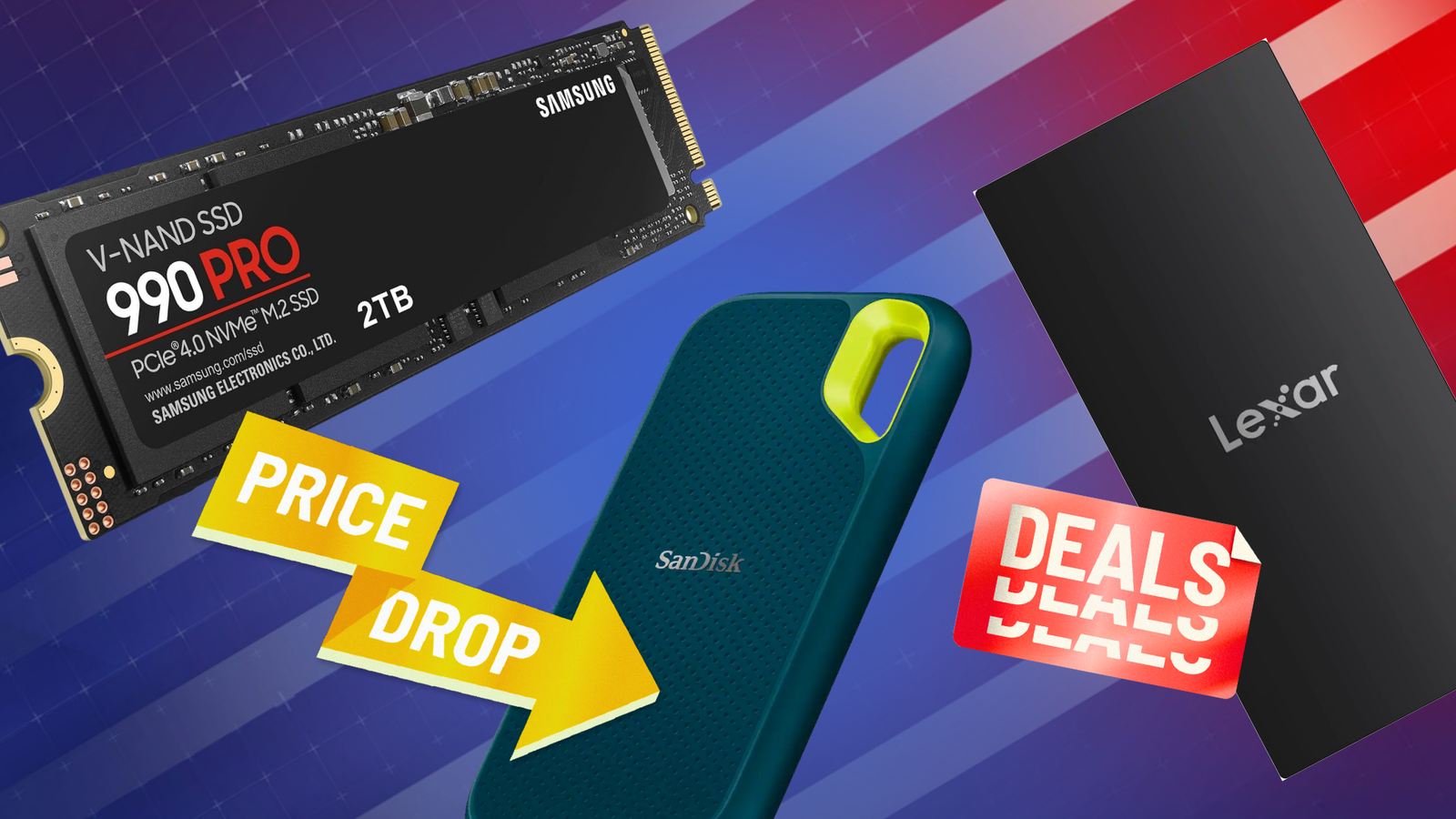
You can never find enough SSD sales during RAMageddon, but Samsung is actively delivering deals. And the SSD 990 is one of its internal PCIe Express 4.0 SSDs that gives your PC a 2TB upgrade for a massive 36% off for Labor Day. It rocks 7,250 and 6,450 sequential read and write speeds and is a DRAM-less drive to keep manufacturing costs down.
Samsung, per usual, threw in some extra goodies, too. You can enjoy the company’s Magician software suite to help you keep tabs on and optimize all your data, as well as relax knowing everything is protected by a highly secure 256-bit AES encryption key. The RAMpocalypse is likely going to get worse before it gets any better, so hop on this SSD sale while you can.
Samsung 990 Pro 2TB NVMe Internal SSD Deal
Samsung 990 Pro 2TB NVMe Internal SSD
2TB, M.2 Type-2280, 7450/6900 read/write speed
$389.99
at Amazon
$639.99
Save $250.00
Get Deal
If you’re pulling together parts for a new PC and dreading the horribly high SSD sticker prices, we have good news: Samsung has yet another SSD deal to save you hundreds—a rare thing in the RAMpocalypse, indeed! This internal hard drive is quick on its digital feet, has 256-bit AES hardware-based encryption, and much better power efficiency than the competition. We gave it an “Excellent” rating in our detailed review, and PCMag expert Tony Hoffman praised it for being “a big step forward from the SSD 980 Pro, with considerably faster sequential read and write speeds and a much higher PCMark 10 Overall score.” Talk about a considerable upgrade.
It also includes Samsung’s Moagician data management software, which is particularly useful for anyone with substantial storage requirements. It’s a great pick for anyone who needs a little extra oomph in their PC—whether you’re a gamer, creator, student, or casual user. And for 39% off, you save $250 on a roomy 2TB SSD! Pretty hard to beat in the current memory crisis.
More SSD Deals
*Deals are selected by our commerce team
Make sure to check back in as we find and update the best Labor Day tech deals so you don’t have to. And if you simply can’t get your hands on enough savings, we’re always finding discounts worth your dollar on our PCMag deals page!
Acer KB272-27 Monitor — $99.99 ($149.99) Save $50 Your eyes deserve a Labor Day treat, too. And this 27-inch Acer monitor absolutely delivers. Because it supports adaptive sync, the screen can match your graphics card’s refresh rate up to 120Hz with a speedy 1ms response rate. It’s a Full HD monitor, so rest assured the colors will do your games (and any work) justice.
“,”update_date”:”2026-09-04T19:40:00.000000Z”,”updated_at”:”2026-09-04T19:44:08.000000Z”},{“uuid”:”06h2YW2SElesq2xnPGzCqTZ”,”title”:”Live Blog 10 (with image)”,”image”:{“urls”:{“400w”:”https://i.pcmag.com/imagery/blog-updates/06h2YW2SElesq2xnPGzCqTZ.fit_lim.size_400x250.v1788550648.png”,”800w”:”https://i.pcmag.com/imagery/blog-updates/06h2YW2SElesq2xnPGzCqTZ.fit_lim.size_768x432.v1788550648.png”,”1600w”:”https://i.pcmag.com/imagery/blog-updates/06h2YW2SElesq2xnPGzCqTZ.fit_lim.size_1600x900.v1788550648.png”},”width”:1920,”height”:1080,”metadata”:{“altText”:”Garmin Vivoactive 5 Deal “}},”body”:”
Garmin Vivoactive 5 — $189.99 ($299.99) Save $110
This smartwatch packs an 11-day battery life, GPS tracking, and dozens of preloaded activities under its dazzling 1.2-inch AMOLED display. We loved it so much that we gave it an “Excellent” rating in our review, and this $110 discount is just the cherry on top.
“,”update_date”:”2026-09-04T19:35:00.000000Z”,”updated_at”:”2026-09-04T19:37:28.000000Z”},{“uuid”:”07xpbln9I9Z6WNojKZoq4L8″,”title”:”Live Blog 9″,”image”:null,”body”:”
Beats Studio Pro Wireless Headphones — $249.95 ($349.95) Save $100
If you’re searching for a pair of over-ear headphones that deliver punchy sound and extra-deep bass, look no further than the Beats Studio Pro headphones. They offer adaptive noise cancellation, 40 hours of listening time, and a nifty 360-degree Spatial Audio experience with dynamic head tracking. And for $100 off, this is the kind of deal I’d listen to!
“,”update_date”:”2026-09-04T18:12:00.000000Z”,”updated_at”:”2026-09-04T18:36:59.000000Z”},{“uuid”:”02D3zPvfg5F9dwiuxwWloMk”,”title”:”Live Blog 8″,”image”:null,”body”:”
Sony SRS-XB100 Bluetooth Speaker — $43 ($64.99) Save $22
What’s powerful, portable, and waterproof all over? This Sony Bluetooth speaker, of course. Next time you’re belting Broadway tunes in the shower, you should have this powerful little IP67-rated speaker to go with it. Don’t let 34% slip away!
“,”update_date”:”2026-09-04T17:26:00.000000Z”,”updated_at”:”2026-09-04T17:35:50.000000Z”},{“uuid”:”03zD5vSLbkFGpfNIAdOGzap”,”title”:”Live Blog 7 (with image)”,”image”:{“urls”:{“400w”:”https://i.pcmag.com/imagery/blog-updates/03zD5vSLbkFGpfNIAdOGzap.fit_lim.size_400x250.v1788542663.png”,”800w”:”https://i.pcmag.com/imagery/blog-updates/03zD5vSLbkFGpfNIAdOGzap.fit_lim.size_768x432.v1788542663.png”,”1600w”:”https://i.pcmag.com/imagery/blog-updates/03zD5vSLbkFGpfNIAdOGzap.fit_lim.size_1600x900.v1788542663.png”},”width”:1920,”height”:1080,”metadata”:{“altText”:”Life360 Tile Slim Deal “}},”body”:”
Life360 Tile Slim — $24.99 ($32.30) Save $7.31
Misplacing your wallet is an outdated misery when things like the Life360 Tile Slim exist. Slip one of these credit-card-like trackers in there and never lose it again. And since it’s 23% off right now, what’s stopping you?
“,”update_date”:”2026-09-04T17:17:00.000000Z”,”updated_at”:”2026-09-04T17:24:23.000000Z”},{“uuid”:”02SXHAt17lxKi5RimYyyj74″,”title”:”Live Blog 6″,”image”:null,”body”:”
Kasa Smart Plug — $20.89 ($29.99) Save $9.10
No smart home is complete without a smart plug, and these little luxuries from Kasa are the perfect, Matter-compatible additions to your household. They monitor your energy usage, have a flame-resistant design, and are a striking 30% off right now.
“,”update_date”:”2026-09-04T17:15:00.000000Z”,”updated_at”:”2026-09-04T17:15:58.000000Z”},{“uuid”:”07JfcWbI9FzN8A6FWui9T1K”,”title”:”Live Blog 5″,”image”:null,”body”:”
Sennheiser Momentum 4 Wireless Noise Canceling Headphones — $214 ($299.99) Save $86
Over-ear headphones are seriously having their markdown moment this Labor Day weekend. Amazon just knocked 29% off these Sennheiser Momentum 4s, which deliver great active noise cancellation, a 60-hour battery life, and good looks while they’re at it.
“,”update_date”:”2026-09-04T16:54:00.000000Z”,”updated_at”:”2026-09-04T16:57:18.000000Z”},{“uuid”:”05cXpcU0rWwtu9hir8uGqRa”,”title”:”Live Blog 4 (with image)”,”image”:{“urls”:{“400w”:”https://i.pcmag.com/imagery/blog-updates/05cXpcU0rWwtu9hir8uGqRa.fit_lim.size_400x250.v1788538475.png”,”800w”:”https://i.pcmag.com/imagery/blog-updates/05cXpcU0rWwtu9hir8uGqRa.fit_lim.size_768x432.v1788538475.png”,”1600w”:”https://i.pcmag.com/imagery/blog-updates/05cXpcU0rWwtu9hir8uGqRa.fit_lim.size_1600x900.v1788538475.png”},”width”:1920,”height”:1080,”metadata”:{“altText”:”Logitech G309 Lightspeed Wireless Gaming Mouse Deal”}},”body”:”
Logitech G309 Lightspeed Wireless Gaming Mouse — $54.95 ($89.99) Save $35
Calling all gamers: the Logitech G309 Lightspeed wireless mouse is lightweight and requires minimal charging, so you can stay in the game. With a HERO 25K sensor that tracks down ot hte sub-micron with no smoothing, this 39% discount is almost too good to be true.
“,”update_date”:”2026-09-04T16:12:00.000000Z”,”updated_at”:”2026-09-04T16:31:39.000000Z”},{“uuid”:”03GR3yfmQYnX71F3E3PPQtc”,”title”:”Live Blog 3 (with image)”,”image”:{“urls”:{“400w”:”https://i.pcmag.com/imagery/blog-updates/03GR3yfmQYnX71F3E3PPQtc.fit_lim.size_400x250.v1788537317.png”,”800w”:”https://i.pcmag.com/imagery/blog-updates/03GR3yfmQYnX71F3E3PPQtc.fit_lim.size_768x432.v1788537317.png”,”1600w”:”https://i.pcmag.com/imagery/blog-updates/03GR3yfmQYnX71F3E3PPQtc.fit_lim.size_1600x900.v1788537317.png”},”width”:1920,”height”:1080,”metadata”:{“altText”:”Soundcore by Anker P20i earbuds deal”}},”body”:”
Soundcore by Anker P20i Earbuds — $20.99 ($39.99) Save $19
More budget earbuds, even more savings! These Soundcore earbuds punch well above their affordable price point with serious bass, 30 hours of battery life, and customizable EQ settings right in the Anker app. And since they’re 48% off for Labor Day, you can score a pair for just over $20.
TP-Link Deco BE25 BE5000 Whole Home Mesh Wi-Fi 7 System — $211.45 ($299.99) Save $89
Welcome Wi-Fi 7 into your household with 30% off this mesh system. Not only is it easy to install and manage, but you can also keep tabs on user activity via basic parental controls and security software. Bases = covered!
“,”update_date”:”2026-09-04T15:51:00.000000Z”,”updated_at”:”2026-09-04T15:55:17.000000Z”},{“uuid”:”04PdG91imIjyXk2ltpUcsD9″,”title”:”Live Blog 2″,”image”:null,”body”:”
Dyson Gen5 Detect Cordless Vacuum — $749.99 ($1,049.99) Save $300
A Labor Day sale on an Editors’ Choice-winning vacuum? Yes please! This Dyson is the most powerful cordless vacuum cleaner we’ve ever tested, and it can suck up debris for up to 70-minute cleaning sessions at a time. For 29% off, it’s a pretty dang good time to scoop up the savings yourself.
Eufy Security C220 Wi-Fi Fingerprint Keyless Smart Entry Door Lock — $109.99 ($169.99) Save $60
Still stressing about forgetting your keys? Erase that concern from your mind with a keyless fingerprint smart lock. This Eufy smart deadbolt boasts an eight-month battery life, an IP53 waterproof rating (of course), and up to six different ways to get through the door. And for 35% off? Unlock that!
“,”update_date”:”2026-09-04T15:35:00.000000Z”,”updated_at”:”2026-09-04T15:48:29.000000Z”},{“uuid”:”06iH8JttjdswN2cM3GVArMZ”,”title”:”Live Blog 1″,”image”:null,”body”:”
Beats Flex — $49 ($65.95) Save $20.95
Want to boast some Beats on a budget? The Beats Flex are wireless earbuds that run on Apple’s W1 chip and rock some seriously solid audio. With a neckband-style fit and 12 hours of battery life on a single charge, you’ll be able to listen all day long and look good while doing it.
Philips Hue Essential Smart LED BR30 Bulb 2-Pack — $22.99 ($39.99) Save $17
If you’ve wanted to implement some smart lighting into your smart home, this Philips Hue Labor Day deal is a smart buy: this deal delivers two smart LED bulbs for 43% off. The bulbs are dimmable and integrate seamlessly into your smart home, controlled via an app or voice assistants.
“,”update_date”:”2026-09-04T15:31:00.000000Z”,”updated_at”:”2026-09-04T15:32:57.000000Z”}])”>